Friday, August 02, 2019

Germany won’t take part in U.S.’ Strait of Hormuz initiative

United States’ Iran-show is not moving smoothly. It is not always getting wholehearted support from all of its friends. The Strait of Hormuz initiative by the U.S. is part of the show, and it is facing the same problem. An example is Germany.
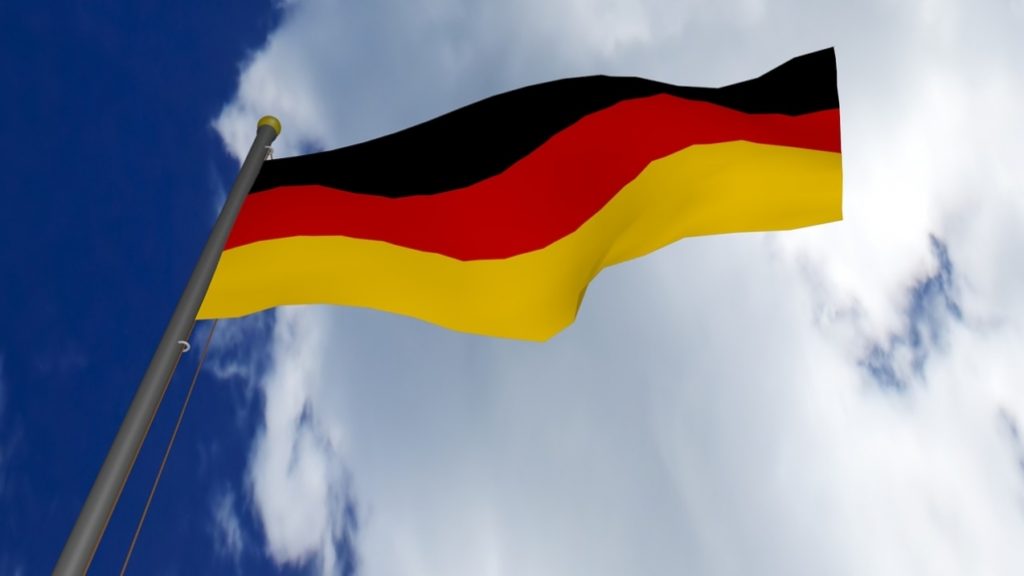
Germany will refuse to take part in a U.S.-led maritime mission in the Strait of Hormuz, German Foreign Minister Heiko Maas announced.
Maas said that there “cannot be a military solution” to the current crisis in the Persian Gulf.
Speaking in Warsaw on Wednesday, Maas said that Germany will turn down Washington’s request, which was revealed by the U.S. Embassy in Berlin on Tuesday.
The request from Washington was a joint U.S., British, and French operation is aimed at protecting sea traffic in the Strait of Hormuz, and combating so-called “Iranian aggression”.
The mission was conceived following Iran’s seizure of the British-flagged Stena Impero oil tanker earlier this month, itself widely considered a tit-for-tat response to Britain’s seizure of an Iranian tanker off the coast of Gibraltar several weeks earlier.
That Germany would refuse to assist the American-led mission is no surprise. Washington’s request was the subject of intense debate in Berlin, with opposition parties on the left and right pressuring Chancellor Angela Merkel’s coalition government into saying no.
“We have to avoid further escalation in the Strait of Hormuz,” Maas said on Wednesday. “That has always been out position.”
Compared to the U.S. and some of its allies, Germany has enjoyed relatively cordial relations with Tehran since the 1970s.
Germany remains a party to the 2015 Joint Comprehensive Plan of Action (JCPOA, or Iran nuclear deal), a landmark agreement that granted Iran sanctions relief in exchange for a curb on its nuclear weapons program. The U.S. unilaterally withdrew from the deal last year, precipitating the current standoff with Tehran.
Despite Germany’s refusal to join the U.S.-led mission, some politicians in Berlin remain open to another kind of deployment.
“The alternative is a European mission, if necessary without the British, if they decide for the U.S.,” Norbert Roettgen, a member of Merkel’s CDU party, told German media on Tuesday.
German govt split over sending navy to Gulf
A prospect of German warships being sent to patrol the troubled waters of the Strait of Hormuz has ignited a debate in Berlin.
Critics are warning against joining a potential US- and UK-led mission.
Proponents of the London-proposed mission say Germany should take part just because it is an inherent part of global trade.
“Hardly any other country is as dependent on the freedom of international shipping as export champion Germany,” former envoy to the US Wolfgang Ischinger told Die Welt. That said, Germans should not just “watch from the sidelines,” he argued.
His words were echoed by the influential Association of German Industries, whose president told the paper that such a mission would be “a question of solidarity among us Europeans.”
But the opposition slammed the proposal, warning that events could ultimately spin out of control. Germany “should not walk into the trap of Trump and his poodle Johnson and let itself be led into a conflict or the preparation for war against Iran,” Sevim Dagdelen, a Left Party MP, was quoted by Deutsche Welle as warning.
The Social Democrats (SPD), the junior coalition partners in Chancellor Angela Merkel’s center-right coalition government, were equally unappreciative of the idea.
Karl-Heinz Brunner, an SPD member of the parliamentary defense committee, said that while maritime shipping is important, securing it could be done through diplomacy.
“In the current situation, military options could contribute to further destabilization,” he cautioned.
Later in the day, the US embassy in Berlin told DPA news agency that Washington had formally asked Germany to embark on the mission to “combat Iranian aggression.”
The embassy maintained that the government was “clear that freedom of navigation should be protected. Our question is protected by whom?”
That aside, sending ships to the Gulf could be akin to a ‘mission impossible’ for the military. Last year, it was reported that Germany’s Navy is running out of combat-capable warships and had six out of fifteen frigates decommissioned.
Newer-generation warships are either going through trials or are under construction.
Last week, the UK called for a joint effort to protect the safety of shipping in the Strait of Hormuz, a narrow but important waterway that connects the Persian Gulf with the Indian Ocean.
The call was made shortly after Iran’s Revolutionary Guard Corps seized British-flagged oil tanker Stena Impero in the area.
The seizure followed an earlier incident in which British Royal Marines and Gibraltar police seized the Iranian oil supertanker Grace 1 off the southern coast of Spain. London said the ship was suspected of carrying oil to Syria in violation of EU sanctions, but Tehran denied any wrongdoing.
Tehran has lashed out at the prospective European mission, saying that Western nations will jeopardize security in waters mainly shared between Iran, the UAE and Oman. The effort “naturally carries a hostile message, [and] is provocative and will increase tension,” Iranian government spokesperson Ali Rabiei was quoted by AFP as saying.

KHAMENEI’S THREE COMMANDMENTS FOR THE IRANIANS: THE MIDDLE EAST IS HEADING TOWARDS “MAXIMUM DANGER”

By Elijah J. Magnier
The Middle East is heading for “maximum danger” following the “maximum pressure” imposed on Iran by US President Donald Trump who, unilaterally and unlawfully, withdrew over a year ago from the Joint Comprehensive Plan of Action (JCPOA), known as the nuclear agreement, and imposed harsh sanctions on Iran that Tehran considers a declaration of economic war. Trump’s move against Iran has provoked a gathering storm of tanker wars, the mutual detention of tankers by Iran and Britain. Indeed, the US administration has been pushing London to confront Iran starting from the capture of an Iranian super tanker (Grace 1) at Gibraltar on July 4, which has now triggered an Iranian tit-for-tat reaction (capturing a British tanker in the Straits of Hormuz). While the US and the UK are walking, along with Iran, on the edge of the abyss, the Iranian supreme leader, Sayyed Ali Khamenei, has publicly proclaimed “three points of guidance” for officials in the country, which includes a road map to follow even in his own absence.
Iran has detained a British oil tanker “Stena Impero” hours after the British High Court of Gibraltar announced the extension of an additional month of the arrest of Iranian tanker “Grace 1”, carrying two million barrels of oil. When this news reached the Iranian leadership, they realised that mediation efforts by French President Emmanuel Macron had stumbled and that it was time for Iran to take the matter in hand.
This does not mean that Iran is closing the door to French diplomacy or attempts by other intermediary states to de-escalate the extremely tense situation that is intensifying daily in the Middle East, particularly with the gathering of new British naval war vessels and the arrival of additional US military forces in Saudi Arabia.
President Emmanuel Macron’s chief adviser, Ambassador Emmanuel Bonne, had visited Tehran this month and met with Iranian leaders, and he promised to intervene to secure the release of the Iranian super tanker Grace 1 and to play a mediation role between Tehran and Washington.
According to Iranian sources, the detention of the Iranian super tanker was an effort by the US to implicate Europe further in the US offensive against Iran. The US is lurking behind London, watching the first recent UK confrontation with Tehran escalate, as Iranian Special Forces took the situation in hand and confiscated a British tanker.
The US seems to have pushed the UK to take the decision to hold Grace 1 at the beginning of the tanker crisis, in response to Iran’s downing of a US drone. Unfortunately, London agreed to become involved on behalf of its US ally, further confirming European apprehensions about effects of the US withdrawal from the nuclear agreement, which European states did not support– since Iran has not violated any clause of the agreement for 14 months.
The US decision to revoke the nuclear deal and the US “maximum sanctions” imposed on Iran are in fact causing mounting pressure and increased danger of a possible war in the Middle East.
It is clear that Iran does not intend to back down in the face of US sanctions and aggression. The Middle East is on the path towards “maximum danger” because Iran considers itself already at (economic) war with the US and its allies. At this stage Iran does not differentiate between the economic war imposed by the US administration and a military war: the results in both cases are devastating.
I learned that Sayyed Ali Khamenei met with the Iranian leaders and gave three directives for Iran to follow, whatever difficulties might arise at any time in the future, as fixed principles.
“The US is seemingly aware of Tehran’s planning and objectives. This is why this administration, like previous ones, tried to thwart Iran’s nuclear and missile development, and support for its allies- to no avail”, said the source. 
Khamenei’s directives are:
1 – Adherence to Iran’s right to nuclear enrichment and everything related to this science at all costs. Nuclear enrichment is a sword Iran can hold in the face of the West, which wants to take it from Tehran. It is Iran’s card to obstruct any US intention of “obliterating” Iran.
2 – Continue to develop Iran’s missile capability and ballistic programs. This is Iran’s deterrent weapon that prevents its enemies from waging war against it. Sayyed Ali Khamenei considers the missile program a balancing power to prevent harm against Iran.
3 – Support Iran’s allies in Iraq, Syria, Lebanon and Yemen, and never abandon them, because they are essential to Iran’s national security.
Sayyed Khamenei’s three points are a response to the 12 conditions announced by Secretary of State Mike Pompeo, who asked the Iranian government to stop its nuclear and missile programs and abandon its allies in the Middle East, thus depriving Iran of any defence, and turning it into a vulnerable country.
Sources added: “Sayyed Khamenei recommended these commandments to preserve the Islamic Republic of Iran, and that each of these three items is equally important for the safety of Iran, its existence and continuity, and national and strategic security.”
Iran began to develop its missile capabilities under US sanctions. It has developed its nuclear program during the 40 years that the US has imposed a suffocating blockade on the country. Today, Iran has reached a very advanced stage in both programs to the extent that it will never retreat on either initiative, but will continue to move forward. 
As for its allies, recent years have shown how Iran and its allies in Yemen, Iraq, Syria and Lebanon, have been able to take the initiative in the Middle East and turn things in their favour.
It is not unlikely that Tehran will set up ballistic missiles at close range to the enemies or countries that could be targeted by these missiles. Its allies will defend Iran at a moment’s notice.
The situation today is as follow: Iran has detained the British tanker “Stena Impero” along with its 23 crew members in Bandar Abbas pending the release of its carrier Grace 1. The US Central Command has announced that it is working with its allies to securefreedom of movement. Iran has threatened to not allow any oil exports from the Persian Gulf region if it cannot export its own oil. Tehran downed an American drone. Trump himself announced the shooting down of an unmanned Iranian drone –a claim Iran denies– thus placing himself on the same level as the Iranian IRGC- which Trump calls a terrorist group!
The US is sending new troops to Saudi Arabia, and Britain has sent additional war vessels in the Persian Gulf. All this deployment in a small area in the Middle East, a narrow strait that can hardly accommodate all these events. The region is heading towards maximum danger where all countries and allies are putting their hands on the trigger instead of going to the negotiating table and respecting the agreements signed. What comes next may be even worse.

WHY DID THE UK COMMANDER OF HM MONTROSE REFRAIN FROM FIRING ON THE IRGC? WHO IN IRAN GAVE ORDERS TO CAPTURE THE “STENA IMPERO”?

Iranian IRGC Naval unit onboard of the British-flag tanker
“Stena Impero
“.
By Elijah J. Magnier
The US officially asked Europe, in particular the UK, France, Germany and Italy, to provide a naval force to patrol and protect ships sailing in the Straits of Hormuz, even if the command and control is handled by the Europeans and not the US. Washington wants to drag the old continent into the front line in case of a military confrontation with Iran. It is well known that the US is behind the existing tension in the Middle East today following its unlawful unilateral withdrawal from the Joint Comprehensive Plan of Action (JCPOA), known as the nuclear deal. However, to the dismay of the US, Europe has up to now refused to follow the US path. The US would like to see Europe more involved. Although the Trump administration is not looking for war, despite the fact that Iran turned its missiles against the UK Royal Navy HMS Montrose and the US destroyers (when the Iranian Revolutionary Guard Corps confiscated the British-flag tanker Stena Impero). This is the reason that the British command chose to avoid a military confrontation and decided against a military intervention to protect the tanker.
“I order you not to intervene in my operation. The tanker is under my control. Do not put your life in danger”. This is exactly what the Iranian IRGC naval officer told the commander of the Foxtrot 236 when Iranian special forces were about to board the tanker Stena Impero. But why would he warn the British Navy “not to risk their lives”?
The British Navy’s radar sweeps had discovered active mode missiles radar tracking them by means of their semi-radar homing from different launch platforms- main radars which could easily create a saturation attack designed to put the ship in a helpless position and eventually destroy it. The Iranian missiles were ready to firehad the commander of the UK vessel decided to engage with the Iranian fast boats.
Iranian missile platform launchers spread all along the Iranian coast overlooking the Straits of Hormuz had the four US vessels and the one UK naval ship in their sights, ready to engage. Other Iranian armed drones were in the air, also ready to engage, waiting for orders to dive on their selected targets. Iran has not revealed, to date, other more sophisticated missiles that it has manufactured and could put in service in case of war.
The UK commander of the Foxtrot 236 Royal Navy decided to let go of Stena Impero and allow the diplomacy of his government to take over, to avoid the potentially serious casualties inevitable in the case of a military confrontation.
However, the British government is insisting on saving face. It therefore has to reject any exchange of tankers. The Royal Navy had already confiscated an Iranian supertanker, Grace 1, in Gibraltar. London pushed even further the conflict with Iran when the Gibraltar court extended by one additional month the arrest of the Iranian supertanker following a US request.
The only plausible solution is for the Gibraltar court to refrain from adding more fuel to the ongoing crisis and to end the detention of Grace 1, once the period of one month is reached.This will enable Iran to release Stena Impero from Bandar Abbas harbour and end the crisis.
Why did the IRGC officer order the British commander to keep away even if the HMS Montrose was within a reachable distance, along with another four US frigates, well-armed and potentially ready to engage?
When the British authority decided to extend the arrest of “Grace 1”, it basically ended the initiative of Emanuel Bonne (the French presidential envoy) to obtain the release of the Iranian super tanker. The UK’s decision to undermine its European partner’s initiative and abide by US policy showed the vulnerability of Europe’s fragile unity. London agreed to be an instrument of Trump’s policy.
This is when the Iranian Leader Sayyed Ali Khamenei ordered the commander of the IRGC Hussein Salameh to stop the first British ship and retaliate with a tit-for-tat. Following a meticulous overview of all ships navigating in the area, Salameh was informed about the Stena Impero, but also about the five western military ships in the vicinity. The IRGC commander informed Sayyed Khamenei who responded, according to a well-informed source: “Go with God’s blessing and have no fear. They will not dare to attack us”. 
This is how the decision was taken, at the highest level of the Iranian leadership where the spiritual, military and political leadership were involved under the flag of “protecting the national interest and security of the country.” 
Notwithstanding the UK position, Europe will not accept the US trap and become a shield for a war Washington would like to impose on the continent. British oil companies are changing the registrations of their ships and removing the British flag so as to sail safely through the Straits of Hormuz. BP, the giant British oil company which was the first to follow this procedure, is avoiding sending ships to the region, relying instead on proxies. This is a flagrant manifestation of its lack of trust in its own government’s decision, which is not in the interests of the UK but instead reflects a servile devotion to Trump administration policy. 
There is a war risk premium that tanker owners pay when navigating in the Persian Gulf. They now have to pay an additional $185,000 for supertankers, in the wake of the attacks of recent months.
The IRGC has sent many messages by shooting down a US drone, by sabotaging tankers and by capturing another. They come down to a single message: if Iran does not export its oil, no country will. The arrival of a new UK Royal Navy ship, the HMS Duncan, will change nothing: it will add to the bank of objectives and list of Iranian targets available in the Persian Gulf in case of war. The US decision to revoke the nuclear deal not only made the Middle East less safe, but also has brought Russia further into the warm waters of the region: Iran has announced a joint naval exercise with Russia in the next months. Iran is bringing the Russians into what used to be the US’s “water playground”. Obviously, Washington’s “maximum pressure” is failing to produce the results the Americans predicted.
As long as Trump is in power, the situation in the Middle East will not stabilise. Not many people in the world believed the Secretary of State Mike Pompeo when he said the US sanctions are crippling Iran by up to 95%, and that Iran’s Middle Eastern influence is seriously affected by the US measures.
Iran is defying US hegemony and is ready for war, openly challenging the US and the UK. Tehran is welcoming Chinese and Russian support and is developing its missile capability to compensate for its lack of superiority in the sea and the air.
Iran counts on its missiles to impose its Rules of Engagement and is challenging both the US superpower and the UK with its imperial tradition.
The US is no longer in a position to dictate to Iran and “cut its nails”. Tehran is developing further its missile technology and nuclear capability. It is ready for the next step, which involves further partial withdrawal from the nuclear deal despite France and Germany’s efforts to proclaim their distance from the US attitude. The world will continue to focus on this part of the world, watching with anxiety how the US-Iran confrontation will unfold.

Things you need to know about Saudi Arabia


Khashoggi’s killing is one chapter in a long line of violations to add to the Kingdom’s appalling human rights record.

On 19 June 2019, the UN’s the Special Rapporteur released a report which concluded that Khashoggi was the victim of “an extrajudicial killing for which the state of Saudi Arabia is responsible under human rights law,” and that “there is credible evidence, warranting further investigation of high-level Saudi officials’ individual liability, including the Crown Prince’s”. But Khashoggi’s killing is one chapter in a long line of violations to add to the Kingdom’s appalling human rights record.

1 - Devastating war in Yemen

The Saudi Arabia-led coalition has contributed significantly to a war that has devastated Yemen for more than four years, killing thousands of civilians, including children, by bombing or shelling hospitals, schools and homes. Amnesty International has documented repeated violations of international humanitarian law, including war crimes. Despite this, countries including the US, UK and France continue to make lucrative arms deals with the Saudis.

2 - Relentless crackdown on peaceful activists, journalists and academics

Since Crown Prince Mohammed bin Salman came to power, many outspoken activists have been arrested or sentenced to lengthy prison terms simply for exercising peacefully their rights to freedom of expression, association and assembly. The authorities have targeted the small but vocal community of human rights defenders, including by using anti-terrorism and anti-cybercrime laws to suppress their peaceful activism in exposing and addressing human rights violations.

3 - Arrests of women’s rights defenders

In May 2018, a number of prominent women’s rights defenders were arrested in Saudi’s ongoing crackdown on the human rights community. Following their arrests, the government launched a chilling smear campaign to discredit them as “traitors”. They are still facing trial and risk a lengthy prison sentence. Despite attempts at reform, women in Saudi Arabia are still subject to a myriad of restrictions on everyday life.

4- Routine torture in custody

Former detainees, trial defendants and others have told Amnesty International that the security forces’ use of torture and other ill-treatment remains common and widespread, and that those responsible are never brought to justice. Women's rights defenders, protesters from the predominantly Shia Muslim minority Eastern Province, and other dissidents often stand trial at the Specialised Criminal Court,the kingdom's counterterrorism court and they often face torture. Saudi Arabia has acceded to the UN Convention Against Torture - with reservations, but reports from human rights organisations and testimonies indicate that systematic torture is widespread with impunity.

5 - Systematic discrimination against women

Saudi Arabia has a guardianship system based on strict Wahhabi interpretation of Islam. The system is not a formal law. Women and girls still face entrenched discrimination in Saudi Arabia, and are legally subordinate to men in relation to marriage, divorce, child custody, inheritance and other aspects. Under the guardianship system, a woman cannot make decisions on their own; instead, a male relative must decide everything on her behalf. In December 2015, women voted for the first time.

6- Entrenched religious discrimination

Members of the Kingdom’s Shi’a minority continue to face entrenched discrimination that limits their access to government services and employment. Scores of Shi’a activists have been sentenced to death or long prison terms for their alleged participation in anti-government protests in 2011 and 2012.

7- ‘What happens in the Kingdom, stays in the Kingdom’

The Saudi Arabian authorities have been known to take punitive action, including through the courts, against peaceful activists and family members of victims who contact independent human rights organizations, such as Amnesty International, or foreign diplomats and journalists.

8- Jamal Khashoggi’s murder

Following Jamal Khashoggi’s horrific killing, Amnesty International is calling for the UN Secretary-General Antonio Guterres to establish a UN independent investigation into the circumstances surrounding Khashoggi's extrajudicial execution, possible torture and any other crimes and violations committed in his case. Following the release of the UN report on the killing of Khashoggi, Amnesty International also calls for independent criminal investigation to uncover the truth.

The US Sanctions are Affecting All Aspects of Human Life in Iran

Photograph Source: Morten Knutsen – CC BY 2.0
When signed in July 2015, the Joint Comprehensive Plan of Action, commonly known as the Iran nuclear deal, was lauded as a historic diplomatic achievement for the signatories of the accord: Iran, China, France, Germany, Russia, the United Kingdom, the United States and the European Union. The JCPOA stipulated limits on Iran’s nuclear activities in return for the removal of nuclear-related sanctions against Iran, and notable international think tanks, senior diplomats, academics and media personalities talked of it as a technically sound agreement with robust verification procedures involving the International Atomic Energy Agency.
In May 2018, US President Donald Trump pulled the United States out of the JCPOA and reinstated all the nuclear-related sanctions the US had committed to lift as part of the deal. The Middle East has been in turmoil in the interim and concerned observers have warned against the possibility of a military showdown between Iran and the United States. A lot has been said in the media about the unilateral de-certification of the Iran deal by President Trump and its implications for multilateral diplomacy, international norms and global non-proliferation. Since exiting the nuclear deal, the US officials have sporadically offered fresh talks with Iran to conclude a new deal; however, Iranian authorities have firmly rejected new negotiations while hard-hitting sanctions are in place.
The US sanctions target Iran’s oil and petrochemical products’ exports, banking and insurance sectors, aviation industry, maritime navigation, Iran’s purchase of US currency, Iran’s trade in gold and other precious metals and tens of individuals in Iran’s armed forces, as well as people connected to Iran’s nuclear program. These sanctions, as confirmed by the UN special rapporteur on unilateral coercive measures, have had a detrimental impact on the livelihoods of ordinary Iranian citizens and violated their basic human rights. However, as long as the two governments don’t come to agreement over an exit strategy, the situation is unlikely to change for better.
Sasan Fayazmanesh is Professor Emeritus of Economics and Director of the Middle East Studies Program at California State University, Fresno. He has written extensively on Iran’s foreign policy and sociopolitical developments. His latest book is “Containing Iran: Obama’s Policy of ‘Tough Diplomacy’”. Organization for Defending Victims of Violence has arranged an interview with Prof. Sasan Fayazmanesh to discuss the withdrawal of the United States from the Iran deal and the human toll of the US sanctions against Tehran. The following is the text of the interview.
Q: Tensions are running high between Iran and the United States and the proponents of war are hopeful that a military confrontation takes place between the two rivals. Do you blame the unilateral withdrawal of the United States from the Iran nuclear deal in May 2018 for the emergence of the current crisis?
A: The immediate cause of the recent crisis is the current US administration’s unilateral withdrawal from the Joint Comprehensive Plan of Action (JCPOA). This agreement, which was reached between Iran and the P5+1 – five permanent members of the UN Security Council and Germany – in 2015, curtailed Iran’s nuclear activities in exchange for lifting all nuclear-related sanctions. Once the Trump administration decided not to abide by the JCPOA, the agreement fell apart and we reached the current crisis.
But, a more interesting question is how did the withdrawal, the imposition of all nuclear-related sanctions on Iran, and the current predicament happen so fast and so easily? The answer to that question requires a more in-depth analysis, which is beyond the scope of this interview. But such an analysis must address some of the following questions. How is it possible that in an advanced capitalist economy in the 21st century, an individual such as Donald Trump can become president? How is it conceivable that such an individual can, acting on a whim and with impunity, overturn international agreements and treaties? How is it possible that powerful individuals in this country, and other countries, who do realize the gravity of the situation, not stand up to Trump? And as far as the JCPOA is concerned, what was wrong with this agreement that allowed it to crumble with the stroke of a pen? Why was the agreement crafted in such a way that made it possible for the US to leave the agreement without any cost to it? Why did Iran not insist that such an agreement be ratified by the US Congress? Why did Iran allow all non-nuclear-related sanctions, imposed on it for its “support for terrorism,” “violation of human rights,” and developing missile technology, remain intact?
Q: The Joint Comprehensive Plan of Action was an international agreement supported by the UN Security Council. Have the other signatories of the accord been able to work to save it from collapsing after the US withdrawal? Did they do their best to make sure the outcome of two years of active diplomacy will be preserved?
A: The other signatories of the JCPOA, the so-called the P4+1, namely France, the United Kingdom, Russia, China and Germany, have neither had the will nor the power to stand up to the US. This, of course, is an old story. In pursuing foreign policy, the US every so often behaves like a gangster. In order to get what it wants, it resorts to force, threats, arm-twisting, cajoling, bribery, etc. I have documented this behavior in my books and articles on sanctioning Iran. I have shown, in particular, how the administrations of both George W. Bush and Barak Obama managed to get the approval of members of the United Nations Security Council to impose multilateral sanctions on Iran. This included, among others, intimidating non-permanent members of the Security Council, as well as bribing Russia and China. For example, in summer 2009, the Obama administration was working hard to pass a UN Security Council sanctions resolution against Iran. In order to get the Russian vote, Obama offered the Russians a quid pro quo: in exchange for a deal on the expiring 1991 Strategic Arms Reduction Treaty and postponing the US deployment of anti-missile systems in Europe, Russia would agree to impose harsher sanctions against Iran. Later, the Obama administration sweetened the deal by promising to drop the deployment of anti-missile systems in Europe altogether. Also, the Obama administration twisted China’s arms over its alleged currency manipulation, cajoled it and even threatened it financially to go along with sanctioning Iran. Both Russia and China fell in line and agreed to a new set of UN sanctions in 2010.
Of course, the previous US administrations did not need to do much to get their European allies to go along with sanctions. Imperial powers almost always stick together and follow the lead of their hegemon when it comes to punishing disobedient countries in the periphery.
What is different today is that while people like Bush and Obama made alliances to pursue their nefarious policies, Trump is lashing out against the old US allies, making pursuing a unified policy against Iran difficult. Furthermore, while the reprehensible policies of previous administrations were not translucent and needed to be deciphered, the aggressive policies of current administration are out in the open, easy for anyone to see.
Trump’s hostility towards European leaders, as well as the cost of US secondary sanctions to the Europeans, have caused some of them to come out in opposition to his Iran policies. However, this opposition has so far not gone beyond words. When it came to action, the Europeans failed to save the JCPOA. It took them many months to come up with some tools that were supposed to get around US secondary sanctions, such as the “special purpose vehicle” for trade with Iran or “instrument in support of trade exchanges”, INSTEX. Such tools have so far been ineffectual and have done nothing to stop the economic bleeding of Iran. Indeed, INSTEX, which was supposed to facilitate export of food and medicine to Iran, could not work because of US financial sanctions. The same can be said for Russia and China. They, too, have been all talk and no action. As a result, the JCPOA is for all practical purposes dead or, at best, on life support.
Q: From the point of view of international law, are the sanctions slapped on Iran by the United States since last May justifiable? Are the different world countries obliged to follow suit in cutting off their trade ties and business with Iran while the UN Security Council doesn’t back the new sanctions?
A: As I alluded to earlier, the previous US administrations pursued their policies of “maximum pressure” on Iran by passing, in addition to unilateral sanctions, multilateral sanctions, mainly through the United Nations. But, as I also suggested, the current administration does not feel the need to work with the European countries, or Russia and China, to pass new UN sanctions resolutions. Therefore, there is currently no set of multilateral sanctions against Iran and members of the United Nations are not obligated to abide by Trump’s sanctions and cut their business ties with Iran. But going back to the concept of a gangster, it is not necessary for the US to have international backing to pursue mobster-like policies. All that is needed is force, threats, intimidation, bribery, etc. to get what it wants. Long before the US exited the JCPOA and brought back all previous sanctions, foreign businesses had started to leave Iran, fearing what the US could do to them. Europe’s INSTEX, which was too little and too late, did nothing to alleviate the fears of foreign businesses.
Q: What’s your opinion on the human impact of the US sanctions against Iran and the suffering of ordinary citizens as a result of these punitive measures? Do the international organizations have a responsibility to alleviate the pressure the ordinary citizens undergo because of the sanctions?
A: Before the JCPOA became effective, Iran’s economy, despite all its potential, had a negative rate of growth and suffered from double digit unemployment and inflation rate, a severe case of what might be called “stagflation.” Stagflation deeply hurts ordinary people of a country, and it was so in the case of Iran. The JCPOA threw a lifeline to the people of Iran. Iran’s economy started to grow, and inflation subsided. Now, after the demise of the JCPOA, Iran’s economy is basically back to what it was before the agreement. According to the International Monetary Fund’s World Economic Outlook of April 2019, Iran’s economy grew at the rate of –3.9% in 2018 and is projected to grow at the rate of –6.0% in 2019. According to the same source, consumer prices in Iran rose by 31.2% in 2018 and are projected to rise by 37.2% in 2019. The unemployment rate in Iran, the same source points out, was 13.9% in 2018 and is projected to be 15.4% in 2019. When you look at the same source and its data, you see no other oil producing country in the region that faces such a dreadful situation. Moreover, no oil producing country in the region has faced the currency volatility that Iran has experienced since the demise of the JCPOA. One can only conclude that the massive pain that the people of Iran are feeling is the result of sanctions that the world’s biggest gangster has imposed upon them.
But the US imposed sanctions on Iran are not just causing economic pain. They are affecting all aspects of human life in Iran, including health. There are, of course, many studies on the effect of these sanctions on the Iranian health situation. One such study appeared in 2018 in the International Journal of Health Policy and Management and on the website of the National Institutes of Health. It states the following result:
“The sanctions on Iran caused a fall of country’s revenues, devaluation of national currency, and increase of inflation and unemployment. These all resulted in deterioration of people’s overall welfare and lowering their ability to access the necessities of a standard life such as nutritious food, healthcare and medicine. Also, the sanctions on banking, financial system and shipment led to scarcity of quality lifesaving medicines. The impacts of sanctions were more immense on the lives of the poor, patients, women and children. Humanitarian exemptions did not protect Iranians from the adverse effects of sanctions.”
It concludes by saying: “Countries which imposed economic sanctions against Iran have violated Iranians’ right to health. International community should have predicted any probable humanitarian effects of sanctions and used any necessary means to prevent it.” Needless to say that the international community not only has not made any such predictions, it has done nothing to stop US aggressions towards Iran and to alleviate the pain and suffering of the Iranian people.
Q: How do you think the unilateral coercive measures and economic sanctions influence the ability of Iran to fight drug trafficking, considering that it is located next to the biggest producer of opium in the world?
A: I am not an expert in this area. But I have seen reports and complaints by Iranian government officials about the effect of sanctions on Iran’s attempts to combat drug trafficking that originates in Afghanistan. Following the JCPOA, Iran and European countries agreed to fight jointly drug trafficking. But, according to Iranian government officials, the Europeans not only failed to carry out their part of the bargain but allowed the US sanctions to make Iran’s own work very difficult. In December 2018, Iran’s President Rouhani issued a warning about the consequences of US sanctions and European inaction in fighting drug trafficking. In particular, he pointed out that the final destinations of these drugs are mostly Europe and America. Similar warnings were issued by Iran’s Foreign Minister Javad Zarif in June 2019. And lately, the head of the Iranian organization that is in charge of combating drug trafficking gave details concerning the rapid rate of growth of drugs in Afghanistan since the year 2000, the Europeans’ inaction, and the US sanctions that hinder Iran’s own action. Some examples that he gave include Iran’s inability to obtain equipment needed to fight drug traffickers, such as night goggles, X-ray machines and other electronic gadgets.
Q: JCPOA was not the only multilateral accord that President Donald Trump exited. In your view, what are the reasons for the US President’s disregard for multilateralism and his frequent use of unilateral coercive measures including the threat of force, economic sanctions and leaving international arrangements and treaties? Doesn’t this style of governance undermine global order?
A: The governing style of the current administration, its disregard for international laws and treaties, and its aggressive and reckless policies, are symptomatic of the kind of people that currently run the executive branch of this country. Some of Donald Trump former aids have reportedly described him as an “idiot,” “dope,” “moron,” “unhinged” or as an individual who has the understanding of “a fifth- or sixth-grader.” Unfortunately, I am neither a psychiatrist nor a psychologist and am unable to render a professional opinion about the mental state of the current US president. But given the behavior of Donald Trump, many of the above adjectives seem to be justified.
Trump repeats the same lie even though he knows that what he is saying is false. For example, on July 11, 2019, he tweeted the following: “Iran has long been secretly ‘enriching,’ in total violation of the terrible 150 Billion Dollar deal made by John Kerry and the Obama Administration. Remember, that deal was to expire in a short number of years. Sanctions will soon be increased, substantially!” As some reporters pointed out, all three allegations of Trump were false. But Trump already knew that these claims are untrue; he had repeated them before and had been told that they are wrong.
Only an irrational and unhinged individual would consciously repeat the same lies, especially when such lies can lead to a disaster. And if you combine this irrationality with such traits as impulsiveness, racism, prejudice, xenophobia, and jingoism, then you get a combustible mixture that can threaten the whole world. The most terrifying aspect of the current situation is that Trump is surrounded by some individuals who share many of his own traits. One such individual is, of course, the National Security Advisor John Bolton, who according to Trump himself if left unleashed would “take on the whole world at one time.” Bolton, who played a substantial role in the invasion of Iraq, has been trying to wage a war on Iran for decades. And given the prevailing madness in the White House, he might succeed this time. Even more terrifying is that the main advisors to people such as Bolton, and Secretary of State Pompeo, are rabid, scary groups such as the Foundation for the Defense of Democracies, an Israeli lobby group whose sole purpose is to start a war with Iran.
Q: At the moment, the Department of State, Department of Commerce and Department of Treasury oversee economic sanctions against nearly 30 countries. Has the United States government been able to achieve its goals through these wide-ranging sanctions or has it merely contributed to the plight and suffering of average citizens in the target countries?
A: I am afraid I cannot fully answer this question. I do not know the exact case of each country that you have in mind. I also do not believe that generalizing the concept of sanctions, and trying to assess their overall effects, are very useful, as I have explained in some of my books and articles on sanctions. The case that falls within the purview of my expertise is, of course, Iran. The US has sanctioned Iran for forty years, using what I have referred to as a “menu option,” an array of allegations. The allegations have included Iran’s support for international terrorism, developing weapons of mass destruction, developing intercontinental ballistic missile capable of carrying nuclear warheads, opposing the Israeli peace process, destabilizing Afghanistan, harboring Al-Qaeda, lacking democracy, being ruled by unelected individuals, violating human rights, not protecting the rights of women, not being forward-looking and modern, etc. But the entire purpose of this menu option has been to replace the existing, disobedient government in Iran with one that is friendly to the US and Israel. The economic war that has been waged against Iran for four decades has tortured the people of Iran but has so far not brought about the result that the US and Israel have been hoping for.
Q: What is the most prudent and smart way through which Iran can resist the US campaign of extensive economic sanctions to protect the rights of its citizens?
A: It would be presumptuous of someone like me, who lives outside of Iran and is not suffering from the effects of the US economic war, to propose ways of resisting this war. All I can say is that so far the people of Iran have acted sensibly in the face of foreign threats. Every time that these threats have intensified, they have unified and warded them off. When the threats have lessened, they have turned their attention to home, towards putting their own house in order
.

Lessons for Lankan Muslims in India’s criminalisation of triple talaq

Muslim women gesture victory sign as they celebrate the passage of a law to outlaw triple talaq, or “instant divorce,” at an event organised by the ruling Bharatiya Janata Party in New Delhi on Wednesday. AFP

India’s Hindu nationalist government on Tuesday criminalised the Muslim ‘triple-talaq’ divorce, by adopting a landmark law. The practice is now punishable by a jail term upto three years. 


Most Muslim women across India celebrated the bills’ passage in Parliament. They saw it as a significant victory that ended the long suffering they were condemned to undergo as a result of Muslim religious scholars reading only the literal meaning of the scripture while ignoring its spiritual meaning.  
With regard to divorce, the Quran insists that every effort must be made to bring reconciliation between husband and wife.  The process involves three declarations of divorce, with the first two declarations being followed by waiting periods allowing the couple enough time to save the marriage. However, India’s mullahs, instead of respecting the Quranic will, had endorsed the male chauvinistic explanations of certain imams of the past and resisted moves to eliminate the abominable practice that allowed a man to divorce his wife by repeating the word “talaq” (divorce) three times. 

In most Muslim countries, the triple-talaq has been declared un-Islamic. According to al-Nasai’s hadith book, Prophet Muhammad has condemned it.  The Prophet has said that of all things permitted, divorce is the most detestable in the sight of God. The Quran has several verses which warn against women being harassed in the marital union and during the divorce process.
For instance, the Quranic chapter Mujadilah speaks about a woman who pleaded her case with God after her husband divorced her through Zihar, a pre-Islamic method of divorce. The Zihar divorce involved a husband declaring that his wife was like his mother. A woman divorced under this method was denied maintenance and the freedom to remarry. She would be a lifetime slave. God strongly repudiated the Zihar Talaq. 
By extension, any type of divorce should be denounced if it brings injustice to women. The Quran itself urges the Muslims to follow the best meaning of the text. “Those who listen to the Word, and follow the best (meaning) in it: those are the ones whom Allah has guided, and those are the ones endowed with understanding.” (39:18).  We need to reflect on this verse and understand that the best meaning is one of justice. 

In the Indian example, there is a lesson for Sri Lankan Muslims, who are embroiled in a debate over Muslim Marriage and Divorce Act (MMDA) reforms. The reforms are called for because the law and the lacuna in it bring misery to Muslim women, instead of offering them the law’s protection.  If the Muslim leaders do not support the reforms, they are only paving the way for the government -- the custodian of the people’s freedom -- to intervene and ensure that women’s and children’s rights are not violated. Britain, for instance, has enacted a Forced Marriage Protection Law.  Early this week, the Dubai ruler’s wife, a princess no less, invoked this law to protect herself. One can imagine the worse situations the ordinary Muslim women have been in.

We need to ask ourselves as to on whose side God is: Is He on the side of a government that frees Muslim women from oppressive laws or on the side of the mullahs preventing justice to women, who cry out to their Lord seeking a speedy end to their suffering.  
The time has come to sidestep the irrational religious scholars, the types of whom come up with ludicrous fatwas. One such scholar created controversy in 2007 in Egypt when he urged women to breastfeed their male colleagues and make them their foster sons to circumvent the rule on the segregation of sexes. 
It is unfortunate that dimwitted mullahs are able to mislead the religiously illiterate people with their asinine fatwas. Agree; Sri Lanka’s moulavis are not as illogical as the one who gave the outrageous breastfeeding fatwa. Most Sri Lankan moulavis are civic-minded and realise that the MMDA needs reforms. Yet, some are adamant. We have learned from the prophet’s discourse with Muad ibn Jabl, who he chose to appoint as governor of Yemen, that Islam permits ijtihad or decisions based on independent reasoning within the confines of the Islamic principles.

Sri Lanka’s Muslim women activists campaigning for MMDA reforms say the MMDA is in consonance with neither the Islamic principles of justice and compassion nor Sri Lanka’s laws, including the Constitution. These women activists appeared more enlightened than the ulamas who tried to delay the reforms. 
Islam should be seen as a feminist movement. The prophet’s mission was to reform a society which buried its girl children alive, for they were regarded as a symbol of shame. Prostitution was widespread. Women did not have inheritance rights. 
Islam gave the girl child her honour. Women were given the property rights and equal status in judicial matters. 
Sadly, though, simple-minded mullahs, resorting to a selective reading of the Quran, claim that the strength of a woman’s testimony is half that of a man, whereas the Quran makes it clear in 24:4-9 that a woman’s testimony is equal to that of a man. 
Women, thus freed and dignified by Islam, once again find themselves in yokes.  The feminist movement Islam started must continue until women are freed from oppressive customs, laws and male chauvinistic interpretations popularised latter day imams. We need to rediscover Islam. Even Imam Shafi, whose jurisprudence is widely followed in Sri Lanka, had changed many of his rulings as he honed his religious knowledge. Blindly following an imam (taqlid) and holding his interpretation over and above the Quranic command for compassion and justice is blasphemy. 

The Muslim scholars who entertain fears about MMDA reforms must realise there is nothing un-Islamic about setting 18 as the minimum age for bride and groom. Overhauling the corrupt Quazi court system is also an Islamic duty. They need to realize their opposition to reforms is in conflict with the country’s constitution and several progressive laws.  In support of child marriages, some Muslim scholars cite the prophet’s marriage to Aisha while she was still a child. But modern day Hadith scholars insist that Aisha was an adult, when the marriage took place. 
The MMDA reforms are an urgent need. Thousands of modern-day Mujadilahs cry for justice. Almost on regular basis, Muslim women victimized by corrupt Quazis or Muslim personal court judges come on television channels to share their tragic experiences, although they know the intent of these tv channels is to bring Islam into disrepute. This shows their desperation. 

The government must listen to the affected Muslim women and pay heed to the call of the Muslim women activists, whose reform package is perfectly in order with Islam and the country’s laws.
Muslims must not be seen as a community that gives girl children into marriage before they become physically, mentally and intellectually strong enough to understand the responsibility of family life. Every girl should be given education at least up to Advanced level. That is government policy.
The Muslim religious scholars who oppose reforms would do well to keep in mind what happened in India.