Showing posts with label Sayyed Ali Khamenei. Show all posts

Friday, August 02, 2019

KHAMENEI’S THREE COMMANDMENTS FOR THE IRANIANS: THE MIDDLE EAST IS HEADING TOWARDS “MAXIMUM DANGER”

By Elijah J. Magnier
The Middle East is heading for “maximum danger” following the “maximum pressure” imposed on Iran by US President Donald Trump who, unilaterally and unlawfully, withdrew over a year ago from the Joint Comprehensive Plan of Action (JCPOA), known as the nuclear agreement, and imposed harsh sanctions on Iran that Tehran considers a declaration of economic war. Trump’s move against Iran has provoked a gathering storm of tanker wars, the mutual detention of tankers by Iran and Britain. Indeed, the US administration has been pushing London to confront Iran starting from the capture of an Iranian super tanker (Grace 1) at Gibraltar on July 4, which has now triggered an Iranian tit-for-tat reaction (capturing a British tanker in the Straits of Hormuz). While the US and the UK are walking, along with Iran, on the edge of the abyss, the Iranian supreme leader, Sayyed Ali Khamenei, has publicly proclaimed “three points of guidance” for officials in the country, which includes a road map to follow even in his own absence.
Iran has detained a British oil tanker “Stena Impero” hours after the British High Court of Gibraltar announced the extension of an additional month of the arrest of Iranian tanker “Grace 1”, carrying two million barrels of oil. When this news reached the Iranian leadership, they realised that mediation efforts by French President Emmanuel Macron had stumbled and that it was time for Iran to take the matter in hand.
This does not mean that Iran is closing the door to French diplomacy or attempts by other intermediary states to de-escalate the extremely tense situation that is intensifying daily in the Middle East, particularly with the gathering of new British naval war vessels and the arrival of additional US military forces in Saudi Arabia.
President Emmanuel Macron’s chief adviser, Ambassador Emmanuel Bonne, had visited Tehran this month and met with Iranian leaders, and he promised to intervene to secure the release of the Iranian super tanker Grace 1 and to play a mediation role between Tehran and Washington.
According to Iranian sources, the detention of the Iranian super tanker was an effort by the US to implicate Europe further in the US offensive against Iran. The US is lurking behind London, watching the first recent UK confrontation with Tehran escalate, as Iranian Special Forces took the situation in hand and confiscated a British tanker.
The US seems to have pushed the UK to take the decision to hold Grace 1 at the beginning of the tanker crisis, in response to Iran’s downing of a US drone. Unfortunately, London agreed to become involved on behalf of its US ally, further confirming European apprehensions about effects of the US withdrawal from the nuclear agreement, which European states did not support– since Iran has not violated any clause of the agreement for 14 months.
The US decision to revoke the nuclear deal and the US “maximum sanctions” imposed on Iran are in fact causing mounting pressure and increased danger of a possible war in the Middle East.
It is clear that Iran does not intend to back down in the face of US sanctions and aggression. The Middle East is on the path towards “maximum danger” because Iran considers itself already at (economic) war with the US and its allies. At this stage Iran does not differentiate between the economic war imposed by the US administration and a military war: the results in both cases are devastating.
I learned that Sayyed Ali Khamenei met with the Iranian leaders and gave three directives for Iran to follow, whatever difficulties might arise at any time in the future, as fixed principles.
“The US is seemingly aware of Tehran’s planning and objectives. This is why this administration, like previous ones, tried to thwart Iran’s nuclear and missile development, and support for its allies- to no avail”, said the source. 
Khamenei’s directives are:
1 – Adherence to Iran’s right to nuclear enrichment and everything related to this science at all costs. Nuclear enrichment is a sword Iran can hold in the face of the West, which wants to take it from Tehran. It is Iran’s card to obstruct any US intention of “obliterating” Iran.
2 – Continue to develop Iran’s missile capability and ballistic programs. This is Iran’s deterrent weapon that prevents its enemies from waging war against it. Sayyed Ali Khamenei considers the missile program a balancing power to prevent harm against Iran.
3 – Support Iran’s allies in Iraq, Syria, Lebanon and Yemen, and never abandon them, because they are essential to Iran’s national security.
Sayyed Khamenei’s three points are a response to the 12 conditions announced by Secretary of State Mike Pompeo, who asked the Iranian government to stop its nuclear and missile programs and abandon its allies in the Middle East, thus depriving Iran of any defence, and turning it into a vulnerable country.
Sources added: “Sayyed Khamenei recommended these commandments to preserve the Islamic Republic of Iran, and that each of these three items is equally important for the safety of Iran, its existence and continuity, and national and strategic security.”
Iran began to develop its missile capabilities under US sanctions. It has developed its nuclear program during the 40 years that the US has imposed a suffocating blockade on the country. Today, Iran has reached a very advanced stage in both programs to the extent that it will never retreat on either initiative, but will continue to move forward. 
As for its allies, recent years have shown how Iran and its allies in Yemen, Iraq, Syria and Lebanon, have been able to take the initiative in the Middle East and turn things in their favour.
It is not unlikely that Tehran will set up ballistic missiles at close range to the enemies or countries that could be targeted by these missiles. Its allies will defend Iran at a moment’s notice.
The situation today is as follow: Iran has detained the British tanker “Stena Impero” along with its 23 crew members in Bandar Abbas pending the release of its carrier Grace 1. The US Central Command has announced that it is working with its allies to securefreedom of movement. Iran has threatened to not allow any oil exports from the Persian Gulf region if it cannot export its own oil. Tehran downed an American drone. Trump himself announced the shooting down of an unmanned Iranian drone –a claim Iran denies– thus placing himself on the same level as the Iranian IRGC- which Trump calls a terrorist group!
The US is sending new troops to Saudi Arabia, and Britain has sent additional war vessels in the Persian Gulf. All this deployment in a small area in the Middle East, a narrow strait that can hardly accommodate all these events. The region is heading towards maximum danger where all countries and allies are putting their hands on the trigger instead of going to the negotiating table and respecting the agreements signed. What comes next may be even worse.

Monday, July 29, 2019

Iran Imposes Its Rule of Engagement: “An Eye for an Eye”

By Elijah J. Magnier


Iran has meticulously selected its political steps and military targets in recent months, both in the Gulf and the international arena. Its partial and gradual withdrawal – tactical yet lawful -from the Joint Comprehensive Plan of Action (JCPOA), known as the nuclear deal, is following a determined path. Its clear objective is to corner the US President and his European allies, and indeed Iran seems aiming for a final withdrawal from the JCPOA. Also, despite the effect the US sanctions are having on the Iranian economy – and despite Iran’s determination to reject US hegemony – Iranian officials have publicly put on hold a Russian offer to support its oil sales.
In Iran, sources confirm that
“China rejected the US sanctions and Russia offered to sell one million barrels daily for Iran, and to replace the European financial system with another if needed. But why would Iran make it easy on those who signed the deal (Europe)? If the European countries are divided and not in a position to honour the deal why did they sign it in the first place? Iran will pull out gradually, as stated in the nuclear agreement, up to a complete withdrawal. Iran is experiencing a recession (Trump is expected to be re-elected, which will prolong it), but is not in poverty, and is far from being on its knees economically and politically”.
Despite the harsh US sanctions, Iran is sending unusual and paradoxical signs, playing down the effect of the economic crisis and showing how less than relevant the Trump administration’s measures are: it has frozen the Russian offer designed to ease its financial burden by selling one million barrels of oil daily, and by stepping in to replace the European financial system. The only plausible interpretation is that Iran is determined to pull out of the nuclear deal if possible without invoking worldwide sanctions. In parallel, its military steps continue at a calculated pace.
IRGC Navy speed boats circling the British-flag tanker Stena Impero to slow it down before boarding it by Special Forces.
None of the several military objectives that have been hit in recent months was a casual or impulsive response, starting from the al-Fujeira sabotage, followed by the drone attacks on Aramco pumping stations, and ending with the damage to a Japanese tanker. The first action was not officially claimed by Iran. The second was claimed by the Houthis in Yemen. The third was against a Japanese tanker and the attacker is still at large, officially unknown.
However, Iran came out in public to announce its downing of the US surveillance drone and its capture of a British tanker in the Gulf of Oman. The ship was forced to sail into the Iranian port of Bandar Abbas. Every single reaction by Iran’s opponents was envisaged and calculated by the Iranian Revolutionary Guard Corps (IRGC), and the preparation of these attacks was perfectly planned and equally well executed. However, this doesn’t mean Iran did not take into consideration a possible war scenario where missiles could potentially fly in all directions. Iran is harassing, engaging, and even playing with Trump and Netanyahu’s threats of war, walking on the edge of the abyss.
Most Iranian leaders are repeating the clear message: no one will export oil if we can’t. It is also telling neighbouring countries that any attempt to export their oil by bypassing the Straits of Hormuz will be thwarted, hence the attacks on al-Fujeirah (the Emirates) and Aramco (Saudi Arabia). Both were potential substitutes, ways to export Middle Eastern oil without going through the Iranian controlled straits.
Iran chose to down an unmanned drone, where it could have downed a US spy aircraft with 38 officers onboard. The same US President- who was embarrassed by the lack of reaction to the downing of the drone – had to thank Iran for not shooting down the spy plane with the US personnel on board. That was a masterly planned decision: cool thinking by the IRGC leadership in the face of tough alternatives.
Trump could justify his failure to react by the lack of human victims; he was certainly aware that any military friction could blow up his chances of re-election: a factor very carefully calculated by Iran. Limited war is not an option available to Trump.
Moreover, after the UK Royal Marines landed by helicopter on the Iranian super tanker “Grace 1” to capture it – despite the fact that neither Iran nor Syria are part of the EU, and thus they are not legitimate targets for the sanctions to be applied and validated in this case – Iran first gave a chance to the French envoy Emmanuel Bonne to find an exit to the crisis. When the UK decided to keep “Grace 1” for another month, hours later Iranian IRGC special Forces captured – using the “cut and paste” style of boarding-the British tanker “Stena Impero”, a UK ship, just at the moment when that government was at its weakest, and the UK Prime Minister was bailing out. Again, very thoughtfully planned, and a well-calculated risk.
The US pushed the UK to move against Iran but stood idly by, watching the humiliation of the former “British Empire” which indirectly dominated Iran during the Shah era and before the Imam Khomeini came to power in 1979.
Iran took the UK tanker from the Gulf of Oman and offered a mediocre pretext, equal to the British one when capturing “Grace 1” in Gibraltar. Iran is telling the British that no war confrontation took place and no human losses are registered so far even if the Middle East is in the middle of a war-like situation with the US economic war on Iran.
So far, not one victim has been recorded, notwithstanding the massive and important events that involved several sabotage operations, the downing of one of the most sophisticated and expensive US drones, the capture of two tankers, and a warning to a US spy plane which escaped Iranian missiles by a hair’s breadth.
Iranian Leader Sayyed Ali Khamenei ordered the IRGC to continue developing its missile programme and injected billions of dollars into it. The leader criticised both President Hassan Rouhani and theForeign Minister Jawad Zarif for leading the country to a deal with the US and the EU when both are partners to each other and cannot be trusted. Therefore, the only exit seems the direction Iran is taking, particularly since Europe remains divided. The UK is heading towards selecting a Trump-like leader, Boris Johnson, the US President’s favourite candidate. The UK is in a critical situation where the “no-deal British exit” (hard Brexit) from the European community will weaken the country and isolate it- and certainly Trump will not bother to rescue it.
Iran is exposing its policy now: an eye for an eye. It is as prepared for war as much as US; prepared for the “absolute worst” as Trump has said. The US is building up its military capability by re-opening its air base in Saudi Arabia (Prince Sultan desert base) – the same base that the US used for its war against Saddam Hussein in 1990. Iran is active with its allies, Palestinian groups, the Lebanese Hezbollah, various Iraqi groups and Yemeni allies to provide these with enough missiles to sustain a long war if need be, yet without obviously provoking it.
Iran will continue its war in the shadows, and will continue harassing the western countries, disregarding the Arab states so that its war is not turned in a sectarian direction. Middle Eastern peoples are watching the dangerous bickering and can see Iran’s finger is on the trigger. It is gripping it firmly, without no hesitation to fire when appropriate, and regardless of who is the opponent or opponents.
The US most likely will have to wait and think carefully about its next move, particularly the building up of a maritime security coalition to patrol the Gulf and protect ships during the six hours needed for the transit of the Straits of Hormuz. The more western military presence there is in the vicinity of Iran, the richer the bank of objectives and targets offered to the IRGC, and the easier it becomes for Tehran to select its choice of target – in case of war – without launching long-range missiles against US bases established in the Middle East or any other long-distance target.
Washington won’t go to war if the outcome is not clear at least for itself. And, with Iran, no outcome can be predicted with certainty. Iran is aware of this US weakness, and is playing with it. It is showing that the West, for all its bulky muscles, is fragile and even vulnerable.

Sunday, June 02, 2019

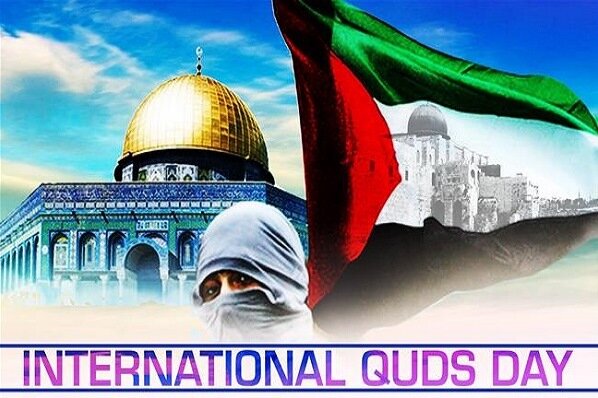
The International Quds Day

By Yusuf Abdullah

NIGERIA - In the name of Allah who states "Glory be to Him Who made His servant go on a night from the Sacred Mosque to the remote mosque of which We have blessed the precincts, so that We may show to him some of our signs; surely He is the Hearing, the Seeing" Q17:1
Peace and blessings of Allah be upon His chosen servant, our master Muhammad, and his purified progeny.
While giving an open invitation to Muslims and the world on August 7th, 1979 to observe the day, Imam Khomeini of blessed memory said "I invite Muslims all over the glove to consecrate the last Friday of the holy month of Ramadan, which is a day of fate and which could also become the day on which the fate of Palestinian people might be determined as Quds day and to proclaim the legitimate right of the Muslim people of Palestine" The day expresses solidarity and global support to Palestinians, and indeed all other oppressed.
 Observed through processions, conferences, and rallies by nations, human rights activists and civil liberties organizations, this insightful declaration of the Imam evidently received borderless acceptance. 
Established after World War II, Israel was promulgated and recognized by Western powers in 1948. Zionism as a movement developed in the late 1800's which united Jews and saw the forceful creation of the illegal state in place of Palestine, then occupied by only 5% Jewish inhabitants. To quote from Zariani Abdul Rahman's book - HITLER AND THE WANDERING JEW, 1994. Just a few days ago, the diplomacy of the dignified and handsome Semitic Prince Faisal Abdul-Aziz al-Saud was lost on the hysterical crowd of New York Jews who were bent on literally spitting HRH.
 Nine centuries ago, while Christian Crusaders were burning Jerusalem's Jews alive in their synagogue, it was the Muslim Saladin who kindly brought back Jews to Jerusalem, along with his Muslim followers. And 800 years later, within the UN headquarters in Flushing Meadow, New York, this was how the Muslims were paid back for their past kindness to the Jews.    
America was the apparent negotiator and chief architect of all road maps regarding the domination of Palestinians by Israel or what others ignorantly refer as incessant Mid-east conflict. Among other questions arising; was any tangible achievements made in the over seven decades of peace talks? Any optimism in the future? To what extent is the negotiator accused of a double standard?  Then, in whose interest does America work in the process? The other side of the conflict reveals the gainful arms trade to American and other European manufacturers. 
On the ambitious liberation of Palestine, many thought the Arab league formed in 1945, with the aim of strengthening ties among member states, could coordinate their policies and protect their common interests. But what were the achievements of the league? To what extent did the league and its sister Palestinian liberation organization (PLO) achieve their stated objectives?
 The question is how could the Arab league and PLO, established on the basis of Arabism or Nationalism lead to emancipation of Palestine while the same Nationalism was used to destabilize the grand Ottoman Empire and establish Israel in its place? No doubt, Quds Day is the only measure relevant for Quds liberation; the third holiest mosque and the first direction of Muslims.
 Unity is the force behind the call of this great Islamic personality, and ultimate hope for liberation of Palestine and other world oppressed. George Curzon, the British Secretary of state for foreign affairs, 1911-1921 said "we must put an end to anything which brings about Islamic unity between the sons of the Muslims.
 As we have already succeeded in finishing off the caliphate, so we must ensure that there will never arise again unity for the Muslims, whether it be intellectual or cultural unity" “And hold fast, all together, by the rope which Allah (stretches out for you), and be not divided among yourselves” Q3:103. That is why the spiritual leader of the Islamic revolution in Iran, Ayatollah Sayyed Ali Khamenei maintains that the ISIS clearly serves the American interest in the Middle-east accusing any cooperation with the U.S. to resolve the Iraqi or Syrian situation of sowing discord and divisions in the region.  
In a borderless sympathy, the day basically sympathizes with Palestinians and other oppressed regardless of all odds, and to fight oppression and injustice as common enemies. The Imam bitterly debunked apartheid and helped Nelson Mandela in the fight against it. On the other hand, Mandela said: "the independence of South Africa was incomplete without the freedom of Palestine". And on his first visit to Tehran after release from long incarceration, he appreciated the fatherly role of the Imam and Iran's historic support. Late Hugo Chavez observed the day where he would be seen at the forefront of the events among other protesters in his country. 
The world is aware of the unfortunate Saudi military campaign against Yemen since 2015. Ironically, it's deliberate aggression by the richest and most influential Muslim Arab nation against the poorest and closest neighbor. The consequence of the aggression in Yemen is what the united nation described as the worst humanitarian crises in contemporary history.  We use this occasion to champion the cause of other world oppressed in Afghanistan, Iraq, Syria, Libya, Nigeria, and Central Africa among others.
 Since the unfortunate 2015 Zaria massacre, and non-response of the government, endless questions are raised; what was the actual rationale behind the attack on the Islamic movement? On what ground was the Sheikh arrested? In whose interest are the elderly and ailing Sheikh, his wife and other disciples being detained? What is the government's stand on the Federal High Court verdict? 
Why does the government disregard calls of millions of Nigerians on the need to take him abroad for medication? And to what extent will the detention continue? What is the stand of the government on the over one thousand Nigerians killed in Zaria, Kano, and Abuja evidently recorded, and related incidences? This also exposes the lies of the so-called developed nations who claim leading positions in protection and promotion of fundamental human rights across the world.
 What a double stand! If peace, unity, and progress of this country were the uncompromising yardsticks to assess significant relevance of the citizenry, who can dare to compare his eminence, the indefatigable leader of the Islamic Movement, Sheikh Ibraheem el-Zakzaky with any scholar, politician or else in our contemporary history? 
With the access of the London-based Islamic Human Rights Commission; an august umbrella of about 30 Islamic and other nongovernmental organizations of a global network for justice, to the ailing Sheikh and his wife last month, an assessment of their health was made by a team of experts mainly from India. The development was consequent to the Sheikh's lawyer’s incessant notice on their client's health in court sessions as known to all for which the judge mandated the exercise for the duo.
 It is imperative to acknowledge the effort by the people wishing peace to reign and justice to prevail all over the world.  As emphasized by the Imam “the Quds Day is a universal day. It is not an exclusive day for Quds itself. It is a day for the oppressed to rise and stand up against the arrogant.” 
Presently, the world is aware of the US and its allies heightening pressures on Iran fuelling fears for a possible war. The Iranophobia is meant to limit its growing might and influence in the region which is apparently non-achievable. America's withdrawal from JCPOA, continuous moral and military support to Israel and incessant interference in the region is not unconnected with Iran's impressive role in its security and wellbeing. There is no doubt that there is always a limit to oppression. At this juncture, the famous words of Sheikh el-Zakzaky, as he gave hope to oppressed especially Palestinians are relevant "Israel was created by terrorism. No matter the years of oppression, it will crumble"
While sympathizing with the Palestinians on this day, we denounce the enemies' unending brutality and bloodshed especially in Yemen, Somalia, and Nigeria among others. We use the same medium to emphasize the urgent need for the unconditional release of Sheikh Ibraheem el-Zakzaky (H) and his disciples. As we mark the day of the oppressed, we also appreciate the role of all justice-seeking and concerned individuals and organizations on the plight of Palestinians and other oppressed.