Showing posts with label human rights. Show all posts

Saturday, December 28, 2019

Britain’s Security Services Granted License to Kill

Finian CUNNINGHAM


In a landmark ruling last week, a panel of five senior British judges ruled that a secret government policy of granting immunity to its state security service was “legal”. Below is an interview with one of the human rights groups which challenged the murky policy demanding that it be banned.
First though, some background to the issue. British government policy holds implicitly that agents or informants operating for the state’s security service, MI5, are permitted to commit crimes without fear of prosecution if those crimes are committed in the line of duty to protect national security.
This is tantamount to the British state granting its agents and proxies a “license to kill”. The judges in the panel of the so-called Investigatory Powers Tribunal (IPT) have formally recognized this hitherto secret government policy as “legal”. The panel voted by 3 to 2 in favor. The two dissenting judges expressed deep concern that the ruling was “opening the door to future abuses” of power by British state agents.
MI5 is the branch of state intelligence that deals specifically with internal security. The other branch, MI6, deals with overseas activities. The disturbing implication is that MI5 can act with impunity, including acts of murder, against British citizens in the name of national security. The powers granted to it are secret and beyond public scrutiny in the courts. That means Britain’s secret services are now officially untouchable and above the law. This is a description fitting for a police state, not a supposed democracy which proclaims to be under the rule of law.
Four British-Irish human rights groups challenged the policy of immunity but they were over-ruled last week by the five-judge panel. These groups are to further appeal the decision in the courts. One of them, the Committee on the Administration of Justice (CAJ), based in Belfast, has considerable expertise in investigating the abuse of state power during the armed conflict in Northern Ireland (1969-1998). CAJ has documented the extensive involvement of British military intelligence in waging a dirty war in Northern Ireland where its agents colluded with and directed paramilitary agents and informants to carry out assassinations. Hundreds of such extra-judicial killings remain “unsolved” and represent a painful legacy for citizens across Northern Ireland.
One of the most notorious killings was that of Belfast human rights lawyer Pat Finucane (39) in 1989. British agents smashed into his home while he was having dinner with his wife and three young children. The attackers shot him in the head 12 times as he lay prone on the floor in front of his family. The British government has previously acknowledged “shocking collusion” by its agents in Finucane’s murder. But the British authorities have pointedly refused to hold a full public inquiry, thereby blocking any prosecution.
Thirty years after the murder of Pat Finucane and hundreds of other Irish citizens by British counterinsurgency operations, Britain is now formally granting the same license to kill citizens anywhere in the United Kingdom – under the pretext of national security. The development has grave implications for human rights in Britain. It also casts a sinister cloud over what kind of Britain the new Conservative government under Boris Johnson is creating post-Brexit.
Strategic Culture Foundation conducted the following interview with Daniel Holder, the deputy director of the Committee on the Administration of Justice (CAJ), based in Belfast.
INTERVIEW
Question: Is CAJ concerned that the Investigatory Powers Tribunal ruling last week will lead to serious human rights abuses by British security services in the future?
Daniel Holder: We are very concerned that this ruling for now permits MI5 to continue to authorize informant or agent involvement in serious crime. This could include crimes that constitute human rights violations. There were such experiences during the Northern Ireland conflict of informant-based paramilitary collusion, with agents of the state involved in acts as serious as murder and torture. Far from the so-called “intelligence war” helping bring the conflict to an end we consider that such practices by covert units of the security forces as having prolonged and exacerbated the conflict.
Question: On Brexit impact, will leaving the EU and its human rights standards add to concerns of abuse of power by the British state?
Daniel Holder: Although the European Convention on Human Rights (ECHR) is part of the Council of Europe system and not the EU, those advocating for Brexit often confuse the two and hostility to the EU also manifests itself in hostility to the ECHR and its court in Strasbourg. Being an EU member state, however, does mean ECHR membership is obligatory, and that will go with Brexit. Although the ECHR being incorporated into Northern Ireland law is also a key part of the 1998 peace deal known as the Good Friday Agreement it is deeply concerning that the new British government is already advocating breaching this commitment by stating it will change the domestic ECHR law (the Human Rights Act) so it does not apply to acts before the year 2000. They are quite open that the reason for doing this is to impede investigations into the security forces during the Northern Ireland conflict – and top of the list as to what the UK does not want a light shined on is precisely the issue of the crimes of agents of the state within paramilitary groups, practices often referred to as “collusion”.
Question: Are British government claims justified that undercover work by security services and their agents may require freedom for agents to participate in unlawful activities in order to protect national security?
Daniel Holder: All police and security services the world over use informants. They are a vital policing tool, but they have to be used lawfully, and the question always is: where do you draw the line as to what they are allowed to do? On occasions where absolutely necessary this may involve informants being involved in crimes like conspiracies with a view to thwarting them; but the bottom line is that informants can never lawfully be “authorized” to be involved in serious crimes that constitute human rights violations, such as kidnap, killings and false imprisonment, nor can they act as agent provocateurs. All of that is illegal.
Question: The narrow majority in the five-judge high court granting immunity to MI5 from prosecution for crimes suggests there is concern among state judges that the existing policy is dubious and treacherous. Do you perceive deep misgivings among the authorities?
Daniel Holder: Yes, but not just now, going back some of the archival documents and investigations that have taken place into the Northern Ireland conflict have revealed significant misgivings at that time, about just such a policy. Take the government-approved De Silva review published in 2012 into the murder of human rights lawyer Pat Finucane, where “shocking” levels of collusion were admitted. This report conceded that that officers were being asked to do things that could not be done lawfully, which is another way of saying the policy and practice was unlawful. We now have a secret policy, the limits of which are unknown, on the basis of a power that does not exist in law, that tries to continue to place agents of the state above the law. The concern is that the errors of our past could be repeated if the same circumstances arise again, here or elsewhere.
Question: The British judges’ ruling last week seems contradictory. On one hand the ruling claims MI5 agents are not immune from prosecution, but on the other hand it says they can act unlawfully if it is done in the public interest?
Daniel Holder: The system and policy are contradictory. The policy says that MI5 informants are in theory not immune from prosecution, but MI5 will know about their crimes – and indeed authorize them – but conceal this from police and prosecutors, despite legal duties that apply to everyone in Northern Ireland and the United Kingdom to promptly inform the police when you are aware someone is committing a crime. Again, this is the security service placing itself above the law.
Question: Is this the kind of policy that leads to rampant lawlessness seen elsewhere, for example in Brazil and The Philippines where police officers and state agents are killing thousands of people extrajudicially with impunity? Northern Ireland’s past conflict of rampant British state collusion in killings is surely a warning too?
Daniel Holder: The practices by covert elements of the security forces of tolerating, facilitating and even directing informants in paramilitary groups involvement in serious crime, including killings, and assisting their evasion from justice, in our view was one of the most serious patterns of human rights violations that prolonged and exacerbated the Northern Ireland conflict and has left a deeply poisoned legacy that we are still struggling to deal with today. There have been significant reforms to the Police Service in Northern Ireland since the peace process to prevent recurrence, but the UK security and intelligence agencies also need to bring their practices within the law, otherwise somewhere, history could repeat itself.

Monday, December 09, 2019

The Saudi/US Partnership: Evil Begets Evil

Gary D. BARNETT
Those who knowingly conspire with evil are evil themselves, and because this truth is irrefutable, hiding behind the false mask of exceptionalism only deepens that evil. Conspiracy to commit evil abounds, but some partnerships seem to have sprung out of the bowels of the nether world. One such union is that of the United States and Saudi Arabia, an alliance based only on greed, murder, and power.
Attempting to understand the American psyche concerning its obvious lust for war, and especially its worship of those who prosecute those wars, is difficult beyond reason. But the masses blind indifference toward this heinous and immoral marriage between Saudi Arabia and the United States belies all aspects of common sanity. On the surface, this is an absurd paradox, but considering the “leadership,” is it really? It would be difficult to compare the Saudi citizens to American citizens given the stark differences at many levels, but the leadership of these two countries is much more closely aligned, at least considering known agendas in common. Slime does mix well with slime.
Saudi Arabia is an absolute monarchy, and is run by the House of Saud, which is the ruling family of Saudi Arabia. The King and Prime Minister is Salman bin Abdulaziz Al Saud, but he is incapacitated by dementia and is senile, and not in good health. He appointed his son, Muhammad bin Salman, Crown Prince in 2017, who is now heir-designate to the throne. He rules the country with an iron hand, and holds the positions of deputy prime minister, chairman of the Council of Political and Security Affairs, and the minister of defense. In other words, he controls politics, all security, vast sums of money, and the military. This is the essence of a powerful monarchy.
The situation in Saudi Arabia is very complicated, and many others are involved with what happened before and after the 2017 Saudi Purge that solidified the rise of Muhammad bin Salman. The partnership and love affair between Trump and the U.S. and Saudi Arabia is disturbing in every way, and that relationship includes Zionist Israel as well. This collusion has to do with oil, proxy wars, energy price manipulation, Middle East politics, technocracy planning, vast amounts of money, and future political and geopolitical conspiracy planning and probable war against Iran.
I am mainly concentrating here on the strange bedfellows that are Saudi Arabia and the United States. The Royal Family’s net worth is estimated to be 1.7 trillion dollars, and my guess is it is much higher. The U.S. buys oil from the Saudis and the Saudis are buying over $110 billion worth of arms from U.S. companies. The U.S., UK, and the rest of Europe supply 99% of Saudi’s weapons, weapons used for murder. 61% of those weapons come from America. These weapons are used against innocent countries, but concentrated in Yemen, where the Saudi’s have been murdering civilians in that country for the U.S. since 2015. This proxy war has been a genocide that was purposely orchestrated by the U.S. as an attack against Iranian interests, and is simply meant to stop any Iranian presence in Yemen. In the process it has become the biggest humanitarian disaster in the world, all due to U.S aggressive intervention, with no compassion whatsoever shown toward the innocent people of Yemen.
The Saudi government kills many of its own citizens as well, and is continuing to murder record numbers by public beheadings every year. Mass beheadings are not uncommon after being charged with non-existent crimes, mostly by corrupt state courts. These charges are against anyone speaking out against the government, against non-violent offenders who commit victimless crimes, including drug charges, and a multitude of others. Some of the other non-violent capital crimes include “Apostasy, treason, homosexuality, blasphemy, adultery, sorcery, witchcraft, and waging war on God.”
Saudi’s human rights record is beyond atrocious, including no free speech, incarceration without due process, limited or no basic freedoms for women and girls, no peaceful demonstrations, or practicing the “wrong” religious rites. Other punishment “includes amputations of hand and feet for robbery, and flogging for lesser crimes such as “sexual deviance” and drunkenness. In the 2000s, it was reported that women were sentenced to lashes for adultery; the women were actually victims of rape, but because they could not prove who the perpetrators were, they were deemed guilty of committing adultery.”
This is a major ally of the U.S. It is a murdering arm of American aggression against civilians. It is a recipient of U.S taxpayer aid, and is supplied its weapons by the U.S. and Europe. This is the same country that produced the alleged terrorists that supposedly committed the September 11 attacks, although the true story has never been told.
Saudi Arabia is the worst example of government abuse, of horrendous human rights violations, of misogyny and the brutal treatment of women, of total disrespect for life at every level of man and animal, of insatiable greed, of segregation, of racism, sexism, torture, and murder.
Saudi Arabia is the exact opposite of all that was good about the United States at its founding. Its policies defy morality and the sanctity of life, but the ignorant and indifferent American populace in their total hypocritical blindness says nothing and does nothing to stop the nefarious union of these countries via there beloved elected rulers. The U.S. has become its own enemy, and is now joined with evil. Evil begets evil, and so long as Americans allow this partnership to continue in their name, they are at fault, and responsible for these crimes against humanity. This relationship is not just based on oil, but is based on power and control. It is the essence of depravity, and should be ended without delay.

Tuesday, December 03, 2019

Saudi Arabia detains at least 8 writers and intellectuals amid most recent crackdown

“Like the dozens of clerics arrested in 2017, the women’s rights advocates arrested in 2018, and the 14 activists arrested in April 2019 – these writers arrested over the past few days are the latest civil society members to be targeted.”


In a new report by London-based Saudi human rights group ALQST, Saudi Arabia has been documented to have arrested and detained at least 8 activists, mostly intellectuals and writers, amidst the kingdom’s growing crackdown on dissent.
Taken from their homes in Riyadh and Jeddah last week by plain clothed policemen, ALQST has reported that the reasons given behind their arrests are still unclear. According to the human rights group, this is a part of a wider campaign by the Saudi government and Crown Prince Mohammed bin Salman to detain anyone critical of the government. Yahya Assiri, ALQST’s director, stated:
Some people may be asking why these arrests are taking place now, but in truth they reflect a harsh crackdown on Saudi civil society that has been ongoing for years. Like the dozens of clerics arrested in 2017, the women’s rights advocates arrested in 2018, and the 14 activists arrested in April 2019 – these writers arrested over the past few days are the latest civil society members to be targeted.”
The activists and writers arrested are said to be Bader Al-Rashed, Sulaiman Al-Saikhan Al-Nasser, Waad Al-Mohaya, Musab Fouad Al-Abdulkarim, Abdul Majid Al-Balawi, Abdulaziz Alehis, Abdulrahman Monthly, and Fouad Al-Farhan. Their exact whereabouts and conditions remain unknown as of now.
Despite the growing accusations of its severe human rights abuses, the Saudi government continues to deny any wrongdoing. Stating that the state currently does not hold any political prisoners, Saudi claims that the ‘monitoring’ of activists are simply a part of ensuring peace in the kingdom. Public protests, public criticisms, political parties, and labor unions are all still banned in Saudi Arabia.
Last year’s murder of journalist Jamal Khashoggi by the Saudi state, orchestrated by Crown Prince Mohammed bin Salman, still remains painfully clear to those who dare voice opposition to the human rights abuses committed by the state: absolutely no criticism is allowed in the kingdom, with deadly results if done. ALQST director Assiri stated:
With these latest arrests, the Saudi authorities are showing once again that nobody is safe. It is clear that the international community must apply much more pressure for these violations to stop.”
As Saudi Arabia continues to move with impunity in regards to its imprisonment of political activists as well as its leadership role in the war in Yemen – now being called the largest humanitarian disaster in the world – it remains to be seen whether Saudi will ever be held to account for these severe human rights violations.

Thursday, November 21, 2019

87 Muslim scholars call for complete boycott of the UAE

The 87 scholars stated also that the direct intervention and involvement of the UAE in conflicts around the world, including in countries like Yemen and Libya, have seen millions of casualties, displaced peoples, and the destruction of lands.


In a groundbreaking and inspiring move, 87 Muslim scholars from around the world have called on a complete boycott of the United Arab Emirates, urging especially business people to look elsewhere because of the UAE’s consistent involvement in war, corruption, and human rights abuses. The scholars, which include Libya’s Mufti Sheikh Al-Sadiq Al-Gharyani, stated:
This boycott call is driven by the direct intervention of the UAE in several Arab and Muslim countries like Libya, Egypt, Yemen, Kashmir and Uygurs in China. Intervening in those areas by flowing money and arms caused deaths and corruption among Muslims.”
Basing their boycott off of the hadith and sunnah of the Prophet that stated that the enemy of Muslims should be made weak economically in order to stop them from causing destruction and the death of innocents, this boycott hopes to encourage the boycott of businesses who operate and invest in Abu Dhabi. A significant amount of business money made in Abu Dhabi goes directly towards the funding of arms deals and war efforts, mainly in Yemen, and this boycott hopes to stop a large portion of this money flow.
The 87 scholars stated also that the direct intervention and involvement of the UAE in conflicts around the world, including in countries like Yemen and Libya, have seen millions of casualties, displaced peoples, and the destruction of lands. Calling these war crimes, the boycott also stated:
Whenever you find a war in this world, you could sense the UAE’s intervention in it either secretly or publicly, buying arms and aircraft as well as mercenaries to kill Muslims and destroy their countries.”
The UAE’s close ties to Saudi Arabia, the United States, and Israel are seen as a worrying sign by many that politics, war, and back-alley deals are more important than upholding international (and Islamic) standards for ensuring, protecting, and promoting human rights. Despite the fact that the UAE considers and calls itself an Islamic state, this facade has begun to crumble as its horrendous human rights abuses both within and outside the country are slowly being exposed. This boycott by the 87 Muslim scholars is hopefully one step towards setting the standard for Muslims around the world to stand against those who oppress, no matter who they may be.


Monday, November 18, 2019

Saudi Arabia bribing Twitter employees in order to spy on dissidents

One such shocking example of the direct connection between Twitter and Saudi Arabia’s crackdown is the arrest of Sheikh Salman Al-Odah, who simply tweeted a prayer that God bring all Muslims together during the Saudi-Doha rift, expressing his hopes for a reconciliation with Qatar. He was quickly arrested in 2017 for criticising the government, and is still awaiting trial.

It has been revealed that the US government has recently charged two former Twitter employees with spying for the government of Saudi Arabia, after it became known that they had infiltrated the personal data and information of more than 6,000 Twitter accounts of numerous dissidents and critics of the Saudi regime.
These employees were reportedly bribed and recruited by Saudi agents, who paid them tens of thousands of dollars. On behalf of the Crown Prince of Saudi Arabia, Mohammed bin Salman, these employees were instructed to spy and pass on personal information about numerous critics of the Saudi government.
Twitter is still heavily used within Saudi Arabia, with many turning to Twitter to express discontent and anger at the current regime. Many Saudi youth have therefore turned to Twitter to call on the government to cease its numerous human rights abuses and express other concerns aimed at the Crown Prince, under the pretext of being protected under the anonymity that the internet and Twitter can provide.
Saudi dissidents abroad and in exile have also taken to Twitter to express their political views – however they too are closely monitored by the Saudi regime and its spies within Twitter. Many Saudi students abroad have been told by consulate staff that their passports can no longer be renewed unless they return to Saudi Arabia – which many claim is a trap in order to detain them for their views expressed online.
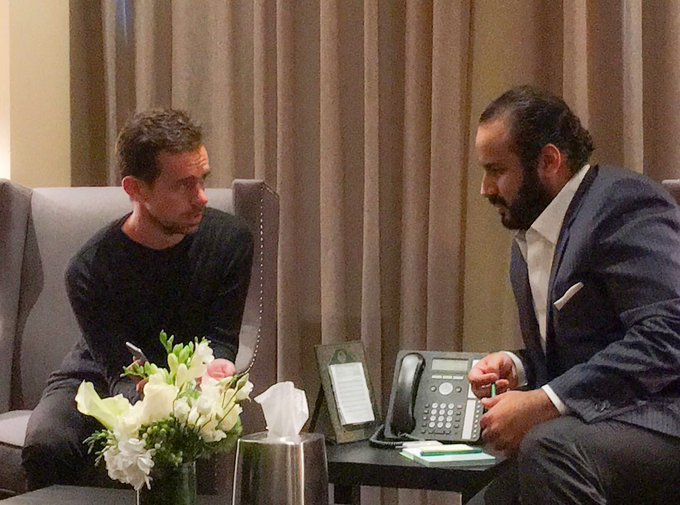
With Saudi Arabia’s harsh crackdown on the freedom of speech and campaign of imprisoning anyone who dares speak criticism of the government, it had become dangerously worrying for not only ordinary Saudi citizens, but also in terms of Twitter’s accountability. Not only have two employees (so far) been charged with spying for the Saudi regime, but it has also been revealed that Twitter’s CEO Jack Dorsey met with Crown Prince Mohammed bin Salman in June of 2016.
This meeting spurred debate over the company’s accountability, as it came only six months after it was revealed that a Saudi spy and infiltrater, Ali Alzabarah, had hacked over 5,500 records on Twitter in supposed connection with the Saudi regime. Saudi Arabia and Twitter, despite these bumpy incidents, seem to be getting along regardless, as the regime continues to crack down on dissents on Twitter.
One such shocking example of the direct connection between Twitter and Saudi Arabia’s crackdown is the arrest of Sheikh Salman Al-Odah, who simply tweeted a prayer that God bring all Muslims together during the Saudi-Doha rift, expressing his hopes for a reconciliation with Qatar. He was quickly arrested in 2017 for criticising the government, and is still awaiting trial.
Al-Odah is but one example of the many citizens, dissents, journalists, and human rights activists who remain locked in jail – simply for expressing their thoughts or calling for the protection of basic human rights. In 2019 alone, more than 130 citizens were executed in Saudi Arabia, most of whom were critics of Crown Prince Mohammed bin Salman’s increasingly authoritarian dictatorship.

As Saudi Arabia continues to move with impunity, while it operates without backlash its horrendous war in Yemen as well as its harsh crackdown on dissent within the kingdom, it remains to be seen for how long the world will remain silent. Journalist Jamal Khashoggi’s murder, orchestrated by the Saudi regime, remains fresh in the minds of many. And as for now, Twitter’s dubious connections to the Crown Prince of Saudi Arabia remain worrying at best, as ordinary citizens and critics continue to languish in prison for simply tweeting an opinion.

Saturday, November 16, 2019

All Central Asian states oppose UNGA’s human rights resolution against Iran

TEHRAN, (MNA) – All five Central Asian countries [including Kazakhstan, Kyrgyzstan, Turkmenistan, Tajikistan and Uzbekistan] opposed the UN General Assembly’s human rights resolution against the Islamic Republic of Iran and voted against the move unanimously.
Other countries such as Afghanistan, Armenia, Belarus, China, Iraq, Pakistan, Russia and Syria also opposed the UNGA’s human rights resolution against Iran.
Totally, 66 countries gave abstention vote and 30 countries voted against the resolution.
Yesterday, the 3rd Committee of UNGA, with the repetition of its unproven and threadbare accusations, approved a resolution with fragile votes against “Situation of Human Rights in Iran”.
Iranian Foreign Ministry Spokesman Abbas Mousaci condemned the resolution, saying “Iran has always been committed to the human rights in line with its national security and interests and also based on religious requirements.”
Mousavi termed the approval of the resolution as ‘unilateral and unrealistic’ and added, “this resolution is put forward against Iran at a time when one of the chief supporters of this resolution, i.e. US, is violating the most basic rights of over 83 million Iranian people especially women, children, the elderly and patients.”

Wednesday, November 13, 2019

Saudi Arabia directly responsible for two-thirds of civilian deaths in Yemen

According to Save the Children, more than 37 Yemeni children are killed or injured every single month from foreign bombs targeting civilians.
As the brutal war in Yemen continues to kill the innocent, new figures show that more than 12,000 civilians have been directly targeted and killed since the war began in 2015. The Saudi-led coalition, which has been waging a war against the Houthi rebels for 4 years now, are responsible for two-thirds of these deaths.
100,000 people in total have been killed in Yemen since 2015, in what many human rights groups are calling the worst humanitarian disaster in the world today. According to Save the Children, more than 37 Yemeni children are killed or injured every single month from foreign bombs targeting civilians.
In addition to deaths from war, many more are dying from disease outbreaks and severe lack of health care and sanitation. A cholera outbreak is now infecting and killing thousands in Yemen, as humanitarian aid groups struggle to reach those most in need amidst heavy fighting and bombings.
The war by the Saudi-led coalition has been ongoing since the crisis in Yemen erupted in 2015, with Houthi rebels fighting against the then Saudi-backed Yemeni President Hadi. Saudi Arabia, in partnership with countries such as the UAE, Kuwait, Bahrain, Qatar, Sudan, and Egypt, have contributed to a war that has killed almost 100,000 Yemeni civilians.
With an estimated 14 million at risk of starvation and death due to the continued war and fighting, an estimated 79% of Yemenis are now living in poverty. 92% of babies born in Yemen are already underweight at birth, highlighting the damage this war is doing to the future of Yemen’s population.
The United Nations have issued a statement on the worsening condition in Yemen:
Not only has the war made Yemen the largest humanitarian crisis in the world, it has plunged it into a harrowing development crisis too. The ongoing crisis is threatening to make Yemen’s population the poorest in the world – a title the already suffering country cannot afford.”
As Saudi Arabia and its allies continue to bomb, target, and kill innocent civilians and children inside Yemen, the world has remained largely silent. Western allies of Saudi Arabia, like the US and the UK, continue to provide money and weapons to Saudi, therefore indirectly contributing to the killing of innocents. In what is being described as the world’s largest humanitarian disaster, it remains to be seen whether or not governments will finally stand up to the state-inflicted terror and possible war crimes that Saudi Arabia is guilty of.

Saturday, October 05, 2019

The Duplicitous Agenda Endorsed by the UN and NATO

Ramona WADI

To the undiscerning, the United Nations (UN) and the North Atlantic Treaty Organisation (NATO) perform different roles in the international arena. Yet both organisations have a common aim – the promotion of foreign intervention. While the UN promotes its humanitarian façade, NATO provides the militarisation of the UN’s purported human rights agenda.
NATO’s participation at the 74th session of the UN General Assembly in September provided an overview of the current collaboration the organisation has with the UN. Jens Stoltelberg, NATO’s Secretary-General, mentioned the organisations’ collaboration in “working closely to support Afghanistan and Iraq”.
Since the 1990s, the UN and NATO cooperation was based on a framework which included decision-making and strategy on “crisis management and in the fight against terrorism.” In 2001, US President George W Bush launched his ‘War on Terror’ which eventually expanded to leave the Middle East and North Africa in perpetual turmoil, as the coined euphemism morphed into the so-called Arab Spring.
While the invasions of Afghanistan in 2001 and Iraq in 2003 were led by the US, it is worth remembering that the absence of the organisation at that time is not tantamount to the exclusion of warfare from NATO member states. Notably, the US invasion of Afghanistan invoked Article 5 of the NATO treaty, which stipulates that an attack on a NATO member state constitutes an attack on all member states.
“For NATO-UN cooperation and dialogue to remain meaningful, it must continue to evolve.” The statement on NATO’s website is a bureaucratic approach which detaches itself from the human rights violations created and maintained by both parties, which form the premise of such collaboration.
UN Security Council Resolution 1373 (2001), upon which NATO based its collaboration with the UN, reaffirms, “the inherent right of individual or collective self-defence as recognised by the Charter of the United Nations.” The resolution provides impunity for member-states and other collaborators with the UN, including NATO, to define what constitutes terrorism while eliminating foreign intervention as a terror act, despite the ramifications which last long after the aggression has been terminated or minimised.
The UN-NATO duplicity is exposed in Stoltenberg’s speech when he states, “NATO has also contributed to developing UN disposal standards to counter improvised explosive devices, which remain one of the greatest threats to peacekeepers.” Why are the UN and NATO selecting rudimentary forms of warfare over precision bombing which has killed thousands of civilians in the name of fighting terror or bringing democracy?
In 2011, the UNSC’s arms embargo was supposed to prevent the proliferation of weapons to the rebels in Libya – a contradiction given the UNSC’s authorisation for NATO to bomb Libya. France, however, defied the resolution by publicly declaring its proliferation of weapons to rebels in Libya, on the pretext of their necessity to protect Libyan civilians. NATO denied its involvement as an organisation in providing arms to the rebels, despite the fact that action was taken by a NATO member. With the UN endorsing foreign intervention and NATO implementing the atrocities, the UN can fall back on its alleged peace-building and humanitarian roles, of which there is never a decline due to the irreparable damage both organisations have wreaked upon exploited, colonised and ravaged countries. The cooperation lauded by NATO does not rest on a division of roles but rather on blurring the differentiation between war and humanitarianism, in order to generate both as a duplicitous agenda.
NATO maintains that the UNSC holds “primary responsibility” for maintaining international peace and security. What the statement evades is the individual interest of each member, as well as their collective framework as NATO members. To satisfy the UNSC, individual interests and NATO membership, a common denominator is imperative. For the perpetrators of foreign intervention, war constitutes the binding legacy.