
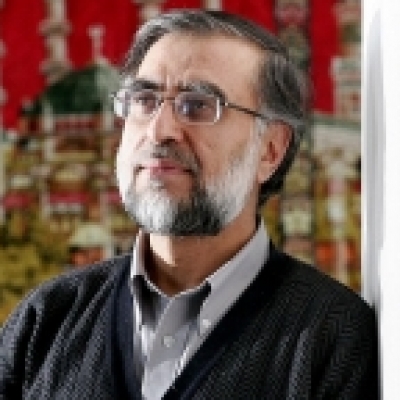
 Zafar Bangash
Zafar Bangash
Last month when the Ansar-Allah swept through western Yemen liberating the entire Red Sea coast from Saudi-mercenaries, the kingdom’s de facto ruler Muhammad bin Salman (MbS) immediately phoned Donald Trump for help. The ill-mannered American president turned him down, twice.
The intrepid Ansar-Allah had already given American forces a bloody nose last year. US aircraft carriers fled from the range of Ansar-Allah missiles and drones in the Mediterranean Sea.
Trump pledged not to attack the Ansar-Allah if they refrained from attacking US forces. This was quite a change in Trump’s customary arrogance.
One can speculate what MbS might have said during his phone call to Trump. “Mr bresident, blease helb us. We are your loyal allies (read that as slaves).” We cannot repeat what the foul-mouthed Trump may have said to MbS but it is not difficult to surmise.
The Bani Saud-occupied kingdom’s military budget in 2025 was $83.18 billion. For MbS to still beg Trump for help reflects the pathetic state of Saudi military. More disconcerting is Trump’s rejection despite the kingdom investing trillions of dollars in the US economy.
Unlike his ancestors who were tough and brutish, although just as criminal-minded, the MbS generation has gone soft. When one gets used to living in airconditioned palaces sitting on soft sofas drinking endless cups of qahwa, becoming soft is natural. That spells trouble.
Let us recall how the Najdi Bedouins came to occupy the Arabian Peninsula after erupting from a remote corner of the Najdi desert.
Their first eruption from Dari‘iyyah occurred in 1744 CE. Led by Muhammad ibn Saud—hence the name Bani Saud—he struck an alliance with a lay preacher Muhammad ibn Abdul Wahhab. The latter had been expelled from his native ‘Uyaynah for his distorted views. The Saudi-Wahhabi alliance proved deadly.
The Saudi hordes, now charged with Wahhabi zealotry, branded every Muslim not subscribing to their distorted interpretations of Islam a ‘kafir’. That justified their killing.
What ayat of the Qur’an or hadith of the Prophet (ﷺ) permits such barbarism? The Wahhabi/Saudi hordes, however, were not interested in implementing the teachings of Islam; their mission was to terrorize people.
For 70 years, they perpetrated horrific crimes against the people of Makkah and al-Madinah. Ibrahim Pasha of Egypt, a representive of the Turkish sultan, ended their barbarism in 1814 CE.
After driving them Makkah and al-Madinah, his forces entered Najd and razed Dir‘iyyah to the ground. The Bani Saud ruler, Abdullah I, was captured and sent to Istanbul to be executed for treachery, rebellion and murder.
A century later, the Saudi-Wahhabi hordes erupted again. In their second eruption, they had the backing of the British who wanted to wrest control of West Asia (aka the Middle East), especially the Arabian Peninsula, from Ottoman (Turkish) control.
Before the outbreak of First World War, Turkey had already been weakened losing many of its possessions in North Africa and Europe. When the war broke out, Turkey under the Young Turks joined hands with Germany. The British were furious. Their conspiracy had brought the Young Turks to power in the first place.
Ever the masters of intrigue, the British, however, went to work on their Arabian allies. They used two Arabian clan leaders: Hussain ibn Ali and ‘Abd al-‘Aziz ibn Saud.
Hussain ibn ‘Ali, the Sharif (governor) of Makkah, commanded much greater authority compared to Ibn Saud. Makkah as the sacred city, has always carried immense prestige in Islamic consciousness.
Between July 1915 and January 1916, the British High Commissioner to Egypt, Sir Henry McMahon promised London’s support for Arabian “independence” after the war, in return for a Hashemite attack, with Britain’s help, on the Turks. “The Arab Revolt,” as it came to be called, proved the undoing of Turks.
The duplicitous British had no intention of honouring their pledge. While promising Sharif Hussain the throne of the “whole of Arabia,” they also pledged to give Palestine to the zionists through the infamous Balfour Declaration of November 1917.
At the same time, they cultivated Ibn Saud. The Anglo-Saudi friendship treaty was signed in December 1915. The treaty recognized ‘Abd al-‘Aziz’s “authority” in Najd, under “British protection” making him the newest British agent.
Guns and money flowed to the Saudi brigand. It included £20,000 cash annually, later increased to £60,000. Abd al-‘Aziz’s task was to attack Turkish allies in eastern Arabia while Sharif Hussain’s forces, aided by British advisors, sabotaged the Hijaz Railway.
The contradiction in Wahhabi position was mindboggling. The Turks were declared ‘kafirs’ because they did not subscribe to Wahhabism, but the British infidels were ‘allies’ because they provided money and guns!
The Anglo-French conspiracy for West Asia came to light after the Bolsheviks accidentally stumbled upon the Sykes-Picot agreement following the overthrow of the Czar in Russia in November 1917. The treaty had been agreed between Mark Sykes of Britain and Georges Picot of France in February 1916, totally contradicting the promises made to the Arabs.
British duplicity did not bother ‘Abd al-‘Aziz. He was only interested in getting money regardless of its source.
True to his duplicitous nature, he turned to the Wahhabi Ikhwan to use them against Sharif Hussain’s forces. The Otaybah, Mutayr, Ajman and a number of other tribes were brought in, not with promises of money, but religious “purification” while keeping his subservience to the British a secret.
The British let the Sharif and Ibn Saud fight it out after the war. The Ibn Saud proved more ruthless because of their Wahhabi hordes but neither was made the king of Arabia.
In the autumn of 1923, the British foreign office informed both ‘Abd al-‘Aziz and Sharif Hussain that their subsidies would end by the spring of 1924. By then, the other British agent, Mustafa Kemal in Turkey, announced abolition of the khilafah.
Amid these rapidly changing developments, Sharif Hussain was getting troublesome because the British had reneged on their promise to make him the “king”. They unleashed the Saudi hordes against him who drove him out of Makkah. Offering him some crumbs, they made one of his sons the king of Jordan, a territory carved out of Palestine, and the other the king of Syria, and later Iraq.
The Saudis attacked Makkah and al-Madinah and for several days, carried out horrific crimes—mass murder and rape of Muslim women. This was their way of “purifying” Islam!
When Makkah fell to Ibn Saud in December 1925, he issued a disclaimer about any personal designs upon the throne of the Hijaz or the khilafah. Yet, in January 1926, he declared himself the “king” of the Hijaz confirming that he was a compulsive liar.
By the end of the year, he declared himself “king” of Najd as well. And in six years, he combined the two to declare the “Kingdom of Saudi Arabia”.
How did the Bani Saud become American agents? It was the discovery of oil that brought Americans into the kingdom. “Saudi” Arabia became America’s gas station in return for US promises of protection.
The Saudis’ subservience to the US deepened when in 1974, they agreed to sell oil only in US dollars—hence the petrodollar. America became enormously rich on the back of the oil producing countries.
The US promised to protect the Saudi family in return but as we have found out, that promise is no longer tenable. If the Americans cannot protect their own bases in the region, how can they protect the Bani Saud?
The Najdi Bedouins may have outlived their usefulness for the Americans. They may be on their way out. Should it materialize, their departure would come none too soon.

No comments:
Post a Comment