Showing posts with label JCPOA. Show all posts

Tuesday, December 17, 2019

Is prisoner exchange a beginning for U.S.-Iran negotiation?

*By Mohammad Ghaderi

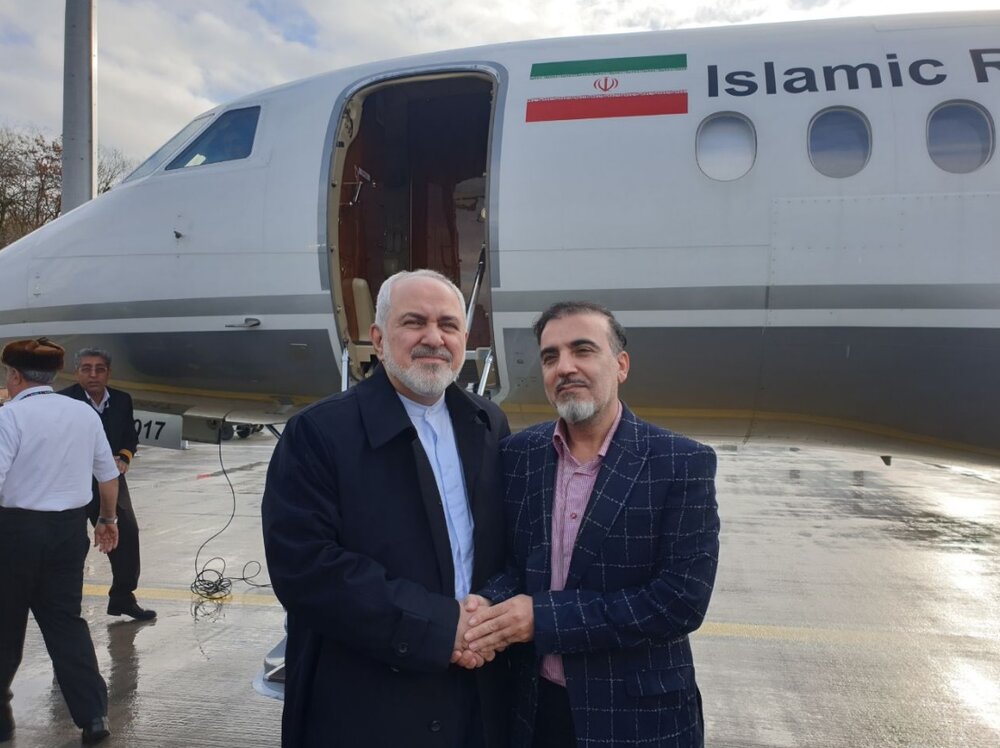
Dr. Massoud Soleimani, an Iranian scientist who had been held in the U.S. for 14 months, was finally exchanged by a Chinese American spy named Xiyue Wang and released last week.
The swap took place in Zurich, Switzerland. The two prisoners were released simultaneously.
The United States, which has not softened its hostile stance on Iran, seeks an opportunity to set in motion a show at the international stage for dialogue with Iran. Washington tried to refer to the prisoner swap as a ground provided for the U.S.-Iran negotiations to gain more votes for Trump in the 2020 polls. A look at successive tweets by Trump, Mike Pompeo and Brian Hook regarding the issue shows that they have made every effort to open negotiations with Iran.
This kind of position taken by U.S. officials coupled with their efforts to open talks has at least two important dimensions:
First, an analysis of the U.S. politicians’ behavior over the past 40 years, and even earlier, suggests that they have offered to negotiate whenever they have reached a deadlock. However, the Americans change their approach as soon as they find a chance for hostility, like what happened during the recent riots in Iran.
Second, given the experience obtained due to the Joint Comprehensive Plan of Action (JCPOA), Iran believes that there is no need for re-negotiation. There are preconditions for a possible negotiation. First, the return of the U.S. to the JCPOA and lifting all of previous and new sanctions. Second, a complete halt to the maximum pressure campaign. However, the White House has explicitly rejected these conditions.
In fact, Iran did not accept the prisoner exchange to begin a new phase of negotiations. Rather, Iran agreed to it merely because of humanitarian issues. The exchange took place while Professor Masoud Soleimani was not a criminal. According to Donald Trump, Soleimani was held hostage despite having an official visa to visit the United States.
However, Xiyue Wang, who came to Iran as a Princeton University graduate student, was transferring an archive of the Iranian confidential documents to the Mossavar-Rahmani institution, a partner of U.S.-Israel organizations. Wang was arrested by the Ministry of Intelligence and charged with espionage.
* Author: Mohammad Ghaderi , Tehran Times editor in chief 

Monday, December 09, 2019

No agreement among Permanent Members that Iran is not complying with resolution 2231: Finaud

No agreement among Permanent Members that Iran is not complying with resolution 2231: Finaud

TEHRAN, (MNA) – Marc Finaud, a senior member of Geneva Centre for Security Policy, says that in the Middle East, several countries have wide-ranging missile capabilities that are the result of threat perceptions often fueled by the others’ arms build-ups.
Former Senior Resident Fellow at the United Nations Institute for Disarmament Research (UNIDIR) adds “This is why the only effective way of dealing with that issue is a regional framework.”
A senior member of Geneva Centre for Security Policy also says that “there is no agreement among the Permanent Members that Iran is not complying with resolution 2231.”
Finaud adds that “The E3 letter raises an important issue but it is bound to fail if it only seeks to pressure Iran and does not offer an opportunity to discuss the matter on a regional basis.”
Following is the full text of the interview:
The British, German and French ambassadors, in a letter circulated on Wednesday, called on UN Secretary-General Antonio Guterres to inform the Security Council in his next report that Iran’s missile program was “inconsistent” with a UN resolution that had endorsed the nuclear deal reached between Iran and six world powers (UN Security Council Resolution 2231). The claim is that some of Iran's missiles do not comply with the resolution, while the resolution “calls on” Iran not to work on missiles "designed to carry nuclear warheads". What is your assessment of this letter? And is it possible to vote against Iran at the Security Council meeting?
The provisions related to Iran’s ballistic missile program are part of the UN Security Council resolution endorsing the JCPOA but are not part of the JCPOA itself. The Security Council could theoretically discuss and adopt a resolution on those missile provisions, but in fact, there is no agreement among the Permanent Members that Iran is not complying with resolution 2231. The E3 letter raises an important issue but it is bound to fail if it only seeks to pressure Iran and does not offer an opportunity to discuss the matter on a regional basis.
This was Europe's action while Europe had already threatened Iran to investigate the trigger mechanism. Why, besides threatening to investigate the trigger mechanism, have they also raised the Iranian missile issue?
This initiative seems intended to push Iran to accept a broader scope of negotiation beyond its nuclear program in the hope of achieving a new deal that could be accepted by the United States. But it is unlikely to succeed unless Iran can derive some benefits from such a broader agreement.
These two actions of Europe while Europe failed to fulfill its obligations to Iran and the reduction of its obligations by Iran was also a reaction to the passivity of European countries. What is your assessment?
The problem obviously comes from the US withdrawal from the JCPOA in violation of the agreement itself and Security Council resolution 2231. Iran’s decisions to reduce the implementation of its commitments are consistent with the spirit of the JCPOA, based on reciprocity, if not with its letter. But it also increases the risk of collapse of the whole agreement. The Europeans did try to reduce the impact of American sanctions on Iran, but their efforts are restricted by bureaucracy and their limited influence on European companies which are deterred to trade with Iran by US sanctions.
Resolution 2231 uses the term “calls on” which does not have a legal requirement. Accordingly, while on the basis of arguments put forward by Europe, Iran has models of missiles capable of carrying nuclear warheads, but there are no legal entities for the legal review of countries' missile programs. This means that there is no international organization for recognizing the country's missile capabilities and its aims include defensive, offensive or capable of carrying a nuclear warhead. What is your assessment?
It is indeed regrettable that the international arms control framework on missiles is very weak: it only consists of the MTCR export control regime and The Hague Code of Conduct, a voluntary set of transparency- and confidence-building measures. In the case of the Middle East, means of delivery of weapons of mass destruction are part of the mandate of a WMD-free Zone, but discussions of this project have not made much progress so far.
Iran does not have a Continental missile and its missile range is eventually 2,000 kilometers. However, Israel has both a nuclear bomb and missiles that have far more missiles than Iranian missiles, and Saudi Arabia has a new, more advanced, missile program. Regarding this why Iran have no right to have a missile balance? If Iran is asked to limit its missile program, so should countries around Iran. What is your assessment?
Indeed, in the Middle East, several countries have wide-ranging missile capabilities that are the result of threat perceptions often fueled by the others’ arms build-ups. This is why the only effective way of dealing with that issue is a regional framework. With other experts, my organization has made proposals for a series of measures (such as limits on range and payload and ban on transfers) that could be adopted by the key regional states as one of the first steps towards the establishment of a WMD-free zone.
Interview by Javad Heirannia

Sunday, December 08, 2019

Iran missile program not in violation of JCPOA: prof. Entessar

By Javad Heirannia

TEHRAN – Nader Entessar, Professor Emeritus of Political Science from the University of South Alabama, highlights that Iran’s missile program doesn’t violate the terms of JCPOA and that European countries seek other aims by their letters and threats.
“The letter of the E3 to the UN Secretary-General was not only provocative but also full of lies; Iran’s missile program does not violate UNSC Resolution 2231,” Entessar told Mehr News Agency on Friday.
“The three European countries aim to undermine Iran’s deterrence and defense power and since they were not successful in forcing Iran into destroying its missile and defense program, they want to fulfill this aim via the United Nations,” he said.
“If the issue is referred to the UN Security Council, three permanent members of the council will vote against Iran, so Russian and China will have an important role in approval or rejection of an anti-Iranian resolution.”
The remarks came as France, Germany and the United Kingdom penned a letter to the United Nations Secretary-General Antonio Guterres, making allegations that Iran’s ballistic missile activity is “inconsistent” with the call in a council resolution endorsing the 2015 nuclear deal with Iran. "Latest E3 letter to UNSG on missiles is a desperate falsehood to cover up their miserable incompetence in fulfilling bare minimum of their own JCPOA obligations," FM Zarif wrote in a tweet on Thursday in reaction to E3’s letter.
European signatories of the deal have so far failed to fulfill their obligations under the nuclear deal and safeguard Iran’s economy from damages of US unilateral sanctions after Washington withdrew from the deal in 2018. Meanwhile, Iran has announced that it is reducing commitments to the deal in a transparent and reversible manner to create a balance. Tehran says it has the right to do so according to Paragraphs 26 and 36 of the deal. E3 has called on Iran to return to full implementation of the deal and even threatened Tehran to use a mechanism in the deal which can return the UN sanctions against Iran.
European countries consider the trigger mechanism as their winning card against Iran, Entessar said, adding, “If Iran officially withdraws from the JCPOA like what US did, Europe will lose the tool of ‘trigger mechanism’ … of course, Westerners will try to adopt anti-Iranian resolution in the UNSC but this will become harder without this mechanism.”
“I believe the four steps that Iran has taken to reduce commitments to the JCPOA not has failed to influence the behavior of the E3, but also has turned them into claimants with aggressive behavior.”
He went on to say that “Bringing up the missile program and in particular, following the case in the UN Security Council would be the last blow to the body of the JCPOA that is now in a coma.”
“One of Iran’s biggest mistakes after US withdrawal [from the JCPOA] was pinning hope on the Europe,” said the professor, adding that European countries can never distance themselves from the United States and play an independent role.
He confirmed that there are no legally-binding term in the JCPOA to limit Iran’s missile program and on the other hand there is no legal framework in the international community to define or restrict missile programs of other countries, adding that Western countries “have stripped Iran missile program of any legal perspective, turning it into a totally political issue so as to achieve their aim.”
“Enemies of Iran seek to turn the country into a defenseless body that has no important role in the region,” he said, noting, “they consider Iran’s missile program as the biggest obstacle in achieving their aim.”

Friday, December 06, 2019

Diplomat says Iran’s priority is protecting independence

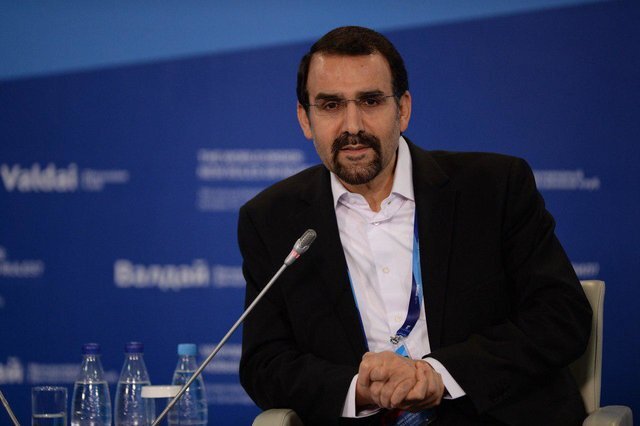
TEHRAN - Iranian Ambassador to Russia Mehdi Sanaei said on Friday that relying on domestic capacities and protecting independence are Iran’s priorities.
“In this situation, protecting independence and power of the foreign policy and also relying on domestic economy and capacities are Iran’s important priorities,” Sanaei said in a press conference in Moscow.
Iran’s top diplomat in Moscow also said it was “natural” that Iran decided to reduce its commitments to the JCPOA, the official name for the 2015 nuclear deal. 
Iran has started to partially reduce its commitments to the JCPOA in response to the United States which abandoned the landmark deal in May 2018 and reinstituted sanctions.
And, since April 2019, the Trump administration has gone beyond the pre-JCPOA sanctions to impose measures that would reduce Iran’s oil export income “to zero.” U.S. secondary sanctions now apply to virtually every civilian sector of Iran’s economy.
“The United States violated the JCPOA and the Europeans do not take enough actions to preserve the deal. So, how do you think Iran should behave?” the ambassador asked.
So far, the Atomic Energy Organization of Iran (AEOI) has taken four steps to cut back commitments in accordance with paragraph 36 of the JCPOA which “allows one side, under certain circumstances, to stop complying with the deal if the other side is out of compliance.”
Top officials in Tehran have repeatedly said if the European Union shields Iran’s economy from the sanctions effect the country will reverse its decision.
Under the JCPOA, Iran promised to put limits on its nuclear activities in exchange for termination of economic and financial sanctions.
On May 8, exactly one year after the U.S. abandoned the deal, Tehran announced that its “strategic patience” is over and began to partially reduce its commitments to the agreement at bi-monthly intervals.
In the first stage, Iran announced that it will not limit its stockpile of the nuclear fuel to 300 kilograms allowed under the deal. On that date (May 8) Iran’s Supreme National Security Council (SNSC) said if the remaining parties to the JCPOA, especially Europeans, devise a mechanism to protect Iran from the sanctions’ effect in the two-month deadline it will reverse its decision.
But since European parties missed the deadline, on July 7 Iran announced that it has started enriching uranium to a higher purity than the 3.67%, thereby starting the second step.
Again, as Europe missed the second 60-day deadline, Iran moved to take the third step, removing a ban on nuclear research and development (R&D).
In the latest step, which started on November 6, Iran began injecting uranium gas into 1,044 centrifuges at the Fordow nuclear site. It was done at the presence of inspectors from the International Atomic Energy Agency (IAEA).
Deputy Foreign Minister for Political Affairs Abbas Araqchi said on Monday that no one can question Iran for deciding to scale down its commitments to the JCPOA.
In a panel discussion in Tokyo, he said that Iran’s action in reducing nuclear commitments does not mean quitting the JCPOA.
“The current situation is the result of the United States’ withdrawal from the JCPOA and the only solution to it is removal of sanctions and return to diplomacy,” the top diplomat noted.

Monday, December 02, 2019

World is responsible for implementing nuclear deal, Iran says

TEHRAN - Iran’s Deputy Foreign Minister Seyyed Abbas Araghchi said on Sunday that the 2015 nuclear deal, officially known as the JCPOA, is an international agreement and the world is responsible for implementing it.
“The JCPOA is an international achievement and the countries in the world are responsible for respecting, implementing and preserving it,” he said during a joint press conference with Chinese Vice Foreign Minister Ma Zhaoxu in Beijing.
On Iran’s decision to reduce JCPOA commitments, Araghchi said that the move is within the framework of the agreement.
Iran has started to partially reduce its commitments to the JCPOA in response to the United States which abandoned the landmark deal in May 2018 and reinstituted sanctions.
So far, the Atomic Energy Organization of Iran (AEOI) has taken four steps to cut back commitments in accordance with paragraph 36 of the JCPOA which “allows one side, under certain circumstances, to stop complying with the deal if the other side is out of compliance.”
On May 8, exactly one year after the U.S. abandoned the deal, Tehran announced that its “strategic patience” is over and began to partially reduce its commitments to the agreement at bi-monthly intervals.
In the first stage, Iran announced that it will not limit its stockpile of the nuclear fuel to 300 kilograms allowed under the deal. On that date (May 8) Iran’s Supreme National Security Council (SNSC) said if the remaining parties to the JCPOA, especially Europeans, devise a mechanism to protect Iran from the sanctions’ effect in the two-month deadline it will reverse its decision.
But since European parties missed the deadline, on July 7 Iran announced that it has started enriching uranium to a higher purity than the 3.67%, thereby starting the second step.
Again, as Europe missed the second 60-day deadline, Iran moved to take the third step, removing a ban on nuclear research and development (R&D).
In the latest step, which started on November 6, Iran began injecting uranium gas into 1,044 centrifuges at the Fordow nuclear site. It was done at the presence of inspectors from the International Atomic Energy Agency (IAEA).
Chinese official urges Europe to implement INSTEX
Ma, for his part, urged Europe to implement the Instrument in Support of Trade Exchanges (INSTEX).
He noted that multilateralism and rule of law are required to preserve the JCPOA.
INSTEX has been designed by the European Union to facilitate legitimate trade with Tehran. It was introduced on January 31 by France, Germany, and Britain, the three countries party to the nuclear deal.
It was introduced long after the U.S. imposed sanctions on Iran and threatened to punish any country or company that does business with Iran.
INSTEX is supposed to be a financial channel and a special mechanism for transferring money in spite of U.S. sanctions on Iran. Its objective is to facilitate Iran’s transactions with European companies without using the dollar.
Belgium, Denmark, Finland, the Netherlands, Norway, and Sweden issued a joint statement on Friday announcing becoming shareholders of INSTEX.

Wrong French address to public opinion

By Hanif Ghafari

The French Foreign Minister has called the accession of Norway, Sweden, Denmark, the Netherlands, Finland and Belgium to the European Special Financial Mechanism(INSTEX) an indication of "Europe's commitment to a nuclear deal with Iran"! These ridiculous statements indicate that the French still intend to continue their joint game with the United States of America against the Islamic Republic of Iran. This dangerous, albeit unpredictable, game was started and continued by U.S. and French Presidents (Trump and Emmanuel Macron) in year 2017.
The fact is that the only reason for the crisis has been the departure of the United States from an international agreement. On the other hand, Donald Trump's government has imposed sanctions against Iran, which has shown little commitment to international treaties. In such a situation, the White House must return to the nuclear deal in the direction of the exit from the swamp, and the United States must also lift its sanctions against Iran and offset the damage that has occurred in the last year. The Trump government should also apologize to the international community for leaving the JCPOA.
the Islamic Republic now sends a firm and clear message to the west, exactly 18 mounts after U.S. president, Donald Trump unilaterally withdrew from its nuclear deal with Iran.
At this point, it seems that Iran has made a wise decision. Over the last year, the European troika has not only done anything to revive the nuclear deal or bring any kind of benefit to the Iranian nation, but they have actually backed up US by developing new plans to undermine Iran’s “missile work”, and diminish its “power in the region” as well as its “nuclear technology”.
Elysée officials are well aware of Instex's inefficiency. They are also well aware that due to US policies and pressure from the White House, it is virtually impossible for Instex to work. Therefore    Jean-Yves Le Drian and other French officials are trying to convey the wrong and inaccurate address to public opinion around the world! France, which has falsely called itself a "mediator" for resolving the Iranian nuclear crisis, is one of the pillars of the Trump administration in the international system. A bitter truth that many French people have accepted!

Sunday, December 01, 2019

Sanctions are weapons of war if they are comprehensive and prolonged

By: Kourosh Ziabari
More than a year after the US withdrawal from the Joint Comprehensive Plan of Action, President Donald Trump’s contentious decision is still being debated by the media, think tanks and academic circles worldwide. In implementing a “maximum pressure” policy combining hard-hitting economic sanctions and diplomatic pressure, the Trump administration is pulling out all the stops to squeeze Iran into capitulation and bring the Islamic Republic back to the negotiating table to sign a new deal.

JCPOA is a detailed, 159-page agreement reached by Iran and six world powers as well as the European Union in July 2015. Its implementation signaled the normalization of relations between Iran and the international community, and served to diffuse tensions between Tehran and Washington, the two traditional adversaries. The landmark historical agreement between extreme opponents was not simply a political achievement but represented a major leap forward in nuclear non-proliferation.
The US pullout from the deal in May 2018 weakened it significantly and the remaining parties have been working hard to save it ever since. Some observers note although the JCPOA is not dead, it’s in serious trouble without the United States. As the Trump administration has reinstated broad-ranging economic sanctions against Iran that were removed following the signing of the Iran deal, and while it has threatened Iran’s trade partners and oil clients with tough secondary sanctions, the survival of the JCPOA appears to stand on shaky ground. In response to the tightening US sanctions, Iran has scaled back some of its commitments under the JCPOA, including taking its low-enriched uranium limit over the threshold agreed in the deal. This is while the UN’s atomic watchdog, the IAEA, had confirmed in 15 consecutive reports that Iran had met its side of the bargain and fulfilled its technical commitments in the pact.
Prof. Nader Entessar is Professor Emeritus and former Chair of the Department of Political Science and Criminal Justice at the University of South Alabama. In an interview with Organization for Defending Victims of Violence, Prof. Nader Entessar shared his views about the fate of the Iran deal, the US campaign of economic sanctions against Iran and the role of international organizations in alleviating the negative impact of US sanctions on the Iranian populace. The transcript has been lightly edited for clarity.

Q: Tensions are running high between Iran and the United States and the proponents of war are hopeful that a military confrontation takes place between the two rivals. Do you blame the unilateral withdrawal of the United States from the Iran nuclear deal in May 2018 for the emergence of the current crisis?
A: The unilateral withdrawal of the United States from the Iran nuclear deal, or JCPOA, and the re-imposition of secondary sanctions on other countries trading with Iran were certainly significant contributing factors to the current crisis between Washington and Tehran. However, the root of the current crisis dates to the establishment of the Islamic Republic of Iran after the 1978-79 revolution and the challenges it represented to the US policy in the Persian Gulf and the broader Middle East.
Various US administrations have sought to undermine the stability of the Iranian system by different means. Even the Obama administration was never fully committed to change the US approach towards the Islamic Republic in a meaningful way. For example, the Obama administration never fully implemented Washington’s commitments under the JCPOA and evaded the implementation of its obligations by using every loophole it could find in the nuclear deal. In short, the thrust of the US foreign policy towards the post-revolutionary Iran has been to find ways to weaken the Iranian system and replace it with a Western-friendly one. The different US administrations have used different tactics but their strategic goal towards the Islamic Republic has been consistent in the past forty years.

Q: The Joint Comprehensive Plan of Action was an international agreement supported by the UN Security Council. Have the other signatories of the accord been able to work to save it from collapsing after the US withdrawal? Did they do their best to make sure the outcome of two years of active diplomacy will be preserved?
A: I am afraid the answer to your questions is no. The other signatories to the nuclear agreement, especially the E3 – France, UK and Germany – have been guilty of reneging in implementing their own obligations. They have been either unwilling or unable to stand up to Washington and thus damaging the nuclear deal and, more broadly, the integrity of the international political and legal order. The only signatory of the JCPOA that kept its side of the bargain was Iran. No agreement can work or even be considered legal if only one side implements its obligations while the rest of the signatories ignore their commitments. Issuing statements in support of the JCPOA is meaningless if the Europeans do not have the courage or desire to tell Washington that they intend to honor their legal obligations.

Q: From the point of view of international law, are the sanctions slapped on Iran by the United States since last May justifiable? Are the different world countries obliged to follow suit in cutting off their trade ties and business with Iran while the UN Security Council doesn’t back the new sanctions?
A: Under international law, any country can impose sanctions on another country, and the United States can invoke both international law and its own domestic statutes and legislation to impose sanctions on Iran. The problem emerges when one country tries to impose its own jurisdiction on other countries and uses extraterritoriality to extend its own domestic jurisdiction in the form of secondary sanctions. Broadly speaking, secondary sanctions are not legal under international law unless such sanctions are mandated by the UN Security Council. Washington’s current secondary sanctions against Iran do not meet the standards of legality under international law. They are simply economic, political and military tools by the United States to impose its own laws on the rest of the international community.

Q: What’s your opinion on the human impact of the US sanctions against Iran and the suffering of ordinary citizens as a result of these punitive measures? Do the international organizations have a responsibility to alleviate the pressure the ordinary citizens undergo because of the sanctions?
A: Economic sanctions, especially if they are comprehensive and sustained over a long period, are weapons of war. Irrespective of the stated goals of economic sanctions, the principal victims of comprehensive economic sanctions are and will always be ordinary citizens of the target country. Of course, appropriate international organizations do get involved in alleviating the impact of such sanctions on ordinary people, but such organizations neither have the resources nor the political muscle to confront enormous challenges that economic and war managers of the world present. After all, international organizations are only as powerful as their constituent member states allowed them to be. The international order is a hierarchical one, and those at the top have the means to dictate how these organizations ought to behave.

Q: How do you think the unilateral coercive measures and economic sanctions influence the ability of Iran to fight drug trafficking, considering that it is located next to the biggest producer of opium in the world?
A: As many international entities, including the United Nations and the European Union, have acknowledged time and again, Iran has been a crucial country in combating drug trafficking in the past decades. In fact, Iran has fought the battle against drug trafficking by sacrificing a lot of its own human and economic resources without adequate compensation from international organizations. As sanctions continue to squeeze Iran economically, Iran will certainly have to prioritize where its declining resources must go. Fighting drug trafficking to prevent illicit substances to reach Europe may not be the best allocation of resources under economic and budgetary pressure. As a participant in the current economic war against Iran, Europe should not expect to have its cake and eat it too.

Q: JCPOA was not the only multilateral accord that President Donald Trump exited. In your view, what are the reasons for the US President’s disregard for multilateralism and his frequent application of unilateral coercive measures including the threat of force, economic sanctions and leaving international arrangements and treaties? Doesn’t this style of governance undermine global order?
A: There has long been an undercurrent of contempt for multinational international agreements and norms among a segment of the American electorate. The sentiment among this segment of the population is that the United States should never sacrifice its own laws for international law and agreements. Also, there has also been a misperception among some Americans that the United States is doing the rest of the world a favor anytime it signs an international agreement. Donald Trump more than any other presidential candidate in the 2010 elections recognized this sentiment and captured the heart and soul of this segment of the electorate.
When Trump said he wants to make America great again by attacking many of America’s international agreements, he knew exactly what he was doing to catapult himself to presidency. As president, Trump delivered on what he promised his so-called base. I believe, this type of behavior will be a winning strategy again for Trump’s 2020 presidential campaign. Of course, leaving international arrangements and treaties has undermined international order, but this is not something that Trump, his close associates, and his base are concerned about. We also must remember that some high-level officials in the Trump administration, John Bolton chief among them, have a long history of opposing multilateralism and contempt for international law and norms if they conflict with their view of the world.

Q: At the moment, the Department of State, Department of Commerce and Department of Treasury oversee economic sanctions against nearly 30 countries. Has the United States government been able to achieve its goals through these wide-ranging sanctions or has it merely contributed to the plight and suffering of average citizens in those countries?
A: What I call “sanctionomics” has become an integral part of American foreign policy. As you have noted, Washington has imposed economic sanctions on a wide range of countries with varying degrees of success. The current sanctions against Iran are the most extreme case. Some proponents of US sanctions have argued that economic sanctions are a better alternative to military confrontation and are a cost-effective way of pursuing Washington’s foreign policy goals. This contention is debatable. The success of US economic sanctions has varied based on their method of implementation. Bilateral or multilateral sanctions have been more effective than unilateral sanctions, but the success rate, in general, has been low. The Iran case is unique in many ways because the United States has been able to convince, force, or bludgeon many countries to follow its diktat on Iran for a long period. In many circumstances, sanctions have caused economic harm without changing the target country's policies, and so far, this has been the case with Iran too where the Trump administration’s “maximum pressure” policy has not borne fruit for Washington. Also, since economic sanctions are ultimately blunt tools of foreign policy, their deployment is rarely precise enough to affect only the target economy. Therefore, they impact a large segment of the targeted country, especially the most vulnerable part of the society. Because economic sanctions presuppose that economic harm will lead to the sort of political pressure that will benefit the instigating country, they have become popular with the American establishment.

Q: What is the most prudent and smart way through which Iran can resist the US campaign of extensive economic sanctions to protect the rights of its citizens?
A: There is no magic wand Iran can use to overcome its current predicament. The process of overcoming US economic warfare against Iran may take some time and will require adopting policies to convince a critical number of countries to challenge US threats. This requires, inter alia, adroit diplomacy and a realistic perception of how the world works. Issuing meaningless slogans will not do the job and may even be counterproductive. As I alluded to in my previous answer, US sanctions cannot work against Iran if they become unilateral in nature. Also, the Iranian economy needs a wholesale restructuring and complete transparency. The productive capacity of Iran’s population must be unleashed, again not by issuing vacuous statements and slogans, but by implementing policies that will allow the country’s productive forces to blossom. Iran’s is blessed to have the manpower and resources to thrive if the correct policies are implemented immediately.

Thursday, November 28, 2019

Iran’s Barter Deals with China Help Iran Decoupling from Western Economies

According to a PressTV Report of 24 November, 2019, Iran and China are working on a trade or barter deal that would circumvent US sanctions. It would bypass US-dollar denominated transactions, exchanging Iranian oil for Chinese goods and services and investments. The head of the Tehran Chamber of Commerce, Industries, Mines and Agriculture (TCCIMA), Masoud Khansari told Teheran’s Tasnim news agency, on 19 November 2019 that “The mechanism, aiming to increase economic exchanges between Iran and China, is in the process of being finalized and implemented.” He meant indeed, a barter deal between the two countries, avoiding a monetary exchange, is being worked out.
This is nothing new. Already in July 2011, the Financial Times reported that due to US sanctions against Iran, China, Iran’s largest hydrocarbon client was unable to pay Iran in cash, as monetary transactions were blocked. China had at that time accumulated at leas US$ 30 billion in unpaid bills, which deprived Iran from necessary hard currency to purchase goods, and mainly medication and medical equipment from countries that were either daring to go against the US sanctions, or clandestinely on the black market.
The case was similar with India which, together with China purchased then almost 50% of Iran’s oil – Iran’s lifeblood. While India exports almost nothing to Iran, China is a key exporter of a myriad of goods and services to Iran, including building infrastructure and investing in expansion of Iran’s oil sector. That’s when the two countries started making barter arrangements.
In the meantime, agreement was reached in July 2015 on Iran’s Nuclear Deal, the Joint Comprehensive Plan of Action (JCPOA) which for a short time lifted all sanctions, until on 8 May 2018 President Trump canceled Washington’s engagement in the deal – most likely on the behest of Israel – and new deadly US sanctions were imposed, stronger and more brutal as before – “the strongest ever sanctions imposed on any nation” – Trump boasted. And with these sanctions came the threat of punishment for every country that would do business with Iran, including the European Union members who were part of signing the Nuclear Deal, Germany, UK, France.
While at the outset the Europeans did not want to appear as Washington vassals – and more – their corporations had already signed new business deals with Iran and were not keen on canceling them, The EU had attempted to design an international payment system outside of the dollar-dominated SWIFT transfer system, the Instrument in Support of Trade Exchanges (INSTEX). Designed in January 2019, it is a special European transfer system, serving only European purposes to trade with Iran outside of US-dollar controlled sanctions. However, to this date not one single transaction has been carried out under INSTEX, mostly because of European’s are captive of an unexplainable puppetry dependence on Washington. The leader of the Islamic Revolution Ayatollah Seyyed Ali Khamenei called Instex “a bitter joke”.
In comes China – again, establishing a barter deal with Iran. A TCCIMA delegation recently visited Beijing and concluded a barter trade agreement that would be carried out both through mainland China and through Hong Kong. Among other potential deals for Iran petrol and gas deliveries, are investments in Iran’s power sector, by Chinese companies in, for example, energy and infrastructure projects. Rejecting US objections, Beijing says, dealing with Iran was legitimate under any international law. Iran is an integral link in the Belt and Road Initiative (BRI).

Earlier this year, Chinese President Xi Jinping said Beijing was seeking to develop a “comprehensive strategic partnership” with Tehran; and that “No matter how the international and regional situation changes, China’s resolve to develop a comprehensive strategic partnership with Iran will remain unchanged.” President Xi emphasized that the two sides should work together, “accelerate the building of a new type of international order and a community with a shared future for mankind,” – A Community with a shared future for mankind is indeed China’s long-term objective for decades to come. It converges with those of the BRI. An objective towards a multi-polar world and a peaceful coexistence among nations.

Barter deals do not provide Iran with the necessary cash to purchase needed imports. There are other avenues than barter, for a rapprochement outside the dollar-domain in trade between Beijing and Tehran, or Moscow and Tehran, for that matter. It should be relatively simple to open swap accounts between the Chinese and the Iranian central banks and to use the Chinese Interbank Payment System (CIPS) for monetary transfers.Such a solution should also leave Iran with sufficient revenues to pay for her imports. The reason such options may not be pursued with more vigor is perhaps that Iran is still very much divided between those Euro-US-centered Atlantists and those Iranians who follow the Ayatollah’s vision – towards a future in the East. A strong Fifth Column in Iran is also omni-present and rears its ugly neck when ever an opportunity arises, like the recent 50% hike in gasoline prices.
Its is a mystery for most observers why the gasoline price increase was not announced and explained by President Rouhani or Iranian Authorities prior to being implemented. It may have prevented much of the violence that is as of this day lingering on, causing bloodshed and mayhem. Most anywhere in the world, people would take to the streets if they would be hit with an unexplained price hike of a major commodity. It is as if the price for bread would double over night – an uproar foretold. That the opportunity would be taken advantage of by foreign-instigated violent elements was also foreseeable. And in this case, I dare say, preventable.

Demonstrations began peacefully and then suddenly on day two turned violent. It does not require rocket science to figure out that the violent was planted by outside forces trained and paid for by such notorious organizations like the NED (National Endowment for Democracy), the extended arm of CIA, funded with hundreds of millions from the US State Department. Those are the same people who are funding the unrests in Hong Kong. Their brand is chaos, crisis and destabilization – that’s what they do all over the world where ‘regime change’ is on Washington’s agenda. These forces are a clear impediment for Iran to go full-fledged their way to the East, associating wholeheartedly with the Shanghai Cooperation Organization (SCO) and de-coupling from the western economy.

In the face of a deeply divided Iran, barter deals with China, and why not with Russia, may be a first step towards a more serious move to de-dollarize, to decouple from the west. Iranian people deserve to live well, deserve to get out from under the misery-imposing boots of Washington. Even the Euro-centered and Washingtonites must recognize the US-western hypocrisy and realize that the US will never let go until she has a total grasp on Iran’s resources – that a resolute move to the east will give them relief from shortages of food, medicine – and western oppression and colonization.
Peter Koenig is an economist and geopolitical analyst. He is also a water resources and environmental specialist. He worked for over 30 years with the World Bank and the World Health Organization around the world in the fields of environment and water. He lectures at universities in the US, Europe and South America. He writes regularly for Global Research; ICH; RT; Sputnik; PressTV; The 21st Century; Greanville Post; Defend Democracy Press, TeleSUR; The Saker Blog, the New Eastern Outlook (NEO); and other internet sites. He is the author of Implosion – An Economic Thriller about War, Environmental Destruction and Corporate Greed – fiction based on facts and on 30 years of World Bank experience around the globe. He is also a co-author of The World Order and Revolution! – Essays from the Resistance.
Peter Koenig is a Research Associate of the Centre for Research on Globalization.

Tuesday, November 26, 2019

Some important points about recent unrest in Iran

* By Mohammad Ghaderi
It is not possible to trace recent events without considering the key factors influencing them.
Following the U.S. withdrawal from the JCPOA and re-imposition of economic sanctions on Iran in May 2018, Trump and his security team, who have adopted extremist approaches, expected that the Islamic Republic would surrender and would collapse within a few months.  
Since May 2018 that Iran has let its guard down and adopted “active resistance” policy against U.S. “maximum pressure” campaign, the scene of confrontation between Iran, the United States and its regional and extra-regional allies completely changed in favor of Iran.
The course of events in favor of Iran was so pervasive that even the most radical U.S. think tanks were forced to admit the failure of the maximum pressure strategy against Tehran.
 When Trump failed to make Iran give up, contrary to his regional allies’ opinion, tried to reach Iran to gain reputation, but his plan did not work out due to Iran’s rejection. 
Trump’s unstable political situation on the eve of the 2020 election along with his unpredictable behavior, caused joint Israeli-Western-Arab think tanks put a plan against Iran on its agenda. The costly plan, with its complicated design, aims to create insecurity inside Iran. It uses the fourth generation, warfare model. 
Recently, there have been reports that some countries have launched a joint plan to make Iran insecure and unstable. By studying the information provided by a neighboring country’s intelligence agencies and also through investigating Ruohollah Zam, such an event was expected to happen. 
Reforming gasoline prices seemed inevitable and predictable. The reform prepared the ground for the enemies to launch a war against the Iranian nation under the pretext of “the right to protest”.
Gasoline price hike and concerns over rising costs of goods and services, which are unbearable for the majority of people, led to a natural, acceptable and peaceful reaction by the people of different classes of society. But, Iran’s foes exploited people’s legitimate demands and completely derailed them. 
According to initial intelligence calculations and assumptions, the plan of creating “insecurity from inside” was expected to be launched in late 2019 or early 2020. Due to the intelligence blows dealt to some opposition groups over the past few months coupled with increased public dissatisfaction over gasoline price, the enemy decided to carry out the plan earlier.
The economic, security, military and media aspects of the recent war against the Iranian nation strongly confirm the idea that the recent violent incidents in various cities were preplanned. 
The U.S. has imposed economic sanctions on Iran to frustrate and infuriate people and then has accused the government of being incompetent to deal with the sanctions’ consequences. 
The next step in conducting the plan was to train and organize riot groups and spread them to some parts of the country, where protests were likely to be formed against the government.
The media outlets that fueled the recent riots had the mission to lead and magnify the unrest and portray it as a public move to create human rights sensitivities in the world. 
The rioters were focused on cities around the capital rather than Tehran because these places are more vulnerable to unrest. The rioters were also trying to create insecurity in important energy and economic centers such as Bandar Mahshahr, Imam Khomeini Port, Bushehr, Asaluyeh along with refineries and power plants. The move shows that the rioters intended to create a complete deflation in the country. They also sought to overthrow the government by undermining critical infrastructure and disrupting the export and import process. 
In this context, the plan to attack military and police stations was carried out with the aim of increasing the number of victims and finding access to weapons. 
Although many riot groups were already equipped with illicit weapons, efforts to obtain weapons owned by the armed forces would increase fatalities. 
On the other hand, arresting Rouhollah Zam, the admin of Amadnews Telegram Channel also affected the failure of the recent riot. During the unrest, the channel was not able to launch psychological warfare and lead the rioters. 
One of the important issues that need to be considered in dealing with the recent crisis is the role and function of the Internet.
Since the daily life of most Iranian people is dependent on the internet, the foes assumed that Iran would either not block the internet to prevent further discontent or it would face widespread protests and enormous economic damages. 
However, with the internet shutdown, the National Information Network (NIN) was able to meet people’s minimum needs in various aspects. 
Of course, some alternative communication ways were also provided for the agitators, which effectively led to the identification of many elements of the unrest by the intelligence agencies.
On the other hand, the remarks by Leader of the Islamic Revolution who prompted the real protesters to separate their way from the rioters, public protests against the rioters, arrest of some ringleaders as well as the internet shutdown helped end the crisis within 48 hours. 
The quiet and hasty return of Abraham Lincoln aircraft carrier to the Persian Gulf is also one of the interesting events that indicates foes’ hope for the success of the hostile plan. 
* Author: Mohammad Ghaderi , Tehran Times editor in chief 

Saturday, November 23, 2019

Pompeo’s hatred of Iran arises from his deep-rooted Islamophobia

By Yuram Abdullah Weiler

Peaceful protests broke out in cities across Iran on Saturday following a decision by the National Iranian Oil Products Distribution Company (NIOPDC) to raise fuel prices. The price hike is an attempt by officials to recoup revenue lost as a result of US economic sanctions unilaterally and illegally re-imposed on Iran’s petroleum sector. Funds so generated would be used for additional subsidies to help some 18 million Iranian families experiencing extreme economic hardship.
Unfortunately, some of the protests have turned violent, and the United States, seeing an opportunity to spread chaos, has thrown its full support behind those persons involved in fomenting riots and vandalizing public property.  Encouraging the rioters, US Secretary of State Michael Pompeo in a Twitter post wrote, “As I said to the people of Iran almost a year and a half ago: The United States is with you.”   In rebuttal to this clear support of anarchy, Iranian Parliament Speaker Ali Larijani said, “He [Pompeo] openly supports immolation of the Iranian people’s properties through foolish shamelessness and opportunism, while calling it defending the Iranian people.”  For their part, the IRGC issued a statement warning that those who “would foment insecurity, and all actions targeting the calm and tranquility in the society will be dealt with decisively.”
Iranians have been suffering for over 40 years as a result of various US attempts to topple the legitimate government of the Islamic Republic of Iran.  Economic sanctions, which typically impact people in the lower brackets the most, have been the weapon of choice for Washington in its relentless quest for revenge against Iran for the victory of its Islamic Revolution in 1979.  The Joint Comprehensive Plan of Action (JCPOA) brought a brief period of hope that sanctions relief, and perhaps even improved relations with the US, might be in sight, but the Trump regime abruptly pulled the US out of the deal and reneged on all commitments.
After Trump withdrew the US from the Iran nuclear deal in May of 2018 and re-imposed sanctions for his “maximum pressure” campaign, his secretary of state, Michael Pompeo, sent a patronizing message in July to the Iranian people via Twitter, in Farsi and English, claiming in capital letters, “THE UNITED STATES HEARS YOU. THE UNITED STATES SUPPORTS YOU. THE UNITED STATES IS WITH YOU.”   If so, then why would the tyrannical Trump regime impose a sanction regimen on Iran so stringent that Iranians are forced to choose either watching loved ones die due to severe shortages of necessary medicines, or risking the use of unregulated drugs and incurring horrific side effects as a result?
Shortly after the reapplication of sanctions on Iran on November 5, 2018, Pompeo pontificated, “The leadership [in Iran] has to make a decision that they want their people to eat,” as if officials in Tehran had made the decision for the reinstitution of sanctions against their own citizens rather than the economic terrorists in Washington’s Zionist-aligned government.  To add insult to injury, the former Kansas politician suggested that it was up to Iran’s government either “to make a decision that they want to use their wealth to import medicine” or “use it in a way that doesn't benefit the Iranian people.” Voicing a not-so-subtle hint at regime change, Pompeo confided that he was “very confident the Iranian people will take a response that tries to fix that themselves.”
Pompeo insisted, contradicting the grim reality, that “not only are the transactions themselves exempted- that is, the transactions in medicine, for example- but the financial transactions connected to that activity also are authorized.”   Technically speaking, his claim may be true, however, the difficulty lies in trying to find a pharmaceutical company willing to sell lifesaving drugs to Iran and a bank willing to finance the transaction, and both agreeable to taking the risk running afoul of Washington’s fiscally vindictive wrath.  In practice, the net effect of the broad scope and complexity of US coercive economic measures against Iran’s banks combined with the nonstop hawkish rhetoric uttered by Pompeo and other regressive US politicians is to deter financial institutions out of fear of incurring penalties due to “secondary sanctions,” thus reducing such humanitarian exemptions to inconsequential legal boilerplate.
By February of 2019, it should have been clear to all that Pompeo did not care one iota about the Iranian people who were already facing grinding hardships due to US sanctions.  During an interview on CBS News, the portly secretary of state admitted that the coercive unilateral measures were indeed intended to target ordinary Iranians and thus amounted to collective punishment, which is against international law.  “Things are much worse for the Iranian people,” Pompeo gleefully conceded, “we are convinced that will lead the Iranian people to rise up and change the behavior of the regime.”
A member of the reactionary, extreme right-leaning Tea Party, Pompeo demonstrated his disdain for people of color and non-Christian religions during his first run for a seat in the US House of Representatives in 2010 against Democrat Raj Goyle, a two-term Kansas state representative whose parents hail from Chandigarh, India.  Despite that Goyle was born in Cleveland, Ohio in America, a staffer for Pompeo referred to him in a Twitter post as a “turban topper.” The xenophobic rant continued with “This guy could be a Muslim, a Hindu, a Buddhist etc who knows” ending with “One thing’s for sure . . . Goyle is not a Christian!” While Pompeo had the remarks deleted, he refused to fire the responsible staff member.
Pompeo’s unabashed hatred of Iran apparently arises from his deep-rooted Islamophobia, which appears to be a pillar of his extreme version of fundamentalist Christianity.  Speaking to a church group in 2014, then-congressman Pompeo said, “I can tell you that this threat to America is from people who deeply believe that Islam is the way and the light and the only answer.”  Sounding a clarion call for a renewed crusade, he warned that Muslims “will continue to press against us until we make sure that we pray and stand and fight and make sure that we know that Jesus Christ as our savior is truly the only solution for our world.”
In a 2018 letter to Senators Bob Corker and Robert Menendez concerning the nomination of Pompeo for secretary of state, former Representative from Minnesota Keith Ellison and Representative from Indiana André Carson wrote, “Mr. Pompeo’s long record of anti-Muslim statements and close alliances with anti-Muslim organizations and activists will render him ineffective as a statesman to Muslim leaders and populations around the world.”  Rounding out Pompeo’s Islamophobic qualifications, Ellison and Carson noted that the nominee “is a ‘steadfast ally’ of Brigitte Gabriel, who runs ACT for America, the largest anti-Muslim hate group in the United States.”
Concerning his aversion to the Islamic Republic, Pompeo posted an Iranophobic remark on Twitter in November 2016 stating, “I look forward to rolling back this disastrous deal [JCPOA] with the world’s largest state sponsor of terrorism.”  Earlier, as a member of Congress, the future US secretary of state wrote an op-ed for Fox News that could be termed an anti-Iran manifesto.  Asking whether or not the JCPOA benefitted the United States, Pompeo answered, “Unfortunately for our country’s future, the answer to that inquiry is a resounding no.”  His remedy is overthrowing the legitimate government of Iran. “Congress must act to change Iranian behavior,” the then representative wrote, “and, ultimately, the Iranian regime.”  Additionally, Pompeo displayed his contempt for Iran and Iranians, condescendingly commenting on “Iranians’ bizarre tantrums and illogical arguments” while accusing Iran of “continuously threatening to walk away from the [nuclear] deal,” which his boss, Trump, actually did.
Evidently, Pompeo and other US officials not only are neither feeling the pain of Iranians nor are capable of empathizing with them, but also appear to be relishing the cruel conditions they have created by re-imposing ever harsher economic sanctions on Iran.  To them, this economic terrorism is a neo-crusade, and their long sought after Holy Grail is regime change in Tehran.

Thursday, November 21, 2019

JCPOA Saga: Iran Will Act if the Lame E3 Doesn’t

Salman Rafi Sheikh
IRN42342 2
Ever since the US’ unilateral exit from the 2015 Iran nuclear deal, known as JCPOA, the EU members of the deal – France, Britain and Germany (E3) – have been trying to find ways to salvage the deal. The E3 first restored to ‘defying’ the US and created a so-called “special purpose vehicle” called INSTEX for Europe-Iran trade. Ever since then, they have failed to operationalise it, mainly out of their inability to actually defy the US and adopt an independent policy. At the same time, the economic benefits that Iran/Iranian economic market offers to Europe are abundant and too big for Europe to ignore. Europe is, therefore, in a fix. It recently threated Iran with invoking the dispute mechanism of JCPOA to resolve the issues related to Iran’s implementation of JCPOA, but it can hardly do so—and Iran knows it—unless other members of JCPOA i.e., Russia and China agree to it; hence, the E3’s dilemma whereby it can neither force the US to lift sanctions on Iran or force Iran to not resort to what is a legitimate course of action even according to the terms and conditions of the deal.

One important reason why Europe, unlike the US, continues to somehow cling to the deal is the economic potential Iran offers for the Europeans. For instance, as the latest available data indicate, the total value of Europe’s technology—industrial equipment and machinery— related exports to Iran have reduced by almost 50 per cent. Before the US sanctions resumed in November 2018, Europe’s average monthly technological export stood at US$970 million, falling to an average of US$433 million in 10 months subsequent to the sanctions. The continuing trade despite sanctions is between European companies and Iran’s private enterprises not covered under the US sanctions. Another worrying thing for Europe is that even a small decline in their exports to Iran is readily filled by China, which sees Iran as a key territorial link towards westward expansions of its Belt and Road Initiative (BRI). Chinese expansion in terms of providing Iran with crucial industrial equipment and machinery is especially worrying some for Europe because Iran, ever since its last major industrial transformation in early 2000s, has been a buyer of European technology. While dependence on European technology may make it difficult for Iran to rapidly distance itself from Europe, Iran’s recent actions indicate that between industrial path-dependency and economic survival, it will choose the latter imperative; hence, Iran’s continuing distancing from JCPOA because of E3’s non-compliance.

Accordingly, on November 7 Iran announced that it has begun refining uranium at Fordow, a secretive site built inside a mountain to the north of the holy city of Qom, leading the E3 to criticise this step and linking it with (real or imaginary) “severe proliferation implications.” Iranian response, however, sounded not only adequately strong but potentially defiant. On November 11, Iran’s envoy to the United Nations Ali Nasimfar said in categorical words that “ Iran alone cannot, shall not and will not take all of the burdens anymore to preserve the JCPOA, adding further that “If timely adequate, serious and practical measures are not taken by other JCPOA participants, Iran will be forced to exercise its right under the JCPOA Paragraphs 26 and 36 to further limit the implementation of its commitment every 60 days.”

The reason why Iran remains defiant in the face of EU despite knowing that the EU might hit back with its own sanctions is the support it continues to receive from Russia and China. When Macron recently visited China and discussed with the Chinese the JCPOA, he was forced to emphasise, yet again, the need to lift some of the US sanctions to open a path of dialogue, adding that any pressure on Iran to force it to return to full compliance with JCPOA “must be accompanied by an easing of some [US] sanctions”, meaning thereby US unilateralism could not be hoped to ease the situation.

Russia, too, remains a critics of the E3’s position on JCPOA. Russian foreign ministry spokesperson, Maria Zakharova, recently said in an interview that “European partners” have “showed an inability to guarantee the conditions proposed to Iran.”

This support is in addition to the support Russian continues to provide Iran in developing its nuclear power plant capacity. On November 10, just when the E3 were gearing up to meet next day to consider Iran’s actions and issue their warning, Russia and Iran began pouring concrete for a second reactor at Iran’s sole nuclear power plant in Bushehr on the Gulf coast, sending a clear message to both the E3 and the US, and compounding the E3’s ‘to be or not to be’ nuclear-deal dilemma. No matter what actions E3 might take, Iran will continue to act in a way that suits its interests.

Salman Rafi Sheikh, research-analyst of International Relations and Pakistan’s foreign and domestic affairs, exclusively for the online magazine “New Eastern Outlook”.