Showing posts with label Strait of Hormuz. Show all posts

Tuesday, December 17, 2019

The Geo-Politics around “Unrest” in Iran

688b45c8

Western officials and political pundits as well as their allies in the Middle East, particularly Saudi Arabia and Israel, have never hesitated to express their desire to see the Iranian regime falling on its feet and giving way to a pro-West ‘democracy’ to emerge, one that would provide the linchpin for Saudi hegemony in the region and remove Israel’s chief competitor from the scene. The recent protests in Iran provided the ‘regime-change’ gang that very opportunity even if the protests had ‘indigenous roots’ and were, as many in the West and Saudi Arabia claimed, a reflection of Iran’s growing economic problems due to the Trump administration’s “toughest” ever sanctions. Although the Iranian officials claimed that the “unrest” had been engineered by the West, particularly the US and Israel, the Iranian regime has once again shown its resilience and the deep roots it has in that society, not readily available to be undercut.
The US, however, saw the protestors as “harbingers of change” and a success of their policy of sanctions. It made its moves accordingly. Clearly, in the moves that the US made, an anticipation of protests spreading across the country was evident and so was a US possible resolve to ‘strike’ just when the Iron was hot enough. Of course, this plan could not materialise, but the way things proceeded show yet again the US and Israeli obsession with ‘regime-change’ in Iran.
Brookings institute report thus described the ‘importance’ of these protests. “Tehran today is facing an epic, interconnected set of crises: the crisis of unmet expectations, which feeds a crisis of legitimacy” for the regime, which is “waning”, and “eventually, as happened 40 years ago in Iran, even the most well-fortified regime will shatter.”
This was and still is the classic assumption that, despite proving wrong on numerous occasions, continues to guide the US and Israeli policies. This was true in the present scenario as well.
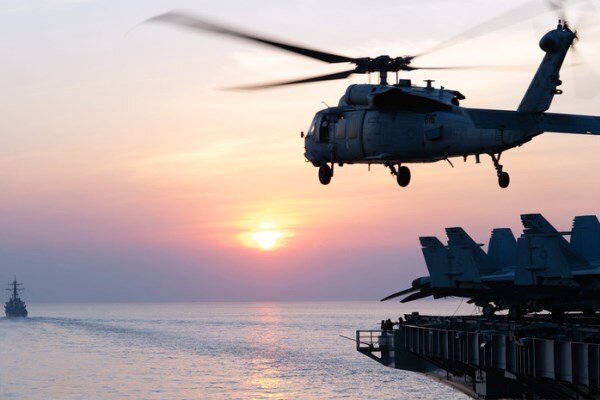
As such, just when the crisis were brewing and the unrest was at its peak, the US decided to show-off its naval power and ability to manoeuvre in the Strait of Hormuz, one of the most significant flashpoints in the world. A US aircraft carrier strike group sailed through the strategic Strait of Hormuz. This carrier sailed through on November 20, 2019. Unsurprisingly, it was on the same day that Israel attacked Iranian forces in Syria, doing what it officially called two “wide scale strikes.”
Whereas the fact that Iran still continues to challenge US and Israeli designs in Syria despite hundreds of such ‘wide-scale’ strikes speaks volumes about Iranian resilience and resistance, the fact the latest strike coincided with the then ongoing unrest and the far from innocent passage of US naval carrier group through the Strait shows that the US and Israel were trying to provoke Iran into making a mistake, which would allow them to do identical strikes inside Iran, igniting a war to help, in their own calculation, the protestors overthrow the regime.
Also, at about the same time, the US president, who has never concealed his extreme dislike of the Iranian regime, had duly ‘informed’ the US Congress in a letter written just a day before the Israeli strike and the passage of US carrier through the Strait about the US decision to deploy additional US troops in Saudi Arabia.
The November 19, 2019 letter says the additional deployment aims to protect US interests “in the region against hostile action by Iran and its proxy forces.  Iran has continued to threaten the security of the region, including by attacking oil and natural gas facilities in the Kingdom of Saudi Arabia on September 14, 2019.  To assure our partners, deter further Iranian provocative behavior, and bolster regional defensive capabilities, additional United States Armed Forces have been ordered to deploy to the Middle East.”
The letter continues, “With these additional forces, the total number of United States Armed Forces personnel in the Kingdom of Saudi Arabia will be approximately 3,000.  These personnel will remain deployed as long as their presence is required to fulfill the missions described above.”
While the long-term mission may be deterrence against Iran, the immediate context of this deployment undoubtedly was the events that were, as the US knew, the passage of US carrier through the Strait and Israeli strikes. Iran, as could be expected, did not strike back, or retaliated through any other way, nor did it attack US naval carrier, directly foiling US-Israeli sabotage attempts and thus prevented a Syria like scenario wherein local protestors had found in external countries certain hands who would then weaponise them to overthrow the regime.
But none of this could materialise not just because of Iranian prudence but also because of a complete mis-reading of Iranian politics and society by the US-Israeli political pundits. While protestors might have been genuine, the assumption that the society at large was ‘erupting’ into a mass anti-regime movement due to the ‘toughest ever’ US sanctions did not take into account the fact Iran, unlike Saudi Arabia, is not a solely oil-driven economy. Therefore, the impact of oil-sanctions, while it may be harsh, could never be expected to erode the domestic base of the Iranian economy. Even the IMF and World Bank reports have suggested that Iranian GDP, of which petroleum is no more than one fifth, will grow after ‘contracting sharply’ in 2019-2020.
Therefore, while Iranian economy may not be in the best shape today, its domestic base remains intact and it continues to receive foreign investment. And, while Tehran may not yet have healthy economic figures to show, it still has an economy that is resilient and can ward off shocks and prevent external powers from making inroads through engineered and/or otherwise caused mass protests.

Salman Rafi Sheikh, research-analyst of International Relations and Pakistan’s foreign and domestic affairs, exclusively for the online magazine “New Eastern Outlook”.

Wednesday, December 04, 2019

Why Germany turned its back on parallel coalitions in Strait of Hormuz

By Maryam Khormaei

Germany recently announced it will not join the French-led mission in the Strait of Hormuz. This is while, not long ago, Berlin’s lack of support for Paris’s position on “the brain death of NATO” became a hot issue.
Berlin’s stance against Paris reinforces the assumption that maybe Germany, on the eve of Brexit, is trying to prevent France to become the dominant power in Europe. The assumption is largely reasonable, provided one does not forget that Germany, in a parallel action, benefits from the cooperation with France to challenge U.S. supremacy and show of power by the EU. 
Britain, from innovation to treason
Where did the idea of creating a European mission in the Strait of Hormuz come from and what countries were involved in it?
What today is known as the French initiative to secure the Persian Gulf was first proposed by Britain in response to the Iranian seizure of the Stena Impero ship in July.
This issue is related to the time before the premiership of Boris Johnson, who follows U.S. President Donald Trump in his extremist policies.
At the time, Jeremy Hunt was serving as the British foreign secretary. Hunt preferred to offer a plan that did not directly involve the EU, NATO and, above all, the United States, in the light of Britain’s ultimate intention to realize Brexit. Instead, Hunt created a far weaker coalition with the participation of the European countries like Norway, which were not a member of the EU. 
The initiative was approved by France and Germany at the beginning because these three countries, as European parties to JCPOA, did not intend to join U.S.-led maritime coalition. The countries did not want to endanger the nuclear deal by assisting the maximum pressure campaign against Iran.
But the plan changed when Johnson took office. Johnson, who was determined to carry out Brexit, did not mind to question the European coalitions and preferred to compete with France and Germany by joining U.S.-led maritime coalition in the Strait of Hormuz. 
The European coalition: From idea to implementation
On November 24, France's Defense Minister Florence Parly announced that a French naval base in Abu Dhabi will serve as the headquarters for a European-led mission to protect Persian Gulf.
Although her announcement formalized the UAE as the headquarters of European-led mission, the decision had been anticipated much earlier and was stated in the August reports.
It was reported that Italy, Spain, Norway, Belgium and Sweden were expected to accompany France, while the Netherlands was not sure to join the European-led naval mission or the U.S.-led coalition. On November 25, the Dutch government formally announced its decision to accompany its European partners. Therefore, the Netherlands will contribute a ship to the French-led naval mission in the Strait of Hormuz for a six-month period starting in January 2020. 
However, for some European countries participating in any extraterritorial mission depends on the approval of the parliament. This issue has become a challenge for Berlin in accompanying Paris. 
Germany constrained by law
From the earliest days when the U.S. was inviting states to create a maritime coalition in the Persian Gulf region, German Foreign Minister Heiko Maas opposed the move and insisted on the need to follow diplomacy to reduce tensions in order to preserve the JCPOA.
Germany, like France, was also looking for a European initiative, but what is important now is that Berlin has apparently broken its promise and left Paris halfway. 
But does the decision by Germany ruin the future of the European coalition?
It should be said that, despite refusing to join the coalition, Berlin still politically supports it. What prevents Berlin from joining the coalition is the country’s constitution.
In fact, Germany has set a precondition for its support of the plan. Germany says the French-led initiative must turn into an “EU mission”.  In the current context, the initial core of the plan is still based on the British model, which limits the coalition to the will of the European countries, regardless of direct dependence on the EU and NATO. 
According to the German law, the country is only allowed to participate in a foreign mission if that mission is defensible from the perspective of a "system based on mutual collective security" within the framework the EU, NATO and the UN. Therefore, participation in the coalition proposed by France is not justified from the perspective of the German law.
On the other hand, Berlin’s reason for refusing to join the U.S.-led maritime coalition was not just to preserve the Iran nuclear deal. Legal restraint was also a matter.
Unlike France and Britain, sending forces outside Germany has to be done with the consent of parliament, and almost all German parties are opposed to joining a U.S. mission against Iran.
The fight over establishing security in the Strait of Hormuz represents a small part of the NATO disputes. Currently, there are two parallel coalitions in the Persian Gulf. Iran has approved none of the coalitions, and Germany has not participated in any of them.
At the beginning the U.S. expected 60 countries to join the coalition which was launched under the command of a headquarters in Bahrain in November. At the present time, just Britain, Australia, Albania, Saudi Arabia, the UAE and Bahrain have joined the U.S.-led coalition.
The European coalition has also failed at the outset due to legal obstacles in certain countries in Europe. 
Meanwhile, Defense Minister Parly affirmed European and U.S. coordination in parallel missions in the Strait of Hormuz. At the same time, Parly accused Washington of being indifferent to what happened in the Middle East in the summer, including the incidents of Fujairah port and Oman Sea, as well as downing of a U.S. drone.
The comments by Parly, in addition to what French President Emmanuel Macron had recently said about NATO's brain death, further fuels the domestic crisis within NATO.

Wednesday, October 02, 2019

On Hormuz Peace Initiative


On Hormuz Peace Initiative


The idea entails the concerned countries cooperating to ensure security in the Persian Gulf and Sea of Oman, though importantly excluding the US participation which is stirring up regional tensions.
Washington blamed Tehran for the mysterious tanker attacks that occurred earlier in the summer and the Houthis' recent drone strike against the world's largest oil processing facility in Saudi Arabia, which the US then exploited as the justification for bolstering its military presence in the Persian Gulf in order to “milk” Saudi Arabia and intimidate Iran into undertaking political concessions in exchange for sanctions relief.
As part of its efforts, the US has struggled to form an international coalition for patrolling the region's waterways and ensuring so-called "freedom of navigation," a move that Iran has labeled as provocative and intended to actually bully it. It's therefore imperative for the regional nations to take security into their own hands instead of relying on self-interested outsiders like the US which have over four decades of experience in trying to destabilize Iran after its 1979 Islamic Revolution.
After all, it's only sensible for one of the most direct regional stakeholders themselves to officially suggest something of the sort in order to give it the momentum needed to be taken seriously by its counterparts and not be regarded as an entirely extra-regional recommendation. It therefore wouldn't be surprising if Iran's proposal includes regionally relevant details for facilitating its eventual entry into practice.
Iran's "Hormuz Peace Initiative" is timely and much needed since global economic security – already threatened by the US trade war – is largely dependent on stability in the energy-rich Persian Gulf, which has been undermined as a result of recent events there and America's attempts to pin the blame on Iran without any evidence. Considering the US provocative actions and rhetoric, it cannot be trusted as a reliable partner for ensuring this, hence why it's the need of the hour for the regional countries to cooperate.
That's obviously a lot easier said than done owing to the deep distrust between Iran and Saudi Arabia, but both countries share partnerships with China and are greatly increasing their economic engagement with it, which places the People's Republic of China in a privileged position to help facilitate peaceful dialogue if called upon by both parties to do so. 
Even if they don't request this, there's no ignoring that they each have shared interests in stabilizing the Persian Gulf in order to maximize the benefits they stand to receive from the Belt and Road Initiative (BRI).
Iran is regarded as one of the most promising emerging markets in the world given its pivotal transit location along the South Eurasian Rimland, educated population, and natural resource wealth, while Saudi Arabia is in the midst of its "Vision 2030" systemic transition to a post-oil economy.
Without peace and security in the region, their future developmental plans – which are being advanced through differing degrees of foreign investment – are endangered, so now's the time for them to finally take collective security seriously - without the US.

Tuesday, September 03, 2019

Now Or Never For Trump-Rouhani Meeting

by Robert Czulda
Recent actions against the safety of tankers in the Persian Gulf have once more destabilized this subregion and have heightened the anxiety of numerous commentators. Both attacks on infrastructure and the capture of tankers show that the situation has become extremely serious. Further escalation could unintentionally turn into an open confrontation. Another war in the Persian Gulf—especially with a large and important country like Iran—would have global consequences, since the Strait of Hormuz is the world’s vital oil artery. According to available data, roughly 21 million barrels of oil left this narrow chokepoint every day in 2018.
Both the United States and Iran are well aware of the stakes of any direct confrontation. Donald Trump and his aides surely know that an open war with Iran would be a disaster that would bury his chances of re-election next year. Iran also cannot afford a war or any disruptions in the Persian Gulf. According to official data, 93% of Iran’s trade goes through the Strait of Hormuz. Decision-makers in Tehran must also be aware that continuing their confrontational approach will not produce desirable results. Logic suggests that for both parties, it is time to consider a change in strategy.
The recent rhetoric from both Iran and the U.S. shows a desire to demonstrate strength and determination, as well as reluctance to surrender in the face of pressure. President Donald Trump wanted to demonstrate his power and domination over a rival in order to strengthen his position for future interactions. This is a negotiation strategy that is typical of aggressive and risky businessmen, and Trump is undoubtedly one of them. At the same time, Iranian President Hassan Rouhani is aware of his domestic opposition. Were he to show any weakness in the face of U.S. pressure, it would undoubtedly strengthen Iranian conservatives, who favor a strong stance against the United States and in general are against direct talks with Washington. Moreover, resistance is part of Iran’s strategic culture, and Rouhani’s strong approach was in keeping with that principle. In other words, what we have seen in recent weeks was mainly theatre meant for the public—not only the international community, but also the Iranian and U.S. publics. 
Although according to press reports, the arrival of Iranian Foreign Minister Mohammad Javad Zarif to the G7 Summit in France was a surprise, it is difficult to imagine that the United States was entirely unaware of French President Emmanuel Macron’s intention to invite him. Trump himself has suggested that he knew Zarif was coming. It is significant that President Trump seemed to change his approach toward Iran during the G7, announcing that he is ready to meet with Rouhani and even suggesting that he would not oppose a European proposal to offer Iran a short-term credit line.
Such a sudden change in his attitude toward Iran may seem surprising, but this variability is part of Trump’s presidency. Before he met with North Korean leader Kim Jong-un, he had threatened North Korea several times with a war and even deployed U.S. aircraft carriers near the Korean Peninsula. This is a typical bad cop/good cop strategy, but in this version Trump interchangeably plays both roles. That he’s applied the same strategy to Iran should therefore not be surprising at all. Most likely, Tehran is aware of Trump’s intentions. Otherwise it would not have recently withdrawn its S-300 long-range air-defense system from the Persian Gulf to Central Iran.
After the recent phase of tension in the Persian Gulf, there will now hopefully be a phase of relaxation. This is the moment to start diplomatic efforts and try to organize a meeting between Trump and Rouhani. The window of opportunity is shrinking. President Trump cannot afford a war with Iran while a new agreement with Tehran—even if basic and interim—would be welcomed by the U.S. public, which will choose a new president in November 2020. If there is any moment when Trump would be ready to make some concessions, from a position of strength, it is right now. Iran’s strategy of waiting to see whether a new, Democratic administration would be willing to re-enter the 2015 nuclear deal is a risky one, as Trump has a high chance of being re-elected. Moreover, the Iranian economy cannot wait that long. Tehran seems desperate and is reportedly ready to accept permission to export 700,000 bpd of oil and receive payment in cash, with hopes of reaching 1.5 million bpd. However, this will not happen without a green light from the United States, so if Iran wants to sell oil, it will have to make an agreement with Washington.
Rouhani and Zarif also cannot wait, because next year Iran will hold new parliamentary elections. Without any deal, so-called reformists are very likely to lose some of their power. This is the last good moment for Rouhani and his camp to start negotiations. A new, interim deal, which would give Iran a chance to sell some oil, would be very helpful if the reformists want to remain in power or at least limit their losses in 2020. Iranian hardliners are more assertive and anti-Western, and they are not keen to have any new agreement with the West.
Is a meeting between Rouhani and Trump likely in the near future? Probably not. But as long as it is possible, everything should be done to make it a reality. Both Rouhani and Trump have signaled their willingness to attend such meeting. France could serve as a broker. Of course, there are some serious challenges that cannot be easily ignored. Rouhani said that the United States must first lift the sanctions it has imposed on Iran. Keeping in mind Trump’s often erratic behavior, we cannot rule out the possibility that, in order to make the Iranians more eager to attend such a meeting, he might agree to temporarily suspend some sanctions and provisionally allow the Iranians to sell some of their oil. It is a possibility worth exploring. If Iranian conservatives win next year’s elections and if Trump is re-elected, the window of opportunity for talks will close. It is now or never.
Robert Czulda is an assistant professor at the University of Lodz, Poland and a former visiting professor at Islamic Azad University in Iran, the University of Maryland (Fulbright Senior Award) and National Cheng-chi University in Taiwan. He is the author of Iran 1925 – 2014: From Reza Shah to Rouhani.

Wednesday, August 21, 2019

Foreign forces sowing insecurity in region: Iran's UN envoy

Foreign forces sowing insecurity in region: Iran's UN envoy

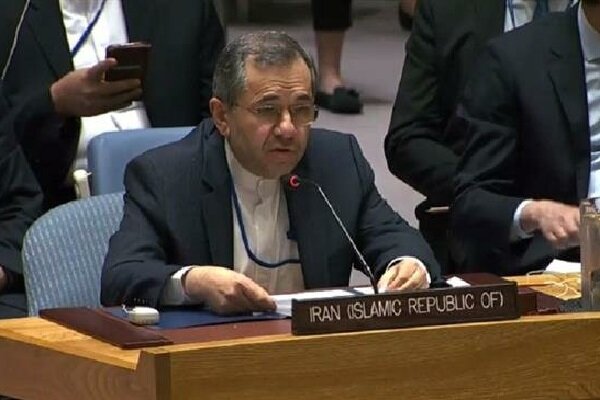
TEHRAN,(MNA) – Iran's Ambassador and Permanent Representative to the United Nations says the presence of foreign forces in the region is sowing insecurity and instability in the Strait of Hormuz, reiterating that the responsibility to ensure the security of the Persian Gulf falls upon its littoral states.
Majid Takht-Ravanchi made the remarks while addressing a UN Security Council meeting on Middle East peace and security challenges in New York on Tuesday.
The Iranian diplomat slammed the deployment of more than 70,000 US servicemen in the region as one the main reasons behind the insecurity and instability in the Middle East, stressing that Washington has an active military presence in all Persian Gulf states except for Iran.
“The number of foreign military installations in the Middle East has jumped from four in 1991 to 41 in 2018. Nearly all of them belong to the US, which mark the highest concentration of military sites in the world,” he said.
Elsewhere in his remarks, Takht-Ravanchi referred to the unilateral withdrawal of the US from the 2015 nuclear agreement, also known as the Joint Comprehensive Plan of Action, as another source of instability in the Middle East.
He said the unbridled flow of American weaponry into this region has “turned it into a powder keg.”
“The sole beneficiary of weapons stockpiling in the region is the defense industry of exporting countries. We should not ignore the US “divide and rule" mechanism, which seeks to sow seeds of permanent discord among regional states. The Iranophobia remarks by American officials are meant to accomplish such an objective.
“They have leveled unfounded accusations against Iran in order to justify their regional policies, and prevent the country from performing its role in the region,” Takht-Ravanchi said.
“While we are not seeking confrontation, we cannot and will not remain indifferent to the violation of our sovereignty. Therefore, in order to secure our borders and interests, we will vigorously exercise our inherent right to self-defense,” the Iranian envoy added.
Takht-Ravanchi highlighted that Tehran will continue to ensure the security of maritime navigation in the Middle East, particularly in the Strait of Hormuz, adding that the United States’ attempts to set up a military coalition in the Persian Gulf to counter what it calls the “Iran threat” will fail.

Why the World Is Watching the Fate of an Iranian Tanker in the Mediterranean

Greece, unlike the U.S., has taken the position that Iran has "the right to develop nuclear technology for peaceful purposes alone."


by
The British seized the Iranian tanker at the urging of the United States. (Photo: Jorge Guerrero/AFP/Getty Images)
At 11:30 p.m. on August 18, the Iranian tanker Adrian Darya 1 left the shores of Gibraltar at the mouth of the Mediterranean Sea. This ship had been detained 46 days ago by British Royal Marines and Gibraltar’s officials. The British claimed that the ship—then named Grace 1—was taking its cargo of 2.1 million barrels of oil to Syria. There are European Union sanctions against trade with the Syrian government. It is based on these sanctions that the British seized the Iranian vessel.

Last Thursday, on August 15, Gibraltar’s Chief Minister Fabian Picardo ordered the release of the ship after the Iranian authorities said it would not be going to Syria. The immediate destination for Adrian Darya 1 is the Greek port of Kalamata.

Sanctions on Iran

The British, it is clear, seized the Iranian tanker at the urging of the United States. There was no previous British warning that it might enter in such a muscular way into the U.S. attempt to suffocate Iran. Even the location of the seizure unnecessarily raised tensions for the United Kingdom. The waters around Gibraltar are contested between Britain and Spain, with the latter making noises about a formal complaint about the British action.

Gibraltar’s government has been trying to find a middle course between the claims of Britain and Spain. It seeks some form of independence, although with close ties with both its large neighbor and its formal occupant. When the UK asked Gibraltar’s authorities to get involved in the seizure of the Iranian tanker, Gibraltar’s government complied because the request was in line with European Union sanctions against trade with the Syrian government.

In Gibraltar’s courts, the British were largely silent. The case against the Iranian vessel was made by the United States, which changed the basis for the seizure. The U.S. argued that the vessel had to remain impounded as part of its new and harsh sanctions regime against Iran. When Gibraltar was preparing to release the ship, the U.S. District Court in Washington, D.C., issued a warrant for the ship. This emergency warrant alleged that the ship was owned by the Iranian Revolutionary Guards and therefore must not be allowed to sail.

Gibraltar did not agree. The U.S. tried to use its 1977 International Emergency Economic Powers Act, and the new sanctions regime by the Trump administration. None of this appealed to the judiciary in Gibraltar. The government of Gibraltar said that it did not accept the new U.S. sanctions regime on Iran. It had held the vessel based on the European Union sanctions on Syria, not on any EU sanctions on Iran. Therefore, it has allowed Adrian Darya 1 to sail.

Iran’s Reaction

New statistics show that Iran’s economy has been decelerating at a rapid pace. The numbers from the Statistical Center of Iran show that Iran’s GDP shrank by 4.9 percent in 2018-19. Economic growth is slipping backwards, as the sectors of oil, industry, and agriculture post negative numbers. Inflation continues, with the inflation rate now at the highest it has been in a quarter of a century. Iranian traders have been moving their goods to Iraq, which results in the rise of prices within Iran. Most stunningly, the prices of non-trade goods and services—such as health and housing—are rising. All this has put enormous pressure on the government of Hassan Rouhani, although his spokesman Ali Rabiei said on Monday that Iran’s economy is experiencing “positive signs.”

Confidence from the Iranian government is remarkable. Officials in Tehran refuse to be cowed by the pressure from Washington, D.C. When the Adrian Darya 1 left Gibraltar, senior Iranian parliamentarian Alaeddin Boroujerdi said that its release was a result of “the revolutionary diplomacy of resistance.” He pointed to the seizure by Iran of the British ship Stena Impero, which continues to be detained in Iran. The British ship, Boroujerdi said, was being held for its violation of basic maritime rules in the Strait of Hormuz. The seizure of the Iranian ship—he pointed out—“was an act of piracy by England.”

Based on this assessment that the UK had indulged in piracy at the urging of the United States, Iran’s chief judge Ebrahim Raeisi said that the release of Adrian Darya 1 is not sufficient. Compensation must be paid to Iran. What compensation will be demanded from the UK is not clear, and it is further unclear where Iran will formally raise the issue of compensation. Iranian diplomats say that they might approach the United Nations based on the 1982 UN Convention on the Law of the Sea.

Will Greece Hold the Tanker?

Within the Trump administration there is appetite to further block the passage of Adrian Darya 1, and make it a flashpoint toward war. That is what Trump’s adviser John Bolton indicated when Gibraltar held the ship. Make your move, he seemed to suggest to Tehran. Iran told the U.S.—through the Swiss authorities—that it must allow the ship free passage. If the Adrian Darya 1 is blocked, it would set a terrible precedent for international shipping.

When the tanker enters Kalamata, it will likely take on a new crew and then set its next destination. There is no indication as to what the ship will do with its 2.1 million barrels of crude oil. It is likely that it will unload its cargo onto another ship in international waters.

Last week, the U.S. government asked Greece to contribute to its naval force in the Persian Gulf. Greece, with its new conservative prime minister, declined—as did France and Germany—to this new U.S. initiative. The Greek government, led by Kyriakos Mitsotakis, is eager for a close relationship with Washington, but it is not willing to enter a frontal clash with Iran. Greece is already in a heated situation with Turkey. To rattle Iran would only further complicate Greece’s fragile dance in the eastern Mediterranean.

Greece, unlike the U.S., has taken the position that Iran has “the right to develop nuclear technology for peaceful purposes alone.” This is Iran’s position. The United States, as Professor Seyed Mohammad Marandi told Tricontinental: Institute for Social Research, opposes even a peaceful nuclear project for Iran. This is why Trump walked out of the 2015 nuclear deal. This is precisely why the U.S. has been putting immense pressure on Iranian shipping. And this is what led us to the story of the Adrian Darya 1.

Wednesday, August 14, 2019

Who Is Responsible for Persian Gulf Security?


Who Is Responsible for Persian Gulf Security?


TEHRAN (FNA)- Iranian Foreign Minister Mohammad Javad Zarif says any military presence in the Persian Gulf from outside the region would be a “source of insecurity” for Iran, and Tehran would act to safeguard its security.
This comes as Washington is lobbying international partners to join a so-called maritime security coalition at a time of heightened tensions with Iran. Tehran has also warned against any presence of its arch-foe Israel in the planned coalition.

“The Persian Gulf is a vital lifeline and thus nat’l security priority for Iran, which has long ensured maritime security. Mindful of this reality, any extra-regional presence is by definition (a) source of insecurity ... Iran won’t hesitate to safeguard its security.”

At any rate, there are many reasons as to why Iran says the responsibility of securing these waters lies with Tehran and other regional - and not trans-regional - countries.

The Law of the Sea Treaty says activities pursuant to self-defense are consistent with the United Nations’ 1982 Convention. It is within the framework of this particular Convention that Iran as a signatory underlines that the US navy has no sovereignty right and to have a role in the management and control of maritime trafficking in the Persian Gulf.

Yet, few UN member states have remained adamant to ratifying the Convention, notably the United States which has signed, but not ratified it. This disrespect for the approvals of the international community could well be interpreted in line with the US expansionist and exceptionalism. That says why the United States continues to challenge, and even threaten with sanctions, Iran’s territorial rights in the Persian Gulf and the Sea of Oman.

This is while on several occasions, the armed forces of the United States (not a Coastal State) have conducted operations in the Persian Gulf in collaboration with Arab littoral states. Throughout the years, US forces, using numerous naval bases in the region, have also been performing "Freedom of Navigation" operations in the Strait of Hormuz with little respect to the Law of the Sea Treaty.

Under 1982 Convention and Freedom of Navigation, however, Iran as the largest Coastal State that has a 2,000-km coastline on the Northern rims of the Persian Gulf (several times longer than any other littoral state) whose borders stretch several miles deep into the Strait of Hormuz is allowed to:

1- Exercise sovereignty over its territorial waters
2- Stage naval drills for self-defense and security
3- Regulate navigational and other aspects of passage through the Strait of Hormuz
4- Establish sea lanes and air routes 
5- Have sovereign rights in a 200-nautical mile exclusive economic zone with respect to natural resources and certain economic activities, and exercise jurisdiction over marine science, research, and environmental protection
6- Have freedom of navigation, transit, and overflight
7- Prevent and control insecurity under international obligations

It is within the boundaries of this Convention that Iran as a signatory continues to stage naval drills in the Persian Gulf and the Sea of Oman. It is also within the framework of the same Convention that the Iranian Leader says “Tehran will continue its military drills,” since sea power of both the hard, naval kind and the softer kind that involves trade, is as vital as ever for national security.

There is little doubt that Iran’s naval drills also adhere to International Maritime Law by helping to reinforce regional security and peace. Meaning, America is not right to be worried about Iran becoming a regional maritime power. What makes Iran’s rise as a sea power troubling for the Arab littoral states that rely on America to maintain their own order are in fact its independent policies and security programs, as well as where it lies.

Indeed, there is nothing wrong with Iran regarding a powerful navy as essential to its security, prestige and self-image, particularly if it eventually also uses it to reinforce regional order. It is the United States that should explain the legal basis for why it sees itself entitled to any right to call for the formation of a coalition.

Tuesday, August 13, 2019

Iran will not be hemmed in by the US and UK

 Vijay Prashad
The Americans, joined by the British are trying to create trouble against the Islamic Republic in the Persian Gulf – a waterway which is thousands of kilometers from their coasts and in which they have no right to interfere.
The following is an article in this regard that appeared on the ‘GlobeTrotter’ site, titled: “Iran will not be hemmed in by the US and UK”.
The writer is Vijay Prashad, an Indian historian and journalist, who is chief editor of LeftWord Books and the director of Tricontinental: Institute for Social Research. He has written several 20 books, including “The Darker Nations: A People’s History of the Third World”.
In late May, the shipping authorities in Panama de-registered Grace I, an oil tanker carrying 2 million barrels of Iranian crude oil around the coast of Africa into the Mediterranean Sea. Having lost its Panamanian flag, the ship was then forced to carry an Iranian one.
The vessel’s de-registration sparked off a serious provocation. Off the coast of Gibraltar, British Marines seized and impounded the ship. The British said that it was headed for Syria, which constituted a breach of European Union sanctions. Iran refuted the claim.
Sanctions and diplomatic pressure on other countries that host Iranian ships have also increased lately. Two other Iranian ships, Bavand and Termeh, recently sat for weeks in Paranaguá, Brazil, when the Brazilian state oil company Petrobras refused to refuel them. This was another direct result of pressure from the United States.
The situation is a complex one. Iran imports US$2 billion of goods annually from Brazil, mainly corn, meat and soy. Iran’s ambassador to Brazil, Seyyed Ali Saqaeyan, told Brazilian officials that if Petrobras continued to deny Iran fuel for its ships, then Iran would source its imports elsewhere. This caused Brazilian traders to pressure their government not to alienate Iran.
In the end, Brazilian Chief Justice Dias Toffoli ordered Petrobras to refuel the ships. The Supreme Court said the ships have a contract with a Brazilian firm, Eleva Química, which is not subject to US sanctions. The two ships, along with three others, Daryabar, Delruba and Ganj, have been carrying urea to Brazil before returning to Iran with corn.
Pressure from the United States has resulted in Panama removing its flag from 59 vessels that are linked to Iran or Syria. A ship without an international flag cannot buy insurance, which means that it has to take on a different flag almost instantly. The United States has also pressured countries such as Sierra Leone and Togo not to allow their flags to fly on vessels that are part of Iran’s oil export trade. Thanks to American pressure upon insurance companies, ships carrying an Iranian flag have great difficulties obtaining insurance.
Ships with Iranian flags are also on the radar of customs officials who have been asked to subject them to more rigorous scrutiny. This delays their journeys and raises the cost of transporting Iranian oil.
Recently in his Friday Prayer Sermon in Tehran, senior religious leader Ayatollah Seyyed Ahmad Khatami said Britain’s actions off the coast of Gibraltar, at the mouth of the Mediterranean Sea, reminded Iran of Britain’s colonial history. Britain, he said, is a “cunning and colonial fox.”
Also, the chairman of Iran’s parliamentary National Security Committee, Hojjat al-Islam Mojtaba Zonnour, said the actions of Britain should be described as “bullying and piracy.”
Last month, Iran detained Stena Impero, an oil tanker flying under the British flag for violating international navigational and trying to flee after colliding with an Iranian fishing trawler in the Hormuz Strait. Stena Impero and its crew of 23 were taken to the Iranian port of Bandar Abbas.
Iranian coastal guards also boarded MV Mesdar, a British ship sailing under the Liberian flag. Iran said it intervened with MV Mesdar because it steered off course toward the Iranian coast. A few hours later, MV Mesdar was allowed to proceed.
Iran’s permanent mission to the United Nations sent a letter to the UN authorities offering Iran’s view of the Stena Impero incident. The Iranians said the tanker collided with an Iranian fishing boat, seriously injuring some of the smaller vessel’s crew. Iranian authorities had radioed the Stena Impero, which ignored its warnings and sailed away from a course suggested by the Iranian authorities. Iran said it was conducting an investigation of the collision, and released the audio of the radio talk with Stena Impero.
Stena Impero’s owners tried to deny the account, as did the British government. The ship is owned by a Swedish-based firm, Stena Bulk.
The British navy has lately begun to intrude into the Strait of Hormuz between Iran and Oman. The UK government has said that all British merchant ships will now be escorted by frigates.
The United States is leading a process to create a naval force to patrol the Strait of Hormuz. The US has said it will send “command and control” ships to coordinate other nations’ naval escort vessels. As the Strait of Hormuz becomes ever-more militarized, it is likely that Britain will work in tandem with the US.
The so-called international coalition assembled by the US is not without cracks. The Japanese, for instance, have said they will not participate in the US-led military operation. Prime Minister Shinzo Abe said Japan wanted to reduce tensions and to avoid inflaming the situation. Others in Asia agree.
Iranian President Hassan Rouhani said, “The main responsibility for protecting the Strait of Hormuz and the Persian Gulf is mainly with Iran and neighboring countries,” mainly Oman. Rouhani is also reported as saying that if other countries tried to create tension, “they will receive a proper response from Iran.”
Rouhani made this comment as his special envoy to France, Deputy Foreign Minister Abbas Araqhchi, met with French Foreign Minister Jean-Yves Le Drian to insist that Iran would not allow any interventions that disturb operations in the Strait of Hormuz.
Iranian Brigadier-General Hossein Dehqan told Qatar’s al-Jazeera, “Any change in the status of the Strait of Hormuz will open the door to a dangerous confrontation.”
Iran is clearly not prepared to back down over asserting its role in the vital, 21-nautical-mile-wide sea strait, through which passes around a fifth of the world’s oil. At a recent gathering of foreign ministers of the Non-Aligned Movement in Caracas, Venezuela, it was made clear that most countries want to avoid seeing the flashpoint explode into open war.
Iran, which cannot afford to be hemmed in by international pressures or actions, is now being creative with its shipping, as is evident by its firm maritime policies.

Multipolar World on Iran’s Side

 Viktor Mikhin

IR5645622
Many people in the West are gradually beginning to understand that the days of the unipolar world are numbered, a unipolar world the United States has been recklessly dominating for the past number of years, using nothing but brute force and military conflict in an attempt to impose its world order on other countries. New superpowers are coming to the forefront, whose aim is to strengthen world peace and to protect the legitimate right all people have to live according to their own national laws and customs, without interfering in other countries’ affairs. This is particularly visible in the Persian Gulf amid the so-called “Persian Gulf crisis”.

It initially looked as if reason had prevailed when the five permanent members of the UN Security Council as well as Germany signed the Joint Comprehensive Plan of Action (JCPOA), which gradually began to normalize the situation in the region. But then Donald Trump not only withdrew from the Iran nuclear deal, but also imposed fierce sanctions against Iran and the Iranian people, who value their independence. By imposing sanctions against Iran, the US has made it clear that it wants to “make the whole world bend to its will” – the Russian Foreign Ministry commented. “This is being done in order to deprive Iran of export revenue and to undermine the Iranian economy, because the United States has long been dissatisfied with Tehran’s independent policy, one reason being the fact that it prevents Americans from being able to feel like they fully dominate the strategically important region that is the Middle East,” the website of the Russian Foreign Ministry. In 2019, Iran responded by announcing it would suspend implementing two parts of the deal, and after that point the world seems to have begun moving towards armed conflict at an alarming pace.

But the world has changed, and a number of countries have taken urgent steps to stabilize the situation. French, German and UK Foreign Ministers have announced the creation of INSTEX, a new mechanism for facilitating legitimate trade with Iran. INSTEX will initially focus on delivering medicine, medical devices and agri-food goods to Iran. The decision to create a mechanism to facilitate trade with Iran that bypasses US sanctions was taken in order to establish normal trade relations with Tehran.

Moreover, European NATO member states were very skeptical about the US-led initiative to establish a joint international naval mission, which is meant to protect the shipping interests of the West in the Strait of Hormuz. German Foreign Minister Heiko Maas made a statement which clearly expresses this skepticism: “Germany will not take part in the naval mission proposed and planned by the United States.” US Ambassador to Germany Richard Grenell expressed his frustration, declaring he was “outraged” by Angela Merkel’s policy, as the German Chancellor had said Berlin did not intend to join the US mission in the Strait of Hormuz. In response to the decision Maas had announced, Grenell rudely barged in on Germany’s affairs and made a dogmatic statement, saying that “Germany is the biggest economic power in Europe. This success brings global responsibilities.” From what the American Ambassador has said, it is clear that he still sees Germany as an American protectorate, not an independent state, where American troops are still stationed.

“The presence of foreign forces does not only not contribute to the security of the region, but also will be the main cause of regional tensions,” Iranian President Hassan Rouhani said at a meeting with Oman’s Foreign Minister in Tehran. Recalling the fact that Iran and Oman bear most of the responsibility to ensure security in the Strait of Hormuz, President Rouhani added: “Iran has been, and will be, the main guardian of security and freedom of navigation in the Persian Gulf, the Strait of Hormuz and the Sea of Oman during history.”  At the same time, noting Iran has never and will never start a war, Rouhani made it clear that the current tension in the region stems from America’s unilateral rejection of the JCPOA and the illusion of the Trump administration. During this meeting, Oman’s Foreign Minister Yusuf Bin Alawi Bin Abdullah, in turn, described relations between Iran and Oman as “friendly and brotherly”, adding: “Today, the region is experiencing fabricated and proxy crises, and the establishment of sustainable security in the region will definitely not be possible without Iran’s involvement.”

In this regard, Iran and Russia are planning to begin carrying out joint naval exercises in the near future, Iranian Navy Commander Rear Admiral Hossein Khanzadi told IRNA (The Islamic Republic News Agency). According to Khanzadi, these joint naval exercises may take place in the northern part of the Indian Ocean, and in the Strait of Hormuz, which connects the Persian Gulf with the Gulf of Oman. The US media reported these plans, which they say have really frightened members of the Trump administration, because the news came as a big surprise, and now Washington simply does not know how to respond to these plans. The French newspaper Le Monde explicitly reported that conducting these naval exercises would spoil the whole game plan for Donald Trump and his team.

Against this background, Iran has begun taking a tougher stance against the United States and its leadership. One event which stands out is when Tehran bluntly turned down an offer from US Secretary of State Mike Pompeo to visit Iran and speak to the Iranian people. Pompeo appears to have become obsessed with the withered “laurels” of the notorious former Assistant Secretary of State Victoria Nuland, who visited Kiev’s Maidan Square back in the day, and handed out cookies to local residents. Ordinary people in Kiev did not understand the gesture, and thought that the Americans would later reward them with a million dollars for each cookie they took. They are still waiting for that reward.

Even close US allies – the Gulf States, especially Saudi Arabia and the UAE – are feeling the negative consequences of US sanctions, as the Gulf tanker crisis and threat to the freedom of navigation have led to a hike in insurance costs for their ships and cargo. Another threat to the oil market in the Persian Gulf is that countries in Asia such as China, India, Japan, South Korea and Taiwan, are already looking for alternatives, because they are afraid their oil supply will be disrupted if war breaks out and the Strait of Hormuz is closes. On top of all this, there is a significant outflow of investment from the Gulf countries, whose economies are partly dependent on the financial services of other States. According to US bankers from JP Morgan, Saudi Arabia lost $80 billion in investments last year, and the shares of the Persian Gulf countries plummeted, which had previously been highly valued by the financial market.

Many people around the world are right to believe that unqualified sanctions against Iran are a moral, political and legal failure on the part of the United States. Imposing sanctions against Iran means that the United States has failed to fulfill its obligations to international institutions, one of them being the United Nations. Everyone loses here – Europe suffers a setback, as does Iran and the whole world, Washington has brought the world to the brink of war, to both political and economic stagnation.

Viktor Mikhin, corresponding member of the Russian Academy of Natural Sciencesexclusively for the online magazine “New Eastern Outlook.

Muslims Around World Mark Eid al-Adha

Indonesian Muslims offering Eid al-Adha prayers at Baiturrahmah
mosque in Padang, West Sumatra province
TEHRAN -- Muslims around the world celebrated Eid al-Adha, the feast of sacrifice, the second of two Islamic holidays celebrated worldwide marking the end of the annual pilgrimage or Hajj to the Saudi holy city of Mecca.
Across the world men, women and children prayed and sacrificed animals as part of the celebrations.
Eid al-Adha is the holiest of the two Muslims holidays celebrated each year.
Prayers were held in Myanmar, Azerbaijan and Iraq, while in India police frisked worshippers as they entered mosques amid growing criticism of the treatment of Muslims under Prime Minister Modi's right-wing Hindu nationalist regime.
Some Muslims slaughter a sacrificial animal and split the meat into three parts, one for the family, one for friends and relatives, and one for the poor.
The act is done to honor willingness of Prophet Ibrahim to sacrifice his son as an act of obedience to God's command, as told in the Qur’an. However, before he was able to sacrifice his son, God provided him with a sheep to kill instead.
Muslims believe the hajj offers the chance of atonement and an opportunity to erase past sins. The first two days of the hajj are spent in Mecca and other areas around it in deep prayer, contemplation and worship.
Filipino Muslims gather to celebrate Eid al-Adha at the
Luneta Park in Manila
Iran’s President Hassan Rouhani sent out separate congratulatory messages to international Muslims leaders on the occasion.
He took the opportunity to express hope that the world’s Muslim authorities will be able to reinforce unity throughout the Muslim world in order to confront terrorism as well as the unilateralism and imperialistic practices of international hegemonic rulers.
Tehran’s interim Friday prayers leader strictly cautioned against further escalation of tensions between India and Pakistan over the disputed region of Kashmir.
Muhammad-Hassan Aboutorabi-Fard advised that the issue be resolved through "rationalism and management that uses morality and erudition as its basis.”
Aboutorabi-Fard said Kashmir forms a part of the international Muslim nation, making any unprincipled and untenable move against it a move targeting the entirety of this nation.
The cleric also addressed the occupying regime of Israel’s use of violence against Palestinians marking Eid al-Adha on the Al-Aqsa Mosque’s compound in the holy occupied city of East Jerusalem Al-Quds on Sunday.
Tel Aviv should know this that it can only temporarily rely on use of force, he said.
Palestinians celebrate the first day of Eid al-Adha near the
Dome of Rock mosque at the Al-Aqsa Mosque compound,
Islam's third holiest site, in the Old City of Jerusalem 
"The Zionist regime, the Al Saud regime, and the Al Khalifah regime, whose authority rests on bayonets, are certainly doomed to suffer destruction and perish,” Aboutorabi-Fard stated.
Separately, he addressed Iran’s capture late last month of a British-flagged oil tanker, which had collided with an Iranian fishing boat in the Strait of Hormuz, and ignored its recurrent distress calls.
"It was Great Britain and not just the British vessel that felt weak in the face of the Iranian nation,” he said.
Europe should adopt a character "independent” of the imperial world and the United States instead of being "subjugated” by them, he further advised.
"Who is America, to which some serve as entourage and prostrate? What position arrogant powers are in to subjugate other nations?” he asked.