Showing posts with label IRGC. Show all posts

Tuesday, November 26, 2019

Flood of People Drowns Rioters

IRGC Chief: Iran to Destroy Whoever Crosses Its Redlines
TEHRAN (Kayhan Intl.) – Hundreds of thousands of Iranians rallied in Tehran on Monday, condemning the United States and the occupying regime of Israel for instigating violent riots recently in the Islamic Republic.
General Hussein Salami, the chief commander of the Islamic Revolution Guards Corps (IRGC), warned the United States, the Zionist regime and Saudi Arabia not to push Tehran into devastating retaliation over their support for rioters.
"We have shown restraint...We have shown patience towards the hostile moves of America, the Zionist regime and Saudi Arabia against Iran,” Salami told demonstrators in Tehran’s Revolution Square.
Addressing the enemies, he said, "You have already tested us in the battlefield and have been slapped hard in the face without being able to answer. Some of those slaps have been seen by the world and some have not been seen… If you cross our redlines, we will destroy you.”
Crowds chanted "Death to America,” and "Death to Israel” in response to Western statements of solidarity with rioters.
"I recommend they (foreign countries) look at the marches today, to see who the real people in Iran are and what they are saying,” Foreign Ministry spokesman Abbas Mousavi said.
Citing the Iranian people as the Islamic Republic’s source of energy, General Salami said, "If this accumulated energy is released, no enemy will be safe and secure in any part of the world."   
"Today, the final was delivered to the enemy. The sedition which occurred in the recent days was the spin-off of all major fiascos that the Muslim Ummah and the Iranian nation have inflicted on the enemy in different fields over the last 40 years, particularly over the past eight months," Salami said.
He said the enemies have been defeated and are not able to do anything against the country, but still "we will not leave any move unanswered and will get even".
Earlier in the day, Mousavi said measures are being taken to counter U.S. officials’ intervention in the recent unrest which was triggered by the Iranian government’s decision to hike gasoline prices.
The decision was part of Iran’s belt-tightening in the face of U.S. sanctions which have hit ordinary Iranians the hardest. While U.S. officials said they supported the protesters, they imposed new sanctions on Iran last week.
"We think these statements and interventions are made not out of friendship and goodwill with the Iranian people, but aim to stoke up tensions,” Mousavi told reporters here.
On Saturday, U.S. Secretary of State Mike Pompeo tweeted: "As I said to the people of Iran almost a year and a half ago: The United States is with you."
Pompeo was referring to the time when he curiously said Washington’s tough sanctions were aimed at giving the Iranian people a chance to have better lives.
Pompeo had earlier told BBC Persian that Iranian officials must listen to Washington "if they want their people to eat."
On Sunday, Mousavi denounced Pompeo’s new tweet. "Iran's noble nation knows well that such hypocritical statements are completely void of sincere sympathy," the spokesman said.
Russian Foreign Ministry spokeswoman Maria Zakharova said Pompeo’s tweet "left us puzzled since most of the things that sparked the discontent and other processes that are taking place in Iran were actually brought upon the Islamic Republic by the U.S.’ own actions.”
Iran has been trying to take the sanctions in its stride, working through a raft of measures which could ease up the pain for the most needy families.
The Iranian government this month raised gasoline prices which still remain the cheapest in the world. The decision triggered peaceful protests which turned ugly when "saboteurs” went on a violent rampage, torching banks and gas stations, while armed assailants targeted police and security forces.
Mousavi said Monday, "We recognize the right to peaceful assembly. In recent years, similar incidents have happened where people had certain grievances and were able to express them.”
"However, more unsavory than the recent events was the meddling of foreign countries which we condemn, because Iran regards protests as the right of the people and this is stipulated in the Constitution,” he added.
Mousavi said Iran makes a distinction between peaceful protesters and the armed groups which have taken advantage of the situation to cause mayhem.
Most countries involved in the unrest did so willingly, for which they should accept responsibility, he said, adding terrorist groups also engaged in certain acts which the judiciary and security agencies are investigating.
Mousavi also took aim at Pompeo asking Iranian protesters to send the US any photos or videos of violent protests, with a pledge to use the evidence as the basis for new sanctions.
"I am surprised by certain countries whose foreign secretary and foreign policy spokesman has come to such a low as to ask for videos and pictures from riots and arson,” he said.
Pompeo made the request on Thursday night on Twitter, in both Farsi and English, directing protesters to a "secure messaging service” to send any documentation of protests.

Thursday, October 31, 2019

US propaganda on Baghdadi’s death aims to undermine efforts of Resistance Axis: IRGC

US propaganda on Baghdadi’s death aims to undermine efforts of Resistance Axis: IRGCTEHRAN, (MNA) – A ranking IRGC commander said that Washington aims to play down the role of Resistance Axis in fighting terrorism in the region.

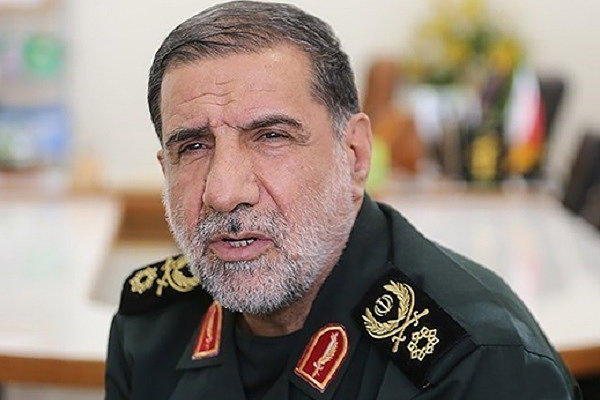
“ISIL has been defeated by regional nations and the Resistance Axis and Americans aim to question the role of Resistance in the fight against terrorism and say that ‘we are the one undermining ISIL and fighting terrorism’, but this is not the case,” Brigadier General Ismail Kowsari, Deputy Commander of IRGC’s Sarollah Base, told Mehr News Agency on Tuesday.
Despite creating an anti-ISIL coalition, Americans didn’t adopt any measure against terrorists and rather, backed these terror groups with all might and the support still continues, he added.
Trump has repeatedly admitted during his presidential election campaign that ISIL was founded by the United States, Kowsari said.
“ISIL was created by Americans and supported by them during the past years; so Americans were well aware of the terror leader’s hiding place,” he added.
“US leaders came to this conclusion that ISIL was of no use for them any longer,” he said adding that they are now mounting propaganda to claim that they are the ones fighting with terrorism.
He noted that al-Baghdadi’s story is very similar to the case of Bin-Laden al-Qaeda, saying US created both and then as soon as their expiration date arrived, made a media buzz and said that they have killed leaders of Takifiri terrorism.

Monday, October 14, 2019

Ayatollah Khamenei says U.S. animosity has brought more dignity to IRGC

IRGC has dignity both inside and outside of Iran, Leader notes
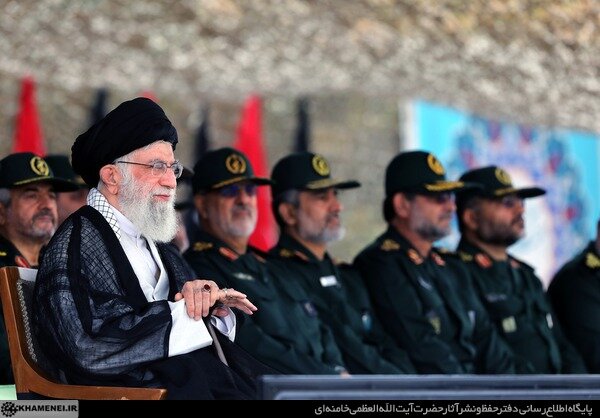
TEHRAN - Leader of the Islamic Revolution Ayatollah Ali Khamenei said on Sunday that the United States’ “animosity” toward the Islamic Revolution Guards Corps (IRGC) has brought more dignity to it.
“The United States has brought more dignity to the Guards with its hostile behavior. Today, thanks to God, the Guards has dignity both inside and outside of the country,” he said during a ceremony held for the student officers and guards trainees at Imam Hussain Academy.
He added, “The United States brought more dignity to the Guards with its hostile behavior, because animosity of God’s enemies makes the faithful servants dearer.”
Elsewhere, he attached great importance to military, defense and intelligence preparedness by armed forces in the face of threats against the country.
The Leader also reiterated his long-held position on self-sufficiency, saying the defense equipment must be manufactured inside the country.
“The military equipment of the IRGC must be advanced and up-to-date. You yourselves should invent and manufacture them.” 
Elsewhere, Ayatollah Khamenei described the Arbaeen march as “an example of real power”.
“Huge gathering of pilgrims on the route toward Karbala, which means moving toward summit of honor, altruism and martyrdom, shows power of Islam and the Islamic resistance front,” he remarked.
The Leader says Iran will not back down in the face of U.S. pressure based on the teachings of Imam Hussein’s movement and Arbaeen.
He also noted that Iran will not back down against the U.S. pressure based on the teachings of Imam Hussein’s movement and Arbaeen.
Arbaeen marks an end to a 40-day mourning period following the martyrdom anniversary of Imam Hussein (AS) and his loyal companions at the Battle of Karbala on Muharram 10 in the year 61 AH (680 CE).
So far more than two million Iranians have crossed the border to visit the shrine of Imam Hussein, the grandson of Prophet Muhammed (S), in Karbala.

Monday, September 23, 2019

Zarif: Whoever starts war will not be the one who finishes it

U.S. 'posturing' by sending troops to Saudi Arabia, Iranian FM says 

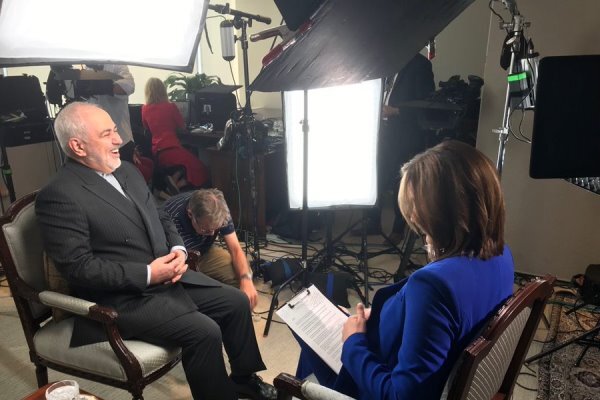
TEHRAN - Iranian Foreign Minister Mohammad Javad Zarif has said any country that starts a war against Iran  “will not be the one who finishes it”  as he said  the U.S. is "posturing" by sending troops and defense equipment to Saudi Arabia following the September 14 attacks on a major Saudi Arabia oil facility.
"I think it's posturing. I think it's all going the wrong direction in addressing this issue," Zarif said in response to a question on how Iran sees the development in an interview that was set to air Sunday on CBS' "Face the Nation."
The Trump administration has blamed Iran for the attack by the Yemenis on Saudi Arabia’s Abqaiq plant and its Khurais oil field that adversely affected up to half of the supplies from the world’s biggest oil exporter.
President Donald Trump on Friday approved the deployment of U.S. troops and missile defense equipment to Saudi Arabia and the United Arab Emirates.
Secretary of State Mike Pompeo on Thursday said the attacks were an "act of war" while Trump announced he would "substantially increase" sanctions on Iran.
Zarif denied that Iran had anything to do with the attacks and said if the United Nations launches an impartial investigation into the attack “the outcome will be that it was not launched from Iran"
“We are confident that if the United Nations carries out an impartial investigation the outcome will be that it was not launched from Iran," Zarif remarked.
The chief diplomat has already said linking Iran to the attack on the Saudi oil facilities is a “maximum deceit” in line with Washington’s “maximum pressure” on Tehran. On Friday, Zarif also said “even the Saudis themselves don't believe the fiction of Iranian involvement” in the attacks on the Aramco oil facilities, citing Saudi Arabia’s retaliation attack on Hodaideh in Yemen as a reason.
Asked by CBS if he was confident Iran could avoid a war, Zarif said, "I'm confident that we will not start one but I'm confident that whoever starts one will not be the one who finishes it."
"That means that there won't be a limited war," Zarif said, echoing his previous comments that a military strike on Iran by the United States or Saudi Arabia would result in an “all-out war."
Major General Hossein Salami, the chief of the Islamic Revolution Guards Corps (IRGC), also threatened on Saturday that any country that attacks Iran will see its territory become the “main battlefield”. He added, “Whoever wants their land to become the main battlefield, go ahead.” The general also said Iran will claim responsibility for anything it does.
Zarif says U.S. made it clear he was not welcome at UN
Zarif also said that the U.S. made it clear he was not welcome at the United Nations General Assembly in New York City next week that he planned to attend, despite being approved for a visa waiver.
"Well not necessarily, because the United States is under obligation, being the host of the UN headquarters to issue visas to member states. So they made it very clear in a letter that they attached to my visa that I'm not eligible to get a visa, but they're doing it on a waiver basis. So they want me to know that I'm not supposed to be here," Zarif stated.
The United States under President Trump has put an extreme pressure on Iran. He abandoned the 2015 nuclear deal, officially called the Joint Comprehensive Plan of Action (JCPOA), in May 2018 that was struck under his predecessor Barack Obama.
He has introduced a total ban on Iran’s oil export, Iran’s main source of income. Since abandoning the JCPOA, the Trump administration has been trying to strangulate the Iranian economy. Iran has called the U.S. sanctions pressure “economic terrorism”.
Trump on Friday said he has ordered sanctions on Iran’s central bank at “the highest level.”
Trump, who had initially imposed the sanctions applied to Iran’s “national bank,” said the new penalties on Iran mark the “highest sanctions ever imposed on a country.”
The president’s remarks at the White House came two days after he announced via Twitter that he had instructed Treasury Secretary Steven Mnuchin “to substantially increase Sanctions on the country of Iran!”
Zarif says Iran is “confident that if the United Nations carries out an impartial investigation into” the attack on the Saudi oil facilities, “the outcome will be that” the drones were “not launched from Iran." 
Many analysts believe that the regime of Benjamin Netanyahu is behind Trump’s illegal approach toward Iran. Netanyahu was one of the chief opponents of the nuclear deal and has been repeatedly claiming that Iran is bent on building nuclear weapons. 
Zarif has referred to recent remarks by former U.S. Secretary of State Rex Tillerson about how Israelis have played Trump, saying Tillerson’s remarks confirms that the B-Team took Trump for an “easy mark”.
“Even President Trump’s former Secretary of State now confirms what we have long pointed out: #B_Team took @realDonaldTrump for an easy mark who could be lied to and pushed to war—and the US military as their personal mercenary,” Zarif said in a tweet on Saturday.
“Some still do, despite his firing of one member,” he added.
Tillerson said on Wednesday that Israeli officials “played” Trump in their conversations with him, warning that a “healthy amount of skepticism” is needed in dealings with Netanyahu.
The comments came during a panel discussion at Harvard University in which Tillerson, who was fired by Trump last year, touched on a variety of themes from his tenure, including Iran, his hiring freeze at the State Department and the unpredictable nature of Israel’s longest-serving prime minister, Netanyahu. 
“They did that with the president on a couple of occasions, to persuade him that ‘We’re the good guys, they’re the bad guys,’” Tillerson said, according to the Harvard Gazette. “We later exposed it to the president so he understood, ‘You’ve been played.’”
The “B-team” is a term thrown into popular usage by Zarif. It refers to a group of politicians who share an inclination toward potential war against Iran, and the letter “b” in their names. They include Benjamin Netanyahu, Saudi Crown Prince Mohammed bin Salman, Abu Dhabi Crown Prince Mohammed bin Zayed Al Nahyan, and, former U.S. national security advisor John Bolton. 
Bolton was fired on September 10.

Sunday, September 01, 2019

Netanyahu is risking war to boost his electoral prospects

Israeli Prime Minister Benjamin Netanyahu seen during a meeting with Russia's Putin in Moscow, Russia on April 4, 2019 [kremlin.ru]
In an effort to boost his electoral prospects, Israeli Prime Minister Benjamin Netanyahu is risking the outbreak of a war no one wants.
Over the course of a few days, Israel launched attacks in Iraq, Syria and Lebanon. Commenting on the attack in Syria, the Israeli military said that on 25 August its aircraft struck “Iranian Quds Force operatives and Shiite militias which were preparing to advance attack plans targeting sites in Israel from within Syria over the last number of days”. This unprecedented escalation will almost certainly increase tensions.
The US State Department issued a statement regarding the Syria attack, pointing out that Secretary of State Mike Pompeo spoke with Netanyahu on the phone. “The Secretary expressed support for Israel’s right to defend itself from threats posed by the Iranian Revolutionary Guard Corps and to take action to prevent imminent attacks against Israeli assets in the region,” the statement said.
Of course, President Donald Trump’s administration – unlike the Barack Obama administration – has been committed to supporting far right-wing Israeli policies and in particular Netanyahu’s agenda. President Trump’s public recognition of Israel’s sovereignty over the Syrian Golan Heights in the lead up to the Israeli election back in April was seen as helpful to the Israeli prime minister. There is no way to imagine that this backing will decrease.
The recent steps in which Trump supported the ban of Congresswomen Rashida Tlaib and Ilhan Omar from entering Israel and the State Department’s move to drop the Palestinian territories listing from its website also suggests this fact. These steps could be seen as fresh examples of the unconditional US support for Netanyahu, in order to help him win next month’s do-over election.
Arguably, during the Obama administration it would have been far more difficult for Netanyahu to have this flexibility in pursuing his plans in the occupied West Bank. However, since the US Ambassador to Israel, David Friedman, said that Israel has the right to annex parts of the West Bank, that could be seen as the green light for Netanyahu’s plans.
Such a major announcement, which reverses decades of US commitments towards the Palestinian-Israeli conflict, would indeed boost Netanyahu’s popularity and indicates that, under his leadership, Israel is stronger and can do what it wants without anyone standing in its way.
Earlier this month, the Times of Israel reported that a poll for the Walla news site found that a majority of the Israeli public opposes a unity government led by Netanyahu, which would bring together the ruling Likud party and its centrist competitor Blue and White (Kahol Lavan). Therefore, Netanyahu, seemingly, is desperate to not let this poll be the case when it comes to counting the votes in the upcoming Israeli elections in September.
After his past failures to contain Iran in Syria, Netanyahu will likely look for something to help him win the election. If he can appear to be containing Tehran now, and not just in Syria but across the whole region, he will be able to portray himself as a strongman whose leadership can ensure Israel’s security. Such a portrayal will likely help in gaining extra votes, but the tactic may backfire.
It is believed that the attack Israel launched in southern Lebanon in the early hours of 25 August is of key significance, as it was the first of its kind since 2006, according to Hezbollah’s General Secretary Hassan Nasrallah, who made a rare appearance on the same day issuing a strong warning to Tel Aviv.
“I say to the Israeli army along the border, from tonight be ready and wait for us,” Nasrallah said. “What happened yesterday will not pass,” Nasrallah warned.
Thus, if Nasrallah responds militarily, the region could find itself on the brink of an unwanted war, although it is clear that neither side is in favour of conflict.
“What happened was similar to a declaration of war which allows us to resort to our right to defending our sovereignty,” the Lebanese president’s office quoted Michel Aoun, a political ally of Hezbollah, as saying on Twitter on Monday, Reuters reported. This raises a significant question: Does Aoun’s statement confirm and authorise an act of revenge?
Netanyahu is aware that the majority of Israeli citizens are not in favour of war. “An overwhelming majority of the population, 73%, believe that Israel is an established fact, as opposed to only 18% who think that the existence of the state is in real danger,” the Jerusalem Post reported in April.
“But alongside the sense of security that Israelis express regarding the existence of the state, 52% of the public fear that a war could break out in the near future, seemingly in light of the increasing tensions in the north and the Iranian threat to retaliate against Israel,” the report continued.
The Israeli daily added: “12% of the public are very fearful that a war could erupt in the near future, and 40% moderately fearful. In contrast, 31% are not so fearful and 7% are not fearful at all at the prospect of a war in the near term.”
Despite the fact that Netanyahu seems to be aware of Israeli citizens’ concerns, his actions show that he is willing to use any means necessary to win the elections, regardless of the consequences for the region and Israel itself.
Although Israel attacked Iranian-backed targets in Syria previously, it has never escalated to a degree that entails attacks on four targets in three countries within just a few days. The tensions have now reached their peak and what will be important to observe is when and how Hezbollah responds.

Thursday, August 29, 2019

US once again resorts to sanctioning policy despite futility of previous sanctions

US once again resorts to sanctioning policy despite futility of previous sanctions

TEHRAN, Aug. 28 (MNA) – The Trump administration has imposed new sanctions against ‘networks’ allegedly helping Iran skirt sanctions.
In another desperate move in continuation of the so-called ‘maximum pressure’ campaign and only a few days after calls for a meeting with the Iranian president, Donald Trump administration announced on Wednesday the imposition of economic penalties against two 'networks' allegedly linked to Iran for helping it evade the American sanctions regime and boost the country's missile program.
The US Treasury indicated that the new sanctions are aimed at freezing the designated companies' and persons' assets on US territory and in the possession of US citizens, as well as the imposition of a ban on operations with these entities, according to Russian Sputnik news agency.
Washington has been imposing sanctions against Iran since it illegally withdrew from the Iran nuclear deal (JCPOA) in May 2018 in a bid to persuade Iran to renegotiate a nuclear deal, but its attempt has been proven futile. Iran says that it will not hold any talks with the current US administration until it returns to the JCPOA and lifts all illegal sanctions. 
Although Iranian economy suffered setbacks during the first year of sanctions, it has shown more stability  this year despite increasing US sanctions.

Friday, August 23, 2019

The Trump Administration Has Criminalized The Iranian Economy

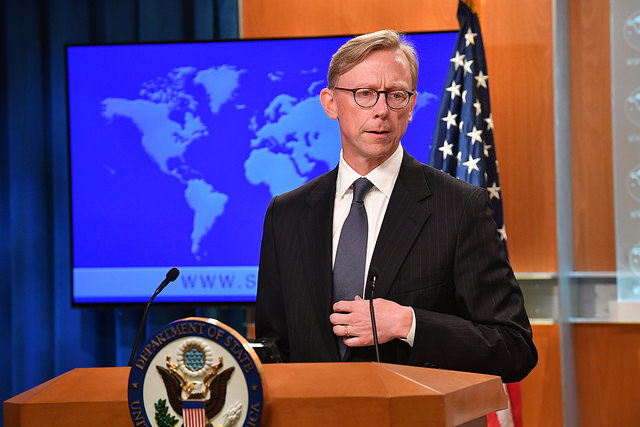
State Department Iran coordinator Brian Hook (State Department via Flickr)
by Tyler Cullis
The Trump administration’s “maximum pressure” strategy with respect to Iran is predicated on placing Iran’s economy in perpetual isolation. A not-insignificant part of that effort has involved designating the Islamic Revolutionary Guard Corps (IRGC)—Iran’s premier military outfit—as a Foreign Terrorist Organization (FTO), while simultaneously claiming that the IRGC exercises control over Iran’s entire economy. This effort has now paid off, as evidenced by the saga of the Grace I oil tanker and the U.S.’s efforts to seize the tanker under certain federal criminal forfeiture statutes. Even though authorities in Gibraltar prevented the U.S. from seizing the tanker, the message was that Iran’s economy has been effectively criminalized by Washington.
The consequences are real. Back when certain DC-based groups, most particularly the Foundation for Defense of Democracies, first proposed the idea of designating the IRGC as an FTO, the common wisdom was that an FTO designation would merely replicate those sanctions authorities currently in place with respect to the IRGC. And while that was largely true, a few—myself included—warned that an FTO designation would allow the U.S. government to extend its criminal jurisdiction against foreign parties who continued to trade with Iran, and that this triggering of extraterritorial criminal jurisdiction was the real purpose underlying efforts to designate the IRGC as an FTO.
Those warnings have proven prescient, as the Grace I case confirms. Last week, soon after Gibraltarian authorities determined that the Grace I oil tanker should be lawfully released back into Iran’s custody, the U.S. Department of Justice filed a request for legal assistance with foreign authorities seeking the seizure and forfeiture of the Grace I oil tanker and the Iranian oil contained therein. This request was predicated on a number of alleged sanctions violations, not least of which included an allegation that the Grace I oil tanker was an “asset” of the IRGC, subject to forfeiture due to the IRGC’s status as a U.S.-designated foreign terrorist organization. This was the first apparent effort by U.S. prosecutors to use U.S. federal criminal laws to seize foreign assets and render foreign persons liable for conduct relating to the IRGC’s designation as an FTO.
More intensive efforts may follow. U.S. law provides for extraterritorial criminal jurisdiction over foreign persons outside the United States that knowingly provide material support to an FTO. That means that if a foreign person engages in a transaction or provides a service to the IRGC, that person may be subject to criminal penalties under U.S. law, even if their conduct had no U.S. nexus. Considering that U.S. prosecutors have the discretion to determine who or what constitutes the “IRGC”—including, potentially, private Iranian entities who have been derivatively designated for ties to IRGC-related entities—as well as what constitutes “material” support to the IRGC, the potential scope of this criminal prohibition is enormous and could capture a range of activities commonly believed to be innocuous. Then there is also the federal criminal forfeiture statute that was invoked by the U.S. government in seeking the seizure of the Grace I oil tanker, which renders all assets—foreign and domestic—of an FTO subject to U.S. forfeiture.
What makes the Grace I tanker saga so disturbing is how U.S. prosecutors argued that the IRGC had an interest in the Grace I oil tanker and the oil contained therein because the IRGC allegedly exercises control over Iran’s economy, including its oil sector. Whatever the legal merits of this argument, the U.S. government essentially signaled that it may regard the produce of Iran’s economy as “assets” in which the IRGC maintain an interest, and for which U.S. criminal forfeiture laws may apply. That is a terrible shot-across-the-bow intended to undermine what limited cross-border commercial ties Iran retains.
For its progenitors, the beauty of the IRGC’s designation as an FTO is not only in its contribution to Iran’s economic isolation but also in the perception that it will be politically challenging to undo. Already, legislation has been proposed to amend those laws permitting the Secretary of State the discretion to rescind an FTO designation—including, for instance, by requiring any proposed rescission be subject to Congressional review. Considering the toxicity associated with the IRGC in Washington, the belief is that no future President will dare waste political capital relieving sanctions pressure on the entity.
But the truth is that no successor administration will likely be able to fruitfully recalibrate U.S. policy towards Iran without rescinding the IRGC’s designation. There are proposals for limiting the political repercussions from such a move—including, for instance, by lifting all sanctions targeting Iran that were imposed during the Trump administration and thereafter conducting an intensive Iran policy review to determine whether any of the lifted sanctions should be re-imposed. But there is no doubt that hard challenges lie ahead and difficult choices need be made to mitigate the self-harm to U.S. interests caused by the Trump administration’s actions. Whether Washington will have the stomach to make them is unclear.

Friday, August 09, 2019

Iran: Israel involvement in Gulf naval coalition will have ‘disastrous consequences’

Iran’s Defence Minister has warned that if there is any involvement by Israel in the formation of a naval coalition led by the United States (US) it will only “increase insecurity” and have “disastrous consequences” for the region.
In a conference call with his counterparts in Kuwait, Oman and Qatar, Amir Hatami stated: “The military coalition that America is seeking to form with the excuse of securing maritime transport will only increase insecurity in the region.”
This came in response to news of Israel’s involvement, which was disclosed by the country’s Foreign Minister Yisrael Katz during a session of the Israeli Knesset’s Foreign Affairs and Defence Committee on Tuesday. Hatami said Tel Aviv’s inclusion in the force would be “highly provocative and can have disastrous consequences for the region.”
Tensions in the Gulf have been increasing sharply over the past few months following attacks on oil tankers and vessels around the Strait of Hormuz in May, which the US blamed on Iran. Then followed the seizing of vessels and tankers passing through the strategic Strait, with Iran having captured a British tanker last month in retaliation for the British Navy’s seizure of an Iranian super-tanker transporting oil to Syria allegedly in violation of sanctions.
Late last week, Iran seized a third tanker belonging to Iraq sailing through the Gulf waters, accusing it of smuggling fuel to Arab countries in the area.
Relations between Iran and the West soured after the US’ unilaterally withdrew from the nuclear deal signed in 2015, imposed unprecedented sanctions on Tehran and later blacklisted its Revolutionary Guards Corp (IRGC).
As a result of the increased tensions, the US has deployed 500 troops to Saudi Arabia overlooking the Gulf and has been building a naval coalition to patrol the Gulf, including the United Kingdom (UK) and various European nations.

Pressure tactics in the Persian Gulf

JOHN CHERIAN

Tension escalates in the Persian Gulf as Britain impounds an Iranian oil tanker. But Iran’s strategy of “equal response” against any aggression from the U.S. and its allies makes the Trump administration settle for a “fair deal”.
As almost all military experts and commentators have been warning, the standoff in the Persian Gulf triggered by the United States could ignite a military confrontation that could engulf the entire region and have repercussions around the world. A new sequence of events started when the Royal Navy impounded an Iran-owned 30,000-tonne supertanker carrying two million barrels of oil in the Strait of Gibraltar in the first week of July. The British government claimed that the ship was impounded on the request of the authorities in Gibraltar, a British territory on the tip of the Iberian Peninsula.
Britain said the ship was carrying oil to be delivered at a Syrian port, contravening the European Union (E.U.) sanctions on trade with Syria. It was clear at the outset that the ship was impounded under the orders of the U.S. administration, that too at a time when Britain, France and Germany, which are signatories to the Joint Comprehensive Plan of Action (JCPOA), or the U.S.-Iran nuclear deal, were supposed to be doing their best to ease the effects of the draconian sanctions imposed on Iran by the U.S. Iran had requested the E.U. countries to initiate action to counteract the adverse impact of the sanctions on its people. The European leaders, while advising Iran to exercise patience, looked the other way as the Donald Trump administration began tightening the economic noose around Tehran.
At a time when Iran is desperately trying to export its oil to customers who are willing to buy it, Britain has gone ahead and precipitated another crisis by seizing the Iranian tanker. Iran maintained that the ship was not heading to Syria and that the oil was supposed to be delivered to another country. Britain is aware that no Syrian port is capable of receiving a big ship. Besides, the British authorities know that the E.U. sanctions on trade with Syria do not apply to Iran.

Calling the seizure of the ship “an act of piracy”, Iran urged Britain to release the tanker and its crew, which included Indians. The Iranian Foreign Ministry warned Britain “against entering a dangerous game with no end in sight under the influence of the Americans”. Iranian President Hassan Rouhani was quick to warn Britain of the “consequences” of the move.
Within days of Tehran’s warning, a British ship proceeding to collect oil from Basra was accosted by an Iranian naval patrol in the Strait of Hormuz. The ship had to turn back under British naval escort. The incident was meant to sound a warning, but the British government tried to portray it as an act of aggression by Iran. Iran pointed out that the incident happened in an area in the Strait of Hormuz over which it had territorial sovereignty.

Trump’s threats

United Nations Secretary-General Antonio Guterres issued a call for “maximum restraint” in the Persian Gulf region at a time when the Trump administration was exerting “maximum pressure” on Iran.
Trump has been making threats to obliterate Iran and has openly admitted to the waging of an economic warfare against Iran and its people. He said that the U.S. would cobble up an anti-Iran naval coalition in the Persian Gulf. In the third week of July, the U.S. announced that it was sending its troops to Saudi Arabia. Iran is already surrounded by a string of U.S. military bases.
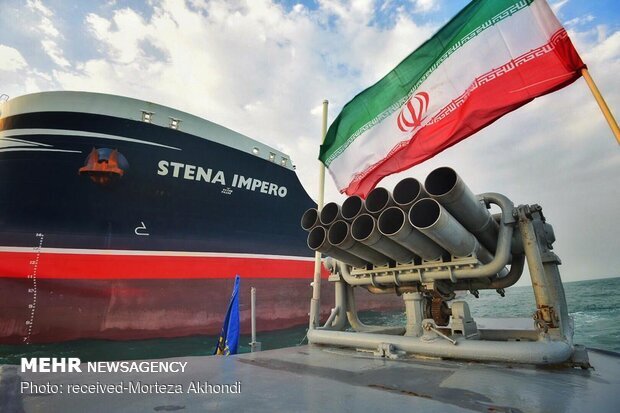
On July 19, two weeks after the impounding of the Iranian ship by the British, Iran announced that it had taken into custody a British oil tanker, “Stenna Impero”, on charges of “breaching international maritime law”. On the same day, the Gibraltar Supreme Court ruled that the ship impounded by Britain would not be released any time soon. The ruling on the extension of the ship’s detention came after a meeting between Gibraltar Chief Minister Gabriel Pinalto and British Prime Minister Theresa May. British Foreign Secretary Jeremy Hunt made it clear that the decision on the ship was made in London.
A statement from the Islamic Revolutionary Guard Corps (IRGC) of Iran said that the British oil tanker was detained at the “request of the Hormuzgan Ports and Maritime Organisation for failing to recognise international maritime rules”. According to the IRGC, the ship violated “three international naval regulations”, including turning off the GPS, breaking the traffic pattern in the Strait of Hormuz and polluting the water by dumping crude oil residue. The tanker was shifted to Iran’s Bandar Abbas port, and all the 23 members of the crew, 18 of them Indians, including the captain, were kept on board the ship pending investigations. India has called on Iran for the early repatriation of the Indian sailors. The IRGC detained a second British tanker temporarily. Iranian authorities let it go after warning it to abide by international environmental regulations.
Iran’s influential Guardian Council, which has a say in foreign policy matters, stated that the seizure of the British ship was “a reciprocal action” in retaliation for the British seizure of the Iranian ship. “The rule of reciprocal action is well known in international law,” a spokesman for the IRGC said.

Justifying the seizure of the Iranian ship on the grounds that it was contravening E.U. sanctions, Foreign Secretary Hunt said that Iran had violated international law. Iranian Foreign Minister Mohammad Javad Zarif tried to convince his British counterpart to release the ship. Hunt, who is engaged in a losing contest for the Prime Minister’s post in Britain, preferred to take a tough line, at the behest of the U.S.
The U.S. and the U.K. have always acted in tandem on Iran. Their despicable role in the overthrow of Iran’s first democratically elected leader, Mohammed Mossadegh in the 1950s, is well documented. That incident is embedded in the national psyche of Iran. Trump was quick to condemn Iran’s seizure of the British ship. Germany and France, too, joined the chorus of criticism. The three countries had no words of criticism for the British interception and capture of the Iranian ship in international waters.

The actions of the European countries reinforce the Iranian view that they are not serious about salvaging the JCPOA. Britain had ostensibly joined France and Germany in preserving the deal by trying to set up an alternative trading platform through which Iran could evade U.S. sanctions. The British government accepted that Iran was largely justified in increasing its uranium enrichment levels as a response to the Trump administration abrogating the JCPOA. Britain insists that it is committed to the U.S.-Iran nuclear deal. Recent events have shown that the commitment is skin deep at the most.
The seizure of the British ship came just a day after Trump announced the shooting down of an Iranian drone by a U.S. warship. However, the spokesman for the Iranian army, Gen. Abolfazi Shekarchi, said that it was a “false claim rooted in Trump’s illusions”. After Trump’s initial claims, the U.S. military stopped talking about the alleged downing of an Iranian drone. It seems that the Pentagon is keen to settle scores with Tehran for the loss of its drone over Iranian territorial waters in June.
A cat-and-mouse game seems to be on in the Persian Gulf. Iran has taken care to ensure that the actions it has taken so far were carried out inside its territorial waters. During the last days of the Iran-Iraq war (1980-88), the U.S. Navy shot down an Iranian civilian plane, with 290 people on board, over the Persian Gulf. The U.S. claims that it was an accident, but many Iranians still have suspicions about the 1988 downing of the Iran Air Airbus 300. Accident or not, incidents such as that one are waiting to occur if tensions in the Persian Gulf are not resolved soon.
After the shooting down of the U.S. drone in June, there was a real threat of war breaking out. Trump claimed at the time that he had called off a U.S. missile strike on Iran just 10 minutes before it was due to be launched. Iran as well as the military leadership had stated at the time that they would not have stood aside if the U.S. had launched an attack. After waiting for 15 months for the European signatories to the JCPOA to act and provide sanctions relief, Iran has given up its policy of “maximum patience”.
President Rouhani has adopted a strategy of “equal response” against any aggression from the U.S. or its allies. Iran has built a vast network of underground military facilities along its coastline in anticipation of a U.S. attack. Iran and its allies have developed formidable asymmetrical military capabilities across the region. The Hizbollah chief, Sheikh Hassan Nasrallah, warned that his forces would spring to Iran’s aid if the Trump administration carried out its military threats.

U.S. sanctions

The Trump administration imposed more sanctions on Iran after the downing of the U.S. drone. Iran’s Supreme Leader, Ayatollah Ali Khamenei, and Foreign Minister Zarif were among the top officials against whom sanctions have been imposed. Zarif, who spent many years studying in the U.S. and was the key Iranian interlocutor in the nuclear deal, was confined to the U.N. building in New York and the Iranian embassy compound during his recent visit there. The new U.S. sanctions barred him from even travelling within New York City.

Zarif’s visit to New York in the third week of July coincided with signals from the Trump administration that it was willing to start talking to Iran. The last thing Trump wants is a full-scale war before he is up for re-election. He is now saying that all he wants is “a fair deal” with Iran. There has been talk that Trump is going to appoint the anti-war Republican Senator Rand Paul as an emissary to Iran. Iran has always said that it is ready for talks provided the unilateral U.S. sanctions are lifted immediately. During his visit, Zarif reiterated that Iran would never give up its defensive missile programme, a key demand of the Trump administration, as long as the U.S. supplied sophisticated missiles and armaments to its adversaries in the Gulf. Zarif also said that Iran could “reverse” its uranium enrichment if sanctions were lifted.
The U.S. Secretary of State, Mike Pompeo, however, is on record stating that U.S. sanctions will be lifted only after Iran permanently ends its production of nuclear fuel, gives up its medium-range missiles and ends its support for terrorist groups. The U.S. deems Hamas and Hizbollah, which Iran supports, as “terrorist” groups.
No self-respecting Iranian government will accept the conditions laid down by the Trump administration. As Zarif stated in New York, Iran signed a historic agreement with the U.S. government and not with individuals. The only way out of the impasse and to keep war from breaking out at this juncture was to keep channels of communication open and hopefully wait for the demise of the Trump administration in 2020. “We will survive, we will prosper long after President Trump is gone,” Zarif told the media in New York, pointing out that Iran had a glorious history that was 7,000 years old. “Our time slots are in millennia,” he said.

Friday, July 26, 2019

The different reactions of Arab governments and nations toward the seizure UK tanker

By Fatemeh Salehi
TEHRAN - On Friday, a British oil tanker was seized in the Strait of Hormuz by the Islamic Revolution Guards Corps (IRGC). The tanker was seized due to violation of maritime laws, causing marine pollution and endangering other vessels. 
The interesting point here is the huge gap between the Arab government and Arab nations in their reaction to this incident. This gap can also be seen in other important issues in the Middle East, such as the fate of Palestine. 
Arab nations have always proved that they are wide aware of foreign issues and their opinions are far more progressive than those of their governments. Up to now, they have held several protests to announce their opposition toward government policies especially toward Palestine and have voiced their disagreement toward plans to normalize relationships with the Zionist regime. 
Over the years, Arab governments and the media that are linked to them have launched extensive advertisements to defend governmental policies; a very good example is Al Arabiya news that is attached to Saudi Arabia government; however, despite all these advertisements, Arab nations have never been influenced by these propagandas and have showed their opposition. 
For instance, Arab nations have showed their opposition toward the American plan for displacement of Palestinians called “the deal of the century” or efforts to normalize relations between Arab countries and the Zionist regime. 
A new example is the seizure of British oil tanker in the Persian Gulf. 
In reaction to the seizure, Most Arab governments have expressed their concerns about rising tensions in the Persian Gulf and have said that Iran’s act was “hostile.” 
Adel al-Jubeir, Saudi Minister of State for Foreign Affairs said in Twitter: “attack on the freedom of maritime navigation is a violation of international law".
Bahrain Ministry of Foreign Affairs also said that it “strongly condemned” Iran’s seizure of the British oil tanker and urged Iran to stop its “irresponsible” acts. 
Some other Arab countries also voiced similar concerns. 
However, tweets of these countries’ residents show an opposite view about the subject.  
One of the tweets says: “whatever happens in the Strait of Hormuz is planned by American and Israeli intelligence services. They just want to drag Arab countries into the conflict under the pretext of protecting oil tankers and water channels, so that they [the west] can take control over the region and swindle money out of the Arab oil-exporting countries.” 
In response to Al Arabiya, another twitter user said, “Did you respect international laws when you seized the Iranian oil tanker in Gibraltar? So this is just about bullying other countries, not about respecting the law.” 
Another user wrote: “they keep accusing Iran for every incident in the Middle East or attacking Saudi Arabia facilities, in order to push Arab countries into a war with Iran.” 
“Europe was trying to be the good cup after the United States abandoned the nuclear deal with Iran, but the emergence of Iranian oil tanker in Gibraltar was a smart move; Europe was checkmated and had to reveal its true colors and everyone saw that it was the bad cup after all,” says another user.  
Another user published a picture of Sayyed Hassan Nasrallah the Secretary-General of Hezbollah and wrote: “the resistance struck the evil side twice over the last few days. Seizure of the British oil tanker put a smile on Sayyed’s face.” 
In conclusion, we should not assume that Arab Nations have the same view as their government toward issues in the region, especially those in concern with Iran.
 Arab nations have always admired Iran’s military power and its active role in the region and regretted that their own governments are firmly dependent on Western countries and are getting more attached to them every day. 

Wednesday, July 24, 2019

Follow the leader – the UK’s ill-advised piracy on the high seas

TEHRAN, Jul. 24 (MNA) – The United Kingdom should recognize what has become its position in the world – an important nation with an imperialistic history but now a much-diminished global power.
Blindly following the United States into hazardous waters could have dangerous results: America might not reward subservience or could change course in its own self-interest. While following George Bush into Iraq is now widely conceded in the UK as having been ill-advised, British leaders seem to have forgotten the consequences of that disastrous decision.
On July 4, UK forces seized an Iranian supertanker, Grace I, off the coast of Gibraltar. At first, the reason for the seizure in news reports was that London was responding to a request from the United States because the tanker was carrying oil to the Syrian refinery of Banias in violation of UN sanctions. This report was quickly ‘corrected’ by Jeremy Hunt, the UK Foreign Minister. The official word was that the Iranian vessel had been seized yes because the oil was destined for Syria, but which was in violation of EU (not UN) sanctions on Syria. Iran objected vehemently to this seizure and clearly retaliated by seizing a British tanker, the Steno Impero, on July 19 in the Persian Gulf. Then Jeffrey Hunt went on the warpath and threatened Iran with “serious consequences” if Iran does not release the tanker, rhetoric further inflamed by the British defense minister branding the seizure “a hostile act.”
Three things stand out for us — the UK in fact seized the Iranian tanker at the request of the US, Mr. Hunt has made matters worse by his rhetoric and the UK and the US are now boxed in without a face-saving exit. Let me explain.
The premise that the oil was destined for Syria is a tough claim that cannot be substantiated. How can the British Foreign Minister prove that the oil was so destined? Even if he had irrefutable proof, couldn’t Iran at some point has changed its mind and diverted the tanker?
If every country acted so, seizing goods because they may be destined to a sanctioned country, world commerce would become entangled and come to a standstill. If the initial media reports were to be believed, namely, that supplying oil to Syria is in violation of UN sanctions, who determined this? Leaving aside the claim of a UN sanctions violation, the British Foreign Minister is clearly reported as saying that the UK took this action because of the EU embargo on oil supplies to Syria. Who in the EU reached this conclusion and made the decision to seize the Iranian tanker? The lie becomes even worse when we note that the EU embargo on oil supplies to Syria applies to EU member states, namely, EU countries cannot supply Syria with oil. This rule does not apply to supplies from Iran or any other third country. Surely the British Foreign Minister must be familiar with EU resolutions seeing as the UK is still in the EU! Clearly, this seizure was not triggered by a violation of the EU but was most likely in response to a US request.
There is another perplexing aspect of this tanker seizure. Even if the EU or just simply the UK had imposed sanctions on the delivery of fuel from any country to Syria, would the seizure of a tanker be “legal” as claimed by a number of UK politicians and military personnel? If so, then any nation could sanction whoever they wished and seize tankers, or any other vessel, at will! This would be an unusual interpretation of legality and thus justification of piracy by the powerful.
But the Foreign Minister’s untruths have become magnified after his ill-advised rhetoric. The folks who run Iran’s IRGC (Revolutionary Guards) are not traditional military leaders and diplomats. They are intelligent and street smart and have an image to uphold in Iran and in the region. Mr. Hunt clearly has no understanding of their thinking and how they might react to provocation. As to be expected, Iran seized the British tanker, Steno Impero, in retaliation. But Mr. Hunt threatened Iran much as he might have done when Great Britain was an imperial power and ruled the waves. Again, with little comprehension of the IRGC and its leadership.
As a result, Mr. Hunt has now backed the UK into an even tighter box. What are the UK’s options? They could release the Iranian tanker and get the British tanker released. But this would hurt Britain’s global image. They could do nothing, again a stand that would not work well at home and would humiliate Great Britain at the hands of lesser power. Or they could join forces with the US, [P]GCC countries and Israel to bomb or possibly invade Iran, start a regional war and incur the wrath of most Iranians inside and outside of Iran and many other Muslims around the world for years to come.
The short and the long of this is that the seizure of the Iranian tanker was a monumental policy blunder. The UK is trying to divorce itself from its European partners but is in the process falling in line as a devoted follower, not partner, of a power whose influence has already crested. It now does not have a favorable strategy for an exit from its blunder. Future British foreign ministers would do well to better understand the thinking of Britain’s adversaries and how they might react, as well as the motives of their closest ally.