Showing posts with label Europe and the JCPOA. Show all posts

Monday, September 16, 2019

Iran Uses Diplomacy to Thwart U.S. Skullduggery


TEHRAN (Al-Monitor) -- Iranian Foreign Minister Muhammad Javad Zarif recently wrapped up a 26-day tour of 12 countries. His visits had four clear goals as well as a less evident one, yet they all display Iran's active diplomacy around the world.
Zarif began his international tour Aug. 11. In a period of less than one month, he visited Qatar, Kuwait, Sweden, Finland, Norway, France, China, Japan, Malaysia, Russia, Bangladesh and Indonesia. These 12 countries, spanning from the East to the West, all hosted Iran’s foreign minister despite sanctions placed on him by the U.S. Treasury on July 31.
Zarif’s destinations were selected with a goal in mind. He began his travels in Qatar, a friend of Iran in the Persian Gulf, and followed it up with a visit to Kuwait. While these two first destinations may seem coincidental, a deeper look at Zarif's speeches and remarks during his visits indicates that he intentionally began his tour with regional countries.
During a Sept. 5 meeting of the Indian Ocean Rim Association in the Bangladeshi capital of Dhaka, Zarif said regional security can be achieved through regional cooperation and cannot be purchased from outside. Zarif has previously stressed this issue, but while in Kuwait and Qatar he emphasized the need to pursue a collective regional security model without foreign forces
Zarif then visited Finland, Sweden and Norway: three destinations chosen with the aim of preserving the 2015 Joint Comprehensive Plan of Action (JCPOA). After prioritizing regional issues, Zarif flew to Scandinavia to speak about the need to remain committed to the nuclear deal while also pushing Europe to continue to pursue an approach independent from the United States. Following his European visit, Zarif tweeted: "I stressed necessity of both multilateralism & rule of law in age of reckless US unilateralism.”
During his European visits Zarif maintained a message that was consistent with the one he has pursued since President Donald Trump took office: to convey to Europe that it should distance itself from Washington's unilateral policies. In a July 2018 interview with Euronews conducted by this correspondent, Zarif also touched on this, saying: "Are the people of Europe prepared to accept U.S. national interest dominating the decision-making process in the global economy? Are they prepared to accept this? Or are they prepared to stand against this? This is a question that European companies need to ask themselves, that the European governments need to ask themselves."
Zarif emphasized this after his recent meeting with French President Emmanuel Macron. "I don’t think America holds all the cards," Zarif said. "If Europe and the international community decide to do this, they can take the necessary measures to preserve the nuclear deal."
The highlight of Zarif’s international tour was perhaps when he bypassed Asia and flew to the French resort of Biarritz, where the G7 meeting was taking place. In Biarritz, Zarif held an hour-long meeting with Macron and German officials to review how Europe could help preserve the nuclear deal.
A day later, Zarif embarked on his tour of East Asia to meet with the biggest buyers of Iran’s oil. The third phase of his diplomacy thus focused on the economic dimensions of the nuclear deal, starting in China. Upon his arrival in Beijing, Zarif told reporters that China and Russia were two of Iran’s allies in the JCPOA. "If the international community, other signatories to the JCPOA and our friends in the JCPOA like China and Russia want this achievement to be preserved," he said, "they should make sure the Iranian people can benefit from this deal by taking practical measures."
Zarif then traveled to Japan, which, along with China, is among the top five buyers of Iranian oil. Afterward he was off to Malaysia, briefly returning to Tehran and then off again to Russia, another friendly country. Just as Iran’s relations with China are important in terms of economics, its ties with Moscow are also key for political and security issues, which is why Zarif met with his Russian counterpart Sergei Lavrov. He tweeted afterward, "Focus on bilateral ties, regional issues, Persian Gulf security, and latest developments regarding the JCPOA."
The back-to-back trips did not end there. He again left Tehran Sept. 3 for Bangladesh, to attend the Indian Ocean Rim Association Summit. He capped off his nearly month-long tour with a visit to Indonesia. In summary, the four aims of his visits were: to save the foundations for regional dialogue and improved relations in the Persian Gulf; to convince Europe to preserve the JCPOA; to keep Iran’s economic customers in East Asia; and to preserve Iran's and Russia’s strategic relations on regional security issues.
Yet the less evident goal of all these visits was perhaps a message to the Trump administration: that less than 40 days after the imposition of U.S. sanctions on Zarif, dozens of countries still welcomed the Iranian foreign minister.

Friday, August 02, 2019

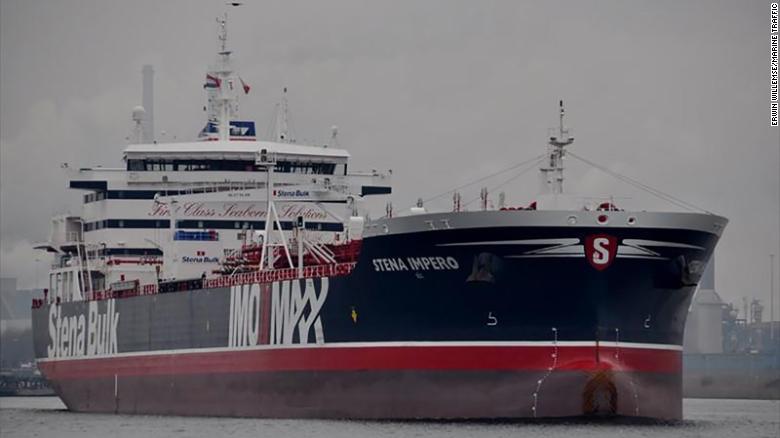
WHY DID THE UK COMMANDER OF HM MONTROSE REFRAIN FROM FIRING ON THE IRGC? WHO IN IRAN GAVE ORDERS TO CAPTURE THE “STENA IMPERO”?

Iranian IRGC Naval unit onboard of the British-flag tanker
“Stena Impero
“.
By Elijah J. Magnier
The US officially asked Europe, in particular the UK, France, Germany and Italy, to provide a naval force to patrol and protect ships sailing in the Straits of Hormuz, even if the command and control is handled by the Europeans and not the US. Washington wants to drag the old continent into the front line in case of a military confrontation with Iran. It is well known that the US is behind the existing tension in the Middle East today following its unlawful unilateral withdrawal from the Joint Comprehensive Plan of Action (JCPOA), known as the nuclear deal. However, to the dismay of the US, Europe has up to now refused to follow the US path. The US would like to see Europe more involved. Although the Trump administration is not looking for war, despite the fact that Iran turned its missiles against the UK Royal Navy HMS Montrose and the US destroyers (when the Iranian Revolutionary Guard Corps confiscated the British-flag tanker Stena Impero). This is the reason that the British command chose to avoid a military confrontation and decided against a military intervention to protect the tanker.
“I order you not to intervene in my operation. The tanker is under my control. Do not put your life in danger”. This is exactly what the Iranian IRGC naval officer told the commander of the Foxtrot 236 when Iranian special forces were about to board the tanker Stena Impero. But why would he warn the British Navy “not to risk their lives”?
The British Navy’s radar sweeps had discovered active mode missiles radar tracking them by means of their semi-radar homing from different launch platforms- main radars which could easily create a saturation attack designed to put the ship in a helpless position and eventually destroy it. The Iranian missiles were ready to firehad the commander of the UK vessel decided to engage with the Iranian fast boats.
Iranian missile platform launchers spread all along the Iranian coast overlooking the Straits of Hormuz had the four US vessels and the one UK naval ship in their sights, ready to engage. Other Iranian armed drones were in the air, also ready to engage, waiting for orders to dive on their selected targets. Iran has not revealed, to date, other more sophisticated missiles that it has manufactured and could put in service in case of war.
The UK commander of the Foxtrot 236 Royal Navy decided to let go of Stena Impero and allow the diplomacy of his government to take over, to avoid the potentially serious casualties inevitable in the case of a military confrontation.
However, the British government is insisting on saving face. It therefore has to reject any exchange of tankers. The Royal Navy had already confiscated an Iranian supertanker, Grace 1, in Gibraltar. London pushed even further the conflict with Iran when the Gibraltar court extended by one additional month the arrest of the Iranian supertanker following a US request.
The only plausible solution is for the Gibraltar court to refrain from adding more fuel to the ongoing crisis and to end the detention of Grace 1, once the period of one month is reached.This will enable Iran to release Stena Impero from Bandar Abbas harbour and end the crisis.
Why did the IRGC officer order the British commander to keep away even if the HMS Montrose was within a reachable distance, along with another four US frigates, well-armed and potentially ready to engage?
When the British authority decided to extend the arrest of “Grace 1”, it basically ended the initiative of Emanuel Bonne (the French presidential envoy) to obtain the release of the Iranian super tanker. The UK’s decision to undermine its European partner’s initiative and abide by US policy showed the vulnerability of Europe’s fragile unity. London agreed to be an instrument of Trump’s policy.
This is when the Iranian Leader Sayyed Ali Khamenei ordered the commander of the IRGC Hussein Salameh to stop the first British ship and retaliate with a tit-for-tat. Following a meticulous overview of all ships navigating in the area, Salameh was informed about the Stena Impero, but also about the five western military ships in the vicinity. The IRGC commander informed Sayyed Khamenei who responded, according to a well-informed source: “Go with God’s blessing and have no fear. They will not dare to attack us”. 
This is how the decision was taken, at the highest level of the Iranian leadership where the spiritual, military and political leadership were involved under the flag of “protecting the national interest and security of the country.” 
Notwithstanding the UK position, Europe will not accept the US trap and become a shield for a war Washington would like to impose on the continent. British oil companies are changing the registrations of their ships and removing the British flag so as to sail safely through the Straits of Hormuz. BP, the giant British oil company which was the first to follow this procedure, is avoiding sending ships to the region, relying instead on proxies. This is a flagrant manifestation of its lack of trust in its own government’s decision, which is not in the interests of the UK but instead reflects a servile devotion to Trump administration policy. 
There is a war risk premium that tanker owners pay when navigating in the Persian Gulf. They now have to pay an additional $185,000 for supertankers, in the wake of the attacks of recent months.
The IRGC has sent many messages by shooting down a US drone, by sabotaging tankers and by capturing another. They come down to a single message: if Iran does not export its oil, no country will. The arrival of a new UK Royal Navy ship, the HMS Duncan, will change nothing: it will add to the bank of objectives and list of Iranian targets available in the Persian Gulf in case of war. The US decision to revoke the nuclear deal not only made the Middle East less safe, but also has brought Russia further into the warm waters of the region: Iran has announced a joint naval exercise with Russia in the next months. Iran is bringing the Russians into what used to be the US’s “water playground”. Obviously, Washington’s “maximum pressure” is failing to produce the results the Americans predicted.
As long as Trump is in power, the situation in the Middle East will not stabilise. Not many people in the world believed the Secretary of State Mike Pompeo when he said the US sanctions are crippling Iran by up to 95%, and that Iran’s Middle Eastern influence is seriously affected by the US measures.
Iran is defying US hegemony and is ready for war, openly challenging the US and the UK. Tehran is welcoming Chinese and Russian support and is developing its missile capability to compensate for its lack of superiority in the sea and the air.
Iran counts on its missiles to impose its Rules of Engagement and is challenging both the US superpower and the UK with its imperial tradition.
The US is no longer in a position to dictate to Iran and “cut its nails”. Tehran is developing further its missile technology and nuclear capability. It is ready for the next step, which involves further partial withdrawal from the nuclear deal despite France and Germany’s efforts to proclaim their distance from the US attitude. The world will continue to focus on this part of the world, watching with anxiety how the US-Iran confrontation will unfold.

Friday, July 26, 2019

Iran – Seizure of a British Tanker – more than Tit for Tat

The British-flagged tanker “Steno Impero”, heading for Saudi Arabia, was seized on Friday, 19 July 2019, by the Islamic Revolutionary Guard Corps (IRGC), in the Strait of Hormuz, after it rammed an Iranian fishing boat, whose distress call it ignored.
The tanker was taken to an Iranian port, because it was not complying with “international maritime laws and regulations,” Iran’s Revolutionary Guard said. Most importantly, the ship did not respond to several warnings from helicopters and Iranian boats, as apparently it turned off its transponder. How could that happen under control of professional sailors, other than as an open provocation.
Shipping safety in the Strait of Hormuz is crucial. Between 20% and 30% of the world’s hydrocarbons are shipped through this narrow passage of international water way before entering the Gulf of Oman. The strait is closely watched by Iran, as it is of utmost security concern for Iran.If this passage were to be closed due to conflict, it could bring down the world economy.
Do those that play these provocations, the UK as a handler dancing to the strings pulled by of Washington, realize what’s at stake? – Do they want to bring the Middle East to the brink of war? A regional war that could easily convert into a world war? – That may well be the longer-term intention. In the short-run, though it looks like pushing the escalation to a point where US ‘Client Europe’ may be discouraged from insisting on maintaining their part of the Iran Nuclear deal, or the Joint Comprehensive Plan of Action (JCPOA), and to blackmail Iran into a bilateral negotiation with the US on Iran’s nuclear program.
The first objective may be achieved; the second – no way. Iran is not falling for such fraud, especially with the country that pulled unilaterally out of the deal that was negotiated for two years (since November 2013) before it was signed in Vienna, Austria on 14 July 2015, by the 5+1 (the five permanent members of the UN Security Council – China, France, Russia, UK and US – plus Germany  – and the European Union, and of course Iran).
Not only did President Trump, guided by his buddy, Israel’s Netanyahu, tear up the agreement unilaterally, but he also reinstated one of the most severe economic sanctions programs on Iran, plus all the western lies and smear propaganda launched against Iran. It is sheer insanity to believe that Iran would under these circumstances go to the negotiating table with her hangman. That will not happen. But war tensions are being further raised which is fully in the direction of the war criminal-in-chief, John Bolton’s dream, ever since the invasion in 2003 of Iraq which he also helped to engineer. It is like this sick man’s raison d’ĂȘtre. Mass killing by war and conflict is in his genes. The world can only hope that Trump, or those who pull the strings behind Trump, will eventually dismiss Bolton.

Iran has already said that they will launch a full investigation into the British tanker’s, Steno Impero’s, sailing off course and ramming a fishing boat – and that the UK is invited to participate in the investigation.

Backtracking to 4 July, when the British Royal Marines seized the Iranian tanker Grace 1 in Spanish waters, off the coast of Gibraltar, under the pretext that the super tanker was carrying oil destined for Syria which was under the EU’s sanction program. Iran’s Foreign Minister Javad Zarif, denied that the oil was destined for Syria; did however not elaborate further.
Spanish Foreign Minister, Mr. Josep Borrell, said that Washington informed Spain about the impending capture by the UK of the Iranian tanker in Spanish territorial waters. Spain could have said ‘no’ – but didn’t. Why not? Afraid of sanctions?
The UK did the bidding of Washington against her own interests, because the UK was one of three EU countries – Germany, France and UK – who at least made appear as if they wanted to preserve their part of the Iran Nuclear Deal. Mind you, this is not for love of Iran, but pure business interest. Iran should be aware of that – meaning, Iran could be shot in the back at any time by the EU, by the very countries that try – or make appear they try – to circumvent the US sanctions.
What happened on 4 July was an act of sheer piracy, nothing less. A crime on high seas which the west just tolerated. The vessel is still under British control, while the arrested crew has since been liberated. Aside from the fact that Iran’s capture of the British oil tanker may look like tit for tat – Iran acted fully legitimate, as it’s Revolutionary Guard is policing the Strait of Hormus for security of other ships sailing through the narrow passage.
In one of his typical outbreaks of a madman, President Trump warned in a televised ‘fire and fury’ speech at the white House on Friday 19 July, “We have the greatest ships – the most deadly ships, we don’t want to have to use them. We hope for [Iran’s] sake they don’t do anything foolish. If they do, they will pay a price like nobody’s ever paid.”

Why would Trump not use the same language to warn the Brits for their pirating an Iranian vessel in Spanish waters? – well, we know this is the crazy, unbalanced and off-kilter world we live in. Its so normal, people in the west take this imbalance and injustice, this double-talk and hypocrisy as the gospel.

All indications are however, while building up a war scene, the US are seeking justification for what they had already called out – an alliance of the willing to send war ships to the Straight of Hormus to assure safe passage for ‘everybody’. Well, this would certainly not fly with Iran. But important to know is what’s behind this idea. Imagine the US navy and her puppet allies controlling the sea passage through which almost a third of all the world’s hydrocarbon sails every day – Washington would have one more tool to sanction, strangle countries they feel do not bend enough to Washington’s dictate. Their oil shipment would be withheld, to bring their economy down – this might be the most effective weapon yet.
World beware! Even those who are in favors with the self-declared hegemon, you never know when the pendulum may swing the other way, simply because the Israel-driven US of A may be on a whim aggression course against an imaginary enemy, or corporate interests are shifting — in conclusion nobody would be safe – and, the world economy could come crashing down, like a house of cards, making 2008 look like a walk in the park.
Peter Koenig is an economist and geopolitical analyst. He is also a water resources and environmental specialist. He worked for over 30 years with the World Bank and the World Health Organization around the world in the fields of environment and water. He lectures at universities in the US, Europe and South America. He writes regularly for Global Research; ICH; RT; Sputnik; PressTV; The 21st Century; TeleSUR; The Saker Blog, the New Eastern Outlook (NEO); and other internet sites. He is the author of Implosion – An Economic Thriller about War, Environmental Destruction and Corporate Greed – fiction based on facts and on 30 years of World Bank experience around the globe. He is also a co-author of The World Order and Revolution! – Essays from the Resistance. 

Peter Koenig is a Research Associate of the Centre for Research on Globalization.

Wednesday, July 24, 2019

Will Persian Gulf 'Tanker War' Become a Shooting War?

By Ron Paul

July 23, 2019 "Information Clearing House" -  The UK got a taste of its own medicine this week as Iran seized a British tanker, the Stena Impero, just two weeks after UK Royal Marines seized a tanker near Gibraltar carrying two million barrels of Iranian oil. As could be predicted, the US and UK media are reporting Iran’s seizure of the Stena Impero as if it were something out of the blue, pushing the war propaganda that “we” have been attacked and must retaliate. Media criticism of the UK is limited to claims that it has not put enough military into the Persian Gulf, not that it should never have seized the Iranian ship in the first place.

The truth is, the UK seizure of the Iranian ship was calculated to force Iran to retaliate and thus provide the pretext the neocons need to get their war.

As usual, Trump’s National Security Advisor John Bolton is in the thick of this operation. Bolton Tweeted that he was so surprised – but pleased – by the UK move against the Iranian tanker. However it is becoming clearer that Bolton was playing a role behind the scenes pushing London to lure Iran into making a move that might trigger the war he’s long been yearning for.

The ramping up of tanker wars comes just as the Pentagon has announced that it will send 500 US troops to Saudi Arabia – the first such US deployment since the US withdrew its troops in 2003. At that time, then-Deputy Secretary of Defense Paul Wolfowitz hailed the move out of Saudi Arabia as denying al-Qaeda one of its prime recruiting tools – US troops in their holy land. What will 500 troops do in Saudi Arabia? Some say they will help prepare the Prince Sultan military air base for a possible US air squadron deployment.

We must be clear on how we got to the very edge of war with Iran. President Trump pulled out of the Joint Comprehensive Plan of Action (JCPOA) promising he would exchange it for a much better deal for the US. He quickly re-applied all previous US sanctions on Iran and demanded that our allies do the same. The US policy would be to apply “maximum pressure” to Iran which would result in Iran capitulating and agreeing to all US demands.

US economic warfare against Iran would bring the country to its knees, the Administration claimed, and would deliver a big win to the US without a shot being fired. But the whole plan has gone terribly wrong.

Iran did not back down or beg for mercy in the face of Trump’s actions, and the Europeans have at least attempted to keep the JCPOA agreement alive. And the UK following neocon orders has led the country in a serious and unnecessary crisis that does not look to be easily resolved.

How could the US administration have miscalculated so badly? Many of us could have told President Trump that the neocons always promise a “cakewalk” when they are talking up a military action. Time and time again – Iraq, Afghanistan, Libya, Syria – they promise a quick victory and deliver a quagmire.

The American people overwhelmingly do not want to go to war with Iran and the president wants to be re-elected. Will he return to the political base that elected him on promises of getting along with the rest of the world, or will he continue to follow his neocon advisors down the road to a failed presidency?


Dr. Ron Paul is a former member of Congress and Distinguished Counselor to the Mises Institute.

Sunday, July 21, 2019

What Iran Could Do To Support The Europeans

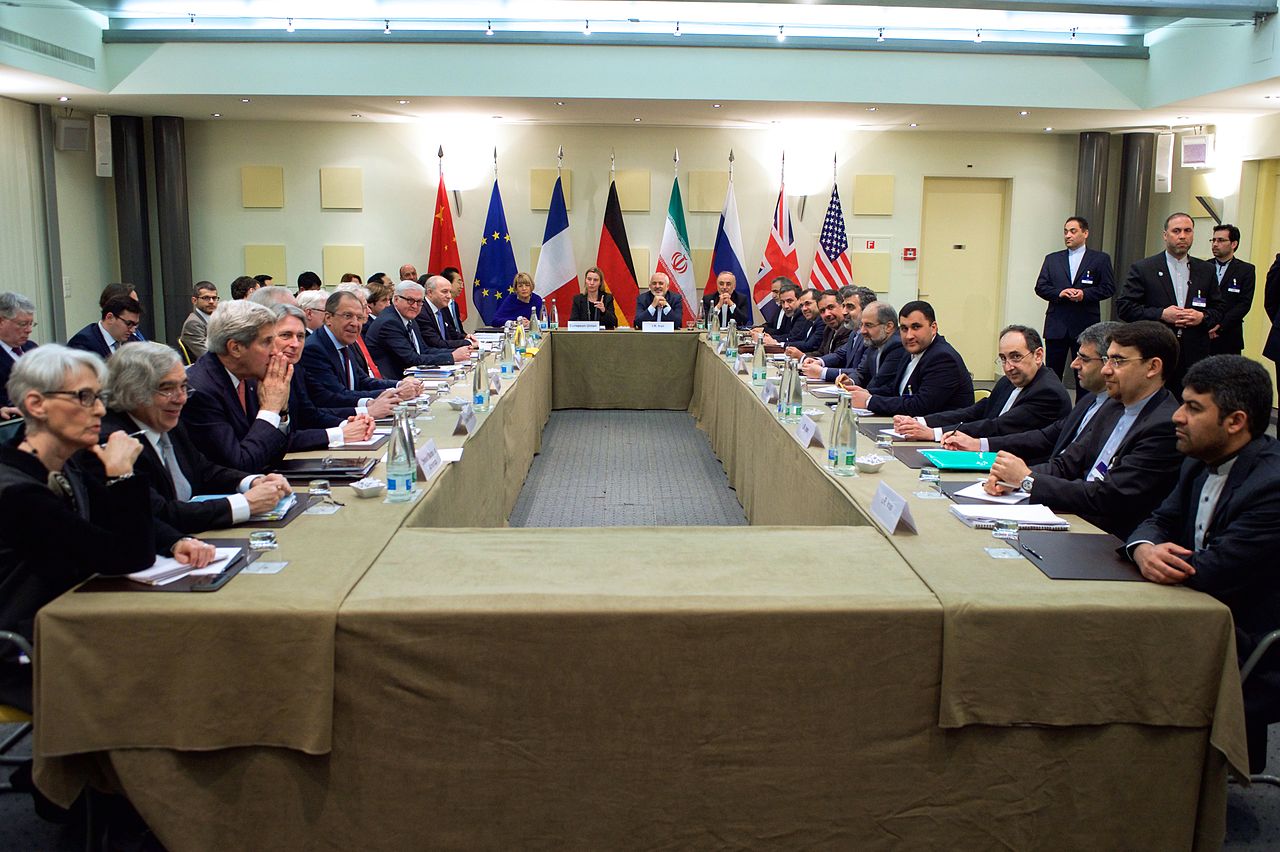
Negotiations over the Iran nuclear deal in March 2015 (U.S. Department of State via Wikimedia Commons)
The EU-3 (France, Germany, and the United Kingdom) and three other UN-Security Council members (U.S., China, and Russia) negotiated an agreement with Iran in July 2015 in Vienna that limited Iran’s nuclear program, known as the Joint Comprehensive Plan of Action (JCPOA). This agreement, widely hailed by arms control experts, is based on a simple formula: in return for relief from U.S. and international sanctions, Iran agreed to accept restrictions on its nuclear program and a robust system of monitoring and verification. In the JCPOA’s preamble, it is stated that Iran’s nuclear program will be exclusively peaceful and Iran will under no circumstances “ever seek, develop or acquire any nuclear weapons”. This sentence is legally binding because it was subsequently enshrined in United Nations Security Council Resolution 2231.
After the Trump administration withdrew from the JCPOA in May 2018, U.S. Secretary of State Mike Pompeo tabled twelve conditions for potential talks with Iran. They included demands that Iran cannot and will not meet. Among them is the demand that Iran end all its uranium enrichment, a request Iran could not accept even before the JCPOA was adopted. Another condition is that Iran opens up all its military—not only nuclear—sites for inspection. No country in the world would allow this. A similar request in an Austrian ultimatum to Serbia once provided the pretense for Austria to enter the First World War. U.S. President Donald Trump has suggested negotiating a “bigger deal” that covers not only nuclear issues but also Iran’s missile program and “regional behavior”. No arms control treaty includes “behavior”. It would have been impossible to negotiate Cold War arms control agreements between the U.S. and the Soviet Union if “behavior” were part of the discussion. Although U.S. officials have since proposed talks with Iran without preconditions, the Iranians have no reason to believe that these conditions would not come back during those negotiations.
Disappointed Iran
Iran has been dissatisfied with European efforts to protect the JCPOA from the effects of the U.S. withdrawal. Most recently, they’ve expressed frustration with the activation of a European financial mechanism (the Instrument in Support of Trade Exchanges or INSTEX), which was designed to counter the impact of U.S. sanctions. European leaders, buckling under U.S. pressure, have dragged out INSTEX’s implementation and have reduced its initial scope in hopes of avoiding a punitive response from the Trump administration.
Because the U.S. withdrawal has nullified nearly all of the benefits Iran was to receive under the JCPOA, Iranian officials have begun to question their adherence to the agreement. They announced earlier this year that they would suspend some provisions of the JCPOA and refer this matter to the Joint Commission and the Advisory Board established by the agreement. The JCPOA permits Iran to take these steps if it believes that one of the signatories is not meeting its commitments under the agreement (Article 26, 36).
It seems clear that the Trump administration’s real issue with Iran is not about the country’s nuclear program. What really seems to concern the U.S. security establishment appears to be its hegemonic regional competition with Tehran. The 2018 U.S. Nuclear Posture Review, which is supposed to address the country’s nuclear strategy, stresses this hegemonic aspect:
Iran views U.S. influence in the Middle East as the foremost threat to Iran’s goal to establish itself as the dominant regional power. Iran is committed to increasing its influence over neighboring countries and countering US influence. This goal directly threatens U.S allies and partners, and Iran’s defense policy, strategy, and force structure indicate an attempt to create exploitable military advantages.
Talking Could Save the JCPOA
Iran wants European leaders to help salvage the JCPOA, but it could be doing far more to support the Europeans. Iran itself could present some offers for the talks with the U.S. Talking alone would not cost Iran much, but it would take pressure off the Europeans and justify their decision to stand by the deal.
What could be achieved in Iran-U.S. talks? Here are some suggestions.
First, both sides can easily agree on a general declaratory statement. They can pledge to renounce hegemonic aspirations in the Gulf region. While this may sound too sweeping, there is a historical analogy to that: the 1972 Shanghai Declaration between U.S. President Richard Nixon and Chinese leader Mao Zedong stated that neither they nor any other power should “seek hegemony in the Asia-Pacific region” and was the basis for the most successful summit meeting during the Cold War. China’s support for insurgents across Asia declined after the meeting.
There is another parallel between the current situation and Nixon’s outreach to China. In the early seventies the U.S. was looking for ways to reduce its presence in Asia and to end the war in Vietnam. President Trump has announced several times that he wants to decrease the U.S. military presence abroad. A declaration along the lines of the Shanghai Declaration would give him a justification for a further reduction of U.S. troops in the Middle East. There is also some discontent among Iranians about the resources their government spends in other countries. Such an agreement could give Iranian authorities an argument to decrease these expenses.
Second, addressing the missile issue outside the JCPOA could alleviate the pressure the U.S. puts on Europe to punish Iran. A missile accord should involve other regional powers like Saudi Arabia, whose missiles already have a longer range than those of Iran. Other heavy weapons could be included as well. A model could be the 1990 Treaty on Conventional Armed Forces in Europe. That accord covers tanks, artillery, armored combat vehicles, combat aircraft and attack helicopters. The talks could be accompanied by confidence-building measures, such as an exchange of military information and notification of certain military activities. The provisions of the JCPOA could serve as an example. Such talks could well take place within the framework of the “Regional Dialogue Forum” and new security networks suggested by Iranian Foreign Minister Mohammad Javad Zarif. The European signatory states of the JCPOA could make efforts to promote such security dialogue.
Third, Iran could pledge to join the Central Asian Nuclear Weapon-Free Zone (CANWFZ) treaty provided the USA ratifies the protocol of the treaty, which provides assurances not to attack or threaten to attack parties to the zone with nuclear weapons. A similar project in the Middle East has not made any progress for decades because of U.S. resistance in the UN Security Council. Geographically, historically, and culturally, Iran is closer to the countries of the Central Asian treaty (Kazakhstan, Kyrgyzstan, Tajikistan, Turkmenistan, and Uzbekistan) than to its Arab neighbors. This move would add an additional security layer to the JCPOA, perhaps placating skeptics who are concerned that some of its provisions are set to expire.
To come closer to the implementation of a nuclear weapon-free zone in the Middle East, the African Nuclear Weapon Free Zone (ANWFZ) treaty could be extended north to include the Arab states. Egypt has already signed but not ratified the treaty. If the Arab states and Iran are serious about the creation of a nuclear weapon-free zone in the Middle East, they should support this idea and try to join one of these already existing treaties. The Arab states and Iran would not have to give up anything themselves to do so.
Israel would not join any NWFZ treaty immediately, even if other states in the region did so. However, if Iran, Egypt, and Saudi Arabia were to become members of one of those zones, it would give Israel a greater feeling of security. At the same time, the rationale for Israel to possess nuclear weapons would also change over time. This stability might pave the way for Israel to join a zone at a later time.
To conclude, if President Trump is serious about his offer to meet with Iranian leaders “anytime they want to”, Iran should make use of the opportunity. Tehran itself could offer to talk. This would not cost Iran, but could go a long way toward bolstering international support for the JCPOA.
Dr. Heinz GĂ€rtner is lecturer in the Department of Political Science at the University of Vienna and at Danube University. He was academic director of the Austrian Institute for International Affairs. He has held various Fulbright Fellowships and the Austrian Chair at Stanford University. He was Austrian Marshall Plan Foundation Fellow at the Johns Hopkins University in Washington DC. Among other things, he chairs the Strategy and Security advisory board of the Austrian Armed Forces, is a political analyst at the International Institute for Peace in Vienna, and an expert for EU and Euratom programmes at the European Commission. Heinz GĂ€rtner ist editor (together with Mitra Shahmoradi) of the book “Iran in the International System: Iran between Great Powers and Great Ideas” (Routledge, January 2020).

Saturday, July 20, 2019

The European Union And The Threat Of A U.S.-Iran Conflict

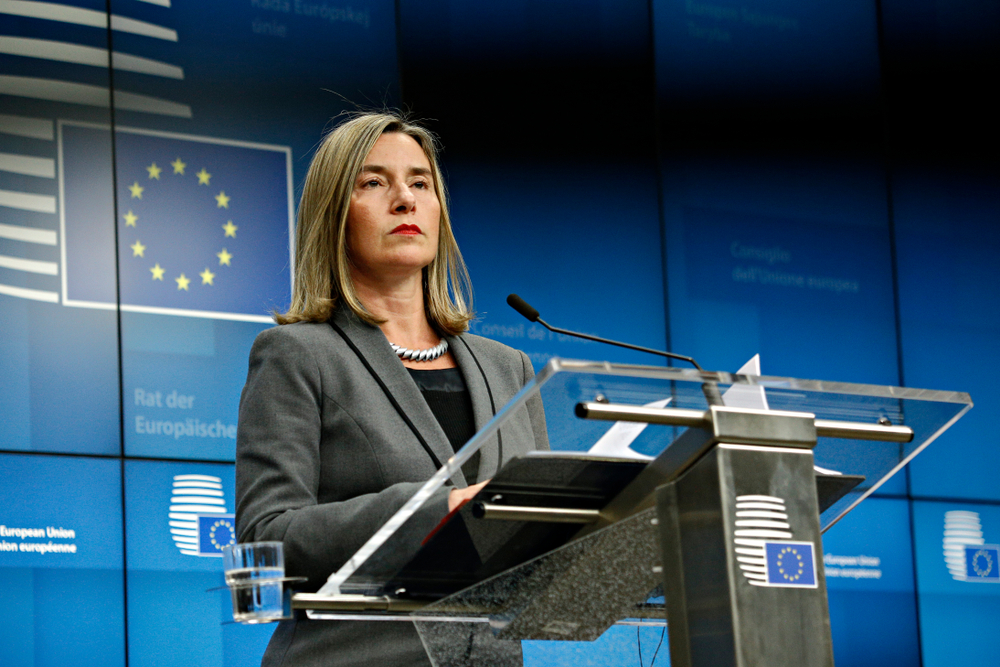
Federica Mogherini (Alexandros Michailidis via Shutterstock)
by Eldar Mamedov
On July 16, the European Parliament debated the “Situation in the Persian Gulf” with the European Union’s High Representative for foreign policy, Federica Mogherini. The fact that the item was among the first on the foreign policy agenda of the newly-elected assembly testifies to the concern the representatives of the European peoples feel about the escalating tensions in the region. Also, remarkably, the title of the debate referred to the “Persian Gulf” rather than simply “Gulf”, as is customary in official Euro-speak. This may seem like a trivial detail, but, in the context of a burgeoning effort to delegitimise Iran’s presence in the region—consisting, among other things, in promoting the concept of the “Arabian Gulf”—getting the title right was symbolically meaningful.
With such a broadly defined title, there was a range of choices as to how to frame the debate politically. No written resolution was adopted to wind down the debate, but it was a worthwhile exercise to get an early indication of where the new Parliament stands on Iran.
The sense one got from the discussion was one of continuity of a broadly pro-engagement line, defended by Mogherini and the EU member states. True, right-wing forces, represented by the Saudi-friendly European Conservatives and Reformists (ECR), which include such parties as Poland’s national-populist Law and Order and the Mojahedeen-e Khalk (MEK)-funded Spanish extreme right Vox, sought to condemn Iran for its “illegal” nuclear program and “obstruction” of the freedom of navigation in the Persian Gulf. ECR, however, was weakened after the elections—it used to be the third-largest political bloc in the EP, and now it’s only sixth. The debate, instead of centering on Iranian “nefarious activities” as the ECR would have wished, focused on EU efforts to save the 2015 nuclear agreement (Join Comprehensive Plan of Action or JCPOA) and the urgent need for regional de-escalation.
Mogherini set the tone, by framing, once again, the survival of the JCPOA as a key European security interest and an achievement of multilateral diplomacy worth preserving. She expressed concern about the latest Iranian steps to increase its stockpiles of low enriched uranium (LEU) and the level of enrichment, but stressed that these steps are reversible as long as the JCPOA can be saved. Following the Joint Commission of the JCPOA meeting on June 28 in Vienna, experts discussed ways to allow Iran to export its excess LEU and heavy water stockpiles. On INSTEX, a special trade mechanism devised to facilitate trade with Iran, Mogherini said that its first operations were already processed, and more EU member states expressed interest in joining Britain, Germany and France as its shareholders.
Mogherini fully backed the efforts of players like Iraq and Kuwait to lower regional tensions, particularly the Iraqi idea of an international conference on the U.S.-Iran conflict. Asked by a member of the European Parliament whether the EU would support regime change in Iran, she categorically ruled it out by reaffirming “respect for internal political dynamics inside the country”.
Significantly, the debate in the Parliament took place a day after the EU foreign ministers meeting in Brussels, so Mogherini spoke with the authority that the backing of the 28 EU member states gives her. Focus on saving the JCPOA and regional de-escalation shows that, despite the U.S. “maximum pressure” campaign against Iran, the Europeans, mostly, hold to their view that the underlying cause of recent tensions in the Persian Gulf area is not Iranian mischief, but Donald Trump’s decision to violate the JCPOA. 
The overall tone of the parliamentary debate only reinforced this impression. Most MEPs, across the political spectrum, were highly critical of unilateral and extraterritorial U.S. sanctions and demanded stronger European action in defending European security and economic interests. Speaking of the region, some recalled Saudi Arabian policies in Yemen and Western arms sales to the kingdom as, at the very least, equally destabilizing as Iran’s actions. In this context, MEPs called on the EU to promote Saudi-Iranian dialogue as a prerequisite for lowering tensions.
Although the fate of the JCPOA will ultimately not be decided in the European Parliament, the debate was indicative of where the European sentiment lies on the matter. The political message was unmistakeable: the EU, both collectively and on national levels, should step up its game to save the nuclear agreement with Iran in order to avoid a war in Europe’s neighbourhood.
avatar

ELDAR MAMEDOV

Eldar Mamedov has degrees from the University of Latvia and the Diplomatic School in Madrid, Spain. He has worked in the Ministry of Foreign Affairs of Latvia and as a diplomat in Latvian embassies in Washington D.C. and Madrid. Since 2007, Mamedov has served as a political adviser for the social-democrats in the Foreign Affairs Committee of the European Parliament (EP) and is in charge of the EP delegations for inter-parliamentary relations with Iran, Iraq, the Arabian Peninsula, and Mashreq.

Tuesday, July 16, 2019

Return to Situation Before Nuclear Deal

Iran Warns JCPOA Sides of Its Options
TEHRAN - Iran will return to the situation before its nuclear deal with world powers unless European countries fulfill their obligations, the spokesman for Iran’s nuclear agency, Behrouz Kamalvandi, said on Monday. 
Iran says the European countries must do more to guarantee it the economic benefits it was meant to receive in return for curbs to its nuclear program under the deal, which Washington abandoned last year.
"If the Europeans and the Americans don't want to carry out their duties... we will decrease our commitments and... reverse the conditions to four years ago," Kamalvandi said.
"These actions are not out of obstinacy. It is to give diplomacy a chance so that the other side come to their senses and carry out their duties," he added.
The deal promised economic benefits and sanctions relief to Iran, but US President Donald Trump withdrew from the accord in May 2018 and reimposed tough sanctions against the Islamic Republic.
Angered that its economy is not receiving sanctions relief it was promised under the deal, Iran has intensified uranium enrichment work.
European foreign ministers were meeting in Brussels on Monday for crisis talks on the deal.
On Sunday, the European parties to the deal - Britain, France and Germany - called for dialogue as tensions further intensified between Iran and the United States.
In a statement, the so-called E3 expressed concern the deal was at risk of further unraveling.
Iran has repeatedly threatened to leave the deal unless the remaining parties to the agreement bypass U.S. sanctions and deliver the promised benefits.
Earlier, Iran's foreign ministry urged the European parties to the 2015 nuclear deal "to take practical, effective and responsible decisions" to save the landmark agreement.
"We stress that the continued voluntary and goodwill based actions by the Islamic Republic of Iran are rooted in the principle of reciprocity of rights and duties" in the nuclear deal, the ministry said. 
British Foreign Secretary Jeremy Hunt said on Monday that there was still time to save the Iran nuclear deal and that despite the United States being Britain's closest ally it disagreed on how to handle the Iran crisis.
"Iran is still a good year away from developing a nuclear bomb. There is still some closing, but small window to keep the deal alive," Hunt told reporters on arrival for a foreign ministers' meeting in Brussels.
The Brussels meeting was to seek to flesh out how to convince Iran and the United States to reduce tensions and initiate a dialogue amid fears that the 2015 deal is close to collapse.
In reaction to the reimposition of tough U.S. sanctions, Tehran has scaled back on some of its nuclear commitments under the deal.
When asked whether the European powers would seek to penalize Iran for breaking parts of its nuclear commitments, Hunt said they would seek a meeting of the parties to deal with it.
"We will and there’s something called a joint commission, which is the mechanism set up in the deal which is what happens when one side thinks the other side has breached it, that will happen very soon,” he said.
France’s Foreign Minister Jean-Yves Le Drian said that Europe had to remain united in trying to preserve the Iran nuclear deal.
"The Europeans have to stay united on this issue,” Le Drian told reporters at a meeting of foreign ministers in Brussels. Iran’s decision to reduce compliance with the deal that the United States abandoned last year was "a bad response to a bad decision,” he claimed. 

Monday, July 15, 2019

Iran vs. Spineless Europe. How far will US-western Threats Go?

By Peter Koenig
July 14, 2019 "Information Clearing House" -  Iran’s Foreign Minister, Javad Zarif, tweeted that
“All such steps are reversible only through E3 compliance. Having failed to implement their obligations under JCPOA – including after the US withdrawal – EU/E3 should at a minimum politically support Iran’s remedial measures under Para 36 [of the JCPOA], including at the International Atomic Energy Agency (IAEA).” Mr.Zarif added, “E3 have no pretexts to avoid a firm political stance to preserve JCPOA and counter U.S unilateralism.”
IAEA’s Director General, Yukiya Amano has informed the Board of Governors that the Agency verified on 1 July that Iran’s total enriched uranium stockpile exceeded the deal’s limit, and that Iran was in breach of the agreement.

But that is not true. There is no breach. Foreign Minister Zarif, rightly pointed out that Iran’s amassing more enriched uranium than permitted under the deal, was not a violation. Iran was exercising its right to respond to the US unilateral withdrawal from the pact a year ago, to the E3 not honoring their part of the deal, and to Washington’s imposed totally illegal and unjustified punishing sanctions on Tehran.

Zarif confirmed Iran’s action and why, by tweeting,
“We triggered and exhausted para 36 after US withdrawal. Para 36 of the accord illustrates why. We gave E3+2 [also including Russia and China] a few weeks, while reserving our right. We finally took action after 60 weeks. As soon as E3 abide by their obligations, we’ll reverse.”
Mr. Zarif is absolutely right. Here is what the famous para 36 of the JCPOA says:
Disputed Resolution Mechanism
36. If Iran believed that any or all of the E3/EU+3 were not meeting their commitments under this JCPOA, Iran could refer the issue to the Joint Commission for resolution; similarly, if any of the E3/EU+3 believed that Iran was not meeting its commitments under this JCPOA, any of the E3/EU+3 could do the same. The Joint Commission would have 15 days to resolve the issue, unless the time period was extended by consensus. After Joint Commission consideration, any participant could refer the issue to Ministers of Foreign Affairs, if it believed the compliance issue had not been resolved. Ministers would have 15 days to resolve the issue, unless the time period was extended by consensus. After Joint Commission consideration – in parallel with (or in lieu of) review at the Ministerial level – either the complaining participant or the participant whose performance is in question could request that the issue be considered by an Advisory Board, which would consist of three members (one each appointed by the participants in the dispute and a third independent member). The Advisory Board should provide a non-binding opinion on the compliance issue within 15 days. If, after this 30-day process the issue is not resolved, the Joint Commission would consider the opinion of the Advisory Board for no more than 5 days in order to resolve the issue. If the issue still has not been resolved to the satisfaction of the complaining participant, and if the complaining participant deems the issue to constitute significant nonperformance, then that participant could treat the unresolved issue as grounds to cease performing its commitments under this JCPOA in whole or in part and/or notify the UN Security Council that it believes the issue constitutes significant non-performance.
The provocations by the west seem to be inexhaustible. On Thursday, 4 July, the UK, ordered by Washington, has seized an Iranian oil tanker which they suspected of carrying oil for Syria. Al Jazeera reports:

“British Royal Marines, police and customs agents on Thursday [4 July] stopped and seized the Grace 1 vessel in Gibraltar on suspicion it carried Iranian crude oil to Syria in breach of European union sanctions against President Bashar al-Assad’s government.”
Foreign Minister Zarif tweeted that UK’s unlawful seizure of a tanker with Iranian oil is piracy, pure and simple. Iran denied that the tanker was bound for Syria’s Baniyas refinery – which does not even have the capacity for such a super tanker to dock, says Iran’s deputy foreign minister, Abbas Araghchi. He did not elaborate on the final destination of the super tanker.

It is clear, the UK, in connivance with its transatlantic empire, does the bidding for Trump’s warrior team, Bolton and Pompeo. – How much farther will they go, the provocateurs? Do they want to incite war with Iran, a retaliatory action, like Iran seizing a UK tanker in return – so as to ‘justify’ a western, possibly Israeli, aggression on Iran, with a counter attack by Iran, triggering a direct intervention by Washington – of course, in defense of Israel – and a major conflict, possibly nuclear, might erupt?
Iran most likely will not fall into this trap. But the question must be asked, how far will the US-western threats, sanctions and physical aggressions go?
This morning, 10 July, RT reports,
“The latest out of Washington is that the US is looking to put together a “coalition” that would “ensure freedom of navigation both in the Straits of Hormuz and Bab al-Mandeb,” as Chairman of the Joint Chiefs of Staff General Joseph Dunford said on Tuesday. These are the waterways connecting the Persian Gulf to the Gulf of Oman, and the Red Sea to the Gulf of Aden, respectively.”
What this “freedom of navigation” means, is outsourcing naval blockade and wester piracy of Iranian oil tankers. And that in the 21st Century. How deep can you, WEST, fall to go for this kind of high sea crime practiced centuries ago? Your moral and ethical deterioration is accelerating rapidly into a bottomless black hole from where there is no return.

There is no question, that Iran does not seek to become a nuclear power, that was never the intention in the first place as was attested already almost ten years ago by the American 16 foremost intelligence agencies, but Iran wants to use its nuclear power generation capacity more efficiently – and that is their full right, especially if the Nuclear Deal is broken. The saber rattling, fear mongering and sanctions are meant to intimidate and punish Iran for not bending to the tyranny of Washington – mainly changing regime and hand over Iran’s riches to the US-western corporatocracy.

What it boils down to is whether the E3 – Germany, France and the UK – have sufficient backbone to go ahead on their own, honoring the JCPOA accord, and whether they and the European Union as a whole, would be willing and sovereignly capable of defending their companies from US sanctions, if they start trading with Iran. This is the question that many European corporations are already asking, especially European oil corporations.

At one point, there seems to have been political will by Europe to circumvent the US sanctions regime by introducing a special payment method, called the Instrument in Support of Trade Exchanges (INSTEX) which would allow companies in Europe to do business with Iran outside the US-and dollar-dominated SWIFT payment system.However, this works only, if the EU stands up for their companies defending them from US sanctions. Otherwise, as Pompeo already hinted,
“We will simply sanction all companies that use INSTEX.”
In the long run there are three realities to keep in mind.
First, US sanctions will not go away, unless the rest of the world stands up to the US and sanctions them back, in other words stops trading with the US and uses different payment modes than SWIFT and the US-dollar, for example, local currencies, or yuan and ruble through the Chinese International Payment System (CIPS), or the Russian MIR system (MIR – meaning, world, or peace), introduced by the Bank of Russia in 2015 and which is also opening up to worldwide use.

Second, it is only a matter of time until the Europeans, either as a union or as individual countries will realize that trading with the East – Russia, China and all of the huge mega-Continent of Eurasia which also includes the Middle East, is the most natural trading that can be. It has existed for thousands of years, before the ascent of the AngloZionist empire, some 300 years ago. There is no division of seas. It is a contiguous landmass. And everybody from other continents is welcome to join, peacefully, without the intention of domination and ransacking natural resources.

Third, this second reality will be enhanced and accelerated by China’s Belt and Road Initiative (BRI), also called the New Silk Road – which makes already significant inroads with peoples connecting infrastructure – roads, railways, maritime routes – plus industry, education, research and cultural connections and bridges along the BRI-routes. BRI will very likely become the future for connecting humanity with equitable socioeconomic development for decades to come.

Therefore, Iran may seriously consider dropping for now her ambition to trade with the west – the west is a sinking ship. And instead look to the East for the future. It may mean temporary losses – yes, but so what – the future is not composed of a pyramid of fake dollar-based instant profit – but of foresight and vision. Iran is on the right track by aspiring and most likely shortly entering the Shanghai Cooperation Organization (SCO) as a full-fledged member. But, yes, it means dropping the west for now – until the west sees the light on her own.

 Peter Koenig is an economist and geopolitical analyst. He is also a water resources and environmental specialist. He worked for over 30 years with the World Bank and the World Health Organization around the world in the fields of environment and water. He lectures at universities in the US, Europe and South America. He writes regularly for Global Research; ICH; RT; Sputnik; PressTV; The 21stCentury; TeleSUR; The Saker Blog, the New Eastern Outlook (NEO); and other internet sites. He is the author of Implosion – An Economic Thriller about War, Environmental Destruction and Corporate Greed – fiction based on facts and on 30 years of World Bank experience around the globe. He is also a co-author of The World Order and Revolution! – Essays from the Resistance. He is a Research Associate of the Centre for Research on Globalization.

Tuesday, June 11, 2019

Ball in EU Court, Miracles Not the Prerogative of Material Powers

By: Kayhan Int’l 

German Foreign Minister Heiko Maas, who was in Tehran on Monday, after visiting Jordan, Iraq, and the UAE, said the European Union’s Big Three (France, Britain, Germany) – which despite being signatories to the JCPOA (Joint Comprehensive Plan Of Action) have yet to honour their commitments to it – "want to fulfill our obligations. Though we cannot work miracles, we will try to avert a failure.”
He added that "Berlin, Paris, and London were working to deliver the Instrument in Support of Trade Exchanges (INSTEX)”, which is a payment channel they unveiled in January to protect trade with Iran from the illegal US economic sanctions following last year’s unilateral withdrawal from JCPOA by the roguish US president, Donald Trump.
These remarks of Maas during a joint press conference with his Iranian counterpart, Dr. Mohammad Javad Zarif, appeared stereotyped to journalists in view of the lack of any clear commitment, when all the EU has to do, is to kick-start INSTEX without any further delay, instead of trying to beat around the bush.
Maas also failed to satisfy the Islamic Republic’s diplomatic circles, despite the cordial reception he was accorded by both Zarif and President Hassan Rouhani in accordance with traditional Iranian courtesy for guests.
Foreign Ministry Spokesman Abbas Mousavi told reporters the same day "what the Europeans have to do and what they have done have not satisfied us so far, and we stick to the 2-month deadline we have given to them, of which over a month has already elapsed.”
Tehran’s position is that the European regimes have shown "lack of will” to confront Washington’s economic terrorism against Iran, and instead of practically implementing the INSTEX have contented to mere expressions of support for the 2015 nuclear deal.
This means Maas’ visit did not remove any ambiguities regarding the EU stance, and moreover his phrase "we cannot work miracles”, clouded any expectations of a breakthrough anytime soon.
Surely, the Islamic Republic doesn’t expect "miracles” from material powers of which they are grossly incapable. It only wants them to honour their part of the pledges given in writing in Geneva, which they are obliged to do, per international law, or else face the consequences, since Iran is fully entitled to take the necessary steps for upgrading uranium enrichment for peaceful purposes in accordance with article 36 of the JCPOA.
This was specified by Dr. Zarif, who also said in clear words that the US cannot remain safe after initiating the economic war against Iran. During his press conference with Maas, he went on to list the state terrorism of Washington in the region, ranging from its complicity in the Zionist crimes against Palestinians and support for regimes funding terrorists in Syria and Iraq, to the relentless Saudi-UEA bombing of Yemen for the past four-and-a-quarter years.
For the information of the German Foreign Minister, who without censuring American lawlessness merely said "the situation in the region is highly explosive and extremely serious”, a miracle is an event not explicable by natural or scientific laws, and occurs by God’s Will, either through Prophets and Saints, or in the favour of the righteous, to the bewilderment of the skeptic, as has happened for the Islamic Republic of Iran a number of times over the past four decades.
The most glaring instance was the incident near Tabas on April 24, 1980, when Divine Power made the desert sands to whirl, swirl and twirl around the invading American aircraft, helicopters, and marines, to reduce them to twisted metal and charred bodies in a few moments.
This is warning for all those devilish powers trying to deprive Iran of its rights of economic transactions, modern technology (including defence industries), and help for the oppressed people of other countries.
It means, one false step and Trump and his team of thugs, along with their seemingly powerful military forces, will go down the drain.
It is hoped that Heiko Maas has fully understood the Islamic Republic’s point of view during talks with his Iranian counterpart and the President, and will persuade his government, as well as the regimes in Paris and London, to earnestly start practical cooperation with Tehran, rather than succumbing to the pressures of the fast declining US.