Showing posts with label saudi arabia. Show all posts

Thursday, December 19, 2019

Kuala Lumpur summit points to split in Muslim world

Hasan Alhasan
By HASAN ALHASAN


The Kuala Lumpur Summit beginning on Wednesday will bring together the leaders of Malaysia, Indonesia, Pakistan, Turkey, Iran and Qatar with 450 Muslim intellectuals from around the world. It will also raise eyebrows. An initiative of Malaysia’s outspoken prime minister, Mahathir Mohamad, the summit’s guest list indicates a clear preference for Muslim states of a certain type: supporters of political Islam who portray themselves as champions of global Muslim causes.
Yet the attempt to consolidate such a group will face stiff resistance from a deeply divided Muslim world. And its credibility as a champion of global Muslim causes ranging from Kashmir in India to Xinjiang in China, especially those that clash with members’ national interests, will be put to the test.
Conceived on the sidelines of the United Nations General Assembly in New York this year, the summit emerged out of frustration with the underwhelming response to India’s clampdown in Kashmir. When India announced its revocation of Jammu and Kashmir’s special status and placed the region under lockdown, the Organization of Islamic Cooperation deplored the move and echoed Pakistan’s call for a UN-supervised plebiscite.
However, the OIC’s criticism was hollowed out by a lack of consensus among its members on how best to deal with the issue. So while Pakistan, Turkey and Malaysia locked horns with India over Kashmir at the UN, Indian Prime Minister Narendra Modi toured Bahrain and the United Arab Emirates, where he was feted. Despite being a core member of the OIC’s contact group on Kashmir, Saudi Arabia took a subdued approach to the issue outside the organization, calling on India and Pakistan to resolve their disputes peacefully. To Pakistan’s dismay, so did the majority of Muslim states.
Beyond the issue of Kashmir, however, the summit also reflects the violent split between supporters and opponents of political Islam across the Muslim world. Muslim-majority states have backed rival sides in civil conflicts that have often pitted Islamists against secular nationalist forces in the Middle East.
In Egypt, the UAE and Saudi Arabia backed the military’s move in 2013 to oust president Mohamed Morsi, a Muslim Brotherhood leader whose government enjoyed Qatar’s and Turkey’s patronage. In Libya, both Egypt and the UAE have lent support to Khalifa Haftar and his Libyan National Army in the onslaught against Qatari/Turkish-backed Islamist groups. Iran has long thrown its weight behind Hezbollah in Lebanon, Hamas in Gaza and more recently the Houthis in Yemen, while recruiting thousands of young men into Shiite religious militias to wage war on its behalf in Syria and Iraq.
Amid such differences, then, Malaysia’s attempt at rallying the global patrons of political Islam faces a host of challenges.
The gathering cannot claim to be representative of the wider Muslim world. The six states invited to the summit make up a fraction of the 49 states represented at the OIC. They include not a single African or Arab state apart from Qatar
For starters, the gathering cannot claim to be representative of the wider Muslim world. The six states invited to the summit make up a fraction of the 49 states represented at the OIC. They include not a single African or Arab state apart from Qatar. Indonesia, the world’s largest Muslim nation, was initially put forward as one of the summit’s key sponsors. However, its name has disappeared from recent press statements, casting doubt on its participation.
In addition, key Muslim countries, including Saudi Arabia – which considers itself a natural leader of the Muslim world – Egypt, and others will also view the summit with suspicion. The divisive nature of the summit may eventually temper the enthusiasm of Pakistan, Indonesia and Qatar. All three are likely to want to avoid antagonizing Saudi Arabia.
According to a former senior Pakistani official to whom I spoke, Pakistan felt obliged to honor Malaysia’s invitation after the latter’s vocal stand on Kashmir. Pakistan’s participation, he insisted, is not meant as a challenge to Riyadh, which Islamabad considers a strategic partner. In February, Saudi Crown Prince Mohammad bin Salman visited Islamabad, where he pledged US$20 billion in investments.
Indonesia also is keen on attracting investments from Saudi Arabia. Riyadh has announced plans to invest $6.7 billion, a figure that Jakarta would like to see increase. In a signal of closer ties, the two sides signed in 2014 their first ever defense cooperation agreement. Saudi King Salman bin Abdulaziz led a delegation of 800 people on a visit in 2017, injecting further momentum into the relationship.
Saudi Arabia and Qatar have also made progress toward mending ties in recent weeks. Although diplomatic relations remain severed, Qatar’s foreign minister made an unannounced visit to Riyadh in November. Saudi Arabia, the UAE and Bahrain have also dispatched teams to the Arabian Gulf Cup soccer tournament in Doha, although a complete resolution to the dispute still seems elusive.
Finally, the summit’s sponsors face a significant test of their credibility. In contrast to its stand on Kashmir, Malaysia has tiptoed around China’s treatment of Uighur Muslims out of fear of drawing Beijing’s ire. During a trip to Xinjiang in July, Malaysia’s Islamic affairs minister, Mujahid Yusuf Rawa, drew criticism for describing China’s controversial re-education facilities as “training centers.” In September, Mahathir admitted that Malaysia could not afford to antagonize China over the Uighurs.
Likewise, Turkey has dialed down its criticism of China after a visit by Prime Minister Recep Tayyip Erdogan to Beijing this year. Meanwhile, Pakistani Prime Minister Imran Khan went so far as to deny knowledge of the Xinjiang issue in an interview with the Financial Times in March. Iran has also taken a soft line on both India and China, on which it relies to weather US sanctions.
Geopolitical realities impose considerable costs on would-be champions of global Muslim causes. The Muslim world is split, often violently, on the question of political Islam. The exclusion of Muslim heavyweights such as Saudi Arabia will inevitably dampen the summit group’s leadership claims, while Muslim-majority states keen on standing up to India over Kashmir, or China over Uighur Muslims, face the prospect of serious repercussions.

Wednesday, December 18, 2019

Costs by inexperienced crown prince for Saudi Arabia

By Ramin Hossein Abadian
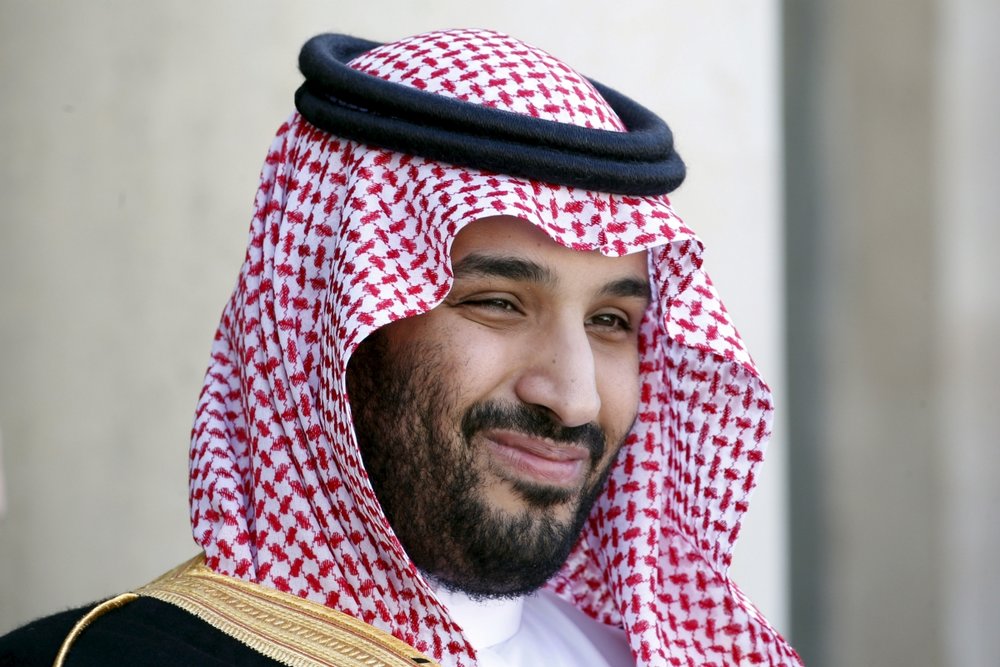
As the influence of Crown Prince Mohamad bin Salman on Saudi Arabia’s decision-making bodies has been increasing, the country has taken an aggressive foreign policy approach.
The most important reason for changes in Saudi Arabia’s foreign policy is the crown prince’s ambitions and inexperience in governing as well as ignoring the realities of the country’s political environment.  
The illegal invasion of Yemen, widespread intervention in the domestic affairs of Iraq, Syria, Egypt, and Libya as well as cutting ties with Qatar are among obvious effects of the aggressive approach adopted by Saudi Arabia. 
The unprecedented strain in Riyadh’s ties with Iran and extensive effort to apply direct or indirect pressure on the Islamic Republic are the measures that can be considered as the crown prince’s foreign policy achievement. 
After nearly six years of following such an approach, not only no new achievement has emerged, but also the country has faced the burdensome economic, security and political costs.
Being caught in the Yemeni quagmire coupled with failure in implementing its policies in Syria and Iraq, which were being pursued through financial and intelligence support for the Takfiri terrorist groups are the effects of the aggressive approach. The inept foreign policy has resulted in more debacles, such as the scandal of arresting Lebanese Prime Minister Saad Hariri while in Saudi Arabia and Qatar’s successful resistance in face of widespread pressure by Riyadh.
In recent months, Saudi Arabia have made many efforts to reduce the problems caused its aggressive foreign policy approach.
In this regard, Riyadh has taken some actions. For example, it has taken steps to resolve disputes with Qatar and attempting to get closer to the Yemeni Houthis in order to reach a peace agreement. 
Although Saudi Arabia has been trying to review its previous aggressive approaches, there are numerous evidence that the country is seeking to interfere in the regional states’ domestic affairs and dictate its political will through soft and less costly methods. 
Recent events in Lebanon and Iraq that led to political and security problems along with efforts by the Saudi-affiliated media such as Iran International TV and the Saudi-owned Al Arabiya TV to exploit the recent popular protests in Iran are just a few examples of the Saudi interventionist approach. 
Riyadh must learn lessons from the consequences of the aggressive policy toward the countries in the region and of enormous economic and security losses. Saudi Arabia should be aware that pursuing previous policies with tactical changes will also result in unpredictable costs for the country.

Tuesday, December 17, 2019

Today’s Allies Are Tomorrow’s Enemies


By Philip Giraldi
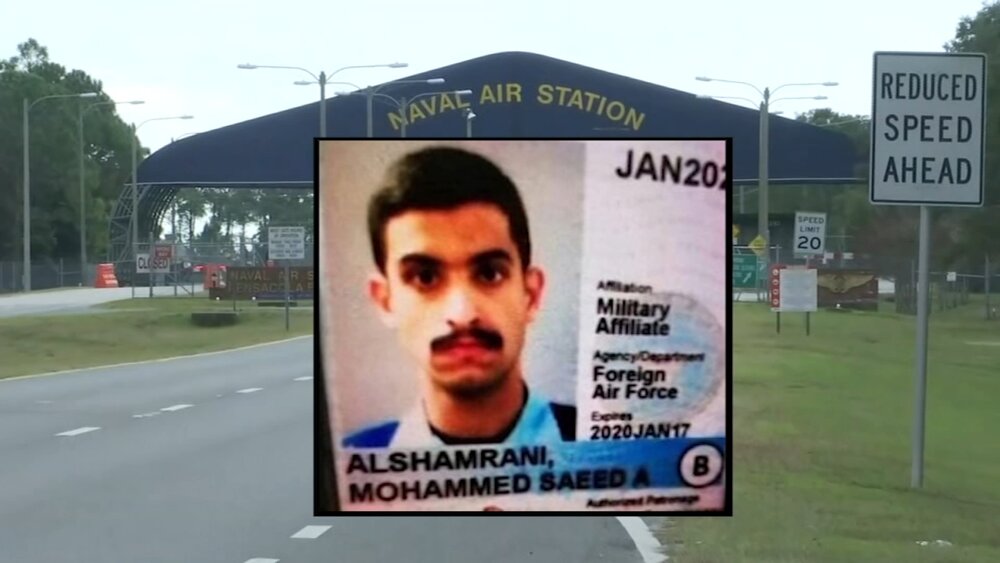
"Information Clearing House" -  One might postulate that the United States is regularly supporting so-called allies whose very nature will eventually generate blowback that will do terrible damage to actual American interests. The recent example of the mass shooting at the Pensacola Naval Air Station in Florida by Saudi Second Lieutenant Mohammed Alshamrani is illustrative. Alshamrani killed three American sailors while three other Saudi students filmed what was taking place, presumably for posting on social media.
Though the U.S. and The Kingdom of Saudi Arabia have no actual alliance, the American and Saudi militaries have a relationship that began during the Second World War. Currently, Washington supports Riyadh as a force multiplier and extension of U.S. power in the Persian Gulf region to serve as a check on what if perceives to be as hostile Iran. Saudi Arabia, nurturing its own regional ambitions, clearly sees Iran as its principal enemy. As the White House also appears keen to do whatever is necessary to bring about regime change in Tehran, the tendency in Washington to serve as an apologist for whatever Riyadh does will continue for the foreseeable future. And, as an added bonus, the Saudis buy billions of dollars’ worth of American made weapons annually.
Someone has to train the people who fly the expensive warplanes, so Saudi Air Force “students” are sent to American bases like Pensacola where they undergo language and flight training that is normally conducted by civilian contractors. The student pilots, surely carefully screened by Saudi security, would be unlikely candidates for staging a terrorist attack in the United States, but the Alshamrani incident suggests that there is more dissidence bubbling beneath the surface than is apparent from the rosy assurances about The Kingdom coming out of the White House and the Royal Palace in Riyadh.
The investigation of Alshamrani continues, but it seems clear that  he was unhappy with aspects of America’s pro-Israel and interventionist foreign policy. He also connected with radical websites on social media and his colleagues report that he would periodically return to the U.S. from home leave in Saudi Arabia “more religious.” On the night before the incident, he showed a film that included a mass shooting.
Alshamrani is just one element in the considerable potential downside inherent in the undeclared bilateral relationship. Apart from the regional instability created by the fact that Washington has to look the other way while the Saudis use American weapons to carry out genocide in neighboring Yemen, many observers believe that Saudi Arabia is basically unstable. Its prevailing fundamentalist Islamic sect referred to as Wahhabism is backward looking and hostile to the United States and the West. Some have even suggested that a large majority of ordinary Saudis, i.e. not those who benefit from the bilateral relationship, hate the U.S. One recalls that fifteen out of the nineteen 9/11 hijackers were Saudi nationals.
All of which means that the United States is training and arming people who just might turn their training and weapons against Washington if the al-Saud royal family cannot stay in power. The situation is somewhat comparable to that in Afghanistan, where so-called “green-on-blue” incidents in which Afghan army recruits kill their foreign trainers occur on a regular basis. The chief difference is that should the Saudi dissidents gain power, they would have a huge and much more lethally sophisticated arsenal to play around with.

The current situation with the House of Saud is not good. It is a regime that is under considerable pressure because of its corruption. Internationally, it has few friends due to its widely condemned war in Yemen as well as from the consequences arising over the killing and dismembering in Istanbul of Jamal Khashoggi. The situation also invites comparison with other current and past U.S. relationships in the region. Washington props up an unpopular and unstable regime headed by President Abdel Fattah el-Sisi in Egypt while also funding and training the country’s military. In the past, the U.S. was the main arms supplier for the Shah’s Iran, ignoring abuses committed by the regime because Iran was perceived to be a major regional power, reliably stable and apparently western looking.Other regional powers are watching how the situation involving the American presence in Saudi Arabia develops. Recently Iran’s leader Ayatollah Seyed Ali Khamenei commented on media reports that the Saudis would be constructing U.S. provided nuclear reactors. He said "I do not know of any regime in the region and perhaps the world as bad as the Saudi government. It is not only despotic, dictatorial, corrupt and tyrannical but also sycophantic.  [The Americans] want to supply [the Saudis] with nuclear equipment. They have announced to build missile manufacturing centers for it [and] they see no problem because Saudi Arabia depends on them and belongs to them. Of course, if they build them, I personally will not be upset because I know that God willing [all the weapons] will fall into the hands of Muslim Mujahedin [for use against the Americans] in the not too distant future.”

The United States is also in trouble with its other major regional partner in the Middle East, Israel. As is the case with Saudi Arabia, the United States has no actual alliance or pact with the Jewish state, though such an arrangement is currently being considered. As in the case of Saudi Arabia, the United States has no say in the military actions being undertaken by its client Israel. The Jewish state regularly bombs targets in Gaza, Syria and in Lebanon, just as the Saudis do in Yemen. As the United States is the arms supplier to both nations and is more-or-less the de facto guarantor of a one-sided stability in the region, it has self-assumed responsibilities without having any input into the decisions making process. Trump’s obsession with destroying Iran, which has promised to do in his next term, makes him blind to the deficiencies in the allies he seeks to use to that end.
The situation with Israel is particularly dangerous as the Jewish state possesses a nuclear arsenal and it is widely believed that many in its military command structure are prepared to use those devices against Iran. In 2015, Israeli defense minister Moshe Ya’alon explained how Israel might have to strike Iran hard to prevent a long war. He cited the examples of Hiroshima and Nagasaki and then describing the process for making such a decision as “at the end, we might take certain steps.”
Either way, the United States of America is burdened with a number of false allies that use the relationship with Washington to enable their own schemes. If and when the whole house of cards begins to collapse, the U.S. will plausibly find itself with no friends and confronted by enemies that it empowered and also helped to train and equip.


Philip Giraldi is Ph.D., Executive Director of the Council for the National Interest. A former CIA Case Officer and Army Intelligence Officer who spent twenty years overseas in Europe and the Middle East working terrorism cases. He holds a BA with honors from the University of Chicago and an MA and PhD in Modern History from the University of London. 

U.S. mainstream media leaves Israel out of the worsening Iran/Saudi Arabia/Yemen crisis

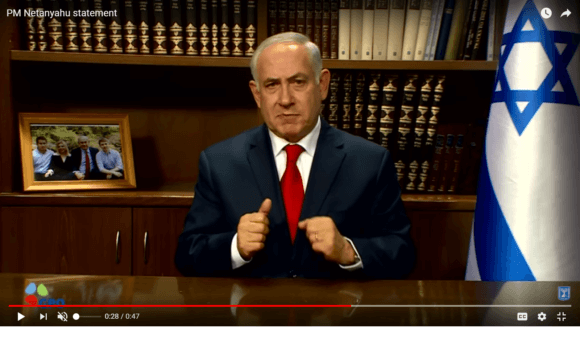
Netanyahu celebrates Trump's speech decertifying the Iran deal, Oct. 13, 2017.

In theory, a dispute between Saudi Arabia and Iran over an awful civil war in Yemen should have nothing to do with Israel.
In fact, Tel Aviv is a major factor stoking a growing crisis that threatens to explode into an even wider war, and trigger a global economic slowdown.
Mainstream U.S. media accounts have bogged down in futile efforts to definitively assess responsibility for the audacious drone attacks that damaged Saudi oil facilities on September 14, sending plumes of smoke up into space. The U.S. press is less rigorous about looking into the Israeli connection to the crisis. Today’s lead article in the New York Times about the risk of “war with Iran” did not mention Israel or Benjamin Netanyahu a single time. Neither did a major report in the Washington Post.
First, Israel has been itself complicit in the terrible civil war in Yemen, in which at least 100,000 people have died, the world’s largest cholera epidemic has broken out, and millions more are threatened with starvation. The Israeli newspaper Haaretz back in February reported that:
Israeli cyber companies, gun traders, terror-warfare instructors and even paid hitmen operated by an Israeli-owned company are partners to the war in Yemen.
But Israel is even more deeply involved in the larger regional crisis, and Benjamin Netanyahu will not be satisfied until the U.S. actually attacks Iran. Israel has zero concern for the Iranian theocratic regime’s repression of human rights; Tel Aviv has excellent relations with General Sisi in Egypt, and its budding alliance with Saudi Arabia’s murderous Crown Prince Mohammed is further proof that it has no trouble working with regional neighbors who have bloody hands. Israel hates (and fears) Iran only because Tehran supports the two strongest armed forces in the region still resisting it: Hezbollah to the north in Lebanon, and Hamas in Gaza.
Bizarre personal dynamics complicate the scene:
  •  Donald Trump wants millions to pay for his re-election campaign, and pro-Israel mega-donor Sheldon Adelson has provided them. In return, Adelson imposed arch-hawk, invade-Iran-yesterday John Bolton as Trump’s national security adviser — until Bolton challenged Trump and got fired.
  •  Trump himself does seem hesitant to go to war, because he recognizes it will damage his re-election chances.
  •  At the same time, Trump and his family slavishly admire Crown Prince Mohammed and the Saudi royals, almost certainly because the Trumps have gotten large sums of money to cement that admiration. And just like Israel, Prince Mohammed definitely wants the U.S. to attack Iran.
  • These contradictory pressures surely explain Trump’s vacillating behavior over the past few days as the crisis continues.
None of this is reported clearly in the mainstream American media. 

Sunday, December 15, 2019

Why terrorist act by Saudi Air Force officer faced media boycott!

By Mohammad Ghaderi

On December 5, a Saudi Air Force lieutenant, named Mohammed Saeed Alshamrani, opened fire at a U.S. naval base in Pensacola, Florida
The gunman, who began training in the U.S. in August 2017, killed three people and wounded eight. Alshamrani was shot by a deputy sheriff.
Shortly after the shooting, Saudi Arabia's King Salman contacted Trump to express regret for what had happened and sympathize with families of the victims. The Saudi king insisted that the assailant did not represent the Saudi people. 
Regarding the reaction by Saudi and U.S. officials, as well as the way media outlets are dealing with the issue, some points need to be mentioned about the incident:
a. Restricted and controlled media coverage
The Saudi and U.S. media outlets have covered the incident in a restricted and controlled manner. Interestingly, Qatari media such as Al Jazeera were not also very active in this regard. These approaches can be mainly based on two main reasons:
First, the shooting by the Saudi Air Force officer can revive and intensify U.S. cynicism and hatred of Saudi Arabia by recalling the 9/11 attacks.  Therefore, U.S. media outlets’ lack of enough attention to the issue is due to Washington’s insistence to advance the maximum pressure project against Iran. Obviously, undermining Saudi Arabia’s status could disrupt the project. 
Second, it seems that the Qatari media are indifferent to the incident, as Doha and Riyadh are gradually changing their approaches toward each other, and Qatar is seeking to avoid tension with Saudi Arabia. 
b. The way that the Saudi and U.S. officials reacted 
The shooting by the Saudi Air Force officer shows that there are some radical persons among Saudi security forces, who could pose various risks. Accordingly, neither the U.S. nor Saudi Arabia have spoken about the motive behind the shooting.
However, based on numerous indications, it can be concluded that the officer was highly inspired by Wahhabism and was affiliated with terrorist groups, such as ISIS and al-Qaeda. 
On the other hand, in a stereotypical way, the assailant may be charged with mental disorders. According to the New York Times, Alshamrani posted on his Twitter account, “I’m not against you for just being American, I don’t hate you because your freedoms, I hate you because every day you supporting, funding and committing crimes not only against Muslims but also humanity.”
Following the incident, some U.S. officials, including Senators Tim Scott and Matt Gaetz, condemned the shooting and called for a revision of foreign military training standards.
Tim Scott stated that the officer was either influenced by radical Islamic ideology or suffered from a mental disorder, so there is no reason that we provide military training for those who want to harm the U.S. 
On the other hand, some evidence suggests that the close relationship between the Riyadh officials (especially Crown Prince Mohammad bin Salman) and the White House has led to dissatisfaction of some extremist Wahhabis, as they are opposed to the general approach of the Salafi movement.
In this regard, two important events over the past few months can be noted, which were not reflected in media properly. First, a report, which was recently released on the military’s coup attempt against Mohammad bin Salman. Second, reporting news about the killing of King Salman’s personal bodyguard. It was later revealed that the bodyguard intended to assassinate the king so he was killed in a made-up clash. 
As a result, there are some reasons why the incident went somehow unnoticed by the media and the two countries’ officials. 
A. If the shooting is linked to the 9/11 incident, many Americans will be persuaded to vote against Trump in the 2020 election by reinforcing ties with Riyadh. 
B. The continuous effort by the al-Saud family to repair their inhuman image (especially after the killing of Jamal Khashoggi) in public opinion would fail. 
C. Saudi Arabia, as the main helper in the U.S. maximum pressure campaign against Iran, would be involved in a new issue. In this case, Riyadh could not fulfill its main task, which is undermining the stability and peace in the independent regional countries, including Lebanon and Iraq. 
D. The domestic disputes in the house of Saud would be unveiled, and the crown prince’s power would be undermined.  
E. The White House would be forced to take an action against Saudi Arabia because of the pressure by the U.S. public opinion and Democratic politicians in particular. 

It’s time for the international community to stop ‘recognising’ Hadi’s ‘government’

Omar Ahmed
Abd Rabbuh Mansur Hadi, President of Yemen [z_sattam/Twitter]
In spite of having no substantial physical political presence in Yemen, and no formal armed forces on the ground, the media is insistent on running with the same, tired expression of “the internationally recognised legitimate government” of the fugitive president, Abd Rabbuh Mansur Hadi, who has apparently been running the country from the Saudi capital, Riyadh, since he fled Yemen in 2015.
It has now been over a month since the signing of the Riyadh Agreement, which was hailed as ushering in peace in the south, not only among the warring factions of Hadi’s forces, which largely consists of Islamist, Islah militia and Sudanese mercenaries against the Security Belt forces, who are aligned with southern separatists, the Southern Transitional Council (STC), but it was also hoped to simmer down the tension between the patrons of these two parties, Saudi Arabia and the United Arab Emirates (UAE) respectively, both partners in the anti-Houthi coalition in the north, but backing opposing sides in the south.

No longer ‘Iranian proxies’

It was also a month ago that I argued that this agreement will fall flat in its objectives, namely due to the fact that Hadi doesn’t have any concrete authority in Yemen, and the real political legitimacy lies with the National Salvation Government (NSG), which has been ruling the capital Sanaa since 2014. Its power-base was formed from of an alliance between the Ansar Allah movement, the Yemeni military and remnants of the General People’s Congress political party – however the same news outlets who are trying to convince us of the “internationally recognised” government, are the same ones peddling the misleading narrative, that the NSG are merely “Houthi rebels” or “Iranian proxies”, following Tehran’s orders.
Houthis patrol around after the clashes between Houthis and Former Yemeni President Ali Abdullah Saleh’s supporters took place in Sanaa, Yemen on 5 December 2017 [Mohammed Hamoud/Anadolu Agency]
Essentially, this agreement stalled the inevitability that the Saudis, and the wider international community, will have to accept the reality that the NSG (“Houthis”) are the legitimate government in Yemen. I am using the past-tense here because the agreement is void and no longer exists – it was signed on 5 November and included a 30-day deadline in forming a new cabinet of 24 members, equally split from the north and south. I concluded with the revelation that the Saudis had acknowledged that they had opened channels of communication with the Houthis.
In fact, a few days following the signing of the accord, the UAE minister of state for Foreign Affairs, Anwar Gargash, conceded that the Houthis will have a role in post-war Yemen. In more recent developments, Saudi foreign minister, Adel Al-Jubeir, has suggestively indicated that the Houthis are in fact, a legitimate entity, stating “all Yemenis, including the Houthis have a role in the future of Yemen.”
It would now appear that the Trump administration has also done an ‘about-face’ on its policy on Yemen, having once framed the conflict as being an Iranian proxy war, they are now trying to downplay Iran’s involvement. Brian Hook, the US special representative for Iran, went from declaring in September that Iran was “controlling and deploying” the Houthis as a “terror front”, to now stating that “Iran clearly does not speak for the Houthis.” I mentioned back in September how this Iranian connection has been exaggerated and misrepresented by the media. One needs only to refer to a 2015 article which stated that Iran, for example, had in fact warned the Zaydi movement against taking over Sanaa. Indeed, the Houthis, as with Lebanon’s Hezbollah, are actually acting independently, albeit with assistance from Tehran. 

Who speaks for the south?

The Riyadh Agreement was always problematic from the outset, because although on paper it was plausible, the reality on the ground, in particular in the interim capital city of Aden, was another thing entirely. There are constant reports of violent clashes between Hadi’s mercenaries and the southern separatist forces. Additionally, there has been a steady increase in assassinations across the city, with the STC hinting liability with Hadi’s associates. Hampering conciliatory efforts, the STC are also refusing to vacate the presidential palace in the city. There are also reports that the former president of the Democratic People’s Republic of Yemen, Ali Nasser Mohammed, has warned the STC against plans to seize his home in Aden province, captured by the separatists last July.
It is important to recognise that the STC does not speak for all southerners, nor for the Southern Movement. There is the Southern National Salvation Council (SSC) based in Mahrah, who not only oppose both Saudi and Emirati interference in Yemen, but had opposed the Riyadh Agreement from its inception, noting that “the agreement gives legitimacy to regional militias affiliated abroad,” with reference to the STC.
The director of Human Rights for Yemen, Kim Sharif, explained to MEMO that the SSC is composed of the “original secessionists” and that the STC are widely regarded as a “traitor entity” by most southerners, as they are a party formed by the UAE who are using and exploiting the memory of the South Yemen state.

Illegitimacy of Hadi vs legitimacy of the NSG

Sharif agrees that the Hadi government lacks legitimacy, because following the election where he stood as the sole candidate, he was appointed as president for a transitional period of two years as part of the Gulf Initiative back in February 2012, reluctantly accepted by many, to avoid further bloodshed. Under the initiative, elections were to be held within the transitional period.
However, this failed to materialise and according to Sharif, under Hadi assassinations and terrorist attacks began to increase “funded by the Saudis,” and with a reliance on the Islah Party militia, who have close ties with General Mohsen Al-Ahmar, the vice president whose links to Al-Qaeda are well-documented. Hadi formerly resigned from the presidency in 2015, but has held onto the position ever since, giving him “zero legitimacy”. “There’s no such thing as an ‘internationally recognised government’ under international law. This is sheer abuse of the terms of the Vienna Convention on diplomatic relations and is a totally unacceptable trespass on the sovereignty of the state of Yemen,” Sharif continued.
Meanwhile, with regards to the legitimacy of the National Salvation Government based in Sanaa, Sharif described the 2014 takeover within the context of the failure by Hadi to carry out elections as per his mandate. Additionally, under International Customary Law, whomever takes control of the capital of any country is considered the “de facto” government. In order for this to be ratified, the government has to become “de jure”. Sharif argues that such a government must first follow an “internal legislation process”, which the Sanaa government has done by preserving national institutions, creating the Supreme Council, which includes all political parties including southern secessionists and operates within the existing constitution.
Furthermore, it is the Yemeni armed forces who are subservient to the NSG, in addition to the “Popular Committee” (Houthi fighters), who are the ones defending the nation against foreign aggression enacted by the Saudi-led coalition. These points and the fact that the NSG entered into the “Tribal Honour Agreement 2015” with all tribes, given that tribal rule still plays a vital role in Yemeni politics, ensures that the NSG based in Sanaa are the legitimate government in Yemen.
Although a southerner, Sharif herself is supportive of the NSG and AnsarAllah, as they have a common goal in liberating Yemen from the foreign aggression and occupation. The ultimate aim being “uniting all factions in the south with a view of freeing Yemen from all foreign occupation.”  She is confident that this movement will succeed “in partnership with our brothers and sisters in the north.”

International recognition

The National Salvation Government is not only arguably the legitimate government of Yemen. The Yemeni armed forces and its alliance with AnsarAllah has proven that they are indeed the most powerful entity in the country, with an ever-developing arsenal, they have recently announced an improved air defence system, capable of “neutralising” coalition aircraft up to a projected 90 per cent in the year ahead, which is significant as according to Yemeni military expert, Brigadier General Aziz Rashid, the coalition depends on aircraft for 85 per cent of its operations. They have shot down several drones in the past two weeks, in addition to an Apache helicopter belonging to the Saudis. Just today, at the time of writing, the Yemeni armed forces downed a Saudi spy plane over the Jizan region.
As the Riyadh Agreement gradually fades into obscurity, and the Saudis and its allies begin to sue for peace and pay for the damage that they caused, in the realisation that it is the Houthi government which is the legitimate power and authority in the country, it is high time that the international community start recognising this too, at the expense of the puppet government based in Riyadh headed by Hadi, who effectively has been held in captivity there and does not speak for the Yemeni people nor has control of the armed forces. Peace, stability and an end to the man-made humanitarian crisis is achievable with the help of this international community, who have been delusional for far too long.

Islamabad continues efforts to mediate between Iran, Saudi Arabia: Pakistan Today

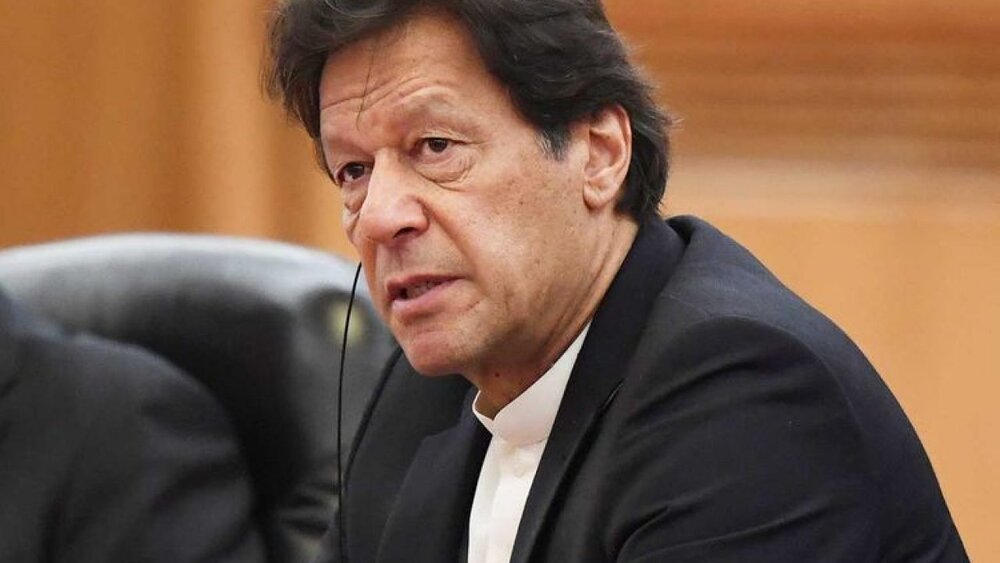
Imran Khan, the Pakistani prime minister, was scheduled to visit Riyadh on a one-day trip on Saturday as part of continued efforts to mediate between Iran and Saudi Arabia, Pakistan Today reported on Friday.
Pakistani Foreign Minister Shah Mahmood Qureshi, accompanied by the head of Inter-Services Intelligence (ISI), visited Riyadh on Wednesday and is believed to have laid the ground for the premier’s visit, the newspaper reported.
This would be Prime Minister Imran’s fourth visit to Saudi Arabia since May.
Khan visited Tehran on October 13 to “facilitate” possible dialogue between Iran and Saudi Arabia which have been at loggerheads over a number of issues including the Saudi war on Yemen and Riyadh’s support for the U.S. President Donald Trump’s anti-Iran moves.
Khan met with Leader of the Islamic Revolution Ayatollah Ali Khamenei and President Hassan Rouhani.
Qureshi has said that Iran and Saudi Arabia should bridge differences.
In an interview with Aaj News in October, Qureshi said that Pakistan will continue efforts in line with reducing tension in Iran-Saudi Arabia relations.
UN spokesman Stephane Dujarric has said that Antonio Guterres, the UN secretary-general, welcomes Khan’s initiative to de-escalate tensions between Iran and Saudi Arabia.
On October 12, the Iranian Foreign Ministry said Tehran is ready for talks with Saudi Arabia with or without a mediator.
During a joint press conference with Khan in Tehran on October 13, Rouhani, without mentioning Saudi Arabia, suggested that Iran will give a positive response to “good intention”.
Rouhani said Iran “welcomes efforts by the Pakistani prime minister to settle tensions in the region” and “restore peace and stability”.
During a separate meeting with Khan, Ayatollah Khamenei said that ending the war on Yemen will have positive effects on the Middle East region.
The Leader said, “The Islamic Republic of Iran presented a four-point plan to end the war in Yemen a long time ago and if this war ends in the right way, it can have positive effects on the region.”

Thursday, December 12, 2019

As Yemen starves, billions in donor funds fill the coffers of international aid agencies (2)

The Yemeni Minister of Public Health and Population, Taha al-Mutawakel called on the United Nations and humanitarian organizations to clarify the fate of funds allocated to Yemen. Al-Mutawakel bemoaned how aid money has been squandered on cars and services instead of alleviating the sufferings of Yemenis.
Al-Mutawakel bemoaned how aid money has been squandered on cars and services instead of alleviating the sufferings of Yemenis. He said from inside the Sabeen Maternal Hospital in the capital Sana’a “Stop shedding tears for our children who get killed, whilst there is no credibility whatsoever in your international reports and they do not help assuage this tragic situation," adding " We are not demanding toys and video game consoles, but we are calling for incubators and other related devices to give children the right to life.”
The following is the second and concluding part of an article written by Yemeni journalist, Ahmed AbdulKareem, under the heading: "As Yemen starves, billions in donor funds fill the coffers of international aid agencies." The article was taken from the 'Mintpressnews.com.'
Yemen’s National Authority for the Management and Coordination of Humanitarian Affairs and Disaster Recovery (NAMCHA) said there has been a deliberate waste of humanitarian aid funds allocated to the people of Yemen which amounts to a total of $4.2 billion, despite the humanitarian needs the Yemeni people not being met in 2019.
The United Nations has admitted to some incidents of corruption by aid workers, including a case in which a dozen of its aid workers enriched themselves from the billions of dollars in donated aid flowing into the country as well as from financial mismanagement. 
In one particularly egregious case uncovered by the Associated Press, UN World Health Organization (WHO) employee Nevio Zagaria, an Italian doctor, arrived in Yemen in December 2016 after a four-year stint in the Philippines to lead the agency’s humanitarian efforts in Yemen. According to the AP’s investigation, the WHO’s Yemen office under Zagaria was riddled with corruption and nepotism.
Zagaria brought in junior staffers who worked with him in the Philippines and promoted them to high-salary posts that they were not qualified for. Two of them – a Filipino university student and a former intern, were given senior posts but their only role was to take care for Zagaria’s pet dog.
Even American organizations, whose work in Yemen carries an heir of exceptionalism since the United States is the largest single supplier of lethal weapons, information, and experts to the Saudi-led Coalition, has given Yemenis little more than crumbs. For example, in two projects implemented by American World Communities Organization, as well as a project from the American Mercy Corps, only 25 percent of aid went to people in need, while 75 percent went to the organizations and their workers.
The loss of donor funds by organizations is not without precedent. The U.S. Agency for International Development (USAID) froze more than $239 million of funds intended for Syrian aid programs due to significant fraud after it investigated 25 reported cases, some two-thirds of which were directly related to outright theft and fraud. As in Yemen, most of the $5.5 billion in American aid was distributed through the United Nations and a host of partner organizations.
Areas along the frontline of Yemen’s ongoing war, such as the country’s western coast as well as border areas, are a priority for many relief organizations. According to local residents, yet those organizations often provide little in the way of humanitarian support and instead have been found to be gathering intelligence or recruiting new mercenaries on behalf of the Saudi-led coalition. Many relief agencies have paid huge sums of money to the heads of local tribes. Two Yemeni tribal leaders, known locally as sheikhs, told MintPress on the condition of anonymity due to the sensitive nature of the subject, that they received payments from Mercy Core as an incentive to carry out secret tasks for the Coalition. The nature of those tasks was not revealed.
According to documents reviewed by MintPress and interviews with employees of relief organizations as well as eyewitnesses who spoke to MintPress, many organizations are working with groups classified by the United States as terrorists, including Ansar al-Sharia, a group affiliated with al-Qaeda in the Arabian Peninsula (AQAP). For Example, the American Mercy Core contracted Ansar al-Sharia in Yemen’s Abyan Province through an unauthorized Somali merchant to supply the group with foodstuffs and money.
Last week, authorities in Sana’a detained a number of U.N. humanitarian workers accused of spying, including two Jordanians who have since been released. Authorities accuse UN relief organizations of funding and conspiring with intelligence services to secretly target Yemenis, along with importing expired drugs and withholding fuel shipments.
Jordan’s Foreign Ministry confirmed that two of its citizens conducting a humanitarian audit in Yemen were released and later flown home. The World Food Program, for its part, said that none of its workers were being held by authorities in Sana’a.
Amongst the largest donors and financiers of U.N relief organizations are the very same countries participating in the war on Yemen, led by Saudi Arabia and the United Arab Emirates (UAE) and supported by the United States.
Most of these organizations’ workers have political loyalty to ousted President Abdrabbuh Mansur Hadi, or to the UAE or Saudi Arabi.
As a result of the lack of neutrality of a number of organizations, many Yemenis have not only been denied humanitarian aid, the risk to aid workers working in the country has grown. Last week, UN Deputy Humanitarian Chief Ursula Mueller warned the Security Council that attacks on aid workers have escalated in Yemen.
A number of Yemenis that spoke to MintPress said that they are not receiving any humanitarian assistance. Fatima, a 45-year-old mother of four, said she had not received food or medicine from aid organizations in four years. Fatima suffers from inflammation of the spinal cord and relies on aid to get by. She asked “No organization has helped us, where does the money go?”
Yemenis activists say that relief organizations, including UN organizations, are making a fortune in Yemen, asking the UN and international agencies to provide financial reports on how hundreds of millions of dollars that have been poured into Yemen since 2015 have been spent.
For its part, Yemen’s National Authority for the Management and Coordination of Humanitarian Affairs and Disaster Recovery (NAMCHA) has called for the formation of an international committee to investigate the corruption of international organizations working in Yemen. However, the UN puts much of the blame on the mercenaries and coalition forces, saying they have diverted donated food, medicine, fuel and money from desperate people over the course of the country’s five-year war.
The UN accuses Mansur Hadi's forces and also coalition forces of corruption and stealing food and medicine for its own use. According to Transparency International, yet most of the money squandered during humanitarian operations has been lost in the financing of marginal projects, procurement, transport and the distribution of medicines, food, and building materials, responsibilities which lie exclusively with relief organizations. 
The corruption of international relief organizations, as well as the bias they seem to harbor, undermines the trust of Yemen’s civilians on multiple levels. War-weary people don’t trust aid agencies to provide assistance and local authorities don’t trust the principled rhetoric around impartiality. Ultimately, this leads to donors not trusting that their money will reach the people who need it most.