Showing posts with label ancient city. Show all posts

Thursday, December 12, 2019

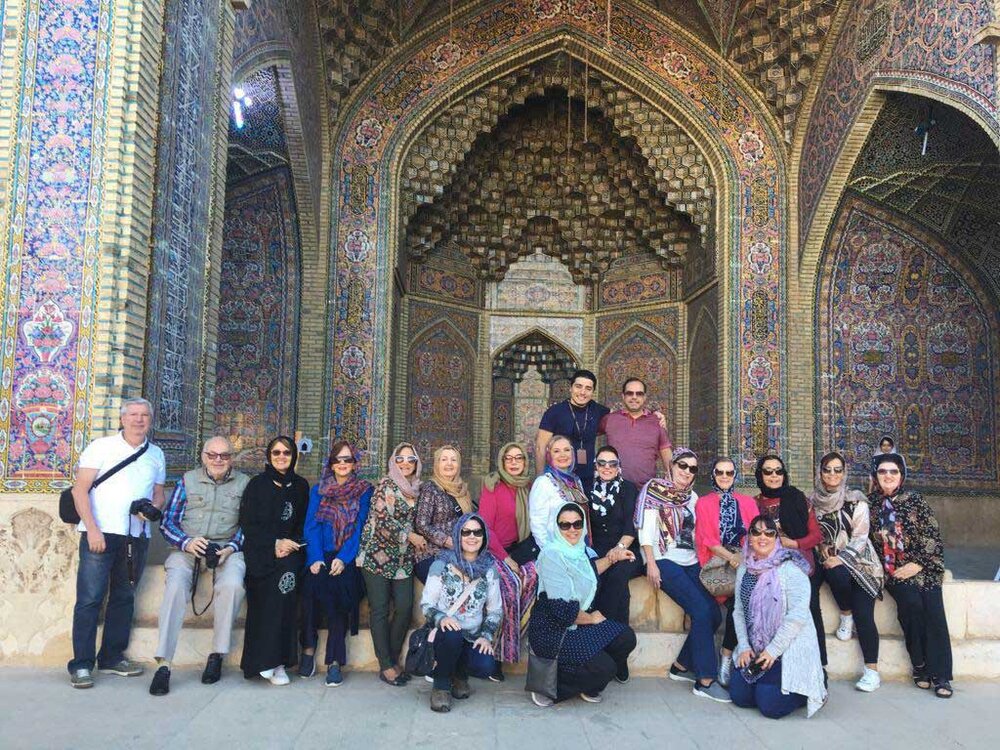
Austrian ambassador visits tourist sites in western Iran

TEHRAN – Vienna’s ambassador to Tehran Stefan Scholz on Tuesday visited several travel attractions in Kermanshah province, western Iran.
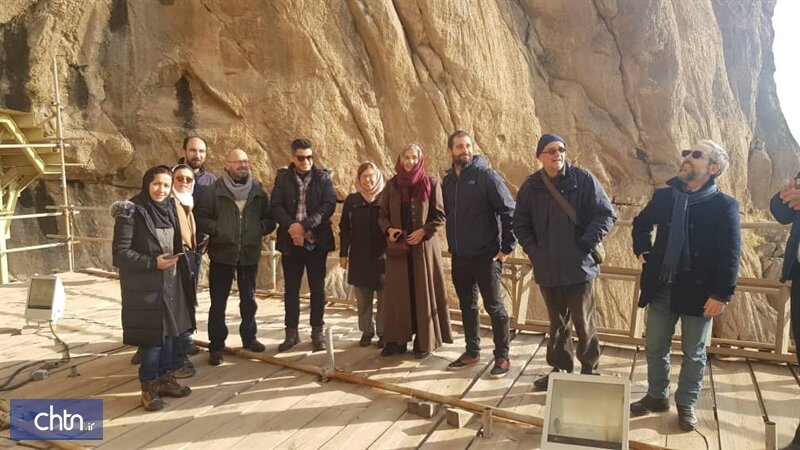
Scholz, who was accompanied by his family and some embassy staff, toured the UNESCO-registered Bisotun and Taq-e Bostan amongst other sites, CHTN reported.
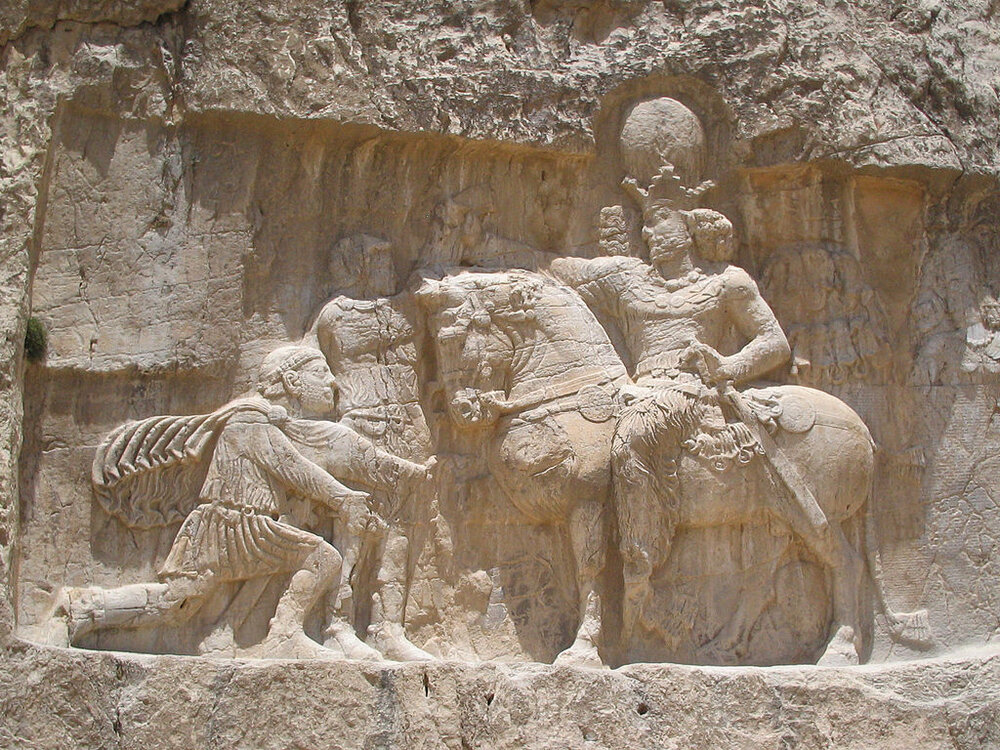
Inscribed into the base of a towering cliff, Taq-e Bostan comprises extraordinary Sassanian bas-reliefs of ancient victorious kings divide opinions, while Bisotun is a patchwork of immense yet impressive life-size carvings depicting the king Darius I and several other figures.  It was the first cuneiform writing that was deciphered in the 19th century.
On the sidelines of this visit, the Austrian envoy expressed his satisfaction over sightseeing in the province, the report said.
Regarding the visits, a local tourism official noted that visits by foreign diplomats and authorities to Kermanshah province’s attractions could motivate more international arrivals in the region.
Scholz said in October that he believes U.S. sanctions against Iran will be no obstacle in the path of Austrian tourists to travel to the Islamic Republic.
“Austrian arrivals in Iran is not affected by the sanctions and threats,” the envoy told ISNA.
In an interview with the Tehran Times in September, the ambassador remained commonalities and the history of relations between the two nations, saying “Austria and Iran have a long history in common. It’s an incredible special profile that distinguishes us from many other countries. We have 700 years of documented contacts, 500 years of partnership and about 60 years of full diplomatic relations.”
In November 2018, the Trump administration reinstated sanctions on Iran, mainly the ones that had been lifted under the 2015 nuclear deal, in order to batter Iran’s economy.

Monday, December 02, 2019

Tehran welcomes Beijing's initiative to revive glory of ancient Silk Road

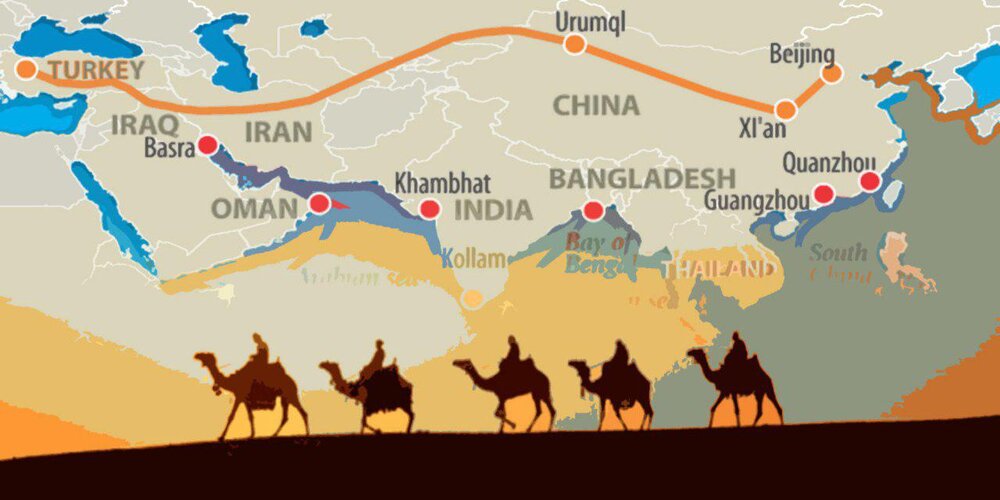
TEHRAN – Iran’s tourism minister Ali-Asghar Mounesan has said Iran backs China’s initiative for reviving the glory of ancient Silk Road, which existed for thousands of years, passing through many different empires, kingdoms, reigns and societies throughout history.
As one of the countries under the China-proposed Belt and Road Initiative (BRI), Iran enables cultural communication between the East and the West.
“The BRI tightly connected many amicable countries along the Silk Road, and I am very glad that Iran could join in the initiative because it is helping to restore the glory of the ancient road,” the Global Times quoted Mounesan as saying on Friday.
The visiting Iranian minister made the remarks on Friday on the sidelines of the third ministerial meeting of the Ancient Civilizations Forum, which was held in Beijing, China.
The minister voiced hope that more Chinese travelers to visit Iran as he pointed at China a huge tourism market.
Back in June, the Iranian government approved a proposal for allowing visa-free entry of the Chinese nationals into the country. The law took effect on July 16. The decision came in response to a joint request by the Foreign Ministry and the then Iran’s Cultural Heritage, Handicrafts and Tourism Organization of Iran (which later transformed into a ministry).
Mounesan also noted that apart from tourism, Iran would also welcome cooperation with China in the preservation and restoration of cultural relics, the report said.
“China and Iran are two countries with ancient civilizations. Both have many rich world heritage sites, and we are open to learning from each other,” Mounesan said, noting that preserving traditional culture in the new era is very important.
Mounesan also voiced support for China’s efforts to enhance its local culture, mentioning the Palace Museum's attempts to develop creative cultural industries to attract young people. Iran is also trying to keep its traditional culture alive through various art forms including film, drama, traditional clothes and handicrafts.
“I am very happy that some [handicraft] experts are young people, and they do like their jobs. In fact, Iran has become one of the largest exporters of handicrafts in the world. Last year, exports of handicrafts in Iran reached $600 million, and we want to set a target of $2 billion.”
Elsewhere in his remarks, the Iranian minister criticized some Western countries that do not have an ancient cultural background but are trying to create a kind of new culture, which is influencing the younger generation and causing traditional culture to be ignored.
“We have realized the phenomenon of cultural hegemony, but fortunately, more and more young people know their root culture. For example, art majors in universities are very popular among students. However, we still need more talks to face the cultural wave.”
UNESCO says that ancient Silk Road has connected civilizations and brought peoples and cultures into contact with each other from across the world for thousands of years, permitting not only an exchange of goods but an interaction of ideas and cultures that has shaped our world today. 

Sunday, December 01, 2019

Iran proposes a world day for ancient civilizations

TEHRAN – Iranian tourism minister on Friday proposed a world day for ancient civilizations as he was addressing the third ministerial meeting of the Ancient Civilizations Forum in Beijing, China.
“Importance and influence of ancient civilizations over the modern world is so great that I believe it should be marked each year as the world day of ancient civilizations,” CHTN quoted Ali-Asghar Mounesan as saying on Friday.
Chaired by the Chinese Minister of Culture and Tourism Luo Shugang, the forum was also attended by ministers from India, Iraq, Egypt, Armenia, Italy, Bolivia, Peru and Greece, as well as a community of international tourism and cultural heritage officials and experts.
“This forum lays a ground for exchanging our views and ideas. And today, I am going to take this opportunity to share my views on [how to make the best] use of cultural heritage for realization of cultural diplomacy. As we all acknowledge, cultural heritage, tourism, and crafts in today’s challenging world are [considered as] important tools for promoting and consolidating peace between [various] nations and communities.”
The Iranian minister explained how ancient civilizations, which abstained from wars and respected for human values, could ultimately ensure peace and security.
“The history testifies that human beings have always faced challenges of their times. [However], both the emergence and ways of dealing with each challenge has been repeated more or less in all historical periods and in all over the world.”
Mounesan added that though, sometimes, some societies have overruled each other’s rights and challenged their own and others’ peace and security, the true victory was achieved by those societies and nations who abstained from militancy and respected for human values.
“Some [of ancient societies and nations] could ensure peace and security and overcome the spirit of hegemony by the means of [practicing mutual] understanding and cultural interaction.”
Mounesan emphasized that in today world “we” are still witnessing differences of opinion and conflicts of interest.
“Devoting attention to cultural and civilizational commonalities can bring countries closer together and bridge gaps between them. So, in my opinion, the world today needs, most of all, cultural closeness, empathy, discourse, and consultation; ones that ancient societies were also benefited from in the past.”
He said that considering cultural heritage from this perspective would be a right solution because it could linking present generations - especially young people to the dignity and identity they have in common, and it can also play an important role in bringing nations together.
Ancient Civilizations Forum at a glance
The formation and evolution of ancient civilizations and their great achievements, ranging from architecture, philosophy and mathematics to medicine and astronomy, just to name a few, laid the foundation for the modern world as we experience it today.
The heirs of ancient civilizations have an obligation, indeed a mission, to preserve and develop this legacy for the benefit of humanity. This is especially important in a period of rapid changes and great uncertainties when international cooperation for global problems like climate change and growing inequalities is of paramount importance.
The aim of the conference was to discuss the importance of setting up an Ancient Civilization Forum, examine best practices of inter-cultural dialogue, describe initiatives and propose joint actions mainly in the fields of academic and scientific research, cultural diplomacy, cyberspace and the new media with an eye on growth and human-centric development.
The main areas of interest according to the Forum are: the impact of ancient civilizations on the modern era; civilization as a soft and smart power; and civilization as an agent of economic growth.

Thursday, November 21, 2019

Explore Iran’s wondrous Persian Gulf islands you’ve never heard of

By Rohan Cahill-Fleury

The Persian Gulf is home to all kinds of undiscovered natural beauty. Islands are not something usually associated with the desert land of Iran. But in this vast and beautiful country, there is a bit of everything. The islands of the Persian Gulf are home to a plethora of geographical wonders, they’re easy to get to, cheap to visit, and have great weather. Yet most people don’t even know they exist.
Just a short 40-minute ferry trip from the south of Iran lie Qeshm and Hormuz islands. Between them, they boast an impressive array of sights and activities that you won’t find in many guidebooks. Qeshm Island has recently been announced as a visa-free zone for all countries, meaning even those who need a tour or special visa for mainland Iran can visit here independently with daily flights from Dubai. So if you love nature, history, culture, camels, and getting off the beaten path, Iran’s islands should be on your radar.
Chakooh canyon
This incredible feat of nature is one of Iran’s hidden gems. Swirling patterns and curved holes created in the rock by wind, water, and erosion make for a surreal scene as you wander through the canyon. Water wells have been dug into the stone and were used by local shepherds as a method of storing rainwater for the long, dry Qeshm summers.
Ancient ship building yard
All around the harbors of southern Iran, you can see the beautiful wooden ships mainly used for transporting goods to and from the United Arab Emirates. On Qeshm Island, you can see where all the action happens at the shipbuilding yard. (Although “action” maybe a bit of a strong word as one of these ships takes three years to complete!)
Depending on when you visit, you can see the ships at different stages of completion, and if they happen to be finished, you can watch the grueling one-week process of rolling the ship over logs and into the ocean.
Rainbow mountains
Hormuz Island is also given the name Rainbow Island because of the incredible colors of sand and rock visible all over the island. A walk through the Rainbow Valley to see the colorful waves through the mountains is a psychedelic experience. Shades of red, orange, and purple you didn’t think possible in rocks spiral together and blast the landscape with a mishmash of color.
So is this beautiful place packed with other tourists trying to get that perfect Insta-image? Not at all; it’s likely you’ll have the place to yourself, making the vibrant landscape feel even more surreal.
Wind towers of Laft village
Wind towers were a traditional method of cooling houses in the desert towns of Iran. The tall, intricate structures stand high over the mud roofs of the town, catching the air and venting it down into the house. Wind towers used to be visible in every village on the island, but Laft is now the only place to see them.
Portuguese castle
Yes, the Portuguese made it to the Persian Gulf too. Built-in the 1500s during the time of Portuguese colonization in the Persian Gulf, Our Lady of the Conception (or the Portuguese Castle) was constructed from the vividly red sand found on Hormuz Island. The roof has collapsed, but the outer walls are still standing and visitors can enter the castle to explore. While the castle architecture isn’t mind-blowing, it is an awesome color and it’s interesting to see the European influence on Iran’s history.
Red sand beach
The beaches of Hormuz Island are beautiful spots for chilling out, enjoying the sunset, and even camping for the night. Every beach has its own special quality, but one of the most impressive beaches is the one surrounded by deep red sand. The crimson path leading to the beach is an unbelievable color, and looking out onto the bay reveals a reddish-pink ocean washing against the shore. True to its red wine color, this sand will stain your feet red for a few days.
The traditional Bandari clothing
Like the rest of Iran, women in the south adhere to the Islamic dress code, and most wear a chador outside the house. But unlike the rest of Iran, these outfits are a celebration of color. The brightly patterned chadors are coupled with dazzling leggings in all colors of the rainbow. The women decorate their leggings themselves and each pair is a display of their artistic ability with sequins, swirls, and intricate designs showcasing their talents. Less common these days is the traditional masks that resemble a burka but also cover the nose and are often decorated in a similar way to the leggings.
Camels of the beach
Through mainland Iran and the Middle East, camels are an everyday sighting in desert areas. But on Qeshm Island, the local camel hangout is next to the sea. If you visit the beaches on Qeshm island, and you should, you’ll most likely be joined by a few of these majestic creatures vying for the best spot to get a tan. On some of the more touristy beaches, you can ride camels along the shore.
Namakdan salt cave
At 6 kilometers long, this salt cave holds the title for the largest salt cave in the world! The interior of the cave is spectacular, with rippling colors along the walls and bright white salt crystals hanging from the ceiling. Walking through the first part is easy and beautiful, but the real sight requires a bit more courage. By crawling through a small gap at the end of the cave, you can reach the grand salt dome. It’s an incredible sight to see, but not recommended for anyone suffering from claustrophobia.
Naz Island
This little island isn’t so much an attraction as the phenomenon which surrounds it, literally. At low tide, from one the nicest white sand beaches of Qeshm, you can walk or even drive across a sandy strip to explore this tiny, rocky island. Enjoy some peaceful moments watching the clear blue waters, but stay too long and you’ll be stranded as the tide rolls in and Naz Island becomes disconnected from the mainland. Make sure you time your visit to get out and back before high tide.
Mangrove forest
Known as “Hara Forest” by the locals, this expansive, tree-filled area is not your average forest. All of the trees are firmly rooted in the shallow salt waters on the north coast of Qeshm Island. The bark extracts the salt and allows the tree to feed on the freshwater, meaning these trees are some of the few that can survive in the hot, dry climate of Southern Iran. The mangrove forest is a bird lover’s paradise and taking a boat trip through the narrow canals is a great way to spot some wildlife.
Hengam Island and dolphin watching
A boat tour to Hengam Island is a great way to spot some of the many pods of dolphins living in the Persian Gulf, especially in the early morning. The tours then continue on to the small town on Hengam Island to see the local life and some souvenir stalls before heading back to the mainland.
(Source: Fodors Travel)

Wednesday, October 16, 2019

Apadana Staircase leads you to mythical arts of Persia

TEHRAN – Apadana Staircase is one of the most striking sections of the UNESCO-registered Persepolis, southern Iran.
The lavishly decorated monument draws hundreds of domestic and foreign visitors every single day, showing them off scenes of mighty Achaemenid Empire (550 –330 BC) and grandeur of its fabled arts.
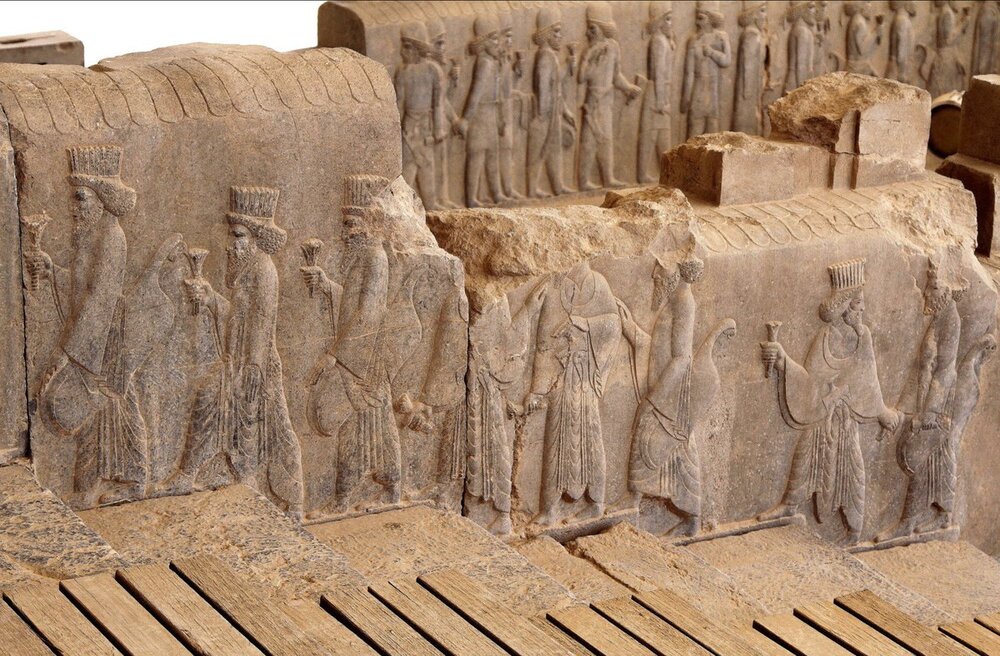
Visitors can observe finely crafted friezes along three major panels each divided into several tiers depicting sovereigns, dignitaries and the then visitors to Persepolis.
The northern panel itself is divided into three tiers of well-preserved bas-relief figures of Persian nobility including the Imperial Guard and the Immortals.
On the upper tier, according to the Lonely Planet, the figures are followed by the royal procession, valets and horses of the king’s chariot; on the lower two tiers these figures precede Persians wearing feather headdresses and Medes in their round caps.
The central panel of the staircase is dominated by traditional symbol of Zoroastrianism which is flanked by two winged lions with human heads.
Elaborate panels at the southern end of the staircase depicts a record of nations, showing 23 delegations bringing their gifts to an Achaemenid king. The Ethiopians begin the frieze in the bottom left corner and are joined by Arabs, Thracians, Kasmiris, Parthians and Cappadocians. The Elamites, Egyptians and Medians occupy the panel at top right. Accompanying this pantheon of guests are an assortment of delicately carved sheep with ram’s horns and curled wool, two-humped Bactrian camels, oxen and mules.
On the northern panel exists inscriptions with fairly stereotypical texts by king Xerxes; one in Old Persian and others in Elamite and Babylonian.
According to livius.org, a website on ancient history written and maintained since 1996 by the Dutch historian Jona Lendering, parts of the inscriptions read:
“A great god is Ahuramazda, who created this earth, who created that heaven, who created man, who created happiness for man, who made Xerxes king: the king of many kings, one ruler of many rulers.”
“I am Xerxes, the great king, king of kings, king of all nations, having various kinds of people, king in this great earth far and wide, the son of king Darius, an Achaemenid.”
In 330 BC, the staircase was miraculously survived the sack of Persepolis by the soldiers of Alexander the Great. The staircase is currently protected by a permanent shelter.
Here is a comment that “R0hanL” from Jordan have posted to TripAdvisor, one of the most popular travel websites in the world:
“Stunning ancient ruins”
The ruins at this site are stunning. Some of the ruins have been covered, which gives you a sense of the shape of buildings-especially when you view the site from up the hill from one of the tombs. On the ground, it does take some imagination to "see" the 100 column palace for example, but a good guide book helps a lot to aid that process. The exceptionally carved friezes on the Apadana Staircase, Xerxes Gateway and Royal Apartments were exquisite. We also walked to both the tombs up on the hill, which were very similar to the tombs I had seen in Jordan at Petra. It was very hot the afternoon we were there, so ensure you bring plenty of water as the place to buy water in the site was very removed from the main part of the ruins itself. In all, we thoroughly enjoyed walking through this timeless place.

Tuesday, September 24, 2019

Ancient Iran: a glimpse of Persian art and architecture under Sassanids

TEHRAN – The Sassanid era (224 CE–651) is of very high importance in the history of Iran. Under Sassanids, Persian art and architecture experienced a general renaissance.
Architecture often took grandiose proportions such as palaces at Ctesiphon, Firuzabad, and Sarvestan that are amongst highlights of the ensemble.
Crafts such as metalwork and gem-engraving grew highly sophisticated, yet scholarship was encouraged by the state. In those years, works from both the East and West were translated into Pahlavi, the language of the Sassanians.
Rock-carved sculptures and bas-reliefs on abrupt limestone cliffs are widely deemed as characteristics and striking relics of the Sassanian art, top examples of which can be traced at Bishapur, Naqsh-e Rostam and Naqsh-e Rajab in southern Iran.
In 2018, UNESCO added an ensemble of Sassanian historical cities in southern Iran -- titled “Sassanid Archaeological Landscape of Fars Region”-- to its World Heritage list.
The ensemble is comprised of eight archaeological sites situated in three geographical parts of Firuzabad, Bishapur and Sarvestan. It reflects the optimized utilization of natural topography and bears witness to the influence of Achaemenid and Parthian cultural traditions and of Roman art, which later had a significant impact on the architecture and artistic styles of the Islamic era.
Efforts made by the Sassanids also yield a revival of Iranian nationalism took place, for example, Zoroastrianism was declared as the state religion.
The dynasty evolved by Ardashir I and was destroyed by the Arabs during a period of 637 to 651. The dynasty was named after Sasan, an ancestor of Ardashir I.
Under his leadership who reigned from 224 to 241, the Sassanians overthrew the Parthians and created an empire that was constantly changing in size as it reacted to Rome and Byzantium to the west and to the Kushans and Hephthalites to the east, according to Britannica Encyclopedia.
At the time of Shapur I (reigned 241 CE–272), the empire stretched from Sogdiana and Iberia (Georgia) in the north to the Mazun region of Arabia in the south; in the east it extended to the Indus River and in the west to the upper Tigris and Euphrates river valleys.
Bust of a Sasanian king, most likely Shapur II
According to UNESCO, the ancient cities of Ardashir Khurreh and Bishapur include the most significant remaining testimonies of the earliest moments of the Sassanid Empire, the commencement under Ardashir I and the establishment of power under both Ardashir I and his successor Shapur I.
“The architecture of the Sassanid monuments in the property further illustrates early examples of construction of domes with squinches on square spaces, such as in the chahar-taq buildings, where the four sides of the square room show arched openings: this architectural form turned into the most typical form of Sassanid religious architecture, relating closely to the expansion and stabilization of Zoroastrianism under Sassanid reign and continuing during the Islamic era thanks to its usage in religious and holy buildings such as mosques and tombs,” the UN cultural body say in its website.
The Sassanid archaeological landscape also represents a highly efficient system of land use and strategic utilization of natural topography in the creation of the earliest cultural centers of the Sassanid civilization.

Friday, August 02, 2019

Belgian globetrotters share us their new perception of Iran

By Afshin Majlesi, Mehdi Sepahvand

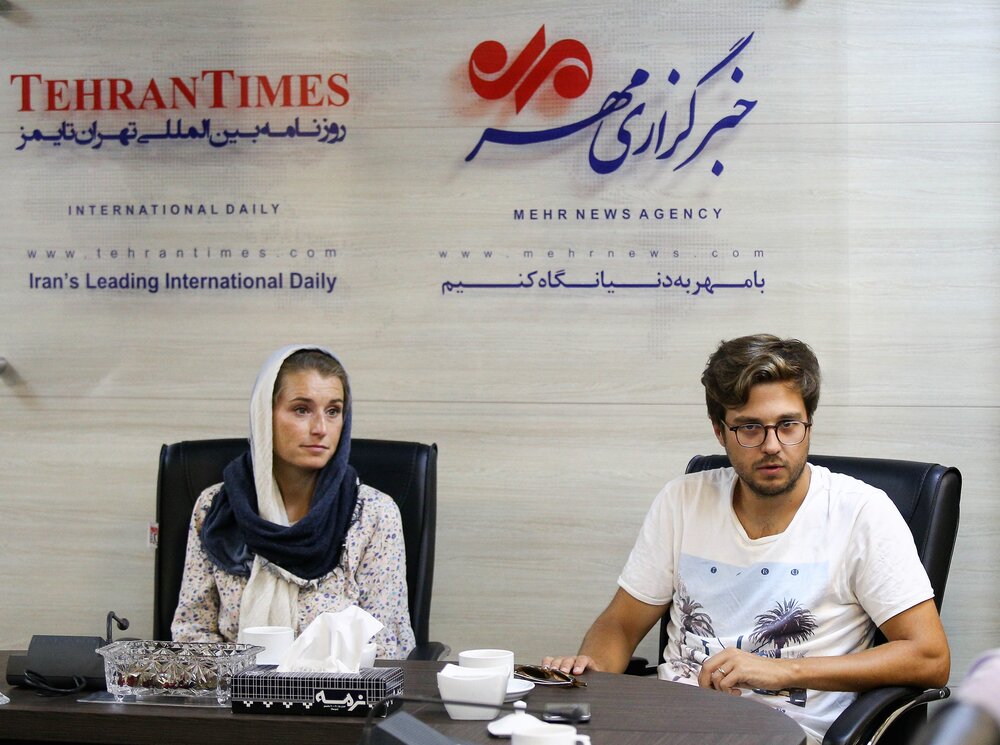
TEHRAN – Last Monday, a Belgian couple, who are on an overland journey to China, paid a visit to The Tehran Times, where they let us share their views, experiences and feelings about Iran in a cozy chat with the daily.
Ciara Reid and Lennart Gheysens in particular noted that the hospitality of Iranian people was beyond their expectations, saying “One of the reasons that we love Iran so much is the hospitality and kindness of the people.”
Western media don’t help very much to give a clear picture
“I think that is what a lot of other nationalities can take as an example and learn from it,” Ciara said.
When it came to driving in Iran, Lennart, however, didn’t give a good score, saying he had heard that Georgian people had earned a bad reputation for driving carelessly, but he thinks that the situation is even worse in Iran!
The couple also showed us various parts of their camper van, which was like a well-made miniature home equipped with almost everything including a bed, a dining table, chairs, a stove, sets of closets, cabinets, a toilet, a shower, a sink, electronic equipment and other amenities! There were powerful solar panels to charge the batteries that powered their moving home.
The transcript of the interview is given below:
Is this the first time you’re visiting Iran?
Lennart:  No, the second time. We visited in 2016 and that was only Iran that we visited [during that trip].
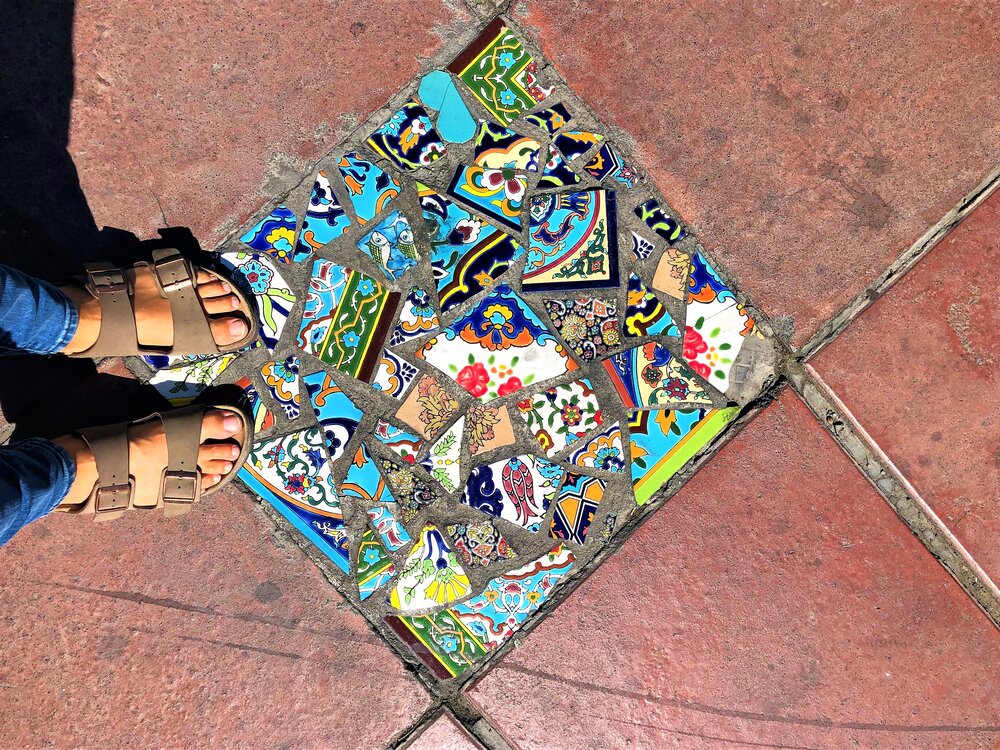
Ciara contemplates broken Iranian mosaics used to fix a missing tile (Photo: Ciara Reid, for The Tehran Times, July 29, 2019)
 
Ciara: We visited Iran in 2016 in a trip that was recommended by a friend of ours. And when we were here we really fell in love with the country. We never had that [experience] before. Everything is so beautiful and people are so friendly. And at that time we said we definitely want to go [come] back and then maybe all the different countries around Iran, maybe they’re beautiful too. And European people usually don’t get to see them so that’s why we decided to go on a trip along the Silk Road so it was really our trip in Iran in 2016 that sparked the idea of our current trip.
Please tell us more about the itinerary of your trip.
Lennart: We drove from Belgium quite fast through all the European countries like the Netherlands, Germany, Austria, Slovenia, Croatia, and Bosnia because we want to focus on the Caucasus region and then central Asia. We drove from Croatia to Albania, Montenegro, and then Greece to Turkey, where actually the real trip started for us. We started to take things slower. So we are driving from Belgium to China.
TT: Some foreign travelers say that driving in Iran resembles a video game. What do you say about that?
Lennart: Yes, it is. We had heard that Georgia is very bad [when it comes to reckless driving] but I think in Iran it’s even worse. But for us, our big car helps us to somehow avoid accidents. [Our rule is] to try to drive like a local… because in Europe, this is your lane and you cannot drive over it or whatever, but here….
If this happens in Europe, they will just leave you at the side saying it’s your own fault, no one will help you. So we told this story to people back home where a lot of people were saying us “Oh Iran is dangerous”! But for me it is one of the safest countries
TT: What about the quality of roads and highways in Iran?
Lennart: Actually, very good, I mean, for me, it’s comparable with European roads… actually the roads in Iran are quite good, they are almost flat and smooth.
TT: What’s your opinion about the Iranian hospitality?
Lennart: Well, it’s famous for a reason, because it’s true, one of the reasons that we love Iran so much is the hospitality and kindness of the people, like, the first time that we got here in 2016, we were in a taxi and the taxi driver invited us to his home and even though he couldn’t speak English, we were talking on Google Translate to each other.
Ciara and Lennart speak to The Tehran Times (Photo: Maryam Kamyab, July 29,  2019)
It was very nice to meet his wife and their toddler and a friend of whom we also met in Mashhad. We’re still friends now and we are staying with his family here in Tehran and I mean [while in Iran] everybody likes to help you.
 For example, all of a sudden we were in Tabriz and one gas station after the next said we don’t have diesel, we don’t have diesel, and we were like “Oh my God!”
You know, our car, runs on diesel -- not a lot of cars running on diesel in here, only the trucks and buses.
Ciara:  And we posted something on Instagram and said oh we’re scared, we don’t have any more diesel…. And then some Iranian people picked it up and posted their own [massages] on our Instagram page and suddenly we were like flooded with…; “Do you still need diesel?”, “You can get it there!”, …, “I can help you!”, and “We have diesel!”
And we posted something on Instagram and said oh we’re scared…. Some ten people reached out to us that we didn’t know… just out of kindness
Some ten people reached out to us that we didn’t know… just out of the kindness saying oh these are foreigners, they are in trouble, we can help!
Yes, this is a phenomenon that Iran is famous for.
Ciara:  I think that is what a lot of other nationalities can take as an example and learn from it. One time in 2016, we wanted to go to Yazd and in the bus station we went to different offices saying Yazd, Yazd, Yazd -- we were in Shiraz at that time -- and we [finally] took a wrong bus!
On the Google Map we found the bus was going all the way to the south so we asked the driver, saying Yazd? And the driver said, Bandar Abbas, Bandar Abbas! And we were like “Uh-oh!”
The driver pulled to the side, a bus full of people just stopped to the side. The driver said get out! We thought what we were going to do with our packs… we were thinking like “Oh my God! They want to leave us here on the side of the road!”
Then a man showed up. He said “Come with me, come with me!” And he drove us to a police station were there were a lot of taxies and he even paid us the taxi to get back to the bus station and we were very excited.
If this happens in Europe, they will just leave you at the side saying it’s your own fault, no one will help you. So we told this story to people back home where a lot of people were saying us “Oh Iran is dangerous”! But for me it is one of the safest countries. 
Have you selected a motto or a theme for your whole journey?
Ciara: Not really a theme but we actually want to see more of the countries along the Silk Road, so the “Silk Road” maybe our theme. We prefer to focus more on nature than cities during our journey!
We are also very amazed of the diversity of nature in Iran.
Tell us more about your portable home!
Lennart: We chose a Mercedes [camper] because it’s easy to find parts for Mercedes everywhere and because it’s also very reliable so we bought it second hand in Holland…. We removed everything from its back and started to modify everything from electricity to water and heating because I am a handy guy we did all the carpentry, installing a solar panel, air vents, curtains …. Everything!
And now, a tough question! Before your first visit Iran in 2016, you had a perception of the country, whatever it was, and after you felt the country, encountering its people, you developed another perception. How do you compare them, the first which was mainly shaped by Western media, and the one you have developed in person?
Lennart: Yeah, in the beginning for us, Iran was not very well known, just a Middle Eastern country, some said don’t go there because it’s dangerous …. So in the beginning we had a perception that it was very dangerous and also some (European) people didn’t know the difference between Iraq and Iran and the Western media don’t help very much to give a clear picture.
Ciara, Lennart and Tehran Times correspondents stand by the couple’s camper van (Photo: Maryam Kamyab, July 29,  2019)
But then some friends of ours visited Iran and we read a lot about it ourselves and yeah we saw that its people are very friendly, it is so safe and we like it so much.
Ciara: I think a funny anecdote is that we told our family and friends that we wanted to travel to Iran, everybody said “Oh you’re crazy! It’s very dangerous, you wanna get killed!”
And we said “No! It’s safe, it’s safe,” and then when we arrived in Iran we heard the bombings and attacks in Paris and an Iranian taxi driver asked where we are from and we said we are from Europe. “Europe? It’s so dangerous!” the driver said. So when we were back home in Belgium and people said “Oh, how was your trip to Iran?” we said, “Well it was actually much safer than it was in Europe!”

Thursday, July 18, 2019

Iran travel sector: Ups and downs since U.S. reimposed sanctions

By Afshin Majlesi

TEHRAN – Last November, the Trump administration reinstated sanctions on Iran, mainly the ones that had been lifted under the 2015 nuclear deal, in order to batter Iran’s economy, however, according to official data, they have so far failed to lessen foreign arrivals to the Islamic Republic.
Although the sanctions together with anti-Iran propaganda campaigns have decreased Western tourists but the country has managed to compensate and even improve by doing its best to attract more from neighboring states.
When it comes to outbound tourism, the effect of sanctions are seemingly more obvious as sharp rises in the value of foreign currencies against rial have pushed up the costs of traveling in the country.
A total of 1,759,749 Iranians traveled abroad in the first quarter of the current Iranian calendar year (March 21-June 21), indicating a 6.5% decrease compared with 1,882,414 outbound tourists in the same period last year, financialtribune.com reported in an article released on Monday.
“Nearly 7.8 million foreign nationals visited Iran over the past year that shows a 52.5 percent increase year on year. The country hosted 5.1 million travelers in 1396 (March 2017-18),” deputy tourism chief Vali Teymouri said in April.
“One of the shortcomings in Iran’s tourism industry is the government’s issuance of work permits to travel agencies without taking into consideration the number of inbound and outbound tourists. Less than 5% of travel agencies in Iran are active in organizing inbound tours, whereas 95% of them have focused on outbound tourism,” Hormatollah Rafiei, the head of Travel Agents Guild Association, said.
To tackle such harms, the association has decided to set up a committee tasked with curtailing the number of travel agencies’ closure by channeling them toward conducting more inbound tours.
The 2019 Travel Risk Map, which shows the risk level around the world, puts Iran among countries with “insignificant risk”, a category where the UK, Denmark, Switzerland, Norway, and Finland are placed in
“In two months, between 30 and 50 agencies are going to direct their activities toward attracting tourists from 10 countries, including Iraq, Afghanistan, Turkey, Pakistan, Turkmenistan, Georgia, Armenia and China,” Rafiei added.
Regarding to the downfall of potential Western visitors, Skift Inc., a New York City headquartered media company that provides news, research, and marketing services for the travel industry, said in July article that “Despite setbacks, [international] tour operators are optimistic about long-term growth in tourism to Iran, which in recent years has stepped up efforts to increase international visitation and has the stated goal of attracting 20 million annual visitors by 2025.
While the U.S. State Department has long issued strong advisories against traveling to Iran and despite tensions between the two countries, tour operators who spoke with Skift strongly disagree, maintaining that Iran has proven to be a safe and remarkably hospitable place for travelers, including Americans.
“It is a country that is often portrayed as unwelcoming, but the reality is quite the opposite,” said Jenny Gray, the global product and operations manager of the Australia-based Intrepid Travel.
“Iranians are warm, friendly and eager to show off their country to foreigners. The feedback from our travelers is a testament to this.”
“Once they [Iranian authorities] have been approved for entry [issuing visas], people are welcomed warmly—we’ve never encountered a problem or even a cold shoulder,” said Robin Pollak, the president of Journeys International, which is offering Iran tours since 2015.
To encourage and reassure sightseers, the Iranian government has decided not to stamp the passports of foreign tourists to help them skip the U.S. travel ban
“People in Iran are very curious about visitors from a culture that is off-limits to them. They understand that American visitors do not reflect the way America is portrayed to them by their government,” she added.
To compensate the fall, Iran has turned to ease traveling for its target markets which are people from Iraq, China, Republic of Azerbaijan, Afghanistan, Turkey, Pakistan, and several other countries who arrive in Iran for medical, pilgrimage and cultural heritage purposes.
Some two million Iraqi nationals visited Iran during the first seven months of the past Iranian calendar year (ended on March 20), constituting Iran’s largest source of inbound passengers.
Mousa Tabatabai, assistant to Iran’s ambassador to Baghdad, told Al-Monitor in early July, “The number of Iraqis arriving in Iran for religious tourism and treatment is growing bigger on a yearly basis. This is added to those who travel to Iran to see their relatives. The visas are issued depending on the demand.”
“There are 2-3 million Iraqis arriving in Iran every year. Such a figure will more likely increase as the visas have become free of charge between the two countries,” Tabatabai explained.
Iran also eyes to have a bigger share of Chinese tourism, as it, in a unilateral measure, recently approved to waive the visa requirement for the Chinese passport holders.
To encourage and reassure sightseers, the Iranian government has decided not to stamp the passports of foreign tourists to help them skip the U.S. travel ban.
“President Hassan Rouhani assigned the airport police not to stamp passports of foreign tourists. Taking into consideration the fact that America is practicing the economic terrorism plans, and people who travel to Iran may feel a bit afraid that they may be pressured by America,” Government spokesman Ali Rabiei said earlier this month. He added that this can invite more tourists to Iran.
The World Travel & Tourism Council’s latest report indicates that Iraq was the main source of tourism for Iran in 2018, as Iraqis constituted 24% of all inbound visitors. Other major sources were Azerbaijan (17%), Turkey (8%), Pakistan (4%) and Bahrain (2%). The remaining 46% came from the rest of the world.
WTTC’s review of tourism spending in Iran in 2018 shows 93% of visitors spent for leisure purposes while only 7% spent on business purposes. The council ranked Iran 20th from among 185 countries in its 2017 power ranking, which evaluates countries in terms of absolute size growth measured in U.S. dollars in the field of travel and tourism.
The 2019 Travel Risk Map, which shows the risk level around the world, puts Iran among countries with “insignificant risk”, a category where the UK, Denmark, Switzerland, Norway, and Finland are placed in.
The country boasts hundreds of historical sites such as bazaars, museums, mosques, bridges, bathhouses, madrasas, mausoleums, churches, towers, and mansions, of which 22 being inscribed on the UNESCO World Heritage list.
Currently, Iran’s constant efforts to recover the value of Iranian rial against the U.S. dollar have paid off. The national currency is strengthened about eight percent in the open market over the past month to 125,450 per dollar, traders in Tehran, according to prices compiled by Bloomberg from foreign-exchange websites.
Travel associates see better prospects for tourism sector of the country as policies for shielding the currency against the U.S. sanctions are taking effect.

Tuesday, July 16, 2019

Islamic architecture? Sure, but Na’in’s old mosque offers so much more

By Afshin Majlesi


Well regarded for its hospitable people, handicrafts, and ancient qanats (manmade subterranean aqueducts that brings water from the mountains), Na’in dates back to nearly 2000 years, which makes it one of the oldest continuously settled towns in the Iranian plateau.
A tour to the oasis city seems to be enjoyable and well worth if you are a fan of Islamic architecture. Na’in harbors one of the oldest mosques in the Islamic Republic.  
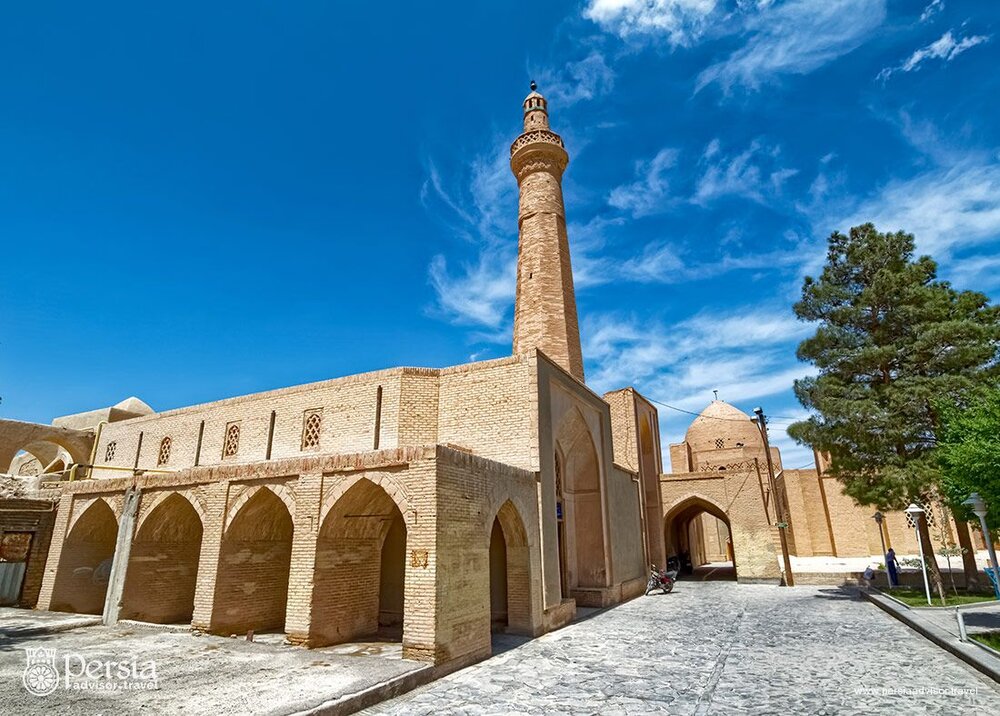
Originally constructed in c. tenth century, Jameh Mosque of Na’in is was one of the first mosques built in Iran and is unusual in that it doesn’t conform to the usual four-iwan pattern of its time (for instance Jameh Mosque of Isfahan).
Though may seem very modest at the first sight, the exterior facade and minaret are austerely beautiful and many parts of the interior (including the mihrab) are decorated with finely detailed stucco work.
Mihrab is a semicircular niche in the wall of a mosque that points out the qibla, the direction of the Kaaba in Mecca and hence the direction that Muslims should face when praying.
The mosque has a central rectangular courtyard that is surrounded with hypostyles on three sides. At one of these hypostyles the mihrab of the mosque is located.
Further interesting features include the exquisitely carved wooden minbar (a pulpit where the imam -- prayer leader -- stands to deliver sermons), which bears an inscription that identifies as being 700 years old.
There is also an underground prayer hall, designed to keep the faithful cool in summer and warm in winter. Alabaster casements have been set in the ceiling of this dug-out basement, which allows natural light to come through.
An access to the qanat below the mosque supplies water to the ablutions area.
The terms “Jameh Mosque” or “Masjed-e Jameh” or “Friday Mosque” is used in Iran for a grand communal mosque where mandatory Friday prayers are performed: the phrase is used in other Muslim countries but only in Iran does it designate this purpose.
Na’in lies 170 km north of Yazd and 140 km east of Isfahan. Like much of the Iranian plateau, it has a desert climate, with a maximum temperature of 41 °C in summer, and a minimum of -9 °C in winter.
During the ancient times the city was at the junction of a desert road that connected Tabas and Mashhad, it used to be an important crossroad on converging trade routes since Sassanid times. Na’in was known for its ceramics and textiles; today it's primarily known for fine hand-knotted carpets and for hand-loomed camel-wool cloaks, which are produced in the neighboring villages.
Under travelers’ eyes
Here is a select of comments that visitors to the mosque have posted to TripAdvisor, one of the most popular travel websites in the world:
“Great and different”
If you travel around Isfahan and Kerman and Yazd provinces defiantly you’ll see variety of mosques with almost the same design but this one is totally different .Different material different interior design. (Shervin1359 from Huntington Beach, California; Reviewed July 2019)
“At the third oldest mosque in Iran”
While travelling from Yazd to Isfahan, the old city of Na’in will be certainly on your way. A short stop and a visit to the “third” oldest mosque in Iran: the Jame Mosque of Na’in! This mosque dates probably from the 9th or 10th centuries and was built in the famous "Khorasani" architectural style, which combines perfectly Islamic and pre-Islamic influences. It is still used as a congregational mosque! Don't miss the pulpit, the wood and stone carvings, the alabaster works, the central courtyard with beautiful porches, the fantastic brickworks and the 28m high minaret. Visit also its basement, with tunnels and water channels, which is believed to have housed - centuries ago - a Zoroastrian Fire Temple. Just amazing! But remember, the breathtaking mosques are way ahead, right at your next stop: the awesome city of Isfahan. Enjoy! (LuizDutraNeto from Rio de Janeiro, RJ; Reviewed February 2019)
“Historic aspect of Iran”
This is one of the oldest mosques of Iran and one of the oldest mosques in the world considering it is from the 8th century. It is filled with history. There are some ruins next to it, probably from the same era. No entrance fee. If you are going from Isfahan to Yazd, Na’in is on the way. (JeLundgren from Abu Dhabi, United Arab Emirates; Reviewed October 2018)
“One of the oldest mosques in Iran”
Historically very interesting. It was originally built as a Sunni mosque and has no dome and (originally) no minarets. The main courtyard of the mosque features several half-meter squares of alabaster the purpose of which is only clear when one descends into the cool subterranean part of the mosque which it lit by the sun passing through the alabaster squares. (MikelMarshall from Valdemorillo, Spain; Reviewed August 2018)

Tuesday, June 25, 2019

Vank Cathedral: A gorgeous fusion of Islamic, Armenian architecture

TEHRAN – The centuries-old Vank Cathedral (locally called Kelisa-ye Vank) is widely referred to as an everlasting masterpiece of architecture.
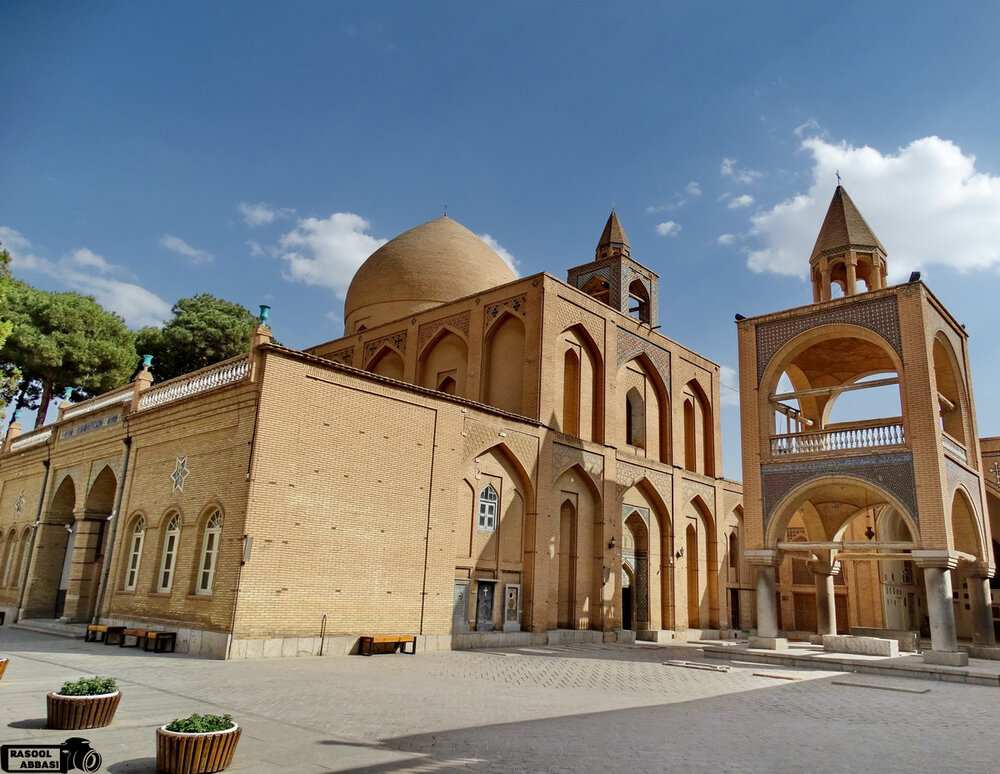
Located in New Jolfa district of Isfahan, central Iran, the Cathedral harmoniously blends Islamic motifs and elements with those of Armenians.  Vank means “monastery” or “convent” in the Armenian language.
Built in the first half of the 17th century, with the encouragement of the Safavid rulers, Kelisa-ye Vank is a historic focal point of the Armenian Church in Iran.
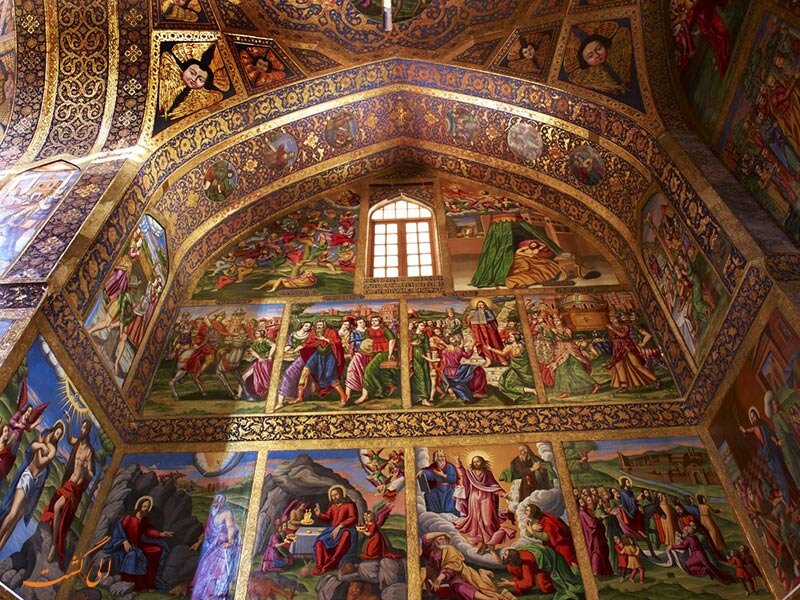
The cathedral consists of a domed sanctuary, much like an Iranian mosque, but with the significant addition of a semi-octagonal apse and raised chancel usually seen in western churches.
Its sumptuous interior is richly ornamented with restored wall paintings full of life and color, including gruesome martyrdoms and pantomime demons. The ceiling above the entrance is painted with delicate floral motifs in the style of Persian miniature.
The cathedral’s exteriors are in relatively modern brickwork and are exceptionally plain compared to its elaborately decorated interior.
There is also a museum exhibiting a fabulous collection of illustrated gospels and Bibles, some dating back as far as the 10th century.
Hundreds of Armenians, who migrated to Isfahan during Ottoman–Safavid War (1603–18), contributed to the cathedral being completed.
Some say that the varying fortunes and independence of this suburb across the Zayande River and its eclectic mix of European missionaries, mercenaries and travelers can be traced almost chronologically in the cathedral’s combination of building styles and contrasts in its external and internal architectural treatment.
The construction is said to begin in 1606 by the first arrivals being completed with major alterations to design between 1655 and 1664 under the supervision of Archbishop David.
The Armenian quarter of Isfahan dates from the time of Shah Abbas I, who transported a colony of Christians from the town of Jolfa (now on Iran’s northern border) en masse, and named the village ‘New Jolfa’. Shah Abbas sought their skills as merchants, entrepreneurs and artists and he ensured that their religious freedom was respected – albeit at a distance from the city’s Islamic center. At one time over 42,000 Armenian Christians reportedly lived here.
Many visitors visit the cathedral in the afternoon and stay on in New Jolfa to enjoy dinner in the relatively liberal village atmosphere.
Isfahan is Iran’s top tourist destination for good reasons. Its profusion of tree-lined boulevards, Persian gardens and important Islamic buildings gives it a visual appeal unmatched by any other Iranian city, and the many artisans working here underpin its reputation as a living museum of traditional culture.
Here is a select of comments that visitors to the cathedral have posted to TripAdvisor, one of the most popular travel websites in the world:
"Beautiful piece of history"
A not-to-be-missed visit in Isfahan. A beautiful piece of art and a nice museum. Useful to understand the construction of the city and yet another part of Armenian history in the world. (Sibtravelling form Brussels, Belgium; reviewed April 2019)
“Change from the mosques”
This cathedral is in the Armenian quarter of the city next door to the Armenian museum. It’s small for a cathedral but has some interesting art work and visiting the museum afterwards rounds out the backstory of Armenian migration to Iran. (Casa62 from Brisbane, Australia; reviewed April 2019)
“Worth your time”
Fabulous settings and artworks, museum not really inspiring. Though there are great funky coffee shops in the area. Suggest you take a stroll along the river. (Casanovawinner19 from London; reviewed April 2019)
“I expected more”
Armenian cathedral in Isfahan. I didn’t expect there is payment for visiting this holy place. Entrance fee is 50 000 toman. (Edin Krnic from Podgorica, Montenegro; reviewed May 2019)
"The awesome Armenian Cathedral of Isfahan!"
From its simple brick walls, one cannot imagine the beauty of its interior: a domed ceiling, several frescoes, gilded carvings and rich tileworks. On its courtyard, a bell tower, several graves, a stone cross, a library, a museum and a memorial to the 1915 Armenian Genocide. Combine your visit with lunch or snacks at any of the several cafés and restaurant of nearby “Jolfa Square”. Enjoy! (LuizDutraNeto from Rio de Janeiro, Brazil; reviewed February 19, 2019)