Showing posts with label Silk Road. Show all posts

Monday, December 02, 2019

Tehran welcomes Beijing's initiative to revive glory of ancient Silk Road

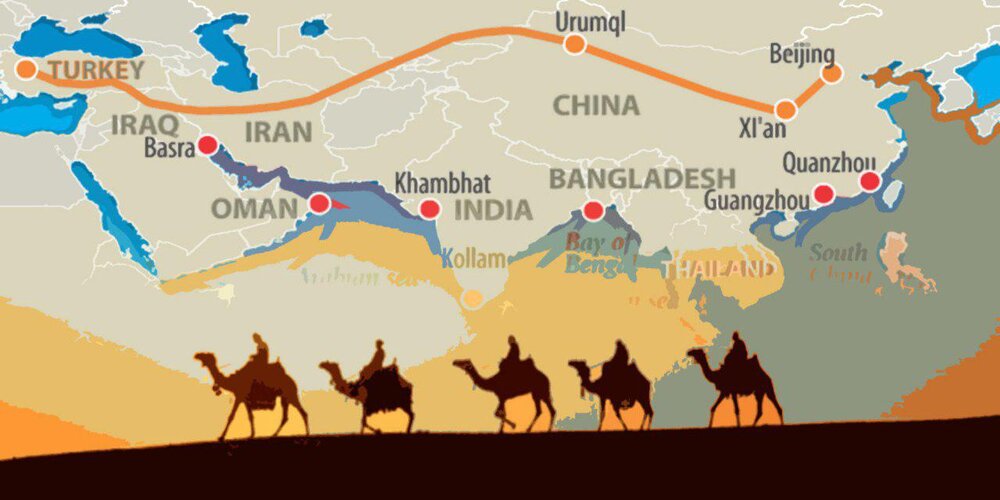
TEHRAN – Iran’s tourism minister Ali-Asghar Mounesan has said Iran backs China’s initiative for reviving the glory of ancient Silk Road, which existed for thousands of years, passing through many different empires, kingdoms, reigns and societies throughout history.
As one of the countries under the China-proposed Belt and Road Initiative (BRI), Iran enables cultural communication between the East and the West.
“The BRI tightly connected many amicable countries along the Silk Road, and I am very glad that Iran could join in the initiative because it is helping to restore the glory of the ancient road,” the Global Times quoted Mounesan as saying on Friday.
The visiting Iranian minister made the remarks on Friday on the sidelines of the third ministerial meeting of the Ancient Civilizations Forum, which was held in Beijing, China.
The minister voiced hope that more Chinese travelers to visit Iran as he pointed at China a huge tourism market.
Back in June, the Iranian government approved a proposal for allowing visa-free entry of the Chinese nationals into the country. The law took effect on July 16. The decision came in response to a joint request by the Foreign Ministry and the then Iran’s Cultural Heritage, Handicrafts and Tourism Organization of Iran (which later transformed into a ministry).
Mounesan also noted that apart from tourism, Iran would also welcome cooperation with China in the preservation and restoration of cultural relics, the report said.
“China and Iran are two countries with ancient civilizations. Both have many rich world heritage sites, and we are open to learning from each other,” Mounesan said, noting that preserving traditional culture in the new era is very important.
Mounesan also voiced support for China’s efforts to enhance its local culture, mentioning the Palace Museum's attempts to develop creative cultural industries to attract young people. Iran is also trying to keep its traditional culture alive through various art forms including film, drama, traditional clothes and handicrafts.
“I am very happy that some [handicraft] experts are young people, and they do like their jobs. In fact, Iran has become one of the largest exporters of handicrafts in the world. Last year, exports of handicrafts in Iran reached $600 million, and we want to set a target of $2 billion.”
Elsewhere in his remarks, the Iranian minister criticized some Western countries that do not have an ancient cultural background but are trying to create a kind of new culture, which is influencing the younger generation and causing traditional culture to be ignored.
“We have realized the phenomenon of cultural hegemony, but fortunately, more and more young people know their root culture. For example, art majors in universities are very popular among students. However, we still need more talks to face the cultural wave.”
UNESCO says that ancient Silk Road has connected civilizations and brought peoples and cultures into contact with each other from across the world for thousands of years, permitting not only an exchange of goods but an interaction of ideas and cultures that has shaped our world today. 

Saturday, August 03, 2019

Tabriz historic bazaar complex: A melting pot of tradition, trade, and culture

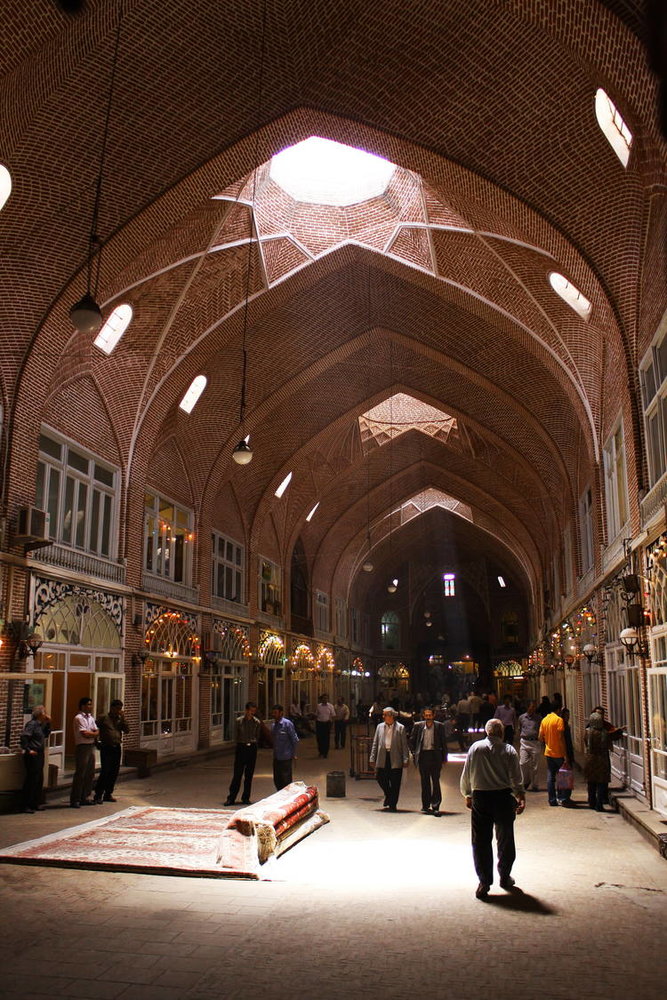
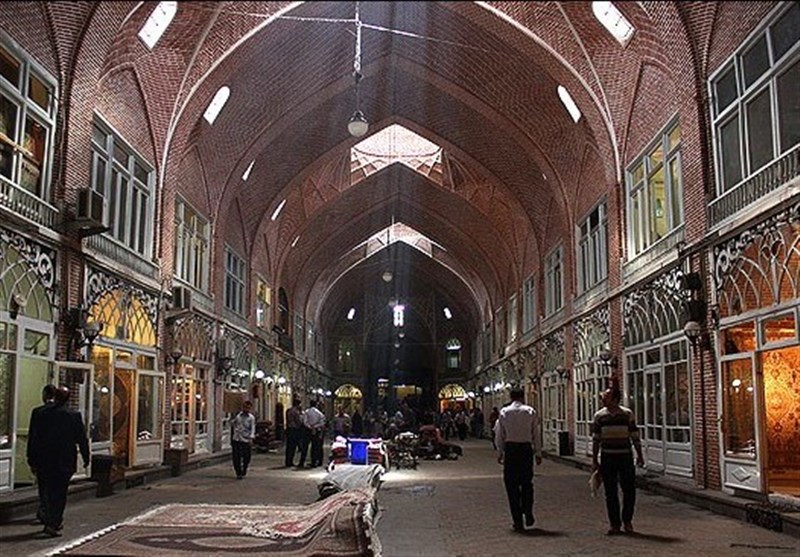
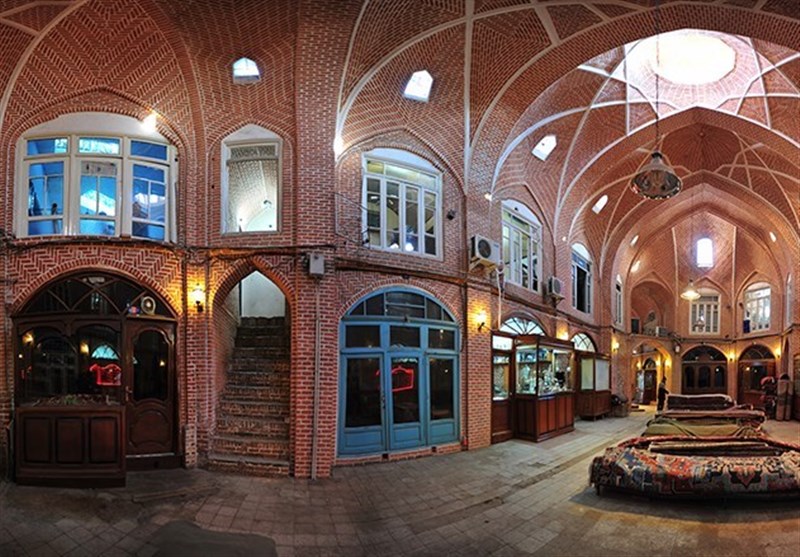
TEHRAN - Tabriz historic bazaar complex, a labyrinth of interconnected covered passages that adds up to about 5 kms, has been a melting pot of cultural exchange since antiquity and once a hot spot on the ancient Silk Road.
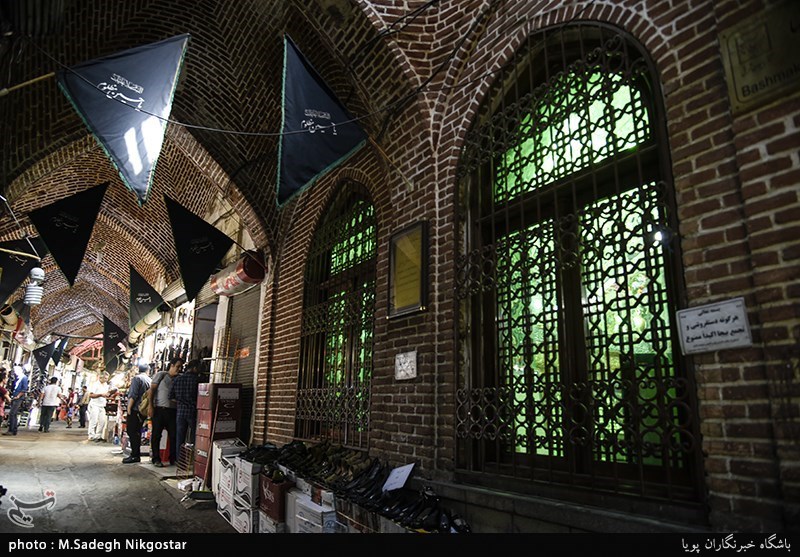
The bazaar, which has been inscribed on the UNESCO World Heritage list, embraces countless shops, over 20 caravanserais and inns, some 20 vast domed halls, bathhouses, and mosques, as well as other brick structures and enclosed spaces for different functions.
Tabriz is the capital of northwestern province of East Azarbaijan.
The history of the Tabriz bazaar dates back to over a millennium ago, however majority of fine brick vaults that capture most visitor’s eyes date from the 15th century.
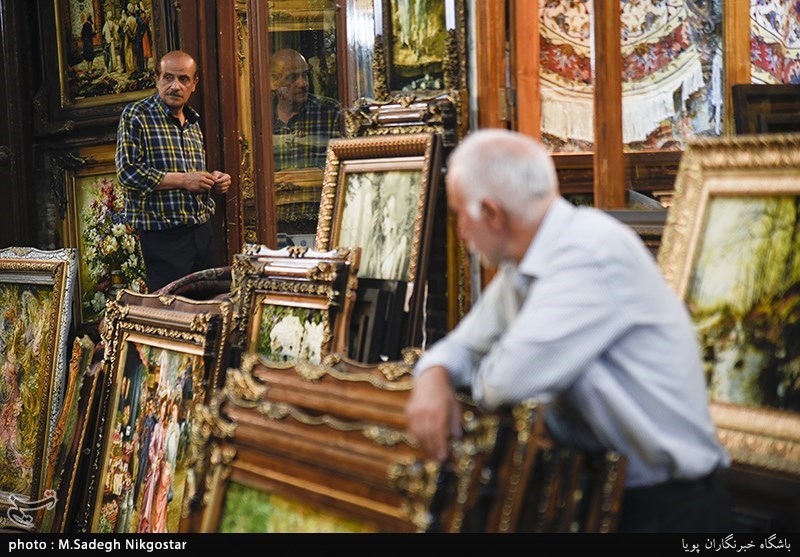
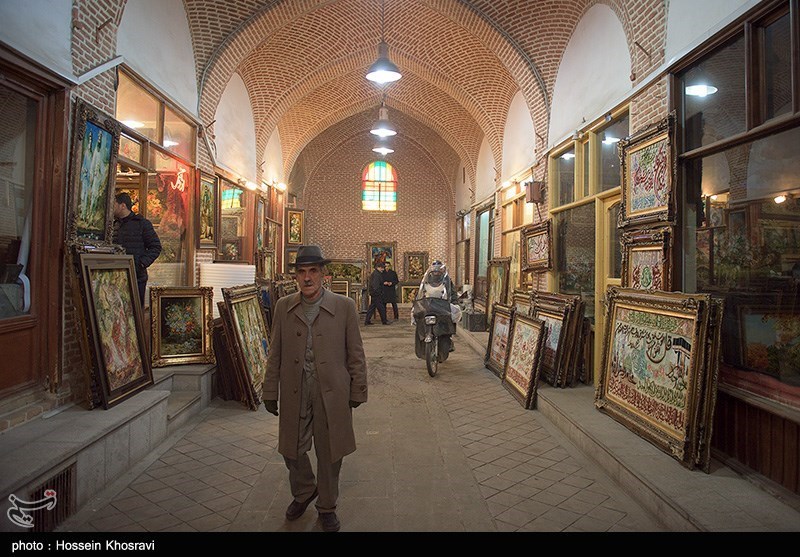
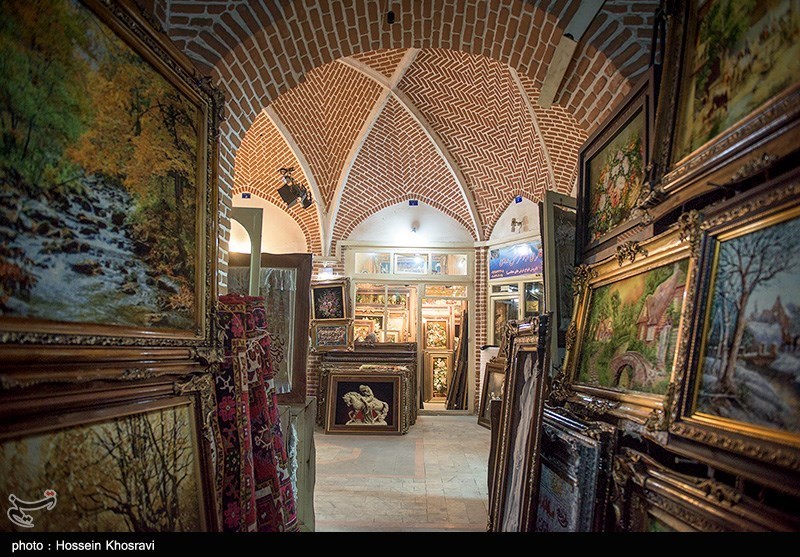
Most mazes and passages offer certain commodities such as carpets, metalwork, toys, clothing, jewelry, and kitchen appliances, traditional spices, herbal remedies and natural perfumes.
One can also bump into colorful grocery stores, bookbinders, blacksmiths, tinsmiths, coppersmiths, tobacconists, tailors, flag sellers, broadcloth sellers, carpenters, shoemakers, and knife-makers.
There are several divided carpet sections across the bazaar that enable visitors to watch or buy hand-woven Persian carpets and rugs with different knot density and other features.
The bazaar was also well-known and prosperous during the 13th century when Tabriz became the capital of the Safavid Dynasty (1501–1736).
The city lost its status as capital in the 16th century, but remained important as a commercial hub until the end of the 18th century, with the expansion of Ottoman power. It is one of the most complete examples of the traditional commercial and cultural system of Iran.
By the way, the city distanced its heyday as the capital was transferred eastward to Qazvin in the 16th century, but the bazaar remained vital as a commercial hub more or less.

Friday, August 02, 2019

Belgian globetrotters share us their new perception of Iran

By Afshin Majlesi, Mehdi Sepahvand

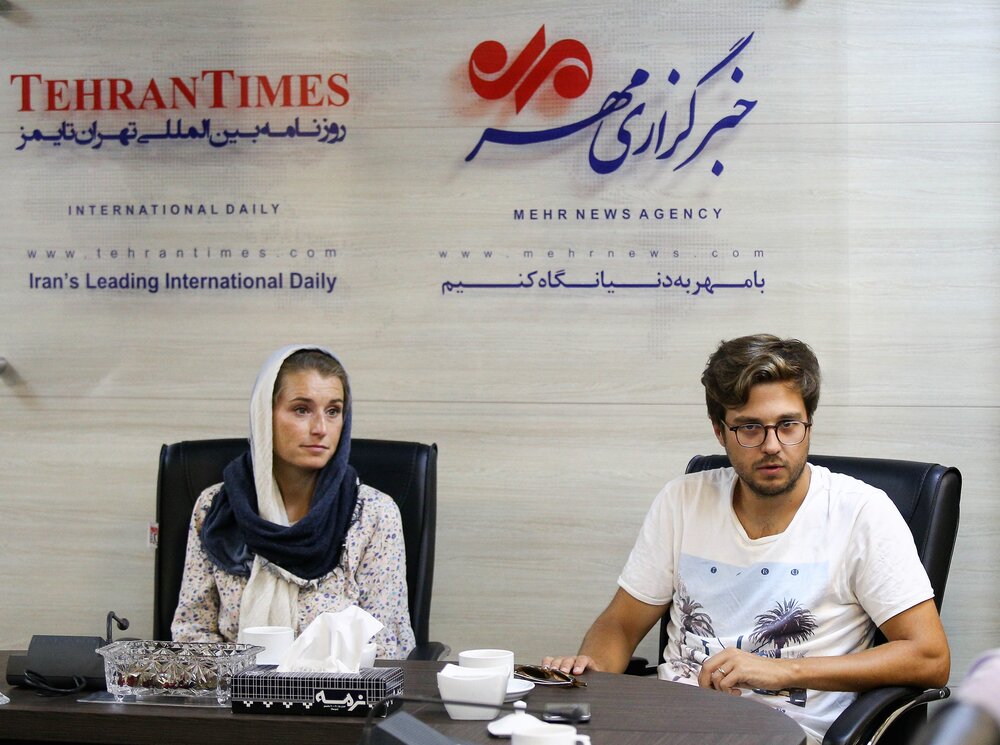
TEHRAN – Last Monday, a Belgian couple, who are on an overland journey to China, paid a visit to The Tehran Times, where they let us share their views, experiences and feelings about Iran in a cozy chat with the daily.
Ciara Reid and Lennart Gheysens in particular noted that the hospitality of Iranian people was beyond their expectations, saying “One of the reasons that we love Iran so much is the hospitality and kindness of the people.”
Western media don’t help very much to give a clear picture
“I think that is what a lot of other nationalities can take as an example and learn from it,” Ciara said.
When it came to driving in Iran, Lennart, however, didn’t give a good score, saying he had heard that Georgian people had earned a bad reputation for driving carelessly, but he thinks that the situation is even worse in Iran!
The couple also showed us various parts of their camper van, which was like a well-made miniature home equipped with almost everything including a bed, a dining table, chairs, a stove, sets of closets, cabinets, a toilet, a shower, a sink, electronic equipment and other amenities! There were powerful solar panels to charge the batteries that powered their moving home.
The transcript of the interview is given below:
Is this the first time you’re visiting Iran?
Lennart:  No, the second time. We visited in 2016 and that was only Iran that we visited [during that trip].
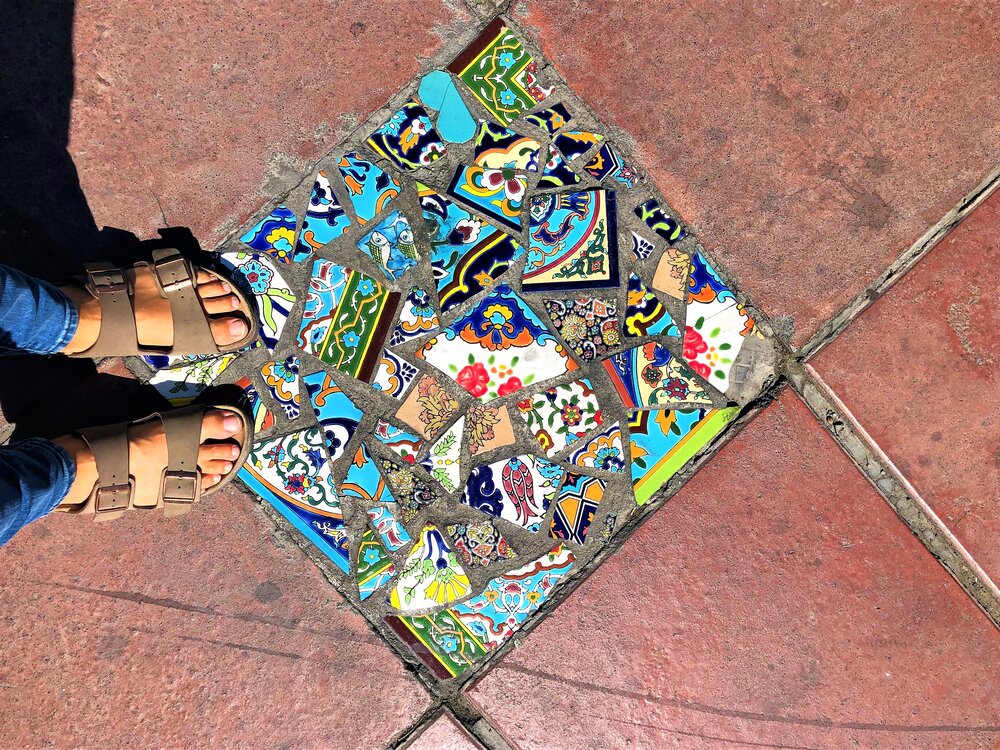
Ciara contemplates broken Iranian mosaics used to fix a missing tile (Photo: Ciara Reid, for The Tehran Times, July 29, 2019)
 
Ciara: We visited Iran in 2016 in a trip that was recommended by a friend of ours. And when we were here we really fell in love with the country. We never had that [experience] before. Everything is so beautiful and people are so friendly. And at that time we said we definitely want to go [come] back and then maybe all the different countries around Iran, maybe they’re beautiful too. And European people usually don’t get to see them so that’s why we decided to go on a trip along the Silk Road so it was really our trip in Iran in 2016 that sparked the idea of our current trip.
Please tell us more about the itinerary of your trip.
Lennart: We drove from Belgium quite fast through all the European countries like the Netherlands, Germany, Austria, Slovenia, Croatia, and Bosnia because we want to focus on the Caucasus region and then central Asia. We drove from Croatia to Albania, Montenegro, and then Greece to Turkey, where actually the real trip started for us. We started to take things slower. So we are driving from Belgium to China.
TT: Some foreign travelers say that driving in Iran resembles a video game. What do you say about that?
Lennart: Yes, it is. We had heard that Georgia is very bad [when it comes to reckless driving] but I think in Iran it’s even worse. But for us, our big car helps us to somehow avoid accidents. [Our rule is] to try to drive like a local… because in Europe, this is your lane and you cannot drive over it or whatever, but here….
If this happens in Europe, they will just leave you at the side saying it’s your own fault, no one will help you. So we told this story to people back home where a lot of people were saying us “Oh Iran is dangerous”! But for me it is one of the safest countries
TT: What about the quality of roads and highways in Iran?
Lennart: Actually, very good, I mean, for me, it’s comparable with European roads… actually the roads in Iran are quite good, they are almost flat and smooth.
TT: What’s your opinion about the Iranian hospitality?
Lennart: Well, it’s famous for a reason, because it’s true, one of the reasons that we love Iran so much is the hospitality and kindness of the people, like, the first time that we got here in 2016, we were in a taxi and the taxi driver invited us to his home and even though he couldn’t speak English, we were talking on Google Translate to each other.
Ciara and Lennart speak to The Tehran Times (Photo: Maryam Kamyab, July 29,  2019)
It was very nice to meet his wife and their toddler and a friend of whom we also met in Mashhad. We’re still friends now and we are staying with his family here in Tehran and I mean [while in Iran] everybody likes to help you.
 For example, all of a sudden we were in Tabriz and one gas station after the next said we don’t have diesel, we don’t have diesel, and we were like “Oh my God!”
You know, our car, runs on diesel -- not a lot of cars running on diesel in here, only the trucks and buses.
Ciara:  And we posted something on Instagram and said oh we’re scared, we don’t have any more diesel…. And then some Iranian people picked it up and posted their own [massages] on our Instagram page and suddenly we were like flooded with…; “Do you still need diesel?”, “You can get it there!”, …, “I can help you!”, and “We have diesel!”
And we posted something on Instagram and said oh we’re scared…. Some ten people reached out to us that we didn’t know… just out of kindness
Some ten people reached out to us that we didn’t know… just out of the kindness saying oh these are foreigners, they are in trouble, we can help!
Yes, this is a phenomenon that Iran is famous for.
Ciara:  I think that is what a lot of other nationalities can take as an example and learn from it. One time in 2016, we wanted to go to Yazd and in the bus station we went to different offices saying Yazd, Yazd, Yazd -- we were in Shiraz at that time -- and we [finally] took a wrong bus!
On the Google Map we found the bus was going all the way to the south so we asked the driver, saying Yazd? And the driver said, Bandar Abbas, Bandar Abbas! And we were like “Uh-oh!”
The driver pulled to the side, a bus full of people just stopped to the side. The driver said get out! We thought what we were going to do with our packs… we were thinking like “Oh my God! They want to leave us here on the side of the road!”
Then a man showed up. He said “Come with me, come with me!” And he drove us to a police station were there were a lot of taxies and he even paid us the taxi to get back to the bus station and we were very excited.
If this happens in Europe, they will just leave you at the side saying it’s your own fault, no one will help you. So we told this story to people back home where a lot of people were saying us “Oh Iran is dangerous”! But for me it is one of the safest countries. 
Have you selected a motto or a theme for your whole journey?
Ciara: Not really a theme but we actually want to see more of the countries along the Silk Road, so the “Silk Road” maybe our theme. We prefer to focus more on nature than cities during our journey!
We are also very amazed of the diversity of nature in Iran.
Tell us more about your portable home!
Lennart: We chose a Mercedes [camper] because it’s easy to find parts for Mercedes everywhere and because it’s also very reliable so we bought it second hand in Holland…. We removed everything from its back and started to modify everything from electricity to water and heating because I am a handy guy we did all the carpentry, installing a solar panel, air vents, curtains …. Everything!
And now, a tough question! Before your first visit Iran in 2016, you had a perception of the country, whatever it was, and after you felt the country, encountering its people, you developed another perception. How do you compare them, the first which was mainly shaped by Western media, and the one you have developed in person?
Lennart: Yeah, in the beginning for us, Iran was not very well known, just a Middle Eastern country, some said don’t go there because it’s dangerous …. So in the beginning we had a perception that it was very dangerous and also some (European) people didn’t know the difference between Iraq and Iran and the Western media don’t help very much to give a clear picture.
Ciara, Lennart and Tehran Times correspondents stand by the couple’s camper van (Photo: Maryam Kamyab, July 29,  2019)
But then some friends of ours visited Iran and we read a lot about it ourselves and yeah we saw that its people are very friendly, it is so safe and we like it so much.
Ciara: I think a funny anecdote is that we told our family and friends that we wanted to travel to Iran, everybody said “Oh you’re crazy! It’s very dangerous, you wanna get killed!”
And we said “No! It’s safe, it’s safe,” and then when we arrived in Iran we heard the bombings and attacks in Paris and an Iranian taxi driver asked where we are from and we said we are from Europe. “Europe? It’s so dangerous!” the driver said. So when we were back home in Belgium and people said “Oh, how was your trip to Iran?” we said, “Well it was actually much safer than it was in Europe!”

Tuesday, May 28, 2019

From BRI to Clash of Civilization: Beijing conference refutes Huntington

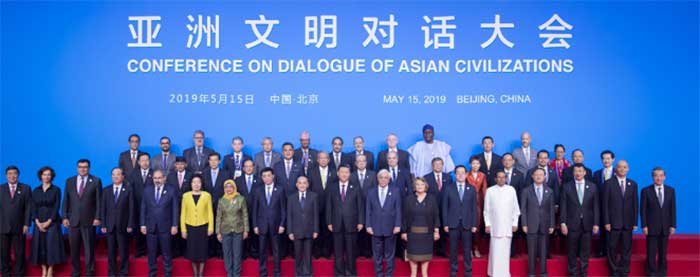
China hosted a two-day Conference on Dialogue of Asian Civilizations (CDAC), to boost exchanges and mutual learning among Asian civilizations. The CDAC theme was “Exchanges and Mutual Learning among Asian Civilizations and A Community with A Shared Future.”
It brought together more than 2,000 government officials and representatives of various circles from 47 Asian countries and other nations outside the region.
Among those attending were: King of Cambodia Norodom Sihamoni, Greek President Prokopis Pavlopoulos, Singapore President Halimah Yacob, Sri Lankan President Maithripala Sirisena and Armenian Prime Minister Nikol Pashinyan.
In his inaugural address, the President of China, Xi Jinping, underlined that this Conference  “creates a new platform for civilizations in Asia and beyond to engage in dialogue and exchanges on an equal footing to facilitate mutual learning”.
President Xi highlighted the importance of the interactions in Asia, as these interactions between civilizations “have enriched each other and written an epic development”. He elaborated also:
“Our forefathers in Asia have long engaged in inter-civilizational exchanges and mutual learning; the ancient trade routes notably the Silk Road, the tea road and the spice road brought silk, tea, porcelain, spices, paintings and sculpture to all corners of Asia, and they have witnessed inter-civilizational dialogue in the form of trade and cultural interflow.”
“No civilization is superior over others. The thought that one’s own race and civilization are superior and the inclination to remold or replace other civilizations are just stupid,” the Chinese leader said adding:
“All civilizations are rooted in their unique cultural environment. Each embodies the wisdom and vision of a country or nation, and each is valuable for being uniquely its own. Civilizations only vary from each other, just as human beings are different only in terms of skin color and the language used. No civilization is superior over others. The thought that one’s own race and civilization are superior and the inclination to remold or replace other civilizations are just stupid. To act them out will only bring catastrophic consequences…. What we need is to respect each other as equals and say no to hubris and prejudice.”
Pehaps Xi was alluding to Huntington’s theory of Clash of Civilizations. In 1992, American political scientist Samuel P. Huntington proposed the hypothesis of the Clash of Civilizations that people’s cultural and religious identities will be the primary source of conflict in the post-Cold War world. Huntington later expanded his thesis in a 1996 book The Clash of Civilizations and the Remaking of World Order.
Huntington argued: “It is my hypothesis that the fundamental source of conflict in this new world will not be primarily ideological or primarily economic. The great divisions among humankind and the dominating source of conflict will be cultural. Nation states will remain the most powerful actors in world affairs, but the principal conflicts of global politics will occur between nations and groups of different civilizations. The clash of civilizations will dominate global politics. The fault lines between civilizations will be the battle lines of the future.”
In short, Huntington suggests that in the future the central axis of world politics tends to be the conflict between Western and non-Western civilizations. Huntington divided the world into the “major civilizations” in his thesis as such:
Western civilization comprising the United States and Canada, Western and Central Europe, Australia and Oceania; Latin American, Includes Central America, South America; The Orthodox world of the former Soviet Union; The Eastern world is the mix of the Buddhist, Chinese, Hindu, and Japonic civilizations; The Muslim world of the Greater Middle East, (the Islamic civilization) and The civilization of Sub-Saharan Africa located in southern Africa, Middle Africa.
Huntington’s hypothesis was criticized by various academic writers. They challenged his claims empirically, historically, logically, or ideologically.
Edward Said
Edward Said, the late University Professor of English and Comparative Literature at Columbia University,  issued a response to Huntington’s thesis in his 2001 article, “The Clash of Ignorance”. Said argues that Huntington’s categorization of the world’s fixed “civilizations” omits the dynamic interdependency and interaction of culture. Edward Said (2004) also argues that the clash of civilizations thesis is an example of “the purest invidious racism, a sort of parody of Hitlerian science directed today against Arabs and Muslims” (p. 293).
According to Edward Said “Huntington is an ideologist, someone who wants to make “civilizations” and “identities” into what they are not: shut-down, sealed-off entities that have been purged of the myriad currents and countercurrents that animate human history, and that over centuries have made it possible for that history not only to contain wars of religion and imperial conquest but also to be one of exchange, cross-fertilization and sharing.
“This far less visible history is ignored in the rush to highlight the ludicrously compressed and constricted warfare that “the clash of civilizations” argues is the reality. When he published his book by the same title in 1996, Huntington tried to give his argument a little more subtlety and many, many more footnotes; all he did, however, was confuse himself and demonstrate what a clumsy writer and inelegant thinker he was.
“These are tense times, but it is better to think in terms of powerful and powerless communities, the secular politics of reason and ignorance, and universal principles of justice and injustice, than to wander off in search of vast abstractions that may give momentary satisfaction but little self-knowledge or informed analysis. “The Clash of Civilizations” thesis is a gimmick like “The War of the Worlds,” better for reinforcing defensive self-pride than for critical understanding of the bewildering interdependence of our time.”
Noam Chomsky
Noam Chomsky called it just being a new justification for the United States “for any atrocities that they wanted to carry out”, which was required after the Cold War as the Soviet Union was no longer a viable threat.
“We have to support oppressive states, like Saudi Arabia and others, to make sure that they guarantee that the profits from oil (it’s not so much the oil as the profits from oil) flow to the people who deserve it: rich western energy corporations or the US Treasury Department or Bechtel Construction, and so on. So that’s why we need a huge military budget. Other than that, the story is the same,” Chomsky said in a lecture delivered at the Delhi School of Economics on November 5, 2001.
He went on to say: “What does this have to do with Huntington? Well, he’s a respected intellectual. He can’t say this. He can’t say, look, the method by which the rich run the world is exactly the same as before, and the major confrontation remains what it has always been: small concentrated sectors of wealth and power versus everybody else. You can’t say that. And in fact if you look at those passages on the clash of civilizations, he says that in the future the conflict will not be on economic grounds. So let’s put that out of our minds. You can’t think about rich powers and corporations exploiting people, that can’t be the conflict. It’s got to be something else. So it will be the ‘clash of civilizations’ – the western civilization and Islam and Confucianism.”
Jochen Hipplier
Jochen Hipplier, author of The Next Threat: Western Perception of Islam, has said: By caricaturing different cultures, by arbitrarily and willfully misrepresenting Islamic societies we grant ourselves absolution. Others are fanatical, we are not. Other are irrational, we are not.  Furthermore, it is clearly very important for us in the West to feel superior and to see Western culture as the ‘best’ and ‘most progressive.
The term civilization is usually used in the singular to mean Western civilization which since the eighteenth century has been in the West as the civilization that has set about to destroy and obliterate systematically all other civilizations including the Islamic.
To borrow from Hippler: In a certain sense you could call Huntington’s argument ‘culturally racist’. The Muslims (or Chinese) are different from us and therefore dangerous. Unlike in classic racism, this difference is not generically but culturally-based. There is such a gulf between their values and ways of thinking and ours that understanding or cross-pollination is almost unthinkable. Only military solutions can promise result.
Hippler further elaborates this point very convincingly: Huntington’s image of Islam (or of other Asian cultures) is hardly original. It follows the current stereotypes and clichés of popular literature and some of the media. Yet he manages brilliantly to embellish these repeated fears pseudo-scientifically and elevate them ideologically. His success is in making the old clichés acceptable in foreign policy debate. For Huntington, Islam is ideologically hostile and anti-Western. It is also a military threat in itself due to Chinese (Confucian) arms supplies. Islam is bloody, with a long warring tradition against the West. (The fact that Muslims have often been the victims rather than the perpetrators of violence from Bosnia to India hardly troubles him.)
According to Stephen M. Walt, The Clash of Civilizations is also strangely silent about Israel, which has been a central concern for U.S. foreign policy since its founding in 1948. During the Cold War, U.S. support for Israel could be justified on both ideological and strategic grounds. From a cultural perspective, however, the basis for close ties between Israel and the “West” is unclear. Israel is not a member of the West (at least not by Huntington’s criteria) and is probably becoming less “Western” as religious fundamentalism becomes more salient and as the Sephardic population becomes more influential. His silence on this issue may reflect an awareness that making this conclusion explicit would not enhance the appeal of the book, or Israel may simply be an anomaly that lies outside of his framework. In either case, however, the issue reveals a further limitation of the civilizational paradigm. [Building Up New Bogeyman by Stephen M. Walt- Foreign Policy, Spring 1997]
Abdus Sattar Ghazali is the Chief Editor of the Journal of America (www.journalofamerica.net