By Afshin Majlesi
Well regarded for its hospitable people, handicrafts, and ancient qanats (manmade subterranean aqueducts that brings water from the mountains), Na’in dates back to nearly 2000 years, which makes it one of the oldest continuously settled towns in the Iranian plateau.
A tour to the oasis city seems to be enjoyable and well worth if you are a fan of Islamic architecture. Na’in harbors one of the oldest mosques in the Islamic Republic.
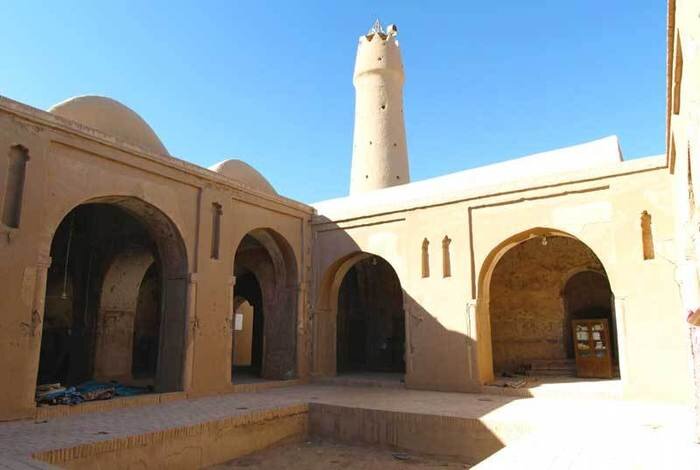
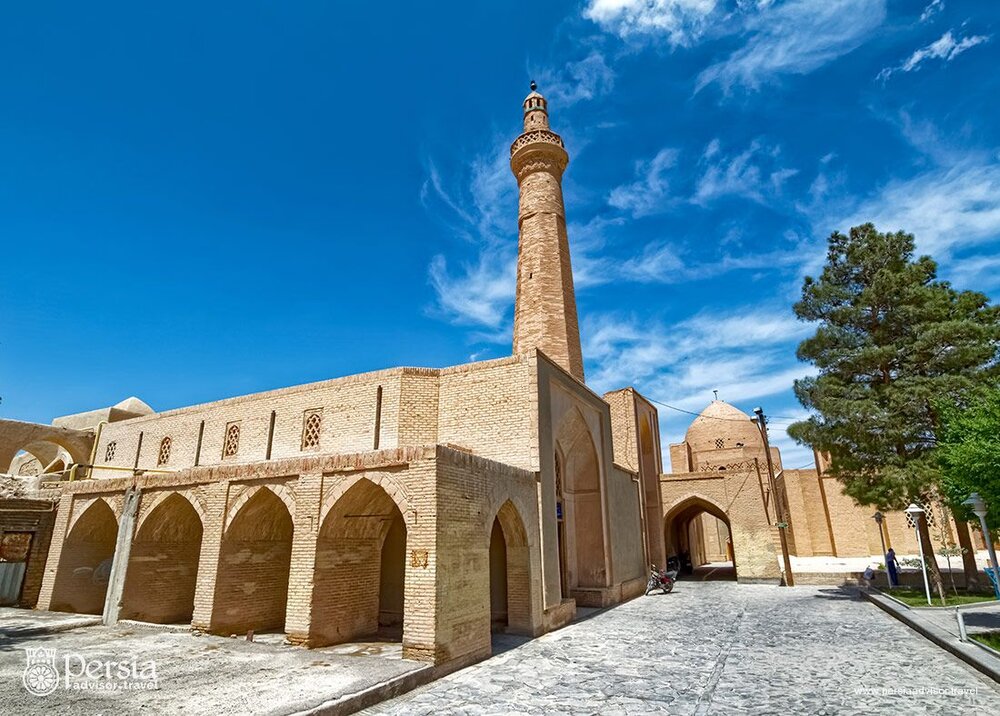
Originally constructed in c. tenth century, Jameh Mosque of Na’in is was one of the first mosques built in Iran and is unusual in that it doesn’t conform to the usual four-iwan pattern of its time (for instance Jameh Mosque of Isfahan).
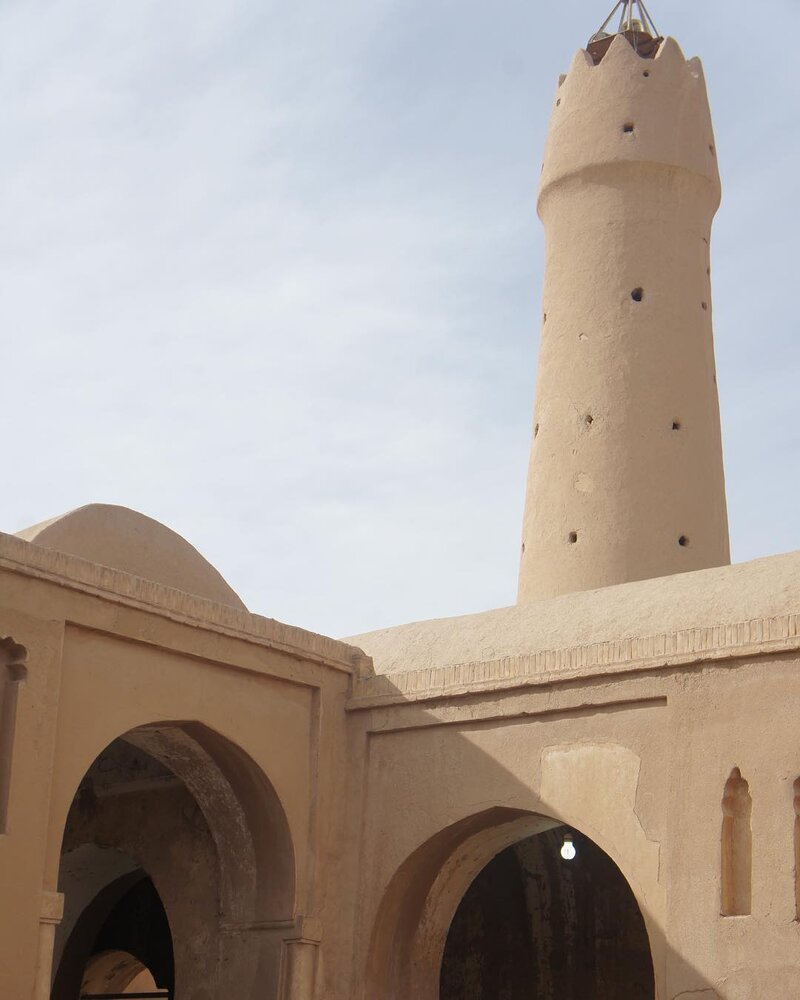
Though may seem very modest at the first sight, the exterior facade and minaret are austerely beautiful and many parts of the interior (including the mihrab) are decorated with finely detailed stucco work.
Mihrab is a semicircular niche in the wall of a mosque that points out the qibla, the direction of the Kaaba in Mecca and hence the direction that Muslims should face when praying.

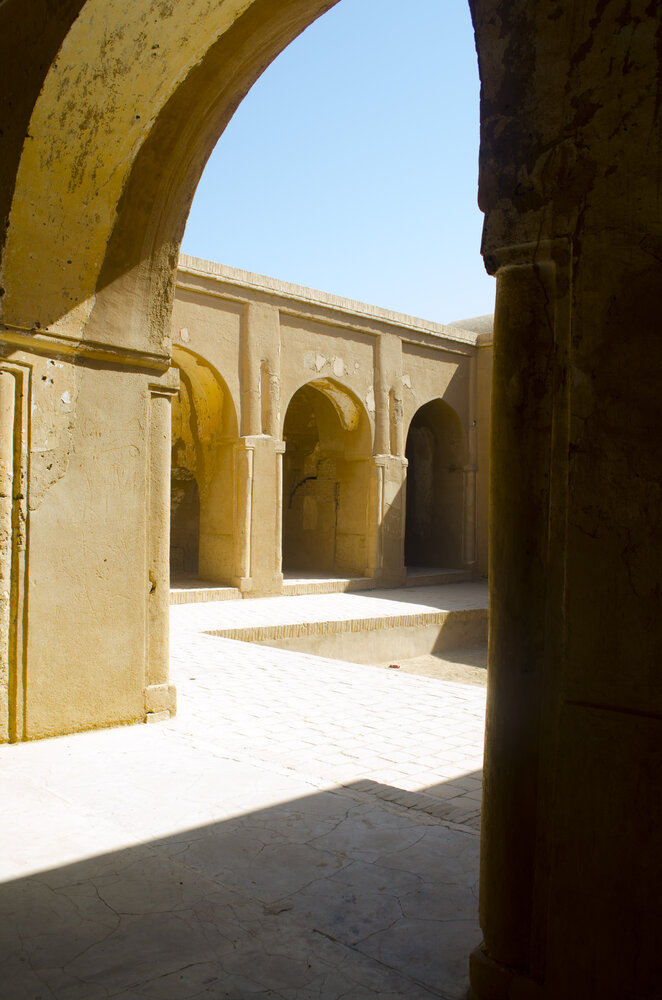
The mosque has a central rectangular courtyard that is surrounded with hypostyles on three sides. At one of these hypostyles the mihrab of the mosque is located.
Further interesting features include the exquisitely carved wooden minbar (a pulpit where the imam -- prayer leader -- stands to deliver sermons), which bears an inscription that identifies as being 700 years old.
There is also an underground prayer hall, designed to keep the faithful cool in summer and warm in winter. Alabaster casements have been set in the ceiling of this dug-out basement, which allows natural light to come through.
An access to the qanat below the mosque supplies water to the ablutions area.
The terms “Jameh Mosque” or “Masjed-e Jameh” or “Friday Mosque” is used in Iran for a grand communal mosque where mandatory Friday prayers are performed: the phrase is used in other Muslim countries but only in Iran does it designate this purpose.
Na’in lies 170 km north of Yazd and 140 km east of Isfahan. Like much of the Iranian plateau, it has a desert climate, with a maximum temperature of 41 °C in summer, and a minimum of -9 °C in winter.

During the ancient times the city was at the junction of a desert road that connected Tabas and Mashhad, it used to be an important crossroad on converging trade routes since Sassanid times. Na’in was known for its ceramics and textiles; today it's primarily known for fine hand-knotted carpets and for hand-loomed camel-wool cloaks, which are produced in the neighboring villages.
Under travelers’ eyes
Here is a select of comments that visitors to the mosque have posted to TripAdvisor, one of the most popular travel websites in the world:
“Great and different”
If you travel around Isfahan and Kerman and Yazd provinces defiantly you’ll see variety of mosques with almost the same design but this one is totally different .Different material different interior design. (Shervin1359 from Huntington Beach, California; Reviewed July 2019)
“At the third oldest mosque in Iran”
While travelling from Yazd to Isfahan, the old city of Na’in will be certainly on your way. A short stop and a visit to the “third” oldest mosque in Iran: the Jame Mosque of Na’in! This mosque dates probably from the 9th or 10th centuries and was built in the famous "Khorasani" architectural style, which combines perfectly Islamic and pre-Islamic influences. It is still used as a congregational mosque! Don't miss the pulpit, the wood and stone carvings, the alabaster works, the central courtyard with beautiful porches, the fantastic brickworks and the 28m high minaret. Visit also its basement, with tunnels and water channels, which is believed to have housed - centuries ago - a Zoroastrian Fire Temple. Just amazing! But remember, the breathtaking mosques are way ahead, right at your next stop: the awesome city of Isfahan. Enjoy! (LuizDutraNeto from Rio de Janeiro, RJ; Reviewed February 2019)
“Historic aspect of Iran”
This is one of the oldest mosques of Iran and one of the oldest mosques in the world considering it is from the 8th century. It is filled with history. There are some ruins next to it, probably from the same era. No entrance fee. If you are going from Isfahan to Yazd, Na’in is on the way. (JeLundgren from Abu Dhabi, United Arab Emirates; Reviewed October 2018)
“One of the oldest mosques in Iran”
Historically very interesting. It was originally built as a Sunni mosque and has no dome and (originally) no minarets. The main courtyard of the mosque features several half-meter squares of alabaster the purpose of which is only clear when one descends into the cool subterranean part of the mosque which it lit by the sun passing through the alabaster squares. (MikelMarshall from Valdemorillo, Spain; Reviewed August 2018)