Showing posts with label Persian. Show all posts

Monday, October 21, 2019

10 reasons why tourists must visit Iran

By David Robie

I stumbled on the scene by chance. Our host family in Iran’s second city Mashhad, a modern and beautiful metropolis that would comfortably fit in New Zealand’s entire population, was taking us on a drive to the outskirts to visit the tomb of the famous poet and chronicler Abul-Qasem Ferdowsi.
It just so happened that this was the very day that a new section of the surrounding gardens was being opened and the red carpet was being rolled out for a visiting cultural affairs minister.
Shortly after we arrived, the political scrum began – a mass of photographers, press people and ceremonial guards pressing.
Bodyguards whisked the minister, Ali-Asghar Mounesan, head of Cultural Heritage, Handicrafts and Tourism, into the cavernous tomb among the sculptured friezes of mythical hero Rostam fighting off dragons and monsters in defense of ancient Persia.
The hero’s exploits are featured in the 10th century epic Shahnameh: The Book of Kings, penned by Ferdowsi and comprising some 50,000 couplets.
Ferdowsi is the hometown literary giant and one of Iran’s best universities and medical schools is in the city and named after him. It was opened in 1949.
Modern day Iran is steeped in massive historical and intriguing cultural icons, and also a swathe of mosques and other religious shrines, dating back to the Achaemenian empire founded by Cyrus the Great five centuries before Christ and ancient pre-Islam Zoroastrianism (fire-worshipping), one of the world’s oldest continuously practiced religions  believed to have its roots some 4000 years ago.
Impressive attractions
Some critics say that Iranian authorities since the 1979 Islamic Revolution spend far more and devote greater attention to the religious artefacts and buildings of Islam to the neglect of some historical sites. However, whatever the truth about that Iran boasts a never-ending range of impressive and attractive places to visit.
The tragedy is that not enough is known about the country’s cultural and historical wonders in the West and the refusal of many mainstream travel companies to run regular tours.
Some homegrown Iranian tour operators, worried about the downturn in tourist numbers – a fall in spite of Iran’s plans to boost tourism and visitors by fivefold to 20 million a year by 2025 (blame Donald Trump for the fall) – have now recruited social media “influencers” to tour the country and blog about the attributes.
One group of 12 Instagram global posters with about 16 million combined followers are this month visiting Iran on a familiarization trip organized by Iranian traveler Hoda Rostami and social media “influencer” who is trying encourage foreign tourists to “discover” Iran’s fascinations.
Iran embarked last year on ambitious plans to boost tourism. Neighboring Azerbaijan, Egypt, Georgia, Lebanon, Syria and Turkey have been added to the list of countries whose nationals can get visas on arrival. Getting an e-visa for New Zealanders is now far more straight forward than it used to be – thank goodness for us not being American or British.
Iran also has plans to revive passenger sea lines, including routes between the country and Bahrain, Oman, Qatar and Saudi Arabia – or at least that was the idea before the recent tensions over the Persian Gulf and sanctions-busting for vital Iranian oil exports.
Also there have been reports on plans to build a railway from Iran’s southwestern Khuzestan province, travelling west through Iraq and ends at the Syrian port city of Latakia. This is expected to boost religious tourism, including the massive annual pilgrimage to Karbala.
Having just toured Iran myself while on sabbatical, I highly recommend the country as an absolute must visit.
My bucketlist
Here is my bucket list of 10 reasons why you should go to Iran – but there are also many other reasons.
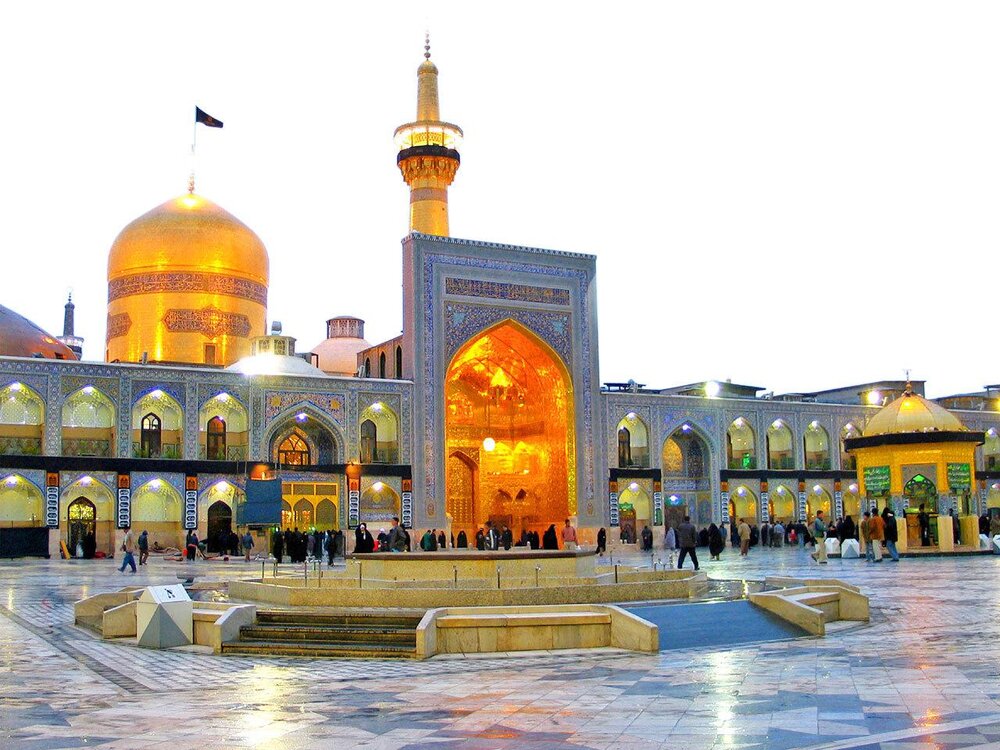
Imam Reza (AS) shrine, Mashhad
The incredibly impressive Haram-e Razavi, the Imam Reza (AS) shrine in Mashhad, is widely regarded as the ‘heart of Shia Iran’. More than 20 million religious tourists visit this vast shrine each year. Affluent Mashhad, Iran’s second-largest city with a population comfortably equivalent to New Zealand’s total, thrives on “religious tourism”. The city is in north with Turkmenistan and Afghanistan.”
Tomb of Ferdowsi, Mashhad
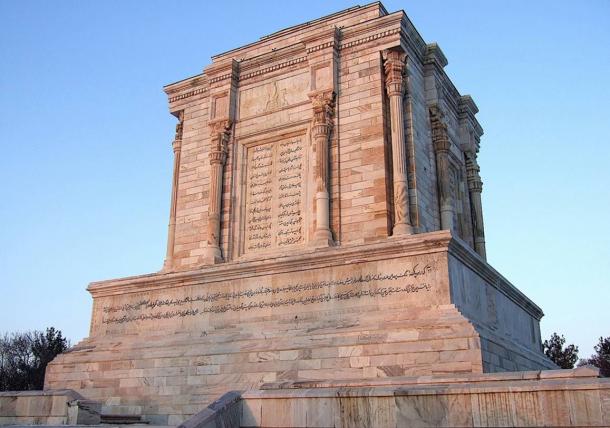
Abul-Qasem Ferdowsi, Iran’s greatest and one of the world’s most renowned poets. He penned the epic mythical and historical Shahnameh: The Book of Kings, the world’s longest poem in the 10th century. With some 50,000 couplets, the original book weighs 75 kilos and chronicles the saga of the early Persian empires until the seventh century Arab invasion and conquest. Ferdowsi’s tomb and museum at Tus are today one of Mashhad’s inspiring attractions.
Naqsh-e Jahan Square, Isfahan
Isfahan’s impressive and peaceful Naksh-e Jahan Square is the world’s largest after Tiananmen. It is indeed a spectacle. Once a vast polo field, the hewn stone goalposts are still at one end. Designed and laid out in 1602 under the reign of Shah Abbas (Safavid epoch) when Isfahan was capital of Iran, it is today a popular place of family picnics and horse-drawn carriage rides. The square is ringed by a maze of fascinating shops and traditional Sheikh Lotfallah bazaar.
Khaju Bridge, Isfahan
The 133m Khaju Bridge and weir is one of several historical bridges across the Zayandeh river, which has started flowing again after being dry for several years. Built about 1650 by Shah Abbas II, the bridge has 23 arches and a place in the middle for a throne for the shah to admire the water flowing by.
Azadi Tower, Tehran
Iran’s impressive Tehran Milad Tower, is at 435m the 6th tallest TV tower in the world. It also has the world’s biggest head structure of any telecommunications tower. The top floor of the 12-level head structure can be reached by high speed lifts within 50sec.
Persepolis, near Shiraz
One of the seven great wonders of the ancient world, Persepolis was the extraordinary capital of Darius the Great in 520 BC, conceived and established following the vast Persian Empire forged by Cyrus the Great. The ruins near Shiraz are still very impressive from the Gate of all Nations onwards.
Karim Khan Citadel, Shiraz
The 18th century Karim Khan Citadel was once a political prison for 40 years. It has a strange “leaning tower” where the impressive bathhouse outflows eroded the foundations over a couple of centuries. The nearby Bazar-e Vakil traditional bazaar network and Hammam-e Vakil bathhouse, which has a display of traditional ablutions, are also fascinating and worth visits.
Tombs of Hafez and Sa’adi, Shiraz
Tombs of Hafez and Sa’adi in Shiraz are major sites for Iranians, and they ought to be for Westerners too.
Golestan Palace, Tehran
An elegant complex standing as a reminder of the glories and opulence of Iran’s Qajar dynasty in the 19th and early 20th centuries. It is where the coronation of Reza Shah took place on a Marble Throne on display and where his son, Mohammad Reza Pahlavi, was also crowned in the Museum Hall before being deposed in the 1979 Revolution.
Sa’ad Abad Museum Complex, Tehran
The Mellat, or White Palace, is the largest mansion in the Sa’ad Abad forest museum complex in north Tehran. This was built in the 1930s and has bullet proof windows. It was used by Mohammad Reza Shah (Pahlavi dynasty), and empress Farah, as a summer palace before he was deposed in the 1979 Revolution. Among the more interesting museums in this complex are one devoted to the exploits of the Iranian adventurer brothers Omidvar and the brilliant contemporary artist Mahmoud Farschian.  
This is a mere introduction to places in Iran to visit, and thanks to Zahra Ebrahimzadeh (our former homestay student), her family and friends for such a wonderful start. I haven’t even mentioned the amazing United Nations heritage old mudwalled town of Yazd on the edge of a desert, or the northwestern mountain city of Tabriz with one of the finest bazaars, and a host of other fascinating places.
When I return, I would love to go to the north of the country and around the Caspian Sea.
Visit Iran and enjoy.

Dr David Robie traveled independently and with no political “minders”. (The text has slightly been edited by the Tehran Times for clarity).

Saturday, October 19, 2019

Apadana Staircase, a way to fabled Persian art

TEHRAN – The ruins of Apadana Staircase shows off and offers scenes of historic Persian arts to its domestic and foreign visitors.
The lavishly decorated monument stands within the UNESCO-registered Persepolis, which was once the ceremonial capital of Persian Achaemenid Empire (550 –330 BC).
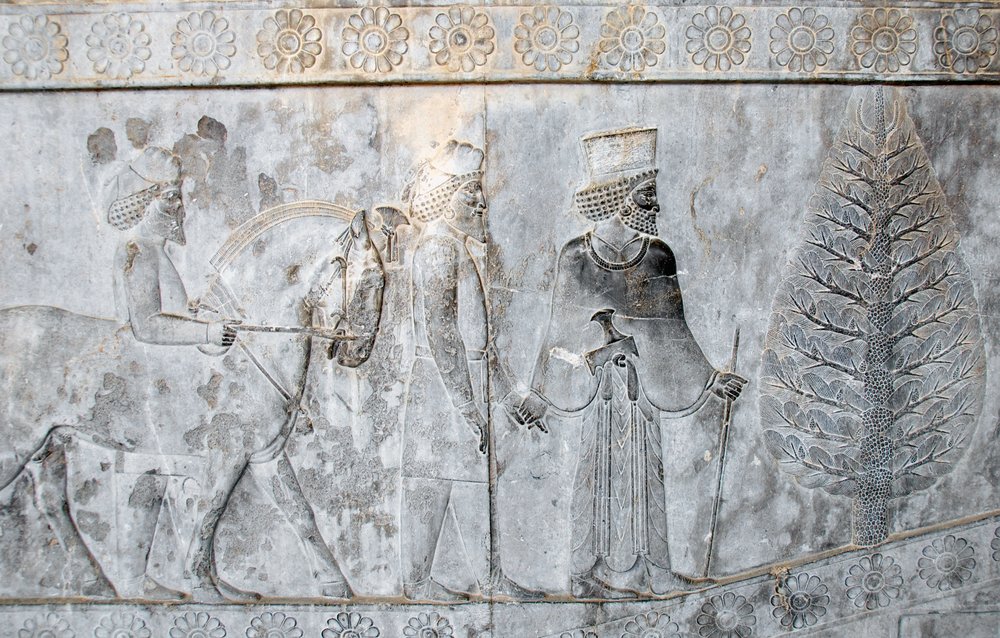
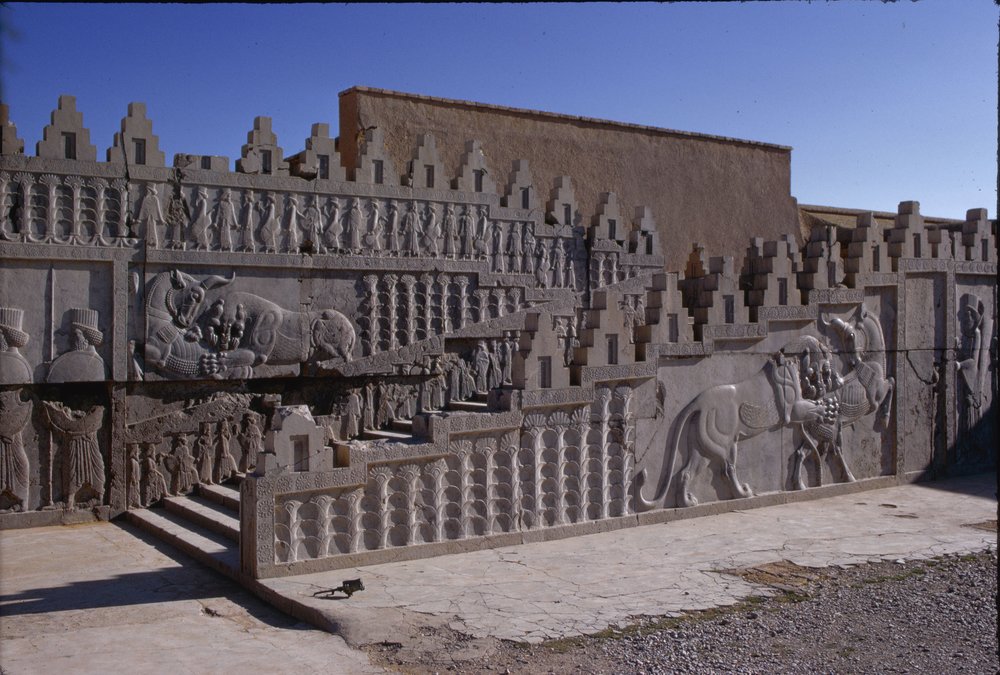
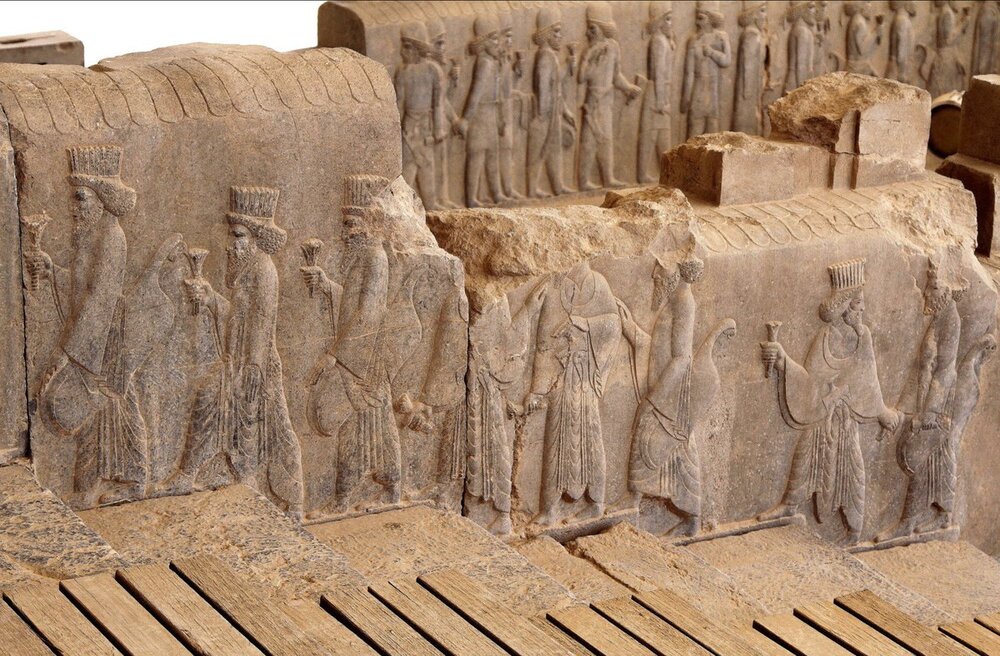
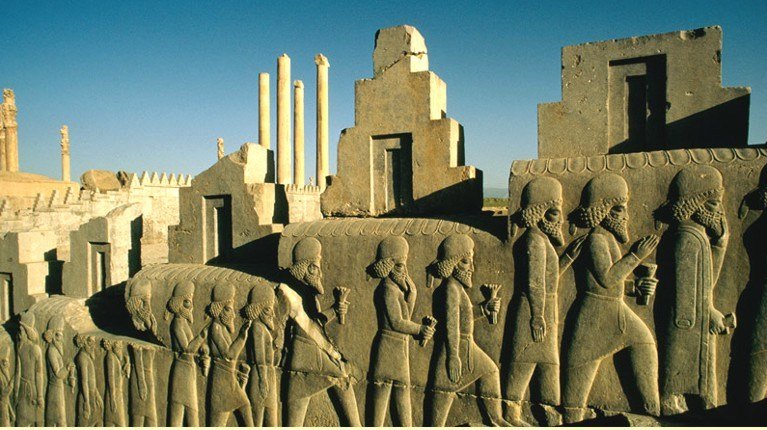
The Staircase features finely crafted frieze in three major panels, each divided into several tiers depicting sovereigns, dignitaries and the then visitors to the city.
The northern panel itself is divided into three tiers of well-preserved bas-relief figures of Persian nobility including the Imperial Guard and the Immortals.
Detail depicts bas-relief carvings of some tribute bearers on the Apadana Staircase
According to the Lonely Planet, on the upper tier, the figures are followed by the royal procession, valets and horses of the king’s chariot; on the lower two tiers these figures precede Persians wearing feather headdresses and Medes in their round caps.
The central panel of the staircase is dominated by traditional symbol of Zoroastrianism which is flanked by two winged lions with human heads.
Elaborate panels at the southern end of the staircase depicts a record of nations, showing 23 delegations bringing their gifts to an Achaemenid king. The Ethiopians begin the frieze in the bottom left corner and are joined by Arabs, Thracians, Kasmiris, Parthians and Cappadocians. The Elamites, Egyptians and Medians occupy the panel at top right. Accompanying this pantheon of guests are an assortment of delicately carved sheep with ram’s horns and curled wool, two-humped Bactrian camels, oxen and mules.
A view of the Apadana Staircase in Persepolis
On the northern panel exists inscriptions with fairly stereotypical texts by king Xerxes; one in Old Persian and others in Elamite and Babylonian.
According to livius.org, a website on ancient history written and maintained since 1996 by the Dutch historian Jona Lendering, parts of the inscriptions read as:
“A great god is Ahuramazda, who created this earth, who created that heaven, who created man, who created happiness for man, who made Xerxes king: the king of many kings, one ruler of many rulers.”
“I am Xerxes, the great king, king of kings, king of all nations, having various kinds of people, king in this great earth far and wide, the son of king Darius, an Achaemenid.”
In 330 BC, the staircase was miraculously survived the sack of Persepolis by the soldiers of Alexander the Great. The staircase is currently protected by a permanent shelter.

Wednesday, October 16, 2019

Apadana Staircase leads you to mythical arts of Persia

TEHRAN – Apadana Staircase is one of the most striking sections of the UNESCO-registered Persepolis, southern Iran.
The lavishly decorated monument draws hundreds of domestic and foreign visitors every single day, showing them off scenes of mighty Achaemenid Empire (550 –330 BC) and grandeur of its fabled arts.
Visitors can observe finely crafted friezes along three major panels each divided into several tiers depicting sovereigns, dignitaries and the then visitors to Persepolis.
The northern panel itself is divided into three tiers of well-preserved bas-relief figures of Persian nobility including the Imperial Guard and the Immortals.
On the upper tier, according to the Lonely Planet, the figures are followed by the royal procession, valets and horses of the king’s chariot; on the lower two tiers these figures precede Persians wearing feather headdresses and Medes in their round caps.
The central panel of the staircase is dominated by traditional symbol of Zoroastrianism which is flanked by two winged lions with human heads.
Elaborate panels at the southern end of the staircase depicts a record of nations, showing 23 delegations bringing their gifts to an Achaemenid king. The Ethiopians begin the frieze in the bottom left corner and are joined by Arabs, Thracians, Kasmiris, Parthians and Cappadocians. The Elamites, Egyptians and Medians occupy the panel at top right. Accompanying this pantheon of guests are an assortment of delicately carved sheep with ram’s horns and curled wool, two-humped Bactrian camels, oxen and mules.
On the northern panel exists inscriptions with fairly stereotypical texts by king Xerxes; one in Old Persian and others in Elamite and Babylonian.
According to livius.org, a website on ancient history written and maintained since 1996 by the Dutch historian Jona Lendering, parts of the inscriptions read:
“A great god is Ahuramazda, who created this earth, who created that heaven, who created man, who created happiness for man, who made Xerxes king: the king of many kings, one ruler of many rulers.”
“I am Xerxes, the great king, king of kings, king of all nations, having various kinds of people, king in this great earth far and wide, the son of king Darius, an Achaemenid.”
In 330 BC, the staircase was miraculously survived the sack of Persepolis by the soldiers of Alexander the Great. The staircase is currently protected by a permanent shelter.
Here is a comment that “R0hanL” from Jordan have posted to TripAdvisor, one of the most popular travel websites in the world:
“Stunning ancient ruins”
The ruins at this site are stunning. Some of the ruins have been covered, which gives you a sense of the shape of buildings-especially when you view the site from up the hill from one of the tombs. On the ground, it does take some imagination to "see" the 100 column palace for example, but a good guide book helps a lot to aid that process. The exceptionally carved friezes on the Apadana Staircase, Xerxes Gateway and Royal Apartments were exquisite. We also walked to both the tombs up on the hill, which were very similar to the tombs I had seen in Jordan at Petra. It was very hot the afternoon we were there, so ensure you bring plenty of water as the place to buy water in the site was very removed from the main part of the ruins itself. In all, we thoroughly enjoyed walking through this timeless place.

Tuesday, September 24, 2019

Ancient Iran: a glimpse of Persian art and architecture under Sassanids

TEHRAN – The Sassanid era (224 CE–651) is of very high importance in the history of Iran. Under Sassanids, Persian art and architecture experienced a general renaissance.
Architecture often took grandiose proportions such as palaces at Ctesiphon, Firuzabad, and Sarvestan that are amongst highlights of the ensemble.
Crafts such as metalwork and gem-engraving grew highly sophisticated, yet scholarship was encouraged by the state. In those years, works from both the East and West were translated into Pahlavi, the language of the Sassanians.
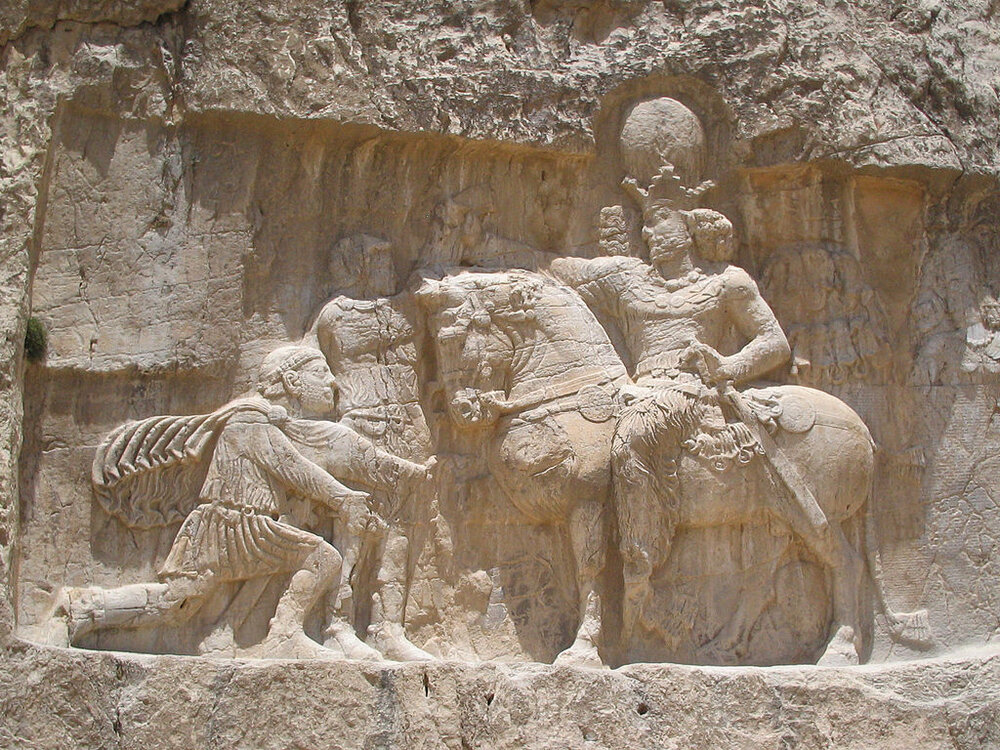
Rock-carved sculptures and bas-reliefs on abrupt limestone cliffs are widely deemed as characteristics and striking relics of the Sassanian art, top examples of which can be traced at Bishapur, Naqsh-e Rostam and Naqsh-e Rajab in southern Iran.
In 2018, UNESCO added an ensemble of Sassanian historical cities in southern Iran -- titled “Sassanid Archaeological Landscape of Fars Region”-- to its World Heritage list.
The ensemble is comprised of eight archaeological sites situated in three geographical parts of Firuzabad, Bishapur and Sarvestan. It reflects the optimized utilization of natural topography and bears witness to the influence of Achaemenid and Parthian cultural traditions and of Roman art, which later had a significant impact on the architecture and artistic styles of the Islamic era.
Efforts made by the Sassanids also yield a revival of Iranian nationalism took place, for example, Zoroastrianism was declared as the state religion.
The dynasty evolved by Ardashir I and was destroyed by the Arabs during a period of 637 to 651. The dynasty was named after Sasan, an ancestor of Ardashir I.
Under his leadership who reigned from 224 to 241, the Sassanians overthrew the Parthians and created an empire that was constantly changing in size as it reacted to Rome and Byzantium to the west and to the Kushans and Hephthalites to the east, according to Britannica Encyclopedia.
At the time of Shapur I (reigned 241 CE–272), the empire stretched from Sogdiana and Iberia (Georgia) in the north to the Mazun region of Arabia in the south; in the east it extended to the Indus River and in the west to the upper Tigris and Euphrates river valleys.
Bust of a Sasanian king, most likely Shapur II
According to UNESCO, the ancient cities of Ardashir Khurreh and Bishapur include the most significant remaining testimonies of the earliest moments of the Sassanid Empire, the commencement under Ardashir I and the establishment of power under both Ardashir I and his successor Shapur I.
“The architecture of the Sassanid monuments in the property further illustrates early examples of construction of domes with squinches on square spaces, such as in the chahar-taq buildings, where the four sides of the square room show arched openings: this architectural form turned into the most typical form of Sassanid religious architecture, relating closely to the expansion and stabilization of Zoroastrianism under Sassanid reign and continuing during the Islamic era thanks to its usage in religious and holy buildings such as mosques and tombs,” the UN cultural body say in its website.
The Sassanid archaeological landscape also represents a highly efficient system of land use and strategic utilization of natural topography in the creation of the earliest cultural centers of the Sassanid civilization.

Sunday, August 18, 2019

Irish Translation of Ibn Sīna Medical Text Discovered in Medieval Book Binding

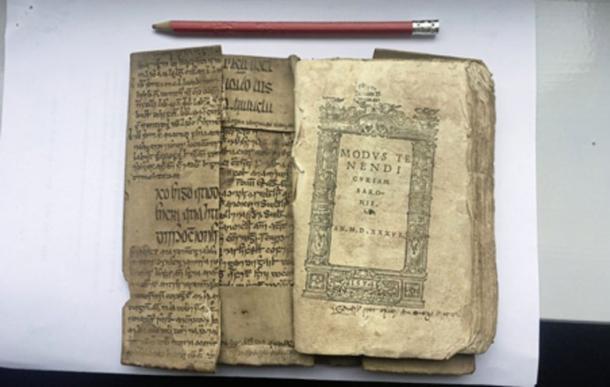
Portion of Ibn SÄ«na’s Canon of Medicine folded into medieval text
A recent discovery is demonstrating the influence of Islamic medicine on European physicians. A fragment from a book dating from the 1400s has revealed the influence of a Muslim Persian polymath on Irish doctors. This find is helping experts to have a better understanding of Ireland in the Middle Ages and the importance of Islamic works on the intellectual development of Europeans.
Professor Pádraig Ó Macháin, a University College Cork’s expert in Gaelic, an ancient Celtic language still spoken today, became aware of the existence of a rare book produced in Medieval Ireland. It was in the possession of a family from Cornwall, England who have owned it for generations. There were many cultural and trade connections between Medieval Cornwall and Ireland. The Professor examined the book and found, according to the Irish Independent , “a sheet, full of text in Irish, cut from a 15th-century Irish vellum manuscript .”
The fragment of text translated from Persian polymath Ibn SÄ«na’s work, flattened out so it can be read. (Independent)
The fragment of text translated from Persian polymath Ibn SÄ«na’s work, flattened out so it can be read. ( Independent)

A Sheet of Islamic Medicine in the Bookbinding


Sections of old manuscripts were often stuffed into the spines of new books at that time, so the professor was not surprised to find a page from an old volume in the binding. In the interest of learning, the owners of the book allowed the page to be removed and it was digitized so that it could be studied. After reading the sheet, the professor was stunned as it provides evidence for cultural links between Ireland, one of the remotest parts of Medieval Europe, and the IslamicGolden Age.
The piece of manuscript in the binding was written in Medieval Gaelic and is a translation of Islamic medical work. According to the About Islam website, it is a “fragment of a translation into Irish of the ‘Canon of Medicine’ medical encyclopedia.”  The page has entries on the nature of the jaws, back, and how the nose functions.
Ibn Sīna (Avicenna). (Public Domain)
Ibn SÄ«na (Avicenna). ( Public Domain )
The Canon of Medicine is in five volumes and provides a complete overview of Islamic medical scholarship and even several hundred medicines. This work was the “standard medical text in the Islamic world and across Europe, and for more than six centuries the most respected medical textbook in medieval Europe ,” reports The Guardian .

The Genius of Persian Polymath Ibn Sīna


This immense medical work was written by the famous Persian polymath Ibn SÄ«na (980-1053 AD), who is known as Avicenna in the West. He was a self-educated genius from Central Asia who flourished in the Islamic Golden Age, a period when Muslims studied the works of Classical Greeks and others and made enormous cultural and intellectual advances.
Ibn SÄ«na wrote many major works on philosophy, logic, theology, astronomy, and science, which decisively influenced, not only the Muslim world but also Europe, as it slowly emerged from the Dark Ages . His ideas on medicine and his insistence on an evidence-based approach to healthcare have been enormously influential to this day.
The discovery of a translated page credited to Ibn SÄ«na’s work in an Irish book is a testament to the immense prestige of Islamic learning in 15th century Europe. It shows that medicine from the Muslim world was dominant in European societies at the time. Most likely the page was from an encyclopedia that was used to train doctors in Ireland.

Irish Medieval Culture


Prof Ó Macháin states that almost one in four works written in Gaelic at the time were on medical subjects. Irish doctors often went abroad to train and the work by the Persian author was probably brought back from the continent. In the 15th century, there was a class of hereditary Irish physicians whose skills were very respected and it seemed that this was in part because of their learning in Muslim medicine.
During that time, Gaelic learning and literature was being revived by powerful aristocratic patrons. The country was only nominally subject to the English crown, whose rule was confined to Dublin and its neighborhood, which was known as the ‘Pale’. Gaelic culture continued to flourish until the English victory in the Nine Years Wars (1592-1601), which ended in the colonization of much of Ireland.
Detail of illuminated script in a copy of the ‘Canon of Medicine’ by Avicenna. (Public Domain)
Detail of illuminated script in a copy of the ‘ Canon of Medicine’ by Avicenna. ( Public Domai)
The discovery of the sheet has established a link between Ireland the Muslim world. The find is also demonstrating that Ireland was much more culturally advanced than previously thought. It proves once again that Europe was indebted to Islamic science , medicine, and learning in the Middle Ages.

The Longest Poem Ever Written: Shahnameh – The Epic Book of Kings

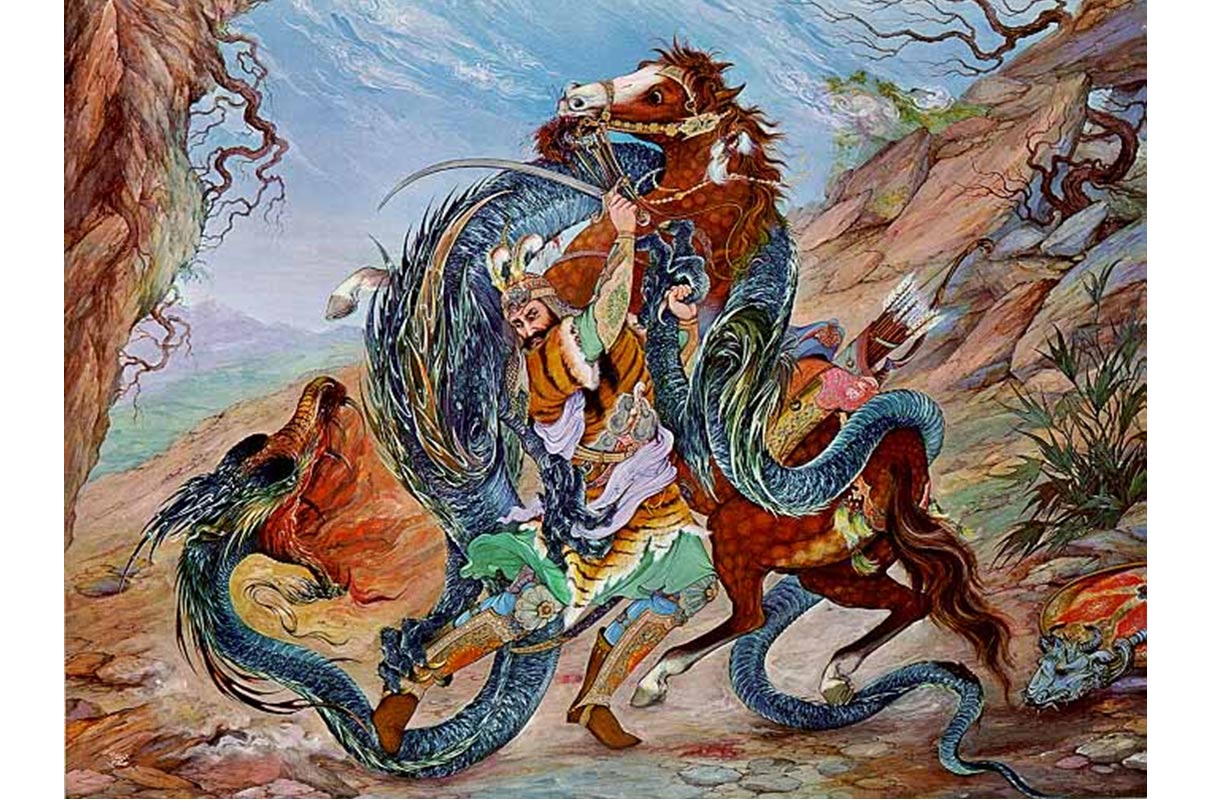
Rostam the hero fighting the Dragon in the Seven Quests of Rostam. Iranian miniature illustration from Shahnameh
In 977 AD, a Persian poet named Ferdowsi began on a grandiose poetic journey that would take him 33 years to complete. He used ancient Persian tales which had been told from generation to generation for several millennia as the source for writing his poems about epic kings and heroes and about mythical creatures and adventures. This resulted in the creation of the epic which in Persian is called Shahnameh or translated The Book of Kings, the longest poem ever written in history. Ferdowsi's great aim was to revive the ancient Persian culture, mythology and language after the invasion of the Islamic Caliphate of the Arabs.

The Life of Ferdowsi


Ferdowsi was born in 935 AD in the city of Tus located in the modern day province called Khorasan in northeastern Iran. At this time, the Samanid dynasty had restored native Persian rule on Iranian territories as the second post-Islamic Persian empire after the eastern parts of the Islamic Caliphate had been liberated from the Arabs in 861 AD. Ferdowsi came from a line of wealthy noble families which generation after generation inherited the title dehqan. The dehqans were among the social top class and were the leaders of communities and owners of land. By the time Persians were violently forced to become Muslims after the invasions, the dehqans converted to Islam not for following Islam itself, but mainly for using their social authority for preserving the ancient Zoroastrian culture of Persia. For centuries, the dehqans were the preservers of the traditional customs, culture and literature of ancient Persia and hence acted as fundamental factors for the survival of Iranian identity. Dehqans were often able to afford the best education which resulted in Ferdowsi gaining considerable knowledge in literature. He was closely tied to the ancient Persian culture and studied ancient scripts which inspired his poetry.
In the year 977 AD, a shift in power had been initiated in Persia with the end of the Samanid dynasty and the beginning of the Ghaznavid dynasty. Ferdowsi became a poet of the Ghaznavid royal court and due to the exquisite and superb quality of the poems that he wrote, the king entitled him Ferdowsi. This name derives from the Persian word pardisi or fardisi which means from paradise . With the new title given to him by the king, he began writing Shahnameh which would become the greatest poetic journey of his life and one of the greatest works of poetry in the world.
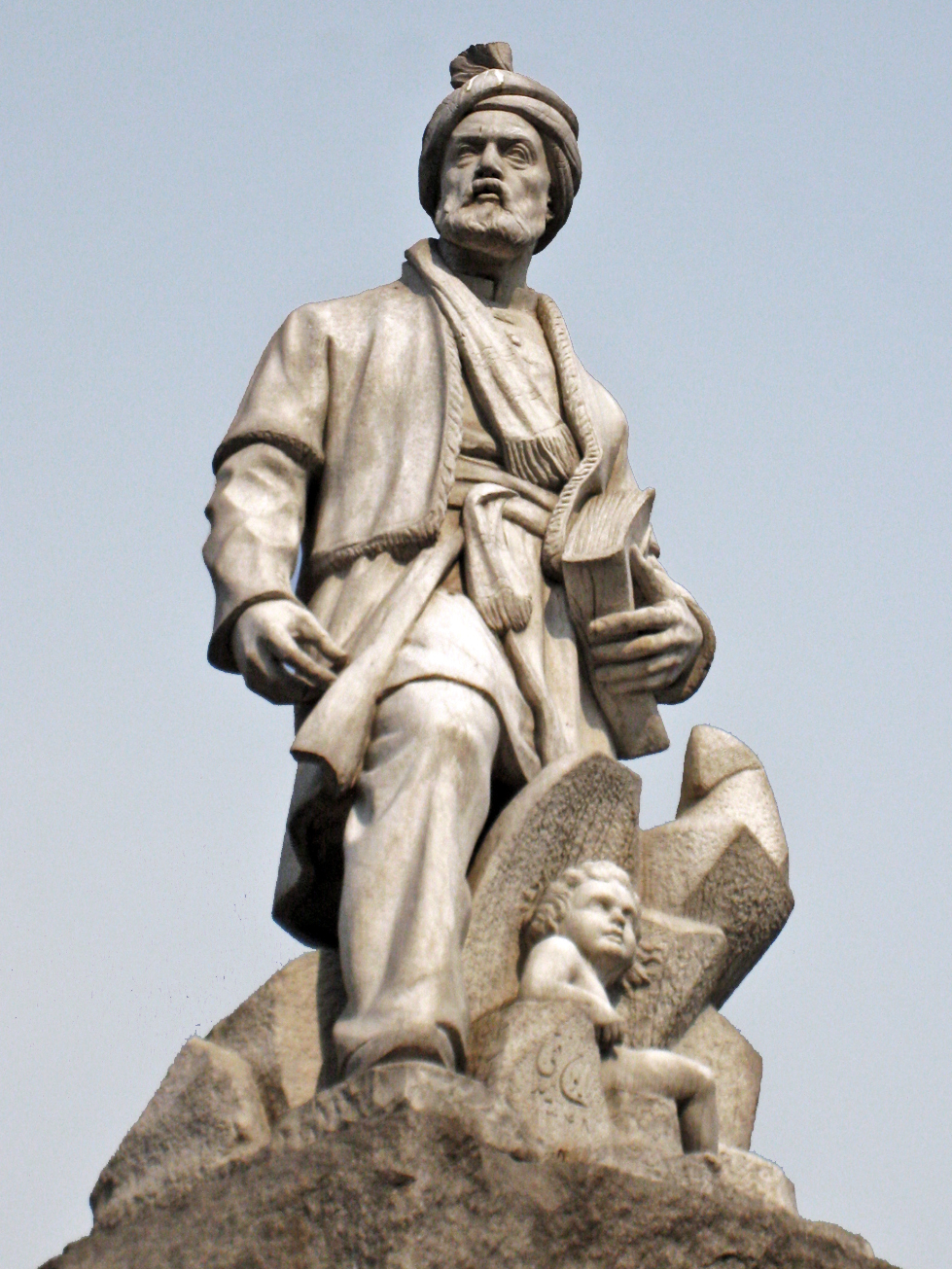
Statue of Ferdowsi in Tehran, Iran
Statue of Ferdowsi in Tehran, Iran ( http://toos051.persiangig.com/new_folder/Ferdowsi_Statue.jpg)

Shahnameh – The Epic


Prior to writing Shahnameh, Ferdowsi collected literary material from ancient sources such as from the middle Persian Pahlavi work named Khodaynameh, which translates to Book of God in English. The documentation of this ancient work was ordered by the Sassanid king Anushiravan and was based on historical facts documented by Zoroastrian priests as well as legendary accounts of mythical eras written in Avesta, the holy book of the Zoroastrian religion Some ancient sources has stated that the Persian literary tradition of recording royal events and mythical stories has existed at least from the time of the Achaemenid era in the 6th century B.C, although the stories are thousands of years older and have been transferred verbally for generations. Many of the stories are very similar to ancient Indo-Iranian/Aryan stories, indicating the close connection of Persians to their Aryan heritage.

Ferdowsi divided the timeline of Shahnameh into three major periods; the mythical era the heroic era and the historical era . A very brief description of each era follows:        
The mythical era comprises of poems about the creation of the world and of the first man named Keyumars who became the first king. Keyumars's grandson Hushang discovered fire and established the yearly fire festival Sadeh. Jamshid the shepherd, who became a great king in the favor of God named Ahura Mazda, ruled the lands with prosperity and struck down the evil demons named deev. Jamshid also established the Persian New Year Nowruz meaning New Day which is celebrated on 20 March every year. The child of the devil Ahriman, the evil serpent man Zahhak, killed Jamshid and became the new king. Ahriman kissed Zahhak's shoulders and out of his shoulders, two snakes grew out. Zahhak tried to cut off the snakes but they always grew out again, he was cursed. The snakes required to be fed with fresh brains of young boys every day. Zahhak therefore fulfilled their requests in fear of being killed by the snakes. This led to the uprising of the blacksmith Kaveh who refused to sacrifice his last son. Kaveh started the uprising and made a banner out of his leather apron by putting it on top of a spearhead. With the help of the people and a prince named Fereydun who eventually became king, they captured Zahhak and chained him to mount Damavand in northern Iran, the highest volcano in all of Asia and the highest peak in the Middle East. There are stories about king Fereydun and his three sons Salm, Tur and the youngest Iraj. They inherited the three corners of the world after their father died and Iraj inherited the empire of Persia. This resulted in jealousy of the two older brothers towards their younger brother Iraj and stories about epic wars between the brothers are told. Iraj was killed by Tur and Iraj’s grandson Manuchehr became the king of Persia to avenge his grandfather's death

Zahhak bound on mount Damavand. Baysungur's Shahnama, 1430.
Zahhak bound on mount Damavand. Baysungur's Shahnama, 1430. ( Wikimedia Commons )
The heroic era comprises of poems about legendary love stories, epic heroes and battles. A man named Sam, who was the fellow companion of king Manuchehr, became the father of a child who he named Zal. Zal was born albino with white hair and pale skin. Manuchehr thought the child was demonic and Zal was therefore rejected as an infant and put on top of mount Damavand to die. Luckily, the loving and wise mythical bird Simorgh who nested in the mountain, found Zal and nourished him. Simorgh had experienced three ancient world destructions from which she harbored the knowledge of all ages. When Zal had grown up, he left the custody of Simorgh. Simorgh gave him three golden feathers from her wing which Zal could burn in a sacred fire whenever he needed help from Simorgh. Zal met his love, princess Rudabeh and she fell in love with Zal's unique features, charisma and wisdom. They eventually married and Rudabeh gave birth to a boy who they named Rostam. Rostam grew up to become the greatest hero of Persia. He went on seven adventures called the Seven Quests of Rostam, where he together with his loyal and strong horse Rakhsh fought battles with the White demon, The beautiful Sorceress, the Dragon, the Lion and various kings. Rostam found his love, princess Tahmineh and they became parents to a boy named Sohrab. Rostam gave Sohrab a bracelet as a gift when he was an infant before leaving him and Tahmineh. Sohrab grew up without ever seeing Rostam until several years later when the armies of Rostam and Sohrab met in a battle. Father and son did not know each other until Rostam fatally wounded Sohrab in a duel. It was then, while Sohrab was dying in his arms, that Rostam noticed the bracelet around Sohrab's neck. Rostam then tragically realized that he had killed his own son. The legendary love story is also told about Bijan, the son of a famous knight from Persia and Manijeh, the princess of an empire called Turan in modern day Central Asia, which mythologically was the greatest enemy of Persia. This love story ultimately resulted in an epic war between the two empires.
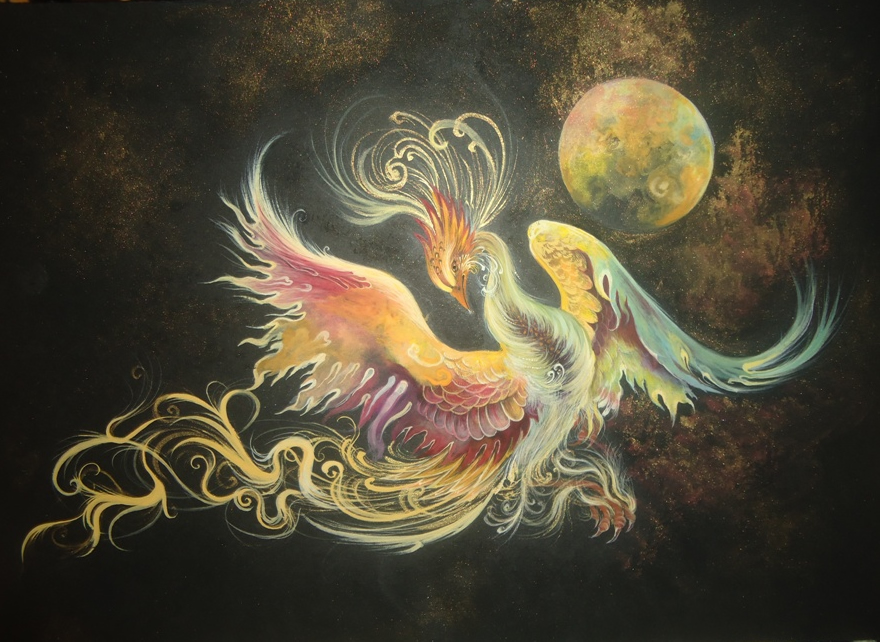
Iranian miniature painting of the mythical bird Simorgh
Iranian miniature painting of the mythical bird Simorgh ( http://nadiaartgallery.com/wp-content/uploads/2013/07/simorgh.jpg)
The historical era comprises of historical accounts starting from the dynasty of the Parthian kings after Iranian territories had been freed from Greek and Macedonian rulers. A lot of the focus is put on the succeeding dynasty of the Sassanid emperors and the stories regarding this dynasty are exquisitely told. Shahnameh ends with the Islamic Arab conquest of Persia in 651 AD. Ferdowsi poetically described this event as a major disaster over what he calls the arrival of “the army of darkness”.

The Legacy of Ferdowsi


After 33 years at the age of 71, Ferdowsi finished the writing of Shahnameh on 8 March 1010 AD and in 1020 AD, Ferdowsi died at the age of 82. He was buried in his birth place Tus. Shahnameh contains 62 stories, 990 chapters and 60 000 rhyming couplets which makes it the longest poem in the history of literature, a work seven times longer than the Illiad of Homer. Ferdowsi wrote his work entirely in classical Persian which is still spoken today by Iranians and people related to the Iranian culture in countries once part of Greater Iran. It was a linguistic renaissance considering that the Persian language was officially banned in Persia by the Arab rulers for almost 200 years. Today, Shahnameh is a common book in Iranian households and it is the national epic of the Persian speaking world. The epic stories of this masterpiece influenced the literature of Asia for centuries and the stories are enthusiastically told to this day. The philosophical message of Shahnameh is that since the world is transient and everyone is merely a passerby, one is wise enough to avoid cruelty, lying and other evil deeds. Instead one should strive for justice, truth and order which brings happiness, ease and honor. Ferdowsi put lifelong dedication and sacrificed a lot to complete his work. Ferdowsi's writing style is that of a superb poet's. His epic language is rich, moving and lavish so that it truly enchants the reader. He is remembered as the greatest of the Persian poets who with the power of the pen rescued and revived the Persian language, culture and heritage.
Ferdowsi's tomb in Tus, Iran
Ferdowsi's tomb in Tus, Iran ( Wikimedia Commons )
Below are the words of Sohrab spoken to Rostam as he did not know he was dying in the arms of his father. From Shahnameh - The Persian Book of Kings, translated by Dick Davis:
I brought this on myself, this is from me,
And Fate has merely handed you the key
To my brief life, not you but heaven's vault –
Which raised me and then killed me – is at fault.
Love for my father led me here to die.
My mother gave me signs to know him by,
And you could be a fish within the sea,
Or pitch black, lost in night's obscurity,
Or be a star in heaven's endless space,
Or vanish from the earth and leave no trace,
But still my father, when he knows I'm dead,
Will bring down condign vengeance on your head.
One from this noble land will take this sign
To Rostam's hands, and tell him it was mine,
And say I sought him always, far and wide,
And that at last, in seeking him, I died.