
By Palestine Chronicle Staff
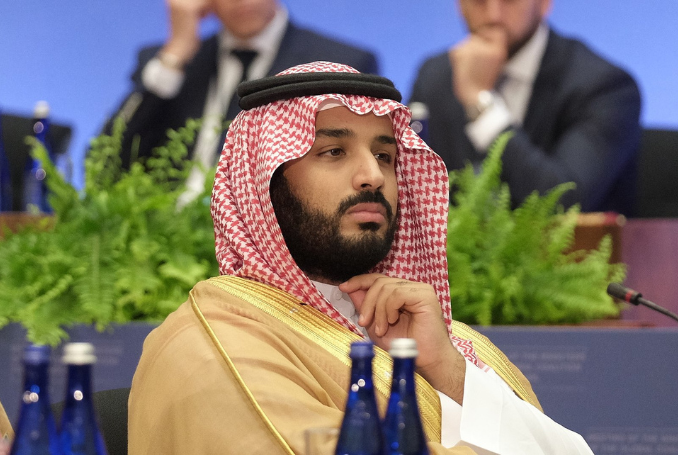 Crown Prince of Saudi Arabia Mohammad Bin Salman. (Photo: US Department of State, via Wikimedia Commons)
Yemen could become a major threat to the Israelis and the Saudis already see them as an existential challenge.
Hebrew-language media reports have revealed that Israel has been aiding Saudi Arabia’s fight against the Ansarallah-led government in Yemen. The Israeli media has also been hosting a range of pundits and citing security officials who have become increasingly paranoid about the rapid capture of territory by the Yemeni Armed Forces.
Throughout the course of the Gaza Genocide, only one nation’s government decided to order direct military action in defense of the Palestinian people. The Sana’a-based government, led by the Ansarallah Party, almost immediately began firing missiles and drones towards Israeli targets, before imposing a blockade in the Red Sea to prevent all traffic to the Port of Eilat.
Previously, Yemen was never taken seriously by officials in Tel Aviv as a major regional threat. Despite the anti-Israeli rhetoric of officials in Sana’a, Hezbollah and Hamas were seen as the biggest security challenges behind the threat of Iran’s Islamic Revolutionary Guard Corps (IRGC). Therefore, despite the Israelis having participated in training Emirati-backed militants that were being prepared to enter Yemen and private Israeli security firms working as contract killers inside Yemeni territory, the Israelis had not invested an enormous amount of effort into the war.
Following October 7, 2023, this then left the Israelis facing a major intelligence blind spot that they have since worked to make up for. The Mossad had not successfully managed to infiltrate the Ansarallah movement in any meaningful way and the target bank that Israel had was exposed to be extremely weak.
Meanwhile, throughout the Gaza Genocide, the Yemeni Armed Forces began developing more sophisticated long-range munitions, which they eventually succeeded in using to successfully attack a range of Israeli targets.
The most devastating blow landed on the Israeli regime, however, was the effects of the Red Sea blockade. In order to try and break the siege, the Israelis pressured the Biden administration into launching two failed operations against Ansarallah, followed by ordering the Trump administration to carry out a large-scale bombing campaign early last year.
As a result of the Red Sea blockade on Israel-linked shipping, the Port of Eilat was totally bankrupted. With the termination of the Port’s existence also came the elimination of countless Israeli businesses and an enormous blow to its southern economy.
Following the so-called ceasefire in Gaza, Yemen ended its blockade in accordance with the deal struck between Hamas and Israel, meaning that Tel Aviv had sought to once again revive its southern Port and began preparations for this effort. That was, of course, until the recent offensive inside Yemen.
Yemen’s Armed Forces have swiftly liberated their entire western coastline from Saudi Arabia’s proxy forces over the past weeks, taking full control of the strategic Bab al-Mandab Strait. While Yemen has not closed the Strait, which would halt all trade to Europe through the Suez Canal, the Israelis know full well that their future planned military operations could once again trigger a renewed blockade.
If Yemen once again seeks to impose a blockade on Israel, it can be done with much more ease than in the past. Some analysts have posited that closing Bab al-Mandab could be achieved even with light weapons and that the Ansarallah Party will prevent any Israeli ship from even attempting to pass the Strait.
The Bigger Picture
While there can be no doubt that Yemen’s gains against Saudi Arabia’s proxies are causing alarm bells to ring in Tel Aviv, there are also much more threatening prospects of the ongoing campaign to liberate the nation’s territory.
If the Yemeni Armed Forces continue to capture more territory and eventually end up taking over the southern strategic port city of Aden, then the Israeli-aligned, US-backed Persian Gulf Monarchies could also come under threat. Their peoples could begin to take influence from the Yemeni government, which would be anti-Israel and independent.
Furthermore, a liberated Yemen with access to its resources and that even becomes open to part of the rest of the world will grow its strength exponentially. It has already demonstrated itself to be perhaps the second most dominant missile power in the region. If it is finally able to break free from Saudi Arabia’s blockade and to get access to its oil resources, what the Israelis could be facing is another Iran in the future.
This would be an independent Islamic government that has a foreign policy dedicated to the liberation of Palestine and supporting resistance across the region. Nobody is even capable of predicting what kind of military advancements the nation could make in the long run.
A number of military exercises have been held by the Israelis since early February of this year, preparing for the event of an invasion of Eilat from the sea. This demonstrates that they are very much taking Yemen seriously, especially as the Yemeni Armed Forces have themselves been training for an invasion of southern occupied Palestine and the seizure of Israeli military bases.
Saudi Arabia, for its part, is in a state of total desperation; they are taking enormous hits to their oil infrastructure, are being blockaded, and suffer daily military embarrassments, all as their proxy forces get driven out of more towns, cities and villages by the day. The problem Riyadh suffers is that it was pushed into this war by the US in 2015, refusing to accept its failures ever since. Now it has no route to victory, and the longer the war rages on, the worse predicament they will be in.
Riyadh has long maintained intelligence ties with the Israelis, allegedly even conducting a joint operation with them and the US last year inside Yemen. According to Israeli media reports, the Saudis requested US help with targeting Yemen’s Armed Forces, which was then extended to the Israelis. To cut a long story short, the Hebrew media says the Israelis are now reportedly aiding the Saudis.
Unnamed Israeli officials say that the information shared with Saudi Arabia is sent via US Central Command; this is almost certainly untrue. The reason why they would claim this is that there are no official security channels between Riyadh and Tel Aviv. Unofficially, they are in direct communication and Israeli security officials are able to travel to Saudi territory to meet with their counterparts.
Saudi Arabia will not admit this and is likely frustrated that the Hebrew media is reporting on it, yet they don’t have any power in this equation to even tell their Israeli counterparts to stop bragging about their role. Yemen could become a major threat to the Israelis and the Saudis already see them as an existential challenge. It was only ever natural that both sides were to work together, as they have shared interests.

No comments:
Post a Comment