Showing posts with label Travel. Show all posts

Sunday, November 17, 2019

An in-depth look at garments of Turkmen people in Iran

By Samaneh Shahrinejad
Golestan province is home to various ethnic groups including Turkmen, Kazak, Katoul, Qizilbash Turk, Baluch, Semnani, Khorasani amongst others. The northern Iranian province enjoys a colorful landscape and different subcultures as well.
The variety of clothing as one of the most important cultural expressions of Golestani tribes is one of the important topics of research and tourism attractions. Different ethnic groups come together in ritual ceremonies with colored clothes and form a beautiful colorful circle. The study of clothing in the regions of Golestan province among the Turkmen people indicates that the climatic, geographical and cultural conditions affected it. This transformation can be seen in the language and lifestyle of the region. In this field research, I aimed to introduce indigenous and local garments of the Turkmen people.
Turkmen natives and local clothing
Turkmen women decorated their clothes with beautifully sewing. In the past, they used simple dresses without decorations in everyday life. The local women's clothing consists of hats, shirts, belts, pants, Qaba, socks and shoes. Turkmen men's clothing includes: head cover, foot cap, Qaba, trousers, lumbar shawls, shirts, overalls, socks and shoes.
In terms of application, ladies' clothes are divided into several categories:
* Working clothes: used for agricultural purposes and for cooking bread and home affairs.
* City clothes: used for going out and buying from the market.
* Ceremonial clothes: they wear these clothes when they take part in the celebration.
* Home clothes: Different depending on the age of the family.
The use of the shape and color is different for the child and the young, male and female. It is even different for the new bride and groom, such that they cover the front of the new bride with curtains that are fitted with chicken feathers, beads and colored fabric pieces to protect him from eye sores, and wrap her waist with green scarf for good luck.
Girls wear hats before they are married, all of which is covered with silk fiber, and when they come to the feast and celebration, they will put jewelry named of Qupe on it, and when they want to marry, they take off their hat and Qupe and they wear a sarband with another form. At weddings and celebrations, they wear new clothes and use more jewelry, and the beauty of dresses will be doubled with colorful sewing and different shapes.
Turkmen local clothing is seen in Bandar Torkman, Aqqala, Gonbad-e Kavus, Kalaleh and in the surrounding villages.
Women's clothing components:
- Shirt: A red silk shirt called "Quinoc", which is made of handmade silk cloth with red, yellow, and black striped lines. The collar is round and slotted to the chest for girls, and taller to the abdomen for mothers. The sleeves are tall and the height of the shirt is up to the ankles. Mostly, they weave around the sleeves and collar with colorful silk fibers. They wrap under the neck of the collar with a round flower, with gold or silver, embroidered with turquoise. The fabric of the shirt is considered to be appropriate for the season. In the summer, it is made of cotton cloth, and in winter, it is made of cloth and silk, but there are more pieces and sometimes some dresses are worn over, in the winter the dress is tighter and in the summer it is looser.
Chavut (Chabit, Shawut): A kind of long sleeved or short sleeved open front cloth, that besides the sewing in the front and side of the slot, there are some jewelry woven on it, and depending on the status of family, the jewelry is of gold or silver. They wear it at parties and festivities.
In silk cloths, to protect the fabric from wearing out in contact with sweat, they wove a piece of fabric between sleeve and the cloth and sometimes they changed it, and in this way the whole cloth won’t get hurt.
- Charvod: A dress similar to a women's coat used in winter. Its cloth is made of colorful velvet.
- Chikmen (Chuckman): A woolen dress that is of two types: the Inche Chakman (thin Chakman) and the Yogin Chakman (Thick Chakman).
- Kurte: A long dress that is actually a type of scarf and thick winter coat with a lot of shapes woven on it. It looks like a jacket that women put on of the sides of it over their heads.
Chourbi (Cherbi, Serbi): A raincoat that has a long sleeve attached to each other, without a collar and a button that women put it on like a chador. Unlike the Kurte, Chourbi does not have any space between the motifs.
Belt: Women wear a belt called "Ghoshaq" made of silk. Clamping this shawl on the shirt will cause the shirt to be shorter and not bother the women. In addition, it is healthy for the waist and abdomen.
Trousers (Balaq): The upper part of the trousers is made from a cotton fabric and a section that appears underneath the shirt is made of silk with linen and different and colorful shapes sewn on it. The edges of the fabric are sewn to the inside of the leg with a tied black or girly strand called "Jahak" so as not to fade due to friction. In the past, the pants were tied up with a strap and the genus was cotton and handmade, and they were called Uchqer.
Socks: Turkmen women, like most women in Iran, weave colorful wool and silk socks for themselves and their men, and sometimes they sell them to the market. In the past, they used “Dolaq” instead of socks. Dolaq was a cloth that was wrapped around their feet.
Shoe: In the past, they wore black rubber shoes imported from Russia, but now they use shoes in the market. There was a kind of heeled shoes called "Uk Jeli Kevesh". There were shoes from the residents of Jajarm which called "Garmehei" and it was made of leather.
Men's clothing components:
- Shirt: Men's shirt with a simple sleeve and trim, normal height and round neck and without turning back. At the side of the neck, it closes with the button and the slot of the shirt is placed on the right side of the chest.
Another kind of plain shirt is without collar and button with a long sleeve, and a strap is used instead of the button, and was called a "Sep Jeqe".
- Qaba: Turkmen men's clothing, a simple dress without turned collar with long sleeves (without a sub-jacket), instead, at the ends of the sleeves and the upper part of it there are some slots, and the two sides are placed over each other. It is held with a brace or a wide leather belt. Fabrics used in this cloth include:
* Qermez don: Silk fabric with red background and yellow lines.
* Aqli don: red silk fabric with white and black lines.
* Sari don: A cream colored wool cloth called "Chukman".
- Fur: In the winter, men use Fur or sheaths called "Ichmig". The best type of Fur is “Baqana Ichmig” which is made from the skin of a one-month-old lamb. The other types of Fur are from the skin of 5 to 6 months old lambs and after tanning with a variety of natural substances it turns to yellow.
- Don: A plain, non-collar or collar outfit, with long sleeves and the ends of the sleeves and upper parts have slots. Both sides are placed on top of each other and are firmly fixed with a brace and sometimes with a leather belt.
- Chatal: Light clothing that was used by men during the war.
- Kuzet Bijim: They are also known as Chabit. A dress with wide, very tight sleeves that reaches to the knee. The sides of the dress has a cut and it has pocket from inside.
- Chuckman: A top-dressed like men's overcoat. This cover is of two types: Inche Chukman and Yoqin Chukman, both of which were made from camel wool.
- Ichmik: Winter furs or sheaths that were of three types: Silkme Ichmik, Buqane Ichmik, and Kar Ishchi Ichmik. It has a long, tight sleeveless sleeve that reaches to the knee.
- Benafje: A winter coat without sleeves which is black and they put on like cape.
Trousers: Mostly were made of black cloth, and its cut was like a woman's trousers, with the difference that the cloth was cut in whole and the margin of the top was very simple. Men called the under wear pants "Balak", and the top trousers were called "Jolbar".
Foot covers (Balaq Chik - Dolaq): The rich men were more likely to travel with horses, and wear this on the trousers around the wrists and legs. In this way the loose pants were tightened and the leg was comfortable in stirrup. Farmers and shepherds also wore this to the wrists and legs.
Waist Shawl: In the festivities and parties, a belt called "Sotok Shaq", which was made from goat's wool was wore around the waist. In the summer, they used a shawl called "Yashil Kutuni - Keteni".
Footwear
Shoes: Farmers and shepherds wore a kind of leather shoes called "Choqi or Choqai". Ghezelbash Charagh was also a leather shoe that covered the legs underneath the shin, and was fasten in crosswise form by a narrow leather band. This kind of fastening the lace was called "Artanaq" and they believed that they had come from the Persians.
- Boots: The main footwear of the Turkmen men are long leather boots that have been turned upside down and are also called “Kosh”. “Adik” is another kind of boot.
- Charoq: The most common type of men's shoes that were made from raw leather of a camel or cow. It was usually used in the cold season.
- Yalqan (Chapak - Yelkan): A summer footwear that is made from camel leather. It has three holes, one on top and two on the flanks, and a band passes through them and tightens it by knitting.
Color in Turkmen folk garments
In different regions of the Golestan province, Turkmen women have special customs for their silk fabrics during the dyeing process. Such that the person who carries out the dyeing process should have these features: to be skilled in the work, to be honest, to have chastity the dyeing stages (this is also true during the silk weaving process). Each nation gives specific meanings to colors, and these particular meanings do affect the use of various colors in different clothes. The use of red in the dress of the Turkmen women, which is the dominant color in most women's clothing, gives them a sense of freshness and vitality. The red color in the eyes of the native woman is a sign of heart and fire, which brings youth and life for the elderly women.
 In many localities in Iran, different colors and decorations are considered for different age groups. Since indigenous Turkmen women throughout the Golestan Province, work both at home and also work outdoors together with their husbands in livestock and farming, they need to have a double strength, some of which they get from their clothes.
The Turkmen women believe that the use of red color makes it possible for other colors to be used and decorated on clothes. For this, the red color is the base color and other colors like yellow, blue, green and silver are decorative colors. The red color has been seen as the dominant color in most indigenous clothing of other women in Iran, such as Khorasan and Semnan. They have a spiritual value for this color, this color gives them joy and vitality.
Conclusion
One of the tools of cultural recognition of societies is dress. Each item of clothing, material and color of the fabric, the design and pattern of the sewing of clothing, and their adornments symbolize different concepts. The garment represents its political, economic, religious, and occupational status, and determines the status and position of the person in different social groups. Therefore, the study of the people of a tribe and the study of the language and culture of the clothes of its people and society in the present and past, and the evolution and historical transformation of the types of clothing and their impact and influence are valuable in the researches of social sciences, specially to anthropology. In a more comprehensive view, Turkmen folk anthropology can be categorized into three categories:
A) The basis of beliefs: For example, latency is one of the characteristics of apparel due to social and cultural status.
B) Environmental and climatic factors that take into account the material and type of clothing and even the sewing, clothing components and materials.
C) Social conditions and relationships such as type and way of livelihood, traditions, and ceremonies are among the factors affecting the type and quality of clothing.

Friday, September 20, 2019

Visit mysterious Katale-Khor in western Iran

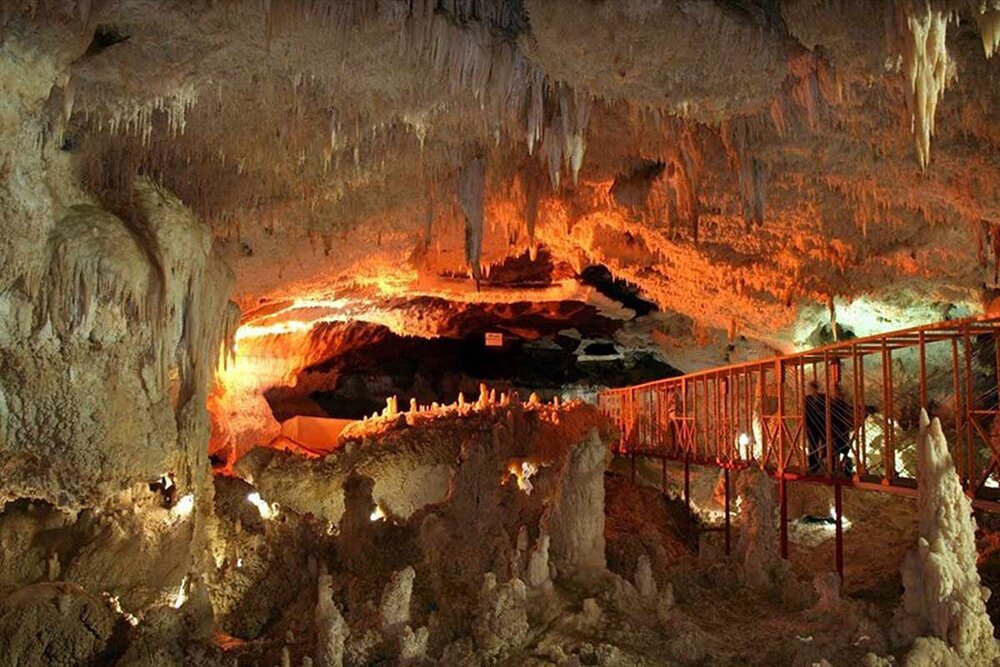
TEHRAN – Iran has many caves, some of which are unique and special. Situated in Zanjan province, Katale-Khor cave offers its visitors breathtaking scenes of natural crystals and rock formation.
Katale-Khor, literally meaning “Mountain of Sun”, is said to date back to Jurassic period (some 120 million years ago), however, it has embraced lots of natural and artificial changes during this lengthy period. The cave was reportedly discovered some seven decades ago by a group of Iranian cavers.
Katale-Khor is estimated to date from tens of million years ago. It features millions of lime stalactites and stalagmites.
The cave interiors embrace huge hallways and corridors, which are impressively lit by flashlights.
Some three-seventh of the prolonged cave have been explored so far. A length of about 3km of the cave is open to the public while a 4km-route is accessible to experienced cavers and researchers. 
Exploring a cave may not be on the “to-do list” of travelers in Iran. However, Karaftu, Ali-Sadr and Quri Qaleh, and Katale-Khor are amongst the most visited caves, the latter is situated some 150km south of Zanjan, off a road that connects Soltaniyeh to Hamedan.
The extensive Katale-Khor cave system, rated by locals as the best in western Iran, is 150km south of Zanjan, off the Soltaniyeh–Hamadan road near Garmab. According to Lonely Planet, less visited than the more famous Ali Sadr caves, which it is thought to eventually join, Katale-Khor has 3km open to the public and another 4km available for experienced cavers. There are six recorded levels and a visit takes one to two hours. There’s no public transport to the site; hire a taxi.
Iran is geologically a part of the Alpine-Himalayan organic belt. According to Britannica Encyclopedia, the enigmatic evidence of human presence on the Iranian plateau is as early as Lower Paleolithic times.
The first well-documented evidence of human habitation is in deposits from several excavated cave and rock-shelter sites, located mainly in the Zagros Mountains of western Iran and dated to Middle Paleolithic or Mousterian times (c. 100,000 BC).
Under tourists’ eyes
Here is a select of comments that visitors to the cave have posted to TripAdvisor, one of the most popular travel websites in the world:
“Stalagmites and stalactites”
The existence of nature’s carvings through million years in the beautiful form of stalagmites and stalactites in the corridors and halls is showing off and adds to the beauty of the Cave.
In some corridors animals’ skeletons were found which are not similar to nowadays animal and probably belong to the extinguished generations of the past ages.
It’s good to stay in Zanjan’s hotels, plan one day trip to Cave and back to Zanjan again. It will take about 6 hours ( 2 hours driving there ,2-3 hours visit the Cave , 2 hours drive back to Zanjan). (Rich C.; Reviewed March 2016)
“Beautiful but less-visited”
This cave system is much less popular than Ali-Sadr Cave further south - which is a shame, given the extent and quality of the grottos. There is the (unfortunately expected) colored lighting, but even that cannot hide magnificence of the glaze-like stalactites.
Getting there can be a bit complicated without a private car: Shared taxis might take you as far as Garmab from either Bijar (changing at Khoorkhoreh and Tatardeh) or Zanjan (probably changing in Qeydar), from where you can hire a taxi. Alternatively, hire a taxi for a day - we paid appr $15 Bijar return. This would allow for a combined visit with Takht-e Soleyman. (a_appelt from Aarhus, Denmark; Reviewed June 2016)
“mountain of the sun”
The name, Katale Khor, means “mountain of the sun”. Geological studies in 1984 showed that the cave formation dates back to the Jurassic period. It is believed that the cave is connected to Ali Sadr Cave in Hamadan province. The road from Zanjan to Katale Khor passes Soltaniyeh, an ancient Ilkhanid city. The cave was discovered about 90 years ago. It has many remarkable scenes that is rare to see in other area even if exist. I took several photo from the different part of 2500 meters walking distance within the cave. (Kaveh H. from Ottawa, Canada; Reviewed April 2016)

Saturday, September 14, 2019

Iran ranks 1st globally as a pocket-friendly destination: WEF

TEHRAN – The World Economic Forum (WEF) has ranked Iran first in the world as a pocket-friendly destination.
“Iran ranks 1st globally [in the category of Price Competitiveness], thanks to low ticket taxes and airport charges (7th), fuel prices (5th) and high purchasing power (5th),” according to WEF’s Travel & Tourism Competitiveness Report 2019, which was released earlier this month.
The Forum also categorized the Islamic Republic in “The Middle East and North Africa (MENA)” region, saying “In fact, no MENA country scores above the global average for natural resources and only Egypt and Iran score above for cultural resources.”
“The MENA region improved its T&T [travel and tourism] competitiveness since the last edition of the TTCI [Travel and Tourism Competitiveness Index]. With 12 of the 15 MENA economies covered by this year’s index increasing their score compared to 2017, the region was able to slightly outpace the global average in competitiveness growth. This is particularly important given that, in the aggregate, T&T accounts for a greater share of regional GDP than in any of the other four regions.”
Regarding tourism expenditure, the report says “MENA is also the only region where international visitor spending is greater than domestic visitor spending. Yet despite improved competitiveness and a strong reliance on T&T for overall economic growth, MENA continues to underperform the global TTCI score average.”
Spain, France, Germany, Japan and the United States are considered as the world’s most travel-ready nations, according to the latest travel and tourism ranking of the World Economic Forum.
“There’s little change since the last edition was released two years ago, with only one country altering its position: the United Kingdom has slid to sixth place, behind the United States.”
Tourism on the rise
The travel and tourism industry contributes 5% towards Spain's overall GDP, a figure that looks set to rise over the next decade as the global middle class – particularly in regions such as Asia – continues to grow, weforum.org wrote.
In fact, travel and tourism as a global industry has flourished since the last report in 2017, and its contribution to global GDP (currently at 10%) is expected to rise by as much as 50% over the next decade. At the same time, one of the big findings of this year’s report was that growth in tourism-friendly infrastructure – roads, ports, airports and hotel accommodation, for example – has languished at only 1.4%.
“As international connectedness continues to rise, we see travel and tourism competitiveness continue to grow,” says Christoph Wolff, World Economic Forum’s Head of Mobility. “Increased tourism is bringing great benefits to many economies but must be managed properly by both policymakers and businesses for a sustainable future.”
For over a decade the World Economic Forum engaged leaders in travel and tourism to carry out an in-depth analysis of the travel and tourism (T&T) competitiveness. Published biennially, Travel & Tourism Competitiveness Report and Index benchmarks the T&T competitiveness of 140 economies and measures the set of factors and policies that enable the sustainable development of the Travel & Tourism (T&T) sector, which in turn, contributes to the development and competitiveness of a country.
Tourism in Iran
Last November, the Trump administration reinstated sanctions on Iran, mainly the ones that had been lifted under the 2015 nuclear deal, in order to batter Iran’s economy, however, according to official data, they have so far failed to lessen foreign arrivals to the Islamic Republic.
Although the sanctions together with anti-Iran propaganda campaigns have decreased Western tourists but the country has managed to compensate and even improve by doing its best to attract more from neighboring states.
“Nearly 7.8 million foreign nationals visited Iran over the past year that shows a 52.5 percent increase year on year. The country hosted 5.1 million travelers in 1396 (March 2017-18),” deputy tourism chief Vali Teymouri said in April.
Iran also eyes to have a bigger share of Chinese tourism, as it, in a unilateral measure, recently approved to waive the visa requirement for the Chinese passport holders. To encourage and reassure sightseers, the Iranian government has decided not to stamp the passports of foreign tourists to help them skip the U.S. travel ban.
Iran hosted a record high of nearly 600,000 medical travelers during the first four months of the current Iranian calendar year (March 21-July 21), nearly equal to the figure for the whole past year, according to an Iranian association for the health tourism promotion. It has set its goals to exceed its yearly medical travelers to around 2 million in [calendar year] 1404 (March 2025-March 2026).
The 2019 Travel Risk Map, which shows the risk level around the world, puts Iran among countries with “insignificant risk”, a category where the UK, Denmark, Switzerland, Norway, and Finland are placed in.
The Islamic Republic boasts hundreds of historical sites such as bazaars, museums, mosques, bridges, bathhouses, madrasas, mausoleums, churches, towers, and mansions, of which 22 being inscribed on the UNESCO World Heritage list.

Saturday, August 31, 2019

A glance at essential elements of traditional architecture in Iran

TEHRAN - Persian architecture has a long and complex history. The Elamite, Achaemenian, Hellenistic, and other pre-Islamic dynasties left striking stone testaments to their greatness, such as Chogha Zanbil and Persepolis—both designated as UNESCO World Heritage sites in 1979. 
Three monastic ensembles central to the Armenian Christian faith were collectively recognized as a World Heritage site in 2008. Their architecture represents a confluence of Byzantine, Persian, and Armenian cultures. 
From the Islamic period the architectural achievements of the Seljuq, Il-Khanid, and Safavid dynasties are particularly noteworthy. During that time Iranian cities such as Neyshabur, Isfahan, and Shiraz came to be among the great cities of the Islamic world, and their many mosques, madrasahs, shrines, and palaces formed an architectural tradition that was distinctly Iranian within the larger Islamic milieu, according to Encyclopedia Britannica. 
There are some elements that are common among most of the monuments constructed upon Persian architecture.
The usage of iwans (porticos)
An iwan is a vaulted space that opens on one side to a courtyard. The idea of iwan developed in pre-Islamic Iran where it was used in monumental and imperial architecture. 
Extensive use of arches
The two famous monuments, the Taj Mahal for the Mughal architecture and the Great Mosque of Isfahan for the Persian architecture displays the example of this fact. It is built for aesthetic reasons, as well as to place windows and to lessen the extent of sunlight to pour into the building.
Gardens, fountains, and pools
Water plays a particularly central role in Iranian design: millennia before the invention of the first water pump, Persian agricultural experts created the qanat (subterranean aqueduct) based on their hydraulic laws.
Spacious gardens and pools with fountains have always been a main feature of Persian architecture over time. In a traditional mosque, madrasa, house, it is used for ablutions, aesthetics or both.
Domes 
The Persian tradition of dome-building dates back to the earliest Mesopotamian architecture when domes became an integral part of buildings due to the scarcity of wood in many areas of the Iranian plateau.
In Ancient Persia, domes were associated with the divine side of life, as their circular shape represented perfection, eternity and the heavens, according to Press TV. 
Domes moved to the forefront of Persian architecture during the Sasanian period (224 to 651 CE) and they evolved through different eras until the Safavid dynasty (1501–1732) when the last generation of Persian domes were characterized by a distinctive bulbous profile and astonishing tileworks.
In the Persian urban designing, domes in places of worship and public places, including traditional bazaars, caravansaries, schools and baths, are designed in such a way that can be seen from different parts of urban or rural area.
The domes are normally double-shelled. While the interior shell is designed to carry the weight of the structure, the exterior shell serves as both a decorative element and as insulation against the elements. The aerodynamic shape of the domes also makes the structures more sustainable.
 
Symmetry 
Iranian architecture makes use of abundant symbolic geometry, using pure forms such as the circle and square, and plans are based on often symmetrical layouts featuring rectangular courtyards and halls.
Sassanid architecture is decorated with carved stone or stucco reliefs and makes use of colorful stone mosaics. Beautiful gold and silver dishes, bowls, and ewers, often decorated with hunting scenes or animals in high relief, and textiles with symmetrical heraldic designs also remain.
Usage of Muqarnas
Muqarnas is typically applied to the undersides of domes, pendentives, cornices, squinches, arches, and vaults and is often seen in the mihrab of a mosque. They can be entirely ornamental, or serve as load-bearing structures. The earliest forms of muqarnas domes, found in the Mesopotamian region, were primarily structural.
Calligraphy
 Iranians’ passion for using the script as an artistic impression goes back to pre-Islamic times but it is the work of Islamic era calligraphers and illuminators that elevated its use into the high art we appreciate today. Encouraged by the Islamic preference for the art of calligraphy over representational arts, it developed from epoch to epoch and from style to style.

Wednesday, August 21, 2019

Rudkhan Castle, marvelous stronghold on peak of mountain

By Zahra Mirzafarjouyan

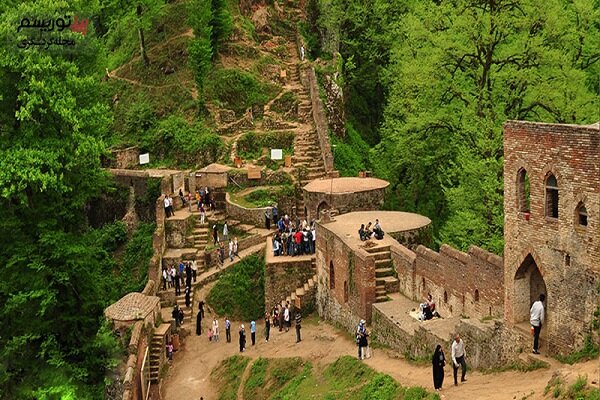
TEHRAN - Rudkhan Castle is a brick and stone medieval castle in Iran. It is 30 km away from the city of Fuman and just nearby its hiking starting point, lays the village of Rudkhan. To reach the castle, there are hundreds of stairs to climb and that is one of the reasons this castle is also known as “The Thousand Step Castle”.
Rudkhan Castle was a military medieval fortress built during the Sasanian Empire (224 – 651 CE) to defend the northern part of the country from southern Arab invaders. This large castle has been renovated and strengthened several times throughout the centuries.
For most of the duration of its life, the castle has been mostly used for uprisings and riots against the central power in the country, and even though it has gone through a huge amount of violence and brutality, it still stands strong, hidden in the middle of northern Gilan’s jungles. In fact, Rudkhan Castle is one of the best well preserved remains of fortifications in ancient Iran.
This one-thousand-year old castle is built with an area of 2.6 hectares and sits smartly at the two peaks of a mountain with 670 and 715 m tall and occupies 50,000 square meters of area. It is also reinforced by strong fortifications and battlements at a length of 1,550 meters. While constructing the fort, the architects benefited from the natural mountainous features of the territory. The castle's 42 towers still stand intact.
The castle consists of several parts, most notable of which are the water reservoir, twelve gates, the prison, 42 watchtowers, housings, and the king’s quarters. The king’s quarters are located on the highest point of the castle and feature breathtaking views of the surrounding area. Castle has two sections, namely one royal residence for the king and royal family, and another residence for soldiers and military activities. The east side of the Fort is a bit smaller and has more military characteristics.
There is such a river called Rudkhan Castle River, which flows near the castle, stretching from south to north. After passing through the dense forests, the big entrance gate of the castle catches your eye at the first. It is situated on the northern side of the castle and has a gate and two towers on its two wings.
To reach the castle, you need to hike in the jungle. Depending on how prepared you are, this hike can take from 1 to 2 hours. The path towards the castle is clearly marked and there are numerous small vendors on your path. The steep path to Rudkhan Castle makes it seem unreachable for some travelers, but all who have reached the castle would agree that the beauty of the jungle and the path itself are what make this hike worthwhile.
The best season to visit Rudkhan Castle is in spring and summer and visiting this area is a bit hard due to it is located in mountains in fall and winter.
If you are visiting Gilan province, don’t miss the chance to see Rudkhan’s outstanding castle. It is highly recommended to start your hike early in the morning (especially in summer, when it can get very hot and humid during the day), so you can enjoy your visit in a less crowded environment.

Thursday, August 08, 2019

Meet designer who brings contemporary architecture to ancient Iran

TEHRAN – There have been many innovative ways to introduce cultural heritage sites to avid sightseers and potential travelers, one may be creating photomontages in order to make them even more inspiring!
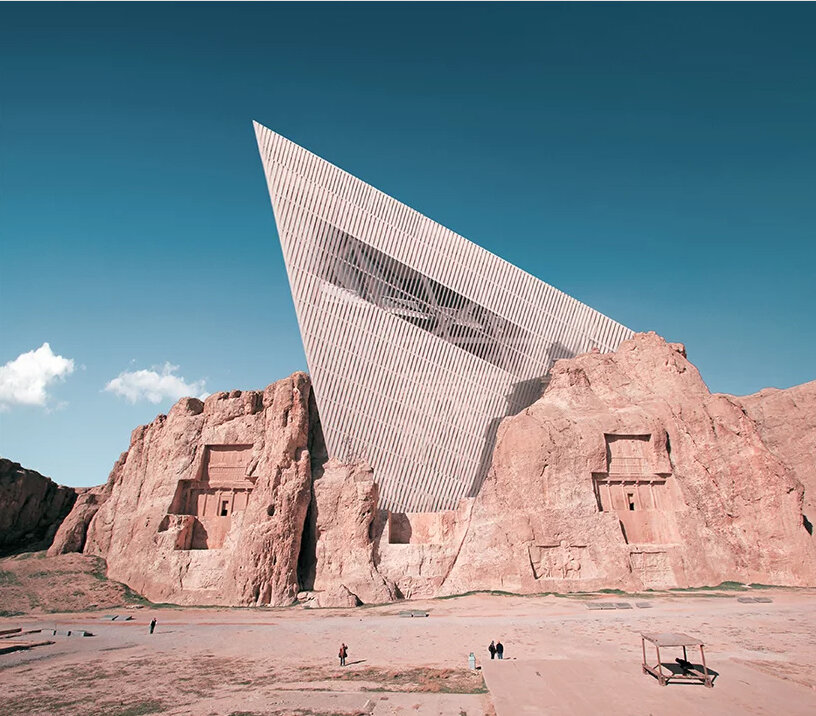
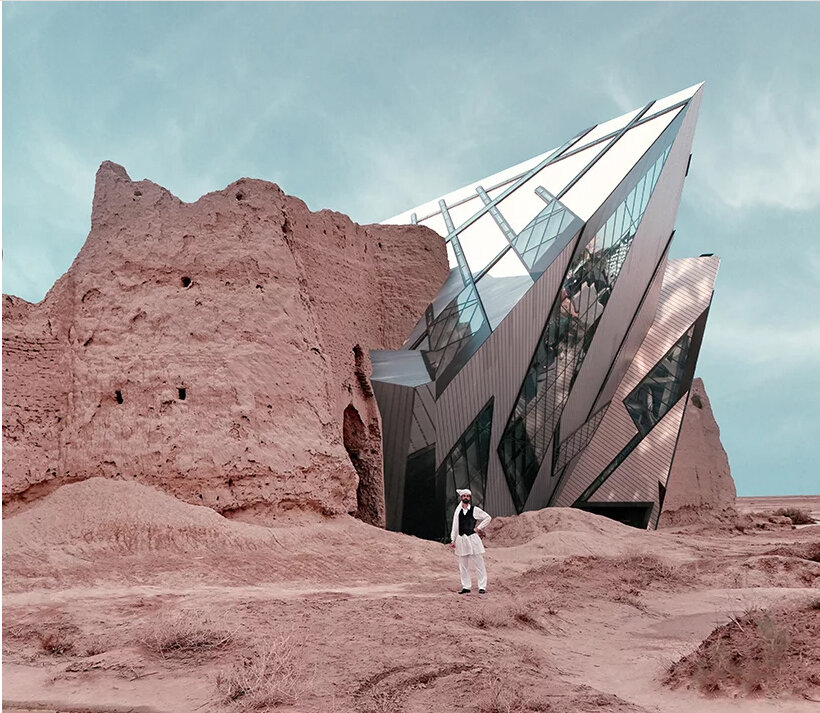
In his latest project, Iranian designer Mohammad-Hassan Forouzanfar has made a series of photomontages titled “Retrofuturism”, which fuse icons of the world’s contemporary architecture with their ancient Iranian counterparts.
Similarly to his previous projects, which have included introducing skyscrapers to Iranian villages, “Retrofuturism” considers how to restore the historic buildings with additions from world renowned architects such as Zaha Hadid, Daniel Liebskind, and Norman Foster, designboom.com reported.
To fulfill his project, Forouzanfar has selected places in Iran including pre-Islamic royal palaces and castles in Fars, Sistan-Baluchestan, Khuzestan and Isfahan provinces. The insertions of contemporary Western architecture offer a contradictory mix that links Iran’s past to the future and present of the West.
His works create an intriguing combination of materials, styles and eras. Elements of contemporary buildings, characterized by cool glass and metal, extrude from the desert landscape and historic stone buildings, resulting in a striking set of images.
“In essence, the project presents a new definition of restoration, one that provides a critical and avant-garde look at Iranian architectural artifacts,” the digital-architecture-and- design magazine reported.
The country boasts hundreds of historical sites such as bazaars, museums, mosques, bridges, bathhouses, madrasas, mausoleums, churches, towers, and mansions, of which 22 being inscribed on the UNESCO World Heritage list.

Saturday, August 03, 2019

Tabriz historic bazaar complex: A melting pot of tradition, trade, and culture

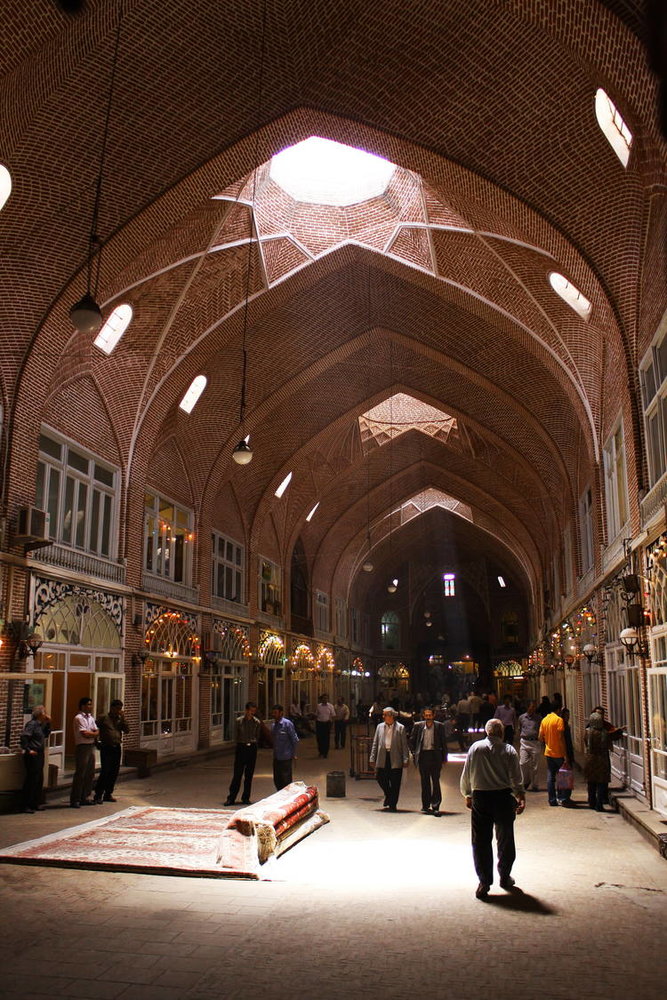
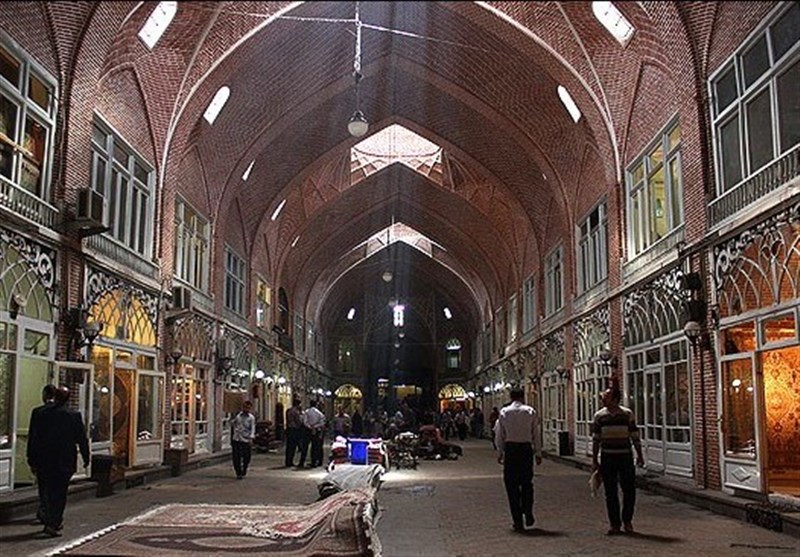
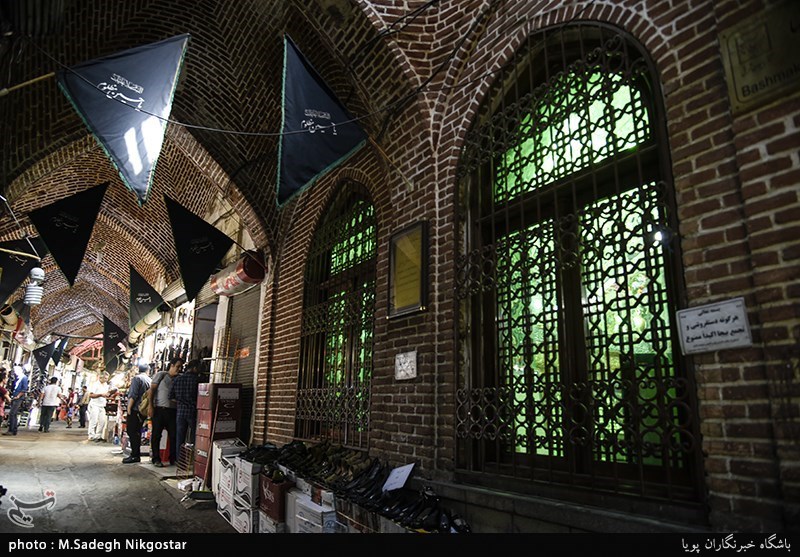
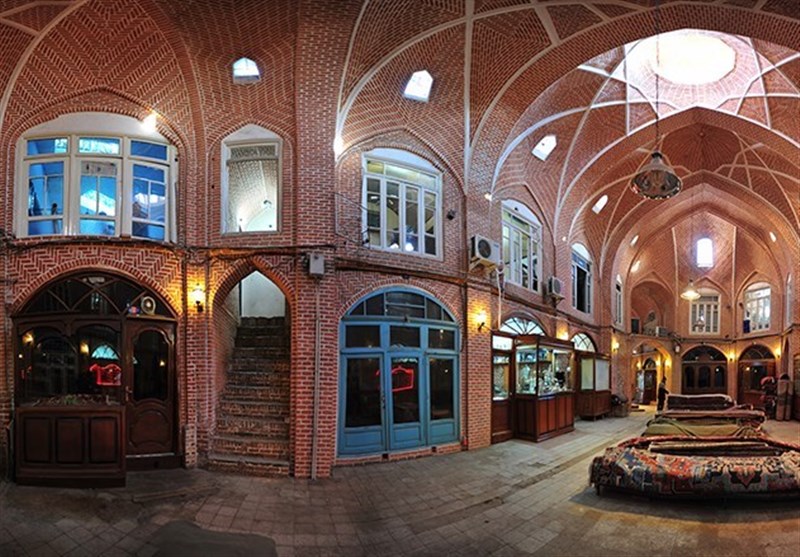
TEHRAN - Tabriz historic bazaar complex, a labyrinth of interconnected covered passages that adds up to about 5 kms, has been a melting pot of cultural exchange since antiquity and once a hot spot on the ancient Silk Road.
The bazaar, which has been inscribed on the UNESCO World Heritage list, embraces countless shops, over 20 caravanserais and inns, some 20 vast domed halls, bathhouses, and mosques, as well as other brick structures and enclosed spaces for different functions.
Tabriz is the capital of northwestern province of East Azarbaijan.
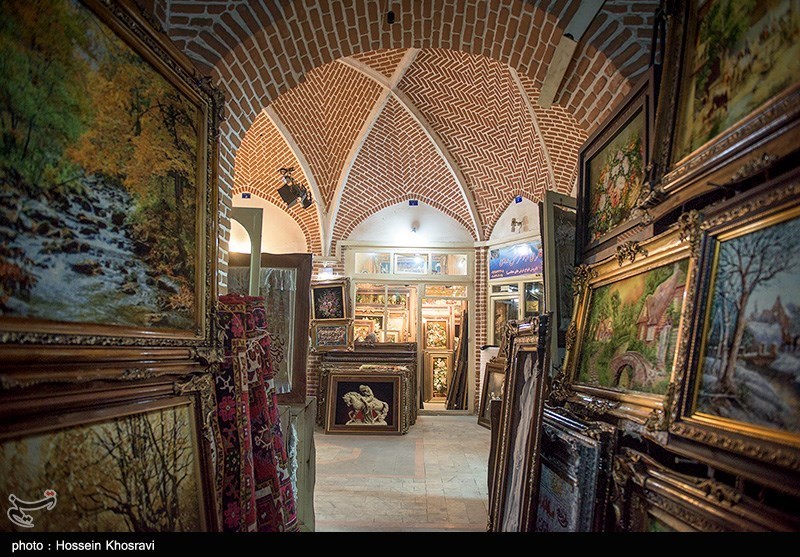
The history of the Tabriz bazaar dates back to over a millennium ago, however majority of fine brick vaults that capture most visitor’s eyes date from the 15th century.
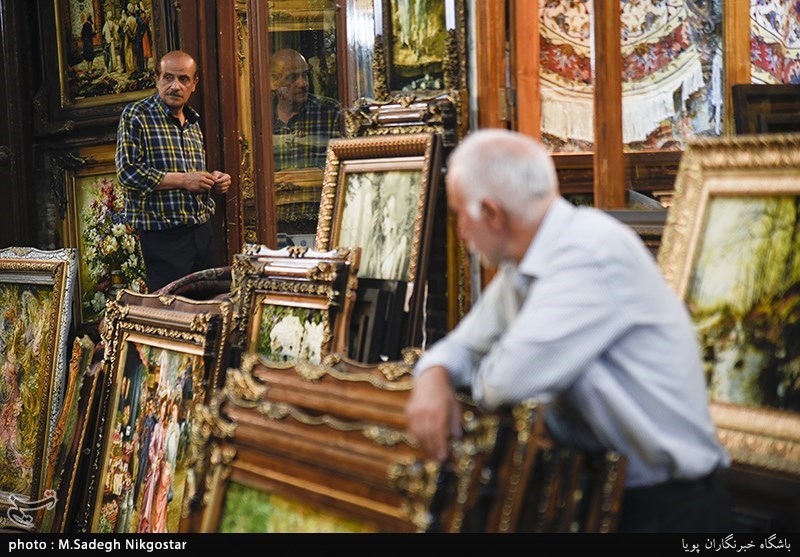
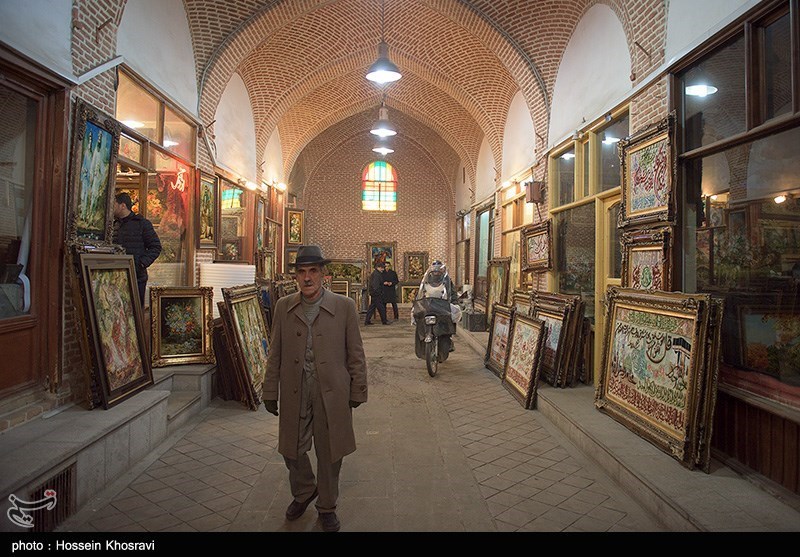
Most mazes and passages offer certain commodities such as carpets, metalwork, toys, clothing, jewelry, and kitchen appliances, traditional spices, herbal remedies and natural perfumes.
One can also bump into colorful grocery stores, bookbinders, blacksmiths, tinsmiths, coppersmiths, tobacconists, tailors, flag sellers, broadcloth sellers, carpenters, shoemakers, and knife-makers.
There are several divided carpet sections across the bazaar that enable visitors to watch or buy hand-woven Persian carpets and rugs with different knot density and other features.
The bazaar was also well-known and prosperous during the 13th century when Tabriz became the capital of the Safavid Dynasty (1501–1736).
The city lost its status as capital in the 16th century, but remained important as a commercial hub until the end of the 18th century, with the expansion of Ottoman power. It is one of the most complete examples of the traditional commercial and cultural system of Iran.
By the way, the city distanced its heyday as the capital was transferred eastward to Qazvin in the 16th century, but the bazaar remained vital as a commercial hub more or less.

Friday, August 02, 2019

Belgian globetrotters share us their new perception of Iran

By Afshin Majlesi, Mehdi Sepahvand

TEHRAN – Last Monday, a Belgian couple, who are on an overland journey to China, paid a visit to The Tehran Times, where they let us share their views, experiences and feelings about Iran in a cozy chat with the daily.
Ciara Reid and Lennart Gheysens in particular noted that the hospitality of Iranian people was beyond their expectations, saying “One of the reasons that we love Iran so much is the hospitality and kindness of the people.”
Western media don’t help very much to give a clear picture
“I think that is what a lot of other nationalities can take as an example and learn from it,” Ciara said.
When it came to driving in Iran, Lennart, however, didn’t give a good score, saying he had heard that Georgian people had earned a bad reputation for driving carelessly, but he thinks that the situation is even worse in Iran!
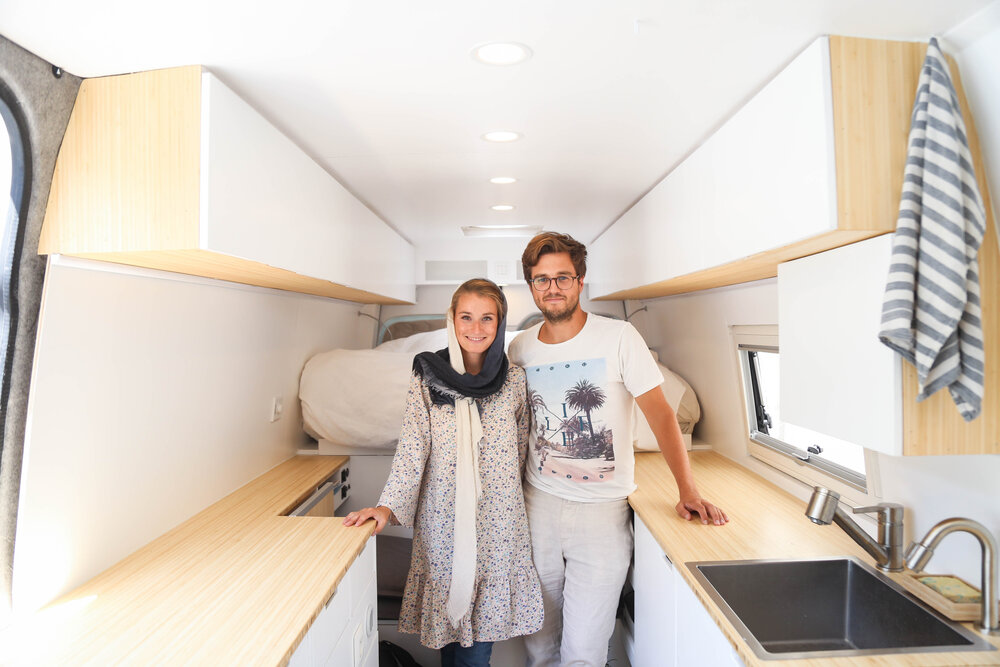
The couple also showed us various parts of their camper van, which was like a well-made miniature home equipped with almost everything including a bed, a dining table, chairs, a stove, sets of closets, cabinets, a toilet, a shower, a sink, electronic equipment and other amenities! There were powerful solar panels to charge the batteries that powered their moving home.
The transcript of the interview is given below:
Is this the first time you’re visiting Iran?
Lennart:  No, the second time. We visited in 2016 and that was only Iran that we visited [during that trip].
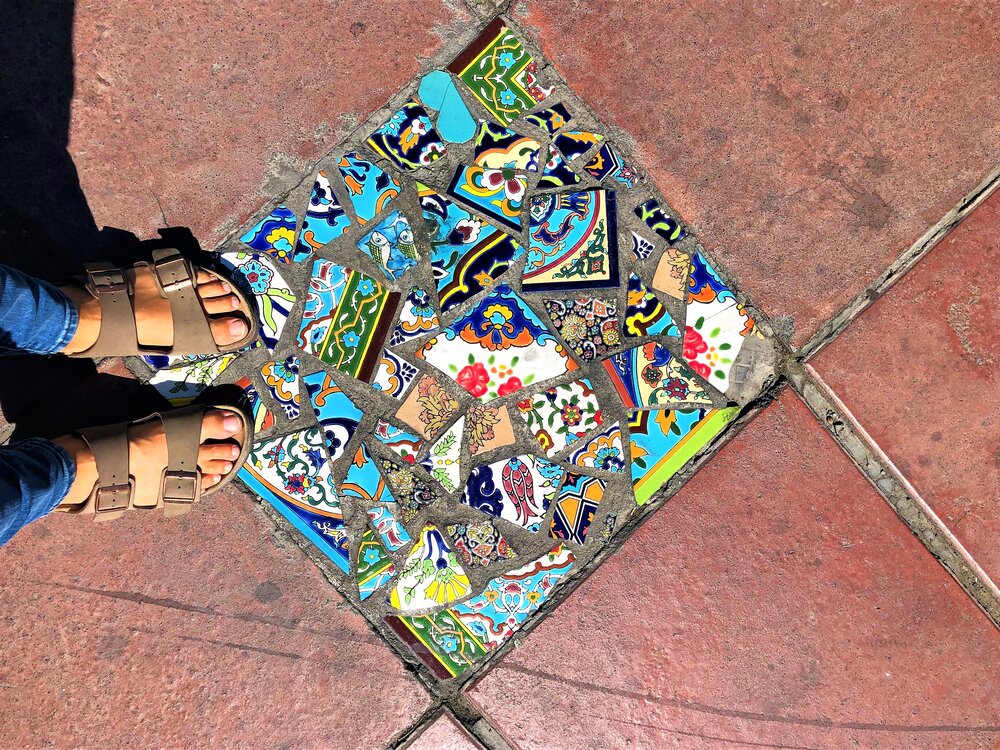
Ciara contemplates broken Iranian mosaics used to fix a missing tile (Photo: Ciara Reid, for The Tehran Times, July 29, 2019)
 
Ciara: We visited Iran in 2016 in a trip that was recommended by a friend of ours. And when we were here we really fell in love with the country. We never had that [experience] before. Everything is so beautiful and people are so friendly. And at that time we said we definitely want to go [come] back and then maybe all the different countries around Iran, maybe they’re beautiful too. And European people usually don’t get to see them so that’s why we decided to go on a trip along the Silk Road so it was really our trip in Iran in 2016 that sparked the idea of our current trip.
Please tell us more about the itinerary of your trip.
Lennart: We drove from Belgium quite fast through all the European countries like the Netherlands, Germany, Austria, Slovenia, Croatia, and Bosnia because we want to focus on the Caucasus region and then central Asia. We drove from Croatia to Albania, Montenegro, and then Greece to Turkey, where actually the real trip started for us. We started to take things slower. So we are driving from Belgium to China.
TT: Some foreign travelers say that driving in Iran resembles a video game. What do you say about that?
Lennart: Yes, it is. We had heard that Georgia is very bad [when it comes to reckless driving] but I think in Iran it’s even worse. But for us, our big car helps us to somehow avoid accidents. [Our rule is] to try to drive like a local… because in Europe, this is your lane and you cannot drive over it or whatever, but here….
If this happens in Europe, they will just leave you at the side saying it’s your own fault, no one will help you. So we told this story to people back home where a lot of people were saying us “Oh Iran is dangerous”! But for me it is one of the safest countries
TT: What about the quality of roads and highways in Iran?
Lennart: Actually, very good, I mean, for me, it’s comparable with European roads… actually the roads in Iran are quite good, they are almost flat and smooth.
TT: What’s your opinion about the Iranian hospitality?
Lennart: Well, it’s famous for a reason, because it’s true, one of the reasons that we love Iran so much is the hospitality and kindness of the people, like, the first time that we got here in 2016, we were in a taxi and the taxi driver invited us to his home and even though he couldn’t speak English, we were talking on Google Translate to each other.
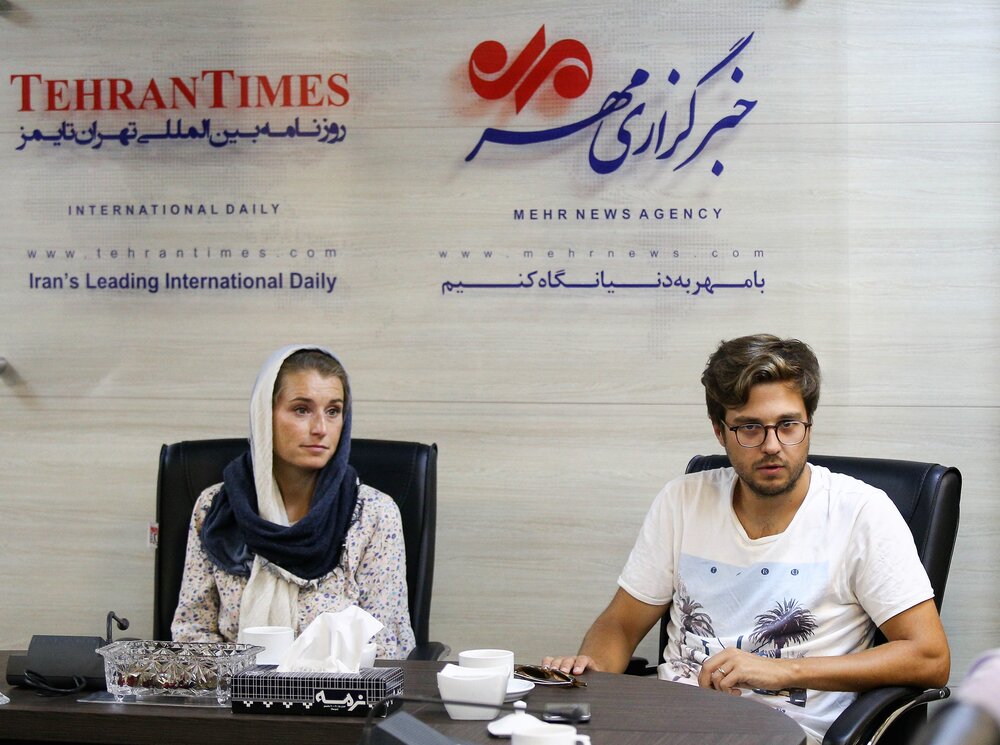
Ciara and Lennart speak to The Tehran Times (Photo: Maryam Kamyab, July 29,  2019)
It was very nice to meet his wife and their toddler and a friend of whom we also met in Mashhad. We’re still friends now and we are staying with his family here in Tehran and I mean [while in Iran] everybody likes to help you.
 For example, all of a sudden we were in Tabriz and one gas station after the next said we don’t have diesel, we don’t have diesel, and we were like “Oh my God!”
You know, our car, runs on diesel -- not a lot of cars running on diesel in here, only the trucks and buses.
Ciara:  And we posted something on Instagram and said oh we’re scared, we don’t have any more diesel…. And then some Iranian people picked it up and posted their own [massages] on our Instagram page and suddenly we were like flooded with…; “Do you still need diesel?”, “You can get it there!”, …, “I can help you!”, and “We have diesel!”
And we posted something on Instagram and said oh we’re scared…. Some ten people reached out to us that we didn’t know… just out of kindness
Some ten people reached out to us that we didn’t know… just out of the kindness saying oh these are foreigners, they are in trouble, we can help!
Yes, this is a phenomenon that Iran is famous for.
Ciara:  I think that is what a lot of other nationalities can take as an example and learn from it. One time in 2016, we wanted to go to Yazd and in the bus station we went to different offices saying Yazd, Yazd, Yazd -- we were in Shiraz at that time -- and we [finally] took a wrong bus!
On the Google Map we found the bus was going all the way to the south so we asked the driver, saying Yazd? And the driver said, Bandar Abbas, Bandar Abbas! And we were like “Uh-oh!”
The driver pulled to the side, a bus full of people just stopped to the side. The driver said get out! We thought what we were going to do with our packs… we were thinking like “Oh my God! They want to leave us here on the side of the road!”
Then a man showed up. He said “Come with me, come with me!” And he drove us to a police station were there were a lot of taxies and he even paid us the taxi to get back to the bus station and we were very excited.
If this happens in Europe, they will just leave you at the side saying it’s your own fault, no one will help you. So we told this story to people back home where a lot of people were saying us “Oh Iran is dangerous”! But for me it is one of the safest countries. 
Have you selected a motto or a theme for your whole journey?
Ciara: Not really a theme but we actually want to see more of the countries along the Silk Road, so the “Silk Road” maybe our theme. We prefer to focus more on nature than cities during our journey!
We are also very amazed of the diversity of nature in Iran.
Tell us more about your portable home!
Lennart: We chose a Mercedes [camper] because it’s easy to find parts for Mercedes everywhere and because it’s also very reliable so we bought it second hand in Holland…. We removed everything from its back and started to modify everything from electricity to water and heating because I am a handy guy we did all the carpentry, installing a solar panel, air vents, curtains …. Everything!
And now, a tough question! Before your first visit Iran in 2016, you had a perception of the country, whatever it was, and after you felt the country, encountering its people, you developed another perception. How do you compare them, the first which was mainly shaped by Western media, and the one you have developed in person?
Lennart: Yeah, in the beginning for us, Iran was not very well known, just a Middle Eastern country, some said don’t go there because it’s dangerous …. So in the beginning we had a perception that it was very dangerous and also some (European) people didn’t know the difference between Iraq and Iran and the Western media don’t help very much to give a clear picture.
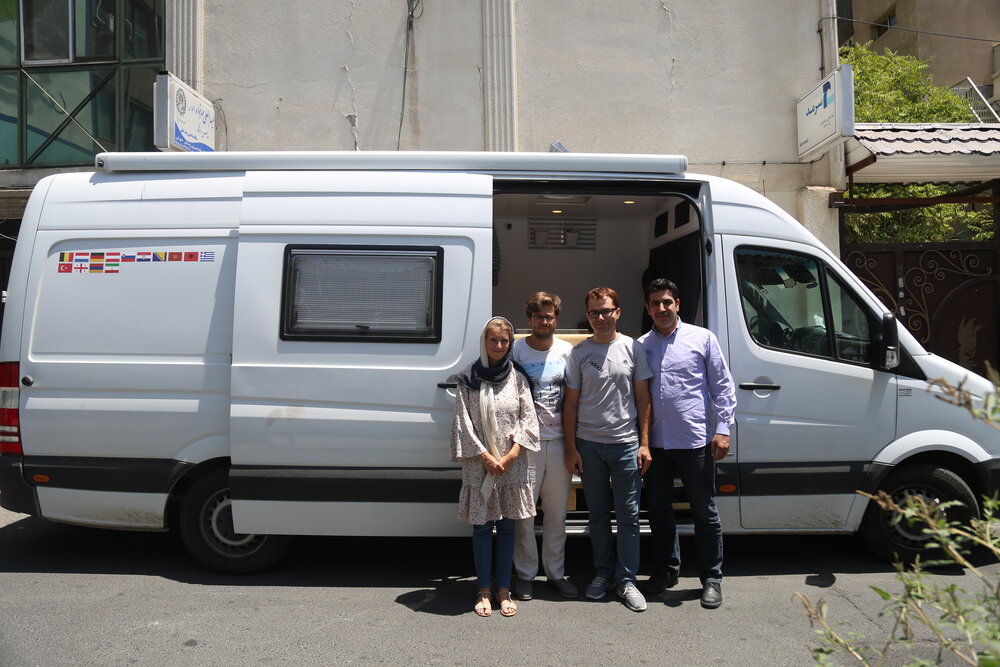
Ciara, Lennart and Tehran Times correspondents stand by the couple’s camper van (Photo: Maryam Kamyab, July 29,  2019)
But then some friends of ours visited Iran and we read a lot about it ourselves and yeah we saw that its people are very friendly, it is so safe and we like it so much.
Ciara: I think a funny anecdote is that we told our family and friends that we wanted to travel to Iran, everybody said “Oh you’re crazy! It’s very dangerous, you wanna get killed!”
And we said “No! It’s safe, it’s safe,” and then when we arrived in Iran we heard the bombings and attacks in Paris and an Iranian taxi driver asked where we are from and we said we are from Europe. “Europe? It’s so dangerous!” the driver said. So when we were back home in Belgium and people said “Oh, how was your trip to Iran?” we said, “Well it was actually much safer than it was in Europe!”

Thursday, July 18, 2019

Iran travel sector: Ups and downs since U.S. reimposed sanctions

By Afshin Majlesi

TEHRAN – Last November, the Trump administration reinstated sanctions on Iran, mainly the ones that had been lifted under the 2015 nuclear deal, in order to batter Iran’s economy, however, according to official data, they have so far failed to lessen foreign arrivals to the Islamic Republic.
Although the sanctions together with anti-Iran propaganda campaigns have decreased Western tourists but the country has managed to compensate and even improve by doing its best to attract more from neighboring states.
When it comes to outbound tourism, the effect of sanctions are seemingly more obvious as sharp rises in the value of foreign currencies against rial have pushed up the costs of traveling in the country.
A total of 1,759,749 Iranians traveled abroad in the first quarter of the current Iranian calendar year (March 21-June 21), indicating a 6.5% decrease compared with 1,882,414 outbound tourists in the same period last year, financialtribune.com reported in an article released on Monday.
“Nearly 7.8 million foreign nationals visited Iran over the past year that shows a 52.5 percent increase year on year. The country hosted 5.1 million travelers in 1396 (March 2017-18),” deputy tourism chief Vali Teymouri said in April.
“One of the shortcomings in Iran’s tourism industry is the government’s issuance of work permits to travel agencies without taking into consideration the number of inbound and outbound tourists. Less than 5% of travel agencies in Iran are active in organizing inbound tours, whereas 95% of them have focused on outbound tourism,” Hormatollah Rafiei, the head of Travel Agents Guild Association, said.
To tackle such harms, the association has decided to set up a committee tasked with curtailing the number of travel agencies’ closure by channeling them toward conducting more inbound tours.
The 2019 Travel Risk Map, which shows the risk level around the world, puts Iran among countries with “insignificant risk”, a category where the UK, Denmark, Switzerland, Norway, and Finland are placed in
“In two months, between 30 and 50 agencies are going to direct their activities toward attracting tourists from 10 countries, including Iraq, Afghanistan, Turkey, Pakistan, Turkmenistan, Georgia, Armenia and China,” Rafiei added.
Regarding to the downfall of potential Western visitors, Skift Inc., a New York City headquartered media company that provides news, research, and marketing services for the travel industry, said in July article that “Despite setbacks, [international] tour operators are optimistic about long-term growth in tourism to Iran, which in recent years has stepped up efforts to increase international visitation and has the stated goal of attracting 20 million annual visitors by 2025.
While the U.S. State Department has long issued strong advisories against traveling to Iran and despite tensions between the two countries, tour operators who spoke with Skift strongly disagree, maintaining that Iran has proven to be a safe and remarkably hospitable place for travelers, including Americans.
“It is a country that is often portrayed as unwelcoming, but the reality is quite the opposite,” said Jenny Gray, the global product and operations manager of the Australia-based Intrepid Travel.
“Iranians are warm, friendly and eager to show off their country to foreigners. The feedback from our travelers is a testament to this.”
“Once they [Iranian authorities] have been approved for entry [issuing visas], people are welcomed warmly—we’ve never encountered a problem or even a cold shoulder,” said Robin Pollak, the president of Journeys International, which is offering Iran tours since 2015.
To encourage and reassure sightseers, the Iranian government has decided not to stamp the passports of foreign tourists to help them skip the U.S. travel ban
“People in Iran are very curious about visitors from a culture that is off-limits to them. They understand that American visitors do not reflect the way America is portrayed to them by their government,” she added.
To compensate the fall, Iran has turned to ease traveling for its target markets which are people from Iraq, China, Republic of Azerbaijan, Afghanistan, Turkey, Pakistan, and several other countries who arrive in Iran for medical, pilgrimage and cultural heritage purposes.
Some two million Iraqi nationals visited Iran during the first seven months of the past Iranian calendar year (ended on March 20), constituting Iran’s largest source of inbound passengers.
Mousa Tabatabai, assistant to Iran’s ambassador to Baghdad, told Al-Monitor in early July, “The number of Iraqis arriving in Iran for religious tourism and treatment is growing bigger on a yearly basis. This is added to those who travel to Iran to see their relatives. The visas are issued depending on the demand.”
“There are 2-3 million Iraqis arriving in Iran every year. Such a figure will more likely increase as the visas have become free of charge between the two countries,” Tabatabai explained.
Iran also eyes to have a bigger share of Chinese tourism, as it, in a unilateral measure, recently approved to waive the visa requirement for the Chinese passport holders.
To encourage and reassure sightseers, the Iranian government has decided not to stamp the passports of foreign tourists to help them skip the U.S. travel ban.
“President Hassan Rouhani assigned the airport police not to stamp passports of foreign tourists. Taking into consideration the fact that America is practicing the economic terrorism plans, and people who travel to Iran may feel a bit afraid that they may be pressured by America,” Government spokesman Ali Rabiei said earlier this month. He added that this can invite more tourists to Iran.
The World Travel & Tourism Council’s latest report indicates that Iraq was the main source of tourism for Iran in 2018, as Iraqis constituted 24% of all inbound visitors. Other major sources were Azerbaijan (17%), Turkey (8%), Pakistan (4%) and Bahrain (2%). The remaining 46% came from the rest of the world.
WTTC’s review of tourism spending in Iran in 2018 shows 93% of visitors spent for leisure purposes while only 7% spent on business purposes. The council ranked Iran 20th from among 185 countries in its 2017 power ranking, which evaluates countries in terms of absolute size growth measured in U.S. dollars in the field of travel and tourism.
The 2019 Travel Risk Map, which shows the risk level around the world, puts Iran among countries with “insignificant risk”, a category where the UK, Denmark, Switzerland, Norway, and Finland are placed in.
The country boasts hundreds of historical sites such as bazaars, museums, mosques, bridges, bathhouses, madrasas, mausoleums, churches, towers, and mansions, of which 22 being inscribed on the UNESCO World Heritage list.
Currently, Iran’s constant efforts to recover the value of Iranian rial against the U.S. dollar have paid off. The national currency is strengthened about eight percent in the open market over the past month to 125,450 per dollar, traders in Tehran, according to prices compiled by Bloomberg from foreign-exchange websites.
Travel associates see better prospects for tourism sector of the country as policies for shielding the currency against the U.S. sanctions are taking effect.