
Tehran, IRNA – An unprovoked and illegal war of aggression launched by the United States and the Israeli regime against Iran more than six months ago and its impact on the world, in general, and on aggressors themselves in particular, remain the focus of international media and analysts.

The aggressive powers have faced widespread criticism for attacking civilian targets and innocent people, with Britain's House of Commons Library stating in a report that Iran exercised its right to legitimate defense and targeted US military bases in response to aggression.
Countries around the world, overtly and covertly, called the anti-Iran move "unjustified aggression" against regional and international security, with some officials arguing that the attacks destroyed years of efforts to resolve the nuclear issue.
US behind Strait of Hormuz crisis
The disruption of the security of one of the world's most vital waterways, the Strait of Hormuz that links the energy-rich Persian Gulf region to the Indian Ocean, is one of the consequences of the US-Israeli aggression.
The waterway was used for 20 percent of the world's oil and more than 80 percent of LNG shipments before the US renewed its attacks in breach of the Islamabad Memorandum of Understanding and its blockade of Iranian ports, prompting Tehran to legally curb shipping through the strait.
This vital passage became the focus of a global trade crisis, with a Chinese media report suggesting that the Strait of Hormuz effectively became a bottleneck for the global economy following the US and Israeli attacks on Iran.
According to the reports, navigation restrictions caused some companies to change their route to the Cape of Good Hope in Africa, a move that greatly increased shipping costs, and the traffic through the strait decreased from an average of 129 ships per day before the war to just 3 ships, resulting in a sharp rise in oil prices.
“We have been living in this nightmare for a long time that the Strait of Hormuz would be closed when the war broke out, and now we are right in the middle of this nightmare,” said Maurice Obstfeld, a senior fellow at the Peterson Institute for International Economics and former chief economist at the International Monetary Fund.
Trump's self-created Iran quagmire
Ever-changing claims of US officials, including President Donald Trump, regarding the war and control over the Strait of Hormuz, without providing evidence, were another reason for the volatile energy market, as the reality on the ground showed that Washington had not only failed to reopen the waterway, but had made the situation more critical by escalating tensions and new attacks.
USA Today, in a report, highlighted other dimensions of the consequences of the war for the United States itself, saying that Trump was caught in a predicament by launching a war on Iran, which could cost him in the November midterm elections amid rising gasoline prices.
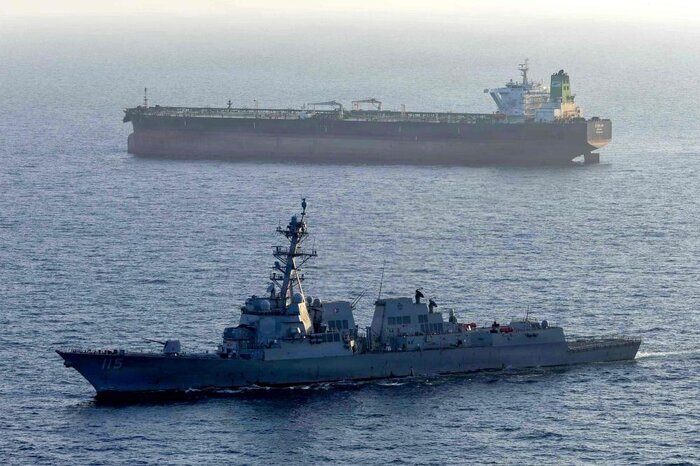
The newspaper also blamed Trump's main ally, the Israeli regime, for bombing Iranian oil infrastructure, which will also increase oil prices and destabilize US stock markets if Iran started retaliatory strikes on American-linked energy facilities in the region.
According to analyses, the Trump administration did not have a proper plan for how to deal with the closure of the Strait of Hormuz, and it also underestimated Iran's military capabilities and will, a reason the USA Today described the war as a self-made predicament for the Trump administration
Impact of US-Israeli war on global energy, food security
Some reports and analysts have cited statistics on how the war and the closure of the Strait of Hormuz affected the energy and raw material supply chain in Asia and beyond, with a JP Morgan report showing that the increase in fuel costs not only affected transportation, but also the production of chemical fertilizers.
Chinese media also cited a warning from the United Nations Food and Agriculture Organization (FAO) about the impact of these disruptions on the energy, chemical fertilizer, and material supply chains, the consequences of which were not limited to energy and agriculture alone.
The increase in the price of energy and chemical fertilizers, food shortages, and disruption caused a major shock in countries such as South Korea, Taiwan, Japan, China, India, and European countries as key importers.

No comments:
Post a Comment