Showing posts with label economy. Show all posts

Thursday, July 18, 2019

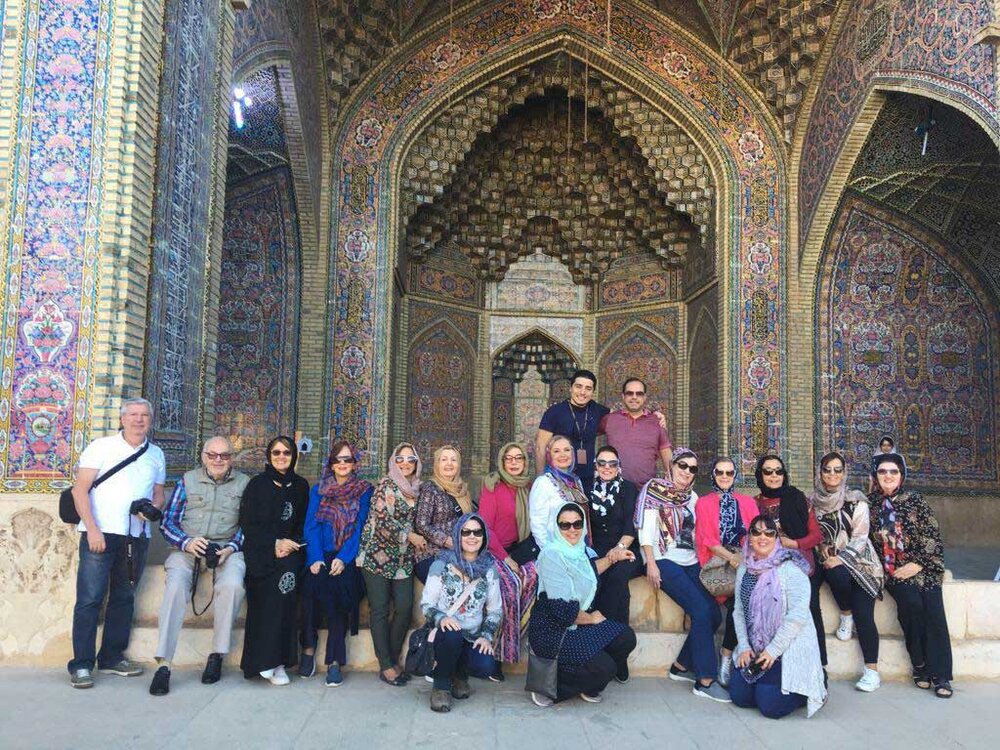
Iran travel sector: Ups and downs since U.S. reimposed sanctions

By Afshin Majlesi

TEHRAN – Last November, the Trump administration reinstated sanctions on Iran, mainly the ones that had been lifted under the 2015 nuclear deal, in order to batter Iran’s economy, however, according to official data, they have so far failed to lessen foreign arrivals to the Islamic Republic.
Although the sanctions together with anti-Iran propaganda campaigns have decreased Western tourists but the country has managed to compensate and even improve by doing its best to attract more from neighboring states.
When it comes to outbound tourism, the effect of sanctions are seemingly more obvious as sharp rises in the value of foreign currencies against rial have pushed up the costs of traveling in the country.
A total of 1,759,749 Iranians traveled abroad in the first quarter of the current Iranian calendar year (March 21-June 21), indicating a 6.5% decrease compared with 1,882,414 outbound tourists in the same period last year, financialtribune.com reported in an article released on Monday.
“Nearly 7.8 million foreign nationals visited Iran over the past year that shows a 52.5 percent increase year on year. The country hosted 5.1 million travelers in 1396 (March 2017-18),” deputy tourism chief Vali Teymouri said in April.
“One of the shortcomings in Iran’s tourism industry is the government’s issuance of work permits to travel agencies without taking into consideration the number of inbound and outbound tourists. Less than 5% of travel agencies in Iran are active in organizing inbound tours, whereas 95% of them have focused on outbound tourism,” Hormatollah Rafiei, the head of Travel Agents Guild Association, said.
To tackle such harms, the association has decided to set up a committee tasked with curtailing the number of travel agencies’ closure by channeling them toward conducting more inbound tours.
The 2019 Travel Risk Map, which shows the risk level around the world, puts Iran among countries with “insignificant risk”, a category where the UK, Denmark, Switzerland, Norway, and Finland are placed in
“In two months, between 30 and 50 agencies are going to direct their activities toward attracting tourists from 10 countries, including Iraq, Afghanistan, Turkey, Pakistan, Turkmenistan, Georgia, Armenia and China,” Rafiei added.
Regarding to the downfall of potential Western visitors, Skift Inc., a New York City headquartered media company that provides news, research, and marketing services for the travel industry, said in July article that “Despite setbacks, [international] tour operators are optimistic about long-term growth in tourism to Iran, which in recent years has stepped up efforts to increase international visitation and has the stated goal of attracting 20 million annual visitors by 2025.
While the U.S. State Department has long issued strong advisories against traveling to Iran and despite tensions between the two countries, tour operators who spoke with Skift strongly disagree, maintaining that Iran has proven to be a safe and remarkably hospitable place for travelers, including Americans.
“It is a country that is often portrayed as unwelcoming, but the reality is quite the opposite,” said Jenny Gray, the global product and operations manager of the Australia-based Intrepid Travel.
“Iranians are warm, friendly and eager to show off their country to foreigners. The feedback from our travelers is a testament to this.”
“Once they [Iranian authorities] have been approved for entry [issuing visas], people are welcomed warmly—we’ve never encountered a problem or even a cold shoulder,” said Robin Pollak, the president of Journeys International, which is offering Iran tours since 2015.
To encourage and reassure sightseers, the Iranian government has decided not to stamp the passports of foreign tourists to help them skip the U.S. travel ban
“People in Iran are very curious about visitors from a culture that is off-limits to them. They understand that American visitors do not reflect the way America is portrayed to them by their government,” she added.
To compensate the fall, Iran has turned to ease traveling for its target markets which are people from Iraq, China, Republic of Azerbaijan, Afghanistan, Turkey, Pakistan, and several other countries who arrive in Iran for medical, pilgrimage and cultural heritage purposes.
Some two million Iraqi nationals visited Iran during the first seven months of the past Iranian calendar year (ended on March 20), constituting Iran’s largest source of inbound passengers.
Mousa Tabatabai, assistant to Iran’s ambassador to Baghdad, told Al-Monitor in early July, “The number of Iraqis arriving in Iran for religious tourism and treatment is growing bigger on a yearly basis. This is added to those who travel to Iran to see their relatives. The visas are issued depending on the demand.”
“There are 2-3 million Iraqis arriving in Iran every year. Such a figure will more likely increase as the visas have become free of charge between the two countries,” Tabatabai explained.
Iran also eyes to have a bigger share of Chinese tourism, as it, in a unilateral measure, recently approved to waive the visa requirement for the Chinese passport holders.
To encourage and reassure sightseers, the Iranian government has decided not to stamp the passports of foreign tourists to help them skip the U.S. travel ban.
“President Hassan Rouhani assigned the airport police not to stamp passports of foreign tourists. Taking into consideration the fact that America is practicing the economic terrorism plans, and people who travel to Iran may feel a bit afraid that they may be pressured by America,” Government spokesman Ali Rabiei said earlier this month. He added that this can invite more tourists to Iran.
The World Travel & Tourism Council’s latest report indicates that Iraq was the main source of tourism for Iran in 2018, as Iraqis constituted 24% of all inbound visitors. Other major sources were Azerbaijan (17%), Turkey (8%), Pakistan (4%) and Bahrain (2%). The remaining 46% came from the rest of the world.
WTTC’s review of tourism spending in Iran in 2018 shows 93% of visitors spent for leisure purposes while only 7% spent on business purposes. The council ranked Iran 20th from among 185 countries in its 2017 power ranking, which evaluates countries in terms of absolute size growth measured in U.S. dollars in the field of travel and tourism.
The 2019 Travel Risk Map, which shows the risk level around the world, puts Iran among countries with “insignificant risk”, a category where the UK, Denmark, Switzerland, Norway, and Finland are placed in.
The country boasts hundreds of historical sites such as bazaars, museums, mosques, bridges, bathhouses, madrasas, mausoleums, churches, towers, and mansions, of which 22 being inscribed on the UNESCO World Heritage list.
Currently, Iran’s constant efforts to recover the value of Iranian rial against the U.S. dollar have paid off. The national currency is strengthened about eight percent in the open market over the past month to 125,450 per dollar, traders in Tehran, according to prices compiled by Bloomberg from foreign-exchange websites.
Travel associates see better prospects for tourism sector of the country as policies for shielding the currency against the U.S. sanctions are taking effect.

Monday, January 28, 2019

From ASEAN Economic Development to Militarization

By Dan Steinbock

In both Africa and Asia, the Trump administration is aiming for increased militarization and arms sales at the expense of economic development.

In a recent editorial, The Manila Times expressed concern that relatively benign economic conditions may lead to a false sense of security as “the United States-China trade war may be starting to inflict collateral damage on the economy.”


In the short-term, it is a valid concern for the Philippines and other ASEAN economies that currently benefit relatively benign economic conditions.
But even if the worst excesses of the trade war could be deterred, there are darker clouds in the longer-term horizon. The Trump administration’s new trade protectionism is accompanied by increasingly military stance. The new US Africa strategy heralds changes in other regions as well, particularly Asia.

Setting a precedent in Africa

In 2017, the United States had a $39.0 billion in total goods trade with Sub-Saharan African countries and a trade deficit of $10.8 billion. US investment in Africa grew in the Bush years. But in the Obama 2010s, it collapsed.
In the past, US Africa strategy focused mainly on economic cooperation and aid, and secondarily on military cooperation. In the new strategy, the focus is reversed. It downplays economic efforts to boost African prosperity. Second, it sees Africa mainly as a base of Islamic terrorism, which must be defused in the continent. Third, it will no longer support UN peacekeeping missions.
Meanwhile, China’s economic engagement with Africa has soared. In 2016, the value of China-Africa trade was $128 billion, almost three times more than US trade with the continent. Also, China’s Africa investment significantly exceeds that of the US. And China is a large source of aid and the largest source of construction financing, which supports Africa’s ambitious infrastructure development.
Perhaps that’s why US Africa strategy misrepresents China’s One Road and Belt (OBOR) initiative as a plan of “Chinese global dominance.” Since economic facts do not support the White House’s narrative, it relies on ideological trashing.
Unfortunately, similar developments loom ahead in Southeast Asia—a region that is far more important economically and strategically.

ASEAN economic development or trade wars

In the past decade or so, US economic engagement in ASEAN has fallen, while that of China has soared. According to US Trade Representative, US trade with ASEAN amounted to $234 billion in 2016; that’s six times more than with Africa. Yet, China trades with ASEAN soared to $515 billion in 2017.
Indeed, China trades with ASEAN (20%) almost as much as ASEAN economies trade with each other (22%). It is the same story with foreign direct investment (FDI). In 2017, China and Hong Kong accounted for some 15% of all FDI to ASEAN. US figure has plunged to less than 5%.
Some observers argue that the US trade war will hurt China but may benefit ASEAN, thanks to redirected trade and investment. That’s a short-sighted view. While some ASEAN countries may benefit in some sectors for some time, continued US-Sino tensions would overshadow the entire region for years to come.

Moreover, US trade with ASEAN is now subject to the ‘America First’ stance. As the Trump administration puts it, “we need ASEAN to do more for us.” The White House seeks “rebalancing” in ASEAN trade ties. It wants to negotiate deals bilaterally with each ASEAN economy—to maximize its leverage.

The US has a combined trade deficit of $92 billion with ASEAN countries; that is higher than its deficit with Mexico ($71bn), Japan ($69bn) or Germany ($65bn)—all of which have already been hit by the Trump administration’s new protectionism.
In ASEAN, the first targets will be those countries with which US has major trade deficit; i.e., Vietnam ($34 billion), Malaysia ($24 billion), Thailand ($20 billion) and Indonesia ($13 billion), followed by the Philippines and Cambodia. Some will seek exemptions, but they require strategic favors that may prove even costlier over time.

The drive to militarize ASEAN

U.S. overall stance toward the ASEAN is changing. Ever since Obama’s security pivot to Asia, Pentagon has been aiming to move 60% it’s warships into the region. The White House has revised its stance accordingly. In the new 2017 National Security Strategy, China is portrayed as America’s “adversary” rather than a partner.
An enemy—real or perceived—is vital for arms sales.
In 2017, military expenditure in Africa was $43 billion (SIPRI). In Asia and Oceania, it amounted to $477 billion, which is almost 11 times more. Southeast Asia alone spends on arms almost as much as Africa.
The Pentagon already dominates sales to Australia, Japan, South Korea and Taiwan. Among the greatest arms importers in Southeast Asia, Indonesia buys a third of its military imports from the UK and US; Singapore more than two thirds from the US.
The Pentagon wants more deals with Vietnam (which favors Russia), Thailand (which relies on Ukraine and China), and Myanmar (which prefers China and Russia). Outside ASEAN, US wants to sell more to India (which relies mainly on Russia).
As US economic engagement has fallen in the region, rearmament would offset the losses – but that can only happen at the expense of ASEAN’s economic future.

The way out

Ultimately, the White House’s changing stances toward Africa and Asia stem from the neoconservative Wolfowitz Doctrine, which in the early ‘90s deemed that the US goal must be “to prevent the re-emergence of a new rival, either on the territory of the former Soviet Union or elsewhere that poses a threat.”
That’s why, like US Africa strategy; American ASEAN strategy is likely to seek to militarize Asia Pacific, which has potential to divide the region. In both regions, the White House seeks to drive rearmament, mainly at the expense of economic development that China promotes. And in both regions, the White House shuns peace-keeping activities in which China is the world’s leading actor today.
Yet, what ASEAN needs is economic development. Destabilization and rearmament are the best way to undermine the quest for Asian Century. Catch-up growth and rising prosperity are not viable without peace and stability.
ASEAN does not need to choose between the US and China. Good diplomacy will choose both. Dishonest diplomacy will choose only one and trash the other.


Dan Steinbock

Dr Dan Steinbock is an internationally recognized strategist of the 
multipolar world. and the founder of Difference Group. He has served 
at the India, China and America Institute (USA) , the Shanghai Institutes 
for International Studies (China) and the EU Center (Singapore).

Thursday, January 17, 2019

America’s New Africa Strategy: US, China, and Economic Development

By Dan Steinbock 

John Bolton speaking at the International Students for Liberty
Conference in Washington, D.C., February 16, 2013 
Contrary to the new US Africa strategy, which seeks militarization and portrays China as a threat, Africa needs more cooperative economic development.


Recently, the White House released its new U.S. Africa strategy, which seeks militarization and portrays China as a threat. Both are misguided. Africa can greatly benefit from Chinese and U.S. economic development.
On December 13, 2018, U.S. National Security Adviser John Bolton gave a speech in the conservative Heritage Foundation about the Trump administration’s new “Africa strategy,” based on Trump’s ‘America First’ foreign policy doctrine.
In the United States, the media focus was on Bolton’s attack against U.S. adversaries and American aid. Specifically, Boston accused Russia and China of “predatory practices” in Africa.
In practice, the Trump administration’s Africa strategy implies militarization of U.S. activities in Africa to undermine Chinese economic contribution, which has effectively supported modernization and growth in the continent.Militarization of U.S. Africa Strategy
In 2017, the United States had a $39.0 billion in total goods trade with Sub-Saharan African countries and a trade deficit of $10.8 billion. America’s largest export markets were South Africa, Nigeria, Ghana, Ethiopia and Angola. In imports, Cote d’Ivoire and Botswana played a role as well.
In the past, U.S. Africa strategy focused mainly on economic cooperation and aid, and secondarily on military cooperation. In the new strategy, the focus areas have been reversed. The ‘America First’ Africa strategy purports to address three core U.S. interests in Africa:First, advancing U.S. trade and commercial ties with nations across the region to the benefit of both the United States and Africa… Second, countering the threat from Radical Islamic Terrorism and violent conflict… And third, we will ensure that U.S. taxpayer dollars for aid are used efficiently and effectively.
While the first core interest ostensibly involves economic dealings, it actually doesn’t. The Trump administration “wants our economic partners in the region to thrive,” but it downplays all economic efforts to boost African prosperity.
It is the second principle that’s the key to the new U.S. strategy. According to Bolton, “ISIS, al-Qaida, and their affiliates all operate and recruit on the African continent, plotting attacks against American citizens and targets.” The new strategy sees Africa mainly as a base of Islamic terrorism, which must be defused in the continent so that it will not threaten American interests.
Third, the new strategy will no longer support “unproductive, unsuccessful, and unaccountable U.N. peacekeeping missions.”
Moreover, the ‘America First’ stance portrays as adversarial the Chinese efforts to boost global economic integration through the One Road and Belt initiative in emerging and developing economies. China’s economic contribution is mainly an effort to “dominate the world.” As Bolton puts it: “[China’s] predatory actions are sub-components of broader Chinese strategic initiatives, including ‘One Belt, One Road’—a plan to develop a series of trade routes leading to and from China with the ultimate goal of advancing Chinese global dominance.”
Since economic facts do not support the Trump administration’s narrative, it relies increasingly on ideological trashing.

Chinese Economic Cooperation in Africa

Since the mid-2010s, Washington has accused China of “neocolonialism” in Africa. The misguided narrative seeks to reframe the eclipse of the commodity super-cycle, which caused a drastic fall in commodity prices, as another Chinese plot.
In 2016, the value of China-Africa trade was $128 billion, almost three times bigger than U.S. trade with the continent. The largest African exporters to China comprise Angola, South Africa and the Republic of Congo, whereas the largest buyers of Chinese goods include South Africa and Nigeria. The Sino-African trade increased rapidly some two decades until the fall of the commodity prices since 2014, when the bilateral trade peaked at $215 billion. Since then, the value of African exports to China has been penalized, even as Chinese exports to Africa have remained steady.
Meanwhile, U.S. investment in China has collapsed. U.S. FDI into Africa grew through the Bush years, when the White House still hoped to benefit from the impending industrialization in several African economies. But as the Obama administration presented its Africa vision in the early 2010s, U.S. FDI first plunged and then collapsed.
Chinese FDI and US FDI to Africa (flows), 2003-2015 (Source: UNCTAD; China Statistical Yearbook; Difference Group)
When the administration began its attack against Chinese initiatives last fall, these outbursts were preceded by President Xi Jinping’s speech in the 2018 Forum on China Africa Cooperation (FOCAC) where Xi pledged $60 billion to the continent in loans, grants, and development financing.
The new U.S. Africa strategy is largely dictated by the concern that China has become Africa’s largest economic partner. In contrast to Bolton’s fearful images of Chinese negative impact in Africa, leading business consultancies, including McKinsey, offer very different accounts. The former is based on ideological bashing without facts. The latter reflects simple economic analysis:
Bolton on the U.S. Africa Strategy:
China uses bribes, opaque agreements, and the strategic use of debt to hold states in Africa captive to Beijing’s wishes and demands. Its investment ventures are riddled with corruption, and do not meet the same environmental or ethical standards as U.S. developmental programs.
McKinsey on China in Africa:
The Chinese “dragons”—firms of all sizes and sectors—are bringing capital investment, management know-how, and entrepreneurial energy to every corner of the continent—and in so doing, they are helping to accelerate the progress of Africa’s “lions,” as its economies are often referred to.
In the past two decades, Africa-China trade has been growing at some 20% per year. FDI has grown twice as fast in the past decade. McKinsey estimates China’s financial flows to Africa are 15% higher than official figures when non-traditional flows are included. China is also a large and fast-growing source of aid and the largest source of construction financing, which support Africa’s ambitious infrastructure developments.
But is Chinese infrastructure investment in Africa a threat to U.S. interests, really?

U.S., China, and Africa: Two Scenarios

Ever since the release of the U.S. administration’s new 2017 National Security Strategy, China has been perceived as America’s “adversary” rather than a partner: “For decades, U.S. policy was rooted in the belief that support for China’s rise and for its integration into the post-war international order would liberalize China.”
The new Africa strategy is actually based on the old neoconservative Wolfowitz Doctrine, which in the early ‘90s deems that the American goal must be “to prevent the re-emergence of a new rival, either on the territory of the former Soviet Union or elsewhere that poses a threat.” That’s why the White House sees its China ties mainly in win-lose terms.
But there is another future scenario that sees the multipolar world economy as a strength rather than a liability. It is predicated on more stable, global prospects as developing economies focus on economic development, instead of militarization. Unlike the U.S. Africa strategy, the multipolar scenario would not foster “major power competition” in Africa. Rather, it supports a win-win scenario, in which both America and China would trade and invest, and provide development aid to African economies. That would accelerate modernization and industrialization across the continent and thus living standards. With rising prosperity, terror would diminish.
The multipolar scenario would fulfill the three U.S. core interests in Africa and foster triangular economic ties among the U.S., China and Africa, while intensifying modernization in the continent.  In contrast, the old new U.S. Africa strategy has potential to undermine such futures.

Dan Steinbock


Dr Dan Steinbock is an internationally recognized strategist of the multipolar world. and the founder of Difference Group. He has served at the India, China and America Institute (USA) , the Shanghai Institutes for International Studies (China) and the EU Center (Singapore).

Monday, November 05, 2018

Israel’s strategic ally in the Arab world is oppression

By fostering ties with Israel as Palestinians continue to suffer, Gulf Arab regimes are failing in their humanitarian and religious duties


Ahmed Abu Artema's picture
Ahmed Abu Artema


Last Friday, as Gaza's soil was coloured with the blood of five martyrs and scores more peaceful protesters were wounded, Israeli Prime Minister Benjamin Netanyahu visited the Omani capital Muscat - the first such visit by an Israeli leader in two decades.
Days later, Israel’s culture minister, Miri Regev, wore the hijab during a visit to an Abu Dhabi mosque and preached about peace. In the not so distant past, Regev made controversial comments such as describing the Muslim call to prayer as the "crying dogs of Muhammad".
There is a clear relationship between the regression of democracy in the Arab world and the progression of normalisation with the Israeli occupation
On the same day, the Israeli army killed three children who were reportedly attempting to catch birds east of Gaza.
These events show the distance between the suffering of the Palestinian people and the official positions of Arab regimes. Beyond their meagre political and material support of Palestinians, these governments have embraced the apartheid Israeli occupation, which maintains its policies of settlement-building, racist persecution and mass killings. 

Diplomatic relations

These actions by the Gulf states are not one-offs. In addition to Netanyahu's trip to Oman and Regev's visit to the UAE, an Israeli gymnastics team recently participated in a championship event in the Qatari capital Doha, and an Israeli judo team participated in an event in the UAE. 
The Israeli national anthem played in Abu Dhabi when Israel’s Sagi Muki won gold, bringing tears to Regev's eyes, while Netanyahu noted: “It is not only your personal achievement and the Jewish achievement of Israeli sports, but also the fact that the anthem was being played in Abu Dhabi.”
This normalisation corresponds with aggressive Israeli occupation policies towards Palestinians through the annexation of Arab land in the West Bank and the passing of laws that enshrine apartheid
At the same time, Israeli newspaper Yedioth Ahronoth revealed that Bahrain has been secretly holding talks with Israel in preparation for establishing diplomatic relations, with a planned visit by Netanyahu to Manama in the near future. 
The leader of the Gulf states, Saudi Arabia, doesn't seem far from this fever towards normalisation with the Israeli occupation. Tzvia Greenfield wrote an article in Haaretz about "why we should go easy" on Saudi Crown Prince Mohammed bin Salman after the murder of journalist Jamal Khashoggi, rationalising that he was the leader Israel had been waiting for "for 50 years".

Aggressive occupation

This normalisation corresponds with aggressive Israeli occupation policies towards Palestinians through the annexation of Arab land in the West Bank, the passing of laws thatenshrine apartheid, and the killing of hundreds of people since protests broke out in Gaza seven months ago.
It also corresponds with a growing international boycott of the Israeli occupation by pro-Palestinian rights activists worldwide. The Israeli government has described this boycott movement as a strategic threat that contributes significantly towards increasing Israel's isolation worldwide.
Israeli Culture and Sport Minister Miri Regev kisses the International Judo Federation’s president during a tournament in Abu Dhabi on 27 October 2018 (AFP)
Since its establishment in 2005, the boycott, divestment and sanctions (BDS) movement has applied significant pressure on Israel by advocating various forms of boycott against the state until it complies with international law. Israeli officials have expressed concerns over thegrowing scope of BDS, and the country has imposed sanctions against BDS activists, including banning them from entry.
Israel’s concerns over the movement are not limited to economic losses, but also focus on the movement’s work to de-legitimise Israel in the global sphere by affirming its apartheid nature and exposing its violations of international law.

The sword of fear

By fostering ties with Israel, Gulf Arabs who believe in the Palestinian cause are failing in their national, humanitarian and religious duties. They are legitimising the occupation through diplomacy, economics and sports, all while international activists fight to isolate the occupation politically, economically and culturally.
Arabs are partners with Palestinians when it comes to ethnicity, geography and history. However, the Arab regimes normalising relations with Israel are not democracies. They rule through monarchy and the sword of fear. They have no public mandate. Thus, their positions do not reflect the true identity of the Arab populace.

When the people raised their voices in the popular uprisings that swept over the region in 2011, the solidarity with Palestine increased. But when oppression wins over freedom and despotic regimes are encouraged to publicise their dealings with the Israeli occupation, it becomes clear that Israel’s strategic ally in the Arab world is oppression, not democracy. There is a clear relationship between the regression of democracy in the Arab world and the progression of normalisation with the israeli occupation.
- Ahmed Abu Artema is a Palestinian journalist and peace activist. Born in Rafah in 1984, he is a refugee from Al Ramla village. He authored the book Organized Chaos.

How US sanctions on Iran could herald a profound global power shift

In the medium term, the US will lose influence as Iran gains confidence; in the worst case scenario, there will be a war whose consequences will be incalculable


Peter Oborne's picture
Peter Oborne


On Monday, the US will ratchet up its brutal and merciless economic war against Iran, raising sanctions to a new level. The Trump administration has said its goal is to reduce Iranian oil exports to zero, although waivers were being negotiated with some countries.
Such a move could bankrupt Iran and destroy the government’s ability to deliver public services, fomenting popular rebellion.
John Bolton, President Donald Trump’s national security adviser, has been clear about the logic behind this: he wants to install a new government friendly to the US. He spelled out these plans to the opposition group Mujahedin-e-Khalq (MEK) at a Paris conference last year, although he has subsequently backtracked, saying regime change is “not American policy”.

Beset by contradictions

The US is not simply intent on waging an economic war, but also wants to build up a military and strategic coalition against Iran. This seems to have been the most important item on the agenda of last week’s Manama dialogue in Bahrain, where US Defence Secretary James Mattis took aim at Iran. 
Mattis is keen on the creation of a what amounts to an Arab NATO built around a regional network of Sunni Arab states in the shape of the emerging Middle East Strategic Alliance, potentially including Benjamin Netanyahu’s Israel. The primary outside backers would be the US, France and Britain.
This twin-pronged military-economic strategy is doomed to failure, and will likely end in humiliation for the US
But this twin-pronged military-economic strategy is doomed to failure, and will likely end in humiliation for the US. In the medium term, it will backfire; the US and its allies will lose influence, while Iran will gain confidence and power. In the worst case scenario, it will result in a war whose consequences will be incalculable. 
For starters, Trump’s sanctions policy is beset by contradictions. It will not and cannot work, because the US will be unable to isolate Iran in the way it hopes to.
The problem was set out clearly in an excellent article by Gardiner Harris in the New York Times earlier this week, which noted that China and India, the largest buyers of Iranian oil, will continue to make substantial purchases. Turkey and Russia are likely to do the same, which is not much of a surprise.

Epic miscalculation

Much more remarkable, France and Germany, as well as Britain, have expressed their intention to continue to do business with Iran in defiance of US will. They are looking at the creation of a “special purpose vehicle” that would enable them to continue trading with Iran independently of the US dollar.
The case of China, the largest buyer of Iranian oil, is yet more important. While it is true that two large state Chinese oil companies have halted purchases from Iran, China is virtually certain to continue purchasing large amounts of oil.
Iranian Foreign Minister Mohammad Javad Zarif leaves a news conference on the Iran nuclear talks in Vienna on 14 July 2015 (AFP)
The option is open to Trump to raise the stakes and punish China through sanctions or other means, but even he likely lacks the appetite to open up an economic war on a second front.
The same consideration applies to Narendra Modi’s India, which has infuriated the US by continuing to buy Iranian oil. Does Trump truly want to turn India into an enemy?
All of this means that the Trump administration has made an epic miscalculation. Trump thinks that he can take the international community with him as he embarks on his economic war against Iran. He can’t - and this spells mortal danger for the US. Trump is playing for very high stakes; if he loses, much of the global power of the US will collapse.

Weakening financial muscle

This is because over the last few decades, successive US presidents have used the reserve currency status of the US dollar as a weapon to isolate the country’s enemies and to enforce its will. In this way, it has been able to strike terror in its enemies and to reward allies.
This financial muscle has been a far more potent tool than military might. If Trump fails in his economic war against Iran - and I believe he will - it will signal to the world that the dollar can no longer be used as a foreign policy weapon.

We would therefore see the end of US global hegemony and the emergence of rival economic areas, with the power and reach to operate independently of US economic pressure.Sixty years ago, Britain’s humiliation over Suez marked the moment when we could no longer exert our muscle across the Middle East. If Trump fails on Iran, the cry will go round the chanceries of the region that the US is a paper tiger.
One would be based around Shanghai. This is already in the process of formation, and on a trip to Pakistan last week, I was intrigued to hear leading public intellectuals speculating that the G7 group of leading economic nations - hitherto a private fiefdom of the United States - could soon break into two. A second sphere could be erected around the eurozone and a third confined to the US, Latin America, a handful of US dependencies and perhaps the UK.

Increasing isolation

In this new world, it is by no means obvious that the US would be widely viewed as a force for global stability. This is already obvious in the Middle East, where the US caused chaos with the invasion of Iraq and turned its back on the nuclear deal with Iran.
It is the US ally, Saudi Arabia, that has been accused over many years as being the source of jihadi movements that have created mayhem across the globe. It is primarily Saudi Arabia and its Gulf allies - backed by the US and Britain - that have brought about the humanitarian calamity in Yemen. And that is before we come to the terrible murder of Jamal Khashoggi.
We may be about to see a power shift of profound consequences. Though it will start in the Middle East, its ripples will swiftly spread across the globe
There are many problems with Iran. It, too, has a record of conducting assassinations abroad and repression at home. Nevertheless, in a region that has suffered chaos in recent years, this 3,000-year-old state looks more like a source of stability, and Trump’s America - untrustworthy and increasingly isolated - a force for chaos.
We may be about to see a power shift of profound consequences. Though it will start in the Middle East, its ripples will swiftly spread across the globe. 
- Peter Oborne won best commentary/blogging in 2017 and was named freelancer of the year in 2016 at the Online Media Awards for articles he wrote for Middle East Eye. He also was British Press Awards Columnist of the Year 2013. He resigned as chief political columnist of the Daily Telegraph in 2015. His books include The Triumph of the Political Class, The Rise of Political Lying, and Why the West is Wrong about Nuclear Iran.