Showing posts with label Belt and Road Initiative (BRI). Show all posts

Monday, December 02, 2019

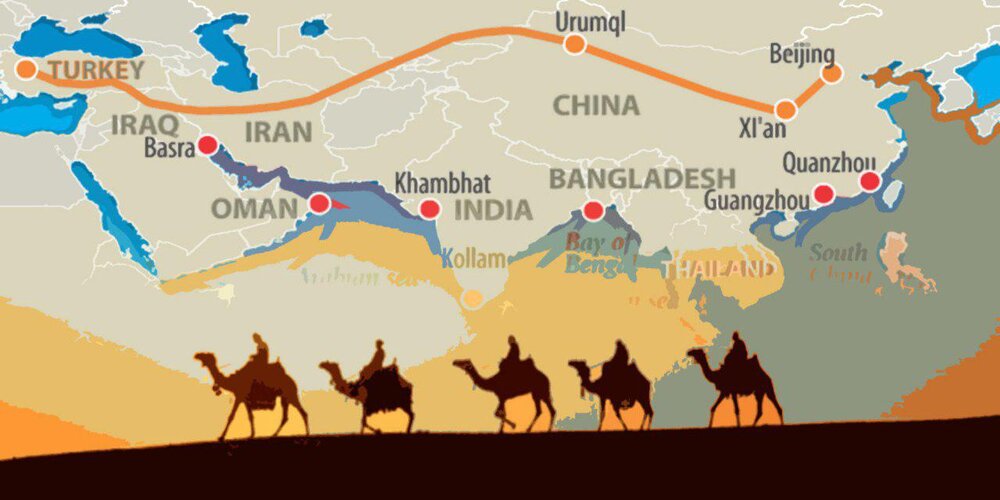
Tehran welcomes Beijing's initiative to revive glory of ancient Silk Road

TEHRAN – Iran’s tourism minister Ali-Asghar Mounesan has said Iran backs China’s initiative for reviving the glory of ancient Silk Road, which existed for thousands of years, passing through many different empires, kingdoms, reigns and societies throughout history.
As one of the countries under the China-proposed Belt and Road Initiative (BRI), Iran enables cultural communication between the East and the West.
“The BRI tightly connected many amicable countries along the Silk Road, and I am very glad that Iran could join in the initiative because it is helping to restore the glory of the ancient road,” the Global Times quoted Mounesan as saying on Friday.
The visiting Iranian minister made the remarks on Friday on the sidelines of the third ministerial meeting of the Ancient Civilizations Forum, which was held in Beijing, China.
The minister voiced hope that more Chinese travelers to visit Iran as he pointed at China a huge tourism market.
Back in June, the Iranian government approved a proposal for allowing visa-free entry of the Chinese nationals into the country. The law took effect on July 16. The decision came in response to a joint request by the Foreign Ministry and the then Iran’s Cultural Heritage, Handicrafts and Tourism Organization of Iran (which later transformed into a ministry).
Mounesan also noted that apart from tourism, Iran would also welcome cooperation with China in the preservation and restoration of cultural relics, the report said.
“China and Iran are two countries with ancient civilizations. Both have many rich world heritage sites, and we are open to learning from each other,” Mounesan said, noting that preserving traditional culture in the new era is very important.
Mounesan also voiced support for China’s efforts to enhance its local culture, mentioning the Palace Museum's attempts to develop creative cultural industries to attract young people. Iran is also trying to keep its traditional culture alive through various art forms including film, drama, traditional clothes and handicrafts.
“I am very happy that some [handicraft] experts are young people, and they do like their jobs. In fact, Iran has become one of the largest exporters of handicrafts in the world. Last year, exports of handicrafts in Iran reached $600 million, and we want to set a target of $2 billion.”
Elsewhere in his remarks, the Iranian minister criticized some Western countries that do not have an ancient cultural background but are trying to create a kind of new culture, which is influencing the younger generation and causing traditional culture to be ignored.
“We have realized the phenomenon of cultural hegemony, but fortunately, more and more young people know their root culture. For example, art majors in universities are very popular among students. However, we still need more talks to face the cultural wave.”
UNESCO says that ancient Silk Road has connected civilizations and brought peoples and cultures into contact with each other from across the world for thousands of years, permitting not only an exchange of goods but an interaction of ideas and cultures that has shaped our world today. 

Tuesday, November 26, 2019

China – The Belt and Road Initiative – The Bridge that Spans the World

By Peter Koenig
"Information Clearing House" -   The Belt and Road Initiative (BRI), also called the New Silk Road, is based on a 2,100-year-old trade route between the Middle East and Eastern Asia, called the Silk Road. It wound its ways across the huge landmass Eurasia to the most eastern parts of China. It favored trading, based on the Taoist philosophy of harmony and peaceful coexistence – trading in the original sense of the term, an exchange with “win-win” outcomes, both partners benefitting equally.

Today, in the western world we have lost this concept. The terms of trade are imposed always by the ‘stronger’ partner, the west versus the poorer south – the south where most of the natural resources are lodged. Mother Earth’s assets have been and are coveted by the west – or north – for building and maintaining a lifestyle in luxury, abundance and waste. This trend has lasted for centuries of western colonialism: Exploitation, loot, esclavisation and rape of entire peoples of the Global South by the Global North, to use the current soothing World Bank lingo.

The New Silk Road, or BRI, is Chinese President Xi Jinping’s brainchild. It’s based on the same ancient principles, adjusted to the 21st Century, building bridges between peoples, exchanging goods, research, education, knowledge, cultural wisdom, peacefully, harmoniously and ‘win-win’ style. On 7 September 2013, Xi presented BRI at Kazakhstan’s Nazarbayev University. He spoke about “People-to-People Friendship and Creating a better Future”. He referred to the Ancient Silk Road of more than 2,100 years ago, that flourished during China’s Western Han Dynasty (206 BC to 24 AD).

“they had proven that countries with differences in race, belief and cultural background can absolutely share peace and development as long as they persist in unity and mutual trust, equality and mutual benefit, mutual tolerance and learning from each other, as well as cooperation and win-win outcomes.”
Referring to this epoch of more than two millenniums back, Xi Jinping pointed to the history of exchanges under the Ancient Silk Road, saying,

President Xi’s vision may be shaping the world of the 21st Century. The Belt and Road Initiative is designed and modeled loosely according to the Ancient Silk Road. President Xi launched this ground-breaking project soon after assuming the Presidency in 2013. The endeavor’s idea is to connect the world with transport routes, infrastructure, industrial joint ventures, teaching and research institutions, cultural exchange and much more. Since 2017, enshrined in China’s Constitution, BRI has become the flagship for China’s foreign policy.

BRI is literally building bridges and connecting people of different continents and nations. The purpose of the New Silk Road is “to construct a unified large market and make full use of both international and domestic markets, through cultural exchange and integration, to enhance mutual understanding and trust of member nations, ending up in an innovative pattern with capital inflows, talent pool, and technology database”. BRI is a perfect vehicle for building peacefully a World Community with a Shared Future for Mankind – which was the theme of an international Forum held in Shanghai, from 5-7 November, a tribute to China’s 70th Anniversary of her Revolution and achievements – with a vision into the future.

BRI is a global development strategy adopted by the Chinese Government. Already today BRI has investments involving more than 150 countries and international organizations – and growing – in Asia, Africa, Europe, the Middle East and the Americas. BRI is a multi-trillion investment scheme, for transport routes on land and sea, as well as construction of industrial and energy infrastructure and energy exploration – as well as trade among connected countries. Unlike WTO (World Trade Organization), BRI is encouraging nations to benefit from their comparative advantages, creating win-win situations. In essence, BRI is to develop mutual understanding and trust among member nations, allowing for free capital flows, a pool of experts and access to a BRI-based technology data base.

At present, BRI’s closing date is foreseen for 2049 which coincides with new China’s 100th Anniversary. The size and likely success of the program indicates, however, already today that it will most probably be extended way beyond that date. It is worth noting, 


though, that only in 2019, six years after its inception, BRI has become a news item in the West. 

Remarkably, for six years BRI was as much as denied, or ignored by the western media, in the hope it may go away. But away it didn’t go. To the contrary, many European Union members have already subscribed to BRI, including Greece, Italy, France, Portugal – and more will follow, as the temptation to participate in this projected socioeconomic boom is overwhelming.
Germany, the supposed economic leader of Europe, is mulling over the benefits and contras of participating in BRI. The German business community, like business throughout Europe, is strongly in favor of lifting US-imposed sanctions and reconnecting with the East, in particular with China and Russia. But official Berlin is still with one foot in the White House – and with the other trying to appease the German – and European – world of business. This balancing act is in the long run not sustainable and certainly not desirable. At present BRI is already actively involved in over 80 countries, including at least half of the EU members.

To counteract the pressure to join BRI, the European Union, basically run by NATO and intimately linked to Washington, has initiated their own ‘Silk Road’, attempting to connect Asia with Europe through Japan. In that sense, the EU and Japan have signed a “free trade agreement” which includes a compact to build infrastructure, in sectors such as energy, transport and digital devices. The purpose is to strengthen economic and cultural ties between the two regions, boosting business relations between Asia and Europa. It is an obvious effort to compete with or even sideline China’s BRI. But it is equally obvious that this response will fail. Usually initiatives taken in ill-fate are not successful. And China, non-belligerent China, is unlikely to challenge this EU-Japan competitive approach.

In another approach to counter BRI, The U.S. Overseas Private Investment Corporation (OPIC), Australia’s Department of Foreign Affairs and Trade (DFAT), and Japan Bank for International Cooperation (JBIC), launched on 4 November the Blue Dot Network (BDN), an initiative supposedly run entirely by private actors, funded by private banking, intended to bring together governments, the private sector, and civil society “to promote high-quality, trusted standards for global infrastructure development in an open and inclusive framework.”

It is not clear how the BDN will interact with or counteract BRI. Anything run entirely by the private sector, especially western private banking, is no good omen for the country their “development effort” touches. Such investments’ objectives are primarily shareholder profits, not socioeconomic development benefitting the countries where they plan to invest. No competition for China’s BRI. Again, non-aggressive China is unlikely to react.
China’s New Silk Road is creating a multipolar world, where all participants will benefit. The idea is to encourage economic growth, distributed in a balanced way, so as to prioritize development opportunities for those most in need. That means the under-developed areas of western China, eastern Russia, Central Asia, Central Europe – reaching out to Africa and the Middle East, Latin America, as well as to South East Asia and the Pacific. BRI is already actively building and planning some six to ten land and maritime routes, connecting Africa, the Middle East, Europe and South America.
The expected multi-trillion-dollar equivalent dynamic budget is expected to be funded by China, largely, but not exclusively, by the Asian Infrastructure and Investment Bank (AIIB), by Russia – and by all the countries that are part of BRI and involved in singular or multi-country projects. The long-term return on these massive investments in people’s wellbeing is an exponential multiple of the original investments and cannot be limited to numerical economics, as social benefits of wellbeing cannot be defined by linear accounting.

Implementing BRI, or the New Silk Road, is itself the realization of a vision of nations: Peaceful interconnectivity, joint infrastructure and industrial development, as well as joint management of natural resources. For example, BRI may help with infrastructure and management advice resolving or preventing conflicts on transboundary water resources. There are some 263 transboundary lake and river basins, covering almost half the earth’s surface and involving some 150 countries. In addition, there are about 300 transboundary aquifers serving about 2 billion people who depend on groundwater.

The Chinese government calls the Silk Road Initiative “a bid to enhance regional connectivity and embrace a brighter future”. Today, John Lennon’s “Give Peace a Chance” is more relevant than ever. And China is a vanguard in promoting peaceful development across the globe. BRI, China’s foreign policy flagship, is clearly an initiative towards world Peace.

Peter Koenig is an economist and geopolitical analyst. He is also a water resources and environmental specialist. He worked for over 30 years with the World Bank and the World Health Organization around the world in the fields of environment and water.He lectures at universities in the US, Europe and South America. He writes regularly for Global Research; ICH; RT; Sputnik; PressTV; The 21stCentury; Greanville Post; Defend Democracy Press, TeleSUR; The Saker Blog, the New Eastern Outlook (NEO); and other internet sites. He is the author of Implosion –An Economic Thriller about War, Environmental Destruction and Corporate Greed –fiction based on facts and on 30 years of World Bank experience around the globe. He is also a co-author of The World Order and Revolution! -Essays from the Resistance. Peter Koenig is a Research Associate of the Centre for Research on Globalization.

Thursday, May 23, 2019

US geopolitical interests offer Iran sanctions loophole amid mounting tension

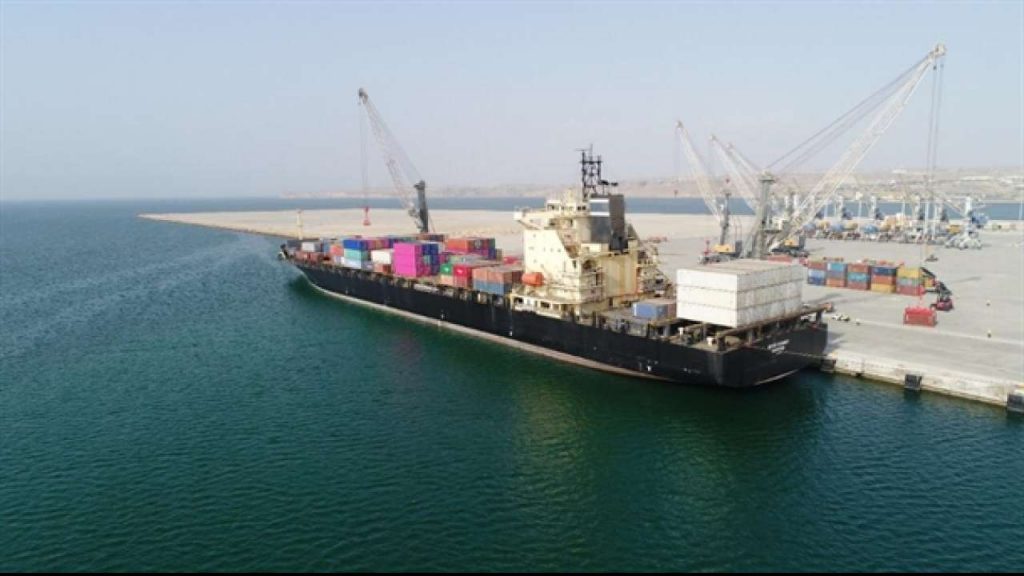
The Indian-backed Iranian port of Chabahar has emerged as a major loophole in a tightening military and economic noose and ever harsher US sanctions that President Donald J. Trump, reluctant to be sucked into yet another war, sees as the best way to either force Tehran to its knees or achieve regime change.
Alice Wells, the State Department’s assistant secretary for South and Central Asia, said during a meeting with Afghan foreign minister Salahuddin Rabbani that Chabahar had been exempted at Afghanistan’s request.
The State Department said earlier that the exemption was granted because it was related to “reconstruction assistance and economic development for Afghanistan, which includes the development and operation of Chabahar Port.”
US officials said privately that the exemption was also a nod to India that sees Chabahar as vital for the expansion of its trade with Afghanistan and Central Asian republics.
They said it was moreover an anti-dote to the Chinese backed port of Gwadar just 70 kilometres down the Arabian Sea coast in the troubled neighbouring Pakistani province of Balochistan.
That may be a long shot, certainly as long as India like much of the rest of the world is restricted by the US sanctions in its economic and commercial dealings with Iran.
The exemption comes however as Chinese security concerns in Balochistan as well as Pakistan at large are mounting.
China’s massive US$45 billion plus Belt and Road-related infrastructure investment in Pakistan with Gwadar and Balochistan at its core has become a prime target for nationalist insurgents that has officials in Beijing worried. It has also reinforced long-standing doubts in some circles in Beijing about the viability of the project.
Dubbed the China Pakistan Economic Corridor or CPEC, China sees the project, involving a network of roads, railways and pipelines that would link Gwadar to China’s troubled north-western province of Xinjiang as a key economic component of its brutal effort to Sincize the strategic region’s Turkic Muslim population.
“China, you came here (Balochistan) without our consent, supported our enemies, helped the Pakistani military in wiping our villages. But now it’s our time… Baloch Liberation Army (BLA) guarantees you that CPEC will fail miserably on the Baloch land. Balochistan will be a graveyard for your expansionist motives,” a commander of the BLA’s Majeed Brigade said in a video message released a week after militants stormed a hilltop, highly secured luxury hotel in Gwadar, killing five people.
The BLA claimed a month earlier responsibility for an attack on a convoy on a highway leading out of Gwadar in which 14 Pakistani military personnel died and an assault last year on the Chinese consulate in Karachi.
The attacks and threats have prompted Chinese sceptics of China’s massive investment in Pakistan to express their doubts more publicly.
“Gwadar wants to be in the shipping business, but it has failed to do so. Pakistan’s economy is not very good, and this port has become very wasteful … under these circumstances, including with the hotel attack, how can China conduct its business? The roads and traffic cannot even be maintained,” said Beijing-based military analyst Zhou Chenming.
While many in Pakistan believe that the BLA enjoys Iranian support and Iranians are convinced that Pakistan enables shadowy Islamic militants who have claimed responsibility for a rare suicide bombing in December in Chabahar and attacks on Revolutionary Guards elsewhere in the Iranian province of Sistan and Balochistan, fact of the matter is that both countries are vulnerable to Baloch insurgents.
The situation on both sides of the Iranian-Pakistani border is complicated by suspicions that the violence also has links to the rivalry between Iran and Saudi Arabia and that the Baloch provinces of Pakistan and Iran could become a stage for a proxy war.
Amid reports that China has reached out to Baloch nationalist leaders in exile, Pakistani security analyst Muhammad Amir Rana cautioned that the exiles may no longer be in control.
“The new leadership of the Baloch insurgency largely hails from the educated middle class with urban backgrounds and is not hiding in Europe; therefore, it does not face the sort of constraints that exiled Baloch leaders do vis-à-vis Iran,” Mr. Rana said.
Mr. Rana noted that Iran’s influence in Pakistani Balochistan was visible in oil smuggled across the border, Iranian products in grocery shops and the supply of electricity to the coastal strip of Makran that includes Gwadar.
“For Pakistan, the security cost of CPEC is increasing which could frustrate the Chinese as well as foreign and local investors,” Mr. Rana warned.
For now, China confronts a more serious challenge in Gwadar, Balochistan as well as other parts of Pakistan that are struggling with un-related incidents of political violence compared to India and Chabahar.
That could change if the Saudi Iranian component of the low level Baloch insurgency spins out of control with the escalating stand-off between the United States and Iran.
Iran appears to have pinned its hopes that Chabahar will be shielded from the impact of regional tensions on the perceived US geopolitical need to protect India’s interest in Afghanistan and Central Asia.
Said Pir Mohammad Mollazeh, an Iranian Afghanistan and Central Asia scholar: “US long-term geopolitical interests, due to the lack of relations with Iran, require India to maintain its position in the region and protect India as a partner in Central Asia… Chabahar port is considered to be a very important and strategic which is an opportunity for our country to enable Iran to reduce its sanctions by means of economic exchanges in Chabahar.”
Dr. James M. Dorsey is a senior fellow at Nanyang Technological University’s S. Rajaratnam School of International Studies, an adjunct senior research fellow at the National University of Singapore’s Middle East Institute and co-director of the University of Wuerzburg’s Institute of Fan Culture.

Friday, November 02, 2018

It Is a New Era, But China’s Balancing Act Will Fail in the Middle East

Although ties between Washington and Tel Aviv are stronger than ever, Israeli leaders are aware of a vastly changing political landscape. The US’ own political turmoil and the global power realignment – which is on full display in the Middle East – indicate that a new era is, indeed, in the making.
Unsurprisingly, this new era involves China.
China’s Vice President, Wang Qishan, arrived in Israel on October 22 on a four-day visit to head the fourth China-Israel Innovation Committee. He is the highest-ranking Chinese official to visit Israel in nearly two decades.
In April 2000, the former president of China, Jiang Zemin, was the first Chinese leader to ever visit Israel, touring the Yad Vashem Holocaust Museum and paying diplomatic dues to his Israeli counterparts. At the time, he spoke of China’s intentions to cement the bond between the two countries.
Wang Qishan’s visit, however, is different. The “bond” between Beijing and Tel Aviv is much stronger now than it was then, as expressed in sheer numbers. Soon after the two countries exchanged diplomatic missions in 1992, trade figures soared. The size of Chinese investments in Israel also grew exponentially, from $50m in the early 1990s to a whopping $16.5bn according to 2016 estimates.
China’s growing investments and strategic ties to Israel are predicated on both countries’ keen interest in technological innovation, as well as on the so-called “Red-Med” Railway, a regional network of sea and rail infrastructure aimed at connecting China with Europe via Asia and the Middle East. Additionally, the railway would also link the two Israeli ports of Eilat and Ashdod.
News of China’s plan to manage the Israeli port of Haifa has already raised the ire of the US and its European allies.
Times have changed, indeed. Whereas in the past, Washington ordered Tel Aviv to immediately cease exchanging American military technology with China, forcing it to cancel the sale of the Phalcon airborne early-warning system, it is now watching as Israeli and Chinese leaders are managing the dawn of a new political era that – for the first time – does not include Washington.
For China, the newfound love for Israel is part of a larger global strategy that can be considered the jewel of China’s revitalized foreign policy.
Qishan’s visit to Israel comes on the heels of accelerated efforts by Beijing to promote its mammoth trillion-dollar economic project,the Belt and Road Initiative (BRI).
China hopes that its grand plan will help it open massive new opportunities across the world and eventually guarantee its dominance in various regions that rotated, since World War II, within an American sphere of influence. BRI aims to connect Asia, Africa, and Europe through a “belt” of overland routes and a maritime “road” of sea lanes.
The China-US competition is heating up. Washington wants to hold on to its global dominance for as long as possible while Beijing is eagerly working to supplant the US’ superpower status, first in Asia, then in Africa and the Middle East. The Chinese strategy in achieving its objectives is quite clear: unlike the US’ disproportionate investments in military power, China is keen on winning its coveted status, at least for the time being, using soft power only.
The Middle East, however, is richer and, thus, more strategic and contested than any other region in the world. Rife with conflicts and distinct political camps, it is likely to derail China’s soft power strategy sooner rather than later. While Chinese foreign policy managed to survive the polarizing war in Syria through engaging all sides and playing second to Russia’s leading role at the UN Security Council, the Israeli Occupation of Palestine is a whole different political challenge.
For years, China has maintained a consistent position in support of the Palestinian people, calling for an end to the Israeli Occupation and for the establishment of an independent Palestinian state. However, Beijing’s firm position regarding the rights of Palestinians, seems of little consequence to its relationship with Israel, as joint technological ventures, trade and investments continue to grow unhindered.
China’s foreign policymakers operate with the mistaken assumption that their country can be pro-Palestine and pro-Israel at once, criticizing the Occupation, yet sustaining it; calling on Israel to respect international law while at the same time empowering Israel, however unwittingly, in its ongoing violations of Palestinian human rights.
Israeli hasbara has perfected the art of political acrobats, and finding the balance between US-western discourse and a Chinese one should not be too arduous a task.
Indeed, it seems that the oft-repeated cliché of Israel being “the only democracy in the Middle East”, is being slightly adjusted to meet the expectations of a fledgling superpower, which is merely interested in technology, trade and investments. Israeli leaders want China and its investors to think of Israel as the only stable economy in the Middle East.
Expectedly, Palestinian priorities are wholly different.
With the Palestinian struggle for freedom and human rights capturing international attention through the rise of the Boycott, Divestment and Sanctions (BDS) movement, more and more countries are under pressure to articulate a clear stance on the Israeli Occupation and apartheid.
For China to enter the fray with an indecisive and self-serving strategy is not just morally objectionable, but strategically unsustainable as well. The Palestinian and Arab peoples are hardly interested in swapping American military dominance with Chinese economic hegemony that does little to change or, at least challenge, the prevailing status quo.
Sadly, while Beijing and Tel Aviv labor to strike the needed balance between foreign policies and economic interests, China finds itself under no particular obligation to side with a well-defined Arab position on Palestine, simply because the latter does not exist. The political division of Arab countries, the wars in Syria and elsewhere have pushed Palestine down from being a top Arab priority into some strange bargain involving “regional peace” as part of Trump’s so-called “Deal of the Century”.
This painful reality has weakened Palestine’s position in China, which, at least for now, values its relationship with Israel at a higher level than its historical bond with Palestine and the Arab people.
Ramzy Baroud is a journalist, author and editor of Palestine Chronicle. His latest book is The Last Earth: A Palestinian Story (Pluto Press, London, 2018). He earned a Ph.D. in Palestine Studies from the University of Exeter and is a Non-Resident Scholar at Orfalea Center for Global and International Studies, UCSB.

Monday, September 17, 2018

Is Langley Unleashing Jihad Against China in Xinjiang?


Is Langley Unleashing Jihad Against China in Xinjiang?
JAMES GEORGE JATRAS


One of the early indicators that the Trump administration’s foreign and security policies would not be guided by the President’s own preferences but by those of the supposed “experts” – globalists, neoconservatives, and assorted retreads from the George W. Bush administration – with whom he unwisely has surrounded himself was the announcement of a “new” strategy on Afghanistan in August 2017.  It was neither new nor a strategy. President Donald Trump allowed his publicly stated preference to get the hell out to be overruled by the guys with the short haircuts who want to stay in Afghanistan, in effect, forever.
But why? What possible national interest could be advanced from a permanent American military presence in a godforsaken piece of real estate about as remote from the United States as it is possible to get while staying on this planet?
One answer was suggested by Colonel Lawrence Wilkerson (US Army-Ret.), former chief of staff to US Secretary of State Colin Powell, at the August 18, 2018, conference of the Ron Paul Institute. Wilkerson’s description of the subjective thinking of the US military has the ring of truth (presented here in authentic Pentagonese BLOCK LETTERS, emphasis added in bold):
‘HERE IS WHAT THE MOST POWERFUL AND MOST STRATEGICALLY-ORIENTED BUREAUCRACY IN OUR GOVERNMENT, THE MILITARY, HAS DECIDED FOR AFGHANISTAN.
‘THERE ARE THREE STRATEGIC REASONS WE WILL BE IN AFGHANISTAN, AS WE HAVE BEEN IN GERMANY SINCE WWII, FOR A VERY LONG TIME—WELL BEYOND THE ALMOST TWENTY YEARS WE HAVE BEEN THERE TO DATE.
‘THESE REASONS HAVE LITTLE TO DO WITH STATE-BUILDING, WITH THE TALIBAN, OR WITH ANY TERRORIST GROUP THAT MIGHT BE PRESENT.  THESE THINGS ARE ANCILLARY TO OUR REAL OBJECTIVES.
‘THE FIRST REAL OBJECTIVE IS TO HAVE HARD POWER DIRECTLY NEAR THE CHINESE BASE ROAD INITIATIVE (BRI) IN CENTRAL ASIA. 
‘ASK DONALD RUMSFELD HOW DIFFICULT IT WAS TO GET MAJOR MILITARY FORCES INTO THIS EXTRAORDINARILY DIFFICULT LAND-LOCKED TERRAIN IN THE FALL OF 2001.  FOR THAT REASON, WE ARE NOT ABOUT TO DEPART.
‘SECOND, IN AFGHANISTAN WE ARE RIGHT NEXT TO THE POTENTIALLY MOST UNSTABLE NUCLEAR STOCKPILE ON EARTH, PAKISTAN’S.  WE ARE NOT ABOUT TO LEAVE THAT EITHER.  WE WANT TO BE ABLE TO POUNCE ON THAT STOCKPILE VERY SWIFTLY SHOULD IT BECOME A THREAT.
‘THIRD, WE WANT TO BE ABLE TO MOUNT AND COVER WITH HARDPOWER CIA OPERATIONS IN XINJIANG PROVINCE, CHINA’S WESTERNMOST SECTION.  THESE WOULD BE OPERATIONS AIMED AT USING THE SOME 20 MILLION UIGHURS IN THAT PROVINCE TO DESTABLIZE THE GOVERNMENT IN BEIJING SHOULD WE SUDDENLY FIND OURSELVES AT WAR WITH THAT COUNTRY. 
‘I WILL WAGER THERE ARE NOT A HANDFUL OF OUR CITIZENS WHO REALIZE THAT WE—OUR MILITARY, THAT IS—PLAN TO BE IN AFGHANISTAN FOR THE ENTIRE TIME WE ARE CONSIDERING FOR OUR GRAND STRATEGY—AND PERHAPS BEYOND.’ 
We are not yet overtly at war with China, but given Beijing’s quasi-alliance with Moscow and the growing prospect of a clash between the US and Russia in Syria or Ukraine it’s not too soon to suppose the self-proclaimed “steady state” already thinks of China as an enemy, or at least as a “great power competitor” that needs to be taken down a peg.  Of particular importance, as noted by Wilkerson, is the Belt and Road Initiative (BRI), the centerpiece of a greater Eurasian partnership, a key component of China’s bid to become a military superpower as well as an economic one.
Beijing’s geographical weak link to Eurasian partnership is Xinjiang, which is BRI’s logistics hub and China’s gateway to the west towards Central Asia, Russia, and Europe. It also conveniently happens to be the home of restive Muslim ethnic Uyghurs.
In short, Xinjiang is an ideal place for the CIA (per Wilkerson) to give Beijing a hotfoot and try to throw an impediment in the way of BRI and thus of Eurasian integration.
Whenever you see western governments and the legacy media wailing about the plight of “persecuted Muslims” somewhere (in a way they never do for Christians anywhere) it should be a tipoff the boys and girls over at Langley are pushing the start button on a jihad against someone for geopolitical reasons having nothing to do with human rights, religious freedom, or other ostensible bleeding heart concerns. That appears to be what we’re seeing today in the strident chorus of alarm from Congress calling for sanctions against Chinese officials.
We’ve seen this movie before. Today we see it against China and Beijing’s Belt and Road Initiative (the Uyghurs, and connectedly the Rohingya in Myanmar, directed against BRI’s China-Myanmar Economic Corridor through Rakhine State on the Bay of Bengal). In the past we saw it in Afghanistan (against the USSR), in the Balkans on behalf of Bosnian Muslims and Kosovo Albanians (against the Serbs), in the Caucasus on behalf of the Chechens (against Russia). Of course the successful overthrow and murder of the Libya’s Muammar Kaddafi and the not-yet-abandoned effort to effect regime change in Syria depend heavily on support for various al-Qaeda affiliates and offshoots.  
It’s significant that in all of our post-Cold War 1 military interventions every one (except for Bill Clinton’s invasion of Haiti) was ostensibly to free or rescue some suffering Muslims – never mind that in Afghanistan, Iraq, Libya, Syria, Yemen, Somalia, etc. we somehow ended up killing large numbers of the supposed beneficiaries. Just imagine how many oppressed Muslims we would need to kill liberating Iran! Meanwhile, as we continue to support the Saudi slaughter in Yemen with a US quasi-alliance with al-Qaeda there, there’s nothing to see, folks . . .
Recognizing these crocodile tears for what they are isn’t to suggest that bad things aren’t happening in Xinjiang. But based on past experience it’s reasonable to think that behind the fog of state-sponsored media propaganda the reality is more complex and involves a substantial element of western intelligence ginning up the jihadis against the kaffir Han as we have against many other targets.
As is the case with Myanmar, where the government’s claims of actual jihad terrorism – including massacring Hindu villagers – are dismissed out of hand, China’s policy in Xinjiang is condemned without reference to the demonstrable reality of outside-supported attacks. As noted by Moon of Alabama:
‘Since the early 1990s a number of terror incidents by the East Turkistan Islamic Movement (ETIM) [also known as the Turkestan Islamic Party] killed several hundred people in China. ETIM is sanctioned by the UN as an al-Qaeda aligned movement. Three years ago China decided to attack the problem at its roots. It prohibited Salafist-Wahhabi Islamic practice, which was only recently imported into the traditionally Sufi Uyghur-Muslim areas, and it tries to weed out any such ideology. It also fears the potential growth of an ethnic-nationalistic Turkic Uyghur movement, sponsored by Turkey, that could evolve into a separatist campaign.
‘People who are susceptible to such ideologies will be put through an reeducation training which includes language lessons in Mandarin and general preparation for the job market. This may not be the way 'western' countries mishandle a radicalization problem, but it is likely more efficient. There surly are aspects of the program that can be criticized. But to claim that these trainings happen in "concentration camps" and for nonsensical reasons is sheer propaganda.’
‘Xinjiang province is larger than Great Britain, France, Spain, and Germany combined. It is a mostly uninhabitable landscape of mountainous and desert terrain with a tiny population of some 24 million of which only 45% are Muslim Uyghurs of Turkic ethnicity. It would be rather unimportant outer province for China were it not at the core of the new Silk road connections.
‘It is a vulnerable point. An established insurgency in the area could seriously interrupt the new strategic communication lines.
‘Chinese strategists believe that the U.S., with the help of its Turkish, Saudi and Pakistani friends, was and is behind the Islamic and ethnic  radicalization of the Turkic population in the province. It is not by chance that Turkey transferred Uyghur Jihadis from Xinjiang via Thailand to Syria to hone their fighting abilities. That the New York Times publishes about the Xinjiang re-education project, and also offers the report in Mandarin, will only confirm that suspicion. China is determined to end such interference.’
The fact is that the CIA and MI6 spooks love jihadis – they’re very “operational” as well as expendable. Case in point are several thousand Chinese Uyghurs fighting with the al-Qaeda-led terrorists in Syria’s Idlib province, where China’s President Xi Jinping no doubt will help Syria’s Bashar al-Assad and Russia’s Vladimir Putin ensure as many of them as possible never make it back home.
One inescapable irony is that the US and other intelligence services likely siccing their terrorist hounds on China represent governments that worship at the absurd altar of “diversity is strength,” unlike the countries they are targeting. Unashamed of their identity and culture, the Han Chinese aren’t buying it. As American nationalist Patrick Buchanan observes:
‘Consider China, which seeks this century to surpass America as the first power on earth. Does Xi Jinping welcome a greater racial, ethnic and cultural diversity within his county as, say, Barack Obama does in ours?
‘In his western province of Xinjiang, Xi has set up an archipelago of detention camps. Purpose: Re-educate his country's Uighurs and Kazakhs by purging them of their religious and tribal identities, and making them and their children more like Han Chinese in allegiance to the Communist Party and Chinese nation.
‘Xi fears that the 10 million Uighurs of Xinjiang, as an ethnic and religious minority, predominantly Muslim, wish to break away and establish an East Turkestan, a nation of their own, out of China. And he is correct.
‘What China is doing is brutalitarian. But what China is saying with its ruthless policy is that diversity—religious, racial, cultural—can break us apart as it did the USSR. And we are not going to let that happen.
‘Do the Buddhists of Myanmar cherish the religious diversity that the Muslim Rohingya of Rakhine State bring to their country?”
If Donald Trump really were master of his own house, maybe he could move forward on his pledge of an America First, national interest-based policy that finds “common ground” (as articulated at the same Ron Paul Institute conference by Colonel Doug Macgregor (US Army-Ret.)) with countries like Russia and China we continue to treat as adversaries.
But as things stand now, Trump’s nominal subordinates continue to do as they please as though someone else occupied the Oval Office. Perhaps they anticipate that will soon be the case. 

JAMES GEORGE JATRAS


James George JATRAS
Analyst, former U.S. diplomat and foreign policy adviser to the Senate GOP leadership