Showing posts with label Arab League. Show all posts

Wednesday, June 19, 2019

The Arab Emergency Summit in Mecca: Provocative and Invective


When an Arab emergency summit is called to convene, one would naturally assume the existence of an urgent Arab crisis which requires immediate attention. So, when king Salman of Saudi Arabia called for an emergency Arab summit to convene in Mecca, the holiest Muslim city, the natural assumption was that there is an urgent Arab crisis to be dealt with, immediately.
Therefore, one had to assume the urgent Arab emergency summit meeting in Mecca on May 30, 2019, would have to do, though belatedly, with the ramifications of Arab states destroying Arab states, Muslims killing Muslims, Arabs killing Arabs. Or perhaps more specific urgent Arab matters such as the American recognition of a united Jerusalem as the eternal capital of Israel, the moving of the American embassy to Jerusalem, the declaration by Netanyahu of his intention to annex the major Israeli settlements with American acquiescence or with the American recognition of the Israeli annexation of the Syrian Golan, or the “Deal of the Century”. Surprisingly and unfortunately the summit dealt with none of the above.
On the face of it, the summit was an official Arab emergency summit, but in reality, it was a Saudi Arabian summit and the agenda was a Saudi Arabian agenda: Iran, which was practically the exclusive item on the agenda and in the final communique. No perceptive Arab affairs genius would have thought of an urgent need for an emergency Arab summit to deal with a presumed ‘Iranian threat’ to the Arabs. There is mutual animosity and perception of security threats between Iran on the one hand and Saudi Arabia and a very few Arab states, mostly in the Gulf region, on the other hand. However, there are no similar feelings between the majority of other Arab states and Iran.
The final communique was delivered by the Secretary General of the Arab League, Ahmed Aboul Gheit, at the conclusion of the summit. It starts with a preamble and ten operative paragraphs. Iran is mentioned in the preamble and the operative paragraphs no less than fifteen times. The onslaught on Iran full of provocations and invectives started with the preamble and moved on with gusto in the operative paragraphs.
The impetus for convening the emergency summit, as noted by Mr. Aboul Gheit, was “the serious repercussions of the attack by the Iranian-backed Houthi terrorist militias on two oil pumping stations in the kingdom of Saudi Arabia and the attack on commercial vessels in the territorial waters of the United Arab Emirates.”
In view of the killing and wounding of millions of Muslim and non-Muslim Arabs, the immigration and displacement of more millions, the chaos and destruction and the rendering of several Arab states as failed states, it is amazing that attacks on two oil pumping stations in Saudi Arabia, and on four commercial vessels in the territorial waters of the UAE, in which the culprit is uncertain, warranted the convening of an emergency Arab League summit to target and condemn Iran. It is made clear in the preamble, and the ten substantive paragraphs, of the communique that the culprit is Iran. But why the certainty that Iran is the culprit? Because John Bolton, American National Security Adviser, who is not known for his honesty and truthfulness, said so! Mr. Bolton said he will provide the evidence later; thus, a new legal norm: Convict then provide the evidence.
Not only the reason for convening of the emergency summit is amazing, but the content of the ten-paragraph communique is shocking.
1. Historically and traditionally, Israel and Zionism are standard features in Arab League summit communiques. Thus, the present summit communique is a first for not including the terms Israel nor Zionism once.
2. Similarly, Palestinians are a standard feature in Arab League summit communiques. Thus, the present communique is also a first for not mentioning the Palestinians once. Although, as an afterthought, the last sentence of the last paragraph ten states that the issue of Palestine is “the main Arab issue”, but it did not merit a single operative paragraph.
3. While the communique does not include the aforementioned names, it has certainly gone overboard in provocatively and invectively mentioning Iran/Iranians and often preceded by ‘condemning’ and ‘denouncing’, no less than fifteen times.
4. Syria is mentioned once in paragraph ten for the purpose of condemning Iran. It is ironic that the Arab states, who expelled Syria from the League, the majority of which were not independent states when Syria and five Arab states established the League in 1945, met in a presumed Arab League summit and have suddenly become concerned about Syria. They denounced “the Iranian interference in the Syrian crisis and its implications for Syria’s future.”
The irony is that the ‘Iranian interference’ is legitimate, because it came at the request of the legitimate Syrian government and “supported Damascus’s efforts in fighting terrorism which was supported by some of those meeting in this summit”, as noted by the Syrian Foreign Ministry.
The Arab summit in Mecca was a Saudi Arabian conference attended by Arab states to discuss Saudi Arabia’s perceived and contrived Iranian threats. Threats which are, largely, not shared by most of the Arab states, not even shared by some of the Arab Gulf states. The contention that Iran constitutes a threat to the Arab states is contentious, and irrespective of what Netanyahu, Bolton and Pompeo claim, it is Iran which is threatened by the US, Israel and Saudi Arabia.
Finally, why manufacture a new crisis, and a potential war in the Muslim Arab region which is already ravaged by a multitude of crises, conflicts and wars?

Thursday, June 13, 2019

Tim Anderson: Trump’s Golan Move Part of US Inimical Role in Palestine

TEHRAN (FNA)- Tim Anderson, Australian academic and activist, says Washington has shown no signs of any currents to play a constructive role in Israeli-Palestinian conflict, as neither Trump nor his predecessors’ administrations minded Israeli land grabbing nor “ethnic cleansing” in the West Bank or Gaza.
In an exclusive interview with FNA, Dr. Anderson also made comments on Arab League’s condemnation of the US Golan move, saying while its members seek to establish ties with Israel, the bloc cannot call for action against Washington’s move.

Tim Anderson, Ph.D., is an Australian academic and activist. He was a senior lecturer at the University of Sydney and the author of several books on independent development and anti-imperialism.
Below is the full text of the interview:

Q: The Arab League, for many years, has failed to take any meaningful move with regard to the Israeli-Palestinian conflict. How do you view the bloc’s condemnation of Washington’s move to recognize Israeli “sovereignty” over the Golan Heights?

A: The Arab League disgraced itself some years back by supporting attacks on two members, Libya and Syria. I doubt if they can regain credibility, especially due to the increased role of the [P]GCC in the League. They did formally reject Tel Aviv’s attempt to annex the Golan, and called “invalid and illegitimate” Trump’s move to recognize that annexation. They also, once again, rejected the Zionist occupation of the West Bank and called for a Palestinian state. Yet in neither case was there any call for action. In diplomatic terms they did no more than the European Union, which also unanimously rejected the Golan annexation. Hezbollah praised the statement of Lebanon President Michel Aoun but said that the Arab League position “failed to match the seriousness” of the situation. The Resistance group also noted the movement of some League and [P]GCC members towards closer relations with Israel.

Q: The US claims its “Deal of the Century” brings the Israeli-Palestinian conflict to an end. Does Washington’s recent move dispute its own claim?

A: The Palestinian Authority has engaged with the US, but it has failed to show any real leadership or advance on the question of ‘negotiations’. That is why there is much disillusionment with the PA within Palestine. The most recent Jerusalem Media and Communications Centre polls in August and October of 2018 show that 82% of Palestinians saw “widespread corruption in the Palestinian Authority institutions and services”, while the percentage of those who trust President Mahmoud Abbas ranged between 10 and 11% in 2018. On the US-led ‘negotiations’ more than 80% saw no acceptable benefit for Palestinians in President Trump’s much hyped ‘Deal of the Century’. More broadly, only 12% said the Oslo accords of 1993 had “served Palestinian national interests”. So public opinion on both the PA and the US is very dim. Neither the Obama nor the Trump administration has been able to place the slightest constraint on the steady land theft and ethnic cleansing in the West Bank, nor have they stopped the murderous attacks on Gaza. It is principally local Palestinian resistance, in all its forms, which has slowed Zionist expansion. The Israeli entity has been blocked in the north by the Lebanese resistance and in the south by the resistance from Gaza. Now the north east expansion is in play. The West Bank has been flooded with colonies, destroying any possibility of making it the potential core of an Arab state. That in turn has led to an apartheid state – a crime against humanity. While there is a popular international movement in favor of this, there are no signs of any currents in Washington which could play a constructive role. For these reasons, even before President Trump, the US role in Palestine must be viewed as inimical and dangerous.

Q: How is the US’s global role viewed after Trump’s proclamation of Israeli “sovereignty” over the Golan Heights?

A: Washington, under President Trump, has acted in an increasingly unilateral manner and has therefore become more isolated. That is the contribution of the crude ‘realism’ of the Trump regime. Tearing up the JCPOA agreement with Iran, then penalizing third parties who wished to do business with Iran, has alienated Europe. Combined with the trade war on China and sanctions on Russia, Trump’s unilateral aggression has forced former allies to look for more independent financial and trade channels. Trump’s regressive role on climate agreements and withdrawal from a strategic arms limitation agreement with Russia further undermines any presence at a leading US role in the world. All this is before we come to the hybrid wars practiced against at least nine Middle Eastern states and peoples (Palestine, Lebanon, Afghanistan, Iran, Iraq, Libya, Syria, Yemen and Bahrain), and several more underway in Latin America (against Venezuela, Nicaragua, Cuba and Bolivia). The US has its special military forces in all regions, including Europe and Africa. Under the pretext of ‘fighting terrorism’ they have become the greatest sponsors of terrorism. They pose a great threat to the world.

Tuesday, November 06, 2018

MESA; Arab NATO-like Alliance

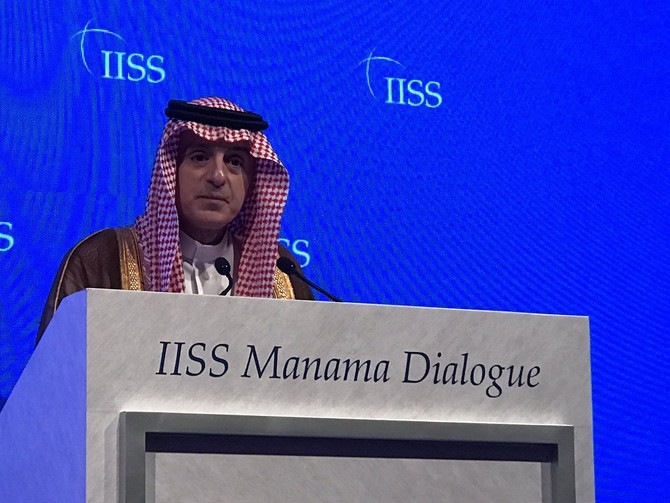
The major media outlets had totally ignored the important three days October 26-28 IISS Manama Dialogue 2018 conference that was organized by International Institute for Strategic Studies (IISS) in the city of Manama; the capital of the tiny island of Bahrain.
This Manama Dialogue was attended by very important international political representatives such as General James Mattis; US Secretary of Defense, Brett McGurk; Special Presidential Envoy for the Global Coalition to Defeat ISIS, Sheikh Khalid bin Ahmad Al Khlifa; Bahrain’s Minister of Foreign Affairs, Adel Al Jubeir; Saudi Minister of Foreign Affairs, Ayman Safadi; Jordanian Minister of Foreign Affairs, Yousef bin Alawi; Oman’s Minister of Foreign Affairs, Taro Kono; Japan’s Minister of Foreign Affairs, Ursula von der Leyen; German’s Minister of Defense, Elisabetta Trenta; Italy’s Minister of Defense, Raychelle Omamo; Kenya’s Secretary of Defense, Abdisaid Ali; Somalia’s National Security Adviser, and Jean-Christophe Belliard; Deputy Secretary General, Political Affairs, Political Director, European External Action service. Yet, surprisingly, the media had ignored the gathering of these important persons!!!???
The speeches of these representatives were characterized mainly as Iran bashing and condemnations, particularly the speeches of the American representatives; Mattis and McGurk, and the Bahraini and Saudi ministers. While their governments are pursuing hegemonic policies within the region, they accuse Iran of pursuing a hegemonic Iranian Crescent, previously called Shi’ite Crescent, covering Lebanon, Syria and Yemen. Iran did not impose itself on these countries. Lebanese Hezbollah requested Iranian help to free Lebanon from the 1982 Israeli occupation. Syria requested Iranian help to defeat American/Israeli/Gulf States supported terrorist groups. Yemen cannot get any outside help due to the air and sea siege imposed by American/Saudi/UAE’s forces.
While the USA and the Gulf States have enlisted, trained and armed all the terrorist groups that have been destroying Syria and Yemen during the last decade, they accused Iran of a terrorist supporting state. The facts on the ground show clearly that Iran has been fighting and defeating terrorist groups and protecting Syrian cities first and eventually the whole region.
While the USA and the Gulf States are spreading sectarianism, encourage terrorism, seeking to dominate other countries, waging wars and seeking to destabilize the Middle Eastern region, they accuse Iran of such crimes. Iran has never started any war or sent its military forces out of its own borders for the last 400 years.
While the American administration is gradually turning into a police state, and the Bahraini and Saudi kingdoms are despotic beheading dictatorships they accuse democratic Iran of abusing and suppressing its own people. Since its 1979 revolution Iran had held several democratic elections, something that had never happened in neither Bahrain nor Saudi Arabia.
None of these representatives dared to point to the core issue driving all these wars and destructions in the region except the Omani Minister; Yousef bin Alawi, who stated the following:
“We consider that the Palestinian issue is the core of all the problems that we have seen during the second half of the last century and the 18 years of the 21st Century … the state of Palestine needs to be established, because it has become a strategic necessity”
This Manama Dialogue came as a preliminary foundation for the planned for summit in November of the six leaders of the GCC; Gulf Cooperation Council (Oman, UAE, Saudi Arabia, Qatar, Bahrain and Kuwait) plus Jordan and Egypt in Washington with President Trump to lay the foundation for what Trump had called Middle Eastern Strategic Alliance (MESA) also dubbed Arab NATO-like Alliance.
Forming military alliances between Arab states to protect the Middle Eastern region goes back to post WWI era. The Arab League, formally known as the League of Arab States, was formed in 1945 with six-member Arab states and later expanded to include 22 states. The League was rendered ineffective first by British and then by American interfering policies and banking systems especially after the League’s opposition to the establishment of the illegal Zionist state of Israel on occupied Palestinian land. Such policies had also foiled any inter-Arab military alliances such as those attempted by former Egyptian president Gamal Abdel Nasser.
Nasser’s pan-Arabism ideology was very popular in the 1950’s. It led to the formation of the 1957 Regional Defense Pact between Egypt, Saudi Arabia, Syria and Jordan. Nasser’s pan-Arabism was viewed by the US as a threat to Israel, and when Nasser nationalized all British and French assets in Egypt, President Eisenhower’s administration decided to do everything it can to isolate Nasser and his ideology by transforming King Saud as a counterweight. Nasser was portrayed as a threat first to Jordanian King Hussein, and later a threat to King Saud. Eventually the Regional Defense Pact was dissolved.
In mid-1957 when Turkish troops were amassed on the Syrian border threatening to topple the government, Nasser sent a contingent force to aid Syria. In February 1958 Egypt and Syria were united into United Arab Republic (UAR).  Later Yemen joined the UAR, and a loose federation was formed under the name of United Arab States.
With tacit Eisenhower’s encouragement king Saud planned to assassinate Nasser while in Syria, but the assassination failed and was exposed by Nasser in a public speech.  King Saud then was replaced by his brother; King Faisal, who advocated pan-Islamic unity with non-Arab Moslem countries to counter Nasser’s pan-Arabism.
In September 1961 a Syrian army unit launched a coup in Damascus declaring Syria’s withdrawal from the UAR.  Avoiding inter-Arab fighting Nasser refused to send Egyptian forces to Syria to reinforce the allies, and accepted the separation.
Saudi Arabian money provoked civil war in Yemen in 1962. This war drew Egyptian forces in a war of attrition that ended in 1967 when Nasser withdrew his forces leaving Yemen divided into North and South.
With the death of Nasser in September 1970, the ideology of pan-Arabism and United Arab States faded gradually since none of the Arab leaders, except Syrian Hafez al-Assad, had called for it but found no positive response. It was left to the inefficient non-unitarian and divisive Arab League to deal with regional security issues.
It must be said that since WWI the western powers; US, British and France, had planned to divide the Arab World into weaker states that could be controlled and manipulated through pro-western despots in order to blunder its resources, particularly oil, and to control its geostrategic location. The Zionist Greater Israel Project had been adopted and implemented for this purpose. Any Arab attempt to unite militarily was opposed and spoiled.
Yet, at the present, Trump’s administration is in the process of forming a military Middle Eastern Strategic Alliance (MESA) allegedly to protect the region from any military threat. MESA is just a new form of the old western designed Middle Eastern Alliance projects; whose real goals were to wage American proxy inter-Arab wars to further divide and weaken Arab states to safeguard Israel and to rake great financial profits for the American military industrial complex.
We had witnessed these military alliances in the 1980-1988 Iraq/Iran war where the Gulf States supported Iraqi Saddam Hussein. Then the same Gulf States allied with Egypt, Jordan and Syria to join the western coalition in the two Gulf Wars; 1991 and 2003, against Iraq. In 2011 the Gulf States of Qatar, Saudi Arabia, UAE, Jordan and Turkey joined the so-called American Coalition to defeat ISIS in Syria when the facts on the ground showed that such coalition was a terrorist supporting coalition providing training, finance and weapons to ISIS to destroy Syria. In 2014 this same coalition supported terrorists who destroyed Libya. In 2015 we witnessed Saudi/UAE coalition, supported by Israel and US, waging war against Yemen.
So far, all these alliances had led to the destruction of Arab states. The proposed MESA is no different. Its major goal is to finish what the terrorist groups had started; destroying Syria, destroying Hezbollah and weakening or affecting a regime change in Iran. MESA, though, has one important distinction from its previous alliances, namely Israel.
As we have seen in the past, the American administrations will not allow the formation of an Arab military alliance that would threaten Israel. MESA will actually include Israel in the alliance as intelligent gathering partner. This would allow Israel to infiltrate its Arab partners’ military, security and intelligence systems. Israel is already involved in the terrorist war against Syria and in the Saudi/Emirati war against Yemen. MESA is perceived to include nine states; the six Gulf States (Kuwait, Bahrain, Qatar, Saudi Arabia, UAE and Oman), Jordan, Egypt and Israel.
The Arab’s enmity towards Zionist Israel, who occupied Palestine, attacked neighboring Arab states, and supported terrorist groups in Syria, would be turned into a friendly alliance, while Iran, who shares same religious faith with Arab states, supports the Palestinian cause, and considers Israel a main threat to the region is turned into an Arab enemy.
Vital issues remain to be tackled for this alliance to succeed. Arab states have their own separate policies and conflicts. Qatar was branded as a terrorist supporting state due to its conflicting agenda with those of the Saudi Arabia/UAE/Bahrain/Egypt alliance. Turkey, annoyed by Saudi decision to assist the Kurds in Syria, moved to become a shield for Qatar against the Saudi alliance by building a military base in the peninsula.
Kuwait took a neutral position towards the Qatar/Saudi conflict. Kuwaiti/Saudi tension increased during MBS’s short visit to Kuwait early October demanding that Kuwait re-open the Khafji and Wafra oil fields to compensate oil shortage and high prices anticipated by the expected American sanctions against Iran. Kuwaiti crown prince; Sheikh Nawaf Al-Ahmad was displeased by MBS’s snobby attitude and ordered him to leave Kuwait immediately.
To reconcile these inter-Arab conflicts the Secretary of State Mike Pompeo has been touring the Middle East offering incentives as well as inciting enmity against Iran at the same time.
There are other complicated issues to be solved before this alliance is formed. Issues such as finance, command, bases, cooperation between member states, and logistical arrangements. It is obvious that Saudi money will mainly finance the alliance. Saudi Arabia is the milking cow as described by President Trump. American military generals will assume command for sure, and will impose how member states would behave and contribute militarily.
Iran and the rest of the Arab states; Iraq, Syria, Lebanon and Palestine, perceive MESA as a pro-Zionist anti-Arab coalition, whose covert real goals are further division, destruction and weakening of the Arab World.  This coalition is looked at as a political and financial Arab suicide succeeding only in milking billions of Saudi money to buy American weapons that will only rust in Saudi desert, and in accepting the Zionist occupation of Palestine, that will eventually expand to cover more Arab land.
If stronger and larger international “ … 79 members of coalition in 75 countries, plus NATO, the EU, Interpol and the Arab League” according to Brett McGurk, had failed to affect regime change in Syria for a period of seven years, and the armed to the teeth with the latest sophisticated weapons American/Israeli/Saudi/Emirati/ coalition had failed to defeat the impoverished state of Yemen during the last three years, how then, would conflict-ridden MESA can accomplish any real victory?
The Iranian Minister of Foreign Affairs; Mohammad Javad Zarif, suggested a more efficient mechanism for security in the Persian Gulf region rather than building military alliances that create more enmity. He proposed starting a modest confidence building measures leading to a non-aggression pact. He suggested creating “a regional dialogue forum” among all the littoral states of the Persian Gulf to build “a security networking, rather than security alliances” to create “a strong region as opposed to a strong man in the region, where small and large nations – even those with historical rivalries – contribute to stability”
“You cannot have security at the expense of the insecurity of your neighbor.” Zarif emphasized.
Dr. Elias Akleh is an Arab American from a Palestinian descent. His family was evicted from Haifa, Palestine, after the 1948 Nakba when the Zionists stole his family’s property. Then the family was evicted again from the West Bank during the 1967 Naksah, after the Zionist, again, occupied the rest of Palestine.

Sunday, October 28, 2018

Why Did Oman Publicize Netanyahu’s Trip?

By
 Saber Golanbari
 

The fact that Oman openly publicized a trip to the country by the Israeli prime minister could be an indication of the normalization of relations between the two sides.
While certain European countries like Sweden refuse, for some reasons, to accept invitations by Israeli leaders, Oman publicized a recent trip to the country by Israeli Prime Minister Benjamin Netanyahu before even Israeli media covered the story.
In the past, trips by lower-level Tel Aviv officials to the Arab countries of the Persian Gulf were usually not announced. However, now that the highest ranking Israeli official has travelled to Muscat, and Oman itself has immediately spread the news across the globe, it seems the trip must have important objectives. At this juncture, Netanyahu’s trip has raised many questions, especially when it comes at a time when the Israel-Palestine peace process has been stalled, the US has relocated its Tel Aviv embassy to Jerusalem al-Quds and the Israeli side is opposed to the so-called Arab peace plan. And all of this has coincided with the crisis emanating from the assassination of dissident Saudi journalist Jamal Khashoggi. Some observers believe the trip is a joint effort to extricate Saudi Crown Prince Mohammed bin Salman from the predicament he is facing.
Mossad director Yossi Cohen and Israeli National Security Advisor Meir Ben-Shabbat accompanied Netanyahu during his trip to Oman, and this adds to the importance of the visit and sheds more light on its nature.
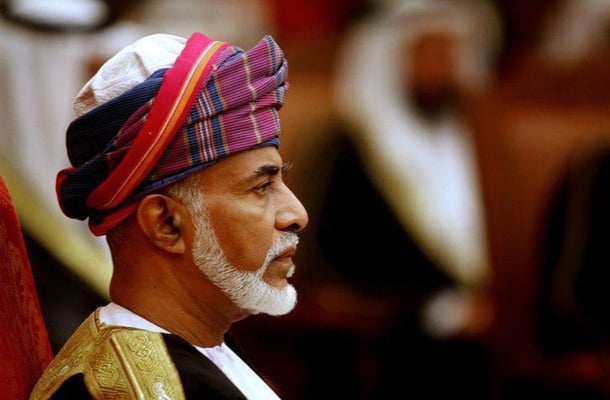
The reality is that Netanyahu being welcomed in Muscat under the current circumstances sends a lot of messages, but it was not unexpected of Sultan Qaboos to do such a thing, after all. He has always advocated such relations, which were clearly established in 1994. In April that year, then Israeli Deputy Foreign Minister Yossi Beilin travelled to Muscat and attended a meeting of the committees for multilateral talks on the so-called Middle East peace. In November the same year, he returned to Muscat and discussed the promotion of ties.
After a month, then Israeli Prime Minister Yitzhak Rabin went to Muscat and met with Sultan Qaboos. Afterwards, Omani Foreign Minister Yusuf bin Alawi met several times with Israeli authorities several times in Jordan and al-Quds, namely Shimon Peres. In a press conference in December 1995, he said Oman has no preconditions for establishing relations with Israel.
And when Yitzhak Rabin was assassinated, Oman’s Sultan sent Yusuf bin Alawi to Tel Aviv to express condolences. Even there, the foreign minister met with Shimon Peres.
Also in 1996, Shimon Peres, who had replaced Yitzhak Rabin, went to Muscat and reached agreement with Oman’s king over the establishment of ties through opening a trade representative agency. The two sides maintained their relations until Oman announced after the start of the second Intifada in 2000 that it had closed the Israeli agency.With such a move, Omani King Sultan Qaboos practically both put an end to the normalization of ties with the Israeli regime and tremendously boosted the position of Netanyahu and the rightist Likud party in the upcoming Knesset elections.

Thursday, January 12, 2012

Sanctioning Syria: Who is the Real Loser?

By Dr. Elias Akleh - Intifada-Palestine.com

Dr. Elias Akleh is an Arab writer from a Palestinian descent born in the town of Beit Jala. His family was first evicted from Haifa after the “Nakba” of 1948, then from Beit Jala after the “Nakseh” of 1967. He lives now in the US, and publishes his articles on the web in both English and Arabic.


(Corona,Calif.) - Economic sanctions are arrogant open acts of war against other nations. Their goal is to devastate the lower and middle classes and to weaken the country. The regime of the imposing country believes that its economy is superior and is so influential that other countries are so dependent on it and could not survive without it.

Economic sanctions are deceitfully justified as punishing a ruthless political regime and protecting human rights of an oppressed people. Such people are the most devastated when their economy is hurt while the ruling regime may become more oppressive in its reaction in order to protect and to preserve itself. Case in point is the hundreds of thousands of Iraqi children who died due to lack of medicine during the economic embargo after the Gulf War while the Iraqi regime had its own reserve of all kinds of medications stored for itself.

The sanctioning regime hopes that the sanctioned population would hurt so bad that, with some external encouragement and hope for economic relief; they would rise up and topple their own regime. The other scenario is that the military industry of the sanctioned regime becomes so weak and ineffective that the regime would not stand a chance in any military confrontation, similar to what happened in Iraq.

Such scenarios take place in a country that is faced with sanctions by the majority of the international community. On the other hand countries facing partial sanctions rise up to the challenge and become more self-sufficient and more independent. Cuba, with the longest economic embargo, North Korea and Iran are examples of such countries. Due to its large size and important natural resources, Iran had advanced its industry even to achieve nuclear technology.

Due to its leadership in resisting the Zionist expansionist plans in the Middle East, and for supporting the national resistance and liberation groups of Lebanese Hezbollah and Palestinian Hamas, and due to its alliance with Iran, Syria was subjected to many Western schemes of regime change. The whole Arab Spring movement has been primarily orchestrated and geared towards regime change in Syria, that is meant eventually to lead to a regime change in Iran; a frontier for Russia and China. Under the justification of protecting the lives of Syrian civilians rebelling against their government and protecting their humanitarian rights, Syria is subjected to economic sanctions imposed first by Western countries then by the Arab League.

Economic sanctions are not new to Syria, who was subjected to such sanctions since mid 1970’s imposed by the US. Since then Syria had risen to this challenge and had developed immunity against sanctions. What is new today is that the Arab League, with many of its member countries, joined by Turkey, had also imposed economic sanctions against Syria. The Arab League, with the leadership of Qatar, has been manipulated and used as a Trojan horse by an American/British/French triad to topple Syrian regime and to inflict the country with a civil war, similar to Libya, in the service of terrorist Israel and the expansionist Zionist plan in the Middle East.

Syrian economy is not dependent nor tied to any Western economy, thus these sanctions have no real effect on Syria. Syria is mainly an agricultural country and thus is mostly self-sufficient except in the technological sector which is filled mainly by Asian countries such as China, India, Russia and Iran. Also Syria has good economic trade with some Latin American countries.

Many neighboring Arab countries such as the Gulf States, Jordan, Iraq, and Lebanon import and are dependent on Syrian agricultural products. Lebanon and Iraq rejected the Arab League sanction and continue trade with Syria. The mostly desert Jordan shares borders with Syria and is heavily dependent on Syrian food products and water resources. Many Jordanian students study in Syrian universities. Jordan will hurt greatly by the sanctions. So the Jordanian king requested the Arab League to relief Jordan and to be treated as an exception in the sanctions.

Expecting the sanction Syria had withdrawn its money from the rest of the Arab central banks, especially the Jordanian Central Bank, causing a shortage and crises in these banks. Gulf States, especially Qatar and Saudi Arabia, have to compensate these shortages. Food prices in Syrian neighboring countries may double to cover the extra expenses of importing food from other resources. Tourism industry will also suffer greatly. Tourists, who used to travel to neighboring Syria, have now to pay extra for travelling to farther countries.

Some energy companies, who are invested in Syria and now withdrawing, will also suffer greatly for abiding with the sanction. French companies are the largest losers in these sanctions. French Total Oil Company, Lafarge Construction Company, and Airbus Company will lost millions of dollars worth of investment in Syria.

Royal Dutch Shell had also announced its withdrawal from Syria with a loss of 40% shares of oil production; a huge investment in the industry.

Canadian Suncor Energy, the second largest Canadian oil company, had announced cessation of its oil, gas and electricity production in Syria. Suncor had big investments that include 50-50 joint venture with the Syrian General Petroleum Corporation producing about 80 million cubic feet of natural gas per day, and roughly 1,000 barrels of oil per day. Suncor’s cessation will cost the company a lot of money and privileges.

Syria used to export about 150,000 oil barrel per day to European countries, whose revenue comprised roughly 30% of Syria total revenue. The withdrawal of these energy companies and the ban on oil imports from Syria are planned to have a great impact on Syria’s ability to produce and export oil and gas, and thus devastate the country’s economy. Fortunately this is far away from reality and the real loss was to these energy companies and to European consumers, who have now to pay more money to compensate for these losses and to cover the cost of importing oil from more expensive sources.

The withdrawal of these European energy companies had created a golden opportunity for other eager energy companies to fill this vacancy. State-owned companies of countries, who rejected the sanctions, including the China National Petroleum Corporation and India’s Oil and Natural Gas Corporation, had made significant investments in Syrian energy industry offering Syria better deals than their European counterparts. Russia and Iran are expected soon to follow. Iran had already signed an all inclusive trade agreement with Syria last Tuesday December 13th.

Turkey’s role in the Syrian crisis draws a special attention. In the recent past Turkey has improved its trade dealing with Syria tremendously. Now-a-days Turkey had turned its face complete 180 degrees and started criticizing and even directly attacking the Syrian regime. It also seemed that Turkey, a non-Arab country, had occupied the Syrian seat in the Arab League. Turkey had played a great role with Qatar in persuading the Arab League to declare the sanctions against Syria. Turkey was the first to adopt the sanctions by freezing $110 million of Syrian money in its banks, by imposing high taxes on imported Syrian products, and by declaring a safe zone on its Syrian borders to protect what is called Free Syrian Army (FSA); a terrorist group who attack the Syrian army and terrorize Syrian civilians loyal to Bashar Al-Assad.

Turkey’s slap had returned to its face. Turkey has more than $250 million worth of investment in Syria that will be lost. Syria had countered with banning Turkish goods. Turkish sanction came as blessings in disguise to the Syria, whose industry, comprising 27% of its economy, had suffered by the past Turkish/Syrian trade agreement due to the cheap Turkish goods that were favored over the local Syrian goods. After the Turkish sanction the local Syrian industries got revived. Recep Tayyip Ordogan, the Turkish Prime Minister, is faced now with huge criticism from oppositional parties as well as his own accusing him of harboring terrorist group (FSA) in Turkey.

The economic sanctions have important political awakening in the Arab nation in general and the Syrians in particular. The decisions of the Arab League in dealing with the Syrian crisis in particular and with the Arab Spring movement in general, particularly in Libya, Yemen, and Bahrain, had shown the League without any further doubt as a political tool manipulated by the West to oppress Arabs, keep their land divided, and to open their natural resources for theft. It had never served any of the Arab’s national causes. In the primary Arab cause; the Israeli occupation of Palestine, the League had given Israel 10 long years, so far, to respond to the 2002 Arab Peace Initiative while not giving Syria more than just one week to deal with its rebels before imposing sanctions. For rebuffing their Peace Initiative major Arab leaders had welcomed Israel to open embassies in the capitals rather than fighting Israel’s ethnic cleansing of Palestinians.

While aggressively and hastily supporting the alleged popular Syrian revolution against the ruling regime the League refuse to accept support petition letters from leaders of genuine popular revolution against very oppressive regimes of Yemen and Bahrain.

When Syrian citizens rallied behind their leadership, the president of the supposed Syrian National Council, Burhan Ghalioun, hurried back to his Western handlers licking their hands begging for more support. He declared that once receiving Syrian leadership he would cut ties with Iran, end arms supplies to Lebanese Hezbollah and Palestinian Hamas, and would negotiate with Israel over Golan Heights.

Economic sanctions against Syria are blessings in disguise. Economically they challenged Syrians to become more independent and look for other avenues for trade. The sanctions rather than splitting Syrian from Iran have really pushed Syria deeper into Iran’s arms. They have also awakened Syrian national pride and loyalty to their country and leadership. The realities of many Arab leaders and the Arab League have been clearly exposed as Western puppets.