Showing posts with label Arab Spring. Show all posts

Sunday, December 01, 2019

Arab Spring: What Went Wrong?

Islamic leaders not ready to exercise power


Yusuf Dhia-Allah

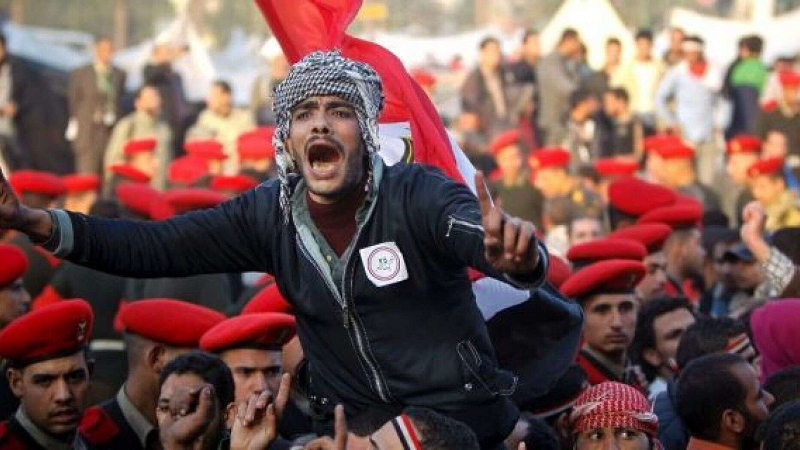
This month (December 2019) marks nine years since Islamic Awakening movements in Arabian countries erupted in the public square. Even though the demonstrations were spontaneous and organic, in the early stages they were mainly led and organized by Islamic organizations. Seeing these uprisings as a threat to neo-colonial interests, the Western corporate media and NATO regimes cunningly branded the uprisings as the “Arab Spring.” Unfortunately, it was not just the tag that was co-opted by Western powers but also the legitimate grievances of the oppressed people that had rebelled against Western-backed autocracies.
Last year, Crescent International had analyzed whether the process of the Islamic Awakening movement was worth it. Our analysis concluded that “it was absolutely necessary and it is a great blessing even in places where events went completely off-track… Post-2011 events, no regional dictator can afford to disregard the popular backlash. Violence is no longer the monopoly of corrupt and oppressive regimes. Of course, the elimination of monopoly on force by illegitimate regimes created its own problems, like ISIS and others, but these are short-term problems that are slowly but surely being eliminated.”
In this article, we would like to focus on the other side of the issue: where did the Islamic Awakening process go wrong? Naturally, there are numerous local reasons for each country where the popular uprising was co-opted and went off-track. Nevertheless, there are certain common denominators that can be observed in most places where the autocrats and their NATO backers managed to hijack the popular uprisings and subdue the masses.
During the uprisings, most of the Muslim world had big expectations of the Egyptian people finally taking their destiny into their own hands. However, within two years, Egypt was back in the clutches of the NATO backed autocratic system.
In a widely read column, ICIT’s director Zafar Bangash had looked at why one of the oldest Islamic socio-political movements — the Muslim Brotherhood — lasted in power for only one year, while the Islamic system in Iran has governed for 40 years and is only getting stronger. In the column titled, “Egypt and Iran: why different outcomes?” the ICIT Director stated, “The Ikhwan made the mistake of working within the system while Imam Khomeini understood that the existing system had to be demolished.” This author would add that the Ikhwan tried to work not only within the system, they tried to mold themselves into the system’s strategic architecture. Nothing manifested this better than the Ikhwan-backed government’s decision to shut down the Syrian embassy while keeping the Israeli embassy open, which is much more than an embassy. It is a state within a state in Egypt.
In August 2013, Foreign Affairs magazine pointed out that “security and intelligence cooperation between Israel and Egypt actually thrived during Mursi’s presidency.” During his short-lived presidency, as reported by Al-Monitor and others, “He [Mursi] appointed a new ambassador to Israel and sent a letter to President Shimon Peres, whom he addressed as, ‘My great and good friend.’ At the time, Peres said to me, ‘I would understand if he wrote, ‘Your Honor, my dear Mr. President,’ or something like that, but to write ‘My great and good friend,’ when he never actually met me is a bit over the top.’ In the letter, Mursi affirmed his commitment to maintaining good relations between Egypt and Israel.”
These missteps clearly reflect lack of clear thinking as well as self-confidence. Through such simplistic policies, the Ikhwan tried to show “pragmatism” but what it did was send a signal to the old guard that the movement lacks confidence to pursue its vision and can be confronted.
Another key malfunction of mass protest movements in the Arab world was the lack of God-consciousness among the leadership. To replace a corrupt governing system, one must possess competent and courageous human cadre. Since the protests were spontaneous and were not initially backed by any organized socio-political movement, it is understandable that in the initial stages, the masses would be leaderless. However, once the protests took off, the lack of cadre was evident. Even one of Arab world’s leading Islamic figures, Yusuf al-Qaradawi, was not able to see through the fog.
There are two fundamental reasons for the lack of identifiable leadership of the protest movements. It may even be a blessing in disguise. For, as soon as the leaders are known, the autocratic regimes would immediately go after them and throw them in prison. For decades, Western backed autocratic regimes have purged their societies of potential leaders to remain in power. Second, and this is the downside of it, most of the leaders of Islamic movements compromised themselves by latching on to Saudi sponsored or linked institutions.
The “Arab Spring” protests started with a lot of promise but ended up with promises of more of the same. One of the fatal mistakes was that the protest leaders failed to recognize the magnitude of the power they had in their hands. The power of the street was enough to overturn the whole system of corruption and abuse; however they chose to use their power to work through the corrupt system with the objective of reforming it — and at that moment, the system defeated them. The same thing happened with the Occupy Wall Street movement in the US.
While the first weakness is not in the hands of the leaders and local socio-political organizations in the Arab world, the second weakness is entirely of their own making. The primary reason for the second flaw — indeed a fatal weakness — is the absence of independent financial resources. Riyadh and other US allies masterfully utilize money to subtly subordinate Islamic leaders, often without their realization, to promote the policies of these regimes.
One of the primary reasons the Islamic movement in Iran succeeded in toppling the Western backed tyranny of the Shah was that the Islamic leadership in Iran had access to independent financing through the khums tax. This has not received adequate attention in contemporary Sunni Islamic jurisprudence even though it is also part and parcel of it. Perhaps it is time for Sunni scholars to broaden the definition of khums. Lack of ijtihad among Sunni ‘ulama’ on this crucial aspect has created practical weaknesses for Sunni Islamic organizations. It has forced many to ally themselves with wealthy monarchies of the Persian Gulf region compromising their position.
Another key weakness of Islamic Awakening was the media. Activists and socio-political organizations involved in mobilizing the masses analyzed the process through the prism of Western media. They did not create their own indigenous narrative of events.
The current ground reality is that in all locales where people staged uprisings against the Western backed autocrats there has been no change in governance except in Yemen. In Tunisia, the protest movement achieved some progress, albeit limited, primarily because the eruption of protests caught the imperialists by total surprise. Thus, they could not make adequate preparations to save the regime in its entirety. However, the main Islamic opposition force in Tunisia, al-Nahdah, has accepted to play within the rules set by remnants of the old guard. Thus, Tunisia remains within the French sphere of neo-colonial influence.
In Libya and Syria, NATO regimes completely manipulated the protest movements and utilized them as sledgehammers for their geopolitical objectives. However, the US-Israeli project in Syria was aborted due to Iran, Hizbullah, and Russia’s steadfast position. Another reason why NATO’s plans in Syria did not materialize is that they became victims of their own propaganda. They swallowed the fictitious narrative of the sectarian nature of the Syrian government.
Proof of how NATO regimes manipulated the legitimate grievances of the Islamic Awakening process is the fact that the unrests did not affect any of the regional monarchies. The Persian Gulf regimes are the primary pillars of NATO’s hard and soft influence in the Muslim world. American propaganda outlets even tried to sell this phenomenon as a model of governance for the Muslim world. Why wouldn’t they? When Washington says jump, these regimes say, “How high, sir!”
Overall, the Islamic Awakening process has been stalled. It is alive on the societal level and can reignite at any moment, but the process failed to topple the Western backed regimes. The nature of the problems in the Muslim world is such that societal problems can only be resolved when one possesses power and authority. NGOs and civil activist movements in the Muslim world will have limited effect without power.
People of the region must take control of their destiny by establishing governments that represent their aspirations and are accountable to Allah (swt). Such a government automatically means some form of Islamic governance. This is not a slogan but a societal demand. Although Islamic movements were frustrated in their desire to establish an alternative model of governance, all is not lost. In August 2017, the Muslim Brotherhood’s National Alliance for Reform in Jordan won most seats in municipal elections. This highlights the fact that Muslims generally rely on Islamic socio-political movements for solutions and there is nothing the NATO regimes can do about it. Their only recourse is to derail this phenomenon for a limited period of time.

Sunday, October 20, 2019

The Road to Damascus: How the Syria War was Won


Following the Damascus-Kurdish alliance, Syria may become the biggest defeat for the Central Intelligence Agency since Vietnam, says Pepe Escobar.
Pepe ESCOBAR
What is happening in Syria, following yet another Russia-brokered deal, is a massive geopolitical game-changer. I’ve tried to summarize it in a single paragraph this way:
“It’s a quadruple win. The U.S. performs a face saving withdrawal, which Trump can sell as avoiding a conflict with NATO ally Turkey. Turkey has the guarantee – by the Russians – that the Syrian Army will be in control of the Turkish-Syrian border. Russia prevents a war escalation and keeps the Russia-Iran-Turkey peace process alive.  And Syria will eventually regain control of the entire northeast.”
Syria may be the biggest defeat for the CIA since Vietnam.
Yet that hardly begins to tell the whole story.
Allow me to briefly sketch in broad historical strokes how we got here.
It began with an intuition I felt last month at the tri-border point of Lebanon, Syria and Occupied Palestine; followed by a subsequent series of conversations in Beirut with first-class Lebanese, Syrian, Iranian, Russian, French and Italian analysts; all resting on my travels in Syria since the 1990s; with a mix of selected bibliography in French available at Antoine’s in Beirut thrown in.
The Vilayets
Let’s start in the 19thcentury when Syria consisted of six vilayets — Ottoman provinces — without counting Mount Lebanon, which had a special status since 1861 to the benefit of Maronite Christians and Jerusalem, which was a sanjak (administrative division) of Istanbul.
The vilayets did not define the extremely complex Syrian identity: for instance, Armenians were the majority in the vilayet of Maras, Kurds in Diyarbakir – both now part of Turkey in southern Anatolia – and the vilayets of Aleppo and Damascus were both Sunni Arab.
Nineteenth century Ottoman Syria was the epitome of cosmopolitanism. There were no interior borders or walls. Everything was inter-dependent.
Ethnic groups in the Balkans and Asia Minor, early 20th Century, 
Historical Atlas, 1911.
Then the Europeans, profiting from World War I, intervened. France got the Syrian-Lebanese littoral, and later the vilayets of Maras and Mosul (today in Iraq). Palestine was separated from Cham (the “Levant”), to be internationalized. The vilayet of Damascus was cut in half: France got the north, the Brits got the south. Separation between Syria and the mostly Christian Lebanese lands came later.
There was always the complex question of the Syria-Iraq border. Since antiquity, the Euphrates acted as a barrier, for instance between the Cham of the Umayyads and their fierce competitors on the other side of the river, the Mesopotamian Abbasids.
James Barr, in his splendid “A Line in the Sand,” notes, correctly, that the Sykes-Picot agreement imposed on the Middle East the European conception of territory: their “line in the sand” codified a delimited separation between nation-states. The problem is, there were no nation-states in region in the early 20thcentury.
The birth of Syria as we know it was a work in progress, involving the Europeans, the Hashemite dynasty, nationalist Syrians invested in building a Greater Syria including Lebanon, and the Maronites of Mount Lebanon. An important factor is that few in the region lamented losing dependence on Hashemite Medina, and except the Turks, the loss of the vilayet of Mosul in what became Iraq after World War I.
In 1925, Sunnis became the de facto prominent power in Syria, as the French unified Aleppo and Damascus. During the 1920s France also established the borders of eastern Syria. And the Treaty of Lausanne, in 1923, forced the Turks to give up all Ottoman holdings but didn’t keep them out of the game.
Turkish borders according to the Treaty of 
Lausanne, 1923.
The Turks soon started to encroach on the French mandate, and began blocking the dream of Kurdish autonomy. France in the end gave in: the Turkish-Syrian border would parallel the route of the fabledBagdadbahn — the Berlin-Baghdad railway.
In the 1930s France gave in even more: the sanjak of Alexandretta (today’s Iskenderun, in Hatay province, Turkey), was finally annexed by Turkey in 1939 when only 40 percent of the population was Turkish.
The annexation led to the exile of tens of thousands of Armenians. It was a tremendous blow for Syrian nationalists. And it was a disaster for Aleppo, which lost its corridor to the Eastern Mediterranean.
Turkish forces under entered Alexandretta 
on July 5, 1938.
This emergent Syria — out of conflicting Turkish, French, British and myriad local interests —obviously could not, and did not, please any community. Still, the heart of the nation configured what was described as “useful Syria.” No less than 60 percent of the nation was — and remains — practically void.Yet, geopolitically, that translates into “strategic depth” — the heart of the matter in the current war.To the eastern steppes, Syria was all about Bedouin tribes. To the north, it was all about the Turkish-Kurdish clash. And to the south, the border was a mirage in the desert, only drawn with the advent of Transjordan. Only the western front, with Lebanon, was established, and consolidated after WWII.
From Hafez to Bashar
Starting in 1963, the Baath party, secular and nationalist, took over Syria, finally consolidating its power in 1970 with Hafez al-Assad, who instead of just relying on his Alawite minority, built a humongous, hyper-centralized state machinery mixed with a police state. The key actors who refused to play the game were the Muslim Brotherhood, all the way to being massacred during the hardcore 1982 Hama repression.
Secularism and a police state: that’s how the fragile Syrian mosaic was preserved. But already in the 1970s major fractures were emerging: between major cities and a very poor periphery; between the “useful” west and the Bedouin east; between Arabs and Kurds. But the urban elites never repudiated the iron will of Damascus: cronyism, after all, was quite profitable.
Damascus interfered heavily with the Lebanese civil war since 1976 at the invitation of the Arab League as a “peacekeeping force.” In Hafez al-Assad’s logic, stressing the Arab identity of Lebanon was essential to recover Greater Syria. But Syrian control over Lebanon started to unravel in 2005, after the murder of former Lebanese Prime Minister Rafiq Hariri, very close to Saudi Arabia, the Syrian Arab Army (SAA) eventually left.
Bashar al-Assad had taken power in 2000. Unlike his father, he bet on the Alawites to run the state machinery, preventing the possibility of a coup but completely alienating himself from the poor, Syrian on the street.
What the West defined as the Arab Spring, began in Syria in March 2011; it was a revolt against the Alawites as much  as a revolt against Damascus. Totally instrumentalized by the foreign interests, the revolt sprang up in extremely poor, dejected Sunni peripheries: Deraa in the south, the deserted east, and the suburbs of Damascus and Aleppo.
Protest in Damascus, April 24, 2011. 
(syriana2011/Flickr)
What was not understood in the West is that this “beggars banquet” was not against the Syrian nation, but against a “regime.” Jabhat al-Nusra, in a P.R. exercise, even broke its official link with al-Qaeda and changed its denomination to Fatah al-Cham and then Hayat Tahrir al-Cham (“Organization for the Liberation of the Levant”). Only ISIS/Daesh said they were fighting for the end of Sykes-Picot.
By 2014, the perpetually moving battlefield was more or less established: Damascus against both Jabhat al-Nusra and ISIS/Daesh, with a wobbly role for the Kurds in the northeast, obsessed in preserving the cantons of Afrin, Kobane and Qamichli.
But the key point is that each katiba (“combat group”), each neighborhood, each village, and in fact each combatant was in-and-out of allegiances non-stop. That yielded a dizzying nebulae of jihadis, criminals, mercenaries, some linked to al-Qaeda, some to Daesh, some trained by the Americans, some just making a quick buck.
For instance Salafis — lavishly financed by Saudi Arabia and Kuwait — especially Jaish al-Islam, even struck alliances with the PYD Kurds in Syria and the jihadis of Hayat Tahrir al-Cham (the remixed, 30,000-strong  al-Qaeda in Syria). Meanwhile, the PYD Kurds (an emanation of the Turkish Kurds’ PKK, which Ankara consider “terrorists”) profited from this unholy mess — plus a deliberate ambiguity by Damascus – to try to create their autonomous Rojava.
A demonstration in the city of Afrin in support 
of the YPG against the Turkish invasion of Afrin, 
Jan. 19, 2018. (Voice of America Kurdish, Wikimedia Commons)
That Turkish Strategic Depth
Turkey was all in. Turbo-charged by the neo-Ottoman politics of former Foreign Minister Ahmet Davutoglu, the logic was to reconquer parts of the Ottoman empire, and get rid of Assad because he had helped PKK Kurdish rebels in Turkey.
Davutoglu’s Strategik Derinlik (“Strategic Depth’), published in 2001, had been a smash hit in Turkey, reclaiming the glory of eight centuries of an sprawling empire, compared to puny 911 kilometers of borders fixed by the French and the Kemalists. Bilad al Cham, the Ottoman province congregating Lebanon, historical Palestine, Jordan and Syria, remained a powerful magnet in both the Syrian and Turkish unconscious.
No wonder Turkey’s Recep Erdogan was fired up: in 2012 he even boasted he was getting ready to pray in the Umayyad mosque in Damascus, post-regime change, of course. He has been gunning for a safe zone inside the Syrian border — actually a Turkish enclave — since 2014. To get it, he has used a whole bag of nasty players — from militias close to the Muslim Brotherhood to hardcore Turkmen gangs.
With the establishment of the Free Syrian Army (FSA), for the first time Turkey allowed foreign weaponized groups to operate on its own territory. A training camp was set up in 2011 in the sanjakof Alexandretta. The Syrian National Council was also created in Istanbul – a bunch of non-entities from the diaspora who had not been in Syria for decades.
Ankara enabled a de facto Jihad Highway — with people from Central Asia, Caucasus, Maghreb, Pakistan, Xinjiang, all points north in Europe being smuggled back and forth at will. In 2015, Ankara, Riyadh and Doha set up the dreaded Jaish al-Fath (“Army of Conquest”), which included Jabhat al-Nusra (al-Qaeda).
At the same time, Ankara maintained an extremely ambiguous relationship with ISIS/Daesh, buying its smuggled oil, treating jihadis in Turkish hospitals, and paying zero attention to jihad intel collected and developed on Turkish territory. For at least five years, the MIT — Turkish intelligence – provided political and logistic background to the Syrian opposition while weaponizing a galaxy of Salafis. After all, Ankara believed that ISIS/Daesh only existed because of the “evil” deployed by the Assad regime.
The Russian Factor
Russian President Vladiimir Putin meeting with President 
of Turkey Recep Erdogan; Russian Minister of Foreign 
Affairs Sergei Lavrov standing in background, Ankara, 
Dec. 1, 2014 Ankara. (Kremlin)
The first major game-changer was the spectacular Russian entrance in the summer of 2015. Vladimir Putin had asked the U.S. to join in the fight against the Islamic State as the Soviet Union allied against Hitler, negating the American idea that this was Russia’s bid to restore its imperial glory. But the American plan instead, under Barack Obama, was single-minded: betting on a rag-tag Syrian Democratic Forces (SDF), a mix of Kurds and Sunni Arabs, supported by air power and U.S. Special Forces, north of the Euphrates, to smash ISIS/Daesh all the way to Raqqa and Deir ez-Zor.
Raqqa, bombed to rubble by the Pentagon, may have been taken by the SDF, but Deir ez-Zor was taken by Damascus’s Syrian Arab Army. The ultimate American aim was to consistently keep the north of the Euphrates under U.S. power, via their proxies, the SDF and the Kurdish PYD/YPG. That American dream is now over, lamented by imperial Democrats and Republicans alike.
The CIA will be after Trump’s scalp till Kingdom Come.
Kurdish Dream Over
Talk about a cultural misunderstanding. As much as the Syrian Kurds believed U.S. protection amounted to an endorsement of their independence dreams, Americans never seemed to understand that throughout the “Greater Middle East” you cannot buy a tribe. At best, you can rent them. And they use you according to their interests. I’ve seen it from Afghanistan to Iraq’s Anbar province.
The Kurdish dream of a contiguous, autonomous territory from Qamichli to Manbij is over. Sunni Arabs living in this perimeter will resist any Kurdish attempt at dominance.
The Syrian PYD was founded in 2005 by PKK militants. In 2011, Syrians from the PKK came from Qandil – the PKK base in northern Iraq – to build the YPG militia for the PYD. In predominantly Arab zones, Syrian Kurds are in charge of governing because for them Arabs are seen as a bunch of barbarians, incapable of building their “democratic, socialist, ecological and multi-communitarian” society.

Kurdish PKK guerillas In Kirkuk, Iraq. 
(Kurdishstruggle via Flickr)
One can imagine how conservative Sunni Arab tribal leaders hate their guts. There’s no way these tribal leaders will ever support the Kurds against the SAA or the Turkish army; after all these Arab tribal leaders spent a lot of time in Damascus seeking support from Bashar al-Assad.  And now the Kurds themselves have accepted that support in the face of the Trukish incursion, greenlighted by Trump.
East of Deir ez-Zor, the PYD/YPG already had to say goodbye to the region that is responsible for 50 percent of Syria’s oil production. Damascus and the SAA now have the upper hand. What’s left for the PYD/YPG is to resign themselves to Damascus’s and Russian protection against Turkey, and the chance of exercising sovereignty in exclusively Kurdish territories.
Ignorance of the West
The West, with typical Orientalist haughtiness, never understood that Alawites, Christians, Ismailis and Druze in Syria would always privilege Damascus for protection compared to an “opposition” monopolized by hardcore Islamists, if not jihadis.  The West also did not understand that the government in Damascus, for survival, could always count on formidable Baath party networks plus the dreaded mukhabarat — the intel services.
Rebuilding Syria
The reconstruction of Syria may cost as much as $200 billion. Damascus has already made it very clear that the U.S. and the EU are not welcome. China will be in the forefront, along with Russia and Iran; this will be a project strictly following the Eurasia integration playbook — with the Chinese aiming to revive Syria’s strategic positioning in the Ancient Silk Road.
As for Erdogan, distrusted by virtually everyone, and a tad less neo-Ottoman than in the recent past, he now seems to have finally understood that Bashar al-Assad “won’t go,” and he must live with it. Ankara is bound to remain imvolved with Tehran and Moscow, in finding a comprehensive, constitutional solution for the Syrian tragedy through the former “Astana process”, later developed in Ankara.
The war may not have been totally won, of course. But against all odds, it’s clear a unified, sovereign Syrian nation is bound to prevail over every perverted strand of geopolitical molotov cocktails concocted in sinister NATO/GCC labs. History will eventually tell us that, as an example to the whole Global South, this will remain the ultimate game-changer.

Friday, September 27, 2019

Rotten in Tunisia: The Corrupt Rule of Ben Ali

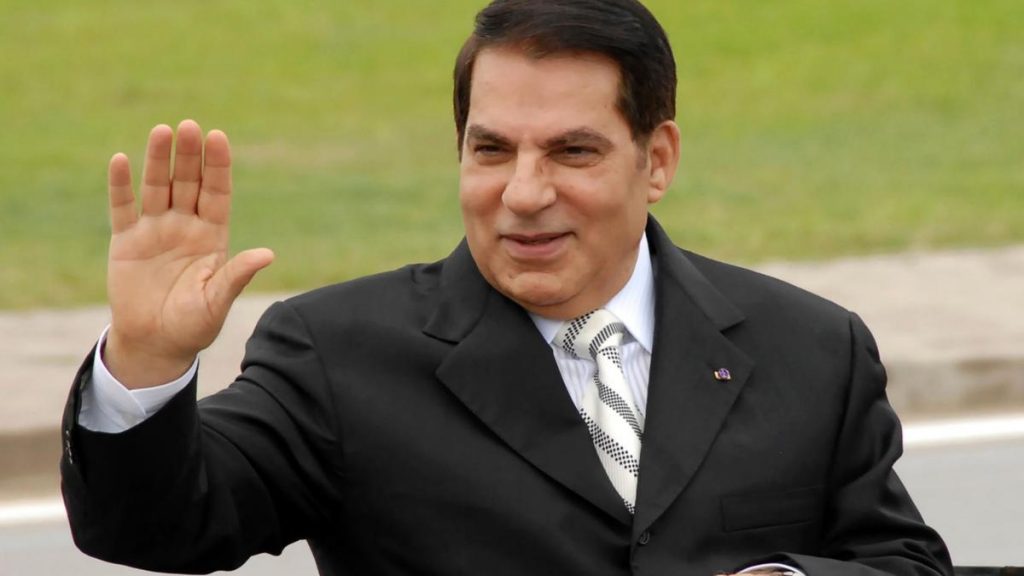
He was the prototypical strong man softened by tactical reforms, blissfully ignorant before the fall, blown off in the violent winds of the Arab Spring.  Having come to power in 1987 on the back of a coup against the 84-year-old Habib Bourguiba, whom he accused of senility, Zine al-Abidine Ben Ali was the face of Tunisia till 2011, when he exited his country’s politics in a swift repairing move to Saudi Arabia.  Previous whiffs of revolution – for instance, in 2008 in Gafsa – had been contained and quelled by what was a distinct mukharabat-intelligence security state.
Ben Ali had the unwitting humour of generally humourless authoritarian rulers, mirthlessly characterising his reign as one of le changement and “democratic transition”.  “I needed to re-establish the rule of law,” he explained to French television after seizing power.  “The president was ill, and his inner circle was harmful.”
The military-security apparatus he presided over burgeoned despite his own efforts at reforming social security, education and women’s rights.  The Presidential Guard was bloated to some 8,000 members; the National Guard, with its headquarters near Tunis-Carthage International Airport, numbered 20,000.  A multiple set of police outfits were also created, including those specifically dealing with universities, tourism and politics.
The sense of non-change marked by extensive surveillance was characterised by indulgent portraits, often enormous, featuring a certain agelessness, a cultish obsession with found on billboard and buildings.  Ben Ali could still claim that he was, relative to his despotic peers, more benevolent.  Economic stability, in a fashion, was brought for a time, though this had the unfortunate effect of encouraging a needy cronyism.  A bigger pie meant greedier hands.
His report card as minister for national security showed that, when needed, he would summon the security forces to do his bidding, crushing the Bread Riots between 1983 and 1984, a protest against the rise in bread prices occasioned by the introduction of an austerity program imposed by the International Monetary Fund.
The sequence of events that saw Ben Ali undone would come to be known as the Jasmine Revolution.  There were the spectacular displays of self-inflicted suffering, including the immolation of Mohamed Bouazizi, Tunisia’s very own indigenous Jan Palach, who had set himself alight before the tanks of the Warsaw Pact in January 1969.  On December 17, 2010, the 26-year-old fruit vendor’s act directed against institutional harassment inflamed protests in Sidi Bouzid.
A country with a national unemployment of 14 percent, numbering as high as 30 percent in the 15 to 24 years age group, was throbbing with revolutionary dissent.  Remittances from Tunisians working abroad had fallen; the global financial crisis from 2008 had bitten savagely.  Policing, hypersensitive to any Islamist upsurge, had become more aggressive.  But looming across the country were the predations of Ben Ali’s kleptomanic family of 140 persons, known colloquially as “The Family”, and a distinctly unholy one at that.  Perhaps with a certain tired inevitability, a femme fatale figure was identified: the first lady and Ben Ali’s second wife Leila Trabelsi.  The Trabelsi name became shorthand for habitual state corruption.
Something rotten in the state of Tunisia was also discernible to a highly literate populace now able to access diplomatic cables on WikiLeaks, which came to be regarded as something of a golden boy for the revolution.  One US government cable from June 23, 2008 stands out: “Whether it’s cash services, land, property, or yes, even your yacht, President Ben Ali’s family is rumoured to covet it and reportedly gets what it wants.”  Investment levels had declined; bribery levels had increased.
US ambassador Robert F. Godec also noted the exploits of the First Lady’s brother, Belhassen Trabelsi, whose rapacity included the illegal acquisition of “an airline, several hotels, one of Tunisia’s two private radio stations, car assembly plants, Ford distribution, a real estate development company, and the list goes on.”  For all that, he remained merely “one of Leila’s ten known siblings, each with their own children.  Among this large extended family, Leila’s brother Moncef and nephew Imed are also particularly important actors.”
The twenty-eight days of protest also saw the extensive, coordinated use of social media, another technological manifestation that continues to terrify states of different ideological shades. In a dry article on the subject – again, another piece that reads oddly given the current rage against social media as a corrupting, conniving incubator of “fake news” – Anita Breuer, Todd Landman and Dorothea Farquhar suggested that, “Social network platforms such as Twitter, YouTube, and Facebook have multiplied the possibilities for retrieval and dissemination of political information and thus afford the Internet user a variety of supplemental and relatively low cost access points to political information and engagement.”
Other factors also came together.  For one thing, the Tunisian army and senior officials refused to turn the guns on protesters with quite the same interest as other regimes might have done.  What transpired was certainly a set of circumstances more profound in change than other states swept up in Arab spring time.  For one, the ruling Rassemblement constitutionnel démocratique (RCD) was given the heave-ho, remarkable for the fact that it had been the party of independence.
As the books, and political system, were being reordered and rescripted, a Tunisian court sentenced Ben Ali and Leila Trabelsi in absentia to 35 years in prison, topped by a $66 million fine for corruption and embezzlement.  The highlights of the trial suggest those of a gangster keen on guns, drugs and archaeological treasures.
The Arab Spring seems, to a large extent, a flutter of history and packed with a good deal of wishful thinking; but for a time, it seemed that lasting change might take place, staged as grand theatrical acts of protest against military thuggery.  The stable of Egyptian politics was turned out; there were protests across North Africa stretching to Iran.  But the strong men returned, and authoritarianism reasserted itself.  We bear witness to a flirt of history rather than any lasting consummation of change.  Tunisia, however, proved the holdout exception.  Ben Ali might well have counted himself unlucky, a victim of posterity’s considerable, mocking condescension.
Dr. Binoy Kampmark was a Commonwealth Scholar at Selwyn College, Cambridge.  He lectures at RMIT University, Melbourne.  

Wednesday, September 04, 2019

Partners In Chaos

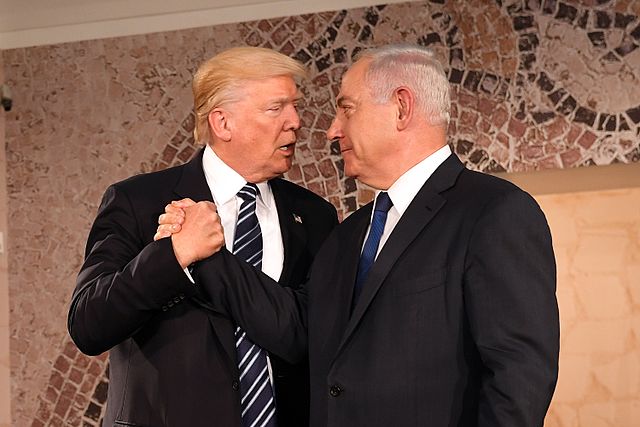
Donald Trump and Benjamin Netanyahu
In 1996, following the ‘Grapes of Wrath’ Israeli invasion of Lebanon, United States Secretary of State Warren Christopher brokered a written agreement under which Israel agreed not to target civilians while Hezbollah, the Lebanese resistance group, agreed not to fire rockets into Israel. The ‘April Understanding’ did not stop fighting between Israeli forces and Hezbollah. Nor was it designed to do so. Indeed, shelling and gunfire continued daily. But the agreement did reduce civilian deaths, and it largely held for the remaining four years in which Israel occupied a large swathe of south Lebanon. 
Fast-forward to 2019. On September 1, Israel and Hezbollah exchanged fire along the Israel-Lebanon border and came close to serious escalation. After Hezbollah claimed to have killed Israeli troops, Israel said it had fooled the Lebanese. Haaretz analyst Amos Harel warned that such jubilation was unwise.
There was also speculation over conciliatory messages being exchanged through France, Egypt, the U.S. and the Lebanese government. When Hezbollah leader Hassan Nasrallah and Israeli prime minister Benjamin Netanyahu had stepped up their mutual threats days earlier, after two Israeli drones crashed in south Beirut on August 25, Lebanese prime minister Saad al-Hariri appealed for assistance not from the ‘international community’ or Washington, but from Moscow. 
In the past 20 years—certainly in the last ten—the Middle East has moved away from multilateral arrangements, formal or informal, towards an unruly pursuit of unilateral short-term gain. President Donald Trump’s ‘America First’ politics and contempt for international frameworks—he has left the Paris climate accords as well as the 2015 Iranian nuclear deal—has fueled a politics of gesture and foreign policy by tweet. 
In a new book, former Mossad official Yossi Alpher traces today’s “Middle East chaos” both to the ‘Arab Spring’ and a series of western interventions, especially the 2003 invasion of Iraq and overthrow of Saddam Hussein’s dictatorship. Winners and Losers in the ‘Arab Spring’: Profiles in Chaos is an ambitious yet succinct analysis of regional upheavals since 2011.
A major concern for Alpher, and many Israelis, is the military presence of both Iran and Hezbollah in Syria since their intervention to bolster the regime of president Bashar al-Assad against rebels backed mainly by the Gulf States. Alpher was one of the first to highlight Israel’s intelligence co-operation with Russia after Moscow’s armed intervention in support of Assad in 2015, necessary if only because both had military jets in Syrian airspace.
Israel’s problem is with Iran, not with Assad’s rule or his human-rights record. Tel Aviv had long-running talks with Assad’s father Hafez over the Israeli-occupied Golan that were encouraged and sometimes brokered by the U.S. These were near to an agreement in the 1990s and continued in 2008 under Bashar. But by 2015-16, Israel was clearly happier with some relationship with militant Sunni groups opposed to Assad, even Jabhat al-Nusra, an al-Qaeda affiliate. Some UN reports suggested that Israel’s relationship with these groups included logistic support and not just medical treatment. By 2018-19, this was widely acknowledged in the Israeli media.
Central to Alpher’s book is the argument that Russian President Vladimir Putin, Israeli Prime Minister Benjamin Netanyahu, and Qassem Soleimani, head of Iran’s al-Quds brigade, have all made the most of regional instability. In a point worthy of a former Mossad officer, Alpher points out that both Putin and Soleimani are “intelligence professionals.”
Moscow has certainly gained a Mediterranean foothold with a naval base at Syria’s Tartus. Does this make Russia, if not the Middle East’s ‘honest broker’, at least the world power with clearest influence? Is Russia interested in establishing new security frameworks? “Putin’s capacity to mediate is limited and he knows it,” Alpher tells me. “But he’s our neighbor now, like Iran, but neutral [with regard to Israel]. Bibi has cultivated him skillfully, but that too has limits.”
Alpher rules out any understanding with Hezbollah, even on the lines of 1996. “This threat from the north is Israel’s major strategic preoccupation. The war of attrition against Iran’s build-up has so far been successful, but we are far from finished. As long as Iran is involved, I see no political solution.”
There is no American push to foster any understanding between Israel, Syria, Lebanon and Hezbollah. This is not an administration that likes complications. Mike Pompeo, secretary of state, has merely stressed U.S. support for Netanyahu—very much in line with Trump shifting the U.S. embassy to Jerusalem or pushing the Kushner ‘peace plan’, moves that Alpher argues have emboldened Netanyahu’s discourse and undermined Israelis who want a two-state solution with the Palestinians.
Europe is meanwhile struggling to maintain the 2015 Iran nuclear deal, the JCPOA (Joint Comprehensive Plan of Action), from which Trump withdrew the U.S. in 2018. Iran has escalated its nuclear activities beyond JCPOA limits in order to put pressure on Europe to alleviate the effects of U.S. sanctions, and regards Hezbollah’s missiles in south Lebanon as a deterrent to Israel.
The G7 Summit of 24-26 August saw French president Emmanuel Macron invite Iranian Foreign Minister Mohammad Javad Zarif to Biarritz—oddly on the same day the Israeli drones crashed in Beirut—but the Trump administration seems poorly equipped for serious multilateral talks while Iranian president Hassan Rouhani has ruled out bilateral engagement. 
Israel is similarly disinclined. Surprised by Zarif’s trip to Biarritz, Israeli officials panicked as rumors flew that the foreign minister was in France to facilitate talks between Trump and Rouhani. By Friday, Netanyahu’s office issued a statement that the Israeli prime minister had told Macron by telephone that this was the “wrong timing to hold talks with Iran, while it is increasing its aggression in the region.”
Alpher’s book explores various ways in which Netanyahu, who leads “Israel’s most right-wing, settlement-oriented and religious-extremist government in history,” has sought to exploit ‘Arab chaos’ since 2011. The driver of Israel’s “strategic co-operation” with Saudi Arabia and the United Arab Emirates, Alpher writes, is shared apprehension over “the danger of Iranian encroachment in the Persian Gulf and Levant regions.” Crucially for Netanyahu, “No longer was a Palestinian solution the necessary predecessor to normalization with the Arab world.”
Will Netanyahu’s approach benefit Israel in the longer term? Alpher tells me no, even though  he says “most Israelis” approve of Trump and hope he will be re-elected next year. “Ultimately Trump is disastrous for us, for two reasons. Firstly, he is helping us become a bi-national apartheid state [by incorporating the West Bank]. Secondly, when push comes to shove with the Iranians, the Russians, or anyone else, we cannot really depend on him.”
Gareth Smyth, who has reported from the Middle East since 1992, was 2003-7 the chief correspondent of the Financial Times in Iran.

Friday, August 02, 2019

A Second ‘Arab Revolt’ Is Overdue in Middle East


There is an African proverb, ‘When elephants fight, it is the grass that suffers’. The Arab sheikhs who instigated the US-Iran standoff would have heard the proverb but chose to ignore it. The assumption in Riyadh and Abu Dhabi was that President Trump’s ‘maximum pressure’ strategy would frighten Tehran and life would be back to normal very soon with a weakened Iran bludgeoned into submission in the Persian Gulf.
They should have known from the recent example of Qatar that when faced with existential threats, countries resist injustice and aggression with all the national comprehensive power at their command.
The gyre of the US-Iran standoff is only widening by the day. What was thought to be a localised affair is acquiring international dimensions. America’s Arab allies no longer have a say in the mutation of the US-Iran standoff. Meanwhile, Britain has appeared on the scene to navigate the US project.
The Saudi and Emirati role from now on narrows down to bankrolling the Anglo-American project on Iran and to allow the western bases on their territories to be used as launching pads for belligerent acts aimed at provoking the leadership in Tehran into retaliatory moves. In sum, there is growing danger that the might get sucked into the Anglo-American project unwittingly.
The Gulf states lack “strategic depth” vis-a-vis Iran and are sure to find themselves on the frontline of any military conflagration. Conceivably, neither Saudi Arabia nor the UAE bargained for such an eventuality. Thus, belatedly though, the Saudis and Emiratis have taken out the abacus and are doing the sums afresh.
It is possible to discern amidst the welter of interpretations given to the abrupt, unceremonious “partial” pullout of the UAE forces from the war in Yemen, Abu Dhabi’s calculation that safeguarding homeland security comes first, way above any imperial agenda.
That sobering thought has prompted the UAE to make some overtures to Tehran. The UAE has taken a nuanced stance that no country could be held responsible for the attacks on oil tankers in the Gulf in June. Foreign Minister Abdullah bin Zayed Al-Nahyan said “clear and convincing evidence” is needed regarding the attacks that targeted four vessels off the UAE coast, including two Saudi oil tankers.
In essence he distanced UAE from the US National Security Adviser John Bolton’s finding that the attacks on oil tankers were the work of “naval mines almost certainly from Iran”. Significantly, Al-Nahyan made the remark at a joint press conference with Russian Foreign Minister Sergey Lavrov during a visit to Moscow in late June, which from all indications focused on the efforts to bring the war in Yemen to an end and on a possible Russian initiative to moderate UAE’s tensions with Iran. Interestingly, within the week after Al-Nahyan’s visit in late June, Moscow also hosted the Secretary-General of the Organisation of Islamic Conference and the UN special envoy on Yemen.
It is entirely conceivable that Russia is doing what it can behind the scenes to lower the tensions between Iran and the UAE and in the Persian Gulf region as a whole. Moscow has lately rebooted its proposal for a collective security system for the Persian Gulf. In fact, on July 30, the Russian concept of collective security in the Persian Gulf has been distributed as an official document approved by the UN.
The Russian document envisages an initiative group to prepare an international conference on security and cooperation in the Persian Gulf, which would later lead to establishing an organisation on security and cooperation in this region. China has welcomed the Russian initiative and offered to contribute to its success — “We would also like to boost cooperation, coordination and communication with all the corresponding parties.” Of course, this is going to be long haul since the US and Britain will only see any such regional security architecture as heralding the end of the western hegemony in the Middle East.
What makes the Russian concept of collective security in the Persian Gulf highly topical is that it is couched in an initiative in immediate terms to establish demilitarised zones in the region, which in turn would obviate the need for any permanent deployment of squads of non-regional states and instead seek the establishment of hot lines between the militaries involved to communicate and resolve emergent contingencies from time to time.
Clearly, the Russian proposal flies in the face of the Anglo-American plot to create a western naval armada led by the US to take control of the 19000 nautical miles in and around the Strait of Hormuz that will put the West effectively as the moderator of the world oil market — with all the implications that go with it for international politics — and literally reduce the oil-rich Persian Gulf countries to de facto pumping stations. The Anglo-American strategy is to prey upon the deep concerns of the oil-consuming countries of Europe and Asia over energy security against the backdrop of the rising US-Iran tensions. No doubt, the Trump administration, with the help of BoJo’s UK, hopes to mitigate Washington’s international isolation ensuing out of its exit from the JCPOA last year in May.
Nonetheless, the time may have come for the Russian initiative to gain traction. The Iran-UAE joint meeting to address littoral security cooperation in Tehran on July 30 is a tell-tale sign that the Persian Gulf states may have begun to realise that the endemic insecurities of the region ultimately require a regional solution although the predatorial Western governments—and their military-industrial complexes — who exploit the Gulf divisions to secure lucrative arms sales running into tens of billions of dollars annually, will not easily retrench from the region.
It must have come as a shocking reality-check for Saudi Arabi and the UAE that Trump who had a marvellous “war dance” with King Salman hardly two years ago in Riyadh and has locked in the two counties to the standoff with Iran, has lately switched attention to their bête noire, Qatar, “to share a history of friendship based on common efforts and mutual respect”, as the joint statement issued recently after the first official visit by Sheikh Tamim bin Hamad Al Thani to the White House puts it.
The joint statement unabashedly summed up the outcome of the emir’s visit:
The Qatar Airways purchase of five Boeing 777 Freighters.
The Qatar Airways commitment to purchase large-cabin aircraft from Gulfstream.
The Chevron-Phillips Chemical Company LLC and Qatar Petroleum agreement to pursue the development, construction, and operation of a petrochemicals complex in Qatar.
The Qatar Ministry of Defense’s commitment to acquire Raytheon’s NASAM and Patriot Systems.
The selection by Qatar Airways of GE jet engines and services to power its 787 and 777 Aircraft.
Trump was beside himself with joy in his remarks effusively praising the Qatary emir. It cannot be lost on the UAE and Saudi Arabia that Trump is making suckers out of them.

Monday, April 08, 2019

We will see another ‘Arab Spring’ in the next five or so years: Askari

By Javad Heirannia

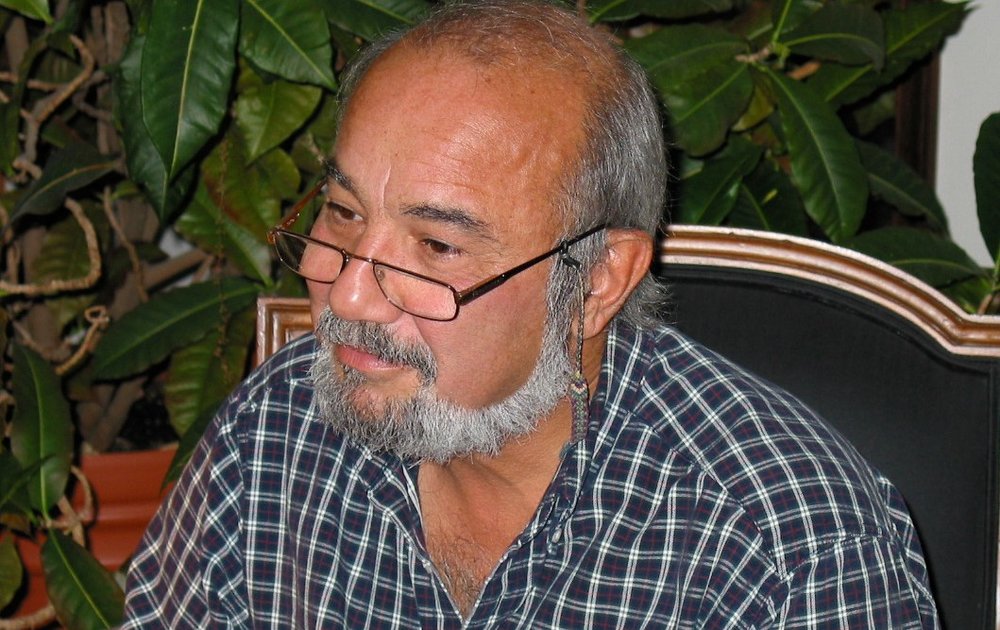
TEHRAN – Professor Hossein Askari, an expert on Saudi Arabia who also teaches international business at the George Washington University, believes that “we will see another ‘Arab Spring’ in the next five or so years and Arab regimes will change and the new leaders will not be as close as they are today to Washington.”
“Arab leaders –Egypt, Jordan, Saudi Arabia, UAE and others in the GCC—are spineless,” Hossein Askari, who served as special advisor to Saudi finance minister, tells the Tehran Times.
He adds that “All these leaders rely on U.S. military and intelligence support.”
Following is the text of the interview:
Q: U.S. President Donald Trump formally recognized Israeli sovereignty over the Israel-occupied Golan Heights. What was the reason behind this decision?
A: To support Netanyahu in his election bid. Netanyahu is indicted and needs much help. I think Trump did this also in support of his son-in-law, Jared Kushner, who has become close to Netanyahu and has been working with him to fabricate a meaningless Middle East peace plan. If Netanyahu is not elected, Kushner could have a less receptive prime minister in Israel. 
Q: Why President select this time for this recognition?
A: Again, it is to boost Netanyahu’s election chances.
Q: What will the impact of this decision on the final permanent peace agreement?
A: This, coming on top of moving the U.S. embassy to Jerusalem, will make a permanent peace ever more difficult. More recently, the U.S. is also cutting aid to Palestinians. These are moves that the rest of the world does not support. It will isolate Israel even more. Trump does not understand any of this and frankly I don’t think he cares about peace and the Palestinians. It is sad that Jews are on the path of another tragedy. The U.S. should know better. The U.S. will not be accepted as an honest broker in any future peace negotiations. It has lost all credibility. 
Q: Will Palestinian agree with this decision?
A: No, of course not. But what can they do? Arab leaders –Egypt, Jordan, Saudi Arabia, UAE and others in the PGCC—are spineless. All these leaders rely on U.S. military and intelligence support. All they care about is to stay in power and they don’t much care about the plight of the Palestinians. But change will come when Arab regimes change and the U.S. loses its influence in the Middle East. This process is already under way.
Q: What is the impact of this decision on U.S. Arab countries relations?
A: For now, the U.S. will have to increase its support for Arab rulers with more intelligence sharing and covert operations as there may be fears of popular backlash against recent U.S. moves and Arab acquiescence to go along with anything that the U.S. concocts with Israel. For example, just see how vulnerable is MBS is to international isolation after the brutal murder of Khashoggi. Without U.S. support, he would be gone in a matter of a few months. So for now relations are tight but I believe this will change as we will see another ‘Arab Spring’ in the next five or so years and Arab regimes will change and the new leaders will not be as close as they are today to Washington.