Showing posts with label “Middle East Strategic Alliance” (MESA) or Arab NATO. Show all posts

Wednesday, November 07, 2018

Arab NATO against Iran, an unfulfilled dream

By Fatemeh Salehi


TEHRAN - The largest military drill- land, naval, air and special forces kicked off in Egypt on Sunday with participation of the U.S., Saudi Arabia, the United Arab Emirates, Bahrain, Kuwait, and Jordan, and the observers Morocco and Lebanon.
The drill is held at the Mohamed Naguib Military Base in Egypt’s north-western governorate of Marsa Matrouh until November 16.

The exercise, dubbed Arab Shield 1, claims to come in the framework of strengthening joint military cooperation between Egypt and Arab countries, to build the combat capabilities of the armed forces, and achieve common objectives.
This is a military campaign that has long been the subject of talks and statements from the rise of the Arab NATO. Interestingly, Qatar and Oman did not participate in this exercise, and the location of the drill, shows that Egypt, with the largest Arab army is likely to be the headquarters of the Arab NATO.
The objective of this NATO surely is not to confront the Zionist regime, since the Arab states are moving towards normalization of their relations with Tel Aviv, which has intensified recently. In fact, the U.S. government seeks to end the step-by-step implementation of the century deal and unveil it in the latest plan to form a new security and military order in the region. Hence, the ultimate goal of this military-security organization is to confront opposition of the new order, and at the head of them lay Iran, and the Palestinian and Lebanese resistance forces.
The military exercise comes only a month after the meeting of U.S. Secretary of State Mike Pompeo with the foreign ministers of Arab states in New York. Earlier, Persian Gulf military commanders held a meeting in Kuwait at the invitation of U.S. military commanders in the region.
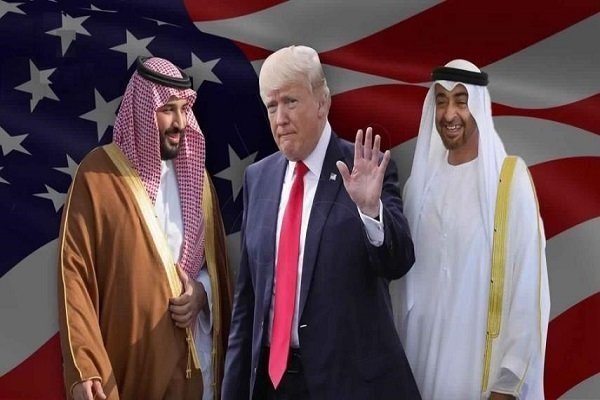
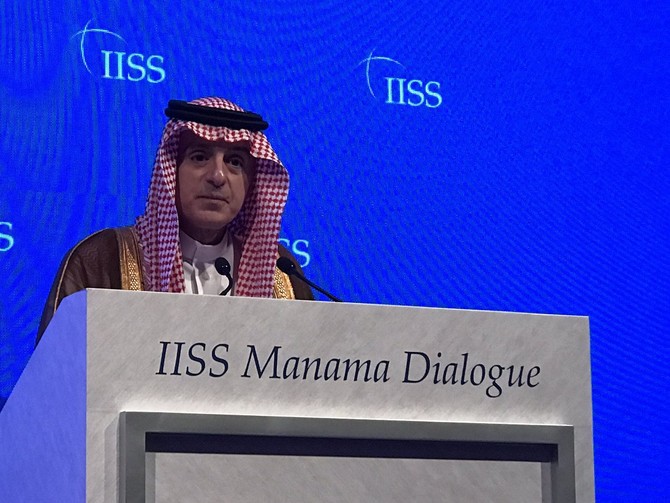
U.S. President Donald Trump's government is pursuing to launch a so-called Arabic version of the NATO coalition to confront Iran by putting subtle pressure on the Persian Gulf Arab States along with Egypt and Jordan. Of course, this coalition will be formed partly under the name of the Middle East Strategic Alliance (MESA), but it is also known as the Arab NATO. Bahrain's foreign minister said on Saturday at the IISS Manama Dialogue, the annual Middle East's security summit, that the coalition would be formed by the start of the New Year, a claim that many analysts are skeptical of.
The Arab NATO is a transformed plan that was first initiated at the Istanbul Cooperation Initiative (ICI), an initiative launched during NATO's 2004 Istanbul summit. The plan was to expand NATO to the Persian Gulf region. Proposed by Ahmed al-Sabah and approved by NATO Secretary General, the NATO office was launched in Kuwait in 2011.
The plan, however, has seen a few changes since:
Removal of Turkey and Qatar, Arab NATO will continue to work independently of the NATO, Expansion of the Arab NATO from the Persian Gulf to the Red Sea, particularly to Egypt, has the U.S. support, counters Iran’s influence in the Middle East region, and coordination of operational intelligence with Israel.
The ICC is an offer to engage in practical security cooperation activities with states throughout the Greater Middle East. The initiative offers practical cooperation with interested nations in the Greater Middle East in such areas as: The ICC counter-WMD; counterterrorism; training and education; participation in NATO exercises; promoting military interoperability; disaster preparedness and civil emergency planning; tailored advice on defense reform and civil-military relations; cooperation on border security to help prevent illicit trafficking of drugs, weapons, and people.
In fact, NATO seeks to confront new threats, including Islamic fundamentalism, terrorism, and so on, to ensure the security of regional partners, prevent the non-proliferation regime gaining access to nuclear weapons, ensure the sources of energy and its transit lines, and provide a model of regional order with regional countries except Iran and Iraq.

The plan to form a new regional coalition was supposed to reach a very large circle, and the Arab NATO was going to confront the so-called hostile regional forces, but following the crisis between Qatar and Arab states in the Persian Gulf region in June 2017, it seems the coalition cannot stand united against Iran.

Many analysts believe that formation of the coalition will be postponed to 2019, particularly now that the Saudis are grappling with Jamal Khashoggi’s murder case in their consulate in Istanbul.  

Perhaps The U.S. is waiting to observe the impact of its political and economic sanctions on Iran prior to joining the regional coalition against Iran so are the Arab states in the region.
In addition, the Arab countries need more time to form this coalition, as they are struggling with many challenges in the political and military arena of the region, including Qatar’s crisis, the Yemeni War, Jamal Khashoggi's case, and Arab differences in regional issues, especially over Palestine.
Saudi Arabia and Egypt have different interpretation of terrorism. While Saudi Arabia cooperates with the Muslim Brotherhood in Yemen and Syria, Egypt considers the Sunni Islamist organization a terrorist group. Saudi Arabia and Qatar also hold different views over the organization.
Iran's influence in Arab countries, including Syria, Iraq and Lebanon, creates further obstacles to the formation of the coalition. According to reports, Trump is scheduled to hold a meeting in Washington, where he will announce the launch of the regional coalition.
The U.S. has placed a number of conditions on the Arab countries, including the need to fulfill Saudi military objectives in Yemen and the withdrawal of the strategic harbor of al-Hudaydah and reconciliation with Qatar.
Amidst all these, Trump is seeking an opportunity to announce the so called the “deal of the century” to resolve the issue of Palestine, and for that Arab countries need to have an integrated stance.
The other side of the deal is Iran. The Islamic Republic of Iran is, too, promoting its position in the region by strengthening its strategic alliance.
Thus, Washington will face defeat in the formation of a united Arab front against Iran, as Arab states are still struggling with many regional and domestic challenges and Iran will remain a strong actor in the region.

Tuesday, November 06, 2018

MESA; Arab NATO-like Alliance

The major media outlets had totally ignored the important three days October 26-28 IISS Manama Dialogue 2018 conference that was organized by International Institute for Strategic Studies (IISS) in the city of Manama; the capital of the tiny island of Bahrain.
This Manama Dialogue was attended by very important international political representatives such as General James Mattis; US Secretary of Defense, Brett McGurk; Special Presidential Envoy for the Global Coalition to Defeat ISIS, Sheikh Khalid bin Ahmad Al Khlifa; Bahrain’s Minister of Foreign Affairs, Adel Al Jubeir; Saudi Minister of Foreign Affairs, Ayman Safadi; Jordanian Minister of Foreign Affairs, Yousef bin Alawi; Oman’s Minister of Foreign Affairs, Taro Kono; Japan’s Minister of Foreign Affairs, Ursula von der Leyen; German’s Minister of Defense, Elisabetta Trenta; Italy’s Minister of Defense, Raychelle Omamo; Kenya’s Secretary of Defense, Abdisaid Ali; Somalia’s National Security Adviser, and Jean-Christophe Belliard; Deputy Secretary General, Political Affairs, Political Director, European External Action service. Yet, surprisingly, the media had ignored the gathering of these important persons!!!???
The speeches of these representatives were characterized mainly as Iran bashing and condemnations, particularly the speeches of the American representatives; Mattis and McGurk, and the Bahraini and Saudi ministers. While their governments are pursuing hegemonic policies within the region, they accuse Iran of pursuing a hegemonic Iranian Crescent, previously called Shi’ite Crescent, covering Lebanon, Syria and Yemen. Iran did not impose itself on these countries. Lebanese Hezbollah requested Iranian help to free Lebanon from the 1982 Israeli occupation. Syria requested Iranian help to defeat American/Israeli/Gulf States supported terrorist groups. Yemen cannot get any outside help due to the air and sea siege imposed by American/Saudi/UAE’s forces.
While the USA and the Gulf States have enlisted, trained and armed all the terrorist groups that have been destroying Syria and Yemen during the last decade, they accused Iran of a terrorist supporting state. The facts on the ground show clearly that Iran has been fighting and defeating terrorist groups and protecting Syrian cities first and eventually the whole region.
While the USA and the Gulf States are spreading sectarianism, encourage terrorism, seeking to dominate other countries, waging wars and seeking to destabilize the Middle Eastern region, they accuse Iran of such crimes. Iran has never started any war or sent its military forces out of its own borders for the last 400 years.
While the American administration is gradually turning into a police state, and the Bahraini and Saudi kingdoms are despotic beheading dictatorships they accuse democratic Iran of abusing and suppressing its own people. Since its 1979 revolution Iran had held several democratic elections, something that had never happened in neither Bahrain nor Saudi Arabia.
None of these representatives dared to point to the core issue driving all these wars and destructions in the region except the Omani Minister; Yousef bin Alawi, who stated the following:
“We consider that the Palestinian issue is the core of all the problems that we have seen during the second half of the last century and the 18 years of the 21st Century … the state of Palestine needs to be established, because it has become a strategic necessity”
This Manama Dialogue came as a preliminary foundation for the planned for summit in November of the six leaders of the GCC; Gulf Cooperation Council (Oman, UAE, Saudi Arabia, Qatar, Bahrain and Kuwait) plus Jordan and Egypt in Washington with President Trump to lay the foundation for what Trump had called Middle Eastern Strategic Alliance (MESA) also dubbed Arab NATO-like Alliance.
Forming military alliances between Arab states to protect the Middle Eastern region goes back to post WWI era. The Arab League, formally known as the League of Arab States, was formed in 1945 with six-member Arab states and later expanded to include 22 states. The League was rendered ineffective first by British and then by American interfering policies and banking systems especially after the League’s opposition to the establishment of the illegal Zionist state of Israel on occupied Palestinian land. Such policies had also foiled any inter-Arab military alliances such as those attempted by former Egyptian president Gamal Abdel Nasser.
Nasser’s pan-Arabism ideology was very popular in the 1950’s. It led to the formation of the 1957 Regional Defense Pact between Egypt, Saudi Arabia, Syria and Jordan. Nasser’s pan-Arabism was viewed by the US as a threat to Israel, and when Nasser nationalized all British and French assets in Egypt, President Eisenhower’s administration decided to do everything it can to isolate Nasser and his ideology by transforming King Saud as a counterweight. Nasser was portrayed as a threat first to Jordanian King Hussein, and later a threat to King Saud. Eventually the Regional Defense Pact was dissolved.
In mid-1957 when Turkish troops were amassed on the Syrian border threatening to topple the government, Nasser sent a contingent force to aid Syria. In February 1958 Egypt and Syria were united into United Arab Republic (UAR).  Later Yemen joined the UAR, and a loose federation was formed under the name of United Arab States.
With tacit Eisenhower’s encouragement king Saud planned to assassinate Nasser while in Syria, but the assassination failed and was exposed by Nasser in a public speech.  King Saud then was replaced by his brother; King Faisal, who advocated pan-Islamic unity with non-Arab Moslem countries to counter Nasser’s pan-Arabism.
In September 1961 a Syrian army unit launched a coup in Damascus declaring Syria’s withdrawal from the UAR.  Avoiding inter-Arab fighting Nasser refused to send Egyptian forces to Syria to reinforce the allies, and accepted the separation.
Saudi Arabian money provoked civil war in Yemen in 1962. This war drew Egyptian forces in a war of attrition that ended in 1967 when Nasser withdrew his forces leaving Yemen divided into North and South.
With the death of Nasser in September 1970, the ideology of pan-Arabism and United Arab States faded gradually since none of the Arab leaders, except Syrian Hafez al-Assad, had called for it but found no positive response. It was left to the inefficient non-unitarian and divisive Arab League to deal with regional security issues.
It must be said that since WWI the western powers; US, British and France, had planned to divide the Arab World into weaker states that could be controlled and manipulated through pro-western despots in order to blunder its resources, particularly oil, and to control its geostrategic location. The Zionist Greater Israel Project had been adopted and implemented for this purpose. Any Arab attempt to unite militarily was opposed and spoiled.
Yet, at the present, Trump’s administration is in the process of forming a military Middle Eastern Strategic Alliance (MESA) allegedly to protect the region from any military threat. MESA is just a new form of the old western designed Middle Eastern Alliance projects; whose real goals were to wage American proxy inter-Arab wars to further divide and weaken Arab states to safeguard Israel and to rake great financial profits for the American military industrial complex.
We had witnessed these military alliances in the 1980-1988 Iraq/Iran war where the Gulf States supported Iraqi Saddam Hussein. Then the same Gulf States allied with Egypt, Jordan and Syria to join the western coalition in the two Gulf Wars; 1991 and 2003, against Iraq. In 2011 the Gulf States of Qatar, Saudi Arabia, UAE, Jordan and Turkey joined the so-called American Coalition to defeat ISIS in Syria when the facts on the ground showed that such coalition was a terrorist supporting coalition providing training, finance and weapons to ISIS to destroy Syria. In 2014 this same coalition supported terrorists who destroyed Libya. In 2015 we witnessed Saudi/UAE coalition, supported by Israel and US, waging war against Yemen.
So far, all these alliances had led to the destruction of Arab states. The proposed MESA is no different. Its major goal is to finish what the terrorist groups had started; destroying Syria, destroying Hezbollah and weakening or affecting a regime change in Iran. MESA, though, has one important distinction from its previous alliances, namely Israel.
As we have seen in the past, the American administrations will not allow the formation of an Arab military alliance that would threaten Israel. MESA will actually include Israel in the alliance as intelligent gathering partner. This would allow Israel to infiltrate its Arab partners’ military, security and intelligence systems. Israel is already involved in the terrorist war against Syria and in the Saudi/Emirati war against Yemen. MESA is perceived to include nine states; the six Gulf States (Kuwait, Bahrain, Qatar, Saudi Arabia, UAE and Oman), Jordan, Egypt and Israel.
The Arab’s enmity towards Zionist Israel, who occupied Palestine, attacked neighboring Arab states, and supported terrorist groups in Syria, would be turned into a friendly alliance, while Iran, who shares same religious faith with Arab states, supports the Palestinian cause, and considers Israel a main threat to the region is turned into an Arab enemy.
Vital issues remain to be tackled for this alliance to succeed. Arab states have their own separate policies and conflicts. Qatar was branded as a terrorist supporting state due to its conflicting agenda with those of the Saudi Arabia/UAE/Bahrain/Egypt alliance. Turkey, annoyed by Saudi decision to assist the Kurds in Syria, moved to become a shield for Qatar against the Saudi alliance by building a military base in the peninsula.
Kuwait took a neutral position towards the Qatar/Saudi conflict. Kuwaiti/Saudi tension increased during MBS’s short visit to Kuwait early October demanding that Kuwait re-open the Khafji and Wafra oil fields to compensate oil shortage and high prices anticipated by the expected American sanctions against Iran. Kuwaiti crown prince; Sheikh Nawaf Al-Ahmad was displeased by MBS’s snobby attitude and ordered him to leave Kuwait immediately.
To reconcile these inter-Arab conflicts the Secretary of State Mike Pompeo has been touring the Middle East offering incentives as well as inciting enmity against Iran at the same time.
There are other complicated issues to be solved before this alliance is formed. Issues such as finance, command, bases, cooperation between member states, and logistical arrangements. It is obvious that Saudi money will mainly finance the alliance. Saudi Arabia is the milking cow as described by President Trump. American military generals will assume command for sure, and will impose how member states would behave and contribute militarily.
Iran and the rest of the Arab states; Iraq, Syria, Lebanon and Palestine, perceive MESA as a pro-Zionist anti-Arab coalition, whose covert real goals are further division, destruction and weakening of the Arab World.  This coalition is looked at as a political and financial Arab suicide succeeding only in milking billions of Saudi money to buy American weapons that will only rust in Saudi desert, and in accepting the Zionist occupation of Palestine, that will eventually expand to cover more Arab land.
If stronger and larger international “ … 79 members of coalition in 75 countries, plus NATO, the EU, Interpol and the Arab League” according to Brett McGurk, had failed to affect regime change in Syria for a period of seven years, and the armed to the teeth with the latest sophisticated weapons American/Israeli/Saudi/Emirati/ coalition had failed to defeat the impoverished state of Yemen during the last three years, how then, would conflict-ridden MESA can accomplish any real victory?
The Iranian Minister of Foreign Affairs; Mohammad Javad Zarif, suggested a more efficient mechanism for security in the Persian Gulf region rather than building military alliances that create more enmity. He proposed starting a modest confidence building measures leading to a non-aggression pact. He suggested creating “a regional dialogue forum” among all the littoral states of the Persian Gulf to build “a security networking, rather than security alliances” to create “a strong region as opposed to a strong man in the region, where small and large nations – even those with historical rivalries – contribute to stability”
“You cannot have security at the expense of the insecurity of your neighbor.” Zarif emphasized.
Dr. Elias Akleh is an Arab American from a Palestinian descent. His family was evicted from Haifa, Palestine, after the 1948 Nakba when the Zionists stole his family’s property. Then the family was evicted again from the West Bank during the 1967 Naksah, after the Zionist, again, occupied the rest of Palestine.

Saturday, November 03, 2018

Justice for Jamal Khashoggi and his Loved Ones: Askari

By: Javad Heirannia
TEHRAN – Professor Hossein Askari, an expert on Saudi Arabia who also teaches international business at the George Washington University, believes that Khashoggi abduction, torture and murder was undoubtedly done on the orders of MBS.”
“This is how Saudi Arabia works. Anyone who is familiar with Saudi Arabia knows this,” Hossein Askari, who served as special advisor to Saudi finance minister, tells the Tehran Times.
He adds that “No matter how they proceed with his contrived trial and punishment, MBS will not let anyone in the know EVER leave Saudi Arabia.”
Following is the text of the interview:
Q: Where are we in the Khashoggi tragedy after Erdogan’s speech and the ever-changing Saudi revelations?
A: On Tuesday Erdogan stated in the Turkish Parliament some of the allegations we have received little by little through leaks, but nothing new. The Saudis changed their ‘story’ yet again and admitted that the murder of Khashoggi was premeditated but still insisted that it was carried out by ‘rogue’ elements, interestingly a story first floated by Trump. The Saudis have not given Turkey unfettered access to the consulate as if they have something to hide. The director of the CIA visited Turkey, a country she knows well as she was stationed there and speaks the language quite fluently. She has admitted to listening to audio tapes. Upon her return on Thursday, she briefed Trump. Trump has remained silent since his briefing, maybe because he learned some facts and knows that Saudi disclosure have been lies and he has enabled them. On Friday, Turkey demanded the extradition of 18 Saudis to Turkey for interrogation and trial. The fiancé of Jamal Khashoggi gave her first interview and revealed that she had been invited to the U.S. but would not go because of U.S. insincerity in addressing Khashoggi’s murder. Later, the Saudi foreign minister stated that those arrested would be tried in Saudi Arabia.
Q: Will Saudi Arabia extradite any of the culprits to Turkey?
A: No. Absolutely not. The Saudi foreign minister has ruled this out. Let me back up. Erdogan knew full well that the Saudis would not extradite anyone but he made this request to tease the Saudi ruling family and especially MBS as he has been doing all along. If the Saudis extradite even one person, they would be afraid that the person would tell all. A supposed closed trial in Saudi Arabia would reveal nothing. They could determine the punishment, if any. And they would hope that this would be the end of the story. Most important, MBS wants to protect himself. Let me emphasize one point. This abduction, torture and murder was undoubtedly done on the orders of MBS. This is how Saudi Arabia works. Anyone who is familiar with Saudi Arabia knows this. No matter how they proceed with his contrived trial and punishment, MBS will not let anyone in the know EVER leave Saudi Arabia. As a further piece of evidence, the Saudis have refused to produce Khashoggi’s body, or its parts, and after the CIA briefing on Thursday Trump he has gone silent on the Khashoggi affair. He knows what happened and does not want to continue his public support of MBS.
Q: Can justice be served in Saudi Arabia?
A: Absolutely not. Closed trial. No public evidence. A complicit judiciary. No way!
Q: What does this tragedy tell us about Saudi Arabia?
A: MBS has adopted cosmetic reforms while cracking down on political freedom. It is a country ruled by a family who see the land and everything in it theirs. Saudi Arabia needs meaningful reforms. The rulers must change their mindset. Stop seeing the country as simply ‘theirs’ and the people as hired hands. They should adopt a timetable for representative government, respect for human and political rights, the rule of law and end their own unfettered access to the Saudi Treasury.
Q: What does it tell us about U.S. foreign policy?
A: All bad. Sadly, yet again, the U.S. confirms its support for its client dictators. The U.S. has not confronted Saudi Arabia. It can do this without breaking its relations with the country. It is not only saying nothing negative about MBS but it continues to support MBS’ misguided adventures, especially his genocide in Yemen with U.S. intelligence, covert support, mid-air refueling and American weapons and bombs. Before Trump the U.S. at least pretended to be the supporter of human and political rights around the world, did not give active support to dictators and was trying to ramp down support in the Yemen war. Now even the pretension for human rights has evaporated. Trump expresses his admiration for strongman dictators. This is encouraging dictators and oppressors around the world. Oppressors around the world who might have at least feared the U.S. just a little now see its welcoming embrace. But while the U.S. is becoming more attractive to dictators it is becoming increasingly despised by the oppressed around the world. As a result, the U.S. is dissipating its soft power at an alarming rate. It will take the U.S. years, if not decades, to regain some measure of trust around the world.
Q: Why did this affair develop in the first place?
A: Because MBS simply could. He also wanted to send a message to all of his would-be opponents. Don’t oppose me and get any ideas about plotting my overthrow. I am ruthless and I have Trump’s backing in anything I do. It was a move to consolidate power. This would never have happened if there was not a normal MBS-Kushner relationship and Trump’s active support of strongmen. MBS overstepped. He has this ‘special’ relationship with Kushner and Trump and he thought he could do anything. After all they have given him intelligence about his relatives so that he could arrest those that might have plotted hos overthrow. They continue to support him in Yemen as he commits daily atrocities killing dozens at a time. So why would they care if one journalist was killed? And knowing full well Trump’s dislike for journalists. But he does not understand the U.S. media and politics. Khashoggi was a columnist for a renowned American Newspaper, the Washington Post, and such a public abduction was sure to cause a backlash.
Q: How should have Saudi Arabia and the U.S. handled this tragedy from the beginning?
A: As I have said before. I believe that MBS ordered this murder and it was obvious to those who know the workings of Saudi Arabia. The King could have said that his son’s orders of simple abduction had been misunderstood. His son would be replaced as crown prince and he could have appointed another crown prince who he trusted would step down in a year or two. MBS would have taken a back seat and then restored to power. Trump should not have come out saying that the King and MBS had strongly denied any accusations and he believed them. He should have simply said that he knew nothing and he like anyone else would await the disclosure of facts. Instead the Saudis have produced lie after lie and Trump had supported them because they lied strongly!
Q: What should they do now?
A: They should be more truthful and transparent. They have to realize that MBS must step down, at least for a while. There is no other way out. The quicker they realize this the better. In this way they could avoid what Saudi justice demands for all those involved—beheading in public.
Q: Will we ever know the complete truth about who ordered this horrible murder and all the details of how it was carried out?
A: Yes. The evidence will eventually leak out. How long will it take? That I don’t know. The Saudis will not reveal the truth. Erdogan could do it. But he has his own agenda, to extract financial support from Saudi Arabia and their regional concessions in Qatar and Syria, and to get U.S. sanctions lifted. But who knows, Erdogan may surprise us all and do what is right. We need this in the Middle East. Doing the right thing. To stand up for justice, what is at the core of Islamic teachings. My own feeling is that someone from Saudi Arabia, an enemy of MBS, could eventually produce the evidence. And because of this possibility, MBS will crack down even more domestically and increase his intrusive domestic spying and suppression.
Q: How will tragedy affect the Middle East region?
A: I think that the Qatar embargo will be slowly lifted. Israeli-GCC cooperation will be further solidified. The so-called “Middle East Strategic Alliance” (MESA) or Arab NATO, which will encompass the GCC and Egypt will be formed but will be more or less a front for the United States in the Persian Gulf. GCC-Israeli cooperation will expand. Israel will be more emboldened to attack targets in Gaza, Lebanon and Syria. Iran will be accused by the GCC and the U.S. for anything that goes wrong in the region. There will be increased terrorism in the region and around the world. Sadly, the genocide in Yemen will continue until tens of thousands starve to death or if MBS’ full role in Khashoggi’s murder is revealed and his support in the West curtailed.