Showing posts with label “contain Iran”. Show all posts

Thursday, June 27, 2019

America’s War Against Iran: Timing And Consequences

(Part 2 of Will American Belligerence Against Iran Lead to War?)
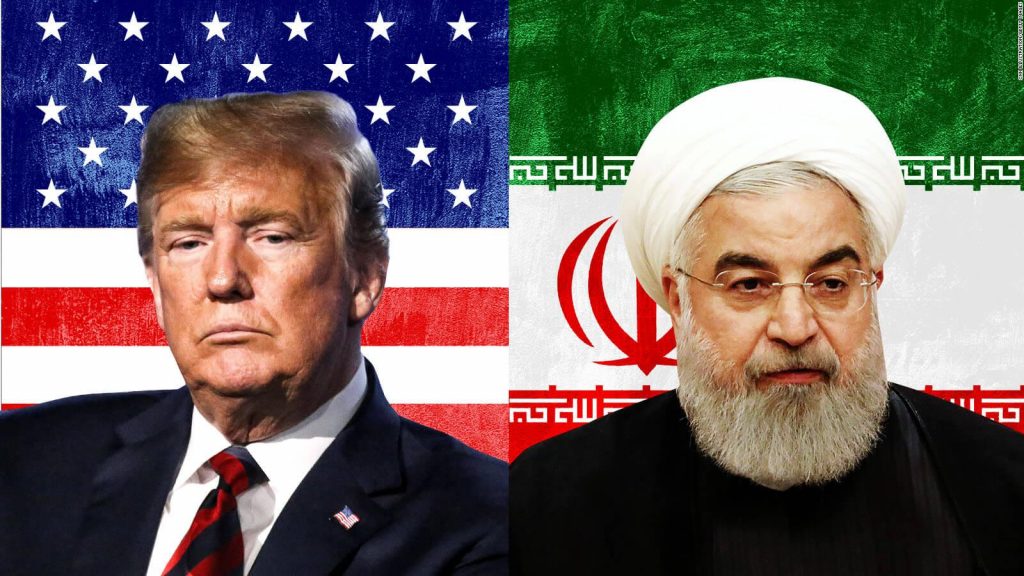
After reading my article “Will American Belligerence Against Iran Lead to War?”   https://countercurrents.org/2019/06/will-american-belligerence-against-iran-lead-to-war published in countercurrents, a colleague called me. He wanted to know if America will seriously attack Iran and if so when and the consequences for America, Iran and the region.
History is what is past, but it does not fail to provide a window into the future. Imperial American foreign policies are not indigenous; they are an extension shaped by the successes and failures of imperial Rome but more recently of imperial Britannia. Let us not forget that both empires do not exist for it is the nature of imperialisms to end.
Ignoring all other regional issues but only focussing on that of Iran, the country was ruled by the Qajar dynasty which according to Wikipedia was “officially the Sublime State of Persia, a royal dynasty, from 1789 to 1925”. The Qajars descended from the Oghuz (tribe) Turkmen (founders of the Ottoman Empire). The last of the Qajars was Ahmed Shah who ruled Persia from 1909-1925. He was deposed by an officer of the army Reza Shah Pahlavi. By royal proclamation in 1935, Persia became Iran (derived from Middle Persian Eran). The British and the Soviets had key geopolitical and economic (Britain controlled the Anglo-Iranian oil Company) interests in Iran.
In August 1941 war allies Britain and the USSR invaded Iran, arrested Reza Shah and sent him into exile. The British and Soviet authorities then permitted Reza Shah’s son, Mohammad Reza Shah Pahlavi to succeed to the throne.
As the sun began to set on the British Empire after World War II, it seceded interests in Iran to the United States under Mohammed Pahlavi, a pro-American puppet. For the British, it was important to cede their interests to the Anglo-American partnership rather than to a cold war rival, the Soviet Union. The American interests in Iran ended with an abrupt and unforeseen 1979 revolution. America, Britain and Israel are still licking their wounds from the loss. Their fear predominantly emanates from the belief that the revolution from the Islamic Republic of Iran will export its Islamic dogma across the region. Understandably so as it is having been happening following the Afghan and Iraq invasions towards the turn of the twenty first century. This fear is not only gripping the US and Israel but also the regional monarchies suffering from the same fear (Islam is anti monarchy).
After the brief history lesson in the above three paragraphs, I best tried to explain and lift the fog of the timing of the aggression against Iran. For Bolton, Pompeo and Netanyahu it is most important to build a “global coalition” (as opposed to the Warsaw Conference coalition) that includes not only the Arab monarchies but also Russia and China. America will seek their commitment not to provide support to Iran. In return, it’ll offer concessions. America has followed a pattern for aggression in the past offering sticks and carrots and it will, no doubt, follow it again in Iran’s case.
In my opinion Russia might agree, without being part of a coalition, if America and NATO would provide the guarantee to pull back from its Eurasian borders viz Ukraine. The national security advisors of America, Russia and Israel are convening in Jerusalem to likely form a framework that would conclude an agreement, not necessarily soon but over the next few critical months. Russia will also want a slice of the economic war pie by supplying limited arms to Iran.  The interested reader may refer to the weblink https://www.theglobeandmail.com/world/article-russias-ties-with-iran-will-be-the-focus-of-the-upcoming-security/ article “US and Israel look to turn Russia against its Iranian ally”. I’ve provided a comment in my previous article on countercurrents.
Unlike Russia, China may prove to be a harder nut to crack as it has emerged as a political, military, technological and economic challenger to imperial America.  However, the two Masters of Diplomacy, Putin and Xi Jinping may well be playing the Eurasian game in harmony as neither has any reason to trust America and more specifically Trump.  Trump may agree to offer trade and tariff concessions to China, but will they be enough to satisfy Xi’s appetite, or will it demand Taiwan as it’s prize in return for Iran?
Moreover, most countries across the globe, including Russia and China, have lost their appetite for American addiction of applying sanctions, trade tariffs, embargoes, shredding international agreements and outright twitter lies. The world has no reason to trust the American leadership; neither does Iran. With the latest round of sanctions imposed on June 24 against Iran, President Rouhani said, “You sanction the foreign minister simultaneously with a request for talks”. He described the White House as “afflicted by mental retardation.”
Whatever transpires “behind the diplomatic scenes”, America is bound to lose patience and become trigger happy (cocked and loaded) If, by end of summer or mid fall 2019, it fails to form the global coalition. Under those circumstances America may, by a false pretext, launch a surgical strike against Iran hoping for a quick victory through air and sea blockade.
Regarding the consequences, both America and Iran are prepared to accept the eventuality- America’s survival as an empire, geopolitically and economically, while Iran is confident that with its geostrategic and military advantages, arsenal of ballistic missiles and help from its proxies in Yemen, Iraq, Hezbollah (in Lebanon) and Syria it could emerge as a regional power at the end of the war. Iran is confident that it can thwart an aggression. If prophecies in the three Abrahamic faiths are to be accepted, it’ll be a long war embroiling the entire region culminating in the biblical Armageddon (Malhama in Arabic or the Great War between good and evil). This war will be ideological – a war between theological and illogical supremacy.
Gulam Asgar Mitha is currently retired in Calgary, Canada having worked as a project, process and technical safety engineer in Canada, USA, Libya, France, Pakistan and Kuwait. He was born in Mumbai soon after partition immigrated with family in 1951 to Karachi. After schooling proceeded to USA for further studies and obtained Bachelors degree in Chemical Engineering and Masters in Economics.

Friday, March 08, 2019

Saudi Seeking to Hit Iran by Pursuing Closer Ties with Israel: Ex-US Diplomat

TEHRAN (Tasnim) – An American author and former diplomat deplored the Israeli regime as “the Apartheid Entity” and said Riyadh is seeking to change the government in Iran by pursuing closer ties with Tel Aviv. 

“Saudi Middle East policies appear built on regime change in Iran and the Kingdom's overestimation of its self-importance,” Michael Springmann, the former head of the American visa bureau in Saudi Arabia, said in an interview with the Tasnim News Agency.
“In my view, Saudi Arabia has one and only one goal in pursuing closer ties with Israel, the Apartheid Entity: the destruction of Iran,” he said.
J. Michael Springmann served in the US government as a diplomat with the State Department's Foreign Service, with postings in Germany, India, and Saudi Arabia. He left federal service and currently practices law in the Washington, DC, area. Springmann’s works and interviews have been published in numerous foreign policy publications, including Covert Action Quarterly, Unclassified, Global Outlook, the Public Record, OpEdNews, Global Research and Foreign Policy Journal. He has written Visas for Al Qaeda: CIA Handouts That Rocked The World and a second book Goodbye, Europe? Hello, Chaos? Merkel’s Migrant Bomb. Both are available on Amazon. The books’ website is: www.michaelspringmann.com
The following is the full text of the interview:
Tasnim: As you know, the Israeli and Saudi regimes do not have any official diplomatic relations but media reports have surfaced indicating extensive behind-the-scenes diplomatic and intelligence cooperation between the two. In your opinion, what goals is Riyadh pursuing by getting closer to Tel Aviv?
Springmann: In my view, Saudi Arabia has one and only one goal in pursuing closer ties with Israel, the Apartheid Entity: the destruction of Iran. The Saudis have an inflated view of their own worth and their own power. Some of it is cultural and some of it is political. And they want to use this perceived dominance to topple the Islamic Republic.
As a whole, the Saudis and their government want to be the dominant force in the region. The largest country there, the birthplace of Islam, yet dominated by Wahhabi fanatics, the Kingdom apparently believes it has the right to dictate international policy. To do so, it needs allies.
Riyadh has America's backing, but even in the United States, long an enemy of Iran, Saudi excesses are beginning to alienate some influential politicians and parts of the news media. Therefore, the Kingdom is seeking extremist collaborators closer to hand. Israel, with its irrational hatred of Iran, fills the bill.  Backing Riyadh with its hidden nuclear, biological, and chemical weapons, Israel can help wreck the Islamic Republic--so long as someone else fights and dies in the process. 
Tasnim: Recently, some media reports revealed secret links between top Saudi officials, including Minister of State for Foreign Affairs Adel al-Jubeir, and the Israeli spy agency, Mossad. Can we say that Israel has managed to infiltrate into Saudi Arabia and is dictating its policies to Riyadh? How do you see the future of relations between the two?
Springmann: Asserting that the Israelis have infiltrated the Saudi government and are now dictating future policy in the Kingdom doesn't quite fit the facts. While the Saudi-sponsored Arab Peace Initiative - a peace plan dating back some 16 years - may have marked a change in the Saudi outlook towards Israel, nothing of substance occurred subsequently. The reason is simple:  it offered a full peace to Israel in return for things the Zionists would never accept--return to pre-1967 ceasefire lines; a just resolution of the Palestinian refugee problem; and a Palestinian capital in East Jerusalem.
The real change occurred when the overly-ambitious Mohammed bin Salman began moving up in the Saudi government:  head of the Crown Prince's Court, with the rank of minister (2013); Minister of Defense (2015); and Crown Prince (2017). Bin Salman's irrational hatred of Iran matched that of Apartheid Israel's Prime Minister, Binyamin Netanyahu.  They both opposed the Joint Comprehensive Plan of Action.  They hated Iran's assistance to Syria, enabling Al-Assad's legitimate government to survive their attacks.  Together, they began fulminating against the Islamic Republic and apparently started planning ways to bring it down.
Without the aid of a crystal ball or a gypsy fortune teller, the future of Saudi-Israel relations is not entirely clear.  Certainly, Netanyahu is the hardest of the hardline Israeli officials. And he may leave office should he be indicted for corruption. However, given the increasingly radicalized Israeli voter and the choice of extremists that could succeed Netanyahu, there will likely be no drastic shift in policy towards Iran.
The real question is how long Mohammed bin Salman will remain as Crown Price and work with the United States and the Kingdom against Iran.  If he's removed for his extremist behavior in Yemen and against Qatar and Iran, the Saudis may become more moderate in their foreign policy.  If he stays, we will see more of his militant behavior and increasingly closer ties to the Zionist Entity.
Tasnim: Generally speaking, how do you think about Saudi policies in the Middle East, including normalization of ties with Israel, and do you believe that regional countries would follow suit? If they would do so, how much are they ready to pay?
Springmann: Saudi Middle East policies appear built on regime change in Iran and the Kingdom's overestimation of its self-importance. By and large, given Crown Prince Mohammed bin Salman's ambitions and radical behavior, Riyadh seems bent on throwing its weight around. Without oil and the funds derived from it, the Saudis would be bereft of influence, unable to buy governments or weapons to use against them. Improved ties with Israel are part and parcel of this. The Kingdom (especially its crown prince) apparently sees the Zionist Entity as a helper in asserting their regional policy, especially in their efforts to impose their control on other countries in the neighborhood.
The other Arab states may not necessarily follow the Saudi line.  They have their own internal difficulties, such as Algerian resistance to President Bouteflika’s attempt to extend his time in office.  Also, the Kingdom is not well-liked by its neighbors, except for the autocratic members of the (Persian) Gulf Cooperation Council.
For the Saudis to bring along a significant portion of the Arab world, a lot of money and aid would be necessary.  Getting other Arabs to die for Riyadh's foreign policy could well be another matter.  Any kind of cooperation could prove difficult.  As one Palestinian-American always says, 300 million Arabs cannot recognize their own interests.  Moreover, they are either unable or unwilling to promote and protect them if they could realize what they were.

Wednesday, January 30, 2019

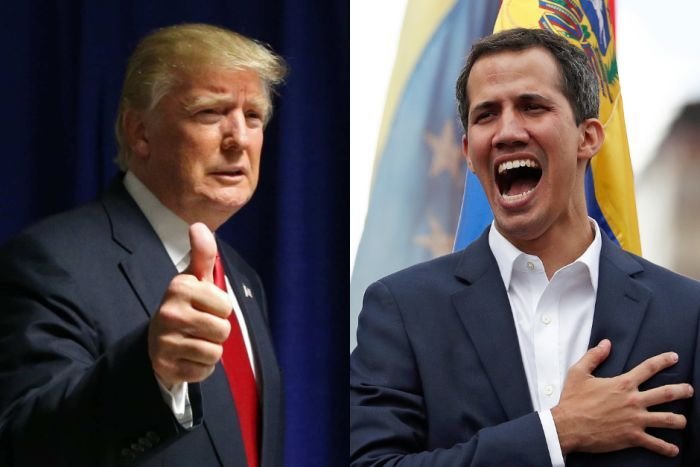
Trump may get his personal donnybrook, but in Venezuela

By Martin Love

NORTH CAROLINA - It appears that Trump (and now especially with his appointments of some of the worst of the Zionist Neocons who planned decades ago the march to destroy polities that did not exactly kowtow to U.S. demands and submit to the “Empire of Chaos”) has been searching for a signature interference and possibly a war to assert U.S. hegemony.
Perhaps Trump and minions have found their primary target now, which is the lowest hanging and geographically nearest fruit – resource rich Venezuela – given the political and economic problems faced by Nicolas Maduro, which in fact are largely the result of U.S. economic and other sanctions on the proponents of the so-called “Bolivarian Revolution”.
What would be Trump’s signature war many have asked? All his predecessors in the White House had at least one, the most damaging of which to date was the Iraq War, with Libya and Syria not far behind. Might it be North Korea? Nah, probably because the Norks had developed a nuclear deterrence and the means to deliver nuclear bombs, at least in East Asia if not farther out to Hawaii and California, and anyway Kim Jong Un has an arresting and even jovial personality that Trump seemed to like, and Kim has proven to be rather smart in seeking détente or better relations with the other half of the Korean peninsula in the south.
 Might it be a ramp-up of U.S. hostilities towards Syria? Nah, because with the help of the Russians and Iran and also Hezbollah, and the bravery of the Syrian army, popular Assad managed to drive out or kill most of the mercenary terrorists funded by the U.S. and the Saudis.
But what about Iran? The jury is still out on a U.S. or Israeli military strike on Iran outside of Syria. The U.S. has, however, attacked Iran with the cancellation of U.S. participation in the JCPOA and harsh economic sanctions aiming to turn Iranians against the Islamic Republic and its leaders. 
One huge mistake by the Trumpists has been its promotion of the despised MEK as an alternative for Iran, or even the restoration of the son of the former shah. From a distance, this appears to have shored up at least nominal support inside Iran for the current government despite the lambent hardships suffered by Iranians generally.
Iran may simply too hard a nut to crack for the craven warmongers in Washington and Tel Aviv given the heavy investments in Iran and the alliances Iran has more or less maintained that seem to have turned Iran into a “red line” for countries like Russia and China. Iran may constitute a bridge too far, and anyway, if Iran were attacked, there would be Hell to pay throughout the Middle East and particularly in the Persian Gulf.
 How does a barrel of oil costing over $200 sound to the warmongers? You’d see an economic collapse in the West and the U.S. like none before, and the fortunes of both political parties in the U.S. would go up in smoke. Not to mention the fact that Trump was, allegedly, primarily elected to dampen U.S. military adventurism overseas and focus on domestic problems, which are rampant and growing by the day.
So, for now at least, with Venezuela and Maduro in the crosshairs of U.S. regime change efforts, horrible as that is potentially for the people of Venezuela, it seems possible that Iran, even if sanctions are not lifted, might witness some reduction of pressure upon it and allow the Islamic Republic to consolidate what bulwark it has developed against further attack. 
Imagine, for example, if the situation inside Venezuela goes “Mad Max” with civil war atop the economic disasters already present, and with the potential that the U.S. might invade. Venezuela has a population of about 32 million as well as the largest (heavy) oil reserves on the planet. While it is not nearly as big a country like Iran, it is far bigger than Iraq or Libya or Syria, for examples, and you can bet that if the U.S. did move in to attack Maduro militarily, the opposition there would be or become extreme. The Venezuelan armed forces have already said they support Maduro and not the lightweight fool who unilaterally and illegally declared himself “president”. 
For now, too, Maduro is trying to buy some time and has just declared that U.S. diplomats will not be kicked out of Caracas immediately. The U.S. could, if it makes the wrong moves, find itself MORE bogged down in Venezuela than ever it was in Iraq and as it has been in Afghanistan. And this, if it were to occur, would certainly take the spotlight off of Iran and quite possibly result in rejection of Washington and Trump and not just outside the U.S., but also inside the U.S. (It’s important to realize, as has been proven in so many countries faced with upheaval since World War 2, that a mere 10 percent of so of any population absolutely determined to radical change and willing to sacrifice for it can make it happen.)
Indeed, if Trump wants his personal donnybrook, he can have it with Venezuela, a far softer and closer target but also one that could prove to be equally as disruptive, it seems, as any further attack on Iran. At any rate, one ought not to be surprised if Trump, now having fully embraced the Neocons, is not elected for a second term in the White House. This latter would be glorious for all the world. 

Tuesday, January 22, 2019

Pompeo the Warmonger Supports Authoritarian Regimes

Pompeo the Warmonger Supports Authoritarian Regimes

On January 2 US Secretary of State Mike Pompeo visited Brazil, and his Department noted that in discussions with Foreign Minister Ernesto Araujo they “highlighted the importance of working together to address regional and global challenges, including supporting the people of Venezuela, Cuba, and Nicaragua in restoring their democratic governance and their human rights.” Pompeo declared that the US and Brazil “have an opportunity to work alongside each other against authoritarian regimes.”
From this we gather that Pompeo is a strong advocate of democratic governance and will always make it clear that the United States supports unfortunate people living in countries having “authoritarian regimes.” It is apparent he must believe in the Universal Declaration of Human Rights which states that “everyone has the right to freedom of thought, conscience and religion.”
Unfortunately it transpired that Pompeo is a selective supporter of democracy and freedom of religion, because after he left Brazil and went to the Middle East he voiced vigorous support for despots who rule countries in a manner that is undeniably authoritarian.
In a speech in Cairo on January 10 Pompeo threatened Iran and declared that “Nations are rallying to our side to confront the regime like never before. Egypt, Oman, Kuwait, and Jordan have all been instrumental in thwarting Iran’s efforts to evade sanctions.” It must be gratifying for him that these nations have joined the US in its crusade against Iran, three of them being hereditary monarchies and one run by a non-regal martinet.
Oman, for example, is “an absolute monarchy by male primogeniture. The Sultan, Qaboos bin Said al Said, has been the hereditary leader of the country since 1970.” Freedom House notes that “The regime restricts virtually all political rights and civil liberties, and imposes criminal penalties for criticism and dissent... Political parties are not permitted, and the authorities do not tolerate other forms of organized political opposition.”
In Jordan “the monarch holds wide executive and legislative powers, including the appointment of the prime minister and all seats of the senate. The monarch approves and dismisses judges; signs, executes or vetoes all laws; and can suspend or dissolve parliament.”
The leader of Kuwait, the Amir, according to the CIA Factbook, is “chosen from within the ruling family, confirmed by the National Assembly; the prime minister and deputy prime ministers are appointed by the Amir.” In this autocracy, according to Human Rights Watch, there are “no laws prohibiting domestic violence or marital rape... a man who finds his mother, wife, sister or daughter in the act of adultery and kills them is punished by either a small fine or no more than three years in prison.”
Pompeo wants “democratic governance and human rights” in Venezuela, Cuba, and Nicaragua. Why not in Oman, Jordan and Kuwait?
The only one of Pompeo’s countries not ruled by a supreme monarch is Egypt, whose president is Field Marshal Abdel Fattah al-Sisi who “was elected in May 2014, almost a year after he removed his elected predecessor, the Muslim Brotherhood's Mohammed Morsi, from office in a coup.” Sisi “won a second four-year-term in March 2018 against a sole minor opposition candidate. Human rights lawyer Khalid Ali and former prime minister Ahmad Shafiq withdrew from the race, and the former armed forces chief of staff Sami Anan was arrested.”
In his warmongering anti-Iran, anti-Syria speech Pompeo announced that his visit to Egypt was “especially meaningful for me as an evangelical Christian, coming so soon after the Coptic Church’s Christmas celebrations” and visited the Cathedral of the Nativity of Christ and the Al-Fattah Al-Alim mosque where he praised Egypt’s “freedoms here in this houses [sic] of worship, these big, beautiful, gorgeous buildings where the Lord is clearly at work.”
He ignored Amnesty International’s statement that in Egypt “the authorities continued to violate the right to freedom of religion by discriminating against Christians.” His own Department recorded that last year “Irrespective of religion, authorities also did not apply equal protection to all citizens and sometimes closed churches, in violation of the law, according to multiple sources.”
The bigotry of the Egyptian regime and its clerics was epitomised on January 13 when Al Azhar University which is responsible for “a national network of schools with approximately two million students” expelled a female student for being hugged by a male friend. The scandal was revealed in a video clip which “showed a young man carrying a bouquet of flowers kneeling before a young woman and then hugging her in what appeared to be a marriage proposal.” According to a University spokesman this violates “the values and principles of society”. There was not a word from Pompeo, that self-declared admirer of Egyptian places of worship where “the Lord is clearly at work.”
Pompeo continued his tour of the region, and next day, as he landed in Saudi Arabia, the Egyptian regime announced that for the seventh time it had extended its state of emergency which “allows authorities to take exceptional security measures, including the referral of terrorism suspects to state security courts, the imposition of curfews and the confiscation of newspapers.” This would be supported in Saudi Arabia where, as chronicled by Freedom House, the “absolute monarchy restricts almost all political rights and civil liberties. No officials at the national level are elected. The regime relies on extensive surveillance, the criminalization of dissent, appeals to sectarianism, and public spending supported by oil revenues to maintain power. Women and religious minorities face extensive discrimination in law and in practice.”
This discrimination was highlighted by the New York Times on January 13 when it published an Op-Ed by Alia al-Houthlal that implored Pompeo to ask Saudi Prince Mohammad bin Salman to release her sister, the women’s rights activist, Loujain al-Houthlal, who is imprisoned in Riyadh. Ms Alia al-Houthlal wrote that her sister had been tortured in prison, and that a close associate of bin Salman, Saud al-Qahtani, who has been named in connection with the murder of Mr Jamal Khashoggi [brutally killed in the Saudi consulate in Istanbul on October 2 last year], was present at several torture sessions.
The Times reported that Pompeo began his conversation with bin Salman, the de facto ruler of Saudi Arabia, by saying “I want to talk to you about a couple of places we’ve been. We think we learned a lot along the way that will be important going forward.” There was no mention of the torture of Loujain al-Houthlal or any other gross violations of human rights in Saudi Arabia where the regime continues to “repress peaceful activists and dissidents, harassing writers, online commentators and others who exercised their right to freedom of expression by expressing views against government policies.”
There was none of that embarrassing stuff. It was all skated over, with Pompeo saying only that “we spoke about human rights issues here in Saudi Arabia – women activists. We spoke about the accountability that – and the expectations that we have. The Saudis are friends, and when friends have conversations, you tell them what your expectations are.”
Pompeo’s expectations include joint action with the Saudi regime and other Middle East autocracies to “counter Iranian malign influence,” which he regards as an even higher priority than “working against authoritarian regimes” in Latin America, which Washington is determined to dominate. Pompeo’s objections to authoritarianism are highly selective, for in his Cairo speech he confined himself to describing Iran “malevolent,” and “oppressive” while denouncing “Iranian expansion” and “regional destruction,” which is a trifle ironic, coming from a Secretary of State whose military devastated Iran’s neighbours, Iraq and Afghanistan.
Pompeo’s ethical approach is decidedly ambiguous and his moral flexibility would attract the admiration of a trampoline gymnast. His Cairo speech was titled “A Force for Good: America's Reinvigorated Role in the Middle East,” but it is apparent that reinvigoration is confined to plans for destruction of Iran, in which Washington will be assisted by Pompeo’s friends — the Middle East’s authoritarian regimes. 

Friday, November 23, 2018

President Trump “stands with” Saudi Arabia and defends Prince MBS over Khashoggi murder


By 5Pillars


President Donald Trump has issued a statement saying that the United States “stands with” Saudi Arabia whilst absolving Crown Prince Mohammad bin Salman of any wrongdoing in the murder of journalist Jamal Khashoggi in Turkey.
The following statement was published yesterday on the official White House website:
“The world is a very dangerous place!
The country of Iran, as an example, is responsible for a bloody proxy war against Saudi Arabia in Yemen, trying to destabilize Iraq’s fragile attempt at democracy, supporting the terror group Hezbollah in Lebanon, propping up dictator Bashar Assad in Syria (who has killed millions of his own citizens), and much more. Likewise, the Iranians have killed many Americans and other innocent people throughout the Middle East. Iran states openly, and with great force, “Death to America!” and “Death to Israel!” Iran is considered “the world’s leading sponsor of terror.”
On the other hand, Saudi Arabia would gladly withdraw from Yemen if the Iranians would agree to leave. They would immediately provide desperately needed humanitarian assistance. Additionally, Saudi Arabia has agreed to spend billions of dollars in leading the fight against Radical Islamic Terrorism.
After my heavily negotiated trip to Saudi Arabia last year, the Kingdom agreed to spend and invest $450 billion in the United States. This is a record amount of money. It will create hundreds of thousands of jobs, tremendous economic development, and much additional wealth for the United States. Of the $450 billion, $110 billion will be spent on the purchase of military equipment from Boeing, Lockheed Martin, Raytheon and many other great U.S. defense contractors. If we foolishly cancel these contracts, Russia and China would be the enormous beneficiaries – and very happy to acquire all of this newfound business. It would be a wonderful gift to them directly from the United States!
The crime against Jamal Khashoggi was a terrible one, and one that our country does not condone. Indeed, we have taken strong action against those already known to have participated in the murder. After great independent research, we now know many details of this horrible crime. We have already sanctioned 17 Saudis known to have been involved in the murder of Mr. Khashoggi, and the disposal of his body.
Representatives of Saudi Arabia say that Jamal Khashoggi was an “enemy of the state” and a member of the Muslim Brotherhood, but my decision is in no way based on that – this is an unacceptable and horrible crime. King Salman and Crown Prince Mohammad bin Salman vigorously deny any knowledge of the planning or execution of the murder of Mr. Khashoggi. Our intelligence agencies continue to assess all information, but it could very well be that the Crown Prince had knowledge of this tragic event – maybe he did and maybe he didn’t!
That being said, we may never know all of the facts surrounding the murder of Mr. Jamal Khashoggi. In any case, our relationship is with the Kingdom of Saudi Arabia. They have been a great ally in our very important fight against Iran. The United States intends to remain a steadfast partner of Saudi Arabia to ensure the interests of our country, Israel and all other partners in the region. It is our paramount goal to fully eliminate the threat of terrorism throughout the world!
I understand there are members of Congress who, for political or other reasons, would like to go in a different direction – and they are free to do so. I will consider whatever ideas are presented to me, but only if they are consistent with the absolute security and safety of America. After the United States, Saudi Arabia is the largest oil producing nation in the world. They have worked closely with us and have been very responsive to my requests to keeping oil prices at reasonable levels – so important for the world. As President of the United States I intend to ensure that, in a very dangerous world, America is pursuing its national interests and vigorously contesting countries that wish to do us harm. Very simply it is called America First!”

Saturday, November 10, 2018

WILL EUROPE THROW A “LIFELINE” TO IRAN?


On November 5, the “most powerful”, according to Donald Trump, United States sanctions against the Islamic Republic of Iran (IRI) came into force. It affected 700 individuals and legal entities, includThe weakening of Iran from within should undermine its influence on the external contour - in Yemen, Syria and Lebanon, which is sought not only by the United States, but also by their regional allies - Israel and Saudi Arabia. Washington put three conditions for the lifting of sanctions: Iran must abandon nuclear weapons, the development of ballistic missiles and influence in the Middle East. The first condition of the Islamic Republic of Iran is already fulfilled within the framework of the JCPOA, and the IAEA experts maintain constant control over Iranian facilities. All participants in the "nuclear deal", except for the States, confirm Tehran’s commitment to the terms of the agreement.ing the country's central bank and the Iranian Atomic Energy Organization, and is directed mainly against oil exports, the banking sector and the shipping industry of Iran.

This is the second package of measures associated with the release of Donald Trump from the “nuclear deal”. In August, the United States imposed restrictions on trade in gold and other metals, Iran's auto and airline industries, as well as the national currency, the rial.
Washington's goal is simple - to overthrow the Iranian regime. A ban on the supply of oil, the volume of which has already been reduced by 1 million barrels per day, should worsen the welfare of ordinary Iranians and cause popular unrest. Although, apparently, the State Department does not take into account that as a result of strikes and economic meetings, the positions of conservative clerics, who have criticized the signing of the Joint Comprehensive Action Plan (JCPOA) with the six international mediators - the United States, France, Germany, Britain, China and Russia - will increase .
The weakening of Iran from within should undermine its influence on the external contour - in Yemen, Syria and Lebanon, which is sought not only by the United States, but also by their regional allies - Israel and Saudi Arabia. Washington put three conditions for the lifting of sanctions: Iran must abandon nuclear weapons, the development of ballistic missiles and influence in the Middle East. The first condition of the Islamic Republic of Iran is already fulfilled within the framework of the JCPOA, and the IAEA experts maintain constant control over Iranian facilities. All participants in the "nuclear deal", except for the States, confirm Tehran’s commitment to the terms of the agreement.
The other two points - the rejection of influence in the region and the development of missiles - are new, invented in the cabinets of the White House, conditions that are not related to SVPD. Tehran will never go for their execution. For he understands that further from him will require even greater concessions. For example, the limitations of conventional weapons.
Iranian President Hassan Rouhani has already announced that he will fight with American restrictions.
Will Iran succeed in doing this? The answer to this question depends not only on the mobilization resources of the Iranian economy and the political strength of the local regime. Tehran needs political and economic support from outside. China and the EU as the first and second trade partners of Iran have already announced that they will continue to do business with this Middle Eastern country.
On November 5, US Secretary of State Mike Pompeo presented a list of eight countries that are temporarily being removed from US sanctions imposed on Iran. It includes China, India, Italy, Greece, Japan, South Korea, Taiwan and Turkey.
Given that China is already used to trading under sanctions, and now received relief from Washington, the position of the European Union will largely influence the well-being of the Iranian economy. EU trade with Iran has tripled since the lifting of sanctions in 2016, reaching $ 20 billion. More from China alone - $ 30 billion. Europeans have hopes not only in oil imports, but also in the development of gas fields, construction and infrastructure of Iran. Large TNK - Total, Peugeot, Deutsche Telekom, Deutsche Bahn and Daimler - after the US withdrawal from the JCPOA left the Iranian market.
On the eve of the introduction of sanctions Pompeo said that Europeans will have to choose with whom to do business - the United States or Iran, recalling that most European companies have already left Iran. Brussels previously announced the creation of a special mechanism that will bypass the dollar operations for the purchase of Iranian oil. Russia will participate in it, ready to play the role of a mediator. Even earlier, the EU promised compensation to those companies that would suffer losses due to the extraterritorial effect of the US sanctions.
Will Europe be able to continue business with Iran despite Washington? Here the question is not only about the protection of European investment, but about the independence of the EU. And no one has an answer to it yet.

Thursday, November 08, 2018

Tuesday, November 06, 2018

Trump Bullying Will Hurt Millions of Iranians

Iranian government officials want to know how the Trump administration can get away with punishing Iran and other countries for complying with the internationally recognized nuclear deal signed in 2015. “The US is, in effect, threatening states who seek to abide by Resolution 2231 with punitive measures,” said President Rouhani. “This constitutes a mockery of international decisions and the blackmailing of responsible parties who seek to uphold them.”
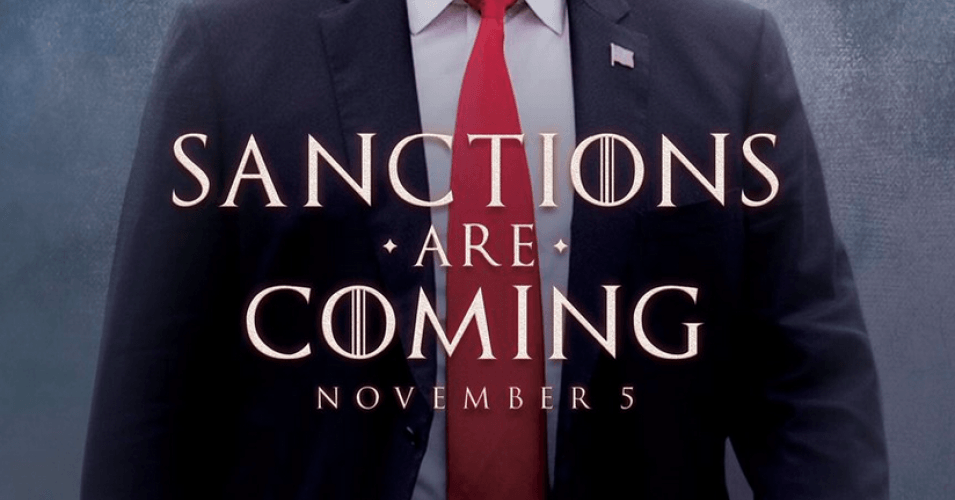
Treating the welfare of the Iranians people like a TV show, Donald Trump used a meme from The Game of Thrones—an arrogant, stylized photo of himself with the tagline: “Sanctions Are Coming November 5”—to announce the new round of crippling sanctions targeting Iran’s oil exports, banks and shipping.
This is the second round of sanctions since Trump pulled out of the Iran nuclear deal, a deal that was signed in 2015 not only by the US and Iran, but also by Germany, England, France, Russia and China—and approved unanimously by the UN Security Council. It’s also a deal that has been working. Iran has been complying with the most intrusive inspections regime ever devised, as the International Atomic Energy Agency has confirmed 13 times.
Trump, always ready to bulldoze international agreements, unilaterally withdrew from the deal and imposed a first round of sanctions in August and the second round now. These sanctions are designed to stop not just US companies from trading with Iran, but all companies—anywhere in the world. According to Treasury Secretary Steve Mnuchin, “Any financial institution, company, or individual who evades our sanctions risks losing access to the U.S. financial system and the ability to do business with the United States or U.S. companies.” In effect, the Trump administration, practicing imperial hubris on steroids, is determined to punish countries abiding by an internationally approved agreement.
Faced with US threats, big Western companies that had recently signed contracts with Iran, such as Total, Eni, Boeing, Airbus, and Peugeot, have cancelled multi-billion dollar deals.
Desperate to counter US sanctions, the European Union is creating a mechanism called the “special purpose vehicle.” It is essentially a barter system, similar to one used by the Soviet Union during the Cold War, to exchange Iranian oil for European goods without money changing hands.The US government has vowed to sabotage this effort. “I have no expectation that there will be any transactions that are significant that go through a special purpose vehicle based upon what I’ve seen,” Treasury Secretary Steve Mnuchin said. “But if there are transactions that have the intent of evading our sanctions, we will aggressively pursue our remedies.”
Secretary of State Mike Pompeo boasted that even before the November 5 sanctions went into effect, the US had already succeeded in reducing Iranian crude oil exports by more than 1 million barrels, and insists that the goal is to stop ALL Iranian oil exports. The administration is granting temporary waivers to eight countries, including India, South Korea and Japan, principally out of concern that withdrawing so much oil from the market at once would lead to a spike in global oil prices. Moreover, they are merely six-month waivers contingent on countries “winding down” their oil business with Iran. A major stipulation for the waivers is that Iran’s revenues must be kept in foreign accounts that can only be used for trade in “nonsanctioned goods and services.”
While this economic stranglehold is officially designed to “stop Iran’s destabilizing activities across the world,” Trump administration officials are known to be gunning for regime change, hoping that distraught Iranians take to the streets to overthrow their government.
Indeed, since last December there have been sporadic protests against the economic hardships. But will unorganized protesters really be capable of toppling a well-armed, tightly controlled regime? Some analysts speculate that what the Trump administration wants in Iran is not even regime change but chaos, with Iranians fighting each other so they won’t be projecting power beyond their borders.
Trump’s wishful thinking aside, the most likely effects of the sanctions will be to further inflame regional conflicts, empower conservative forces in Iran, make other governments resentful of US imperial overreach and worst of all, needlessly cause suffering to millions of Iranian citizens.
The sanctions are already taking a tragic toll. While there are humanitarian exemptions on food and medicines, restrictions on banks and shipping companies make even exempted items difficult to obtain. Asked about humanitarian exemptions, French Ambassador to Washington Gerard Araud said, “The banks are so terrified by the sanctions that they don’t want to do anything with Iran.”
Below is a sampling of the desperate messages we have been getting from people in Iran:
  • We are suffering the sanctions with our bodies and souls. Businesses are closing, workers are losing their jobs, food prices are increasing by the hour. We may not be happy with our government, but this economic situation makes us more dependent on the government.
  • When I sleep at night there is one set of food prices. When I get up in the morning, they have doubled. We are losing our ability to buy food for our children because of Mr. Trump.
  • My grandmother in Iran has gone blind in one eye because she can no longer access her diabetes medicine. Thanks America.
  • I am a teacher in Iran. Before President Trump violated the nuclear deal, my salary was $800 a month. Now I have to work 12 hours a day, six days a week, just to make $250. The harsher the sanctions, the more difficult our lives become.I don’t know why we should suffer the consequences of decisions made by stubborn officials, whether here or in the United States. We just want to live normal lives.
Donald Trump is only too happy to make a mockery of international decisions. It is up to the rest of the world to stop him.

Monday, October 15, 2018

Trump Isolates the US While Iran’s International Influence Grows

By: Kayhan Int’l 


For the past forty years the US administration, instead of understanding realities, has indulged in vain efforts to undermine the Islamic Republic of Iran, but failed in all its intricate plots including the 8-year war that it imposed through Saddam of Baghdad’s repressive Ba’th minority regime in the 1980s.
     Enter Donald Trump in the White House and the increase of US animosity against Iran. The present incumbent has turned out to be a totally blind bat.
    When he could have learned from the blunders of his predecessors and charted out a fresh course by building upon what his predecessor had belatedly realized by inking the JCPOA (Joint Comprehensive Plan Of Action) on Iran’s right to peaceful use of nuclear energy, Trump miserably blundered.
     In his ignorantly arrogant attitude to international affairs, he decided to gang up with two of the worst sightless persons, that is, the racist child-killer Benjamin Netanyahu of the illegal Zionist entity and the mass murderer of the Yemeni people, Mohamed bin Salman (MBS), of the totalitarian Wahhabi minority regime of Riyadh. 
    Trump then went on to fill his administration with Americans blighted by hatred towards Iran, in a futile bid to browbeat Tehran into submission through threats and theatrics.
     Next he blatantly violated US international commitments through his unlawful exit from JCPOA and clamped illegal economic sanctions in the misconstrued belief of isolating the Islamic Republic.
     He bragged about rolling back Iran’s positive influence in the region and said his acute pressures would soon force the Islamic Republic to shelve its defensive ballistic missile programme.      
      His tall dreams, however, are turning into horrific nightmares. While the power and prestige of Iran grows, it is the US which is becoming increasingly isolated on the world scene.
     The Free World, including Washington’s traditional the European Union (EU), has strongly opposed Trump’s unilateral move and has decided to continue commercial ties with Iran.
     Even Trump’s thundering of threats to leading Third World countries, such as India and Turkey, to penalise them in case of buying Iranian crude oil and gas, have fallen on deaf ears.
    Turkey has declared its decision to continue natural gas imports from Iran in addition to the normal trade, economic, cultural, political and all other ties; while India has signed a fresh deal for import of Iranian crude with clear intention of carrying out its commitment to the Chabahar project in south-eastern Iran.
     It is obvious that Trump is the loser as is evident by the unceremonious exit from the UN of his loud-mouthed anti-Iranian hag, Nikki Haley, coupled with the cowardly murder of dissident Saudi journalist Jamal Khashoggi – a naturalized American citizen – by the blue-eyed boy of Washington MBS.      
     In the meantime, his so-called deal of the century for Palestine is in shambles with no independent world country willing to tow the US line to shift its embassy to the occupied Islamic city of Bayt al-Moqaddas.
     While the American people, press and politicians are calling on Trump to be realistic and react against Riyadh’s roguish murder of Khashoggi, the US president is hesitating on the lame excuse his country would be losing the 110 billion dollar weapons order from Saudi Arabia for the massacre of more innocent human beings.
     Therefore, who is more isolated on the world scene? The USA of Trump or the Islamic Republic of Iran!

Monday, August 20, 2018

Trump's Caliphate: Prolonging Unnecessary Wars in Muslim Heartlands


TEHRAN (FNA)- In yet another sign that the US government has no intention to withdraw its occupying troops from Syria, the Trump administration says it has raised $300 million to “stabilize” the part of Syria under US control and occupation.
This funding included $100 million from Saudi Arabia. US officials also insist this won’t mean a military pullout. In other words, the Trump Caliphate and its cronies are not in Syria just to end the central government in Damascus. They are there to also occupy the country forever, “contain Iran”, and destabilize the entire region for a foreseeable future.
Lest we forget, if it weren’t for Yemen, it might be hard to imagine a more miserable place in 2018 than Syria. Since 2011, when the US and company planned to unseat President Bashar Assad, more than half the country’s pre-war population of 22 million has become internally displaced or refugees, according to numbers from the UN High Commission on Refugees. Actual casualty figures are impossible to pin down with any exactitude. In April 2018, however, different reports by the UN and rights groups put the number of directly caused deaths at 511,000, including fighters and civilians.
There is plenty of blame to go around and plenty of actors to shoulder that blame. But the biggest culprit in all this has to be Washington and its so-called neoconservatives who continue to offer Israeli Prime Minister Benjamin Netanyahu their “Clean Break” strategy to rebuild the Middle East to the Christian-Zionist liking.


That plan started with unseating Iraqi autocrat Saddam Hussein and went on to destabilize Syria. It proved to be a nightmare. Lest we forget, one of that plan’s loudest advocates during the Bush administration - John Bolton - is now Trump’s national security advisor. In other words, there is plenty of blame to go around and plenty to worry about this time around.
If there is a place in the greater Middle East even more desperate than Syria, it has to be Yemen. With US logistical and financial support, Saudi Arabia has waged a cruel air war against the poorest country in the Arab world. Just like in Syria, the Saudi-American-Zionist alliance seeks to control Yemen and preserve the regional status quo. In between, they have killed thousands of innocent civilians, made millions more refugees, pulverized entire communities.


With the US now allocating money and talking openly about permanent war and occupation in Syria, there is a real risk that some combination of the US, Israel, and Saudi Arabia could initiate yet another regional war with another country. Obviously, they haven’t learned their one lesson from the failed wars on Syria and Yemen: “They can’t win.”
Looking into the future, though, let’s pray for one thing: that the United Nations will step in to force the Trump Caliphate and regional cronies to leave post-ISIL Syria and Yemen alone. This is because they seem eternally in search of yet more wars to launch.
Pointing to Russia, China, Iran and North Korea, for instance, Marine Corps Commandant General Robert Neller recently told US troops in Norway to expect a “big ass fight” in the future, adding, “I hope I’m wrong, but there’s a war coming.”
Also, former National Security Adviser Lieutenant General H.R. McMaster once suggested that the possibility of a war (conceivably nuclear in nature) with Kim Jong-un’s North Korea was “increasing every day.”
Unfortunately, in 2018 and beyond, we should all expect more violence and more bloodshed on the planet from the Trump Caliphate. Hi bellicosity, his “America-first” policies, and his baseless claim of “finally winning again in Syria and Afghanistan” could be a recipe for prolonging the unnecessary wars and occupations in Muslim heartlands that are guaranteed to create even more chaos and more failed states in the Middle East and beyond.