Showing posts with label Qajar dynasty. Show all posts

Wednesday, November 27, 2019

Darvish Khan: Founder of Iran's popular ballads, music composition

IRNA - Gholam Hossein Darvish was an Iranian artist who helped bring tasnif (Persian equivalent of ballad) from the royal courts down to the ordinary people and created a very pleasant atmosphere for all Iranians, including the cultural élite. What he founded helped the Persian music to be more dynamic and not be confined to the realms of the courts. 
The Persian literature is full of talk of love in this world but the art of singing tasnifs hasn’t found its true place and wasn’t for the efforts of a group of recent Iranian musicians, there wouldn’t be much to listen to. 
Darvish Khan’s works have made a great contribution to this change. His masterpiece tasnif Bahar e Delkash, that has been made in the Persian classical musical mode (dastgah) of Abu Ata, is one of the best such tasnifs of the last century. 
Before Darvish Khan, there were good tasnifs made by Ali Akbar Sheida and Aref Qazvini but his ballad Bahar e Delkash, made by Iranian poet Mohammad-Taqi Bahar, won over the Iranian hearts.
Darvish Khan was born in 1872 in Tehran. His father Haji Bashir Taleghani had a small shop next to manuscript illuminators, those who made cases for pens and musical instrument makers in Tehran’s Grand Bazaar. He played Sitar and sent his son to be a member of Aziz Soltan music group. Later, he attended the Dar ol-Fonoon Music School. 
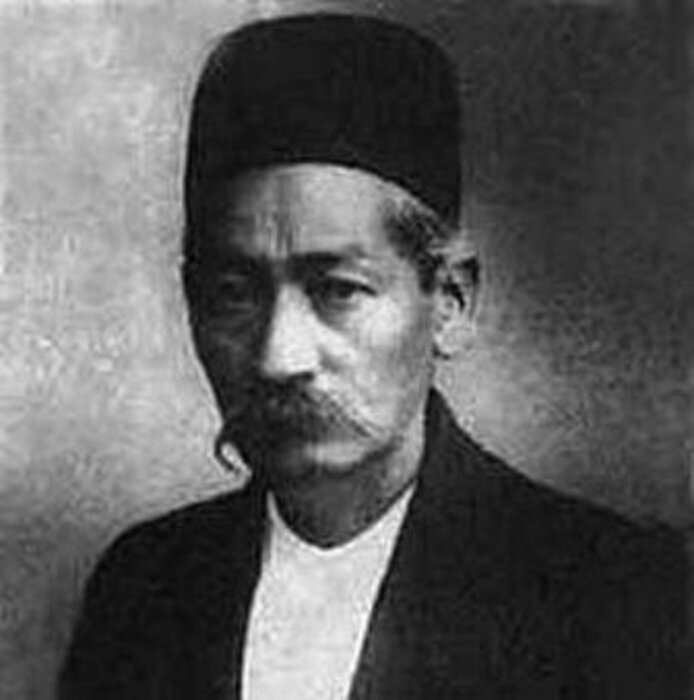
His father used to call him Darvish Jan instead of Gholam Hossein and made that name remain on him until he rose to fame. 
He is the first and biggest Iranian composer in the Qajar Dynasty when the music was confined to the realms of the royal courts, leaving not many people who were familiar with musical notes. 
He was living at a time when the call for freedom was growing louder during the governance of Qajar King Shoaossaltaneh. He sought refuge in the British Embassy at the time. 
Darvish Khan can be considered the founder of professional music, taking it out from the royal courts of Qajar and bringing it to the society. 
The musician had always a high value of his music and never let it be limited to anybody or any special genre. He didn’t seek much financial remuneration but personal and popular satisfaction, that’s why he held concerts for those who lost their properties in several fires in the bazar and another in the northern city of Amol. 
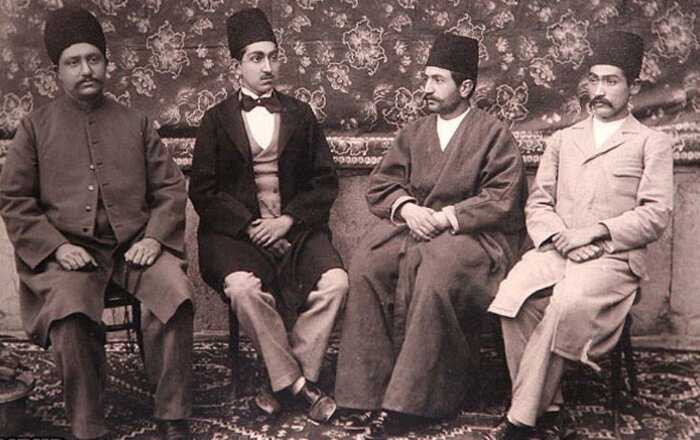
Darvish Khan made many modifications to the Iranian musical modes and scales in a bid to make it more pleasurable to the eyes of the ordinary people of the time. 
He added a sixth cord to tar in order to extend its tuning possibilities and to enhance its sound. 
He is also known to have invented 'pish-daramad', a free-standing composition played at the beginning of a performance.
“Darvish Khan played well tar and sitar. His tunes were pleasurable and fingers played softly and rapidly especially he had good musical taste,” wrote Ruhollah Khaleghi in his book History of Music. 
His work was important as no other musician of his time composed songs except for Ali Akbar Sheida and Aref Qazvini during the Mozaffari period before him. 
He also paved the way for the creation of music that was not accompanied by tasnif or any song. 
During his last year, he lived a hard life economically. He died at the age of 54, on November 22, 1926, in an accident. His carriage was hit by a lorry which was very rare at that time. It is said that he was the first Iranian to be killed in a car accident.

Thursday, June 27, 2019

America’s War Against Iran: Timing And Consequences

(Part 2 of Will American Belligerence Against Iran Lead to War?)
After reading my article “Will American Belligerence Against Iran Lead to War?”   https://countercurrents.org/2019/06/will-american-belligerence-against-iran-lead-to-war published in countercurrents, a colleague called me. He wanted to know if America will seriously attack Iran and if so when and the consequences for America, Iran and the region.
History is what is past, but it does not fail to provide a window into the future. Imperial American foreign policies are not indigenous; they are an extension shaped by the successes and failures of imperial Rome but more recently of imperial Britannia. Let us not forget that both empires do not exist for it is the nature of imperialisms to end.
Ignoring all other regional issues but only focussing on that of Iran, the country was ruled by the Qajar dynasty which according to Wikipedia was “officially the Sublime State of Persia, a royal dynasty, from 1789 to 1925”. The Qajars descended from the Oghuz (tribe) Turkmen (founders of the Ottoman Empire). The last of the Qajars was Ahmed Shah who ruled Persia from 1909-1925. He was deposed by an officer of the army Reza Shah Pahlavi. By royal proclamation in 1935, Persia became Iran (derived from Middle Persian Eran). The British and the Soviets had key geopolitical and economic (Britain controlled the Anglo-Iranian oil Company) interests in Iran.
In August 1941 war allies Britain and the USSR invaded Iran, arrested Reza Shah and sent him into exile. The British and Soviet authorities then permitted Reza Shah’s son, Mohammad Reza Shah Pahlavi to succeed to the throne.
As the sun began to set on the British Empire after World War II, it seceded interests in Iran to the United States under Mohammed Pahlavi, a pro-American puppet. For the British, it was important to cede their interests to the Anglo-American partnership rather than to a cold war rival, the Soviet Union. The American interests in Iran ended with an abrupt and unforeseen 1979 revolution. America, Britain and Israel are still licking their wounds from the loss. Their fear predominantly emanates from the belief that the revolution from the Islamic Republic of Iran will export its Islamic dogma across the region. Understandably so as it is having been happening following the Afghan and Iraq invasions towards the turn of the twenty first century. This fear is not only gripping the US and Israel but also the regional monarchies suffering from the same fear (Islam is anti monarchy).
After the brief history lesson in the above three paragraphs, I best tried to explain and lift the fog of the timing of the aggression against Iran. For Bolton, Pompeo and Netanyahu it is most important to build a “global coalition” (as opposed to the Warsaw Conference coalition) that includes not only the Arab monarchies but also Russia and China. America will seek their commitment not to provide support to Iran. In return, it’ll offer concessions. America has followed a pattern for aggression in the past offering sticks and carrots and it will, no doubt, follow it again in Iran’s case.
In my opinion Russia might agree, without being part of a coalition, if America and NATO would provide the guarantee to pull back from its Eurasian borders viz Ukraine. The national security advisors of America, Russia and Israel are convening in Jerusalem to likely form a framework that would conclude an agreement, not necessarily soon but over the next few critical months. Russia will also want a slice of the economic war pie by supplying limited arms to Iran.  The interested reader may refer to the weblink https://www.theglobeandmail.com/world/article-russias-ties-with-iran-will-be-the-focus-of-the-upcoming-security/ article “US and Israel look to turn Russia against its Iranian ally”. I’ve provided a comment in my previous article on countercurrents.
Unlike Russia, China may prove to be a harder nut to crack as it has emerged as a political, military, technological and economic challenger to imperial America.  However, the two Masters of Diplomacy, Putin and Xi Jinping may well be playing the Eurasian game in harmony as neither has any reason to trust America and more specifically Trump.  Trump may agree to offer trade and tariff concessions to China, but will they be enough to satisfy Xi’s appetite, or will it demand Taiwan as it’s prize in return for Iran?
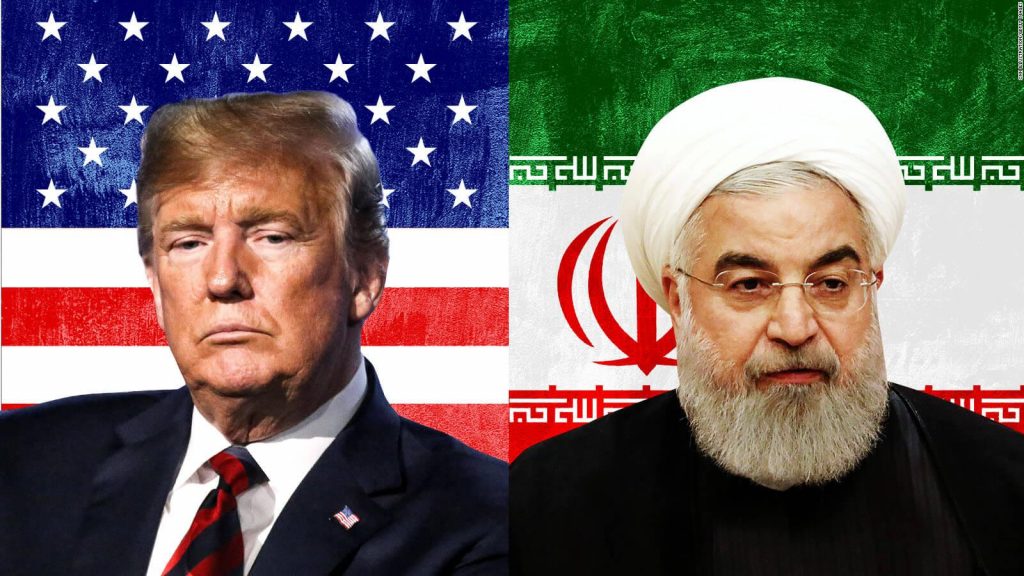
Moreover, most countries across the globe, including Russia and China, have lost their appetite for American addiction of applying sanctions, trade tariffs, embargoes, shredding international agreements and outright twitter lies. The world has no reason to trust the American leadership; neither does Iran. With the latest round of sanctions imposed on June 24 against Iran, President Rouhani said, “You sanction the foreign minister simultaneously with a request for talks”. He described the White House as “afflicted by mental retardation.”
Whatever transpires “behind the diplomatic scenes”, America is bound to lose patience and become trigger happy (cocked and loaded) If, by end of summer or mid fall 2019, it fails to form the global coalition. Under those circumstances America may, by a false pretext, launch a surgical strike against Iran hoping for a quick victory through air and sea blockade.
Regarding the consequences, both America and Iran are prepared to accept the eventuality- America’s survival as an empire, geopolitically and economically, while Iran is confident that with its geostrategic and military advantages, arsenal of ballistic missiles and help from its proxies in Yemen, Iraq, Hezbollah (in Lebanon) and Syria it could emerge as a regional power at the end of the war. Iran is confident that it can thwart an aggression. If prophecies in the three Abrahamic faiths are to be accepted, it’ll be a long war embroiling the entire region culminating in the biblical Armageddon (Malhama in Arabic or the Great War between good and evil). This war will be ideological – a war between theological and illogical supremacy.
Gulam Asgar Mitha is currently retired in Calgary, Canada having worked as a project, process and technical safety engineer in Canada, USA, Libya, France, Pakistan and Kuwait. He was born in Mumbai soon after partition immigrated with family in 1951 to Karachi. After schooling proceeded to USA for further studies and obtained Bachelors degree in Chemical Engineering and Masters in Economics.