
A new rebel alliance has revived old wars and drawn the Horn’s rival powers into a contest over ports, borders and the Bab al-Mandab.

The Cradle

Across the Red Sea, Washington has lifted sanctions on Eritrea's military and ruling party, seeking a reset with a state whose ties with Iran and stance on Yemen have drawn growing attention. In Israel, Eritrean exiles are organizing for a return to their homeland, adding another layer to a contest already stretching from Sudan to the Bab al-Mandab.
The coalition may struggle to turn its declaration into a unified campaign. Even so, Addis Ababa must commit troops to its northern and western fronts while facing accusations of helping the UAE-backed Rapid Support Forces (RSF) across the Sudanese border. The renewed fighting also threatens to undo the Pretoria agreement that ended the Tigray War, among the deadliest conflicts of this century.
Ethiopia's domestic troubles may ease the pressure on Eritrea, whose Red Sea ports have become a focus of Ethiopian demands for access to the sea. Yet the war could also spill across their border, as it did during the Tigray conflict. The struggle for Ethiopia's future has thus become inseparable from rival calculations over the Red Sea, Sudan, and the Gulf of Aden.
The Horn's contested waterways
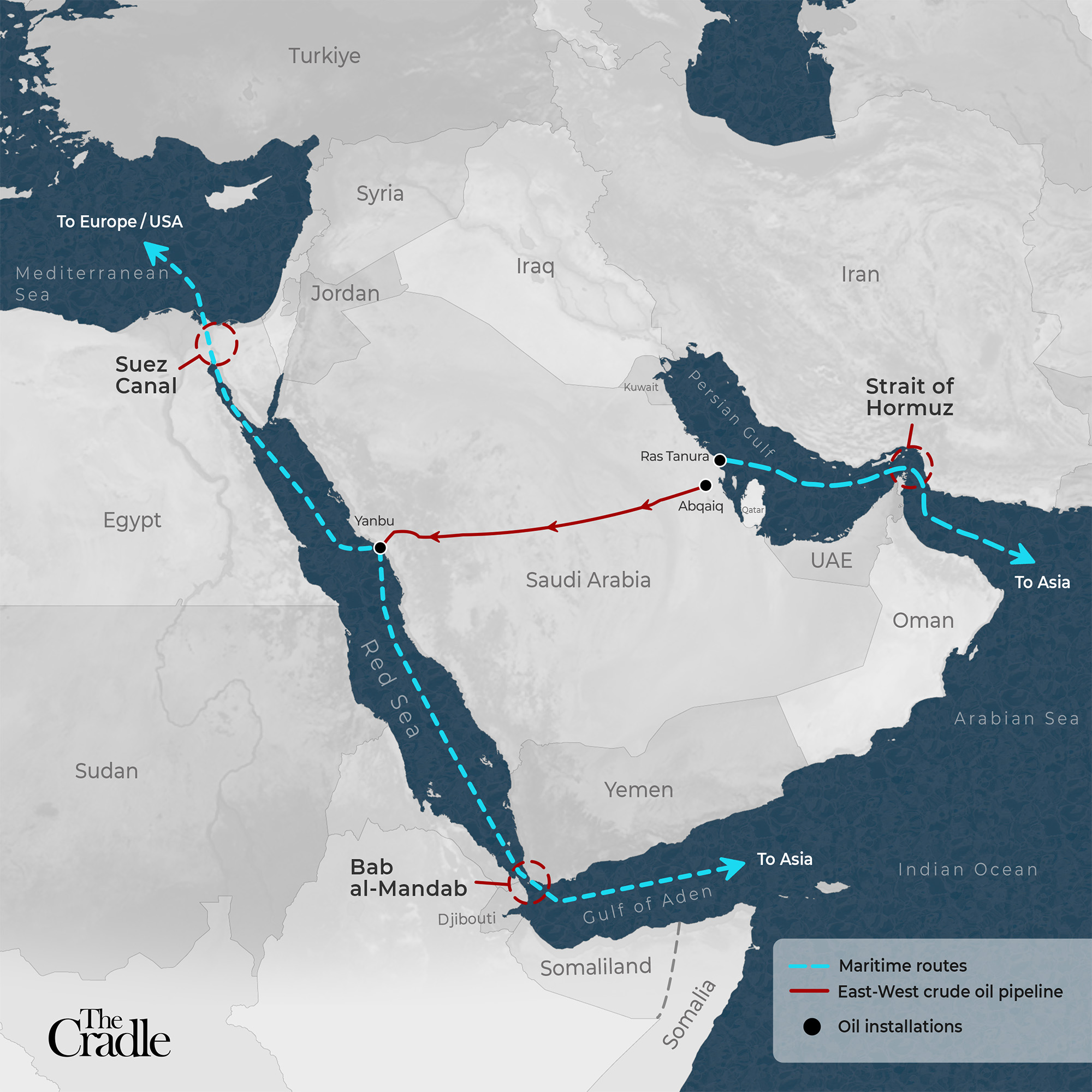
For millennia, empires have sought to project power over the Horn of Africa. The region faces the Red Sea and Gulf of Aden, linked by the Bab al-Mandab, and lies opposite the Arabian Peninsula. Shipping through this passage connects Asian markets to the Suez Canal and Europe. The highlands of Ethiopia also feed the Nile, placing the Horn at the heart of another contest over water and sovereignty.
Ethiopia is the Horn's largest state. Aside from Liberia, it alone retained formal independence during the Scramble for Africa, though Italian occupation from 1936 to 1941 broke that continuity. Its rulers acquired European arms and advisors while extending authority over Oromo and Somali lands.
Contacts with Israel continued under the Marxist-Leninist Derg. In 2006, Ethiopia invaded Somalia with US backing, an intervention that helped fuel the insurgency from which the Al-Qaeda-affiliated group Al-Shabaab grew. When Washington sanctioned Ethiopian and Eritrean actors during the Tigray War, Addis Ababa turned increasingly to the UAE for military support.
Eritrea took another path after independence from Ethiopia in 1993. Asmara first sought ties with the west and offered facilities to Washington for the ‘War on Terror.’ Relations soured, and Eritrea ordered USAID to cease operations in 2005.
It refused cooperation with the US Africa Command after its formation in 2007. The UN Security Council sanctioned Eritrea in 2009 over allegations of support for Al-Shabaab and a border dispute with Djibouti, lifting those measures in 2018. The US later imposed separate sanctions over Eritrean forces' role in the Tigray War; those US measures were lifted in September 2026.
Wartime allies become Red Sea rivals
Despite their contrasting foreign policies and long hostility, Eritrea and Ethiopia briefly pursued detente. Their 2018 peace agreement sought to settle a border dispute that had led to war two decades earlier. From 2020 to 2022, Eritrean forces fought alongside Ethiopia's federal army against the Tigray People's Liberation Front (TPLF), leaving a legacy of mass violence and unresolved claims over territory.
The rapprochement was striking after the 1998–2000 border war and two decades of distrust. Abiy received the Nobel Peace Prize for the thaw, but formal peace did not settle the politics of Tigray or the question of Ethiopian access to Eritrea's coast. Those unresolved issues returned once the common campaign against the TPLF ended.
That alliance broke down after Ethiopia and the TPLF signed the November 2022 Pretoria agreement without Eritrea. Asmara had wanted the TPLF destroyed, while its forces still occupied areas of Tigray. In Sudan, Ethiopia's alignment with the UAE brought it closer to the RSF; Eritrea, meanwhile, trained fighters aligned with the Sudanese Armed Forces (SAF). Abiy's repeated insistence on Ethiopia's need for Red Sea access, with Assab central to the debate, further alarmed Asmara.
The Pretoria Agreement began failing as factions within the TPLF did not accept the terms. Ethiopia also failed to fully restore humanitarian access, and the Fano militia (allied with the federal government) continued to occupy West Tigray.
In 2024, the TPLF split into two factions led by Getachew Reda and hardliner Debretsion Gebremichae. In March 2025, Debretsion staged a coup in Tigray’s capital, Mekelle. According to The Guardian, Debretsion received support from Eritrean intelligence – the same country that only a few years ago wanted to eliminate the TPLF.
Eritrea also widened its contacts beyond the Horn. Foreign Minister Osman Saleh attended Iranian President Masoud Pezeshkian's inauguration in 2024, and Asmara condemned the assassination of Hamas leader Ismail Haniyeh in Tehran.
The two foreign ministers discussed closer ties in 2025. Ethiopian analysts have alleged that Iran supplied drones to Eritrea and that Eritrean territory has served as a route for arms bound for Sudan.
Asmara did not join western denunciations of the Ansarallah-aligned Yemeni armed forces’ (YAF) Red Sea campaign, though allegations that Eritrea has helped the Sanaa movement remain unproven. In remarks on Yemen, Saleh said the Saudi-backed government had “no control” over Yemen and warned that foreign powers cannot subdue Yemen. When asked if Eritrea would impose tolls on the Red Sea, Saleh said “this is a new idea, a new concept,” but added he could not speak on the issue as long as there was war in Yemen.
Old enemies in a new alliance
On 20 September, seven armed groups announced the Ethiopian Peoples' Forces Alliance for Survival, pledging to overthrow Abiy's government. Its members include the TPLF and the Amhara Fano National Movement, adversaries during the Tigray War, alongside the Oromo Liberation Army and smaller organizations from several regions.
Their ability to cooperate, particularly over disputed territory, remains uncertain. The coalition reaches across regions with different histories of grievance against Addis Ababa. Its declaration gives the federal government a challenge on paper, but commands in Tigray, Amhara, Oromia, and Afar still have their own priorities. Western Tigray in particular remains contested between former enemies now expected to fight under a common banner.
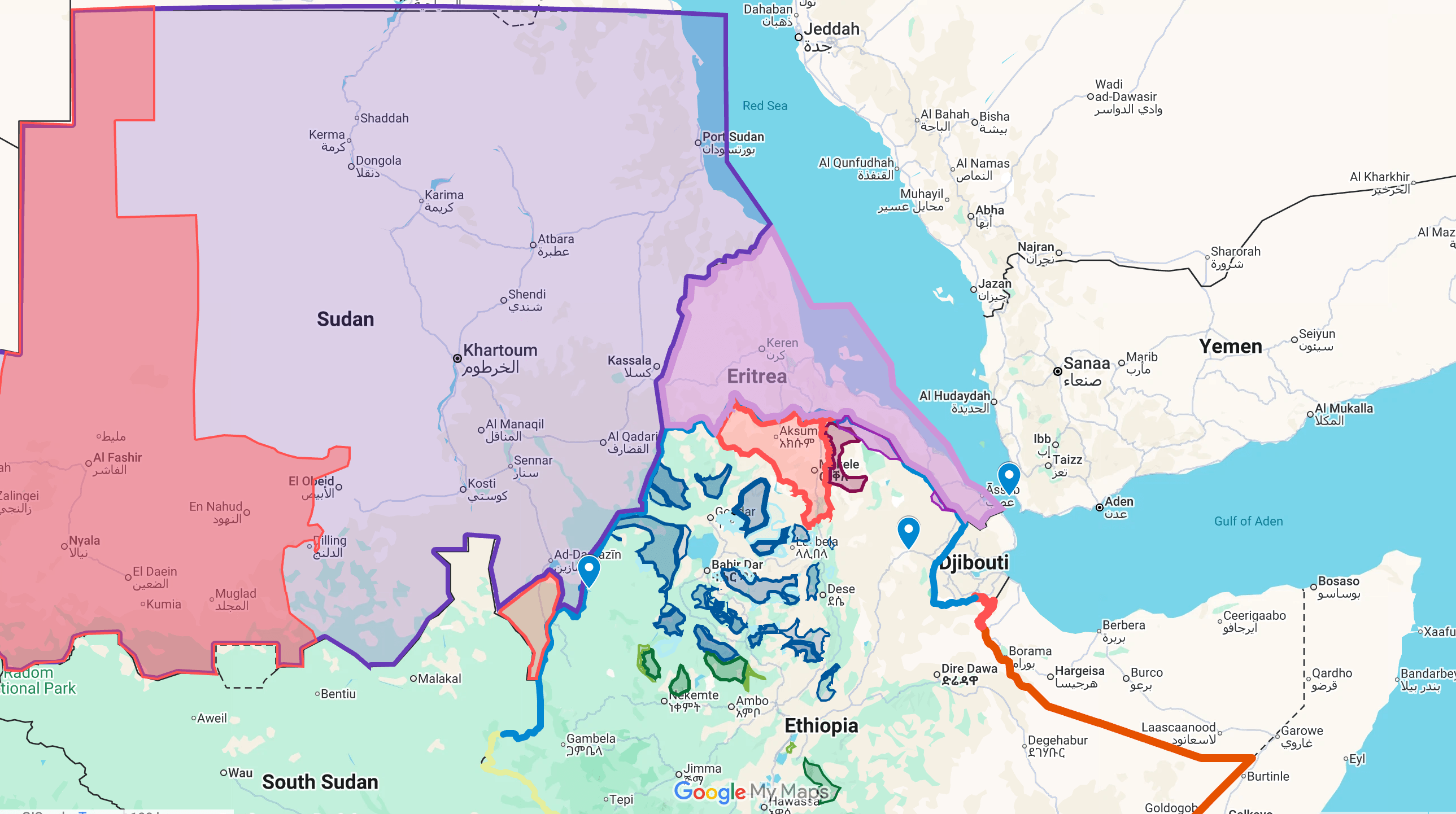
A number of factors led to this point. First, the Fano turned against the federal government in 2023, after a push to integrate them into the national army. In January 2026, factions consolidated into the Amhara Fano National Movement (AFNM). The following month, the AFNM launched a surprise attack, taking advantage of the Ethiopian National Defense Force (ENDF) moving troops from Amhara to Tigray.
Second, Abiy Ahmed solidified his power after winning 486 of 547 seats in the June 2026 election, foreclosing the possibility for change. Tigray did not participate, and some polling stations were closed in Amhara and Oromia, making the result illegitimate in the eyes of the rebels.
Finally, Ethiopia received blowback for its intervention in Sudan. In February 2026, as the SAF were making gains in the west, Ethiopia helped the RSF open a front in the neighboring state of Blue Nile. In May, Sudan hosted a meeting of different rebel factions, which would ultimately result in the Coalition for Survival four months later.
The results of the rebel offensive are too early to tell. The TPLF began by seizing a number of federally operated airports. But soon after, they lost the town of Alamata, which had been under their control since January 2026.
This was followed by the loss of Southern Tigray and Mekelle. A similar occurrence happened in November 2020, leading the TPLF to lose almost all of their territory in 2021. However, the TPLF was able to launch an insurgency that wore down the ENDF. By July 2021, they captured all their lost territory and in a few months even launched an offensive towards Addis Ababa. Whether they can do the same again remains an open question.
The Afar Revolutionary Democratic Unity Front (ARDUF) was initially successful, capturing several towns East of Tigray, but has since been pushed back. Meanwhile, the Fano have engaged in limited activity, capturing a few towns.
Amid the chaos, Ethiopia accuses Eritrea of backing the rebels. The governor for the Afar region has accused them of trying to cut the road to Djibouti, which handles 97 percent of Ethiopia’s international trade.
On 1 October, Addis Ababa cut ties with Asmara, accusing them of “involvement in activities that pose a direct threat to Ethiopia's national security.” At the moment, evidence of Eritrean support is weak. Fragmentation in Ethiopia could shield Eritrea from pressure over Assab, but a conflict moving toward its frontier could leave Asmara exposed.
On the other hand, this fragmentation could also spill over into Eritrea and provide Ethiopia with a justification for an invasion. Many worry that Ethiopia plans on attacking Eritrea once the rebel threat is eliminated.
Eritrea also faces opposition organizing among its diaspora. A Haaretz report described Eritrean exiles preparing in a Tel Aviv warehouse to return and challenge President Isaias Afwerki. Their activity on Israeli soil will raise questions in Asmara about Israel's position, especially after Saleh accused it of seeking influence along the Red Sea.
For Israel, disruption around the Bab al-Mandab carries a direct strategic cost. Eritrea’s coast faces Yemen, whose armed forces have used their position along the strait to challenge shipping linked to Israel and its allies. Saleh’s remarks about tolls have raised questions about what Eritrea might do in a future settlement. For now, closer cooperation across the strait remains a possibility; Asmara and Sanaa have announced no joint plan.
Washington has moved in another direction. US officials had been exploring a reset with Asmara for months. On 18 September, before Saleh's remarks on the toll question, the Trump administration removed sanctions on Eritrea's military and ruling party.
The State Department said the decision served US regional interests. It may offer Washington a channel to Asmara amid the Red Sea contest, though the timing alone cannot show that Yemen drove the decision.
A war felt beyond Ethiopia
Already, the rebel offensive in Ethiopia is reverberating through the Horn. On 27 September, the Harar Meda Air Base was struck by a long-range missile, killing several members of the Ethiopian Air Force. The air base is a major stop for the UAE’s supply of weapons to the Haftar government in Libya and the RSF in Sudan.
The RSF is already experiencing significant setbacks in Sudan, which will further accelerate as conflict in Ethiopia continues. Fewer supplies for Khalifa Haftar could also tilt the balance in favor of Libya’s internationally recognized Government of National Unity.
Ethiopia is now considering withdrawing troops from Somalia. This could further destabilize the country, as evidenced by fighting breaking out in the Bay region, where Ethiopian troops are stationed. It could also become an opportunity for other states to play a greater role, such as Turkiye, which has been expanding in Somalia for the last two decades.
Tensions have also risen between Ethiopia and Egypt, which have expelled each other's diplomats after Addis Ababa accused Cairo of interfering in its domestic affairs. Egypt and Ethiopia have long been at odds over the Grand Ethiopian Renaissance Dam (GERD), which Cairo says will lead to less water flow to the Nile.
What happens in the long run depends on the success of the rebel offensive. If the Coalition for Survival captures more territory or even just withstands attacks from the ENDF, Ethiopia will have to continue to pull away from Sudan and Somalia.
If the highway to Djibouti is cut, Ethiopia would lose access to the sea, creating further economic and food insecurity. Djibouti would lose up to $2 billion in fees it collects from Ethiopia, a massive blow for an economy whose size is $4.6 billion.
Regional powers would also take advantage of the situation. Egypt and Sudan both strongly oppose the GERD. Egypt has made veiled threats about destroying the dam, which is less than ten kilometers away from the Sudanese border.
As for Eritrea, if the TPLF reversed its losses and expanded westward, and while the ARDUF went eastward, Asmara would have a buffer zone with Ethiopia. Keeping Ethiopia occupied with its rebels would also help protect Eritrea from aggression against its port cities.
But intervening in Ethiopia is risky if the rebel offensive is crushed. Ethiopia could then focus all attention towards Sudan, and use drones and missiles to disrupt Egyptian vessels on the Red Sea. Eritrea's support for rebel groups would provide the justification Ethiopia needs to seize its port cities. There is also the risk that if the TPLF grows strong enough, it could turn against its former rival. Perhaps for this reason, Egypt, Eritrea, Somalia, and Sudan issued a joint statement calling for a peaceful resolution to the conflict.
Eritrea's leaders have survived sanctions, border wars and a 2013 military mutiny. The exiles organizing in Israel have yet to show they can mount an effective challenge inside the country. Their emergence adds to Asmara's sense of encirclement as Ethiopia presses its Red Sea claims and the balance of power across the strait shifts.
Washington's opening is similarly uncertain. Lifting sanctions could encourage Asmara to keep its distance from Sanaa or deepen other ties, depending on what the US offers and how the war next door develops.
Eritrea has long guarded its independence from foreign military arrangements. For now, neither an American base nor a formal Eritrean alignment with Yemen or Iran follows from the diplomatic signals at hand.
The Red Sea after Ethiopia's rupture
The Horn has shaped human history from the earliest migrations of homosapiens to the first Muslim refuge in Abyssinia. Today its ports and straits carry trade between continents, while the Nile binds the region to Egypt and Sudan. Those connections give a renewed Ethiopian war consequences well beyond the country itself.
Within weeks of the alliance's announcement, federal forces and their opponents have fought across northern Ethiopia, relations with Eritrea have broken down, and Addis Ababa has considered recalling troops from Somalia.
The diplomatic row with Egypt has drawn the Nile dispute into the crisis. Washington, meanwhile, is seeking closer ties with Asmara as Sanaa continues to disrupt Red Sea shipping. Ethiopia’s war is giving its neighbors more reason to intervene, even as it threatens to reach their borders.
The outcome still turns on the alliance's ability to coordinate, the federal army's response, and the choices made in Asmara, Khartoum, and Cairo. Even without a march on Addis Ababa, a long campaign would draw resources from Ethiopia's other fronts and sharpen the struggle over the Red Sea coast. The region's old territorial disputes are being fought under new alliances, with shipping lanes and neighboring wars close at hand.

No comments:
Post a Comment