Showing posts with label Reza Shah Pahlavi. Show all posts

Wednesday, July 14, 2021

Unmissable sites to visit in Tehran

TEHRAN, (MNA) – Considered as the best manifestation of Iranian art and architecture from the Qajar era (19th and 20th centuries), the incredibly lavish Golestan Palace is an intangible cultural heritage of the Iranian capital.
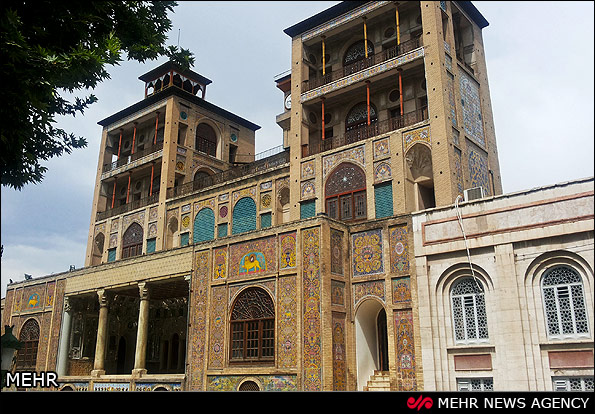
Golestan Palace:
Considered as the best manifestation of Iranian art and architecture from the Qajar era (19th and 20th centuries), the incredibly lavish Golestan Palace is an intangible cultural heritage of the Iranian capital.
The beautiful and colorful architecture is a UNESCO heritage site and is stretched over an area of 4.5 hectares, near Tehran’s traditional Grand Bazaar.
It is one of the oldest historic monuments in Tehran and a masterpiece of beautiful gardens and royal buildings full of Iranian craft collections, where the royal Qajar family used to live for quite some time.
The Golestan Palace is a group of royal buildings that were once enclosed within the walls of Tehran’s Historic Arg (citadel). Its architecture is a mixture of both Persian and European architectural styles, in particular, French.
The complex is made up of 17 buildings with eight key structures. The eye-catching architecture outside is only an introduction into what you will find inside.
It is now a grand complex full of charming Persian art, consisting of gardens, royal buildings, museums and collections of Iranian crafts and European presents.
Some of its most important buildings include: Takht-e Marmar (Marble Throne), Khalvat-e Karim Khani (Karim Khani Nook), Talar-e Brelian (Brilliant Hall), Talar-e Salam (Salam Hall), Talar-e Adj (Ivory Hall), Talar-e Zoruf (Containers Hall), Talar-e Ayeneh (Mirror Hall), Talar-e Almas (Diamond Hall), Emarat-e Badgir (Building of Windcatchers), Shams-ol-Emareh (Edifice of the Sun) and Howz Khaneh (Pond House).
The palace, with very nice and glamorous halls and rooms, each of which reminds the historical importance of the palace, is indeed a must-see place to visit when you are in Tehran. You will have a better experience if you study about Qajar dynasty before visiting the palace.
Sa’d Abad Complex:
Spread over a 180-hectare area, Sa’d Abad complex was built by the Qajars and the Pahlavies (20th century).
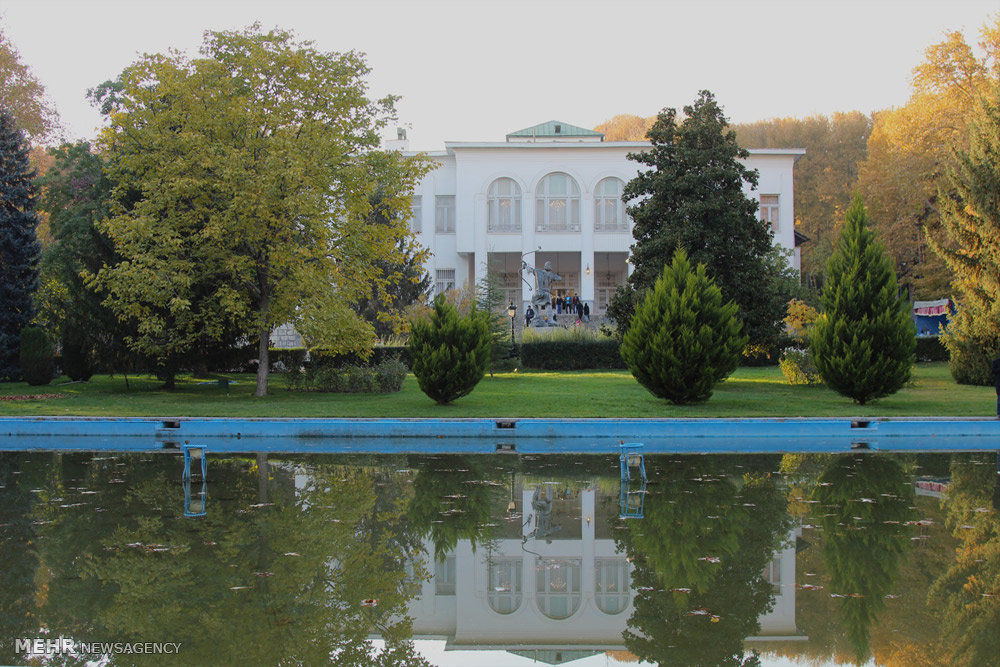
The complex includes a natural forest, several streets, qanats, galleries, mansions and museums. Currently, large parts of the complex are museums, which are accessible to visitors.
Some of buildings of the palace include: Ahmad Shah Qajar Palace, the Green Palace, the White Palace, Museum of Natural History, Museum of Fine Arts, Museum of Anthropology, Museum of Glassware and Handicrafts, the Military Museum, the Behzad Museum, Museum of Treasure, and Museum of Mir Emad Calligraphy.
The most famous palaces are the White palace and the Green Palace, which was the residential of Reza Shah Pahlavi, providing visitors with an insight about the lifestyle of the Iranian king as well as various kinds of 1970s' furniture and art crafts.
The complex’s garden is very nice to walk and it leaves you with a memorable day.
Compared to Golestan Palace, Sa’d Abad represents a more modern face of Iran.
Niavaran Complex:
One of the most beautiful Iran tourist attractions is the 9000-square meters Niavaran Complex. It was built in the scenic surroundings of northern part of Tehran and was used by the Qajar king Naser-e-din Shah (19th century) as a summer residence.
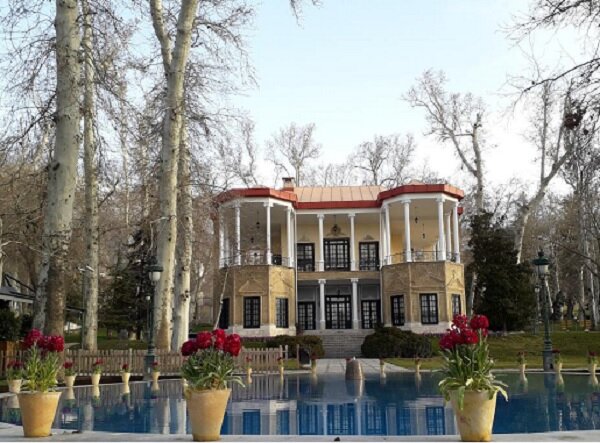
Five museums (Niavaran Palace Museum, Ahmad Shahi Pavilion, Sahebqaraniyeh Palace, Jahan Nama Museum and Private Library), and other cultural, historical and natural attractions such as the Blue Hall, Private Cinema, Jahan Nama Gallery and Niavaran Garden stand among the various parts of the complex.
The Niavaran Palace, completed in 1968, was also the main residence of the last Shah of Iran, Mohammed Reza Pahlavi, and the imperial family until the Islamic Revolution. It seems interesting to discover where the last king of Iran used to watch TV, his children used to play, etc.
The whole complex is inspired by Iranian archeology using modern technology. Like any other royal palaces in Iran, it has breathtaking architecture and decoration.
There are also some famous artworks from Salvador Dali and Picasso. The complex also includes a very big library.

Sunday, August 04, 2019

Ship of Fools: Britain, America and the Iranian Oil Tanker Incidents


Taking over from Britain’s colonial role in exploiting the country, the US has bullied and tried to intimidate Iran for decades. The ongoing pretext for strangling Iran economically is that Iran is developing nuclear weapons. The UN’s International Atomic Energy Agency repeatedly finds no evidence for this repeated US-led lie. Then-US President Barack Obama’s Task Force explained the real, as opposed to rhetorical, reasons for US opposition to Iran’s development of enriched uranium for its civilian nuclear energy programme, to which Iran is entitled under Article IV of the Nuclear Non-Proliferation Treaty–a treaty regularly violated by the UK and US, and to which their ally Israel is not party, despite having undeclared nuclear weapons. The Obama-era Task Force report reads:
“So long as the United States firmly opposed Iran’s [civilian nuclear] Bushehr facility, no friendly Arab state actively pursued civil nuclear power. But once Washington accepted that Iran could have a nuclear power plant, the United States was in no position to press its friends not to pursue a capability it had agreed Iran could have … [I]f an agreement is reached legitimizing even limited enrichment on Iranian soil, other countries may well be interested in having the same capabilities, and it could be difficult diplomatically to dissuade them from this pursuit … Demonstrating how seriously the international community is concerned about Iran’s actions might discourage imitators.”
A media serving the interests of the public, not US foreign policy elites, would make this reminder–that Iran is being abused by the US to deter regional states from moving away from fossil-fuel dependence–regular headline news. Others want all-out war. Veteran reporter Seymour Hersh revealed a plan by then-US Vice President (some say real President), Dick Cheney, to stage a fake maritime incident between “Iranian” (disguised US vessels in reality) and US warships. Hersh says:
“There was a dozen ideas proffered about how to trigger a war. The one that interested me the most was why don’t we build — we in our shipyard — build four or five boats that look like Iranian PT boats. Put Navy seals on them with a lot of arms. And next time one of our boats goes to the Straits of Hormuz, start a shoot-up.”
More recently, similar incidents appear to have occurred.
SANCTIONS: “MAKE THE PAIN MUCH GREATER”
In 2012, Britain joined the US’s imposition of economic sanctions on Iran. Then-UN Secretary-general Ban Ki-moon described “significant effects on the general population, including an escalation in inflation, a rise in commodities and energy costs, an increase in the rate of unemployment and a shortage of necessary items, including medicine.” Britain’s then-Defence Secretary, Philip Hammond, informed the Iranians: “We can definitely make the pain much greater.” (Hammond is now working as a Member of Parliament to block Britain’s no-deal exit from the European Union, ironically in fear of food and medicine shortages. Fine for Iranians to suffer, but not us, thank you very much.)
The so-called “nuclear deal” praised by “liberal” Western media was, in reality, a disaster for Iran, which the government signed with an economic noose around its neck. In 2015, Iran and the EU (including Britain) signed the Joint Comprehensive Plan of Action (JCPOA). The United Nations Security Council, meaning in theory the US, too, adopted the JCPOA as UNSCR 2231. Iran agreed to limit its civilian nuclear energy programme and allow enhanced inspections by the International Atomic Energy Agency, which as noted fails to find any convincing evidence of an Iranian WMD programme. The “agreement” states that “[t]he JCPOA will produce the comprehensive lifting of all UN Security Council sanctions as well as multilateral and national sanctions related to Iran’s nuclear programme, including steps on access in areas of trade, technology, finance, and energy.”
But the US immediately violated the spirit of the JCPOA. The Congressional Research Service states that despite Obama’s lifting of “relevant sanctions,” whatever that means, the reality is that sanctions remained in place and thus in violation of the spirit if not letter of the JCPOA. “Remaining in place were a general ban on U.S. trade with Iran and sanctions on Iran’s support for regional governments and armed factions, its human rights abuses, its efforts to acquire missile and advanced conventional weapons capabilities, and the Islamic Revolutionary Guard Corps.”
In May 2018, US President Trump signed a National Security Presidential Memorandum, “ceasing” US “participation in the JCPOA.”
FISHY HAPPENINGS AT SEA
In May of this year, Ret. Special Agent in Customs, Karl Golovin, asked the US Joint Chiefs of Staff Chair, Gen. Dunford, about “the potential for false flag terrorism, leading us into war with Iran.” Unusually, Gen. Dunford responded:
“Yeah, look, I’m not going to answer the question directly. I don’t know what others want, but I’ll just tell you this, I am very familiar with the consequences of going to war and take the responsibility of providing military advice in that regard very seriously … Are there people who might like to get the United States to do something? Certainly you can see that even in the open source where that speculation is out there. But I can guarantee you, that’s not going to inform the military advice…”
The British House of Commons Library reports that the US sent an aircraft carrier to the Gulf, citing alleged Iranian escalations of proxy activities in the region. But it adds: “A deputy commander of the Iraq-based coalition fighting ISIS/Daesh, a British Major General, appeared to contradict that on 14 May: ‘There are a substantial number of militia groups in Iraq and Syria, and we don’t see any increased threat from any of them at this stage’.”
On 12 May, Iran was blamed by the US for sabotaging four oil tankers: two of which were Saudi (an enemy of Iran), one Norwegian (neutral), and one from the United Arab Emirates (a Western ally). Despite claims that Iran was to blame, the United Arab Emirates’ inquiry submitted to the UN Security Council did not mention Iran. In June, Iran was blamed by the US for attacking two tankers, Front Altair and Kokuka Courageous, providing fuzzy video to support its case. But when asked for specific evidence, the UK’s Minister for the Middle East, replied: “we are as sure as we can be.”
On 4 July, thirty British Royal Marines were alleged to have commandeered, in Gibraltarian waters, the Iranian-operated tanker, Grace I, supposedly to stop its “unlawful” delivery of oil to Syria. Iran argues, plausibly, that this was a violation of international law because the EU sanctions against Syria do not apply to non-EU states. Britain argues that Iran was using Gibraltarian waters to break the law. But this misses the point: What legal or moral right does the US or EU or Gibraltar have to dictate the nature of Iran’s oil sales?
The Royal Marines allegedly made the civilian crew kneel on the deck whilst pointing guns at them. The captain says: “They didn’t care whether I was master… there was no regulations (sic)… we had 28 unarmed crew. I was in a state of shock, everybody was in a state of shock.
How do you come on a ship like this with armed forces and such brute force. For what reason?” (BBC’s ellipses). The British Ministry of Defence describes this brutality as “standard operating procedure.”
The maritime law firm Tatham & Co. writes:
“Perhaps what is most interesting about this seizure is that it was carried out pursuant to the ‘Sanctions Regulations 2019’ enacted by Gibraltar on 3 July, just one day before the seizure. Those Regulations give the Chief Minister of Gibraltar powers to designate a vessel as a ‘Specified Ship’ if he ‘has reasonable grounds to suspect that the ship … has been, or is likely to be, involved in a breach of the EU Regulation’. The EU Regulation in question is Regulation (EU) No. 36/2012 and a ‘Specified Ship Notice’ was issued in Gibraltar on 3 July 2019 naming the Grace 1.”
The Observer’s Simon Tisdall cites “evidence” that US National Security Advisor John Bolton’s “national security team was directly involved in manufacturing the Gibraltar incident … when US spy satellites, tasked with helping block Iranian oil exports in line with Trump’s global embargo, began to track Grace I on its way, allegedly, to Syria, Bolton saw an opportunity.” In addition to remember Dick Cheney’s scheme from more than a decade ago, it should also be remembered that Bolton wrote a book about Iran and US-led geopolitics in general, entitled Surrender Is Not An Option. Spain does not formally recognize Britain’s territorial claims over Gibraltar. Why didn’t the Spanish intervene in this allegedly unlawful Iranian move? Because the US, presumably as part of the “trap,” already tipped off British intelligence (read: instructed them to seize the vessel).
In revenge, the Iranians seized two ships: the British-registered, Swedish-owned Stena Impero and the British-operated Mesdar.
IN CONCLUSION
Britain has pirated and plundered Iran for well-over a century, most notably by stealing its oil via the virtual monopoly, Anglo-Persian (now BP). The US worked with Britain in 1953 to overthrow the Mossadeq government. They imposed the blood-thirsty Shah on the people of Iran and never forgave the Iranians for shaking off their shackles in the Islamic Revolution 1979. In addition to arming Iran’s enemy-next-door, Saddam Hussein, during the brutal war (1980-89), the US, Britain and Israel have engaged in subversion activities, including murder and sabotage. The recent seizure of the Iranian tanker is a continuation of imperial policy.
Dr. T. J. Coles is director of the Plymouth Institute for Peace Research and the author of several books, including Voices for Peace (with Noam Chomsky and others) and the forthcoming Fire and Fury: How the US Isolates North Korea, Encircles China and Risks Nuclear War in Asia (both Clairview Books).

Thursday, June 27, 2019

America’s War Against Iran: Timing And Consequences

(Part 2 of Will American Belligerence Against Iran Lead to War?)
After reading my article “Will American Belligerence Against Iran Lead to War?”   https://countercurrents.org/2019/06/will-american-belligerence-against-iran-lead-to-war published in countercurrents, a colleague called me. He wanted to know if America will seriously attack Iran and if so when and the consequences for America, Iran and the region.
History is what is past, but it does not fail to provide a window into the future. Imperial American foreign policies are not indigenous; they are an extension shaped by the successes and failures of imperial Rome but more recently of imperial Britannia. Let us not forget that both empires do not exist for it is the nature of imperialisms to end.
Ignoring all other regional issues but only focussing on that of Iran, the country was ruled by the Qajar dynasty which according to Wikipedia was “officially the Sublime State of Persia, a royal dynasty, from 1789 to 1925”. The Qajars descended from the Oghuz (tribe) Turkmen (founders of the Ottoman Empire). The last of the Qajars was Ahmed Shah who ruled Persia from 1909-1925. He was deposed by an officer of the army Reza Shah Pahlavi. By royal proclamation in 1935, Persia became Iran (derived from Middle Persian Eran). The British and the Soviets had key geopolitical and economic (Britain controlled the Anglo-Iranian oil Company) interests in Iran.
In August 1941 war allies Britain and the USSR invaded Iran, arrested Reza Shah and sent him into exile. The British and Soviet authorities then permitted Reza Shah’s son, Mohammad Reza Shah Pahlavi to succeed to the throne.
As the sun began to set on the British Empire after World War II, it seceded interests in Iran to the United States under Mohammed Pahlavi, a pro-American puppet. For the British, it was important to cede their interests to the Anglo-American partnership rather than to a cold war rival, the Soviet Union. The American interests in Iran ended with an abrupt and unforeseen 1979 revolution. America, Britain and Israel are still licking their wounds from the loss. Their fear predominantly emanates from the belief that the revolution from the Islamic Republic of Iran will export its Islamic dogma across the region. Understandably so as it is having been happening following the Afghan and Iraq invasions towards the turn of the twenty first century. This fear is not only gripping the US and Israel but also the regional monarchies suffering from the same fear (Islam is anti monarchy).
After the brief history lesson in the above three paragraphs, I best tried to explain and lift the fog of the timing of the aggression against Iran. For Bolton, Pompeo and Netanyahu it is most important to build a “global coalition” (as opposed to the Warsaw Conference coalition) that includes not only the Arab monarchies but also Russia and China. America will seek their commitment not to provide support to Iran. In return, it’ll offer concessions. America has followed a pattern for aggression in the past offering sticks and carrots and it will, no doubt, follow it again in Iran’s case.
In my opinion Russia might agree, without being part of a coalition, if America and NATO would provide the guarantee to pull back from its Eurasian borders viz Ukraine. The national security advisors of America, Russia and Israel are convening in Jerusalem to likely form a framework that would conclude an agreement, not necessarily soon but over the next few critical months. Russia will also want a slice of the economic war pie by supplying limited arms to Iran.  The interested reader may refer to the weblink https://www.theglobeandmail.com/world/article-russias-ties-with-iran-will-be-the-focus-of-the-upcoming-security/ article “US and Israel look to turn Russia against its Iranian ally”. I’ve provided a comment in my previous article on countercurrents.
Unlike Russia, China may prove to be a harder nut to crack as it has emerged as a political, military, technological and economic challenger to imperial America.  However, the two Masters of Diplomacy, Putin and Xi Jinping may well be playing the Eurasian game in harmony as neither has any reason to trust America and more specifically Trump.  Trump may agree to offer trade and tariff concessions to China, but will they be enough to satisfy Xi’s appetite, or will it demand Taiwan as it’s prize in return for Iran?
Moreover, most countries across the globe, including Russia and China, have lost their appetite for American addiction of applying sanctions, trade tariffs, embargoes, shredding international agreements and outright twitter lies. The world has no reason to trust the American leadership; neither does Iran. With the latest round of sanctions imposed on June 24 against Iran, President Rouhani said, “You sanction the foreign minister simultaneously with a request for talks”. He described the White House as “afflicted by mental retardation.”
Whatever transpires “behind the diplomatic scenes”, America is bound to lose patience and become trigger happy (cocked and loaded) If, by end of summer or mid fall 2019, it fails to form the global coalition. Under those circumstances America may, by a false pretext, launch a surgical strike against Iran hoping for a quick victory through air and sea blockade.
Regarding the consequences, both America and Iran are prepared to accept the eventuality- America’s survival as an empire, geopolitically and economically, while Iran is confident that with its geostrategic and military advantages, arsenal of ballistic missiles and help from its proxies in Yemen, Iraq, Hezbollah (in Lebanon) and Syria it could emerge as a regional power at the end of the war. Iran is confident that it can thwart an aggression. If prophecies in the three Abrahamic faiths are to be accepted, it’ll be a long war embroiling the entire region culminating in the biblical Armageddon (Malhama in Arabic or the Great War between good and evil). This war will be ideological – a war between theological and illogical supremacy.
Gulam Asgar Mitha is currently retired in Calgary, Canada having worked as a project, process and technical safety engineer in Canada, USA, Libya, France, Pakistan and Kuwait. He was born in Mumbai soon after partition immigrated with family in 1951 to Karachi. After schooling proceeded to USA for further studies and obtained Bachelors degree in Chemical Engineering and Masters in Economics.