Sunday, September 02, 2018

Book Exposes History of Zionist Terrorism


False flags designed to blame Arabs have been used to great effect
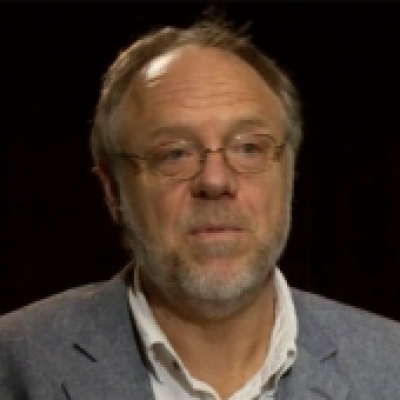
Kevin Barrett


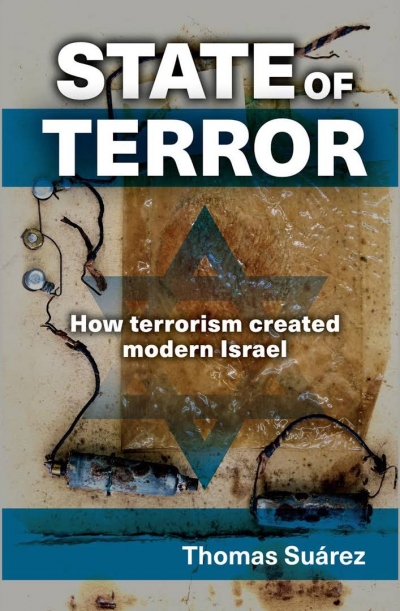
State of Terror: How Terrorism Created Modern Israel by Thomas Suarez; Pub: Interlink Publishing Group, Northampton, Massachusetts, 2016, 418 pages. Price: $15.71 Pbk.
If you visit your local bookstore in any Western country — assuming brick-and-mortar bookstores still exist by the time this article is published — you may find a section devoted to “Israel” or “the Middle East.” The vast majority of books there will consist of Zionist propaganda. Some of the propaganda will be thinly disguised. It will feign sympathy with Palestinians, while airbrushing away most of the real history of the “conflict” and mendaciously asserting a false equivalency between oppressor and oppressed.
If you are very lucky, or have access to a very large bookstore, you may find a couple of books — nestled between dozens or hundreds of Zionist propaganda volumes — that honestly deal with some aspect of the ongoing genocide of Palestine. One such book is Thomas Suarez’s outstanding new State of Terror: How Terrorism Created Modern Israel.
Suarez’s meticulously researched volume shows that almost from the moment Zionists set foot in Palestine they began wantonly murdering and maiming people in service to their plan to empty the land of its inhabitants. Though the great majority of their victims have been Palestinians, the Zionists also slaughtered Europeans, Americans, non-Palestinian Arabs, and even their fellow Jews.
Moshe Sharett, who served as Israel’s minister of foreign affairs from 1948–1956 and prime minister in 1954–1955, regretfully wrote that the dominant Zionist faction of Israeli founder David Ben Gurion “raises terror to the level of a sacred principle.” Suarez elucidates the fanatically racist, biblical, messianic, roots of Ben Gurion’s genocidal “sacred terror.” In the Peel Commission hearings of 1937, Ben Gurion “invoked the Bible as Jews’ unassailable legal title to (all) Palestine” and insisted on “forced transfer” of Palestinians so that the Holy Land would become “really Jewish.” The “forced transfer” (that is, murderous ethnic cleansing) of Palestinians, according to Ben Gurion, “will give us something (ethnic purity) we never had… neither in the period of the First Temple nor in the period of the Second Temple.” Suarez concludes that “Ben Gurion believed, or wanted us to believe that he believed, that we were indeed entering the epoch of the Third Temple, and he was its prophet” (p. 49).
It has been aptly observed that most Zionists do not believe in God, but they do believe that God gave them the Holy Land. That description fits Ben Gurion and the Zionist leadership cabal. But just because they reject God does not mean they can’t draw inspiration from the Torah — the wrong kind of inspiration! Clearly the Zionists identified with the Torah’s apparent incitements to genocide, including its cheering the mass slaughter of Persians commemorated by the Purim holiday; the injunction to exterminate the Amalekites and “kill both man and woman, child and infant”; and above all its command to Joshua to exterminate the Canaanites, “You shall not leave alive anything that breathes. But you shall utterly destroy them.” As Laurent Guyénot writes in From Yahweh to Zion, Ben Gurion’s rabbi testified that despite his atheism the founder of Israel “unconsciously believed he was blessed with a spark from Joshua’s soul.” In other words, Ben Gurion, like the nation he founded, was always dedicated to “not leaving alive anything that breathes” and to “utterly destroying” the people of Palestine.
The gory details of the incessant Zionist butchery that created and sustains the so-called State of Israel still have the power to shock. Suarez covers the Zionists’ ceaseless bombings and shootings of passenger trains and ships, bus riders, beachgoers, orphanages, children’s broadcasting studios, sporting events, private houses, hotels, cathedrals, journalists, and police stations (especially targeting Jewish police officers). The Zionists mailed letter bombs all over the Western world; recipients included British Prime Minister Winston Churchill and US President Harry Truman, whose security details fortunately were aware of the threat and managed to stymie the attempted assassinations.
Jews who disagreed with the Zionists were murdered for their opinions. Indeed, Suarez writes, prior to the Nakbah of 1948 and the proclamation of the Zionist entity “most victims of Zionist assassinations (that is, targeted rather than indiscriminate)… were Jews.” One typical victim was Dr. Ya’acov Israel de Hahn, denounced by Ben Gurion as a traitor for his anti-Zionist views, who was shot dead while leaving a Jerusalem synagogue on June 30, 1924. In other cases, Jewish girls who refused to cooperate with the Zionists were blinded in acid attacks.
Likewise Jews were massacred all over the world, and on the high seas, by Zionist terrorists, who sought to frighten Jewish populations into coming to Israel against their will — and to prevent them from going anywhere else. One of the deadliest Zionist terror bombings was the 1940 sinking of the refugee ship Patria in Haifa port, killing 267 people, more than 200 of them Jews fleeing the war. The Jewish Agency’s Hagana militia carried out the bombing to prevent the ship from continuing its voyage to Mauritius, where the refugees were to be given safe haven and the hopes of eventually reaching such destinations as the USA, Canada, and Australia. But the Zionists apparently decided that if the Jewish refugees wouldn’t or couldn’t debark in Haifa to join the genocide of Palestine, it was better to kill them than let them escape.
These acts were not committed by an extremist fringe, but by militants representing the mainstream of the Zionist movement: Lehi, the Irgun, and the Hagana, the forerunners of today’s equally terrorist IDF. Nor was the terrorism deplored by most Zionists. The Jaffa District Commissioner noted in 1945 that “it is no exaggeration to say that the whole of the Jewish urban community is in sympathy” with the terrorists. Likewise, in recent years, polls have showed that the IDF’s periodic terrorist massacres of thousands of innocents in Gaza enjoy the support of more than 95% of Jewish Israelis. Clearly, with a bare handful of exceptions, virtually the entire Jewish Zionist community occupying Palestine has been and remains complicit in genocidal violence.
That genocidal violence is not an aberration; it is the bloody rotten heart of the entire Zionist project. As Suarez summarizes, “The moment the ethno-nationalist movement of Zionism set sights on Palestine as a settler state based on claims of genetic entitlement, there was no other possible outcome but the tragedy seen in today’s headlines. Terrorism — political violence against civilians — is the only means through which an indigenous population can be subjugated, dehumanized, and displaced.”
Suarez notes that much of the Zionists’ formative terrorism was the false flag variety, designed to be blamed on others. Among his examples: “about fifty Irgun members, ‘dressed in Battle dress or as Arabs’ attacked three RAF airfields on February 25 [1946]”; “at NaAmin Bridge south of Acre, Jews dressed as Arabs held up a police guard while about 20 armed Jews blew up the bridge”; Irgun militants “dressed as Arabs” bombed the night train from Kantara; “Five Jewish youths dressed as Arabs” bombed an oil installation; and of course the King David Hotel bombers dressed as Arabs to murder 91 people and injure 69 on July 22, 1946.
Zionist false flag terrorists have presumably succeeded in evading responsibility for most of their disguised attacks (why else would they keep doing it?), but they have been caught in the act several times. In July 1954, Zionists bombed post offices and cinemas in Cairo and Alexandria in a wave of terror that included planned massacres of British and American civilians. The attacks were designed to be blamed on Arabs. But on July 23 one of the bombs went off prematurely, leading to the terrorists’ capture and imprisonment in what became known as the Lavon Affair. After five decades of Zionist protestations that the truth was an “anti-Semitic conspiracy theory,” the Israeli government finally confessed in 2005, and then held a ceremony conferring honors on the terrorists.
To this day, the Zionists absurdly protest that their June 8, 1967 massacre of American sailors on the unarmed spy ship USS Liberty was an accident (in fact, it was a false flag designed to provoke a US attack on Egypt). And despite ex-Mossad officers’ confessions that numerous high profile “Palestinian terror attacks” including the Entebbe hijacking and the Achille Lauro incident were Mossad false flags, Israel has not yet honored the terrorists responsible. Likewise the Zionists deny involvement in 9/11, and launch witch-hunts against professors such as Anthony Hall (University of Lethbridge) who speak out about it — despite the strong evidence presented in Christopher Bollyn’s book Solving 9/11.
The West, deceived by ceaseless Zionist propaganda, has allowed the world’s worst terrorists to continue their murderous rampage. Suarez’s book rips away the Zionist mask of respectability to reveal the terrorist monster that has always been lurking underneath. Readers of State of Terror are likely to draw the obvious conclusions about current events, and vow to help put an end to the Zionist genocide project.

Serious impediments to Iran's branding and rebranding

By: Mehrdad Pahlavani


TEHRAN, (MNA) – Brand Making is a silent strategy but the results could manipulate intentions and mark something or someone as favorable or as a stain during a short or long process.
Mindsets, international society, and social life are obsessed with variety and spectrum of brands. Few commodity brands are sold quickly because of the country where it is made and some brand's demand is huge only because of the brand. By and large, the name of a country and a brand often overlap.
The role of branded commodities has been also moved into political affairs as well as the international arena. The procedure over the branding process is fearfully underway in the Middle East in a different way. This includes interference with other's branding, investing in fake brands and also purchasing copied brands. Iran's branding has been influenced by a plethora of factors, including the fake branding revenue funneled into the pockets of rivals.
Politically, from 1979 onward, Iran's rivalries have been heard about more and more. Their media is strongly committed to the principals of their capitals and recently this has been advocated by the new generation of technology and also social apps. Browsing "Iran" via a variety of search engines always shows malicious news and pictures which are far from realities. Some selective news is often corrupted.
From economic perspective, imposed sanctions on Iran were the crucial big obstacles. Even Iranian scientists and businessmen were not allowed to participate in international conferences. Iranian economic branding has been grappling with restrictions, while doing business with Iran is threatened through notifications and confidential advisories. Technology reservations along with and in the framework of the sanctions led to a very costly economic development.
Iran’s rich history and civilization have been derailed and interpreted wrongly for political purposes.
An apprehension of the current brand of Iran illuminates three major problems:
1- It is hard to conceive the real inherent brand of Iran. Interpreters' deduction of Iran's real brand has baffled many.
2- The real, inherent brand is manipulated in such a way that misguides Iran’s audience as to what it is all about.
3- Iran branding has been politicized. Every issue which is related to Iran is portrayed abroad as a political matter. The simple definition of democracy has been warped despite a 73 percent participation of Iranian voters.
Iran branding encounters many problems and is rooted in extraordinary misunderstandings. In this connection, during the negotiation on the JCPOA, Iran chose "rebranding” to remove its tarnished image. Tehran proved that tendentious claims about Iran have been absolutely wrong. Rebranding needs many provisions to succeed and Iran was not very successful.
The US was ambivalent to comply with its commitment on the Joint Comprehensive Plan of Action (JCPOA). Iran's economic image remained negative and untouched. Sanctions were not lifted as the P5+1 promised.
A rebranding requires fast-track policies. While Iran's rebranding lasted a while, the promises of the JCPOA were not met by the signatories, especially the US.
Rebranding should be recognized by others, but it was resisted by neighboring countries and others.
Iran's political and security stability is a vital brand in the Middle East even when expenditures have been much higher and growing among other countries in the Middle East. The military spending over the past decade in the Middle East has been increased (at 2015 prices) in the UAE +122 percent, Kingdom of Saudi Arabia +20 percent, Israel +18 percent, Turkey +9.6 percent, but Egypt -5 percent and Iran -7 percent. The missile capacity and military expenditure of Iran’s neighbors have been much higher.
In any event, Iran has not yet fully benefited from the JCPOA deal. The issue right now is Iranian missile capability and its willingness to negotiate on reduction of the capability. Does this make sense?
The reduction in Iran's defensive capabilities leads to the creation of a potential “new Saddam” in the region. How will the West respond to that?
A weakened Iran calls for a new order in the Middle East. What are the Western options for the Middle East rebalancing?
If these questions are to be answered fairly, we may come to the conclusion that Iran correctly doubts trusting the other side of the negotiation table. This is exactly the right position for Iran to take.

Onus on Iran, Turkey and Pakistan to Knit Ranks Against US Plots

By: Kayhan Int’l

It is time for the three most powerful countries of the Muslim World to work towards closer cooperation in order to safeguard the security and stability of the region as well as the honour and dignity of the Ummah in the face of US plots to destabilize Islamic states and turn them into Washington’s pet poodles, as is the case with almost all the Arab regimes. 
Without the least doubt Iran, Turkey and Pakistan, in addition to their solid Islamic grounding and cultural legacy as modern heirs of the last three great empires of the Muslim World – the Safavids, the Ottomans, and the Moghuls respectively – possess the administrative apparatus, the academic proficiency, the scientific knowhow, the technological talents, the skilled manpower, the industrial infrastructure, the agricultural substructure, the commercial expertise, the military backbone, and above all political awareness of the masses.


These and many other qualities, along with a deep sense of resentment towards the exploitative West and the neo-colonialist and anti-Islamic policies of the US, warrant Tehran, Ankara and Islamabad to knit their ranks more firmly, especially at this crucial juncture when Washington is trying to destroy the economies of these three independent Muslim countries. 


Iran, which serves as the land bridge between Turkey and Pakistan – the three countries which in 1984 established the Economic Cooperation Organisation (ECO) that now includes ten member states – in view of its abundant hydrocarbon resources can meet the oil and natural gas requirements of its regional partners, away from dollar-based trade dealings, while benefitting at the same time from the necessary imports from its neighbours. 

Such ties will undoubtedly reduce, if not completely negate the effect of the illegal US economic sanctions on the Islamic Republic of Iran, as well as American pressures on Turkey and the cutting of Washington’s monetary aid to Pakistan.

There is no other choice, except to reach self-sufficiency in order to ensure complete independence from Washington’s hegemonic policies, and to support the Afghan people from getting rid of US occupation.


As Iran’s Foreign Minister, Mohammad Javad Zarif found out during his recent visits to Ankara and Islamabad, the three countries share almost identical views on national development, the crises fueled in the region by the US through proxy regimes, the chronic question of Palestine, international issues of concern, and Washington’s illegal breach of the 7-nation nuclear agreement –JCPOA (Joint Comprehensive Plan of Action)

Zarif, in his meeting with President Rajab Tayyeb Erdoghan of Turkey invited him to attend the tripartite summit in Iran with host President Hassan Rouhani and Russian president Vladimir Putin.

The three presidents, in addition to discussing ways of resolving the crisis in Syria where the unwanted Americans and the Zionists are trying to fish in troubled waters, will discuss trade and related ties as part of the Eurasian Integration Plan.


The Iranian Foreign Minister after cordial meetings in Ankara with his Turkish counterpart, Mevloud Chavushoghlu, and other high-ranking officials, flew to Islamabad for friendly and fraternal talks with Pakistan’s newly elected government. 

He delivered President Rouhani’s invitation to Prime Minister Imran Khan for the Asian Cooperation Dialogue (ACD) summit, scheduled for October in Tehran.

Imran Khan hailed what he called "inseparable bonds” linking Pakistan and Iran together, saying his government will make all efforts "to cement these relations in various areas to the benefit of both countries”. He again expressed support for Iran’s position against the illegal US sanctions. 

Zarif’s Pakistani counterpart, Shah Mahmoud Qureshi, also voiced support for Iran’s principled stance, and drawing attention to IAEA’s repeated verification that Iran has strictly adhered to the terms of JCPOA, said Islamabad will further upgrade ties with Tehran. 


Another important topic discussed in Islamabad by Zarif, who also met Pakistani army chief, General Qamar Javed Bajwa, was Holland’s cancellation of the blasphemous caricature contest against the Prophet of Islam, following mass protests in Pakistan and strong condemnation by the new government of Pakistan. 

The message for Holland, the West, and the US is loud and clear. No true Muslim, whether Iranian, Pakistani, or Turkish, or for that matter Arab, African, Indian, Indonesian, Central Asian, European and American Muslim, will ever remain indifferent to Islamophobia. The love and respect of Prophet Muhammad (SAWA) is the fundamental principle of the Islamic faith and no one will be allowed to disrespect it.

Saturday, September 01, 2018

The CIA Owns the US and European Media

By Paul Craig Roberts

The last thing the Washington Post can afford to do is disabuse readers of the "Russian Threat" when its owner is a CIA contractor.


William Blum has shared with us his correspondence with Washington Postpresstitute Michael Birnbaum. As you can tell from Birnbaum’s replies, he comes across as either very stupid or as a CIA asset.
When I received my briefing as staff associate, House Defense Appropriations Subcommittee, which required top secret clearance, I was told by senior members of the staff that the Washington Post was a CIA asset.
Watching the Washington Post’s takedown of President Richard Nixon with the orchestrated Watergate story, that became obvious. President Nixon had made too many overtures to the Soviets and too many arms limitations agreements, and he opened to China. Watching President Nixon’s peace initiatives water down the threat level from the Soviet Union and Maoist China, the military/security complex saw a threat to its budget and power and decided that Nixon had to go. The assassination of President John F. Kennedy had resulted in far too much skepticism about the Warren Commission Report, so the CIA decided to use the Washington Post to get rid of Nixon.To keep the clueless American left hating Nixon, the CIA used its assets in the leftwing to keep Nixon blamed for the Vietnam War, a war that Nixon inherited and did not want.
The CIA knew that Nixon’s problem was that he could not exit the war without losing his conservative base, which was convinced of the nonsensical “Domino Theory.”I have always wondered if the CIA concocted the “Domino Theory,” as it so well served them.Unable to get rid of the war “with honor,” Nixon was driven to brutal methods to force the North Vietnamese to accept a situation that he could depart without defeat and soiling America’s “honor” and losing his conservative support base. The North Vietnamese wouldn’t bend, but the US Congress did, and so the CIA succeeded in discrediting among both the leftwing and rightwing Nixon’s war management.With no one to defend him, Nixon was an easy target for the CIA.
It is possible that Birnbaum is neither stupid nor a CIA asset, but just a person wanting to hold on to a job. The last thing he can afford to do is to disabuse readers of the “Russian Threat” when Bezos’ Amazon and Washington Post properties are dependent on the CIA’s annual subsidy of $600 million disguised as a “contract.”

When Illness is a ‘Death Sentence’: The Victimization of Gaza Women

By Ramzy Baroud


When Illness is a ‘Death Sentence’: The Victimization of Gaza Women
These women embody the remarkable spirit and courage of every Palestinian woman living under Israeli Occupation and siege in the West Bank and Gaza.
Hanan al-Khoudari resorted to Facebook in a cry for help when Israeli authorities rejected her request to accompany her three-year-old son, Louay, to his chemotherapy treatment in East Jerusalem.
The boy is suffering from an ‘aggressive soft tissue sarcoma’. Israeli authorities then justified their decision based on a vague claim that one of Hannan’s relatives is a ‘Hamas operative.”
The rights group Gisha reported that the state remains unwilling to define precisely what it means to be a ‘Hamas operative.’ Even if an explanation is offered, denying gravely ill Palestinians from receiving life-saving treatment remains an immoral and illegal act.
“The state is sentencing the petitioners to death or a lifetime of suffering,” said Muna Haddad, an advocate with Gisha. By ‘petitioners’, she was referring to seven Gaza women who were denied access to urgent medical treatment by Israel, which required them to leave the besieged Gaza Strip.
The suffering of Gaza women rarely makes headlines. When Palestinian women are not invisible in Western media coverage, they are seen as hapless victims of circumstances beyond their control.
The fact that a woman from Gaza is ‘sentenced to death’ simply because a male relative is shunned by Israel is quite typical behavior from a country that oddly presents itself internationally as an oasis for equality and women rights.
It feeds into the false notion that Palestinian women are trapped in a “conflict” in which they play no part. Such misrepresentations undermine the political and humanitarian urgency of the plight of Palestinian women and the Palestinian people, as a whole.
In truth, Palestinian women are hardly bystanders in the collective victimization. They deserve to be made visible and understood within the larger context of the Israeli occupation of Palestine.
The seven women who petitioned the Israeli court, and the story of Hanan al-Khoudari, are but a small representation of thousands of women who are suffering in Gaza without legal advocates or media coverage.
I spoke to several of these women—whose suffering is only matched by their incredible resilience—who deserve more than mere recognition, but an urgent remedy as well.
Shaima Tayseer Ibrahim, 19, from the town of Rafah in southern Gaza, can hardly speak. Her brain tumor has affected her mobility and her ability to express herself. Yet, she is determined to pursue her degree in Basic Education at Al-Quds Open University in Rafah, in the southern Gaza Strip.
The pain that this 19-year-old is enduring is extraordinary even by the standards of poor, isolated Gaza. She is the oldest of five children in a family that fell into poverty following the Israeli siege. Her father is retired and the family has been struggling but, nevertheless, Shaima has been determined to get an education.
She was engaged to be married after her graduation from university. Hope still has a way of making it into the hearts of the Palestinians of Gaza and Shaima was hoping for a brighter future for herself and her family.
But March 12 changed all of that.
On that day, Shaima was diagnosed with an aggressive brain cancer. Just before her first surgery at Al-Makassed Hospital in Jerusalem on April 4, her fiancé broke off the engagement.
The surgery left Shaima with partial paralysis. She speaks and moves with great difficulty. But there was more bad news; further tests in a Gaza hospital showed that the tumor was not fully removed and it must be quickly extracted before it spreads any further.
To make matters worse, on August 12, the Ministry of Health in Gaza announced that it would no longer be able to treat cancer patients in the Israel-besieged enclave.
Shaima is now fighting for her life as she awaits Israeli permission to cross the Beit Hanoun checkpoint (called the Erez Crossing by Israel) to the West Bank, through Israel, for an urgent surgery.
Many Gazans have perished that way, waiting for pieces of paper, a permission, that never materialized. Shaima, however, remains hopeful, while her whole family constantly prays that their eldest daughter prevails in her fight against cancer and resumes her pursuit of a university degree.
On the other side of Gaza, Dwlat Fawzi Younis, 33 from Beit Hanoun is living a similar experience. Dwlat, however also looks after a family of 11, including her nephews and her gravely ill father.
She had to become the main breadwinner of her family when her father, 55, suffered kidney failure and was unable to work.
She would look after the entire family with the money she earned as a hairdresser. Her brothers and sisters are all unemployed. She used to help them, too, whenever she could.
Dwlat is a strong person; she has always been that way. Perhaps it was her experience on November 3, 2006, that strengthened her resolve. An Israeli soldier shot her while she was protesting with a group of women against the Israeli attack and destruction of the historic Umm Al-Nasr mosque in Beit Hanoun. Two women were killed that day. Dwlat was hit by a bullet in her pelvis, but she survived.
After months of treatment, she recovered and resumed her daily struggle. She also never missed a chance to raise her voice in solidarity with her people at protests.
On May 14, 2018, when the United States officially transferred its embassy from Tel Aviv to Jerusalem, 60 Palestinian protesters were killed and nearly 3,000 were wounded at the Gaza-Israel fence. Dwlat was shot in her right thigh, the bullet penetrating the bone and cutting through the artery.
Her health has deteriorated quickly since then, and she is now unable to work. But Israel still has not approved her application to be transferred to Al-Makassed Hospital in Jerusalem to receive treatment.
Yet, Dwlat insists she will continue to be an active and empowered member of the Gaza community, even if it means joining the protests along the Gaza fence on crutches.
In truth, these women embody the remarkable spirit and courage of every Palestinian woman living under Israeli Occupation and siege in the West Bank and Gaza.
They endure and persist, despite the massive price they pay, and continue the struggle of generations of courageous Palestinian women who came before them.

In Remembrace of Imam Musa as-Sadr

By: S. Nawabzadeh


Yesterday on the 31st of August, was the 40th anniversary of the day on which the renowned religious and political leader, Imam Musa as-Sadr mysteriously disappeared during an official visit to the Libyan capital, Tripoli, following a meeting with Libya’s dictator Mu’ammar al-Qadhafi.

Despite optimism over the past decades that the venerable scholar of Qom, Iran, who molded the long oppressed Shi’a Muslims into a highly integrated community, might be alive – languishing in some prison in Libya – no concrete facts have emerged, even after seven years since the tyrant Qadhafi met his deserving death.

Qadhafi, the coward that he was, evaded every inquiry by the Lebanese and Iranian authorities into the whereabouts of his guest, with Tripoli’s official statement being that he left Libya for Rome.

The Italian government for its part has continued to deny that Imam Musa as-Sadr ever landed in their country, claiming that on August 31 an unaccompanied briefcase arrived at Rome, in which there was nothing to provide any clue to the passenger who never boarded the Alitalia flight from Tripoli, except for a letter in Persian addressed to the Leader of the Islamic Revolution, Imam Khomeini (AS), who was in exile in holy Najaf in those days with the people throughout Iran holding massive rallies for his return.

Since the Italian government has never given the supposed briefcase to the family members of Imam Sadr, its claim about the alleged letter and its contents have never been confirmed.

Imam Sadr is not alone in his disappearance (imprisonment, murder or whatever it could be called). The two Lebanese citizens accompanying him, religious scholar Sheikh Mohammed Yaqoub and journalist Abbas Badreddin, have also met the same fate.

Following Qadhafi’s downfall in October 2011 there were conflicting reports of the place of imprisonment or burial of the three persons, with their families, especially Rabab as-Sadr the sister of the charismatic leader, hoping that he was still alive, and might be rescued.

Now, seven years later with Libya turned by the West into a patchwork of contending militias, hopes have diminished. The Lebanese people, however, believe that their revered leader was the victim of Qadhafi’s murderous instincts following an argument between the two during the meeting, as disclosed by former Libyan officials.

Born in holy Qom in 1928 to Ayatollah Sadr od-Din Sadr, after completing his religious studies in the seminary and later graduating from Tehran University in economics in 1953, Seyyed Musa as-Sadr left for holy Najaf, Iraq, for higher academic studies.


On his return to Iran, he received invitation form the Lebanese ulema, and in 1958 decided to leave for Beirut, following the passing away of the great Lebanese scholar Ayatollah Seyyed Sharaf od-Din Musawi.

In the next twenty years, the charismatic Musa as-Sadr molded the long oppressed Shi’ite Muslim community of Lebanon into a force to reckon with by founding the Amal movement, whose present head is Lebanese parliamentary speaker, Nabih Berri.

He preached religious tolerance and never discriminated between Shi’a and Sunni Muslims, or for that matter against the Christians of Lebanon, who also greatly respected him. He remains an icon revered by all Lebanese, including Seyyed Hassan Nasrallah, the Secretary General of Lebanon’s legendry anti-terrorist movement, the Hezbollah.

The posters of the gently smiling, tall and handsome Musa as-Sadr have never disappeared from the streets in Shi’ite areas in the capital Beirut and in south Lebanon.

One of Sadr’s famous sayings -- "Israel is an ultimate evil” -- is very popular among the Lebanese, who also believe possible Zionist involvement in his disappearance.

Whatever the facts, neither Lebanon, which indicted Qadhafi in 2008 nor the Islamic Republic of Iran, will ever give up their efforts to determine the fate of Imam Musa as-Sadr.

Israel threatens to use nuclear weapons to ‘wipe out’ its enemies

Standing next to a secretive Israeli atomic reactor earlier in the week, Prime Minister Benjamin Netanyahu threatened to “wipe out” his enemies. In a speech that many will see as the Jewish state breaking its long silence over the possession of nuclear weapons, the Likud leader warned that it has the means to destroy its enemies.
“Those who threaten to wipe us out put themselves in a similar danger, and in any event will not achieve their goal,” he said on Wednesday during a ceremony to rename the complex, near the desert town of Dimona. The site has long been suspected to be the location where Israel has been developing nuclear weapons.
Iran hit back by describing Netanyahu as a “warmonger”.  The threat “atomic annihilation” against the Islamic Republic was denounced as “beyond shameless in the gall”.
“Iran, a country without nuclear weapons, is threatened with atomic annihilation by a warmonger standing next to an actual nuclear weapons factory,” Foreign Minister Mohammad Javad Zarif wrote on his official Twitter account.
Iran, a country without nuclear weapons, is threatened with atomic annihilation by a warmonger standing next to an actual nuclear weapons factory. Beyond shameless in the gall.
1,969 people are talking about this
Zarif also commented on Israel’s nuclear programme saying: “As the world marks Int’l Day against Nuclear Tests, let’s remember that only nuclear bombs in our region belong to Israel and the US; the former a habitual aggressor & the latter the sole user of nukes. Let’s also remember that Iran has called for Nuclear Weapon Free Zone since 1974.”
Israel has never acknowledged possessing nuclear weapons, instead maintaining a policy of “strategic ambiguity”. Foreign reports have put the size of Israel’s nuclear arsenal in the dozens to hundreds of weapons.
Earlier this month a science journal published by Princeton University’s Science and Global Security journal claimed that Israel conducted illegal nuclear test in contravention of international law.

Netanyahu’s remarks came as Israel lobbies world powers to follow the US in exiting a 2015 international deal with Iran that capped the Islamic Republic’s nuclear capabilities.