Showing posts with label imran khan. Show all posts

Sunday, December 15, 2019

Islamabad continues efforts to mediate between Iran, Saudi Arabia: Pakistan Today

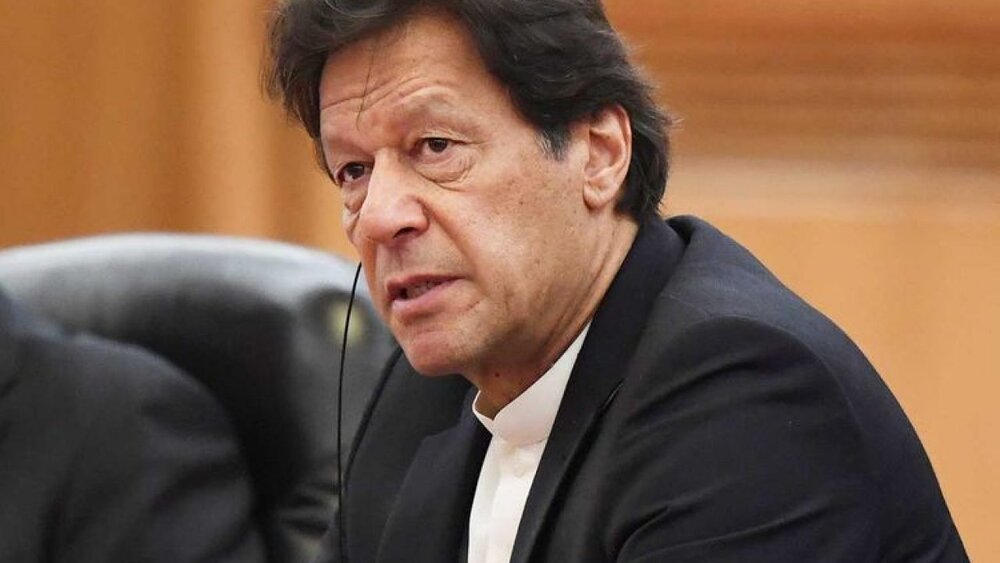
Imran Khan, the Pakistani prime minister, was scheduled to visit Riyadh on a one-day trip on Saturday as part of continued efforts to mediate between Iran and Saudi Arabia, Pakistan Today reported on Friday.
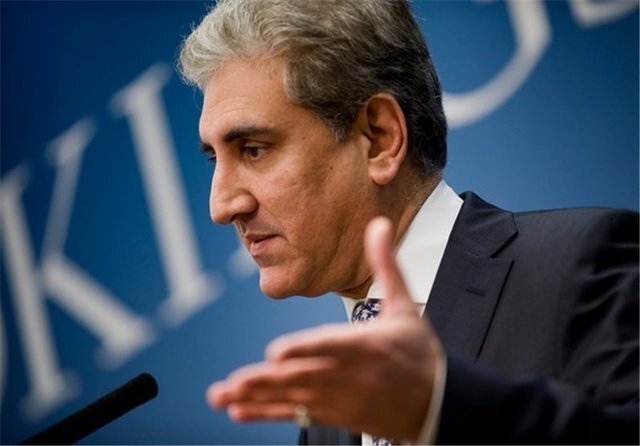
Pakistani Foreign Minister Shah Mahmood Qureshi, accompanied by the head of Inter-Services Intelligence (ISI), visited Riyadh on Wednesday and is believed to have laid the ground for the premier’s visit, the newspaper reported.
This would be Prime Minister Imran’s fourth visit to Saudi Arabia since May.
Khan visited Tehran on October 13 to “facilitate” possible dialogue between Iran and Saudi Arabia which have been at loggerheads over a number of issues including the Saudi war on Yemen and Riyadh’s support for the U.S. President Donald Trump’s anti-Iran moves.
Khan met with Leader of the Islamic Revolution Ayatollah Ali Khamenei and President Hassan Rouhani.
Qureshi has said that Iran and Saudi Arabia should bridge differences.
In an interview with Aaj News in October, Qureshi said that Pakistan will continue efforts in line with reducing tension in Iran-Saudi Arabia relations.
UN spokesman Stephane Dujarric has said that Antonio Guterres, the UN secretary-general, welcomes Khan’s initiative to de-escalate tensions between Iran and Saudi Arabia.
On October 12, the Iranian Foreign Ministry said Tehran is ready for talks with Saudi Arabia with or without a mediator.
During a joint press conference with Khan in Tehran on October 13, Rouhani, without mentioning Saudi Arabia, suggested that Iran will give a positive response to “good intention”.
Rouhani said Iran “welcomes efforts by the Pakistani prime minister to settle tensions in the region” and “restore peace and stability”.
During a separate meeting with Khan, Ayatollah Khamenei said that ending the war on Yemen will have positive effects on the Middle East region.
The Leader said, “The Islamic Republic of Iran presented a four-point plan to end the war in Yemen a long time ago and if this war ends in the right way, it can have positive effects on the region.”

Tuesday, October 29, 2019

S. Arabia seeks to wreak havoc, ease tensions with Iran concurrently

S. Arabia seeks to wreak havoc, ease tensions with Iran concurrently

Tehran, IRNA – A foreign policy analyst says Saudi Arabia was taking vicious steps while trying to ease tensions with Iran, noting that the Saudis know that the dialogue process with Iran can be lengthy. Therefore, in addition to their efforts to negotiate with Iran, they are also taking measures to weaken Iran's position.
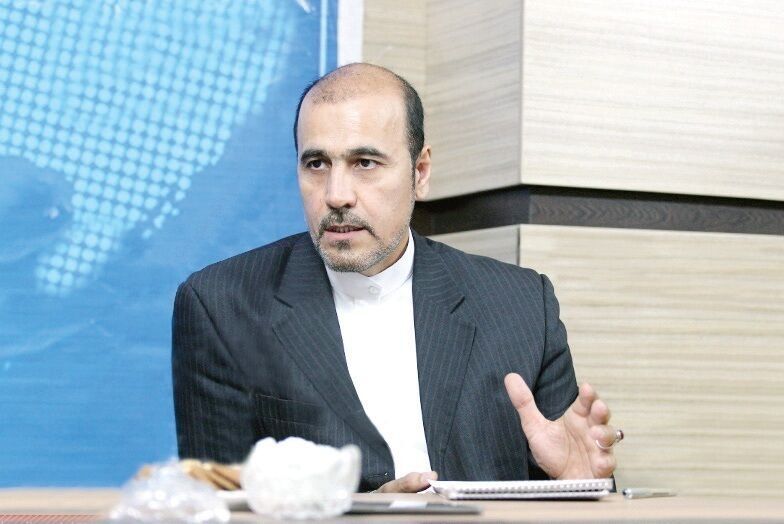
In an interview with IRNA about Saudi Arabia and the United Arab Emirates' approach to reducing tensions with Iran and simultaneously making accusations against Tehran, Amir Mousavi said both Saudi Arabia and UAE are serious about reducing tensions with Iran. In recent weeks, we have witnessed mediation and requests from the Iraqi and Pakistani prime ministers to ease tensions with Iran.
He stated that the role of Imran Khan in reducing tensions between Tehran and Riyadh is not just for mediation, stressing that the role of the Pakistani Prime Minister is more than mediation, and in fact, his role is to guarantee and validate possible agreements between Iran and Saudi Arabia. However, Riyadh faces two external and internal problems to reduce tensions with Tehran.
The Saudi external problems to ease tensions with Iran is their dependence on the United States and Israel, which will not allow Riyadh to do so, the expert said. As soon as Imran Khan traveled to Tehran to talk to Iranian officials and ease tensions with Riyadh, the United States announced it would send Saudi Arabia two billion dollars, several thousand troops and a number of fighters, ships and missiles to confront Iran.
Describing Saudi Arabia's internal barriers and challenges to reducing tensions with Iran, Mousavi reiterated that within the House of Saud, we are witnessing clandestine rivalries that do not want Mohammed bin Salman to succeed and would like him to remain in the quagmire he is grappling with it. In fact, there is a shadow government in Riyadh that does not support the improvement of Iranian-Saudi relations by Mohammed bin Salman and wants the Saudi crown prince to remain in the swamp.
Saudi Arabia has failed in Syria, Lebanon, Iraq and Yemen, Mousavi said, pointing out that Muhammad bin Salman has failed in all of his projects. Even Mohammed bin Salman has failed to establish a strategic relationship with Trump, and we have seen repeated insults and humiliations by the US president. Meanwhile, Saudi Arabia is not in good position after the attacks on Aramco and Najran.
The foreign policy analyst went on to say that Mohammed bin Salman and the Saudi government have lost their regional popularity, and the money they paid to hire others is no longer working, and the forces that are hitting Iran and the axis of resistance in other countries backed Saudi Arabia, are now in the weaken positions.
Mousavi said that Saudi Arabia would have to reduce tensions with Iran to get out of the current quagmire and underlined that reducing tensions with Iran would be a great success for Mohammed bin Salman. So the Saudi government is trying to negotiate with Iran because it knows that any confrontation with Iran and the axis of resistance is not in their interest. They can strike, but the result is not desirable for them, and it will yield nothing but defeat.
The Saudis know that the process of negotiating with Iran can be lengthy, he said, noting that Saudi Arabia is taking evil measures against Iran while trying to ease tensions with it. Therefore, in addition to their efforts to negotiate with Iran, they are also taking measures to weaken Iran's position. If by then negotiations with Iran have been finalized, they will stop theses disrupting measures, but if not, they will restore to such measures to have an upper hand in negotiation with Iran.
The recent developments in Lebanon and Iraq are an example of Saudi evils aimed at weakening the axis of resistance and chaos in Iran's friendly countries, the expert added.
Mousavi noted that Iran was aware of this Saudi Arabia's strategy and double-layer game and went on to say that the reason for the Saudi mischief is that they are now in a losing position and have no trump cards. Being present at the negotiating table with Iran is also a sign of surrender and failure, and they do not like it. So by taking such measures, they want to be in a better position in negotiation.
Referring to the UAE's approach to reduce tensions with Iran, Mousavi highlighted that the UAE is ahead of Saudi Arabia in improving relations with Iran, and has taken practical measures in the form of a silent light to improve relations with Iran. They left Yemen and took steps to improve bilateral relations.
Despite these positive actions by the UAE, Abu Dhabi is making shenanigans against Iran, the foreign policy analyst went on to say. They had strong present at the Manama Conference and active in the Iranophobia project. Their footprints are also evident in Lebanon and Iraq.
Mousavi emphasized that Iran should be able to calm Saudi Arabia and the UAE further and attract them, saying that reducing the tension of Riyadh and Abu Dhabi with Tehran is in the interest of the region, the axis of resistance and Iran because they are, however, part of the Islamic world and unfortunately the two countries are overwhelmed by mercenaries and dependence on the United States and, more recently, Israel, and have been so persuaded that their dependence on the West causes them to be devoured by Iran.
He explained the reason why Saudi Arabia and the United Arab Emirates had changed their approach to talks with Iran and noted that they have realized that they cannot count on the US in sensitive situations, and this has led them to think about reducing or at least managing tension with Iran. They fabricated coalitions against Iran and were also praised, but in effect received no results. Saudi Arabia suffered the most damages in the attacks on Aramco, and was only verbally supported.
The expert concluded that they saw that neither the US weapon nor the US was working for them, and they saw that the US was not willing to endanger even the life of one soldier for them, giving only expensive and useless weapons so they were ready for dialogue but this readiness and change of attitude is not because of friendship and benevolence, but because of Iranian authority and distrust of the US and the West.

Sunday, October 20, 2019

Tehran, Riyadh's steps to de-escalate tensions

Tehran, Riyadh's steps to de-escalate tensions TEHRAN, (MNA) – Past tensions between Iran and Saudi Arabia in recent days have been replaced by positive signals for engagement and negotiation; the signs are evident in the speeches and statements of the Islamic Republic of Iran and Saudi Arabia’s officials.

According to a report by IRNA, After years of tension and disagreement in various fields between Iran and Riyadh, there are now positive and promising signs from the authorities of two sides.
Rejection of war with Iran by Saudi Crown Prince Mohammed bin Salman and emphasis on the effectiveness of diplomatic relations with Iran indicates a clear shift in the position of Saudi leaders.
The readiness of some regional actors such as Iraqi Prime Minister Adil Abdul-Mahdi and Pakistani Prime Minister Imran Khan to mediate between Iran and Saudi Arabia also shows that they hope to find a peaceful resolution of the Tehran-Riyadh disputes. 
In addition, Iranian Government Spokesman Ali Rabiei recently revealed Saudi Arabia's message to Tehran, which Saudi Arabia had their own interpretation for their domestic public opinion and foreign allies.
For instance, Saudi Minister of State for Foreign Affairs Adel al-Jubeir wrote oh his twitter that what Iranian Government Spokesman said was not accurate about the message of Saudi Arabia to Iranians. What happened is that some countries were trying to reduce the tension; we also told them that Saudi Arabia was constantly trying to create security and stability in the region.
The Islamic Republic of Iran, which has always sought to improve its relations with neighboring and regional countries, such as Saudi Arabia, continues to emphasize its approach in the current situation.
In this regard, Iranian Foreign Minister Mohammad Javad Zarif told Turkey's TRT World that Iran has always been ready to negotiate on all issues with Saudi Arabia. It is Iran’s neighbor. There is no choice but to talk to each other. Negotiation with Saudi Arabia can be direct or through mediation. Iran never rejects mediation.
Iran's peace plan, named Hormuz Peace Endeavor (HOPE), proposed by President Hassan Rouhani at the annual meeting of the UN General Assembly this year in early September, showed the importance of endogenous security to achieve peace in the region.
Addressing the UN General Assembly session, Rouhani described ensuring security, peace, stability, and progress in the Persian Gulf and Strait of Hormuz as Iran’s historical responsibility and invited all countries that are affected by the Persian Gulf and Strait of Hormuz developments to join the Hormuz Peace Endeavour (HOPE) initiative.
The Initiative is based on the fact that all regional states are duty-bound to ensure peace, stability, and prosperity in the region. They along with the global community have common interests in maintaining freedom of navigation and transfer of energy. HOPE is designed to include all countries of the region and aims to expand cooperation beyond regional security.
The Initiative promotes solidarity, mutual understanding and peaceful and friendly relations and cooperation among regional states as well as boosting collaboration in uprooting terrorism, extremism, and sectarian tensions and making sure about energy security, freedom of shipping and free flow of oil are among the objectives of the initiative.
Rouhani's Initiative came days after Yemen's missile strikes on Saudi Aramco facilities inflicting heavy cost on the Saudis. In this regard, some of Iran's enemies sought to exert pressure on Iran by taking advantage of this incident and claiming that Tehran was responsible for the attack.
Nearly a month after the Aramco attacks, US President Donald Trump is still seeking to take the most advantage of the attack for his multi-purpose goals, such as isolating and pressuring Iran, increasing disparities in the region, especially between countries of the Persian Gulf and the Oman Sea, sending American weapons to these countries, justifying military presence and intervention in the region, and so on.
The US Secretary of Defense Mark Esper said on Friday 19 October that US has approved the deployment of 3,000 additional troops and military hardware to Saudi Arabia, boosting the country's defense capability after attacks on its oil installations. He authorized the deployment of two more Patriot missile batteries, one THAAD ballistic missile interception system, two fighter squadrons, and one air expeditionary wing, according to Pentagon statement.
Observers believe that the sale of military equipment and weapons, along with the significant US military presence in Saudi Arabia, will be used to militarize the region and bring the money of selling of the Saudi Arabian oil products to the United States. The danger that has even caught the attention of congressmen, who have repeatedly protested the effects of Trump's greed for weapons sales and stood in front of the president, but have so far failed to succeed.

Wednesday, October 16, 2019

Pakistani FM says Iran, Saudi Arabia should bridge differences

Pakistani Foreign Minister Shah Mehmood Qureshi has said that Iran and Saudi Arabia should bridge differences.
In an interview with Aaj News, he said that Pakistan will continue efforts in line with reducing tension in Iran-Saudi Arabia relations, ISNA reported on Tuesday.
Pakistan’s Prime Minister Imran Khan visited Tehran on Sunday to “facilitate” possible dialogue between Iran and Saudi Arabia which have been at loggerheads over a number of issues including the Saudi war on Yemen.
He met with Leader of the Islamic Revolution Ayatollah Ali Khamenei and President Hassan Rouhani.
Khan was scheduled to visit Saudi Arabia on Tuesday.
The Pakistani prime minister visited Iran as the tension in the region is getting more complicated. On Friday morning, an Iranian oil tanker was struck by two missiles in the Red Sea, 60 miles away from Saudi coastlines.
Khan has said that he is making an effort to reduce tension between Tehran and Riyadh. Prior to the Sunday visit to Tehran, he held talks with Saudi Arabia’s leaders in Riyadh as well as Rouhani at the United Nations in September.
On Saturday, the Iranian Foreign Ministry said Tehran is ready for a talk with Saudi Arabia with or without a mediator.
During a joint press conference with Khan, Rouhani indirectly referred to Saudi Arabia by saying that Iran will give a positive response to “good intention”.
“Iran welcomes good intention and efforts by the Pakistani prime minister to settle tension in the region to restore peace and stability to the region,” he said.
During a separate meeting with Khan, Ayatollah Khamenei, Leader of the Islamic Revolution, said that ending the war in Yemen will have positive effects on the Middle East region.
“The Islamic Republic of Iran presented a four-point plan to end the war in Yemen a long time ago and if this war ends in the right way, it can have positive effects on the region,” the Leader said. 
He described peace and security in West Asia as very “sensitive” and “important” and expressed regret over certain regional countries’ “destructive” role in supporting terrorist groups in Iraq and Syria and causing war and bloodshed in Yemen.
The Leader added, “We have no motivation for animosity with these countries, but they are influenced by the United States and act against the Islamic Republic of Iran in line with the United States’ will.”
Deputy Chairman of Parliament’s National Security and Foreign Policy Committee Kamal Dehghani Firouzabadi has said that there are promising signs in revitalizing ties between Tehran and Riyadh.
In an article published by IRNA on Monday, he said it seems that the future of relations has become more promising.
“We can point three signs in this respect. First is negotiations on Hajj [in August] which were held without impediment and reached maximum results. The second is direct talks between Iranian and Saudi oil ministers [in October] during which the officials called each other ‘friend’ despite the tension in past years…The third, and most important one, is Saudi Arabia’s call for mediation,” he wrote.
However, he said that there are still some “worries” and “concerns”.
“Undoubtedly, certain regional players, with the Israeli regime at the head of them, will never tolerate de-escalation. Even the United States can tale the same position as Israel because the continuation of tension in the Middle East will be a profitable market for Washington to sell weapons,” he opined.
Saudi Crown Prince Mohammed bin Salman said in an interview with CBS’s 60 Minutes program aired on September 29 that he preferred a peaceful resolution with Iran, describing it as “much better than the military” option.

Tuesday, October 15, 2019

Why does Trump beg mediators?

By Ehsan Baqeri

TEHRAN - According to a Pakistani source, Prime Minister Imran Khan will travel to Iran and Saudi Arabia to mediate between Tehran and Riyadh. 
Also during their meeting on the sidelines of UN General Assembly in New York in late September, Khan accepted Trump’s request for mediation between Tehran and Washington. 
In addition to Islamabad, Trump has asked other actors such as Doha, Baghdad, Ankara, Tokyo, and Washington’s allies to make every effort regarding the mediation. 
What has really happened to the U.S. foreign policy? Has Trump – given his particular personality- become well aware of Iran? Has the major American goal of “transforming Iran’s political system” changed? The answer would be definitely no!
The truth is that events, such as the dismissal of National Security Adviser John Bolton and Trump’s constant efforts to negotiate with Iran, originate from a disaster in examination of U.S. foreign policy and Washington’s frustration with Iran. What prompts Trump to negotiate with Iran is not a change in strategy or approach by the U.S. government, but rather it is a strategic necessity that Trump is dealing with. 
Trump knows that he is deeply mistaken in examining the costs and interests of maximum pressure strategy against Iran. In such a situation, our diplomacy and foreign policy should maintain Trump’s frustration against Iran as an achievement. 
Trump knows that any agreement with Iran (and its magnification by U.S. news media) can pave the way for his victory in the next year’s presidential election. A sharp decline in Trump’s popularity over the swing states, such as Ohio, Florida, Pennsylvania, and Wisconsin has shocked the U.S. president. One of Trump’s weaknesses in American citizens’ view is his failed and unbalanced foreign policy. Trump assumed that the dismissal of Bolton can solve this problem by itself, but the result of polls indicates that Americans believe that the White House’s foreign policy is disappointing and costly. Today, Trump begs potential mediators from the region, East Asia, and Europe for negotiation with Iran. It is because on the one hand he cannot afford the great costs of Iran’s military reaction, and on the other he sees himself only a few steps away from failure in the 2020 election. The best plan at the moment is to maintain or even increase Trump’s need for an agreement with Iran. Now, it is the time for Trump to see the consequences of three-year confrontation with Islamic Republic of Iran! 

Monday, October 14, 2019

Iran will give positive response to good intention, Rouhani says as Pakistan PM seeks to heal Tehran-Riyadh rifts

PM Imran Khan: “We believe we can solve differences through dialogue”

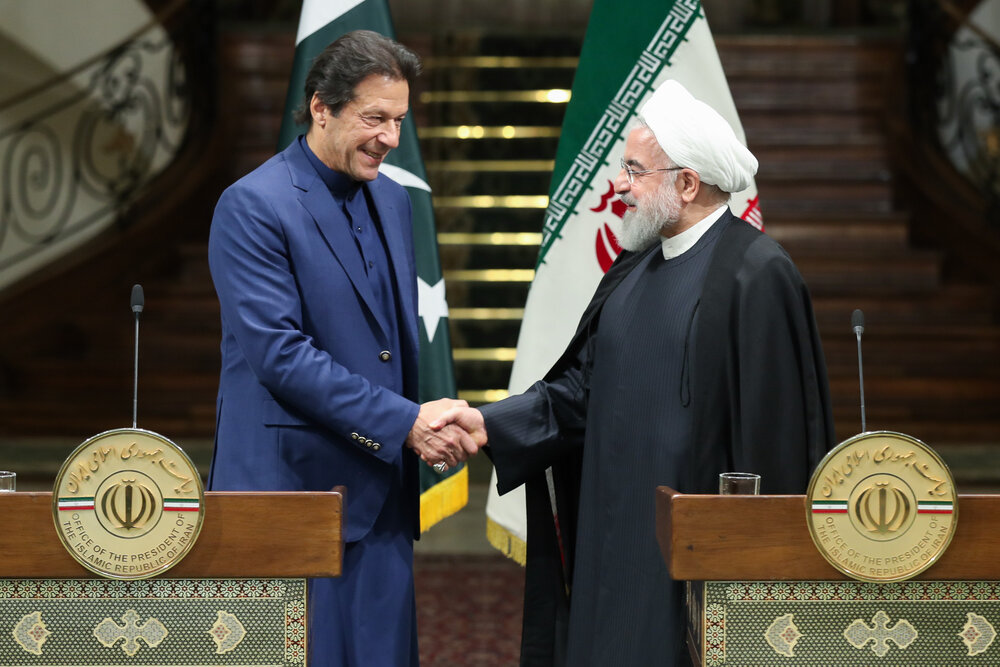
TEHRAN – President Hassan Rouhani said on Sunday that Iran will give positive response to “good intention” as Pakistani Prime Minister Imran Khan visited Tehran on Sunday in efforts to “facilitate” possible dialogue between Iran and Saudi Arabia whose relations have been cut and been caught in a kind of conflict over a series of issues, mainly the Saudi war on Yemen.
“Iran welcomes good intention and efforts by the Pakistani prime minister to settle tension in the region to restore peace and stability to the region,” Rouhani said during a joint press conference with Khan.
Rouhani added that Tehran and Islamabad share the view that regional issues should be settled through dialogue.
For his part, Khan said that any new conflict will be harmful to the regional people.
“The people in the region, especially in Afghanistan and Syria, are still suffering from the consequences of terrorism. So, there must not be a new conflict,” the prime minister insisted.
He noted that there must not be a clash between Iran and Saudi Arabia, because its consequences will influence the entire region.
“We believe that we can solve differences through dialogue,” the prime minister pointed out.
Khan said it is an initiative by Pakistan itself to resolve conflicts between Iran and Pakistan.
“Pakistan is not a mediator between Iran and Pakistan. It only wants to play the role of facilitator between the two countries.”
Pointing to his visit to Saudi Arabia on Tuesday, Khan said that he will introduce Pakistan’s initiatives on peace and stability and an end to differences and tensions.
He also said the main motive behind his visit to Iran is that “Pakistan, under no circumstances, does not like to see another war in the region.”
 
Khan’s visit to Tehran took place two days after missile attacks on an Iranian oil tanker in the Red Sea, 60 miles away from the Saudi port city of Jeddah. Suspicious attacks on commercial ships in the Sea of Oman in June and July also unnerved countries in the region and beyond.
Rouhani said, “It will be a big mistake if a country imagines that it can cause insecurity in the region without receiving a response.”
The Iranian president added, “The Middle East region, especially the Persian Gulf and the Sea of Oman, is a very sensitive region in the world. So, we discussed maintaining stability and long-lasting peace in the region in our talks.”
Elsewhere, Rouhani said, “Pakistan’s prime minister noted that the key to settle issues is ending the war in Yemen and immediately helping the Yemenis, and this can be a very good start.”
Khan also told reporters that during this participation at the UN General Assembly in New York in September he was asked by U.S. President Donald Trump to mediate between Tehran and Washington. 
Before talks of mediation between Iran and the U.S. in the press conference by Khan, Rouhani said Iran has informed Pakistan about Tehran’s position on the 2015 nuclear deal and elaborated on the ways that the United States can return to the deal and lift sanctions. 
Rouhani reiterated Tehran’s stated position that the U.S. sanctions on Iran are instance of “economic terrorism”.
Iran has clearly reminded officials in the White House that any dialogue between Iran and the United States in entirely dependent on the lifting of sanctions on Iran and Washington’s return to the JCPOA, the official name for the nuclear agreement.
Rouhani calls Iran-Pakistan ties “strategic”
On relations between Iran and Pakistan, Rouhani said the relationship between the two neighboring is “strategic”.
Khan also said, “The Islamic Republic of Iran has always been a friendly neighbor to Pakistan and has always supported Pakistan in difficult time.”
He also praised Iran’s supports for the people of Kashmir.

Sunday, October 13, 2019

Ending war in Yemen will have positive effects on region: Ayatollah Khamenei

TEHRAN - Leader of the Islamic Revolution Ayatollah Ali Khamenei said on Sunday that ending war in Yemen will have positive effects on the Middle East region.
“The Islamic Republic of Iran presented a four-point plan to end war in Yemen a long time ago and if this war ends in a right way, it can have positive effects in the region,” Leader said during a meeting with visiting Pakistani Prime Minister Imran Khan.
The Leader described peace and security in West Asia as very “sensitive” and “important” and expressed regret over certain regional countries’ “destructive” role in supporting terrorist groups in Iraq and Syria and causing war and bloodshed in Yemen.
He added, “We have no motivation for animosity with these countries, but they are influenced by the United States and act against the Islamic Republic of Iran in line with the United States’ will.”
Elsewhere in his talks with Prime Minister Khan, Ayatollah Khamenei said Iran has never initiated a war “but if anyone starts a war against Iran will undoubtedly regret.” 
In April 2015, Iranian Foreign Minister Mohammad Javad Zarif submitted a letter to Ban Ki-moon, then UN secretary general, outlining Iran’s four-point peace plan for Yemen.
The plan calls for an immediate ceasefire and end of all foreign military attacks, humanitarian assistance, a resumption of broad national dialogue and establishment of an inclusive national unity government.
Elsewhere, Ayatollah Khamenei described Iran-Pakistan relations as brotherly and attached importance to expansion of ties and promotion of security in borders.
For his part, Khan called Iran and Pakistan brotherly countries and said that Islamabad seeks to expand relations with Iran.
Pakistan considers Iran an “important partner” especially in economic area, the prime minister said.

Sunday, September 01, 2019

Kashmir: A Conflict of Convenience

KAS2

We have all seen the news from the disputed Himalayan territory of Kashmir: barbed wire fences across streets, Indian troops patrolling, Pakistani troops threatening. The latest flare up in this never-ending conflict is being blamed on the diplomatic sophistry which made it a disputed territory to begin with: as it has been, so it is now, with all actors making the same points they always have.
But we are not dealing with quite the same actors. True, it is India and Pakistan pressing their standard historic claims to ownership of the territory in a melange of different terms, the most recent being the move to deprive the Indian-controlled part of its special constitutional status
But if we look at who is running India and Pakistan, we get to the heart of the current problem.
India’s Prime Minister is Narendra Modi, an entrepreneur who has a great fondness for publicity, as his opponents keep reminding him. His political party, the BJP, is usually described as “Hindu Nationalist” but might more accurately be termed “Modi-ist”: unlike previous BJP leaders, even ones well-knownbefore taking office he has made his party an extension of himself, his own personal characteristics becoming synonymous with the platform of the party.
Pakistan’s Prime Minister is Imran Khan, the cricket star (and thus national hero to Pakistanis) and former international playboy who has revelled in being in the eye of publicity all his life He has taken advantage of the eminence his family and looks offered him to conquer every world he has entered, as since he left cricket his capacity for garnering positive publicity is what has set him apart from rivals.
Plenty of celebrities have entered politics, but few have provoked their incumbent national government to declare that it was “not intimidated” by them doing so, before they had even announced a candidacy. Thus is the power of the publicity surrounding Imran, and it represents the main reason this aristocrat has come from nowhere to rule Pakistan on a “populist” platform which sounds very similar to non-populist ones, when expressed by someone else.
Both men know that war sells newspapers. Like Kirk Douglas in the Billy Wilder film Ace in the Hole they know the personal rewards of spinning a story people want to hear,as the consumers of such stories are less interested in reality than sensation. This is one of the reasons Kashmir has always been disputed territory, when the dispute could have been resolved: it has given both sides an excuse to fan their domestic support through real or threatened conflict, which is what created the separate states of India and Pakistan in the first place.
So who benefits from the Kashmir conflict? Both India and Pakistan. It brings them both into the media spotlight for the reasons they would want, and gives them time to fix their other problems, if that can be done, before the clouds of suspicion hanging over both states start to weigh them down again.
Back in the parade
India currently faces challenges because it is like Modi – full of talk of its achievements, but not recognising that the reality doesn’t quite match. It may still be the big emerging superpower, but not much of that has got down to the majority of its population – one of the reasons the BJP, with its more visceral appeal to the majority of the population, comprehensively won the last election at the expense of the “Champagne Socialist” Congress Party, now seen as out of touch and elitist.
India ticks a number of boxes the world wants it to tick. The problem is that this no longer matters as much as it used to. China is even more of an emerging power, if it hasn’t already emerged. New Delhi can no longer play honest broker between its traditional Western and Soviet friends because the West doesn’t want to grant it such importance, and is increasingly demanding that each ally chooses one over the other. It can no longer offer the West a foothold in a region often in turmoil, as the West won’t need one for as long as it keeps selling everything to the Chinese.
Pakistan was created as a separate state to keep India in its place. Colonial powers do not like granting their former colonies independence on equal terms, as they then have to start treating them as equals. Pakistan was carved out of British India as the separate state of the Muslim minority, in an attempt to portray independence as being imposed upon the people, by Hindu rebels who did not care about the interests of their non-Hindu neighbours.
How much the West actually cared about the Muslim minority was seen in the fact that Pakistan was an unworkable state, the Muslim majority areas being on opposite sides of British India? This solution was bound to cause conflict, and this eventually led to East Pakistan gaining its independence as Bangladesh with Indian assistance, and enduring mass poverty with it
Pakistan was there to be the regional bad boy, to stop India getting above itself. The religious difference between the two countries was played for all it was worth by Western countries who never recognised it in colonial days.
But who needs bad Muslims now? There are so many terrorist groups around claiming to be “Muslim fundamentalists” that a functioning Muslim state is almost treasonous, in Western thinking. There are too many other Muslim bad boys around to threaten countries which step out of line.
Pakistan has other dimensions but has not been able to use them to its advantage because no one thinks about the country in that way. It has found itself isolated by not fulfilling its traditional role, not because it has no friends. It needs to be all the things it was created to be to regain the influence it once had, Imran Khan or no Imran Khan.
Every man’s no man’s land
In this context, the latest Kashmir Valley dispute makes perfect sense. India needs to be at the forefront of global progressive movements, Pakistan needs to restore its status as the contrary irritant to India. Modi and Khan may not have deliberately set out to go to war, but neither will make any serious effort to prevent it.
Kashmir is a disputed territory because the terms on which India and Pakistan became independent states gave both sides a claim to it. A former princely state, it had been purchased from the British in 1846 and was ruled by a Sikh maharajah, Hari Singh, independently in practice but under the ultimate authority of the British.
As it had a clear Muslim majority, Kashmir should have joined Pakistan in 1947. However the decision lay with the maharajah, who hesitated to do this because many of his Muslim subjects were not happy with the idea. Pakistan thus tried to force the issue with guerrilla raids. These prompted Hari Singh to ask the last British Viceroy of India, Lord Mountbatten, for protection.
Mountbatten insisted that he would send support if the maharajah gave Kashmir to India. After Indian soldiers cleared out most of the guerrillas, the UN was called in and promised a referendum on the future status of the state. As this has never been held, both countries claim the whole of Kashmir as their own – and to keep them both honest, a small part of it belongs to China, thus preventing either India or Pakistan from taking control of the whole area they claim anyway.
Since then India and Pakistan have fought four wars over Kashmir, and the Chinese incursion also led India to war with China. The majority of the population is still Muslim, but most of the Muslims are in Indian-controlled areas. Pakistan controls a portion of the old princely state, which has been divided into two de facto provinces. But in a typical British compromise, the Indian part has until now been given wide autonomy under India’s constitution – which gives the region a “special status”, but does not allow the Kashmiri Muslims to be part of the Muslim state the British insisted on establishing for people like them.
The Muslim Kashmiris are dissatisfied, wanting either integration with Pakistan or independence. India is dissatisfied with Article 370 its own constitution, because Kashmiri autonomy is seen as having promoted discrimination. Under that article, Kashmir can make its own laws in most areas, and this has meant that property rights and citizenship are not available to outsiders, or (in many cases) women. This is not the case in India itself, but the consequence of autonomy granted with the best of motives.
Autonomy only works if the autonomous get a better deal, and the rest of the country can live with that. If it makes people feel worse off, but they can’t decide which daddy to run to, it will ensure conflict simmers but never goes away. As we have seen in many other disputed territories, the argument is more valuable than the winning of it for most of the people, most of the time – a triumph of democracy, in other words.
Brothers in each other’s arms
India wants to be seen as progressive to retain its seat at the top table with the trendsetting countries. Kashmir’s policies are anathema to current Western thinking, and therefore unacceptable to India. Nor do they protect the Muslim population there from assimilation, but rather cut them off from Pakistan whilst leaving them as unequal non-citizens of India. So something has to give, but both India and Pakistan are merely exploiting the situation, not encouraging any resolution.
Modi knows very well that Islamabad cannot accept a solution in which the Indian part, Jammu and Kashmir, is divided into two union territories directly controlled from New Delhi. Of all the possible options, this is the one which is most likely to cause conflict, even though it is reasonable from an Indian point of view: if India wants to be progressive, it needs to show it will impose modern values from the top down, given the “backward” instincts of the locals who allowed the discrimination to happen.
Imran Khan also knows very well that New Delhi will not accept his pleas for dialogue over Indian territory. He may want the rest of the world to sanction India, but they are not going to do it for Pakistan.
India has resorted to the trick of claiming that terrorists from Afghanistan have entered Jammu and Kashmir, thus giving it an excuse not to talk by putting all Muslims beyond the pale. Pakistan is no use as the good guy, because accepting the notion of a decent Muslim nation would derail decades of carefully lain Western policy. So it has to be the bad guy, even though it can’t do that either with any credibility, assuming it would want to.
How Modi and Khan must long for the good old days, when both countries were poverty stricken and war was a way of life. India was the poor bedraggled ally which could get away with begging for Soviet assistance because of it. Pakistan was an ally because it was a big stick to use against India.
Western help made India a nuclear power, then Pakistan joined the club with the same Western assistance, despite the history of conflict between the two countries. The excuse given was that if the Soviets made them nuclear powers they would fall out of Western influence. In fact it solved every problem by forcing these combatants to become generally friendly, but still capable of conflict at any moment: still in their places, their traditional roles reinforced without the need for all the guns.
Time has seen India and Pakistan become more self-reliant, if not prosperous. The old paradigm doesn’t work anymore. But the rest of the world won’t accept these countries any other way. So it’s back to the war games so that they can reinvent their old roles in a blaze of international publicity – and if more powerful countries don’t like it, ultimately they only have themselves to blame.

Seth Ferris, investigative journalist and political scientist, expert on Middle Eastern affairs, exclusively for the online magazine “New Eastern Outlook”.

Wednesday, August 21, 2019

Pakistan PM Imran Khan Calls on World to Pay Attention to India's "Fascist, Racist Hindu Supremacist Ideology and Leadership"

Indian PM Narendra Modi reportedly rejected the comparison in a Monday phone conversation with US President Donald Trump


by
Pakistani Prime Minister Imran Khan, pictured in Beijing, China in November 2018, called on the world Sunday to watch neighboring India's right-wing tilt.
Pakistani Prime Minister Imran Khan, pictured in Beijing, China in November 2018, called on the world Sunday to watch neighboring India's right-wing tilt. (Photo: Thomas Peter-Pool/Getty Images)
Pakistani Prime Minister Imran Khan on Sunday likened the Indian government to that of Nazi Germany in comments that represented the latest escalation in tensions between the two rivals that have been sent into overdrive over the disputed territory of Kashmir since India invaded the region in early August.
"India has been captured, as Germany had been captured by Nazis, by a fascist, racist Hindu Supremacist ideology and leadership," tweeted Khan. "This threatens 9 million Kashmiris under siege in [India-Occupied Kashmir] for over two weeks which should have sent alarm bells ringing across the world with U.N. Observers being sent there."
India has been captured, as Germany had been captured by Nazis, by a fascist, racist Hindu Supremacist ideology & leadership.This threatens 9m Kashmiris under siege in IOK for over 2 weeks which shd have sent alarm bells ringing across the world with UN Observers being sent there

28.4K people are talking about this

India's behavior, Khan said, was evidence of "the link between the Nazi ideology and ethnic cleansing and genocide ideology of the RSS-BJP Founding Fathers." 
RSS refers to the 93-year-old Rashtriya Swayamsevak Sangh, the Hindu nationalist paramilitary group that birthed Modi's ruling Bharatiya Janata Party (BJP).
Indian Prime Minister Narendra Modi told U.S. President Donald Trump Monday that Khan's tweets were a barrier to peace in the region.

Modi rejected Khan's comparison, according to India's News 18:
In a veiled attack at Imran Khan, PM Modi said certain leaders in the region were inciting anti-India violence which is not conducive to peace. He also highlighted the importance of creating an environment free from terror and violence and eschewing cross-border terrorism without exception, sources said.
India's takeover of Kashmir has resulted in an authoritarian crackdown, with military rule over the territory and the imprisonment of many political and activist leaders. 

2,810 people are talking about this

As Common Dreams reported on August 5, India's government voted to revoke Article 370 of the country's constitution, which recognized Kashmir's autonomy, paving the way for taking over the region:
Annexation of Jammu and Kashmir has long been a priority for the BJP and their Hindu nationalist allies; the revocation of Article 370 was a major part of the party's platform in its electoral victory earlier in 2019 which returned Prime Minister Narendra Modi to office for another term.
Control of the region has triggered two wars between India and Pakistan in recent decades. 

And, as reported by The New York Times on Saturday, Modi's government is preparing to take further steps to promote Hindu nationalist ideology by stripping the country's non-Hindu minorities of citizenship and placing them in planned detention camps.
The Modi government is intentionally targeting religious minorities as part of its strategy, Indian human rights activist Harsh Mander told the Times

"Muslims are the enemy," said Mander. "It's a war on the Indian Constitution."
In his tweets Sunday, Khan referred to Modi's detention plans for victims of the new policies as a dangerous precedent. 

"Already four million Indian Muslims face detention camps and cancellation of citizenship," said Khan. "World must take note as this genie is out of the bottle and the doctrine of hate and genocide, with RSS goons on the rampage, will spread unless the international community acts now to stop it."