Showing posts with label Mohammad Javad Zarif. Show all posts

Tuesday, December 10, 2019

West keeps mum on Israeli nukes but fumes at Iranian defenses

Russia’s mission to the United Nations said the US continually tries to demonize Iranian missile activities despite lack of any damning evidence against the Islamic Republic’s defensive activities, and while Washington itself is in default of several international non-proliferation agreements.
 Dmitry Polyanskiy also reminded how America left the Intermediate-Range Nuclear Forces (INF) Treaty with Moscow earlier this year, and was undermining efforts aimed at creating a West Asia region free of nuclear arms.
The following is a news report concerning this issue written by staff writers of Iran’s English language paper ‘Iran Daily’ under the heading: “West keeps mum on Israeli nukes but fumes at Iranian defenses.”
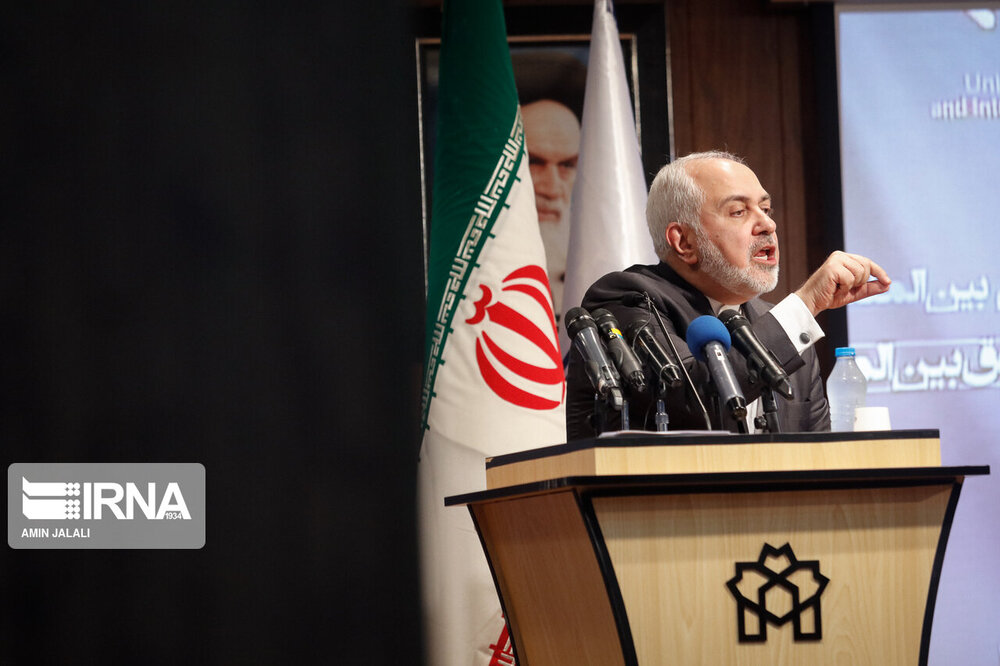
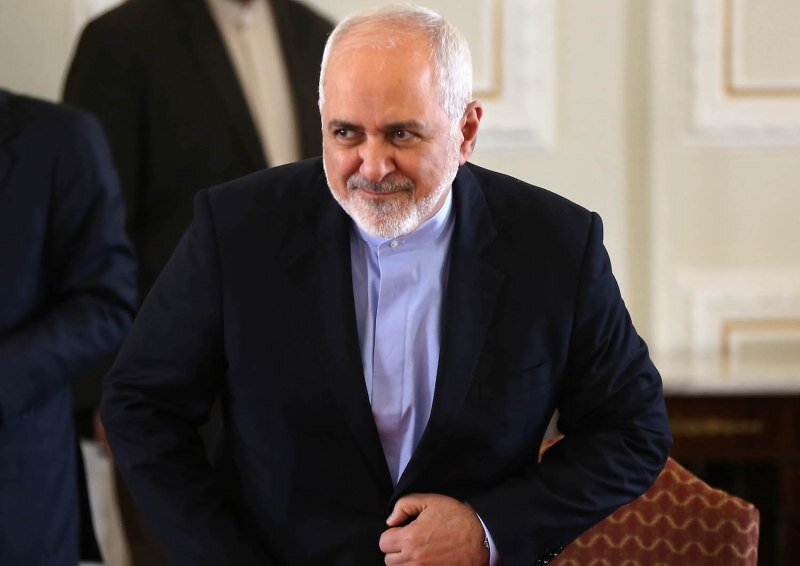
Iran’s Foreign Minister Mohammad Javad Zarif on Friday Dec. 06, took a swipe at the West for turning a blind eye to Zionist regime’s nuclear stockpile while criticizing Iranian missile defenses.
In a tweet, Zarif said Britain, France, Germany and the United States “never complain about” Israel’s nuclear missiles but are outraged at Iran over its “conventional and defensive” weapons.
Zarif wrote on Twitter “E3 & US never complain about the only nuclear arsenal in West Asia—armed with missiles actually designed to be capable of carrying nukes—but has fits of apoplexy over our conventional & defensive ones.”
The rebuke came after Zionist regime of Israel conducted a missile test recently, which Zarif described as a launch that “tested a nuke-missile, aimed at Iran”. Israel’s military remained conspicuously tight-lipped about the shadowy test of “the rocket propulsion system”.
Zarif’s comments came a day after the three European countries accused Iran of developing missiles capable of delivering nuclear warheads. UN ambassadors for Britain, France and Germany said in a letter to UN Secretary General Antonio Guterres that “Iran’s developments of nuclear-capable ballistic missiles” go against a UN Security Council resolution, urging Tehran not to undertake any activity related to such missiles.”
They claimed Iran’s actions were “inconsistent” with the missile provision in the Security Council resolution endorsing a 2015 nuclear deal with Iran. Zarif on Twitter also dismissed the letter as “a desperate falsehood”, saying the Europeans were covering up their own “miserable incompetence” at abiding by the nuclear deal and were “bowing to US bullying”.
It was an apparent reference to the Europeans’ inability to get around US sanctions, reimposed by US President Donald Trump, which have banned Iran from selling its crude oil overseas.
Zarif added: “If E3 want a modicum of global credibility, they can begin by exerting sovereignty rather than bowing to US bullying.” Iran has always denied allegations of planning to develop nuclear missiles and says its nuclear program is only for peaceful energy production and medical purposes.
The landmark 2015 nuclear deal gave Iran relief from economic sanctions in return for some limitations on its nuclear program. But it has been at risk of falling apart since Trump unilaterally withdrew from it in May last year and reimposed sanctions on Iran.
Meanwhile, Russia’s mission to the United Nations said the US continually tries to demonize Iranian missile activities despite lack of any damning evidence against the Islamic Republic’s defensive activities, and while Washington itself is in default of several international non-proliferation agreements.
Dmitry Polyanskiy, Moscow’s Chargé d’affaires to the world body, addressed the remarks to the UN Secretary-General Antonio Guterres in a letter dated November 26 that was made available on Friday Dec. 06.
He reminded that Iran was a signatory to many multilateral non-proliferation mechanisms, including the nuclear Non-Proliferation Treaty (NPT) and the 2015 nuclear deal – officially known as the Joint Comprehensive Plan of Action (JCPOA). 
Washington has, on numerous occasions, accused Tehran of developing nuclear-capable missiles, despite Tehran’s outright rejection of nuclear weapons of all type, and its observance of the JCPOA, which prohibits it from pursuing such armaments.
The Russian official also highlighted “the complete lack of evidence that Iran is developing or producing a nuclear weapon or means of its delivery or is deploying any infrastructure for the storage or servicing of nuclear weapons.” He further endorsed the Islamic Republic’s continued commitment to the nuclear deal as verified by Tehran’s “refraining from activities related to ballistic missiles that are designed to be capable of carrying nuclear weapons.”
Polyanskiy asserted: “Nor has the UN Security Council, which has endorsed the JCPOA in the form of Resolution 2231, received any “viable information to the contrary.” However, he stated that the US would keep trying to implicate Iran in nuclear arms-related activities by, among other means, citing the Missile Technology Control Regime (MTCR).
The envoy added this is while the MTCR is an informal political understanding between 35 states on export control issues, and could not be deployed as a universal legally binding instrument or used in the context of Resolution 2231 to try and incriminate Iran’s missile activities.
Polyanskiy added Washington was on the offensive against Iran, while itself left the JCPOA last year “in violation of Article 25 of the United Nations Charter,” and is now preventing other nations from implementing it. After leaving the deal, the White House revived its sanctions against Tehran, and also started pushing other JCPOA members into abiding by the American embargoes.
The Russian envoy also reminded how America left the Intermediate-Range Nuclear Forces (INF) Treaty with Moscow earlier this year, and was undermining efforts aimed at creating a West Asia region free of nuclear arms. He was referring to the frequent US use of its veto power at the UN in favor of Zionist entity of Israel, which is the sole nuclear armed regime in the region and has refused to join the NPT.

Wednesday, November 27, 2019

Analyst gives upbeat view about Pakistan Army Chief’s Iran visit

Analyst gives upbeat view about Pakistan Army Chief’s Iran visit

Tehran, IRNA – Last week visit of Pakistan's Chief of the Army Staff General Qamar Javed Bajwa to Iran is important for bilateral relations and to pave the way for military cooperation between Iran and Pakistan, said Mostafa Zandieh an Iranian senior analyst for South Asia affairs.
Relations between Iran and Pakistan in political, economic, defense and security fields are growing at a rapid pace and that will help remove misunderstandings if any in the bilateral relations.
The visit of Pakistan's senior military official to the Islamic Republic of Iran shows the plot of regional and transregional states for creating division between two friendly and brotherly countries has failed.
This is the second official visit of General Bajwa to Iran.
Heading a high-ranking military delegation, he paid a visit to the capital city of Tehran in November 2017 and met with Iranian President Hassan Rouhani and Iran's top commanders as well as Iran's Foreign Minister Mohammad Javad Zarif.
General Bajwa held talks with President Rouhani, Zarif, Chief of Staff of the Iranian Armed Forces Major General Mohammad Hossein Baqeri, Army Commander Major General Abdolrahim Mousavi along with Secretary of the Supreme National Security Council Ali Shamkhani.
In an interview with IRNA, Iranian senior analyst for South Asia affairsو Mostafa Zandieh said that General Bajwa has prioritized reducing regional tensions, particularly combating sectarianism.
He said that the visit of General Bajwa to Iran was in line with a plan for cooperation on defense as well as security areas.
He said that the regional situation of Afghanistan and Daesh (ISIS) that are considered as a threat to both Iran and Pakistan has been on the agenda of talks between the Iranian and Pakistani the top commanders.
Definitely the visit was a positive development, Zandieh added.
“There is no doubt about that any sort of visits by senior people especially the military commanders is very helpful in bringing solidarity among Muslim countries and between Iran and Pakistan,”.
“The border between Iran and Pakistan needs to be protected and we have to see that both countries cooperate to the maximum level so that militants who sometimes cross the border and disturb the peace, drug traffickers and others who have been damaging the interest of the two countries are prevented from doing so,” said the analyst.

Wednesday, November 20, 2019

Iran’s ‘Only Crime Is We Decided Not to Fold’

Foreign Minister Zarif sketches Iran-US relations for diplomats, former presidents and analysts
Pepe ESCOBAR
Just in time to shine a light on what’s behind the latest sanctions from Washington, Iranian Foreign Minister Mohammad Javad Zarif in a speech at the annual Astana Club meeting in Nur-Sultan, Kazakhstan delivered a searing account of Iran-US relations to a select audience of high-ranking diplomats, former Presidents and analysts.
Zarif was the main speaker in a panel titled “The New Concept of Nuclear Disarmament.” Keeping to a frantic schedule, he rushed in and out of the round table to squeeze in a private conversation with Kazakh First President Nursultan Nazarbayev.
During the panel, moderator Jonathan Granoff, President of the Global Security Institute, managed to keep a Pentagon analyst’s questioning of Zafir from turning into a shouting match.
Previously, I had extensively discussed with Syed Rasoul Mousavi, minister for West Asia at the Iran Foreign Ministry, myriad details on Iran’s stance everywhere from the Persian Gulf to Afghanistan. I was at the James Bond-ish round table of the Astana Club, as I moderated two other panels, one on multipolar Eurasia and the post-INF environment and another on Central Asia (the subject of further columns).
Zarif’s intervention was extremely forceful. He stressed how Iran “complied with every agreement and it got nothing;” how “our people believe we have not gained from being part of” the Joint Comprehensive Plan of Action; how inflation is out of control; how the value of the rial dropped 70% “because of ‘coercive measures’ – not sanctions because they are illegal.”
He spoke without notes, exhibiting absolute mastery of the inextricable swamp that is US-Iran relations. It turned out, in the end, to be a bombshell. Here are highlights.
Zarif’s story began back during 1968 negotiations of the Nuclear Non-Proliferation Treaty,  with the stance of the “Non-Aligned Movement to accept its provisions only if at a later date” – which happened to be 2020 – “there would be nuclear disarmament.” Out of 180 non-aligned countries, “90 countries co-sponsored the indefinite extension of the NPT.”
Moving to the state of play now, he mentioned how the United States and France are “relying on nuclear weapons as a means of deterrence, which is disastrous for the entire world.” Iran on the other hand “is a country that believes nuclear weapons should never be owned by any country,” due to “strategic calculations based on our religious beliefs.”
Zarif stressed how “from 2003 to 2012 Iran was under the most severe UN sanctions that have ever be imposed on any country that did not have nuclear weapons. The sanctions that were imposed on Iran from 2009 to 2012 were greater than the sanctions that were imposed on North Korea, which had nuclear weapons.”
Discussing the negotiations for the JCPOA that started in 2012, Zarif noted that Iran had started from the premise that “we should be able to develop as much nuclear energy as we wanted” while the US had started under the premise that Iran should never have any centrifuges.” That was the “zero-enrichment” option.
Zarif, in public, always comes back to the point that “in every zero-sum game everybody loses.” He admits the JCPOA is “a difficult agreement. It’s not a perfect agreement. It has elements I don’t like and it has elements the United Stares does not like.” In the end, “we reached the semblance of a balance.”
Zarif offered a quite enlightening parallel between the NPT and the JCPOA: “The NPT was based on three pillars: non-proliferation, disarmament and access to nuclear technology for peaceful purposes. Basically the disarmament part of NPT is all but dead, non-proliferation is barely surviving and peaceful use of nuclear energy is under serious threat,” he observed.
Meanwhile, “JCPOA was based on two pillars: economic normalization of Iran, which is reflected in Security Council resolution 2231, and – at the same time – Iran observing certain limits on nuclear development.”
Crucially, Zarif stressed there is nothing “sunset” about these limits, as Washington argues: “We will be committed to not producing nuclear weapons forever.”

All about distrust

Then came Trump’s fateful May 2018 decision: “When President Trump decided to withdraw from the JCPOA, we triggered the dispute resolution mechanism.” Referring to a common narrative that describes him and John Kerry as obsessed with sacrificing everything to get a deal, Zarif said: “We negotiated this deal based on distrust. That’s why you have a mechanism for disputes.”
Still, “the commitments of the EU and the commitments of the United States are independent. Unfortunately the EU believed they could procrastinate. Now we are at a situation where Iran is receiving no benefit, nobody is implementing their part of the bargain, only Russia and China are fulfilling partially their commitments, because the United States even prevents them from fully fulfilling their commitments. France proposed last year to provide $15 billion to Iran for the oil we could sell from August to December. The United States prevented the European Union even from addressing this.”
The bottom line, then, is that “other members of the JCPOA are in fact not implementing their commitments.” The solution “is very easy. Go back to the non-zero sum. Go back to implementing your commitments. Iran agreed that it would negotiate from Day One.”
Zarif made the prediction that “if the Europeans still believe that they can take us to the Security Council and snap back resolutions they’re dead wrong. Because that is a remedy if there was a violation of the JCPOA. There was no violation of the JCPOA. We took these actions in response to European and American non-compliance. This is one of the few diplomatic achievements of the last many decades. We simply need to make sure that the two pillars exist: that there is a semblance of balance.”
This led him to a possible ray of light among so much doom and gloom: “If what was promised to Iran in terms of economic normalization is delivered, even partially, we are prepared to show good faith and come back to the implementation of the JCPOA. If it’s not, then unfortunately we will continue this path, which is a path of zero-sum, a path leading to a loss for everybody, but a path that we have no other choice but to follow.”

Time for HOPE

Zarif identifies three major problems in our current geopolitical madness: a “zero-sum mentality on international relations that doesn’t work anymore;” winning by excluding others (“We need to establish dialogue, we need to establish cooperation”); and “the belief that the more arms we purchase, the more security we can bring to our people.”
He was adamant that there’s a possibility of implementing “a new paradigm of cooperation in our region,” referring to Nazarbayev’s efforts: a real Eurasian model of security. But that, Zarif explained, “requires a neighborhood policy. We need to look at our neighbors as our friends, as our partners, as people without whom we cannot have security. We cannot have security in Iran if Afghanistan is in turmoil. We cannot have security in Iran if Iraq is in turmoil. We cannot have security in Iran if Syria is in turmoil. You cannot have security in Kazakhstan if the Persian Gulf region is in turmoil.”
He noted that, based on just such thinking, “resident Rouhani this year, in the UN General Assembly, offered a new approach to security in the Persian Gulf region, called HOPE, which is the acronym for Hormuz Peace Initiative – or Hormuz Peace Endeavor so we can have the HOPE abbreviation.”
HOPE, explained Zarif, “is based on international law, respect of territorial integrity; based on accepting a series of principles and a series of confidence building measures; and we can build on it as you [addressing Nazarbayev] built on it in Eurasia and Central Asia. We are proud to be a part of the Eurasia Economic Union, we are neighbors in the Caspian, we have concluded last year, with your leadership, the legal convention of the Caspian Sea, these are important development that happened on the northern part of Iran. We need to repeat them in the southern part of Iran, with the same mentality that we can’t exclude our neighbors. We are either doomed or privileged to live together for the rest of our lives. We are bound by geography. We are bound by tradition, culture, religion and history.” To succeed, “we need to change our mindset.”

Age of hegemony gone

It all comes down to the main reason US foreign policy just can’t get enough of Iran demonization. Zarif has no doubts: “There is still an arms embargo against Iran on the way. But we are capable of shooting down a US drone spying in our territory. We are trying simply to be independent. We never said we will annihilate Israel. Somebody said Israel will be annihilated. We never said we will do it.”
It was, Zarif said, Benjamin Netanyahu who took ownership of that threat, saying, “I was the only one against the JCPOA.” Netanyahu “managed to destroy the JCPOA. What is the problem? The problem is we decided not to fold. That is our only crime. We had a revolution against a government that was supported by the United States, imposed on our country by the United States, [that] tortured our people with the help of the United States, and never received a single human rights condemnation, and now people are worried why they say ‘Death to America’? We say death to these policies, because they have brought nothing but this farce. What did they bring to us? If somebody came to the United States, removed your president, imposed a dictator who killed your people, wouldn’t you say death to that country?”
Zarif inevitably had to evoke Mike Pompeo: “Today the Secretary of State of the United States says publicly: ‘If Iran wants to eat, it has to obey the United States.’ This is a war crime. Starvation is a crime against humanity. It’s a newspeak headline. If Iran wants its people to eat, it has to follow what he said. He says, ‘Death to the entire Iranian people.’”
By then the atmosphere across the huge round table was electric. One could hear a pin drop – or, rather, the mini sonic booms coming from high up in the shallow dome via the system devised by star architect Norman Foster, heating the high-performance glass to melt the snow.
Zarif went all in: “What did we do the United States? What did we do to Israel? Did we make their people starve? Who is making our people starve? Just tell me. Who is violating the nuclear agreement? Because they did not like Obama? Is that a reason to destroy the world, just because you don’t like a president?”
Iran’s only crime, he said, “is that we decided to be our own boss. And that crime – we are proud of it. And we will continue to be. Because we have seven millennia of civilization. We had an empire that ruled the world, and the life of that empire was probably seven times the entire life of the United States. So – with all due respect to the United States empire; I owe my education to the United States – we don’t believe that the United States is an empire that will last. The age of empires is long gone. The age of hegemony is long gone. We now have to live in a world without hegemony. – regional hegemony or global hegemony.”
Nur-Sultan, Kazakhstan

Tuesday, October 22, 2019

Zarif says multilateralism has become a necessity

Unilateralism is “dangerous” and “doomed to failure”, Iranian FM notes
TEHRAN – Iranian Foreign Minister Mohammad Javad Zarif said on Monday that multilateralism has become a necessity in the world.
“In today’s world, the West cannot take all decisions for the international developments,” he said during a speech at a conference at Allameh Tabataba’i University.
He added, “Governments have come to the conclusion that they can neither solve their problems by themselves nor can they prevent others’ transgressive actions. So, they adopted multilateralism.”
Zarif also noted, “Governments cannot decide for the world unilaterally, because they have lost their monopoly over the international decision making.”
Zarif said that unilateralism is “dangerous” and “doomed to failure”.
‘No one can trust signature of the United States’
Zarif also said that no one can trust the signature of the United States, citing Washington’s withdrawal from international agreements, including the 2015 nuclear deal, as examples.
“The United States is following unilateralism without respecting the importance of international law. So, no one can trust the United States’ signature,” the chief diplomat remarked.
He said many countries that follow Washington’s policies have no choice because of the United States’ power. However, he added, countries have been starting to downgrade their relations with the U.S.
Pointing to the European Union’s special financial mechanism for trade with Iran, known as INSTEX, Zarif said the Europeans are trying to distance themselves from their ally.
“INSTEX may not have much value for us, however, the important point is that it has been for a year that the United States’ close allies are escaping from their biggest military ally through their slow and unacceptable methods (in implementing INSTEX). It means that the players do not accept to be under control of just one player who acts unpredictably and violates international law,” Zarif pointed out.
INSTEX – the Instrument in Support of Trade Exchanges - is a European special purpose vehicle aimed at facilitating legitimate trade between Europe and Iran.
The EU announced on June 28 that its special financial mechanism for trade with Iran, known as INSTEX, has gone into effect. However, Iran says the mechanism is far short of Iran’s expectation.
‘United States is addicted to sanctions’
Zarif also said that the U.S. is addicted to unilateral sanctions.
He said sanction is an instrument that an “individual, society or country uses to make others respect regulation” but the United States is using sanctions to “impose its own policies”.

Sunday, October 20, 2019

Tehran, Riyadh's steps to de-escalate tensions

Tehran, Riyadh's steps to de-escalate tensions TEHRAN, (MNA) – Past tensions between Iran and Saudi Arabia in recent days have been replaced by positive signals for engagement and negotiation; the signs are evident in the speeches and statements of the Islamic Republic of Iran and Saudi Arabia’s officials.

According to a report by IRNA, After years of tension and disagreement in various fields between Iran and Riyadh, there are now positive and promising signs from the authorities of two sides.
Rejection of war with Iran by Saudi Crown Prince Mohammed bin Salman and emphasis on the effectiveness of diplomatic relations with Iran indicates a clear shift in the position of Saudi leaders.
The readiness of some regional actors such as Iraqi Prime Minister Adil Abdul-Mahdi and Pakistani Prime Minister Imran Khan to mediate between Iran and Saudi Arabia also shows that they hope to find a peaceful resolution of the Tehran-Riyadh disputes. 
In addition, Iranian Government Spokesman Ali Rabiei recently revealed Saudi Arabia's message to Tehran, which Saudi Arabia had their own interpretation for their domestic public opinion and foreign allies.
For instance, Saudi Minister of State for Foreign Affairs Adel al-Jubeir wrote oh his twitter that what Iranian Government Spokesman said was not accurate about the message of Saudi Arabia to Iranians. What happened is that some countries were trying to reduce the tension; we also told them that Saudi Arabia was constantly trying to create security and stability in the region.
The Islamic Republic of Iran, which has always sought to improve its relations with neighboring and regional countries, such as Saudi Arabia, continues to emphasize its approach in the current situation.
In this regard, Iranian Foreign Minister Mohammad Javad Zarif told Turkey's TRT World that Iran has always been ready to negotiate on all issues with Saudi Arabia. It is Iran’s neighbor. There is no choice but to talk to each other. Negotiation with Saudi Arabia can be direct or through mediation. Iran never rejects mediation.
Iran's peace plan, named Hormuz Peace Endeavor (HOPE), proposed by President Hassan Rouhani at the annual meeting of the UN General Assembly this year in early September, showed the importance of endogenous security to achieve peace in the region.
Addressing the UN General Assembly session, Rouhani described ensuring security, peace, stability, and progress in the Persian Gulf and Strait of Hormuz as Iran’s historical responsibility and invited all countries that are affected by the Persian Gulf and Strait of Hormuz developments to join the Hormuz Peace Endeavour (HOPE) initiative.
The Initiative is based on the fact that all regional states are duty-bound to ensure peace, stability, and prosperity in the region. They along with the global community have common interests in maintaining freedom of navigation and transfer of energy. HOPE is designed to include all countries of the region and aims to expand cooperation beyond regional security.
The Initiative promotes solidarity, mutual understanding and peaceful and friendly relations and cooperation among regional states as well as boosting collaboration in uprooting terrorism, extremism, and sectarian tensions and making sure about energy security, freedom of shipping and free flow of oil are among the objectives of the initiative.
Rouhani's Initiative came days after Yemen's missile strikes on Saudi Aramco facilities inflicting heavy cost on the Saudis. In this regard, some of Iran's enemies sought to exert pressure on Iran by taking advantage of this incident and claiming that Tehran was responsible for the attack.
Nearly a month after the Aramco attacks, US President Donald Trump is still seeking to take the most advantage of the attack for his multi-purpose goals, such as isolating and pressuring Iran, increasing disparities in the region, especially between countries of the Persian Gulf and the Oman Sea, sending American weapons to these countries, justifying military presence and intervention in the region, and so on.
The US Secretary of Defense Mark Esper said on Friday 19 October that US has approved the deployment of 3,000 additional troops and military hardware to Saudi Arabia, boosting the country's defense capability after attacks on its oil installations. He authorized the deployment of two more Patriot missile batteries, one THAAD ballistic missile interception system, two fighter squadrons, and one air expeditionary wing, according to Pentagon statement.
Observers believe that the sale of military equipment and weapons, along with the significant US military presence in Saudi Arabia, will be used to militarize the region and bring the money of selling of the Saudi Arabian oil products to the United States. The danger that has even caught the attention of congressmen, who have repeatedly protested the effects of Trump's greed for weapons sales and stood in front of the president, but have so far failed to succeed.

Saturday, October 05, 2019

Iran’s Counter-Discourse Of Hope

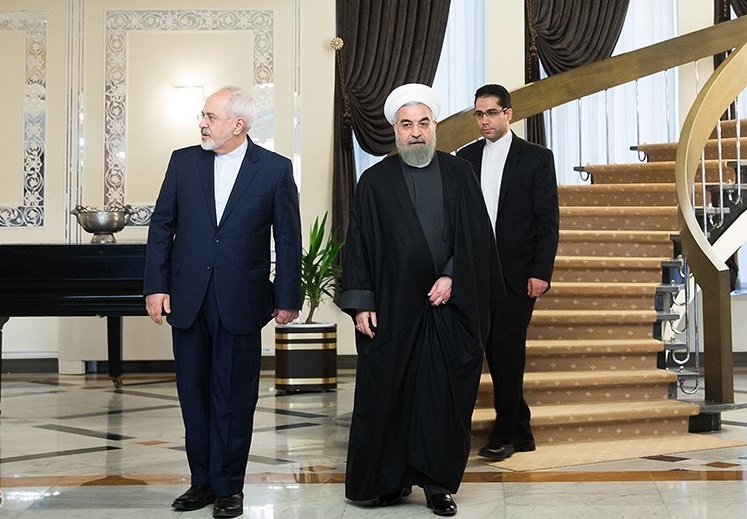
Mohammad Javad Zarif and Hassan Rouhani (Wikimedia Commons)
In his speech before the United Nations General Assembly last month, Iranian President Hassan Rouhani unveiled a new initiative for Persian Gulf peace and stability called the Hormuz Peace Endeavor (HOPE). Set against a backdrop of rising regional tensions, particularly in the wake of the September 14 attacks on Saudi oil installations—which have been attributed to Iran by several countries, including the United States, Saudi Arabia, Germany, France, and the United Kingdom—Rouhani’s peace initiative has gained traction in the international community, despite U.S. and Saudi misgivings.
Centered on the idea of peaceful cooperation among the eight littoral Gulf states—Bahrain, Iran, Iraq, Kuwait, Oman, Qatar, Saudi Arabia, and the United Arab Emirates—the initiative carries the potential to break significant ice between Iran and its Arab rivals in the region. Several foreign leaders, including German Chancellor Angela Merkel and Russian foreign minister Sergei Lavrov, have expressed interest in Rouhani’s peace initiative, with Lavrov stating that he finds it in sync, and parallel with, Russia’s recent idea for collective security in the Persian Gulf.
Rouhani left it to his foreign minister, Mohammad Javad Zarif, to elaborate on the details of the HOPE initiative. Zarif, who has been conferring with diplomats from Gulf states such as Qatar and Kuwait, and was given an opportunity to present a detailed outline of the initiative at the UN Security Council on September 27. According to Zarif, “Dialogue, Confidence-building, Freedom of navigation, Energy security, Non-aggression, and Non-intervention” form HOPE’s key components. This runs contrary to the logic of intensifying U.S. military presence in the region. Emphasizing security self-reliance instead of foreign dependence, HOPE rests on the premise that foreign (military) presence in the region is a security minus and brings only insecurity.
Of course, this is a tough sell to Gulf Cooperation Council (GCC) states that are heavily dependent on U.S. and other Western powers for underwriting their security and are also wary of Iran’s regional power, which shows no sign of diminishing despite the Trump administration’s “maximum pressure” campaign.However, here appears to be a greater willingness on the part of some GCC states to explore this new venue for cooperation and peaceful coexistence offered by Iran’s president, who has rejected the notion of dialogue with the Trump administration as long as “illegal” U.S. sanctions remain in place.
According to a Tehran political scientist who has spoken with the author on the condition of anonymity, “GCC states led by Saudi Arabia no longer harbor the false hope that the Islamic Republic would be overthrown as a result of Washington’s pressure. Iran has withstood the pressure and has applied maximum counter-pressure tactics with a great deal of success. As a result, Iran today is more respected in the region and its Arab neighbors are coming to terms with Tehran slowly but surely.”
Such hopeful expectations depend, first and foremost, on the future of Iran-Saudi diplomacy, which in turn rests to a large extent on the fate of the on-going Yemen war, notwithstanding the growing power of the Iran-backed Houthi rebels reflected in their cross-border drone/missile counter-attacks. Riyadh has now moved in the direction of a “partial cease-fire” in Yemen, which—if sustained and expanded—can definitely bode well for the improvement of Tehran-Riyadh relations.
There is room for Saudi-Iranian relations to improve even if the Saudis decide that their regional prestige dictates a military retaliation against Iran, which they maintain was responsible for the September 14 attacks—a charge vehemently denied by Rouhani. Concerning those attacks, a UN investigative team is probing the matter and its findings will be crucial in shaping the nature of proximate interactions between the Gulf’s two power houses. In the meantime, the in an interview with a U.S. television network, Saudi Crown Prince Mohammad bin Salman has emphasized diplomatic solutions with Iran, and the Iranian media has reported that the Saudis have used a Gulf intermediary to send messages to Iran. There are emerging reports that the Iraqi government is preparing to act as mediator between Tehran and Riyadh.
The future of Iran-Saudi ties also rests to some extent in U.S. hands, a fact that weighs heavy in the region’s security calculus. Washington is presently mobilizing its power to crush Iran’s economy, in light of the administration’s imposition of new sanctions on Iran’s Central Bank that are bound to further erode Iran’s ability to import food and medicine. The Trump administration is adamant on punishing Iran for resisting its will, and this has seemingly turned into a litmus test for U.S. power in the present global context. Increasingly, despite having certain shared interests with respect to issues like containing the Islamic State (IS), drug trafficking, and stabilizing Iraq and Afghanistan, the U.S. and Iran are threading the path of a zero-sum competition. Multiple diplomatic efforts to de-escalate tensions between the two countries, such as French President Macron’s initiative, have gone nowhere. A big question is, can the HOPE initiative help deescalate tensions and perhaps even contribute to an improvement in U.S.-Iran relations?
One possible answer to this may rest on Iran’s willingness to shrink back from the insistence that pan-Gulf security cooperation should come as an alternative to bilateral security arrangements between the U.S. and the various GCC states. It is the prerogative of those states to set their own security policies and a genuine Iranian offer of regional cooperation should respect the sovereign rights of its neighbors. Otherwise it will be interpreted as another sign of Iranian meddling, particularly since Iran itself is moving in the direction of increased cooperation with Russia and China in maritime security, including a planned joint naval exercise. From Iran’s perspective, this is conceived as a counter-weight to U.S. plans for a multi-national naval mission to escort tankers passing through the Strait of Hormuz. The principle of “non-interference” ought to extend to respect for the sovereign right of Gulf states to devise their own national security.
Therefore, the principal Iranian objective at this moment ought to be incremental confidence-building, dialogue, and low-security cooperation, as a prelude for more ambitious long-term cooperation. Only when the eight littoral states reach the point of high confidence in each other’s intentions—which may take a while, realistically speaking—will it be possible to imagine a genuine system of collective security, instead of the present pattern of competitive security systems and bifurcations. Inevitably, this path, involving a globalized oil hub, requires sustained dialogue with other, extra-regional, stakeholders as well and, in a word, should not be limited to the littoral states, who constitute the fulcrum of any new security architecture in the hitherto volatile region. Even a U.S.-Iran dialogue on regional security and other related matters is necessary and reminiscent of past U.S.-Iran dialogues on Iraq and/or Afghanistan.
A U.S. exit from the region, as imagined in Rouhani’s UN speech, is bound to remain a distant dream so long as Tehran and Washington are at loggerheads over regional issues. The common threat of terrorism is highly important and both sides can capitalize on the recent experience of conducting parallel operations against IS inside Iraq, which reached its crescendo in the liberation of Mosul. Amid some alarming signs of a second IS comeback, it is all the more important to prioritize counter-terrorism—a message implicit in Rouhani’s UN speech, when he reminded the audience Iran’s critical contribution to fighting ISIS in Iraq and Syria.
The real nature of the U.S.-Iran relationship is a non-zero-sum game of simultaneous competition and potential cooperation, presently buried under a one-dimensional confrontational policy wrapped in incendiary rhetoric, in light of Donald Trump’s UN speech accusing Iranian leaders of “blood lust.” Thus, an important prerequisite for even a minor breakthrough in the current U.S.-Iran stalemate is a moratorium in mutual demonization, followed by a genuine pursuit of diplomatic venues in which to tackle their outstanding differences. A whole generation of Iranians is presently suffering as a result of oppressive U.S. policies, and we are given hope for the sake of hopeless ones.
Kaveh Afrasiabi has taught at Tehran University and Boston University and is a former consultant to the UN Program on Dialogue Among Civilizations. He is the author of several books on Iran, Islam, and the Middle East, including After Khomeini: New Directions in Iran’s Foreign Policy (Westview Books, 1995) and most recently Iran Nuclear Accord and the Remaking of the Middle East (2018). He is the co-author of the forthcoming Trump and Iran: Containment to Confrontation.

Wednesday, October 02, 2019

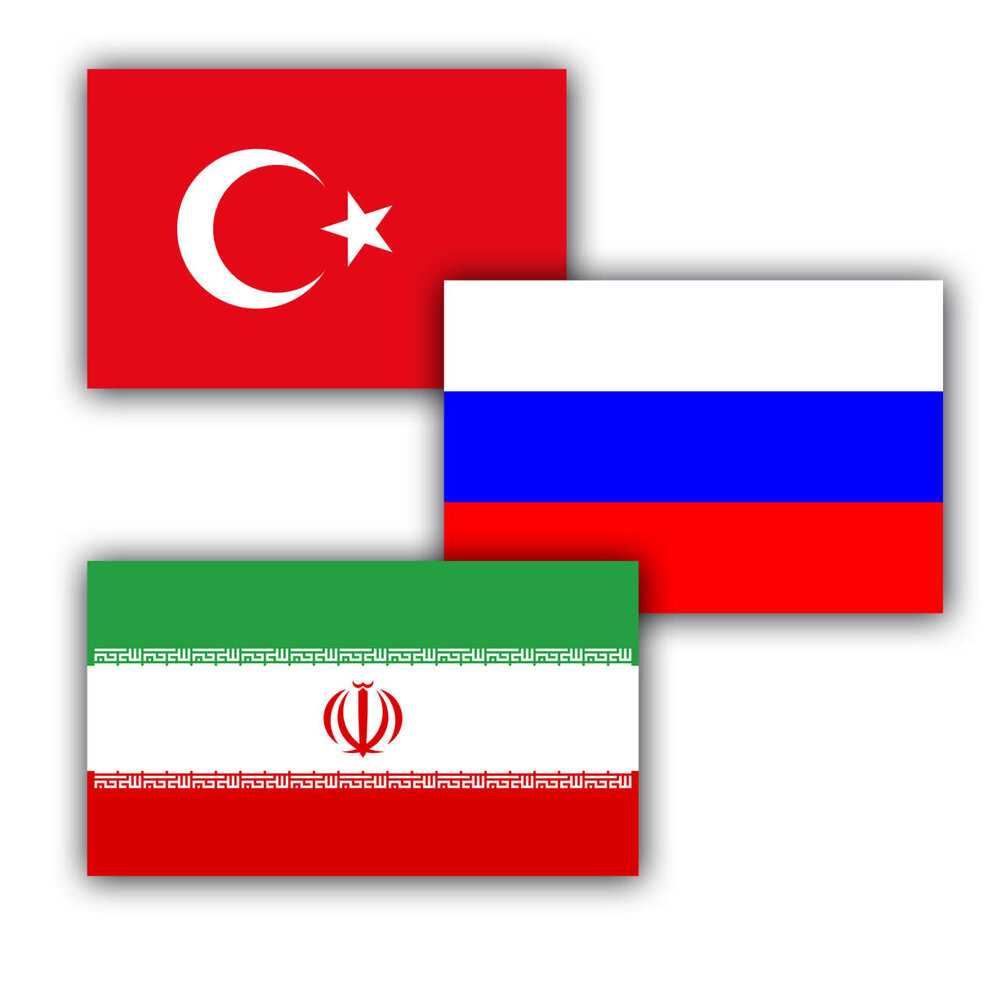
Iran, Russia, and Turkey to meet on Syria soon

TEHRAN – Russian Deputy Foreign Minister Sergei Vershinin said on Monday that Iran, Turkey and Russia, the three guarantors of the Astana peace process, will soon meet in Nur-Sultan, the Kazakh capital.
Nur-Sultan is the new name of Astana. 
“The practice of international high-level meetings on Syria in the Astana-format will continue. The next such meeting will be held in the Kazakh capital in the near future,” Trend quoted him as saying.
He warned against “attempts to interfere in the intra-Syrian dialogue and impose scenarios that are incompatible with their cultural, religious and ethnic traditions.”
In line with their security cooperation, Iran, Turkey and Russia - three power brokers in Syria - launched the Astana peace talks on the Syrian crisis.
The Astana peace talks were launched in January 2017 with the aim of putting an end to the Syrian conflict.
Kazakhstan has hosted multiple rounds of talks on Syria since January 2017, backed by the three key players, most of which involved delegations from the Syrian government and opposition.
The 13th round of talks was held in Nursultan on August 1-2.
Russian President Vladimir Putin said in August that Iran-Turkey-Russia talks have been “most effective” in tackling crisis in Syria. 
According to Sputnik, in a meeting with Turkish President Recep Tayyip Erdogan at Russia’s MAKS-2019 air show in the same month, Putin praised the results achieved by the Astana format, calling it the “most effective mechanism” in resolving the Syrian crisis.
He added that the key task at hand for the format is to achieve stabilization of the situation “on the ground”.
Iranian Foreign Minister Mohammad Javad Zarif met with UN Special Envoy for Syria Geir Pedersen in New York on September 27, discussing the latest developments in Syria and the Astana talks.
The meeting took place on the sidelines of the 74th UN General Assembly.
The Iranian foreign minister and Pedersen had met on September 3 in Tehran.
In the meeting in Tehran, Zarif said that Iran is determined to help settle the crisis in Syria politically.
Pointing to Iran’s efforts to fight terrorism and extremism in Syria, he expressed Tehran’s support for formation of a constitutional committee with cooperation of all parties to the Astana talks.
Pedersen informed Zarif about the latest efforts and consultations with other countries in line with settling the crisis in Syria.
Iranian President Hassan Rouhani, Putin and Erdogan held their fifth summit on Syria in Ankara on September 16.
The return of refugees to Syria, non-interference of foreign countries in Syria’s affairs, fighting terrorism, facilitating humanitarian aid to the Syrian people, and helping the formation of a constitution were among the points emphasized by Rouhani.
“The Islamic Republic of Iran, as in the past, believes that there is only a political solution to the Syrian crisis, and this can only be achieved through constructive interaction and participation by all Syrian people. The Syrian government and people -with all the diversity- are able to go through this crucial and, of course, dangerous path by themselves. The Islamic Republic of Iran has emphasized from the outset the inefficiency of a military solution to ending this crisis, and this fact is still true,” Rouhani said in the meeting.
He added, “The common principles we emphasize are the continuation of the fight against terrorism to eradicate this disaster, dialogue and reconciliation, reducing tensions, reforming the constitution, return of refugees, exchange of detainees and rebuilding of Syria. A free and independent Syria, one that is not threatened by others or a base against others; a Syria away from foreign occupation and threat and free from terrorism; a united Syria, integrated with the preservation of the territorial integrity and national sovereignty, one in which each of its children have their inherent, natural and citizenship rights. And in this way, only the Syrian people will decide for their future and others should not be allowed to interfere in their internal affairs.”

Tuesday, October 01, 2019

Saudis must know they cannot buy security: Zarif

TEHRAN – Iranian Foreign Minister Mohammad Javad Zarif has said that Saudis must know that they cannot buy security from the United States.
“I don’t think that militarism will bring security to the Persian Gulf region and I think it will exacerbate tension. Saudi Arabia must understand that it cannot buy security from the United States,” ISNA quoted him as saying in an interview with Al Mayadeen.
In an interview with CNN aired on September 24, Zarif said, “I do not believe that military capability alone can prevent disaster. That’s been what we have been trying to tell the Saudis. That they cannot buy security purchasing more war weapons.”
In an interview with Bloomberg in July, he said, “The problem in the region is not the 16 billion dollars that we spend on defense. It’s the 67 billion dollars that Saudi Arabia spends on buying weapons from the United States and the other Western countries, the 22 billion dollars the Emirates spends. The United States is selling 50 billion dollars to our region. That has to stop. That is making our region flammable.”
‘Any meeting with 5+1 leaders depends on the removal of sanctions’
Zarif also said that any meeting between Iran and leaders of the 5+1 group depends on the removal of sanctions.
The 5+1 group includes the five permanent members of the UN Security Council plus Germany.
“Our condition was that there would be no bilateral talks between [Iranian President Hassan] Rouhani and [U.S. President Donald] Trump and the meeting should be within the framework of 5+1 group on the condition of removal of sanctions. However, Trump did not even say that the sanctions will be removed after the meeting. He said first the meeting should be held and then there was the possibility of removing sanctions,” Zarif explained in reference to efforts by the French president to arrange a meeting between Rouhani and Trump on the sidelines of the UN General Assembly meeting in New York.
Zarif told reporters on Saturday that removal of sanctions was Iran’s condition for Rouhani’s talks with leaders of the 5+1 group.
“Our condition for Mr. Rouhani’s talks with heads of state of the 5+1 group, and not just between Mr. Rouhani and Mr. Trump, was the removal of sanctions,” he said.
Zarif added, “We have always announced that if the United States wants to hold talks with the Islamic Republic, it should return to its commitments and stop sanctions.” 
Iran has been insisting that the only path to negotiations between Tehran and Washington is that the United States lift all the sanctions that it has illegally and unilaterally imposed on the country.
In an interview with Fox News aired on Tuesday, Rouhani said if the U.S. administration is really seeking dialogue with Iran “it must create the needed conditions.”

Wednesday, September 25, 2019

Sanctions are war, Zarif says

TEHRAN – Iranian Foreign Minister Mohammad Javad Zarif has said that the United States’ sanctions on Iran are “war”.
Q: You have said there is possibility of all-out war. Can you expand on that?
A: Well, I said if there is an attack on Iran, there will be an all-out war. But I am trying as a diplomat and I think every other diplomat including my American counterpart should be trying the same to avoid war. This is our job.
Q: And do you think that war is in the edge? You smell war or you smell a retreat from a military offensive?
A: Well, I do not call it a retreat. I want to call it prudence and I hope that prudence will prevail. Accusations will not be conducive to a solution in our region. There is a war that has been going on for four and half years in Yemen.
Q: The UAE is actually pulling back.
A: The UAE is sort of hedging, but they are moving in the right direction. We hope that Saudis will also understand. Nobody wants a humiliating situation for anybody because that is not sustainable. We want a situation where everybody feels that they have won.
Q: I know, because you have been doing a lot of interviews and you have denied point blank that Iran was responsible either for the tankers in June, July or for the Saudi oil fields. Are you just going to say it again despite the evidence?
“There is no evidence (Iran was involved in attacks on Saudi oil facilities). And it would be a miracle to produce evidence, because it did not take place. Had we been behind this, it would have been disaster for Saudi Arabia. Nothing that they could have been repaired. The reason I am taking this to Yemen is because it is Yemen. It is the Yemeni war.”
A: There is no evidence. And it would be a miracle to produce evidence, because it did not take place. Had we been behind this, it would have been disaster for Saudi Arabia. Nothing that they could have been repaired. The reason I am taking this to Yemen is because it is Yemen. It is the Yemeni war.
Q: Do you think Yemenis did it?
A: They said they did it.
Q: They said it but very few people believe it.
“Very few people are not ready to say that the most sophisticated American weaponry has been defeated by the Yemenis.”
A: Because very few people are not ready to say that the most sophisticated American weaponry has been defeated by the Yemenis.
Q: You say you did not do it. I want to react to some of the statements coming from Iran. One of your top commanders in response to all of this has made threats to the United States and to the U.S. bases within range. Why would they making threats if they are not engaged in this kind of offensive action or you might call it defensive?
A: Because the United States has threatened to use force against Iran. This is the practice of the United States to say all military options are on the table. Secretary Pompeo was the first which is absolutely incredible for a diplomat to make an accusation against Iran hours after the incident in Saudi Arabia. I have said it too. We have said it in a note to the United States that if the United States starts a war, it will nit the one ending it. We won’t start a war. I can promise you that our military will not start a war. But we are very clear that if we are attacked, we will defend ourselves and there will not be a limited war.
Q: Another one of your commanders seem to be taunting the United States, saying the U.S. essentially nothing yet, we still have so many cards on the table. Again this statement seems to suggest that if it is not your government, maybe the revolutionary guards or hardliners are in fact to take on the U.S., Saudi Arabia?
A: That is their job. If our country is attacked, then they have to defend the country. And the threat is coming from the United States. So, we have to respond to the threat.
Q: Do you think that there's a new opportunity for diplomacy?
A: I always have to believe as a diplomat that there is new opportunities for diplomacy. I think what is important is to stop terrorizing the people of Iran through sanctions that are targeting the people of Iran. Sanctions that have been targeting food and medicine of the people of Iran. So, if the United States is serious about its offers of diplomacy, they would not have taken measures that they took the day before yesterday. Putting our central bank under new sanctions. Because as you know our central bank has been under sanctions for over a year. 
Q: But the United States feels that it's either sanctions or war.
Sanctions are war. Because in a war, usually military targets are chosen. In sanctions, civilians are the targets. So, it’s war. It’s more than war. Let me go and address the United States’ saying that they want negotiations. The re-designation of our central bank has made it almost impossible for the United States to remove the central bank from the list. That means that not only this president but even the next president are boxed in this scenario of perpetual hostility against Iran. So, what is it to negotiate about if this president is incapable of undoing something that he did the day before yesterday?
Q: Foreign Minister, are you saying that there's a plan afoot to close the doors to negotiation by the U.S. president?
A: I think the only reason they re-designate our central bank is to make it impossible or very difficult for this president or his successor to remove their name from the list. The war is very high now and I think those who propose to President Trump wanted to close the door to negotiations not during his presidency but even after his presidency.
Q: So, let’s just sort of take that piece by piece. I just first want to ask you one thing about the president having said that they were going to respond militarily and then calling it off at the last moment. In public, alongside Prime Minister Justin Trudeau, he floated this notion back then that it wasn’t an order from the government, that this was a commander who shot down the drone. He was trying to say that this was a stupid act. I’m not going to respond to it because I bet it wasn’t the government’s intention. Was it the government’s intention to shoot down that drone?
A: The government does not take a decision on a case by case basis because we don’t have time to make a decision. You need to have a general order to the military person sitting in front of the missile system or behind it, depending on how you want to shoot it.
Q: Back to the Saudi oil fields. Are you surprised that such an important piece of infrastructure, such a massive piece of the global oil economic puzzle seemed to have been left without any air defenses?
A: I am not surprised because I do not believe that military capability alone can prevent disaster. That’s been what we have been trying to tell the Saudis. That they cannot buy security purchasing more war weapons. It is a much easier road if they simply start talking to their neighbors, stop bombing the Yemenis.
Q: Are you extending a new olive branch?
A: The olive branch has always been on the table and we are holding it again.
Q: We also hear from your commanders, military commanders, that they’re shortly to begin naval exercises, joint exercises between Iran, Russia and China in the North Arabian Sea, in that very critical area, very close to the Straits of Hormuz and the Persian Gulf.
A: That is not a hostile act against any country. It is the first time that we are conducting joint military exercises, but it is not like building a coalition war. It is simply engaging in a friendly action we took with our close partners.
Q: That you would agree to sign on to the additional protocol, which is most intrusive inspections several years earlier than stated. Is that correct? Had you offered that?
A: Yes, we did offer that and that offer is still on the table, provided that the United States would also do what they’re supposed to do in 2023 now, and that is to lift the sanctions though U.S. Congress. We are prepared, if President Trump is serious about permanent for permanent, permanent peaceful nuclear program in Iran and permanent monitoring of Iranian nuclear facilities, as you said, through the most intrusive IAEA inspection mechanism that exists, in return for what he has said he is prepared to do and that is to go to Congress and have this ratified, which would mean Congress lifting the sanctions.
Q: Is there any chance that Presidents Rouhani and Trump could meet at this General Assembly? President Trump has been tweeting. He sent out another tweet saying, I have no plans but, you know, nothing is ever off the table but maybe but maybe not. Are you saying that President Rouhani in this heightened atmosphere of tension would still be willing here at the General Assembly to meet with President Trump?
A: Provided that President Trump is ready to do what is necessary.