Showing posts with label Ikhwan al Muslim. Show all posts

Thursday, October 11, 2012

How the foreign-backed conspiracy to overthrow Asad is failing in Syria

by Crescent-Online.net
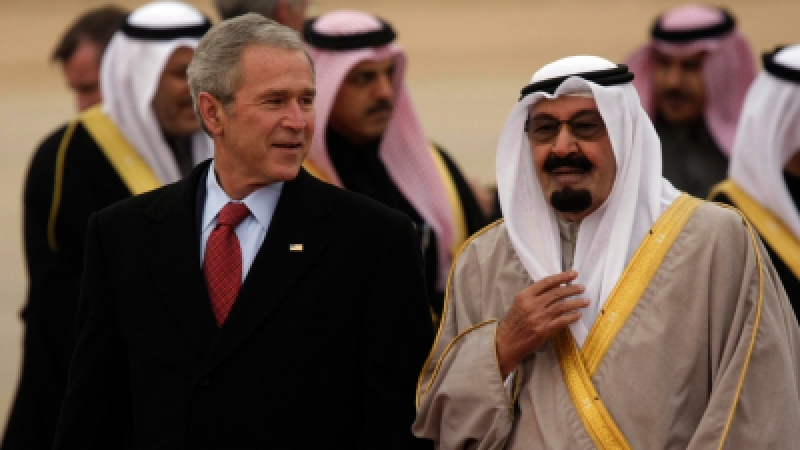
October, 2012 What has upset foreign conspirators the most is the resilience of the Asad regime. It has lasted 21 months of incessant attacks from inside and out and there are no signs that it is about to collapse. Dubai, Crescent- online October 11, 2012, 00:00 EST The only certainty in war is its uncertainty. As any general, no matter how brilliant, would testify, the best-laid plans are quickly rendered useless by the vagaries of war. This is even more so in internal conflicts where there are far too many variables to make accurate predictions or plans. This thesis is best illustrated by events unfolding in Syria, especially over the last four months. The conspiracy against Bashar al-Asad's regime was hatched in February 2011 in a Paris cafe. The conspirators included in addition to some members of the Syrian opposition, Jeffrey Feltman, an American arch-Zionist, Dan Shapiro, US ambassador to Israel, Bandar bin Sultan, then Saudi Security chief and currently the kingdom's intelligence chief, as well as a representative of Saad Hariri, the playboy and former Lebanese prime minister. According to this plan, the uprising was to be launched in Deraa, a small town in the middle of nowhere. Deraa was chosen because of its proximity to the Jordanian border from where weapons were to be smuggled in. Both the conspirators and Syrian opposition groups were misled by the ease with which Colonel Muammar Qaddafi was overthrown in Libya. It was assumed that like Qaddafi, Asad too would be disposed of in a matter of months if not weeks. The tiny Emirate of Qatar also quickly signed on. Flushed with billions of gas dollars, Qatar is punching way above its weight in regional politics. Initially, Turkey, the most important regional player, was reluctant to jump into the fray. The Turks thought because of their importance, they could persuade Asad to do what they wanted him to do. In May 2011, Turkish Foreign Minister Ahmet Davutoglu visited Damascus and in a meeting with President Bashar al-Asad, gave him what was essentially a list of demands. Asad gave him a polite hearing but was not going to accept foreign dictation. When Asad refused to comply with Turkish demands, perhaps drawn out with Saudi help (the Saudis cannot stand the Asad clan or the Alawites although for the record Asad is not Alawite but Sunni although that is neither here or there), the Turks took offense and joined the anti-Asad alliance. Weapons started to flood into Syria from Jordan, Lebanon and Turkey. The French, Americans, British, and Turks also provided logistical support as well as intelligence. The Saudis and Qataris offered to buy any senior civilian or military Syrian official willing to defect. There have been few takers. Brigadier Manaf Tlas is the highest ranking military officer to defect. The foreign conspirators faced another problem. The Syrian National Council they cobbled together out of exiled Syrians has no support inside Syria. Further, Syrian opposition groups inside the country detest these rank opportunists whose only ambition seems to be to get their hands on as much foreign cash as possible while people inside the country die. What has upset foreign conspirators the most is the resilience of the Asad regime. It has lasted 21 months of incessant attacks from inside and out and there are no signs that it is about to collapse. Instead, the foreign conspirators are beginning to panic. Saudi King Abdullah in particular is greatly worried. As the crisis drags on, he feels it will make life more difficult for him in the kingdom where the succession battle is already intensifying with the first generation of Saudi royals heading to their graves. He has mooted a Yemeni-style transition in Syria. He would be content with Tlas taking over from Asad. This is the other version of the Davutoglu plan whereby he said on October 7 that Turkey would accept Farouk el-Sharaa replacing Asad. These proposals clearly point to the fact that the military option, a la Libya, is not viable in Syria. There are other worries as well. The influx of a large number of foreign mercenaries into Syria is causing great concern for the Saudis, Jordanians and Americans. The Americans have already had a blowback in Benghazi when ambassador Chris Stevens was killed by a Libyan terrorist outfit that was trained and armed by NATO to overthrow Qaddafi. There is also disagreement on how to proceed. A meeting between the intelligence chiefs of Turkey, Saudi Arabia, Qatar, France and the US in Turkey last month failed to produce a clear plan of action. This was followed on October 10 by a meeting between Saudi intelligence chief Bandar bin Sultan and the Qatari Emir, Hamad bin Khalifa al-Thani in Doha, Qatar. This too failed to produce any tangible result because Qatar wants to intensify the war in Syria while the Saudis want a face-saving way out. Of course, Qatar has no army to speak of; it can only provide soccer players that only know how to swing in a night club but cannot handle guns. While the Saudis are getting cold feet, Qatar continues to punch above its weight. Next week it is convening another meeting of Syrian opposition groups to try and unite them. It may be easier to convince the mice to work with cats that Syrian opposition groups to work together. As Shadi Hamid of the Brookings Institution in Doha said: "It's all a bit of a mess." Yes, indeed, it is, and all of their own making. They have nobody but themselves to blame. Those playing with fire are likely to get their fingers burnt.

Wednesday, August 29, 2012

How to deal with the fitnah of Al Saud

by Zafar Bangash


Muslims worldwide must develop a better understanding of the true nature of Al Saud and not fall for their poisonous propaganda
The Muslim world is beset by myriad problems ranging from illegitimate oppressive regimes ruled by dictators and tyrants to massive corruption, mismanagement and extreme inequalities in every society. Almost all ruling elites are also subservient to the West. In its war on Islam and Muslims, the West, led by the US, has murdered countless innocent civilians, their numbers running into the hundreds of thousands, with the connivance of these very Muslim rulers. These problems are serious enough; what Muslims have paid little attention to is to identify the root cause behind their plight. In particular, some regimes more than others, have been eager proponents of advancing imperialism and Zionism’s nefarious agenda against Muslims. The House of Saud, which controls the Arabian Peninsula, tops this list. Readers paying close attention would have noticed that we have not used the name “Saudi” Arabia for the land that was named the Arabian Peninsula by the noble Messenger (pbuh) himself. It is not a piece of real estate that a family from Najd can lay claim to. In any case, the House of Saud, a band of marauding thieves from the backward outpost of Dar‘iyyah in Najd, used to attack and pillage pilgrims’ caravans going for Hajj before the British discovered their murderous skills. The Saudi hordes were recruited for the British colonial enterprise in the Muslim East.
In the early part of the last century, the House of Saud served the British; since the Second World War they have accepted the US as master. To comprehend this relationship and what devastation it has caused to the Ummah, let us consider some basic facts. The House of Saud has deposited nearly $1 trillion in US banks, money that does not belong to it. This money is used by the US to make weapons that are used against innocent Muslims in different parts of the world ranging from Iraq, Afghanistan and Pakistan toYemen and Somalia. The US also gives these weapons to the Zionist regime to slaughter the hapless Palestinians. Muslims, however, should not be surprised by US behaviour; it is an avowed enemy not only of Muslims but of all the oppressed people in the world. Muslims should look closely into the conduct of the House of Saud, which, not coincidentally, claims to follow Islam.
Instead, this family of thieves has caused immense damage to Islam. It specializes in creating sectarian divisions among Muslims. It has peddled its narrow extremist ideology and imposed it on Muslims in distant lands by using petrodollars to finance madrasahs in places like Pakistan, India and Bangladesh. The narrow-minded extremists that have emerged from these madrasahs have cause havoc in the Ummah through suicide bombings and other terrorist acts. The ongoing terrorist campaign in Pakistan, Iraq andSyria is the direct result of this extremist ideology spawned by the Saudis and actively financed by them. The US and the Zionist regime are active promotors and enablers of this campaign. It should now be clear that al-Qaeda, which had deep roots in the Saudi desert kingdom, is part of the US campaign to re-colonize the Muslim world. The mayhem in Syria is the direct result of al-Qaeda operations, actively encouraged by the US and Israel and financed by the House of Saud.
The reason why most Muslims have failed to grasp the true nature of the House of Saud is because the two holy cities of Makkah and Madinah are located in the Arabian Peninsula, most particularly the Hijaz. Muslims have immense respect and regard for these two holy places. This is natural and this is how it should be but it is a grave error to transfer the sanctity, love and respect Muslims have for the two holy cities to the ruling family in the Arabian Peninsula. This family of thieves is busy destroying the historical sites of Islam in the name of “development” and “progress.” Instead of preserving Islamic heritage sites, the House of Saud has deliberately wiped them out and replaced them with steel and concrete monstrosities designed by Westerners who have no regard or respect for Islam or the sanctity of its historic sites.
The House of Saud’s role as agents of Zionism and imperialism has now been fully exposed with events in Syria. What is underway in Syria is an attempt by external forces — the US, Israel, the House of Saud as well the Gulf sheikhdoms — to destroy the weakest link in the resistance front against Zionist Israel. Despite purchasing billions of dollars in weapons — $60 billion from the US and $10 billion from Germany in the last few months — the House of Saud has never fired a single shot in defence of Islam or Muslims. Instead, all these weapons have been used against Muslims to advance the agenda of imperialism and Zionism.
The House of Saud and their court ‘ulama oppress women — they are not allowed to drive cars, for instance, nor leave the house without being accompanied by a male guardian — mistreat domestic servants to the point of torture, and extract basically slave labor from desperate foreign workers, who in some cases are not paid for months. There are at least 30,000 political prisoners in the kingdom. People have no say in how their affairs are conducted or how decisions are made.
The question Muslims must ask is: how should we confront the Saudi fitnah? First, it is vital to be properly informed of its true nature and role. Muslims must not extend their respect for the Haramayn (the two holy cities of Makkah and Madinah) to the House of Saud. It deserves no respect from human beings, let alone Muslims. Muslims must make every effort to highlight the destruction of Islamic historic sites underway in Makkah and Madinah and mobilize global opinion against such vandalism. Such destruction must be stopped. Saudi court ‘ulama have made no secret of their plans to destroy the green dome over the Prophet’s (pbuh) rawdah (grave) in al-Masjid al-Nabawi and move the grave elsewhere (nastaghfirullah). Even the Sahabah (close Companions of the Prophet (pbuh)) did not dare think of such acts yet the barbaric savages from Najd are openly taking about it!
Muslims must boycott preachers trained in Saudi madrasahs and not give them any position in their masjids or Islamic schools. Even if the Saudis come with offers of money, these should be rejected outright. Such poisoned gifts will bear poisonous fruit. Similarly, Muslims must refuse to welcome into their masjids Saudi preachers from Makkah and Madinah donning an aura of spirituality when in fact these people are active promoters of the hate-filled ideology of the House of Saud. It is time to take drastic steps against these hate-mongers and not provide them an opportunity to distort the message of Islam or peace and security of the Ummah by creating sectarian divisions.

Friday, July 27, 2012

Naked power grab by Egyptian generals

by Zafar Bangash 


It was unrealistic to expect that the military in Egypt would simply roll over and hand power to the elected representatives of the people.
The latest coup against the people was carried out in two steps: first through the “Supreme” Constitutional Court stacked with Hosni Mubarak cronies that disqualified more than 100 members of the People’s Assembly (Egyptian parliament) on June 14; and then through an amended constitutional document issued by the military on June 17. It dissolved parliament and assumed wide ranging powers through the amended constitutional document. It was the second day of polling in the presidential race and the men in uniform signaled that they intended to remain in full control regardless of the election result. The coup also had the blessings of the US despite tepid criticism from the US State Department. Saudi Arabia and the Zionist regime in occupied Palestine also welcomed the move. They all felt the people of Egypt were taking democracy too seriously.
The Supreme Council of the Armed Forces (SCAF), that became the governing body after the former dictator Hosni Mubarak was ousted in February 2011, amended the constitutional document that was first issued in March 2011. The original document had stipulated the temporary nature of the military’s involvement in political affairs and was agreed upon after discussions with numerous political players representing a broad range of opinion in the country.
Under the amended constitutional document, no election for a new parliament can be held until a permanent constitution is written. The body that will draft the constitution will be appointed by the military, the previous one appointed by the elected parliament, was disbanded through an earlier judicial plot. Despite this, the generals still have veto power over the text of any new constitution. With the parliament dissolved — so much for the generals’ respect for people’s wishes — they have also stripped the president of any executive authority. He has been reduced to an administrative functionary whose job will be to carry out the orders of the military without any say in decision-making. Thus, the president will be held accountable for failing to show results if the policies do not work but he will have no input in formulating those policies. The president has also been stripped of the title of commander in chief of the armed forces. After all, what do civilians know about military affairs? These weighty matters are best left to the bright stars of the military. The president will also have no say in the appointment of senior commanders. Similarly, the military’s budget will not be subject to civilian oversight. It must be nice to be a general in Egypt, or indeed in any other Muslim country.
Like their counterparts in Pakistan and Turkey, for instance — and with an equally dismal record of defending the country’s borders against external enemies — the military in Egypt is more like a business enterprise. It owns factories, businesses and other commercial interests. Nearly 80% of all provincial governors are also from the military as are a number of judges. Talent clearly is the monopoly of the military top brass. Those that don’t get it will never get it but the musclemen have made clear that civilians had better get used to the fact that the revolution is over and that it is back to business as usual even if Mubarak is no longer in power. His horrible legacy continues. It would be unrealistic to assume that the military that has been at the helm of affairs for more than 60 years would meekly return to its barracks.
What is astonishing and depressing is that seasoned members of the Ikhwan al-Muslimeen, the most organized political party in the country, also fell for the military’s charm offensive after Mubarak’s ouster. What they overlooked — or deliberately ignored — was that the military has its own institutional interests. If the military did not come out with guns blazing when millions of Egyptians were packing Tahrir Square, it was not because they had any regard for civilian lives. The military top brass knew that any misadventure — fighting an enraged public — would have sparked a total revolution in which the military would be defeated and their wings clipped permanently, as happened in Iran in 1978–1979. Instead, they decided to sacrifice the hated figure of Mubarak hoping this would pacify most if not all the people and over time, the military will resume business as usual. That is exactly what has happened.
Events in Egypt once again show the pitfalls of working through colonial imposed systems in Muslim societies. Regardless of how peacefully members of the Islamic movement work and abide by the most unjust laws, beneficiaries of the old system will not give up power voluntarily. Instead, they will resort to every trick and outright criminal behavior — what better illustrates this than the Egyptian military dissolving the first freely elected parliament — to stay firmly in control of all decision-making processes and monopolize state resources. The military refuses to countenance any oversight of its activities or its budget; they act as a state within a state.
So what should the Ikhwan do in such circumstances? While they have rejected the military’s power grab and brought hundreds of thousands of people into Tahrir Square to express their displeasure saying the gains of the revolution are at risk and “dangerous days” lie ahead, they must take much bolder steps. Merely staying in Tahrir will not make the military lose any sleep. The Ikhwan have strong links with professional syndicates and workers groups; they are also now armed with a popular mandate both in parliament (even if dissolved illegally) and in the presidential polls. They should launch a civil disobedience campaign without resorting to violence to bring the state machinery to a halt. True, the military will use brutal tactics and might also unleash its thugs — the baltagiya — as they did during the three week campaign last year to oust Mubarak. But the Ikhwan leadership will have to remain vigilant. They must not get provoked.
The military must be exposed as a bunch of greedy, power-hungry thugs who should get the boot and be sent back to their barracks. Do the Ikhwan have what it takes to bring about a genuine revolution in Egypt? The next few weeks will tell.