Showing posts with label Democracy. Show all posts

Friday, November 01, 2019

Chileans Rise Against the Government’s Loyalty to the Dictatorship’s Neoliberal Legacy

Ramona WADI

At face value, the protests in Chile against the right-wing government of Sebastian Piñera are about the 3 per cent rise in metro fares which would put Chileans outside elite circles at increasing socio-economic disadvantage.
However, the protests indicate a simmering anger over the ongoing ramifications of the neoliberal experiment unleashed upon Chile by the US-backed dictatorship of Augusto Pinochet. Decades after the democratic transition, the dictatorship constitution remains in place. A commodity for governments, be they right-wing or centre left, to entrench social divisions and provide the foundations upon which dictatorship practices can be implemented in a democracy, as Chile has experienced since Piñera imposed a curfew on the capital city, Santiago, which has now been extended across the country.
A photo of Piñera dining at an elite restaurant as Santiago erupted in protests and military violence contributed to the Chileans’ growing repudiation of the president’s authority. Some contrasted his stance with that of Salvador Allende, who kept his pledge to remain with the people until the end.
Piñera has framed the people’s uprising through a declaration of war. Eliminating reference to the people by using the metaphor of “the enemy who is willing to use limitless crime and violence”, the Chilean president justified the curfew, including the presence of the military on the streets, by stating that “democracy not only has the right, it has the obligation to defend itself.”
But what if Chile’s transition to democracy continues to prove it is merely a veneer for the dictatorship practices ushered in by Pinochet?
This is not the first time Chile has mobilised against government policies. In 2011, the student protests for free education and the assurance of education rights for Chile’s indigenous Mapuche also pointed towards the need to move away from the business model which privatised education. At the time, Piñera claimed that nationalising education would detract from quality and freedom. In 2011, the students were met with violent repression in the form of tear gas and rubber bullets.
The nationwide protests have triggered concerns among Chileans of a return to the dictatorship era. More than 10,000 military personnel have been deployed in Santiago. National Defence Chief Javier Iturriaga, who has family links to the dictatorship’s National Intelligence Directorate (DINA) declared the curfew a means of “protecting the people”. The government is calling upon people to stay in their homes, yet Chileans are defying the curfew and mobilising on the streets. To stay at home, on government’s orders, is an acquiescence which Chileans cannot afford. Even in their homes, however, Chileans aren’t safe from military violence.
Meanwhile, the first victim of military aggression has been announced – 25 year old José Miguel Uribe Antipani, who was shot in the chest during a demonstration in Curicó. Reports by Chile’s National Institute of Human Rights have confirmed the military’s use of excessive force, including beating of protestors, among them minors, torture and sexual harassment and abuse of women. More than 2,000 Chileans have been detained and the death toll is reported to have increased to 15.
The link between neoliberalism and violence must not be negated. Chile’s social inequalities have persisted and the country’s management since the democratic transition has prioritised keeping Pinochet’s legacy intact through privatisation, exploitation and the expectation that the people remain tethered to their subjugation in order to ensure the elite’s retention of privilege. Piñera understands the underlying causes of the current mobilisation, yet prefers to keep to a selective narrative in order to maintain his impunity. As organisations and workers across Chile call for the people’s demands to be met, the government can no longer hide behind the veneer of metro fare increases. As this façade crumbles, Piñera must be held accountable, yet the scrutiny of past governments and their loyalty to the dictatorship agenda must not be erased from memory.

Friday, October 11, 2019

Western-backed Hong Kong Protests aimed at undermining China

Crescent International
The protests in Hong Kong have lost their specific objectives and morphed into anti-China disruptions by a highly Westernized population.
While the Western media hype-up the protests and often ignore protester-instigated violence, there is no doubt that many people in Hong Kong have bought into the West’s secular-liberal worldview.
Since Hong Kong was handed over to China in 1997 after British rule that lasted 99 years, it appears the Chinese government has not been able to project its soft-power appeal there. The massive numbers of protesters whose sincere intentions are being manipulated by Western powers, genuinely believe in their anti-China cause.
The main reason for the West’s continuing soft-power appeal in Hong Kong is due to its hedonistic culture that caters to the base instincts of people.
For instance, a person can enter a buffet and easily consume huge amounts of meat and sugary drinks, but it requires a higher level of intellect and stronger willpower to have a balanced and healthy diet.
Nevertheless, the land of Taoism and Confucius has not mustered enough foresight to instill higher values in its population.
Instead, the “communist” party of China sees it as more important to imitate the Western ideology of unlimited consumption.
This perhaps partly explains China’s fear of Islam, as Beijing clearly recognizes Islam’s highly attractive soft-power capabilities in reconfiguring a society.
Beijing adopted the field of economics as an ideology and approaches its geopolitics and soft-power through the transactional mindset of a merchant mentality.
This simplistic worldview has created a situation where some protesters in Hong Kong wave US flags.
This is quite embarrassing for Chinese ambitions to potentially replace the US as the next superpower.
Beijing is willing to compromise its societal independence for economic benefits brought in by Western presence.
China’s wealthy elite do not send their children to schools principled on traditional Chinese philosophy, but eagerly spend huge sums on education systems rooted in post-modernist Western worldview.
Crescent International has highlighted on numerous occasions that China is a regional power and lacks political and diplomatic prudence to replace the US.
Protests in Hong Kong offer proof that China’s emphasis on adopting consumerism and consumption as primary social values have made it vulnerable to Western destabilization attempts.

Wednesday, June 26, 2019

Mohamed Morsi and Aung San Suu Kyi – Two democrats treated differently by the West


By 5Pillars

Left to right: Aung San Suu Kyi and Mohamed Morsi
Mohammed Morsi and Aung San Suu Kyi both believed in democracy, yet the West treated them very differently when they were oppressed, writes Jahangir Mohammed.
The death of deposed Egyptian president Mohamed Morsi in court after six years of imprisonment and torture, has demonstrated the West’s double standards over democracy.  The West’s championing of democracy as a higher political value does not extend to the Muslim majority world – it is simply a stick to beat Muslims with.
The UK Government has included lack of support for democracy, the rule of law, individual liberty and mutual tolerance within its definition of “extremism” (mainly used against Muslims with dissenting views), and a fundamental British value. Yet its own behaviour (like others in the West) in other parts of the world, shows a total disregard for the very values it expects Muslim communities to embrace, and subsequently judges them by.
In six years, the West has made little to no effort to support the first fairly elected president of Egypt or its democracy. Nor has it tried to oppose the intolerance and abuse of the rule of law and human rights in Egypt. Rather, the US other Western nations embraced military dictatorship as a partner in the region.
The case of Mohamed Morsi
Mohammed Morsi and his democratically elected Freedom and Justice Party were ousted in a military coup led by General Abdel Fatah el-Sisi in July 2013. There was no moral outcry in the West. In fact, no sooner had Sisi come to power, some Western countries visited him to secure arms and trade deals.
When Morsi was charged with treason and other trumped up charges, he did not become an international symbol of a “freedom-loving democrat” trying to move his country away from military dictatorship. Nor did Western human rights groups widely champion him as a political prisoner worthy of their highest accolades and mass campaigns. Even the socialists and the left were unusually silent.

Abdel Fatah al-Sisi

When Sisi imprisoned thousands of Muslim Brotherhood supporters and members, and sentenced many to death, there was still no outcry and no political prisoner campaigns.
Western rights groups, politicians and the media appeared to care very little about the masses of pollical prisoners, torture, lack of due process and rule of law.
Yet, when even one European is imprisoned in a country like Iran, they are deserving of the whole machinery of politics and human rights being unleashed.
You would think that the West’s army of feminists would care for the plight of the thousands of women arrested or affected by mass detention in Egypt. Here too they have been largely silent. We have of course seen this before, when 50,000 Muslim women were raped or in camps in Bosnia at the hands of the Serbs, I don’t recall a single Western feminist group taking up the issue.
In the six years that followed the detention of President Morsi, there was little concern about any of these human right abuses and torture. Instead, the West was more concerned about whether the Muslim Brotherhood and former President Morsi cared about or held the same social and political values as the West (both the political Left and Right). The message appeared to be unless you are a Muslim that is like us, you are not worthy of our support.
When sadly he died, there were no tributes from Western leaders or expressions of grief or even anger. Morsi was dead and his belief in democracy mattered not one jot. It was his belief in democracy and faith in the democratic West, that contributed towards his tragic death.
The case of Aung San Suu Kyi
Compare the treatment of Mohammed Morsi to another former political prisoner fighting for democracy. Aung San Suu Kyi rose to prominence in the uprisings in Myanmar against military rule in 1988.  She then became the President of the National League for Democracy (NLD).  In the 1990 elections, the NLD won 81% of the seats in Parliament. The military refused to hand over power and she remained in house detention for 15 of the following 21 years until 2010.
Suu Kyi became the world’s most prominent political prisoner thanks to international Western support. In 1990, she was awarded the Sakharov Prize for Freedom of Thought, in 1991 the Nobel Peace Prize, and in 2012 she received the United States Congressional Gold Medal. She became an iconic figurehead for democracy and human rights organisations, and was championed by politicians and movements on both the left and the right of the western political spectrum.

Rohingya refugees in a camp in Cox Bazaar, Bangladesh.

Her “bravery and struggle for non-violent commitment to democracy” were saluted across the Western world. She was seen in the West as “one of us” with little concern to consider her own Buddhist values and political views. Only since her party came to power in 2015 have her Buddhist and political views been criticised, especially in light of her attitude towards the minority Rohingya Muslim community (whose persecution she has denied).
Western imperialism and supremacy
The West’s approach and policies towards Muslims, and the Muslim majority world (irrespective of Left or Right) is still rooted in its pre-colonial relationship and interaction with Islam. This was, and largely still is, infected by ignorance, stereotypes, anti-Islamic propaganda with an attitude of Rudyard Kipling’s supremacist civilising mission.
Muslim social, moral and political beliefs and values have to be just like the West’s to be deemed worthy of their support. Hinduism and Buddhism on the other hand have tended to be viewed in the West in a romantic way as some exotic religion Westerners can study and gain some spiritual benefits from. Islam and Muslims have always been seen as a rival to Western religious, and now secular values, and its global power.
At the time of colonialism, European countries entered Muslim lands saying they were there for trade which would make us prosperous too. Sadly, most Muslim leaders at the time believed this. After the 9/11 attacks, the West told us they were invading our countries to install democracy in the Muslim world. Many believed them. On both occasions, the only thing Muslims got was death, destruction and impoverishment. It is time for Muslims to learn that if we are going to bring an end to tyranny and oppression in the Muslim world, we are going to have to do it all by ourselves within our own traditions and struggle’s.
In a real sense, the Egyptian people’s revolution died at the hands of democracy and the belief that the West would support those Muslims who embraced it.
References to the “West” and “Western” are at the political level, and not directed at ordinary people in the West.

Sunday, April 21, 2019

Is Islam compatible with democracy?

Many Islamic legal scholars would be surprised to know that the Islamic legal system can absorb much of what we hold dear in the West in terms of our Democratic ideals.
The negative stereotypes of Islam and Muslims permeate our lives. If we turn on the news there will be a story of a terrorist attack; when we are driving our car we see billboards demonizing Islam as the religion of terror; if we take the train we see signs posted labeling Muslims as followers of the religion of Satan.
This is something that has happened for over 40 years in Western Culture. The demonization of Muslims began in American cinema in the 1970s and became even more prominent during the 1980s. All you have to do is watch a Chuck Norris movie from this era to see that Hollywood has been perpetuating an Arab terrorist stereotype for over 40 years.
As a result, the West and Westerners view Muslims and the Muslim world with disdain, believing that we are all radicals. Radicals are people who are fanatics. Fanaticism was once identified as the redoubling of efforts once the goal has been forgotten. Fanaticism, in essence, becomes a replacement for effective practice. Fanaticism will often become an end unto itself because it is a very stimulating experience to be a fanatic.
A fanatic is one who has set aside reason because he is right and no other is right. This problem of fanaticism is one that has struck humans all over the world, not just in the Muslim world but in the West as well.  The root of this is in the concept of American Exceptionalism: this idea that Western civilization is the protagonist in a world comedy because it cannot be a tragedy because in a tragedy the hero has a flaw. The flaw is almost always identified as hubris or excessive pride.
This comedy of the West is that the West is the protagonist in having a happy ending to this story by making the entire world Westernized. This is ultimately the belief of many fanatics within both the secular and religious Western traditions, that we must all become Western. There is this idea that Democracy is the end all, that there is nothing beyond the Western liberal creature; that we have somehow arrived at some stage in our evolutionary development that we cannot surpass.
It is not only in ideology also but in how news is reported. If an international plane crashes they will say how many Americans, Brits, French, or Germans are on the plane, but will say about the other groups nothing except their accumulative numbers. If the people are from a non-Western country then their ethnicity is not mentioned in the news. None of them really count and this is in essence how people in other parts of the world feel.
When Western media discusses the Muslim world they portray the view of “what is wrong with those people?” Well like MLK said, “If they stole your bootstraps from you how are you going to lift yourself up by your bootstraps?”
I am always asked can Islam embrace Democracy, and I believe there is such a thing as a Democracy based upon Islamic values. However, the question that I believe needs to be asked is, can the West truly embrace Islam as a full-fledged member of the International Community?” This is important in a world with 1.7 Billion Muslims out of 7 Billion people worldwide.
In the Islamic tradition, we have what is called a Mushtahid or someone who does research for legal analysis. The Mushtahid recognizes that he was not speaking on the behalf of God; that the overwhelming majority of laws in the Islamic tradition are not seen as theocratic, but rather they are laws that have been derived from the efforts of human beings attempting to understand the divine will.
This is also true with many Western legal theorists who believe in the idea of natural law because they are also attempting to understand what the divine will is. What is the natural law here? What is the most rational and truest course that we can take in any given legal scenario? This is always ended in the Muslim books with the emphatic statement after the give their legal ruling Wallaahu allum, “And Allah knows better”.  In other words, this is the best one can do.
So it is important for Muslims to recognize that rather than looking at Islamic law as a monolithic theocratic system that was sent from up high, it must be recognized as divine principles that were given to us. Most of them are completely congruent with the very same principles that are at work in Western society, which is an attempt to derive the justest ruling in any given circumstance. We will differ upon the particulars, but in the general principles, I think that both Westerners and Muslims would be shocked to find out that the legal principles working in Western Constitutional law are the same legal principles that are working in Islamic law.
A problem is that most Islamic Scholars are entirely ignorant of the Western legal system, whereas many Western legal scholars are ignorant of the Islamic legal system as well. Many Islamic legal scholars would be surprised to know that the Islamic legal system can absorb much of what we hold dear in the West in terms of our Democratic ideals.
True Democracy is not Demos, or rule by the mob. Nobody wants to be ruled by the mob. Rather Democracy is about citizenry, where human beings participate in the quality of life that they desire for themselves, for their children, and their extended communities. Here I would say that Democracy is absolutely compatible with the Islamic tradition.
For far too long in the Muslim world, as a result of efforts by the Khawarij, the Muslims have lived under tyrannical rule. The rulers have not been benign. This has led to social conditions in the Muslim world that are both degrading and debilitating. This has resulted in an atmosphere where the Muslims, who at one time were some of the most innovative people in Earth, lost this innovativeness. This was lost when the breadth of freedom that encouraged innovation was taken by tyrants.
These tyrants have worked to keep Muslims uneducated, or from practicing their religion. They might encourage education, but there are no jobs. There is no need to invent a new product because tyrants always claim it for themselves.
Westerners, just like Muslims believe in justice. A symbol of the American justice system is that of a blindfolded judge signifying that justice is blind. This is to represent that all people are equal under the law. In theory, this is true, but in practice not so much, especially if you are a minority in America.
I challenge Muslims to act like Muslims and for Americans to act like Americans. If Muslims followed their precepts of justice as well as if Americans would follow their precepts of justice, then there wouldn’t be any more conflicts. We would find that we are much more alike than we realize.

Monday, April 08, 2019

‘People of the region yearn for democracy, human rights and social equality’

By Javad Heirannia
TEHRAN - Professor Arshin Adib-Moghaddam, Chair of the Centre for Iranian Studies at the London Middle East Institute believes that “The people of the region yearn for democracy, human rights and social equality.”
Professor in Global Thought and Comparative Philosophies and Chair of the Centre for Iranian Studies at the London Middle East Institute, also adds that “The Islamic revolution spoke to those themes and made them realisable in Iran.”
He says that “The Arab revolts galvanised these sentiments further and as we speak, mass protests in Algiers are spreading in what may become a second Arab spring.”
Here is the full text of the interview:
Q: What was the most important event in the Middle East in the last Iranian year and why?
A: Allow me to congratulate all Iranians and everyone who celebrates Nowrouz as a global festival in the name of universal sentiments such as empathy, humanity, and love.
I deem the most important event in West Asia and North Africa the absence of decent human rights standards. I am choosing this theme because, in this Iranian year, the Islamic Republic of Iran turned 40. As such, the Iranian state has ruled the country for the longest continuous period compared to any other state in the modern history of the country. The revolution, then, was a pivotal event, not only for Iran but for the whole world. And yet, after 40 years, the demands of the revolutionaries for “esteghlal” (freedom) have not been met. I think we can all agree on that, without any unnecessary hysteria. The people of the region yearn for democracy, human rights, and social equality. The Islamic revolution spoke to those themes and made them realisable in Iran.
 The Arab revolts galvanised these sentiments further and as we speak, mass protests in Algiers are spreading in what may become a second Arab spring. The point being that people want their freedoms from political control and authoritarianism. West Asia and North Africa remain the only region in the world, where the majority of countries are ruled in an authoritarian fashion. Other areas such as South America have moved from revolution to normalisation in a much more effective way.
 Cubans, for instance, just had the opportunity to revise their constitution which they overwhelmingly voted for (see below). The constitutional amendments are substantial in terms of the rights that they grant. In Iran, such movements towards reconciliation will have to be systematically pursued in the near future as well.
Q: What was the most important event in the North America and why?
A: The aforementioned constitutional vote in Cuba. It was adopted by 91% of Cubans and it has enshrined several fundamental laws: It limits the Cuban presidency to two consecutive five-year terms, protects private property and foreign investment, pluralised the political system by reintroducing the position of Prime Minister and bans discrimination on the basis of gender, race, ethnicity, sexual orientation, gender identity, and disability. The brother of Fidel Castro, Raul Castro, was a big champion of this immensely important development in Cuba’s post-revolutionary history.
 Cuba did it without compromising the independence of the country from interventions by external powers, in particular, the Trump administration. In fact, the Cuban state seems by far more secure now, than it ever was. A rights-based approach to governance, political science teaches us, extend the sovereignty of the state because it deepens its popular legitimacy.  
Q: What was the most important event in the Asia and why?
A: The further entrenchment of the Regional Comprehensive Economic Partnership (RCEP) which is a proposed free trade agreement between the ten member states of the Association of Southeast Asian Nations and the six Asia-Pacific states with which ASEAN has existing free trade agreements. I consider this event pivotal because it further galvanises China’s march to a great power status and a major center in an emergent multipolar international system. I expect that in the next Persian New Year the institutionalisation of the RCEP will continue apace. If this free trade area will be realised, China will be at the center of the most powerful economic zone in the world.  
Q: What was the most important event in Europe and why?
A: For me the most important event in Europe was the death of Karl Lagerfeld who was from my home town, Hamburg. He was a true genius - the last doyen of a generation of fashion designers that created a new form of aesthetics that will not reappear in this shape and form ever again.  
Q: Do you think that polarity of the international system will change in the near future?
A: We have entered a multipolar order that will continue to develop away from the United States towards Asia and to a lesser extent Latin America. Russia, China, and the European Union will entrench their positions as major poles in this newly constituted international system.  The fate of Iran will depend on the ability of the ruling elites to serve as a model for surrounding states which will require freeing up the political and social system.

Tuesday, March 12, 2019

Human rights and democracy in U.S. is questionable

By Heshmatollah Rahnama

TEHRAN - Ever since the rise of the Islamic Republic four decades ago, Iran has been under severe United States media attack, sanctions and threats. 
Philp Alston, the UN’s special rapporteur on extreme poverty and human rights has concluded that 40 million people in the U.S. live in poverty in 2018 and over 5 million lived in “extreme” or “absolute” poverty.
Among the Organization for Economic Co-operation and Development (OECD) countries, the U.S. has the highest rate of youth poverty and infant mortality, no wonder, Professor Alston classifies the American society as the most unequal society in the developed states. According to the Massachusetts Institute of Technology (MIT), for the majority of citizens, 80 percent, the U.S. is comparable to the Third World countries.
To reach this conclusion, economists utilized Arthur Lewis duel-sector model, the winner of the1979 the Nobel Memorial Prize in Economic Sciences. The model describes the U.S. as followings: the model explains the growth of a developing economy in terms of a labour transition between two sectors, the capitalist sector and the subsistence sector so as to analyze the different economy of each (dual economy) and its interconnections. The capital sector expands by absorbing unlimited labour supply in the subsistence sector. The marked feature of the capitalist sector is that this unlimited labour supply makes the wage in this sector constant, and the accumulation of capital is attained by the capitalists’ reinvesting all the excess of profits over wages. This capital accumulation by capitalists is the key to development in developing countries. The Lewis model also theoretically explains the existence of in equality between the rich and the poor (exploited worker and peasants); and economic growth in less developed countries. subsistence sector has no hand in politics and they cannot counter the small yet influential capitalist sector. The high number of prisoners, the wealthy public policy aimed at reducing wages, forms a society in which social and economic movements are low.
According to analysis of the three-year National Commonwealth Fund of 2017, the United States ranked last overall among the 11 countries for six consecutive times on measures of health system equity, access, administrative efficiency, care delivery, and health care outcomes. Despite having the most expensive health care system, the U.S. has the highest costs and lowest overall performance of the nations in the study.
Another unfortunate news is that in the U.S. every day 115 people die after overdosing on opioids. At the end of the 1990s, pharmaceutical companies began massive advertising campaigns to convince doctors and medical centers to prescribe non-addictive painkillers.
And the results of the over-prescription of antidepressants and ultimately consumer addiction, which provided good benefits to these companies. Authorities are trying to restrict the administration of these drugs through powerful lobbyists. Once again, the overwhelming interest in politicians' health influences the majority of society. The issue is not that there are no good drugs in the U.S, but millions of Americans do not have the power to buy good medications.
Some drug companies have been acting very unusually. They have been increasing the price of drugs without any explanation in recent years, for example, the cost of insulin has increased by 325 percent for people with diabetes, Lomustine, used for the treatment of cancer since 1993, has increased 1,400 percent, the anti-allergic Epi Pen, which was sold for $57 in 2007, has now risen to $500, and the cost of 30 cyclosurine capsules has risen from $500 to $10,800 for treating tuberculosis.
Life expectancy for U.S. residents has declined in the past three consecutive years to 1 percent decline from 1915 to 1918, given the fact that the country was engaged in the global war and the epidemic of influenza those years.
From 1990 through 2016, education ranking in the U.S. fell from 6 to 27, making it the worst education system among developed countries.  
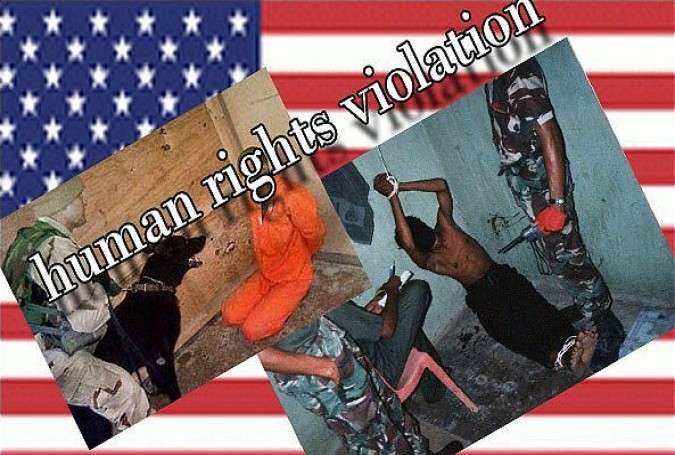
In Guantanamo and Abu Ghraib, prisoners openly face violation of human rights, or people like Gina Haspel, who was directly involved in the U.S. government's torture program, became the CIA director in the Trump administration. 
In the Black and Latin regions, police excessive force has declined. According to Boston University, the systematic killing of black men by the police represents a structural racism in American society, reflects in a judicial system against black communities.
Paul Butler, author of the book Chokehold: Policing Black Men, argues, “If the police patrolled white communities with the same violence that they patrol poor black neighborhoods, there would be a revolution.”
Americans make up about 4.4 percent of the global population but own 42 percent of the world's guns. The highest number of school shootings belongs to America. Since 2002, some 400 students, teachers, and school staff have been killed with guns. Trump and the National Rifle Association (NRA) insist the root of the problem is not guns but a range of issues such as mental health. 
Seventy five percent of the population demands more control over the sale of guns and firearms possession, but the demands of this overwhelming majority are being trampled by the NRA's demands.
The NRA is an American non-profit organization and lobby for gun manufacturers and owners. The organization says it has around five million members  who affect the election process. In the 2016 Presidential election cycle, the NRA spent almost $30 million supporting Trump and $5 million for senators like Marco Rubio of Florida.
Violations of the rights of ethnic and religious minorities, and the strengthening of fascist groups with direct or indirect support from the central government and some state governments has increased this century. This is a worrying scenario for millions of blacks and Latinos and other minorities in the U.S.
The most obvious violation of the human rights agenda is the departure of  the U.S. from the United Nations Human Rights Council. Undoubtedly, American politicians have been aiming to escape accountability for the massacres in Yemen and Palestine, the forced separation of immigrant children from their parents and other horrendous issue. 
Concern for Venezuela, Yemen, Syria, Iraq, and Afghanistan, which began in the last two decades under the name of human rights and democracy, resulted in aggression and violence. The U.S. military expenditures all told at pushing one trillion dollars annually. 
The U.S. military expenditure in 2019 is more than $ 680,000 million, which is more than the combined  budgets of China, Russia, Saudi Arabia, India, France, Britain and Japan. 
Even in economic freedom (12th in the world), or in GDP growth (147 out of 224 countries), such a rating does not exist.
The U.S. is a military system based on warfare, and humanitarian assistance is an instrument to promote chaos and create benefits.
But with the current international situation, what the world is experiencing is actually the slow collapse of a superpower. That's why the U.S. is trying to upset the Maduro government in Venezuela and control others countries in Latin America.

Friday, July 27, 2012

Naked power grab by Egyptian generals

by Zafar Bangash 


It was unrealistic to expect that the military in Egypt would simply roll over and hand power to the elected representatives of the people.
The latest coup against the people was carried out in two steps: first through the “Supreme” Constitutional Court stacked with Hosni Mubarak cronies that disqualified more than 100 members of the People’s Assembly (Egyptian parliament) on June 14; and then through an amended constitutional document issued by the military on June 17. It dissolved parliament and assumed wide ranging powers through the amended constitutional document. It was the second day of polling in the presidential race and the men in uniform signaled that they intended to remain in full control regardless of the election result. The coup also had the blessings of the US despite tepid criticism from the US State Department. Saudi Arabia and the Zionist regime in occupied Palestine also welcomed the move. They all felt the people of Egypt were taking democracy too seriously.
The Supreme Council of the Armed Forces (SCAF), that became the governing body after the former dictator Hosni Mubarak was ousted in February 2011, amended the constitutional document that was first issued in March 2011. The original document had stipulated the temporary nature of the military’s involvement in political affairs and was agreed upon after discussions with numerous political players representing a broad range of opinion in the country.
Under the amended constitutional document, no election for a new parliament can be held until a permanent constitution is written. The body that will draft the constitution will be appointed by the military, the previous one appointed by the elected parliament, was disbanded through an earlier judicial plot. Despite this, the generals still have veto power over the text of any new constitution. With the parliament dissolved — so much for the generals’ respect for people’s wishes — they have also stripped the president of any executive authority. He has been reduced to an administrative functionary whose job will be to carry out the orders of the military without any say in decision-making. Thus, the president will be held accountable for failing to show results if the policies do not work but he will have no input in formulating those policies. The president has also been stripped of the title of commander in chief of the armed forces. After all, what do civilians know about military affairs? These weighty matters are best left to the bright stars of the military. The president will also have no say in the appointment of senior commanders. Similarly, the military’s budget will not be subject to civilian oversight. It must be nice to be a general in Egypt, or indeed in any other Muslim country.
Like their counterparts in Pakistan and Turkey, for instance — and with an equally dismal record of defending the country’s borders against external enemies — the military in Egypt is more like a business enterprise. It owns factories, businesses and other commercial interests. Nearly 80% of all provincial governors are also from the military as are a number of judges. Talent clearly is the monopoly of the military top brass. Those that don’t get it will never get it but the musclemen have made clear that civilians had better get used to the fact that the revolution is over and that it is back to business as usual even if Mubarak is no longer in power. His horrible legacy continues. It would be unrealistic to assume that the military that has been at the helm of affairs for more than 60 years would meekly return to its barracks.
What is astonishing and depressing is that seasoned members of the Ikhwan al-Muslimeen, the most organized political party in the country, also fell for the military’s charm offensive after Mubarak’s ouster. What they overlooked — or deliberately ignored — was that the military has its own institutional interests. If the military did not come out with guns blazing when millions of Egyptians were packing Tahrir Square, it was not because they had any regard for civilian lives. The military top brass knew that any misadventure — fighting an enraged public — would have sparked a total revolution in which the military would be defeated and their wings clipped permanently, as happened in Iran in 1978–1979. Instead, they decided to sacrifice the hated figure of Mubarak hoping this would pacify most if not all the people and over time, the military will resume business as usual. That is exactly what has happened.
Events in Egypt once again show the pitfalls of working through colonial imposed systems in Muslim societies. Regardless of how peacefully members of the Islamic movement work and abide by the most unjust laws, beneficiaries of the old system will not give up power voluntarily. Instead, they will resort to every trick and outright criminal behavior — what better illustrates this than the Egyptian military dissolving the first freely elected parliament — to stay firmly in control of all decision-making processes and monopolize state resources. The military refuses to countenance any oversight of its activities or its budget; they act as a state within a state.
So what should the Ikhwan do in such circumstances? While they have rejected the military’s power grab and brought hundreds of thousands of people into Tahrir Square to express their displeasure saying the gains of the revolution are at risk and “dangerous days” lie ahead, they must take much bolder steps. Merely staying in Tahrir will not make the military lose any sleep. The Ikhwan have strong links with professional syndicates and workers groups; they are also now armed with a popular mandate both in parliament (even if dissolved illegally) and in the presidential polls. They should launch a civil disobedience campaign without resorting to violence to bring the state machinery to a halt. True, the military will use brutal tactics and might also unleash its thugs — the baltagiya — as they did during the three week campaign last year to oust Mubarak. But the Ikhwan leadership will have to remain vigilant. They must not get provoked.
The military must be exposed as a bunch of greedy, power-hungry thugs who should get the boot and be sent back to their barracks. Do the Ikhwan have what it takes to bring about a genuine revolution in Egypt? The next few weeks will tell.

Tuesday, March 13, 2012

Arabian monarchs and the crisis in Syria

A year after two long-entrenched dictators were consigned to the dustbin of history, the shell-shocked monarchies of the Muslim East appear to have regained their composure somewhat. Initially, they appeared to be teetering on the brink but today they are striking back both at home and abroad. Mass arrests of protesters coupled with huge bribes have provided them some breathing room. But even this would not have saved their thrones were they not supported by their western masters in Washington, London and Paris. The tribal monarchies are presenting themselves as champions of democracy and supporters of people’s rights, provided these apply to regimes they do not like. They appear to be having some success in places like Libya and Syria where the uprisings have had open support from such primitive family-based regimes as those in Saudi Arabia, Qatar and the United Arab Emirates (UAE).

An Iranian artist’s rendition of what is happening in Syria.


At home, these regimes have clamped down hard on protesters and dispatched troops to places like Bahrain to crush the people’s legitimate demands expressed through entirely peaceful means. The Saudi regime holds more than 30,000 political prisoners and this number is rising but one would be hard pressed to read about this in the New York Times or hear about it on al-Jazeera, for instance. The tribal-owned network has been a handy tool in the hands of the dinosaurs that rule the kingdoms and sheikhdoms. Like CNN and Fox News, it has gained notoriety for spreading disinformation.


To understand what has transpired and what can be expected in the future, it is important to categorize countries based on their current situation. Tunisia, Egypt and Morocco form the first tier of countries where some changes have occurred following elections. The second group comprises countries like Libya and Yemen where rulers have either been killed (Colonel Muammar Qaddafi of Libya) or forced out of office (Ali Abdullah Saleh of Yemen). In the third category lies Syria where a foreign-backed uprising is underway and has become an open battleground for influence in the Muslim East. What happens in Syria will shape the destiny of the entire region. Ironically, while change in Syria is desirable, its consequences for the larger struggle in the Muslim East will be disastrous. The last category is that of the primitive monarchies in Saudi Arabia, Qatar, UAE, Jordan and Kuwait. To varying degrees, they are all fighting for survival by waging battles on someone else’s territory.


It would be tempting but wrong to conclude that just because elections have been held in Egypt, Tunisia and Morocco that the people’s problems have been solved. The old systems remain entrenched together with their institutional support mechanisms. A few new faces from groups that were traditionally hounded and suppressed have been co-opted into the system but little else has changed. The danger for Islamic parties, whether in Tunisia, Egypt or Morocco is that while they will have to solve the problems bequeathed by the old regimes, they are not free to formulate their own policies. With their hands tied behind their backs, they will be blamed for all the failures. This is what happens to political parties, even those with an Islamic tag, that opt to work within the old corrupt system. It is impossible not to get contaminated by stepping into filth. Some people in Egypt appear to understand this and the youth have still not given up. How far and long they will continue to challenge the old order is difficult to predict.


It is, however, the struggle in Syria and the role played by such tribal monarchies as Qatar and Saudi Arabia that are crucial to understanding the future of the Muslim East. The struggle in Syria is not merely for people’s rights. The more crucial aspect is the assault on the resistance front comprising Hizbullah, Syria, Hamas and Islamic Iran against Zionist Israel. The US is and has always been fully committed to the Zionist entity even at the expense of its own people. It is the dinosaurs of the desert that have now come out of their caves to support Israel openly. The Arabian regimes have always functioned as the first line of defence for Israel even if they tried to hide their subservience behind loud rhetoric. If was the repeated humiliations of these regimes and their spectacular failures to redress Palestinian grievances that gave rise to such movements as Islamic Jihad, Hamas and Hizbullah.


Subservience comes naturally to the Arabian rulers and treachery runs in their blood. They have never had any legitimacy even if defined in the narrow sense of people’s approval of their rule. On the broader canvas, kingship is forbidden in Islam and legitimacy is obtained only when rulers apply divinely ordained laws. On all counts, these rulers are illegitimate and must not be allowed to remain in power. Only the support of Western imperialists keeps them in power. This merely confirms their illegitimacy as far as the people are concerned.


They use such weapons as ethnic, tribal and sectarian divisions to cling to power. The sectarian card is the most potent weapon but they also play the others. Migrant workers from Pakistan, India, Bangladesh and Indonesia, for instance, are treated like slaves by the tribal-based monarchies. Physical and sexual abuse of workers who have no rights is rampant. Sectarianism is always invoked when these illegitimate rulers feel threatened. It is being used in Syria with devastating effect. What is tragic and shocking is that some members of the Islamic movement and ‘ulama’ have also fallen for this. True, the ‘ulama’ have been co-opted through bribes but it is a telling reflection of the sad state of affairs that a Syrian ‘alim, Sheikh ‘Adnan al-‘Arour (residing in Saudi Arabia) would appeal to the Israelis to save the people of Syria without the Saudi regime, that has no diplomatic relations with the Zionist entity, arresting him. If some ‘alim in Saudi Arabia were to call upon Islamic Iran to help the people, it is safe to assume he would be immediately arrested. For the Saudi regime, Islamic Iran is an enemy but Zionist Israel is a friend!


If the people of Syria do not wake up to this reality, they might end up in worse shape than what they currently face. They must ask themselves: do they want to live in subservience to the US and Zionist Israel or even worse divide Syria along sectarian or ethnic lines? A century ago, the British came promising “liberation” of the Arabians from “Ottoman imperialism.” The result was breakup of the Muslim East into unstable nation-states. Do they want to repeat the same mistake all over again?