Wednesday, September 30, 2026

Scraping the bottom of the arsenal: MQ-9 losses in war against Iran force US to bring back retired MQ-1

By Mohammad Molaei

On 31 May 2026, US Central Command (CENTCOM) issued a statement that an American “MQ-1” drone had been engaged and destroyed by Iranian air defenses in the Persian Gulf region.

The aircraft had violated Iranian airspace when it was shot down. But the engagement itself was not the real story; the designation of the drone was the real story.

The US Air Force had formally retired the MQ-1 Predator in March 2018, declaring its larger and far more capable successor, the MQ-9 Reaper, sufficient for every mission the Predator had performed. Eight years later, an aircraft bearing that designation was flying a combat mission over one of the most militarized regions and was effectively shot down.

Whether the downed aircraft was a resurrected Air Force MQ-1B pulled from the Arizona boneyard or the Army’s still-serving MQ-1C Gray Eagle, CENTCOM has declined to say.

Either possibility points to the same underlying arithmetic. The Reaper fleet – the backbone of America’s persistent surveillance and precision-strike operations across the West Asia region – has been losing aircraft faster than production, procurement, or prudence can replace them.

The Pentagon is therefore reaching for whatever airframes it can still put into the air.

The Reaper’s troubles are quantifiable. The Yemeni military in Yemen has maintained a steady rhythm of shootdowns since late 2023; Iran has destroyed more than 50 during the ongoing war since late February. The Predator’s second act is not the product of a strategic choice, but it is what happens when the ledger refuses to balance.
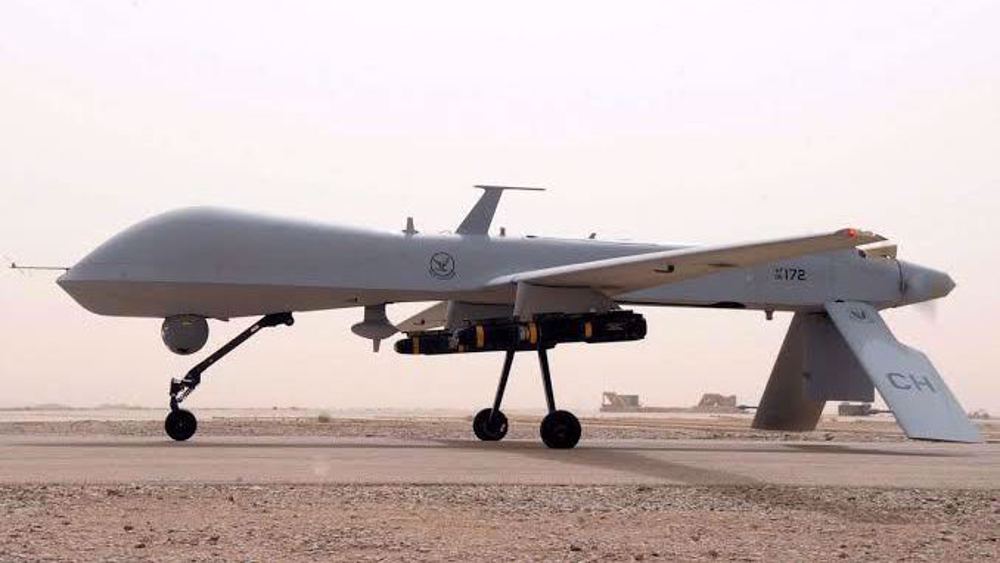
An MQ-1 Predator drone armed with two AGM-114 Hellfire missiles. The MQ-1 Predator was retired by the U.S. Air Force in March 2018. Eight years on, aircraft bearing its designation are flying,and dying,over the Persian Gulf.

A ledger of losses: Yemen, Iran, and the Reaper’s worst year

The attrition of the MQ-9 fleet has unfolded on two distinct fronts, and each tells a different story about the war.

The first is Yemen. Since the Red Sea crisis began in late 2023, Yemeni forces, using a mix of older surface-to-air missiles and increasingly sophisticated fire-control practices, have shot down MQ-9 Reapers at a pace that would have been unthinkable a decade ago.

By mid-2026, Yemeni military and coalition forces had accounted for roughly 30 MQ-9 shootdowns. These are not isolated incidents but a demonstrated and repeatable capability.

The second front is Iran, and here the losses carry greater strategic weight. By mid-September 2026, the 53rd MQ-9 had been shot down by Iranian air defenses.

During the 39 days of US-Israeli war of aggression against Iran that began on 28 February 2026, dozens of US military aircraft were destroyed or damaged, with MQ-9s accounting for the bulk of the losses.

The Pentagon’s own Lead Inspector General report to Congress, covering the US attacks on Iran from April through June, put US MQ-9 losses in the war at roughly 30 – figures that follow the established pattern of minimizing the scale of American losses in Iran.

The American military has lost roughly 30 percent of its entire MQ-9 fleet over Iranian skies. At an estimated $30 million to $50 million per aircraft, depending on configuration, the losses represent a cost of billions of dollars for a single weapon system.

The picture that emerges is not simply of an aircraft being attrited in combat. It is of a system being methodically ground down by the Iranian air defenses that studied it for years and developed relatively inexpensive, effective means of killing it.
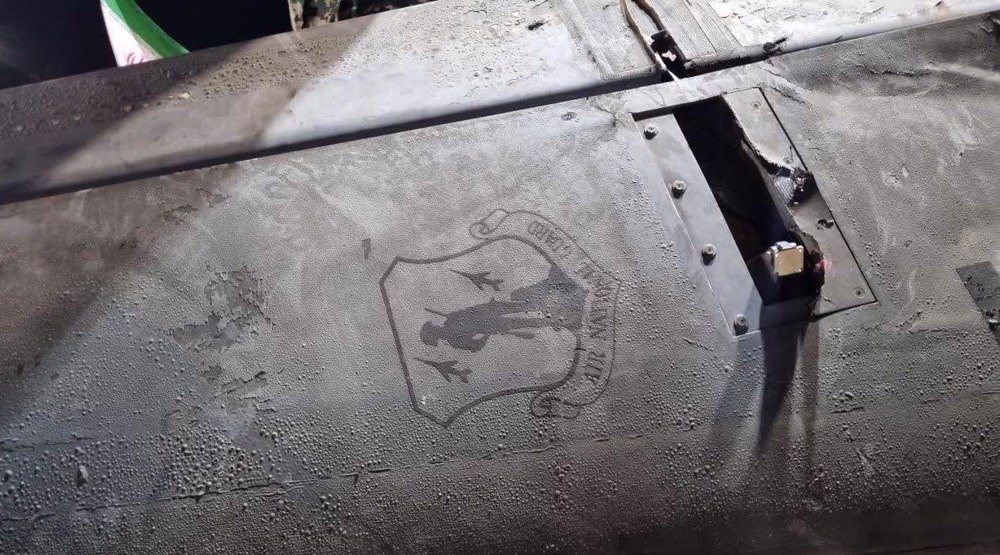
Wreckage of an MQ-9 Reaper downed over Iran, 2026. The Air National Guard insignia suggest that, following the decimation of the Air Force Reaper fleet, the American military has been forced to redeploy systems meant for the homeland to the Persian Gulf theater.

Why Reaper is irreplaceable and why Iran targeted it

The losses matter because of what the MQ-9 actually does. No manned aircraft can loiter over a target area for twenty-plus hours at a stretch; no satellite can maintain continuous watch over a moving vehicle and cue a missile in real time.

Persistent ISR – unblinking, hours-long surveillance of a fixed piece of terrain – is precisely the niche the Reaper was built to occupy, and it is one the Pentagon cannot currently fill at comparable scale by any other means.

In the Persian Gulf, that niche has one dominant application: finding Iran’s mobile ballistic-missile launchers. The 40-day war and, before that, the 12-day war the year before demonstrated essentially the same lesson.

Mobile launcher-and-reload tactics could blunt the advantages of air superiority; the most reliable counter was to maintain constant surveillance over the terrain where launchers concealed themselves and strike within minutes of detection.

That is a job for a high-endurance unmanned aircraft, and it has been among the most important roles of MALE (medium-altitude, long-endurance) UAVs throughout the two imposed wars.

Iran understood this calculus and adapted accordingly. In the aftermath of the 12-day war, Tehran invested heavily in electro-optical detection and tracking systems designed specifically to locate and engage slow, high-flying surveillance drones.

The results became visible across the region. Israeli Hermes 900s, Eitans, and Herons – the persistent-ISR and strike fleet operated by the Israeli regime – suffered heavy losses when pressed against these defenses. That, in turn, helps explain why the American Reaper became more significant during the later stages of the conflict and in the post-war flare-ups that followed.

Someone still has to watch the launchers. By 2026, however, the proliferation of electro-optical air-defense systems had made that job one of the most dangerous forms of surveillance in the sky.

The strategic logic cuts both ways. The Reaper is expensive; a configured airframe can cost up to roughly 50 million dollars, and Air Force fact-sheet accounting puts some variants at nearly 82 million dollars in today’s money, because it is exquisitely capable.

But a platform that costs that much and dies that often is no longer an asset of persistence; it is a liability of persistence. Iran’s retaliatory campaign was designed not just to blind American eyes but to make persistence unaffordable. By that measure, the campaign is working.
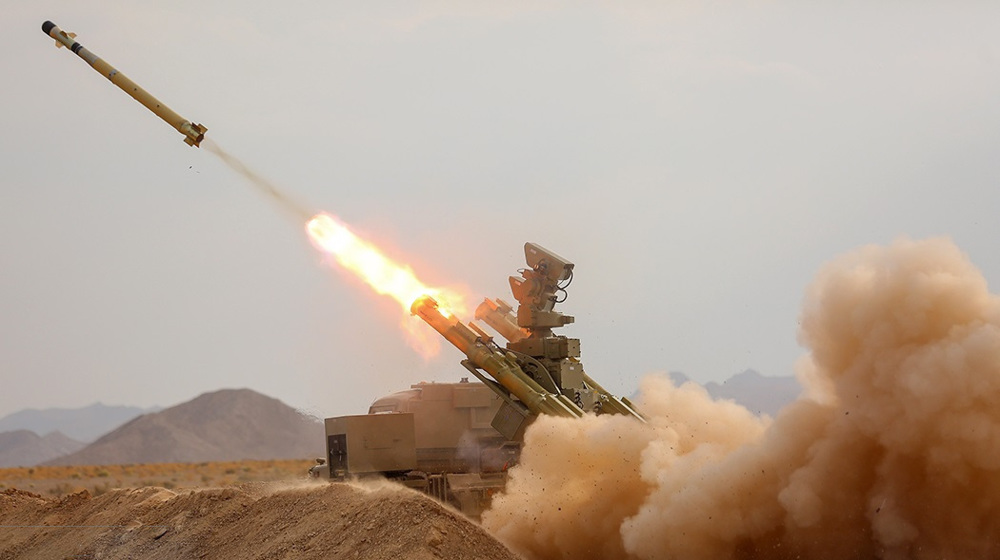
The Iranian Majid (marketed internationally as AD-08 by the Iranian Ministry of Defense)short-range surface-to-air missile system has devastated the Israeli-American MALEUAV fleets.

Back from the boneyard: The MQ-1’s second act

The Reapers are needed everywhere: in the Pacific, on hostile missions across Africa, for homeland surveillance, and beyond. The United States cannot strip every other theater of MQ-9s to sustain its war against Iran. And with no meaningful production pipeline running, every loss is effectively permanent.

It is against this backdrop that the appearance of MQ-1s over the Persian Gulf in 2026 must be understood. The US Air Force retired the MQ-1B Predator in March 2018, transferring its missions to the MQ-9.

As of September 2024, dozens of MQ-1B airframes remained in storage at AMARG, the aircraft boneyard at Davis-Monthan Air Force Base in Arizona. A mothballed MQ-1B, by contrast, costs relatively little to reactivate – assuming its airframe remains structurally sound.

But the capability gap between the two aircraft is not cosmetic, and it is worth describing in concrete terms rather than technical ones.

The MQ-1 is slower and lighter, and its sensor ball belongs to an earlier generation. Its weapons load is limited to a pair of Hellfire missiles, compared with the Reaper’s substantially heavier payload and access to larger munitions. Its survivability against even modestly modernized air defenses is also poorer: it is smaller, slower, and operates at lower altitudes.

The Predator cannot do the Reaper’s job. What it can do is serve as the Reaper’s understudy: orbiting over the Persian Gulf for hours and absorbing the risks that the more valuable fleet can no longer afford to carry. It is a stopgap, not a substitute – and everyone involved knows it.

Tankers, tanker lanes, and the Strait of Hormuz

Recent MQ-1 shootdowns have occurred over the Persian Gulf and near Qeshm Island, the Iranian island that sits astride the Strait of Hormuz, through which roughly one-fifth of the world’s oil supply transits.

American drones are not sightseeing there. They are monitoring tanker traffic, watching for Iranian fast-attack craft, mine-laying activity, and missile launchers; maintaining overwatch of naval assets; and searching for the mobile systems that have kept the strait closed for months.

It is dangerous and round-the-clock work, and precisely the kind of mission for which the United States cannot afford to go blind. For the US Navy, the stakes are direct.

Carrier strike groups and escort vessels operating outside the Persian Gulf depend on the persistent drone layer above them for early warning of small-boat swarms, anti-ship missile launches, and other threats, including submarine activity.

Thinning that layer does more than reduce intelligence collection. It erodes the protective envelope that force-protection planning has relied upon for two decades.
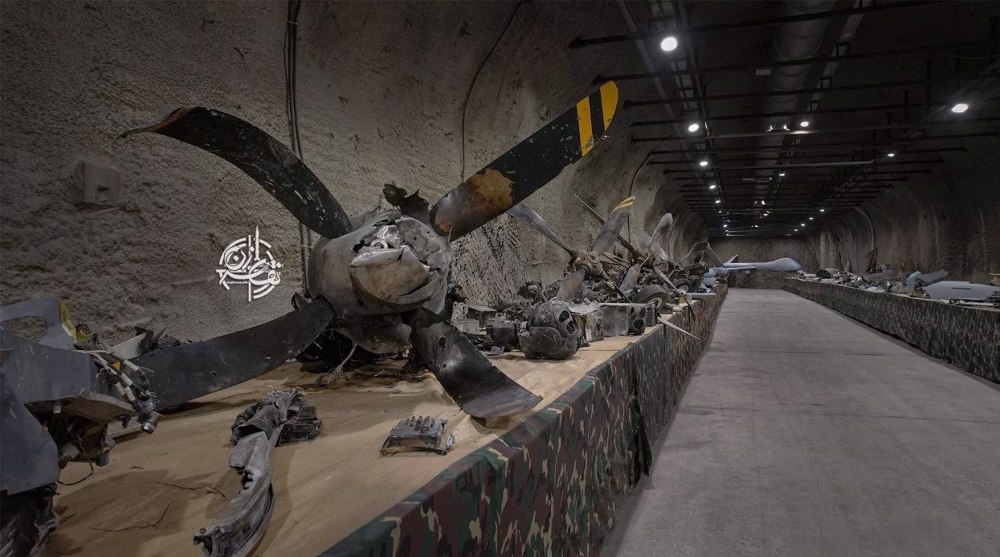
What comes after the backstop

Zoom out, and the arithmetic becomes a curve. With no new Reapers rolling off a production line, and with the MQ-1 reserve now drawn into combat and suffering staggering losses of its own, the United States faces a near-term window in which its uncrewed ISR and strike presence over the Persian Gulf becomes considerably narrow and almost close to being shut.

Surveillance gaps over the strait, longer intervals between orbits, and increasingly difficult decisions about which regions receive coverage are no longer hypothetical. They are becoming the operating condition.

 “As we get to the end of the MQ-9 life, there was some early talk of where do we want to go afterwards, and candidly, as a result of some of the losses that we've experienced in combat operations, that discussion sort of got accelerated,” Lt. Gen. Christopher J. Niemi, the service’s chief modernization officer, told reporters recently.

That acceleration has produced the Massed Modular Aircraft program: a roughly $10 million airframe, before sensors and mission systems, intended to be procured in quantities of at least 180, with a 2,800-pound payload and long combat radii.

The philosophy is attritability. “You're going to lose more military hardware in future wars than you have historically, and that's what's driving us to this sort of fundamental principle that we need things that are easier to produce, cheaper to buy, and that we can afford to lose more of them,” Niemi said. “Right now, we don't have a whole lot of that.”

Not everyone accepts the premise. “The MQ-9's unique combination of endurance, payload, range, sensors, weapons, connectivity, adaptability and reliability is precisely what enables mission effects that others struggle to replicate,” said C. Mark Brinkley, a spokesperson for manufacturer General Atomics, who noted that the Reaper has “been called the MVP of Epic Fury, for good reason.”

The Senate Armed Services Committee, meanwhile, has backed the platform in its version of the 2027 military authorization bill, limiting retirements and calling for additional purchases.

But the US Senate cannot legislate airframes out of a missile’s path. Whatever the future fleet looks like, the present one is shrinking, and the interim answer is an aircraft the US Air Force discarded eight years ago.

The broader signal to the region may be the most consequential part. Iran and Yemen have demonstrated that a patient, relatively low-cost investment in air defenses can impose losses on an expensive surveillance fleet faster than the American industrial and procurement system can replace them.

Deterrence in the Persian Gulf has long rested on the assumption that American eyes never blink. The return of the Predator suggests, quietly but unmistakably, that those eyes now blink and are close to being blinded, which spells doom for the US regional hegemonic architecture.

From ‘How Will This End For Iran’ to ‘When America Walks Away’: A tale of two Economist covers

By Maya Kareen

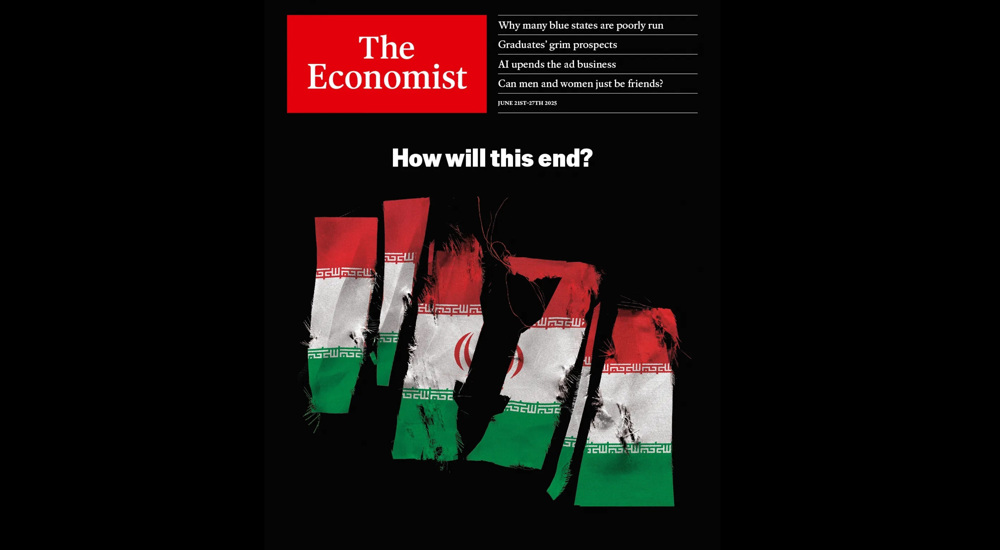
Nearly 466 days ago, just seven days into the unprovoked and illegal US-backed Israeli military aggression against Iran, The Economist provocatively placed a torn Iranian flag on its cover and asked: “How will this end?”

The image was widely interpreted as a metaphor for the possible collapse or fragmentation of the Islamic Republic in the face of overwhelming military force.

At the time, the narrative surrounding Iran was dominated by predictions of its imminent defeat, the weakening of its leadership, and even the possible collapse of the Islamic Republic under the weight of an aggression that came amid Iran-US indirect nuclear talks.

The article went on to ask whether what it described as Israel’s first war against Iran “will also be the last,” or whether it would “lead to a series of Iran-Israel wars that mire” West Asia in years, if not decades, of further violence.

Written before the United States directly joined the war of aggression by illegally bombing Iran’s Fordow, Natanz, and Isfahan nuclear facilities on June 22, the article also suggested that Washington should move beyond “merely defending Israel and deterring Iran” and join the occupying regime in attacking Iran’s peaceful nuclear program.

Yet even then, The Economist warned that such a war could spiral into a broader regional war, sending energy prices soaring by targeting Saudi Arabia’s oil infrastructure or blocking the Strait of Hormuz, a vital artery for global energy supplies.

Iran, however, did not turn the war into a regional war at that stage, nor did it close the Strait of Hormuz. It retaliated decisively and inflicted massive damage on the Zionist regime.

Following a powerful wave of retaliatory strikes against Israeli-occupied territories, the Islamic Republic demonstrated that it retained the ability to impose high costs on its adversaries.

After 12 days of war, Israel and the United States ultimately agreed to a ceasefire. The confrontation and US hostility, however, were far from over.

On February 1, the martyred Leader of the Islamic Revolution, Ayatollah Seyyed Ali Khamenei, warned that any new war initiated by the United States against Iran would inevitably become a regional war, engulfing all countries across the region.

Less than a month later, on February 28, Washington and Tel Aviv launched a second round of military aggression against Iran, again in the middle of nuclear diplomacy.

On the very first day, the United States and Israel assassinated Iran’s Leader and several senior commanders, apparently calculating that “decapitating” the country’s leadership would pave the way for the rapid collapse of the Islamic Republic and the so-called “regime change.”

That calculation, however, once again proved wrong.

Iranian armed forces mounted a sustained and forceful response, launching wave after wave of retaliatory strikes against Israeli-occupied territories and US military bases across the region.

Far from collapsing under the pressure, Iran demonstrated its capacity to absorb the initial shock, reorganize its command structure, and continue fighting on multiple fronts.

The Economist’s June 2025 cover, featuring a torn Iranian flag and the question: “How will this end?” Published during the first days of the Israeli war on Iran.

The war eventually reached the Strait of Hormuz, as Iran asserted its control over the strategic waterway, leading to severe disruption in global energy markets and exposing the vulnerability of one of the world’s most strategically important chokepoints.

After 40 days of war, the United States and Israel were once again compelled to accept a ceasefire. This time, the Trump administration even agreed to an Iranian proposal to end the imposed war.

The outcome was a striking departure from the expectations that had accompanied the opening hours of the aggression: instead of so-called “regime change,” Washington and Tel Aviv found themselves confronting an Iran that had endured the assassination of its senior leadership, absorbed unprecedented attacks and continued to resist and inflict blows on the enemy.

Since the April 8 ceasefire, exchanges of fire have continued intermittently, while the Strait of Hormuz has remained largely closed to hostile vessels.

Having failed to achieve its objectives through military means, Washington has increasingly turned to economic pressure, imposing new sanctions and pursuing a naval and aerial blockade against Iran. Yet the Islamic Republic has continued to withstand the pressure.

Also, despite sanctions, threats, political pressure and military aggression, Tehran has maintained that the Strait of Hormuz will only be reopened once the United States ends the imposed war on all fronts.

And now, more than 15 months after that torn Iranian flag appeared on its cover, The Economist has returned with an image that could hardly be more different.

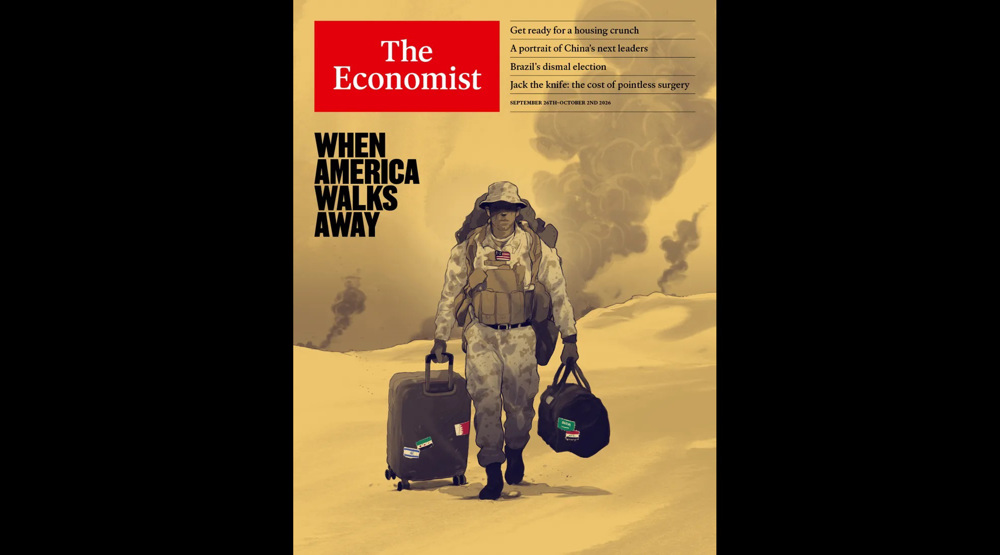
Gone is the question of how Iran will end. Instead, the magazine has placed a new question at the center of its latest cover: “WHEN AMERICA WALKS AWAY.”

The change in imagery reflects a striking shift in the narrative. In June 2025, the focus was on Iran’s survival. Today, the question being raised is about the future of American power in West Asia.

The Economist’s September 2026 cover, featuring the question: “WHEN AMERICA WALKS AWAY,” more than 15 months after its earlier cover focused on Iran’s future.

But the transformation in the narrative is not limited to the language used on The Economist’s covers.

Over the past 15 months, the war has also produced a growing record of military, financial and strategic costs for the United States and its military-industrial complex.

Washington launched the war on Iran with many ambitious objectives, including crippling Iran’s nuclear and missile capabilities in order to undermine and weaken the Islamic Republic.

Yet months of war have instead left the United States facing tens of billions of dollars in expenses, damaged military facilities across the region, depleted stocks of some of its most sophisticated interceptors and other munitions, and casualties among its service members.

The following figures and assessments, many of them coming from US government agencies, American media outlets and Western think tanks, offer a picture of the price Washington has paid for the war — and of the widening gap between the objectives announced at its outset and the situation that has emerged months later.

$43.6 billion — and the bill is still rising

On September 18, The Washington Post reported that the US Central Command (CENTCOM) had estimated the cost of the war at $43.6 billion as of early September.

The figure included $28 billion to replace munitions expended during the war on Iran and more than $4.3 billion for equipment lost or damaged. The breakdown also put Air Force operating costs at more than $6.6 billion, Navy costs at about $2.2 billion, and Army costs at roughly $1.6 billion.

Crucially, the $43.6 billion estimate does not include the future cost of rebuilding or repairing damaged US military facilities across West Asia, according to the report.

The Congressional Budget Office (CBO) also published its own assessment on September 15, estimating that the war on Iran had already cost the Department of War approximately $38 billion as of August 1.

CBO said the figure included the replacement of expended munitions and equipment lost in battle, increased flying hours, other operational costs, and additional fuel costs.

But the most important part of the CBO assessment was its warning about the continuing cost.

It said if the war remained at the relatively low intensity seen in May and June, another month of fighting would cost approximately $2 billion. If fighting returned to the intensity seen in July, the monthly cost could rise to approximately $3 billion.

CBO also stressed that its $38 billion estimate did not include all costs borne by other parts of the federal government and did not include certain costs already incorporated into the regular military budget.

At least 228 US military assets damaged

The financial bill was accompanied by substantial physical damage to US military infrastructure.

On May 6, The Washington Post published a satellite-image investigation finding that Iranian attacks had destroyed at least 228 structures or pieces of equipment at 15 US military sites across West Asia.

The Post’s analysis identified 217 structures and 11 pieces of equipment that had been damaged or destroyed. The targets included hangars, barracks, fuel depots, aircraft, radar systems, communications equipment and air-defense systems.

The newspaper examined more than 100 high-resolution satellite images released by Iranian media and independently verified 109 of those images against imagery from the European Union’s Copernicus satellite system and commercial satellite imagery where available.

It found no evidence that the Iranian imagery had been manipulated. The Post also reported that the destruction was “far larger” than what had been publicly acknowledged by the US government.

The extent of the damage was subsequently reinforced by the US government’s own watchdog. In a report released on September 14, the Pentagon Inspector General provided what the Associated Press ​​​​​​said was the most comprehensive official accounting to date of the war’s impact on US military facilities.

The report said Iranian attacks had damaged or destroyed hundreds of buildings and other structures at US bases in Kuwait, Bahrain, Qatar, the United Arab Emirates, Saudi Arabia, Iraq, Oman and Jordan.

The significance of this finding is that the damage was no longer based solely on satellite analysis or Iranian reports. It was acknowledged in an official US government assessment.

Dozens of MQ-9 Reapers and other aircraft lost or damaged

The Pentagon Inspector General’s findings also provided a clearer picture of damage to American aircraft.

According to Stars and Stripes on September 15, the war had resulted in damage to or destruction of as many as 30 MQ-9 Reaper drones, along with four F-15 fighter aircraft and more than six KC-135 tanker aircraft.

The report also noted that the cost of repairing or replacing some of these assets had not yet been incorporated into the Pentagon’s overall war-cost estimate.

In other words, even the $43.6 billion figure should not necessarily be regarded as the final bill.

The actual figure, however, is much higher. More than 50 MQ-9 Reapers have disappeared over Iranian skies, according to independent estimates. 

The war has depleted America’s missile-defense stockpiles

Perhaps more consequential than the dollar value of the weapons fired is the depletion of America’s stockpile of advanced interceptors.

In its May 6 report, The Washington Post, citing an analysis by the Center for Strategic and International Studies (CSIS), reported that between February 28 and April 8 the US military had used at least 190 THAAD interceptors and 1,060 Patriot interceptors.

Those numbers represented approximately 53 percent of the US prewar THAAD inventory and 43 percent of its Patriot inventory. By September, the assessment had become even more concerning.

The Stimson Center, in a report published on September 22, said that by August the United States had used approximately 80 percent of its THAAD inventory and around half of its Patriot interceptors.

The same report said the Army had used “virtually all” of its ATACMS and Precision Strike Missiles (PrSM) — long-range weapons that would also be important in a potential conflict involving China.

According to Stimson’s assessment, replenishing some of these stocks could take years. CSIS estimated that Tomahawk inventories might not return to prewar levels until late 2030 or early 2031, while Patriot and THAAD inventories could take at least three years to recover.

The costs extend beyond the battlefield

The financial impact has also spread beyond the Pentagon. The CBO said on September 15 that the disruption of oil and gas shipments through the Strait of Hormuz had increased global energy prices, contributing to higher prices for gasoline, diesel and jet fuel in the United States.

CBO estimated that the war would leave US inflation in the first quarter of 2027 0.5 percentage points higher than it had projected in February 2026, while core PCE inflation was projected to be 0.3 percentage points higher.

The agency also estimated that three-month Treasury bill rates would be nearly 0.2 percentage points higher in 2026 than previously projected.

The Stimson Center went further, estimating the direct and indirect cost of the war at approximately $220 billion and putting the average household’s share at roughly $1,650. It attributed much of that wider economic burden to higher energy prices.

Stimson said that by September 15, average US gasoline prices had reached $4.32 per gallon, a 45 percent increase since the war began, while diesel prices had risen by approximately 70 percent.

Damage to US military facilities

Beyond the billions spent on weapons, operations and damaged military equipment, Washington also incurred substantial military, diplomatic and emergency expenses.

On September 14, the Pentagon Inspector General, as reported by The Washington Post, said Iranian attacks had caused approximately $184 million in damage to US military and diplomatic facilities in Iraq, Kuwait, Saudi Arabia and the UAE.

Separately, the US State Department reported around $113 million in war-related and emergency expenses, nearly $80 million of which was associated with the evacuation of diplomats, their families and other US citizens and eligible individuals.

Around 9,000 US citizens were evacuated from the region during the war against Iran.

Iran’s missile program has begun rebuilding

The depletion of American interceptor stocks becomes particularly significant when considered alongside the continued resilience of Iran’s missile program.

On September 10, The Wall Street Journal reported that Iran had resumed production of ballistic missiles, despite the extensive US and Israeli attacks on its missile infrastructure during the opening phase of the war.

According to the report, US and regional officials said Iran was assembling both liquid- and solid-fuel missiles using stockpiled components at underground facilities.

Intelligence pointed to activity at several underground sites, including the Khojir missile facility, while Iran was also working on new underground assembly locations.

The report concluded that the renewed production underscored the difficulty of fully dismantling Iran’s missile program — one of the stated objectives of the war.

Six months on, the original objectives remain out of reach

This brings the military expenditure back to the central question: what did all of this cost actually achieve? Washington continues to describe the war on Iran as having severely degraded the country’s military capabilities.

But independent Western assessments point to a substantial gap between the original objectives and the situation that has emerged.

The Stimson Center, in its September 22 assessment, said the administration initially went to war with objectives that included ending Iran’s nuclear program, destroying its missile industry, annihilating its navy, and ending its support for the Axis of Resistance.

It concluded that the United States had failed to achieve those objectives. Instead, Stimson said, the mission subsequently narrowed to the reopening of the Strait of Hormuz — a goal that became necessary precisely because the war itself had disrupted shipping through the waterway.

“Six months later, little progress toward those goals has been made, while the mission has largely narrowed to the single task of reopening the Strait of Hormuz, a waterway the war itself closed.”

The figures tell the story of that widening gap: $43.6 billion in US military costs; $28 billion needed merely to replace expended munitions; more than 4.3 billion dollars in damaged or lost equipment; hundreds of damaged military structures; depleted THAAD and Patriot stocks; and a weapons-production system facing years of replenishment.

And yet, according to the Wall Street Journal, Iran is already rebuilding parts of its ballistic-missile production capability.

That contrast — between the scale of resources committed by Washington and the difficulty of translating military force into its original political and strategic objectives — is perhaps the most important evidence behind the dramatic change in the narrative surrounding the war.

And now, back to The Economist

This is where the latest Economist cover becomes particularly relevant.

More than 15 months after the magazine placed a torn Iranian flag on its cover alongside the question “How will this end?” the question on its new cover is no longer centered on Iran.

It asks: “WHEN AMERICA WALKS AWAY.”

“America seems to be stuck in the Middle East. It has no easy way out of its war with Iran. Yet the conflict, however it ends, will in fact mark something quite different: the moment when America pulls back from the region—in the sense that it finally relinquishes its hegemony there,” the article reads.

In a September 25 editorial, The Economist’s Deputy Editor Robert Guest makes a similar assessment, writing that the United States has enjoyed decades of dominance in the region, but that this era is now coming to an end.

“Now, as Mr Trump seeks a way out of his ill-planned war, something momentous is occurring. As we describe in our cover package, American hegemony in the Middle East is ending,” Guest writes.

Rubio invokes ‘blackmail’ to hide US crimes in Iran

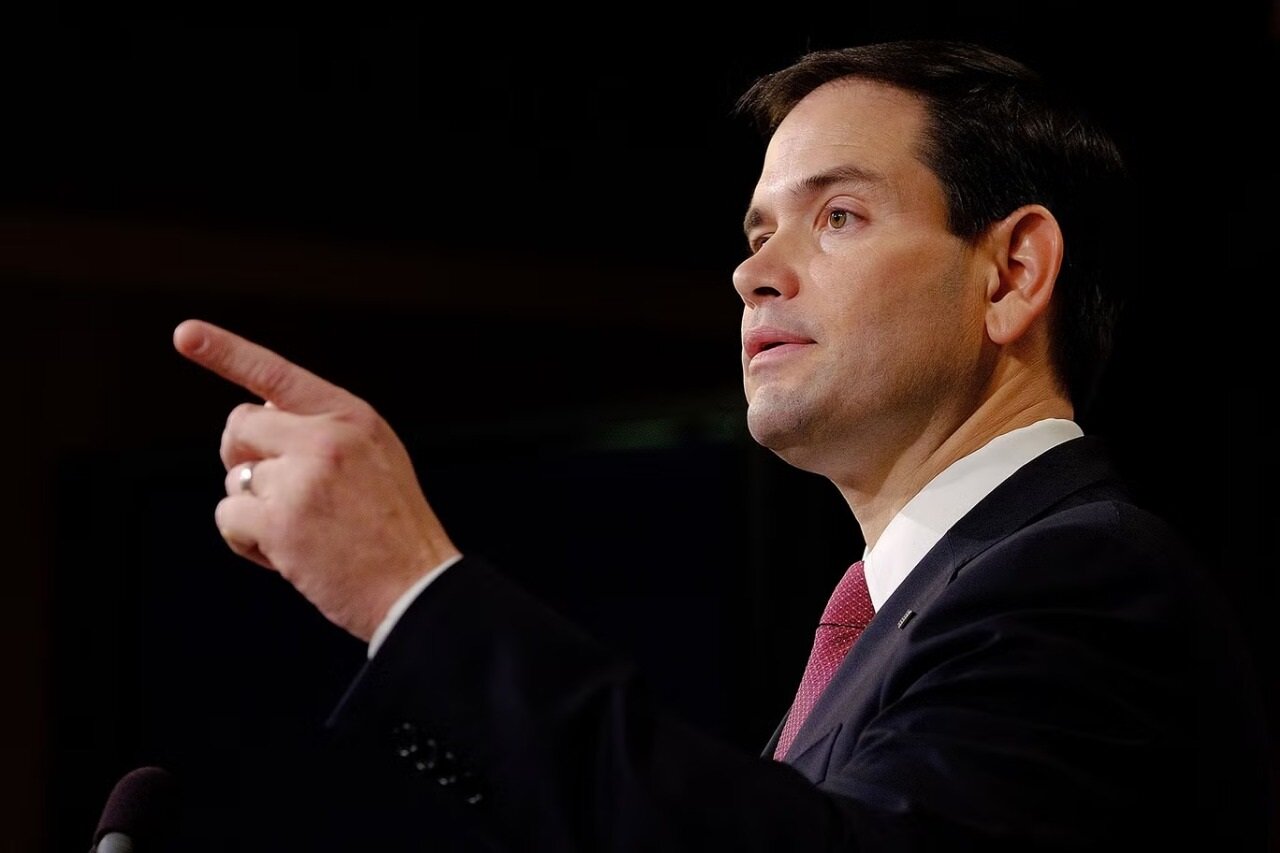
TEHRAN — US Secretary of State Marco Rubio is once again making inflammatory claims about Iran in an apparent attempt to divert attention from Washington’s own record of aggression and bloodshed.

In an interview with Fox News, Rubio claimed that a nuclear-armed Iran would “blackmail the world and kill people.” He portrayed a hypothetical scenario in which Tehran could disrupt maritime trade, impose tolls and cut off energy supplies through the Strait of Hormuz. Rubio went further, claiming that Iran is led by officials with an “apocalyptic vision” who seek to bring about the end of the world.

Such claims are intended to portray Iran as a threat to global security, but they overlook the reality of US military actions and policies in the region. While Rubio speaks of hypothetical threats Iran might pose in the future, the United States and Israel have already inflicted death and destruction on the Iranian people.

On February 28, the United States and Israel launched a massive military assault against Iran. The attack resulted in the deaths of thousands of Iranian citizens. While Rubio warns about what Iran might do in a hypothetical scenario, US-made weapons have already been used in attacks that killed civilians inside Iran.

Among the most shocking incidents was the direct strike on a school in Minab, along with attacks on civilian areas in Lamerd. International observers and human rights organizations have raised serious concerns over the legality of such attacks and described some of them as possible war crimes. Striking a school filled with children cannot be justified as an act of self-defense, yet Rubio and other US officials continue to focus on alleged future threats from Iran while avoiding scrutiny of Washington’s own military actions.

It is particularly striking for a US official to accuse Iran of “blackmail” and violence. For decades, Washington has used economic sanctions, military pressure and political intervention against countries that challenge its policies. Iran has itself been subjected to extensive US sanctions intended to exert pressure on its economy and government. Washington has also pursued aggressive measures against governments it opposes, including Venezuela, where the United States abducted President Nicolás Maduro.

The US role in the Gaza war has further undermined Washington’s claims to be defending human rights. The US government has continued to provide Israel with weapons, financial support, and diplomatic backing despite the enormous civilian death toll in Gaza. Against this backdrop, Rubio’s warnings about the protection of human life ring hollow to Iran and many others across the world.

Rubio’s claims about the Strait of Hormuz also overlook Iran’s longstanding role in the security of the Persian Gulf and the strategic waterway. Iran has repeatedly emphasized the importance of maintaining regional stability and protecting its sovereignty in the face of US military deployments, Israeli threats and sanctions.

Iran’s stated position is not about seeking an “apocalypse,” as Rubio alleges, but about defending its sovereignty, national interests and right to pursue an independent foreign policy free from foreign coercion.

Things Fall Apart. Chinua Achebe, Africa, and the Vision of Civilizational Renewal

By Salim Mohamed Badat

Introduction: When Literature Becomes a Civilization’s Memory

Among the greatest works of African literature stands Things Fall Apart, a masterpiece whose influence has extended far beyond the borders of Nigeria.

Published in 1958, on the eve of Nigeria’s independence from British colonial rule, Chinua Achebe gave Africa something that had too often been denied: its own voice.

For centuries, Africa was largely portrayed through the eyes of outsiders. Colonial literature frequently depicted the continent as a place without history, philosophy, or civilisation, as though African societies existed in darkness until Europe arrived carrying the supposed light of progress.

Such portrayals were not merely literary misunderstandings. They became powerful ideological tools that helped justify conquest, exploitation, and imperial domination.

Achebe challenged this narrative not through anger or political slogans, but through the power of storytelling.

He did not write a political manifesto. He wrote a human story. Through the life of Okonkwo, a respected wrestler, warrior, farmer, husband, and leader of the Igbo people, Achebe introduced readers to a society with its own institutions, laws, poetry, philosophy, commerce, diplomacy, spirituality, and moral traditions.

This was not a civilisation waiting to be discovered. It was a civilisation already alive.

Restoring Africa’s Forgotten Voice

The genius of Things Fall Apart lies in Achebe’s honesty. He neither romanticised nor condemned traditional Igbo society. Instead, he presented it as every great civilization truly is: complex, imperfect, and human.

There were traditions worthy of admiration. There were practices that required moral reflection. There were strengths and weaknesses. But Achebe’s central argument was undeniable: The existence of imperfections within African societies could never justify the destruction of those societies or the claim that Africans required foreign domination in order to become fully human.

This was Achebe’s great correction to history. He restored African agency. He restored African memory. He restored African dignity.

The tragedy of Okonkwo therefore becomes far greater than the tragedy of one individual man. His life represents the collision between two worlds.

On one side stood an African civilisation that had developed over centuries, rooted in communal responsibility, ancestral memory, social order, and carefully established systems of leadership.

On the other side stood European colonialism, a system supported by military power, political authority, economic ambition, and the conviction that European civilisation represented the highest stage of human development. The encounter between these worlds would permanently transform Africa.

Colonialism and the Breaking of Civilisational Confidence

The arrival of colonial rule did not simply introduce new ideas. It reordered power. It displaced indigenous institutions. It weakened traditional leadership. It fractured communities. It transformed systems of education. It altered legal structures. It redirected economic relationships.

But perhaps the deepest impact of colonialism was psychological. Colonialism’s greatest victory was not only the conquest of territory.

Its deepest conquest was the shaping of how people viewed themselves. A nation can recover stolen land. A people can regain political independence. But when a society begins to doubt the value of its own history, its own culture, and its own ability to contribute to humanity, the wounds become far more difficult to heal.

Achebe understood this reality. Throughout his life, he challenged narratives that reduced Africa to images of poverty, conflict, and dependency. He reminded the world that before European colonial expansion, Africa possessed kingdoms, empires, centres of learning, systems of trade, judicial traditions, architecture, literature, philosophy, and forms of governance.

His message was not a call to return blindly to the past. It was a call to remember. To remember that Africa did not enter history through colonialism.

Africa already had history. To remember that Africa did not discover civilisation through Europe. Africa already possessed civilisations. To remember that dignity does not come through imitation. It comes through knowing who you are.

The Questions That Still Remain

This is why Things Fall Apart continues to speak powerfully to generations of readers. Achebe’s novel is not only about nineteenth, century Igboland. It is about every society forced to confront questions of identity.

What happens when a people lose confidence in themselves? What happens when a civilisation begins to see itself only through the eyes of others? What remains when memory is replaced by borrowed narratives?

These questions remain relevant today.

Across much of Africa, political independence was achieved, yet intellectual and cultural dependence often continues.

Colonial governments disappeared, but many assumptions about education, development, success, and identity remain influenced by inherited colonial frameworks.

Political sovereignty is one achievement. Civilizational confidence is another. And it is here that the Islamic history of Africa offers an important perspective.

Africa Before Colonialism: Islam, Knowledge, and the Civilizational Heritage of the Continent

Long before the arrival of European colonial powers, Islam had already become deeply woven into the historical fabric of Africa.

From the earliest migration of Muslims to the African continent during the lifetime of the Prophet Muhammad ( saw), to the great centres of scholarship that later emerged across North Africa, the Sahel, East Africa, and West Africa, Islam became part of Africa’s own civilizational story.

This distinction is essential. History requires honesty and precision. Christianity, for example, is not synonymous with European colonialism. Ancient Christian communities existed in Africa centuries before European empires emerged. The churches of Ethiopia and Egypt stand as testimony to Africa’s ancient Christian heritage.

Likewise, Islamic history must be understood with nuance. Muslim societies, like all human societies, experienced political conflicts, internal struggles, and human imperfections. No civilisation is free from the complexities of history.

Yet the manner in which Islam spread across many parts of Africa was fundamentally different from the later European colonial experience. Islam was often carried through networks of trade, scholarship, and spiritual teaching rather than through a system of overseas territorial conquest.

Merchants crossed the Sahara carrying goods and ideas. Scholars travelled with books and manuscripts. Teachers established circles of learning. Communities embraced Islam and adapted it into their own African cultural environments.

The history of Islam in Africa is therefore not simply the history of something introduced to Africa. It is the history of Africans themselves becoming builders of an Islamic civilisation.

A Contrast of Civilisational Visions

This creates an important contrast with the colonial experience that Achebe criticised. Colonialism often operated through systems that placed foreign political and economic priorities above indigenous African institutions.

It frequently taught Africans to view their own cultures as inferior and their own histories as secondary. Islam approached human society from a different foundation.

Its central concern was not the supremacy of one empire over another. Its central concern was the relationship between humanity and its Creator.

The message of Tawhid was a liberation from every false form of worship: worship of wealth, worship of power , worship of race, worship of empire, worship of human ego.

A society built upon Tawhid seeks justice because all human beings stand before the same Creator. It seeks knowledge because ignorance prevents human flourishing. It seeks compassion because mercy is among the greatest signs of faith. It seeks humility because greatness belongs ultimately to Allah alone.

Africa’s Forgotten Civilisational Confidence

This is where Achebe and the Islamic tradition meet in a powerful way. Achebe reminded Africa that it had a history before colonialism. Islamic civilisation in Africa demonstrates that this history was not empty or insignificant.

Africa was a continent of scholars, merchants, builders, thinkers, and spiritual leaders.The tragedy of colonialism was not simply that it controlled territories. It was that it encouraged Africans to forget the richness of their own inheritance.

To recover that inheritance does not mean rejecting the modern world. It means entering the modern world with confidence. A civilisation that remembers its past is better prepared to shape its future.

And this is the deeper lesson shared by both Achebe’s work and the Quranic vision: A people cannot build anew until they remember who they are.

Conclusion

How does a continent recover confidence after centuries of external domination?How does it build societies rooted in justice, knowledge, and ethical leadership?

How does it draw from its own heritage while engaging confidently with the modern world?

The answer cannot be found in simply rejecting everything foreign. Nor can it be found in blindly imitating external models.

Renewal requires wisdom. It requires remembering the best of one’s inheritance while embracing universal principles that benefit humanity.

This is where Achebe’s message and the Islamic worldview intersect. Achebe called Africa to recover memory. Islam calls humanity to recover moral purpose.

Achebe challenged Africans not to forget who they were. The Quran reminds humanity not to forget why they exist.

The Quranic message created a universal framework in which diverse peoples could contribute. Africa’s contribution to this civilization was profound. African scholars contributed to: Islamic jurisprudence, Quranic studies, education, trade networks, architecture, literature governance, spiritual traditions

From the scholars of the Sahel to the merchants of the Swahili Coast, African Muslims shaped a civilization that reflected both universal Islamic principles and local African experiences.

This is an important point. Islam did not require Africans to erase themselves. It allowed them to contribute their own gifts to a larger human story.

Chinua Achebe gave Africa back its memory. Islam gives humanity its compass. Memory tells us who we were. Revelation reminds us who we are.

And together they teach us that the greatest civilizations are not built merely by wealth or power. They are built by justice. By knowledge. By compassion. By humility before the One Creator.

Then, in the deepest sense, things no longer fall apart. They begin to come together. They begin to flourish.

Salim Mohamed Badat

Writer exploring the intersection of faith, politics and justice