Friday, August 02, 2019

World opposes US sanctions against Iranian Foreign Minister


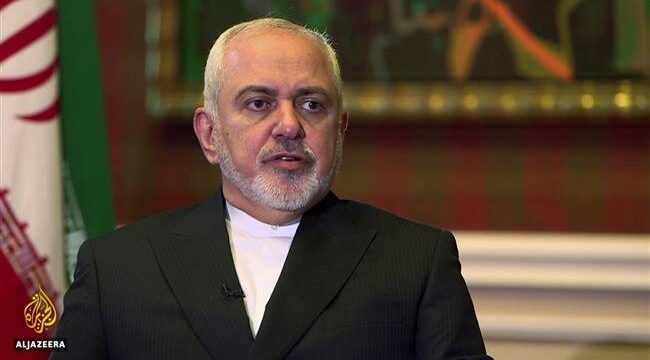
Press TV – World countries and the United Nations have censured the administration of US President Donald Trump over imposing sanctions on Iranian Foreign Minister Mohammad Javad Zarif.

Chinese Foreign Ministry spokeswoman Hua Chunying slammed Washington’s decision at a press briefing in Beijing on Thursday.
“We have taken note of the statement of the US side and the reaction of Mr. Zarif himself. The position of the Chinese side on this issue is very clear. China opposes unilateral US actions … We think it is not facilitating the solution of the problem,” Hua said.
She stressed that negotiation and dialogue were the best ways to resolve the simmering tensions between Washington and Tehran.
“The US has repeatedly stated that it is ready to hold talks with Iran without preconditions. We hope that the actions of the United States will not diverge from their statements,” the senior Chinese official noted.
In separate statements on Wednesday, the US Treasury announced the imposition of sanctions against Zarif because he “acted or purported to act for or on behalf of, directly or indirectly, the Supreme Leader of the Islamic Republic of Iran”.
Back on June 24, US President Donald Trump announced new sanctions against Iran, targeting Leader of the Islamic Revolution Ayatollah Seyyed Ali Khamenei and top commanders of the Islamic Revolution Guards Corps (IRGC).
In his statement on Zarif’s designation, US Secretary of State Mike Pompeo claimed that the top Iranian diplomat is a “key enabler” of Iran’s policies throughout the region and the world.
The US Treasury Department also said in its statement that Zarif is Iran’s “primary spokesperson around the world,” and that the ban “is sending a clear message that Iran’s “recent behavior is completely unacceptable.”
The European Union has also regretted the US decision, stating that it intends to keep working with the Iranian foreign minister.
“We regret this decision, and from our side, we will continue to work with Mr. Zarif as Iran’s most senior diplomat, and in view of the importance of maintaining diplomatic channels”, Carlos Martin Ruiz de Gordejuela, the spokesman of the European Commission for the international cooperation and development, said.
Moreover, Deputy Permanent Representative of Russia to the United Nations, Dmitry Polyanskiy, slammed the US move to impose sanctions on Zarif, arguing that the measure will block the way for any dialogue.
Polyanskiy described sanctions as against diplomacy, stressing that Moscow is against any type of bans, as they do not help find a solution.
Separately, France expressed concern over US sanctions on Iran’s foreign minister, emphasizing that it disagrees with the decision along with Britain and Germany.
“We consider that all diplomatic channels should stay open, particularly in a context of high tensions,” the French Foreign Ministry said in a statement.
In addition, California Democratic senator Dianne Feinstein criticized the move, saying it was a “mistake” to sanction Mr. Zarif, whom she described as a “capable” diplomat.
“President Trump says he pulled out of the Iran nuclear agreement to force Iran back to the negotiating table, but this move limits the opportunity to do exactly that. This doesn’t move us closer to peace, it further escalates an already tense situation,” she said.
UN Secretary-General Antonio Guterres also demanded “maximum restraint at all levels.” and said he has delivered that message to leaders publicly and privately.
“A minor miscalculation could lead to a major confrontation,” the UN chief warned.
Guterres urged all parties to respect freedom of navigation in the Strait of Hurmuz and adjacent waterways, saying that “the last thing the world needs is a major confrontation in the Persian Gulf that will have devastating implications on global security and the global economy.”
Tensions have been running high between Tehran and Washington since last year, when Trump unilaterally withdrew the US from the Iran nuclear deal, officially known as the Joint Comprehensive Plan of Action (JCPOA), and unleashed the “toughest ever” sanctions against the Islamic Republic.
The European parties to the nuclear deal have since been trying to convince Iran to remain in the pact by promising to shield its economic interests from US sanctions.
In May, a year after the US’s exit, Tehran began reducing its commitments under the JCPOA on a stage-by-stage basis in response to Washington’s pullout and the ensuing European failure to make up for America’s absence.
Behrouz Kamalvandi, spokesman for the Atomic Energy Organization of Iran (AEOI), said on July 15 that Tehran’s decision to reduce its commitments to the 2015 nuclear pact was not made out of stubbornness, but rather it aims to give a chance to diplomacy.
Kamalvandi said the move aimed to awaken the other parties to honor their obligations under JCPOA.

Santur: A bright jewel in the crown of Persian music

The photo of a santur, an ancient Iranian musical instrument
Music in Iran dates back to ancient times based on the archaeological records of Elam, the oldest civilization in the southwestern parts of modern Iran. The historical land of Iran, also known as Persia, appears to be the birthplace of the earliest complex musical instruments dating back to the prehistoric times, according to the records.
Among those instruments is the santur, which was invented and developed in Iran and parts of Mesopotamia, or modern-day Iraq. It then traveled to the other parts of the world, with each country designing its own version to adapt to their musical scales and tunings.
The santur is today known as the most popular Iranian musical instrument. It is a direct ancestor of the piano and is referred to as the hammered dulcimer in English terminology.
The instrument is a trapezoid-shaped box often made of walnut wood. It has two rows of bridges and numerous strings and is played with a pair of slender hammer sticks (mezrabs).
Press TV has conducted an interview with Pezhman Bolourchi — a prominent Iranian musician and virtuoso on the santur — for more information about the ancient instrument and the classical Persian music in general.
Biography
Bolourchi started learning to play the instrument at the age of nine from Iranian maestros such as Parviz Meshkatian, Pashang Kamkar and Omid Sayareh. Bolourchi also had lessons in music composition with distinguished maestros Farhad Fakhreddini, the founder of Iran’s National Orchestra, and Vartan Sahakian. Additionally, he learned to play the daf from prominent musician Bijan Kamkar.
He spent 27 years teaching music at the country’s major music institutions and founded, in 2001, an institute of his own, Nahaleh Roudaki, which specializes in culture and arts, as well as Iran’s first-ever full digital recording studio.
As a musician, composer and producer, Bolourchi has had collaborations with a variety of orchestras and prominent Iranian singers, including Mohammad Reza Shajarian, Shahram Nazeri, Alireza Ghorbani, etc. He has arranged and released a range of albums and has also been the producer of concerts of famous classical and pop singers as well as music groups, including Shahram Nazeri, Ehsan Khaje Amiri, Mohsen Yeganeh, Rastak, Mohammad Esfehani, Khashayar Etemadi, Ali Lohrasbi, Alireza Ghorbani, Salar Aghili, Daal Band, etc.
Iranian musician Pezhman Bolourchi
Moreover, Bolourchi has served as the host of music shows on radio station Iran Seda and Shoma TV. He has over 220 music pieces in his artistic record. The musician has performed in more than 750 concerts and other events and is the license-owner of 35 music albums and the music pieces of two movies and an animated movie.
He has been awarded plaques of appreciation in various festivals — most notably Fajr — as the santur player as well as music composer and sound designer for movies. The musician has also received a letter of appreciation from the National Symphony Orchestra of Ukraine for live sound recording (using 110 microphones on the stage.)
Press TV: You have long been active in the field of classical music. What characteristics of the Iranian music made you develop an interest in it?
Bolourchi: As you already know, I started learning Iranian music at the age of seven with the encouragement of my father, who is himself a tar player. It would evoke a sense of tranquility in me whenever he played the tar. It was this feeling of peace that attracted me to Iranian musical instruments. Later on, I got to know the root cause of this feeling when I found out about the multi-dimensional nature of Iranian music, which means no musician can be successful in the sphere of music unless he/she has a good grasp of mysticism and literature.
To be more precise, I was the most touched and inspired by the classical music pieces recorded over the past 100 years. It is very enjoyable to listen to them because this type of music acquaints us with ways to express our feelings and opens the door to a new and tender world, where you can easily express yourself with no barriers and in a manner that is to the point. That is exactly the Iranian music’s point of strength and attraction both to professionals and all those who listen to this type of music.
Press TV: Your instrument of expertise is the santur. Could you tell us about this musical instrument and its status in Iranian music?
Bolourchi: The santur — which falls in the category of chordophones — is a trapezoid-shaped instrument with 72 strings and is played with two mezrabs (plectrums used for several Iranian and Indian string instruments). It is one of the most ancient musical instruments from the historical lands of Persia. The oldest trace of this instrument dates back to the era of Assyrians and Babylonians in approximately 559 B.C. It was one of the common musical instruments in the era of the Sassanid Empire and has been mentioned several times in the works of renowned Iranian philosophers and scientists Abu Ali Sina (Avicenna) and Abu Nasr Farabi (Alpharabius).
The instrument is said to have been made by Farabi and exported later to other countries such as Iraq, Turkey, Syria, Egypt, Pakistan, India, Tajikistan, China, Vietnam, Korea, Ukraine and other Central Asian states as well as Greece.
It has a quality resonance chamber, enabling the instrument to transfer the energy from the sound source (vibrating strings) into the air without any microphones.
In the first place, the large number of strings in the santur, besides the difficulty to tune the 72 strings, gives the instrument a special sort of euphonious sensitivity, which could help other instruments in the orchestra sound tuned as well. Secondly, the santur has a great sonority, giving the instrument a pivotal role in the orchestra. Thirdly, other instruments need to be in tune with the santur during an orchestra performance since it would be very difficult to tune the 72 strings simultaneously on the stage if the instrument is not well tuned, even to a very small extent.
The santur player has a central role in the orchestra, and that is why he/she is usually chosen as the leader.
Press TV: You have been a santur instructor for years. How commonplace has this instrument become among people, particularly the youth?
Bolourchi: The santur seems to be easier to play compared to other Iranian musical instruments given its high acoustic range as well as its capability to generate sound more effortlessly. The high acoustic range also creates enthusiasm in players, especially the young ones. Iranian instruments with such characteristics — such as the tar, the daf and the tombak besides the santur — are today more appealing to the young generation.
Iranian musician Pezhman Bolourchi (3rd-R) is seen next to Mohammad Reza Shajarian (C), globally-renowned maestro of classical Persian music.
Press TV: Over the past years, a range of instruments have been created in Iran based on the shape of the traditional ones. Has there been an upgraded version of the santur?
Bolourchi: Naturally, different versions have been designed in recent years with upgrades to the resonance chambers and the diameter of the strings in an effort to improve the output sound. None of the changes have, however, been a success and that is, I believe, because not enough scientific research has been carried out in the field of acoustics. The santur is, of course, facing certain problems in terms of acoustics that need to be fixed.
Press TV: What do you, as a composer, believe is the basis for composition in Iranian music?
Bolourchi: It is, in general, based on Radif (a Persian word meaning “order”) and Dastgah (a musical modal system in traditional Persian art music). Secondly, Iranian music is very much lyric-centered and inspired by lyrics and poems. This means that any composer has his/her own interpretation of the lyrics, something that leads to the creation of a unique melody and expression of feelings.
Press TV: How committed are you to creativity in Iranian music?
Bolourchi: To answer the question, creativity should first be clearly defined. If it means a change in the form of orchestration in Iranian music, I am not a proponent of that. If we listen to the music pieces that have been passed to our generation with lots of ups and downs over the past several centuries, we realize that Iranian music has not seen any major change in form. It is the same genuine form that makes it sound attractive to both professionals and ordinary audience. I believe it would be improper for us to wittingly dispense with this genuineness.
Press TV: Improvisation is an important issue in our music. Tell us more about its meaning and the reasons why Iranian music is based on improvisation.
Bolourchi: Improvisation means creating something without planning and preparation in reaction to a specific situation. It happens when the musician offers a different interpretation of a single piece impromptu every time he/she plays it. In fact, musical improvisation means that a music piece will never be played in one form twice, either by a single player or by a separate band. In this case, extemporization turns into unpremeditated dialog between the members of the ensemble or between the audience and the singer and musicians.
Unfortunately, the mechanical mindset and efforts to structuralize the creation of works of art have today made it difficult for us to accept improvisation as a norm.
Iranian musician and composer Pezhman Bolourchi
As I already mentioned, improvisation constitutes the highest level of musical understanding, which enables the singer or musician to express his/her feelings in the moment and off the cuff. If you take a look at the history of Iran, the country’s repressive governments of the past used to crack down on people to suppress criticism, prompting them to resort to the language of art to express their sentiments. This set the stage for improvisation in Iranian music.
Press TV: To what extent is Iranian music reflective of Iranian culture?
Bolourchi: Iranian music stems from Iranian culture 100 percent. For instance, the mournfulness of Iranian music is rooted in the pressure and suppression that people suffered under previous regimes. Ta’zieh — which is categorized as Condolence Theater inspired by the tragic death of Imam Hussein — is an example that is indicative of the oppression of Shia Muslims throughout history. In short, Iranian music reflects the country’s age-old culture and as well as its social and political ups and downs.
Press TV: You have had performances in other countries. How do non-Iranians view our music? And how far is the reach of Iranian music abroad?
Bolourchi: The melodious nature of Persian lyrics is important to the non-Iranian audience. Although they may not understand the meaning of a Persian song’s lyrics, they are attracted to its rhythm and the emotions hidden in the music.
In the course of the past decade, there has been a growing tendency from across the world towards oriental music, which has influenced Westerners with its depth of emotions and melody.
On the other hand, Iranian music is now very well-known abroad thanks to the presence and activities of the country’s cultural and artistic ambassadors beyond the borders.
Fortunately, Iranian musicians have achieved numerous successes on the world stage, securing a variety of international prizes, a factor that has helped the country’s classical music gain even more fame. Continued performances by me and other musicians in other countries will pave the way for a better understanding of this type of music. The pioneer of such efforts is maestro Mohmmad Reza Shajarian, who has been contributing to the universality of Iranian music for some three decades.

Persian domes: Embodiment of fine art, engineering marvels

By Arghavan Shamsara
A phenomenal architectural innovation in human history, the design of Persian domes has for thousands of years embodied the combination of sustainable engineering marvels and sublime artistic heritage.   
The Persian tradition of dome-building dates back to the earliest Mesopotamian architecture (3,000 BC) when domes became an integral part of buildings due to the scarcity of wood in many areas of the Iranian plateau.
In Ancient Persia, domes were associated with the divine side of life, as their circular shape represented perfection, eternity and the heavens.
The Persian domes then became the inspiration for the domed baldachin of Roman and Byzantine practice, after Alexander the Great conquered the Achaemenid Empire.
A view of Imam Mosque at Naghsh-e Jahan Square in the central Iranian city of Isfahan
Domes moved to the forefront of Persian architecture during the Sasanian period (224 to 651 AD) and they evolved through different eras until the Safavid dynasty (1501–1732) when the last generation of Persian domes were characterized by a distinctive bulbous profile and astonishing tileworks.
In the Persian urban designing, domes in places of worship and public places, including traditional bazars, caravansaries, schools and baths, are designed in such a way that can be seen from different parts of urban or rural area.
The domes are normally double-shelled. While the interior shell is designed to carry the weight of the structure, the exterior shell serves as both a decorative element and as insulation against the elements. The aerodynamic shape of the domes also makes the structures more sustainable.
In Esfahan's Imam Mosque, due to its unique architectural design, if somebody makes a small sound exactly under the dome, the sound strongly resonates throughout the entire vast hall of the grand mosque. The quality has turned the mosque into one of the wonders among outstanding Iranian monuments. The UNESCO World Heritage mosque is a hub for many tourists from different parts of the world who are eager to directly witness the phenomenon at the site.
In the following video, a tourist hums a tune under the dome of the mosque, with her voice echoing throughout the chamber.
A view of the interior shell of the dome of Imam Mosque in Isfahan
Domes also make the warm weather inside the building move up, allowing fresh air to flow inside the structure.
The symmetric geometric design of the domes also makes the buildings resistant against seismic activities and other pressures on the structure.
Decoration
The use of decorative ornaments in Persian domes blossomed in the Islamic period and it reached its zenith during the Safavid period, especially in the 16th century.
While bricks, tileworks and gold coating or a combination of them are used for the exterior shell of the domes, Persian artists also use breathtaking mirror works to decorate the interior shell which also serves as the ceiling of the structure.
The principle colors used in tileworks are blue, yellow, black, turquoise, pink, aubergine and green, mainly referred to as haft rang - which literally means "seven colors."
A view of Sheik Lotfollah Mosque at Naghsh-e Jahan Square in Isfahan
Mosaic patterns include imaginative and creative geometric patterns, including triangles, semi-circles and circles in harmony with the structures they are placed on. The patterns later evolved into design of natural subjects, such as plants, trees, animals and human beings, combined with calligraphy works of famous maestros.
The interior shell of Sheikh Lotfollah Mosque in the central Iranian city of Isfahan, which is considered as one of the most famous architectural masterpieces in Iran, includes the patterns of Peafowl feathers.
A view of Sheik Lotfollah Mosque at Naghsh-e Jahan Square in Isfahan in seen in this photo. The tileworks resemble the pattern of peafowl feathers.
Mirror works at the domes of Imam Reza shrine in the northeastern city of Mashhad are also viewed as other examples of glorious artistic creations in Persian architecture.
The following is some of the distinguished examples of Persian domes across Iran:
A view of the Grand Mosque of the Iranian southern city of Yazd
An interior view of the dome of Vank Church in Isfahan
The photo shows Soltanieh Dome, Iran’s biggest dome, in the Iranian city of Zanjan
An interior view of Soltaniyeh Dome, Iran’s biggest dome, in the Iranian city of Zanjan.
The photo shows Imam Reza Shrine in the northeastern Iranian city of Mashhad.
The photo shows an interior view of the domes of Nasirolmolk Mosque in the southern Iranian city of Shiraz.
The photo shows Imam Reza Shrine in Mashhad.
The photo shows an interior view of a dome at Imam Reza shrine in Mashhad.
The photo shows the interior mirror works of a dome at Imam Reza shrine in Mashhad.
The photo shows the interior view of the dome of Sheikh Saffieddin shrine in the northwestern Iranian city of Ardabil.
The photo shows a view of Goharshad Mosque next to Imam Reza shrine in the northeastern Iranian city of Mashhad.
The photo shows the interior view of the domes of Said-o Saltaneh traditional Bazaar in the Iranian central city of Qazvin.
The photo shows the interior mirror works of the domes of Shah-e Cheragh shrine in the Iranian southern city of Shiraz.
The photo shows the interior view of the domes of Vakil mosque in the central city of Shiraz.
The photo shows the interior view of the domes of Vakil Bazaar in the Iranian southern city of Shiraz.
The photo shows the interior view of the domes of Timcheh Aminodoleh traditional bazaar in the central Iranian city of Kashan.
The photo shows the interior tileworkd of the domes of Timcheh Aminodoleh traditional bazaar in Kashan.
The photo shows the interior view of the domes of timcheh traditional bazaar in the Iranian capital city of Tehran.
The photo shows the interior view of the domes of Aq Torab traditional bath in the Iranian city of Hamedan.
The photo shows the interior view of the domes of Amir Ahmad traditional bath in the Iranian city of Kashan.
The photo shows the interior view of the domes of Amir Ahmad traditional bath in Kashan.
The photo shows the interior view of timcheh traditional bazaar in the Iranian city of Qom.

Shajarian voice of generations in Persian traditional singing

By Arghavan Shamsara
Known as the “King of Persian traditional signing,” “Iran’s most popular artist of the time” and “the greatest living maestro of Persian classical music," the globally-renowned Mohammad Reza Shajarian has been the inspiring voice of generations in Iran for several decades.
Born on September 23, 1940, in the northeastern city of Mashhad, Shajarian started recitation of the Holy Quran and singing at the age of five under the supervision of his father.
At the age of 12, he began studying Radif, the Iranian repertoire of classical melodic figures, with some of the prominent maestros of his time, including Ahmad Ebadi, Esmaeil Mehrtash, Abdollah Davami, and Nour-Ali Boroumand.
In 1959, Shajarian officially began his singing career at Radio Khorasan and rose to prominence across the country in the 1960s with his distinct style of singing.
Meanwhile, he continued learning different vocal styles from other virtuosos, including Reza Gholi Mirza Zelli, Fariborz Manouchehri, Ghamar Molouk Vaziri, Eghbal Azar, Taj Isfahani and Gholam Hossein Banan.
Shajarian has cited legendary Iranian tar musician Jalil Shahnaz as the most influential to his development, saying that Shahnaz's playing style was what he most tried to mimic throughout his artistic life.
To better understand and perform the traditional repertoire, Shajarian also started playing the santour, a percussion-stringed Persian instrument, under the instruction of prominent virtuosos Jalal Akhbari and Faramarz Payvar.
The iconic vocalist continued his career in different spheres, including teaching at Tehran University's Department of Fine Arts, working at National Radio and Television, conducting research on Iranian music, and creating a repertoire of recordings.
He has also collaborated with several other iconic Iranian musicians, including Pariviz Meshkatian, Mohammad Reza Lotfi, Hossein Alizadeh and Keyhan Kalhor, recording numerous historic albums and performing many famous concerts across the world, with the ensembles Aref, Sheyda, Ava and Shahnaz.
Collaboration with the ensembles Art and Culture, also known as Payvar, and Aref have been considered as some of the brightest episodes in Shajarian's singing career.
Awards
Shajarian has received some of the world’s most prestigious awards for his legacy of art works, including UNESCO's Golden Picasso Medal (1999), UNESCO’s Mozart Medal (2006), the French National Order of the Legion of Honour (2014), Iran’s National Radio and Television Golden Cup (1977), Iran’s Best Classical Vocalist (2000) and NPR's 50 Great Voices (2010).
He was also nominated for Grammy Awards in Best World Music for his albums Without You in 2003 and Faryad in 2005.
Rabbana (Our Lord)
The inspiring works of Shajarian have put an unforgettable signature on the Iranian life and culture, becoming an inseparable part of the life of Iranians from different social strata.
For decades, Shajarian’s breathtaking performance of Rabbana prayer has been reminiscent of the holy month of Ramadan for Iranians.
He selected and combined four different Arabic verses of the Quran, each beginning with the phrase "Our Lord," and sang it based on the Dastgah Segah, one of the seven musical modes in the Persian traditional music.
People listen to Rabbana during every Iftar ceremony when they want to break their fast. The prayer has been interwoven with every big family gathering and other religious festivals in Iran during the month of Ramadan.
Prominent Quran reciters, including the late iconic Egyptian reciter, Ragheb Mustafa Ghalwash, have praised the work as a unique masterpiece in the history of Quran recitation. 
In May 2017, Iran’s Cultural Heritage Organization registered Shajarian’s Rabbana as part of the country’s national heritage.
Versatile artist
Apart from his enthusiasm for singing, Shajarian also devotes time to different other artistic activities, including composing music, playing various musical instruments, inventing new musical instruments, calligraphy and designing Japanese gardens.   
He has done the calligraphy of the cover of several of his own albums. In November 2010, Shajarian displayed some of his calligraphy works at an exhibition in Tehran’s Vahdat Hall which showed the works of several contemporary Iranian calligraphy maestros.  
Apart from composing music for some of his albums and playing several instruments, the maestro has invented several new musical instruments, including Sorahi, Shahr Ashoub, Saghar, Kereshmeh and Sabou.
In May 2011, Shajarian’s invented musical instruments were put on display at the Iranian Artists Forum in Tehran.
The iconic vocalist has also been campaigning to discover and train new talents in Persian singing, including in a 2007 nationwide program that aimed to take traditional Persian signing tests from numerous singers.

Shajarian’s son, Homayoun, and his daughter, Mojgan, are among the famous vocalists trained by the maestro.
The globally-renowned vocalist has also been engaged in several humanitarian activities, including the establishment of the Bam Garden of Art in the southern Iranian city of Bam, after the city was struck by a deadly earthquake in December 2003.
Battling cancer
In a Youtube message from Canada in March 2016, on the eve of Norouz – the Persian New Year – the artist hinted with a tinge of humor that he has been suffering from a disease, without elaborating on the details.
“I have been living with a guest that is my friend now for 15 years,” Shajarian said in the message, referring to his illness.
“I have stayed here (Canada) and cut my hair on his (my friend’s) order.”
“My friend and I need some more time to agree on some issues,” he added.
Later reports suggested that Shajarian has been fighting kidney cancer over the years, during which he had remained highly prolific.
Shajarian has continued his treatment in the US and Iran, with reports saying he is in the process of recovery.

Messenger for Iranian culture
Throughout his artistic career, Shajarian has mainly tried to distance himself from different established political viewpoints, stressing that he uses his voice to introduce the values of the Iranian culture to the world.  
“My voice is part of the ancient culture of Iran, which seeks to remind the people of the world of the culture we have; the culture of humanity, the culture of love, peace and joy. We have no message other than friendship, love, life and happiness for the people,” he says in a documentary about his life.

Shajarian’s deep passion for the Persian poetry is one of the key elements in his artistic creations. In every single piece of his works, he meticulously selects poems from both classical and modern Persian poets based on the specific social conditions under which the song is created.  
“Sometimes the richness of a poem takes me where I get intoxicated, until I realize I am singing for an audience,” he said in a 2015 speech in Tehran.
The maestro underlines the need for transcending beyond traditions in Persian music and at the same time maintaining the authenticity of the art, noting that art inevitably evolves according to the needs of its time.
Although Shajarian thinks that Iranian music has not been very well introduced to the global community, he has repeatedly expressed optimism over the future of the art and said that despite all the restrictions, the growing enthusiasm for music inside the Iranian society will eventually create major platforms for authentic Persian songs to be heard across the world.

Farshchian creator of ethereal hues and colors in Persian miniature

"The fifth day of creation," a miniature painting
by Mahmoud Farshchian
By Arghavan Shamsara
Over the past five decades, the globally renowned master of Persian painting and miniature, Mahmoud Farshchian, has transcended the traditional concepts of the art form and portrayed an ethereal interpretation of human existence through his unique style of dynamic hues and colors.   
Farshchian was born on January 24, 1930 in the Iranian central city of Esfahan, the capital of Persian art. Growing up in the hub of Iran’s artistic masterpieces enabled the prodigy to discovered his creative talent in painting at an early age.
His father, who was a prominent Persian carpet merchant and an art aficionado, instilled the passion into his son and signed him up at the workshops of prominent painting maestros Haji Mirza-Agha Emami and Isa Bahadori at the age of seven, where he learned painting techniques of Timurid (1370–1507) and Safavid (1501–1736) eras.
In 1945, he continued studying miniature and designing tileworks at Esfahan high school for the fine arts. Farschian then travelled to Europe to study the works of Western painters at European museums for several years, where he developed an innovative artistic style with universal appeal.
After returning to Iran, the maestro started working at the National Institute of Fine Arts and was appointed director of the Department of National Arts and professor at the University of Tehran's School of Fine Arts.
The painting master has displayed his works in nearly 150 individual and group exhibitions and many of his works are at display in several museums and major collections worldwide, including the British Library, Freer Gallery of Art, Bibliotheque Nationale, Metropolitan Museum and Harvard University.
“The Museum of Master Mahmoud Farshchian" in Tehran’s Sa’ad Abad Palace, has been devoted to the works of the master since 2001.
The evening of Ashura, by Mahmoud Farshchian
Farshchian was chosen as an outstanding 21st century intellectual by Cambridge in 2000 and he has received several prestigious international awards, including DeviantART (2009 & 2010), Golden Palm of Europe (1987), Oscar D'Italia (1985), Vessillo Europa Delle Arte (1984) and International Art Festival (1958).
Combining the classic Persian miniature with modern painting techniques, the maestro founded a new school in Iranian Painting, which makes the art form independent from the symbiotic relationship it has traditionally had with poetry and literature.
At the same time, the imaginative works are still deeply inspired with Persian literature, mysticism, myths and religious stories. Farshchian’s works communicate with modern viewers from a timeless world, touching upon fundamental life questions, paradoxical elements of existence, spirituality, peace, love, sorrow and death.
“Whenever I decide to start a new work, I try to fully expose myself to the mood, the excitement and the state of the idea itself. This creates a deeper connection and intimacy between myself, the art work and the viewer,” Farshchian says in a 2012 interview. The infinite curves depicted all over the paintings create a vibrant dynamism which is reminiscent of a world in which every particle is dancing.
The maestro is well-known for his boldness in using enormous variety of colors and creating mesmerizing hues which captivate the viewers.
“An artist, with the blessing of his art, can be in a state of constant love and connection with the One. The internal transformation that follows this experience, can take the artist into a much wider realm, where the exterior qualities of the physical beloved lose color and meaning for the artist. That is how the artist finds the essence of the Creator, for whom s/he has created this physical object of love,” he said in a 2012 interview with Russian news agency Sputnik.
“Praising the physical qualities of an earthly love which will certainly age and decay can only go so far. All expressions of earthly love are in fact praising the One,” he added.
Rumi and Shams, by Mahmoud Farshchian
“Molana (Rumi) and Shams” is among Farshchian’s most famous works unveiled in the summer of 2007. The painting depicts Shams in the midst of countless curved images resembling the sun with Molana (Rumi) in the center.
“Here both Shams and Rumi are creating each other. The beloved becomes so significant for the lover that the lover becomes the beloved and vice versa; the guiding light and the emancipating presence of Shams and the hands that he has extended towards Molana. Was Shams God’s light or was he an ordinary human being?”

Remembering Persian poet Omar Khayyam 971 years on


Persian mathematician, astronomer and poet, Omar Khayyam was born on May 18, 1048, in northeastern Iran's Nishapur, to a family of tentmakers.
Khayyam, a famous mathematician of his time, started his education under Imam Muwaffaq Nishaburi. He later traveled to central Iran's Isfahan, where he began studying Greek mathematics.
Khayyam contributed to the classification and solution of cubic equations, provided geometric solutions by the intersection of conics and supported the understanding of the parallel axiom.

Remembering Persian poet Omar Khayyam 971 years on
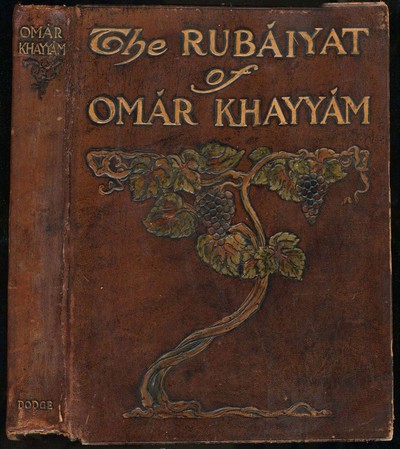
The Rubaiyat of Omar Khayyam, translated into English by Edward Fitzgerald.
He was the founder of the Rubaai genre in Iran and eastern literature.
Khayyam's poetry received critical acclaim centuries after his death when poet Edward FitzGerald translated his masterpiece "Rubaiyat" into English. His poems questioned life, death and faith.
He also contributed to a solar calendar, completing it on March 21, 1079, variants of which are still used in Iran and Afghanistan. The Jalali calendar working according to the solar year gives an error of one day in 5,000 years, while today's civil Gregorian calendar gives an error of one day in 3,330 years.
Khayyam died on Dec. 4, 1131, and is buried at the Khayyam Garden in Nishapur.