Showing posts with label Iran-US tensions. Show all posts

Friday, August 16, 2019

Tehran works to bring neighbors onboard against US maritime coalition

A boat belonging to the Islamic Revolutionary Guard 
Corps sails next to the British oil tanker Stena Impero at 
Bandar Abbas Port, July 21, 2019.


Iranian President Hassan Rouhani had a hectic day Aug. 12, talking to heads of state in his country's vicinity and trying to elucidate what he views as security threats posed by a planned US-led mission in the Strait of Hormuz.
The strategic maritime pathway letting through 20% of the world's oil traffic has been at the center of recent rising tensions between Iran and the West. The United States has ramped up efforts to rally allies behind a naval mission, which it says aims to shield international shipping from Iranian threats in the strategic strait.
To counter that argument, Rouhani held separate phone conversations with Turkey's President Recep Tayyip Erdogan, Pakistan's Prime Minister Imran Khan and Emir of Qatar Tamim bin Hamad Al Thani. The Iranian president gave the three leaders assurances that security in the Persian Gulf and the Gulf of Oman is a key foreign policy principle upheld by the Islamic Republic, reaffirming that it is only "joint efforts" by countries in the region that can create regional stability.
Rouhani told the Emir of Qatar — a tiny neighbor but a major energy-rich rival — that the US plan "will only further complicate the problems in the region." He expressed hope that "the Americans will realize the path they have taken is the wrong one and will have no winner."
Ever since Washington started scrambling for the coalition, Iranians have been warning the world about how the plan can heighten tensions and strengthen the potential for miscalculations.
On July 18, Iran captured a British-flagged oil tanker passing through the same strait because it was "violating maritime regulations," a charge the UK government denies. Tehran's move was interpreted by many as a tit-for-tat response that came a fortnight after Iranian tanker Grace 1 was impounded by British marines off the Coast of Gibraltar over breaching EU sanctions on oil shipments to Syria. Tehran rejects that explanation, refusing to say where the oil cargo was headed. A barter deal as a solution to end the ongoing impasse has also been dismissed by both Iran and the UK.
Yet there are conflicting accounts emerging about the fate of the Iranian vessel. Relying on information from Vesselfinder, an international real-time shipping database, some news outlets suggested the tanker was about to be released. But hard-line Tasnim News Agency claimed that based on its own information, Grace 1 had yet to be released and the tanker's earlier status remained unchanged. 
However, IRNA, the Rouhani government's official outlet, reported that paperwork was underway to have the tanker set free. "The British have shown their willingness to resolve the problem, and documents helping with the release have been exchanged," said Jalil Eslami, the deputy chief of Iran's Ports and Maritime Organization. The official did not elaborate on the possible steps Iran may take regarding the British tanker if the Iranian one sails back home. Eslami declared that despite the recent episodes, Iranian-flagged vessels carrying oil or other commodities continued to operate normally and "the US plan to build the maritime coalition is doomed to failure."

Friday, August 02, 2019

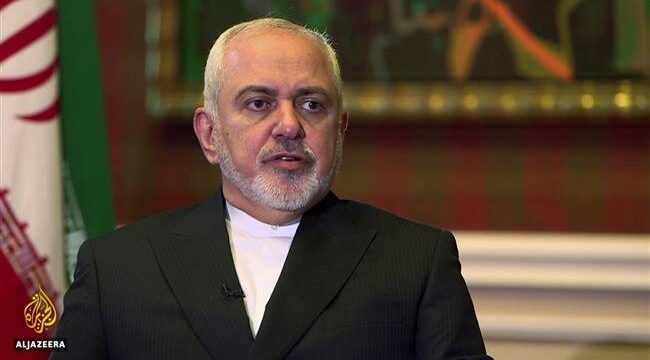
World opposes US sanctions against Iranian Foreign Minister


Press TV – World countries and the United Nations have censured the administration of US President Donald Trump over imposing sanctions on Iranian Foreign Minister Mohammad Javad Zarif.

Chinese Foreign Ministry spokeswoman Hua Chunying slammed Washington’s decision at a press briefing in Beijing on Thursday.
“We have taken note of the statement of the US side and the reaction of Mr. Zarif himself. The position of the Chinese side on this issue is very clear. China opposes unilateral US actions … We think it is not facilitating the solution of the problem,” Hua said.
She stressed that negotiation and dialogue were the best ways to resolve the simmering tensions between Washington and Tehran.
“The US has repeatedly stated that it is ready to hold talks with Iran without preconditions. We hope that the actions of the United States will not diverge from their statements,” the senior Chinese official noted.
In separate statements on Wednesday, the US Treasury announced the imposition of sanctions against Zarif because he “acted or purported to act for or on behalf of, directly or indirectly, the Supreme Leader of the Islamic Republic of Iran”.
Back on June 24, US President Donald Trump announced new sanctions against Iran, targeting Leader of the Islamic Revolution Ayatollah Seyyed Ali Khamenei and top commanders of the Islamic Revolution Guards Corps (IRGC).
In his statement on Zarif’s designation, US Secretary of State Mike Pompeo claimed that the top Iranian diplomat is a “key enabler” of Iran’s policies throughout the region and the world.
The US Treasury Department also said in its statement that Zarif is Iran’s “primary spokesperson around the world,” and that the ban “is sending a clear message that Iran’s “recent behavior is completely unacceptable.”
The European Union has also regretted the US decision, stating that it intends to keep working with the Iranian foreign minister.
“We regret this decision, and from our side, we will continue to work with Mr. Zarif as Iran’s most senior diplomat, and in view of the importance of maintaining diplomatic channels”, Carlos Martin Ruiz de Gordejuela, the spokesman of the European Commission for the international cooperation and development, said.
Moreover, Deputy Permanent Representative of Russia to the United Nations, Dmitry Polyanskiy, slammed the US move to impose sanctions on Zarif, arguing that the measure will block the way for any dialogue.
Polyanskiy described sanctions as against diplomacy, stressing that Moscow is against any type of bans, as they do not help find a solution.
Separately, France expressed concern over US sanctions on Iran’s foreign minister, emphasizing that it disagrees with the decision along with Britain and Germany.
“We consider that all diplomatic channels should stay open, particularly in a context of high tensions,” the French Foreign Ministry said in a statement.
In addition, California Democratic senator Dianne Feinstein criticized the move, saying it was a “mistake” to sanction Mr. Zarif, whom she described as a “capable” diplomat.
“President Trump says he pulled out of the Iran nuclear agreement to force Iran back to the negotiating table, but this move limits the opportunity to do exactly that. This doesn’t move us closer to peace, it further escalates an already tense situation,” she said.
UN Secretary-General Antonio Guterres also demanded “maximum restraint at all levels.” and said he has delivered that message to leaders publicly and privately.
“A minor miscalculation could lead to a major confrontation,” the UN chief warned.
Guterres urged all parties to respect freedom of navigation in the Strait of Hurmuz and adjacent waterways, saying that “the last thing the world needs is a major confrontation in the Persian Gulf that will have devastating implications on global security and the global economy.”
Tensions have been running high between Tehran and Washington since last year, when Trump unilaterally withdrew the US from the Iran nuclear deal, officially known as the Joint Comprehensive Plan of Action (JCPOA), and unleashed the “toughest ever” sanctions against the Islamic Republic.
The European parties to the nuclear deal have since been trying to convince Iran to remain in the pact by promising to shield its economic interests from US sanctions.
In May, a year after the US’s exit, Tehran began reducing its commitments under the JCPOA on a stage-by-stage basis in response to Washington’s pullout and the ensuing European failure to make up for America’s absence.
Behrouz Kamalvandi, spokesman for the Atomic Energy Organization of Iran (AEOI), said on July 15 that Tehran’s decision to reduce its commitments to the 2015 nuclear pact was not made out of stubbornness, but rather it aims to give a chance to diplomacy.
Kamalvandi said the move aimed to awaken the other parties to honor their obligations under JCPOA.