US president Donald Trump has managed to fulfill many of his election campaign promises – scrapping the TPP deal, as well as the Paris climate agreement, along with the Iran nuke-deal, ending the Afghan war, and building a wall on the US-Mexico border. Even though we may disagree with his promises and some of them are extremely controversial in nature, on top of being purely unilateral, the fact that Trump did fulfill his campaign promises speaks volumes about the lengths he may go to in order to fulfill remaining promises – particularly, Iran’s subjugation. Perhaps, it is the only one that has proven to be too tough for Trump, thanks to Iran’s resistance and the support it continues to receive from two of America’s strongest strategic competitors: China and Russia. The US president, therefore, is desperate to deliver on this promise and is working on a multi-faceted policy, ranging from provoking military clashes in the Persian Gulf and pushing other countries into conflict with Iran to secretly convince the Iranians to give in to negotiations, and to re-impose sanctions. It is a remarkable show of desperation prevailing in the White House!
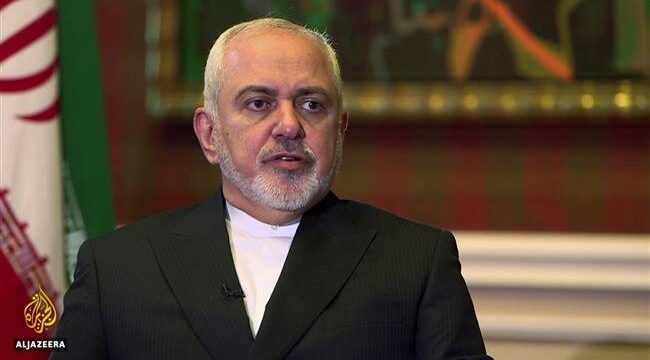
This desperation stems primarily from the Iranian refusal to accept these US terms, and it grows out of Washington’s inability to force Iran into capitulation. To achieve the purpose through ‘other’ means, the US secretly invited, according to reports in the Western media, the Iranian foreign minister to visit the White House to have a meeting with the US president. Iran refused this invitation, leading to Washington’s decision to sanction the sitting Iranian foreign minister as well. According to reports, “President Trump has been very open that he is ready to speak to the senior leadership in Tehran and that he has certainly not prevented any of our friends or allies from communicating with them as well.” Accordingly, “Trump relayed a message about potential diplomacy to Iran’s Supreme Leader through the Japanese Prime Minister, Shinzo Abe, in June.”
Tehran did obviously refuse this offer, leaving the US with little options on the table. The manoeuvre, according to the said report, was to offer Iran Section 123 of the United States Atomic Energy Act of 1954, and make Tehran say no in a bid to show the Europeans just how stubborn Iran continues to be. Sensing the trap, Iran refused to send their FM to the White House, which resulted in the US introducing sanctions against Zarif.
Accordingly, Zarif whom the US was trying to invite to the White House a month ago, was designated as an enabler of Iranian policy on July 31st. The statement issued by the US department of state calls Zarif,
“a means of advancing many of the Supreme Leader’s destabilizing policies. Foreign Minister Zarif and the Foreign Ministry he runs take their direction from the Supreme Leader and his office. Foreign Minister Zarif is a key enabler of Ayatollah Khamenei’s policies throughout the region and around the world. The designation of Javad Zarif today reflects this reality.”
While nothing in this statement really conflicts with what Zarif, as Iran’s FM, is actually supposed to do, what this statement and the sanctions do reflect is that US foreign policy has practically exhausted all options and can only rely on sanctioning Iranian officials one by one, a policy that would hardly serve US interests in any positive manner or bring the two countries any closer, or leading to talks on deescalation in the Persian Gulf.
On the contrary, by sanctioning Zarif, a highly seasoned diplomat who received his higher education in the US, Washington is only blocking his entry in the US, particularly, terminating his presence at UN sessions, in bid to block Tehran’s narrative from going world-wide.
Elsewhere, Iran continues to push-back against US allies, but also mending ties some US allies including even the UAE, thanks again to Zarif’s seasoned diplomacy, which has already led the UAE changing course, largely in agreement with Tehran, on its Yemen policy. Accordingly, while still a member of the Saudi coalition, the UAE did (apparently) withdraw its forces from certain parts of Yemen after Zarif reported that Tehran and the UAE were “willing” to get in touch with each other and develop the kind of relations Tehran has with other Arab countries.
This comes in addition to the support that Tehran continues to receive from its strongest allies. While China continues to buy Iranian oil, Russia has unmistakably said that Iran remains its ally. Ironically enough, it was Russian National Security Council Secretary Nikolai Patrushev who made this announcement at a recently held US, Russia and Israel summit in Jerusalem. To quote him,
“Iran has always been and remains our ally and partner, with which we are consistently developing relations both on a bilateral basis and within multilateral formats.”
This has since then been followed by Russia advancing a new concept of collective security for the Persian Gulf, a system of security that would involve parties from within and outside the region. By thus advancing this kind of security agreement, Russia is obviously inserting itself more deeply into the Persian Gulf as a means to shrink the space for the US to manufacture yet another war.
Iran, therefore, remains strong both diplomatically and strategically, causing the US to face utter desperation despite its superior military power. Accordingly, if it comes to re-negotiations with Tehran at any time, it will primarily be based upon Iran’s terms as outlined by Zarif in his meeting with US senators than those of the US. More desperation is to follow.
Salman Rafi Sheikh, research-analyst of International Relations and Pakistan’s foreign and domestic affairs, exclusively for the online magazine “New Eastern Outlook”.