Showing posts with label paul pillar. Show all posts

Monday, December 09, 2019

Netanyahu And Trump, Joined At The Hip

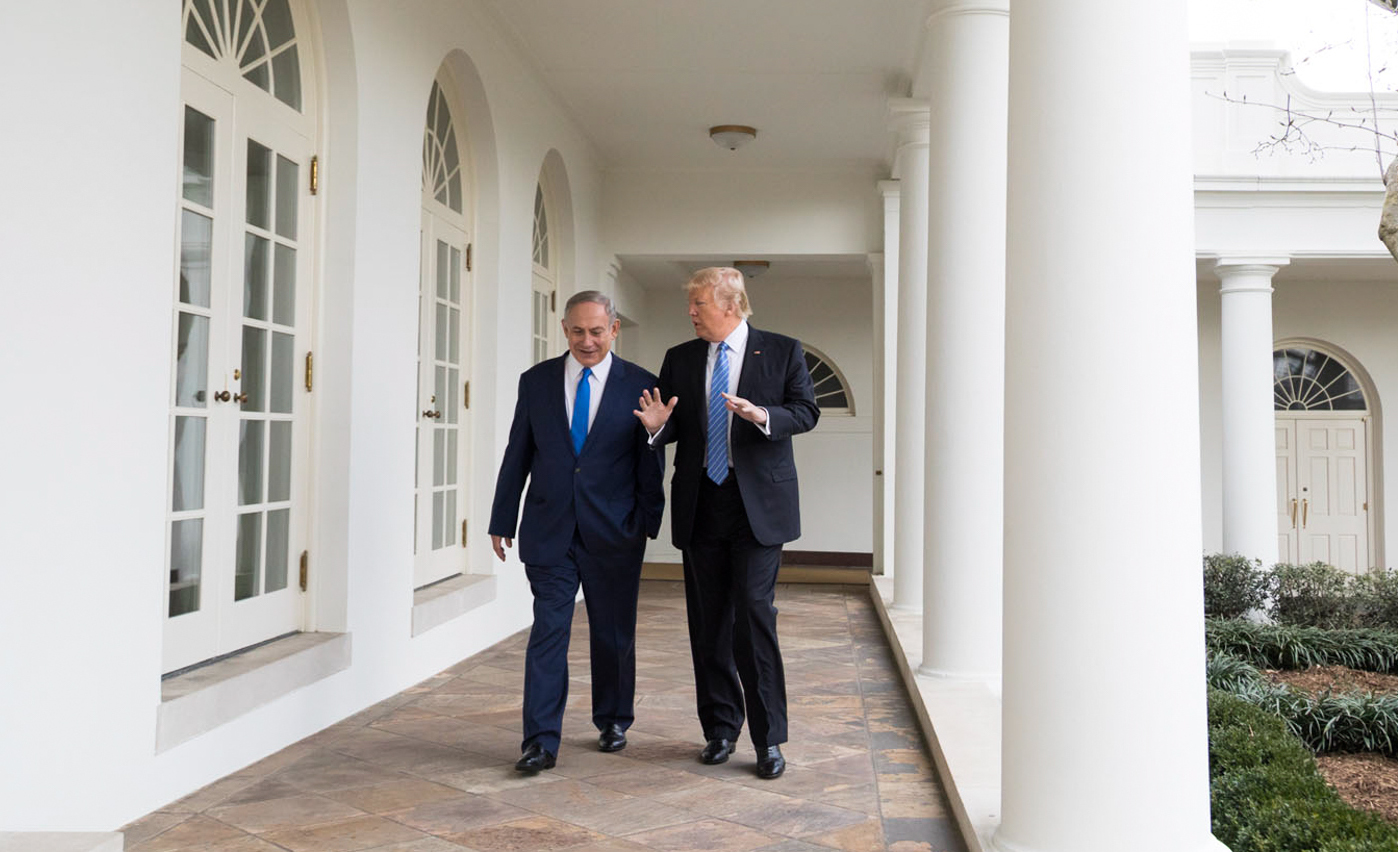
Donald Trump and Benjamin Netanyahu (Shealah D. Craighead)
By Paul Pillar 
Israeli Prime Minister Benjamin Netanyahu, under indictment for corruption, has been launching vociferous counterattacks that sound quite familiar to anyone (including editorial pages of the mainstream U.S. press) who has been following a parallel story of high-level wrongdoing in the United States. Netanyahu said that earlier reports of the conduct that led to charges against him were “fake news.” He has labeled investigations into the matter a “witch hunt.” Now he is saying that the indictments are part of an “attempted coup.” The similarities between a beleaguered Netanyahu and Donald Trump extend beyond such rhetoric to larger habits of never admitting wrongdoing and constantly attacking their accusers. Their common objective has been retention of power free of any introspection about larger values.
Both heads of government have long histories of demagoguery, with an apparent disregard for possibly violent consequences. Netanyahu’s history includes stirring up hatred against political rivals who participated in the Oslo peace process—rabble-rousing that the family of the late Israeli Prime Minister Yitzhak Rabin believes, with good reason, was partly responsible for Rabin’s assassination by a right-wing Jewish Israeli.  More recently, Netanyahu’s racist rhetoric has featured warnings about Arabs turning out to vote “in droves.” Trump’s well-known racist rhetoric has included calling white supremacists at Charlottesville “very fine people” and calling Mexican immigrants rapists. No U.S. leaders have been assassinated as a result, but such demagoguery encourages violence against immigrants and members of ethnic groups associated with immigration.
The parallel attitudes and habits of Netanyahu and Trump underscore what has become a more direct political link between the two. Netanyahu’s government has pursued policies toward Israel’s conflict with the Palestinians that have been increasingly and blatantly indefensible in terms of peace, justice, and international law. As such, support for Israel and its policies in the United States has been narrowing to a political base on the right dominated by evangelical Christians who bestow their support partly according to religious doctrine that gives a special God-given place to Israel. Trump’s political strategy on this and many other issues is focused on the same narrow base. Accordingly, the Trump administration’s policies toward Israel and the Israeli-Palestinian conflict have consisted of one gift after another to Netanyahu’s government, unaccompanied by any benefit to U.S. interests. The gifts have included movement of the U.S. embassy to Jerusalem, recognition of Israeli sovereignty over the occupied Golan Heights, diverse forms of Palestinian-bashing, and the repudiation of international law regarding colonization of conquered territory.
The offenses of both Netanyahu and Trump have involved bribery and corruption of democratic elections. The indictment of Netanyahu mentions such traditional mediums of corrupt exchange as luxury goods (in Netanyahu’s case, expensive cigars and champagne) given in return for policies that favor the business interests of those giving the goods. In the other cases that the incitement covers, the benefit Netanyahu is accused of seeking in return for policy favors to business interests is favorable treatment in the newspapers or online news outlets those interests control. Trump, who had welcomed and openly invited Russian interference in the 2016 U.S. presidential election, attempted to coerce Ukraine into interfering in the 2020 U.S. election by making U.S. military aid and a presidential meeting contingent on Ukraine publicly incriminating a rival presidential candidate.
An obvious difference in the two leaders’ election-corrupting activities is that the offenses covered by the indictment of Netanyahu all took place within Israeli domestic politics, whereas Trump’s case has involved interference by foreign powers. Even here, however, is a political link between the two. Notwithstanding the significance of Russia’s interference in U.S. politics and Trump’s attempt to get Ukraine to interfere, the biggest foreign interference in U.S. politics has for years been that of Israel. That’s what the string of gifts that the Trump administration has bestowed on Netanyahu’s government, and the hoped-for electoral implications of those gifts, is about (in addition to personal and religious inclinations of some members of the Trump administration involved in the gift-giving). Benjamin Netanyahu has been directly involved in some of the most blatant foreign interference in U.S. politics, including denouncing policies of the then-incumbent U.S. administration from the rostrum of the U.S. House of Representatives, at the invitation of the opposition party.
As the corruption case against Netanyahu has gathered attention, Trump has tried to play down his relationship with the prime minister, saying, “Our relations are with Israel, so we’ll see what happens.” That line should be given no more weight than any of Trump’s many other attempts to distance himself from Trump collaborators who became public relations liabilities. The same was true of Trump saying of Gordon Sondland—a central figure in implementing Trump’s attempt to coerce Ukraine, who gave incriminating testimony about that attempt—that “I don’t know him very well.”  And it was true of Trump saying he didn’t know whether Rudy Giuliani, his chief dirt-digger in Ukraine, was still his attorney.
The indictment against Netanyahu, and the recent impeachment hearings about Trump and Ukraine, by no means include all the suspect activity by either leader that is worth scrutinizing or that raises parallels between the two men. Although not covered in the recently announced indictment, Israel’s attorney general also has been investigating a case involving Netanyahu, a cousin of his, possible bribery, and the purchase of some German-made submarines that Israeli military leaders say they don’t need. This affair—apparently involving a political leader ignoring the judgment of military leaders—evokes Trump’s recent interference in the case of a Navy SEAL convicted of misconduct.
Trump, a teetotaling non-smoker, will not be selling any favors in return for cigars and champagne, but the counterpart to that portion of Netanyahu’s offenses is Trump’s mixing of private and government business in defiance of the U.S. Constitution’s emoluments clause. Trump’s obstruction of justice, as catalogued in Robert Mueller’s report and with the catalog growing larger during the current impeachment investigation, finds a counterpart in Netanyahu’s efforts to obstruct justice by impeding the investigation of his own case.
Activities that fall under the label of corruption do not constitute the most damaging malfeasance by Netanyahu. That distinction would belong to his government’s policies regarding the use of armed force and subjugation of the Palestinians—policies that can genuinely be regarded as crimes. Trump’s administration, by unreservedly supporting and abetting those policies, makes the United States share all the more in the ill consequences of permanent conflict and injustice and the killing of any chance of peace in that part of the Middle East.
The bad effects of corruption in high places in both Israel and the United States include compromising the national security interests of each country. This can include waste from letting personal financial interests interfere in military procurement decisions. It can include weakening order and discipline in the armed services by letting politics interfere in the military justice system.
Even more serious is the damage to representative democracy from corruption of the electoral process. Here, the United States has farther to fall, given that Israel has long been a democracy only for a portion of the population it rules, and not for the other substantial portion that is denied political rights. American democracy already had its own flaws, such as gerrymandering and voter suppression laws, before Trump’s arrival on the political scene. But the active encouragement of involvement by foreign governments constitutes substantial further damage to that democracy—one that the Founding Fathers warned against as an ill consequence of passionate partisanship.
avatar

PAUL PILLAR

Paul R. Pillar is Non-resident Senior Fellow at the Center for Security Studies of Georgetown University and an Associate Fellow of the Geneva Center for Security Policy. He retired in 2005 from a 28-year career in the U.S. intelligence community. His senior positions included National Intelligence Officer for the Near East and South Asia, Deputy Chief of the DCI Counterterrorist Center, and Executive Assistant to the Director of Central Intelligence. He is a Vietnam War veteran and a retired officer in the U.S. Army Reserve. Dr. Pillar's degrees are from Dartmouth College, Oxford University, and Princeton University. His books include Negotiating Peace (1983), Terrorism and U.S. Foreign Policy (2001), Intelligence and U.S. Foreign Policy (2011), and Why America Misunderstands the World (2016).

Wednesday, September 04, 2019

The Stubborn Persistence Of Failed Maximum Pressure Against Iran

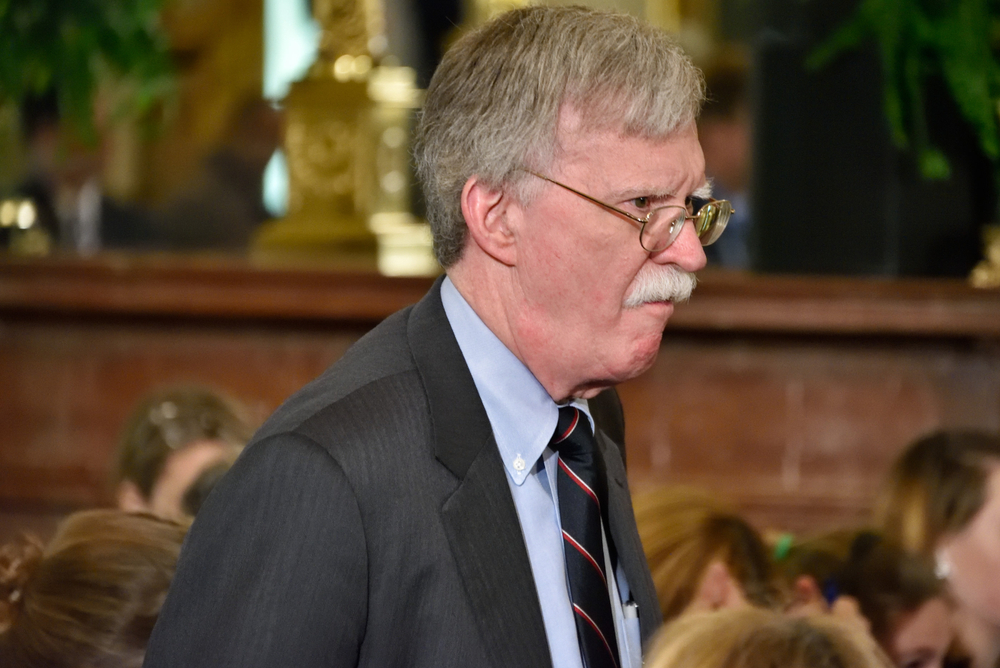
John Bolton {Evan El-Amin via Shutterstock)

by Paul R. Pillar
It is a sure sign that the Trump administration’s campaign to squeeze Iran into submission is a failure when those who customarily favor pressuring Iran acknowledge that failure. Take what has become the administration’s go-to rationale for the campaign in the face of other evidence that it is not working: the claim that U.S. sanctions have undercut Iran’s “malign” activity in the Middle East by reducing the funds available for such activity. In a recent op ed, Dennis Ross and Dana Stroul of the Washington Institute for Near East Policy debunk this notion by describing how and why a financial pinch on Iran does not translate into retrenchment in Iranian regional activity.
In Syria, for example, Iranian-backed militias “may be suffering from salary cuts, but less take-home pay has not led to a reduction in violence.” The same pattern of reduced cash not leading to reduced armed activity is seen with Hezbollah in Lebanon and the Houthis in Yemen. And although the administration has tried to highlight reductions in Iran’s military budget, assertive Iranian activity in the Persian Gulf such as sabotage or seizure of foreign tankers has gone up, not down, since the start of the administration’s pressure campaign. In short, Ross and Stroul accurately observe, Iran does what it does in the region “on the cheap.” Its regional activity is not determined by the balance in its bank account.
Or consider another rationale for the pressure campaign: that inside Iran it will build opposition to the regime and, it is hoped, lead to regime change. A recent analysis by the Israel-based Institute for National Security Studies (INSS)—which cannot be accused of being soft on Iran—highlights the failure on this criterion, too. While the sanctions-induced economic pain in Iran is undeniable, the Israeli analysts conclude that the “Iranian regime is managing, as in the past, to contain the economic difficulties without leading to deterioration and unrest that will undermine its stability.” The Iranian public “has despaired of generating significant political change” and is focused on “the struggle for day-to-day survival.” The economic crisis has increased the dependence of many workers on government jobs and lowered their willingness to “risk their economic and employment security through political and civil involvement.” Citizens’ concerns “about chaos and the loss of stability … exceeds their preparedness to advance revolutionary political changes”.  The study presents data showing that protest demonstrations in Iran have declined, not increased, since the pressure campaign began.
Then, of course, there is the nuclear side of Iran’s response to the Trump administration’s reneging on the Joint Comprehensive Plan of Action (JCPOA) and waging of economic warfare. Iran’s exceeding of some of the JCPOA’s limits still leaves Iran, thanks to the severity of those limits, far away from any ability to build a nuclear weapon. Iran’s moves are easily reversible efforts to build leverage to induce the United States to return to compliance with the agreement. But the moves are in the opposite direction from what the pressure campaign was supposed to accomplish.
Ross and Stroul make some other pertinent and valid observations: that sanctions are not enough, that “credible economic gains” must be offered in negotiations, and that the Trump administration has erred badly in isolating itself from European allies. But even after recording this litany of failures, the authors can’t seem to tear themselves away from the notion that in the end, the task is one of exerting pressure. They lament the estrangement from the Europeans not because of missed diplomatic opportunities but instead because pressure works best when the Europeans are exerting it as well. And they want military pressure to add to the economic pressure. A “credible threat of military force,” they say, while saying nothing about exactly what would be threatened, and over what. It was the United States, not Iran, that blatantly violated an international agreement, and Iran’s responses since than have clearly been in response to the U.S. violations and waging of economic warfare. On what grounds would the United States credibly threaten to wage military warfare as well?
If discouraging any Iranian thoughts about building a nuclear weapon is an objective—and it ostensibly was everyone’s main objective back when the JCPOA was first negotiated—then threatening military attack is the wrong way to go about it, given how deterrence against just such an attack would be the prime reason for any Iranian interest in building a bomb. Insofar as politically weakening the Iranian regime is an objective, military threats are counterproductive here as well, given the usual rally-round-the-flag effects. The INSS study has something to say about this as well: “It seems that the increasing chances of military confrontation between Iran and the US contribute to internal cohesion among a public that frequently shows a readiness to rally behind the regime against threats of military attack or challenges to Iran’s territorial integrity.”
What neither the Trump administration nor pressure advocates such as Ross and Stroul are prepared to acknowledge is that the way out of the current U.S.-Iranian impasse is return to compliance with the JCPOA or something very much like it. Perhaps the energetic and imaginative diplomacy of French President Emmanuel Macron can help to chart a path toward that end. But two major obstacles need to be overcome.
One consists of those who oppose any agreement with Iran on anything and, unlike some hardline think tank, are in a position to do something about it. This includes Trump’s national security advisor, John Bolton, whose policies on Iran reflect his not being far removed from his days as a generously paid shill for the Iranian cult known as the Mujahedin-e Khalq. Another is Benjamin Netanyahu’s right-wing Israeli government, which is willing to use military force to sabotage the diplomacy. Israel’s recent escalationof armed attacks across the Middle East is in large part designed to provoke Iranian retaliation that would make it politically difficult for either Trump or the Europeans to strike new deals with Tehran.
The other obstacle is the more traditional problem of how to get two sides in a bargaining relationship to come to terms when both are afraid of showing weakness through early concessions. The Iranians in particular—given how the history of this confrontation gives them good reason to believe they are the side in the right—have strong political and diplomatic incentives not to be seen as caving. Trump also doesn’t want to be seen backing down, but he clearly wants a deal and will want one more than ever as the U.S. election gets closer—especially if a failure to gain a trade agreement with China makes him even hungrier for something that he can describe as a foreign policy accomplishment. Perhaps the biggest element of flexibility in all this is Trump having no qualms about inaccurate descriptions, which in this case could mean describing a deal very similar to the JCPOA as something much different.
avatar

PAUL PILLAR

Paul R. Pillar is Non-resident Senior Fellow at the Center for Security Studies of Georgetown University and an Associate Fellow of the Geneva Center for Security Policy. He retired in 2005 from a 28-year career in the U.S. intelligence community. His senior positions included National Intelligence Officer for the Near East and South Asia, Deputy Chief of the DCI Counterterrorist Center, and Executive Assistant to the Director of Central Intelligence. He is a Vietnam War veteran and a retired officer in the U.S. Army Reserve. Dr. Pillar's degrees are from Dartmouth College, Oxford University, and Princeton University. His books include Negotiating Peace (1983), Terrorism and U.S. Foreign Policy (2001), Intelligence and U.S. Foreign Policy (2011), and Why America Misunderstands the World (2016).

Saturday, August 31, 2019

Prospect for INSTEX is not good: Paul Pillar

By Javad Heirannia

TEHRAN – Professor Paul Pillar, who was CIA intelligence analyst for 28 years, tells that the Europeans still want to save the JCPOA. 
Pillar says “Doing so will require the Europeans to facilitate enough commerce with Iran for Iranian leaders to conclude that their country is receiving enough economic benefit to make continued observance of the nuclear limits justifiable.”  
He also adds that “The prospects for this happening are not good.”
Following is the text of the interview:
Q: Iran has announced that it will implement a third step to reduce its obligations under the JCPOA. Will Europe takes effective and convincing action to prevent this?
A: The challenge for Europe has not changed since the Trump administration reneged on U.S. obligations under the JCPOA and, a year later, Iran began exceeding some of the limits of the agreement.  The Europeans still want to save the JCPOA. Doing so will require the Europeans to facilitate enough commerce with Iran for Iranian leaders to conclude that their country is receiving enough economic benefit to make continued observance of the nuclear limits justifiable.  The prospects for this happening are not good.  The European governments mostly have the will but not the ability to make it happen.  The governments do not control the private sector, and most European businesses that are big enough to matter fear being shut out of the U.S. market if they do business with Iran.    
Q: What would be the possible reaction of Russia and China to reducing Iran's commitments under JCPOA?
A: Russia and China also want to preserve the JCPOA.  If Iran continues to exceed more of the nuclear limits, Russia and China will not impose additional sanctions of their own.  They regard the Trump administration's imposition of new U.S. sanctions as the obvious cause of the agreement breaking down.  Russia and China will seek to exploit the absence of Iranian dealings with the United States and any new conflict in Iranian-European relations by developing their own relations with Iran, which they see in their own economic interests.  Russian President Putin also has a strategic interest in maintaining reasonably good relations with all countries in the Middle East, including Iran.  China possibly could be deterred from making major new commercial deals with Iran by not wanting to complicate its trade negotiations with the United States.  But right now those negotiations do not seem to being going anywhere, and so Beijing probably believes it has nothing to lose by doing business with Iran.   
Q: In your opinion, will the third phase of reducing Iran's commitments in the JCPOA be dangerous? Will Iran's case go to the United Nations Security Council after third step of reducing its commitments?
A: There is nothing distinctive about the third step that is different from the first couple of steps.  Iran still is limiting itself to steps that are easily reversible, and keep it a long way from any capability to build a nuclear weapon.  The JCPOA specifies procedures for any referral to the UN Security Council.  The Trump administration would favor such a referral, but it no longer is a participant in the JCPOA and thus does not have the standing to initiate such action.  A relevant question is whether the new British government of Boris Johnson, weakened by the Brexit mess and more dependent than ever on the United States, will start adopting the Trump administration's policy line on Iran.   
Q: Can the United States impose new sanctions on Iran after the third step in reducing Iran's commitments under JCPOA?
A: The Trump administration already has imposed nearly every sanction it has the power to impose on Iran.  It can always find something else that it can describe as a further step in its "maximum pressure" campaign, but the practical difference from what exists right now will be minimal.

Sunday, August 04, 2019

Paul Pillar: UAE Recognized Failure of Military Intervention in Yemen

TEHRAN - Paul R. Pillar, a retired CIA officer, says the UAE has come to recognize that its military cooperation with the Saudis in war on Yemen has failed to make any achievement.
Speaking in an exclusive interview with FNA, Pillar, who is now a nonresident senior fellow at Georgetown University's Center for Security Studies, said, “There was no sign that the Houthis were being militarily defeated.”
Below is the full text of the interview:
Q: Why has the UAE decided to retreat from Yemen? Does this withdrawal mean the Emirates defeat and failure?
A: Quite simply, the UAE recognized that the military intervention in Yemen was not accomplishing anything. There was no sign that the Houthis were being militarily defeated. The wars costs were adding up without comparable results. The Emiratis also no doubt took notice of how the Saudi-led war in Yemen was coming under increasing criticism in the United States. Insofar as Iran, as a backer of the Houthis, is as another factor in the war, the UAE move probably also reflects a judgment that constantly increasing tension with Iran is in no one's interests.
Q: Saudi Arabia and the United Arab Emirates have started developing differences over Yemen. What do you think is their most important difference?
A: There are several differences in how the two allies were conducting the war and relating to factions inside Yemen. The Saudis were operating mostly in the air, while the Emiratis had more of a presence on the ground. The UAE has been more closely allied with Southern secessionist elements than the Saudis ever were. But probably the most important difference is that the war is closely identified with Saudi leader Mohammed bin Salman as his personal project, in a way that it never was identified with leaders of the UAE.
Q: Does the UAE retreat from Yemen mean neglecting Saudi Arabia and its agenda?
A: There will still be an alliance between Saudi Arabia and the UAE.  Mohammed bin Salman has close relations with UAE leader Mohammed bin Zayed. Expect to see some continuing differences in policy emphasis, however, including in dealings with Iran. Saudi Arabia will be more of an anti-Iranian hardliner than the UAE.
Q: Why does Saudi Arabia insist on continuing the war on Yemen despite its failure in this war of attrition?
A: Mohammed bin Salman cannot just pull out of Yemen as the UAE is doing without suffering a considerable loss of face, due to how much he is personally identified with the war. He will look more than before, however, for some sort of negotiated settlement that would allow Saudi Arabia to get out. 

Saturday, May 18, 2019

Future of the JCPOA does not look good: Paul Pillar

By Javad Heirannia

TEHRAN – Professor Paul Pillar, who was CIA intelligence analyst for 28 years, tells that the future of the JCPOA does not look good. 
Pillar says “The Europeans so far have simply not given much indication of implementing an economically significant arrangement that would be sufficient for Iranians to say that the deal is meeting their expectations.”  
He also adds that “The economic clout of the United States is such that the U.S. administration can still scare and intimidate businesses and governments from having much to do with Iran.”
Following is the text of the interview:
Q: Given that Iran's needs were not met by the Iran nuclear deal, by which I mean removing the sanctions, and as the result of the U.S. withdrawal from that agreement and Europe's passivity, Iran has announced that it is stopping the sale of enriched uranium and heavy water. This action will be held for 60 days to bring the parties to the negotiation table. How do you assess this issue?
A: Iran is saying its patience is not unlimited.  It has complied with its obligations under the JCPOA for an entire year, despite the U.S. reneging on its own obligations.  President Rouhani is saying that must change.  Iranian leaders have given up on the Trump administration.  They still are hoping for a change in U.S. policy as of January 2021, but it has become politically and economically untenable for Iranian leaders simply to keep waiting for U.S. policy to change. Rouhani is challenging the Europeans in particular to do more to make up for the economic shortfall from the U.S. reneging.  
Q: The Iranian nuclear deal is an agreement based on the clarity and commitment of both sides. Paying attention to the important role that the U.S. plays on the other side and the passivity of European countries towards the U.S., Iran remains committed to this agreement. Bringing into consideration the current situation, how do you assess its future?
A: The future of the JCPOA does not look good.  The Europeans so far have simply not given much indication of implementing an economically significant arrangement that would be sufficient for Iranians to say that the deal is meeting their expectations.  The economic clout of the United States is such that the U.S. administration can still scare and intimidate businesses and governments from having much to do with Iran.  If the agreement collapses, it would be difficult to piece it back together even after a change of administration in the United States.  
Q: After the failed coup in Venezuela, it seems that John Bolton's role in Trump's decision-making process will be reduced. Is there any possibility that in the result of Bolton's aggressive activities which were not successful, the role of the aggressive party in the Trump administration will be reduced?
A: The aggressive nature of U.S. policy, specially toward Iran, does indeed depend heavily on Bolton's future.  That in turn depends on impulsive and hard-to-predict decisions by Donald Trump.  Bolton may have lost some favor with Trump because of differences on both Venezuela and North Korea.  Bolton's job might be in jeopardy if Trump, who right now probably does not want a war with Iran, sees Bolton as leading him into one.  But Trump might not see things that way, or Trump himself, faced with more domestic political problems, might himself come to welcome a military clash with Iran as a distraction.    
Q: President Rouhani called the Iranian nuclear deal a win-win or lose-lose game. What's the point of this message for the other side?
A: Rouhani is saying that if everyone observes the JCPOA, everyone benefits. And if the agreement breaks down, that will benefit no one.  Iran clearly would lose economically, but the United States and others also would lose by having an avoidable nuclear crisis on their hands. Rouhani's perspective is far different from that of Donald Trump, who seems to see every agreement as a matter of one side winning and the other side losing.

Only Ones to Blame for Fresh US-Iranian Tensions: Team Trump

Such an atmosphere would never have existed if the administration had not turned its obsession with Iran into a relentless campaign of hostility


by
U.S. Secretary of State Mike Pompeo (R) and Israeli Prime Minister Benjamin Netanyahu talk during the group photo at the Ministerial to Promote a Future of Peace and Security in the Middle East on February 14, 2019 in Warsaw, Poland. (Photo: Sean Gallup/Getty Images)
The current crisis atmosphere in U.S.-Iranian relations, in which the risk of open warfare appears greater than it has been in years, is solely and unequivocally due to the policies and actions of the Trump administration. To point this out does not mean that actions of the Iranian regime have not come to be part of the crisis atmosphere as well. It instead means that such an atmosphere would never have existed in the first place if the administration had not turned its obsession with Iran into the relentless campaign of hostility that has become one of the single most prominent threads of the administration’s foreign policy.
Without that campaign, and without the administration’s assault on the Joint Comprehensive Plan of Action (JCPOA)—the agreement that restricts Iran’s nuclear program—Iran would continue to comply with its obligations under the JCPOA, and all possible paths to an Iranian nuclear weapon would remain closed. The channels of communication established during the negotiation of the JCPOA would continue to be available to address other issues and to defuse any incidents that threatened to escalate into war (as was done during the previous U.S. administration). Whatever Iran has been doing for years in the Middle East, such as assisting Iraq in defeating the Islamic State and assisting its longtime ally in Syria, it would continue to do. In short, there would be no new threat and no crisis.

Some of the current discourse about Iran nonetheless makes it sound not only as if there were something new and threatening but that the Iranian regime is the initiator of the threat. At least seven reasons account for this misconception.

One is the demonization of Iran rooted in the genuinely nefarious things the Iranian regime did in the past and dates back to when Ted Koppel was talking to Americans every weeknight about U.S. diplomats held hostage in Tehran. Over the years, other factors have contributed to the demonization, including domestic American political pressures connected to certain regional rivals of Iran that want to keep it weak and isolated. The result is a lasting and pervasive suspicion that colors American perceptions of everything involving Iran, regardless of the facts of whatever is the issue at hand.

Second, and related to the demonization, is sloppiness in the discourse that, as Ben Armbruster has analyzed, infects even the mainstream press. The tendencies include playing back the administration’s formulations without questioning them and the habitual use of such tropes as “Iran’s nuclear weapons program” when the internationally verified reality is that Iran ended its nuclear weapons program years ago.

Third is the gap in time between the Trump administration’s provocations and Iran’s responses. The administration renounced the JCPOA a year ago, when it began waging economic warfare not only against Iran but against anyone else doing normal business with Iran. If Tehran had announced back then that it was no longer bound by the agreement’s restrictions, the connection between provocation and response, and the true source of whatever crisis ensued, would have been more obvious. But the Iranian regime—deeply committed to the JCPOA and hoping to outlast Trump—abided by its obligations for a year, during which the topic fell out of the consciousness of most of the public and most members of Congress. Now, with Iranian leaders saying that their patience is exhausted and talking about exceeding the limits of the JCPOA if the agreed-upon economic benefits do not materialize, it sounds to some inattentive ears as if the Iranians are instigating a nuclear crisis. In short, the Iranians’ patience has worked against them as far as image and messaging are concerned.

Fourth and probably most influential have been the Trump administration’s hints about supposed new threat information, accompanied by deployments of military resources and other U.S. saber-rattling. Details about any immediate new threats have been slow in coming, and the British general who is deputy commander of the anti-Islamic State coalition debunked to reporters the idea that whatever Iran and its militia allies are doing represents a new and elevated threat. The Trump administration quickly tried to play down the general’s comments, and its talk about supposed new threats will continue to shape the discourse.

Persuasive details about new threats may never come, but they aren’t necessary for the administration to have the desired effect on public attitudes about Iran. 

That gets to the fifth reason, which is that the rhetorical drumbeat about Iran as a threat—even bereft of any threat information—shapes attitudes. The George W. Bush administration got a large proportion of the American public to believe that Saddam Hussein’s regime had been directly involved in 9/11. The administration induced that belief not so much through specific lies as through a rhetorical drumbeat in which “Iraq” and “9/11” (and “WMD”) were constantly spoken in the same breath. Something similar is happening today.

The sixth reason gets to real, not just imagined, Iranian actions. The Iranians currently face an unmistakable threat of military attack by the United States. They hear a constant stream of hostile rhetoric from Washington, see the U.S. military deployments in their backyard, and realize that people in positions of power in the Trump administration would welcome war with Iran. It is unsurprising and prudent for the Iranians to brace for a U.S. attack and to prepare to respond to it. Indeed, it would be irresponsible, from the standpoint of Iranian security, not to prepare for it. Such preparations may include “targeting” U.S. assets in the sense of planning what to try to hit in response to any U.S. attack. The preparations do not indicate any Iranian intention to initiate hostilities, but information gathered about them gets fed into the U.S. discourse as supposed “threat information.”

The seventh reason is less certain than the rest and involves the possibility of Iran initiating some minor actions, if only to send a message that it cannot be kicked around forever amid the U.S. hostility and pressure. A variation on this possibility, which Trita Parsi raises, is that Iran may practice some of its own brinksmanship to play upon Donald Trump’s desire not to get immersed in a new Middle East war. Tehran’s plan may be “to accelerate matters toward the point at which Trump will have to decide whether he is truly willing to go to war with Iran or if the strategy of ‘maximum pressure’ will not cross that threshold.” Some reporting from Washington suggests that the Iranians have material to work with in the form of Trump being frustrated with the war-seeking John Bolton. For Trump to reclaim control over policy toward Iran may right now be the best, however unreliable, hope for keeping the current mess from escalating into war.

Paul Pillar
Paul R. Pillar, in his 28 years at the Central Intelligence Agency, rose to be one of the agency’s top analysts. He is now a visiting professor at Georgetown University for security studies.

Thursday, December 27, 2018

Erdogan government certainly does not like the Assad regime: ex-CIA official

By Javad Heirannia
TEHRAN – Professor Paul Pillar, who was CIA intelligence analyst for 28 years, tells the Tehran Times that “The Syrian Kurds now have a much stronger incentive than before to reach some sort of understanding with the Assad regime--possibly pledging loyalty to the regime in return for a degree of autonomy in northeast Syria.” 
Pillar says “Although the Erdogan government certainly does not like the Assad regime, it would be less worried about an extension of the regime's influence in northeastern Syria than about a more independent Kurdish separatist movement.”  
He also adds that one possibility for withdrawal of U.S. troops from Syria is that “in return for getting out of Turkey's way in northern Syria, Erdogan agreed to downplay the issue of the Saudi crown prince's involvement in the murder of journalist Jamal Khashoggi.” 
Following is the text of the interview:
Q: The United States has announced that it will immediately leave the north-east of Syria and leave entire Syria within the next 60 to 100 days. What are the reasons for this decision?
A: This decision was wholly a matter of President Trump wanting to fulfill a campaign promise.  Although there are legitimate strategic reasons for the move, Trump has repeatedly shown himself to be motivated less by international strategy and geopolitics than he is by domestic politics and campaign rhetoric.
Q: Trump in justifying the withdrawal of his troops from Syria has declared that ISIS has failed in Syria and implicitly called "ISIL defeat" the reason for the decision. This is while some sources have spoken of the consultations between Erdogan and Trump. Can the decision be linked to Erdogan and tramp's consultation? If so, what is the agreement between Trump and Erdogan on the Kurdish regions?
A: It is likely that the conversation with Erdogan is related to Trump's decision, although it is only a matter of speculation as to what sort of understanding the two presidents may have reached.  One possibility that comes to mind is that in return for getting out of Turkey's way in northern Syria, Erdogan agreed to downplay the issue of the Saudi crown prince's involvement in the murder of journalist Jamal Khashoggi.  Trump seems determined to stay on the side of the crown prince, and he would welcome Erdogan's cooperation in helping to make the issue go away.  
Q: The Syrian Kurdish democratic forces, that are backed by the United States, expressing dissatisfaction with the decision of Trump's decision, have interpreted it as a dagger from the United States. What will be the status of these forces and have they been the bill of exchange by Trump and Erdogan?
A: Diplomacy and negotiation may get ahead of military action on this subject. The Syrian Kurds now have a much stronger incentive than before to reach some sort of understanding with the Assad regime--possibly pledging loyalty to the regime in return for a degree of autonomy in northeast Syria.  Although the Erdogan government certainly does not like the Assad regime, it would be less worried about an extension of the regime's influence in northeastern Syria than about a more independent Kurdish separatist movement.  A large Turkish military assault in the area is still a possibility but is not inevitable.  
Q: Israel said that despite the announcement of U.S. withdrawal from Syria, it will continue to oppose Iran in Syria. How do you assess the Syrian field situation in the absence of the United States, especially in the middle of tensions with Israel?
A: Israel will continue to do its military thing regardless of what the United States does with its own troops.  Having the troops there has not stopped the Israelis from launching scores of air attacks against targets in Syria over the past couple of years.  Israel will continue doing that whether the U.S. troops stay or go.  
Q: The Summit of formation of the Syrian Constitution was held yesterday with the participation of Iran, Russia, Turkey,and the United Nations. Although this meeting is at the beginning of its course, it shows that Syria is in a constitutional stage. Is there a connection between this stage of the Syrian situation and the decision of Trump?
A: There is no connection.  The United States has been conspicuously absent from the most promising diplomatic efforts on Syria.  Not wanting to sit at the same table as Iran has been a major impediment.  So too has been the overall aversion of the Trump administration to any sort of multilateral diplomacy.