TEHRAN - Iran’s Deputy Foreign Minister Seyyed Abbas Araghchi said on Sunday that the 2015 nuclear deal, officially known as the JCPOA, is an international agreement and the world is responsible for implementing it.
“The JCPOA is an international achievement and the countries in the world are responsible for respecting, implementing and preserving it,” he said during a joint press conference with Chinese Vice Foreign Minister Ma Zhaoxu in Beijing.
On Iran’s decision to reduce JCPOA commitments, Araghchi said that the move is within the framework of the agreement.
Iran has started to partially reduce its commitments to the JCPOA in response to the United States which abandoned the landmark deal in May 2018 and reinstituted sanctions.
So far, the Atomic Energy Organization of Iran (AEOI) has taken four steps to cut back commitments in accordance with paragraph 36 of the JCPOA which “allows one side, under certain circumstances, to stop complying with the deal if the other side is out of compliance.”
On May 8, exactly one year after the U.S. abandoned the deal, Tehran announced that its “strategic patience” is over and began to partially reduce its commitments to the agreement at bi-monthly intervals.
In the first stage, Iran announced that it will not limit its stockpile of the nuclear fuel to 300 kilograms allowed under the deal. On that date (May 8) Iran’s Supreme National Security Council (SNSC) said if the remaining parties to the JCPOA, especially Europeans, devise a mechanism to protect Iran from the sanctions’ effect in the two-month deadline it will reverse its decision.
But since European parties missed the deadline, on July 7 Iran announced that it has started enriching uranium to a higher purity than the 3.67%, thereby starting the second step.
Again, as Europe missed the second 60-day deadline, Iran moved to take the third step, removing a ban on nuclear research and development (R&D).
In the latest step, which started on November 6, Iran began injecting uranium gas into 1,044 centrifuges at the Fordow nuclear site. It was done at the presence of inspectors from the International Atomic Energy Agency (IAEA).
Chinese official urges Europe to implement INSTEX
Ma, for his part, urged Europe to implement the Instrument in Support of Trade Exchanges (INSTEX).
He noted that multilateralism and rule of law are required to preserve the JCPOA.
INSTEX has been designed by the European Union to facilitate legitimate trade with Tehran. It was introduced on January 31 by France, Germany, and Britain, the three countries party to the nuclear deal.
It was introduced long after the U.S. imposed sanctions on Iran and threatened to punish any country or company that does business with Iran.
INSTEX is supposed to be a financial channel and a special mechanism for transferring money in spite of U.S. sanctions on Iran. Its objective is to facilitate Iran’s transactions with European companies without using the dollar.
Belgium, Denmark, Finland, the Netherlands, Norway, and Sweden issued a joint statement on Friday announcing becoming shareholders of INSTEX.
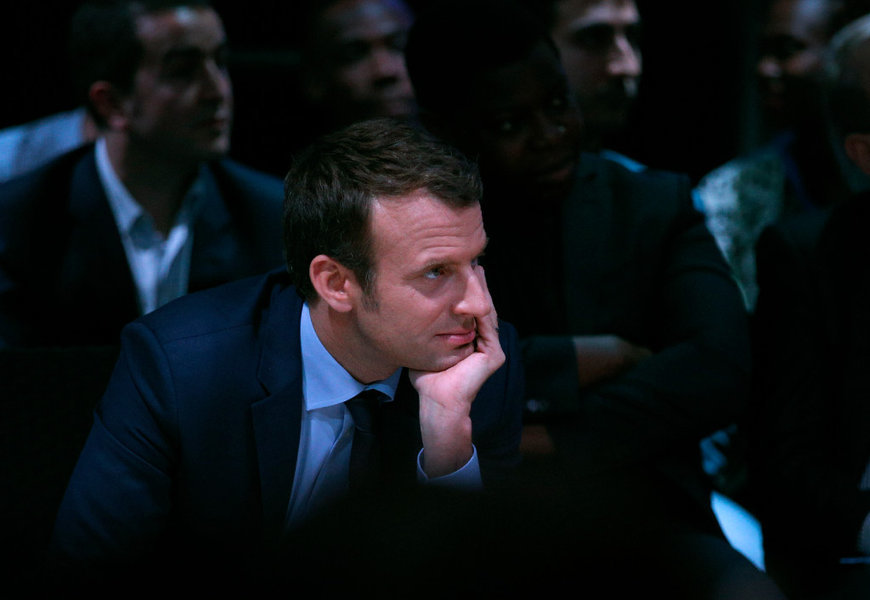
The French Foreign Minister has called the accession of Norway, Sweden, Denmark, the Netherlands, Finland and Belgium to the European Special Financial Mechanism(INSTEX) an indication of "Europe's commitment to a nuclear deal with Iran"! These ridiculous statements indicate that the French still intend to continue their joint game with the United States of America against the Islamic Republic of Iran. This dangerous, albeit unpredictable, game was started and continued by U.S. and French Presidents (Trump and Emmanuel Macron) in year 2017.
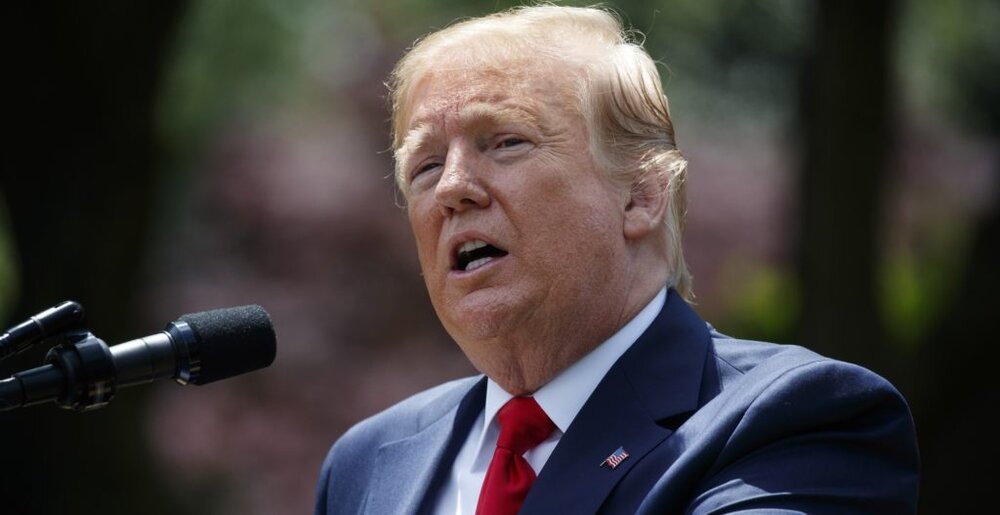
The fact is that the only reason for the crisis has been the departure of the United States from an international agreement. On the other hand, Donald Trump's government has imposed sanctions against Iran, which has shown little commitment to international treaties. In such a situation, the White House must return to the nuclear deal in the direction of the exit from the swamp, and the United States must also lift its sanctions against Iran and offset the damage that has occurred in the last year. The Trump government should also apologize to the international community for leaving the JCPOA.
the Islamic Republic now sends a firm and clear message to the west, exactly 18 mounts after U.S. president, Donald Trump unilaterally withdrew from its nuclear deal with Iran.
At this point, it seems that Iran has made a wise decision. Over the last year, the European troika has not only done anything to revive the nuclear deal or bring any kind of benefit to the Iranian nation, but they have actually backed up US by developing new plans to undermine Iran’s “missile work”, and diminish its “power in the region” as well as its “nuclear technology”.
Elysée officials are well aware of Instex's inefficiency. They are also well aware that due to US policies and pressure from the White House, it is virtually impossible for Instex to work. Therefore Jean-Yves Le Drian and other French officials are trying to convey the wrong and inaccurate address to public opinion around the world! France, which has falsely called itself a "mediator" for resolving the Iranian nuclear crisis, is one of the pillars of the Trump administration in the international system. A bitter truth that many French people have accepted!
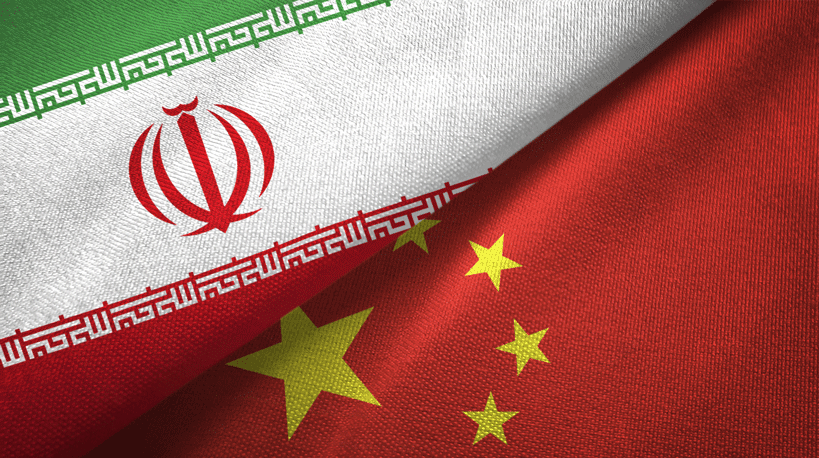
According to a PressTV Report of 24 November, 2019, Iran and China are working on a trade or barter deal that would circumvent US sanctions. It would bypass US-dollar denominated transactions, exchanging Iranian oil for Chinese goods and services and investments. The head of the Tehran Chamber of Commerce, Industries, Mines and Agriculture (TCCIMA), Masoud Khansari told Teheran’s Tasnim news agency, on 19 November 2019 that “The mechanism, aiming to increase economic exchanges between Iran and China, is in the process of being finalized and implemented.” He meant indeed, a barter deal between the two countries, avoiding a monetary exchange, is being worked out.
This is nothing new. Already in July 2011, the Financial Times reported that due to US sanctions against Iran, China, Iran’s largest hydrocarbon client was unable to pay Iran in cash, as monetary transactions were blocked. China had at that time accumulated at leas US$ 30 billion in unpaid bills, which deprived Iran from necessary hard currency to purchase goods, and mainly medication and medical equipment from countries that were either daring to go against the US sanctions, or clandestinely on the black market.
The case was similar with India which, together with China purchased then almost 50% of Iran’s oil – Iran’s lifeblood. While India exports almost nothing to Iran, China is a key exporter of a myriad of goods and services to Iran, including building infrastructure and investing in expansion of Iran’s oil sector. That’s when the two countries started making barter arrangements.
In the meantime, agreement was reached in July 2015 on Iran’s Nuclear Deal, the Joint Comprehensive Plan of Action (JCPOA) which for a short time lifted all sanctions, until on 8 May 2018 President Trump canceled Washington’s engagement in the deal – most likely on the behest of Israel – and new deadly US sanctions were imposed, stronger and more brutal as before – “the strongest ever sanctions imposed on any nation” – Trump boasted. And with these sanctions came the threat of punishment for every country that would do business with Iran, including the European Union members who were part of signing the Nuclear Deal, Germany, UK, France.
While at the outset the Europeans did not want to appear as Washington vassals – and more – their corporations had already signed new business deals with Iran and were not keen on canceling them, The EU had attempted to design an international payment system outside of the dollar-dominated SWIFT transfer system, the Instrument in Support of Trade Exchanges (INSTEX). Designed in January 2019, it is a special European transfer system, serving only European purposes to trade with Iran outside of US-dollar controlled sanctions. However, to this date not one single transaction has been carried out under INSTEX, mostly because of European’s are captive of an unexplainable puppetry dependence on Washington. The leader of the Islamic Revolution Ayatollah Seyyed Ali Khamenei called Instex “a bitter joke”.
In comes China – again, establishing a barter deal with Iran. A TCCIMA delegation recently visited Beijing and concluded a barter trade agreement that would be carried out both through mainland China and through Hong Kong. Among other potential deals for Iran petrol and gas deliveries, are investments in Iran’s power sector, by Chinese companies in, for example, energy and infrastructure projects. Rejecting US objections, Beijing says, dealing with Iran was legitimate under any international law. Iran is an integral link in the Belt and Road Initiative (BRI).
Earlier this year, Chinese President Xi Jinping said Beijing was seeking to develop a “comprehensive strategic partnership” with Tehran; and that “No matter how the international and regional situation changes, China’s resolve to develop a comprehensive strategic partnership with Iran will remain unchanged.” President Xi emphasized that the two sides should work together, “accelerate the building of a new type of international order and a community with a shared future for mankind,” – A Community with a shared future for mankind is indeed China’s long-term objective for decades to come. It converges with those of the BRI. An objective towards a multi-polar world and a peaceful coexistence among nations.
Barter deals do not provide Iran with the necessary cash to purchase needed imports. There are other avenues than barter, for a rapprochement outside the dollar-domain in trade between Beijing and Tehran, or Moscow and Tehran, for that matter. It should be relatively simple to open swap accounts between the Chinese and the Iranian central banks and to use the Chinese Interbank Payment System (CIPS) for monetary transfers.Such a solution should also leave Iran with sufficient revenues to pay for her imports. The reason such options may not be pursued with more vigor is perhaps that Iran is still very much divided between those Euro-US-centered Atlantists and those Iranians who follow the Ayatollah’s vision – towards a future in the East. A strong Fifth Column in Iran is also omni-present and rears its ugly neck when ever an opportunity arises, like the recent 50% hike in gasoline prices.
Its is a mystery for most observers why the gasoline price increase was not announced and explained by President Rouhani or Iranian Authorities prior to being implemented. It may have prevented much of the violence that is as of this day lingering on, causing bloodshed and mayhem. Most anywhere in the world, people would take to the streets if they would be hit with an unexplained price hike of a major commodity. It is as if the price for bread would double over night – an uproar foretold. That the opportunity would be taken advantage of by foreign-instigated violent elements was also foreseeable. And in this case, I dare say, preventable.
Demonstrations began peacefully and then suddenly on day two turned violent. It does not require rocket science to figure out that the violent was planted by outside forces trained and paid for by such notorious organizations like the NED (National Endowment for Democracy), the extended arm of CIA, funded with hundreds of millions from the US State Department. Those are the same people who are funding the unrests in Hong Kong. Their brand is chaos, crisis and destabilization – that’s what they do all over the world where ‘regime change’ is on Washington’s agenda. These forces are a clear impediment for Iran to go full-fledged their way to the East, associating wholeheartedly with the Shanghai Cooperation Organization (SCO) and de-coupling from the western economy.
In the face of a deeply divided Iran, barter deals with China, and why not with Russia, may be a first step towards a more serious move to de-dollarize, to decouple from the west. Iranian people deserve to live well, deserve to get out from under the misery-imposing boots of Washington. Even the Euro-centered and Washingtonites must recognize the US-western hypocrisy and realize that the US will never let go until she has a total grasp on Iran’s resources – that a resolute move to the east will give them relief from shortages of food, medicine – and western oppression and colonization.
Peter Koenig is an economist and geopolitical analyst. He is also a water resources and environmental specialist. He worked for over 30 years with the World Bank and the World Health Organization around the world in the fields of environment and water. He lectures at universities in the US, Europe and South America. He writes regularly for Global Research; ICH; RT; Sputnik; PressTV; The 21st Century; Greanville Post; Defend Democracy Press, TeleSUR; The Saker Blog, the New Eastern Outlook (NEO); and other internet sites. He is the author of Implosion – An Economic Thriller about War, Environmental Destruction and Corporate Greed – fiction based on facts and on 30 years of World Bank experience around the globe. He is also a co-author of The World Order and Revolution! – Essays from the Resistance. Peter Koenig is a Research Associate of the Centre for Research on Globalization.
NORTH CAROLINA - Claims are that some of Iran’s leaders think Donald Trump could be reelected next year and therefore some kind of negotiation over a “deal” with the U.S. may be necessary in the next year to obviate six more years of odious sanctions, which have had a marked impact on Iran’s economy.
The negative impact of the sanctions exist in part because the other signatories of the JCPOA, which the U.S. unilaterally withdrew from last year, have failed to underwrite and engage in continued trade with Iran to neutralize U.S. sanctions, and also because the supposed key to the maintenance of trade, the “INSTEX” mechanism set up by Europeans, looks like some kind of bad joke, like the proffer of a feast of fine food which merely masks a plate of offal fit only for a dog. It’s no wonder long suffering but proud Iranians don’t trust Westerners, and particularly Americans.
From afar, like from the U.S., it has been presumed that Iran would, at a minimum, not engage with the U.S. at all unless the U.S. eradicated the sanctions first as an act of good faith and would not at least be of a mind to start any further negotiations without the concept, if not the immediate fact, of a fully restored JCPOA. This makes sense, of course, because Iran did nothing but abide by the JCPOA as it was, unlike the U.S., which ought never be trusted (without serious guarantees) by any country regarding any deal whatsoever. Maybe a proper guarantee for Iran might be a $200 or more billion bond?) But it was President Rouhani who allegedly indicated that Iran might be willing to meet with American negotiators IF it would somehow clearly benefit Iran. But then President Rouhani fast reversed himself perhaps under pressure from Ayatollah Khamenei.
Nonetheless, it seems apparent that some of Iran’s leaders are vaguely warming to fresh ideas, and that if it is true that Trump wants a more comprehensive “deal” than that of the JCPOA, Iran likewise would be able to demand and expect iron-clad guarantees from the U.S. that the sanctions would never again be brandished.
At any rate, the Trump Administration must by now be aware that the sanctions and other moves by the U.S. and its Middle East allies, primarily the Saudis, the Zionists, and the UAE, have not at all destroyed Iran’s government, nor have they fomented a popular uprising. One could almost argue that the U.S. has lost, or is fast losing its capacity to foment regime change, since all the world now knows that “regime change” actions are not premised on some idealistic notion of spreading goodwill or “democracy” in foreign lands, but rather at bottom they are all about the destruction of political and military competition anywhere with the imposition or the ignition of plunder and chaos.
Trump, in fact, may actually imagine he wants a better “deal” than the JCPOA was, and he further may imagine that if he gets a better deal, he will be lauded and thus have a far better chance of winning reelection late next year. Even if Trump is far more intellectually challenged than his advisors and other Neocons, he is not without a relative degree of innocence and warmth, which the Neocons are completely bereft of. (Currently, U.S. voter polls suggest Trump will lose to the top four Democrats fighting for the nomination.) But let’s not kid ourselves. Even Trump’s former appointees like General James Mattis (and others) have more or less stated that Trump himself knows very little and has a mind more chaotic and unmoored than any that has ever previously presided at the White House.
Here’s the problem in a nutshell:
Forget talk about new “deals” and potential agreements between the U.S. and its competitors or its alleged enemies. It seems (upon fair examination) that the U.S. government as constituted in recent decades is not sophisticated enough nor imbued with the wisdom necessary to have a plan or plans that distinguish between different countries and also, therefore, crafts ideas and mutually beneficial proposals tailored to those countries for negotiation. And would the U.S., for example, get off Iran’s back finally if, for example, Iran agreed to limit the development of its ballistic missile program, or returned to the limits the JCPOA imposed on its enrichment of uranium (or even set deeper limits to enrichment) and to other facets of its nuclear program? Would the U.S. get off Iran’s back if Iran marginally unfriended its Syrian and Iraqi and Lebanese neighbors in some nominal way, say simply by declaring that Iran is henceforth strictly adopting a comprehensive political or military “neutrality” in the Middle East, just as Switzerland, say, has long done in Europe? In other words, Iran saying, in effect, “We won’t mess with anyone anywhere, nor try to influence anyone anywhere, as long as no one messes with us or threatens us specifically.”
The correct answer here to these questions is probably “NO”. And the reasons for this answer are inherent in continued carte blanche U.S. support for the Zionists and anything they want. (They have been in a panic over the mere whiff of future negotiations between the Trump and the Islamic Republic – they only appear to want the destruction of Iran. Moreover, one can easily presume John Bolton and Mike Pompeo and V.P. Pence among corrupted others think exactly like the Zionists.) The reason for “NO” is also inherent in what the U.S. did to Ukraine in 2014, even though Trump is now threatening to cancel $250 million in further military aid to Kiev, and it is also inherent in what the U.S. has stirred up in Hong Kong this summer, where the unrest looks a lot like the cheer-led support the U.S. gave to the Ukrainian color revolutionaries, which never has resulted in any sort of real gains for Ukraine.
No. The real U.S. government game with Trump and minions may simply be the attempt to preserve U.S. hegemony and diktat militarily and economically worldwide with no care at all what this might mean, internally, for other countries. There is no benevolence evident yet in the Deep State of the U.S. wants China to implode. It wants Russia to lose its grip in the Mideast and its friendship with China. It wants the peaceful Chinese-led Belt and Road initiative across Asia to fail. It wants, in a word, yet more chaos benefitting the so-called Empire of Chaos and its fascist makeup.
Still, fresh negotiations between the U.S and Iran could be a positive development but posited on a clear willingness of the U.S. to dampen the fervor of its long established kissing of Israel’s hindmost parts and some determination to balance its diplomacy towards fairness in the Middle East. Any tangible evidence of such a shift, which might include initially Trump’s dismissal of Pompeo and Bolton, could well be the oil that lubricates welcome change, along with the flow of the sale of Iranian resources worldwide once again with the lifting of sanctions.
TEHRAN – Professor Paul Pillar, who was CIA intelligence analyst for 28 years, tells that the Europeans still want to save the JCPOA.
Pillar says “Doing so will require the Europeans to facilitate enough commerce with Iran for Iranian leaders to conclude that their country is receiving enough economic benefit to make continued observance of the nuclear limits justifiable.” He also adds that “The prospects for this happening are not good.”
Following is the text of the interview:
Q: Iran has announced that it will implement a third step to reduce its obligations under the JCPOA. Will Europe takes effective and convincing action to prevent this?
A: The challenge for Europe has not changed since the Trump administration reneged on U.S. obligations under the JCPOA and, a year later, Iran began exceeding some of the limits of the agreement. The Europeans still want to save the JCPOA. Doing so will require the Europeans to facilitate enough commerce with Iran for Iranian leaders to conclude that their country is receiving enough economic benefit to make continued observance of the nuclear limits justifiable. The prospects for this happening are not good. The European governments mostly have the will but not the ability to make it happen. The governments do not control the private sector, and most European businesses that are big enough to matter fear being shut out of the U.S. market if they do business with Iran.
Q: What would be the possible reaction of Russia and China to reducing Iran's commitments under JCPOA?
A: Russia and China also want to preserve the JCPOA. If Iran continues to exceed more of the nuclear limits, Russia and China will not impose additional sanctions of their own. They regard the Trump administration's imposition of new U.S. sanctions as the obvious cause of the agreement breaking down. Russia and China will seek to exploit the absence of Iranian dealings with the United States and any new conflict in Iranian-European relations by developing their own relations with Iran, which they see in their own economic interests. Russian President Putin also has a strategic interest in maintaining reasonably good relations with all countries in the Middle East, including Iran. China possibly could be deterred from making major new commercial deals with Iran by not wanting to complicate its trade negotiations with the United States. But right now those negotiations do not seem to being going anywhere, and so Beijing probably believes it has nothing to lose by doing business with Iran.
Q: In your opinion, will the third phase of reducing Iran's commitments in the JCPOA be dangerous? Will Iran's case go to the United Nations Security Council after third step of reducing its commitments?
A: There is nothing distinctive about the third step that is different from the first couple of steps. Iran still is limiting itself to steps that are easily reversible, and keep it a long way from any capability to build a nuclear weapon. The JCPOA specifies procedures for any referral to the UN Security Council. The Trump administration would favor such a referral, but it no longer is a participant in the JCPOA and thus does not have the standing to initiate such action. A relevant question is whether the new British government of Boris Johnson, weakened by the Brexit mess and more dependent than ever on the United States, will start adopting the Trump administration's policy line on Iran.
Q: Can the United States impose new sanctions on Iran after the third step in reducing Iran's commitments under JCPOA?
A: The Trump administration already has imposed nearly every sanction it has the power to impose on Iran. It can always find something else that it can describe as a further step in its "maximum pressure" campaign, but the practical difference from what exists right now will be minimal.
TEHRAN-Professor Arshin Adib-Moghaddam, Chair of the Centre for Iranian Studies at the London Middle East Institute believes that “From the perspective of China, Iran is a major partner, not only in terms of hydrocarbon imports, but also because of a comparable strategic vision of a multipolar world order and a new EurAsian century which is behind the One Belt initative.”
Professor in Global Thought and Comparative Philosophies and Chair of the Centre for Iranian Studies at the London Middle East Institute, also adds that “Hence, China will try to facilitate any type of trade with Iran, whenever possible.” Here is the full text of the interview:
Q: We have recently witnessed the resignation of German Designated head of Europe-Iran trade entity (INSTEX). In this regard, the long overdue implementation mechanism will be postponed again. Don’t you think that the resignation happened so that the Europeans can buy enough time?
A: I think the European Union has a genuine interest in keeping the JCPOA alive and INSTEX has been an important mechanism to that end, despite its flaws in terms of the financial incentives for Iran. Indeed, what we are witnessing is a firm EU-centred stance on the Iran file, which is what we have advocated for a long time. The EU needs to work in accordacne with its own interests, rather than following what every US administration says. This seems to be happening now, and Iran is a major object of that new orientation in international politics. Of course, Iran needs to keep its side of the bargain to make that diplomacy work.
Q: Is it possible that the special purpose vehicle for trade with Iran goes behind commercial export of pharmaceutical, medical devices and agri-food goods and covers oil trade? As you know Al-Monitor cited three anonymous sources as saying French President Emmanuel Macron had raised the establishment of a $15 billion credit line.
A: The details can only be worked out, once INSTEX is operative. President Macron has pursued important diplomatic initiatives, and as he has an interest in safeguarding the JCPOA, as indicated, he will try everything possible to that end.
Q: How do you evaluate the future of INSTEX as the US has threatened to put sanctions on foreign companies if it goes behind food and medical supplies?
A: The ability of the United States to enforce these sanctions is questionable. In general, Iran should not overestimate US power which is waning pretty much all over the world, not least because of the misguided policies of the Trump administration. This is a fact and easily discernable for scholars of global history and world politics.
Q: US extended Iran nuke sanction waivers for 90 days. What are the reasons behind this decision?
A: The inability to enforce sanctions as indicated. Current US policies towards Iran must be interpreted as a marketing ploy. Once one looks through the advertisement, the mediocrity of the displayed product becomes visibile.
Q: Iran’s Arak reactor renovation is China’s responsibility. But if chines want to import the redesigning equipments (from Europe), they do need more time. It seems that 90 day wavers will reduce China’s power of risk taking and prevent it from doing the commitments. Do you think that Beijing will take the risk?
A: Again, I would analyse the specific policies within the wider framework of strategy. From the perspective of China, Iran is a major partner, not only in terms of hydrocarbon imports, but also because of a comparable strategic vision of a multipolar world order and a new EurAsian century which is behind the One Belt initative. Hence, China will try to facilitate any type of trade with Iran, whenever possible. I think the commitment to the Arak reactor is a part of that approach.
Many people in the West are gradually beginning to understand that the days of the unipolar world are numbered, a unipolar world the United States has been recklessly dominating for the past number of years, using nothing but brute force and military conflict in an attempt to impose its world order on other countries. New superpowers are coming to the forefront, whose aim is to strengthen world peace and to protect the legitimate right all people have to live according to their own national laws and customs, without interfering in other countries’ affairs. This is particularly visible in the Persian Gulf amid the so-called “Persian Gulf crisis”.
It initially looked as if reason had prevailed when the five permanent members of the UN Security Council as well as Germany signed the Joint Comprehensive Plan of Action (JCPOA), which gradually began to normalize the situation in the region. But then Donald Trump not only withdrew from the Iran nuclear deal, but also imposed fierce sanctions against Iran and the Iranian people, who value their independence. By imposing sanctions against Iran, the US has made it clear that it wants to “make the whole world bend to its will” – the Russian Foreign Ministry commented. “This is being done in order to deprive Iran of export revenue and to undermine the Iranian economy, because the United States has long been dissatisfied with Tehran’s independent policy, one reason being the fact that it prevents Americans from being able to feel like they fully dominate the strategically important region that is the Middle East,” the website of the Russian Foreign Ministry. In 2019, Iran responded by announcing it would suspend implementing two parts of the deal, and after that point the world seems to have begun moving towards armed conflict at an alarming pace.
But the world has changed, and a number of countries have taken urgent steps to stabilize the situation. French, German and UK Foreign Ministers have announced the creation of INSTEX, a new mechanism for facilitating legitimate trade with Iran. INSTEX will initially focus on delivering medicine, medical devices and agri-food goods to Iran. The decision to create a mechanism to facilitate trade with Iran that bypasses US sanctions was taken in order to establish normal trade relations with Tehran.
Moreover, European NATO member states were very skeptical about the US-led initiative to establish a joint international naval mission, which is meant to protect the shipping interests of the West in the Strait of Hormuz. German Foreign Minister Heiko Maas made a statement which clearly expresses this skepticism: “Germany will not take part in the naval mission proposed and planned by the United States.” US Ambassador to Germany Richard Grenell expressed his frustration, declaring he was “outraged” by Angela Merkel’s policy, as the German Chancellor had said Berlin did not intend to join the US mission in the Strait of Hormuz. In response to the decision Maas had announced, Grenell rudely barged in on Germany’s affairs and made a dogmatic statement, saying that “Germany is the biggest economic power in Europe. This success brings global responsibilities.” From what the American Ambassador has said, it is clear that he still sees Germany as an American protectorate, not an independent state, where American troops are still stationed.
“The presence of foreign forces does not only not contribute to the security of the region, but also will be the main cause of regional tensions,” Iranian President Hassan Rouhani said at a meeting with Oman’s Foreign Minister in Tehran. Recalling the fact that Iran and Oman bear most of the responsibility to ensure security in the Strait of Hormuz, President Rouhani added: “Iran has been, and will be, the main guardian of security and freedom of navigation in the Persian Gulf, the Strait of Hormuz and the Sea of Oman during history.” At the same time, noting Iran has never and will never start a war, Rouhani made it clear that the current tension in the region stems from America’s unilateral rejection of the JCPOA and the illusion of the Trump administration. During this meeting, Oman’s Foreign Minister Yusuf Bin Alawi Bin Abdullah, in turn, described relations between Iran and Oman as “friendly and brotherly”, adding: “Today, the region is experiencing fabricated and proxy crises, and the establishment of sustainable security in the region will definitely not be possible without Iran’s involvement.”
In this regard, Iran and Russia are planning to begin carrying out joint naval exercises in the near future, Iranian Navy Commander Rear Admiral Hossein Khanzadi told IRNA (The Islamic Republic News Agency). According to Khanzadi, these joint naval exercises may take place in the northern part of the Indian Ocean, and in the Strait of Hormuz, which connects the Persian Gulf with the Gulf of Oman. The US media reported these plans, which they say have really frightened members of the Trump administration, because the news came as a big surprise, and now Washington simply does not know how to respond to these plans. The French newspaper Le Monde explicitly reported that conducting these naval exercises would spoil the whole game plan for Donald Trump and his team.
Against this background, Iran has begun taking a tougher stance against the United States and its leadership. One event which stands out is when Tehran bluntly turned down an offer from US Secretary of State Mike Pompeo to visit Iran and speak to the Iranian people. Pompeo appears to have become obsessed with the withered “laurels” of the notorious former Assistant Secretary of State Victoria Nuland, who visited Kiev’s Maidan Square back in the day, and handed out cookies to local residents. Ordinary people in Kiev did not understand the gesture, and thought that the Americans would later reward them with a million dollars for each cookie they took. They are still waiting for that reward.
Even close US allies – the Gulf States, especially Saudi Arabia and the UAE – are feeling the negative consequences of US sanctions, as the Gulf tanker crisis and threat to the freedom of navigation have led to a hike in insurance costs for their ships and cargo. Another threat to the oil market in the Persian Gulf is that countries in Asia such as China, India, Japan, South Korea and Taiwan, are already looking for alternatives, because they are afraid their oil supply will be disrupted if war breaks out and the Strait of Hormuz is closes. On top of all this, there is a significant outflow of investment from the Gulf countries, whose economies are partly dependent on the financial services of other States. According to US bankers from JP Morgan, Saudi Arabia lost $80 billion in investments last year, and the shares of the Persian Gulf countries plummeted, which had previously been highly valued by the financial market.
Many people around the world are right to believe that unqualified sanctions against Iran are a moral, political and legal failure on the part of the United States. Imposing sanctions against Iran means that the United States has failed to fulfill its obligations to international institutions, one of them being the United Nations. Everyone loses here – Europe suffers a setback, as does Iran and the whole world, Washington has brought the world to the brink of war, to both political and economic stagnation.
Viktor Mikhin, corresponding member ofthe Russian Academy of Natural Sciences, exclusively for the online magazine “New Eastern Outlook.”
The seizure of a British oil tanker by the Islamic Revolutionary Guards Corps on July 20 in the Strait of Hormuz has all the hallmarks of a retaliatory act in the downstream of the seizure of an Iranian tanker by the British Navy exactly two weeks ago on July 4 off Gibralter.
On July 16, Iran’s Supreme Leader Ali Khamenei had warned, “Iran will respond to the vicious Britain’s piracy. Iran’s response will come at the right time and the right place.” Four days later, IRGC struck. An IRGC statement gave a detailed account of what happened. Footage of the incident has also been released — just as Britain did.
Iran is taunting Britain and making it look foolish. Britain is now left with no option but to negotiate. And the outcome of any negotiations can be easily foretold — Britain will have to unceremoniously set free the Iranian tanker.
Quite obviously, the seizure of the Iranian tanker by Britain was done in tandem with the hardliners in Washington and it is by now clear that the EU distanced itself from it in considerable embarrassment. Britain’s dilemma now will be that all its ships in the Strait of Hormuz are in Iran’s crosshairs. And Britain is left all alone to take the flak after precipitating a crisis needlessly. (See Guardian columnist Simon Tisdall’s stunning piece, How Trump’s arch-hawk lured Britain into a dangerous trap to punish Iran.)
Yesterday’s incident was a calculated act by the IRGC, enacted right under the nose of a British warship, which was escorting the tanker. When the warship threatened to open fire, IRGC retorted that it would also retaliate with fire. Thereupon, an Iranian helicopter dropped masked men on the British tanker and took control of it. The intention is to make the Brits look impotent and stupid. (See the Press TV commentary The Royal Navy: From Piracy to Impotence.)
The British tanker seized by Iran’s Islamic Revolutionary Guards Corps in Strait of Hormuz, Jul 20, 2019
In a broader perspective, therefore, it appears that Iran may have underscored that its earlier threat must be taken very seriously — that if its oil exports ever got intercepted or blocked, then no one will be allowed to export oil via the Strait of Hormuz. More fundamentally, this is an unambiguous message that if the “other side” escalates, make no mistake, Iran will counter escalate.
****
On July 17, Iran’s semi-official news agency Fars News had carried an interviewwith me (in Persian) on the seizure of the Iranian oil tanker by Britain and its likely consequences as well as the related issues of the Iran-EU cogitations over the mechanism known as INSTEX, which Brussels has put in place to circumvent US sanctions against Iran.
In the context of yesterday’s incident in the Straits of Hormuz, my interview with the Fars correspondent Mahdi Khodabakhsh may be of interest. The English translation of the interview follows:
‘Indian diplomat: British action against Iran on behalf of the United States.’
QUESTION: As you know, some days ago UK royal navy seized a Tanker containing Iranian crude oil off Gibraltar. UK claimed it was bound to Syria which is under sanctions. Do you think UK’s move was legal? What does the international law say about it?
ANSWER: As far as I can gather from media reports, the legality of the British action is highly questionable. Syria is not under any UN sanctions and under international law, there is no embargo on oil supplies to that country.
QUESTION: How do you see the development and what effect it can have on Iran relations with EU? (also considering recent JCPOA tensions)
ANSWER: This is an act of blatant provocation with a view to inciting an Iranian reaction that could in turn be used as an alibi for some other downstream action by the US. I cannot see how the EU can endorse the British action because the group has no such policy to enforce a naval blockade of Syria. At least, I have not seen any EU country endorsing the British action so far. There are also signs that UK is seeking some sort of a patch-up with Iran, while saving face, because the international opinion did not support the British action.
QUESTION: In your opinion would it be proper for Iran – in this tense situation – to react to UK’s move and do something retaliatory? If No, why is that; and if Yes what could the response be?
ANSWER: I have no doubt that Iran views the British belligerence with utmost seriousness and there will be consequences. Having said that, in my opinion, it is only proper that Iran has refused to be provoked into any knee-jerk response but is taking its own time. There could be a range of responses that Iran could consider, but importantly, Iran should only give a measured response that does not provide excuses for the US for doing something reckless or aggressive. The US or the so-called B Team, to my mind, has most likely instigated the British action. This is a surcharged atmosphere and Iran has so far acted with restraint and dignity — and rationally.
QUESTION: As we know, Iran started taking second step in reducing its obligations under JCPOA from yesterday due to Trump’s unilateral withdrawal from the deal and of course because Iran did not benefited from economic relief. So how do you think EU and other remaining parties in JCPOA will react to these steps by Iran? Are they going to trigger the dispute mechanism and snap-back lifted UN sanctions?
ANSWER: The EU foreign ministers meeting in Brussels on Monday reportedly took the decision that the situation does not warrant any move to trigger the dispute mechanism or to demand snap-back sanctions.
QUESTION: Yesterday EU ministers held a meeting in Brussels with a focus on the Deal however many of the diplomats including French, Britain, German, Dutch, Finnish Foreign Ministers and even Mogherini called on Iran to stay committed unilaterally to JCPOA but say nothing about US withdrawal. Do you think with this trend, JCPOA will survive? Considering European partners’ inaction against US sanctions on Iran and its unilateral withdrawal from the deal, despite 14 months period Iran given to them for some efforts; do you think that EU really wants the JCPOA? Are they sincere in what they say about Iran deal? UK, Britain and France tried to put together a mechanism to evade US sanctions for trading with Iran called INSTEX. However Tehran says it was not fruitful. How do you elaborate its effectiveness to benefit Iran from JCPOA economic relief? Is US capable of sanctioning the whole INSTEX?
ANSWER: The EU is walking a fine line. It is unrealistic to expect the US’ European allies — make no mistake, there are still allies — to publicly condemn Washington even if they disagree fundamentally on the Trump administration’s decision to withdraw from the JCPOA. Clearly, the EU is keen that the JCPOA survives and there should be no doubt on that score. One can see that the EU is on the defensive, as it realises that the EU and the E3 have not been able to fulfil their obligations under the JCPOA. What they are trying to do, in my opinion, is to mitigate to some extent Iran’s losses. As of now, there is a visible shortfall. The issue is not about sincerity but about politics, which is the art of the possible.
The INSTEX has just become operational. The EU foreign policy chief Mogherini is on record that the mechanism is fleshing out some business proposals already. She also said that certain non-EU third parties have shown interest in the INSTEX. These are encouraging signs. To my mind, these are early days and it is difficult to pass final judgment. Mogherini claimed that the E3 are also discussing the feasibility of oil trade being included in the INSTEX mechanism.
As things stand, the US may see the INSTEX as contravening its sanctions and the ‘maximum pressure’ policy. But then, on the other hand, US is also interested that the JCPOA survives (according to Mogherini.) Therefore, a pragmatic US attitude toward INSTEX cannot be ruled out, either. As I said earlier, this is an evolving situation.
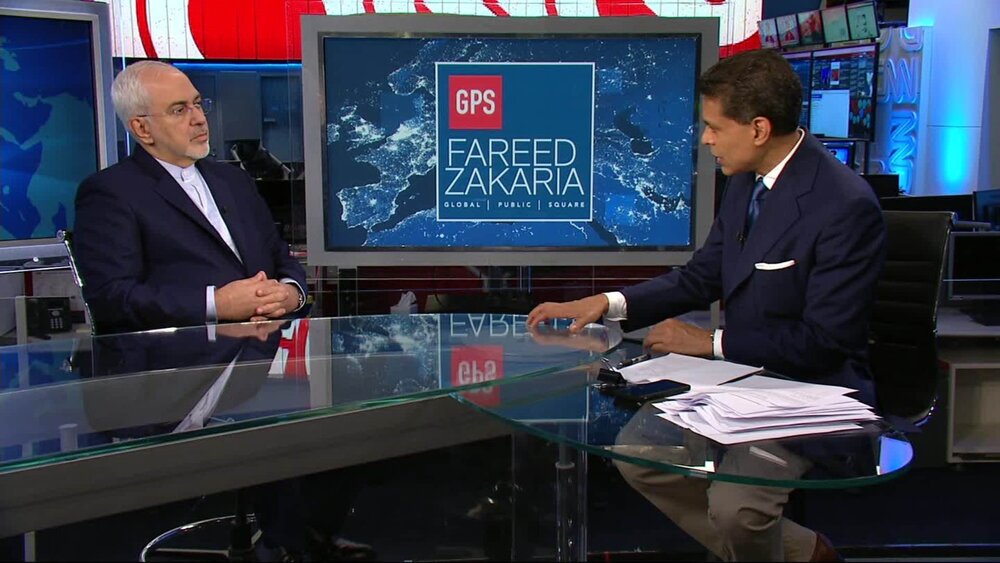
TEHRAN – Iranian Foreign Minister Mohammad Javad Zarif has said that European countries’ failure to establish an effective financial channel to trade with Iran is a “source of concern” since “they have not been able to assert themselves” despite having a larger collective economy than the United States.
Zarif made the remarks in an interview with CNN’s Fareed Zakaria broadcast on Sunday, as he was asked by Zakaria “Are you surprised by how week the Europeans have been? They talk about providing an alternative payment system. They sort of set one up. But, let’s face it. It’s not working.”
Zarif answered, “Well, it hasn’t started to work. It should. It is a source of concern, I think, more for the Europeans than for us, that they have not been able to basically assert themselves.”
“Europe is, together, a larger economy than the United States. Certainly if all European oil companies, plus the Chinese and Indians and Russians and the Japanese decide to neglect U.S. sanctions, the United States will not be able, the international economy won’t bear it for the United States to put sanctions on all of these companies,” the chief diplomat remarked.
Europe’s financial channel with Iran, called INSTEX, was set up as a trade vehicle in a bid to protect the Iranian economy from Washington’s sanctions. But its scope is severely limited, with just 10 of the European Union's 28 nations taking part and a credit line just a fraction of pre-sanctions trade.
Crucially, INSTEX at this time only covers humanitarian goods, allowing the U.S. chokehold on key Iranian exports - notably oil - to suffocate Iran's economy.
On Friday, The Financial Times reported that Russia wants European efforts to get around U.S. sanctions on Iran to include Tehran's lucrative oil exports and has thrown its weight behind INSTEX.
The British news outlet quoted a Russian Foreign Ministry spokesman as saying, “The full potential of INSTEX will only be able to be deployed if it will be open to the participation of countries which are not members of the European Union.”
“If the encouraging statements by the EU... will be backed up by concrete steps and practical advances, including in relation to the use of INSTEX for servicing trading in Iranian oil, it will help stabilize the difficult situation created around the JCPOA,” said the spokesman, whose name was withheld.
If Moscow were to join the mechanism, it would be a major boost to European efforts to save the 2015 nuclear deal (known as the Joint Comprehensive Plan of Action or JCPOA), which has been unravelling in recent weeks.
The JCPOA, agreed between Iran and world powers, was designed to offer sanctions relief to Iran, unfreezing billions of dollars in Iranian assets held around the globe, in exchange for Iran curbing its nuclear program.
But in 2018, President Donald Trump unilaterally withdrew the U.S. from the deal and imposed a raft of severe sanctions on Iran. Trump threatened secondary sanctions against companies operating in other countries, inviting corporate leaders to “make a choice” between doing business in Iran or the U.S.
Over the past year, Iran has been looking to European signatories to the deal for support and has said that INSTEX, if it could not help resume Iran’s oil trade, was next to useless.
If the other signatories to the JCPOA would or could not uphold their side of the deal, Iran would also begin to reduce its commitment to the agreement.
In recent weeks, Iran has begun enriching uranium to a higher degree of purity than had been agreed under the deal, while building its stockpiles of fissile material - not least because under the sanctions regime, it can’t export what it produces anyway.
European powers are open to the idea of bringing Russia into INSTEX, officials told the FT.
“The issue of whether or not INSTEX will deal with oil is a discussion that is ongoing among the shareholders,” outgoing EU foreign policy chief Federica Mogherini said earlier this week.
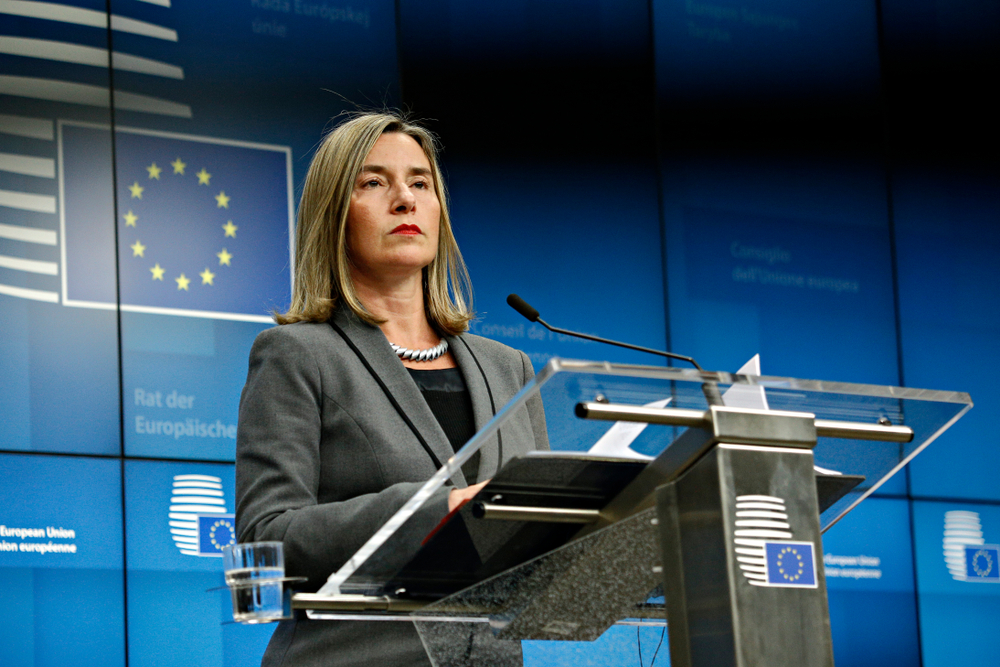
Federica Mogherini (Alexandros Michailidis via Shutterstock)
by Eldar Mamedov
On July 16, the European Parliament debated the “Situation in the Persian Gulf” with the European Union’s High Representative for foreign policy, Federica Mogherini. The fact that the item was among the first on the foreign policy agenda of the newly-elected assembly testifies to the concern the representatives of the European peoples feel about the escalating tensions in the region. Also, remarkably, the title of the debate referred to the “Persian Gulf” rather than simply “Gulf”, as is customary in official Euro-speak. This may seem like a trivial detail, but, in the context of a burgeoning effort to delegitimise Iran’s presence in the region—consisting, among other things, in promoting the concept of the “Arabian Gulf”—getting the title right was symbolically meaningful.
With such a broadly defined title, there was a range of choices as to how to frame the debate politically. No written resolution was adopted to wind down the debate, but it was a worthwhile exercise to get an early indication of where the new Parliament stands on Iran.
The sense one got from the discussion was one of continuity of a broadly pro-engagement line, defended by Mogherini and the EU member states. True, right-wing forces, represented by the Saudi-friendly European Conservatives and Reformists (ECR), which include such parties as Poland’s national-populist Law and Order and the Mojahedeen-e Khalk (MEK)-funded Spanish extreme right Vox, sought to condemn Iran for its “illegal” nuclear program and “obstruction” of the freedom of navigation in the Persian Gulf. ECR, however, was weakened after the elections—it used to be the third-largest political bloc in the EP, and now it’s only sixth. The debate, instead of centering on Iranian “nefarious activities” as the ECR would have wished, focused on EU efforts to save the 2015 nuclear agreement (Join Comprehensive Plan of Action or JCPOA) and the urgent need for regional de-escalation.
Mogherini set the tone, by framing, once again, the survival of the JCPOA as a key European security interest and an achievement of multilateral diplomacy worth preserving. She expressed concern about the latest Iranian steps to increase its stockpiles of low enriched uranium (LEU) and the level of enrichment, but stressed that these steps are reversible as long as the JCPOA can be saved. Following the Joint Commission of the JCPOA meeting on June 28 in Vienna, experts discussed ways to allow Iran to export its excess LEU and heavy water stockpiles. On INSTEX, a special trade mechanism devised to facilitate trade with Iran, Mogherini said that its first operations were already processed, and more EU member states expressed interest in joining Britain, Germany and France as its shareholders.
Mogherini fully backed the efforts of players like Iraq and Kuwait to lower regional tensions, particularly the Iraqi idea of an international conference on the U.S.-Iran conflict. Asked by a member of the European Parliament whether the EU would support regime change in Iran, she categorically ruled it out by reaffirming “respect for internal political dynamics inside the country”.
Significantly, the debate in the Parliament took place a day after the EU foreign ministers meeting in Brussels, so Mogherini spoke with the authority that the backing of the 28 EU member states gives her. Focus on saving the JCPOA and regional de-escalation shows that, despite the U.S. “maximum pressure” campaign against Iran, the Europeans, mostly, hold to their view that the underlying cause of recent tensions in the Persian Gulf area is not Iranian mischief, but Donald Trump’s decision to violate the JCPOA.
The overall tone of the parliamentary debate only reinforced this impression. Most MEPs, across the political spectrum, were highly critical of unilateral and extraterritorial U.S. sanctions and demanded stronger European action in defending European security and economic interests. Speaking of the region, some recalled Saudi Arabian policies in Yemen and Western arms sales to the kingdom as, at the very least, equally destabilizing as Iran’s actions. In this context, MEPs called on the EU to promote Saudi-Iranian dialogue as a prerequisite for lowering tensions.
Although the fate of the JCPOA will ultimately not be decided in the European Parliament, the debate was indicative of where the European sentiment lies on the matter. The political message was unmistakeable: the EU, both collectively and on national levels, should step up its game to save the nuclear agreement with Iran in order to avoid a war in Europe’s neighbourhood.
ELDAR MAMEDOV
Eldar Mamedov has degrees from the University of Latvia and the Diplomatic School in Madrid, Spain. He has worked in the Ministry of Foreign Affairs of Latvia and as a diplomat in Latvian embassies in Washington D.C. and Madrid. Since 2007, Mamedov has served as a political adviser for the social-democrats in the Foreign Affairs Committee of the European Parliament (EP) and is in charge of the EP delegations for inter-parliamentary relations with Iran, Iraq, the Arabian Peninsula, and Mashreq.