Showing posts with label Hezbollah in Lebanon. Show all posts

Monday, November 04, 2019

Hiding the West’s ongoing neo-colonialism in Lebanon via blaming Iran (1/2)

by Ramin Mazaheri for the Saker Blog
I have spoken with many in France’s huge expatriate Lebanese community – and from all groups – and not a single person has ever claimed that Iran was the power behind the scenes in Lebanon. Without fail I was told that this title belongs to France.
It shouldn’t be surprising: France completely devised modern Lebanon.
Many Lebanese don’t like to be reminded of this, but Lebanon is an artificial nation which France constructed entirely on the basis of racism: just as Zionists to the south wanted a “Jewish nation”, Lebanon was hacked off of Syria in 1920 to create a new Christian-majority nation.
That’s a “no longer relevant” tale of divide and conquer to some, even though a few centenarians may still remember the actual event.
France also devised Lebanon’s sectarianism-enshrining, woefully unmodern constitution, which has ensured divisive identity politics ever since.
Thus, just as Israel is a little part of the USA in the Middle East, Lebanon is the older, French version. The saying, “Beirut is the Paris of the Middle East” could not be more correct.
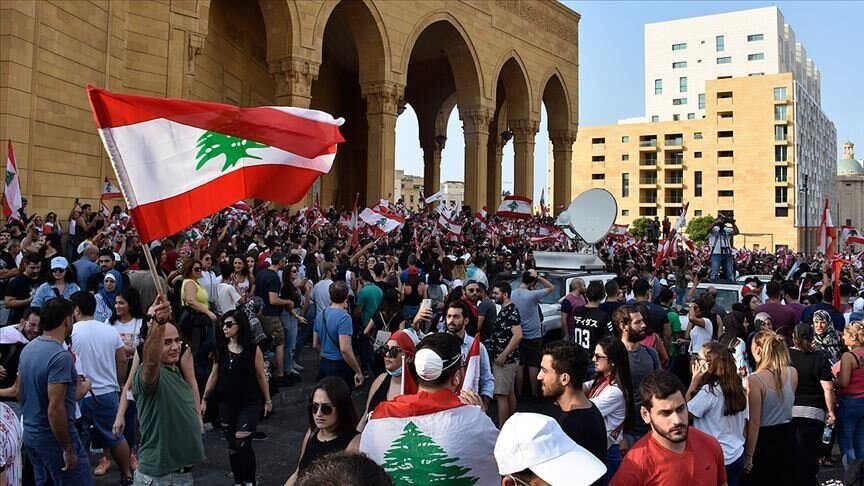
And yet, were an alien to visit and read Western mainstream media coverage of the recent protests in Lebanon it would not imagine that France ever had any role in Lebanon, much less a prominent role there today.
Instead, Western headlines and reports all push the totally absurd claim that Iran has somehow become the neo-colonial master in Lebanon. Somehow – and via the poorest, most marginalised sectors of Lebanese society, no less – Iran has been able to usurp a century of French power.
Furthermore, despite the century of French involvement it is not France but Iran which is responsible for the corruption that has pushed so many Lebanese into the streets.
Apparently Iran took power and also became corrupt so very quickly that the Lebanese themselves didn’t even realise it! The idea is laughable.
Or perhaps: the Lebanese themselves don’t know what is actually going on in their own country – the West knows better.
These are the kind of ideas only a Westerner could believe.
The reason is simple: advertising works. Astute observers already realise that when it comes to the Middle East every problem – big or small – is blamed on Iran in the West.
However, what’s rarely examined is how this very real Iranophobia allows the West to obscure places where their neo-colonial machinations could not be more obvious, such as in Lebanon.
If it’s not Iran then it must be Hezbollah, but it can never be France
If the West cannot destroy Iran in 2019 they will happily settle for destroying Hezbollah.
There are two types of political parties: those which citizens fight to destroy (like the Yellow Vests and the three mainstream political parties in France), and those which citizens fight to preserve. There is no doubt which camp Hezbollah belongs to.
Hezbollah is the “Party of God” and the party of Lebanon’s poor, but many insist they are not a political party but a larger “resistance movement”. Amal is a political party allied with Hezbollah, and Western media coverage is doing their best to lump both in with the older, Western-aping, billionaire-backed parties which are the true cause of the recent corruption protests.
Hezbollah has always said they would never turn their guns on Lebanese, and even if the West doesn’t want anyone to know that the Lebanese certainly do. They know that without Hezbollah southern Lebanon would be called “Northern Israel” today. Or, nearly as badly, it would still be the State of Free Lebanon, that stillborn Israeli client from the early 1980s which no country besides Israel recognised. (That’s just more “no longer relevant” history to Western mainstream journalists of course.)
The West hates Hezbollah for the same reason Lebanon supports it – Hezbollah is what ensures Lebanon’s security from repeated, deadly, infrastructure-ruining Israeli invasions. After the 2006 war with Israel most Sunnis and an estimated 50% of Christians supported Hezbollah – that’s hardly sectarian hatred.
After saving the Lebanese from Israel on multiple occasions, the undeniable and enduring popular support of Hezbollah and Amal comes from their education, health and other social welfare organisations. Southern Lebanon is most notable not for being mostly Shia but for its extreme poverty, which was the result of decades of neglect from Paris-allied Beirut. Hezbollah and Amal helped reverse that, to the extreme embarrassment and consternation of France, Israel and their many sectarian militias, mafias and political puppets in Lebanon.
And yet despite being so late arriving to power, despite being anchored in the poorest regions, despite decades of neglect from Beirut, and despite illegal and inhuman US-led sanctions on Hezbollah… the West wants us to believe that Hezbollah and Amal are the ones responsible for the corruption at the heart of the current protests!
One has to wonder: if these two groups are so corrupt then where is the money, because it is certainly not in southern Lebanon?
The idea that Hassan Nasrallah, who can make a fair claim to be the most popular Muslim leader and hero in the world currently, is about to fall due to decades of corruption in Beirut is an absolute fantasy which can only be taken seriously in the West.
Again, what we have here is another situation where Western propaganda is aiming to manipulate legitimate unhappiness created by long-tenured Western client politicians in order to deny the West’s neo-colonial culpability. The legitimate demands in Yemen, Palestine and Iraq are all being portrayed as being caused by an Iranian neo-colonialism which does not exist, when the real culprit is the very real and very accurately-named Western neo-colonialism.
The West, of course, may speak of neoliberalism but never neo-colonialism.
The long-running source of corruption in Lebanon: Western-allied, neoliberal & neocolonial puppets
I would imagine that up to this point a Lebanese reader has been quite bored – I have only relayed things which he or she already knows quite well. But perhaps a Lebanese expatriate in Brazil or the United States – who cannot visit Lebanon so easily and who foolishly relies on the Western mainstream media – may not know some of these things.
What most Lebanese know quite intimately is that they no longer have a “real” economy. Their export capabilities are so woeful that scrap iron was their third top export in 2017, at just $179 million.
This is unsurprising, because Lebanon’s longtime function was to serve as France’s Middle East banking haven, with Switzerland-level secrecy laws dating to 1956. However, they have increasingly been replaced by Qatar and other Persian Gulf nations.
Banking is still a strong sector of their economy, but now mainly due to the huge number of remittances (only 4 million Lebanese live in Lebanon but there are an astonishing 8-12 million living as expatriates).
All this wouldn’t be a problem if Lebanon had a strong government to centrally plan and direct their limited economy, and also a government which cared for their 99% instead of their 1%, but Lebanon has neither of these things. The reason for this has nothing to do with Hezbollah, but everything to do with the real root of the current protests.
After the Taif Accords in 1989 and the fall of the USSR in 1991, Rafic Hariri, who became Lebanon’s richest man/prime minister thanks to earning billions via construction with the House of Saud, embarked on the massive “Horizon 2000” privatisation plan, which sold off the major industries and real estate of the Lebanese people. Hariri, in classic Western fashion, privatised the people’s wealth mainly to himself, but also to French companies.
Hariri’s “There Is No Alternative” (to neoliberalism) plan also included massive efforts to attract foreign investment, which ballooned the national debt – the funds were not spent on the poor, of course, but lined the pockets of the rich. France is always the one who organises the regular international debt conferences to restructure Lebanon’s debt, reaping compound interest payments all the while. Rafic Hariri was yet another Arab aristocrat who yoked his people to Western debtors for generations.
Hariri also banned protests and encouraged bribes and kickbacks to the army in order to continue his neoliberalisation drive totally unfettered.
For these reasons (i.e., he made them rich via ruthless self-interest) the assassinated Hariri is worshiped in the West as a true martyr to the neoliberal faith, whereas his corruption in Lebanon was infamous and resented. The most common phrase about him is, “He treated the state as if it was his home.”
His son Saad could have hardly done worse, but he certainly has tried: $16 million to a bikini model mistress, getting abducted by the Saudis and then resigning on their TV, etc. Saad Hariri has held so very many closed-door meetings with France’s president over the past decade that I truly just got tired of covering it for PressTV – I think he must have a private room at Élysée Palace?
What I have described is three decades of oligarchic economic corruption, mismanagement and economic far-right neglect, and here is the bill: At 158% Lebanon’s debt to GDP ratio is the 5th highest in the world, just behind Greece.
Few commentators go further, however: Lebanon’s external debt to GDP ratio is only around 45%, implying that there is a lot of money in Lebanon but held – in an inherently corrupt manner – by extremely few hands. And this is certainly the case: Lebanon’s richest 0.1% own the same amount of wealth as the poorest 50 percent, making Lebanon one of the most unequal countries in the world.
Lebanon is thus an economically rudderless, economically unequal and economically corrupt nation, and it is quite obvious that none of this happened because of late-arriving, poor-loving Hezbollah or Iran.
It is absolutely preposterous to believe that Iran or Hezbollah is the source of Lebanon’s inequality and corruption, and thus that they could be the true target of protesters. The Western Mainstream Media – mostly privately owned, incredibly chauvinistic – is trying to sell an anti-Iran/anti-Hezbollah conspiracy even though the Lebanese themselves will not be fooled by it for one second.
The West, especially France, created, applauded and profited Lebanon’s economic corruption via their unstinting support for the corrupt and despised Hariris, and also Israel’s expatriate-inducing, infrastructure destroying invasions. France’s role in saddling Lebanon’s economy with two million of Syrian and Palestinian refugees is also glossed over by the Western mainstream media, of course.
I hope the true profiteers of Lebanon’s misery will finally be called to account. The Lebanese know who has robbed them, and it is not Hezbollah, Nasrallah or Iran.
Part 2 in this series will give more details on the corrupt Lebanese politicians of today, most of who are associated with violent militias armed and funded by France and/or Israel.
Ramin Mazaheri is the chief correspondent in Paris for Press TV and has lived in France since 2009. He has been a daily newspaper reporter in the US, and has reported from Iran, Cuba, Egypt, Tunisia, South Korea and elsewhere. He is the author of the books I’ll Ruin Everything You Are: Ending Western Propaganda on Red China and the upcoming Socialism’s Ignored Success: Iranian Islamic Socialism. 

Saturday, November 02, 2019

The future of Lebanon after Hariri resignation

* By Mohammad Ghaderi

TEHRAN - After nearly two weeks of mass protests in Lebanon, Prime Minister Saad Hariri submitted his resignation to President Michel Aoun on Tuesday evening, suggesting that he is out of point to fix the country’s problems.
“I have reached a dead end, and we need a big shock to counter this crisis,” Hariri said. “My call to all the Lebanese is to prioritize the interest of Lebanon, the safety of Lebanon, the protection of civil peace, and the prevention of economic collapse before everything else.” 
Lebanon has been rocked by 13 days of massive demonstrations against the political class, spurred by outrage over corruption and a deep economic crisis. The protests, which started Oct. 17 with anger over a proposed tax on WhatsApp calls, have stopped traffic on highways in Beirut and around this country of 6 million as thousands of demonstrators set up tents and occupied streets and squares. Banks and schools have been closed for more than 10 days.
The political mechanism in Lebanon has envisioned legal solutions for the current situation, and Hariri’s resignation cannot be seen as a political deadlock for the country. However, the behavior of political actors in Lebanon will undergo changes. 
With his resignation, Hariri has practically shifted the responsibility of economic problems onto Michel Auon and his supporters, including Hezbollah. These economic problems are in fact rooted in sectarian system and the corruption of traditional politicians coupled with their affiliation to some Western and regional Arab countries. 
Hariri’s reluctance to meet people’s demands may keep him and his supporters away from popular protests for a short period of time, but will definitely undermine his position in the political future of Lebanon. 
Saudi Arabia, which had been a long-time supporter of the Hariri family, has abandoned Hariri for various reasons, one of which is his lack of personality stability. The traditional supporter prefers to follow its goals by Samir Geagea, former leader of the Phalange Party and current leader of the Lebanese Forces party.
The role of Hezbollah, which has always served as an anchor of stability, is expected to increase significantly, as Lebanon requires more self-sacrifice and political integrity than ever before. In this regard, Hezbollah has proved that it is able to act professionally to meet the country’s needs. 
The experience gained from developments over the last two decades shows that Hezbollah’s considerable credibility and its clever leader, whose political expertise is obvious to all Lebanese, can weather the storms. Hezbollah can also be a determining factor in preventing the impact of trans-national plans on future developments in Lebanon.

Monday, September 30, 2019

Israel and the evolution of asymmetric warfare

Omar Ahmed
War, wrote the 19th century Prussian General and military strategist Carl von Clausewitz, is an “act of force to compel our enemy to do our will.” This is an enduring maxim of the essence of war to this day, with von Clausewitz’s work still studied by army officers around the world.
It is generally understood among military academics that a distinction should be made between war’s objective nature and its subjective character. Among them is professor of international relations and strategic studies Dr Colin Gray, who stated that, “Nothing essential changes in the nature [of war] in sharp contrast to the character – of strategy and war.”
The character of war, it is argued changes over time and can be impacted by factors such as technological advances, culture and ethics.
Ever since the end of the Cold War and more so post-9/11, the concept of “asymmetric warfare” has become increasingly relevant and prominent in literature on contemporary warfare, especially with the supposed decline of state against state warfare, for the time being, at least.
In simple terms, Dr Rod Thornton describes it as “violent action undertaken by the ‘have-nots’ against the ‘haves’.” The have-nots are usually non-state actors, explains the Senior Lecturer in Defence Studies, and seek to generate profound effects by capitalising on their relative advantages against vulnerabilities in larger, conventional opponents, essentially national armed forces.
In relation to the attacks in the US on 11 September 2001, Thornton wrote how four aircraft were brought down, along with twin icons of American economic might — contributing to the 3,000 people killed in the world’s most powerful state with the world’s most sophisticated military – by men “armed only with box cutters”. However, recent developments would suggest that things have changed considerably in asymmetric warfare since that fateful day.
The “game-changing” usage of unmanned aerial vehicles (UAV) — commonly referred to as drones — by Yemen’s Houthis against big defence spender Saudi Arabia and its oil producing facilities, resulting in halving its output and a temporary surge in oil prices, is notable in this respect. One Reuters article quoted an unnamed Saudi security analyst who acknowledged that, “The attack is like September 11th for Saudi Arabia; it is a game changer.”
Supporters of the Houthis participate in a march to mark the 5th anniversary of Houthis' control of the Yemeni capital Sanaa, on 21 September 2019 [Mohammed Hamoud/Anadolu Agency]
Supporters of the Houthis participate in a march to mark the 5th anniversary of the Houthis’ control of the Yemeni capital Sanaa, on 21 September 2019 [Mohammed Hamoud/Anadolu Agency]
Elsewhere in the Middle East, tensions appear to have flared up again between Israel and Lebanon’s Hezbollah, after two Israeli drones crashed into the southern suburbs of Beirut, where the movement has its headquarters. It will be interesting to see how this perceived evolution in asymmetric warfare affects the balance of power between the Israeli army and Hezbollah’s armed wing, Al-Muqawama Al-Islamiyya or the Islamic Resistance, a reference to the struggle against the Israeli occupation of south Lebanon in the early 1980s whence the social movement was founded.
Hezbollah believes that its armed resistance is legitimate as Israel continues to occupy the Shebaa farms in Lebanon to this day; the area is part of the occupied Golan Heights, most of which belong to Syria. Earlier this year, US President Donald Trump caused uproar with a controversial decision to recognise Israeli sovereignty over the Syrian Golan, contravening decades of US policy on the region. In addition to being committed to liberation for Palestinians living under occupation, Hezbollah says that it must continue its armed struggle to reclaim all Lebanese territory.
During the 2006 Lebanon War, Hezbollah used several Iranian made Ababil drones, which were shot down by Israel’s air defence systems. The movement has managed to enter Israeli airspace on numerous occasions since then, despite Israel’s Iron Dome defence system.
Israeli soldiers walk near an Israeli Irone Dome defence system (L) on 25 February, 2016 [AFP/Gil Cohen-Magen/Getty]
Israeli soldiers walk past an Israeli Iron Dome defence system on 25 February, 2016 [AFP/Gil Cohen-Magen/Getty]
Although Hezbollah’s drone usage continues to become more sophisticated, the movement has “led the way in the deployment and use of drones for non-state groups for more than a decade”.
Hezbollah’s first known use of a drone occurred in 2004, when it infiltrated Israeli airspace for reconnaissance purposes, successfully returning to Lebanon before the Israelis, who were caught off guard, could intercept or destroy it. It was alleged to be an Iranian supplied Mirsad-1 UAV.
Iran began manufacturing drones in the 1980s during the Iran-Iraq War, primarily for surveillance and aerial monitoring purposes, although they have grown in sophistication and capability and have been exported over the years to regional allies in Syria, Iraq, Yemen, Lebanon and occupied Gaza. In late 2010, Israeli Brigadier-General Nitzan Nuriel confirmed that both Hezbollah and Hamas were in possession of a number of drones with a range of 300km.
Israel is a leading developer of drone technology and has the upper hand, but Iranian made UAVs certainly constitute a “limited threat”.
Hezbollah’s battle experience has also undoubtedly been bolstered by its involvement in the Syrian civil war. This extends to its knowledge in utilising drones, or as one Hezbollah fighter told Middle East Eye in 2017, “We are definitely learning a lot by working with Russians and Iranians in the Syria war and more specifically when it comes to UAVs.” Israel has also turned to drones for the many air strikes which it has been accused of carrying out in Syria.
An image released by the Iranian military in April 2016, showing it's replicated shell of the captured US RQ170 drone
An image released by the Iranian military in April 2016, showing it’s replicated shell of the captured US RQ-170 Sentinel drone
Due to the low-cost, high impact nature of drone attacks in contemporary warfare, the stakes are definitely higher, especially with the increased access of open source satellite imagery since the 2006 Israeli invasion of Lebanon. Such images can enable the careful, strategic targeting of specific sites.
Writing about a Houthi drone attack earlier this year on Saudi-backed forces, author Aaron Stein mentioned how the Houthis are “using drones in ways reminiscent of precision-guided-munitions.”
For over a decade, Israel and Hezbollah have maintained an uneasy absence of hostilities, although occasional comments by observers always suggest that another war is flaring up. That narrative is being heard more often with the downing of the Israeli drones in Beirut, and the response by Hezbollah, which claimed to have destroyed an Israeli armoured vehicle, killing and wounding the soldiers inside.
Israel has vowed to use its 2006 “Dahiya doctrine” — named after a Hezbollah stronghold in Beirut and which involves “indiscriminate destruction of infrastructure and disproportionate force against communities thought to be supporting Hezbollah across the country” – although there is arguably nothing exactly novel or unprecedented about this. We just have to look at Israel’s military offensives against the Palestinians in the Gaza Strip, which have not, it must be said, deterred the resistance movements there.
Returning to von Clausewitz, who wrote of “friction” in warfare, more widely understood as the “fog of war”, there is still that inherent element of ambiguity and uncertainty, as the Aramco attacks have illustrated. What is certain, though, is that asymmetric warfare has evolved with the democratisation of drones among non-state actors; they are set to be an enduring part of contemporary warfare, especially in the Middle East.

Wednesday, September 04, 2019

The Stubborn Persistence Of Failed Maximum Pressure Against Iran

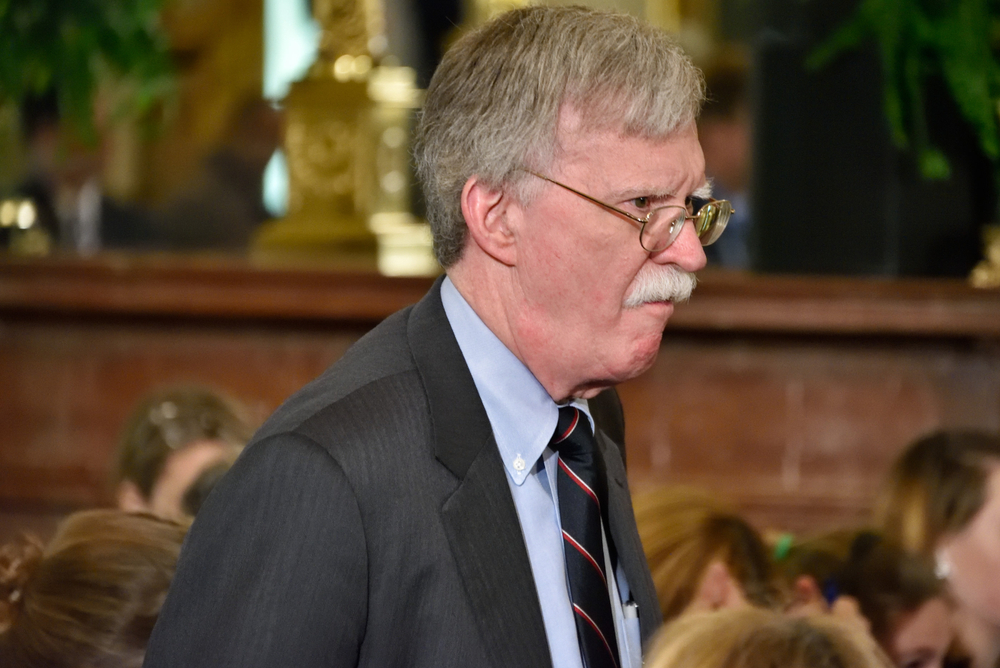
John Bolton {Evan El-Amin via Shutterstock)

by Paul R. Pillar
It is a sure sign that the Trump administration’s campaign to squeeze Iran into submission is a failure when those who customarily favor pressuring Iran acknowledge that failure. Take what has become the administration’s go-to rationale for the campaign in the face of other evidence that it is not working: the claim that U.S. sanctions have undercut Iran’s “malign” activity in the Middle East by reducing the funds available for such activity. In a recent op ed, Dennis Ross and Dana Stroul of the Washington Institute for Near East Policy debunk this notion by describing how and why a financial pinch on Iran does not translate into retrenchment in Iranian regional activity.
In Syria, for example, Iranian-backed militias “may be suffering from salary cuts, but less take-home pay has not led to a reduction in violence.” The same pattern of reduced cash not leading to reduced armed activity is seen with Hezbollah in Lebanon and the Houthis in Yemen. And although the administration has tried to highlight reductions in Iran’s military budget, assertive Iranian activity in the Persian Gulf such as sabotage or seizure of foreign tankers has gone up, not down, since the start of the administration’s pressure campaign. In short, Ross and Stroul accurately observe, Iran does what it does in the region “on the cheap.” Its regional activity is not determined by the balance in its bank account.
Or consider another rationale for the pressure campaign: that inside Iran it will build opposition to the regime and, it is hoped, lead to regime change. A recent analysis by the Israel-based Institute for National Security Studies (INSS)—which cannot be accused of being soft on Iran—highlights the failure on this criterion, too. While the sanctions-induced economic pain in Iran is undeniable, the Israeli analysts conclude that the “Iranian regime is managing, as in the past, to contain the economic difficulties without leading to deterioration and unrest that will undermine its stability.” The Iranian public “has despaired of generating significant political change” and is focused on “the struggle for day-to-day survival.” The economic crisis has increased the dependence of many workers on government jobs and lowered their willingness to “risk their economic and employment security through political and civil involvement.” Citizens’ concerns “about chaos and the loss of stability … exceeds their preparedness to advance revolutionary political changes”.  The study presents data showing that protest demonstrations in Iran have declined, not increased, since the pressure campaign began.
Then, of course, there is the nuclear side of Iran’s response to the Trump administration’s reneging on the Joint Comprehensive Plan of Action (JCPOA) and waging of economic warfare. Iran’s exceeding of some of the JCPOA’s limits still leaves Iran, thanks to the severity of those limits, far away from any ability to build a nuclear weapon. Iran’s moves are easily reversible efforts to build leverage to induce the United States to return to compliance with the agreement. But the moves are in the opposite direction from what the pressure campaign was supposed to accomplish.
Ross and Stroul make some other pertinent and valid observations: that sanctions are not enough, that “credible economic gains” must be offered in negotiations, and that the Trump administration has erred badly in isolating itself from European allies. But even after recording this litany of failures, the authors can’t seem to tear themselves away from the notion that in the end, the task is one of exerting pressure. They lament the estrangement from the Europeans not because of missed diplomatic opportunities but instead because pressure works best when the Europeans are exerting it as well. And they want military pressure to add to the economic pressure. A “credible threat of military force,” they say, while saying nothing about exactly what would be threatened, and over what. It was the United States, not Iran, that blatantly violated an international agreement, and Iran’s responses since than have clearly been in response to the U.S. violations and waging of economic warfare. On what grounds would the United States credibly threaten to wage military warfare as well?
If discouraging any Iranian thoughts about building a nuclear weapon is an objective—and it ostensibly was everyone’s main objective back when the JCPOA was first negotiated—then threatening military attack is the wrong way to go about it, given how deterrence against just such an attack would be the prime reason for any Iranian interest in building a bomb. Insofar as politically weakening the Iranian regime is an objective, military threats are counterproductive here as well, given the usual rally-round-the-flag effects. The INSS study has something to say about this as well: “It seems that the increasing chances of military confrontation between Iran and the US contribute to internal cohesion among a public that frequently shows a readiness to rally behind the regime against threats of military attack or challenges to Iran’s territorial integrity.”
What neither the Trump administration nor pressure advocates such as Ross and Stroul are prepared to acknowledge is that the way out of the current U.S.-Iranian impasse is return to compliance with the JCPOA or something very much like it. Perhaps the energetic and imaginative diplomacy of French President Emmanuel Macron can help to chart a path toward that end. But two major obstacles need to be overcome.
One consists of those who oppose any agreement with Iran on anything and, unlike some hardline think tank, are in a position to do something about it. This includes Trump’s national security advisor, John Bolton, whose policies on Iran reflect his not being far removed from his days as a generously paid shill for the Iranian cult known as the Mujahedin-e Khalq. Another is Benjamin Netanyahu’s right-wing Israeli government, which is willing to use military force to sabotage the diplomacy. Israel’s recent escalationof armed attacks across the Middle East is in large part designed to provoke Iranian retaliation that would make it politically difficult for either Trump or the Europeans to strike new deals with Tehran.
The other obstacle is the more traditional problem of how to get two sides in a bargaining relationship to come to terms when both are afraid of showing weakness through early concessions. The Iranians in particular—given how the history of this confrontation gives them good reason to believe they are the side in the right—have strong political and diplomatic incentives not to be seen as caving. Trump also doesn’t want to be seen backing down, but he clearly wants a deal and will want one more than ever as the U.S. election gets closer—especially if a failure to gain a trade agreement with China makes him even hungrier for something that he can describe as a foreign policy accomplishment. Perhaps the biggest element of flexibility in all this is Trump having no qualms about inaccurate descriptions, which in this case could mean describing a deal very similar to the JCPOA as something much different.
avatar

PAUL PILLAR

Paul R. Pillar is Non-resident Senior Fellow at the Center for Security Studies of Georgetown University and an Associate Fellow of the Geneva Center for Security Policy. He retired in 2005 from a 28-year career in the U.S. intelligence community. His senior positions included National Intelligence Officer for the Near East and South Asia, Deputy Chief of the DCI Counterterrorist Center, and Executive Assistant to the Director of Central Intelligence. He is a Vietnam War veteran and a retired officer in the U.S. Army Reserve. Dr. Pillar's degrees are from Dartmouth College, Oxford University, and Princeton University. His books include Negotiating Peace (1983), Terrorism and U.S. Foreign Policy (2001), Intelligence and U.S. Foreign Policy (2011), and Why America Misunderstands the World (2016).

Saturday, August 31, 2019

The Saudi Axis and Israel’s Drone War on the Shiite Crescent

In the past week, Linah al-Saafin at Al Jazeera English points out, an Israeli drone hit a Hizbullah target in Lebanon, Israeli fighter jets bombed a base in Syria with Iranian personnel, and Israel somehow hit bases of a Shiite militia in Iraq, including one on the Syria-Iraq border, killing a militiaman.
Israeli Prime Minister Netanyahu claimed that the Iraqi bases posed some sort of threat to Israel. But Iraq is a very long way from Israel and Iraqi militias don’t have SCUDs that could strike Israel. Netanyahu is just tweaking Iran and letting the Shiite militias in Iraq know that they are not beyond the reach of Tel Aviv. (Some of the Iraqi Shiite militias have a presence in Syria, from which they could theoretically launch rockets at Israel, though to my knowledge none has). It is the long-time philosophy of Israel’s ruling party, the Likud, that the Arabs will never accept Israel and therefore the only way to deal with them is to flatten them repeatedly. The Likud’s origins are in a far right wing ideologue in the age of dictatorships back in the 1930s.
Netanyahu and other Israeli leaders were frightened half to death earlier this week that Trump might actually meet with Iran’s president Hassan Rouhani and that Trump would pull a North Korea with Iran. Netanyahu leads the most militarily powerful state in the Middle East, but is dedicated to further settler colonialism in the Palestinian West Bank, and needs the bogey man of Iran to wag the dog of international diplomacy in favor of Israel.
The new drone war is largely symbolic. The strike on Hizbullah may have killed a fighter or two. (Hizbullah, which is not nearly as formidable as the Israelis and US politicians keep alleging, has a few thousand fighters.) The point was to send a message that some Hizbullah members are informing for Tel Aviv and Israel knows where at least some of the safe houses are.
The Syria strike was nothing new — Israel has occasionally been bombing such facilities for years. Mainly Netanyahu wants, again, to send a message to Iran that Israel is watching, knows where the facilities are, and knows where the 2,000 Iranian advisers are, from the Jerusalem or Qods Brigade of the Iranian Revolutionary Guards Corps. Israel is very sensitive to the possibility of rocket or drone strikes, since enough of them could start a mass migration out of the country. There are already thousands of Israelis in Germany and likely hundreds of thousands in the US who say life was too nervous-making in Israel.
While the Israeli military can handily defeat a major conventional military threat from an Arab neighbor, Israeli intelligence is concerned about micro-rockets and drones that can be launched without a clear return address. While Israel knows every inch of the West Bank, the 2006 war showed that their intelligence in southern Lebanon was primitive, and while they may have a few assets in Syria and Iraq, they are vulnerable from the vast hinterland of what Jordan’s King Abdullah II called the “Shiite Crescent.”
The drone and air strikes have provoked a lot of unrealistic heated rhetoric. Lebanese president Michel Aoun (a Christian and a former general) called the Israeli attack “a declaration of war.” One of his advisers pledged that the response would be “like lightning.” A twitter account of the Israeli military suggested that Aoun recall the 2006 war (in which Israel destroyed much of Lebanon’s infrastructure and set the country back economically forty years).
Iraqi member of parliament Mansour al-Baiji, from the State of Law Coalition, urged that Iraq ally with anti-American countries so as to strike back at Israel for its attacks on Shiite militia bases in Iraq. The former leader of the State of Law, and former long-serving Iraqi prime minister, Nouri al-Maliki, made similar remarks last week. Some Iraqi politicians blame the Trump administration for allowing or encouraging the Israeli strikes on Iraq, and are demanding that the 5,000 US troops in country leave. US embassy personnel in Baghdad appear to be nervous about the rising tide of anger against Washington provoked by the Israeli strikes, and actually came out to name Israel last week. Presumably this was self-protection and perhaps a shot against Israel’s bow, and would have come from career State Department circles at odds with secretary of state Mike Pompeo.
This rhetoric was to be expected. What is perhaps surprising is that the foreign ministry of Bahrain supported the Israeli strikes on Lebanon, Syria and Iraq– a statement to which Iraqi foreign minister Mohamed Ali Alhakim reacted with fury.
Bahrain has a minority Sunni establishment, including the monarchy, presiding over a restive Shiite majority. Like Saudi Arabia and the United Arab Emirates, both of which have developed a paranoia about being encircled by Iran, it now tilts toward Israel. Saudi Arabia, which has a powerful Wahhabi movement but a pragmatic monarchy, has to be more discreet about public statements in support of Israel. But crown prince Mohammed Bin Salman is known to be pro-Israel as a result of his vendetta with Iran.
When King Abdallah initially told Robin Wright about his “Shiite crescent” fears in 2004, there was little reality to it. Lebanon’s prime minister was a Sunni with Saudi dual citizenship, Syria was a Baath regime with little to do with Iran-style orthodox Shiism, headed by a member of the Alawi sect of folk Shiism. Alawis don’t have clerics so much as gnostic sages, much less ayatollahs. And Iraq was under American military occupation with a mixed government. But now, in part because of the rise of Sunni radicalism in the form of ISIL and al-Qaeda affiliates, and in part because of the Syrian civil war, there really is increasing military cooperation between Iran and Shiite militias in Iraq and Lebanon, which operated to save the al-Assad government in Syria. Not only is there a Shiite crescent but there is now increasingly a Gulf-Israel Axis in opposition to Iran. The polarized set of alliances sounds ominously like the situation in Europe in early 1914.

Friday, August 30, 2019

The Houthi-Hezbollah Surrogate Nexus

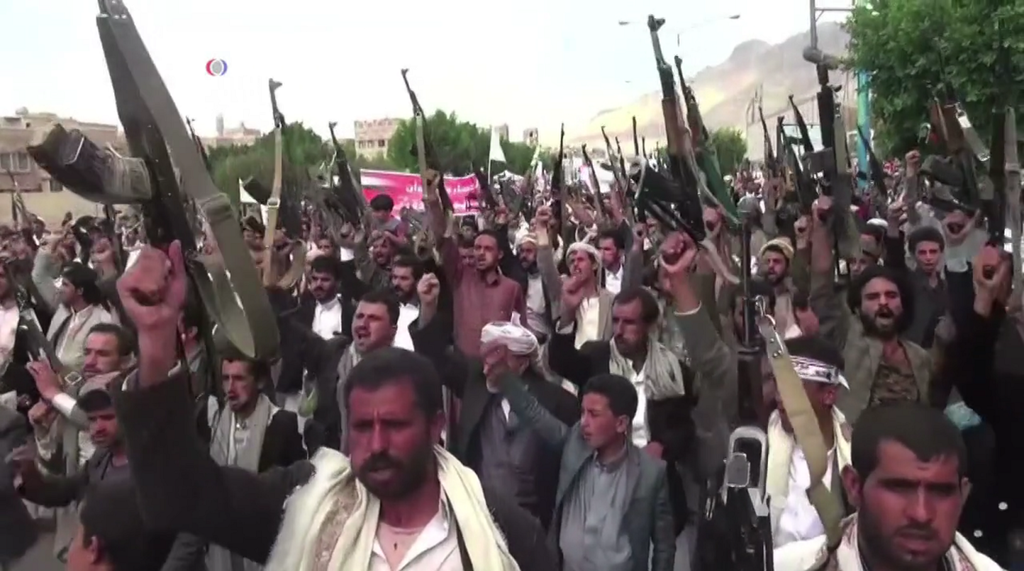
Houthis protesting Saudi airstrikes in Sanaa in 2015 (Wikimedia Commons)
by Giorgio Cafiero and Andreas Krieg
Yemen’s dominant Zaydi Houthi insurgent group—Ansarullah, which in much reporting on the Yemeni crisis is often referred to as “the Houthis”—has demonstrated major advancements in drone and missile capabilities. Ansarullah’s recent attacks against the Saudi-led coalition and strategic targets within the kingdom illustrate the increasing sophistication of its military operations. In recent years, Ansarullah has developed into one of Iran’s most potent surrogates, receiving training, material, and information support from Tehran and its elite Islamic Revolutionary Guard Corps (IRGC)’s oldest franchise, Hezbollah. Yet narratives merely labelling Ansarullah as ‘Yemen’s Hezbollah’ are too simplistic. Despite similar ideological narratives and information operations, the Yemeni militia is far from being an Iranian franchise.
The Saudi government maintains that Iran is arming Ansarullah with the aim of transforming the Zaydi Houthi insurgency into a replica of Hezbollah in order to weaken Saudi Arabia, other Gulf Cooperation Council (GCC) member states, and their Western allies. Officials in Riyadh have also alleged that Tehran is sending Hezbollah military trainers to Yemen, and certain sources have reported that members of the Lebanese Shia group have fought alongside Ansarullah militants in battles along the Yemeni-Saudi border.
In 2016, Yemen’s internationally recognized government, led by President Abdrabbuh Mansur Hadi, accused Hezbollah of intervening in the Arabian country’s civil war. Images of Ansarullah’s leadership meeting with Hezbollah Secretary-General Hassan Nasrallah in Lebanon served only to reaffirm suspicions of the Lebanese militia’s role in Yemen. They also contributed to a popular Saudi narrative that Ansarullah is basically a replica of Hezbollah and that the Houthi insurgents represent just another leg of Iran’s surrogate network.
In fact, the Houthi movement emerged throughout the 1990s as an indigenous Yemeni organization supporting disenfranchised communities of Zaydi Shia in their drive to create a Zaydi imamate. Despite the sectarian dimension of Ansarullah’s narrative, the movement does not have any natural links with Iran’s ‘Islamic Revolution’ and only received assistance from Tehran and Lebanese Hezbollah after 2014. It was only then that Tehran realized the powerful potential of the Houthi militia as a means to attack the Saudi kingdom at its “soft underbelly,” at low cost and with plausible deniability.
Ever since Riyadh began direct military intervention in Yemen in March 2015, the strategic narrative of the Saudi-led coalition, tailored towards a Western audience, was that the kingdom was fighting to prevent a Hezbollah-like Houthi ‘terror state’ along Saudi Arabia’s southern border. This talking point has been propagated extensively in Washington in a Saudi effort to gain greater sympathy from both the Obama and Trump administrations, plus lawmakers on both sides of the aisle, for their anti-Houthi campaign. Such efforts have paid off well with this administration. In December 2017, six months before Trump withdrew Washington from the Iranian nuclear deal, then-U.S. ambassador to the UN Nikki Haley delivered a speech that provided purported evidence of Iranian weapons being used by the Houthis against Saudi Arabia as she was seeking to garner global support for the administration’s anti-Iranian agenda.
Saudi Arabia, which is leading a crumbling Arab military coalition in Yemen against Ansarullah, has vowed not to allow the Iran-allied militia to emerge as the country’s replica of Hezbollah. In fact, when Saudi Arabia’s previous ambassador to Washington, Khalid bin Salman, accused the Islamic Republic of sending Hezbollah military trainers to Yemen to help strengthen the Houthis, he put out a series of tweets alleging that the Arab coalition “uncovered a cache of evidence against Al Houthis, revealed a Hezbollah operative training, advising them on asymmetric warfare, and showed background portrait of Iran ‘Supreme Leader’ on Militia’s computer.” The Saudi ambassador accusedIran’s government of having “subcontracted” Ansarullah to Hezbollah, allegedly a sign that Tehran’s “proxies work in tandem to undermine regional stability and prolong the suffering of countries they are involved in.”
In November 2017, Saudi Foreign Minister Adel al-Jubeir boldly accused Lebanon of declaring war on Saudi Arabia shortly after a ballistic missile from Yemen targeted Riyadh International Airport before the Kingdom’s Patriot defense system shot it down. Jubair asserted, “This was an Iranian missile… launched by Hezbollah.”
It is legitimate to question the veracity of such claims. Sources maintaining that Hezbollah is extremely influential in Yemen are often of questionable credibility or pushing a political agenda that has much to gain from convincing Western statesmen that Saudi Arabia’s fight against Houthi insurgents mirrors Israel’s struggle against Hezbollah. Yet it would disingenuous to fully dismiss Hezbollah’s role in Yemen as merely propaganda from the White House, Riyadh, or Abu Dhabi.
In Yemen—like in Iraq, Syria, and allegedly Bahrain—Hezbollah has served as Iran’s most senior surrogate, serving as the backbone of the Islamic Republic’s regional “axis of resistance.” Both in terms of hard and soft power, Hezbollah has grown from a mere franchise of Iran’s IRGC in the early 1980s into a self-sustaining strategic proxy that enjoys considerable autonomy from its patron’s command and control. Hezbollah has developedinto an important node within Tehran’s vast surrogate network, providing direct franchises such as Kata’ib Hezbollah, as well as indirect surrogates such as the Houthis, with operational support.
Notwithstanding ideological links between Ansarullah and Hezbollah, the main crux of their relationship appears to be operational and rooted in pragmatism. To bog down the Arab coalition in Yemen, the Houthis have sought out training assistance, technological support, and operational direction from Hezbollah to achieve their objectives on the ground. For Hezbollah, the Yemeni civil war has represented an opportunity to humiliate the Saudis at a time in which the Lebanese organization is also struggling against Riyadh’s proxies within Lebanon.
At the risk of exaggerating Hezbollah’s role in the Yemeni civil war, it goes without saying that the Lebanese force, which Tehran has bankrolled for decades, has contributed to Houthi battlefield successes against the Saudi-led coalition. The advancements in Houthi missile and drone capabilities all highlight the extent to which Hezbollah has made a difference in the conflict, which has seen Ansarullah assume de facto control of northern Yemen. Nonetheless, Ansarullah is more than just a mere Iranian franchise outfit. Unlike Hezbollah, Ansarullah—as a homegrown movement—would continue to fight, albeit less effectively, even if its link to Tehran were severed.
Andreas Krieg is an assistant professor at the School of Security and Institute for Middle Eastern Studies at King’s College London.

Israeli Strikes Seek To Bait Iran And Scuttle U.S.-Iran Diplomacy

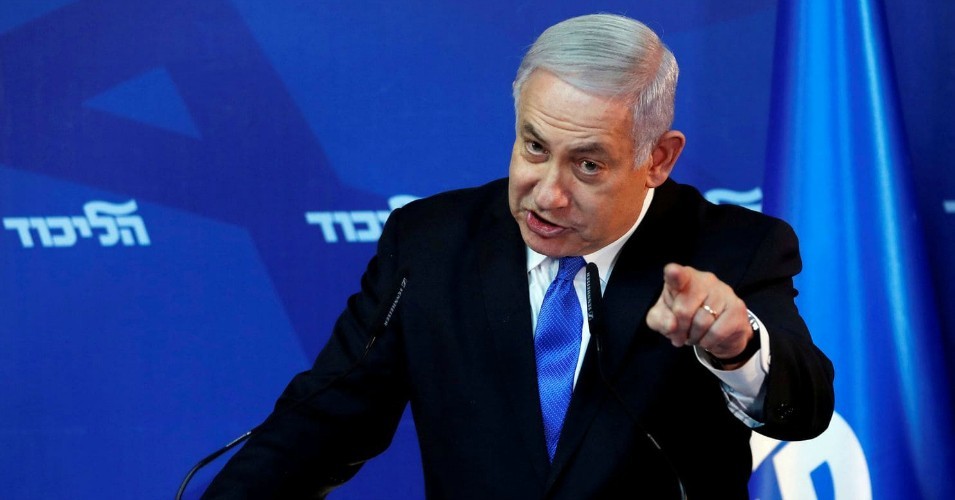
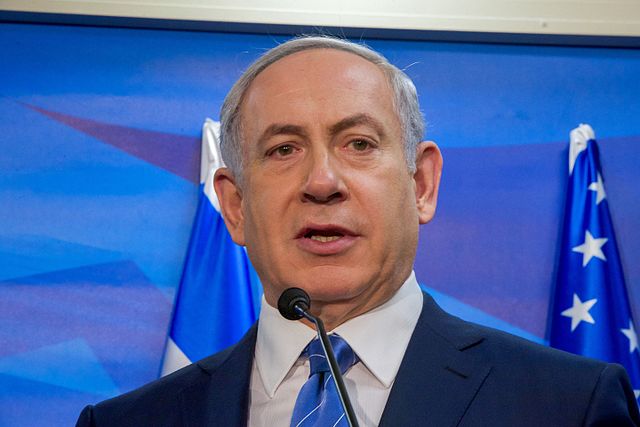
Israeli Prime Minister Benjamin Netanyahu
by Sina Toossi
The Israeli government of Prime Minister Benjamin Netanyahu has in recent days launched a series of military strikes across the Middle East. The scope of the attacks itself represents a new escalation for Israel, bombing not just regional allies of Iran in Syria but also targets in Lebanon and deep inside Iraq. Notably, the attacks are simultaneous with new diplomatic momentum between the U.S. and Iran and talk of a potential meeting between Iranian President Hassan Rouhani and President Trump.
Israel rarely publicly accepts responsibility for its international military and intelligence operations. However, Netanyahu has been remarkably open about taking credit for the recent spate of strikes. “We will act—and currently are acting—against them [Iran], wherever it is necessary,” he recently declared. When asked if Iraq is also a target for attacks, Netanyahu responded: “I am not limiting myself.” Israel has also been widely blamed for the strikes in Lebanon but has not openly claimed them.
This acknowledgement of the strikes threatens dangerous escalation across the region. In the face of provocative admissions from Netanyahu and other Israeli officials, Iranian leaders and their regional allies will be hard-pressed to ignore the strikes and not respond. Importantly, it is a myth that groups like the Popular Mobilization Forces (PMF) in Iraq, Hezbollah in Lebanon, and the Houthis in Yemen are Iranian puppets. To the contrary, these groups all have their own constituencies and are entrenched in local politics. Their power reflects demographic realities and they have domestic goals. Consequently, for reasons not having anything to do with Iran, they will also face internal pressure to retaliate.
The Israeli strikes come on the heels of a significant diplomatic initiative by French President Emmanuel Macron to facilitate renewed U.S.-Iran negotiations. After meeting President Trump and Iranian Foreign Minister Javad Zarif during the G7 Summit in Biarritz, Macron declared “a roadmap has sort of been set…” He added that “in the next few weeks, based on our discussions, a meeting may take place between the two leaders,” which he surmised “is going to lead to bringing an end to escalation and reaching a suitable solution to this [standoff].”
The timing of the Israeli strikes suggests they are at least partly aimed at scuttling the potential for such a meeting. A primary goal of Netanyahu’s government has been the prevention of any agreement between the U.S. and Iran. This goal is apparent by the nature of Israel’s lobbying in Washington and its behavior with respect to U.S.-Iran relations. Netanyahu was one of the few world leaders who opposed the Obama administration’s negotiations with Iran and the July 2015 nuclear deal between Iran and global powers (the Joint Comprehensive Plan of Action, or JCPOA). To sabotage that diplomatic process, Netanyahu went as far as violating traditional diplomatic protocol by circumventing President Obama to address a joint session of Congress and criticize the negotiations in March 2015.
At times, Israeli officials have clearly stated their objective of preventing any U.S.-Iran diplomacy. In 2015, Netanyahu’s then-Defense Minister Moshe Ya’alon stated to this end, “every deal that will be signed between the West and this messianic and apocalyptic regime will strike a severe blow to Israeli and Western interests.” While the Netanyahu government failed to achieve its aims with the Obama administration, it has thus far had resounding success with respect to the Trump administration fulfilling its desires.
It is increasingly accepted that it is a core U.S. national security interest to extricate itself from quagmires in the Middle East and take a more hands-off approach to stabilize the region. To varying degrees, both President Obama and Trump have recognized this. Rather than the military-driven policies that for years have achieved little, the U.S. needs agile diplomacy with all regional parties that play a major role and whose participation is necessary to resolve regional disputes. Israel does not share this objective and views an outsized U.S. presence in the region and permanent U.S.-Iran standoff as in its interests.
A new conflagration involving Israel and Iran and its regional allies would tank prospects for U.S.-Iran negotiations and entangle the U.S. in the region for years to come. Some figures in the Trump administration recognize this, with U.S. officials recently telling the New York Times that “Israel is responsible for the strikes” in Iraq and was “pushing the limits.” Indeed, America’s client states cannot be allowed to determine U.S. policy towards the region, and President Trump must be resolute in pursuing diplomacy with Iran despite objections from Netanyahu or other regional states.
Sina Toossi is a Senior Research Analyst at the National Iranian American Council (NIAC).