Showing posts with label Recep Tayyip Erdogan. Show all posts

Thursday, October 24, 2019

Trump and Erdogan Are Alike: Both Are ‘Thin-Skinned’ and Relied on ‘Deplorables’ to Win

Philip GIRALDI

The apparent communications problems that have arisen between US President Donald Trump and Turkish President Recep Tayyip Erdogan are basically due to Trump’s failure to understand that Erdogan is essentially his Turkish counterpart in more ways that the title of the office that they both hold. They rose to power in a similar fashion, based on an understanding that there were large numbers of disenchanted essentially conservative voters, and they continue to rule in an unorthodox fashion that combines a high level of personal sensitivity with a tolerance for corruption plus a tendency to come out with brash misstatements.
One does not expect Trump to actually know anything about Turkey and its history, or, for that matter, about the political trajectory of Erdogan, but the American president’s businessman’s belief that his personal relationship with other countries’ leaders is enough to run a foreign policy is nevertheless seriously flawed. Trump has described Erdogan as a “friend” based on several personal meetings and phone calls, though it is very unlikely that the canny politician Erdogan would describe the relationship in the same manner. Trump’s most recent personal letter to the Turkish leader was reportedly thrown into the waste basket without being read.
Istanbul-born Erdogan, unlike Trump, came from a poor family and first became known as a professional soccer player. Also unlike Trump, he was and is deeply religious. He became a ward politician in Istanbul and was subsequently elected Mayor of the city in 1994 as the candidate of the moderately Islamist Welfare Party. Openly espoused religious parties were at that time illegal under the secular constitution imposed by the military in 1982, so he was stripped of his position by a military tribunal, banned from political office, and imprisoned for four months for the crime of “inciting religious hatred.”
After he was released from prison, Erdogan considered how to get around the ban on religion in politics, co-founding the ostensibly moderate and secular conservative Justice and Development Party known as AKP in 2001. In 2002, AKP won a landslide victory in national elections, but as Erdogan was technically still prohibited from holding office, the AKP’s co-founder, Abdullah Gul, instead becoming Prime Minister, which then led to the Chamber of Deputies’ legislative annulling of Erdogan’s political ban. Erdogan replaced Gul as Prime Minister in 2003. Erdogan led the AKP to two more election victories in 2007 and 2011, before being elected president in 2014, winning again in 2018.
The first years of Erdogan’s prime-ministership were politically moderate as Turkey was still governed under the military imposed constitution. There were promising negotiations for Turkey to enter the European union, foreign investment was encouraged, the economy benefited from measures to free up businesses from state control, and there was considerable state money spent on infrastructure. Behind the scenes, however, Erdogan worked closely with Fethullah Gulen and his Gulen Movement, currently designated as a terrorist organization, to purge the government of secular bureaucrats and army officers using Gulen’s networking and the judicial system, most notably through several show trials of military officers that led to constitutional referenda that both weakened the military’s grip and enabled the legalization of expressions of Muslim piety.
Erdogan was damaged by a series of anti-government protests that began in 2013. His response, like that of Donald Trump, has been to become increasingly authoritarian, claiming that the opposition to him was treasonous. He banned social media, took control of the judicial system, and arrested both journalists and opposition politicians. Opponents responded by going after massive corruption in the administration that included the prime minister’s sons and his chief financial supporters. A file containing recordings of conversations between Erdogan and his son in December 2013, in which he appeared to be providing instructions on how to conceal very large amounts of money, was made public. Erdogan denied that the conversation was genuine, instead calling it an “immoral montage.”
Subsequently, a widely publicized failed military coup in 2016 was blamed on Gulen but was more likely than not allowed to develop by Erdogan himself to provide an excuse for further repression of critics. More than 150,000 civil servants have since that time been fired and replaced by Erdogan loyalists.
In 2017 Erdogan formed an alliance with the far-right National Movement Party (MHP) to promote a constitutional referendum on the form of government. In spite of fierce opposition and considerable electoral fraud, the referendum passed and the new system of government, a presidential system without a prime minister, formally came into place after the 2018 national election, which was won by Erdogan and the new AKP-MHP People’s Alliance.
A currency and debt crisis beginning in 2018 have caused a significant decline in Erdogan’s popularity and led to a loss in the 2019 local elections in which the ruling party lost control of the capital Ankara and largest city and financial hub Istanbul for the first time in 25 years. After the loss, the Turkish government ordered a re-election in Istanbul, in which AKP-MHP lost the election again by an even greater margin. The two successive losses severely damaged Erdogan politically speaking. He had once said that if we “lose Istanbul, we would lose Turkey,” with critics calling the loss the “beginning of the end” for him.
The central point is that, like Trump’s plea to Make America Great Again, Erdogan rose to power by virtue of his realization that the often deeply religious Turkish peasantry, which was increasingly moving to the country’s large cities, was a disaffected pool of voters that had not been tapped emotionally or even practically by any of the major political parties. That that was so was largely due to the fact that the country’s military imposed constitution enshrined the secularism of the nation’s founder Kemal Ataturk and appointed the army as the guarantor of the Ataturk principles. Erdogan was arrested but he subsequently skillfully avoided prosecution during his rise due to his willingness to use language and metaphors that appealed to what he perceived as the devout but largely un-politicized majority. This is not dissimilar to Trump’s appeal to the so-called “deplorables” and it explains why both leaders have core supporters who follow them with a real passion.
Other similarities between the two include a propensity to say things spontaneously that are both absurd and politically damaging, a belief that the chief executive should have no restraint exercised over his policies and positions, sons who are benefitting from their father’s position, and a lack of discretion when using the telephone.
And then there is the style issue – both men are blunt, thin skinned and assertive, unwilling to be upstaged by anyone, which suggests that they have had a tendency to talk past each other either on the phone or in person. This explains the curious misunderstanding of what the Americans and Turks pledged to do over the phone in the aftermath of the partial withdrawal of US troops from the Syrian border region several weeks ago. It also explains why there will be no quick resolution to the problems that both Ankara and Washington have created as Syria struggles to return to something approaching normalcy.

Tuesday, October 22, 2019

Foreign Correspondent: Trump Blows It Big Time In Syria

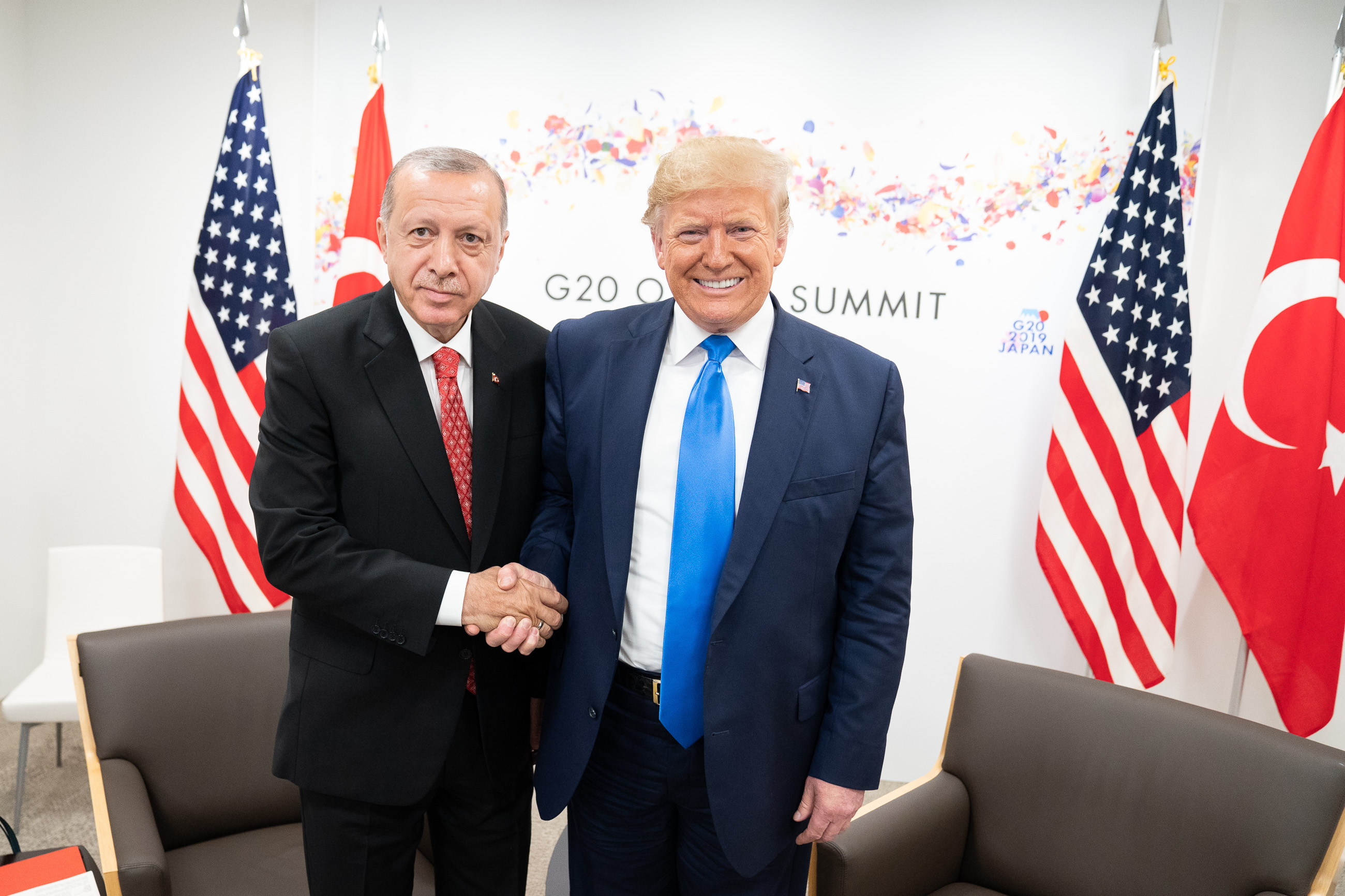
Recep Tayyip Erdogan and Donald Trump at the 2019 G20 summit (White House via Wikimedia Commons)
In less than two weeks, President Donald Trump has managed to create a massive and avoidable crisis in Syria.
By greenlighting the Turkish invasion of northern Syria, Trump’s policy forced more than 160,000 Syrians to flee their homes. And guess who emerged as the political and military winners? Russia, Iran, and the Syrian government of Bashar al-Assad.
High-ranking Republicans, including usual Trump defenders Senate Majority Leader Mitch McConnell of Kentucky and Senator Lindsay Graham of South Carolina, slammed the decision. A bipartisan majority in the House of Representatives, including two-thirds of Republicans, also condemned the move. Chaos on the battlefield and recriminations at home: This is what a declining empire looks like.
The move is also being criticized by John Craig, special assistant to the President under George W. Bush, who told me in an interview that there was a clear alternative to Trump’s reckless moves. Instead of abandoning the Kurds, he could have clearly warned Turkish President Recep Tayyip Erdogan not to invade.
“I would have advised President don’t give an inch,” Craig says in a phone interview. “Tell Erdogan ‘don’t move across the border.’ ”
Instead, Trump bumbled his way into an international crisis.
The fateful phone call
It began October 6 with a phone call between Trump and Erdogan. Turkey’s president convinced Trump to pull back US troops based in northern Syria so Turkey could launch an invasion. Once again, The Donald, trusting his “gut,” made a spur-of-the-moment decision.
Three days later, Erdogan sent troops across the border to attack the Syrian Democratic Forces (SDF), the mostly Kurdish group that had allied with Washington to fight the Islamic State. Outgunned by the Turkish army and abandoned by Trump, the SDF made a quickie deal with the Syrian and Russian governments to jointly block the Turkish offensive.
Syrian army troops quickly deployed to several important cities near the border with Turkey. Russian military police began patrolling the strategically located town of Manbij. Turkey’s proxy militia will fight for control of Manbij, Erdogan says, but it’s unclear if it will risk a clash with Syria or Russia.
On October 17, Vice President Mike Pence and Erdogan announced a five-day “ceasefire,” during which Kurdish forces would withdraw from an area designated by Turkey. But the Kurds were not part of the negotiations, and as of press time, it seems unlikely they will pull back their fighters.
What could have been done?
It doesn’t take an advanced degree or years in the State Department to see an alternative to Trump’s dump on the Kurds. Trump could have set a date for a US withdrawal with clear warnings to Turkey. The US would have had overwhelming support in the United Nations, which has the power to impose harsh diplomatic and economic sanctions on Turkey. A genuine multi-national effort would have deterred aggression or made Turkey pay a very high cost.
Instead, Trump allowed the invasion, then reversed course by imposing sanctions after the fact. He raised tariffs on Turkish steel imports, halted negotiations on a $100 billion trade deal, and cut several Turkish government ministers off from global banking. None of these measures came close to the US sanctions imposed on Cuba, Venezuela, and Iran—nor were they likely to have any serious impact on the war.
And then, after announcing the ceasefire, Trump dropped the sanctions altogether.
Unfortunately, some leading Democrats are using the crisis to attack Trump from the right. Democratic hawks Chuck Schumer of New York, Robert Menendez of New Jersey, and Jack Reed of Rhode Island want Trump to return US troops to Syria.
That would be a colossal blunder. In principle, Washington should not launch yet another unilateral invasion. In practical terms, there’s still a war going on in northern Syria, and the US has no allies left.
“It would expose US troops to fire from all sides,” Craig says. “Syrian Kurds, Russians, and Turks are angry. What would the US troops do?”
Could craziness lead to peace?
The newly minted alliance of SDF, Russia, and the Syrian government opens up the possibility of reunifying Syria and helping expel foreign troops. But implementation won’t be easy because of serious political differences.
For the past several years, under US military protection, the SDF has implemented its version of autonomy in northern Syria. It created local councils with women making up half the leadership. Christians, Arabs, and other ethnic/religious groups were guaranteed representation.
The SDF is affiliated with the Kurdistan Workers Party (PKK) in Turkey, which, contrary to mainstream media reports, gave up Marxism more than twenty years ago and adopted a hodgepodge version of anarchism that stresses feminism and environmentalism. However, the PKK continues to exclude participation by other political parties to its left or right. And it promotes a cult of personality around PKK leader Abdullah Ocalan.
The US and Turkey falsely label the PKK a terrorist organization. The PKK engages in armed struggle, but doesn’t massacre civilians like IS or Al Qaeda.
President Assad, on the other hand, favors a highly centralized state. While he allows presidential and parliamentary elections, real power resides with the president, military, and ruling Baath Party. Syria’s leaders fear that granting autonomy to Kurds will be the first step in the creation of an independent Kurdistan in northern Syria.
Political settlement?
Previous efforts by the SDF and Assad to reach a political settlement have failed. In August 2018, the SDF and government held talks and even formed a committee to continue negotiations. But the talks broke down, largely over disagreements on autonomy.
In the last two weeks, faced with the prospects of a permanent Turkish occupation of northern Syria, both sides agreed to cooperate. The SDF/government agreement hasn’t been made public. But there have been leaks.
Danny Makki, a pro-government analyst and blogger, writes that the SDF-affiliated soldiers have agreed to join the Syrian Army’s 5th Corps, a contingent of foreign volunteers trained by Russia. Both sides have agreed to remove Turkish forces from northern Syria. And, most controversially, Makki writes, both sides agreed to “full Kurdish rights in the new Syrian constitution with autonomy, which will be agreed upon by Kurdish leadership & Syrian state.”
But another source in Damascus, who requests anonymity because the government hasn’t announced its position, doubts the Syrian authorities agreed to any kind of autonomy. “The SDF wants self administration, and it’s not acceptable,” the source tells me by phone. “Syria can’t accept a state within the state.”
I suspect that all sides agreed to cooperate without even starting to resolve political differences. Every side gets something in the short run.
After a seven-year absence, Assad will send his army back into much of northern Syria. The SDF hopes this will deter further Turkish attacks, while the SDF continues its civilian administration. And the Russians will appear as peace makers among the various armed groups.
They say politics makes strange bedfellows. So does war.
Reese Erlich’s nationally distributed column, Foreign Correspondent, appears every two weeks. He is author of Inside Syria: The Inside story of Their Civil War and What the World Can Do.

Monday, October 21, 2019

“Strategically brilliant” sellout: Trump’s betrayal of the Kurds

By Yuram Abdullah Weiler

“At last the world knows America as the savior of the world!”  —U.S. president Woodrow Wilson
Turkey invaded the Syrian Arab Republic on October 9 following a U.S. pullout. The U.S. Congress has started an impeachment inquiry of Donald Trump, who apparently gave the green light for the Turkish invasion. The U.S. president’s lawyer, Rudy Giuliani, was accused of operating a “shadow shakedown” operation against Ukraine’s president and lobbying for a Turkish bank indicted for evading U.S. sanctions against Iran. Meanwhile, his secretary of state was pontificating on being a Christian leader who holds himself to a “high set of standards.”  
Three days after Trump’s announcement of a U.S. troop withdrawal from Syria, Turkish President Recep Tayyip Erdogan ordered Turkish forces to enter the country to neutralize the Kurdish People’s Defense Units (YPK “terrorists”) and stabilize the border zone. Placing his bipolar affliction on full display, Trump has alternated between praise for the Turkish leader’s actions and threats to bring down the Turkish economy. “I view the situation on the Turkish border with Syria to be, for the United States, strategically brilliant,” he exuded, claiming, “Syria is protecting the Kurds.” Earlier, he had stated that he was “fully prepared to swiftly destroy Turkey’s economy if Turkish leaders continue down this dangerous and destructive path.” 
In his executive order issued October 14, Trump specifically wrote that Turkey’s assault “undermines the campaign to defeat the Islamic State of Iraq and Syria or ISIS,” and “constitutes an unusual and extraordinary threat to the national security and foreign policy of the United States.” As a consequence, Trump has declared a national emergency, and authorized sanctions against any “current or former official of the Government of Turkey.” Moreover, the order contains broad language that appears to go well beyond sanctions on Turkey and its officials by sanctioning any “foreign person” who is found by the U.S. secretary of state to have been complicit in obstructing or preventing a “political solution to the conflict in Syria.”  
Minimizing the abrupt abandonment of his Kurdish ally, Trump quipped, “Anyone who wants to assist Syria in protecting the Kurds is good with me, whether it is Russia, China, or Napoleon Bonaparte.” U.S. House of Representatives Speaker Nancy Pelosi criticized Trump’s impetuous act, noting, “His erratic decision-making is threatening lives, risking regional security and undermining America’s credibility in the world.” South Carolina Republican Senator Lindsey Graham, perpetually a Trump lapdog, predictably supported his master after some initial squeamish protests categorizing the troop withdrawal as “shortsighted,” ?irresponsible” and “unnerving to its core.”
Turkey’s actions in Syria present a conundrum for the United States. As a NATO member with an estimated 435,000 troops, the largest contingent of military personnel in the organization outside of the U.S., Turkey is not a country with which Washington can trifle. Erdo?an is a powerful leader and a man of action, as opposed to his American counterpart who is a blowhard full of bluff, bravado, and bluster, but who backpedals and vacillates when confronted by a hardened, politically savvy opponent. By holding U.S, nuclear weapons, about fifty B61 gravity atomic bombs, at Incirlik hostage, Erdo?an effectively has called Trump’s bluff of sanctions “devastating to Turkey’s economy,” leaving the latter little choice but to send his vice president and secretary of state to do damage control on behalf of the NATO alliance.
Off the record, a U.S. defense official has conceded that the U.S. nukes at Incirlik “were now essentially Erdogan’s hostages,” but to remove them from there would not only be a politically ticklish endeavor but also would almost certainly mean the end of the U.S.-Turkey alliance and possibly, even NATO itself.  In addition, with its possession of the precise grid coordinates of former U.S., and now Kurdish, positions in Syria, Turkey has the upper hand in this act of unilateral aggression and demonstrated as much when Turkish artillery shells “bracketed” a U.S. commando outpost near Kobani on October 4, detonating about 300 meters away on either side. There is deep symbolism in this Turkish shelling of the U.S. outpost; Kobani was the first success by the U.S.-backed Kurdish forces in routing ISIS from their territory.
One aspect of the Turkish incursion into Syria, which may appeal to Trump’s demonstrated racist tendencies, is the inherent ethnic cleansing bound to occur.  Erdogan, after failing to topple the government of President Bashar al-Assad, found his country awash in refugees, some 3.6 million ethnic Arabs. His plan for the so-called “safe zone,” which his invasion is designed to create by purging the indigenous Kurdish population, is to settle the largely Sunni Arab Syrian refugees in place of the Kurds to form a de facto demilitarized zone, thereby eliminating the threat of cross-border raids by separatists aligned with the Kurdistan Workers Party (PKK). Scattered across Iran, Iraq, Syria, and Turkey, the Kurds form the largest ethnic group in the world without their own country.  Erdogan has blatantly threatened the Syrian Kurds, declaring, “If you want to live in Kurdistan, there is a Kurdistan in northern Iraq. Take all the terror lovers with you, clear off and live there.”
Along similarly racist lines are Erdogan’s threats to flood Europe with refugees, should European leaders fail to go along with his invasion and occupation plans for northern Syria. “If you try to describe our current operation as an occupation, our task will be simple,” Erdo? a remarked. “We will open the gates and send 3.6 million refugees your way.”  While the Turkish leader struck a deal with the EU for a cool €6 billion in 2016 to retain displaced Syrians, pressure has mounted among his supporters to repatriate the refugees following the recession in 2018 and drop in currency value along with double-digit inflation. Erdogan’s perspective on immigrants would also appear closely to parallel Trump’s.
Another aspect of the Turkish military operation, which also benefits Trump, is that the resulting chaos will divert public attention from the recently initiated congressional investigation into his impeachment. Shortly after Trump’s election in 2016, Harvard University professor of international relations Stephen Walt warned that Trump might make “an Erdogan-like attempt to use a terrorist attack or some other equally dramatic event as an excuse to declare a ‘state of emergency’ and to assume unprecedented executive authority.”  As noted above, by his executive order dated October 14, 2019, Trump has already declared a state of emergency.
In view of the abandonment of the Kurds by the U.S., not the mention the JCPOA, the “Iran nuclear deal,” how could the Islamic Republic of Iran negotiate with such a “partner?” Of the 374 treaties negotiated by the U.S. with indigenous peoples of North America, only one was honored. Although signing on the 1997 Kyoto Protocol, the U.S. has neither ratified nor enforced it. Trump withdrew from the 2015 Paris Climate Accord; Bush II withdrew from the 1998 Rome Statute of the International Criminal Court. The United States is the only nation to have not ratified the 1989 Convention on the Rights of the Child, the 1996 Comprehensive Nuclear-Test-Ban Treaty, the 1997 Mine-Ban Treaty, and over forty other treaties.  
Rather than being “the savior of the world,” as U.S. President Woodrow Wilson haughtily proclaimed at the Treaty of Versailles after the First World War, the U.S. seems hell-bent on being its scourge. Trump’s betrayal of the Kurds not only should give ample evidence of U.S. perfidy, but also should be a lesson for all who fancy themselves as allies of the United States.

Wednesday, October 16, 2019

Arrival of resistance forces in northern Syria: Erdogan’s failed political calculations

By Ramin Hosseinabadian

In response to the Turkish army’s incursion into north Syria, the Syrian army entered Tabqah and deployed forces near the military airport in Raqqa province in the early hours of Monday. Tabaqa military airport is located near the Euphrates Dam, one of the biggest and most important dams in Syria, which was lost during the bloody battle between the Syrian army and ISIS in August 2014. 
Media sources speak of a great agreement between Kurds in northern Syria and the Damascus government. Following a long meeting, it was agreed that there would be a complete coordination between the Kurdish-led Syrian Democratic Forces (SDF) and Damascus across all areas under the control of SDF. This could be the beginning of Syria’s control over the eastern Euphrates. 
The Turkish army and its affiliated militia have occupied Tell Abiad, Solouk and Mabroukeh towns as well as the villages in the southwestern outskirts of Hasakah. Now, they are approaching Ain Issa on the north of Raqqa. Therefore, the next steps that should be taken by the Syrian army will likely be a deployment in the northern and western outskirts of Raqqa to stop the invading Turkish army. 
In this regard, the Kurds have struck a deal with Russia to hand over Ain al Arab (Kobani) to Syria, Ismat Sheikh Hassan, one of the military commanders of SDF, has said.
The fact is that the arrival of the Syrian army and resistance forces in northern Syria has unbalanced all the calculations of Turkey’s president Recep Tayyip Erdogan. Turkish forces had assumed that they could occupy some parts of Syria through their operations in the north and the northeast. Turkish troops had sought to establish an autonomous state in north and northeast Syria, so they launched Operation Peace Spring. But the intervention by the Syrian army and resistance forces to defend the territorial integrity and to protect their national sovereignty aborted Ankara’s last plans. 
Earlier, Ankara had been warned that if tensions in northern Syria were to escalate, army and resistance groups in the country would extend their efforts to stabilize the eastern Euphrates. However, Turkish officials ignored those warnings.
It seems that the arrival of resistance forces and the change of Erdogan’s calculations can put an end to illegal operations of Turkish forces against Syria as an independent and sovereign state. It should be noted that because of successive achievements against the Takfiri terrorism, the resistance movement in Syria is at its best condition. 
It is obvious that the current developments in the north and northeast Syria due to the arrival of resistance forces have entered a new phase. Undoubtedly, the Syrian resistance forces will overcome the Turkish army in any possible military conflicts, and will not allow Erdogan’s dreams come true.

Tuesday, October 15, 2019

Russia to Salvage US Mess

By Finian Cunningham


 "Information Clearing House" -  It’s going to be a precarious balancing act, but only one nation can possibly help bring stability to the chaos unleashed in Syria by US President Donald Trump. That’s Russia.

Reports of a deal brokered over the weekend by Russia between Syrian government forces and Kurdish militia are a prelude to a wider effort by Moscow to achieve full peace in the war-torn country. That constructive role played by Russia is no doubt due to the mutual respect it holds among warring sides.The deal brokered by Russia will allow the Syrian Arab Army to take over control of northern border areas with Turkey which were formerly under the control of the Kurds. Since Trump threw the Kurds under the bus last week and effectively green-lighted the incursion into Syria by Turkish forces, the Kurds have had to subsequently align with the Syrian government. Russia was crucial to facilitating the new alliance.
With the Kurdish areas returning to the control of the central government in Damascus – after five years of US-backed Kurdish occupation – that arrangement of a fully integrated Syrian territory is not just legally proper. It also could placate Turkey’s long-held demands for security regarding Kurdish militants, whom Ankara accuses of being “terrorists” trying to destabilise Turkey.
incursion into Syria by Turkish forces, . With the Russian-backed Syrian army on the border facing Turk forces, it is a fair bet that Turkey’s President Recep Tayyip Erdogan will think twice about escalating the incursion. Having had the Kurdish autonomous area dismantled and under control of Damascus again, the Turkish leader should feel assured to back off from further military action. Again, we may reasonably surmise that Russian President Vladimir Putin has quietly, but firmly, told Erdogan to calm down. Perhaps Putin is the only person whom the bullish Erdogan will heed at this point.
One thing is apparent though. The US and its European allies are a more than ever exposed as a hopeless bunch of losers whose criminal meddling and mischief in Syria, and more widely across the Middle East, leave them without a shred of credibility to resolve conflict.
“This is a monumental failure on behalf of the United States”, commented Aaron Stein of the US-based Foreign Policy Research Institute think-tank, as quoted by Reuters.
Stein added that “it would be the Syrian government or Russia, not American sanctions, that could stop the Turkish operation… The only thing that will stop them is if the [Syrian] regime or the Russians move in significant numbers to where they stop”.

Washington and its European allies have created the entire bloody mess in Syria with their criminal, covert war for regime change against Syrian President Bashar al-Assad since the war on that country erupted in March 2011 – with as many as 600,000 dead. The Americans and other NATO powers have secretly weaponised jihadist terror gangs for their regime-change plot – an intrigue which failed because of Russia’s military intervention from the end of 2015 in order to defend the Syrian nation.

The US and its NATO cronies also used Kurdish militants as proxies to break up Syria’s territorial unity. Officially, Western governments and media claim that the Kurds fought a war against jihadist terrorism. That may be partly true in the murky world of running anti-government insurgents. But, primarily, the Kurds were used by Washington to annex Syrian territory, especially the oil-rich and water-abundant northeastern regions. In doing that, however, the Americans antagonised Turkey by mobilising the Kurds and affording them a de facto state within the Syrian state.
Trump’s sell-out of the Kurds last week by withdrawing American special forces in the region aligned with them has unleashed the mayhem and violence seen over several days. Trying to claw back some credibility, the Trump administration is now moving to heap tough economic sanctions on Ankara to “wreck the Turkish economy”.
European states have also clamoured with condemnation of Turkey for its military operations against the Kurds, which have resulted in many civilian deaths and tens of thousands of terror-stricken refugees fleeing from the violence.
Germany, France, Netherlands, Norway and others have announced suspension of arms exports to Turkey.
This is an incredible debacle. NATO members are bickering with and sanctioning fellow NATO member Turkey. There are even reports of Turkish artillery shelling positions near American special forces to cut them off from their former Kurdish ally.
Meanwhile, Turkey’s Erdogan has basically told Washington and the Europeans to shove their sermonising and hypocrisy. Erdogan knows that the Americans and Europeans have blood on their hands from sponsoring Syria’s covert war, just as he does too.
Washington has no moral authority whatsoever to unravel the mess it has engendered in Syria.
Russia can salvage the disastrous situation because it has earned respect from all sides due to its principled and powerful military deployment in Syria. Moscow will want to avoid delving in too deeply whereby it ends up in a war with Turkey on Syria’s border. Somehow, however, Russia has the right balance between respect, diplomatic intelligence and power to salvage the morass made by America and its NATO cronies.
If peace can be settled between Syria and Turkey and Syria’s territorial integrity restored, then Russia stands to emerge with newfound status in the Middle East as an honest broker and neighbour – unlike the scoundrels barking in Washington and European capitals.

Finian Cunningham has written extensively on international affairs, with articles published in several languages. He is a Master’s graduate in Agricultural Chemistry and worked as a scientific editor for the Royal Society of Chemistry, Cambridge, England, before pursuing a career in newspaper journalism. He is also a musician and songwriter. For nearly 20 years, he worked as an editor and writer in major news media organisations, including The Mirror, Irish Times and Independent.

Monday, October 14, 2019

US Betrays Kurds – Again

It is a maxim of US statecraft that Washington “does not have permanent friends or enemies, only interests.” That maxim, attributed to Henry Kissinger, was starkly demonstrated this week when US President Donald Trump gave Turkey a green light to launch a military offensive on northern Syria, targeting Kurdish militants.
The Turkish offensive began on Wednesday with air and ground attacks against Kurdish positions in northeast Syria. It is not clear yet how far Turkey’s operation will proceed, but already there are reports of civilian deaths and thousands of people fleeing from artillery and air strikes, and possibly a major ground invasion by Turk forces into Syria.
The Syrian government has condemned the military assault as “aggression”. Iran has likewise condemned. Russia cautioned Turkey to respect Syria’s sovereignty and territorial integrity. European states also censured the Turkish incursion, requesting an emergency meeting of the UN Security Council. Russia vetoed a European-led resolution because it was not, in Moscow’s view, wide enough to cover all illegal foreign military presence in Syria.
President Trump called the Turk operation, named with Orwellian duplicity Operation Peace Spring, a “bad idea”. How ludicrous and cynical of Trump. Only days before in a phone call with Turkey’s President Recep Tayyip Erdogan he assented to remove US troops and a security guarantee for Kurdish militants, whom Washington has been using as an “allied” proxy force in Syria’s war.
Trump came in for much bipartisan and media flak in Washington for “betraying our Kurdish allies”. But as the maxim goes, American imperialism doesn’t have allies, only “interests”. The Kurds found out this week in the most cruel and callous way that they are merely “interests” for Washington, to be discarded like pawns off a chessboard.
The cynicism in Washington is astounding. The ethnic Kurdish people straddling Turkey, Syria, Iraq and Iran have time and again been exploited by US imperialism over many decades to act as proxies for American interests, only to be abandoned when their perceived usefulness expires.
The cynicism of Turkey’s Erdogan also knows no bounds. He declared that the offensive on Syria was an anti-terror operation, to, “bring peace and security to the region… We will protect the territorial integrity of Syria and save the region’s people from the claws of terror.”
This is brazen double-think by the Americans and fellow NATO member Turkey.
Washington couldn’t care less about the Kurds, whom it has weaponized and trained for the alleged purpose of “fighting terrorism” in Syria. The reality is the Americans have mobilized the Kurds to act as proxies to carve up Syrian territory with a disingenuous promise to provide them with regional autonomy. The real objective for Washington was always to exploit Kurdish separatist aspirations in order to dismember Syria for its bigger scheme of achieving regime change in Damascus. That scheme failed, thanks in part to Russia’s military intervention from the end of 2015 to defend Syria.
Now the Kurds have been left out to hang and die by Washington because of some whim by President Trump. Having unleashed Turkey’s escalation of violence against Syria, Trump is obviously flailing around seemingly to mitigate the onslaught, threatening to impose economic sanctions on Ankara to wreck its economy. It’s a comedy of errors, which is decidedly unfunny given the humanitarian consequence from Trump’s ham-fisted dumping of the Kurds.
So, what can be done to de-escalate the violence? First, Turkey must respect its stated commitment to the Astana process, along with Russia and Iran, in which it vows to respect Syria’s sovereignty and territorial integrity. There is no excuse for launching military strikes on Syria, regardless of claims about “ridding a terror corridor”.
Secondly, as Syria, Russia and Iran have repeatedly stated, all foreign troops unlawfully present in Syria must get out of the country immediately in compliance with international law. American, British, French and Turkish troops, special forces and warplanes have for too long violated Syria with egregious violation of international law. Those NATO states are culpable of war crimes and aggression. European denunciations of Turkey this week are hypocritical nonsense.
The harsh truth is that Kurdish leaders have allowed their people to become pawns in criminal intrigues by NATO powers against the nation of Syria. One would think, surely, the Kurds must have learnt lessons from multiple past betrayals by Washington. They find themselves in a pitiless situation – again – because they foolishly subjugated their interests to those of Washington.
Kurdish militants – who paradoxically have fought effectively against Washington’s other proxies, various jihadist terror groups – have only one choice. They must somehow reconcile with their Syrian Arab brothers and the Syrian Arab Army to defend their common nation of Syria. That means a repudiation of America’s imperialist dirty games.
Russia, with its principled record of intervention to end the war in Syria, might play a role in facilitating a new alliance between the Syrian government forces and the Kurdish militia. In a new constitution being negotiated by Syrians perhaps the Kurds can be afforded eventually a degree of regional autonomy. But first they have to earn that right by defending the nation and freeing themselves from the nefarious imperialist scheming by Washington and other NATO powers, which is intent on destroying Syria.

Sunday, October 13, 2019

Erdogan’s dreams in northern Syria won’t be realized

By Ramin Hossein Abadian

TEHRAN - Although Turkish President Recep Tayyip Erdogan’s goals in northern Syria are beyond the issue of Kurds, but this dream will not be interpreted. 
Erdogan’s political mindset and desire are toward the establishment of neo-Ottomanism in the region. Fighting terrorism and the threats of PKK (Kurdistan Workers' Party) and its elements on the Syrian-Iraqi borders, is just an excuse to enter northern Syria. 
Dreams such as expanding territory, changing demographic structure on the border with Syria, and increasing influence and power in the region, prompted Erdogan to declare war on Syrian Kurds.
It was expected that with the efforts of Syrian people, army, and Kurds, and the assistance of Bashar al- Assad’s regional allies, the Syrians would get rid of ISIL.
For many years, the U.S. has suffered repeated defeats on both cold and hot wars in the Middle East, and lost billions of dollars. According to the U.S. president, who is currently dealing with impeachment, the White House no longer wants to be involved in this war and should have not entered the Middle East in the first place. These words by Trump are to challenge Democrats and Obama. It must be said that the only true word of Trump during his presidency is that the U.S. should leave the region. 
Since the beginning of the Syrian war, U.S. intelligence agencies have brought ISIL to Syria through Turkey and Iraq and equipped it to hit the axis of resistance and also to create a safe zone for the Zionist regime. But the ISIL was defeated and 12000 of its forces were captured by Kurds. It is likely that most of them have important information about U.S. support and Israel’s role. The U.S. has allied with Turkey to eliminate the information. 
Trump is withdrawing U.S. troops from Syria, with the excuse of cutting security and defense costs, and put Erdogan, his only ally in the Syrian case, in charge to keep American public opinion satisfied. 
Now the question is that will U.S. goals in Syria be pursued by Turkey? These goals include, overthrowing Bashar al-Assad, establishing the administration of their own agent, undermining Hezbollah and Hamas movements, securing Israel, decreasing Russia and Iran’s influence in Syria, looting oil and other resources with the U.S. withdrawal from Syria, and reaching a location near Iran.
To what extent Turkish pragmatic president can meet U.S. interests in Syria and lands near the Golan Heights?  It is obvious that he is not able to do that. The Turkish government cannot stand against the axis of resistance, even if it eliminates all Syrian Kurds and takes the control of northern Syria. In addition, the fragile Turkish economy and international community’s reaction will not allow Erdogan to do so. 
The Turkish president is pursuing some goals in northern Syria, including restoring lost credibility in Turkey, escaping political and social failures of last election, defeating the Idlib front, removing thousands of Syrian refugees in border camps, and diverting public opinion from terrible economic situation. 
Under current circumstances, Erdogan’s dreams of expanding territory to Homs and Aleppo, changing the demographic context in northern Syria, preventing social, political and cultural connection of the Kurdish people in southeastern Turkey with Syrian Kurds, settling Arabs and Turkmens at Syrian-Turkish borders, reaching to Iran and Russia’s level, and gaining more power in Syria, will not be realized. 
Political and military experts believe that the only way to save Syrian Kurds and preserve their legal rights is to agree with Syria and using its army and allies to remove Turkish threats. 
Countries with influence in Syria, including Iran, said that they will support Kurds’ agreement and alliance with Syria. 

Tuesday, September 17, 2019

Iranian, Turkish and Russian presidents hold talks on security situation in Syria

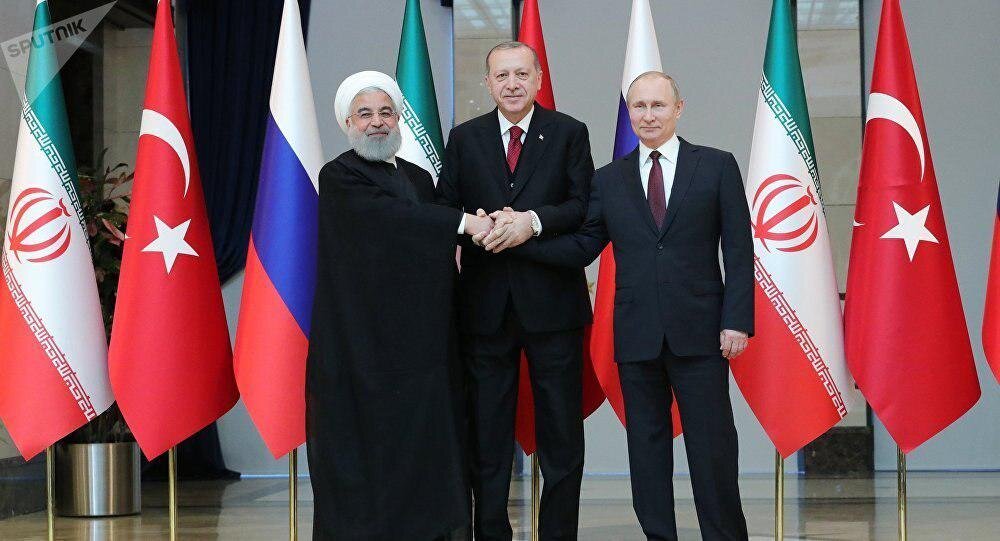
TEHRAN/ANKARA – President Recep Tayyip Erdogan, the host of this round of trilateral summit between Turkey, Iran and Russia, hosted President Hassan Rouhani and President Vladimir Putin in Ankara on Monday. It was the fifth summit since 2017.
They were set to speak to reporters at a closing news conference and release a joint declaration.
The three presidents held one-on-one talks before the summit.
In the Syrian war, Tehran and Moscow have been backing the central government. However, Turkey has been a supporter of the rebel groups. Now, the three countries, despite differences, agree on power-sharing in Syria.
Iran and Russia were instrumental in cracking down on terrorists, especially ISIS, in Syria. ISIS misused the chaos resulting from the armed conflict between the government and the opposition groups to create killing fields in the country.
According to Al-Jazeera, the Turkish presidency had said the summit was to focus on ensuring required conditions for voluntary return of refugees.
Erdogan said the summit will bring new dimensions to the Astana process for Syria. He said the Astana platform on Syria was a "unique attempt" to find effective solutions for Syria.
"We have to take more responsibility to ensure peace in Syria," he added.
Talking before the meeting of the three presidents, Rouhani also said cooperation among Iran, Russia, and Turkey, as the three guarantor states of the ceasefire regime in Syria, has promoted security in the war-ravaged country.
-------- Efforts to ‘normalize’ situation in Idlib
Russia and Turkey agree on measures to “normalize” the situation in the terrorist-infested northwestern Syrian province of Idlib.
“Together with Turkey’s president, we have outlined additional joint steps to neutralize the terrorists’ nests in Idlib and normalize the situation there and in the whole of Syria as a result,” Putin told a joint briefing with Erdogan, Press TV reported.
----------Rouhani: Tehran-Ankara ties amicable, strong, developing
In his separate meeting with Erdogan, Rouhani called relations between Iran and Turkey amicable, strong and developing in many fields, vowing to work to deepen ties.
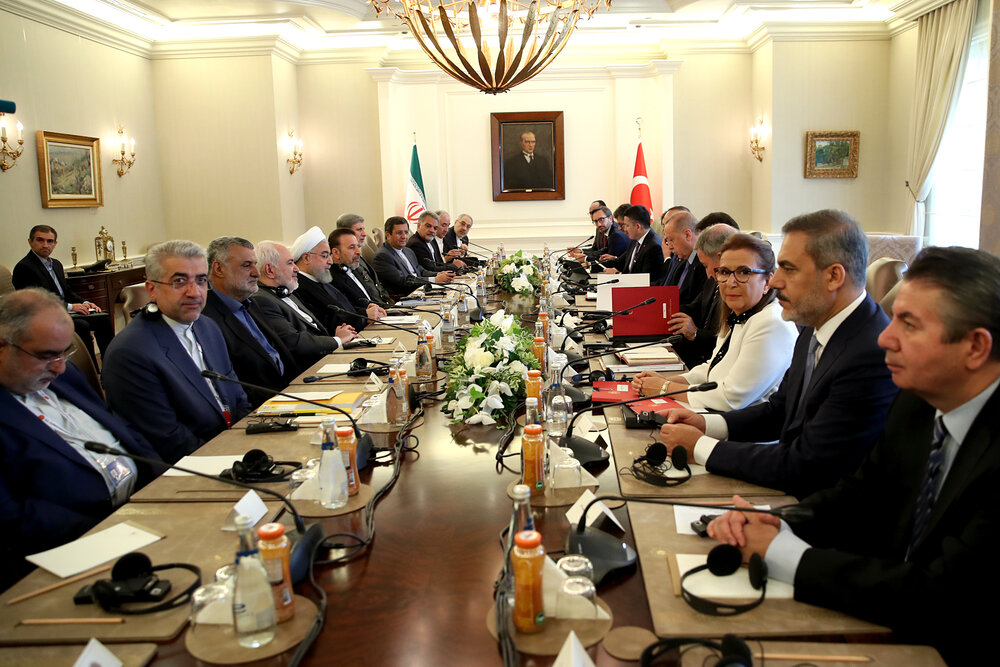
After the meeting, the two presidents attended the meeting of the high-ranking delegations of Iran and Turkey during which Rouhani said, “Fortunately, relations between Iran and Turkey have always been close and brotherly, and the two governments and nations have stood by each other in different conditions”.
Appreciating the warm hospitality of the Turkish government and people, the Iranian president expressed hope that the visit would yield good results for both nations and the region, especially the people of Syria.
He went on to acknowledge the Turkish government’s clear stances against the United States’ unjust sanctions against Iran, saying, “Despite hardships, Iran and Turkey will continue their inclusive economic relations”.
He added, “Iran welcomes Turkish investors and private sector’s presence and participation in implementing common projects.”
The president said, “The holding of the 27th Joint Commission of Iran and Turkey Cooperation in the coming days is a very important opportunity to further develop these relations and cooperation”.
Rouhani also said Iran and Turkey share close views view in combatting terrorism. “Fortunately, good developments have been made in defense-related cooperation between the two countries. Therefore, Iran-Turkey cooperation in ensuring security in common borders and the region will improve further”.
“The pattern of Iran-Turkey trilateral cooperation with Russia in ensuring the security of the region could contribute to the development and stability of the region and the two nations through trilateral and multilateral economic cooperation with neighbors”.
“Guaranteeing the security of the Persian Gulf waterways, the Sea of Oman and the Strait of Hormuz has always been important for Iran as the largest littoral state,” Rouhani said, adding that Iran considers itself responsible to ensure security of regional waterways.
In an indirect reference to the presence of U.S. forces in the Persian Gulf, the president said, “The security of regional waterways has to be protected only by its littoral states, and that the presence American forces and inviting other countries to be present in the region will only increase the existing problems and tensions.”
Rouhani also said attacks on Yemen is the result of miscalculation and misinformation by the U.S., saying, “We must all work to bring stability back to Yemen with the participation of the United Nations.”
Rouhani also pointed to cooperation between Iran and Turkey, as guarantors of the Astana process, which has made Syria more secure, saying, “We must help the Syrian government in fighting the remaining terrorists, especially in Idlib and east of Euphrates until the terrorists are eradicated from the region”.
At the same meeting, the Turkish president referred to the friendly and brotherly relations between Iran and Turkey, saying, “We are determined to continue the great steps taken in relations between the two countries”.
Erdogan added, “Trade cooperation between the two countries by using national currencies has grown significantly and this trend will continue”.
He also said, “America’s sanctions against Iran are unconstructive, and in view of the Turkish government, preserving the Joint Comprehensive Plan of Action is an important symbol of the success of dialogue and diplomacy.”
“We hope that as a result of today’s summit and finalization of the previous summit’s agreements in Sochi stability and security will prevail in the region, especially in Idlib,” he concluded.
  • Rouhani: Tehran-Ankara ties amicable, strong, developing

    TEHRAN – The presidents of the Islamic Republic of Iran and Turkey have stressed that relations between the two countries are amicable, strong and developing in many fields, vowing to work to deepen and develop ties.
    President Hassan Rouhani had a meeting with President Recep Tayyip Erdogan on Monday on the sidelines of the fifth round of tripartite summit of Iran, Russia and Turkey in Ankara, according to the Iranian president’s official website.
    After the meeting, the two presidents attended the meeting of the high-ranking delegations of Iran and Turkey, in which Rouhani said, “Fortunately, relations between Iran and Turkey have always been close and brotherly, and the two governments and nations have stood by each other in different conditions”.
    Appreciating the warm hospitality of the Turkish government and people, the Iranian president expressed hope that the visit would yield good results for both nations and the region, especially the people of Syria.
    He went on to acknowledge the Turkish government’s clear stances against the United States’ unjust sanctions against Iran, saying, “Despite hardships, Iran and Turkey will continue their inclusive economic relations”.
    He added, “Iran welcomes Turkish investors and private sector’s presence and participation in implementing common projects.” 
    The president said, “The holding of the 27th Joint Commission of Iran and Turkey Cooperation in the coming days is a very important opportunity to further develop these relations and cooperation”.
    Rouhani also said Iran and Turkey share close views view in combatting terrorism. “Fortunately, good developments have been made in defense-related cooperation between the two countries. Therefore, Iran-Turkey cooperation in ensuring security in common borders and the region will improve further”.
    “The pattern of Iran-Turkey trilateral cooperation with Russia in ensuring the security of the region could contribute to the development and stability of the region and the two nations through trilateral and multilateral economic cooperation with neighbors”.
    “Guaranteeing the security of the Persian Gulf waterways, the Sea of Oman and the Strait of Hormuz has always been important for Iran as the largest littoral state,” Rouhani said, adding that Iran considers itself responsible to ensure security of regional waterways.
    In an indirect reference to the presence of U.S. forces in the Persian Gulf, the president said, “The security of regional waterways has to be protected only by its littoral states, and that the presence American forces and inviting other countries to be present in the region will only increase the existing problems and tensions.” 
    Rouhani also said attacks on Yemen is the result of miscalculation and misinformation by the U.S., saying, “We must all work to bring stability back to Yemen with the participation of the United Nations.”
    Rouhani also pointed to cooperation between Iran and Turkey, as guarantors of the Astana process, which has made Syria more secure, saying, “We must help the Syrian government in fighting the remaining terrorists, especially in Idlib and east of Euphrates until the terrorists are eradicated from the region”.
    At the same meeting, the Turkish president referred to the friendly and brotherly relations between Iran and Turkey, saying, “We are determined to continue the great steps taken in relations between the two countries”.
    Erdogan added, “Trade cooperation between the two countries by using national currencies has grown significantly and this trend will continue”.
    He also said, “America’s sanctions against Iran are unconstructive, and in view of the Turkish government, preserving the Joint Comprehensive Plan of Action is an important symbol of the success of dialogue and diplomacy.”
    “We hope that as a result of today’s summit and finalization of the previous summit’s agreements in Sochi stability and security will prevail in the region, especially in Idlib,” he concluded.

    Thursday, June 27, 2019

    Majidi Thanks Erdogan for Screening ‘Muhammad’ in Turkey


    By
     IFP Editorial Staff

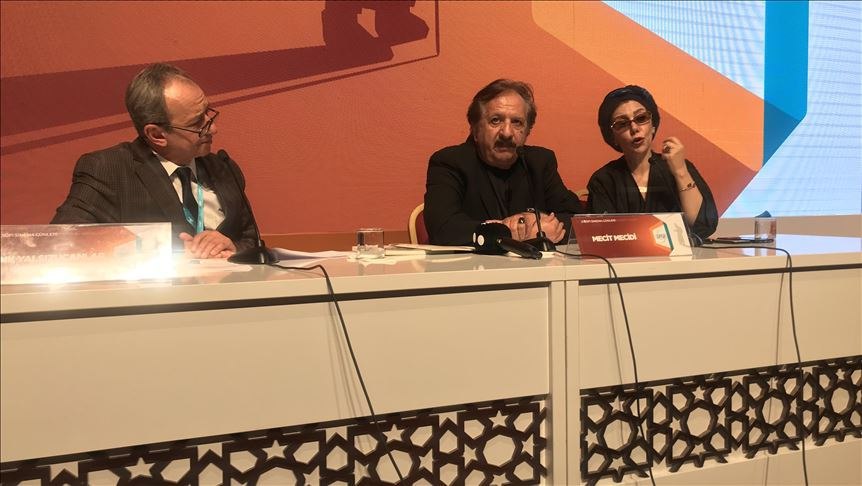
    Acclaimed Iranian filmmaker Majid Majidi has expressed his gratitude to Turkish President Recep Tayyip Erdogan for allowing his film Muhammad: The Messenger of God to go on screens in Turkey.

    The Iranian director said in a speech that certain lobby groups prevented the widespread release of Muhammad: The Messenger of God in the world, but “I would like to express my special thanks to the Turkish President because the feature was screened only in Turkey.”
    Addressing the SufiSin film festival in the Turkish city of Konya, he expressed pleasure for being in the city of Rumi, saying that Iran’s literature and culture are influenced by Rumi’s teachings and thoughts.
    “Cinema is an effective means to introduce Islam to the world, but unfortunately we have witnessed the presence of radical groups in this region in recent years that do not show the facts of Islam,” added Majidi.
    He also emphasised some groups, such as ISIS, have defamed Islam, adding that they have nothing to do with real Islam, but unfortunately, in the West, the beautiful messages of this religion are not displayed.
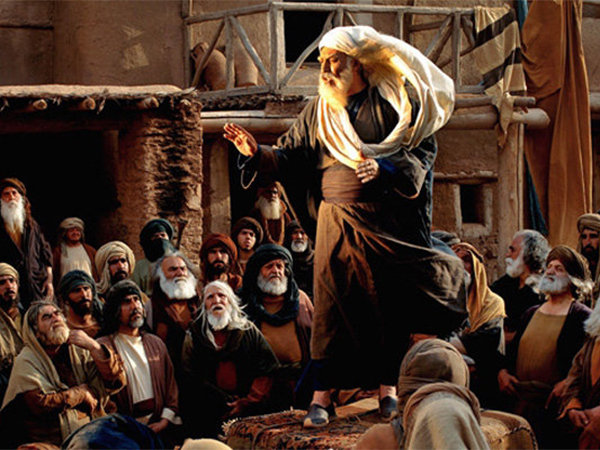
    Muhammad: The Messenger of God is a 2015 Iranian Islamic epic film directed by Majidi. The film is set in the sixth century where the story revolves around the childhood of Prophet Muhammad (PBUH). The film marks the biggest-budget production in the Iranian cinema to date.
    Majidi has won numerous international awards. In 1998, he directed Children of Heaven, which was nominated to receive the Academy Award for Best Foreign Language Film. Though it could not win the award, it became the first Iranian film to be nominated by the Academy.
    Muhammad: the Messenger of God
    He has directed several other feature films including The Colour of ParadiseThe Song of SparrowsBaran, and The Willow Tree.