Showing posts with label European Union. Show all posts

Tuesday, December 17, 2019

British Election Heralds Collapse of United Kingdom

Finian CUNNINGHAM
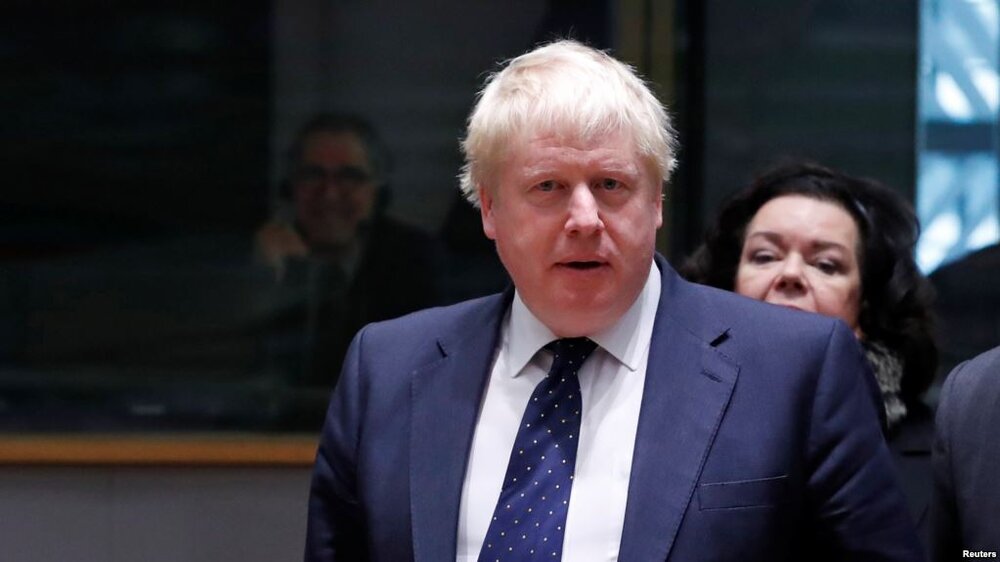
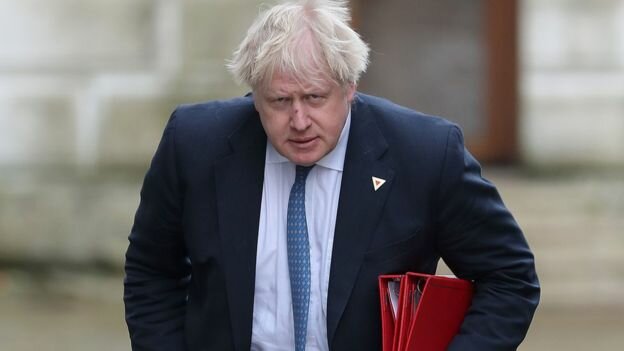
Boris Johnson is entitled to crack open a few bottles of champagne after being re-elected prime minister, with his Conservative party winning a landslide majority. But when the celebrations are over, Britain is facing a thumping hangover – from the inescapable fact that half of the United Kingdom is now on an irrevocable path of separatism and independence.
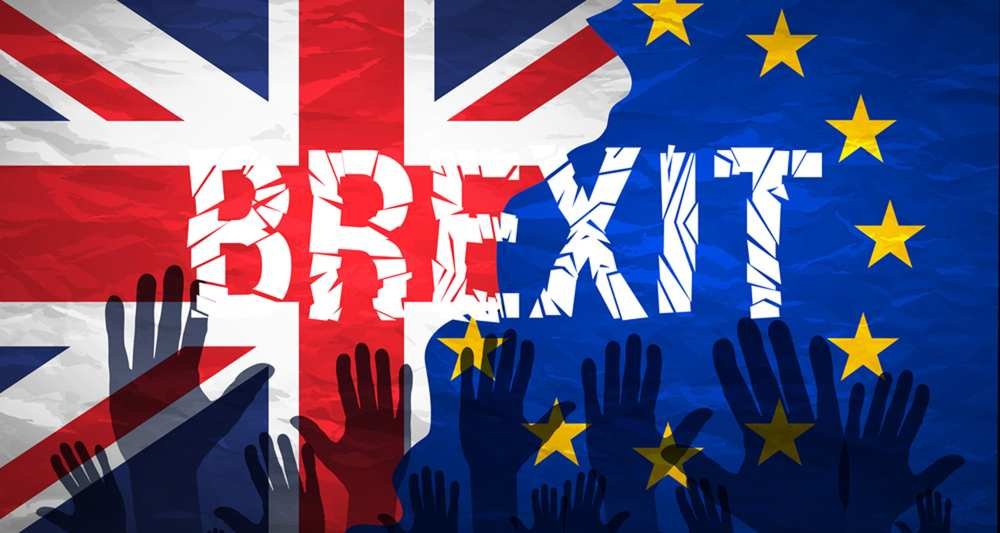
Johnson has won a decisive mandate to “get Brexit done”, at least from London’s perspective. His party now has a substantial parliamentary majority of 80 seats in the House of Commons which will ensure delivery on his promise to execute Britain’s departure from the European Union on January 31. The actual final severance will take another year or two to complete because of negotiations between London and Brussels to definitively hammer out divorce terms. But at least Johnson can claim that he has consummated the final journey to leave the EU on January 31, a journey which began over three years ago when Britons had originally voted for Brexit in the 2016 referendum.
However, crucially, the Conservative government’s mandate for Brexit only applies to England and Wales. It was in these two countries that saw the significant swing of voters from the opposition Labour party to Johnson’s Tories. Thus, in effect, his parliamentary majority stems from voters in England and Wales.
By total contrast, in Scotland and Northern Ireland, the other two regions which make up the United Kingdom, the voters resoundingly rejected Johnson’s Brexit plans and voted for parties wanting to remain in the European Union. The outcome is consistent with the 2016 referendum results when Scotland and Northern Ireland both voted against Brexit.
Moreover, the latest election results have reinforced the call for independence in both Scotland and Northern Ireland.
The Scottish Nationalists swept the election to enhance their already existing majority. They now control nearly 90 per cent of all seats in Scotland. Party leader Nicola Sturgeon says there is an unquestionable mandate to hold a second referendum for Scottish independence. The previous independence referendum held in 2014 was defeated. But Scottish nationalists claim that popular support for their cause has surged since the Brexit referendum in 2016. The Scots, by and large, do not want to leave the EU. To remain in the EU therefore necessarily means separating from the United Kingdom and its central government in London.
Boris Johnson has so far rejected calls for holding a second Scottish independence referendum. But his position is untenable. Given the parliamentary numbers for separation stacking up in Scotland, he will have to relent. Nationalists there are demanding the holding of another plebiscite as early as next year.
In Northern Ireland, the election outcome is perhaps even more momentous. For the first time ever, nationalist parties have a majority over pro-British unionist parties. Mary Lou MacDonald, the leader of Sinn Fein, the main nationalist party, says that there is now a clear mandate for holding a referendum on the question of Northern Ireland leaving the United Kingdom. Given the breakthrough nationalist majority in the latest election, that would inevitably lead to a United Ireland, from the northern state joining with the existing southern state, the Republic of Ireland.
Nationalists in Northern Ireland have long-aspired for independence from Britain. Northern Ireland was created in 1921 from an audacious act of gerrymandering by the British government when it partitioned the island of Ireland into an independent southern state (which became the Republic of Ireland) and a small northern state (which became Northern Ireland). The latter remained under Britain’s jurisdiction. The arbitrary, imperialist act of partitioning Ireland was done in order to give the British authorities in London a mandate to rule over a portion of Irish territory because in newly created Northern Ireland the pro-British unionists were in a majority over nationalists. It was British establishment cynicism par excellence.
The present political structure of the United Kingdom of England, Wales, Scotland and Northern Ireland is only a century old. (Before that, the UK included all of Irish territory, but London was forced to grant partial Irish independence due to an armed insurrection.)
In any case, nearly a century after the setting up of Northern Ireland the natural demographic changes in its population have now created a majority for nationalists. The outcome of the election on December 12 is an undeniably huge historic event. For the first time ever, the nationalist mandate has overcome the unionist vote. The historic violation by British gerrymandering against Irish nationalist rights to independence and self-determination has finally been reversed in terms of electoral ballot.
When the Northern Ireland peace deal known as the Good Friday Agreement was signed in 1998 to bring an end to nearly 30 years of armed conflict, enshrined in that treaty is the “principle of consent”. The British government is treaty-bound to abide by the electoral mandate of a majority in Northern Ireland wanting a United Ireland.
The threshold for triggering a referendum on Northern Ireland leaving British jurisdiction has now been reached. And nationalist parties are openly demanding that the legislative process to achieve that separation is now implemented.
Jonathan Powell, a seasoned British diplomat who oversaw the negotiations of the Good Friday Agreement, is not one for hyperbole. But in an interview with Matt Frei for Britain’s LBC Radio on December 14, Powell said he expected to see the “collapse of the United Kingdom” within the next decade, if not sooner. He was referring specifically to the electoral results in Scotland and Northern Ireland.
Boris Johnson’s seeming victory in the British election is a double-edged sword. He may claim to have a mandate to cut off ties with the European Union. But the results also mean Scotland and Northern Ireland are empowered to now cut off their ties with the rest of Britain. The separation of those two states, leaving behind England and Wales, spells the end of the so-called United Kingdom.
Johnson’s election success is not “unleashing great potential” as he claims. Rather, it is unleashing an existential constitutional crisis for the British establishment.

Monday, December 16, 2019

Boris Johnson: An unhealthy choice anywhere

By Martin Love

NORTH CAROLINA - British voters know not what they did in elevating the Tories to their biggest victory in decades, and in defeating the Labor party and eliminating a humble, good man – Jeremy Corbyn – from a further role in politics. The voters know not what they did focusing far too much on demands that the country leave the EU, which the winner, Boris Johnson, has pledged to execute early in 2020 while at the same time Labor waffled amid suggestions of holding another referendum on Brexit.
This waffling and lukewarm if not cold stance towards the Brexit question was a major factor in Corbyn’s defeat, as there are indications those who would have voted Labor foolishly switched their vote to Boris Johnson over this issue alone, disregarding other concerns about Johnson’s nefarious plans. But there were other factors, too, just as onerous and disastrous, and anyway, no one expected such a lopsided vote.
Disastrous one can say because there are many Brits and many others in the West and across the globe who literally ached for the kinds of potential changes that might have begun had Corbyn become Prime Minister. This election was the one chance the British and much of the world had to begin the establishment of policies of Hope for relief for those under the thumb of Western imperialism and the power of oligarchs like Rupert Murdoch and Sheldon Adelson, to name just two, and their obscene wealth and privileges. The next chance for real change may be in the U.S. election coming next November. And that chance may be the last for many years ahead. The defeat of Trump is for now not assured unless between now and next November the U.S. economy and markets crater. Ejection from office before then is a very bad bet.
One can strongly blame the interference of Zionists and their co-conspirators in British politics. Alleged Russian meddling anywhere is nothing compared to what the Zionists have been doing. No candidate, perhaps ever, has suffered such outrageous attacks as Corbyn did given year all false claims he was in bed with “anti-Semites” simply because he has long insisted on an equitable solution to the plight of Palestinians and the end of the apartheid system in Israel, as well an end to U.S. and NATO warmongering in the Middle East. Heck, Corbyn probably would have even released the world’s Number One journalist and chronicler of U.S. war crimes and other abuses, Julian Assange, from his torture in Belmarsh dungeon in London and thus obviated extradition to further torture and imprisonment in the U.S.
Corbyn’s advocacy for the many, for the People, versus the oligarchs and plutocrats, the very few, was nullified by the imperialists including especially the Israel lobby. But the election is done now and the question is whether the few (not the many) have gained an even stronger mandate with their allies in the corrupted and bought media, and not just in Britain, to continue wrecking the world for selfish ends. One would have to conclude “yes” for now, but perhaps, perhaps, not forever. The victory in Britain by Power and the powerful, even as they may be strengthened by the possible reelection of Trump next year, who is reaching out to bolster his base of Christian evangelicals and fundamentalists, the utterly ignorant in the U.S., may, with some luck, prove to be their undoing in time even as the Zionists and warmongers, for now, are gloating over the election results.
Corbyn made errors, aside from not coming out strongly for Brexit, as that has been apparently desired by a majority of Brits. He has not been one not to rage against even his opponents such as the Zionists and against the smears he has suffered. One might say that being relatively “nice” does not work against such vile detractors. So will Senator Bernie Sanders, who could be nominated by the Democrats with some luck, take a lesson from the Johnson victory in Britain? He, a Jew, is already being set up for the same kind of abuse Corbyn failed to counter effectively from the Zionist lobby, and such smears would only be amplified if somehow he wins the nomination to run against Trump. But perhaps, for now, it’s better to examine the incitements of Johnson’s victory.
At the top of the list is whether Britain overall will benefit from Johnson’s Brexit? This is unlikely, especially from an economic standpoint, but the jury may remain out on this for a long time. Also, Scotland’s nationalist party, the SNP, looks likely to fight to remain in the EU and for independence, for one thing, and the Irish seem to be studying unification with Northern Ireland and their own independence from London. Both the Irish and the Scots appear to be appalled with the election results. Moreover, Boris Johnson, an uncouth champion of the rich, has positioned Britain to become more of a poodle, if more poodle behavior is possible, to U.S. control and the Trump Administration’s malignant designs. Britain may be severed from the EU, but this merely establishes what amounts to slavery to the demands of the Republicans and Wall Street in the U.S.
Privatizing Britain’s beloved National Health Service at the behest of U.S. corporate plunderers may now be inevitable, and once that begins, even partially, and British citizens could be forced to buy health insurance, there may be a huge backlash against Johnson’s government. In sum, what happens when the public, whether in Britain or the U.S., finally wakes up to the evils of full-blown Facism (which both Trump and Johnson are essentially implementing)? And what happens when the remains of benevolent public institutions and programs in both countries are further eviscerated along with the shredding of the vital social safety nets? Is this not a recipe for revolution in some fashion in the future, especially by those who have sought peace and justice in foreign affairs and domestic relief from plutocratic predators on both sides of the Atlantic? One can only hope, but for now the British elections casts a darker pall everywhere, including over Iran.

The original game in UK has just started !

By Hanif Ghafari

The British Conservative Party finally won the House of Representatives by winning 364 seats. Many analysts believe that Boris Johnson's victory in the election means solving the riddle of Britain's exit from the EU. Some believe the British prime minister will leave the EU by the end of January 2020 (less than two months later) on his own accord. Essentially one of the reasons why British public opinion favored the Conservative Party and Boris Johnson was their desire for agreement with the European Union. But the key question is, is this equation easily formed?
The answer is no! In the coming weeks, U.S. President Donald Trump is trying to convince Boris Johnson of "disagreement with Europe" and the "hard exit of Britain" from Europe. Trump uses a variety of methods in this regard. It should not be forgotten that Trump is not only strongly opposed to the "soft British exit of Europe", but he also sees it as the destruction of Washington's economic dominance over London in the coming years. However, if Boris Johnson succumbs to Trump and puts a tough exit from the European Union on the agenda, at least half of those who have voted for the Conservative Party will turn away from him and become angry opponents! In this case, Johnson's control of British political and social Equations is impossible.
Even if Boris Johnson puts an agreement with the European Union and a soft exit from the EU, the game won't be over! The effects of Britain's soft exit from Europe, such as declining economic growth, rising unemployment and inflation, and protest movements by Labor, Democratic Liberal Party, Scottish National Party and extremist nationalists will cause Boris Johnson to face many crises over the next year. . In the meantime, radical nationalists in Britain, such as Trump, are in favor of a "tough British exit from the European Union", becoming a tough, uncontrolled social and political force by the Johnson administration.
As can be seen, the game in UK is never over! Although with the defeat of the Labor and Liberal Democrats, another option called "Repeat New Referendum on EU Exit" has been removed from British political equations, the choice of either "soft exit" or "hard exit" option "From Europe, there will be costs and consequences for the Boris Johnson government. These costs could lead to the fall of the British government and Johnson becoming the third political victim (after David Cameron and Theresa May).

Sunday, December 15, 2019

The original game in UK has just started !

By Hanif Ghafari

The British Conservative Party finally won the House of Representatives by winning 364 seats. Many analysts believe that Boris Johnson's victory in the election means solving the riddle of Britain's exit from the EU. Some believe the British prime minister will leave the EU by the end of January 2020 (less than two months later) on his own accord. Essentially one of the reasons why British public opinion favored the Conservative Party and Boris Johnson was their desire for agreement with the European Union. But the key question is, is this equation easily formed?
The answer is no! In the coming weeks, U.S. President Donald Trump is trying to convince Boris Johnson of "disagreement with Europe" and the "hard exit of Britain" from Europe. Trump uses a variety of methods in this regard. It should not be forgotten that Trump is not only strongly opposed to the "soft British exit of Europe", but he also sees it as the destruction of Washington's economic dominance over London in the coming years. However, if Boris Johnson succumbs to Trump and puts a tough exit from the European Union on the agenda, at least half of those who have voted for the Conservative Party will turn away from him and become angry opponents! In this case, Johnson's control of British political and social Equations is impossible.
Even if Boris Johnson puts an agreement with the European Union and a soft exit from the EU, the game won't be over! The effects of Britain's soft exit from Europe, such as declining economic growth, rising unemployment and inflation, and protest movements by Labor, Democratic Liberal Party, Scottish National Party and extremist nationalists will cause Boris Johnson to face many crises over the next year. . In the meantime, radical nationalists in Britain, such as Trump, are in favor of a "tough British exit from the European Union", becoming a tough, uncontrolled social and political force by the Johnson administration.
As can be seen, the game in UK is never over! Although with the defeat of the Labor and Liberal Democrats, another option called "Repeat New Referendum on EU Exit" has been removed from British political equations, the choice of either "soft exit" or "hard exit" option "From Europe, there will be costs and consequences for the Boris Johnson government. These costs could lead to the fall of the British government and Johnson becoming the third political victim (after David Cameron and Theresa May).

Sunday, November 17, 2019

West attempts to repeat the Bolivian coup in Venezuela

By Mohammad Ghaderi

After the coup by the Bolivian military against the president, Western media outlets are trying to incite the Venezuelan army against Maduro by praising this event and comparing it to the developments in Venezuela.
The resignation of Evo Morales from Bolivia’s presidency following the military threat, is considered a victory for Western countries, especially those that are trying to maintain Latin America as their colony.
Since Western countries cannot withstand figures like Hugo Chaves, Morales, Luiz Inácio Lula da Silva and the Castro brothers they stir up security problems in countries with leftist leaders to topple their governments.
Therefore, now that the anti-colonial president of Bolivia has stepped down due to military threats and the recent protests in the country, the West is praising these events to befool other countries, especially Venezuela, and show them the way.
In a report on Tuesday, Reuters compared the developments in Bolivia and Venezuela and wrote, “one key factor makes the Bolivia playbook a difficult one to carry out against Venezuelan President Nicolas Maduro: Venezuela’s armed forces have consistently refused to take the side of protesters as Bolivia’s military did on Sunday.”
Reuters also tried, with a subtle tune, to persuade the Venezuelan army to follow the Bolivian military.
In addition to Western media, officials in these countries have also praised the Bolivian coup. For example, U.S. President Donald Trump in response to Bolivia’s developments claimed, "These events send a strong signal to the illegitimate regimes in Venezuela and Nicaragua that democracy and the will of the people will always prevail." He also issued a statement in which he hailed Morales' departure as moving towards a "completely democratic, prosperous, and free Western Hemisphere."
 The U.S. is architect of Bolivian developments
In addition to Trump’s remarks, Washington urged Bolivian legislature to hold a meeting to formally accept Morales’ resignation and began the civilian process of power transition to fill the current political vacuum.
A senior U.S. State Department official also said Washington does not consider Morales' departure to be a coup, as Morales himself and the Mexican government have alleged. It was instead the result of protests that showed the Bolivian people "have had enough of a government ignoring the will of its voters".
The European Union
In response to the Bolivian developments, the EU called for all parties involved in the current political tensions to exercise “restraint” and “responsibility”.
"I would like to express clearly our wish that all parties in the country exercise restraint and responsibility and lead the country peacefully and quietly to new, credible elections that let the people of Bolivia express their democratic will," EU foreign policy chief Federica Mogherini said on Monday.
“If we are asked to send one and if the conditions are right, definitely we will do our best to send an Electoral Observation Mission,” she said at the press conference following the Foreign Affairs Council.
 Venezuela is the next target
The U.S. has been seeking for years to overthrow the Venezuelan government and to put into power the political currents which are in line with Washington. These efforts by the U.S. have entered a new phase as Venezuela’s opposition leader Juan Guaido entered the scene. By calling himself president, Guaido has started to fulfill U.S. goals.
After Guaido’s action, 50 countries, mostly Western, backed him, but their backing did not succeed as majority of the people and the Venezuelan army continued to support Maduro.
Of course, a few months ago, when John Bolton was still in the White House, a semi-coup was conducted against Maduro. But since the coup did not succeed it led to disagreements between Trump and Bolton.
Now that the coup was carried out in Bolivia, the West seems to have found a new motive and intend to bring this wave to Venezuela.
Whether or not these efforts will work against Venezuela needs to be discussed, but what is obvious is that as long as leftist and anti-colonial leaders are in power in Latin American countries, events such as protests, unrest and coup (like the ones in Bolivia and Venezuela) and financial allegations (like the one against Lula de Silva in Brazil) are tools that can be used to bring pro-Western figures to power.

Thursday, October 24, 2019

Third British PM may be crucified over Brexit

By Hanif Ghaffari
TEHRAN - Brexit is getting more twisted every day. It is obvious that Boris Jonson is spending hard days. He seems severely concerned about the political future of himself and his Conservative Party. 
On the other hand, the disagreement between the opponents and supporters of Britain’s departure from the European Union has culminated in recent days. 
Britain has recently announced that it will leave the EU on Oct. 31, despite an unsigned letter that the British prime minister was forced by parliament to send to Brussels. “We are going to leave by October 31. We have the means and the ability to do so,” Michael Gove, the minister in charge of no-deal Brexit preparations, told Sky News. 
He added, “That letter was sent because parliament required it to be sent ... but parliament can’t change the prime minister’s mind, parliament can’t change the government’s policy or determination.”
It should be noted that Johnson asked the EU to delay the Brexit process. He also sent another note, claiming he did not want any delay or extension. This act was heavily criticized by many British politicians and even those in Johnson’s party. The move by Johnson amounts to undermining the legal status of the House of Commons in the eyes of other European actors.
The British prime minister stated, “I have made clear since becoming prime minister and made clear to parliament again today, my view, and the government’s position, that a further extension would damage the interests of the UK and our EU partners, and the relationship between us,” Johnson said in the third letter, signed “Boris Johnson”.
It can be said that Johnson has formally called on European officials to postpone the request of the House of Commons to delay Brexit. In the wake of political crises between the government and the House of Commons, which can lead to premature election, the supporters of another referendum in Britain have begun their work to repeal the first referendum and to stay in the EU. Indeed, if the second referendum is to be held, British nationalists, who are major supporters of Brexit, will launch an extensive uprising against the government.
All the developments suggest that like his two predecessors, David Cameron and Theresa May, Johnson will soon become the third victim of Britain’s divorce from the European Union.

Monday, October 14, 2019

Europe's pretext for evading Iran's demands

By Hmaid Bayati


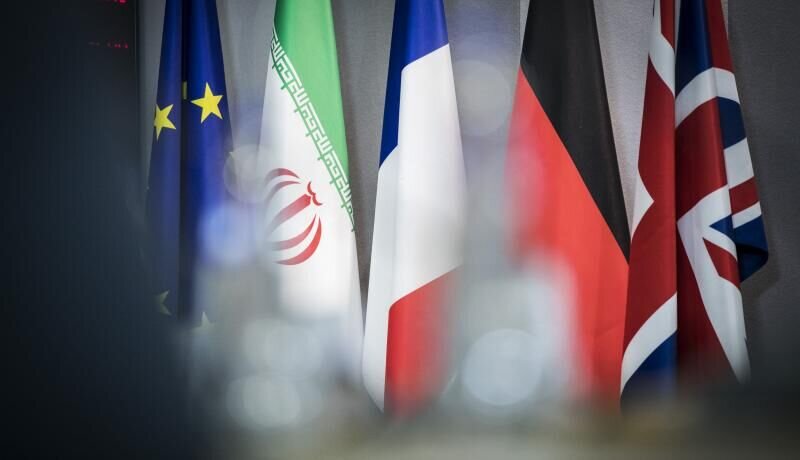
TEHRAN - The opportunity to save the JCPOA (the nuclear deal concluded between Iran and the 5+1 group in 2015) is narrowing down, but the European signatories of the international deal, known as EU3 (Britain, France and Germany), are not daring enough to counter the U.S. and accept the expenses of their resistance against Washington’s illegal withdrawal from the JCPOA.
The European countries are evading their responsibility to fulfill their commitments under the pretext that companies are private, claiming that due to the companies’ non-governmental status they are not able to force them to trade with or invest in Iran.
Based on evidence, the EU3 can grant legal guarantee to their companies to protect them against the U.S. sanctions. 
Shireen Hunter, a professor of Georgetown University, has said, “The current laws are not very effective in countering American sanctions. Moreover, the real issue is that Europe does not want to escalate confrontation with America for the sake of Iran.” 
The European countries’ refusal to fulfill their commitments to the nuclear deal is mostly different from their resistance approach against the U.S. pressure in 1996 when Washington imposed sanctions against Cuba without companionship of its European partners. In 1996, the European nations managed to resist against the U.S. via ratifying new laws. Now there is a question whether Europe is currently able to resist against the U.S. pressure and unilateralism as they did in case of Cuba?
Professor Hunter says, “Iran issue is more complicated than Cuba because it is linked to other Middle East -related issues. Europe has very little economic relations with Cuba. Moreover, America was not so keen in getting European cooperation regarding Cuba than it has been vis a vis Iran. The main issue is that Europe does not want to endanger its economic interests in America for Iran's sake.”
Bloomberg news network’s analyst Janothan Tirone also believes that the European Union’s reactions towards the U.S. measures against Iran and the JCPOA is mostly summarized in political gestures, holding meetings and issuing statements in support of the nuclear deal. The analyst says Europe has been very slow in applying policies to decrease the U.S. sanction pressure on Iran. 
He further said last summer Europe unveiled a new version of blocking law to counter the U.S. secondary sanctions. 
The blocking law approach allows the European companies to lodge complaint before the European courts and demand compensation if they face the U.S. sanctions for their trade with Iran. But the said blocking law approach has not thus far been implemented.
The EU still lacks a united policy to turn rhetoric to applicable policies. In the meantime, deep engagement of the European and U.S. economies means that European politicians do not want to face severe reaction from European companies which do not want to choose one at the cost of the U.S. market.   
At the end, it should be mentioned that the European countries’ action over preliminary nuclear deal in 2003 and also over the JCPOA testifies their disloyalty to their promises. The European signatories of the JCPOA have not thus far done any acceptable measure to convince Iran to stay in the deal. Now, instead of pressing Brussels to protect the JCPOA as an important international deal, Paris has given a one-month time to Iran to agree with French President Emmanuel Macron’s plan to save the deal. 
Measures adopted by both the EU and the U.S. since May 2018, when Donald Trump withdrew Washington from the JCPOA, have proved that Tehran must never rely on the Western side’s promises and that Brussels must shoulder its responsibility to convince Iran to remain in the deal.

Saturday, September 28, 2019

US and EU Gang up to Demonize Iran Over Saudi Airstrikes

The European Union’s statement this week condemning Iran over the recent airstrikes on Saudi Arabia’s key oil industry sites was a tawdry piece of political cowardice. Not only tawdry, but dangerous as well.
For the EU is giving credence to Washington’s intensified attempts to demonize Iran, imposing ever-harsher economic sanctions and escalating tensions that could explode into an all-out war. Ironically, this is in spite of the EU claiming to be facilitating diplomacy to promote peace and security in the Middle East.
To be more precise, it wasn’t an EU joint statement issued at the United Nations general assembly this week. It was a statement formulated by only three members of the bloc: Britain, France and Germany. In practice, however, the biggest members of the EU were speaking on behalf of the others. (Full statement here.)
British Prime Minister Boris Johnson, French President Emmanuel Macron and German Chancellor Angela Merkel stated the following:
“We condemn in the strongest terms the attacks on oil facilities on Saudi territory on September 14, 2019 in Abqaiq and Khurais, and reaffirm in this context our full solidarity with the Kingdom of Saudi Arabia and its population. It is clear to us that Iran bears responsibility for this attack. There is no other plausible explanation. We support ongoing investigations to establish further details.”
Thus, the Europeans are repeating assertions made by the United States and Saudi Arabia by which they accuse Iran of being responsible for firing drones and cruise missiles at the vital Saudi oil installations. No credible proof has so far been presented to support such an assertion.
The European powers are engaging in a reprehensible blame game which will only embolden further Washington’s reckless aggression against Iran.
Tehran has categorically rejected all accusations that it was in some way involved in the airstrikes against Saudi Arabia. The Yemeni Houthi rebels have from the outset following the attacks claimed full responsibility.
Iran may support the Yemeni rebels and have at some time provided weapon technology, but the Houthis are capable of developing and deploying their own fire power.
By blaming Iran, the US and Europeans are giving political cover to Saudi Arabia and its nefarious role in starting and waging a genocidal war against Yemen for the past four years. It is arguably the right of the Yemenis to retaliate against Saudi Arabia in acts of self-defense. And it is in Iran’s right to support the Yemenis, just as the US, British and French support Saudi Arabia. Why should there be a double standard?
What is even more despicable is that the European trio (the so-called E3) have been massive weapons suppliers to Saudi Arabia, in particular Britain and France. The British and French (and Americans, of course) have made hundreds of millions of dollars in recent years from weaponizing the Saudi war on Yemen, even though that has led to nearly 100,000 civilian deaths. Why doesn’t the E3 issue condemnation, rather than “solidarity” to the Kingdom of Saudi Arabia, over this genocidal slaughter?
A further aspect to the joint statement issued by Britain, France and Germany is that these powers are signaling their support for US President Donald Trump’s efforts at sabotaging the international nuclear accord with Iran. That landmark deal was co-signed by the US, France, Britain, Germany, Russia and China back in July 2015.
Trump reneged on the UN-endorsed treaty when he unilaterally walked away from it in May 2018. It was typical American bad faith and backsliding whenever international agreements don’t suit their selfish interests.
Russia and China continue to support the Joint Comprehensive Plan of Action (JCPOA, as the nuclear deal is known formally as). Iran has recently begun to suspend certain commitments, such as increasing stocks of enriched uranium. The Iranian position of partial non-compliance is understandable. The US has trashed its obligations to the deal, and the Europeans have barely stepped up to the plate to implement sanctions relief for Iran, which is mandated by the JCPOA. Four years after the deal was done!
Britain, France and Germany claim to be still committed to the nuclear deal, according to a press statement by EU Foreign Affairs Commissioner Federica Mogherini at the UN this week.
But it is evident that, on the contrary, the E3 troika is instead moving to undermine the JCPOA. Blaming Iran with groundless accusations of attacking Saudi Arabia is part of the sinister shift by stealth. The day before the E3 issued their joint statement, Britain’s Boris Johnson was disparaging the nuclear as a “bad deal” and urged a renegotiation for what he sycophantically called a “Trump deal”.
Here is another weasel-worded section from the EU joint statement:
“Conscious of the importance of collective efforts to guarantee regional stability and security, we reiterate our conviction that the time has come for Iran to accept negotiation [sic] on a long-term framework for its nuclear program as well as on issues related to regional security, including its missiles program and other means of delivery… We urge Iran to engage in such a dialogue and refrain from further provocation and escalation.”
That is a clear – albeit with backhanded verbosity – attempt to pressure Iran into accepting Trump’s demand for the JCPOA to be replaced by further restrictions on Iran’s rights to pursue self-defense and normal regional and international relations. In weak-kneed fashion, the EU is augmenting Trump’s agenda of demonizing and criminalizing Iran so that it might succumb to subjugation.
Why the Europeans are acting with such cynicism is to conceal the glaring fact of their own weakness vis-a-vis Washington’s dictates and imperialist bullying. They should be admonishing the Americans for bad faith and reckless aggression; they should be condemning Saudi Arabia for a merciless slaughter in Yemen; they should be with-holding lucrative weapons sales to Saudi Arabia if they were really interested in peace; and if the Europeans really were genuine about non-proliferation and Middle Eastern stability, they should be whole-heartedly implementing the nuclear accord with Iran and providing the country the normalized economic trade that it is entitled to – just as Russia and China have done.
But no. And so to cover up their spinelessness, the Europeans are obliged to gang up with Washington to blame the victim of imperialist abuse – Iran. Such European cowardice is leading to more conflict.

Tuesday, September 17, 2019

EU to leave JCPOA if Trump wins second term: analyst

EU to leave JCPOA if Trump wins second term: analyst  

TEHRAN, (MNA) – An expert in international political affairs, Mirghasem Momeni, says the European sides to the Iran nuclear deal will leave the agreement in the wake of Trump’s re-election in 2020.
Speaking to Mehr correspondent on Monday, Momeni said the European sides to the 2015 Iran nuclear deal (JCPOA), namely the UK, France, Germany and the EU, are only biding their time to see what happens in the future.
“The Europeans are waiting for the result of the US 2020 election in order to base their final decision on it. I am fully confident that if Donald Trump wins a second term, EU will leave the nuclear deal,” he said.
Trump withdrew the US from the JCPOA in May 2018 and re-imposed sanctions on Iran which had been lifted under the agreement. The remaining sides to the deal – UK, France, China, Russia plus Germany and the EU – have been trying to persuade Iran to stay in the deal by offering an alternative trade mechanism, and most recently, a $15 billion credit line.
Momeni said, however, that both proposals have not become operational yet, and neither of them seem to be of much use to Iran, anyway.
“Europeans have not taken any tangible and positive measures to safeguard Iran’s interests under the JCPOA. It seems like they are only seeking for an excuse to put the blame on Iran for failing to live up to its commitments,” he added.
“From what we have seen so far, I doubt the European sides would do anything useful in the third 60-day deadline Iran has given them,” he said, referring to Iran’s step-by-step cuts to its commitments to the JCPOA as a countermeasure to US’ withdrawal and EU’s continued failure to shield Iran from US sanctions.

Friday, September 13, 2019

What are the risks of a no-deal Brexit?


Britons have surely understood that the economic and political freedoms they had been promised, and had hoped for during the 2016 Brexit vote, have been bastardized into a future of uncertainty under Prime Minister Boris Johnson’s push for a no-deal Brexit.
Government workers have also realized that budgets have been slashed under austerity while coupled with a rise in demand for services, and the outlook is further worsened by the impending Brexit chaos.
The following is an article in this regard under the heading: “What are the risks of a no-deal Brexit?” This article has appeared on the FrontPage of the Iranian English language website Press TV.
There appears to be no end to gloomy stories about the immediate consequences of a no-deal Brexit. In the latest prediction, retailers have warned of shortages of fresh food resulting in price rises.
The consequences of a no-deal Brexit are not just confined to Britain. The Irish Taoiseach (Prime Minister), Leo Varadkar, has tried to reassure the Irish public about the implications of a no-deal Brexit, claiming that it would not trigger recession nor necessitate the return of austerity.
Media scaremongering aside, what are the real risks of a no-deal Brexit? Most of the reliable information can be gleaned from the government’s Operation Yellowhammer documents, parts of which were leaked to the media in mid-August.
Yellowhammer is the codename used by the Treasury for cross-government civil contingency planning in the event of a no-deal Brexit.
Based on the partial leak of Yellowhammer documents in mid-August, and other reliable data, here is a list of five core expected Brexit-related shortages and difficulties in order of importance:
  1.  Food: according to Yellowhammer, critical elements in certain food supply chains (such as ingredients, chemicals and packaging) will be adversely affected, leading to higher prices, but not necessarily shortages. The supply of some types of fresh/perishable foods is expected to decrease, but not hugely.
  2. Medicines: due to expected disruption at the Channel Border Crossing Point with France, there will be a significant impact on the importation of medicine and medical supplies, at least for six months.
  3. Fuel: no-deal Brexit means the imposition of tariffs on many essential goods and supplies, notably petrol. But in this vital area it will be UK petrol exports to the European Union (EU) which will become uncompetitive due to the imposition of tariffs. This may lead to the closure of two British oil refineries, with the predicted loss of 2,000 jobs.
  4. Transportation: there is widely expected to be significant disruption at the Channel Crossing Point with France. The disruption is expected to last three months and may affect 85 percent of lorries travelling across the Channel in both directions.
  5. Immigration: in the immediate aftermath of Brexit there are likely to be stepped up immigration checks both in Britain and on the continent. What is less certain is the mid to long-term consequences, especially in relation to the status of British expatriates living in EU countries and vice versa.  
This list is not exhaustive and, crucially, it does not include long-term political and strategic issues, notably the border between the Republic of Ireland and Northern Ireland. A no-deal Brexit will almost certainly lead to the return of a “hard” border between the Republic and British-controlled Northern Ireland.
In terms of the Irish question, the political and strategic consequences of a “hard” border are difficult to calculate at this stage, but the return of border controls will at minimum strengthen calls for Irish unity and the end of British rule in Northern Ireland. 
As the UK Parliament scrambles in an attempt to make heads or tails of the apparently insurmountable Brexit crisis, public systems, such as the National Health Service and the security apparatuses, have been put on the backburner.
British MPs from across the political spectrum have been given very little time after returning from their summer break to find ways of stopping Boris Johnson’s no-deal package from going through.
Meanwhile, the Government threatened Conservative MPs that they would not be reelected as candidates in any future election if they oppose its Brexit strategy.
With all the drama, members of parliament must consider treating legislation on public services, on which every Briton relies, as of lesser importance.
Britons have surely understood that the economic and political freedoms they had been promised, and had hoped for during the 2016 Brexit vote, have been bastardized into a future of uncertainty under Johnson’s push for a no-deal Brexit.
Government workers have also realized that budgets have been slashed under austerity while coupled with a rise in demand for services, and the outlook is further worsened by the impending Brexit chaos.
According to health tech leaders, the NHS is living “in the dark ages” when it comes to technology, while outpatient services “would still be recognized” by Victorian doctors.
Initially, Boris Johnson made the NHS central to his first weeks in office, alongside his other “people’s priorities” of crime and schools.
But, critics now say that Boris Johnson’s crime fighting crusade is just vote-winning spin for a possible general election.
Emergency and Public Services have planned their moves in case a no-deal goes through, but who will now help these very services whilst the debate in Parliament continues? Will they be used as bargaining chips in the next rounds of the Brexit saga?

Monday, September 02, 2019

Death of Democracy in UK

By Saeed Sobhani

British Prime Minister Boris Johnson's suspension has led to deep divisions among citizens.Some British citizens express their support for Johnson, while others are furious. Undoubtedly Britain's challenges to exit the EU will continue, even if it does. Many analysts believe that London will be at war with the effects of this phenomenon for at least ten years.
Here's a look at the latest news and analysis on the political and social conditions in England:
Brexit: MPs trying to block no deal make it more likely, says Boris Johnson
As BBC reported, The PM has warned MPs they are damaging his chances of getting a deal with the EU by trying to block a no-deal Brexit. Boris Johnson said the UK would leave the bloc "do or die" on 31 October - prompting some MPs to act to stop the UK leaving without an agreement. But he said the more MPs try to block a no-deal Brexit, "the more likely it is that we'll end up in that situation".
It comes after the PM announced he would be suspending Parliament for five weeks over September and October. Mr. Johnson said it was to allow the government to hold a Queen's Speech and outline its "very exciting agenda" for the future. But critics claim his intention is to prevent any moves in the Commons to stop a no deal. Labour leader Jeremy Corbyn called the PM's comments "complete nonsense".
He said he was working with all the opposition parties to "challenge the government" to stop a no-deal Brexit next week and he was "hopeful" of securing the backing of the Commons.
Senior Tory Sir Oliver Letwin said MPs still had time to act next week when they return from recess and before the suspension - which is expected to begin between 9 and 12 September and last until 14 October.
Former Prime Minister Sir John Major also confirmed he would be seeking a judicial review through the courts to oppose the suspension - known as prorogation - joining forces with campaigner Gina Miller.
Liberal Democrat leader Jo Swinson and Labour deputy leader Tom Watson have also offered their backing.
But a separate legal bid in Scotland to order a temporary halt to prorogation has been dismissed by a judge. However, a full hearing will now be heard next Tuesday, rather than Friday.
Mr. Johnson has promised to "step up the tempo" on securing a deal with the EU before the Brexit deadline, with UK's negotiators set to meet their EU counterparts twice a week in the run-up to a crucial EU summit on 17 October.
Speaking to the BBC, he said: "In the last couple of weeks, there has been a great deal of movement from the EU side. They do think the UK is serious, as indeed we are, about doing a deal.
"We are working together now on serious ways that we can change the current agreement, get out of that mistake and do a deal."
A European Commission spokesperson said its "doors remain open" and insisted it had "demonstrated our willingness to work 24/7 throughout this long process".
But Ireland's Foreign Affairs Minister, Simon Coveney, said it was up to the UK to "propose alternatives that can solve those problems".
Media caption Simon Coveney says proposals have to be "credible"
As things stand, the UK is due to leave the EU on 31 October with or without a "divorce" agreement. The previous government, under Theresa May, agreed on a deal with the EU but it was rejected by MPs three times. Mr. Johnson said that deal would leave the UK being "bossed around by Brussels with no come back".
And while he would prefer to reach a new deal, he said he was willing to leave without one - and maintained the UK would leave by the October deadline "no ifs, no buts".
He said: "The best way to [leave with a deal] is if our friends and partners over the Channel don't think that Brexit can be somehow blocked by Parliament.
"As long as they think in the EU that Parliament might try to block Brexit or might even succeed in blocking Brexit, the less likely they are to give us the deal we want."
He added: "The weird thing is that the more the parliamentarians try to block the no-deal Brexit, the more likely it is that we'll end up in that situation.
"So the best thing now is for us to get on and make our points to our European friends with clarity and with vigor, and that's what we are doing."
After Backlash, Boris Johnson Promises to Speed Up Brexit Talks With Brussels
As New York Times reported,  Faced with a growing backlash over his decision to suspend Parliament next month, Prime Minister Boris Johnson on Thursday sought to calm the furious reaction by promising to accelerate efforts to reach a new Brexit agreement with Brussels.
His statement came after another day of Brexit turbulence, two resignations from within his own party, and claims from critics that the government was trampling the conventions of the country’s unwritten Constitution, undermining its democracy.
Mr. Johnson’s move to suspend Parliament in September makes it significantly harder for lawmakers to pass legislation preventing Britain from leaving the European Union without an agreement — a step his critics were planning.
But in his latest swerve, Mr. Johnson promised that Britain’s Brexit negotiators would sit down with their European counterparts twice a week through September, with the possibility of additional technical meetings, to try to reach a deal that would avert the risk of a cliff-edge departure.
“I have said right from my first day in office that we are ready to work in an energetic and determined way to get a deal done,” Mr. Johnson said in comments released by his office. “While I have been encouraged with my discussions with E.U. leaders over recent weeks that there is a willingness to talk about alternatives to the anti-democratic backstop, it is now time for both sides to step up the tempo.”
The two sides remain some distance apart on critical issues but are willing to work hard to find a way through, Downing Street said. But Mr. Johnson’s latest intervention seemed to acknowledge the mounting concern about his suspension of Parliament, a decision that provoked spontaneous protests in London and other cities on Wednesday and prompted almost 1.5 million people to sign an online protest petition.
imager. Johnson’s stance suggests he may be preparing for an election in which he would run as a champion of the people against a Parliament opposed to the result of the 2016 Brexit referendum.
Mr. Johnson’s stance suggests he may be preparing for an election in which he would run as a champion of the people against a Parliament opposed to the result of the 2016 Brexit referendum.
The most prominent figure to resign Thursday was the Conservative Party leader in Scotland, Ruth Davidson. Though she carefully avoided criticizing Mr. Johnson in a resignation letter and at a news conference, she nonetheless acknowledged her differences with him over Brexit. Ms. Davidson opposes a “no-deal” Brexit but said she trusted Mr. Johnson’s assurances that he does intend to reach an agreement with the European Union by Oct. 31 and appealed to lawmakers to support a new deal if one can be reached.
Lord Young of Cookham, a former cabinet minister, resigned as a Conservative whip in the House of Lords on Thursday, saying in a letter that Mr. Johnson’s action “risks undermining the fundamental role of Parliament at a critical time in our history, and reinforces the view that the government may not have the confidence of the House for its Brexit policy.”
Numerous reports, including ones by the Bank of England and the International Monetary Fund, have said a no-deal Brexit would be chaotic and would seriously damage Britain’s economy. Leaks from the government itself have warned of the possibility of jammed ports and shortages of some medicines and fuel.
A majority of lawmakers are on record as opposing such an outcome. But Mr. Johnson, who became prime minister last month, has promised to leave the European Union on the scheduled date, Oct. 31, preferably with an agreement but without one if necessary.
In an overnight poll, far more Britons opposed than supported his suspension of Parliament, and angry comments calling it undemocratic peppered social media, many with the hashtag #StopTheCoup.
The speaker of the House of Commons, John Bercow, and a former Conservative chancellor of the Exchequer, Philip Hammond, each called it a “constitutional outrage”; Jeremy Corbyn, leader of the opposition Labour Party, labeled it “a sort of smash and grab on our democracy.”
Ruth Davidson announced in Edinburgh, Scotland, on Thursday that she was resigning as leader of the Scottish Conservatives.
But Jacob Rees-Mogg, a hard-line Brexit supporter and the Conservative leader of the House of Commons, on Thursday defended the government’s decision, arguing that there would still be adequate time to debate Brexit. The real threat to Britain’s unwritten Constitution, he wrote in The Daily Telegraph, came from those who opposed Brexit and wanted to overturn the 2016 referendum decision to leave the bloc.
“The candyfloss of outrage that we’ve had over the past 24 hours — which is almost entirely confected — is from people who never wanted to leave the European Union,” Mr. Rees-Mogg said in an interview with BBC radio.
The suspension procedure was normal, Mr. Rees-Mogg argued because Mr. Johnson wanted to start a new session of Parliament.
While that is technically correct, the timing of the decision, the length of the suspension and its practical impact make the move look like a politically motivated tactic to stifle opposition in Parliament — an institution that Brexit was supposed to strengthen.
Mr. Johnson’s stance also suggests that he is preparing for a general election campaign, in which he could present himself as the champion of the people against a Parliament intent on thwarting the outcome of the 2016 Brexit referendum.
Lawmakers are scheduled to return from summer vacation next week, but Mr. Johnson’s move means that Parliament will be suspended sometime the following week. That heads off any attempt by his opponents to tack on a few more days, a tactic they were considering.
Mr. Johnson had the option of continuing the current session of Parliament into October, but instead, he is starting a new one, meaning that any pending legislation intended to bind his hands will not carry over. If lawmakers who want to prevent a no-deal Brexit cannot draft, introduce and pass legislation in the next two weeks, they will have to start again from scratch in mid-October.
In effect, Mr. Johnson has cut short the already dwindling time for parliamentary action and packed it with new obstacles for opponents of a no-deal Brexit. Even so, they will try to legislate to prevent a no-deal Brexit when they resume work next week.
Another strand of opposition will come through the courts. One challenge is underway in the Scottish courts, and in London, the anti-Brexit campaigner Gina Miller has made an application for judicial review of Mr. Johnson’s decision.
Legal experts are skeptical about her chances, and Jonathan Sumption, a former justice of the country’s Supreme Court, told the BBC’s Newsnight program that Ms. Miller’s case was a “very, very long shot.”
Ms. Miller has, however, previously upset such predictions. In 2017, she won a case preventing the previous prime minister, Theresa May, from bypassing Parliament on the decision to formally trigger Britain’s departure from the European Union and start a two-year countdown.
Mr. Johnson’s move involves some considerable risks, as the backlash has illustrated. Yet it has also underscored the ruthless focus of the prime minister and his team to succeed where Mrs. May failed, after the Brexit deal she negotiated with Brussels was rejected three times by Parliament.
His tactics also seem designed to reunite the political right and Brexit supporters behind the Conservatives, ahead of a looming general election that most analysts expected soon. Under Mrs. May, many of those voters had drifted away from the Conservatives, gravitating to smaller, pro-Brexit parties.