Showing posts with label Arshin Adib-Moghaddam. Show all posts

Monday, September 02, 2019

Persian Gulf security architecture can only be inclusive: Adib-Moghaddam

By Javad Heirannia

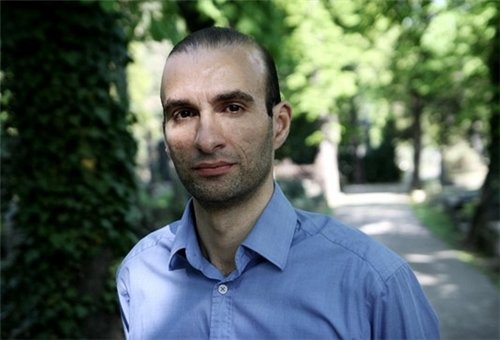
TEHRAN-Professor Arshin Adib-Moghaddam, Chair of the Centre for Iranian Studies at the London Middle East Institute believes that “UK is entangled in the Brexit imbroglio and does not have a coherent strategy for its policies in the Persian Gulf because of that.”
Professor in Global Thought and Comparative Philosophies and Chair of the Centre for Iranian Studies at the London Middle East Institute, also adds that “The security architecture for the Persian Gulf can only be inclusive.”
Here is the full text of the interview:
Q: The United States has spoken about new military coalition in the Persian Gulf. What is the purpose of this coalition?
A: The purpose is to pool the limited resources available and to continue to outsource safeguarding the interests of the US state, to compliant and dependent regional actors. On the other side, Iran has missed the opportunity to be seen as a progressive, reforming country that appreciates and safeguards the civil rights of its citizen, which is why it is that much more easier for the US state and others to contain and blackmail the country. 
Q: Another plan for Persian Gulf security order in recent days suggested by England. France announced that will join to this coalition and Germany is not clear until now. Why England suggest this plan without participation of U.S.?
A: There is a lot of speculation about these measures at the moment. The UK is entangled in the Brexit imbroglio and does not have a coherent strategy for its policies in the Persian Gulf because of that. 
Q: Another Plan for Persian Gulf security order is Russian plan that is close to Iranian plan for Persian Gulf. In Russian plan the trans- regional powers just have the supervisory role in the security of the Persian Gulf instead of interferer role. How much this plan is practical at this time?
A: It’s impractical because the US and it’s allies will counteract it. The security architecture for the Persian Gulf can only be inclusive as I have set out in my research about the region. The blueprints are out there, but the politicians have proven to be inept in implementing them. 
Q: The Iranian plan for the Persian Gulf is based on making security by intra states. How much this plan is feasible now?
A: Iranian foreign policies will only be marginally successful as long as the country does not polish its image and in particular its human rights record. There needs to be a process of national reconciliation, a new dialogue between Iranians at home and abroad in order to signal to the world that Iran is a responsible state that respects the value of human life; that the message of the revolution is not tantamount to hypocrisy and populist propaganda. 
Q: After 16 years, American troops returned to Saudi Arabia.   What does this issue effect on the security situation in the region?
A: First, this is an admission of the incapacity of the Saudi state to safeguard both its own security and independence, even after the multibillion investments into the national army. It is also a sign of US scepticism that Saudi Arabia can sustain itself in terms of security.

Saturday, August 31, 2019

From the perspective of China, Iran is a major partner: Adib-Moghaddam

By Javad Heirannia

TEHRAN-Professor Arshin Adib-Moghaddam, Chair of the Centre for Iranian Studies at the London Middle East Institute believes that “From the perspective of China, Iran is a major partner, not only in terms of hydrocarbon imports, but also because of a comparable strategic vision of a multipolar world order and a new EurAsian century which is behind the One Belt initative.”
Professor in Global Thought and Comparative Philosophies and Chair of the Centre for Iranian Studies at the London Middle East Institute, also adds that “Hence, China will try to facilitate any type of trade with Iran, whenever possible.”
Here is the full text of the interview:
Q: We have recently witnessed the resignation of German Designated head of Europe-Iran trade entity (INSTEX). In this regard, the long overdue implementation mechanism will be postponed again. Don’t you think that the resignation happened so that the Europeans can buy enough time?
A: I think the European Union has a genuine interest in keeping the JCPOA alive and INSTEX has been an important mechanism to that end, despite its flaws in terms of the financial incentives for Iran. Indeed, what we are witnessing is a firm EU-centred stance on the Iran file, which is what we have advocated for a long time. The EU needs to work in accordacne with its own interests, rather than following what every US administration says. This seems to be happening now, and Iran is a major object of that new orientation in international politics. Of course, Iran needs to keep its side of the bargain to make that diplomacy work.
Q: Is it possible that the special purpose vehicle for trade with Iran goes behind commercial export of pharmaceutical, medical devices and agri-food goods and covers oil trade? As you know Al-Monitor cited three anonymous sources as saying French President Emmanuel Macron had raised the establishment of a $15 billion credit line.
A: The details can only be worked out, once INSTEX is operative. President Macron has pursued important diplomatic initiatives, and as he has an interest in safeguarding the JCPOA, as indicated, he will try everything possible to that end.
Q:  How do you evaluate the future of INSTEX as the US has threatened to put sanctions on foreign companies if it goes behind food and medical supplies?
A: The ability of the United States to enforce these sanctions is questionable. In general, Iran should not overestimate US power which is waning pretty much all over the world, not least because of the misguided policies of the Trump administration. This is a fact and easily discernable for scholars of global history and world politics.
Q: US extended Iran nuke sanction waivers for 90 days. What are the reasons behind this decision?
A: The inability to enforce sanctions as indicated. Current US policies towards Iran must be interpreted as a marketing ploy. Once one looks through the advertisement, the mediocrity of the displayed product becomes visibile.
Q: Iran’s Arak reactor renovation is China’s responsibility. But if chines want to import the redesigning equipments (from Europe), they do need more time. It seems that 90 day wavers will reduce China’s power of risk taking and prevent it from doing the commitments. Do you think that Beijing will take the risk?
A: Again, I would analyse the specific policies within the wider framework of strategy. From the perspective of China, Iran is a major partner, not only in terms of hydrocarbon imports, but also because of a comparable strategic vision of a multipolar world order and a new EurAsian century which is behind the One Belt initative. Hence, China will try to facilitate any type of trade with Iran, whenever possible. I think the commitment to the Arak reactor is a part of that approach.

Monday, April 08, 2019

‘People of the region yearn for democracy, human rights and social equality’

By Javad Heirannia
TEHRAN - Professor Arshin Adib-Moghaddam, Chair of the Centre for Iranian Studies at the London Middle East Institute believes that “The people of the region yearn for democracy, human rights and social equality.”
Professor in Global Thought and Comparative Philosophies and Chair of the Centre for Iranian Studies at the London Middle East Institute, also adds that “The Islamic revolution spoke to those themes and made them realisable in Iran.”
He says that “The Arab revolts galvanised these sentiments further and as we speak, mass protests in Algiers are spreading in what may become a second Arab spring.”
Here is the full text of the interview:
Q: What was the most important event in the Middle East in the last Iranian year and why?
A: Allow me to congratulate all Iranians and everyone who celebrates Nowrouz as a global festival in the name of universal sentiments such as empathy, humanity, and love.
I deem the most important event in West Asia and North Africa the absence of decent human rights standards. I am choosing this theme because, in this Iranian year, the Islamic Republic of Iran turned 40. As such, the Iranian state has ruled the country for the longest continuous period compared to any other state in the modern history of the country. The revolution, then, was a pivotal event, not only for Iran but for the whole world. And yet, after 40 years, the demands of the revolutionaries for “esteghlal” (freedom) have not been met. I think we can all agree on that, without any unnecessary hysteria. The people of the region yearn for democracy, human rights, and social equality. The Islamic revolution spoke to those themes and made them realisable in Iran.
 The Arab revolts galvanised these sentiments further and as we speak, mass protests in Algiers are spreading in what may become a second Arab spring. The point being that people want their freedoms from political control and authoritarianism. West Asia and North Africa remain the only region in the world, where the majority of countries are ruled in an authoritarian fashion. Other areas such as South America have moved from revolution to normalisation in a much more effective way.
 Cubans, for instance, just had the opportunity to revise their constitution which they overwhelmingly voted for (see below). The constitutional amendments are substantial in terms of the rights that they grant. In Iran, such movements towards reconciliation will have to be systematically pursued in the near future as well.
Q: What was the most important event in the North America and why?
A: The aforementioned constitutional vote in Cuba. It was adopted by 91% of Cubans and it has enshrined several fundamental laws: It limits the Cuban presidency to two consecutive five-year terms, protects private property and foreign investment, pluralised the political system by reintroducing the position of Prime Minister and bans discrimination on the basis of gender, race, ethnicity, sexual orientation, gender identity, and disability. The brother of Fidel Castro, Raul Castro, was a big champion of this immensely important development in Cuba’s post-revolutionary history.
 Cuba did it without compromising the independence of the country from interventions by external powers, in particular, the Trump administration. In fact, the Cuban state seems by far more secure now, than it ever was. A rights-based approach to governance, political science teaches us, extend the sovereignty of the state because it deepens its popular legitimacy.  
Q: What was the most important event in the Asia and why?
A: The further entrenchment of the Regional Comprehensive Economic Partnership (RCEP) which is a proposed free trade agreement between the ten member states of the Association of Southeast Asian Nations and the six Asia-Pacific states with which ASEAN has existing free trade agreements. I consider this event pivotal because it further galvanises China’s march to a great power status and a major center in an emergent multipolar international system. I expect that in the next Persian New Year the institutionalisation of the RCEP will continue apace. If this free trade area will be realised, China will be at the center of the most powerful economic zone in the world.  
Q: What was the most important event in Europe and why?
A: For me the most important event in Europe was the death of Karl Lagerfeld who was from my home town, Hamburg. He was a true genius - the last doyen of a generation of fashion designers that created a new form of aesthetics that will not reappear in this shape and form ever again.  
Q: Do you think that polarity of the international system will change in the near future?
A: We have entered a multipolar order that will continue to develop away from the United States towards Asia and to a lesser extent Latin America. Russia, China, and the European Union will entrench their positions as major poles in this newly constituted international system.  The fate of Iran will depend on the ability of the ruling elites to serve as a model for surrounding states which will require freeing up the political and social system.

Monday, February 18, 2019

U.S. will never tolerate independent countries: Adib-Moghaddam

By Payman Yazdani

TEHRAN - Commenting on the U.S. policy towards Venezuela, Professor Arshin Adib-Moghaddam says This has been the aim of successive U.S. governments to roll back the Boliviarian revolution that is the paradigm of independence for Latin America.
The U.S. President Donald Trump couple of weeks ago announced that he is recognizing Venezuelan opposition leader Juan Guaido as the legitimate president of Venezuela.
Trump also urged other governments to recognize Guaido, adding that he "will continue to use the full weight of United States economic and diplomatic power to press for the restoration of Venezuelan democracy." 
Recent developments in Venezuela was discussed with Professor Arshin Adib-Moghaddam, Chair of the Centre for Iranian Studies at the London Middle East Institute. 
Here is the full text of our interview with him:
Q: How do you see the U.S. role in creating economic crisis in Venezuela?
A: There are several factors to be considered, but the most important one is the price of oil. The Trump administration lobbied Saudi Arabia very hard to keep the price of oil down, not least to put pressure on countries such as Iran and Venezuela. The Venezuelan economy is largely dependent on oil. After years of social empowerment programs instituted by Hugo Chavez, the government simply ran out of money. The Trump administration intensified its economic war against Venezuelans when it sanctions its economy at the height of the crisis. It is ironic, given that this President has used the most disgraceful and brute profanities to describe Mexicans and other Latin Americans, whom he intends to keep out of the United States by building a wall, which is a good metaphor for the closed-mindedness of this administration, certainly the most uneducated one in the history of the country. 
Q: What are the reasons behind the U.S. hostile policy towards Maduro's government? And what is the importance of the country for the U.S. foreign policy?
 
A: At the heart of the stand-off is a politico-ideological factor, as the deep structure of world politics is constituted by a war of ideas. This is the trigger that makes everything else possible, i.e. when you can subvert the ideational system of a country and re-code its institutions and political culture in accordance with what can be safely called a paradigm of dominance and one-sided hegemony, then the results are long term and strategic. This has been the aim of successive U.S. governments, i.e. to roll back the Bolivarian revolution that is the paradigm of independence for Latin America which grew out of the Cuban revolution and which is hinged upon a rich and deep political culture, from Simon Bolivar to the legendary Cuban poet Jose Marti. This is very similar to the independence drive that emerged out of the Iranian revolution and it explains the hostility of the U.S. state to Iran. The similar calculus works for Venezuela and the rest of free and independent Latin America. The message is clear: The U.S. state will not tolerate independence, even when Venezuela continues to supply the United States with oil. 
 
Q: How do you see the possibility of the U.S. military intervention in the country?
A: This is the fascinating and pivotal part that U.S. decision-makers don’t seem to grasp: The world order has radically changed and the U.S. is only one among many players. There is Russia, which has made it clear that any military intervention in Venezuela would provoke a response from Moscow. There is China which would easily veto any UNSC resolutions endangering the sovereignty and territorial integrity of Venezuela. And there is Turkey, the close NATO ally of the United States which has reconfirmed the legitimacy of Nicola Maduro in strict opposition to the Trump administration. So there is not much the United States can do in terms of inciting a coup d’etat or a military intervention, exactly because of that multipolar world order which is distinctly non-American these days. The country and its subservient allies have been on the wrong side of history too many times, in Iraq, in Syria, In Lebanon in East Asia, in Latin America etc. 
 
Q: The U.S. has recognized the parliament's head as the country's president. Is this leagal based on international law and norms?
 
A: The Trump administration has repeatedly contravened international law and this is another example. This President adheres to the law of anarchy, kill or be killed, a distinctly aggressive mentality that is devoid of diplomatic acumen and cultural empathy. President Nicolas Maduro has been elected as the President of Venezuela. Democracy requires patience. Venezuelans will have the opportunity to change their government after the next elections. It is another tragic irony that the self-proclaimed “leader of the free world” once again betrays all the ideals that it trumpets to the rest of the world with such cacophonic and annoying hysteria that it lacks any semblance with reason and rationality.