Showing posts with label Federica Mogherini. Show all posts

Sunday, September 01, 2019

Helsinki Summit underscores preservation of JCPOA, strengthening Persian Gulf security

Helsinki Summit underscores preservation of JCPOA, strengthening Persian Gulf security

Tehran, Aug 31, IRNA - Two-day meeting of European Foreign Ministers in the final statement of the summit reaffirmed the preservation of Iran's nuclear agreement (JCPOA) and enhancing maritime shipping safety in the Persian Gulf.
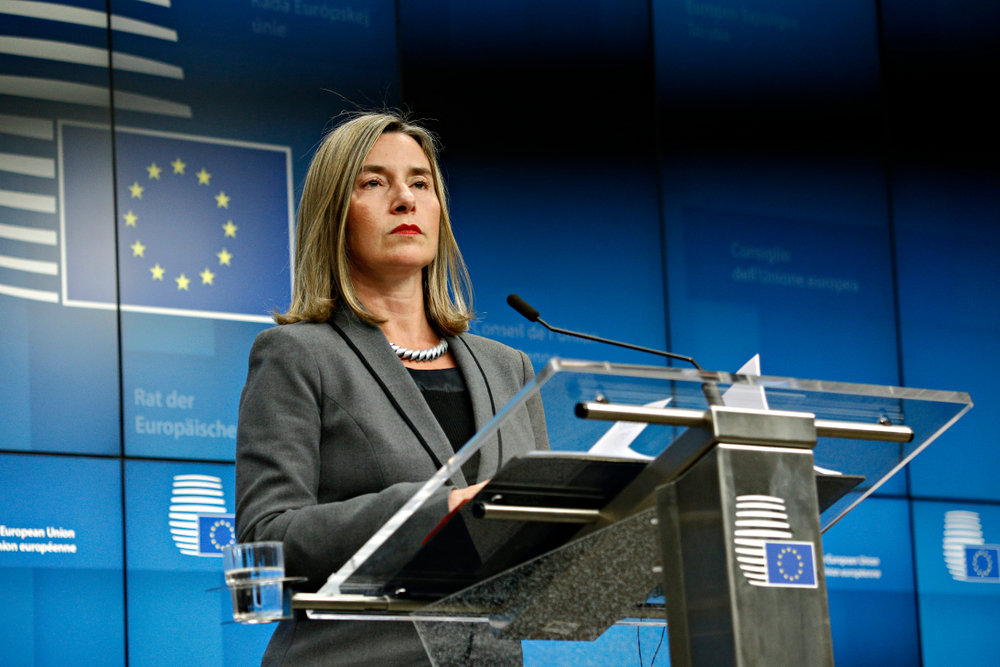
The meeting was held on Thursday and Friday in the Finnish capital Helsinki, and the EU foreign policy chief Federica Mogherini said that Europe while continuing its efforts to maintain 2015 JCPOA agreement between world powers and Iran, also welcomed any progress beyond Iran's preservation.
Mogherini noted that her job was to protect the full implementation of the existing agreements, but the EU welcomed further measures if they were to be taken on the basis of the JCPOA and completion.
German Foreign Minister Haiku Maas also said on Friday after the meeting of the EU foreign ministers in Finland that Brussels would continue its efforts to maintain the nuclear deal with Iran.
Speaking after talks with his French and British counterparts in Helsinki, Finland, Maas went on to say that Europe would step up diplomatic efforts to maintain the nuclear deal.
Speaking to reporters, British Foreign Secretary Dominic Raab said the EU foreign ministers at the Helsinki summit called for maintaining Iran's nuclear deal and safeguarding the Persian Gulf commercial waterway.
Raab also said that the European countries were working together to persuade Iran to continue its presence in the agreement.
"We are trying to implement the provisions of the JCPOA and the diplomatic dialogue with Iran is of particular importance and priority for the European Union," said Belgian Foreign Minister Didier Reynders in Helsinki on Friday.
"We are concerned about security and the freedom of shipping and we are trying to enforce the provisions of the JCPOA," Reynders noted. Finding ways to guarantee the freedom of shipping in the region and at the same time working with Iran to implement the nuclear deal properly is our priority, the diplomat highlighted.
The Foreign Ministers of Britain, France and Germany met on Friday in a meeting in the Finnish capital, Helsinki, to discuss ways to maintain the nuclear deal with Iran.
Mogherini and the European signatories of the JCPOA (England, Germany and France) in the meeting held shortly after the Group of 7 summit in Biarritz of France discussed the issues raised during their meeting with the leaders of these countries.
However, Iran has warned that in the case of European inaction, it will take a third step to reduce its nuclear commitments by September 6. Without acceptable practical action, European countries urge Iran to continue to abide by its commitments. German Foreign Minister Haiku Maas has called on Iran to put the easing of tensions in the region on its agenda.
The United States unilaterally withdrew from the nuclear deal in 2018 to force Iran to change its foreign policy approach with maximum pressure. But these economic sanctions and Washington's pressure have fueled tensions between the two countries which its consequences are recent months' developments in the Strait of Hormuz and the Persian Gulf.

Saturday, August 03, 2019

Mogherini's Adviser: EU Will Continue Efforts to Save JCPOA despite US Ban on Zarif

TEHRAN (Tasnim) – A special adviser to European Union foreign policy chief Federica Mogherini described the Trump administration’s move to sanction Iran’s Foreign Minister Mohammad Javad Zarif as “paradoxical”, noting that it will not affect Europe’s efforts aimed at saving the JCPOA.

“Sanctions on individuals are of course part of the foreign policy toolbox. But to sanction a diplomat, in fact, the top diplomat, of a country certainly is not the diplomatic norm,” Nathalie Tocci told the Tasnim News Agency on Thursday.
She added that Europe will continue its work to salvage the 2015 nuclear deal between Tehran and world powers regardless of the US decision.
Nathalie Tocci is Director of the Istituto Affari Internazionali, Honorary Professor at the University of Tübingen, and Special Adviser to EU HRVP Federica Mogherini, on behalf of whom she wrote the European Global Strategy and is now working on its implementation, notably in the field of security and defense. Previously, she held research positions at the Centre for European Policy Studies, Brussels, the Transatlantic Academy, Washington and the Robert Schuman Centre for Advanced Studies, Florence.
Her research interests include European foreign policy, conflict resolution, the Middle East and the Mediterranean. Her major publications include: Framing the EU's Global Strategy, Springer-Palgrave Macmillan, 2017 (author); The EU, Promoting Regional Integration, and Conflict Resolution, Springer-Palgrave Macmillan, 2017 (co-editor);  Turkey and the European Union, Palgrave Macmillan, 2015 (co-author); Multilateralism in the 21st Century, Routledge, 2013 (co-editor), Turkey’s European Future: Behind the Scenes of America’s Influence on EU-Turkey Relations, New York University Press, 2011 (author); and The EU and Conflict Resolution, Routledge, 2007 (author). Nathalie is the 2008 winner of the Anna Lindh award for the study of European Foreign Policy.
Following is the full text of the interview.
Tasnim: The US Department of the Treasury’s Office of Foreign Assets Control (OFAC) has imposed sanctions on Iranian Foreign Minister Mohammad Javad Zarif. What is your take on the move? Is it a diplomatic norm?
Tocci: Sanctions on individuals are of course part of the foreign policy toolbox. But to sanction a diplomat, in fact, the top diplomat, of a country certainly is not the diplomatic norm. Diplomacy is most needed when there are problems, conflicts or tensions to solve and address, and there are plenty of these between the US and Iran. To sanction the Iranian foreign minister is paradoxical, to say the least.
Tasnim: According to a statement by OFAC, Zarif continues to “spread the regime’s propaganda and disinformation around the world through these mediums.” What do you think?
Tocci: There are different views of Iran’s role in the world, and it is well known that the US administration’s views are very negative. But it is difficult to dispute the fact that part of a foreign minister’s job description is to promote through different communication mediums the positions and opinions of its government.
Tasnim: Following the announcement, Zarif took to Twitter and said, “The US' reason for designating me is that I am Iran's ‘primary spokesperson around the world’. Is the truth really that painful?” What are your thoughts on this?
Tocci: That indeed a foreign minister is the primary spokesperson of its government in the world. This is what the job is all about.
Tasnim: Is the move consistent with the Trump administration’s claims about its willingness to talk with Iran?
Tocci: Extremely difficult to see how it can be.
Tasnim: What implications may the move have for Europe since the EU is making every attempt to preserve the JCPOA?
Tocci: Not many, in fact, I don’t see why it should have any repercussions on European efforts to save the JCPOA. This work, hard as it is, will continue regardless.

Saturday, July 20, 2019

The European Union And The Threat Of A U.S.-Iran Conflict

Federica Mogherini (Alexandros Michailidis via Shutterstock)
by Eldar Mamedov
On July 16, the European Parliament debated the “Situation in the Persian Gulf” with the European Union’s High Representative for foreign policy, Federica Mogherini. The fact that the item was among the first on the foreign policy agenda of the newly-elected assembly testifies to the concern the representatives of the European peoples feel about the escalating tensions in the region. Also, remarkably, the title of the debate referred to the “Persian Gulf” rather than simply “Gulf”, as is customary in official Euro-speak. This may seem like a trivial detail, but, in the context of a burgeoning effort to delegitimise Iran’s presence in the region—consisting, among other things, in promoting the concept of the “Arabian Gulf”—getting the title right was symbolically meaningful.
With such a broadly defined title, there was a range of choices as to how to frame the debate politically. No written resolution was adopted to wind down the debate, but it was a worthwhile exercise to get an early indication of where the new Parliament stands on Iran.
The sense one got from the discussion was one of continuity of a broadly pro-engagement line, defended by Mogherini and the EU member states. True, right-wing forces, represented by the Saudi-friendly European Conservatives and Reformists (ECR), which include such parties as Poland’s national-populist Law and Order and the Mojahedeen-e Khalk (MEK)-funded Spanish extreme right Vox, sought to condemn Iran for its “illegal” nuclear program and “obstruction” of the freedom of navigation in the Persian Gulf. ECR, however, was weakened after the elections—it used to be the third-largest political bloc in the EP, and now it’s only sixth. The debate, instead of centering on Iranian “nefarious activities” as the ECR would have wished, focused on EU efforts to save the 2015 nuclear agreement (Join Comprehensive Plan of Action or JCPOA) and the urgent need for regional de-escalation.
Mogherini set the tone, by framing, once again, the survival of the JCPOA as a key European security interest and an achievement of multilateral diplomacy worth preserving. She expressed concern about the latest Iranian steps to increase its stockpiles of low enriched uranium (LEU) and the level of enrichment, but stressed that these steps are reversible as long as the JCPOA can be saved. Following the Joint Commission of the JCPOA meeting on June 28 in Vienna, experts discussed ways to allow Iran to export its excess LEU and heavy water stockpiles. On INSTEX, a special trade mechanism devised to facilitate trade with Iran, Mogherini said that its first operations were already processed, and more EU member states expressed interest in joining Britain, Germany and France as its shareholders.
Mogherini fully backed the efforts of players like Iraq and Kuwait to lower regional tensions, particularly the Iraqi idea of an international conference on the U.S.-Iran conflict. Asked by a member of the European Parliament whether the EU would support regime change in Iran, she categorically ruled it out by reaffirming “respect for internal political dynamics inside the country”.
Significantly, the debate in the Parliament took place a day after the EU foreign ministers meeting in Brussels, so Mogherini spoke with the authority that the backing of the 28 EU member states gives her. Focus on saving the JCPOA and regional de-escalation shows that, despite the U.S. “maximum pressure” campaign against Iran, the Europeans, mostly, hold to their view that the underlying cause of recent tensions in the Persian Gulf area is not Iranian mischief, but Donald Trump’s decision to violate the JCPOA. 
The overall tone of the parliamentary debate only reinforced this impression. Most MEPs, across the political spectrum, were highly critical of unilateral and extraterritorial U.S. sanctions and demanded stronger European action in defending European security and economic interests. Speaking of the region, some recalled Saudi Arabian policies in Yemen and Western arms sales to the kingdom as, at the very least, equally destabilizing as Iran’s actions. In this context, MEPs called on the EU to promote Saudi-Iranian dialogue as a prerequisite for lowering tensions.
Although the fate of the JCPOA will ultimately not be decided in the European Parliament, the debate was indicative of where the European sentiment lies on the matter. The political message was unmistakeable: the EU, both collectively and on national levels, should step up its game to save the nuclear agreement with Iran in order to avoid a war in Europe’s neighbourhood.
avatar

ELDAR MAMEDOV

Eldar Mamedov has degrees from the University of Latvia and the Diplomatic School in Madrid, Spain. He has worked in the Ministry of Foreign Affairs of Latvia and as a diplomat in Latvian embassies in Washington D.C. and Madrid. Since 2007, Mamedov has served as a political adviser for the social-democrats in the Foreign Affairs Committee of the European Parliament (EP) and is in charge of the EP delegations for inter-parliamentary relations with Iran, Iraq, the Arabian Peninsula, and Mashreq.

Monday, July 15, 2019

Details of Mogherini’s trip to Baghdad: Iraq’s clear messages about Iran

By Ramin Hossein Abadian

TEHRAN - Federica Mogherini, the high representative of the European Union for Foreign Affairs and Security Policy, heading a diplomatic delegation, arrived in Baghdad on Saturday. This was Mogherini’s first trip to Iraq since 2014. 
Over her trip to Iraq, Mogherini visited top Iraqi officials including President Barham Salih. 
Over the meeting, the two sides discussed recent events in the Middle East and methods to develop mutual relationships. After the meeting, the Iraqi Presidency released a statement. 
According to the statement, “in his meeting with Mogherini, the Iraqi President highlighted the importance of coordination and collaboration in order to address the current issues in the region.” 
The statement added, “The Iraqi and European sides agreed that there should be joint plans and cooperation for saving the region from war and conflicts.” 
During her trip, Mogherini also met Iraqi Foreign Minister Mohamed A. Alhakim and Prime Minister Adil Abdul-Mahdi. Over these meetings, the two sides talked about expanding their relationships. 
Obviously, the visit of a European Union high representative to Iraq is a critical event in the current situation; the tension rises as the United States ramp up sanctions against Iran and the western countries refuse to fulfil the commitments they made in their nuclear deal with Iran. 
Anyway, a closer look at the details of the trip and the subjects discussed over the meetings reveal that Iraq delivered some clear messages about Iran to the Europeans. 
One of these messages was the emphasis of Iraqi top officials that they will not give permission to any country to use Iraq’s territory for running operations against its neighboring countries. 
The firm response of Iraqi officials to European Union representatives is quite meaningful because U.S., as the main partner and ally of EU has always been determined to use Iraq’s land for running plans against Iran. 
For example, just a few months ago, Donald Trump talked about how the American forces observe Iran’s activates through Iraq. 
Another message was that Iraq is going to adopt a balanced foreign policy. In his meeting with Mogherini, Iraqi Prime Minister Adil Abdul-Mahdi said “the current government of Iraq pursues a balanced foreign policy and good relations will all its neighbors.” 
By making these statements, the Iraqi officials are actually telling the westerners that they cannot sabotage their relationship with their neighbors, and particularly Iran, in order to develop their ties with U.S. and Europe. 
These messages show that the efforts of the west for damaging the relations of Iraq and Iran have been fruitless and the Iraqi officials don’t intend to reduce their economic or diplomatic relations with Tehran, despite the constant pressures from the West. 
Over this trip, Mogherini and other officials in the West realized that Iraq has no intention to follow in the footsteps of some other countries in the Middle East such as Saudi Arabia, United Arab Emirates (UAE) and Bahrain who played a destructive and negative role in the region and exacerbated the tensions; in other words, U.S. and the West cannot depend on Iraq to follow the same destructive policy. 
Iraqi officials are adamant to stay away from the ominous triangle of the Saudi Arabia, UAE, and Bahrain, but the western countries and specially U.S. have always done all they could to drag Iraq into regional tensions; however, up to now, their plans have been unsuccessful as Iraq has stayed firm on its policy to avoid rising up tensions.  
Clearly, Mogherini has received Iraq’s clear messages regarding Iran and will deliver this information to U.S. who is their ally and close partner. 

Monday, July 08, 2019

EU may be a sweet-talker, but it’s full of empty promises

BY: Ebrahim Fallahi

It was more than a year ago when U.S. President Donald Trump formally pulled the United States out of the nuclear deal that was struck between Iran and world powers in July 2015.
Trump decision received waves of criticism from other signatories of the deal, namely China, France, Germany, Russia, the United Kingdom and the European Union.
In January 2019, France, Germany and Britain (known as the E3) introduced an Instrument in Support of Trade Exchanges (INSTEX) which was meant to facilitate legitimate trade between European economic operators and Iran in order to convince Iran to stay in the 2015 nuclear deal.
Shortly after Europe’s announcement, welcoming the idea, on March 20, Central Bank of Iran (CBI)’s Governor Abdolnaser Hemmati announced that a mechanism similar to INSTEX has been registered in Iran, officially called the Special Trade and Finance Institute (STFI).
STFI was established to ease INSTEX implementation and at the time, Iranian government announced that Iran has no problem with getting the Europe’s financial instrument operational any time that Europeans decided make INSTEX operational.
Since then, several rounds of talks were held and hundreds of hours of discussion were done on the subject. The Europe claimed many times that “the mechanism will be operational soon”, however so far the EU claims have been no more than a bunch of empty promises.
The Europeans’ repeated false promises finally worn Iran’s patience thin, so that on Sunday, Iran officially announced it will take the second step in reducing its commitments to the JCPOA, as the deadline Tehran set for the Europeans to protect Tehran against the U.S. sanctions ended on July 7.
The long road to INSTEX
In the last day of January 2019, French Foreign Minister Jean-Yves Le Drian, German Foreign Minister Heiko Maas, and British Foreign Secretary Jeremy Hunt introduced the SPV (a special purpose vehicle) also called INSTEX (Instrument in Support of Trade Exchanges) in a joint statement.
A mechanism which was claimed would enable Iran to keep doing business with the rest of the world despite the sanctions imposed by the Trump administration.
Registered in France and run by a German banker, INSTEX was financed jointly by the E3. It is in accordance with E3 resolute commitment and continued efforts to preserve the JCPOA endorsed by United Nations Security Council resolution 2231.
According to the initial statements, the European side intended to use the channel initially only to sell food, medicine and medical devices in Iran. However, it claimed that it will be possible to expand it in the future.
Immediately after the news on establishment of the INSTEX, the Trump administration warned the European Union against trying to sidestep sanctions on Iran.
In late January, the U.S. State Department said it was "closely following" reports on the European mechanism.
EU Foreign Policy chief Federica Mogherini, on the other hand welcomed the registration of the SPV. 
Implementation of the mechanism
Nearly six months after the first negotiations on the INSTEX started in Europe, in late June Mogherini announced that INSTEX has become operational and is processing the first transactions.
“Together with the three countries that set it up – France, Germany and the UK – another seven European countries will join the mechanism. On Friday (June 28) we also gathered the Joint Commission that works to guarantee the deal’s implementation,” she said in an announcement published on her website on June 29.
In a joint statement earlier on the same day, Austria, Belgium, Finland, the Netherlands, Slovenia, Spain and Sweden, also said they were working with the E3 to develop trade mechanisms.
The announcement came after Iran whose two-month ultimatum for the EU was reaching its end, threatened to take new steps in reducing its commitments under the 2015 nuclear deal “more strongly”.
In early May, Iran's Supreme National Council (SNSC) declared Tehran's exit from "certain" obligations under the landmark 2015 agreement and gave a 60-day deadline to JCPOA signatories to protect Iran's interests against U.S. sanctions, or it will restart high-level uranium enrichment.
All words and no actions
More than a week has passed after the European side of the nuclear deal gathered in Vienna to celebrate the news of INSTEX going operational, but there is still no sign of any real transaction being conducted through INSTEX.
On Sunday, with the 60-day deadline to JCPOA signatories ending, Ali Rabiee, the government’s spokesperson, announced that Iran will take the second step in reducing its commitments to the JCPOA.
“As of today, our uranium enrichment will surpass the current 3.67 percent and enriching to further purity will be based on our needs,” he said in an official statement.
Last week, Kamal Kharrazi, chairman of Iran's Strategic Council on Foreign Relations, had warned that INSTEX does not go further than a "claim" and Iran would leave the JCPOA if the situation didn’t change.
Kharrazi, who was Iran’s chief diplomat from 1997 to 2005, said there were no definitive assessments of the Vienna meeting, but with only several millions of euros of credit that the Europeans had allocated to INSTEX, business would definitely be impossible.
Clearly the Europe needs far more time than only six months to figure out a way to realize their promises (if they are to be even realized!!).
With Iran’s announcement on Sunday, we should wait and see what the EU’s reaction would be. Would they finally go through with their promises?! 

Wednesday, April 24, 2019

UN rights boss condemns mass executions by Saudi Arabia

The United Nations human rights chief has condemned the recent mass execution of nearly 40 people in a single day across Saudi Arabia, as a crackdown led by Crown Prince Mohammed bin Salman against dissidents widens in the kingdom.
UN High Commissioner for Human Rights Michelle Bachelet said in a statement issued in Geneva on Wednesday that most of those beheaded were minority Shia Muslims. She also voiced concern about a lack of due process and fair trial in the kingdom amid allegations that confessions were obtained through torture.
"It is particularly abhorrent that at least three of those killed were minors at the time of their sentencing," Bachelet said.
Elsewhere in the statement, she called on Saudi authorities to review counterterrorism legislation and halt pending executions.
Earlier on Tuesday, the Saudi Interior Ministry said in a statement carried by state-run media that it had put 37 citizens to death for their alleged "adoption of extremist, terrorist ideology and forming terrorist cells to corrupt and disturb security, spread chaos and cause sectarian discord."
Reports said the beheaded body of one of the victims, Khaled bin Abdel Karim al-Tuwaijri, was attached to a pole for several hours. 
Adam Coogle, who monitors Saudi Arabia for Human Rights Watch, said at least 33 of those executed were Saudi Shias, noting that some of the victims had been convicted based on confessions made under torture.
Also on Tuesday, Amnesty International slammed the executions, saying that the victims had been convicted "after sham trials," which relied on "confessions extracted through torture."
The rights body stated that 14 of those executed had participated in anti-government protests in the kingdom's oil-rich Eastern Province in 2011-2012. It also said one of them, Abdulkareem al-Hawaj, was arrested when he was 16, making his execution a "flagrant violation of international law."
The European Union foreign policy chief, Federica Mogherini, said the executions heightened doubts about respect for the right to a fair trial in Saudi Arabia and could fuel sectarian violence.
The mass execution is the largest in Saudi Arabia since January 2016, when 47 men were executed in a single day, including outspoken Shia religious scholar Sheikh Nimr Baqir al-Nimr.

Saturday, April 06, 2019

US unsuccessful attempts to isolate Iran

Tehran, April 6, IRNA - White House's efforts to put pressure on Tehran and Iran's isolation in 2018 did not succeed politically and just created economic problems for the Iranian people.

The White House's efforts to put pressure on Tehran and continue isolating Iran has failed politically since May 8, 2018 when the US left the Join Comprehensive Plan of Action (JCPOA).

As expected, after the American presidential election in 2016 and Donald Trump's entry into the White House, the relations between Tehran and Washington turned into darkness exponentially. The US’ withdrawal from the JCPOA as one of the most important achievements between Iran and the six world powers was the beginning of an increase in tensions between the two countries as well as the creation and deepening of the rift between the US and its longtime allies.

The report will review the most important issues between Iran and the US last year as well as the projects that the White House has managed to oppose Tehran.

** Increasing rift with Trump denial of JCPOA

In spite of the frequent opposition to Trump with JCPOA, however, he had to extend the suspension of Iran's nuclear sanctions three times, so that by imposing a series of changes in the cabinet, the platform was paved to exit the agreement. Among those changes were the use of John Bolton as senior White House adviser and selecting Mike Pomoeo as Secretary of State to replace Rex W. Tillerson.

On such occasions, Trump officially announced on 8 May that the country unilaterally abandoned the nuclear agreement with Iran; 'an agreement that had been the worst deal for the US over history'. Trump's decision was welcomed by the Israeli and Saudi officials and a few of Iran's enemies and rivals. In turn, other members of the agreement and international influential actors and bodies condemned the US measure and demanded that the US must return to an agreement that had been negotiated for more than a decade to achieve it.

Sanctions against Iran began in two phases as the US withdrew from the JCPOA. In the first round, the sanctions were enacted by Trump on June 5. The American president while signing sanctions decree against Iran, called the goal to 'import maximum economic pressure' on Iran. In this stage, sanctions hit the dollar, rial, gold and precious metals, as well as auto industry and aircraft sales to Iran.

The second round of sanctions, which began on November 4, included the oil industry, banking, navigation, insurance services and the Iranian energy sector. In the second round of sanctions known as 'secondary sanctions', individual and companies on the Iranian side of the deal were also included in the sanctions, while the United States was offering exemptions for eight countries.

** Policy of bringing to zero level export to threat of closing the Strait of Hormuz

To bring to zero level the oil exports, was the most important goal of the Trump team last year which White House officials had repeatedly pointed to it in their positions. The creation of a new entity within the State Department's structure entitled 'Iran Action Group' led by Brian Hook was in this regard to pave the way for the resumption of Iranian oil and banking sanctions.

Hook said on Monday, October 16, in Luxemburg that the goal of the government of Donald Trump, was to cut off Iran's oil exports as quickly as possible, adding that we are working with countries that reduce their imports to make sure that this is happening. Also, the head of Iran's action group on trips to countries close to the United States tried to align them with US policies, which despite the fact that Iran's exports reduced Iran's oil by about half, but the granting of US exemption for eight countries of Japan, India, South Korea, China, Turkey, Taiwan, Italy, and Greece have been a failure for the White House in pursuit of zeroing Iran's oil exports. 

Of course, in retreat of the US from this project, the positions of the officials of our country affected the withdrawal of the United States. For example, President Hassan Rouhani on Tuesday, December 4, in a speech in Shahroud which was broadcast live on Iran television, said, 'The US will know that we will sell our oil. It cannot stop Iranian oil exports. If the US wants to stop Iranian oil exports, oil will not be exported from the Persian Gulf.' In response to the White House tactic on zeroing Iran's oil exports, the president added that the Strait of Hormuz was to be closed to oil tankers of other states.

** Tactic of squeezing Iran from Security Council

Due to its veto power, the US is always benefiting from the United Nations Security Council to advance its policies, a trend that continued in the past year, but because of Trump’s exit of JCPOA and the US unilateralism, the White House's unusual way went nowhere. 

Last year, the United States, regard of Iran, typically pursued two topics of missile and regional movements of Iran through the Council. Despite the convergence between America and Europe on the above issues, they could not restrict Tehran. Even at a meeting of UN Security Council members in December 4 behind closed doors to address the issue of Iran's missile program, it did not end the issuance of a statement, let alone a resolution.

A few days before the meeting, the US Secretary of State announced a new missile test in Iran and assessed the tested missile with nuclear capability, which is considered a violation of Security Council Resolution 2231. Earlier, Brian Hook, the United States' special envoy on Iran, said during an interview with Reuters on Iran's missile program, stated that Europe should sanction Iran's missile program, adding, 'We want to see the adoption of sanctions by the European Union against the institutions and personalities that facilitate the testing and development of Iran's missile program. Such punitive measures usually include the prohibition of travel and the blocking of assets and the prevention of the financing of such weapons programs.'

** Failure of winning consensus against Iran 

In addition to the propaganda shows and moves that were taken last year by White House officials, Trump and his team, with Middle Eastern tours and an international summit, tried to isolate Iran. On the 8th of January last year, Pompeo traveled to eight countries in the Middle East, along with trips that Trump made to establish coalition against Tehran in the region, including Jordan, Egypt, the Emirates, Bahrain, Qatar, Saudi Arabia, Oman and Kuwait.

As expected, during this eight-day visit, Pompeo's political propaganda turned around Iranophobia, and the US Secretary of State was trying to make Iran a destabilizing element of the region and to act as a unifying force. 

Hence, he unveiled an international conference that was held in Poland on February 13-14, and was called the Warsaw Summit, which, although officials from nearly 60 countries were present, but influential international actors, including members of JCPOA dismissed Trump’s invitation. 

The EU Troika officials, and especially Federica Mogherini, were among the great absentee. At the same time, representatives of countries such as Iran, Turkey, Russia, China, etc. did not take part in the summit, so that Trump’ consensus making project was collapsed at the first stage.

Friday, March 01, 2019

Trump’s Anti-Iran Farce in Warsaw

Conference was a sounding board for warmongers against Iran


Waseem Shehzad
Donald Trump’s anti-Iran hate fest in drab Warsaw in the middle of winter (February 13–14) degenerated into total farce. While attended by representatives from some 60 countries, none of them was a major world player. Billed as a “ministerial summit” to discuss the “Future of Peace and Security in the Middle East,” it quickly degenerated into spewing hatred against Islamic Iran. Not surprisingly, Russia, China, the European Union (EU), Germany, and France were all absent. Only low-level bureaucrats represented them at the conference, if at all.
The EU Foreign Minister Federica Mogherini pointedly refused to attend saying the Warsaw gathering would undermine EU efforts to keep Iran in the nuclear deal. Other no shows included NATO member Turkey, Syria, Qatar, the Ansarallah of Yemen, Lebanon, and the Palestinians. Turkish President Recep Tayip Erdogan went to Sochi instead on February 14 to meet Russian President Vladimir Putin and Iranian President Hassan Ruhani to discuss the future of Syria. Turkey also announced that it would continue to buy Iranian oil under the normal process and would not abide by unilateral US sanctions.
So who attended the Warsaw conference? The US delegation comprised Vice President Mike Pence, Secretary of State Mike Pompeo (in the words of Simon Tisdall of the Guardian (February 15), “Whatever else he is, Pompeo is plainly no diplomat”), National Security Advisor John Bolton, and Trump’s son-in-law, Jared Kushner. Apart from Kushner who is Jewish, the others are Bible-thumping Evangelicals who passionately believe that all Jews will roast in Hell. Their job is to assemble them in Palestine as quickly as possible to pave the way for the second coming of Jesus!
The medieval Arabian potentates — dinosaurs heading for extinction — were also there to pledge subservience to the Zionist colonizers of Palestine. And Israeli Prime Minister Benjamin Netanyahu rubbed shoulders with and glad-handed the Arabian potentates all huddled around him like frightened mice. But Netanyahu is nothing if not arrogant. On February 15, his office released a secretly recorded video in which Arabian foreign ministers meeting in Warsaw (February 14) discussed distancing their regimes from the Palestinian issue and focusing instead on the “threat from Iran.” They emphasized that they needed US-Israeli help to confront the “greater danger” from Iran. The video was quickly withdrawn but it showed two things: the treacherous nature of the Arabian rulers, and Zionist arrogance.
Apart from long-winded speeches, the conference did not produce a joint declaration. If it was billed to reassert the US’ pre-eminent position in the Middle East, it pointedly failed. And it had nothing to do with “peace and security in the Middle East.” America is not a force for “moderation and good” in the world, as Pompeo pompously claimed.
Rudy Giuliani, who acts as Trump’s personal lawyer, was also in Warsaw and attended the meeting of the terrorist outfit, the Mujahideen-e Khalq Organization (MKO, better known as the munafiqin). The MKO terrorists applauded the terrorist attack on a bus carrying Iran’s Revolutionary Guards in Sistan-Baluchistan province on February 13, the opening day of the Warsaw conference. Giuliani was there when the MKO terrorists hailed fellow terrorists of an outfit calling itself Jaish al-Adl that carried out the attack, claiming the lives of 27 Revolutionary Guards and injuring 27 others. Iranian leaders blamed the “intelligence services of some neighboring countries.” Giuliani again openly called for regime change in Iran, as did the thick-moustached Bolton.
When the conference was first announced last November, Pompeo said it would ramp up pressure on Iran and isolate it further. The conference call was made in the wake of new sanctions against Iran that the Trump regime illegally imposed on Tehran. The first round of sanctions was announced when Trump walked out of the deal last May.
Reaction to the Warsaw conference was swift and negative. The Europeans were especially appalled at Trump’s brazen disregard for an international treaty that had been endorsed by the United Nations Security Council as well. Alarmed by the intensity of the reaction, the Americans backpedaled and renamed the conference, “Future of Peace and Security in the Middle East.” They rightly feared that few would attend, especially America’s European allies if the focus was too narrow. Despite the change of title, most saw through the ruse and refused to attend.
Israeli war criminal Benjamin Netanyahu shakes hands with Oman’s pusillanimous foreign minister, Yusuf bin ‘Alawi, on the sidelines of the US-sponsored conference in Warsaw to build a war coalition against Islamic Iran. Oman, Saudi Arabia, and the UAE, who do not formally recognize Israel, are getting ready for a Camp David déjà vu to affirm publicly what they have been surreptitiously concealing from their people for decades. In justifying his treachery, Bin ‘Alawi said, “People in the Middle East have suffered a lot because they have stuck to the past. Now we say, this is a new era, for the future.” In a video of a closed-door (secret) session during the conference, which was leaked by Netanyahu himself, Bahraini Foreign Minister Khalid bin Ahmad Al Khalifah was heard telling fellow delegates, “We grew up talking about the Palestine-Israel dispute as the most important issue… But then, at a later stage, we saw a bigger challenge, more toxic — in fact the most toxic in our modern history — which came from the Islamic Republic. If it wasn’t for the toxic money, guns, and foot soldiers of the Islamic Republic, I think that we would have been much closer today in solving this issue with Israel.” In interviews outside the conference venue, Netanyahu was openly calling for war against Iran, “This is an open meeting with representatives of leading Arab countries that are sitting down together with Israel in order to advance the common interest of war with Iran.”
If the purpose of the conference was to talk about the future of peace and security in the Middle East, it was strange to note that Syria, Yemen’s Ansarallah, and Lebanon or Iran were not invited. True, some of them would not have attended even if they were invited but the malevolent intent of the Americans was clear.
Far from affirming America’s role as the preeminent global power, the conference exposed deep fissures in the US-European alliance. These became even more glaring at the Munich security conference held on February 16 at which the German Chancellor Angela Merkel, the de facto leader of Europe, took aim at Trump’s go-it-alone policy. She rebuked Trump’s approach to treating allies as adversaries.
Merkel was blunt: the US-led global order “has collapsed into many tiny parts.” She said multilateralism, with all its complications, was better than isolationism. “Now that we see great pressure on the classic order we are used to, the question is: do we fall apart into pieces of a puzzle and think everyone can solve the question best for himself alone?” she said.
While the US has imposed new sanctions on Russia, Merkel defended the EU’s expansion of ties with Moscow, including plans for a new natural gas pipeline from Russia to Germany. She insisted Russia’s participation was needed to tackle global issues, and exclusion from talks was wrong. Merkel got an extended standing ovation for her forthright speech much to the chagrin of American officials including Ivanka Trump (the US president’s daughter), and a top advisor.
Mike Pence followed Merkel to the podium. The American vice president was given only tepid applause and greeted with gasps of disbelief and some incredulous looks when he proclaimed Trump “the leader of the free world.”
Latvian Foreign Minister Edgars Rinkevics best summed up the mood at Munich when he said, “It’s getting crazier and crazier. I don’t know what next year’s Munich will bring.”
Pence reiterated the US demand for European allies to follow Washington out of the Iran nuclear deal. Merkel retorted that she found the dispute between Europe and the United States on Iran “depressing.”
That just about sums it up.

Wednesday, February 20, 2019

Europe has not taken action to keep JCPOA

By Hnaif Ghaffari 

TEHRAN - European Union foreign policy chief Federica Mogherini recently announced that if there were no European efforts, the nuclear deal with Iran would be eliminated! It is claimed that, basically, the European Union has not yet taken a step towards maintaining a nuclear deal with Iran.
The fact is that the European Union is blamed for a nuclear deal with Iran. Donald Trump stepped at the White House in 2017. Theresa May, the British Prime Minister, was the first European official to travel to Washington to meet with the new president of the United States. During this visit, Trump informed Theresa May mind of his decision on "changing the nuclear deal".
 He emphasized that if the nuclear deal is not reviewed and redefined, the United States will no more remain as a part of it. It was during this visit and among American senators that Theresa May called the JCPOA a "controversial deal" for the first time since 2015. In this way, and indirectly, May announced her company with the United States for changing the JCPOA.
 Afterward, it was time for the French President, Emmanuel Macron to take part in the joint game of London and Washington. In July 2017, Macron assured Trump that he would do its best to include Iran's missile capability in the context of the nuclear deal, and thus limit the regional power of Iran.
 But Macron never imagined that he had practically turned to Trump's piece in his confrontation with Iran. In September 2017, and during the United Nations General Assembly meeting in New York, British and French officials were urged by the United States to attract Germany's positive stance to participate in the "West's joint effort to change the JCPOA." Angela Merkel, the German Chancellor, surrendered to her Western counterparts much earlier than expected.
 As a result, by mid-2017, talks between American and European diplomats on changing the nuclear deal entered a new phase. A deal in which diplomats from the United States, Germany, France, and Britain, worked on a common goal called "complementary" or "secondary" agreement aimed at achieving Trump's four demands.
The EU and, in particular, Germany, Britain, and France, have not taken the necessary steps to maintain a nuclear deal with Iran after eight months. Undoubtedly, people like Federica Mogherini, EU foreign policy chief, also believe in this. Now the "deceived Europe" is trying to maintain the nuclear deal with Iran. It seems that the European authorities don't intend to confess that they had been tricked by Trump right now. In this way, they're trying to keep their prestige, but they can't do it forever, and sooner or later, they will be forced to do so.
 Finally, Iran's patience on the European Union is coming to an end. The European Union continues to play its ground in the United States. This issue is never acceptable to Iran. If the European authorities take no serious action to secure Iran's rights in a nuclear deal, the possibility of our country's departure from this deal is very high.

Friday, October 12, 2018

EU punches the US in the face over trade with Iran

Wednesday, August 29, 2018

EU Aid for Iran Signals Decline of US Power: American Analyst


TEHRAN (Tasnim) – An American political analyst said a European Union decision to give $20.7 million in aid to Tehran indicates that “Europe is clearly breaking from the dominance of US economic and military power”.

EU Aid for Iran Signals Decline of US Power: American Analyst

“What is notable is that Europe is clearly breaking from the dominance of US economic and military power and pressures that has been the rule for decades. After Trump ended the Iranian nuclear agreement, under normal conditions, the Europeans may have been shy to extend such aid, for fear of a US backlash. With Trump’s, and America’s, reputation in shatters, more and more countries are losing their fear of US intimidation,” Myles Hoenig, who ran for the US Congress in 2016 as a Green Party candidate, told Tasnim.

Following is the full text of the interview.

Tasnim: On August 23, the European Commission adopted a first package of €18 million for projects in support of sustainable economic and social development in the Islamic Republic of Iran, including €8 million assistance to the private sector. High Representative/Vice-President Federica Mogherini said: “Since the renewal of the EU-Iran relations as a result of the Iran nuclear deal, cooperation has developed in many sectors. We are committed to sustain it and this new package will widen economic and sectoral relations in areas that are of direct benefit to our citizens”. What do you think about the package? How much could this help Iran?

Hoenig: How much it will help is far too early to say, but just the confidence that the European Commission has in such development does say a lot. Whether the sum is small or substantial it will go towards developing Iran in ways that have been neglected for quite some time, mostly due to the US sanctions.

What is notable is that Europe is clearly breaking from the dominance of US economic and military power and pressures that has been the rule for decades. After Trump ended the Iranian nuclear agreement, under normal conditions, the Europeans may have been shy to extend such aid, for fear of a US backlash. With Trump’s, and America’s, reputation in shatters, more and more countries are losing their fear of US intimidation.

Tasnim: US Secretary of State Mike Pompeo recently named senior policy adviser Brian Hook as special representative for Iran in charge of “Iran Action Group” to coordinate Trump’s pressure campaign on the Islamic Republic following Washington’s withdrawal from an international nuclear deal with Tehran. What’s your take on the action group?

Hoenig: Brian Hook personifies the Trump administration’s paranoia and vengefulness directed at those they feel are not supportive of Trump, and even more so, disloyal. Democrats have gone after Pompeo’s appointment of Hook because he has a reputation of retaliation against career State Department employees, according to Congress members Cummings and Engels. Trump’s foreign policy agenda is mostly defined as erratic. He has a love/hate relation with Russia and N. Korea; has insulted every major ally the US has, from Europe’s staunchest supporters to the Japanese; pulled out of international agreements; and has conducted a State Department never sure whether its leadership supports the careerists or the Trump name. How Hook’s appointment affects the Iran Action Group is far too early to assess.

Considering that in regards to foreign policy the Trump administration is trying to undo any ‘success’ that is attributed to Obama, such as the nuclear agreement with Iran, focusing on Iran is not a comforting sign. Most of those who now make up the Trump foreign policy team are dedicated to replacing war for diplomacy. On the surface, the Action Group is an ominous sign, as one never knows how a caged animal will react. The caged animal, in this case, is Trump with his legal and political predicaments. With talks of impeachment, forced resignations, and mid-term election disaster for Trump’s political party, military action against Iran would either be pushed as a way of deflecting his problems domestically, or pushed aside to deal with this potentially existential threat to his presidency.

Tasnim: President Trump’s national security adviser John Bolton said on August 22 that the Europeans have to make a choice between the US and Iran in observing American sanctions. How much do you think Europe could resist?

Hoenig: America is respected by the Europeans, but not Trump. It is not in Europe’s interest to engage in any hostilities with Iran and having Trump in the White House is an easy way to show their independence from Washington. There are enormous trade potentials at stake, including losing to Russia and China if they were to pick up the pieces. One consequence of the Iran deal was to show the economic independence of the European market, and Obama and his State Department were wise enough not to alienate any and all involved in the deal.

Tasnim: Do you believe that a new round of talks between Tehran and Washington could change anything given to the fact that other parties of the JCPOA have remained committed to the deal?

Hoenig: The question is whether or not the US can afford to be even further isolated from the world community with regards, not just to Iran, but all others. Right now, the US foreign policy establishment is in crisis. Those that have been advocating for war are slowly pushing out those who take a more diplomatic approach. The war industries are eagerly waiting, and lobbying, for a more aggressive foreign policy. On the other hand, it would be in Trump’s interest to do a reversal of some kind with regards to Iran as he did with N. Korea. That was a brilliant move on his part as it showed the opposition party, the Democrats, unwilling to support a potential peace initiative, exposing them for their hypocrisy as claiming to be the party for peace yet have always advocated or supported war. Such a move regarding Iran would also discombobulate the Democratic Party leadership.