Showing posts with label Abbas Araghchi. Show all posts

Monday, December 02, 2019

World is responsible for implementing nuclear deal, Iran says

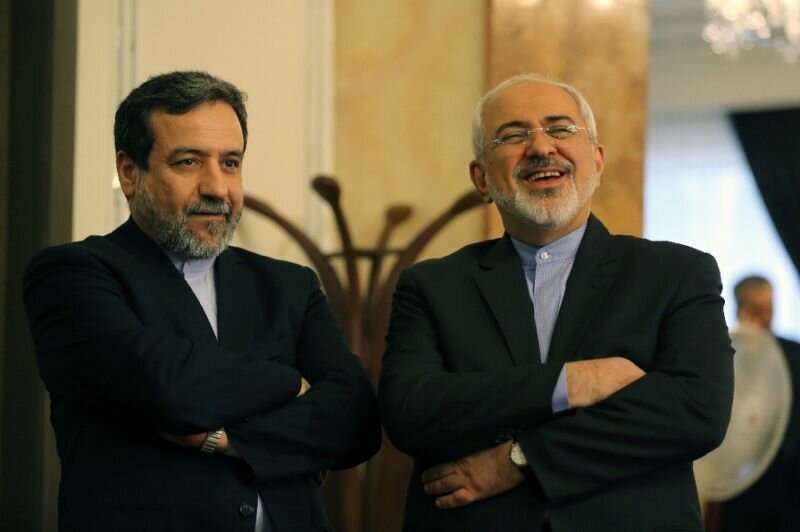
TEHRAN - Iran’s Deputy Foreign Minister Seyyed Abbas Araghchi said on Sunday that the 2015 nuclear deal, officially known as the JCPOA, is an international agreement and the world is responsible for implementing it.
“The JCPOA is an international achievement and the countries in the world are responsible for respecting, implementing and preserving it,” he said during a joint press conference with Chinese Vice Foreign Minister Ma Zhaoxu in Beijing.
On Iran’s decision to reduce JCPOA commitments, Araghchi said that the move is within the framework of the agreement.
Iran has started to partially reduce its commitments to the JCPOA in response to the United States which abandoned the landmark deal in May 2018 and reinstituted sanctions.
So far, the Atomic Energy Organization of Iran (AEOI) has taken four steps to cut back commitments in accordance with paragraph 36 of the JCPOA which “allows one side, under certain circumstances, to stop complying with the deal if the other side is out of compliance.”
On May 8, exactly one year after the U.S. abandoned the deal, Tehran announced that its “strategic patience” is over and began to partially reduce its commitments to the agreement at bi-monthly intervals.
In the first stage, Iran announced that it will not limit its stockpile of the nuclear fuel to 300 kilograms allowed under the deal. On that date (May 8) Iran’s Supreme National Security Council (SNSC) said if the remaining parties to the JCPOA, especially Europeans, devise a mechanism to protect Iran from the sanctions’ effect in the two-month deadline it will reverse its decision.
But since European parties missed the deadline, on July 7 Iran announced that it has started enriching uranium to a higher purity than the 3.67%, thereby starting the second step.
Again, as Europe missed the second 60-day deadline, Iran moved to take the third step, removing a ban on nuclear research and development (R&D).
In the latest step, which started on November 6, Iran began injecting uranium gas into 1,044 centrifuges at the Fordow nuclear site. It was done at the presence of inspectors from the International Atomic Energy Agency (IAEA).
Chinese official urges Europe to implement INSTEX
Ma, for his part, urged Europe to implement the Instrument in Support of Trade Exchanges (INSTEX).
He noted that multilateralism and rule of law are required to preserve the JCPOA.
INSTEX has been designed by the European Union to facilitate legitimate trade with Tehran. It was introduced on January 31 by France, Germany, and Britain, the three countries party to the nuclear deal.
It was introduced long after the U.S. imposed sanctions on Iran and threatened to punish any country or company that does business with Iran.
INSTEX is supposed to be a financial channel and a special mechanism for transferring money in spite of U.S. sanctions on Iran. Its objective is to facilitate Iran’s transactions with European companies without using the dollar.
Belgium, Denmark, Finland, the Netherlands, Norway, and Sweden issued a joint statement on Friday announcing becoming shareholders of INSTEX.

Thursday, July 11, 2019

Iran won’t tolerate British piracy: Hatami

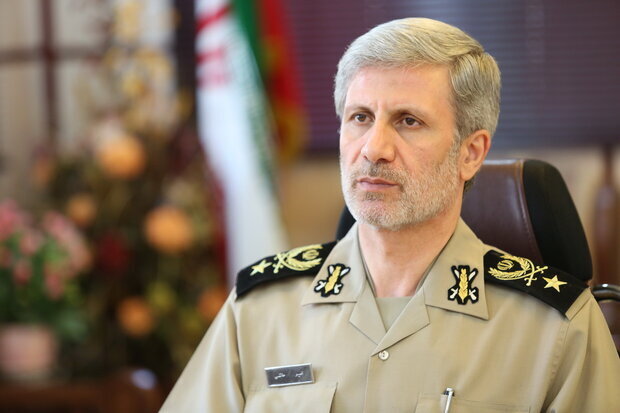
TEHRAN - Iranian Defense Minister Amir Hatami said on Monday that Britain’ act in seizing Iranian oil tanker was an act of piracy which will not be tolerated.
“On these days, we have witnessed a provocative act by the British government against the Islamic Republic of Iran’s oil tanker in Gibraltar. This action is against international regulation and the Europeans commitments under the JCPOA and is also a kind of piracy,” Hatami said.
On early Thursday morning, British Royal Marines in Gibraltar stormed the 300,000-ton Grace 1 and detained it, accusing it of carrying oil to Syria in possible violation of the European Union’s sanctions on the war-torn Arab country.
Iran has condemned the move as “maritime piracy” and summoned Britain’s ambassador for three times in protest. Tehran has vowed to employ all its political and legal capacities to secure the release of the vessel and uphold its rights.
On Sunday, Iranian Deputy Foreign Minister Abbas Araqchi denied reports that the supertanker was carrying oil to Syria.
“Contrary to Britain’s announcement, the tanker was not bound for Syria, and the port mentioned is not capable of receiving such a tanker,” Araqchi told reporters at a news conference in Tehran.
The seized tanker is a 2 million barrel capacity very large crude carrier (VLCC), Araqchi said, adding it could not pass through the Suez Canal and that was why it had to go the extra mile through Gibraltar.
A top court in the British overseas territory of Gibraltar ruled late Friday that the Iranian supertanker could be detained for up to 14 more days.
“The Supreme Court has issued today’s order on the basis that there are reasonable grounds to consider that the detention of the Grace 1 is required for the purposes of compliance with the European Union (EU) Regulation 36/2012 on sanctions on Syria,” Gibraltar’s government said in a statement.
Earlier on Friday, the Associated Press reported that the vessel’s 28 crew members were being held on the ship for questioning and had not been detained under criminal procedures, citing an unnamed spokesperson for the Gibraltar government.
Spain, which challenges the British ownership of Gibraltar, has said the seizure was prompted by a U.S. request to Britain and appeared to have taken place in Spanish waters.
Spain’s acting Foreign Minister Josep Borrell said on Friday that Madrid was planning to lodge a formal complaint against the UK and was studying the circumstances and looking at how the incident is affecting its sovereignty.
U.S. National Security Advisor John Bolton — an ardent hawk behind the White House’s highly hostile Iran policy — has praised the measure.

Tuesday, June 04, 2019

Iran deserves credit and attention for trying

By Martin Love

NORTH CAROLINA - Credit to Iranian foreign minister Javad Zarif and deputy minister Abbas Araghchi for their efforts to visit other countries and put forth ideas to ease Arab-Iranian tensions and develop proposals to eliminate differences between Iran and other Persian Gulf countries.
 The most interesting of these proposals is one that suggests a non-aggression treaty between Iran and its most immediate neighbors such as Kuwait, Oman and Qatar, which would be those states the most willing, at least, to listen to Iranian diplomats.
The Saudis, on the other hand, seem the most intransigent by far and the least willing partners to any de-escalations regionally, largely because the Saudis are either Trump Administration puppets, or vice versa, and because the Saudis perhaps have (erroneously) the most to “lose” by reducing hospitality towards Iran.
The concept of “loss” with regard to the Saudis is a curious one, and that it exists at all is telling. But of what? Loss with respect to its “alliance” with the U.S.? Loss with respect to its almost genocidal war on Yemen “rebels”, who are claimed to be allied with Iran in some fashion?
Loss with respect to their vaguely covert but still obvious (awkward) bedfellows, the Zionists, who are desperately attempting to neuter longstanding Arab hostility to an apartheid state that has treated millions of Palestinians, including millions of fellow Muslims, abysmally during and since the Nakba in 1948?
The Saud family dynasty has to be one of the most bizarre political creations ever, one that was originally underwritten by western powers and that largely because of a desire to control oil resources, the Petrodollar becoming the keystone to that control. It is anything but a democracy.
 It is a dynasty of paranoid freaks who are worse than poor representatives of Islam and who have created a Hell on earth of repression and barbarity against its own citizens who at the slightest signs of criticism, not to mention dissent, are literally subject to losing their heads. And no one can forget the dismemberment of Jamal Khashoggi, a writer for the Washington Post, last October, who was lured into the Saudi consulate in Istanbul.
One has to wonder what the Saudis are so fearful of and why they feel obliged to spend untold billions on U.S weapons. It must be because the Saud family is despised even within its own borders and feels obliged to sustain itself solely on the backs of U.S. and even Israeli approvals and arms. But the so-called “Arab street” across the Arab world does not approve, however quiescent it has been in recent years.
The mere fact that the Saudis have sort of signed on to the virtually stillborn “Deal of the Century” developed almost solely by Zionists like Jared Kushner and others in the Trump orbit, and which will NEVER be acceptable to Palestinians no matter how much they suffer, suggests that in time most all repressive Arab regimes will likely face a second major surge of revolt from the Arab street as was first witnessed in 2011, particularly in Egypt.
 Whether Arab or not, all countries, rich or poor, that rely solely on the projection or threat of military power are ultimately brought down, because they have no real friends or allies, just alleged mutual “interests” to maintain themselves. The U.S is no exception to this rule in the longer run, too. All such countries tend to bankrupt themselves both morally and financially.
For an observer from afar, the absolute greatest tragedy suffered by Muslims over the course of decades now of Western domination of the Mideast has been the failure of Muslims, whether Sunni or Shi’a, to unite as a single cultural bloc of mostly unified people to ward off predatory Western imperialism, which has done little but sow discord across the Middle East.
The U.S. continuously blasts propaganda about Iran or any other largely Muslim country that refuses to buckle to Western control as “terrorist” states whose primary aims are to create an absence of “peace” in the Middle East. So, if that’s the case, what is one to make of the fact that Iran, for example, has not gone on a military offensive for over 200 years and is calling, again, for mutual non-aggression pacts with its neighbors? Is this something countries do when they want to dominate or harm others, one must ask. No, of course not.
In any case, non-aggression pacts historically have not been that effective in warding off conflicts between nations, mostly because they have often been violated by one side or another, but that hardly speaks for not attempting to create them, as Iran is trying. This failure, it has been claimed, is because there has not existed an international system to enforce treaties or pacts.
 A fair example of the absence of enforcement is that the U.S., ought to have been sanctioned (just as Iran has been sanctioned) by the other signatories to the JCPOA when Trump, just over a year ago, canned U.S. participation in the accord. Why has the U.S. and Trump have not been sanctioned in some creative way? The only answer seems to be cowardice and fear of reprisals from the U.S., and meanwhile Iran has faithfully abided by the term of the accord all long.
While individual Arab states on the Persian Gulf see Iran somewhat differently, there has long been the problematic fact that Iran is a much larger country in terms of land mass and population. This alone has created some unease with neighbors but there is nothing Iran can do about this. Then there is the divide between Sunnis and Shi’as, which goes way back initially to the seventh century.
 The Iranian revolution in 1979 augmented sectarian differences and distrust between sects. But perhaps the biggest problem are the Israelis and Americans, who virtually depend on maintenance of what influence they have in the Mideast on Muslim division highlighted as division between Iran and neighbors. No question Arab Gulf states would probably not talk with the Israelis at all if ties with Tehran were improved. And as well, relations with the U.S. among Muslims generally would suffer as well…unless the U.S. got off its high horse of imperial domination.

Tuesday, May 07, 2019

As the U.S. pushes Iran to the brink, Tehran may need to get tough

In a meeting held on 28 April, Iran’s deputy foreign minister and a key negotiator of the nuclear deal, Abbas Araghchi, told a European delegation that Iran "has given enough time to make up for repercussions of the US withdrawal from the deal and now the time has come for action".
False narratives
By withdrawing from the nuclear deal and pursuing the ill-advised policy of "maximum pressure", President Donald Trump has taken US hostilities against Iran to the highest level.
On Sunday, US National Security Advisor John Bolton said that the US was deploying a carrier strike group and a bomber task force to the Middle East to send a clear message to Iran that any attack on US interests or its allies will be met with “unrelenting force".
Two American senators, Richard Durbin and Tom Udall, warned the Congress against attempts at disseminating false narratives about Iran’s failure to meet its international obligations.
"The Trump administration’s Iran policy, built on the ashes of the failed Iraq strategy, is pushing us to take military action aimed at regime change in Tehran,” they said.
Mohammad Javad Zarif, Iran’s foreign minister, also said that Trump’s aim "is to bring us to our knees to talk” - but the "B-Team" consisting of Bibi (Netanyahu), (John) Bolton, (Mohammed) Bin Zayed, and (Mohammed) Bin Salman want "regime change at the very least" and the "disintegration of Iran".
The nuclear deal known as the Joint Comprehensive Plan of Action (JCPOA) was achieved after 12 years of intensive negotiations between Iran and the six world powers and was presented in the form of a United Nations Security Council Resolution 2231.
By unilaterally withdrawing from the deal, the United States is the only party that violated the terms of the agreement. Last month it declared Iran’s elite Revolutionary Guard Corps as a terrorist organisation and decided to bring Iran's oil exports to zero.
These attempts suggests that the White House is laying siege to Iran in ways similar to the way the Bush administration did as it prepared to wage an illegal war against Iraq. 
A European failure
And all this is happening when Iran has fully abided by the terms and conditions of the UNSC resolution 2231. The UN nuclear watchdog, policing Iran's deal with major powers, has issued 14 reports attesting that Iran has fully implemented the terms of the deal
Since the US departure from JCPOA, the Europeans' efforts to facilitate trade have failed. Today Iran’s oil exports are 2.5 million less barrels per day, falling to half of what it used to export prior to the US withdrawal.
Iran’s supreme leader, Ayatollah Ali Khamenei, had vowed that if the United States "tears up" the nuclear agreement, “we will set it on fire”. Furthermore he reiterated that the US and Israel are plotting and acting against Iran in all areas and "in the face of the enemy’s battle formation against the Iranian nation, the nation should take up battle formation likewise".
Iran's two options
With the US constantly increasing sanctions and pressures, with other world powers failing to provide assurances for the JCPOA’s economic benefits, Iran’s patience is running out. It is left with two options: A gradual withdrawal from the JCPOA or an  immediate departure from Non-proliferation Treaty (NPT) and the JCPOA simultaneously.
“We welcome the EU political stances, but political supports are not solely enough to save the deal,” said the deputy foreign minister. Iran and the remaining signatories to the deal will hold a JCPOA meeting in Brussels on Tuesday to discuss unilateral US sanctions. 
Based on article 26 and 36 of JCPOA, if the EU and US re-introduce or re-impose the nuclear related sanctions, Iran can cease its commitment under the deal in whole or in part.
While an appropriate response on the part of Iran against these violations seems necessary, its complete withdrawal from the nuclear deal will have the following consequences.
Major consequences
First, In case of Iran withdrawal from the UN Security Council Resolution 2231, the US will try to activate six prior resolutions, which include unanimous sanctions by all world powers and members of the Security Council and push for suspension of Iran’s uranium enrichment and heavy water activities.
Second, in the absence of resolution 2231, the US-Israel axis would launch heavy political propaganda campaign claiming that Iran’s nuclear programme is a threat to the peace and security of the world as states in article 6 of the UN Charter.
Third, since Iran is a member of the Non-Proliferation Treaty (NPT), the Trump administration will use the treaty as an instrument to push the IAEA functionaries to put unusual inspection demands on the table.
In the event that Iran resists unreasonable inspection demands, the US will propagate the Israeli prime minister’s false claims that Iran is seeking a nuclear bomb. 
Fourth, by withdrawing from the nuclear deal, the US would try to convince the other world powers that Iran is violating NPT. Hence, the withdrawal option is a loss for Iran and a win for the "B-Team". 
More bargaining powers
The second option is to send an official memorandum to the six world powers (excluding the United States) who were involved in the negotiations for the nuclear deal, as well as the UN general secretary and the director of IAEA, indicating that if they fail to uphold their part of the bargain within a given deadline, Iran will withdraw from the Non Proliferation Treaty (NPT) and the JCPOA simultaneously.
Iran’s foreign minister has already alluded last month to this option. "[The] Islamic Republic’s choices are numerous, and the country’s authorities are considering them... and leaving [the] NPT is one of them," he said.
Both options are risky. The possibility of military confrontation exists in both options, but the latter is more effective because the United States will no longer be able to use the NPT as an instrument against Iran.
In return, withdrawing from the NPT will bolster Iran’s position on the negotiation table more than ever by giving it more bargaining power.
The United States will then have to beg Iran to join the NPT and nuclear deal once again. 
The views expressed in this article belong to the author and do not necessarily reflect the editorial policy of Middle East Eye.
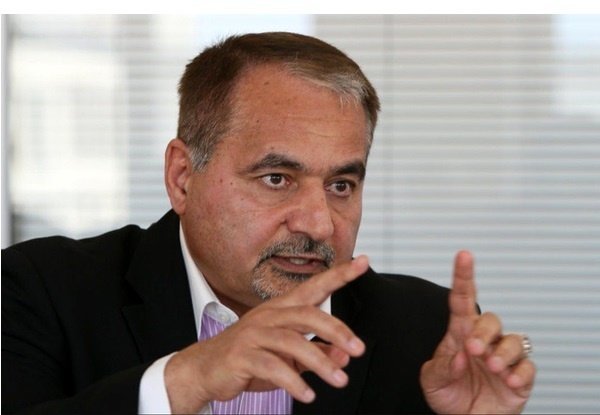
Seyed Hossein Mousavian is Middle East security and nuclear policy specialist at Princeton University and a former spokesman for Iran’s nuclear negotiators. His book, The Iranian Nuclear Crisis: A Memoir, was published in 2012 by the Carnegie Endowment for International Peace. His book, Iran and the United States: An Insider’s View on the Failed Past and the Road to Peace, was released in May 2014.
(Source: Middle East Eye)