Wednesday, April 30, 2025

Betar US: America's new face of Zionist terrorism and the darker rebirth of Kahanism

 By Ivan Kesic

Betar US, the American chapter of a global ultra-Zionist terrorist organization that virtually and physically harasses pro-Palestinian advocates across the United States, traces its roots to some of the most radical Zionist groups banned in the US for terrorism.

Over the past 18 months—since the launch of the genocidal war against Palestinians in the Gaza Strip—Betar US has come under increased media scrutiny for its aggressive tactics against pro-Palestinian protesters, both on the streets and across social media platforms.

Its recent activities—including hate speech, doxxing, bounties, and vigilante threats—have drawn condemnation from pro-Palestinian groups and even mainstream Jewish organizations, fueling calls for American authorities to ban the group.

Little has been written, however, about the past of Ronn Torossian, the current leader of Betar US, who reestablished the group as a reincarnation of the banned Kahanist movement and who maintains long-standing ties to Israel’s Likud party and the incumbent American president.

Zionist terrorist movement

Betar US is a branch of the Betar movement, a terrorist organization inspired by European fascism and based on the most radical and fascist ideas of Zionism.

It was founded in 1923 in Riga, Latvia, by Vladimir (Ze’ev) Jabotinsky, a key figure in Revisionist Zionism, who aimed to establish a so-called “Jewish state” on both banks of the Jordan River and promoted the ideas of militarism, immigration to the occupied Palestine, and maximal territorial expansion without any regard for indigenous Palestinians.

The movement was named after its inspirer, the early Zionist settler Brit Yosef Trumpeldor (Joseph Trumpeldor), who died in 1920 fighting local Arab resistance forces in northern Palestine.

Besides being an acronym for Trumpeldor, Betar is also the name of the last Jewish fortress that fell to the Romans during a revolt in the 2nd century.

Within ten years of its founding, Betar had 70,000 members, with 40,000 in Poland, where it was most successful due to Europe's largest Jewish population.

Its activities included military drilling and facilitating the illegal immigration of tens of thousands of European Jews to Palestine, defying British quotas.

In Palestine, Betar members joined the Irgun, a Zionist terrorist group, engaging in guerrilla tactics of sabotage and assassination against British forces and terrorist attacks on Arab civilians.

After the Nakba of 1948 and the realization of the Zionist plan, Betar's role gradually declined, and its membership decreased from a peak of 90,000 to less than 10,000 by the 1960s.

Betar, however, produced prominent Israeli right-wingers, including Prime Ministers Menachem Begin and Yitzhak Shamir, War Minister Moshe Arens, Minister Tzipi Livni, and current UN Ambassador Danny Danon.
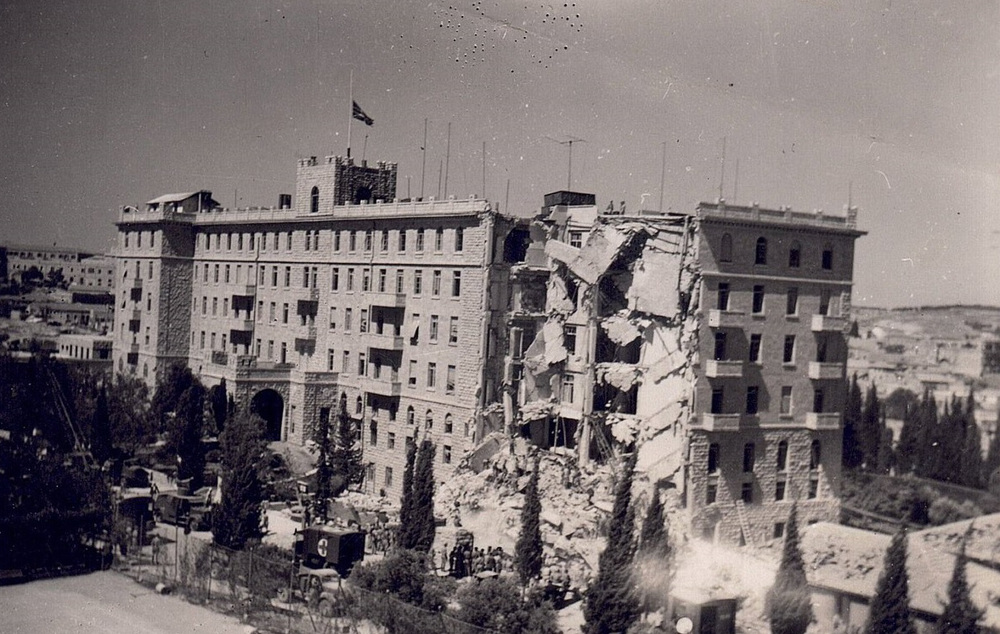
Irgun's terrorist attack on a hotel in Palestine in 1946

Benzion Netanyahu, father of Prime Minister Benjamin Netanyahu, was Jabotinsky's aide. Betar's militaristic, right-wing ideology shaped the Israeli Likud party and other far-right movements in the Zionist entity, which helped in consolidating occupation and apartheid.

"The Betar movement, led by Vladimir Ze'ev Jabotinsky, changed Zionism and therefore changed the history of the Jewish people. We continue and I continue to put forth its basic principles and convictions," Netanyahu, who heads the Likud party, was once quoted as saying.

Betar members also included Meir Kahane, a notorious American-Israeli rabbi, founder of the terrorist group Jewish Defense League (JDL) and the Israeli political party Kach, convicted of multiple terrorist acts on the soil of the United States.

He is the ideologue of the eponymous Kahanism, a chauvinist movement that advocates the total segregation of Jews and non-Jews in occupied Palestine, with the latter's subordinate status offering the choice of slavery or deportation.

Modern Betar and its branches have embraced many of the ideas, methods, and slogans of Kahane, Kahanism, and the JDL, including "slavery or deportation" blackmail for pro-Palestinian American students.

Contemporary Betar US revival

Although originally founded in 1929, Betar US remained relatively inactive for several decades until June 2023, when it was rebooted by Ronn Torossian, an Israeli-American public relations executive and terror cheerleader.

Torossian had been a member of Betar US since his teenage years, served as its president during his student days, and after graduating, moved briefly to the occupied Palestinian territories, where he collaborated with Likud and neo-Zionist settler terrorist organizations.

He says that he was inspired by Ze'ev Jabotinsky's teachings, and in his youth, he was a staunch supporter of Meir Kahane, a connection he has unsuccessfully tried to conceal in recent years.

Torossian was identified in a 1994 video from a New York synagogue as the campus coordinator of Kahane Chai (Kach party), leading a memorial service for Rabbi Meir Kahane and calling him "the greatest Jewish leader ever."

At this gathering, support was also shouted for Ami Popper and Baruch Goldstein, Kahanist terrorists known for the mass murder of a total of 36 Palestinian civilians.
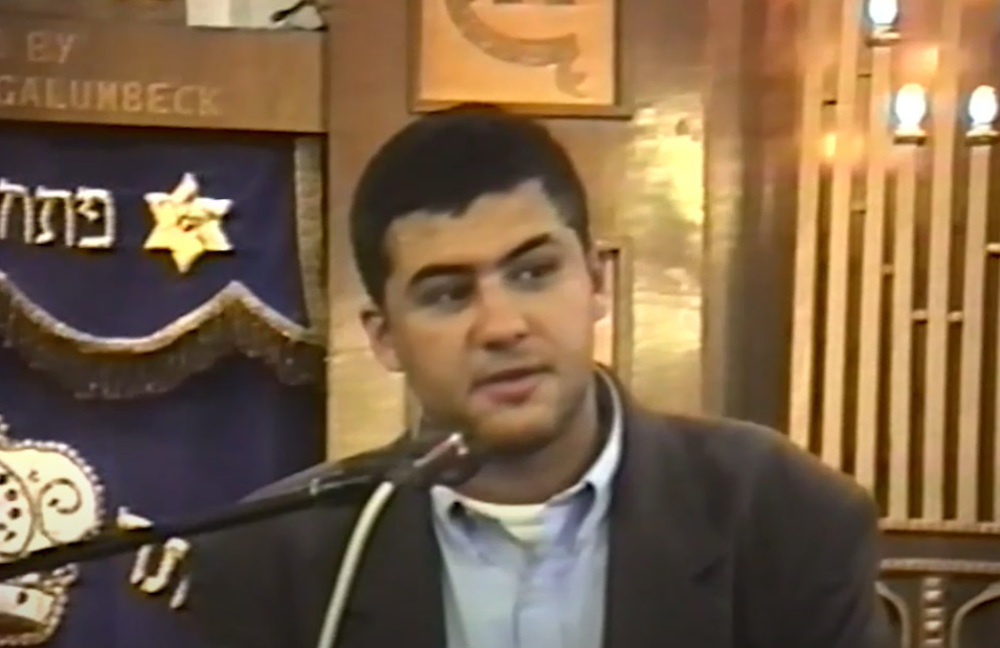
Ronn Torossian gives a speech in 1994 at the memorial service for Meir Kahane

Upon returning to his native New York, Torossian worked for public relations companies and became notorious for his aggressive style, occasionally leading pro-Zionist protests.

He became close to Morton Klein, the long-time president of the Zionist Organization of America (ZOA), with whom he shares anti-Arab and anti-Islamic views, and he also collaborated with Pamela Geller in promoting Islamophobia in the US.

He is also proven to have long-standing personal, business, and political ties to US President Donald Trump, to whose presidential campaign he donated generously.

American-Israeli journalist Jeffrey Goldberg described Torossian's ideas as "Nazi," recalling that he once told him that he believed "a thousand Arabs should be killed for every Jew killed."

Reflecting on his PR work, journalist Hamilton Nolan critically described his personality as "loud, brash, more flash than substance, dirty, manipulative, amoral and, in the end, not particularly bright."

Rebranded Kahanism

Until the summer of 2023, Betar US had dedicated itself to Zionist agitation and inciting young American Jews to emigrate to the Zionist entity. Since the revival led by Torossian, it has become engaged in aggressive forms of harassment.

Torossian told the media that his group "stands for tough, strong, proud Zionism" and claimed to "combat anti-Semitism" because its members believe they live in "the days before a potential Holocaust."

Betar US claims to currently have thousands of members across more than 50 cities, motivated by pro-Palestinian protests against the Israeli genocidal war on Gaza ongoing since October 2023, which has killed nearly 52,000 Palestinians, mostly children and women.

Torossian also said that, unlike other Zionist organizations, they do not intend to engage in "writing statements or lawsuits" but in active struggle, echoing the views of Jabotinsky, who called for a militant approach in achieving his goals.

Over the last two years, Betar US has gathered a mob of pro-Israel terrorist agitators who respond to pro-Palestinian protesters with a mix of online trolling, counter-demonstrations, and direct physical threats.

For months, the group has claimed that it has been collecting data on pro-Palestinian students and protesters, intending to submit them to the Trump administration for deportation.

Intriguingly, in full compliance with this practice, Torossian's friend US President Donald Trump signed an executive order at the end of January to deport foreign-born protesters who are deemed to have supported "terrorist groups" or the Palestinian resistance movement.

This single-mindedness, according to legal experts, is a blatant violation of the First Amendment to the US Constitution and is undoubtedly inspired by Kahane's ideas about choosing between accepting Zionist supremacism or deportation.

Numerous other examples also prove that Betar US is actually a rebranded Kahanist movement, since the Kach party and its offshoot, the JDL, were previously banned as terrorist organizations in the United States.

Betar supporters wave the yellow flag of the banned Jewish Defense League in New York

These include open Jewish supremacism, notorious anti-Arab racism, anti-Muslim religious bigotry, waving JDL flags at rallies, and documented open expressions of support for Kahane by members of the group.

It uses the militarist Kahanist slogan, "For every Jew, a .22," invented by Kahane himself, meaning Jews should be armed with .22 rifles.

Betar US openly supports the ethnic cleansing of Palestinians from their homeland, as well as the monstrous child-killing practice of the Israeli army in Gaza.

After journalist Laila Al-Arian expressed horror at the number of Palestinian babies killed in Gaza, Betar US on the X platform responded with the words "not enough" and "we demand blood in Gaza."

The aforementioned Kahanist movements are banned as terrorist groups even in the Zionist entity due to the repeated massacres of civilians, mostly settlers from the United States.

While the Israeli regime unsuccessfully denies responsibility for these crimes, the Kahanists are known as the only Zionist group that openly advocates and glorifies such crimes.

At the 1994 commemoration hosted by Torossian, his colleagues openly glorified terrorist mass murderers Popper and Goldstein, declaring that they had "had the courage to do what everyone gathered wanted."

The once fringe group, banned as terrorists in the US and the Zionist entity, has entered the political mainstream thanks to Kahane's faithful follower, Itamar Ben-Gvir, as well as Torossian and his personal ties to Netanyahu and Trump.

Violation of US federal laws

In addition to representing the reincarnation of a banned terrorist organization, Betar US's activities, legal luminaries argue, potentially violate several American federal laws.

Their hate-driven and deeply controversial activities include doxxing pro-Palestinian students, offering bounties, making deportation threats against foreigners in the US, and engaging in confrontational and violent protests, all violate both American and international law. 

Among the likely violated federal laws is the Interstate Communications Act (18 U.S.C. § 875), which criminalizes transmitting threats across state lines (including via the internet) to injure a person, with penalties of up to seven years in prison if intent to harm is proven.

Betar's X posts offering bounties—such as $1,800 to hand "beepers" to Palestinian-American activist Nerdeen Kiswani—referencing Israeli 2024 Lebanon terrorist attacks, and doxxing students like Columbia's Mahmoud Khalil with calls for ICE deportation, could be interpreted as threatening.

The "beeper" bounty, implying a terrorist act, and the public shaming of individuals as "terror supporters" are designed to intimidate and target pro-Palestinian students.

These actions violate § 875 since Betar US intends to cause physical harm or serious injury to the individuals it threatens, and any reasonable person would perceive the statements as threatening.

Another federal law violated is the Cyberstalking Statute (18 U.S.C. § 2261A), which can result in up to five years in prison for those found involved.

This law prohibits using electronic communications, such as social media, to harass, intimidate, or cause substantial emotional distress to a person, with the intent to place them in reasonable fear of death or serious injury, something Betar cyber terrorists have mastered. 

Betar’s doxxing and posting of students' names, photos, and visa statuses online, as well as labeling them "terror supporters" for ICE action, also constitutes a pattern of harassment.

For example, their campaign against Mahmoud Khalil at Columbia involved compiling and sharing personal information to pressure immigration authorities to deport him.

If Betar's actions were intended to cause emotional distress or fear—such as fear of deportation or public shaming—they could violate § 2261A, especially if the conduct was repeated and targeted.

Human rights organizations cite Betar’s Islamophobic slurs and doxxing as intimidating, supporting this argument and strengthening the evidence for a lawsuit against the Zionist terror outfit. 
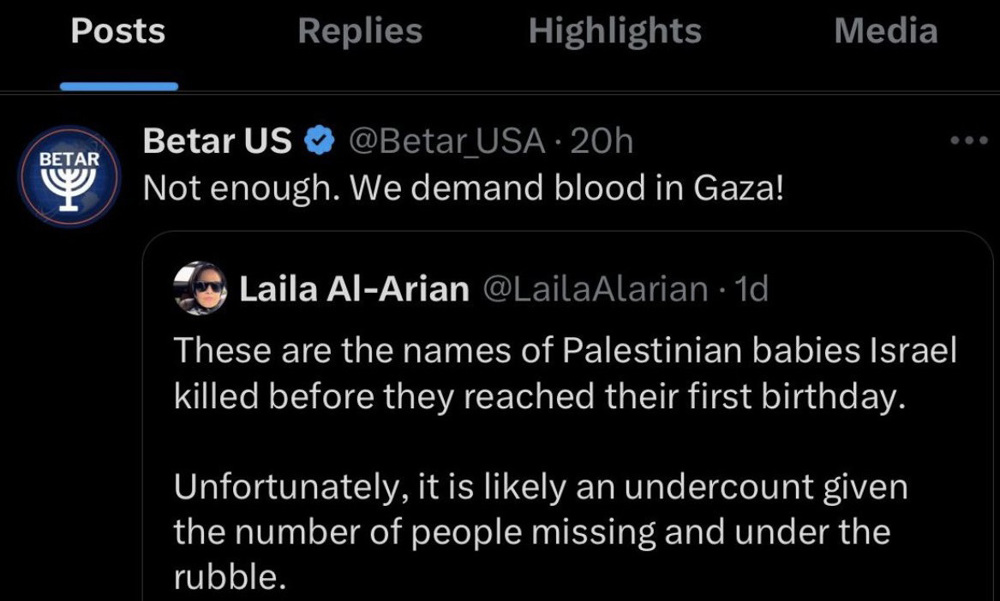
Betar calls for more Israeli killing of Palestinian babies

The third certainly violated federal law is the Civil Rights Act of 1964, Title VI (42 USC § 2000d), which prohibits discrimination based on race, color, or national origin in programs receiving federal funding, such as universities.

It applies to actions creating a hostile educational environment, and Betar's targeting of pro-Palestinian students, many of whom are Arab, Muslim, or of West Asian descent, at universities like the University of California (UCLA) and Columbia University could contribute to a hostile environment.

Their October 2024 threat to "organize groups of Jews" to remove a pro-Palestinian sukkah at UCLA and doxxing of students like Khalil may intimidate based on national origin or religion.

The US Department of Education's 2024 investigations into campus anti-religious bigotry suggest Betar's tactics could prompt scrutiny. If students face harassment due to their Palestinian advocacy, tied to national origin, Title VI claims could arise.

As a private group, Betar US is not directly bound by Title VI, but its actions could spur federal investigations and trigger university liability if they create a discriminatory environment and the institution fails to respond.

Violation of US state laws

Furthermore, Betar US has been found violating several state laws, such as the New York Cyberstalking and Harassment Laws (NY Penal Law § 240.30, § 120.45).

The state's aggravated harassment statute (§ 240.30) criminalizes communications intended to harass, annoy, or alarm based on race, religion, or national origin, with penalties up to one year in prison.

The stalking statute (§ 120.45) prohibits conduct causing reasonable fear or emotional distress, which prosecutors can prove fairly easily at trial.

Similarly, California Cyberstalking Law (Cal. Penal Code § 646.9) prohibits willful, malicious harassment via electronic means that causes a person to fear for their safety or suffer substantial emotional distress, with penalties up to one year in prison or longer if a restraining order is violated.

At UCLA in October 2024, Betar threatened to forcibly remove a pro-Palestinian sukkah and engaged in confrontational protests, which could intimidate students.

If they doxxed California-based students or posted threatening content online, it could meet California's stalking criteria, especially if victims report fear or distress.

States like New York and California also allow lawsuits for defamation that involve making false statements of fact that harm someone's reputation, with civil liability requiring negligence (private individuals) or actual malice (public figures).

Betar's X posts labeling students like Khalil as "terror supporters" could be defamatory if false and damaging to reputation (like affecting academic or job prospects).

Their lists accusing other students of supporting terrorism, without evidence, risk civil claims. Private individuals, like students, face a lower bar than public figures like Nerdeen Kiswani.

Both states also prohibit publicizing private, non-newsworthy information that causes offense to a reasonable person, absent a legitimate public interest.

Doxxing students' visa statuses, addresses, or other personal details (like Khalil's information shared on social media) could violate this tort if the information was not publicly available and its disclosure caused harm.

Defense Minister calls Israel a symbol of state terrorism

Defense Minister Brigadier General Aziz Nasirzadeh praised Zimbabwe's historic struggle against colonialism, racism, and apartheid.

Tehran, IRNA – Referring to Israel’s brutal killings of Palestinians and Lebanese people amid the silence of international organizations, Defense Minister Brigadier-General Aziz Nasirzadeh says Israel has become a symbol of state terrorism.

Speaking during a meeting in Tehran on Monday with his Zimbabwean counterpart, Oppah Muchinguri-Kashiri, praised Zimbabwe for historic struggle against colonialism, racism, and apartheid, noting that Zimbabwe's efforts in these areas have earned it a distinguished place in both Africa and the broader international community.

Highlighting Africa’s special place in Iran’s foreign policy, the Defense Minister said that this stems from the nature of the Islamic revolution which has been based on supporting independent states and the struggles by the African nations to get rid of the dominance of the hegemonic powers.

The Zimbabwean minister, for her part, extended condolences over a tragic explosion in Shahid Rajaee Port in southern Iran.

She stressed that relations between Iran and Zimbabwe entered a new chapter after the 1979 Islamic Revolution.

Islamic nations to approve first joint document on AI: science minister

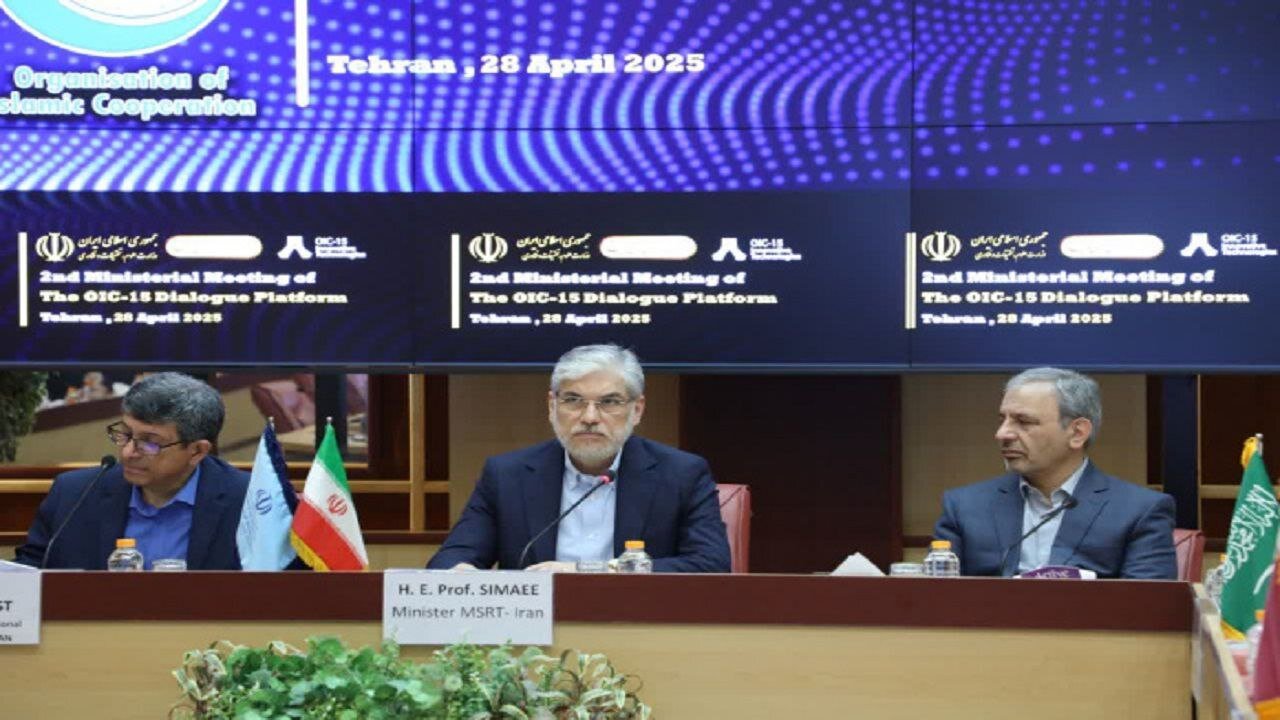
TEHRAN – The first multilateral document on artificial intelligence (AI) among Islamic countries is scheduled to be approved during the 2nd Ministerial Meeting of the Organization of Islamic Cooperation (OIC-15) Dialogue Platform, which will be held in Tehran from May 18 to 20, Science, Research, and Technology Minister, Hossein Simaei-Sarraf, has said.

The platform aims to utilize the capacity of the leading Islamic countries in the field of science and technology to address major scientific, technological, and higher education challenges faced by Muslim nations and societies, ISNA quoted Simaei-Sarraf as saying.

The official made the remarks on Sunday in a meeting with ambassadors and representatives of the member states of the OIC-15.

The theme of the 2nd Ministerial meeting focuses on AI, and is titled ‘Innovation in Science and Technology through using AI: A strategy for excellence, a bright future for the Islamic World’, the official added.

“Our duty, as representatives and ambassadors of the Islamic countries responsible for pursuing science and technology diplomacy, is to achieve convergence and alignment in strategies, policies, national science programs, as well as technology and innovation programs at transnational levels by using the opportunities that international organizations, forums, and meetings such as the OIC-15 open up,” Simaei-Sarraf noted. 

Organizing the national innovation system (NIS), developing programs that can increase the share of science, technology, and education in economic growth, as well as gross domestic product (GDP). Boosting public participation in various science and technology fields is among the science and technology policies being implemented in Islamic countries, the official stressed.

The first Ministerial Meeting of the OIC-15 Dialogue Platform was held in Almaty, Kazakhstan, in May 2023.

Iran’s ranking among Islamic countries 

According to the Web of Science, Iran (with 17,458 documents) ranks first in neural network technology as well as multi-agent systems (with 351 documents) among Islamic countries.

The country secures a ranking of 6th in neural network technology and 12th in multi-agent systems globally.

Iran ranks second in artificial intelligence (AI), machine learning, and robotics among Islamic nations.

The report has included data in a twenty-year period from 2004 to 2023.

According to the report, with 606 publications on three-dimensional printing over a span of ten years, Iran ranks second among Islamic nations.

The report has included data from 2014 to 2023. 

The country’s global ranking in 3D printing publications is 22, IRNA reported. 

According to a report released by the Web of Science in January, three-dimensional printing and additive manufacturing publications in Iran experienced notable growth from 2010 to 2023.

University of Tehran (with 83 documents), Amirkabir University of Technology (with 83 documents), Tarbiat Modarres University (with 40 documents), and Tehran University of Medical Sciences (with 37 documents) had the highest number of publications.

Iran, with 65 documents, ranks first among Islamic countries in four-dimensional (4D) printing and ranks 11 globally.

Tags

Iran rejects sabotage theory over Bandar Abbas blast incident

Iran rejects sabotage theory over Bandar Abbas blast incident

TEHRAN, (MNA) – The Iranian government has ruled out the sabotage theory in the recent explosion at Shahid Rajaee Port, citing human error as the most likely cause, pending final investigation results.

Speaking to reporters on the sidelines of Wednesday's cabinet meeting, the government spokesperson, Fatemeh Mohajerani, emphasized that there has been no censorship regarding the incident and reaffirmed the administration’s duty to maintain transparency and public accountability.

To avoid conflicting reports on casualties and other details, the spokesperson said it was decided that the Interior Minister or the head of the Crisis Management Organization would provide official updates directly from the site — a move that has already been implemented.

So far, sabotage has been ruled out, with preliminary findings pointing to human error, she said, adding that however, the final determination depends on the completion of the ongoing investigations.

On Saturday, a powerful blast rocked the port of Shahid Rajaee in Hormozgan Province after a fuel tanker exploded for reasons still under investigation.

The officials of Hormozgan, where the Shahid Rajaee port is located, said on Monday that the fire at the port was extinguished, adding that the death toll from the blast and the subsequent inferno rose to 70.

They also said that the cleanup operations and debris removal will take about 20 days.

The number of the injured in the blast and inferno rose to 1,242, according to the Iranian Red Crescent Society’s spokesperson. 

Mediation crucial to control nuclear-armed Indo-Pak hostilities

 By Salman Parviz

TEHRAN -- After the deadly terrorist attack on April 22 in the disputed Himalayan region of Pahalgam, which killed 26 tourists were killed, Iran has offered to mediate between India and Pakistan to reduce regional tensions. 

During a telephone conversation on Saturday evening with Pakistani Prime Minister Shehbaz Sharif, Iranian President Masoud Pezeshkian expressed the need for dialogue.

The Iranian president also called Indian Prime Minister Narendra Modi and condemned the terror attack in India. Modi thanked Pezeshkian for Iran’s condolences, noting, “Your empathy is deeply valued, especially given Iran’s own tragic experiences with terrorism.”

A parallel push was also made by Saudi Arabia when on Friday Saudi Foreign Minister Faisal bin Farhan held separate calls with India’s S. Jaishankar and Pakistan’s Ishaq Dar to discuss the attack and its cross-border implications.

According to Reuters, China, a key player in the region, also said on Monday it hoped India and Pakistan will exercise restraint and welcomed all measures that will help cool down the situation.

Responsibility for the attack was allegedly claimed by the hitherto unknown The Resistant Front (TRF). India has blamed Pakistani elements for the attack while Islamabad has denied any involvement. Pakistan has stated its willingness to cooperate with any investigation conducted by international inspectors.

The attack took place in a region only accessible on foot or by horse. 

India says it has identified two of the three suspected militants as Pakistani, although Islamabad has denied any role and called for a neutral probe.

The two countries have also exchanged small arms fire since the terrorist attack took place.

Pahalgam is a major pilgrimage route, known as Amarnath Yatra, which takes place every year and has been exposed to previous attacks.

New Delhi closed key border crossings and expelled military, naval and air advisers from the Pakistani High Commission in New Delhi. India also suspended the Indus Water Treaty in force since 1960. Indus Valley originates in Tibet, flowing through China and the Indian-controlled Kashmir before reaching Pakistan.

Pakistan said any attempts to divert water from Pakistan are considered an act of war. Pakistan suspended all trade with India, closing its airspace and expelling Indian diplomats.

The attack came a day after U.S. Vice President JD Vance arrived in India with his family.

U.S. President Donald Trump has condemned the attack. Leaders from Russia, Ukraine, Israel, France, Italy and the UAE have also issued statements condemning the terrorist attack.

History:

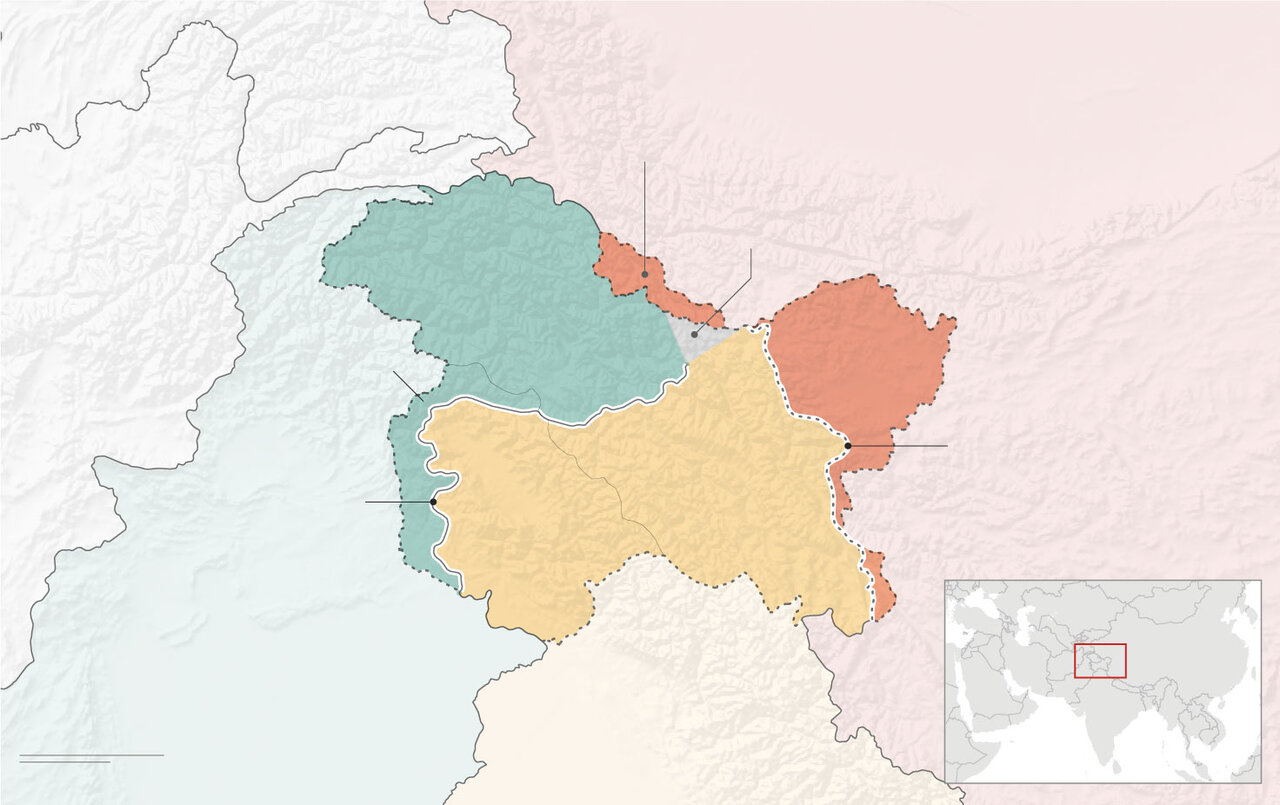
The Kashmir region is divided among India, Pakistan, and China — but claimed in full by both India and Pakistan. The region is home to roughly 20 million people — with an estimated 14.5 million living in the India-administered territory, about 6 million in Pakistan-administered territory, and less than a few thousand in China-administered territory. It sits at a confluence of critical strategic, economic, and religious interests.

The modern history of the Kashmir conflict dates back to 1947, when British India was partitioned into Hindu-majority India and Muslim-majority Pakistan. What today constitutes the Indian union territory of Jammu and Kashmir — part of the wider region of Kashmir —was at the time ruled by the Hindu maharaja Hari Singh, who initially declined to join either country.

That changed after Pakistani guerrilla fighters attempted to seize the region and topple him. The result was the first India-Pakistan war, as the maharaja sought India’s help to ward off the invaders and in return acceded his princely state to New Delhi — reinforcing a de-facto division of Kashmir that still holds.

Today, India controls the most populous portion of the region, which includes the Kashmir Valley, Jammu and Ladakh. Pakistan holds parts of northern Kashmir, including Azad Jammu and Kashmir (AJK) and Gilgit-Baltistan. China, meanwhile, administers the sparsely populated Aksai Chin region in the northeast, which India also lays claim to, and Shaksgam Valley, where India does not acknowledge Chinese control.

In August 2019, the Modi government revoked Article 370 and scrapped Jammu and Kashmir’s special autonomous status – a step hailed by New Delhi as a “major achievement” but decried in Islamabad as illegal.

Few regions in the world are as densely militarized or as persistently volatile. India and Pakistan have been at war three times. However, in the past both sides were not nuclear.

Today, the possibility of a nuclear conflict is very real and international intervention for seizure of hostilities is required.

Germany has to probe wartime supply of chemical arms to Iraq

Iran FM spox

Germany has to probe wartime supply of chemical arms to Iraq

TEHRAN, (MNA) – Iran has called for full accountability for the use of chemical weapons during the Iran-Iraq War, urging Germany to investigate its role in arming the former Saddam Saddam regime with the destructive weapons.

In a statement issued on the anniversary of the Chemical Weapons Convention’s entry into force, Iranian Foreign Ministry spokesman Esmaeil Baghaei said that for the Iranian nation, the day represents a global consensus on preventing a recurrence of the atrocities committed against Iranian soldiers and civilians through chemical warfare in the 1980s.

“Revealing the truth is the prerequisite for the realization of justice. Shedding light on the role of those who supplied materials and technologies used in Saddam’s chemical weapons program remains a serious item on the Foreign Ministry’s agenda,” Baghaei stated, according to Press TV.

He said Iran has demanded Germany inform the world of its role in arming Iraq with chemical weapons. 

“Iran’s demand that Germany establish a mechanism to uncover the truth and inform both Iranian and international public opinion about its role in arming Iraq with chemical weapons is a direct expression of that pursuit,” the spokesman added.

Celebrated on April 29, the Chemical Weapons Convention marks a landmark achievement in international law aimed at preventing the spread and use of chemical weapons.

During the 1980–88 war, the Iraqi army repeatedly employed chemical weapons against Iranian soldiers and civilians, leaving tens of thousands dead and many more suffering for years to come. The former Iraqi regime used chemical weapons more than 500 times against Iranian forces and civilians in five border provinces.

In these inhumane attacks, a wide range of toxic chemical agents-including mustard gas, nerve agents, and choking agents-were used against Iranians, some for the first time in warfare.

At least 10,000 Iranians were killed, and more than 107,000 civilians, including women and children, were injured in attacks.

In one of the most notorious incidents, the Saddam regime dropped mustard gas bombs on Sardasht, a small city in Iran’s West Azarbaijan Province, on June 28, 1987. The attack killed at least 119 Iranian civilians and injured another 8,000, leaving some permanently disabled.

Western countries-including Germany, the Netherlands, Britain, France, and the United States-contributed to the Iraqi regime's chemical weapons program at the time.

German companies, in particular, played a significant and documented role in supplying Saddam Hussein’s regime with chemical weapons technology and materials.

Victims of these attacks continue to suffer to this day, with their plight compounded by ongoing Western sanctions that restrict access to medical supplies and equipment in Iran.

Mossad agents, warmongers trying to derail Iran-US talks: Trump allies

This combo shows Iran's Foreign Minister Abbas Araghchi (R) and Steve Witkoff, the US president's Middle East envoy, who lead indirect talks between Tehran and Washington.
US President Donald Trump’s closest media allies and supporters say “Mossad agents” and “warmongers” are pushing the US into a conflict with the Islamic Republic of Iran. 

Last week, conservative talk show host Tucker Carlson featured a senior Pentagon official who he claimed was ousted because he was seen as an obstacle to hostile US measures against Iran.

Dan Caldwell, a top advisor to Pentagon chief Pete Hegseth, was removed earlier this month on charges that he allegedly leaked classified information about Hegseth’s use of a Signal chat, according to several media outlets.

Not so by Carlson’s telling, who has unparalleled access to Trump.

“You did make maybe one career mistake by giving on-the-record interviews describing your foreign policy views…that are out of the mainstream among warmongers in Washington,” Carlson said to Caldwell.

On Sunday, another conservative podcaster, Clayton Morris, a former Fox News anchor, said pro-Israel voices were “working overtime” to destroy the “anti-war team” that Trump has assembled at the Pentagon.

“We’ve learned here at Redacted that former Israeli Mossad agents are working overtime on social media and behind the scenes trying to discredit Secretary of Defense Pete Hegseth,” Morris said, referring to his show. 

Trump’s administration is reportedly divided between more traditional Republicans like US Secretary of State Marco Rubio and national security advisor Mike Waltz, and “America First” isolationists like White House chief of staff Susie Wiles and director of national intelligence Tulsi Gabbard.

Pro-Trump media personalities have singled out Merav Ceren, who was nominated to head Iran and Israel at the White House National Security Council, for criticism. 

Ceren was born in Haifa, and worked in the Israeli ministry of military affairs. On his show, Morris said that, “Neo-con Mike Waltz has now hired basically a dual citizen and former IDF (Israeli army) official to work under him.”

According to a Pew Poll published in April, 53 percent of Americans now express an unfavorable opinion of Israel, up from 42 percent in March 2022.

On Iran, Trump’s closest envoys have been left contradicting themselves. 

Steve Witkoff, Trump’s Middle East envoy who has emerged as his go-to global troubleshooter, suggested earlier this month that Washington would allow Iran to enrich uranium at low levels.

After backlash from pro-Israel voices, he flipped, saying that Tehran “must stop and eliminate” its nuclear enrichment program fully.

This week, Secretary Rubio said the US could re-enter a deal that sees Iran keep a civilian nuclear program - so long as it halts enrichment, and instead ships it in from abroad. 

American and Iranian technical teams met in Oman on Saturday for their third round of talks. Trump told reporters on Monday that the talks are going “very well” and that “a deal is going to be made there”.

“We’ll have something without having to start dropping bombs all over the place,” he said.