Wednesday, August 29, 2018

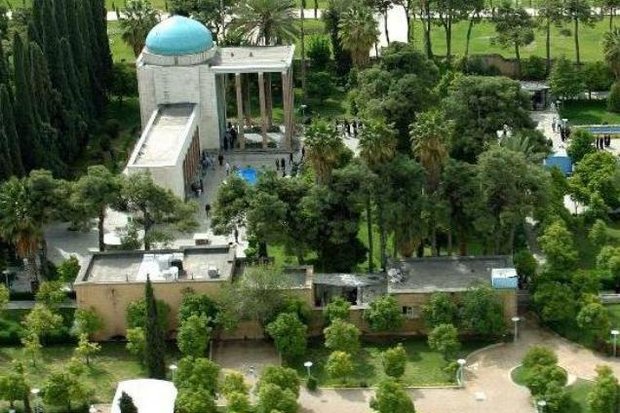
Saadi's words from 13th century worth remembering today

By: Martin Love


Saadi's words from 13th century worth remembering today
TEHRAN, Aug. 29 (MNA) – History is not going to forget the JCPOA no matter what happens to the agreement itself. Ideally, it ought to stand with continued backing by the other signatories, which means the other signatories make it worthwhile for Iran to continue faithfully respecting its terms.
Whether these other signatories can with determination continue upholding the agreement with an effective quid pro quo with Iran remains to be seen. The jury is still out on this, but there are a few positive signs popping up, particularly in Europe.
What is most riveting is that now the US, and I believe it is a sign of desperation and not strength, is waging some kind of economic warfare of varying kinds and degrees with almost 15 percent of the world’s countries with a total population of some 2 billion people, or over 25 percent of all of the world’s citizens. This is, in a word, amazing.
That the US government can imagine even for a minute that this economic warfare constitutes a sound strategy to maintain its power for very long is the height of arrogance and delusional thinking.  Iran seems to be at the epicenter of this economic warfare.
 Also, thousands of people from scores of nations have been included in the US Treasury Department list of prominent designated nationals who have been more or less blocked from the US dominated global financial system, where the US dollar has for decades been the reserve currency of the world, particularly since the end of World War 2.
 Donald Trump has been called a narcissist, but narcissism seems evident in spades throughout the US governmental and the elitist establishment, and this is quite evident in the scope of the current economic sanctions against countries and individuals. One could argue that a critical mass may have been achieved, because push back is beginning to blossom.
The US has always used the “extraordinary privilege” of having the preeminent reserve currency as a weapon against geopolitical rivals, but never before has the dollar been weaponized so much against so many.
 According to Mike Krieger, an American blogger and economic commentator, the apogee of the so-called American empire is already toast, aside from the continued role of the dollar in the global financial system. Krieger believes that Trump’s decision to scuttle the JCPOA is the primary catalyst that is causing the rest of the world to look for alternative methods with which to conduct global business.
 Germany’s foreign minister, Heiko Maas, for example, has said this August that the EU would be wise to set up its own payment system that would give the EU independence from Washington’s diktat. French leaders have also subscribed to the same notion of a Europe shaking off its economic vassalage to the US
 And some Asian leaders are expressing some of the same sentiments of less obeisance to the US, including South Koreans and Pakistan’s new Prime Minister Imran Khan. We know what Russia is doing: dedollarizing – selling US securities and buying tons of gold every month.
I am anyway drawn back to recall some distant Asian and the Middle East history in the 13th century, a horrific period in which the Mongols swept westwards from the Far East and conquered widely, destroying many Iranian cities and in particular ending the Abbasid Caliphate, established in 750 AD, and wrecking its capital at Baghdad.
One anecdote of the fall of Baghdad is that the last Abbasid Caliph, al-Mu’tasim, was rolled up inside a Persian carpet and literally kicked to death by the Mongol invaders under orders from their leader, Hulagu.
One cannot help but remark that the US these days is literally trying to kick the life out of the sovereignty of other nations, including Iran’s. But there is another greater personage of the 13th century, the Iranian-Persian poet from Shiraz, Saadi. For one thing, Saadi, widely traveled during his lifetime, allegedly claimed that the prime virtue was simply patience.
 Of all things now, patience (and courage and perseverance) are required, as it was in the 13th century during difficult times because of the Mongols, and now because of the US or, as Winston Churchill remarked, “If you are going through Hell, keep going….”
Former Secretary General of the United Nations Ban Ki-moon visited Tehran during his career at the UN and noted that at the entrance of the UN in New York hangs a huge Persian carpet, a gift from the people of Iran. He also noted that alongside this carpet are some words of the poet Saadi that translate roughly:
All human being are members of one frame,
Since all, at first, from the same essence came.
When time afflicts a limb with pain
The others limbs at rest cannot remain.
If thou feel not for other’s misery
A human being is no name for thee.

EU Aid for Iran Signals Decline of US Power: American Analyst


TEHRAN (Tasnim) – An American political analyst said a European Union decision to give $20.7 million in aid to Tehran indicates that “Europe is clearly breaking from the dominance of US economic and military power”.

EU Aid for Iran Signals Decline of US Power: American Analyst

“What is notable is that Europe is clearly breaking from the dominance of US economic and military power and pressures that has been the rule for decades. After Trump ended the Iranian nuclear agreement, under normal conditions, the Europeans may have been shy to extend such aid, for fear of a US backlash. With Trump’s, and America’s, reputation in shatters, more and more countries are losing their fear of US intimidation,” Myles Hoenig, who ran for the US Congress in 2016 as a Green Party candidate, told Tasnim.

Following is the full text of the interview.

Tasnim: On August 23, the European Commission adopted a first package of €18 million for projects in support of sustainable economic and social development in the Islamic Republic of Iran, including €8 million assistance to the private sector. High Representative/Vice-President Federica Mogherini said: “Since the renewal of the EU-Iran relations as a result of the Iran nuclear deal, cooperation has developed in many sectors. We are committed to sustain it and this new package will widen economic and sectoral relations in areas that are of direct benefit to our citizens”. What do you think about the package? How much could this help Iran?

Hoenig: How much it will help is far too early to say, but just the confidence that the European Commission has in such development does say a lot. Whether the sum is small or substantial it will go towards developing Iran in ways that have been neglected for quite some time, mostly due to the US sanctions.

What is notable is that Europe is clearly breaking from the dominance of US economic and military power and pressures that has been the rule for decades. After Trump ended the Iranian nuclear agreement, under normal conditions, the Europeans may have been shy to extend such aid, for fear of a US backlash. With Trump’s, and America’s, reputation in shatters, more and more countries are losing their fear of US intimidation.

Tasnim: US Secretary of State Mike Pompeo recently named senior policy adviser Brian Hook as special representative for Iran in charge of “Iran Action Group” to coordinate Trump’s pressure campaign on the Islamic Republic following Washington’s withdrawal from an international nuclear deal with Tehran. What’s your take on the action group?

Hoenig: Brian Hook personifies the Trump administration’s paranoia and vengefulness directed at those they feel are not supportive of Trump, and even more so, disloyal. Democrats have gone after Pompeo’s appointment of Hook because he has a reputation of retaliation against career State Department employees, according to Congress members Cummings and Engels. Trump’s foreign policy agenda is mostly defined as erratic. He has a love/hate relation with Russia and N. Korea; has insulted every major ally the US has, from Europe’s staunchest supporters to the Japanese; pulled out of international agreements; and has conducted a State Department never sure whether its leadership supports the careerists or the Trump name. How Hook’s appointment affects the Iran Action Group is far too early to assess.

Considering that in regards to foreign policy the Trump administration is trying to undo any ‘success’ that is attributed to Obama, such as the nuclear agreement with Iran, focusing on Iran is not a comforting sign. Most of those who now make up the Trump foreign policy team are dedicated to replacing war for diplomacy. On the surface, the Action Group is an ominous sign, as one never knows how a caged animal will react. The caged animal, in this case, is Trump with his legal and political predicaments. With talks of impeachment, forced resignations, and mid-term election disaster for Trump’s political party, military action against Iran would either be pushed as a way of deflecting his problems domestically, or pushed aside to deal with this potentially existential threat to his presidency.

Tasnim: President Trump’s national security adviser John Bolton said on August 22 that the Europeans have to make a choice between the US and Iran in observing American sanctions. How much do you think Europe could resist?

Hoenig: America is respected by the Europeans, but not Trump. It is not in Europe’s interest to engage in any hostilities with Iran and having Trump in the White House is an easy way to show their independence from Washington. There are enormous trade potentials at stake, including losing to Russia and China if they were to pick up the pieces. One consequence of the Iran deal was to show the economic independence of the European market, and Obama and his State Department were wise enough not to alienate any and all involved in the deal.

Tasnim: Do you believe that a new round of talks between Tehran and Washington could change anything given to the fact that other parties of the JCPOA have remained committed to the deal?

Hoenig: The question is whether or not the US can afford to be even further isolated from the world community with regards, not just to Iran, but all others. Right now, the US foreign policy establishment is in crisis. Those that have been advocating for war are slowly pushing out those who take a more diplomatic approach. The war industries are eagerly waiting, and lobbying, for a more aggressive foreign policy. On the other hand, it would be in Trump’s interest to do a reversal of some kind with regards to Iran as he did with N. Korea. That was a brilliant move on his part as it showed the opposition party, the Democrats, unwilling to support a potential peace initiative, exposing them for their hypocrisy as claiming to be the party for peace yet have always advocated or supported war. Such a move regarding Iran would also discombobulate the Democratic Party leadership.

US to Pay Price for Leaving JCPOA, Pressing EU: SIPRI Chief


TEHRAN (Tasnim) – The director of the Stockholm International Peace Research Institute (SIPRI) said the US would pay a price in the long run for unilaterally withdrawing from the 2015 nuclear deal between Tehran and world powers despite the EU’s opposition.


“In the longer term, the US will pay a price for unilaterally breaking out of the JCPOA and attempting to press the EU into implementing a policy it opposes. However, that is the longer term and this US administration does not seem much focused on longer term considerations,” Dan Smith told Tasnim.
Dan Smith has a long record of research and publication on a wide range of conflict and peace issues such as nationalism, identity politics, armed conflicts, ethics of intervention, gender aspects of conflict and peace building. In recent years, his work has broadened to encompass other contemporary issues such as the relationship between climate change and insecurity, peace and security issues in the Middle East and global conflict trends. Smith has served four years in the UN Peacebuilding Fund Advisory group, two of which (2010–2011) were as Chair. He has lived most of his adult life in the UK with a 10-year spell in Norway. He has traveled professionally to more than 60 countries.
The following is the full text of the interview. 
Tasnim: On August 23, the European Commission adopted a first package of €18 million for projects in support of sustainable economic and social development in the Islamic Republic of Iran, including €8 million assistance to the private sector. High Representative/Vice-President Federica Mogherini said, “Since the renewal of the EU-Iran relations as a result of the Iran nuclear deal, cooperation has developed in many sectors. We are committed to sustain it and this new package will widen economic and sectoral relations in areas that are of direct benefit to our citizens”. What do you think about the package? How much could this help Iran?
Smith: It is important that the EU is seeking ways to support the continuation of the JCPOA. I am encouraged that they are trying to follow fine words with the right deeds. This is an encouraging first step. I hope it is not the only action the EU takes because by itself it is not nearly enough to make a real difference for Iran.
Tasnim: US Secretary of State Mike Pompeo recently named senior policy adviser Brian Hook as special representative for Iran in charge of “Iran Action Group” to coordinate Trump’s pressure campaign on the Islamic Republic following Washington’s withdrawal from an international nuclear deal with Tehran. What’s your take on the action group?
Smith: It is not at all clear what the effect of the Action Group will be.The US administration’s policy has been set and the Group’s main mandate will be to ensure it is carried out. However, pressure can be put on US allies in different ways with different degrees of regard for their sensitivities. Whether the Action Group will make things easier or harder for the EU over the US-Iran relationship is hard to tell.
Tasnim: President Trump’s national security adviser John Bolton said on August 22 that the Europeans have to make a choice between the US and Iran in observing American sanctions. How much do you think Europe could resist?
Smith: EU trade with the US is far, far greater than EU trade with Iran. Therefore, if pushed to a choice, relations with the US will take priority. This is especially true for businesses and the EU can only do a limited amount to press European companies to continue trading with and investing in Iran. Things are complicated, however, by the current round of so-called “trade wars”; if EU relationships with the US deteriorate significantly, there might be more room for maneuver for the EU in relation to Iran.donal
In the longer term, the US will pay a price for unilaterally breaking out of the JCPOA and attempting to press the EU into implementing a policy it opposes. However, that is the longer term and this US administration does not seem very focused on longer term considerations.
Tasnim: Do you believe that new round of talks between Tehran and Washington could change anything given to the fact that other parties of the JCPOA have remained committed to the deal?
Smith: President Trump’s diplomatic maneuvers can always surprise observers but at present, it seems unlikely that new talks would quickly produce a viable compromise. Several rounds of talks might be required before a workable agreement could reproduce. It would be worth making that effort if at all possible.

Panic in the Persian Gulf as the Yemeni War Enters the UAE

By: Kayhan Int’l 


They had been asking for it, and they are finally beginning to get it. What had happened on Monday was only the beginning and a sample of things to come, which means matters could really become torrid with the worst economic collapse in the region if intransigence continues to dictate the policies of those slavishly serving the interests of the Americans and the Zionists.

An old English adage says: Those who live in houses of glasses should not throw stones at others. Only fools ignore such a wise remark at their own peril.

We mean the drone attack on Dubai International Airport day before yesterday by Yemen’s Ansarallah defenders, whose patience has stretched thin because of the mounting crimes on Yemeni soil and against the people of Yemen by the Emirati invasion force of mercenaries assembled from various countries.

The first ever retaliatory strike at Dubai that virtually halted ninety percent air traffic at the busiest airport in the Persian Gulf, and which the UAE regime denied in a desperate bid to prevent panic among the mostly expatriate population, again proved the long reach of Yemen’s legal government vis-à-vis aggressors trying to install a puppet regime in Aden.

It seems easy oil wealth, along with the massive weapons bought from the West, and the protection promised by the illegal Zionist entity, have blinded the two chief clans ruling the two principal sheikhdoms of the 7-state confederation.

The Aal-e Nahyan of Abu Dhabi which traditionally holds the UAE presidency, and the Aal-e Maktoum of Dubai which is in charge of the prime ministry, have unnecessarily aligned with the Aal-e Saud regime of Riyadh to launch a war on Yemen.

Unlike Saudi Arabia, which is in occupation since 1934 of the northern Yemeni provinces of Najran, Jizan, and Asir, and fears that a strong representative and republican government in Sana’a will influence liberation movements in Hijaz, Ha’il, Tabouk and especially the Eastern oil-rich region against the dictatorship of the Najdis, the UAE has no land borders with Yemen. The two are not even linked by any regional waterway – except for the high seas. 


So what has driven the UAE to meddle in Yemen, when in view of its prime role as a trade and commercial centre of the Persian Gulf, it could have played a positive role in defusing any crisis?

The Emiratis, by assembling a ragtag force of brutal mercenaries and using the local al-Qa’eda terrorists, have not only occupied southern Yemen including the beautiful Socotra Island – a UNESCO world heritage site – but have set up prisons on the pattern of the Guantanamo to torture into submission any Yemeni citizen opposed to the occupation of his/her country. At the same time they have besieged the port city of Hodeidah, but unable to break the resistance of the Yemeni people, are targeting civilians, especially elderly men, women, and children.

In addition, the UAE has bribed Djibouti and Somalia in granting foothold on their soil to dominate the Bab al-Mandeb Strait which commands entrance to the Red Sea, when back at home in the Persian Gulf the Emiratis cannot even exercise proper control over their thin strip of coastal waters. 

It is obvious that the UAE is trying to punch above its weight, oblivious of the fact that if the defenders of Yemen decide to deliver decisive blows, it would be a complete knockout with the Emiratis floored forever.
An indication in this regard was last Monday’s drone attack on Dubai Airport and as vowed by the popular Ansarallah movement, since the cowardly coalition of Saudi Arabia and UAE, unable to engage Yemen’s armed forces in manly combat, has resorted to a war of commercial attrition, the response from now on will be economic war.

The Yemenis, with their infrastructure completely destroyed by over three years of Saudi bombing have nothing more to lose, and nothing to fear. 

If the economic war were to intensify, though Saudi Arabia is large and its cities scattered, Dubai and Abu Dhabi would be the immediate casualties. 

Once the Patriot-piercing ballistic missiles of Yemen start raining down on the two chief cities of the UAE, neither will Donald Trump nor Benjamin Netanyaho, be of help in averting the inevitable.

Tuesday, August 28, 2018

Lethal Trade: US Diplomats Promoting Endless Wars


TEHRAN (FNA)- We now know for sure what we had already suspected for years that the United States diplomats and diplomatic missions across the globe are in fact front companies that promote the Military-Industrial Complex’s global weapons sales.
Their one constant high priority is selling weapons made by America’s major arms-makers to other countries. Though private companies, they increasingly find the US diplomatic corps working as their sales team.

This represents official determination to see the US remain the world’s largest exporter of weapons and instigator of wars. This is a foregone conclusion with or without diplomats hectoring every Arab country to buy American and attending weapons shows to push US products.

In the prevailing environment, don’t expect these arms manufacturers and their diplomatic fronts to decline Saudi Arabia's requests for yet more military equipment and supplies amid mass execution of pro-democracy prisoners at home and the ongoing war on Yemen.

US diplomats will always ignore calls to end their lethal trade, though hundreds of thousands of people across the world are calling on the US and EU governments to bring in an arms embargo on Riyadh, the UAE and a host of others.

A new UN report has already lashed out at Saudi Arabia for being involved in breaches of humanitarian law in war-torn Yemen. The UN Human Rights Council says it has reliable evidence from humanitarian organizations including the head of UNICEF in Yemen that the Saudi-led coalition is involved in horrific actions against children.

And if that’s not enough, according to experts from Physicians for Human Rights, Doctors Without Borders, and the Open Society Foundation, the growing number of indiscriminate bombings in Yemen by the Saudi-led and US-backed coalition had taken a heavy toll on medical personnel serving with humanitarian organizations. These attacks on schools, hospitals, and even wedding parties prevent medical care being provided to those in need - largely under siege, particularly in Hodeidah.

Under international law, it is unlawful for the Saudi-led coalition to use American-Western weapons indiscriminately in civilian areas or through illegal blockade to obstruct the delivery of basic and life-saving supplies to civilian areas. It violates the other key principle of the laws of war which also makes the US complicit in Saudi war crimes.

The UN Security Council should therefore condemn the Saudi-led violations and atrocities in the strongest possible terms. Sending the regime changers more arms and allowing them to continue the illegal war on the poorest nation in the Middle East will only make the situation worse.

The UN Security Council also has the power to refer the American war crimes to the International Criminal Court in The Hague. The US should take responsibility and stop being content to live with Saudi war crimes.

It is said lips and tongues lie, but actions never do. No matter what words are spoken, actions betray the truth about the US government’s foreign policy.

US-based companies are still the number one supplier of arms to Saudi Arabia, which hit the $100-billion-mark last year. What's more, the Pentagon has announced initial approval of new arms sale this year, including gunships, bombs, munitions and weapons parts worth billions of dollars.

Whichever way you cut it, this is not a move from which the US, the House of Saud and their rogue partners will ever back down any time soon. They have no intention to shove the war machine into reverse gear in a region bristling with American weapons.

Taken in total, the US diplomatic missions should never have been arming repressive Saudi Arabia in the first place. Their diplomatic support for the regime and its partners makes them complicit in its wrongs. The only way to avoid a humanitarian disaster is for the US and its diplomatic missions to end such a shameful relationship which only props up and supports Saudi repression at home and military aggression abroad. 

American Activist: Israel Seeks to do to Palestinians what North Americans did to Native Americans


TEHRAN (FNA)- American activist Paul Larudee says that the US embassy move and Washington’s absolute support for the regime in Tel Aviv results in the continuation of the Zionist project to ethnically cleanse Palestinians.
Speaking in an exclusive interview with FNA, Paul Larudee said that “the most effective way to defend Palestinian rights is by popular and civil nongovernmental worldwide resistance, to make Israel, Israelis and Israeli products and services unwelcome everywhere.”

Reacting to the shameless remarks by the US Ambassador to the UN who said “no country would act with greater restraint than Israel,” Mr. Larudee talked about the viciousness of the Zionists who like to kill every last Palestinian man, woman and child. The activist further explained that it is with this brutal mentality that they consider the recent killings in Gaza to have been done with great restraint.

Paul Larudee is an academic, activist and former US government advisor. He is also a human rights volunteer and a founder of the Free Gaza and Free Palestine Movements. Mr. Larudee has shared his expert comments on many international news outlets such as RT English and Press TV.

FNA has conducted an interview with Paul Larudee about Trump’s relocation of the US embassy to Jerusalem Al-Quds and also the recent killings of Palestinian protesters by Israeli army.

Below you will find the full text of the interview.

Q: Delivering on his campaign promise and in defiance of all global warnings, Donald Trump moved the US embassy to Jerusalem al-Quds. Many believe that this move by Trump has effectively killed fantasies that Washington is a neutral party in the Palestinian-Israeli conflict. How do you think that would play in the current and future developments surrounding the issue?

A: The US embassy move has not killed the fantasy that Washington is a neutral party because that fantasy died a half century ago.  No one believes that fantasy, least of all the Zionist agents that are trying to pretend that it is still alive.  The embassy move and the continuation of unquestioning US support for Israel meant the project to empty Palestine of its Palestinians will proceed with no signs of slowing down, demonstrating that the phrase “Never again” meant to put an end to all genocide, has been replaced by “Again and again.”

Q: Since the beginning of the protests dubbed as the “Great March of Return”, Israeli forces have killed and wounded many Palestinian civilians, including the protesters, members of the press and medical workers. It seems as if the regime in Tel Aviv felt an atmosphere of impunity where it could act beyond all international laws and conventions. Where do you think this feeling of immunity comes from?

A: Why shouldn’t Israel feel free to kill and maim Palestinians?  No one is stopping them.  They are quite justified in believing that they can commit murder without any limits. If there are limits, no one has found them.  Their intention is to do to Palestinians what the North Americans did to Native Americans, and until now, no one has done enough to stop them.  Under these circumstances, one would have to say that their arrogance is justified.

Q: The US Ambassador to the UN said “no country would act with greater restraint than Israel” as the world was witnessing the rise in the toll of Palestinian civilians killed and wounded by Israeli live fire. How do you evaluate her words?

A: She is referring to countries that would like to exterminate every last Palestinian man, woman and child, which is a view endorsed by a lot of Israelis and Zionists, especially at the highest levels of government.  In such a country, killing on the scale of Gaza must be considered restraint, by comparison. After the 2008-9 massacres of Palestinians in Gaza, I was invited to speak at Clark University in the US.  The Zionist student organization attended, and I had a conversation with their faculty advisor.  He thought that the deaths of around 1400 Palestinians showed that Israel had exercised great restraint.  He said that a lot more could have been killed.  I replied, that yes, Israel could have killed all the Palestinians in Gaza.  “Exactly,” he replied. “So if Israel had killed a million and allowed the rest to live, would that be restraint,” I asked?  “You would have to say so,” he answered.  This is not an unusual way of thinking among Israelis and Zionists.

Q: Israel has rejected international calls for probes into recent killings and insisted that its open-fire rules for Gaza will not change. Some Western states, particularly the US and Britain, who call themselves champions of human rights, have supported the Israeli crimes against Palestinians. The UN has also failed to restore the rights of the people. What is your assessment? What role can nations of the world play in protecting the rights of the oppressed people of Palestine?

A: I’m not sure that governments can or will do much to protect Palestinians, because those that defy the US and Israel will be subject to regime change or total destruction, as with Iraq, Libya, Syria, Afghanistan and other countries. The most effective way to defend Palestinian rights is by popular and civil nongovernmental worldwide resistance, to make Israel, Israelis and Israeli products and services unwelcome everywhere. BDS is an example, but much stronger measures are needed.

Q: Saudi Arabia’s crown prince, Mohammad bin Salman, has recently said that Israelis “have the right to have their own land” and that formal relations between Tel Aviv and Riyadh could be mutually beneficial. The Saudi regime once, at least seemingly, opposed Israel’s right to exist. What do you think has changed in Riyadh to now come out as an apologist for the Zionist regime and betray the Palestinian cause? How do you think would other fellow Arab and Muslim nations think of the Kingdom?

A: Mohammad bin Salman is playing a dangerous game.  His alliance with Israel is not popular in his own country, much less in other Arab and Muslim countries.  He regards Iran as a greater threat than Israel, and an alliance with the US and Israel as the means to a dominant role for Saudi Arabia in the region, at the expense of Iran and its allies.  Betraying the Palestinian cause is a means of strengthening ties with the US and Israel.  He sees the Palestinians as an obstacle to his regional ambitions.  Other Arab and Muslim nations may despise him for this, but most of their governments will not say anything because their leadership has been compromised.  The ones that dare to speak out, like Iran and Syria, are under constant threat.

Trump Aware War with Iran Would Be Disaster for US: American Analyst


TEHRAN (Tasnim) – A senior political analyst based in the United States dismissed the possibility of any military conflict between Iran and the US, saying President Donald Trump is fully aware that war with the Islamic Republic would cause a major catastrophe for his country.

Trump Aware War with Iran Would Be Disaster for US: American Analyst

“While he may be a capitalist, nevertheless he is a realist and understands that war with Iran would be a disaster for the US and at this time he is trying to devote all his energies as president towards saving what is now the sinking ship of American dominance in the world,” Mark Glenn, from Idaho, said in an interview with the Tasnim News Agency.

“Keep in mind that Trump recently stated--doubtless much to the fury of Israel and her supporters around the world-- that he would be willing to sit down with the Iranian leadership and talk,” he said, adding, “He understands the precarious and dangerous nature of the present political climate between the US and Iran and is out to calm things down and allow things to cool off before they reach ignition in the way that Israel demands.”

Glenn is a writer and co-founder of the Crescent and Cross Solidarity Movement, an interfaith forum dedicated to uniting Muslims and Christians against Zionists. He has his own blog The Ugly Truth.

The following is the full text of the interview:

Tasnim: As you know, the US government’s hostility toward Iran has recently entered a new stage. Secretary of State Mike Pompeo has formed a dedicated group to coordinate and run the country's policy towards Iran following President Donald Trump's unilateral withdrawal from the 2015 nuclear deal with Tehran. Pompeo announced the creation of an Iran Action Group (IAG) at a news conference, naming Brian Hook, the Department of State's director of policy planning, as its head. What do you think about the group and its objectives and do you think that it would be able to reach its goals?

Glenn: Our first inclination should be to look at the timing involved in all of this. Trump is just about to unveil the details of his much-discussed ‘peace deal’ involving Israel and the Palestinians that is sure to result in a tidal wave of typical screeching from Israel who wants ‘peace’ in the same way that Syphilis wants penicillin. Now, what we have seen since before Trump became president has been an over-the-top display of affection towards Israel when the mics and cameras are on, which have included many of his official acts such as the Jerusalem decision and his pulling out of the JCPOA. My personal interpretation of all of this is that these are all things which Trump knows he must do in order to lubricate the gears of his ‘peace deal’ machinery, after having established with the Jews his ‘good will’ towards Israel.

Now, having said that, it makes perfect sense then why he would maintain the appearances of hostility towards Iran in order to neutralize or at least minimize the inevitable tidal wave of screeching that will arise out of those elements in Israel when he unveils his ‘peace deal’. Does this mean that Trump is a friend to Iran? No. Trump is at heart an American capitalist and who believes that all countries should bend the knee towards the United States on all matters. But does this mean that he intends war with Iran? No, it does not. While he may be a capitalist, nevertheless he is a realist and understands that war with Iran would be a disaster for the US and at this time he is trying to devote all his energies as president towards saving what is now the sinking ship of American dominance in the world.

Tasnim: The Trump administration recently threatened to cut Iranian oil exports to zero, saying that countries must stop buying its oil from Nov. 4 or face financial consequences. Washington later softened its threat, saying that it would allow reduced oil flows of Iranian oil, in certain cases. Since oil is a strategic product and countries around the world always demand it, do you think that the US is able to carry out this threat at all?

Glenn: This is typical Trump strategy, talking loud and tough one minute and then the next minute backtracking entirely and taking a much softer or even opposite approach from the original. Keep in mind that Trump recently stated--doubtless much to the fury of Israel and her supporters around the world-- that he would be willing to sit down with the Iranian leadership and talk. He understands the precarious and dangerous nature of the present political climate between the US and Iran and is out to calm things down and allow things to cool off before they reach ignition in the way that Israel demands. At the same time, however, he has very little room to maneuver, given the chokehold that organized Jewish interests have over the media, economy and the political process here in America where day by day he hounded with the threat of impeachment.

And of course, we have to look at this from the ‘business’ end of things where Trump--as a highly successful international businessman excels. Yes, putting western-based sanctions on Iran has the obvious effect of depriving Iran from doing business with the West, but which has the opposite effect of bolstering Iran’s business ties with the East, including Russia, Central Asia, China, India, all of which need Iranian oil desperately and some of whom, due not only to their growing industrial might but as well--as in the case with China--are flush with cash as a result of the trade deficit they maintain with the US, and therefore, the only ’harm’ that comes to Iran vis a vis any western-based sanctions is that the manipulative tentacles attached to the Jewish money that dominates the West economically, politically, culturally, etc., is not afforded an entryway into the otherwise well-protected systems of the IRI.

Tasnim: Trump's threat is part of his walking away from the Iran nuclear deal, known as the Joint Comprehensive Plan of Action (JCPOA). He also plans to fully reinstate anti-Tehran sanctions from November 4. In the meantime, the EU has vowed to counter Trump’s renewed sanctions on Iran, including by means of a new law to shield European companies from punitive measures. German Foreign Minister Heiko Maas recently said Europe should set up payment systems independent of the US if it wants to save the JCPOA. What do you think about the EU’s role in reducing Washington’s pressures against Tehran and saving the deal?

Glenn: As I have stated on many occasions, my position as regards the JCPOA is identical to that of His Excellency Ayatollah Khamenei when this ‘agreement’ was first proposed, which was that it was/is an inherently dangerous move whose intended end result was the subjugation of Iran’s rights as a sovereign nation and the entryway of Western/Zionist toxic influence over Iran’s political, cultural, military and economic independence in return for the ‘freedom’ of doing business with the West. The entire charade was for all intents and purposes a modern-day replay of the age-old tale by the Latin poet Virgil featuring the Greeks offering the Trojans a ‘gift’ in the form of a large wooden horse, within which were secreted Greek soldiers whose job was--upon the horse being brought within the protected walls of the city, to wait until nightfall, crawl out of the horse, open the gates to the invading Greek army.

Having said that, I personally welcome Trump’s pulling out of the JCPOA and the fact that this large wooden horse has been destroyed, at least as far as any American involvement with it is concerned.

Now does this mean that Trump will renegotiate a ‘better deal’ with Iran as he has promised? Possibly, and although I certainly understand and sympathize with Iran’s leadership in not trusting America in any such future ‘deal’, at the same time I think that given the very turbulent political weather that presently exists that it is in Iran’s interests to talk with Trump, even if it is through back channels and away from public view, as Iran’s recalcitrance in refusing to talk with Trump is exactly the kind of background scenery that Israel WILL utilize in writing a believable script in the aftermath of something blowing up that ‘Iran did it’ and which will be swallowed whole-hog by a mentally incapacitated American public that has already been taught to hate Iran and to see this magnificent country as the world’s largest ‘exporter of terrorism’.