Showing posts with label tension. Show all posts

Tuesday, September 17, 2019

US might topple Saudi Arabia as the world's top oil exporter sooner than planned


US might topple Saudi Arabia as the world's top oil exporter sooner than planned

TEHRAN, (MNA) – Commenting on recent drone attack on Saudi Aramco Mehmet Ogutcu says prior to this attack, the US was planning to double its crude oil exports to 9 million barrels per day by 2024. That means the US might topple Saudi Arabia as the world's top oil exporter sooner than planned.
Following drone attacks on Saudi oil plants, the White House said on Saturday that the United States was committed to keeping oil markets well-supplied in the wake of an attack on Saudi Arabian oil plants by Yemen.
According to some sources in Saudi Arabia, its return to full oil supply capacity after Saturday’s attacks on Aramco oil plants could take “weeks not days”.
An attack on Saudi oil facilities on Saturday is believed to have disrupted half the country’s production capacity, making the United States the only real holder of the global supply cushion via its ability to raise own output or to soften sanctions against other major oil producers.
Some believe that it surely is no coincidence the US is targeting virtually every major energy producer from Iran, Venezuela, and Russia, but also including its own "allies" such as Saudi Arabia.
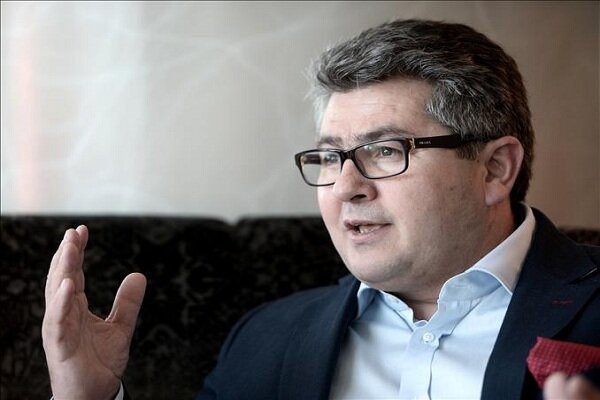
We reached out to Mehmet Ogutcu, Chairman of London Energy Club to shed more light on the issue.
Referring to the drone attacks on Saudi oil plants, he said, “I believe that we have experienced the “Pearl Harbour of the oil industry” on 14 September. Saudi Aramco lost about 5.7 million barrels per day of output after 10 unmanned aerial vehicles struck the world’s biggest crude-processing facility in Abqaiq and the Kingdom’s second-biggest oil field in Khurais.”
“The drone attack, removing 5 percent of the global oil production, will be remembered as a watershed incident in the world oil history. Its impact will be severely felt not only for a few weeks when damaged Saudi oil installations will be repaired and crude supplies will start flowing again business as usual. The impact will be much longer. The world’s largest oil exporter is vulnerable and its air defense system has proven to be ineffective,” he added.
Ogutcu went on to say, “For oil markets, it is the single worst sudden disruption ever, and while Saudi Arabia may be able to return some supply within days, the attacks highlight the vulnerability of the world’s most important exporter. They also add further political risk to prices, raising the specter of more destabilization in the Middle East and the threat of US retaliation against Iran. Even, with a price that could easily double, the Saudi remaining exports will still earn amounts close to what they earned before.” 
Commenting on who are the most beneficiaries of the tension in the region, he mentioned, “The Russians will be great beneficiaries of this escalating crisis as they will earn much more per barrel on their oil and gas exports. Of course, the United States, now the largest exporter in the world, will also benefit greatly. Remember, prior to this attack, the US was planning to double its crude oil exports to 9 million barrels per day by 2024. That means the US might topple Saudi Arabia as the world's top oil exporter sooner than planned. 
The US is pointing a finger to Iran as behind this attack and said it would provide evidence. Traditional US allies are however not on-board. Geopolitics and great-power competition are playing a greater role these days, and while that may satisfy some narrow interests, it does not bode well for stable energy prices, or for the secure and dependable delivery of energy along global supply chains. 
Only China, which imports most of its crude from the Persian Gulf, will be financially hit at the tune of $1.1 billion for each dollar increase per barrel. Thus, except for China, few of the players will seek to defuse the situation, all feeling that they have little to lose and much to gain.  Hence, it would seem that the September 14 attack stands a strong chance of escalating into an all-out conflict.
The sanctions are already cutting $42 billion/year of oil exports from Iran’s economy. They have slashed Iran’s oil production and exports to historic lows. Before the US sanctions, Iran produced 3.8 million barrels/day and exported 2.5 million barrels. Oil made up 80% of Iran’s exports. The US ended sanctions waivers for major importers of Iranian oil in May 2019. Iran’s oil exports were down about 2 million barrels and oil production hit its lowest levels since the Iran-Iraq war.”
Regarding the Iran-Saudi Arabia relation in recent years, Ogutcu noted, “While Saudi Arabia supports economically squeezing the Iranian regime, they may not wish to see a war with Iran. While the context has changed in light of the weekend attack, the reasons have not. Saudi Arabia would find itself on the front line of an armed conflict, with Iran or its proxies to the east, south, and north. Such a conflict would also cripple plans for an Aramco IPO and would cause driving foreign investment from the country. 
Saudi Arabia has many long term reasons to showcase its resilience and de-escalate. Until now, Iran and Saudi Arabia were protected by the fear of mutual destruction of their main oil export assets, should one attack the other’s facilities. Now that the Iranians have lost most of their export capacity due to the sanctions, this fear of mutual destruction is no longer there. 
How Washington and Riyadh choose to respond (for now limited to rhetoric) will show exactly whether this is a flash in the pan or a step-change in Persian Gulf tensions.”
Interview by Zahra Mirzafarjouyan

Thursday, August 01, 2019

Signs of tension reduction appearing in Persian Gulf

By Zahra Mirzafarjouyan

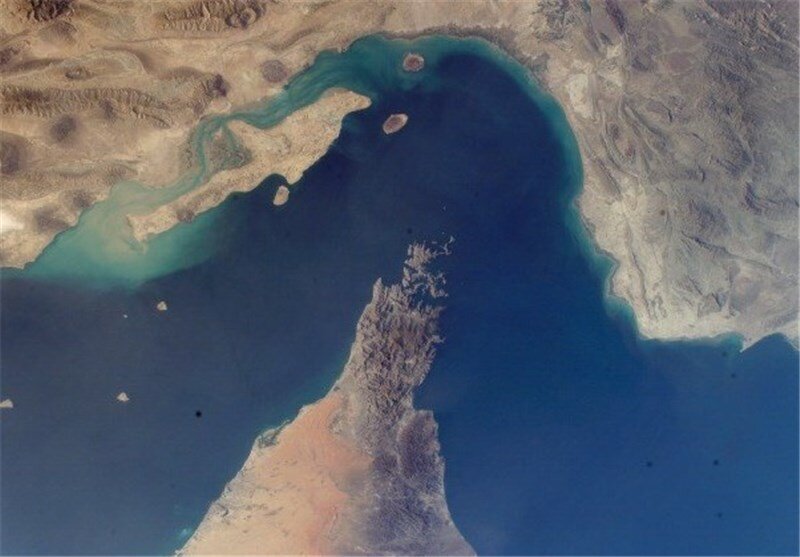
TEHRAN– After years of tensions between Iran and some Persian Gulf states particularly in recent months in the Strait of Hormuz, reports indicate the emergence of tensions reduction in this strategic region.
For nearly four decades, the Persian Gulf has not been calm and occasionally is the stage for Iran's confrontation with the US and its regional allies because of America's hostility toward the Islamic Republic of Iran. These tensions have sometimes led to direct military conflict.
Iran has been trying to challenge the US military power. The US also has hit Iran's military and oil facilities, killing many Iranians, including hundreds of civilians in the past.
The Persian Gulf, the Strait of Hormuz, and the Sea of Oman are a strategic route for supplying oil to world markets, and in this regards, oil tankers have been one of the main targets of military actions.
More than thirty years after the end of the Iran-Iraq war, several oil tankers have exploded again in the region in recent months. Tensions and maritime conflicts and attacks on oil facilities have re-emerged in the region by US and its regional allies destabilizing acts and the return of US sanctions against Iran.
The White House’s unlawful withdrawal from the Iran’s nuclear deal (JCPOA), designation of the Islamic Revolutionary Guards Corps (IRGC) as a terrorist group, re-imposing sanctions on Iran and trying to drive Iran’s oil export to zero all are provocative and suspicious moves of the US that have fueled the regional tensions.
Recently to reduce tensions in the region, a number of countries have taken steps and traveled to Iran to mediate.
Trying to calm the region Iran has also tried to take steps by a series of new proposals to improve relations with Arab countries on the Persian Gulf.
Iranian Foreign Minister Mohammad Javad Zarif suggested on May 26 signing a non- aggression pact with Persian Gulf littoral states during his three-day trip to Iraq. The suggested plan proves Iran to be right since security in the region would be achieved via cooperation of all regional countries and a desirable and stable regional discipline is obtainable without interference of foreign countries. The plan can become operational step by step in case of building confidence among regional countries.
Some speculation show that Oman and Iraq are likely trying to ease tensions between Tehran and some Persian Gulf states. In this regard, Iran’s Ambassador to Kuwait also announced on July 30 that some countries have accepted to join Iran’s proposed non-aggression pact.
Alongside with acceptance of some countries to join Iran's proposed non-aggression pact, it was announced that a joint Iran-UAE Coast Guard meeting had been held in Tehran after six years and some reports indicated that two UAE banks have announced their readiness to cooperate with Iran, Khorasan Newspaper reported.   
Russia and Qatar welcomed the proposal in June, and it now appears that Kuwait has been added to its supporters. In this regards, Iran’s Ambassador to Kuwait Mohammad Irani in an interview with Al Rai, Kuwaiti newspaper said that some countries have accepted to join Iran’s proposed non-aggression pact.
He did not explicitly mention the names of the countries, but said in his remarks that the proposal was not specific to Kuwait and would include all countries in the region. He also mentioned that some countries have responded positively to this plan, and Iran is awaiting response from other countries.
Simultaneously, Special Assistant to the Speaker of the Iranian Parliament for International Affairs Hossein Amir-Abdollahian also referred to the recent visit of Omani foreign minister to Tehran and said that Yusuf bin Alawi bin Abdullah had positive and constructive ideas on the subject of Iranian-Arab talks and the reduction of seizures and tensions during his visit to Tehran.
Foreign policy reporter of Etemad Newspaper wrote in his tweet quoting an Arab source: “In response to Washington's request for joining an international coalition to protect commercial ships in the region, Kuwait stated that the situation in the region was not like Saddam Hussein’s, former President of Iraq when Kuwait united with the US against another regional state and will not allow its territory to be used to threaten Iran. Kuwait had earlier rejected the US request for deployment of four B-52 bombers in Kuwait.”
In addition to Iranian Foreign Minister’s plan of ‘non-aggression pact’, Russia also outlined plan for ‘collective security in Persian Gulf’ and presented it to the UN Security Council and the UN General Assembly on 30 July 2019. Russia's concept of collective security in the Persian Gulf has been distributed as an official document approved by the United Nations.
"In the current conditions, energetic and effective action is needed at international and regional levels in the interests of improving and further stabilizing the situation in the Persian Gulf, overcoming the prolonged crisis stage and turning this sub-region to peace, good neighborly relations and sustainable development," the document said.
"Practical work on launching the process of creating a security system in the Persian Gulf may be started by holding bilateral and multilateral consultations between interested parties, including countries both within the region and outside of it, UN Security Council, LAS [League of Arab States], OIC [Organization of Islamic Cooperation], PGCC [Persian Gulf Cooperation Council]," the document added.
In a letter to the UN Security Council and the UN General Assembly, Russia said that it is "ready for cooperation with all interested parties to implement this and other constructive proposals".
Russia’s plan and Iran's proposal both seek to reduce tensions between the Persian Gulf states. There is only one difference between them that in the Russian plan, it also calls to establish security in the region from some countries outside the region. Russia has also emphasized in its plan that the region's security system will be strengthened by its neighbors in the Persian Gulf only when foreign military presence in the region is reduced.
The regional non-aggression pact is expected to pave the way for neighboring countries to build trust and have constructive interaction.
Despite all pressures, diplomatic initiatives are being pursued by Iran and some regional and trans-regional countries to reduce tensions in the Middle East.
Tensions initially built up between US and Iran after the US President Trump withdrew Washington from the 2015 Nuclear Deal, officially known as the Joint Comprehensive Plan of Action (JCPOA), and imposed severe sanctions against Tehran. Despite US policy of maximum pressure on Iran Trump administration claims that they are ready for talks with Iran but Tehran says it doesn't trust on the White House and will resist in face of all pressures and there will be no talks with a party which has already violated many international agreements.
Tensions between Iran and the United States reached a record high after a US spy drone violated Iran’s airspace last month and ignored Iran’s warnings before being targeted by IRGC’s air defense.

Thursday, June 20, 2019

Pompeo’s plot: US stages Gulf of Tonkin revival in Gulf of Oman

By: Yuram Abdullah Weiler

Pompeo’s plot: US stages Gulf of Tonkin revival in Gulf of Oman

TEHRAN, Jun. 19 (MNA) – “It is the assessment of the United States government that Iran is responsible for the attacks that occurred in the Gulf of Oman today,” said US Secretary of State Mike Pompeo.
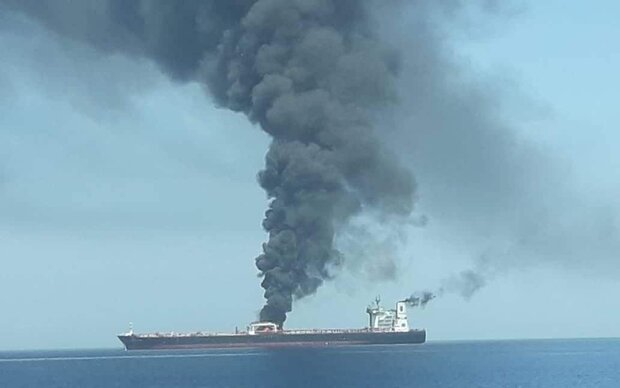
On June 6, 2019 two tankers, one Japanese and the other Norwegian, were attacked by unknown assailants in the Gulf of Oman.  The incident occurred less than a month after a series of acts of sabotage on four tankers, two Saudi, one UAE and one Norwegian, anchored off the coast of the United Arab Emirates near the port of Fujairah.
The Norwegian tanker, the Front Altair, was flying the flag of the Marshall Islands and was loaded with ethanol from Qatar, while the Japanese tanker, the Kokuka Courageous, was flying the flag of Panama and was carrying crude oil from the Saudi port of Jubail on the Persian Gulf.  The attacks, which occurred at the time of a high-level visit by Japan’s Prime Minister Shinzo Abe to Ayatollah Khamenei, may have been intended to embarrass the Islamic Republic or to thwart Japanese efforts towards the de-escalation of tension.
US Secretary of State Mike Pompeo was quick to lay the blame on the Islamic Republic of Iran, as was National Security Adviser and Iranophobe, John Bolton, who, following the first series of attacks, remarked, “There is no doubt in anybody’s mind in Washington who is responsible for this and I think it’s important that the leadership in Iran know that we know.” The perennial prevaricator on the Potomac trumpeted his concurrence in a television interview on Fox and Friends on Friday, June 14, insisting, “Iran did do it.”
Iran categorically denied Pompeo’s unsupported accusations, which were patently absurd given that the 44 sailors on the two burning tankers were rescued by an Iranian vessel that responded to their distress calls. Despite claims by the US Navy that the stricken tankers were under their purview, the Iranian rescue ship was the first to arrive on the scene of the incident and pull the tankers’ crewmembers to safety.  Furthermore, given the timing of the attacks, it would be beyond irrational for Iran to target a Japanese-owned tanker while the country’s prime minister was meeting with Iran’s Supreme Leader. Yet, Pompeo, turning logic on its head, claimed that the Iranian government had indeed “insulted Japan by attacking a Japanese-owned oil tanker just outside Iranian waters,” while simultaneously assuring Abe that it did not want war.
As if on cue, Pompeo came on stage with rhetorical escalation, declaring, “Taken as a whole, these unprovoked attacks present a clear threat to international peace and security.” Previously, the US secretary of state went so far as to suggest that Iran carried out the attacks, including the May 12 sabotage near Fujairah, “to raise the price of crude oil throughout the world.”  US Central Command officials even trotted out a grainy video, which they claimed was taken by a navy surveillance plane, of an unexploded mine attached to the hull of the Kokuka Courageous. The mine, referred to as a “limpet,” was supposedly of a type used by Iran and was similar to the explosive devices used in the previous attacks.
However, Yutaka Katada, the president of Kokuka Sangyo, the shipping line that owns the Kokuka Courageous, disagreed with the US official narrative about a limpet mine being the cause of the explosion. “I do not think there was a time bomb or an object attached to the side of the ship,” he said. “Our crew said that the ship was attacked by a flying object,” he added citing the fact that the holes caused by the explosion were well above the water line. Because of this fact, he explained, “There is zero possibility that they were torpedoes.”
Previously in May, the US had escalated tensions in the Persian Gulf by dispatching the USS Abraham Lincoln carrier strike group and a B-52 bomber task force allegedly to counter heightened threats to US forces posed by Iran. Given that Iran is literally encircled by US nuclear-capable forces, it seems utterly implausible that the Islamic Republic is the state actor posing the threat. Nevertheless, US Marine Corps Gen. Joe Dunford, the chairman of the Joint Chiefs of Staff, insisted that the deployment was not confrontational. “This is not intended to be a provocation,” he emphasized. “This is not intended to reinforce our offensive capability in the region,” even though it obviously looks like the US is preparing for a strike on Iran.
If the plot woven by Pompeo and his accomplices induces a vague but familiar feeling, perhaps it is due to the uncanny similarity with an incident in the Gulf of Tonkin in 1964, which was used by US officials to create a pretext for launching a full-scale war on Vietnam. The plot should have a familiar ring: a patrol boat from the Democratic Republic of Vietnam was reported to have attacked the USS warship Maddox without provocation in international waters, thereby justifying a severe US military response, which was announced shortly after the 11 o’clock nightly news by US president Lyndon Baines Johnson (LBJ) on August 4.  
There had been a defensive response by North Vietnamese patrol boats against ongoing CIA covert raids along the coast involving the Maddox on August 2, and intelligence reports suggested another retaliatory action was planned for August 4. However, the attack never happened. Admiral John Stockdale, who was flying an aircraft from the USS Ticonderoga, said that he saw nothing at all to indicate the North Vietnamese had made an assault on the Maddox. Yet despite the lack of clear and convincing evidence, defense secretary Robert McNamara called LBJ at 11:00 am to report that US destroyers Maddox and C. Turner Joy were under attack, convincing the US president to sign off on a retaliatory strike. 
“We're going to retaliate and we’ll make an announcement a little later in the evening, in the next hour or so and we’ll ask Congress for a resolution of war the next day to support us,” Johnson explained. By 9:15 pm, LBJ and McNamara had decided to make the public announcement of the non-attack by North Vietnam at 10 pm, so as to coincide with the commencement of an aerial assault by US warplanes on four North Vietnamese ports. However, crews were unable to load and launch the aircraft in time, forcing LBJ to delay his statement, which he finally made at 11:36 pm Eastern Time.
In his televised speech to the American people that night, LBJ announced, “Renewed hostile actions against United States ships on the high seas in the Gulf of Tonkin have today required me to take action and reply.” Still, he insisted, “Our response, for the present, will be limited and fitting. We still seek no wider war.” Two days later, the US congress passed the Gulf of Tonkin Resolution by a nearly unanimous 504 to 2 vote, allowing the US president to use military force without the constitutional constraint of seeking a congressional declaration of war. Johnson himself expressed doubts about the veracity of the reported incident a few days after the passage of the resolution, declaring that the alleged attack was nothing more than some sailors “just shooting at flying fish.”  
If Pompeo’s plot becomes a Gulf of Tonkin revival in the Gulf of Oman, who would benefit from the ensuing chaos in the Persian Gulf? Certainly the United States, since the shale oil and gas boom has made energy independence possible, thereby allowing Washington to indulge in aggressive behavior with few constraints.  The same may hold for Saudi Arabia, which, along with the US, would benefit from higher oil prices. Finally, the Zionist regime would have uncontested regional hegemony and could act with even greater impunity.
By 1969 LBJ’s response to a single alleged attack had spiraled into an all-consuming conflict: some 4.5 million tons of bombs had been dropped on Vietnam and neighboring Laos and Cambodia, killing an estimated 2 million civilians. Pompeo should carefully consider these horrific historical facts before continuing his cavalier accusations against Iran.
*******
Despite claims by the US Navy that the stricken tankers were under their purview, the Iranian rescue ship was the first to arrive on the scene of the incident and pull the tankers’ crewmembers to safety.  
************
Given the timing of the attacks, it would be beyond irrational for Iran to target a Japanese-owned tanker while the country’s prime minister was meeting with Iran’s Supreme Leader.