
News And Views
Showing posts with label OIL. Show all posts
Showing posts with label OIL. Show all posts
Sunday, December 01, 2019
Fairness in Distribution
Iran has the world's largest reserves of natural gas. One of the most critical projects of Iran's oil ministry has been transferring gas to all corners of the country to uphold fairness in distribution among all Iranians.

Monday, November 18, 2019
When the U.S. smells out oil in Lebanon: New destination for oil robbery
*By Mohammad Ghaderi

A review of the protests and political upheavals in Lebanon coupled with a pretension by officials in Washington that the U.S. is concerned about the situation in Lebanon send important messages.
Developments in Lebanon appear to have entered a new phase, especially as the Lebanese Energy and Water Minister Neda Boustani has announced the start of drilling the country’s first oil well in the waters off the coast of Beirut later this year.
The oil well is to be drilled in the Mediterranean 30 kilometers from the Lebanese capital in the north. About a year and a half ago, Lebanon awarded its first offshore gas and oil exploration and production agreements to a consortium of France’s Total, Italy’s Eni and Russia’s Novatek for two blocks out of ten.
Ten oil blocks have been identified in the coastal waters of Lebanon with an area about 18,000 km2.
The Americans, who have shown that the smell of oil drives them to the oil-rich countries, these days pretend that they are really concerned about the situation in Lebanon and its people. Mike Pompeo, the U.S. secretary of state, has recently claimed that “the Iraqi and Lebanese people want their countries back” from Iran.
The pretension of concern by the U.S. over the situation in Lebanon, in the light of Boustani’s announcement, has led various Lebanese groups, especially Hezbollah, to feel the danger very well. Hezbollah Executive Council Deputy Chief Sheikh Ali Da’mush has warned that the U.S. and its allies are seeking to undermine the political system in Lebanon and restructure it in their own favor. The U.S. wants a government comes to power which would be under its own control and implement Washington’s plans. For example, it wants Lebanon agree to demarcation of borders based on Israel’s wishes, grant projects for oil and gas extractions to U.S. companies, permanently house the displaced Palestinian people, and target the axis of resistance and its missile power.
In addition to the United States, the Zionist regime is also happy with the unrest because Israel has disputes with Lebanon over common borders as well as oil and gas resources. Such an uprising provides the opportunity for Tel Aviv to plunder Lebanese natural resources.
The Zionist regime which is violating the Lebanese land, airspace and territorial waters frequently will take advantage of the protests in the country while Lebanese officials are doing their utmost to improve and calm the situation. Consequently, the officials will not be able to pay attention to regional issues, which is a matter that Hezbollah has repeatedly warned about.
The Zionist regime which is violating the Lebanese land, airspace and territorial waters frequently will take advantage of the protests in the country while Lebanese officials are doing their utmost to improve and calm the situation. Consequently, the officials will not be able to pay attention to regional issues, which is a matter that Hezbollah has repeatedly warned about.
Undoubtedly, one cannot have a positive view of sudden unrest in oil-rich countries in the Middle East under the shadow of U.S. intervention. History has shown that oil-rich countries have always suffered from domestic tensions and crises so that Western powers, that usually lead the riots, can easily plunder their oil resources.
In any case, it seems that after Syria, the U.S. has specified Lebanon as its next destination for oil robbery, and U.S. officials are expected to make specific comments on the developments in the country in future days.
* Author: Mohammad Ghaderi, Tehran Times editor in chief
Tuesday, November 05, 2019
US is stealing Syria’s oil, again

Washington’s black-market oil trade will destroy any hope left for peace and democracy in Syria. From Iran, Russia and Turkey to Europe, every government actively involved in the Syrian peace process bears responsibility for stopping this illegal scheme.
It is their responsibility to stop Washington and its oil autocrats on their tracks. It is also their responsibility to step up the international campaign to settle the Syrian refugee question, and back restoration of Syria’s territorial integrity.
The following is an article in this regard which has appeared on the frontpage of English language website of Fars news agency under the heading: "US is stealing Syria’s oil, again."
The United States plans to seize control of Syria’s oilfields, and they will repel anyone else trying to take that oil with “overwhelming force.”
According to Defense Secretary Mark Esper, this is the chief military goal of the US in the war-torn country, which will include sending more occupation troops and tanks to “deny access” to the oil reserves to either Russia or the Syrian government.
The US is trying to build this narrative under the pretext of keeping Daesh from reclaiming the oil deposits, since they held them once. The problem is that the Takfiri terrorist group is already on the run and barely exists. In addition, keeping Syria’s oil away from Syria is a potential problem under international law and the Charter of United Nations - no matter the US gives some of the money to the Kurdish SDF to support its military mission there or not.
This is while the oil theft business has shamelessly been going on for years, with no backlash from the international community. Indeed, the new oil scheme without Syria’s consent is not the first of the Pentagon campaign to ensure the illicit trade will go on as usual. It’s part of a planned provocation to escalate the conflict. On the other side of the country, the same provocation plan entails support for occupation and providing sanctuary for Daesh's rival Salafi and Takfiri terrorist groups including Hayat Tahrir al-Sham, formerly Jabhat al-Nusra or the Al-Nusra Front who are foot soldiers in America’s resource war against Syria.
What’s more, the US needs Northern Syria for its international commodity dealers, oil autocrats and the rest of the official Washington crew, all belonging to “the indispensable nation,” who fund Pentagon and soaring national security state budgets through their purchase of black-market oil. Lest we forget, Russia just recently revealed aerial surveillance and satellite imagery showing oil-tanker trucks stretching from US-controlled territory into the Mediterranean and beyond.
Together, they have been smuggling Syrian oil to other countries under the protection of US occupation troops before and after the defeat of Daesh. According to Russian Defense Ministry Spokesman Major General Igor Konashenkov, “Oil was actively extracted and massively exported for processing outside Syria, under the protection of US occupation troops, before and after the defeat of Daesh.”
In our grim world, consider it an irony that tank trucks guarded by US military servicemen and private military companies are still smuggling oil from the illegally occupied fields in Syria to other countries. These are the same reserves that should be used for reconstruction efforts, which may cost as much as 200 billion US dollars, including support for the rightful owners of the oil - civilians, internally displaced persons, and refugees.
Significantly, the plot thickens when we realize the Syrian oil is extracted with the use of the equipment supplied by certain Western corporations. Given that the cost of one barrel of oil smuggled from Syria is reportedly 38 US dollars or more, the monthly revenue of this illegal business exceeds 30 million US dollars. No wonder US President Donald Trump claims some American troops will remain in Syria to supposedly secure oil fields from falling again into the hands of Daesh and the group profiting from them.
Russia, which backs Syrian President Bashar al-Assad and has helped him turn the tide of a foreign-sponsored war, has long insisted that the US military presence in Syria is illegal. Moscow has further bolstered its position in Syria following the US withdrawal from the northeast of the country, negotiating a deal recently with Turkey's President Recep Tayyip Erdogan that allows Turkey to remove the Kurdish People's Protection Units, or YPG, militia from within a 30-kilometer strip along the Syrian-Turkish border.
The Russian Foreign Ministry said in a statement "From our side, the necessity was emphasized of refraining from steps undermining the sovereignty and territorial integrity of Syria."
Based on the mounting evidence gathered by Russia, the amount of oil being smuggled is extremely high, is worth hundreds of millions of US dollars, and has increased over time. The US State Department admits it is still business as usual, which proves the Trump administration is well aware of the dealings and does nothing about it - trading their integrity instead.
The major architects of the Syrian tragedy should take note. Their dream of having the Arab state under their belts is down in flames. They should stop fooling themselves with new geopolitical-financial motivations. By any possible interpretation of international law, if there’s any side of the war the international community should be joining, it’s not with the US and its oil autocrats. It’s with Russia, Iran, Syria, and Turkey.
In the midst of such an embarrassing story, unless something is done properly, Washington’s black-market oil trade will destroy any hope left for peace and democracy in Syria. From Iran, Russia and Turkey to Europe, every government actively involved in the Syrian peace process bears responsibility for stopping this illegal scheme. It is their responsibility to stop Washington and its oil autocrats on their tracks.
It is also their responsibility to step up the international campaign to settle the Syrian refugee question, and back restoration of Syria’s territorial integrity. In the era of Washington’s non-stop military intervention, if they ditch their responsibilities, or worse, steer away from the UN Charter and international law, it will become even more difficult to find a comprehensive, constitutional solution for the Syria tragedy.
The Syrian Constitutional Committee finally launched on October 30 in Geneva as its delegates attempt to fulfill the complex task of carrying out UNSC Resolution 2254's mandated constitutional reform that was adopted on December 18, 2015.
The intervening four years saw the military aspect of this terrible war coming to a close and the rise of the political peace process, which was largely enabled by the Syrian Arab Army liberating the country's vast majority with assistance of its Russian, Iranian, and Hezbollah anti-terrorism allies.
The national liberation process was a lengthy one that occasionally experienced its fair share of setbacks, but the overall trajectory of progress towards peace continued, which brings everything to the present moment, where 150 members of Syrian society are now gathering to discuss the way forward for their war-torn country. It was already difficult enough to assemble everyone in the first place, but now an even greater challenge awaits.
One of the reasons why the conflict has dragged on for so long is that each side wanted to achieve its goals in full. For Damascus, this entailed the restoration of state control over the entirety of its internationally recognized territory and a return to the pre-war political status quo, while the armed militants wanted to carry out regime change against the democratically elected and legitimate authorities with the enormous assistance of their foreign patrons and demanded that the post-war state of affairs in their country be entirely changed in order to make the state unrecognizable after the conflict finally ends.
It's too early to say exactly what the outcome of each compromise will be, but an educated guess suggests that some of the recommendations contained in the Russian-written draft constitution unveiled in January 2017 during the first meeting of the Astana Peace Process “might” be implemented.
Some of the main issues that will have to inevitably be addressed are the right of President Bashar al-Assad to stand for reelection, the relationship between the country's executive and legislative branches, the possibility of a bicameral parliament, whether or not the currently unitary state should decentralize or even federalize, and the political status of the Northern parts of the country still under the foreign occupation of the Turkish and American militaries which is directly related to the previously mentioned point about the future of the unitary state.
However these issues are resolved, they must be decided solely by the 150 Syrians that comprise the Constitutional Committee without any foreign interference whatsoever.
The Astana guarantor countries of Russia, Turkey, and Iran, as well as the UN, have pledged to do their utmost to ensure that this is the case, though the continued illegal presence of the American military in Northeastern Syria (especially around its oil fields) might make this impossible in practice since Washington's shadow still hangs heavy over the entire process.
The way forward is for all the Syrian representatives to put any foreign loyalties aside and unite as a patriotic whole that's dedicated to making the tough compromises to finally bring peace to their millennia-old civilization-state.
The Syrian Constitutional Committee is a promising step towards peace and keeping the country as a unitary state in spite of the still-formidable challenges ahead. This is because its very formation proves that there's still the political will on all sides to finally end the war in the interest of the nation. But this may come true only when Idlib is taken back from the terrorists and occupying forces leave this war-torn country very soon.
Saturday, September 21, 2019
Absolution from crimes by deflection and deceit is never successful
By Martin Love

NORTH CAROLINA - Vladimir Putin appears far and away smarter than any major Western “leader”, especially Donald Trump and Mike Pompeo. Ansarullah appears to have attacked the Abqaiq oil processing plant in the Eastern Province of Saudi Arabia with drones or something, or claims it did. Maybe they fired off missiles of some sort that had adopted Iranian technology. It’s a mystery, but whatever and whoever hit the plant, and it wasn’t the homemade firecracker rockets that fly out of the Gaza Strip to land in some farm field around Sederot inside “Israel”, whatever this “country” without defined borders really is geographically (it’s never been reliably determined).
What hit the Saudi oil installations was well aimed or it aimed itself well and proved powerful enough to shut down half of Saudi oil production for a couple weeks more at least. And Putin masterfully and even tongue-in-cheek trolled the Saudis, offering to sell them the S-300 or S-400 missile defense systems. Priceless!
The Saudi regime is hopeless and helpless. After spending many billions of dollars on military equipment over years, and with virtually no “defense” against whatever it was exactly that bombed Abqaiq and Khurais, and with alleged military cover by the U.S., the Saudis nonetheless may still as well be driving mangy camels and not Ferraris, Lamborghini’s or F-16s in the Eastern Province. Same goes for the UAE.
So far, Trump’s response has been vague and has allowed others at least to blame Iran for the attacks, claiming the drones or whatever originated from somewhere in Iran, or maybe it was Iraq. Hell, maybe they flew from an Iranian missile base on the moon?
The truth is Trump and Pompeo and all the rest don’t have a clue, and it is even quite possible – as claimed Robert J. Moriarty, arguably the best U.S. Navy/Marine fighter pilot during the Vietnam War and since the war an aviation record maker and holder – that the Israelis attacked Abqaiq and Khurais in an effort to spur the U.S. to gallop to the side of the Saudis and as the Zionists equally desire, attack Iran. Neither the Saudis nor the Zionists can fight anybody without gobs of U.S. assistance, and never really have.
False flags are nothing to the Zionists and they are good at creating them: the most notable being the attack in June 1967 on the U.S. Navy frigate “Liberty” in the Mediterranean cruising west of Gaza and north of Sinai during the Six Day War To this day the Navy veterans who are still alive and who served on the Liberty are treated like lepers by the U.S. Veterans Administration – such is the unholy grip the Jews have about the public ever being properly informed that the bombing and strafing of the Liberty was a premeditated Israeli attack in which dozens of sailors died. Those fine veterans know too much, it seems, just like Julian Assange of Wikileaks fame who is now officially a Western political prisoner, not a criminal, at Belmarsh dungeon in London, and he may actually be dying.
Let’s face it: the Saudis are inept and the Israelis, stripped of their high-tech war tech (and nukes as threats), are only good for, for example, shooting and killing elderly Palestinian women (or children in Gaza) as they did this week at Kalandia checkpoint north of Jerusalem: the hapless woman, 50, apparently entered the wrong “lane” in the incredible, cruel maze of the checkpoint and was summarily murdered. The Zionist soldiers and police said she was wielding a knife, which as usual was a fabrication. She was 10 meters from anyone when she was gunned down and certainly no threat to anyone.
And it’s not as if any country is entirely free at least of some oppression of citizens, Iran included, just as no individual person is ever entirely cleansed of occasional bad actions. But the reiteration of assaults on Iran does not justify in any proportional way even a tiny fraction of the much more severe and horrific postures and deeds of the U.S. and Israel and the Saudis. We see, for example, a raft of what has been called “Whataboutism” by Western apologists in the media, as if this absolves perps of obvious crimes.
Among the worst of Zionist apologists happens to be columnists Bret Stephens and Bari Weiss, both Zionists, at the New York Times. Whenever anyone questions them about Israeli apartheid crimes, they are inclined to say: “But ‘what about’ (for example) the way the Chinese treat the minority Muslim Uighers, or the way Modi in India is currently treating Muslims in Indian controlled parts of Kashmir?” Now we have the spectacle that a desperate Netanyahu may well be “out” as Israeli Prime Minister, this cat’s nine lives perhaps used up. No doubt he fears he’s finally going to be indicted for corruption, and may go to prison.
Absolution by way of deflection and deceit is absurd and can never be finally won. And the most remarkable aspect of such hypocrisy, hubris and exceptionalism is that almost the entire world is seeing through this very tiresome game and neither Washington nor Tel Aviv nor Riyadh (and some others) realize it enough yet to change course. But the day is somewhere ahead eventually when they will have to realize it. At any rate, this is part the reason why Trump has been unsuccessful in virtually all his foreign policy initiatives to date.
Foreign Minister Javad Zarif seems of the same caliber, generally, as Putin, and has so far navigated the stresses that Iran has been subject to with class and even, like Putin, with some humor. Good thing he did not resign earlier this year, as he suggested he might.
Wednesday, September 18, 2019
How the Houthis overturned the chessboard

A Yemeni Shiite man holds his weapon and a flag with an Arabic inscription reading
‘Disgrace is far from us,’ as he takes part in a religious procession held by Houthi
rebels to mark the first day of Ashura. Photo: Hani Al-Ansi/dpa
‘Disgrace is far from us,’ as he takes part in a religious procession held by Houthi
rebels to mark the first day of Ashura. Photo: Hani Al-Ansi/dpa
The Yemeni Shiite group’s spectacular attack on Abqaiq raises the distinct possibility of a push to drive the House of Saud from power
We are the Houthis and we’re coming to town. With the spectacular attack on Abqaiq, Yemen’s Houthis have overturned the geopolitical chessboard in Southwest Asia – going as far as introducing a whole new dimension: the distinct possibility of investing in a push to drive the House of Saud out of power.
Blowback is a bitch. Houthis – Zaidi Shiites from northern Yemen – and Wahhabis have been at each other’s throats for ages. This book is absolutely essential to understand the mind-boggling complexity of Houthi tribes; as a bonus, it places the turmoil in southern Arabian lands way beyond a mere Iran-Saudi proxy war.
Still, it’s always important to consider that Arab Shiites in the Eastern province – working in Saudi oil installations – have got to be natural allies of the Houthis fighting against Riyadh.
Houthi striking capability – from drone swarms to ballistic missile attacks – has been improving remarkably for the past year or so. It’s not by accident that the UAE saw which way the geopolitical and geoeconomic winds were blowing: Abu Dhabi withdrew from Crown Prince Mohammad bin Salman’s vicious war against Yemen and now is engaged in what it describes as a “peace-
Even before Abqaiq, the Houthis had already engineered quite a few attacks against Saudi oil installations as well as Dubai and Abu Dhabi airports. In early July, Yemen’s Operations Command Center staged an exhibition in full regalia in Sana’a featuring their whole range of ballistic and winged missiles and drones.

The situation has now reached a point where there’s plenty of chatter across the Persian Gulf about a spectacular scenario: the Houthis investing in a mad dash across the Arabian desert to capture Mecca and Medina in conjunction with a mass Shiite uprising in the Eastern oil belt. That’s not far-fetched anymore. Stranger things have happened in the Middle East. After all, the Saudis can’t even win a bar brawl – that’s why they rely on mercenaries.
Orientalism strikes again
The US intel refrain that the Houthis are incapable of such a sophisticated attack betrays the worst strands of orientalism and white man’s burden/superiority complex.
The only missile parts shown by the Saudis so far come from a Yemeni Quds 1 cruise missile. According to Brigadier General Yahya Saree, spokesman for the Sana’a-based Yemeni Armed Forces, “the Quds system proved its great ability to hit its targets and to bypass enemy interceptor systems.”

Houthi armed forces duly claimed responsibility for Abqaiq: “This operation is one of the largest operations carried out by our forces in the depth of Saudi Arabia, and came after an accurate intelligence operation and advance monitoring and cooperation of honorable and free men within the Kingdom.”
Notice the key concept: “cooperation” from inside Saudi Arabia – which could include the whole spectrum from Yemenis to that Eastern province Shiites.
Even more relevant is the fact that massive American hardware deployed in Saudi Arabia inside out and outside in – satellites, AWACS, Patriot missiles, drones, battleships, jet fighters – didn’t see a thing, or certainly not in time. The sighting of three “loitering” drones by a Kuwaiti bird hunter arguably heading towards Saudi Arabia is being invoked as “evidence”. Cue to the embarrassing picture of a drone swarm – wherever it came from – flying undisturbed for hours over Saudi territory.
UN officials openly admit that now everything that matters is within the 1,500 km range of the Houthis’ new UAV-X drone: oil fields in Saudi Arabia, a still-under-construction nuclear power plant in the Emirates and Dubai’s mega-airport.
My conversations with sources in Tehran over the past two years have ascertained that the Houthis’ new drones and missiles are essentially copies of Iranian designs assembled in Yemen itself with crucial help from Hezbollah engineers.
US intel insists that 17 drones and cruise missiles were launched in combination from southern Iran. In theory, Patriot radar would have picked that up and knocked the drones/missiles from the sky. So far, absolutely no record of this trajectory has been revealed. Military experts generally agree that the radar on the Patriot missile is good, but its

For now, it appears that the winner of the US/UK-supported House of One Saudi war on the civilian Yemeni population, which started in March 2015 and generated a humanitarian crisis the UN regards as having been of biblical proportions, is certainly not the crown prince, widely known as MBS.
Listen to the general
Crude oil stabilization towers – several of them – at Abqaiq were specifically targeted, along with natural gas storage tanks. Persian Gulf energy sources have been telling me repairs and/or rebuilding could last months. Even Riyadh admitted as much.
Blindly blaming Iran, with no evidence, does not cut it. Tehran can count on swarms of top strategic thinkers. They do not need or want to blow up Southwest Asia, which is something they could do, by the way: Revolutionary Guards generals have already said many times on the record that they are ready for war.
Professor Mohammad Marandi from the University of Tehran, who has very close relations with the Foreign Ministry, is adamant: “It didn’t come from Iran. If it did, it would be very embarrassing for the Americans, showing they are unable to detect a large number of Iranian drones and missiles. That doesn’t make sense.”
Marandi additionally stresses, “Saudi air defenses are not equipped to defend the country from Yemen but from Iran. The Yemenis have been striking against the Saudis, they are getting better and better, developing drone and missile technology for four and a half years, and this was a very soft target.”
A soft – and unprotected – target: the US PAC-2 and PAC-3 systems in place are all oriented towards the east, in the direction of Iran. Neither Washington nor Riyadh knows for sure where the drone swarm/missiles really came from.
Readers should pay close attention to this groundbreaking interview with General Amir Ali Hajizadeh, the commander of the Islamic Revolutionary Guard Corps Aerospace Force. The interview, in Farsi (with English subtitles), was conducted by US-sanctioned Iranian intellectual Nader Talebzadeh and includes questions forwarded by my US analyst friends Phil Giraldi and Michael Maloof and myself.
Explaining Iranian self-sufficiency in its defense capabilities, Hajizadeh sounds like a very rational actor. The bottom line: “Our view is that neither American politicians nor our officials want a war. If an incident like the one with the drone [the RQ-4N shot down by Iran in June] happens or a misunderstanding happens, and that develops into a larger war, that’s a different matter. Therefore we are always ready for a big war.”
In response to one of my questions, on what message the Revolutionary Guards want to convey, especially to the US, Hajizadeh does not mince his words: “In addition to the US bases in various regions like Afghanistan, Iraq, Kuwait, Emirates and Qatar, we have targeted all naval vessels up to a distance of 2,000 kilometers and we are constantly monitoring them. They think that if they go to a distance of 400 km, they are out of our firing range. Wherever they are, it only takes one spark, we hit their vessels, their airbases, their troops.”
Get your S-400s or else
On the energy front, Tehran has been playing a very precise game under pressure – selling loads of oil by turning off the transponders of their tankers as they leave Iran and transferring the oil at sea, tanker to tanker, at night, and relabeling their cargo as originating at other producers for a price. I have been checking this for weeks with my trusted Persian Gulf traders – and they all confirm it. Iran could go on doing it forever.
Of course, the Trump administration knows it. But the fact is they are looking the other way. To state it as concisely as possible: they are caught in a trap by the absolute folly of ditching the JCPOA, and they are looking for a face-saving way out. German Chancellor Angela Merkel has warned the administration in so many words: the US should return to the agreement it reneged on before it’s too late.
And now for the really hair-raising part.
The strike at Abqaiq shows that the entire Middle East production of over 18 million barrels of oil a day – including Kuwait, Qatar, United Arab Emirates and Saudi Arabia – can be easily knocked out. There is zero adequate defense against these drones and missiles.
Well, there’s always Russia.
Here’s what happened at the press conference after the Ankara summit this week on Syria, uniting Presidents Putin, Rouhani and Erdogan.
Question: Will Russia provide Saudi Arabia with any help or support in restoring its infrastructure?
President Putin: As for assisting Saudi Arabia, it is also written in the Quran that violence of any kind is illegitimate except when protecting one’s people. In order to protect them and the country, we are ready to provide the necessary assistance to Saudi Arabia. All the political leaders of Saudi Arabia have to do is take a wise decision, as Iran did by buying the S-300 missile system, and as President Recep Tayyip Erdogan did when he bought Russia’s latest S-400 Triumph anti-aircraft system. They would offer reliable protection for any Saudi infrastructure facilities.
President Hassan Rouhani: So do they need to buy the S-300 or the S-400?
President Vladimir Putin: It is up to them to decide [laughs].
In The Transformation of War, Martin van Creveld actually predicted that the whole industrial-military-security complex would come crumbling down when it was exposed that most of its weapons are useless against fourth-generation asymmetrical opponents. There’s no question the whole Global South is watching – and will have gotten the message.
Hybrid war, reloaded
Now we are entering a whole new dimension in asymmetric hybrid war.
In the – horrendous – event that Washington would decide to attack Iran, egged on by the usual neocon suspects, the Pentagon could never hope to hit and disable all the Iranian and/or Yemeni drones. The US could expect, for sure, all-out war. And then no ships would sail through the Strait of Hormuz. We all know the consequences of that.
Which brings us to The Big Surprise. The real reason there would be no ships traversing the Strait of Hormuz is that there would be no oil in the Gulf left to pump. The oil fields, having been bombed, would be burning.
So we’re back to the realistic bottom line, which has been stressed by not only Moscow and Beijing but also Paris and Berlin: US President Donald Trump gambled big time, and he lost. Now he must find a face-saving way out. If the War Party allows it.
Tuesday, September 17, 2019
US might topple Saudi Arabia as the world's top oil exporter sooner than planned
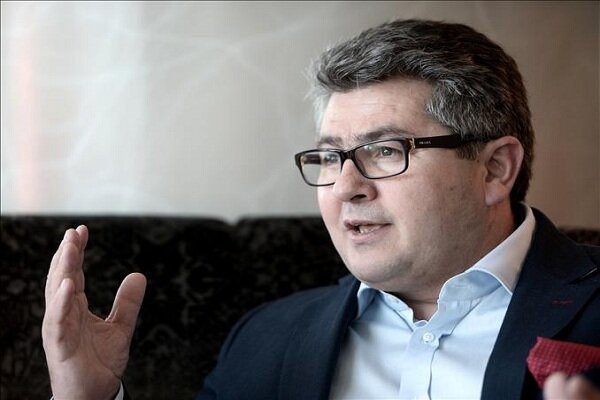
TEHRAN, (MNA) – Commenting on recent drone attack on Saudi Aramco Mehmet Ogutcu says prior to this attack, the US was planning to double its crude oil exports to 9 million barrels per day by 2024. That means the US might topple Saudi Arabia as the world's top oil exporter sooner than planned.
Following drone attacks on Saudi oil plants, the White House said on Saturday that the United States was committed to keeping oil markets well-supplied in the wake of an attack on Saudi Arabian oil plants by Yemen.
According to some sources in Saudi Arabia, its return to full oil supply capacity after Saturday’s attacks on Aramco oil plants could take “weeks not days”.
An attack on Saudi oil facilities on Saturday is believed to have disrupted half the country’s production capacity, making the United States the only real holder of the global supply cushion via its ability to raise own output or to soften sanctions against other major oil producers.
Some believe that it surely is no coincidence the US is targeting virtually every major energy producer from Iran, Venezuela, and Russia, but also including its own "allies" such as Saudi Arabia.
We reached out to Mehmet Ogutcu, Chairman of London Energy Club to shed more light on the issue.
Referring to the drone attacks on Saudi oil plants, he said, “I believe that we have experienced the “Pearl Harbour of the oil industry” on 14 September. Saudi Aramco lost about 5.7 million barrels per day of output after 10 unmanned aerial vehicles struck the world’s biggest crude-processing facility in Abqaiq and the Kingdom’s second-biggest oil field in Khurais.”
“The drone attack, removing 5 percent of the global oil production, will be remembered as a watershed incident in the world oil history. Its impact will be severely felt not only for a few weeks when damaged Saudi oil installations will be repaired and crude supplies will start flowing again business as usual. The impact will be much longer. The world’s largest oil exporter is vulnerable and its air defense system has proven to be ineffective,” he added.
Ogutcu went on to say, “For oil markets, it is the single worst sudden disruption ever, and while Saudi Arabia may be able to return some supply within days, the attacks highlight the vulnerability of the world’s most important exporter. They also add further political risk to prices, raising the specter of more destabilization in the Middle East and the threat of US retaliation against Iran. Even, with a price that could easily double, the Saudi remaining exports will still earn amounts close to what they earned before.”
Commenting on who are the most beneficiaries of the tension in the region, he mentioned, “The Russians will be great beneficiaries of this escalating crisis as they will earn much more per barrel on their oil and gas exports. Of course, the United States, now the largest exporter in the world, will also benefit greatly. Remember, prior to this attack, the US was planning to double its crude oil exports to 9 million barrels per day by 2024. That means the US might topple Saudi Arabia as the world's top oil exporter sooner than planned.
The US is pointing a finger to Iran as behind this attack and said it would provide evidence. Traditional US allies are however not on-board. Geopolitics and great-power competition are playing a greater role these days, and while that may satisfy some narrow interests, it does not bode well for stable energy prices, or for the secure and dependable delivery of energy along global supply chains.
Only China, which imports most of its crude from the Persian Gulf, will be financially hit at the tune of $1.1 billion for each dollar increase per barrel. Thus, except for China, few of the players will seek to defuse the situation, all feeling that they have little to lose and much to gain. Hence, it would seem that the September 14 attack stands a strong chance of escalating into an all-out conflict.
The sanctions are already cutting $42 billion/year of oil exports from Iran’s economy. They have slashed Iran’s oil production and exports to historic lows. Before the US sanctions, Iran produced 3.8 million barrels/day and exported 2.5 million barrels. Oil made up 80% of Iran’s exports. The US ended sanctions waivers for major importers of Iranian oil in May 2019. Iran’s oil exports were down about 2 million barrels and oil production hit its lowest levels since the Iran-Iraq war.”
Regarding the Iran-Saudi Arabia relation in recent years, Ogutcu noted, “While Saudi Arabia supports economically squeezing the Iranian regime, they may not wish to see a war with Iran. While the context has changed in light of the weekend attack, the reasons have not. Saudi Arabia would find itself on the front line of an armed conflict, with Iran or its proxies to the east, south, and north. Such a conflict would also cripple plans for an Aramco IPO and would cause driving foreign investment from the country.
Saudi Arabia has many long term reasons to showcase its resilience and de-escalate. Until now, Iran and Saudi Arabia were protected by the fear of mutual destruction of their main oil export assets, should one attack the other’s facilities. Now that the Iranians have lost most of their export capacity due to the sanctions, this fear of mutual destruction is no longer there.
How Washington and Riyadh choose to respond (for now limited to rhetoric) will show exactly whether this is a flash in the pan or a step-change in Persian Gulf tensions.”
Interview by Zahra Mirzafarjouyan
Thursday, May 16, 2019
Saudi Arabia says oil facilities outside Riyadh attacked
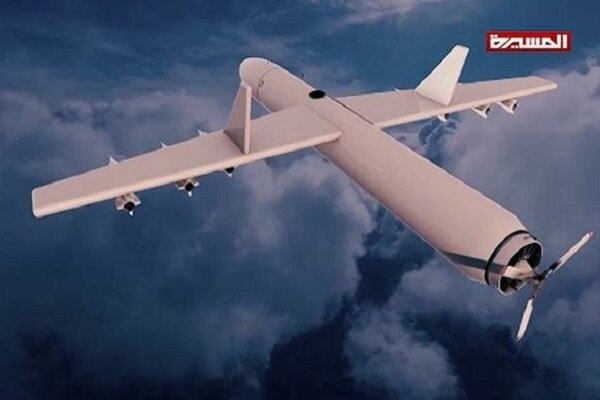
TEHRAN- Saudi Arabia said armed drones had struck two oil pumping stations in the kingdom on Tuesday.
Energy Minister Khalid al-Falih, in comments run by state media, said the drone attack and Sunday’s sabotage of four vessels, including two Saudi tankers, off Fujairah emirate, a major bunkering hub, threatened global oil supplies.
“These attacks prove again that it is important for us to face terrorist entities, including the Houthi militias in Yemen,” Falih said in an English-language statement issued by his ministry.
Al-Falih says the kingdom has stopped pumping crude oil on a major pipeline across the country after retaliatory drone strikes carried out by Yemeni army forces and their allies.
Houthi-run Masirah TV earlier said the group had launched drone attacks on “vital” Saudi installations in response to “continued aggression and blockade” on Yemen.
According to Press TV, seven drones run by Yemeni armed forces have reportedly carried out attacks against vital Saudi facilities in response to the Riyadh regime’s ongoing acts of aggression against Yemeni people.
A Yemeni military source told al-Masirah TV on Tuesday that the extensive military operation was conducted in retaliation for Saudi Arabia’s deadly military aggression and the siege of the impoverished Arabian Peninsula state.
The source did not, however, specify the targets or the time of the strikes.
The official also warned that Yemeni fighters stand ready “to execute more of these significant and tough strikes as long as the siege continues.”
Saudi Arabia and its allies launched the war against Yemen in March 2015 in an attempt to reinstall the Riyadh-allied former regime.
The invaders have, however, failed to achieve their objectives in the face of stiff resistance by Yemeni armed forces, led by the Houthi Ansarullah movement.
The Western-backed aggression, coupled with a naval blockade, has killed tens of thousands of Yemenis, destroyed the country’s infrastructure and led to a humanitarian crisis.
Yemeni fighters regularly target positions inside Saudi Arabia in retaliatory attacks against the protracted offensive on their homeland.
Wednesday, April 24, 2019
US cannot force Iran oil exports to zero: Analysis

The US decision on Monday more than failing to snuff out Iran’s oil exports will disrupt markets and complicate Washington’s relations with Beijing and even its own partners, industry analysts say.
Observers expressed serious doubts after US Secretary of State Mike Pompeo said Washington’s aim was to bring Iran’s crude exports to zero as he announced an end to the waivers which allowed imports from West Asian powerhouse.
"It's difficult to imagine all exports being cut off, especially since China is still a major buyer of Iranian crude oil," Jim Burkhard, Vice President for Oil Markets at IHS Markit, told Associated Press.
Last month, Iranian exports of crude oil and condensate surged to levels near before sanctions to 1.70 million barrels per day (bpd), surprising market watchers.
As Iran’s largest oil buyer, China has defied the Trump administration’s demand that it gradually bring the imports to zero, increasing its purchases instead.
India is Iran’s second largest oil importer, with Turkey, Japan, South Korea also buying significant volumes.
All these countries have robust trade, diplomatic and security relationship with the US which is careful not to jeopardize it. By retracting its oil exemptions, the Trump administration is encroaching on their energy security.
Trump said on Monday Saudi Arabia and the United Arab Emirates would ensure an “appropriate supply” of oil along with the US.
It was first in July when Trump said Saudi Arabia had assured him to raise oil production if needed, but the US president ultimately had to issue waivers for Iranian exports in order to help cool down prices.
Industry analysts say the kingdom can barely raise output by 1 million bpd to 11 million bpd and even that would be difficult.
The Saudis and the UAE have tried to give the confidence to Trump to go hardcore on Iran, but observers say the question is how they can really do it and for how long.
With a potential output fall in Iran and further outages in Venezuela and Libya, the world could be short of 2 million bpd of oil output without an increase in Saudi output by the end of the year.
“The Saudis do not have 2 million bpd of spare capacity as it would imply production of 12 million bpd. They can likely produce a maximum of 11 million and even that will be running their system at stress levels,” Garry Ross, Head of Global Oil Analytics at S&P Global, said.
“A 2-million-bpd Saudi production increase would move the Kingdom’s oil production into unchartered territory and would wipe out completely the kingdom’s spare capacity,” Giovanni Staunovo, Commodity Analyst at UBS, said.
With supply concerns and dwindling spare capacity and oil market tightness worries, prices are expected to become more volatile over the coming months.
Saudi Arabia and US assurances on Monday failed to cool down the markets as crude leapt to its highest in six months.
International benchmark Brent crude futures closed 3 percent higher to $74.04 a barrel, firing up US inflation markets.
According to Michael Lynch, President of Strategic Energy & Economic Research in Winchester, Massachusetts, the ultimate impact depends on how hard the Saudis work to fill the gap and how Trump reacts if the crackdown impacts US consumers.
Edward Moya, senior market analyst at Oanda, told MarketWatch: “While the US wants to see Iran exports fall to zero, they won’t.”
In Tehran, Iranian officials meanwhile said the country is prepared for the US decision to end waivers.
"Whether the waivers continue or not, Iran's oil exports will not be zero under any circumstances unless Iranian authorities decide to stop oil exports ... and this is not relevant now," an unnamed source told Tasnim news agency.
"We have years of experience in neutralizing efforts by enemies to strike blows against our country," the source added.
Minister of Oil Bijan Zangeneh said on Tuesday the US “dream of zeroing out Iran's oil exports will not be realized and this policy of sanctions will fail with full force.”
“Basically, some regional countries announce their spare capacity more than it really is in order to excite the US and put pressure on Iran and calm down the consumers,” he said, in reference to Saudi Arabia and the UAE.
“The United States and its allies, by politicizing the oil and using it as a weapon, are making a mistake, the impact of which will boomerang on many sides given the fragility of the market,” Zangeneh added.
Subscribe to:
Posts (Atom)