Showing posts with label Oil Production. Show all posts

Tuesday, September 24, 2019

Iranian viewpoint: US’ strategy to play major role in global energy market

TEHRAN, (MNA) – Enjoying the world’s major shale oil reserves and thanks to its technological power the United States has become independent from the Persian Gulf and the Middle East oil and is positioning itself to play a major role in world energy market.
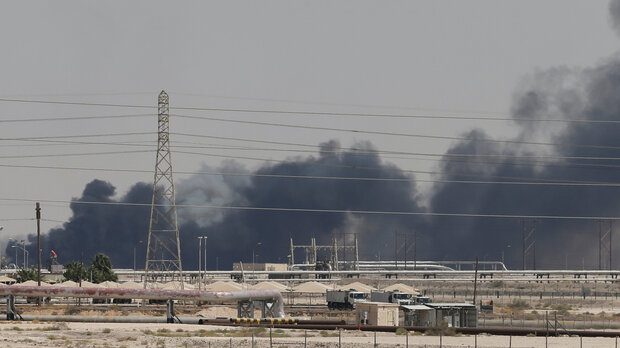
Former US President Barak Obama’s strategy of “pivot to east” which was based on the above mentioned fact is now confirmed by Donald Trump after recent drone attack on Saudi Aramco oil installations.
Despite the US independence of the Persian Gulf energy, the country will not close its eyes on controlling the energy routes in the region to keep pressure on rivals like China.
A report by Rystad Energy shows that production of shale oil in the US has changed the country to enjoy the biggest oil reserves in the world. (264 billion barrels). 50 percent of the US oil reserve is shale oil. The report says the US shale oil production is going to exceed 14.5 million barrel a day.
In 2012 the US Department of Energy announced that production of shale oil would have been economical if the price of the oil had been above 54 dollar for a barrel, but World Energy agency findings showed that the price for each barrel of oil should be over 60$ if the shale oil production is going to be economically justified.
Development of shale oil production has paved the way for Washington to use it as a political tool against other major oil producers in the world to materialize its geopolitical goals. Sanctioning of major oil producing countries and creating tensions in oil rich regions like Persian Gulf by the US in recent years all can be interpreted in line with the US efforts to position itself as a major player in world energy market.
Reuters in a September 2019 report revealed that overall exports of crude and refined products by state-run oil company Petroleos de Venezuela (PDVSA) and its joint ventures declined to some 770,000 barrels per day (bpd) from 992,565 bpd in July and 1.13 million bpd in June, according to revised data. It is noteworthy that the countries oil production was 2 million and 373 thousand barrels a day in 2016.
Iran’s oil production has also decreased some 1.5 to 2 million barrels a day during the last 10 years due to the US sanctions.
Washington is also trying to reduce the Russia’s share of global oil market by slapping sanctions against the country and threatening its European consumers.
The US’ green light to Saudi Arabia to attack Yemen which led the country to a quagmire can also be interpreted in line with the US efforts to grab its ally’s share of oil market to materialize its geopolitical goals. A couple of days ago Yemeni’s retaliatory drone attack on Saudi Aramco oil plant forced Saudi Arabia to cut half of its oil production and immediately the US announced Washington is ready to replace Saudi oil in the world market. In the long term this can result in grabbing of Saudi share of market by the US.
By sanctioning oil producing countries and creating tensions in oil rich regions the US is pursuing its geopolitical goals:
First, by disrupting existing major exporters including Saudi Arabia, Venezuela, Iran and Russia and raising prices, the US is able to make its own exports more competitive. Second, grabbing share of other producers by tools of sanction and disturbing their oil export. Third, containing and keeping pressure on rivals like China, EU and Japan by creating tensions in Persian Gulf which their economies are heavily dependent on the oil coming from the region. Fourth, creating a lucrative market for the US military industry and weapons by adding to tensions in the Persian Gulf region. Saudi Arabia has been the world biggest weapon importer in 2018. Fifth, keeping pressure on Persian Gulf nondemocratic kingdoms who are reluctant to join the US proposed naval security mission in Strait of Hormuz.

Wednesday, September 18, 2019

Geopolitical expert talks of US plan to grab Saudi oil share from global market

Geopolitical expert talks of US plan to grab Saudi oil share from global marketTEHRAN,(MNA) – Anthony Cartalucci says it surely is no coincidence the US is targeting virtually every major energy producer from Iran, Venezuela, and Russia, but also including its own "allies" such as Saudi Arabia.

Following drone attacks on Saudi oil plants by Yemenis, the White House said on Saturday that the United States was committed to keeping oil markets well-supplied in the wake of an attack on Saudi Arabian oil plants by Yemen’s Houthi group.
many believe since the US has become a major oil producer in the world it is trying to grab the share of the major oil producing countries in global energy market by different tools like sanctioning and creating tensions. 
Sanctioning Iran, Russia and Venezuela in recent years can be interpreted in this context. To this end even the US is trying to grab its regional ally's share, Saudi Arabia.
To touch upon the issue we reached out to Bangkok- based geopolitical researcher Anthony Cartalucci. 
Referring to US real goal of creating tensions in the Persian Gulf and dragging Saudi Arabia to the quagmire of Yemen war, he said, "The US is positioning itself as an exporter of energy. However its gas and oil is more expensive to extract, process, and ship overseas. By disrupting existing major exporters and raising prices, the US is able to make its own exports more competitive. It surely is no coincidence the US is targeting virtually every major energy producer from Iran, Venezuela, and Russia, but also including its own "allies" such as Saudi Arabia."
He added, "The resulting conflict is also a huge boon for America's other major export - weapons."
Cartalucci went on to say,"The US has used Saudi Arabia as a pawn for decades - encouraging the worst and most unsustainable kinds economic and foreign policies, keeping them dependent on US protection and placing them directly at the center of US-driven conflict in the Middle East. 
In addition to the energy oriented implications of this recent incident - the attacks and how they are being exploited by the White House helps move forward Washington's plans to provoke wider conflict with Iran. The US has recently placed troops in Saudi Arabia and as it continues to ratchet up tensions with Iran, is creating a potential conflict that will consume not the US, its territory, people, and resources, but Saudi Arabia's and other Persian Gulf nations aligned with the US."
Commenting on the ways to tackle the tensions in the region, he noted,"As US power wanes, the ability for nations traditionally aligned with the US and the wider West have an opportunity to build ties with emerging global powers like China and re-emerging global powers like Russia. For example, while the US was "pivoting" toward Southeast Asia - the region itself made its own pivot toward China and other Eurasian powers. Nations once thought of as close US allies are now deeply invested in moving into the future as close Chinese and Russian allies. 
Another aspect of Southeast Asia's transformation out from under US primacy was the improvement of relations between nations pitted against one another by US interests. 
Saudi Arabia and other nations in the region currently suffering because of their "allied" status with the US must perform a similar "pivot." Just like in Southeast Asia, the Persian Gulf will benefit greatly if relations were improved between nations like Saudi Arabia and Iran. But also just like in Southeast Asia where the US targeted each and every nation escaping out from under its regional primacy with political instability, economic extortion, and even terrorism, the Persian Gulf will have to prepare for some hard times before its situation improves. Of course, the alterative is allowing the US to fight its regional allies down to the last Saudi, Emarati, and Qatari, leaving nations entirely broken."
Interview by Payman Yazdani

Tuesday, September 17, 2019

US might topple Saudi Arabia as the world's top oil exporter sooner than planned


US might topple Saudi Arabia as the world's top oil exporter sooner than planned

TEHRAN, (MNA) – Commenting on recent drone attack on Saudi Aramco Mehmet Ogutcu says prior to this attack, the US was planning to double its crude oil exports to 9 million barrels per day by 2024. That means the US might topple Saudi Arabia as the world's top oil exporter sooner than planned.
Following drone attacks on Saudi oil plants, the White House said on Saturday that the United States was committed to keeping oil markets well-supplied in the wake of an attack on Saudi Arabian oil plants by Yemen.
According to some sources in Saudi Arabia, its return to full oil supply capacity after Saturday’s attacks on Aramco oil plants could take “weeks not days”.
An attack on Saudi oil facilities on Saturday is believed to have disrupted half the country’s production capacity, making the United States the only real holder of the global supply cushion via its ability to raise own output or to soften sanctions against other major oil producers.
Some believe that it surely is no coincidence the US is targeting virtually every major energy producer from Iran, Venezuela, and Russia, but also including its own "allies" such as Saudi Arabia.
We reached out to Mehmet Ogutcu, Chairman of London Energy Club to shed more light on the issue.
Referring to the drone attacks on Saudi oil plants, he said, “I believe that we have experienced the “Pearl Harbour of the oil industry” on 14 September. Saudi Aramco lost about 5.7 million barrels per day of output after 10 unmanned aerial vehicles struck the world’s biggest crude-processing facility in Abqaiq and the Kingdom’s second-biggest oil field in Khurais.”
“The drone attack, removing 5 percent of the global oil production, will be remembered as a watershed incident in the world oil history. Its impact will be severely felt not only for a few weeks when damaged Saudi oil installations will be repaired and crude supplies will start flowing again business as usual. The impact will be much longer. The world’s largest oil exporter is vulnerable and its air defense system has proven to be ineffective,” he added.
Ogutcu went on to say, “For oil markets, it is the single worst sudden disruption ever, and while Saudi Arabia may be able to return some supply within days, the attacks highlight the vulnerability of the world’s most important exporter. They also add further political risk to prices, raising the specter of more destabilization in the Middle East and the threat of US retaliation against Iran. Even, with a price that could easily double, the Saudi remaining exports will still earn amounts close to what they earned before.” 
Commenting on who are the most beneficiaries of the tension in the region, he mentioned, “The Russians will be great beneficiaries of this escalating crisis as they will earn much more per barrel on their oil and gas exports. Of course, the United States, now the largest exporter in the world, will also benefit greatly. Remember, prior to this attack, the US was planning to double its crude oil exports to 9 million barrels per day by 2024. That means the US might topple Saudi Arabia as the world's top oil exporter sooner than planned. 
The US is pointing a finger to Iran as behind this attack and said it would provide evidence. Traditional US allies are however not on-board. Geopolitics and great-power competition are playing a greater role these days, and while that may satisfy some narrow interests, it does not bode well for stable energy prices, or for the secure and dependable delivery of energy along global supply chains. 
Only China, which imports most of its crude from the Persian Gulf, will be financially hit at the tune of $1.1 billion for each dollar increase per barrel. Thus, except for China, few of the players will seek to defuse the situation, all feeling that they have little to lose and much to gain.  Hence, it would seem that the September 14 attack stands a strong chance of escalating into an all-out conflict.
The sanctions are already cutting $42 billion/year of oil exports from Iran’s economy. They have slashed Iran’s oil production and exports to historic lows. Before the US sanctions, Iran produced 3.8 million barrels/day and exported 2.5 million barrels. Oil made up 80% of Iran’s exports. The US ended sanctions waivers for major importers of Iranian oil in May 2019. Iran’s oil exports were down about 2 million barrels and oil production hit its lowest levels since the Iran-Iraq war.”
Regarding the Iran-Saudi Arabia relation in recent years, Ogutcu noted, “While Saudi Arabia supports economically squeezing the Iranian regime, they may not wish to see a war with Iran. While the context has changed in light of the weekend attack, the reasons have not. Saudi Arabia would find itself on the front line of an armed conflict, with Iran or its proxies to the east, south, and north. Such a conflict would also cripple plans for an Aramco IPO and would cause driving foreign investment from the country. 
Saudi Arabia has many long term reasons to showcase its resilience and de-escalate. Until now, Iran and Saudi Arabia were protected by the fear of mutual destruction of their main oil export assets, should one attack the other’s facilities. Now that the Iranians have lost most of their export capacity due to the sanctions, this fear of mutual destruction is no longer there. 
How Washington and Riyadh choose to respond (for now limited to rhetoric) will show exactly whether this is a flash in the pan or a step-change in Persian Gulf tensions.”
Interview by Zahra Mirzafarjouyan