Showing posts with label Yemen Crisis. Show all posts

Tuesday, October 01, 2019

Nasr Min Allah operation to change Saudi ruling establishment

- Yemeni diplomat to Mehr
Nasr Min Allah operation to change Saudi ruling establishment


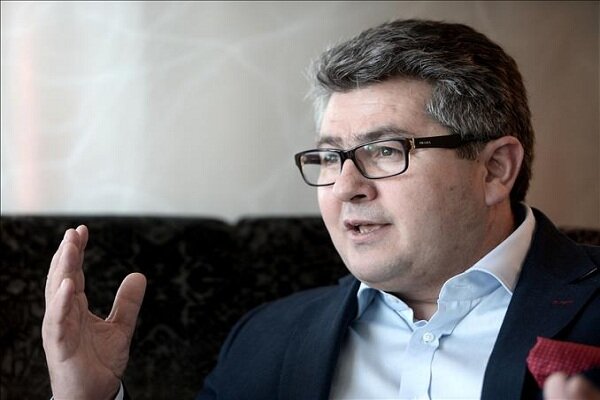
TEHRAN, (MNA) – Abdullah Salam al-Hakimi, former Yemeni minister of national dialogue has said that the major Yemeni military operation dubbed Nasr Min Allah against the Saudi army in southern Najran province will have grave consequences for the Saudi rulers.

To discuss the Nasr Min Allah military operation by Yemen’s Houthi Ansarollah in the south of Saudi Arabia, Mehr correspondent reached out to Abdullah Salam al-Hakimi, a senior diplomat at Yemeni foreign ministry and former Yemeni minister of national dialogue, a summary of which is as follows:

Al-Hakimi described Nasr Min Allah as a massive military operation which shows the growing military capabilities of the Yemenis.

He further described the operation as a kind of asymmetric warfare led by liberation popular forces.

He further noted that the operation is conducted in a vast area inside the enemy’s territories.

The Yemeni diplomat also pointed out that Nasr Min Allah came along with the recent increase in the military attacks on Saudi energy resources in the east of Saudi Arabia with the aim of destroying the sources of supply for the Saudi military.

Al-Hakimi further noted that the successful military operation in the south of Saudi Arabia will have great military, political and security consequences for the enemy so that it can make changes to the Saudi ruling establishment in the coming days.

In response to a question about the recent drone attacks on Saudi Aramco facilities in the east, the former Yemeni minister of national dialogue said that the drone attacks did not put an end to Saudi aggression on his country as the Americans are the ones who are controlling the aggression behind the scenes and Saudis are a puppet in their hands.

“Even if the Saudis reach to the conclusion that the continuation of the aggression will lead to their own destruction, they will not be able to end their aggression. Because whoever relies on the United States and its allies to protect himself and his regime has no independence in decision making,” he went on to note.

At the end, he ridiculed the claims on Iran’s role in the recent Yemeni attacks on Aramco, saying that such claims may be made on the Nasr Min Allah in the future.

Tuesday, September 24, 2019

An 'impartial' UN probe into Aramco attacks to prove Iran's uninvolvement

TEHRAN, (MNA) – In an interview with CBS News, Iranian FM Zarif said if the United Nations carries out an impartial investigation into the attacks on Saudi oil facilities, the outcome will prove Iran's lack of involvement.
The following is the transcript of Iranian Foreign Minister Javad Zarif 's interview with the CBS on "Face the Nation," conducted on September 22, 2019, and published on the website of the Iranian Foreign Ministry on Monday.
MARGARET BRENNAN: Foreign Minister, thank you for making time.
MOHAMMAD JAVAD ZARIF: Good to be with you, again.

MARGARET BRENNAN: You are now personally sanctioned under US law but you're sitting here in midtown Manhattan with a US visa. Do you read that as a sign that the US still wants to talk?

ZARIF: Well not necessarily, because the United States is under obligation, being the host of the U.N. headquarters to issue visas to member states. So they made it very clear in a letter that they attached to my visa that I'm not eligible to get a visa, but they're doing it on a waiver basis. So they want me to know that I'm not supposed to be here.

MARGARET BRENNAN: But you are here. You're here without all the staff and pomp and circumstance that normally foreign ministers are afforded. And you're here at an incredible- an incredibly intense period of time. The U.S. is sending what's described as a moderate number of forces and some defensive equipment to Saudi Arabia in the wake of this attack. How does Iran interpret that?

ZARIF: Well I don't think this type of posturing helps. I think what helps would be to end the war in Yemen.

MARGARET BRENNAN: You think it's posturing?

ZARIF: I think it's posturing. I think it's all going the wrong direction in addressing this issue. When the war in Yemen erupted over four years ago, we called for a ceasefire, immediate negotiations, humanitarian assistance and a formation of a broad-based government. Unfortunately U.S. allies- Saudi Arabia, believed that they could win this war militarily within four weeks. That's why they didn't accept our offer to mediate between them and the others and to bring about a negotiated solution. Now four and a half years after that, we see that all that military equipment that the United States provided to Saudi Arabia and the UAE, all the military logistical support that the United States and some other Western countries provided, did not help defeat a group of people, the Yemenis, who are basically cut off from the rest of the world.

MARGARET BRENNAN: The United States says there's no way this attack was launched from Yemen and that the Houthis, the Yemenis you're talking about, don't even have the ability to do what happened.

ZARIF: Well it is difficult for the United States to explain why its state of the art equipment was not able to intercept these weapons. But the fact of the matter is that the Houthis have accepted responsibility- responsibility for that. If it were a false flag operation, if somebody else did it, then they should look for that culprit. It wasn't Iran. And if the United States believes it wasn't the Yemenis then they should look for who- who did it, but for--

MARGARET BRENNAN: Who do you think did it?

ZARIF: I don't know. I think the Yemenis have announced a- declared responsibility for it. They have even shown evidence that they launched this attack. So I should take it as that. But if the United States believes that the Yemenis were not behind it, first of all why did the- why did the Saudis retaliated yesterday against the Yemenis? Why did the- they break the U.N. brokered ceasefire in Hodeidah and retaliated against the Yemenis? They did that because they all know where it came from, and how it should end is through an end to the killing of innocent children, women, elderly that has been going on. 100,000 people have been killed. Over two million cases of cholera in Yemen. Now everybody is concerned about an attack on an oil refinery which, based on the latest information that I have, didn't even have a single casualty. Hundred thousand innocent human beings not enough but a refinery is an imminent threat--

MARGARET BRENNAN: Do you accept--

ZARIF: This- this is- I mean I think I think the moral compass is totally lost.

MARGARET BRENNAN: Do you accept that these were Iranian-made weapons? The United States, Saudi Arabia, they all say that the weapons the evidence that they have and have gathered was made by Iran.

ZARIF: Well they made all those claims in the past. The fact of the matter is Yemenis inherited all the weaponry that Ali Abdullah Saleh bought with Saudi money during his- his long career as president--

MARGARET BRENNAN: But--

ZARIF: --former president.

MARGARET BRENNAN: --you know that those missiles can be reverse engineered to figure out where they were launched from.

ZARIF: Well, they can do it.

MARGARET BRENNAN: The U.S. says it's just a matter of time--

ZARIF: Okay.

MARGARET BRENNAN: -- before other investigators--

ZARIF: Well--

MARGARET BRENNAN: --determine that these came from Iran.

ZARIF: Well let them do it. Let them do that because it would take a miracle for them to claim that because it didn't come from Iran. Period.

MARGARET BRENNAN: Are the weapons from Iran?

ZARIF: The weapons the Yemenis have said these are Yemeni made. I've heard news stories that they are different from the weapons that we produce. I believe the Yemenis. Based on what I know, the Yemenis have the technology and the knowhow--

MARGARET BRENNAN: But what--

ZARIF: --to increase the range of the missiles that they already had from Ali Abdullah Saleh.

MARGARET BRENNAN: But when you talk about the range, Saudi Arabia allowed in reporters to the oil facilities to look at the damage and there is evidence the attacks came from the north, not from Yemen, from territories that would indicate Iran, possibly Iraq, but the United States says Iran.

ZARIF: Well there is no evidence to that effect. The Saudis made a show but they could not prove it. Now at the end of the day they claim that the weapons were Iranian but they couldn't show even that. They've been showing that- a lot of lies. You heard the other day from Secretary Tillerson that some people believe that they can lie President Trump into a war.

And they did. Now I think in the United States we need responsible national security officials who can differentiate lies and deception from reality so that others could not play with the United States, could not take American soldiers to fight their wars for them.

MARGARET BRENNAN: You're accusing someone of manipulating President Trump?

ZARIF: I'm not accusing someone of manipulating President Trump. Secretary Tillerson did.

MARGARET BRENNAN: Are you confident that the U.N. inspectors, that the French inspectors, that the other countries who are sending people on the ground to look at this equipment, that none of them will determine that Iran played a direct role here or that these were fired from Iran?

ZARIF: I'm confident that Iran did not play a role. I'm confident that anybody who does- who conducts an impartial investigation will reach that conclusion. But I cannot say a priori that the people who are being sent will conduct an impartial investigation because we've had cases in the past where they didn't.

MARGARET BRENNAN: The U.N.?

ZARIF: Or the U.N. too.

MARGARET BRENNAN: So will you accept the results of the U.N. investigators?

ZARIF: No, we will accept the results of an impartial investigation--

MARGARET BRENNAN: Who's impartial?

ZARIF: --and we- we can create an impartial investigation team. We were not informed by the U.N. We were not consulted by the U.N. We do not know on what basis this has taken place. So we will take it up with the United Nations. We are confident that if the United Nations carries out an impartial investigation the- the outcome will be that it was not launched from Iran.

MARGARET BRENNAN: Saudi Arabia said today that citizens from the region are being recruited by Iran to carry out attacks.

ZARIF: This- this means that they are--

MARGARET BRENNAN: What does that mean?

ZARIF: --it- it means that they are backtracking from the initial allegation that it's coming from Iran. They are saying that it may come- have come from somewhere else but it was based on citizens being recruited by Iran to do this. So a lie falls apart sooner or later.

MARGARET BRENNAN: Can you say that these weren't Iranian backed attacks in any way shape or form?

ZARIF: They were not Iranian-backed attacks.

MARGARET BRENNAN: Launched--

ZARIF: We support the Yemenis and you see Iran- Iran --

MARGARET BRENNAN: But you also support militias in Iraq and elsewhere.

ZARIF: No, we support the government of Iraq. These militias that you talk about are part of the Iraqi government. The Israelis are attacking parts of Iraqi military, official military. What these--

MARGARET BRENNAN: Can you say these weren't launched from Iraq by an Iranian backed group?

ZARIF: No, they were not launched from Iraq by an Iranian-backed group or by any group.

MARGARET BRENNAN: President Trump has said he'd be willing to meet with Iran without preconditions and there has been talk among the Western powers about trying to give some financial lifeline to Iran to stay in the nuclear deal. All of that was happening and then this attack seemed to blow it all up.

ZARIF: No, all of that was not happening because--

MARGARET BRENNAN: You didn't take the offer of talks as real?

ZARIF: We have been talking to the French. I spoke to the French president twice in three days at length and we discussed it with him. The president- our president has been talking to the French president. The United States has been reluctant to engage in what is required. Let me give you an example that President Trump would easily understand in transactional terms- in real estate terms. I buy a building from you and somebody inherits your company from you next year and he comes and tells me, "I didn't sell that building to you. I need a higher price and a worse building." Would you buy it? Would anybody in, to use President Trump's word, in any history buy this building? Do you have any example in any history, again to use his word, of anybody doing this? He is asking us- we didn't have a revolution in the United States. President Trump inherited a government from another administration that was legally elected as a United States government. And this agreement has been endorsed by the Security Council. This agreement is in a Security Council resolution. Now last I heard, the United States sits in the Security Council as a permanent member. It has not withdrawn. It withdrew from Human Rights Council. It withdrew from UNESCO but hasn't withdrawn from the Security Council--

MARGARET BRENNAN: But you--

ZARIF: At least not as of yet.

MARGARET BRENNAN: You- you said yourself that you were invited into the Oval Office to meet with President Trump.

ZARIF: Yeah but to meet him for what? For a photo opportunity? Or to meet him for some substance?

MARGARET BRENNAN: So when the president says he's willing--

ZARIF: We did not--

MARGARET BRENNAN: to meet and talk--

ZARIF: Yeah yeah--

MARGARET BRENNAN: You're not taking it seriously at all?

ZARIF: We're ready to talk. We're ready to talk but talk in terms of something that is not going to be valid only for the next one and a half year or five and a half years. We need to talk about something that is permanent. That would last. We already have a- an agreement. We talked. I have talked to what was a United States secretary of state and the United States secretary of energy for hours upon hours of painful negotiations. You were there in Vienna. You remember. These were difficult negotiations. It wasn't just a two-page document that we signed so that we could do another two-page document.

MARGARET BRENNAN: So you're saying you will not meet or talk or consider diplomatic negotiations with the United States unless the acceptance of that old deal, the JCPOA--

ZARIF: It's not an old deal.

MARGARET BRENNAN: -is agreed to?

ZARIF: It's- it's a deal that exists now. There is a negotiating room. There is a negotiating table. Wednesday at 8:30 in the morning. There will be six- four plus one plus one- six foreign ministers and one high representative of the European Union.

MARGARET BRENNAN: You will not meet with Secretary Pompeo outside of that?

ZARIF: No.

MARGARET BRENNAN: Why?

ZARIF: Because there's no reason to.

MARGARET BRENNAN: There's no reason to talk to the United States--

ZARIF: And basically Secretary Pompeo is prevented by law from meeting me because he designates me.
MARGARET BRENNAN: U.S. officials told CBS News though that the supreme leader himself approved these attacks on Saudi Arabia but that they needed to be deniable.
Well this is just a hypocritical, hypothetical, allegation. I mean no, no reality whatsoever.

MARGARET BRENNAN: The supreme leader didn't approve these attacks?

ZARIF: These attacks did not take place from Iran for the supreme leader to approve them. Had they taken place from Iran then he would have had to approve them. But it didn't take place from Iran.

MARGARET BRENNAN: Do you think U.S. officials are lying when they say that? That Saudi Arabia is lying?

ZARIF: I'm certainly- I'm certain that they're being lied to, whether they want to accept that lie. I think the work of us diplomats- I think myself and my counterpart, the U.S. secretary of state, we need to try to push diplomacy, as Senator Sanders has recently said, not to push war.

MARGARET BRENNAN: Senator Sanders. Do you think President Trump's going to win re-election?

ZARIF: I don't know. I have my guess, but it's up to the American people.

MARGARET BRENNAN: The last time we spoke, you discussed letters that Robert O'Brien sent to you. He was the hostage negotiator and now he's the national security adviser of the president of the United States. Do you regret not opening up that channel of communication?

ZARIF: We did open that channel of communication. We provided an offer of exchanging of prisoners. That offer was made last September when I was here for the last General Assembly.

MARGARET BRENNAN: But at least five Americans, including Baquer Namazi, Xiyue Wang- they are still in Iranian custody.

ZARIF: Yeah. At least they are accused of something. There are Iranians in the United States who have been held in captivity for nine months without even charges--

MARGARET BRENNAN: But you're--

ZARIF: --being filed against them. We have a professor--

MARGARET BRENNAN: But you're at this moment of intense pressure right now in the wake of these attacks. The entire global community is about to meet this week and they're going to be talking about Iran. Wouldn't it be a goodwill gesture to release a few Americans?

ZARIF: Wouldn't be- wouldn't it be a good gesture for the United States to release a professor, whose mother just died and he has been there without charge and without any ability to leave the country, just because- he was issued a visa. Then his visa was revoked as he was flying into the United States. This is a professor. He is not a professor of military studies. He's a professor of biology. He was working on recreative genes if I'm- if I'm correct, and he is a world-renowned scientist. He's been in jail since last November or December, if I know correctly- if I remember correctly. Why don't they release him as a sign of good gesture? So at least he can go to the grave of his mother and visit the grave of his mother.

MARGARET BRENNAN: I'm being told we're out of time but I just want to button this up and make clear here. Do you believe- are you confident that you can avoid a war?

ZARIF: No. No, I'm not confident that we can avoid a war. We- I'm confident that we will not start one but I'm confident that whoever starts one will not be the one who finishes it.

MARGARET BRENNAN: What does that mean?

ZARIF: That means that there won't be a limited war.

Monday, September 23, 2019

US grazes reactionary Arab regimes like flocks of sheep

Al-Nujaba’s spox in exclusive interview with MNA:

US grazes reactionary Arab regimes like flocks of sheep
TEHRAN, (MNA) – Al-Nujaba’s spokesman Nasr ash-Shimmari told MNA that the US grazes reactionary Arab regimes likes flocks of sheep, adding that the Resistance is equipped with highly advanced weapons and rockets.
The following is the full text of the interview:
In the past weeks, a chain of blasts happened in the positions and arsenals of the IPMF. For instance, an explosion happened in the arsenal of the Popular Forces in Amerli, Saladin, and some others near the airbase in Balad. Many Iraqi groups accused the US of carrying out the attacks. What is the chief cause of these explosions in your opinion? 
Attack against the bases of the IPMF and targeting the commanders of these forces by American forces isn’t strange or unprecedented, as they have repeatedly done such actions in their military operations in Iraq. Moreover, some attacks have been conducted against the Army and police of Iraq.
It seems as if the Iraqi government showed no response to these attacks and the attacks were suspiciously censored by the media whose main cause could be the pressures of the US on all Iraqi governments.
The cause of the said attacks can be the fact that the US regards the IPMF and the Islamic Resistance responsible for the defeat of the ISIS project; the project the US attempted to prolong and make changes into the map of the region so that the security of Israel, together with its own influence and dominance, would be guaranteed.
Besides, Americans consider the IPMF and Resistance the allies of Iran. Yet, we don’t regard ourselves so, but beyond that, we believe that Muslims, in whatever land, form a single Ummah and have a single cause

The Iraqi prime minister, Adel Abd al-Mahdi, issued an order revoking the agreements over the flight of foreign drones and fighters in the sky of Iraq without the permission of Baghdad government. The commanders of the IPMF stressed that in case unknown drones fly in the Iraqi sky, they will confront it. What is your position in this regard?
The issuance of this order was a courageous and unprecedented act. We advocate this order as powerfully as possible for its implementation guarantees the security of the state, people and military forces.
However, we believe that the arrogant nature and vanity of Americans prevent them from observing this order, as they have done so and following the issuance of the order, they carried out some air attacks against the forces of the IPMF.
In the past few days, it was repeatedly mentioned that Israel has been involved in the attacks against the Iraqi Resistance groups and in the destructive operations in Iraq. In case this issue is proved, what will be the choice of the IPMF in response to Tel Aviv?
Although military experts look into the admission of the Zionist Regime to the bombing of the IPMF centres from another standpoint, we believe whatever the Zionists have said is a piece of evidence on the exchange of the parts of the Zionist Regime and the US.
The US feels danger about its presence and positions in Iraq as the weapons of the Resistance can easily target them. Thereby, the bombings have been attributed to the Zionist Regime as they think Israelis are too far from the arms of the Resistance to be targeted.
However, the attacks can be responded through two methods:
First: We regard the Zionist Regime and the US the same and if the American forces weren’t present in Iraq, the Zionist couldn’t reach the Iraqi sky easily. Therefore, the US should be known as responsible for these aggressions, and the response to these bombings will only target the US.
Second: We believe that the Zionist Regime isn’t aware of the power and capabilities of Iraq properly; yet, the Iraqi Resistance and country can have access to deterrent weapons, even they may have such arms now.
In 2008, the Movement was inserted into the sanction list of the US, nonetheless, this action was not the end of US hostile actions against al-Nujaba, and some months ago, the US Ministry of Treasury imposed some sanctions against it. What is the nature of the US sanctions against al-Nujaba? And can they impact the activities of the Movement?
The sanction list is the list of dignity, honour and the list of the Right against the wrong and the world arrogant powers. We have never been the friends of the US to be its friend today. We have always been presented in the front of the battle against the world arrogance, in general terms, and against the US and the Zionist Regime, in specific terms. Even if the lines between the positions blur, we will still stand in the position of combat against arrogant powers.
But, concerning our sanctions, we ought to say they have had no impact, as no member or head of al-Nujaba has capital in a bank or none of the said people thinks of having recreations in US beaches. 
The capital of combatants is faith and trust in God and their recreation is the battle on the path of Heaven. Certainly, we will remain in this position even if such sanctions are imposed again and again.
What is your idea about the 10-article order of the Iraqi prime minister? It is seen differently by different people, some say it will enforce the IPMF and others say that it leads to the dissolution of these forces.
We have repeatedly said that the 10-article order of the prime minister is on the organisation of affairs and not about the dissolution of the IPMF or downplaying its role, and many of its articles have been executed by the IPMF in the past.
We believe that the Resistance is not having a weapon or power. Although they are necessary, the Resistance is the belief owned by the combatants; therefore, the Resistance will remain until this faith exists. The same belief formed the IPMF and despite its limited equipment, it could achieve great victories; and now, it is everything different, as the power and equipment of the Resistance and the IPMF have highly developed.
A disputed issue, still dealt with in political and media arenas, is the continuation of the US military presence in Iraq and the existence of its bases in this country. The Resistance groups have long objected to this issue. What options do you have on the table concerning the final expulsion of the US forces of Iraq?
Our position about the illicitness of the presence of American forces in Iraq hasn’t changed, as the parliament issues the permit for the presence of foreign forces in Iraqi land and not the government.
However, those who say the US is present in Iraq for advisory and training purposes are the ones having closed their eyes on the Sun in order to deny its existence.
Why should do the advisor or trainer have large bases with thousands of armoured military forces equipped with different weapons and fighters inside Iraqi land?
Indeed, their presence is military and for occupation. 
The bill on the expulsion of the US forces of Iraq was presented to the Iraqi parliament, however, the speaker has laid it aside. But, following the issuance of the Fatwa by Ayatollah Haeri, the plan will strongly return to the parliament; and thus, there will be no way but the execution of this religious rule using all existing means and even through the military option. 
What is your assessment of the IRI supports of the Resistance Groups in different parts of the region, specifically in Iraq? Basically, how do you see the part of the victory of the Islamic Revolution in the formation of the Resistance Groups across the region in four past decades? 
I should openly announce that if there were no Islamic Republic, there would be no Islamic Resistance in Iraq, Lebanon or Palestine, and even if they existed, they would be weak.
Prior to the Islamic Republic, the Resistance had nothing but stones and some arms; yet, thanks to the supports of the IRI, today, the Resistance has the highly advanced weapons and thousands of missiles, and it is capable of vanquishing the Zionist Regime in Lebanon and Palestine, it has managed to conquer the American occupiers in Iraq and ousted them. Therefore, Americans had no other pretext to return to Iraq but the ISIS, and now, they are based in faraway areas and don’t dear to come to central or southern areas of Iraq.
Today, we see that some rulers of the countries of the Region, such Saudis Arabia, UAE, Bahrain and etc., following the expansionist policies of the US and UK, are playing out the scenarios intended by the said powers. In your opinion, what is/are the cause/s of such following and dependence? Do this path and its following by heads of Arab states lead to the fulfillment of the aims of foreigners in the region, including Iraq? 
The chief cause of the weakness of these regimes, that are like flocks of sheep grazed by the US, is the gap between them and their nation, as they wrong their nation and their bellies have become full with the ill-gotten materials.
We shouldn’t forget that these weak governments have been established by the world arrogant powers, specifically by the UK and now, the US has inherited the position of the UK.
Certainly, a liberate man prefers the simple life in a desert to being a weak ruler, like Saudi heads, treated condescendingly by trump.
But, concerning the purposes of these regimes, I should mention that they are too weak to have any aim. They attempt for the fulfillment of the purposes and projects of the US, furthermore, they pay the costs of the stupidity of the US.
They are too weak to meet any aim in the region, and following the appearance of the signs of their demise, they are solely attempting to prolong their rule.
Interview by: Ramin Hosseinabadian

Tuesday, September 17, 2019

US might topple Saudi Arabia as the world's top oil exporter sooner than planned


US might topple Saudi Arabia as the world's top oil exporter sooner than planned

TEHRAN, (MNA) – Commenting on recent drone attack on Saudi Aramco Mehmet Ogutcu says prior to this attack, the US was planning to double its crude oil exports to 9 million barrels per day by 2024. That means the US might topple Saudi Arabia as the world's top oil exporter sooner than planned.
Following drone attacks on Saudi oil plants, the White House said on Saturday that the United States was committed to keeping oil markets well-supplied in the wake of an attack on Saudi Arabian oil plants by Yemen.
According to some sources in Saudi Arabia, its return to full oil supply capacity after Saturday’s attacks on Aramco oil plants could take “weeks not days”.
An attack on Saudi oil facilities on Saturday is believed to have disrupted half the country’s production capacity, making the United States the only real holder of the global supply cushion via its ability to raise own output or to soften sanctions against other major oil producers.
Some believe that it surely is no coincidence the US is targeting virtually every major energy producer from Iran, Venezuela, and Russia, but also including its own "allies" such as Saudi Arabia.
We reached out to Mehmet Ogutcu, Chairman of London Energy Club to shed more light on the issue.
Referring to the drone attacks on Saudi oil plants, he said, “I believe that we have experienced the “Pearl Harbour of the oil industry” on 14 September. Saudi Aramco lost about 5.7 million barrels per day of output after 10 unmanned aerial vehicles struck the world’s biggest crude-processing facility in Abqaiq and the Kingdom’s second-biggest oil field in Khurais.”
“The drone attack, removing 5 percent of the global oil production, will be remembered as a watershed incident in the world oil history. Its impact will be severely felt not only for a few weeks when damaged Saudi oil installations will be repaired and crude supplies will start flowing again business as usual. The impact will be much longer. The world’s largest oil exporter is vulnerable and its air defense system has proven to be ineffective,” he added.
Ogutcu went on to say, “For oil markets, it is the single worst sudden disruption ever, and while Saudi Arabia may be able to return some supply within days, the attacks highlight the vulnerability of the world’s most important exporter. They also add further political risk to prices, raising the specter of more destabilization in the Middle East and the threat of US retaliation against Iran. Even, with a price that could easily double, the Saudi remaining exports will still earn amounts close to what they earned before.” 
Commenting on who are the most beneficiaries of the tension in the region, he mentioned, “The Russians will be great beneficiaries of this escalating crisis as they will earn much more per barrel on their oil and gas exports. Of course, the United States, now the largest exporter in the world, will also benefit greatly. Remember, prior to this attack, the US was planning to double its crude oil exports to 9 million barrels per day by 2024. That means the US might topple Saudi Arabia as the world's top oil exporter sooner than planned. 
The US is pointing a finger to Iran as behind this attack and said it would provide evidence. Traditional US allies are however not on-board. Geopolitics and great-power competition are playing a greater role these days, and while that may satisfy some narrow interests, it does not bode well for stable energy prices, or for the secure and dependable delivery of energy along global supply chains. 
Only China, which imports most of its crude from the Persian Gulf, will be financially hit at the tune of $1.1 billion for each dollar increase per barrel. Thus, except for China, few of the players will seek to defuse the situation, all feeling that they have little to lose and much to gain.  Hence, it would seem that the September 14 attack stands a strong chance of escalating into an all-out conflict.
The sanctions are already cutting $42 billion/year of oil exports from Iran’s economy. They have slashed Iran’s oil production and exports to historic lows. Before the US sanctions, Iran produced 3.8 million barrels/day and exported 2.5 million barrels. Oil made up 80% of Iran’s exports. The US ended sanctions waivers for major importers of Iranian oil in May 2019. Iran’s oil exports were down about 2 million barrels and oil production hit its lowest levels since the Iran-Iraq war.”
Regarding the Iran-Saudi Arabia relation in recent years, Ogutcu noted, “While Saudi Arabia supports economically squeezing the Iranian regime, they may not wish to see a war with Iran. While the context has changed in light of the weekend attack, the reasons have not. Saudi Arabia would find itself on the front line of an armed conflict, with Iran or its proxies to the east, south, and north. Such a conflict would also cripple plans for an Aramco IPO and would cause driving foreign investment from the country. 
Saudi Arabia has many long term reasons to showcase its resilience and de-escalate. Until now, Iran and Saudi Arabia were protected by the fear of mutual destruction of their main oil export assets, should one attack the other’s facilities. Now that the Iranians have lost most of their export capacity due to the sanctions, this fear of mutual destruction is no longer there. 
How Washington and Riyadh choose to respond (for now limited to rhetoric) will show exactly whether this is a flash in the pan or a step-change in Persian Gulf tensions.”
Interview by Zahra Mirzafarjouyan

Saturday, August 03, 2019

Failure in Yemen to be ‘death sentence’ of Saudi monarchy: Prof. Cavell

Failure in Yemen to be ‘death sentence’ of Saudi monarchy: Prof. Cavell

TEHRAN, Aug. 03 (MNA) – Professor of political science Colin S. Cavell believes that failure of Saudi Arabia “to reassert its hegemonic control over Yemen will be a death sentence on the continuation of the Saudi monarchy.”
In an interview with Mehr News Agency, Colin S. Cavell, full professor of political science at Bluefield State College in Bluefield, West Virginia, pointed to different aspects of Saudi-waged war against the Yemeni people and Western’s countries’ continued support for the aggression despite human rights concerns.
He noted that “Saudi Arabia is bogged down in a quagmire which it will be difficult to extricate itself from but instead will eventually call into question the continued existence of the Kingdom itself.”
“Failure on the part of Saudi Arabia to reassert its hegemonic control over Yemen will be a death sentence on the continuation of the Saudi monarchy.  A Yemeni victory in their war of independence from Saudi Arabia will provide hope and inspiration for the captive population of Saudi Arabia to rise up an install a legitimate peoples’ government.”
He also noted that “disparate economic interests” of various countries, including US, UK and France, are why the UN Security Council “cannot agree to stop this devastating war on the people of Yemen.” He added that “morality for Trump consists in whether US industries are profitable despite resulting in unparalleled death and destruction.”
Here is the full text of the interview:
UN Secretary-General António Guterres issued a report on Friday, July 26, 2019 noting that the Saudi-led coalition has killed 729 children in 2018 in the Yemen war, deciding to blacklist the coalition for the third year for child-killing crimes. Despite all these human rights reports, we see that western countries are still providing the coalition with weaponry. Why all these reports have failed to stop arms sales of the western countries, especially the Trump administration, to the Saudi-led coalition?
Currently, there are 193-member states of the United Nations, an International Governmental Organization (IGO) set up in 1945 to prevent another world war from killing millions of people as WWII did.  While these 193 members are technically sovereign states, in truth, save for a handful of nations, most members are subservient to other, larger, more powerful states.  The UN is a three-tiered organization with the 15-member Security Council able to set policy for the entire organization with the five permanent members of this Council—the United States, China, Russian Federation, France, and the United Kingdom—having a veto on all procedural issues, with ten non-permanent members who serve on the Council for two-year terms (five elected each year), with these ten non-permanent members elected by the third-tiered General Assembly of nations that comprise the majority of the UN.  Given this organizational structure, and given the current differences between the five permanent members and their veto power, it has been near impossible for this international body to agree on stopping the reckless and deadly Saudi-UAE war on the people of Yemen.
The truth-seeking citizen will thus inquire why these five permanent members cannot agree to stop this devastating war on the people of Yemen, and the answer lies in the disparate economic interests of the various states.  Specifically, the western states, led by the United States, perceive that their national security interests, require that they have secure and reliable access to energy resources to fuel their industries, and they believe that by politically controlling the energy resources of Iraq and Iran (the two nations of the Middle East with the largest stores of such reserves) will satisfy their national security objectives.  Lacking such political control, then the US and its allies wish to deny the viability of these and other large-energy reserve countries—like Venezuela—from being able to function properly.
Given this perspective, it matters not to current US President Donald J. Trump, a quintessential representative of the capitalist economic system and default leader of the western coalition of states, whether the countries leading this assault on the Yemeni people, namely Saudi Arabia and the United Arab Emirates, are engaged in a systematic genocide against the Yemeni people, whether their attacks exhibit any sort of proportionality or strategic logic, whether supporting such odious unelected and undemocratic regimes serves long-term US interests, or even whether US aiding and abetting this calamitous war is in violation of international law, given that the US, the UK, and France—all US allies on the UN Security Council--can prevent the UN from stopping this war.  However, what does matter to the US president is whether and how this conflict being waged by its two close allies in the Middle East, the Kingdom of Saudi Arabia and the United Arab Emirates, and which is urged on and assisted by Israel,  the US’s closest ally in the Middle East, can benefit the United States economy.  President Trump has concluded that the US will benefit if it is able to sell as many weapons and military equipment as possible to these warring parties and thus profit US military industries, which, in turn, will fatten the campaign coffers of President Trump and his Republican Party members of Congress.
In March of 2018, Trump effusively welcomed the heir-apparent to the Saudi throne and the architect of the Saudi-UAE-led war on Yemen, Mohammed bin Salman (MbS), on his first visit to the White House and promised to push through Congress arms deals worth billions of dollars in investment and additional jobs to the United States.  As Trump said at the time, “Saudi Arabia has been a very great friend and a big purchaser of equipment and lots of other things.”
Thus, morality for Trump consists in whether US industries are profitable despite resulting in unparalleled death and destruction.  Such a moral compass reflects a pole shift in direct contradiction to the morality espoused by either the Koran, the Bible, the Torah, or any other religious text or philosophical code.  It is the morality of capitalism, an economic system which currently dominates much of the world and is centrally directed from the United States.
On July 28, 2019, a gunman killed three non-white people attending an annual festival in Gilroy, California.  Earlier in the day, he posted on his Instagram account references to a fascist white supremacist manifesto from the nineteenth century which challenges the basis of all Abrahamic religions that call on us all to serve each other, to lift up the weak, the impoverished, the neglected and instead argues for the rights of the strong, the mighty, the wealthy, the powerful.  Spurred on by the cultural degeneration of President Trump, what now reigns as morality for US leaders is bullying, arrogance, bragging, excessive pride, and denigration of all those who are not white, wealthy, male, and powerful.
Given this diametrically opposed system of values, it is impossible to for the interested states to mutually recognize what the problem is, much less how to resolve the problem.
What were the main aims of Saudi Arabia in the Yemen war? And are these aims achieved up to now?
The Yemeni people rose up in January of 2015 after decades of existing under foreign rulers installed by their neighbor Saudi Arabia and forced then-President Abd Rabbu Mansour Hadi to resign.  When Saudi Crown Prince MbS decided to intervene into Yemen in March of 2015 in an attempt to restore their puppet, Hadi fled the country to the Saudi city of Riyadh, as the Saudi bombs rained down upon the Yemeni revolutionaries forcing them to organize against the imperial intervention that has killed over 70,000 people in the last four years.  Seeking to reassert their hegemony over the Arabian Peninsula, Saudi Arabia denies the Yemeni people have any legitimate grievances and instead wants the outside world to believe that the Yemeni people are activated and instigated by the country of Iran from across the Persian Gulf.  The United States, the United Kingdom, Israel, and other western powers have traditionally relied upon Saudi Arabia as a guarantor of reliable oil and natural gas for western industries and have utilized the Saudi monarchy as a cash machine to bail out their economies from time to time, to launder their ill-gotten gains, and to police the Middle East to serve western hegemonic interests.  With thousands dead, Yemen’s infrastructure destroyed, financial costs to the Saudis now well over $100 billion, with its international reputation in tatters even amongst its allies, with MbS’s leadership credibility a running joke, with the Yemeni people stronger and more united than ever, Saudi Arabia is bogged down in a quagmire which it will be difficult to extricate itself from but instead will eventually call into question the continued existence of the Kingdom itself.
Reports indicate that the UAE is planning to withdraw forces from Yemen in several stages. Do you think this withdrawal is a real one or just a tactical strategy? Why has the UAE made this decision, and what are the consequences of such a move on the future of Yemen?
The United Arab Emirates is very worried that its participation in the Saudi invasion of Yemen will open itself up as a target of Yemeni attacks, just as Saudi Arabia is now being regularly attacked by Yemeni fighters, Yemeni missiles, and Yemeni drones.  But, as a junior partner in the Saudi-led axis war against the Yemeni people, it is, in reducing its direct troop involvement in the war, following orders from the imperial directors of this organized carnage situated in Washington and London who are orchestrating the unfolding of this imperial drama.  Thus, it appears, at present, to be solely a tactical disengagement from direct fighting in Yemen.
There are also other reports outlining that Saudi Arabia may have plans to wrap up the Yemen war by the end of 2019. Since Mohammad bin Salman strongly supported aggressive policies of Saudi Arabia, such as in Yemen, do you think that a Saudi defeat in Yemen will change the political fate of bin Salman and Saudi Arabia?
Failure on the part of Saudi Arabia to reassert its hegemonic control over Yemen will be a death sentence on the continuation of the Saudi monarchy.  A Yemeni victory in their war of independence from Saudi Arabia will provide hope and inspiration for the captive population of Saudi Arabia to rise up an install a legitimate peoples’ government.  Losing its reliable source of energy and financial launderer in the Middle East is why the western hegemons are so intent on excusing the Kingdom of its crimes from the death and dismemberment of journalist Jamal Khashoggi to the financing of the September 11, 2001 attacks on the World Trade Center in New York and the Pentagon in Washington, DC.
Born and raised in Baton Rouge, Louisiana, Colin S. Cavell earned his Bachelor of Arts degree in Political Science from Louisiana State University in 1982, his Masters of Arts degree in Political Science from the University of New Orleans in 1987, and his Doctorate of Philosophy degree in Political Science from the University of Massachusetts at Amherst, Massachusetts in February 2001. Dr. Cavell is a tenured Full Professor of Political Science at Bluefield State College in Bluefield, West Virginia, having previously served as Chair of the Department of Social Sciences.  Dr. Cavell is also an Adjunct Professor of Political Science at Holyoke Community College in Holyoke, Massachusetts and has taught at the University of Bahrain in the Kingdom of Bahrain, the Junior Statesman Foundation Summer Program at Yale University in New Haven, Connecticut, Merrimack College in North Andover, Massachusetts, the University of Massachusetts in Amherst, Massachusetts, as well as at the University of New Orleans in New Orleans, Louisiana.
Interview by Mohammad Ali Haqshenas

Wednesday, July 17, 2019

US must end arms sales to Saddam's reincarnations: Zarif

US must end arms sales to Saddam's reincarnations: Zarif

TEHRAN, Jul. 17 (MNA) – Iranian Foreign Minister Mohammad Javad Zarif called on the US to stop selling arms to 'Saddam's reincarnations' instead of complaining about Iran's defensive program.
"For 8 YEARS, [former Iraqi President] Saddam showered our cities with missiles & bombs provided by East & West. Meanwhile, NO ONE sold Iran any means of defense. We had no choice but building our own. Now they complain. Instead of skirting the issue, US must end arms sales to Saddam's reincarnations," wrote Iranian Foreign Minister Mohammad Javad Zarif in a tweet on Wednesday. 
He attached the following pictures to his tweet, which show the bombing of Iranian city Khorramshahr during the Iraqi imposed war on Iran (1980s), and US-made bombs used by Saudi-led coalition in Yemen. 

Sunday, July 14, 2019

The failure of Yemen invaders

TEHRAN, Jul. 14 (MNA) – It has been four years since the Yemen war started, but the Saud Arabia, United Arab Emirates (UAE) and other invaders have not been able to succeed even in a small part of their plans in Yemen.
The bravery and resistance of Yemenis has now forced UAE to leave the battlefield, even though the country has been among the main invaders of Yemen for years.
After this, the fate of Saudi Arabia in Yemen war is completely clear. UAE’s withdrawal from the Yemen war was the worst news ever to Saudi Arabia and now Riyadh can only await a bitter failure. 
Now, more than ever, Saudis are alone in Yemen. In this situation, Riyadh has no choice other than accepting the defeat.
According to a New York Times report, UAE has come to the conclusion that the Saudi-Emirati coalition has no chance of winning in Yemen, and has decided to leave the war-torn country, despite pressures from Saudi Arabia.
Many UAE officials have announced that the country is definitely leaving Yemen. An Emirati official, who did not want to reveal his name, has said that “Abu Dhabi aims to change its strategy in Yemen from war to peace,” therefore, UAE forces will soon leave Al Hadida port and other parts of Yemen.
According to a report by the New York Times, departure of UAE from Yemen will ruin most of Saudi Arabia’s efforts in Yemen, so it has left the Saudis with great frustration and disappointment. Obviously, in the near future, Saudis will become even more vulnerable in Yemen.
Over the last four years of war in Yemen, UAE has had a vital role and provided the lion share of financial and military support. Up to now, UAE has sent thousands of men to Yemen and has led many operations, but now the country has come to the conclusion that it is no longer able to stay in this war.
Now, Saudis have lost their main partner in the war. Soon, Mohammad Bin Salman, crown prince of Saudi Arabia will become the symbol of failure in Yemen and Saudis will accept their defeat.
The burden on Saudi Arabia is so heavy that they have practically begged the UAE to reduce their forces in Yemen instead of leaving the country altogether.
In recent weeks, Emiratis who once had more than five thousand forces in Yemen,  said they want to evacuate their forces gradually and the retreat will be a step-by-step process, but some western and Arab diplomats have informed the New York Times that UAE has expedited the process and has already removed a large part of its forces from Yemen.
Anyway, it seems that the huge costs of war started putting a great burden on the UAE, and the country decided to leave the war, despite the anger of Saudi officials. In the near future, more news about the withdrawal of UAE forces from Yemen will come on the air and it will definitely come as a hard blow to the Saudis. 

Thursday, December 20, 2018

The US Senate's role in the killing of Yemeni children

By: Hanif Ghaffari

The US Senate's role in the killing of Yemeni children


TEHRAN, Dec. 17 (MNA) – The US Senate voted on Thursday to end American military assistance for Saudi Arabia’s war in Yemen. This was reported by the media as the strongest show of bipartisan defiance against Trump’s support for the Saudi family over the killing of Jamal Khashoggi, the Saudi journalist who was against bin Salman policies.
Accordingly, the New York Times wrote, "the 56-to-41 vote was a rare move by the Senate to limit presidential war powers and sent a potent message of disapproval for a nearly four-year conflict that has killed thousands of civilians and brought famine to Yemen. Moments later, senators unanimously approved a separate resolution to hold Crown Prince Mohammed bin Salman of Saudi Arabia personally responsible for the death of the journalist, Jamal Khashoggi."
It continues, "together, the votes were an extraordinary break with Mr. Trump, who has refused to condemn the prince and dismissed United States intelligence agencies’ conclusions that the heir to the Saudi throne directed the grisly killing."
Although the US Senate has initially approved the draft resolution, it seems that the American representatives are currently unwilling to put it into effect! On the other hand, Republican representatives in the House have announced that they would prevent the realization of this resolution so that the United States would be able to go on with exporting arms to the Saudi regime.
 In other words, the Republican officials have explicitly advocated the killing of the Yemeni people. But is this "vicious support" limited to the Republican members of the Congress? Haven't Democrats played any roles in the massacre of the Yemeni people over the past four years? Accordingly, there are some points that need to be taken into consideration:
Firstly and most importantly, the Yemeni war began at the time of Barack Obama's presence in the White House. In April 2014, this harsh and unequal battle was raised by Democrats who claimed to be traditional supporters for peace the Human Rights Doctrine, by Jimmy Carter and other party leaders. At that time, Saudi Arabia was supposed to conquer Yemen within two weeks and defeat Yemeni resistance groups.
Yet, about four years have passed since the beginning of the Yemeni war, and the result of the presence of Mohammed bin Salman and his mercenaries in Yemen has been nothing but the defeat for Saudi Arabia. During the Yemeni war, the Democratic senators (who are now opposing to this war) said nothing against the killing of Yemeni children, but directly and indirectly supported it many times
Next, during the presidency of Donald Trump, he continued the same way which the Obama administration took in support for the war in Yemen. Meanwhile, some of Mohammed bin Salman's atrocities and Trump's excessive investments on the slaughterous prince of Saudi Arabia attracted the attention of the most Democrats and some American senators, such as Lindsay Graham.
The repeated defeats of Saudi Arabia in Yemen, and the global awareness about the crimes against Yemeni people, especially women and children, also accelerated the process. Besides, the murderer of Jamal Khashoggi worked as an accelerator in this regard. This was while the American Senators kept silent over the bombing of a Yemeni school bus which led to the killing of dozens of children.
Finally, we should say that the current opposition of American senators to the Yemeni war is not due to their "peaceful mentality" or because they believe war is a bad thing! It is, however, the result of the heavy costs that they had to pay for their ally's failure in Yemen. This process continues until the war is stopped in Yemen.
The opposition of Democratic and Republican senators to Trump's support for bin Salman is due to the intensification of opposition and hatred of bin Salman among the people all over the world, and among the American citizens. However, we shouldn't ignore the fact that American senators aren't basically opposed to war and bloodshed in the West Asian region and the Muslim world, but have been one of the main causes of these crimes over the past few years. And this same rule applies to Yemen's war.