Showing posts with label Oman. Show all posts

Thursday, August 01, 2019

Signs of tension reduction appearing in Persian Gulf

By Zahra Mirzafarjouyan
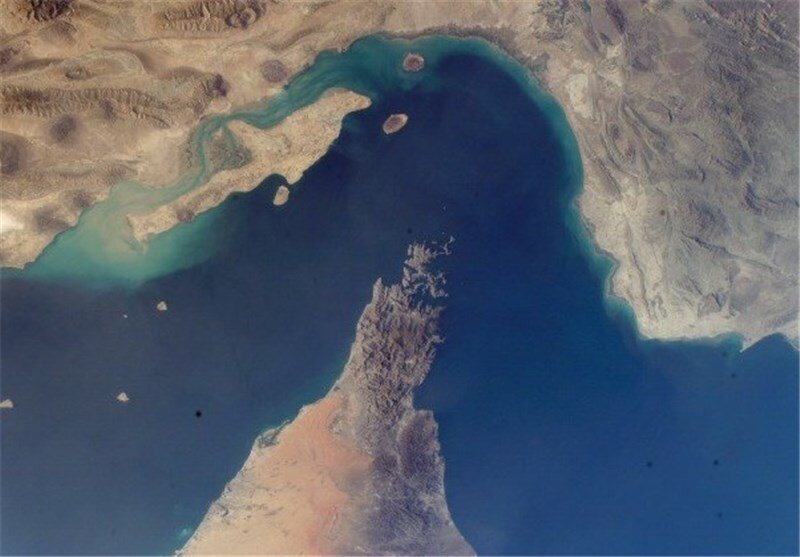
TEHRAN– After years of tensions between Iran and some Persian Gulf states particularly in recent months in the Strait of Hormuz, reports indicate the emergence of tensions reduction in this strategic region.
For nearly four decades, the Persian Gulf has not been calm and occasionally is the stage for Iran's confrontation with the US and its regional allies because of America's hostility toward the Islamic Republic of Iran. These tensions have sometimes led to direct military conflict.
Iran has been trying to challenge the US military power. The US also has hit Iran's military and oil facilities, killing many Iranians, including hundreds of civilians in the past.
The Persian Gulf, the Strait of Hormuz, and the Sea of Oman are a strategic route for supplying oil to world markets, and in this regards, oil tankers have been one of the main targets of military actions.
More than thirty years after the end of the Iran-Iraq war, several oil tankers have exploded again in the region in recent months. Tensions and maritime conflicts and attacks on oil facilities have re-emerged in the region by US and its regional allies destabilizing acts and the return of US sanctions against Iran.
The White House’s unlawful withdrawal from the Iran’s nuclear deal (JCPOA), designation of the Islamic Revolutionary Guards Corps (IRGC) as a terrorist group, re-imposing sanctions on Iran and trying to drive Iran’s oil export to zero all are provocative and suspicious moves of the US that have fueled the regional tensions.
Recently to reduce tensions in the region, a number of countries have taken steps and traveled to Iran to mediate.
Trying to calm the region Iran has also tried to take steps by a series of new proposals to improve relations with Arab countries on the Persian Gulf.
Iranian Foreign Minister Mohammad Javad Zarif suggested on May 26 signing a non- aggression pact with Persian Gulf littoral states during his three-day trip to Iraq. The suggested plan proves Iran to be right since security in the region would be achieved via cooperation of all regional countries and a desirable and stable regional discipline is obtainable without interference of foreign countries. The plan can become operational step by step in case of building confidence among regional countries.
Some speculation show that Oman and Iraq are likely trying to ease tensions between Tehran and some Persian Gulf states. In this regard, Iran’s Ambassador to Kuwait also announced on July 30 that some countries have accepted to join Iran’s proposed non-aggression pact.
Alongside with acceptance of some countries to join Iran's proposed non-aggression pact, it was announced that a joint Iran-UAE Coast Guard meeting had been held in Tehran after six years and some reports indicated that two UAE banks have announced their readiness to cooperate with Iran, Khorasan Newspaper reported.   
Russia and Qatar welcomed the proposal in June, and it now appears that Kuwait has been added to its supporters. In this regards, Iran’s Ambassador to Kuwait Mohammad Irani in an interview with Al Rai, Kuwaiti newspaper said that some countries have accepted to join Iran’s proposed non-aggression pact.
He did not explicitly mention the names of the countries, but said in his remarks that the proposal was not specific to Kuwait and would include all countries in the region. He also mentioned that some countries have responded positively to this plan, and Iran is awaiting response from other countries.
Simultaneously, Special Assistant to the Speaker of the Iranian Parliament for International Affairs Hossein Amir-Abdollahian also referred to the recent visit of Omani foreign minister to Tehran and said that Yusuf bin Alawi bin Abdullah had positive and constructive ideas on the subject of Iranian-Arab talks and the reduction of seizures and tensions during his visit to Tehran.
Foreign policy reporter of Etemad Newspaper wrote in his tweet quoting an Arab source: “In response to Washington's request for joining an international coalition to protect commercial ships in the region, Kuwait stated that the situation in the region was not like Saddam Hussein’s, former President of Iraq when Kuwait united with the US against another regional state and will not allow its territory to be used to threaten Iran. Kuwait had earlier rejected the US request for deployment of four B-52 bombers in Kuwait.”
In addition to Iranian Foreign Minister’s plan of ‘non-aggression pact’, Russia also outlined plan for ‘collective security in Persian Gulf’ and presented it to the UN Security Council and the UN General Assembly on 30 July 2019. Russia's concept of collective security in the Persian Gulf has been distributed as an official document approved by the United Nations.
"In the current conditions, energetic and effective action is needed at international and regional levels in the interests of improving and further stabilizing the situation in the Persian Gulf, overcoming the prolonged crisis stage and turning this sub-region to peace, good neighborly relations and sustainable development," the document said.
"Practical work on launching the process of creating a security system in the Persian Gulf may be started by holding bilateral and multilateral consultations between interested parties, including countries both within the region and outside of it, UN Security Council, LAS [League of Arab States], OIC [Organization of Islamic Cooperation], PGCC [Persian Gulf Cooperation Council]," the document added.
In a letter to the UN Security Council and the UN General Assembly, Russia said that it is "ready for cooperation with all interested parties to implement this and other constructive proposals".
Russia’s plan and Iran's proposal both seek to reduce tensions between the Persian Gulf states. There is only one difference between them that in the Russian plan, it also calls to establish security in the region from some countries outside the region. Russia has also emphasized in its plan that the region's security system will be strengthened by its neighbors in the Persian Gulf only when foreign military presence in the region is reduced.
The regional non-aggression pact is expected to pave the way for neighboring countries to build trust and have constructive interaction.
Despite all pressures, diplomatic initiatives are being pursued by Iran and some regional and trans-regional countries to reduce tensions in the Middle East.
Tensions initially built up between US and Iran after the US President Trump withdrew Washington from the 2015 Nuclear Deal, officially known as the Joint Comprehensive Plan of Action (JCPOA), and imposed severe sanctions against Tehran. Despite US policy of maximum pressure on Iran Trump administration claims that they are ready for talks with Iran but Tehran says it doesn't trust on the White House and will resist in face of all pressures and there will be no talks with a party which has already violated many international agreements.
Tensions between Iran and the United States reached a record high after a US spy drone violated Iran’s airspace last month and ignored Iran’s warnings before being targeted by IRGC’s air defense.

Thursday, June 13, 2019

Trump’s Middle East ‘Deal of the Century’ and his ‘Kosher Quartet’

The June 25-26, 2019 “peace conference” scheduled for Manama, Bahrain and attended by the United States, Israel, a few Palestinian quislings, and sell-out Arab states is nothing more than a rubber stamp on the future virtual annexation of the West Bank by Israel. The so-called “peace plan,” which has been dubbed the “deal of the century” by Donald Trump, had no Palestinian input, but was crafted by Trump son-in-law Jared Kushner, Trump’s “special envoy” for International Negotiations Jason Greenblatt, US ambassador to Israel David Friedman, and Kushner aide Avi Berkowitz. Greenblatt and Friedman were formerly lawyers for the Trump Organization.
The “Kosher Quartet” of Kushner, Greenblatt, Friedman, and Berkowitz, all Orthodox Jews who support Israeli Prime Minister Binyamin Netanyahu and the far-right elements of the Likud Party and its allies, have designed a plan that will see Israel’s satellites in the Gulf – Saudi Arabia, the United Arab Emirates, Bahrain – as well as Egypt, Jordan, and Morocco ante up billions of dollars for “economic development” of the West Bank that will see a virtual Israeli annexation of the territory by paying Palestinians for their land and infrastructure.
Trump’s “deal of the century” is for a new Palestinian diaspora, one that will see Hebron, Ramallah, Jericho, Nablus, Bethlehem, Qalqiliya, Tulkarm, Jenin and other cities depopulated by Palestinians, who will be offered asylum in the Gulf states and a Saudi-planned $500 billion supercity in northwestern Saudi Arabia, Jordan, southern Israel, and Sinai called “NEOM.” With their “exit wealth” and college degrees, the Palestinians are viewed by MbS and Kushner as optimal residents of NEOM, planned to be 30 times larger than New York City. As for the West Bank, the plan is for it to be repopulated by Jews from Israel proper, illegal Israeli settlements already in the West Bank, and abroad.
The Kosher Quartet’s “deal of the century” would not have been possible, nor would have the “peace conference” in Manama, were it not for the culpability of Israel’s allies in the Gulf, particularly, Kushner’s good friend, Saudi Crown Prince Mohammed bin Salman (MbS), and United Arab Emirates Crown Prince Mohammed bin Zayed al Nahayan (MbZ).
Even US Secretary of State Mike Pompeo downplayed the success of the “peace plan” as “un-executable.” He told the Conference of Presidents of Major American Jewish Organizations that Kushner’s plan “may be rejected.” Pompeo later walked back his comments while accompanying Kushner to the British state dinner for Trump in London. On the way to London from the Middle East, Kushner and Pompeo stopped off in Montreux, Switzerland to attend the secretive annual conclave of the Bilderberg Group.
Pompeo’s comments came at about the same time Kushner, in a rare interview with the press, said the Palestinians are not capable of governing themselves, which really means that his plan sees continued Israeli subjugation over Palestinians who do not accept the sale of their birthright in exchange for Gulf money. Kushner’s plan is nothing more than what might be expected from the son of one of New Jersey’s and New York’s shadiest real estate tycoons and “slum lords,” Charles Kushner, a federal ex-convict who served a nearly two-year prison term for illegal campaign contributions, tax evasion, and witness tampering.
Kushner also said that it was not his role in brokering a peace agreement for the Palestinians to trust him. That may have been the only truthful thing Kushner said in the interview with Axios. The Palestinians have absolutely no reason to trust Kushner after the Trump administration took several steps to marginalize the Palestinian Authority, including the closure of the US consulate general in Jerusalem, the moving of the US embassy from Tel Aviv to Jerusalem, cutting off millions of dollars in direct assistance to Palestinians and via the United Nations Relief and Works Agency for Palestine Refugees in the Near East (UNRWA), and Friedman claiming that Israel is “on the side of God.” Trump’s recognition of Israel’s sovereignty over Syria’s Golan Heights did nothing to assuage the concerns of the Palestinians, who saw it as a possible prelude to Israel’s re-annexation of the Gaza Strip, Israel’s very own “Warsaw Ghetto” for Palestinians subject to blockades, sanctions, and Israeli military aggression.
Kushner told Axios that he sees a stark difference between the Palestinian leadership and the Palestinian people. In fact, the State of Palestine, which is governed by the Palestinian National Authority, is recognized by 137 members of the United Nations and holds non-member observer status in the UN.
While the stance of the lavishly pro-Israeli Trump administration on Palestinian self-determination is no surprise, those of Saudi Arabia, the UAE, and Bahrain point to Israel’s growing influence in the Gulf as the Israeli-Gulf Arab alliance against Iran becomes more militant. The Saudis and Emiratis are now close intelligence partners of the Israelis, even relying on Israeli surveillance software to track opponents of their regimes at home and abroad. Israeli, American, Saudi, Emirati, and Jordanian military officers regularly meet in joint war rooms to carry out static military operations against Iran. One such war room is said to be in Eilat, Israel and another, across the border, in Aqaba, Jordan. Among the exercises performed is the disabling of Saudi air defenses to allow Israeli aircraft to pass through Saudi airspace in an attack on Iran. UAE military officers have participated in air training exercises with Israeli pilots in Greece and Israel.
Saudi officials directly responsible for the grisly murder and dismemberment of Saudi journalist Jamal Khashoggi, a US permanent resident, in the Saudi consulate-general in Istanbul reportedly met secretly with Israeli intelligence officials. Jared Kushner also reportedly expressed no opposition to MbS’s plan to eliminate Khashoggi, a frequent critic of Saudi policies, including its cooperation with Israel against the interests of the Palestinians.
Joining the Saudis and Emiratis in selling out the Palestinians to the Israelis has been Bahrain, a virtual puppet state of Saudi Arabia that also hosts the headquarters of the US Fifth Fleet. Bahrain’s Shi’a Muslim majority, long oppressed by the Wahhabi Sunni Al Khalifa monarchy, was brutally suppressed in 2011 with the assistance of Saudi military forces. Manama has reportedly welcomed Israeli government visitors. The Bahraini Nonoo family, of Iraqi Jewish descent, has seen its members appointed to key Bahraini government positions, including ambassador to the United States and to a seat in parliament.
Two Gulf nations opposed to the Saudi-Emirati-Israeli alliance are Qatar and Oman. Qatar has withstood a brutal Saudi and Emirati economic and diplomatic blockade, supported by the Trump administration, Israel, and Egypt. The Saudis and Emiratis subjected Qatar to a massive cyber-attack and fake news campaign. The anti-Qatar campaign was also assisted by veterans of the Israeli and American signals intelligence and cyber-warfare agencies, Unit 8200 and the National Security Agency (NSA), respectively. US Secretary of State Rex Tillerson was, in part, fired by Trump over Tillerson’s refusal to agree to Jared Kushner’s tough line against Qatar. Kushner’s attitude was influenced by Qatar’s rejection of a request by Kushner’s father to the head of the Qatar Investment Authority for it to financially bail out the Kushners’ failing building at 666 Fifth Avenue in Manhattan. Qatar’s good relations with Iran, as well as its contacts with the Houthis in Yemen and Hamas in Gaza made it target number one for the Israelis and their friends in the Gulf and in Washington.
Oman also maintains good relations with Iran and its stance resulted in a 2018 highly-publicized trip to Muscat by Netanyahu for a meeting with ailing Sultan Qaboos bin Said. Oman refused Netanyahu’s demand that it change its policy toward Iran. Neither Qatar nor Oman are favorable to the Kushner “peace plan” for the Palestinians.
One can imagine the outrage from the likes of Kushner and other members of the powerful Israeli lobby in the United States if a future Democratic president appointed the following four US Representatives: Palestinian-American Rashida Tlaib, Somali-American Ilhan Omar, Syrian-American Justin Amash, and Lebanese-American Donna Shalala to be in charge of negotiating a Palestinian-Israeli peace agreement. The “usual suspects” would cry foul. Where are those cries now with the perfidy now at play with the Manama conference and Trump’s “Kosher Quartet?”

Monday, April 08, 2019

Doha’s hosting IPU proves defeat of anti-Qatari coalition

- Larijani

Doha’s hosting IPU proves defeat of anti-Qatari coalition

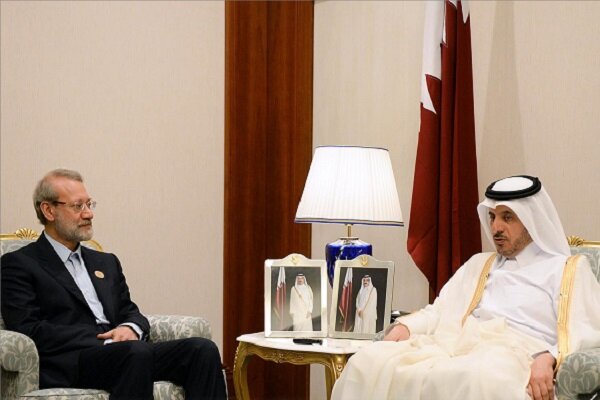
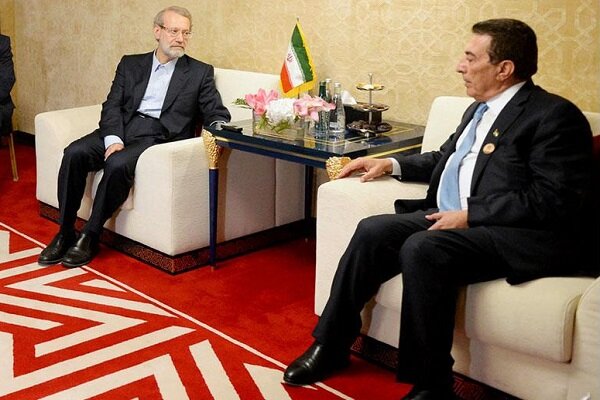
TEHRAN, Apr. 08 (MNA) – The participation of 180 parliamentary delegations in Inter-Parliamentary Union (IPU) shows that the anti-Qatari Arab coalition has suffered defeat, said Iranian Parliament Speaker Ali Larijani.
He made the remarks Sunday in a meeting with Qatari Prime Minister Abdullah bin Nasser bin Khalifa Al Thani on the sidelines of 140th Ordinary General Assembly of the IPU in Doha.
Iran and Qatar have strategic relations with each other and bilateral ties should be cemented in all fields, Larijani added.
Iran considers Qatar’s security and development as its own security and development, he stressed, adding that Tehran supports Doha on all levels.
The Qatari PM, for his part, appreciated Iran’s support in recent years while highlighting the need to boost cooperation in all fields.
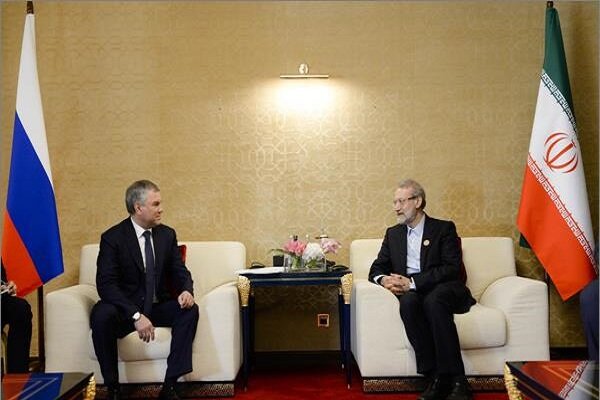
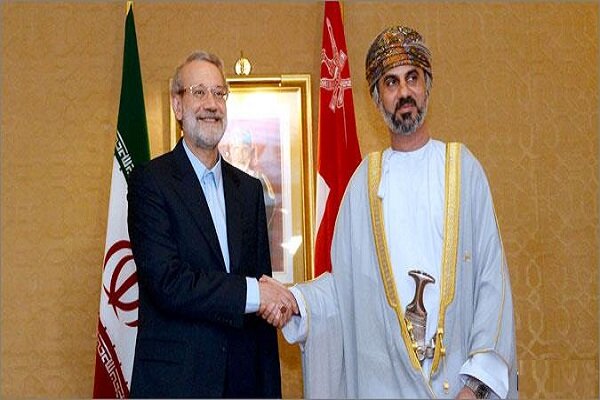
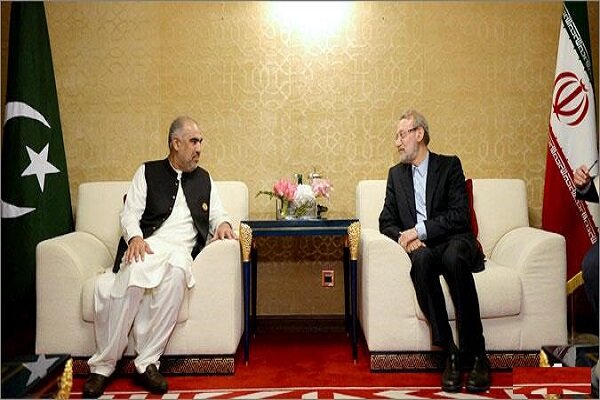
Larijani had a busy schedule on Sunday as he also held separate meetings with a host of his counterparts from different countries. 
Meeting with Russian State Duma Speaker Vyacheslav Volodin
Meeting with Chairman of Oman’s Majlis Al Shura Khalid bin Hilal Al Mawali
Meeting with Speaker of Pakistan’s National Assembly Asad Qaiser
Meeting with Speaker of Jordan’s House of Representatives Atef Tarawneh

Oman has intent to maintain mutually beneficial relations with Iran: Murphy

By Javad Heirannia

TEHRAN - Richard W. Murphy, the former U.S. ambassador to Syria and Saudi Arabia, says the “Oman has long displayed skill in balancing its relationships in the area. Its leadership has not forgotten the help it received from Iran in confronting the domestic challenge to the Sultan's regime during the time of the Shah.”
“Oman has the capability and intent to maintain mutually beneficial relations with Iran,” Murphy tells the Tehran Times.
Following is the text of the interview:
Q: The United States clinched a strategic port deal with Oman which U.S. officials say will allow the U.S. military better access the Persian Gulf region and reduce the need to send ships through the Strait of Hormuz, a maritime choke point off Iran. What is the importance of this deal for U.S. from strategic aspects?
A: The port deal with Oman is an example of the U.S. strategy to seek maximum flexibility for its deployments in potential crisis areas. It has had access to facilities in other member states of the Gulf Cooperation Council for several years but Oman's geography provides the unique attraction of a port presence near to the Persian Gulf which is not subject to the choke point which the Strait of Hormuz constitutes.
Q: Why Oman accept this deal on this time?
A: I am not familiar with the timing and the specifics of negotiations for this port deal but assume that once Oman had indicated it would consider such a deal, considerable time would have been required before it could be finalized. The issues involved in such agreements are always complicated.
Q: How can Oman balance its foreign policy with Iran and U.S. under this deal?
A: Oman has long displayed skill in balancing its relationships in the area. Its leadership has not forgotten the help it received from Iran in confronting the domestic challenge to the Sultan's regime during the time of the Shah. In recent times it has provided an indispensable setting for highly sensitive talks between Washington and Tehran on nuclear issues culminating in the JCPOA.
Q: Will this deal impact on Oman relation with Iran?
A: I am confident that Oman has the capability and intent to maintain mutually beneficial relations with Iran.  

America will strengthen its presence in the Persian Gulf: Shireen Hunter

By Javad Heirannia
TEHRAN - Shireen Tahmaasb Hunter, a professor of political science at Georgetown University, tells the Tehran Times that “there is no way Oman can balance relations with Iran and the U.S.”
“Oman needs American security umbrella,” Hunter says.
She adds that “in future, while perhaps withdrawing from parts of Middle East America will strengthen its presence in the Persian Gulf.”
Following is the text of the interview:
Q: The United States clinched a strategic port deal with Oman which U.S. officials say will allow the U.S. military better access the Persian Gulf region and reduce the need to send ships through the Strait of Hormuz, a maritime choke point off Iran. What is the importance of this deal for U.S. from strategic aspects?
A: The United States would like to have a military, political and strategic supremacy in the Persian Gulf. The ability to prevent Iran from using the Strait of Hormuz to prevent shipping in the strait is part of this desire. It is also part of the U.S. strategy of containing Iran and forcing it to accept its terms for better relations in the future. In addition, looking to the long-term, control of the Persian Gulf is important for the United States, and indeed Europe, in terms of competition with China. Because China depends for a large part of its energy needs on the Persian Gulf region, by controlling the Gulf's energy resources and its trade routes, the United States could pressure China should the need arise. Thus, in future, while perhaps withdrawing from parts of Middle East America will strengthen its presence in the Persian Gulf.
Q: Why does Oman accept this deal on this time?
A: Oman is a small country dependent on American and British security guarantees. Consequently, Muscat is no position to refuse U.S. demands for port facilities of bases. Moreover, Oman, too, wants to enhance the position of its own ports at the expense of those of Iran. Oman has tried to use Iran as a counterweight to other Arab states, especially Saudi Arabia. However, it has no particular love for Iran. With the passage of time, the memory of Iran's help to defeat the Dhoffari rebels in the 1970s is fading. Thus, Oman, too, is reassessing its relations with Tehran in light of new strategic conditions a calculation. Much of Oman -Iran friendship were the legacy of close ties between the Shah and Sultan Qabus.
Q: How can Oman balance its foreign policy with Iran and U.S. under this deal?
A: There is no way Oman can balance relations with Iran and the U.S. As mentioned above, Oman needs an American security umbrella. Iran is in no position to provide for Oman's security. Moreover, as Iran-Arab relations have deteriorated, Oman is finding itself in a difficult position. Therefore, it might be considering some distancing from Iran.
Q: Will this deal impact on Oman relation with Iran?
A: The impact of the deal on Iran-Oman relations wild depend on Tehran's reaction. If Tehran reacts negatively, then relations will suffer. However, if Iran reacts calmly as it did when Netanyahu visited Muscat, then relations will not suffer much. The fact is, in the Persian Gulf, Iran is not in a position to compete with America. The United States is militarily preponderant. In addition, because of their anti-Iran sentiments and their weak positions, Arab states prefer American presence to that of Iran.

Tuesday, November 27, 2018

British permanent military base in Oman; Britain’s return to Persian Gulf

BY: Javad Heirannia

British permanent military base in Oman; Britain’s return to Persian Gulf
TEHRAN, Nov. 26 (MNA) – A significant increase in recent British activities in the Gulf is to strengthen its military presence in the Persian Gulf region and to strengthen military ties with Arab countries, in particular Kuwait, Oman and Bahrain.
Recently, Britain has raised its activities in the Persian Gulf region.
A significant increase in recent British activities in the Gulf is to strengthen its military presence in the Persian Gulf region and to strengthen military ties with Arab countries, in particular Kuwait, Oman and Bahrain.
In fact, rise of British military activities in the Persian Gulf represents that Britain follows its domestic and foreign interests in the Persian Gulf.
Earlier, officials in London was announced their decision to create three new military bases in the Persian Gulf to battle with ISIL fighters in September 2014.
Furthermore, Britain has decided to strengthen its military presence in Oman's Duqm port and in Bahrain.
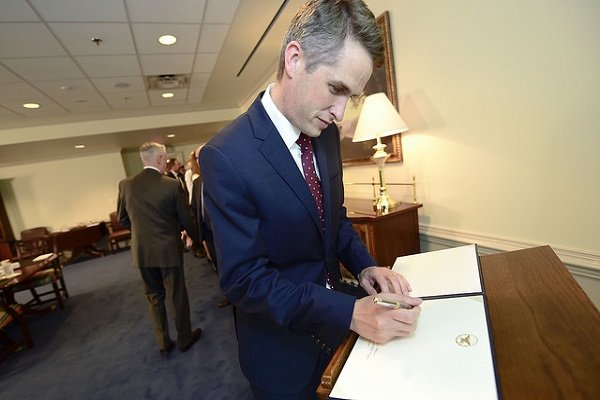
The opening news of the British permanent military base in Oman is announced by Britain's Defense Minister, Gavin Williamson.
Williamson was gone to Oman to visit from one of the Britain's Greatest Military Maneuver in Oman.
Williamson went among British troops in Oman, where more than 5,000 British troops are stationed and he announced that the British permanent base in Oman will open in March 2019. On the other hand, the UK will leave Europe in March.
On this basis, it seems that the approximate synchronization of opening the British permanent military base with the date of British withdrawal from the European Union in the same month is indicative of London's efforts to expand its influence over the post-Brexit period in Persian Gulf region.
So expect Hundreds of new British military forces transfer to Oman in March.
The British Secretary of Defense also said that the "hostile countries and extremist organizations" are the important reasons of establishing this military base in Oman."
At the same time that the British Secretary of Defense was in Oman, two countries also signed a joint defense treaty in the framework of their military cooperation in Persian Gulf region.
Meanwhile, this year, Britain has also established another military base in the region and in Bahrain.
Prior to that, London and Manama had signed an agreement to develop the British naval presence in the Persian Gulf, and in 2017, during the visit of Theresa Mary, British Prime Minister to Bahrain, UK opens permanent military base in Bahrain to strengthen Middle East presence.
In fact, British recent efforts to strengthen relations with the Persian Gulf rich states and London's efforts to strengthen its military presence in these countries prove that Britain is trying to return to its former position in the Persian Gulf region.
In other words, Britain withdrawal of the European Union, and in this situation, London seeks new partners for trade, and now the wealthy Arab countries in the Gulf Cooperation Council are a good marketplace for selling British weapons.
In fact, British recent efforts to strengthen relations with the Persian Gulf rich states and London's efforts to strengthen its military presence in these countries prove that Britain is trying to return to its former position in the Persian Gulf region.
In other words, at the same time as Britain withdrawal from the European Union, London seeks new partners for trade, and now the wealthy Arab countries in the Gulf Cooperation Council are a good marketplace for selling British weapons.
Over the past two decades, Britain has expanded its trade, economic, and military ties with the Arab countries in Persian Gulf region and Britain efforts for boost relations with Arabs were been more than any other EU member state.
These efforts, especially after David Cameron came to power in 2010, have become much bigger and Britain's focus on Arab countries has doubled.
When we look at the trade between Britain and the Arab countries of the region, we also find that the volume of exchanges has been steadily increasing.
For example, in 2009 the volume of trade between British and United Arab Emirates was about $ 9 billion, and in 2013 it was about $ 13 billion, and it's expected to reach $ 25 billion by 2020.
This increase in exchanges proves expansion of British relations with Arab countries in the Persian Gulf region.
In other words, in recent years, Britain's exports to the six Gulf Cooperation Council countries (Saudi Arabia, UAE, Qatar, Bahrain, Oman and Kuwait) have been around 18% higher than the past, and it expects to increase exchanges the trade between Britain and the Arab countries will continue for years to come.
In fact, Britain plans to strengthen its relationship with Arab countries, through investment on smart and sustainable infrastructure, which requires investment of 250 billion pounds.
Britain is seeking to trade and invest $ 2 trillion in thePersian Gulf region in the next decade (2020-2030).
The very license is in fact other than the overt agreement which the UK is in contract with these countries in the case of weapons export.
Historically, before the departure of Britain from the Persian Gulf region in 1971, the Persian Gulf security order was fully governed by the United Kingdom and this had caused the region's security and order not be stable and natural.
Even today's turmoil in the region is affected by Britain's historical presence, because the British presence in the region has led a independent security order does not take shape and in fact the current order of the region is dependent on the foreign countries and it means that current region order is not indigenous.
Over the past few years, Britain has made significant efforts to strengthen its military presence in the Persian Gulf region, efforts such as joint military maneuvers with Arab countries and the creation of military bases in these countries, in particular Kuwait, Bahrain and Oman, and the transfer of British troops to these countries.
The most important goals of Britain to strengthen its military presence in the Gulf are:
  Selling more weapons to the Arabs without regard to human rights concerns, gaining economic benefits after Britain withdraw from EU and trying to create a new regional order, although this new regional order will not be suitable and efficient through foreign intervention.
Currently, the Persian Gulf does not have a stable, reliable model due to the presence of foreign intervention powers.
The Persian Gulf's current security model is affected by the security model of interventionist actors and therefore the security mechanisms of the region are not routine.
In fact, the rivalry between the great powers in the Persian Gulf exacerbates regional rivalries between the Persian Gulf states so we rarely be able to change or reformed the current security model in Persian Gulf.
Conclusion
Arab countries in the Persian Gulf have many dissension with each other and at same of time they try to approaching to foreign and western countries in order to confront their potential enemies because they think that need to the West support.
For this reason, many Arab countries in the region are making contracts with western countries for coming closer to western countries through large purchases of weapons and concluding joint military cooperation agreements and the establishment of military bases.
Today, the Persian Gulf needs a comprehensive security order that have to be free of foreign interference.
This new security order have to be based on the role of all actors in the region and their cooperation between them.
The present order of the Persian Gulf region is based on the balance of power, which Due to the historical experience, this order does not have effectiveness to maintain security and stability in the region.
In other words, the present security order in the Persian Gulf region is based on the Zero-sum game (loss-wins game).
In the present order, each of the actors and countries alone is racing to increase their power and are pessimistic about each other.
Therefore, the present order in the Persian Gulf region is inefficient, and it is necessary to replace the new security order which it emphasizes on the cooperation of all the countries of the region.
Republished from: American Herald Tribune
Photo depicts United Kingdom’s Secretary of State for Defence.

Thursday, November 15, 2018

GCC-Israeli ties: out of the shadows, into the light


What's behind the Israeli-GCC rapprochement, and how deep do these ties run? A source from the Omani Royal court speaks to TRT World on the truth behind the changes.

The recent spate of welcomed public appearances by senior Israeli officials in Gulf countries, following a history of clandestine ties, unveil a shift towards normalised ties with Israel.
On October 25, Israeli Prime Minister Benjamin Netanyahu visited Oman for high-profile talks with Sultan Qaboos, days after talks with Palestinian Prime Minister Mahmoud Abbas.
His visit to Oman coincided with another visit by far-right Israeli Minister Miri Regev to the UAE. 
The visits come as the Palestinian Central Committee voted to revoke recognition of Israel, and suspend security cooperation with Tel Aviv.  
"You have to realise that the GCC's kings, sultans and princes only pay lip-service to the Palestinian issue. It's a means to an end. The Arab people want leaders who are anti-Israel. Their leaders deliver. But these royals couldn't care less about Palestine. It's all a smokescreen. You should hear the way they speak about it," a source from the Omani Royal court tells TRT World. 
"It's a joke to them," he adds. 
"I'm sure some of them genuinely do [care]," he notes, "but those are quickly branded as extremists, and are marginalised or disappear."
When asked what they do care about, he had one word: "Iran."
"Iran and its expansion are the only items on their agenda now. Ties with Israel are for sharing intelligence and cooperating militarily against Iran. Any mediation that comes from it is a side public relations benefit to leverage US support."
According to an anonymous Israeli official speaking to the New York Times, Netanyahu's visit came after four months of quiet discussions, and years of secret relations between Israel’s Mossad intelligence agency and Sultan Qaboos, who overthrew his father in 1970 and has ruled since.
A warm welcome for the 'racist' minister
While Netanyahu was in Oman, Regev was on a four-day visit to Abu Dhabi.
"If our children live in fear, Hamas should live in fear... We must go back to the policy of targeted assassinations of leaders"
Miri Regev, Israeli Minister of Culture
Regev, a hardline conservative with a reputation for racist, provocative statements even within Israel, attended the International Judo Federation’s Grand Slam in Abu Dhabi. She was welcomed by local officials and given a tour of the Sheikh Zayed Grand Mosque alongside UAE officials the next day.
The Israeli minister has often been the subject of controversy, posting a video featuring genocidal chants like, "may your village be burned", and calling migrants "a cancer".
Out of the shadow, into the light
Calling the Israeli-GCC rapprochement a 'thaw in relations', might be an understatement, given that they have existed for some time but were simply kept clandestine.
Recent events, however, hint at a bolder move towards normalising ties with Israel, largely kept under wraps out of fear of public opinion. This has become all the more pressing in the post-Arab Spring Middle East.
“I will say this for the first time: Israel is a state that is present in this region, and we all know this,” said Foreign Minister Yusuf Bin Alawi in Bahrain on Saturday. 
Saudi Arabia reportedly purchased over $250 million worth of spy equipment from Israel, according to an exclusive report from Al-Khaleej Online. 
The deal, mediated by the US and included training a Saudi team in operating the state-of-the-art espionage equipment, as well as strategic military exchanges. 
But the deal is by no means the first deal the Saudi Kingdom has entered into with Israel. 
A diplomatic source claimed in mid-September that Saudi Arabia had purchased the Israeli Iron Dome defence system to defend itself against Houthi rebel missile attacks. 
Saudi Crown Prince Mohammed bin Salman has also previously stated that Israelis are entitled to live peacefully on their own land, in an interview.
The statement contradicts Saudi Arabia's insistence that normalising relations with Israel requires Israeli withdrawal from Arab lands captured in the 1967 Arab-Israeli war.
In August 2018, the UAE contracted the secretive Israeli NSO Group to spy on dissidents, turning their phones into surveillance devices through the use of spyware.  
Bahrain itself publicly backed Israel's right to defend itself in a tweet by its top diplomat in May 2018.
During Regev's visit Israel’s national anthem, Hatikvah, was played for the first time in the Abu Dhabi, a further sign of the ties becoming formalised. The United Arab Emirates still has no 'official' ties to Israel.
“We made history. The people of Israel live!” Regev tweeted tearfully after the anthem was played.
At the same time, Israeli Communication Minister Ayoub Kara attended a conference in Dubai on Monday, October 29, while Transportation Minister Israel Katz plans to attend a meeting in Oman next week
A larger strategy in the making?
"Israel is a state present in the region, and we all understand this," said Oman's foreign minister, following the meeting. 
"The world is also aware of this fact. Maybe it is time for Israel to be treated the same [as others states] and also bear the same obligations."
Only last month, UAE Ambassador Yousef al Otaiba spoke at a summit in New York, alongside Yossi Cohen, director of Israel's Mossad spy agency and Saudi Foreign Minister Adel al Jubeir.
"Gulf countries, Israel and the countries in the immediate vicinity are the ones at immedi­ate risk [from Iran]," he stated, finding common ground with Israel through shared anxiety over Iran's expanding geopolitical presence.
Otaiba himself reportedly met Israeli Prime Minister Benjamin Netanyahu last May during a 'chance encounter', where they discussed Iran.

Thursday, October 18, 2018

"Arab NATO" Project Doomed


The United States' initiative purportedly designed to bring stability to the Middle East by forming an Arab alliance is doomed not only because its strategies are at odds with efforts to address regional security challenges, but also because it ignores the role of key regional stakeholders as well as major global players, a foreign policy expert said.
The effort, tentatively known as the Middle East Strategic Alliance, aims to create a new security and political alliance with the six countries of the (Persian) Gulf Cooperation Council, namely Bahrain, Kuwait, Oman, Qatar, Saudi Arabia and the UAE, along with Egypt and Jordan, to confront Iran which is accused of fomenting regional turmoil.
Although setting up a collective security pact with stakeholders in the region is necessary given the rising tensions and conflicts across the Middle East and North Africa, Hossein Mousavian, a former Iranian diplomat, argues that the US scheme is not effective for at least five reasons.
In an opinion piece published in the US magazine Newsweek on Tuesday, Mousavian, who is a Middle East security and nuclear policy specialist at Princeton University, has outlined several reasons why the so-called "Arab NATO" initiative has little chance of success.
> Misguided Effort  
To begin with, a main challenge of security in the region is a sectarian conflict, which the US plan seems to more heighten than resolve by pitting "Arab and Sunni countries on the southern shore of the Persian Gulf against the Shia Iran, and perhaps Iraq with Shia majority."
Mousavian highlighted the paradoxical fact that some members of MESA provide support for militant groups that are major threats to regional security. 
He cited copious evidence of the Saudi royal family's financial support for terrorist organizations such as Al-Qaeda and Taliban, which has continued to date, in the Syrian conflict and far beyond it.
Mousavian also stressed that no collective security project will be efficient in the absence of Iran and Iraq as two major powers in the region. 
Egypt and Jordan, which are included in the Arab NATO instead, have zero geographic share of the Persian Gulf.
Not only does the plan ignore regional players, but it also omits the interests of other world powers in the region, namely the European Union, China, India and Russia. 
Mousavian described the US move as "a push for unilateralism as opposed to multilateralism in the Middle East", which would only hamper the formation of a realistic and workable collective pact.
The Arab world is more divided than ever at present, with Saudi, Emirati and Bahraini boycott of Qatar and inter-Arab conflicts in Yemen and Libya ravaging the community.
Following a late September meeting between US Secretary of State Mike Pompeo with foreign ministers from (P)GCC countries, Egypt and Jordan to advance the project, Qatar also emphasized that the crisis among Persian Gulf countries must be resolved first before any push to form a new security structure.
Qatar's Foreign Minister Sheikh Mohammed bin Abdulrahman Al Thani told a news conference afterwards that the alliance should be built on existing institutions, and he asked how that could be done when the most powerful Persian Gulf countries have been engaged in a more than a yearlong dispute.
"The real challenge facing the US-led alliance is to solve the [Persian] Gulf crisis," he was quoted as saying by AP.
> Non-Starter 
In addition, Oman, Kuwait and Qatar also prefer to keep a balance in relations with Washington and Tehran rather than lean toward one side.
Therefore, "a proposal as such to align these countries seems more like wishful thinking than a practical political strategy" he states in his article.
Mousavian concluded that without simultaneous multilateral approaches and bilateral talks, an imported collective security project such as the "Arab NATO" has almost no chance of success.
"It will only fuel animosity between the countries of the region along racial and sectarian lines," he concluded.

Wednesday, October 17, 2018

The US-Led Genocide and Destruction of Yemen


Photo: WhatsuPic, “Expanded War, Hunger, Disease, Death i n Yemen, No Big DEal to US”

“Only God can save our children”, say Yemeni fathers and mothers as they can do nothing but watch their children die, try to comfort them in their final agonizing hours, and pray for God to spare them from death. The fathers and mothers watch and pray, as one by another their children die from cholera, dehydration and starvation.


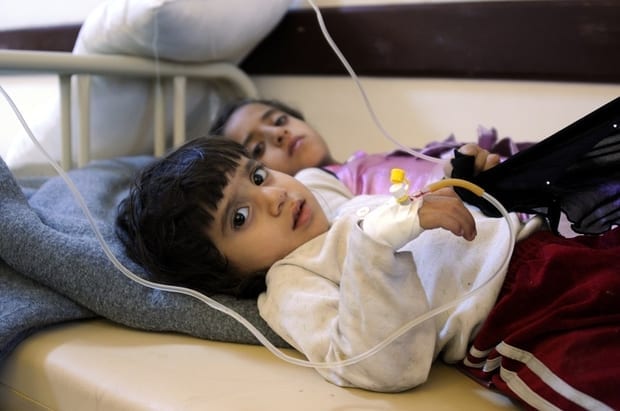
Biqdad, nine, and Mariah, two, are receiving treatment for cholera in the state-run Al-Sabeen hospital in Sanaa, Yemen. (MEE/Mohammed Hamoud)

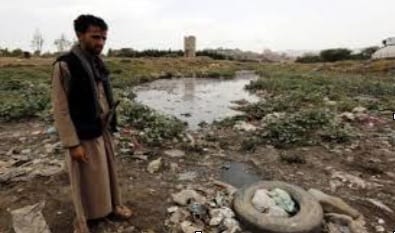
Where is God? He cannot get through the total US blockade of Yemen to save the children. A cholera epidemic is a man-made disaster. Since 2015 the cholera epidemic has been spread by biological warfare against Yemen. US bombs dropped by Saudi pilots destroyed Yemen’s public water and sewage systems. The parts, chemicals and fuel to operate Yemen’s water purification and sewage plants are blockaded. Potable water, cholera vaccine, and even individual water purification tablets cannot get in.
The sewage from non-working treatment plants overflows into streams that run onto agricultural land, thus contaminating vegetables before they go to market. Sewage flows into the cities, residential areas and the refugee camps. Flies swarm over the sewage and spread cholera everywhere. The International Committee of the Red Cross, the Red Crescent, and Doctors Without Borders; hospitals, clinics and disaster relief organizations, and human rights workers have been deliberately bombed.


[Sanitation problems, as well as a shortage of medicine and supplies have pushed the number of cholera cases in Yemen. Photo by Yahya Arhab/EPA]
The US dominated United Nations adds a fig leaf of legality to the blockade, and a one-sided weapons embargo against Yemen. To ask why there is no UN arms embargo against Saudi Arabia is, of course, a rhetorical question.
The UN wrings its hands about a humanitarian crisis, and the worst cholera epidemic in human history. The UN does nothing to stop the US-led Saudi genocide and destruction of Yemen, and it puts out knowingly phony underreported numbers of the civilian deaths. The UN is not an honest broker.
The former US ambassador to the United Nations Nikki Haley threw a temper tantrum when the UN dared to even voice mild criticism against the US, when it moved its embassy to Jerusalem. She spoke of the UN “disrespecting” the US, and she threatened financial retaliation against the UN and countries that voted contrary to US wishes.

President Donald Trump cut funding to humanitarian UN agencies, did not try to stop Israel from gunning down thousands of unarmed Palestinians, withdrew the US from the UN Human Rights Council, and thumbed his nose at the UN International Court of Justice. Trump’s national security adviser John Bolton said that the US plans on withdrawing from more treaties that are the foundation of international law. 
The US dominated United Nations adds a fig leaf of legality to the blockade, and a one-sided weapons embargo against Yemen. To ask why there is no UN arms embargo against Saudi Arabia is, of course, a rhetorical question.
In other words, Bolton is confirming that the US is a rouge state; it makes a mockery of the United Nations. From the beginning of the Bush-era War on Terror, the US showed contempt for the Geneva Conventions. Obama too violated customary international law with impunity. Obama assassinated US citizens, droned Afghan wedding parties and funerals, and destroyed Libya. He invaded Syria in an illegal war of aggression. Obama was really good at killing. He allegedly said so himself.
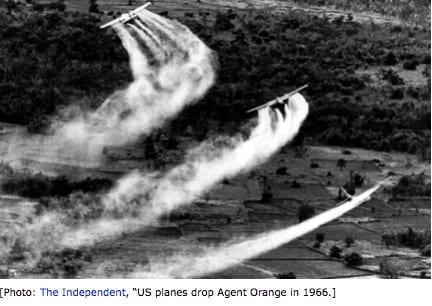
Purposely causing a cholera epidemic is biological warfare. Yemen is not an unprecedented case of US use of biological-chemical warfare. During the 1950’s Korean War the US was accused convincingly of biological warfare. In the Vietnam-American War the US sprayed millions of gallons of Agent Orange, which poisoned the soil, rivers and people. Agent Orange, 40 years later is still “causing miscarriages, skin diseases, cancers, birth defects, and congenital malformations”.

The US contaminated Bosnia, Afghanistan, and the Middle East with so-called depleted uranium. Depleted uranium can cause cancer, birth defects, and as yet other unknown health effects. The US knows it. It has put out a health warning to US Iraq war veterans.
In 1995, Madeleine Albright was interview by Lesley Stahl on the TV show “60 Minutes”. That interview should live in infamy in a hall of shame for eternity. Stahl asked Albright if the death of over 500,000 Iraqi children caused by US sanctions was “worth it”. Albright’s answer was, “I think this is a very hard choice, but the price–we think the price is worth it.” (Whoever the “we” is, Albright did not elaborate.) It is now known that “we” purposely used biological warfare to kill those 500,000 Iraqi children.

[Madeleine Albright – The deaths of 500,000 Iraqi children was worth it for Iraq’s non-existent WMD’s?]

How many more children did Albright, the Bill Clinton administration and “we” continue to kill because “we” thought it was “worth it”? Hundreds of thousands, according to a study of the partially declassified Defense Intelligence Agency document “Iraq Water Treatment Vulnerabilities”. The partially declassified document was discovered in 1998 on an official website of the Military Health System. In 2001 the Association of Genocide Scholars released the study referred to above: The Role of “Iraq Water Treatment Vulnerabilities” in Halting One Genocide and Preventing Others.
During the 1991 First Gulf War the US purposely targeted all of the water purification plants and sanitation works in Iraq, which is itself a war crime. The “Iraq Water Treatment Vulnerabilities” document produced by the US Department of Defense and implemented in1991, was continued under President Bill Clinton. Even after Albright’s admission on “60 Minutes” that the US sanctions regime had killed 500,000 Iraqi children, “we” continued the draconian embargo of water purification equipment.
The Department of Defense and Madeleine Albright’s “we” knew that without potable water that the rate of waterborne diseases, such as cholera, would sicken and kill hundreds of thousands of Iraqis. Depriving an entire population of the essentials of life is genocide, and it is a violation of the Geneva Conventions. Degrading of the water supply to knowinglu cause epidemics, such as cholera, is biological warfare.
Economic sanctions and trade embargos are barbaric siege warfare against civilian populations. There is no way to pretty them up as surgically targeting a regime or being humanitarian. Now think about Cuba, Iran, Venezuela, Syria, Burma and, Côte d’Ivoire that are suffering under a US embargo today.
The “Iraq Water Treatment Vulnerabilities” document reveals the diabolical intention of a sanctions regime, even when authorized by the UN. It is for these and other reasons that The International Committee of the Red Cross has often raised concerns, including concerns about UN authorized sanctions regimes. Not even the UN has the authority to violate the Geneva Conventions, and the UN oversteps its authority when it does so.
The US has also overstepped the UN’s authority against Yemen, by imposing a total blockade. Hundreds of children are dying every day in Yemen. Tens of thousands of civilians have died from starvation, disease and the lack of medicine. Twenty million human beings are starving to death in a famine caused by the US, and its proxy, the so-called Saudi coalition.
For three years, starting with the Obama administration the US has been passing Saudi Arabia the bombs, ammunition, fuel, and most importantly it is the US military at the command and control center of the war. Other war-profiteering countries, such as the UK, EU countries, and Canada have their hands dripping with the blood and cholera infected feces of Yemeni children, too.


[Photo: Nora Al-Alwaki, an American citizen killed by Navy SEALs when they raided her Yemeni village on January 29, 2017.]


US Special Forces, Seal Team 6, and the CIA carry out night raids and assignations, such as the one that killed 8 year old Nora, pictured above. She was an American citizen who lived with her grandparents in a Yemeni village.
Nora was the daughter of Anwar al-Awlaki, who was the first known American citizen to be executed by the US without due process. A week later his 16 year old son, Abdulrahman al-Awlaki was assassinated by a US drone. Barack Obama carried out those killings in 2011. It was also Obama that planned the raid in which Nora was killed by Trump on February 1, 2017.
I don’t believe it was a coincidence. When Obama’s press secretary Robert Gibb was asked why 16 year old Abdurahman was killed, his answer was that his crime was that he “should have had a more responsible father”. Was that Nora’s “crime” too?
The war against Yemen is another dirty war like Iraq was. It is an ‘all but in name only’ a US genocide-scale slaughter of civilians and the destruction of a country. The Kingdom of Saudi Arabia and its so-called coalition are the US proxy that pays for the bombs and drops them. It is the US that picks out the targets, from back at the command and control center.


The complicit mainstream media tries hard to sell the people the idea that the US imperial military is actually engaged in worthwhile missions. Here’s what the moral imbeciles at CBS came up with, the glorification of SEAL teams.

Most of the ground fighting inside Yemen is caused by an invasion of US, Saudi and UAE sponsored Salafists terrorists, mujahideen, al-Qaeda, Muslim Brotherhood, and Blackwater (rebranded Academi) US, Somalia and South American mercenaries. Saudi-backed terrorists are attacking in the north, while UAE-backed terrorist attack in the south. Saudi-backed terrorists are fighting UAE terrorists. Saudi Arabia has put a blockade on Qatar, in a squabble over Yemen.
The de facto government of Yemen is the leadership of the Houthi Movement, named after its charismatic founder Hussein Badreddin al-Houthi. The Houthi Movement is backed by Yemen’s military units, security forces and a broad base of the Yemeni people, including many Sunnis. That is not to say that Yemenis do not have many differences. They do, but when their common self-interests are at stake, they do come together, despite their differences.
There are some internal groups opposed to the Houthi Movement and they are collaborating with the Saudi and UAE terrorist groups, but this is not a Sunni vs. Shia war. Nor is the war a proxy war between Saudi Arabia and Iran, as the corporate mainstream media monopoly would have the US public believe.
The Zaydi Shia that makes up about 42% of Yemen’s population is closer to Sunni Islam than they are to the Shia branch of Islam in Iran. The Zaidi-led Houthi Movement “have not called for restoring the imamate in Yemen, and religious grievances have not been a major factor in the war”, according to Al Jazeera. Rather, the Houthi Movement has been primarily economic, political and regional in nature.
There is a separatist movement in what was once South Yemen, which until 1990 was a separate communist country: The Democratic Republic of Yemen. Before unification North Yemen was the Yemen Arab Republic. In the power struggle that followed unification the south lost power and patronage. The UAE is backing a southern separatist group, the Southern Transitional Council, which also opposes Hadi and Saudi Arabia. As mentioned, Saudi backed terrorists are fighting UAE-backed terrorists.
The US, KSA and the UN try to pass off the “internationally recognized legitimate government of Yemen” as if it were Abdrabbuh Mansour Hadi. Hadi was the president of an interim government of Yemen from 2012 to 2014. Hadi fraudulently overstayed his term when it expired in 2014.
Hadi was forcefully removed from office by the Houthi Movement, and a broad base uprising of the Yemeni people. Hadi resigned his office and fled to Saudi Arabia. The US, KSA and the UN use Hadi as a figurehead to add a fig leaf of legality to the illegal US-led war of aggression against Yemen.


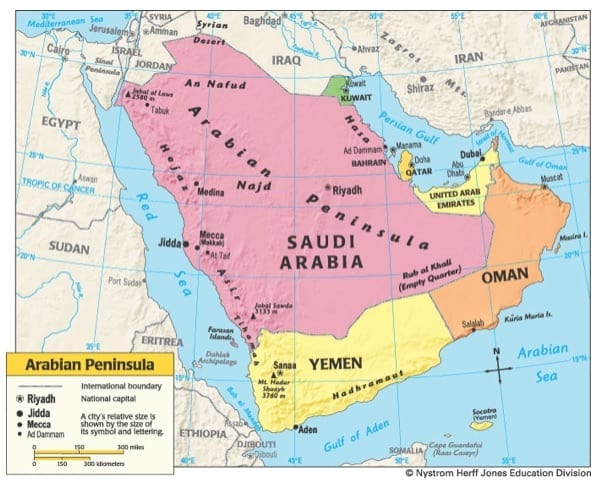
There is little if any evidence that Iran is providing the Houthi Movement with weapons, materials or fighters. Look at the map. How would Iran be able to get past the total US blockade, even if it wanted to. Iran has its hands full with its (legal) support of its ally Syria. Iran is struggling with its own economic crisis caused by the illegal US economic sanctions regime, re-imposed by the Trump administration.
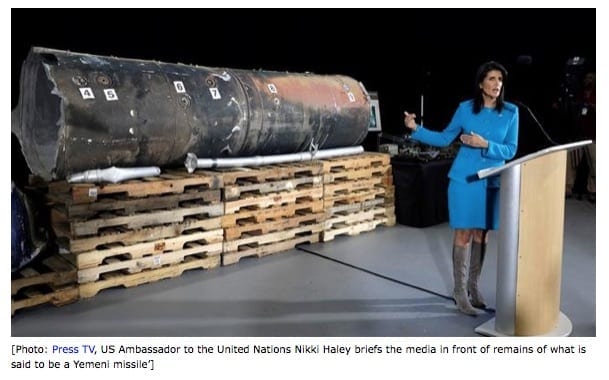
When the US was pressed for hard evidence to back up its allegations that Iran was involved in Yemen, the best that the former UN ambassador Nikki Haley could do was come up with a few missile parts. The UN dismissed Haley’s show as having “no evidence as to the identity of the broker or supplier.” Iran has denied involvement in Yemen, and rejected the US’s claims as unfounded, and Iran further added:
“These accusations seek also to cover up for the Saudi war crimes in Yemen, with the US complicity, and divert attention from the stalemate war of aggression against the Yemenis.”
Yemenis, regardless of religion, region or tribe are fiercely nationalistic, and they are nobody’s puppet. They resent attempts by foreign invaders to dominate them. Yemen, like Afghanistan, is a graveyard where empires come to die. The Saudis and the UAE are leaning it the hard way.
The US is like a zombie empire that never dies in an empire graveyard. Instead when faced with humiliation and defeat, the US totally destroys its antagonist from the air, as it did Iraq, Libya and Syria. The US shows no mercy for the civilian population. The US destroys civilian infrastructure, blockades food, water and medicine. It targets the people with cluster bombs and white phosphorus; and the US poisons their water, soil and air with biological, chemical and radioactive weapons.
[Photo: Minn Post, “Secretary of State Hillary Clinton with Libyan soldiers upon her departure from Tripoli in Libya on October 18, 2011.]
As with Iraq, Libya, and Syria and with so many other small countries that the US declared to be its enemy, Yemen poses no threat to the US national security. So why does the US destroy small countries, and why is the US destroying Yemen?
In the 1990’s with the collapse of the USSR, the US set out to build an empire to dominate the world, and it made no secret of it. The US plan for world domination has gone by different names, such as the Wolfowitz Doctrine, the Project for a New American Century (PNAC), Full Spectrum Dominance, the Indispensable Nation, American Exceptionalism, New World Order, and more subtly the role of US World Leadership.
Whatever name US world domination goes by, it is all the same. The US considers itself above international law, customary moral behavior and believes it alone has the right to pursue whatever it thinks is in its self-interest politically, militarily and financially. If the US were a person, it would be diagnosed as a psychopath, with no conscience, no empathy, and no remorse; aggressive, narcissistic and a serial mass murderer.
Yemen is often scripted by the corporate-government mainstream media as “the poorest country in the Middle East”, as if it has no wealth that anybody could possibly want. The people of Yemen are poor, but Yemen is rich in oil, pipeline routes, gold, minerals, agriculture, fishing, state owned enterprises, desirable real estate, finance, and its geography gives Yemen great potential for tourism.
Yemen’s 30 million people are both a potential source of cheap labor and a potential market for the products of US global corporations. Yemen is strategically located at the Bab-el-Mandeb strait, through which 1.4 billion barrels of oil pass every day. For millennium Yemen was a center for trade.
The US covets Yemen’s wealth and its strategic location as part of the neoliberal New World Order. The US vision of the New World Order is a world dominated by US global corporations, US financial institutions and wealthy US family dynasties.
US foreign policy is shaped by special interests, monopolies and their political action committees (PACS), such as those of weapons manufacturers, financial institutions, pharmaceutical companies, and agri-business. Foreign countries such as Israel and Saudi Arabia also have powerful lobbies that can manipulate US foreign policy to their advantage. US foreign policy has little to do with the interests of the average US citizen.


Yemen is the southern neighbor to the KSA, and the Saudis want a corrupt, compliant and passive government in Yemen. The KSA has expanded its border to encroach on Yemen’s northern borderlands, which is the birthplace of the Houthi Movement. The Saudi dynasty also fears an independent Yemeni people that might influence the oppressed people of the Saudi Dynasty. The KSA is a powder keg for an uprising of the people, they are ready to explode.
The KSA uses extremist Wahhabi Islam as a political subterfuge to recruit jihadist, terrorists, and to spread Saudi influence throughout West Asia, Africa and beyond. International terrorism has been a joint venture of the US, Saudi Arabia and other Gulf Cooperation Council (GCC) member states. All the GCC states: KSA, UAE, Bahrain, Oman, and Kuwait are theocratic monarchies. That says volumes about US values for democracy and human rights.
The US has a long history of coveting the wealth of Yemen. In the mid-1980s the Bush family and their Texas oil buddies at Hunt Oil invested in Yemen’s oil-rich Marib Shabwa basin. Bush obtained for Hunt Oil the rights for future exploration. Deviously, the former director of the CIA and then Vice President Bush arranged for Iraq’s Saddam Hussein to finance the Bush-Hunt investments in Yemen. A few years later Bush “repaid” Saddam’s loan with Shock and Awe.
Since 2015 the US has been protecting the Bush family’s investments in Yemen, global corporations, neoliberalism and the vision of a New World Order. The people of Yemen have been starch opponents of neoliberalism and like their old world order. They rebelled against the 33 year rule of Ali Abdullah Saleh for selling out Yemen to neoliberalism, and then the people rebelled against the interim government of Hadi for his fire-sale privatization scheming with the neoliberal empire.
The US beneficiaries of neoliberalism were not happy when their benefactor Hadi was deposed by the Houthi Movement. Nor was Saudi Arabia, which had been trying to exploit Yemen for decades. The vultures of the other GCC countries started circling Yemen in the hope of picking at its corpse too.

The US is providing the GCC with the Shock and Awe to kill the prey, and the US does not care if it kills 22 million people in the process of looting Yemen. It is the US that is providing the bombs. The Saudi-led coalition of the GCC is just the delivery boys.
To summarize, there is no civil war in Yemen. Iran is made the scapegoat for a US-led illegal war of aggression. Saudi Arabia and its coalition of Gulf Cooperation Council (GCC) are headquartered in Riyadh, Saudi Arabia. The GCC is made up of the Kingdom of Saudi Arabia, Bahrain, Oman, and the United Arab Emirates. They are all monarchies. The US hopes to walk off with Yemen’s main prizes, and the KSA, UAE and Qatar are already fighting each other over the crumbs. The lives of 22 million Yemeni people are hanging by a thread, because of a US blockade of food, water and medicine. The US is the cause of the worst cholera epidemic in history. It is biological warfare and genocide.