|
| A man with a fragment of a missile found at the site of a Saudi-led air strike in Yemen in 2016. Photograph: Khaled Abdullah/Reuters |
Britain does not merely supply the bombs that fall on Yemen – it provides the personnel and expertise that keep the war going. But is the government breaking the law?
By Arron Merat
For more than four years, a brutal Saudi air campaign has bombarded Yemen, killing tens of thousands, injuring hundreds of thousands and displacing millions – creating the world’s worst humanitarian crisis. And British weapons are doing much of the killing. Every day Yemen is hit by British bombs – dropped by British planes that are flown by British-trained pilots and maintained and prepared inside Saudi Arabia by thousands of British contractors.
The Saudi-led military coalition, which includes the UAE, Bahrain and Kuwait, has “targeted civilians … in a widespread and systematic manner”, according to the UN – dropping bombs on hospitals, schools, weddings, funerals and even camps for displaced people fleeing the bombing.
Saudi Arabia has in effect contracted out vital parts of its war against Yemen’s Houthi movement to the US and the UK. Britain does not merely supply weapons for this war: it provides the personnel and expertise required to keep the war going. The British government has deployed RAF personnel to work as engineers, and to train Saudi pilots and targeteers – while an even larger role is played by BAE Systems, Britain’s biggest arms company, which the government has subcontracted to provide weapons, maintenance and engineers inside Saudi Arabia.
“The Saudi bosses absolutely depend on BAE Systems,” John Deverell, a former MoD mandarin and defence attache to Saudi Arabia and Yemen, told me. “They couldn’t do it without us.” A BAE employee recently put it more plainly to Channel 4’s Dispatches: “If we weren’t there, in seven to 14 days there wouldn’t be a jet in the sky.”
The British bombs that rain down on Yemen are produced in three towns: Glenrothes in Scotland, and Harlow and Stevenage in south-east England. Bombs roll off production lines owned by Raytheon UK and BAE Systems, firms contracted by the government to manufacture Paveway bombs (£22,000 apiece), Brimstone bombs (£105,000 apiece), and Storm Shadow cruise missiles (£790,000 apiece) for the Saudi Royal Air Force. BAE, under government contract, also assembles the jets that drop these bombs in hangars just outside the village of Warton, Lancashire.
Once these weapons arrive in Saudi Arabia, Britain’s involvement is far from over. The Saudi military lacks the expertise to use these weapons to fight a sustained air war – so BAE, under another contract to the UK government, provides what are known as “in-country” services. In practice, this means that around 6,300 British contractors are stationed at forward operating bases in Saudi Arabia. There, they train Saudi pilots and conduct essential maintenance night and day on planes worn out from flying thousands of miles across the Saudi desert to their targets in Yemen. They also supervise Saudi soldiers to load bombs on to planes and set their fuses for their intended targets.
Around 80 serving RAF personnel work inside Saudi Arabia. Sometimes they work for BAE to assist in maintaining and preparing aircraft. At other times they work as auditors to ensure that BAE is fulfilling its Ministry of Defence contracts. Additional RAF “liaison officers” work inside the command-and-control centre, from where targets in Yemen are selected.
Aircraft alone have never defeated a guerrilla insurgency. Despite atrocities committed by the Houthis on the ground, the rebel group’s domestic support has only been bolstered by outrage over years of Saudi bombing. Facing up to this reality, last year Saudi Arabia decided to deploy significant ground forces across the border – and here too, the British have joined the mission. In May 2018, an unknown number of British troops were sent to Yemen to assist Saudi ground forces. Since then, multiple newspapers have publishedreports of British special forces wounded in gun battles inside Houthi-controlled territory.
Under British law, it is illegal to licence arms exports if they might be used deliberately or recklessly against civilians – or in legal terms, to violate international humanitarian law. There is overwhelming evidence that the Saudis are flagrantly in violation, and yet when questions are raised in Parliament about Britain’s role in the atrocities occurring in Yemen, Conservative ministers typically limit themselves to three well-worn responses.
First, they claim that Britain operates “one of the most robust arms export regimes in the world”. Second, they say that while Britain may arm Saudi Arabia, it does not pick the targets in Yemen. Third, they say that the Saudi-led coalition already investigates its own alleged violations of international humanitarian law.
These responses have long since been overtaken by the bloody reality of the Yemen war. In fact, as the conflict has continued, the killing of civilians has actually accelerated. According to Larry Lewis, a former US State Department official who was sent to Saudi Arabia in 2015 in an attempt to reduce civilian harm, the proportion of strikes against civilians by Saudi-led forces almost doubled between 2017 and 2018.
The UK government’s argument that it does not pick the targets in Yemen resembles nothing so much as the logic of the American gun lobby, with its infamous claim that it’s not guns that kill people, but the people who use them. Since 2016, many countries have revoked or suspended arms sales to Saudi Arabia – including Austria, Belgium, Germany, Finland, Netherlands, Norway, Sweden and Switzerland. But Britain and the US, whose planes constitute the backbone of Saudi Arabia’s combat fleet, are still holding out.
This could soon change. Three of Britain’s most senior judges are now mulling whether the government’s licensing of billions of pounds of arms to the Saudi Royal Air Force has been legal. The court of appeal’s judgment, expected this week, could force the government to suspend the licences that keep the bombs and spare parts flowing to Saudi Arabia, which would ground half of Saudi Arabia’s fleet in a matter of weeks.
The judiciary may now decide to curtail Britain’s ability to sustain Saudi Arabia’s doomed and destructive air war. The British and Saudi governments may also decide to send more aid to help the 24 million Yemenis now dependent on an underfunded UN relief fund. But a generation of Yemenis who have lost their families, their homes, educations and livelihoods will not get them back.
On a 2016 trip to Yemen, the Conservative MP Andrew Mitchell visited a school in the capital. It had been built, he said, with British aid – only to be destroyed, in all likelihood, by a British bomb. “I asked my host what the children were chanting,” he recalled to me in his Westminster office. His host translated for him: “‘Death to the Saudis’, ‘Death to the Americans’ – and in respect for your visit today, they have cut out the third stanza.”
On 27 March 2015, one day after the first bombs fell on Yemen, foreign secretary Philip Hammond told reporters that Britain would “support the Saudis in every practical way short of engaging in combat”. This would prove to be an understatement.
BAE and Raytheon production lines in Britain sped up to keep up with Saudi bombing. It is impossible to say how many bombs the UK has sent to Yemen, because the government in 2013 and 2014 granted BAE three special arms-export licences that permit the sale of an unlimited number of bombs to Saudi Arabia without requiring disclosure of how many have been sold. As a result, the full scale of the UK’s rearmament programme has remained hidden.
But even discounting this secret trade, British military exports to Riyadh multiplied almost 35-fold in one year, from £83m in 2014 to £2.9bn in 2015.
Saudi Arabia, the world’s biggest oil exporter, can afford to buy these weapons, but it has traditionally lacked the skills and manpower to deploy them. A retired US defence official joked that in the past, all the kingdom’s pilots were selected from the king’s immediate family – because “only they could be trusted not to drop a bomb on his palace”.
British personnel have played a major role in picking up the slack. Government contractors carry out around 95% of the tasks necessary to fight the air war, one former BAE employee told Channel 4’s Dispatches – an estimate confirmed to me by a former senior British official who worked in Saudi Arabia during the air war.
Inside Saudi forward operating bases, there are thousands of British contractors working to keep the war machine moving. British contractors coordinate the distribution of bombs and aircraft parts. They manage climate-controlled armories and work in shifts to ensure bombs are dispatched in a timely manner for fresh raids. Alongside RAF personnel, British contractors train Saudi pilots to conduct hazardous bombing raids in Yemen’s rugged northern mountains and over its cities. They also manage avionics and radar systems to ensure that Saudi planes can get to and from their targets, and conduct the deep aircraft maintenance necessary to keep them circling over Yemen.
The British government is keen to stress that it has no role in targeting, and insists that only Saudi Arabia chooses what to hit in Yemen. But there is no disputing the fact that British contractors enable Saudi Arabia to hit its targets – and that Britain is well aware of the nature of these targets.
Michael Knights, a Gulf military expert at the Washington Institute for Near East Policy, has made two visits since the war began to the Saudi airbase at Khamis Mushayt, near the border with Yemen. Planes from this base, he told me, had waged an “out-and-out coercive air campaign” of “terror bombing” over the city of Saada in 2015 and 2016. “You couldn’t have hit more civilian targets,” he said. Saudi military chiefs “worked their way down a list of all the national infrastructure targets like we did [when the US and UK bombed Iraq during the Gulf war] in 1991 … that meant everything: cranes, bridges, ministries … water treatment plants.”
Human rights groups have criticised the Saudi-led coalition for its use of so-called “double-tap” attacks – in which a second bomb is dropped a few minutes after the first, targeting civilians and emergency responders who have rushed to the site of the first explosion. One such staggered attack on 8 October 2016 hit a funeral in Sana’a, killing 155 mourners and wounding at least 525. Another double-tap strike hit a wedding party in the remote village of Al-Wahijah on 28 Sept 2015, killing 131 civilians. “The corpses were scattered among the trees,” the father of the groom, Mohammed Busaibis, told the Yemeni human rights group Mwatana, adding that he learned his own mother had died when he saw her familiar scar on a disembodied leg. “Why did they attack us? There is nothing around here. No military camps, not even a police station.”
 |
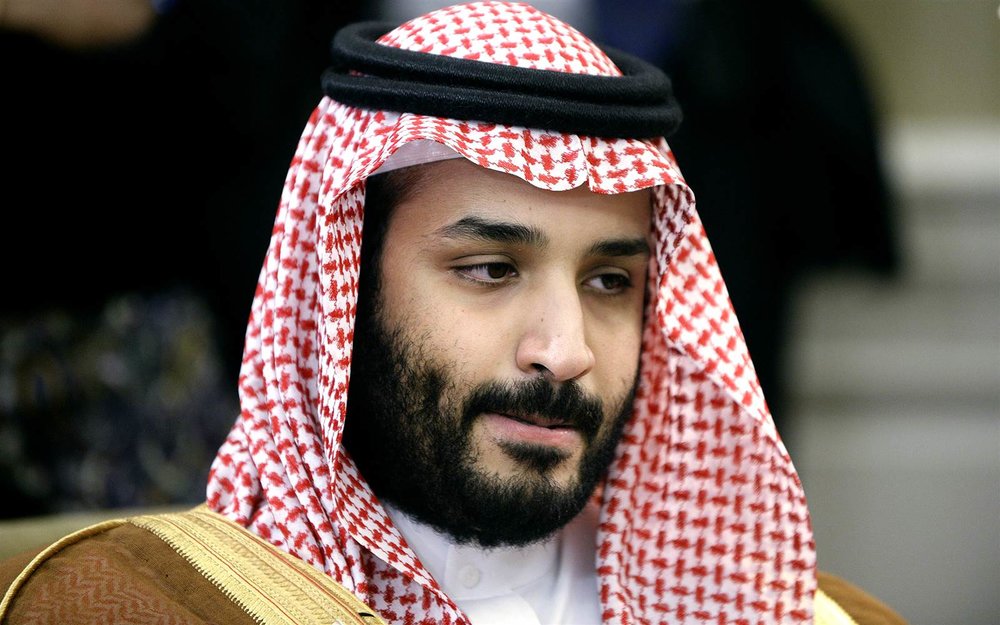
| Theresa May and Mohammed bin Salman in London in March 2018. Photograph: Tolga Akmen/AFP/Getty |
The former senior British official told me he was aghast at the recklessness of Saudi targeting. “This is what would happen regularly,” he told me. “We’d be sitting down for lunch and a Yemeni [from the government in exile] would get a WhatsApp message with a pin on Google Maps saying that there will be Houthis here. On that basis, an awful lot of the targeting was conducted without any verification whatsoever.”
Larry Lewis, the State Department advisor for civilian protection, described Saudi targeting to me as “incredibly loose”. “In the US and the UK,” he explained, “we have very formal processes” for airstrikes, but “this coalition is not using them … And when you mess up, bad things happen.”
Lewis says that in September 2016 – a few weeks before the funeral strike – he took his concerns to the chairman of the Saudi armed forces. “I laid out all of the very actionable things he could do to reduce civilian harm,” he told me. “The chairman didn’t really seem very interested … he just didn’t respond.” Last July, crown prince Mohammed bin Salman (MBS), the architect of the air war, issued a royal decree “pardoning all military personnel who have taken part in Operation Restoring Hope of their respective military and disciplinary penalties.”
After Saudi Arabia realised it could not defeat the Houthis with airstrikes alone, it launched a ground operation in northern Yemen, which includes thousands of Saudi troops, a wide assortment of Yemeni and foreign fighters, and British special forces.
The presence of British special forces in Yemen has not been officially acknowledged, but has become an open secret in defence circles. A senior British diplomatic source told me that the decision to approve military assistance to Saudi Arabia emerged from a meeting in London between British ministers and Bin Salman during his state visit to the UK in March 2018 – when he met the Queen and signed a memorandum of intent to buy 48 more jets worth £10bn to upgrade his war-ravaged fleet.
Two months later, on 23 May 2018, Boris Johnson, then foreign secretary, released a carefully worded statement committing an undisclosed number of UK troops to provide “information, advice and assistance” to “mitigate” the threat to Saudi Arabia from Houthi missiles.
The UK government refuses to confirm or deny whether it has deployed troops inside Yemen. In April, when asked in parliament about allegations published in the Mail on Sunday that British special forces were fighting in Yemen alongside Saudi-backed child soldiers, foreign minister Mark Field called for an investigation, while refusing to confirm whether British troops were in the country at all.
In March of this year, the foreign secretary, Jeremy Hunt, marked the fourth anniversary of Saudi Arabia’s intervention in Yemen with an audacious defence of Britain’s role in the conflict. In an opinion piecefor Politico, Hunt insisted it would be “morally bankrupt” to cut off the Saudis, with the counterintuitive argument that Britain’s pursuit of peace in Yemen requires the government to continue selling weapons to one of the combatants. Otherwise, he warned, we would “surrender our influence and make ourselves irrelevant to the course of events in Yemen.”
In short, UK arms sales buy Britain influence with Saudi Arabia; influence that it can use to sue for peace. Hunt refers obliquely to “frank conversations” about human rights with his Saudi counterparts, while the government has defended its arms sales in court by citing “extensive UK training” provided to Saudi pilots and targeteers in order to reduce civilian harm, along with the presence of RAF liaison officers who work inside the Saudi air operations centre to “support Saudi compliance with International Humanitarian Law”.
But the notion that Britain is a benign influence on the air war is betrayed by the stark fact that the rate of civilian attacks has risen throughout the war, according to a report analysing air-strike data, authored by Larry Lewis for a US government-backed thinktank and published in May. Other British officials with first-hand experience of Saudi military operations dismiss suggestions that our role on the ground in Saudi Arabia makes any difference.
“Bollocks” is how the former senior British official who worked in Saudi Arabia put it. “With MBS, our influence was gone. He was in a hurry, and surrounded himself by people who are not prepared to question his judgment.
“Militaries are like onions. At the very centre is where the final decisions are made on targeting … but we only had access to the fourth or fifth layer,” he told me. “We had no access at all to the Saudis who selected the targets. Not even the Yemenis did,” he said – referring to members of the Yemeni government government in exile, on whose behalf this war is ostensibly being fought.
Engagement at senior levels, the official recalled, amounted to reminding the Saudis that Britain had “concerns” about civilian deaths. “You’ll say: ‘My government wants me to stress how important it is that you comply with international humanitarian law – and if you haven’t got it, here it is printed out in Arabic.’ That will be it.”
“We Brits tend to pussyfoot around, despite having considerable leverage on the Saudis,” I was told by John Deverell, the former director of defence diplomacy at the MoD, who was defence attache to Saudi Arabia and Yemen between 2001 and 2003. Unless Britain is willing “to use the threat of pulling arms sales and personnel linked to the war in Yemen”, Deverell added, any gestures of concern will be ineffectual. “We are worried that if we do speak truth to power, we will endanger the commercial relationship.”
It is this commercial relationship that is keeping Britain firmly ensnared in the Yemen war. Its foundation is an multi-billion pound, government-to-government arms deal signed in 1985 called al-Yamamah. This guarantees British maintenance, training and rearmament of any British aircraft sold to Saudi Arabia, in war and peacetime. The deal is open-ended, which means that its terms, which in the 1980s applied to Tornado aircraft, now cover the export of BAE’s newer Typhoon jets.
In response to a recent parliamentary question, the government refused to disclose the total income from the Al-Yamamah contract because it “would, or would be likely to, prejudice relations with another State” – but former BAE CEO Mike Turner put it at more than £40bn in 2005. Nick Gilby, a researcher who has written a book on the deal, estimates the current sales figure to be “conservatively, £60bn” based on BAE statements and annual reports.
 |
| A BAE Typhoon jet at the Farnborough Airshow in 2018. Photograph: Adrian Dennis/AFP/Getty Images |
Under the terms of the deal, Saudi Arabia reimburses the British Ministry of Defence for the costs it incurs by paying BAE to arm and maintain the Saudi air force, plus a 2% fee for the time of civil servants administering the procurement. BAE depends on this state contract for its survival, but it also wields enormous sway with the government as the principal executor of this multi-billion dollar deal. (The former foreign secretary Robin Cook once described the firm as having “the key to the garden door to No 10”.)
Although al-Yamamah does not generate any income per se for the British treasury, it is the bedrock of a deeper financial relationship between London and Riyadh. The House of Saud uses its oil revenues to buy British stocks, bonds and luxury property; in 2017 it spent £93bn in Britain. David Wearing, a specialist on UK-Saudi relations at Royal Holloway University, estimates that a fifth of the UK current account deficit is financed by Saudi cash, which “stabilises an increasingly vulnerable pound”.
A former Conservative minister told me that just before Saudi Arabia started bombing Yemen in 2015, Riyadh privately communicated that it would squeeze Britain financially if the government wavered in its military cooperation. “At the outset, the imperative was conveyed that they saw British support of its war as a key test,” the minister recalled. “If you fail, you’re out, as far as commercial opportunities and influence in the future.”
The groundwork for the al-Yamamah deal was laid during Britain’s imperial era. In the 1960s, the House of Saud financed an off-the-books war against Egyptian troops that had occupied Yemen, threatening both Saudi rule and Britain’s colony in Aden. David Stirling, the founder of the SAS, used his sway with the Saudi King to broker a deal for the kingdom to buy British Lightning jets, radar systems and in-country services.
A decade later, events swung Saudi Arabia and Britain even closer together. In 1979, religious zealots seized Mecca’s Grand Mosque to demand the overthrow of the Saudi monarch – months after the Iranian revolution deposed the Shah and ushered in an Islamic Republic that openly challenged the House of Saud. Meanwhile, Britain was in financial disarray. It could not afford to buy the Tornado combat jet it had developed in a consortium with Italy and Germany. If Britain wanted an independent air deterrent, it would need a rich foreign buyer to subsidise the cost of its fleet. An insecure royal family sitting on the world’s largest oil reserves was the perfect customer.
Saudi Arabia wanted the best aircraft money could buy: the American F-16. Iran had the next model down, the F-14, but Israel was vehemently opposed to an Arab country getting planes that could challenge its own F-16s. The US found a workaround. Under a Nato framework, it would back the export of British Tornados to the House of Saud, which would keep the Soviets out of the Gulf and bring down the cost to Britain of upgrading its own fleet. Al-Yamamah was the result. It was the biggest arms deal in the world – and one that would save arms manufacturing in Britain.
In a “secret and personal” letter to US president Ronald Reagan in 1988 – whose contents have not been previously reported – Thatcher confided that Saudi Arabia had given her assurances that it would not use British weapons aggressively against other states. According to a report by Mike Lewis, a former UN weapons inspector, Thatcher’s government overruled Foreign Office officials who advised against committing Britain to a clause that explicitly obliged Britain to rearm Saudi Arabia in the event it went to war. It would, they said, expose the country to accusations of involvement in “unlawful military adventures”.
In March, I attended a government-organised convention in Farnborough for arms companies that want to break into lucrative export markets. Executives talked shop with government officials in the Export Growth Zone over chicken paprika sandwiches. We watched an “SAS motivational speaker” extol the importance of positive mental attitude.
The convention featured a slide presentation on the details of arms control law by a senior official from the UK government’s export-licensing agency. “Ignorance is no use for breaking the law,” the official told the attendees. Afterwards, I asked the official how it was possible that his own department – the Export Control Joint Unit (ECJU) – had issued blanket approvals for arms exports used in Yemen. “I don’t know, it just is,” he answered. “I’m doing what I’m told and doing my job,” he added. “But I’m uncomfortably aware that Adolf Eichmann said the same thing.”
The head of the ECJU, Edward Bell, has also expressed discomfort with re-arming the Saudi air campaign. “My gut tells me we should suspend [exports to Saudi Arabia],” he wrote in a 2016 email to Sajid Javid, who was then the minister responsible for arms licensing. Javid ignored Bell’s advice.
In 2015, Vince Cable, Javid’s predecessor, delayed the export of a shipment of Saudi-bound Paveway bombs in the wake of reports alleging that the air campaign had targeted hospitals in Yemen. But Cable told me that he quickly came under pressure from the then defence secretary, Michael Fallon, and prime minister David Cameron, to release the shipment.
During the early phases of the air war, the British government replied to critics of its involvement by explaining that it conducted investigations into allegations of Saudi attacks on civilians in Yemen. But in 2016 – citing “infelicities of expression” – the government reversed itself, and revisedearlier ministerial statements that said it did investigate. Instead, when pushed on the use of British weapons in alleged war crimes in Yemen, the government pointed out that the Saudi-led coalition investigates itself.
This work is done by the Joint Incident Assessment Team (JIAT), a body composed of around 20 military officers from Saudi Arabia and the UAE, which is charged with investigating reports of civilian deaths in Yemen. Larry Lewis, the US official who urged the Saudis to establish the JIAT, told me that the team does not have researchers on the ground inside Yemen, so it must rely on the Saudi Royal Air Force to provide it with information. “Occasionally they will take trips to Yemen to investigate high-visibility incidents,” he said.
Lewis also said the JIAT was “designed to reduce common mistakes” such as hitting targets on the no-strike list – wells, hospitals, schools. Similarly, it was supposed to reduce the chances of Saudi forces “failing to deploy tactical patience” – for instance, bombing Houthi militiamen when they stop at a market, rather than waiting for them to leave to minimise civilian casualties. But Lewis now says the JIAT failed on its own terms, because it was simply ignored by the Saudi defence ministry.
 |
A Saudi-led airstrike on the outskirts of Yemen’s capital, Sanaa in 2016.
Photograph: Hani Mohammed/AP |
For the British government, however, the JIAT provides a convenient figleaf for the continued licensing of arms exports to Riyadh. Researchers at the open-source investigative agency Bellingcat have accused the coalition of dishonesty in “the vast majority of JIAT assessments”. Rawan Shaif, who heads the group’s Yemen project, told me that “the information that [the UK] has been relying on” is coming from “a partner you have been directly supporting in a conflict, who is lying to you about the majority of strikes”.
In the case of two particularly deadly attacks in May and July 2015 – in which more than 100 people were killed by airstrikes on outdoor markets in the town of Zabid and Fayoush, a suburb of Aden – the JIAT assessment simply insisted that the coalition had not bombed either location, in spite of reports by the UN, the BBC, Human Rights Watchand Amnesty, as well as camera-smartphone footage from the sites making it clear that an airstrike had taken place.
Elsewhere the JIAT has justified strikes by flatly asserting that the targets were military ones. After reports of civilian deaths in an airstrike in al-Jawf governorate in September 2016, JIAT released a statement claiming that the coalition had hit “Houthi commanders” travelling in a pickup truck. But when the UN and the Yemeni human rights group Mwatana made independent visits to the site, they discovered that the victims were a woman driving with her two sisters-in-law and their 12 children.
Parliamentary scrutiny of Britain’s compliance with arms export control laws is the responsibility of the Committees for Arms Export Controls (CAEC). This cross-party grouping, which includes 18 MPs, is chaired by Graham Jones, a Labour MP who has criticised the “dishonesty” of NGOs reporting on human-rights violations in Yemen, written in support of Bin Salman and the Saudi-led coalition, and touted BAE’s “vital role” for employment and the economy in his Lancashire constituency.
Dr Anna Stavrianakis, an academic researching arms licensing at the University of Sussex, who has regularly given evidence to CAEC, accused Jones of keeping Yemen off the committee’s agenda. “The government deliberately mobilises doubt and ambiguity when it comes to international humanitarian law violations in Yemen,” she told me. “And the chair acts in support of government policy rather than acting impartially to scrutinise it.” In an email to the Guardian, Jones replied that his critics were “far-left Marxists [who] back a violent, racist, Islamic fascist militia” in Yemen, and said he had been “at the forefront of discussions on Yemeni issues”.
The ruling from the court of appeal, expected this Thursday, will determine whether the government’s political will to arm Saudi Arabia has violated the law. The case, which was brought byCampaign Against the Arms Trade (CAAT), an NGO, was heard before three judges on April 9. The result hinges on the interpretation of two words: “clear risk”. British law bans the licensing of arms if there is a “clear risk” that they could be used in a “serious violation of IHL”. The three judges will decide if the government has broken this law.
“I struggle to think of a case where the evidence has been so overwhelming and compelling than this one,” said Rosa Curling of Leigh Day, the legal firm instructed by CAAT. “If arms can be exported legally in this scenario, then when could they not?”
The government argued that it has information, shared with the judges in secret, that gives it confidence there is not “clear risk” of Saudi Arabia needlessly killing civilians. Lawyers for CAAT countered that there is more than enough evidence in the public domain to prove this risk is real. CAAT lost its first case in 2017, when the high court ruled in favour of the government after hearing parts of the government’s defence in secret.
The QC Philippe Sands, who is not involved in this case, says that ministers should be personally concerned about the prospect of facing criminal charges for their role in arming Saudi Arabia. “If the United Kingdom is supplying weapons that are being used to commit crimes, then the possibility cannot be excluded that a minister who signs off on the sales in that knowledge could in the future be hauled before a court of law, national or international,” he told me.
British case law is clear that knowingly supplying a weapon that is used to commit a crime can mean that the supplier of the weapon is also liable for that crime. “The coalition claims that it only targets the Houthis and that it tries very hard to avoid civilian casualties, but the evidence suggests otherwise,” said Dearbhla Minogue of the Global Legal Action Network, which is working with Bellingcat to investigate whether individual airstrikes in Yemen have violated international law. “UK nationals involved in the transfer of arms in such a situation should be concerned about that,” she said.
According to Wayne Jordash QC, government officials would face a higher risk of prosecution if Britain is a “party to the conflict”, an innocuous-sounding legal phrase that has exercised the civil service as evidence of civilian casualties has piled up. “A lot of energy is spent on trying to keep us not a party,” one Whitehall official remarked to me in April.
Under international law, being a party to a conflict means providing military, financial or logistical support that directly degrades the military capacity of another belligerent and weakens their ability to conduct hostilities. A spokesperson for the International Committee of the Red Cross told me it had made a determination as to whether Britain is a party to the Yemen war – but could not publicly disclose the result because it was still mediating between belligerents of the war and did not want to risk prejudicing relations.
Ministers regularly tell parliament that Britain is not a party to the conflict. “Let me make it very clear that we are not a party to the conflict … That is not the position of the United Kingdom,” the then foreign minister Alister Burt told parliament in January, an assertion he repeated to me in an interview in April. The foreign office minister Mark Field similarly told parliament in March: “We still hold to the firm view that we are not a party to the conflict.”
But the senior British diplomatic source, citing internal Foreign Office legal advice, told me that “anybody who says that is is misspeaking”. The cabinet decided to provide “military assistance” to Saudi Arabia last year, he said, referring to the deployment of special forces, “and by doing that we became a party to the conflict”.
The contortions of the British government to obscure its involvement in the Yemen war are nothing short of acrobatic. The government has tethered Britain, its military and its economy to the richest nation in the Arab world as it brutalises the poorest. Saudi Arabia is estimated to have spent $60-70bn every year on its failing war, nearly four times the current GDP of Yemen, and enough money to have secured the livelihoods of a generation of Yemenis.
Farea Al-Muslimi, the son of a Yemeni farmer who now works at Chatham House, Britain’s pre-eminent foreign-affairs thinktank, described to me the toll that war has taken on his country. “Tomorrow you’re going to end up with a dead body called Yemen,” he told me. “And no one will want to clean or bury it – and the Saudis, the Houthis, the British will realise they are fighting for something that doesn’t exist.”


![Trump says he does not want war after attack on Saudi oil facilities [Cartoon-Arabi21]](https://i0.wp.com/www.middleeastmonitor.com/wp-content/uploads/2019/09/Iran-US.jpg?resize=720%2C470&quality=75&strip=all&ssl=1)